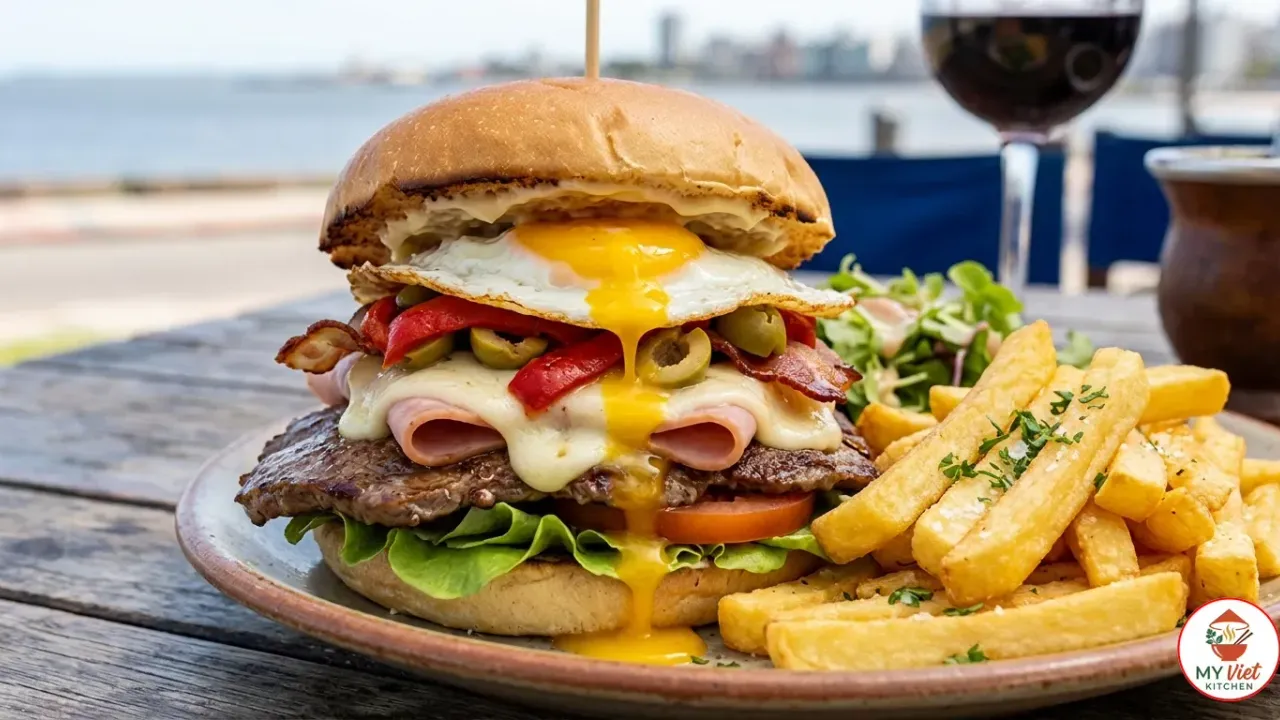
Chivito is Uruguay’s answer to the question every hungry nation eventually asks: how do you build the perfect steak sandwich? This towering Uruguayan steak sandwich stacks thin, seared beef tenderloin with ham, melted mozzarella, crispy bacon, and a runny fried egg. Then it adds roasted red peppers, green olives, lettuce, and tomato inside a toasted bun slicked with mayo. Known across South America as the chivito uruguayo, it is the undisputed national dish of Uruguay and a monument to the idea that more is more. This recipe delivers an authentic chivito you can build at home in about 35 minutes.
Prep Time: 20 minutes | Cook Time: 15 minutes | Servings: 4
Difficulty: Easy | Calories: ~750 per serving
What Makes Chivito Special?
The chivito stands apart from other steak sandwiches because of its sheer audacity. While a Philadelphia cheesesteak focuses on thinly shaved beef and melted cheese, and a French steak frites keeps things elegant, the Uruguayan chivito piles on layer after layer of protein, dairy, and bright toppings until the bun can barely contain it all. Consequently, every single bite delivers a different combination of flavors and textures. You might get crispy bacon with runny egg in one mouthful and tangy olive with sweet roasted pepper in the next. This deliberate excess is the whole point.
The story behind the name adds to its charm. “Chivito” means “little goat” in Spanish, yet the sandwich contains no goat whatsoever. According to the most popular account, a restaurant owner named Antonio Carbonaro in Punta del Este created it in the 1940s. A guest from northern Argentina had asked for a goat dish he could not provide. So he improvised a beef sandwich loaded with so many toppings that the guest forgot all about goat. Because of this happy accident, Uruguay gained its most famous culinary export. Over the decades, the chivito grew from a simple steak sandwich into the fully loaded icon you find in every Montevideo spot today.

The Perfect Balance of Rich and Fresh:
What truly elevates the chivito beyond a mere sandwich is the careful balance of richness and freshness. The seared beef tenderloin provides a savory, meaty foundation. Then the ham and bacon add salt and smoke, while the melted mozzarella binds everything together. On top of that, the fried egg adds a rich, creamy yolk that acts almost like a sauce. Meanwhile, the lettuce, tomato, olives, and roasted peppers cut through all that richness. They bring acidity, crunch, and fresh brightness. As a result, this sandwich never feels heavy despite its size. Instead, it feels perfectly composed.
Choosing the Right Beef for Chivito
The steak is the heart of every chivito, so the cut you choose matters enormously. In Uruguay, beef tenderloin (called lomo) is the standard because of its butter-soft texture and mild, clean flavor. Since the sandwich already carries so many bold toppings, a tender, lean cut works far better than a marbled one. Below are the best options for your chivito steak.
- Beef tenderloin (best choice): The traditional Uruguayan pick. Extremely tender with a mild, clean beef flavor that lets the toppings shine. Pound it to 1/4 inch thickness for fast, even cooking. Tenderloin is expensive, but since each sandwich needs only about 5 ounces, a single whole tenderloin serves many sandwiches.
- Top sirloin: A budget-friendly alternative with more beefy flavor than tenderloin. It is leaner than ribeye and still quite tender when pounded thin. Choose steaks from the center of the sirloin for the most consistent texture.
- Eye of round: The most affordable option. This cut is very lean and can turn tough if overcooked, so pound it extra thin and sear it quickly over high heat. It works well in chivito because the melted cheese and egg yolk compensate for its drier texture.
Ingredients for Chivito
Main Sandwich Ingredients:
- 4 beef tenderloin steaks (about 5 oz / 140g each), pounded to 1/4 inch thickness
- 4 slices cooked ham (about 2 oz / 60g each)
- 4 slices mozzarella cheese
- 8 strips bacon
- 4 large eggs
- 4 soft sandwich buns or pan de miga rolls
Fresh Toppings:
- 1 large ripe tomato, sliced into 4 rounds
- 4 leaves butter lettuce
- 8 pitted green olives, halved
- 4 roasted red pepper strips (from jar or homemade)
Seasonings and Condiments:
- 4 tablespoons mayonnaise
- 2 tablespoons olive oil
- Salt and black pepper to taste
- 1 teaspoon garlic powder (optional)
- 1 tablespoon butter for toasting buns
Pro tip: For the most authentic chivito experience, use soft, slightly sweet buns similar to brioche or Portuguese rolls. The bun needs to be sturdy enough to hold the stack without disintegrating, yet soft enough to compress when you bite down. Avoid crusty artisan bread, as it fights against the tender steak instead of complementing it.
Step-by-Step Instructions
Step 1: Prepare the Steak
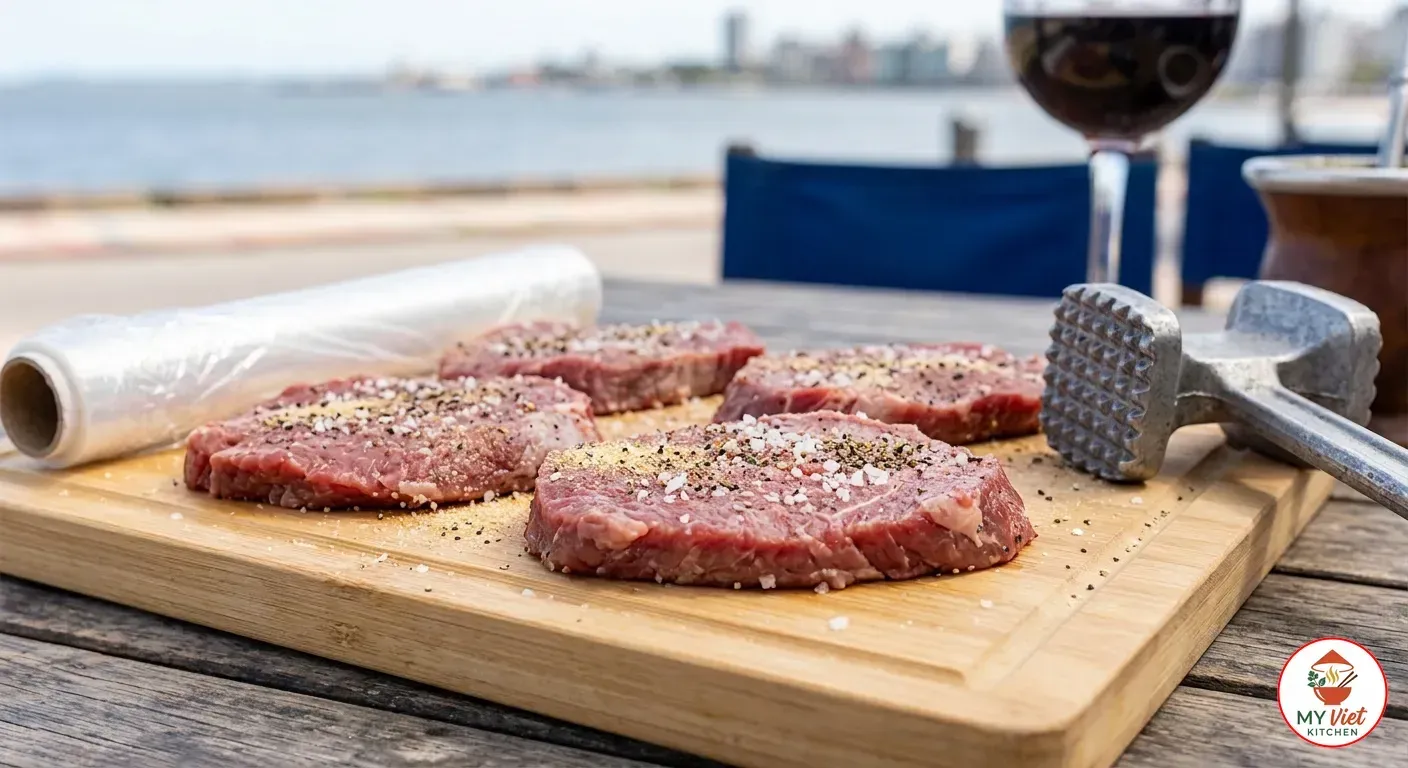
1Place each beef tenderloin steak between two sheets of plastic wrap or inside a zip-lock bag. Pound them with a meat mallet or the bottom of a heavy skillet until they reach about 1/4 inch thickness and stretch slightly wider than your buns. This step is key because it lets the steak cook in under two minutes. It stays juicy rather than turning gray and tough. Season both sides with salt, black pepper, and a light dusting of garlic powder if using. Let them rest at room temperature for 10 minutes so they sear evenly.
Step 2: Cook the Bacon
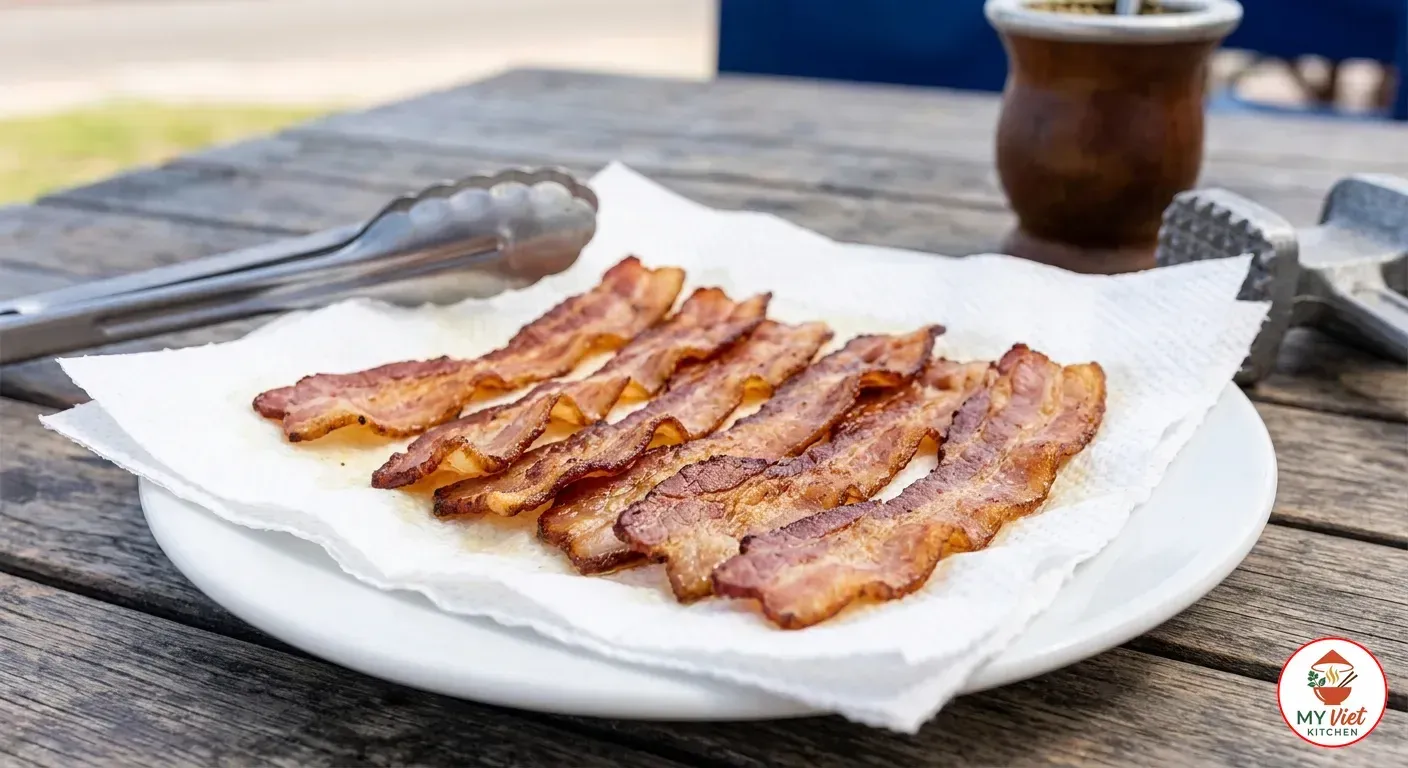
2Lay the bacon strips flat in a large skillet over medium heat. Cook for 4 to 5 minutes per side, turning once, until they reach your desired crispness. For the best chivito texture, aim for bacon that is crisp at the edges yet still chewy in the center. Transfer the finished strips to a paper towel-lined plate to drain. Reserve about 1 tablespoon of the rendered bacon fat in the pan. This fat adds great flavor to the steaks in the next step, so do not wipe the pan clean.
Step 3: Sear the Steaks and Melt the Cheese
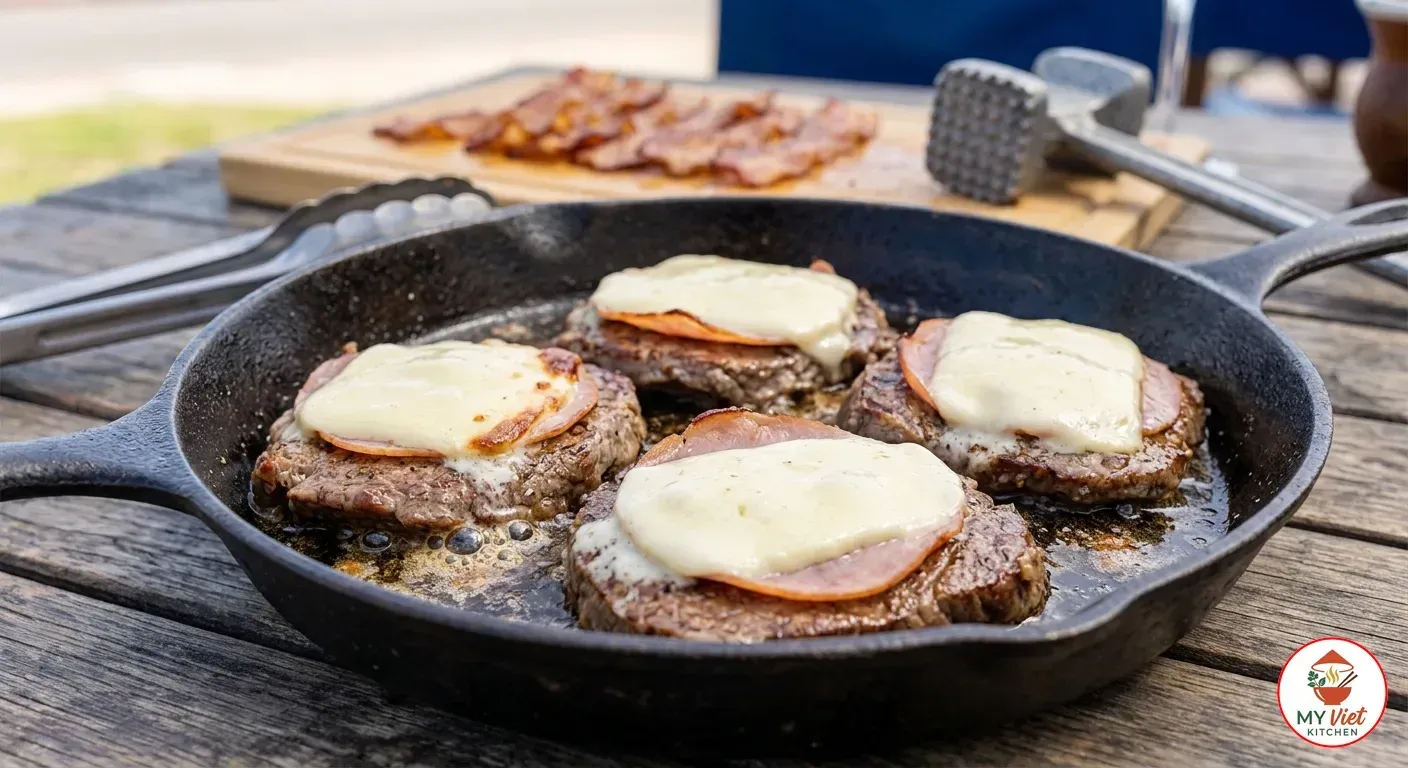
3Increase the heat under the skillet to high and add the olive oil to the reserved bacon fat. When the oil shimmers and just starts to smoke, lay the steaks in the pan. Work in batches if your skillet is not large enough for all four. Sear for 60 to 90 seconds on the first side without moving them. Then flip and sear the second side for another 60 seconds. In the last 30 seconds, place a slice of ham on each steak, then a slice of mozzarella. Cover the pan with a lid or foil so the heat melts the cheese. Pull the steaks out as soon as the cheese turns soft and glossy.
Step 4: Fry the Eggs
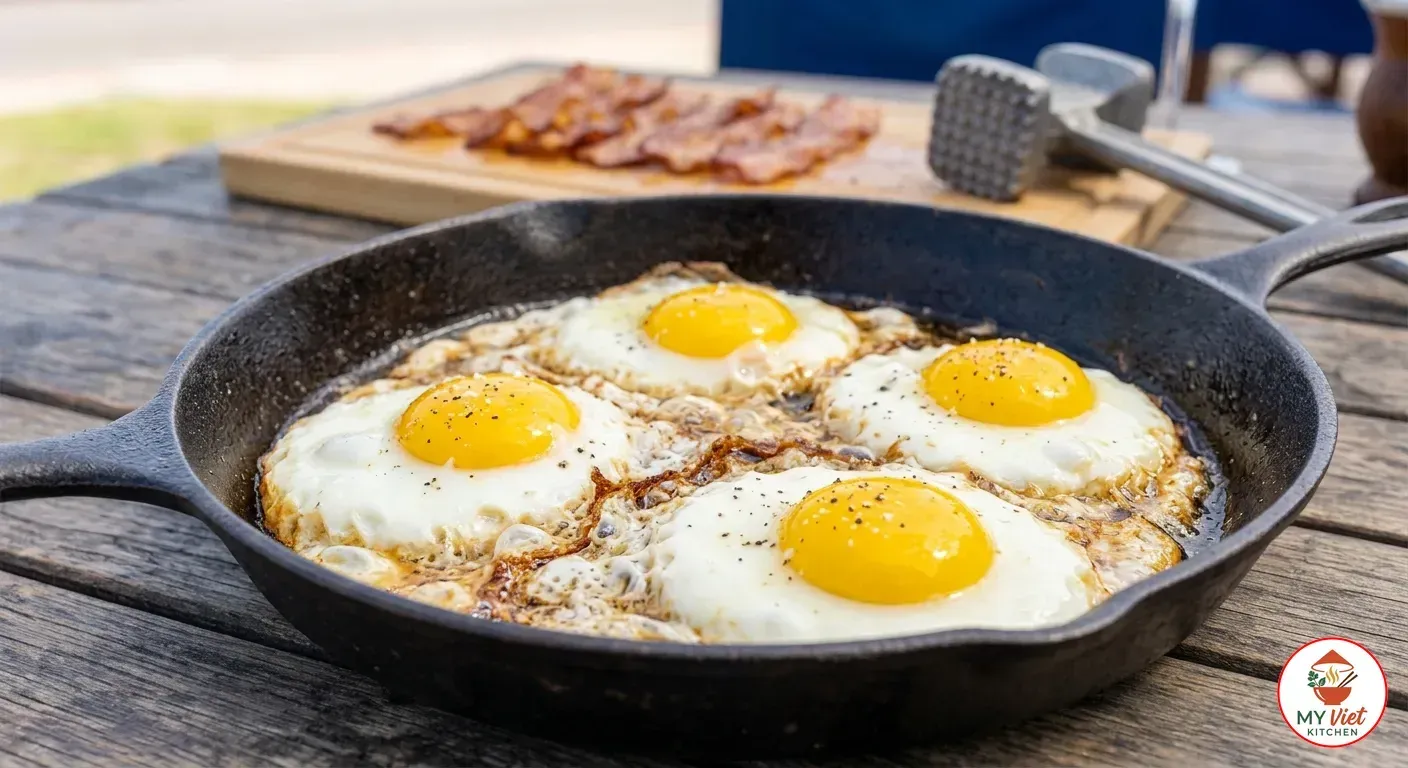
4Reduce the heat to medium and crack four eggs into the same skillet. The oil and meat juices left in the pan add flavor to the eggs. Fry for 2 to 3 minutes until the whites set and the edges turn lightly crisp and lacy. The yolks must remain runny. This is key in a proper chivito. The yolk acts as a built-in sauce that coats the steak and soaks into the bun with every bite. Season each egg with a small pinch of salt and remove them carefully with a spatula.
Step 5: Toast the Buns
5Slice each bun in half horizontally and spread the cut sides with a thin layer of butter. Place them cut-side down in a clean skillet or on a flat griddle over medium heat. Toast for 1 to 2 minutes until the surface turns golden brown and slightly crunchy. This step builds a moisture barrier that keeps the bun from turning soggy under all those juicy toppings. You can also toast them under a broiler for about 60 seconds. Watch them closely to prevent burning.
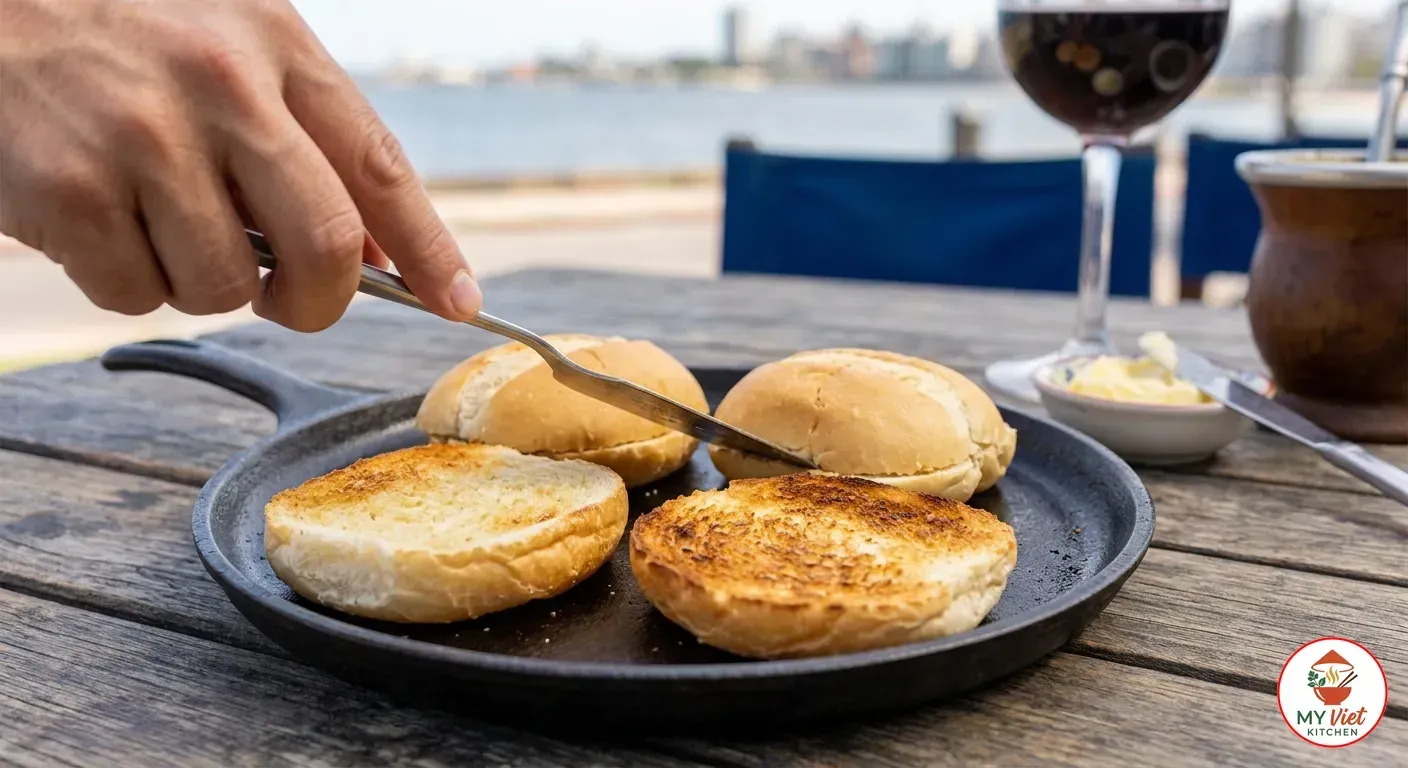
Step 6: Assemble the Chivito
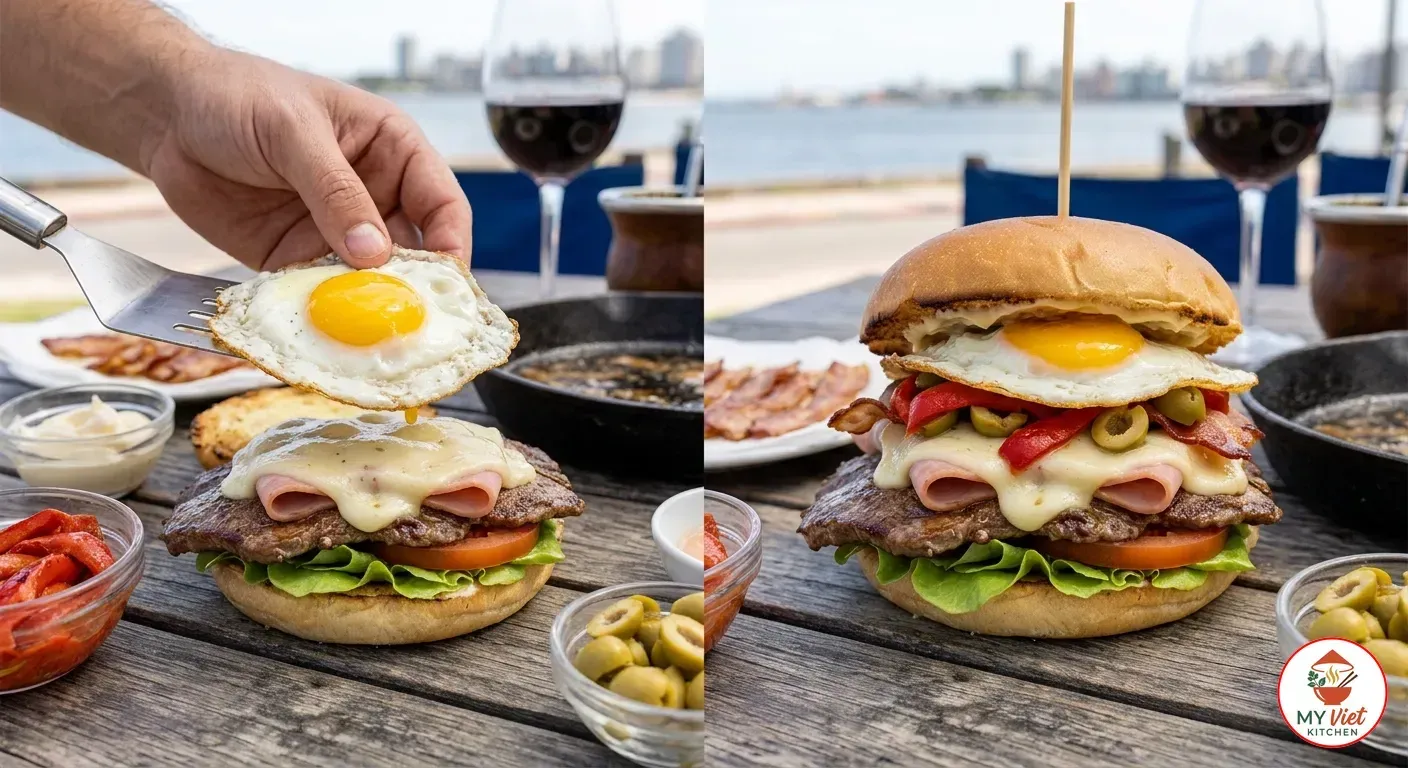
6Spread a big spoonful of mayo on both halves of each toasted bun. On the bottom half, lay down a lettuce leaf first, followed by a tomato slice. Next, place the steak with its melted ham and cheese layer. Add two bacon strips on top, then crown the stack with a fried egg. Scatter the red pepper strips and olive halves over the egg. Press the top bun down gently but firmly. If the stack feels wobbly, pin it with a wooden skewer through the center. Slice in half diagonally and serve immediately with a mountain of French fries.
Expert Tips for Perfect Chivito
Pound the Steak Properly
The most important step in making chivito is pounding the beef thin enough. A thick steak takes too long to cook and toughens under high heat. It also creates an uneven sandwich where the meat dominates every bite. Aim for 1/4 inch thickness. Pound from the center outward in even strokes. Always use plastic wrap to prevent the meat from tearing. If the steak is already thin, a few gentle taps are sufficient.
Use a Screaming Hot Pan
Since the steak is so thin, it needs fierce heat to form a brown crust before the inside overcooks. Heat your skillet until the oil just begins to smoke. Lay the steak in and do not move it for a full 60 seconds. This quick, hard sear triggers the Maillard reaction that gives the meat its deep, savory flavor. If the pan is too cool, the steak will steam instead of sear. It will turn gray and rubbery.
Keep the Egg Yolk Runny
A fully cooked egg yolk is the most common chivito mistake. The runny yolk serves as a natural sauce that binds all the layers together and adds richness without heaviness. Fry the egg over medium heat and pull it the moment the white sets. If you prefer, baste the top with hot oil from the pan. This sets the white without flipping and keeps the yolk perfectly liquid.
Chivito vs. Other Famous Steak Sandwiches
The chivito belongs to a global family of steak sandwiches, but it stands apart in both construction and philosophy. Here is how it compares to other beloved versions from around the world.
| Feature | Chivito (Uruguay) | Philly Cheesesteak (USA) | Steak Frites (France) |
|---|---|---|---|
| Cut of beef | Whole tenderloin, pounded thin | Ribeye, thinly shaved | Strip or ribeye, thick-cut |
| Cheese | Mozzarella slice, melted on steak | Provolone, American, or Cheez Whiz | None (butter-finished) |
| Egg | Fried egg with runny yolk (essential) | None | None |
| Key toppings | Ham, bacon, olives, roasted peppers | Sauteed onions, peppers optional | Herb butter, shallot sauce |
| Bread | Soft round bun | Long hoagie roll | Open plate, no bread |
| Side dish | French fries (always) | French fries or chips | French fries (always) |
Serving Suggestions
In Uruguay, chivito is served as a complete meal. The sandwich arrives on a plate alongside a generous pile of sides, and the whole presentation is designed to be satisfying and shareable. Below are the traditional accompaniments that make a chivito meal feel truly authentic.
The Perfect Accompaniments:
- French fries (papas fritas): The non-negotiable side dish for chivito in Uruguay. Cut them thick and fry them twice for a crispy exterior and fluffy interior.
- Green salad: A simple mix of lettuce, tomato, and onion dressed with olive oil and vinegar. This provides a fresh contrast to the rich sandwich.
- Russian salad (ensalada rusa): A cold side of diced potatoes, carrots, peas, and mayonnaise that is very popular in Uruguayan restaurants alongside chivito.
- Coleslaw: A modern addition that works well with the smoky bacon and savory steak.
Beverage Pairings:
- Cold beer: A crisp lager or pilsner cuts through the richness of the chivito and refreshes the palate between bites.
- Tannat red wine: Uruguay’s signature grape variety produces a bold, tannic wine that stands up beautifully to the beef and bacon.
- Medio y medio: The classic Montevideo cocktail, a blend of sparkling wine and white wine, offers an elegant pairing.
- Mate: While not typically paired with the meal itself, sharing mate before or after chivito is a deeply Uruguayan tradition.
Storage and Reheating
Refrigerator: Chivito is best eaten fresh, but you can store leftover components separately for up to 2 days. Keep the cooked steak, bacon, and ham in an airtight container. Store the fresh toppings separately. Do not refrigerate an assembled sandwich, as the bun will turn soggy.
Freezer: You can freeze the cooked, unseasoned steaks for up to 2 months. Wrap each steak individually in plastic wrap and place them in a freezer bag. Thaw overnight in the refrigerator before reheating. Bacon freezes well for up to 3 months.
Reheating: Reheat the steak in a hot skillet for 30 to 45 seconds per side. Warm the bacon in the same pan for 15 seconds until it crisps up again. Fry a fresh egg and toast fresh buns, then reassemble. Never microwave a chivito, as the steak will toughen and the bun will turn chewy.
Common Mistakes to Avoid
1. Using a Thick Steak
A steak thicker than 1/4 inch will not cook fast enough at high heat. The result is a tough, chewy center. It also makes the sandwich hard to bite through cleanly. Always pound the steak thin, even if it looks almost translucent. That thinness is what makes the chivito work as a handheld bite rather than a knife-and-fork meal.
2. Overcooking the Egg
A hard-cooked yolk turns the chivito dry and dense. The runny yolk is not optional in an authentic version. It mingles with the mayo and meat juices to create a silky, cohesive bite. If runny eggs concern you, use pasteurized eggs and fry them gently.
3. Skipping the Bun Toast
An untoasted bun soaks up the steak and egg juices within seconds, turning the bottom half into a soggy mess. Toasting creates a crisp seal that holds up under all those wet, flavorful layers. Spread butter on the cut sides before toasting for extra flavor.
4. Forgetting the Olives and Peppers
Some cooks treat the olives and roasted red peppers as optional garnish, but they are key to an authentic chivito. These tangy, briny toppings bring the acidity that balances all the richness from the meat, cheese, and egg. Without them, the sandwich tastes flat and heavy. Even if you dislike olives, add just a few halves for their sharp flavor contrast.
Frequently Asked Questions
What is a chivito sandwich?
A chivito is Uruguay’s national sandwich featuring a thin, seared beef tenderloin steak topped with ham, mozzarella cheese, bacon, a fried egg with a runny yolk, lettuce, tomato, green olives, and roasted red peppers on a toasted bun with mayonnaise. It originated in the 1940s in Punta del Este and has since become the most iconic dish in Uruguayan cuisine.
What is the difference between chivito and chivito al plato?
The classic chivito comes in sandwich form on a bun, while chivito al plato presents all the same ingredients stacked on a plate without bread. The plated version typically includes a larger steak and arrives with French fries, green salad, and sometimes ensalada rusa on the side. Chivito al plato is considered the more formal restaurant presentation.
What cut of beef is best for chivito?
Beef tenderloin (lomo) is the traditional and preferred cut in Uruguay. It offers the right combination of tenderness and mild flavor that works perfectly in a loaded sandwich. Top sirloin and eye of round serve as good alternatives when tenderloin is unavailable or too expensive. Regardless of the cut, always pound it to about 1/4 inch thickness.
Can I make chivito ahead of time?
You can prepare most components in advance. Cook the bacon, roast the peppers, slice the tomatoes, and wash the lettuce up to a day ahead. However, always cook the steak, fry the egg, and toast the buns fresh at serving time. Assemble the chivito immediately before eating, as it does not hold well once built.
Why is it called chivito if it uses beef?
The name “chivito” means “little goat” in Spanish. According to the widely accepted origin story, a restaurant owner in Punta del Este created the beef sandwich in the 1940s as an improvisation when a guest requested a goat dish he did not have. The name stuck despite the switch to beef, and today no one in Uruguay associates chivito with goat at all.
What do you serve with chivito?
French fries are the essential and expected side dish for any chivito in Uruguay. Green salad with a simple vinaigrette and ensalada rusa (Russian salad with potatoes, carrots, peas, and mayonnaise) are also traditional. For beverages, cold lager, Uruguayan Tannat wine, or medio y medio (a sparkling and white wine blend) are all classic pairings.
Variations and Adaptations
Chivito al Plato (Plated Version):
Skip the bun entirely and arrange all the chivito components on a large dinner plate. Use a slightly thicker steak, about 1/2 inch, and cook it to medium-rare. Stack the ham, cheese, bacon, and fried egg on top. Surround the steak with a generous pile of thick-cut French fries and a side of green salad. This version is popular for dinner service in Uruguayan restaurants and provides a more substantial, sit-down meal experience.
Chicken Chivito:
Replace the beef tenderloin with a boneless, skinless chicken breast pounded to 1/4 inch thickness. Season and sear it the same way. Chicken chivito is lighter and less expensive than the original, making it a good weeknight option. The ham, cheese, bacon, and egg work just as well with chicken. Some Uruguayan restaurants offer this as a chivito de pollo on their menus.
Vegetarian Adaptation:
For a meat-free version, replace the steak with a thick slice of grilled halloumi or a large portobello mushroom cap marinated in olive oil and garlic. Skip the ham and use smoked cheese in place of regular mozzarella to add depth. Keep the fried egg, as it provides essential richness. Add avocado slices for creaminess in place of the bacon. The olives, peppers, and mayonnaise remain unchanged.
The Cultural Significance of Chivito
In Uruguay, chivito is far more than a sandwich. It is a source of national pride that stands alongside asado and mate as one of the three pillars of Uruguayan food culture. Every restaurant, pub, and roadside stand in the country serves its own take. Locals debate whose chivito is best with the same fire that Italians bring to pizza arguments. As a result, the chivito carries a cultural weight that goes far beyond its humble ingredients.
A Philosophy of Generosity:
The sandwich also reflects Uruguay’s broader culinary philosophy, which values generosity above all else. Uruguayan cooking does not focus on minimalism or fussy plating. Instead, it celebrates abundance. A chivito should overflow. It is almost impossible to eat neatly, yet rich enough to fuel you through a full afternoon. This spirit extends to how Uruguayans share food. In Montevideo, ordering a chivito for a friend is an act of care. Splitting one at a street-side table is an everyday social ritual.
Beyond Uruguay’s borders, the chivito has gained a growing global following. Food writers and travel journalists call it one of the world’s greatest sandwiches. It regularly appears on lists of must-try South American dishes, including features by BBC Travel. Because of this recognition, the chivito now represents Uruguay on the global culinary stage. For home cooks, learning to make an authentic chivito opens a window into a food culture that prizes heart and bold flavor over fussy technique.
Conclusion
Making an authentic chivito at home is surprisingly straightforward once you understand three core principles: pound the steak thin, keep the egg yolk runny, and toast the bun well. From there, the assembly is simply a matter of stacking great ingredients in the right order. The whole process takes about 35 minutes from start to plate, and the result is a sandwich so layered with flavor and texture that it justifies its reputation as one of the best in the world.
If you enjoyed this chivito recipe, explore more South American classics on our site. Try our authentic Argentine asado for another celebration of beef, or discover Venezuelan arepas for a completely different take on Latin American street food. Each recipe brings a piece of South American food culture into your kitchen.