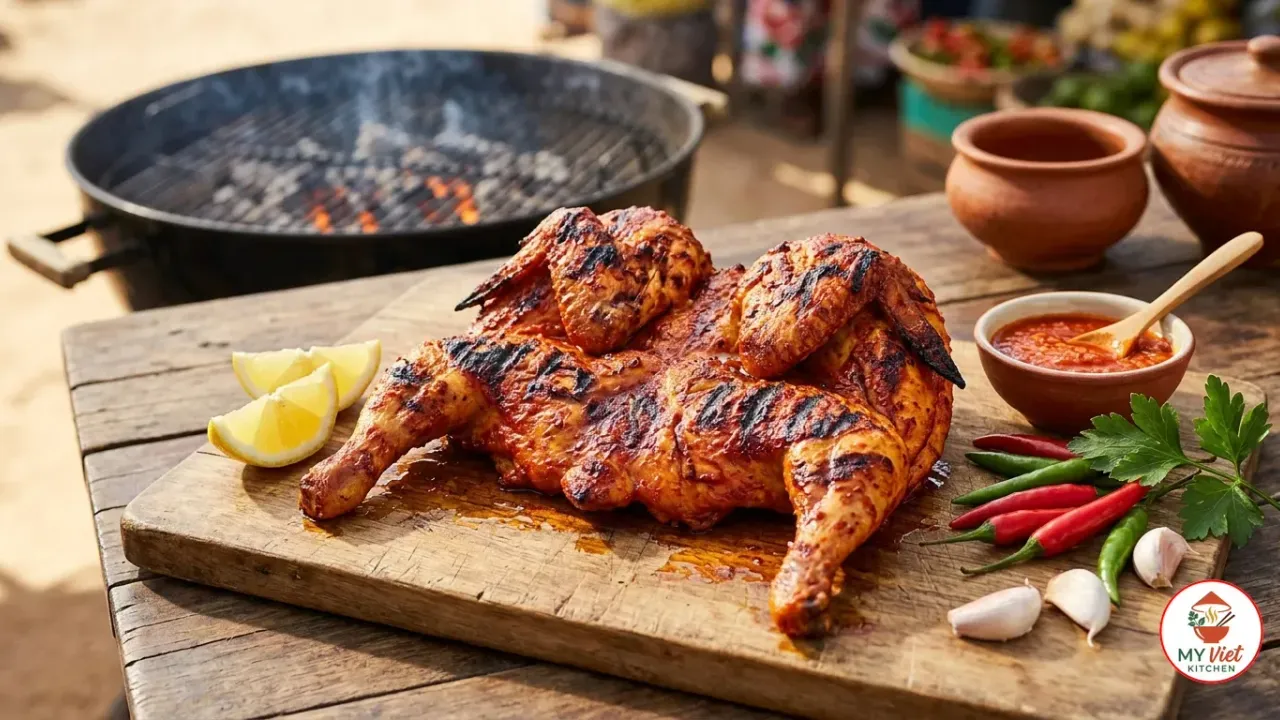
Piri piri chicken is the fiery pride of Mozambican cuisine, a dish that transforms a simple whole chicken into something extraordinary through the power of African bird’s eye chilies, fresh garlic, and bright citrus. Born from the meeting of Portuguese colonial cooking and indigenous East African ingredients, this dish has conquered tables across the globe. This authentic piri piri chicken recipe walks you through every step of making this legendary Mozambican classic at home, from blending the perfect chili marinade to achieving that signature char on the grill.
Prep Time: 20 minutes | Cook Time: 40 minutes | Servings: 4
Difficulty: Medium | Calories: ~420 per serving
What Makes Piri Piri Chicken Special?
Piri piri chicken stands apart from other spicy grilled chicken recipes because of its marinade. While many hot chicken dishes rely on bottled hot sauce or dried chili flakes, authentic Mozambican piri piri chicken uses fresh bird’s eye chilies blended into a vibrant, aromatic paste. The chilies deliver a clean, sharp heat that hits fast and then fades. In contrast, it does not build to a slow, painful burn. This makes piri piri chicken bold and lively without being punishing.
The flavor profile goes far beyond simple spiciness. Fresh garlic adds savory depth. Lemon juice and red wine vinegar bring a bright acidity that cuts through the rich chicken skin. Also, smoked paprika adds a subtle earthiness that nods to the wood-fire grilling tradition of Mozambican street vendors. Additionally, olive oil binds the marinade and helps spread heat evenly during cooking. The chicken gets a beautiful char without drying out.
What truly sets this piri piri chicken recipe apart is the marinating technique. Specifically, deep scores in the meat allow the fiery paste to reach well below the surface. After hours in the fridge, the acid and salt season the meat all the way through. Furthermore, the garlic and ginger start to break down proteins at the surface. This creates tender meat that pulls away from the bone with ease. As a result, you get grilled chicken that delivers bold flavor in every single bite.

Choosing the Right Chilies for Piri Piri Chicken
Ultimately, the chilies you select shape the character of your piri piri chicken. Not every hot pepper produces the same flavor, so choosing wisely matters. Here are the best options for an authentic result.
- African bird’s eye chilies (best choice): These small, fiery peppers are the original piri piri. According to chili pepper experts, they deliver intense heat with a fruity, slightly citrusy undertone that pairs perfectly with grilled meat. Find them fresh at African or Asian grocery stores, or grow your own from seed.
- Thai bird’s eye chilies: The closest widely available substitute for African bird’s eye peppers. Thai bird’s eye chilies share a similar heat level and compact size. The flavor is slightly more vegetal than the African variety, but the overall result will be very close to authentic.
- Cayenne peppers: If you cannot find bird’s eye chilies, fresh cayenne peppers work as a backup option. They bring good heat but lack the fruity complexity of true piri piri peppers. Use about 50 percent more by volume to match the heat level, since cayenne peppers are milder.
Ingredients for Piri Piri Chicken
For the Chicken:
- 1 whole chicken (about 3.5 pounds), spatchcocked or halved
- 1 teaspoon salt for seasoning the chicken before marinating
For the Piri Piri Marinade:
- 8 fresh bird’s eye chilies (piri piri peppers), stems removed
- 6 cloves garlic, peeled
- 1 red bell pepper, roughly chopped
- 1 tablespoon fresh ginger, grated
- 1/4 cup fresh lemon juice (about 2 lemons)
- 2 tablespoons red wine vinegar
- 1 teaspoon smoked paprika
- 1 teaspoon dried oregano
- 1 teaspoon salt
- 1/2 teaspoon black pepper
- 1/3 cup olive oil
For Serving:
- Lemon wedges
- Extra piri piri sauce on the side
- Fresh flat-leaf parsley for garnish (optional)
Pro tip: Wear gloves when handling bird’s eye chilies. The capsaicin in these peppers can burn your skin for hours. If you touch your eyes after handling them bare, you will regret it right away.
Step-by-Step Instructions
Step 1: Make the Piri Piri Marinade
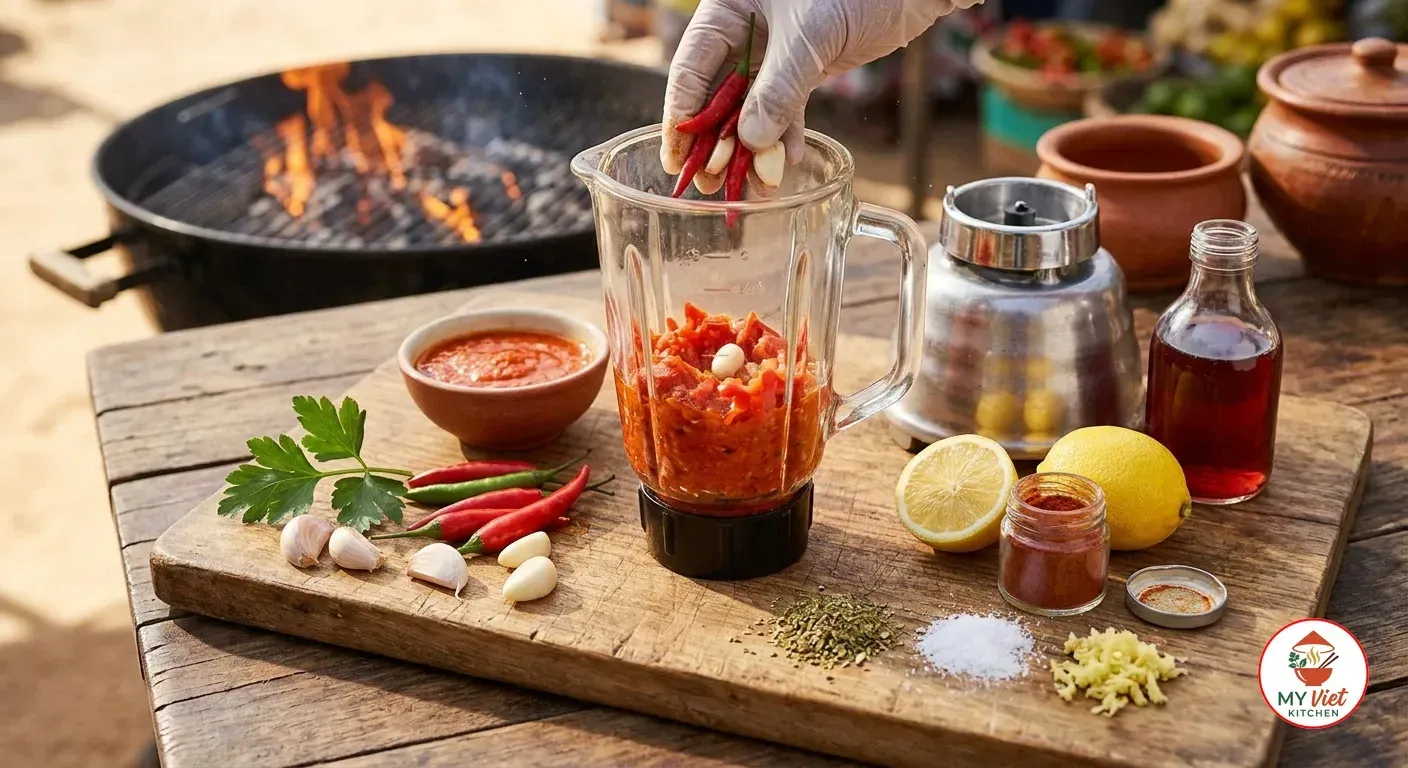
1 Place the bird’s eye chilies, garlic cloves, red bell pepper, grated ginger, lemon juice, red wine vinegar, smoked paprika, oregano, salt, and black pepper into a blender or food processor. Blend on high for 30 seconds until the mixture forms a rough paste. Then, with the blender running on low, slowly stream in the olive oil. Continue blending for another 20 seconds until the marinade is smooth and emulsified.
In addition, the red bell pepper serves a purpose beyond flavor. It adds body and natural sweetness to the marinade, which balances the intense heat of the bird’s eye chilies. Without it, the sauce would taste one-dimensional. Then, taste the marinade and adjust the salt or lemon juice to your preference. The sauce should taste bright, fiery, and garlicky with a pleasant acidic bite. Finally, reserve about 1/4 cup of the marinade in a separate jar for basting and serving later.
Step 2: Prepare and Marinate the Chicken
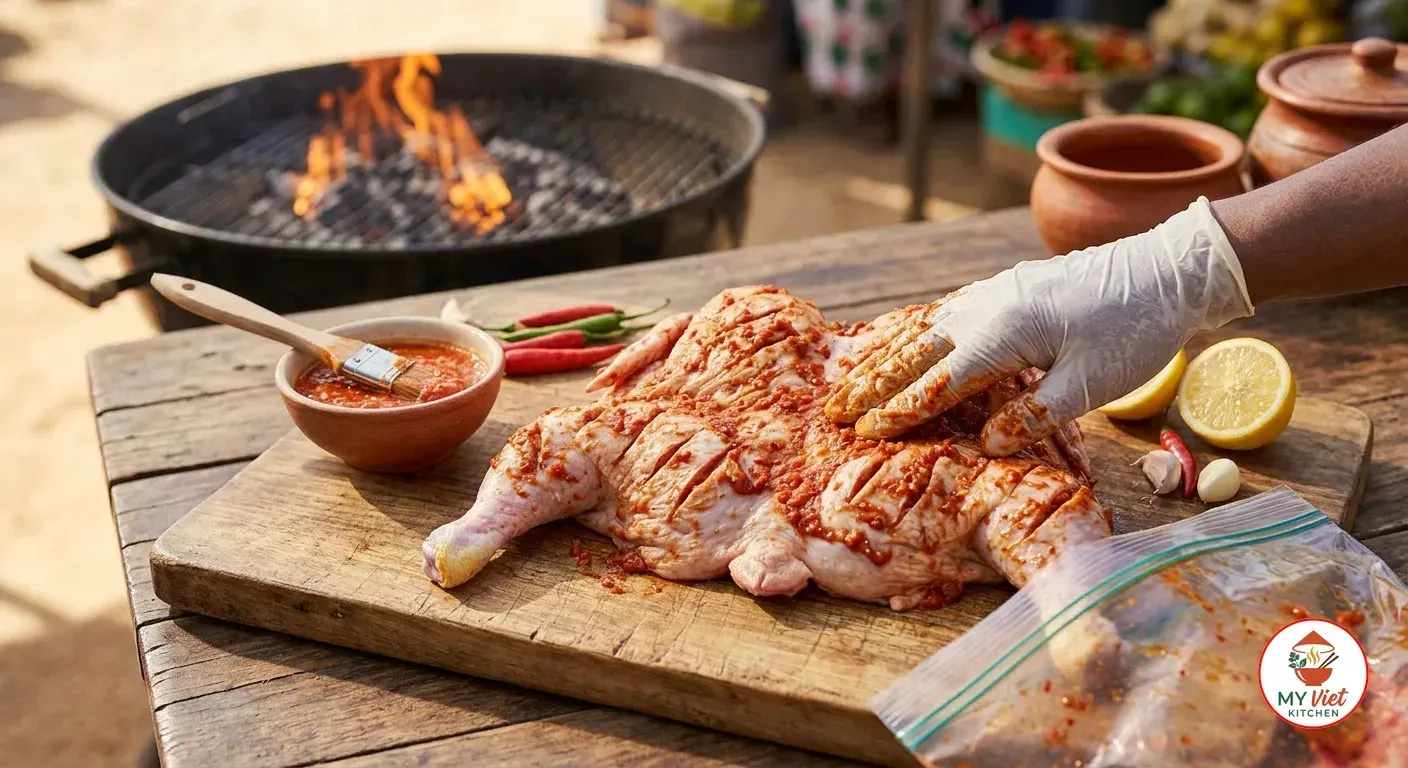
2 If your chicken is not already spatchcocked, place it breast-side down on a cutting board. Use sharp kitchen shears to cut along both sides of the backbone and remove it completely. Flip the chicken over and press down firmly on the breastbone with your palm until you hear a crack and the chicken lies flat. This lets the piri piri chicken cook evenly on the grill. Every part of the bird sits at the same distance from the heat.
Use a sharp knife to make deep diagonal cuts into the thighs, drumsticks, and breast meat, slicing about half an inch deep and spacing cuts about one inch apart. These cuts serve two purposes. First, they let the piri piri marinade sink deep into the meat. Second, they add more surface area for direct heat. That means more crispy, charred edges in the final dish. Rub the marinade over every surface, pressing it into the cuts. Place the chicken in a large zip-lock bag or covered dish. Refrigerate for at least 4 hours. Overnight gives the best results.
Step 3: Prepare the Grill
3 Set up a two-zone fire on your charcoal or gas grill. For charcoal, pile briquettes on one side for direct high heat. Leave the other side empty for indirect cooking. For gas, light one side on high and keep the other burners off or on low. The grill temperature should reach about 400 to 450 degrees Fahrenheit on the hot side before you begin cooking.
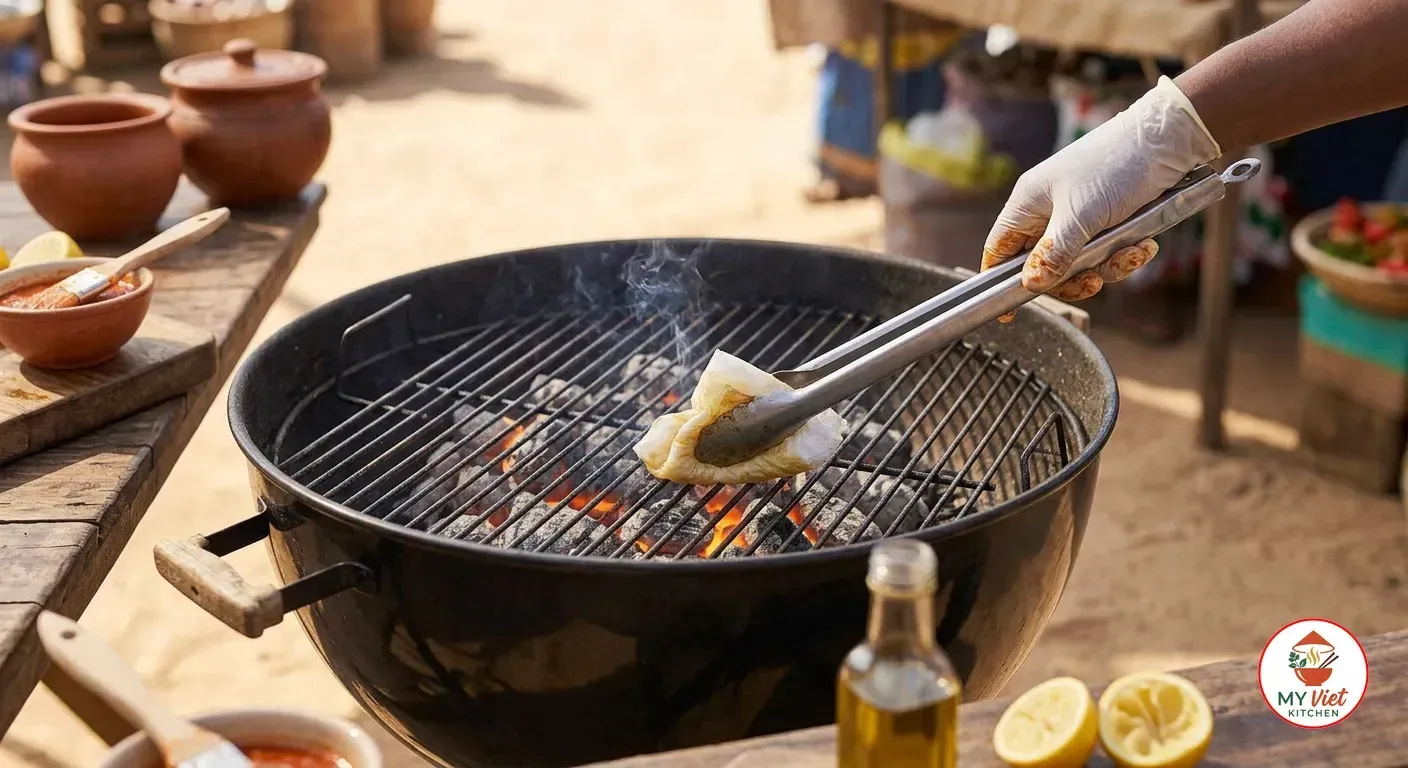
Next, clean the grates with a grill brush and then oil them by dipping a folded paper towel in vegetable oil and rubbing it across the grates using long tongs. This stops the chicken from sticking. The sugars in the marinade burn fast and bond to dirty or dry grates. Let the oiled grates heat for 2 more minutes before you place the chicken on the grill.
Step 4: Grill the Piri Piri Chicken
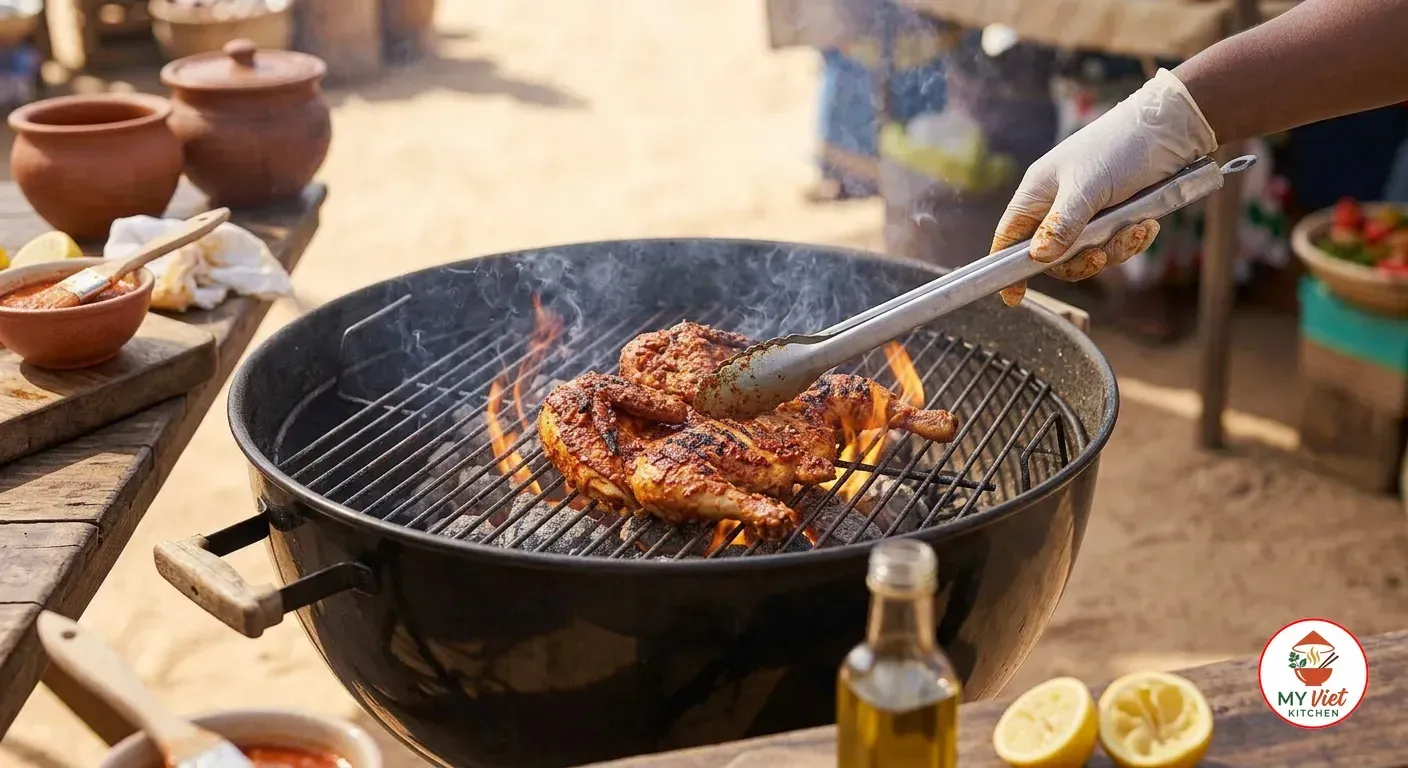
4 Take the chicken out of the fridge 30 minutes before grilling. This takes the chill off the meat. Place the chicken skin-side down over the direct heat zone. Sear for 4 to 5 minutes without moving it. Let the skin build a deep char. You will hear an aggressive sizzle. Do not move the chicken too early. Flipping too soon tears the skin. Once the skin lifts from the grates on its own and shows dark grill marks, flip and sear the bone side for 4 to 5 minutes.
After searing both sides, move the chicken to the indirect zone, skin side up. Close the grill lid and cook for 25 to 30 minutes. Baste with the reserved piri piri sauce every 10 minutes. The chicken is done when a thermometer in the thickest part of the thigh reads 165 degrees Fahrenheit. If the skin darkens too fast, tent it loosely with foil while it finishes.
Step 5: Rest and Serve
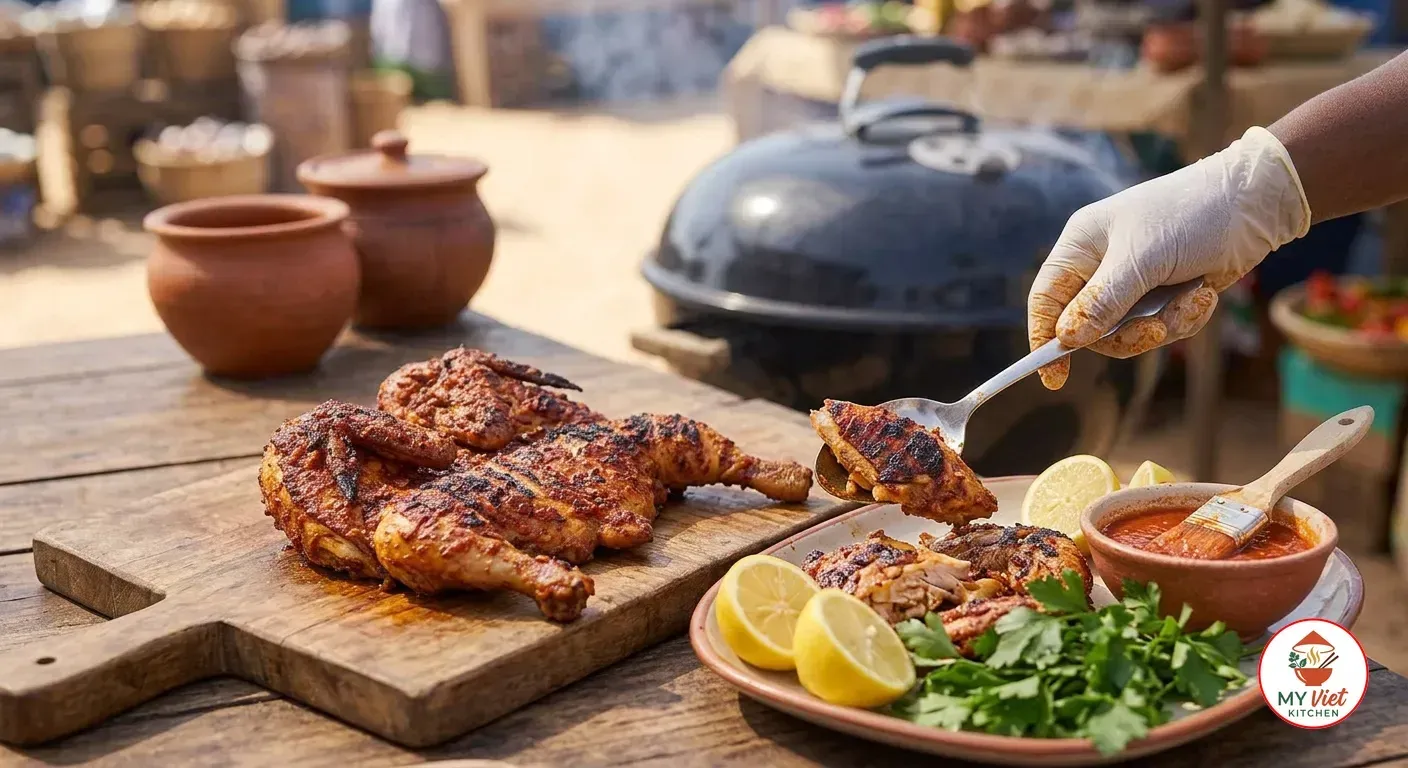
5 Transfer the grilled piri piri chicken to a cutting board and let it rest for 10 minutes. Resting lets the juices settle back into the meat. If you cut too soon, those juices will pour onto the board instead of staying in each bite. Cover the chicken loosely with foil during the resting period to keep it warm.
Once rested, carve the chicken into serving pieces. Separate the legs and thighs, then cut the breast into thick slices. Arrange the pieces on a serving platter and drizzle with the remaining piri piri sauce. Squeeze fresh lemon wedges over the top and garnish with parsley if desired. Serve immediately while the skin is still crisp and the meat is juicy and tender.
Expert Tips for Perfect Piri Piri Chicken
Control the Heat Level
The heat level depends on the chilies you use. For a milder version, remove the seeds and white pith from the bird’s eye chilies before blending. The seeds hold the most capsaicin, so taking them out cuts the heat by nearly half. If you want a very hot result, add 2 to 3 extra chilies and leave all the seeds in. You can also add a habanero pepper for a fruitier, more intense burn.
Use a Meat Thermometer
Grilling a whole chicken without a thermometer is risky. Thigh meat cooks slower than breast meat, and visual cues alone are not reliable. A good thermometer removes all guesswork. Stick it into the thickest part of the thigh, away from the bone. Pull the chicken off the grill the moment it reads 165 degrees. This stops you from overcooking, which is the top reason grilled chicken turns dry.
Make Extra Sauce
Double the marinade recipe and save the extra as a table sauce. Fresh piri piri sauce keeps in the fridge for up to two weeks in a sealed glass jar. It works beautifully on grilled shrimp, roasted vegetables, eggs, and even pizza. In Mozambique, piri piri sauce sits on every table as a go-to condiment, much like ketchup in the United States.
Piri Piri Chicken Around the World
The piri piri chicken recipe has traveled far beyond Mozambique, and each region has adapted it to local tastes. Here is a comparison of the most popular versions you will encounter.
| Style | Key Differences |
|---|---|
| Mozambican (original) | Fresh bird’s eye chilies, charcoal grill, minimal spices, served with matapa or rice |
| Portuguese | More garlic and paprika, often oven-roasted, served with fries and salad |
| South African (Nando’s style) | Sweeter, more complex sauce with herbs, flame-grilled, commercial seasoning blends |
| British adaptation | Milder heat, pre-made bottled sauces, often served as pub food with chips |
| Angolan | Palm oil added to marinade, more ginger, served with funje (cassava porridge) |
Serving Suggestions
In Mozambique, piri piri chicken is street food and celebratory feast food at the same time. Vendors grill butterflied chickens over charcoal at roadside stands, while families prepare it for holidays and gatherings. The accompaniments are simple because the chicken itself is the star.
The Perfect Accompaniments:
- Matapa: This traditional Mozambican side dish of cassava leaves cooked with ground peanuts and coconut milk is the classic pairing for piri piri chicken, because its creaminess calms the chili heat.
- White rice: Plain steamed rice absorbs the piri piri sauce beautifully and provides a neutral base that lets the spicy chicken shine without competing for attention.
- Batata frita (fried potatoes): Crispy, salted potato wedges or fries are a popular street food pairing in Maputo, the capital of Mozambique, and they add a satisfying crunch to the meal.
- Grilled corn on the cob: Charred corn brushed with a little butter complements the smoky flavor of the grilled chicken and adds natural sweetness.
- Cucumber and tomato salad: A fresh salad dressed with lemon juice and olive oil provides a cool, refreshing contrast to the fiery chicken.
Beverage Pairings:
- 2M or Laurentina beer: These popular Mozambican lagers are crisp and refreshing, making them the traditional local choice for washing down spicy piri piri chicken.
- Vinho verde: This light, slightly fizzy Portuguese wine has enough acidity to cut through the richness of the chicken while cooling the palate between bites.
- Fresh lime soda: For a non-alcoholic option, combine sparkling water with fresh lime juice and a touch of sugar for a bright and cleansing drink.
Storage and Reheating
Refrigerator: Store leftover piri piri chicken in an airtight container for up to 4 days. The flavors continue to develop in the fridge, so leftover chicken often tastes even more intensely spiced the next day. Separate the sauce from the meat if possible to keep the skin from becoming soggy.
Freezer: Freeze cooked piri piri chicken for up to 3 months. Wrap individual portions tightly in plastic wrap and then place them in freezer bags. Thaw overnight in the refrigerator before reheating. The sauce freezes separately in ice cube trays for convenient portioning.
Reheating: The best method is to reheat piri piri chicken on a hot grill or under the broiler for 3 to 5 minutes per side. This restores the crispy skin that makes the dish special. Avoid the microwave if possible, because it softens the skin and makes the texture rubbery. If you must use a microwave, cover the chicken loosely and heat in 30-second intervals.
Common Mistakes to Avoid
1. Skipping the Marination Time
A quick 30-minute marinade barely scratches the surface of the meat. The acid in the lemon juice and vinegar needs time to break down the outer protein layer. It also helps the chili, garlic, and spices soak in deeply. If you rush this step, you get a spicy coating on the surface and bland meat inside. Always marinate for at least 4 hours, and overnight delivers the best flavor.
2. Using Only Direct Heat
Grilling a whole chicken only over direct high heat leads to disaster. Your outside burns long before the inside cooks through. Sugar in the marinade chars fast. Instead, use the two-zone method. Sear over direct heat first for color and flavor. Then move to indirect heat so the chicken finishes gently and evenly.
3. Not Scoring the Meat
Whole chicken pieces are thick, especially the thighs and breast. Without deep cuts, the marinade stays on the surface. You end up with great flavor on the outside and bland meat at the center. Take time to slash the meat at regular gaps. Each cut is a channel that carries flavor deep into the muscle.
Frequently Asked Questions
Can I use chicken pieces instead of a whole bird?
Yes, bone-in, skin-on chicken thighs and drumsticks work beautifully for piri piri chicken. They are more forgiving on the grill than breast meat. The higher fat content keeps them moist. Reduce the grilling time to about 25 to 30 minutes total, flipping once halfway through. Boneless thighs cook even faster at roughly 12 to 15 minutes total.
What if I cannot find bird’s eye chilies?
Thai chilies are the best substitute because they match the heat level and small size of African bird’s eye peppers. Serrano peppers also work well, though they are slightly milder. As a last resort, use cayenne pepper with a small amount of habanero to match the heat and fruity flavor. Avoid dried chili flakes. They lack the fresh, vibrant taste that defines real piri piri chicken.
Is piri piri chicken gluten-free?
This piri piri chicken recipe is naturally gluten-free. The marinade contains only fresh produce, spices, citrus juice, vinegar, and olive oil. There is no flour, breadcrumbs, or soy sauce in the traditional preparation. However, if you buy piri piri sauce instead of making your own, check the label for wheat-based thickeners or additives.
Variations and Adaptations
Piri Piri Chicken Wings:
Toss chicken wings in the piri piri marinade for 2 hours. Grill over direct medium-high heat for 20 to 25 minutes, turning every 5 minutes. Wings cook faster and develop an incredible ratio of crispy, charred skin to tender meat. They make an outstanding appetizer or party snack.
Oven-Roasted Piri Piri Chicken:
If you do not have a grill, roast the chicken on a wire rack over a sheet pan at 425 degrees for 40 to 45 minutes. The wire rack lets air flow under the bird, which crisps the skin on all sides. Broil on high for the final 3 to 5 minutes to mimic the charred finish of a grill. Watch closely during broiling to prevent burning.
Piri Piri Grilled Shrimp:
The piri piri marinade works great on large, shell-on shrimp. Marinate for just 30 minutes since the acid can make shrimp mushy. Grill over high heat for 2 to 3 minutes per side. The smoky char and fiery sauce pair with the shrimp’s sweetness in a way that rivals the chicken.
The Cultural Significance of Piri Piri Chicken
Piri piri chicken tells the story of Mozambique itself. Portuguese traders arrived on the East African coast in the 15th century and found the local bird’s eye chili. Indeed, African communities had grown it for generations. The Portuguese named it piri piri, from the Swahili word for pepper. They blended this fiery ingredient with their own garlic, citrus, and olive oil to create a marinade that became a symbol of Mozambican identity.
Today, piri piri chicken is everywhere in Mozambique. In Maputo, Beira, and Nampula, chicken vendors line the streets with charcoal grills made from old oil drums. The smell of smoking chili and charring skin fills whole blocks. Every evening, families gather around these vendors, eating with their hands and sharing cold beer. For many Mozambicans, the taste of piri piri chicken is the taste of home itself.
The dish also carries a deeper significance as a symbol of cultural fusion. It shows how African ingredients and European methods can merge into something greater than either one alone. This spirit of blending has shaped Mozambican cooking for centuries. Piri piri chicken remains its most famous and loved result. When you make this recipe at home, you join a food tradition that spans continents and centuries.
Conclusion
Making authentic Mozambican piri piri chicken at home is simple once you nail three things: a fresh chili marinade, enough time for the flavors to soak in, and a two-zone grill setup that chars the skin without drying the meat. The result is a chicken that bursts with clean chili heat, bright citrus, and smoky depth in every bite you take.
Whether you grill it outdoors over charcoal for the most authentic experience or roast it in your oven on a weeknight, this piri piri chicken recipe delivers bold Mozambican flavor that will have everyone at the table reaching for seconds. For more African recipes, explore our collection of African dishes including Nigerian suya and Ethiopian doro wat.