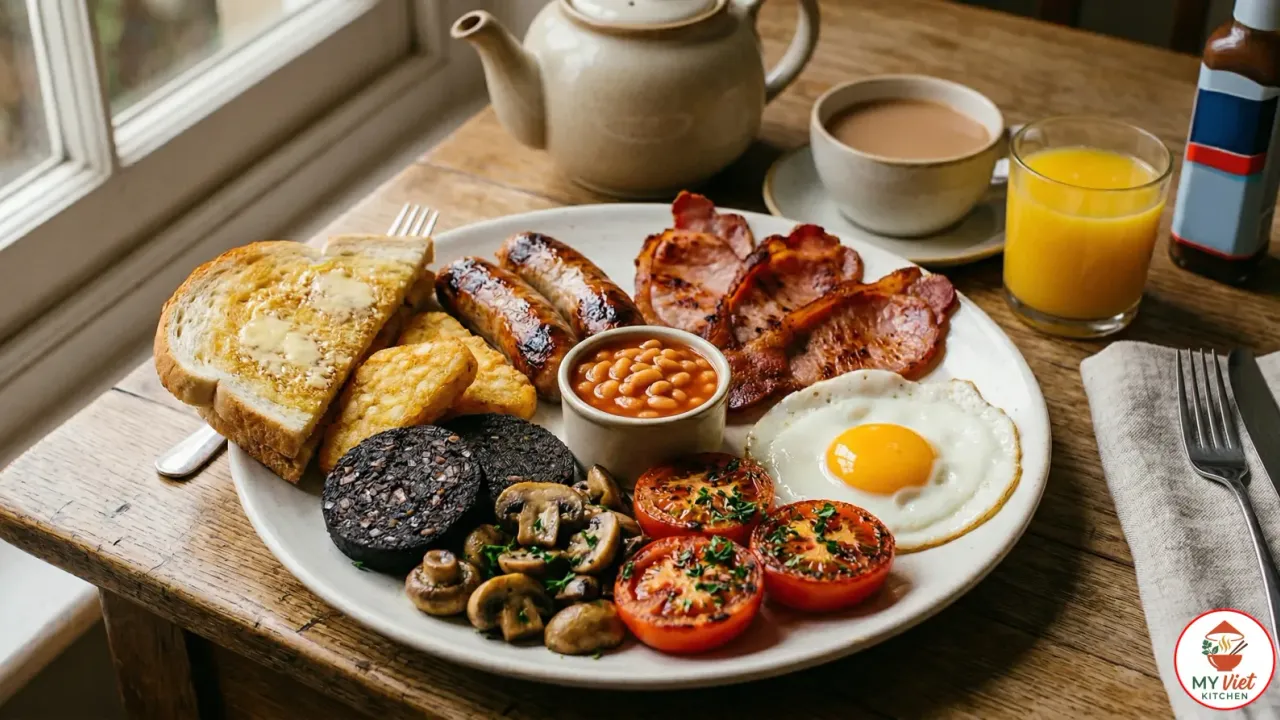
The full English breakfast is one of the most iconic meals in the world. This legendary spread of crispy bacon, golden sausages, fried eggs, baked beans, grilled tomatoes, sauteed mushrooms, and buttered toast has fueled British mornings for over a century. Known affectionately as the fry-up, this traditional English breakfast transforms a handful of simple ingredients into a plate so satisfying that it can power you through an entire day. This recipe breaks down every component so you can cook a proper full English breakfast at home with confidence.
Prep Time: 10 minutes | Cook Time: 25 minutes | Servings: 4
Difficulty: Easy | Calories: ~750 per serving
What Makes a Full English Breakfast Special?
A full English breakfast is not just a meal. It is an institution. In fact, the concept stretches back to the Victorian era, when the landed gentry served lavish morning spreads to their guests. Over the decades, the breakfast evolved from an aristocratic indulgence into a working-class staple. By the mid-20th century, every cafe, truck stop, and boarding house in England served some version of the fry-up. Even today, it remains a beloved ritual that brings families together on lazy weekend mornings.
What sets the full English apart from other big breakfasts around the world is the careful balance of flavors and textures on a single plate. Salty bacon meets sweet baked beans. Similarly, rich, runny egg yolk mingles with the acidity of grilled tomatoes. Crispy toast soaks up the juices. Each element contributes something different. Remove one component, and the entire balance shifts. Ultimately, that interplay between savory, sweet, crispy, soft, rich, and tangy is what elevates the full English breakfast from ordinary to extraordinary.
The full English breakfast also reflects a deeply practical British philosophy about food. Nothing goes to waste, and everything earns its place on the plate. For instance, mushrooms absorb bacon fat and gain flavor. Tomatoes break down under heat and become a natural sauce. Additionally, beans provide fiber and sweetness without any extra effort. Together, this efficiency and bold taste explain why the dish has survived for more than 150 years.

Choosing the Right Bacon
Bacon is the backbone of a full English breakfast. The type of bacon you choose determines the character of the entire plate. Notably, British bacon differs significantly from the streaky American variety, so here is what to look for.
- Back bacon (traditional choice): This is the standard for a full English. Back bacon comes from the loin of the pig. It has a large, lean eye of meat with a thin strip of fat along one edge. The flavor is meaty and mild. Back bacon crisps up around the edges while staying tender in the center. Look for dry-cured back bacon for the best results.
- Smoked back bacon (best overall choice): Smoked back bacon adds an extra layer of depth. The smoking process gives the meat a subtle sweetness and woodsy aroma. It pairs exceptionally well with fried eggs and baked beans. Most British cooks consider smoked back bacon the gold standard for a proper fry-up.
- Streaky bacon: American-style streaky bacon is thinner and fattier. It fries up extra crispy and renders a lot of flavorful fat. Some people prefer it in a full English for the crunch factor. However, it lacks the meaty substance that back bacon provides.
- Middle bacon: This cut combines both back and streaky in one long rasher. It offers the best of both worlds, featuring a lean loin section and a fatty belly section. Middle bacon is less common but worth seeking out at a quality butcher.
Ingredients for Full English Breakfast
Main Components:
- 8 thick pork sausages (Cumberland or Lincolnshire)
- 8 slices back bacon (smoked or unsmoked)
- 4 large eggs
- 1 can (14 oz) baked beans
- 4 medium tomatoes, halved
- 8 oz cremini or button mushrooms, sliced
For the Toast and Cooking:
- 4 slices thick-cut white or sourdough bread
- 4 tablespoons butter
- 2 tablespoons vegetable oil
- Salt and black pepper to taste
Optional Extras:
- 4 slices black pudding
- 4 hash browns
- 4 slices fried bread (as an alternative to toast)
Pro tip: Use room-temperature eggs for frying. Cold eggs straight from the fridge lower the pan temperature and cook unevenly. Also, crack each egg into a small cup first before sliding it into the pan. This prevents broken yolks and gives you more control over placement.
Step-by-Step Instructions
Step 1: Start the Sausages and Bacon
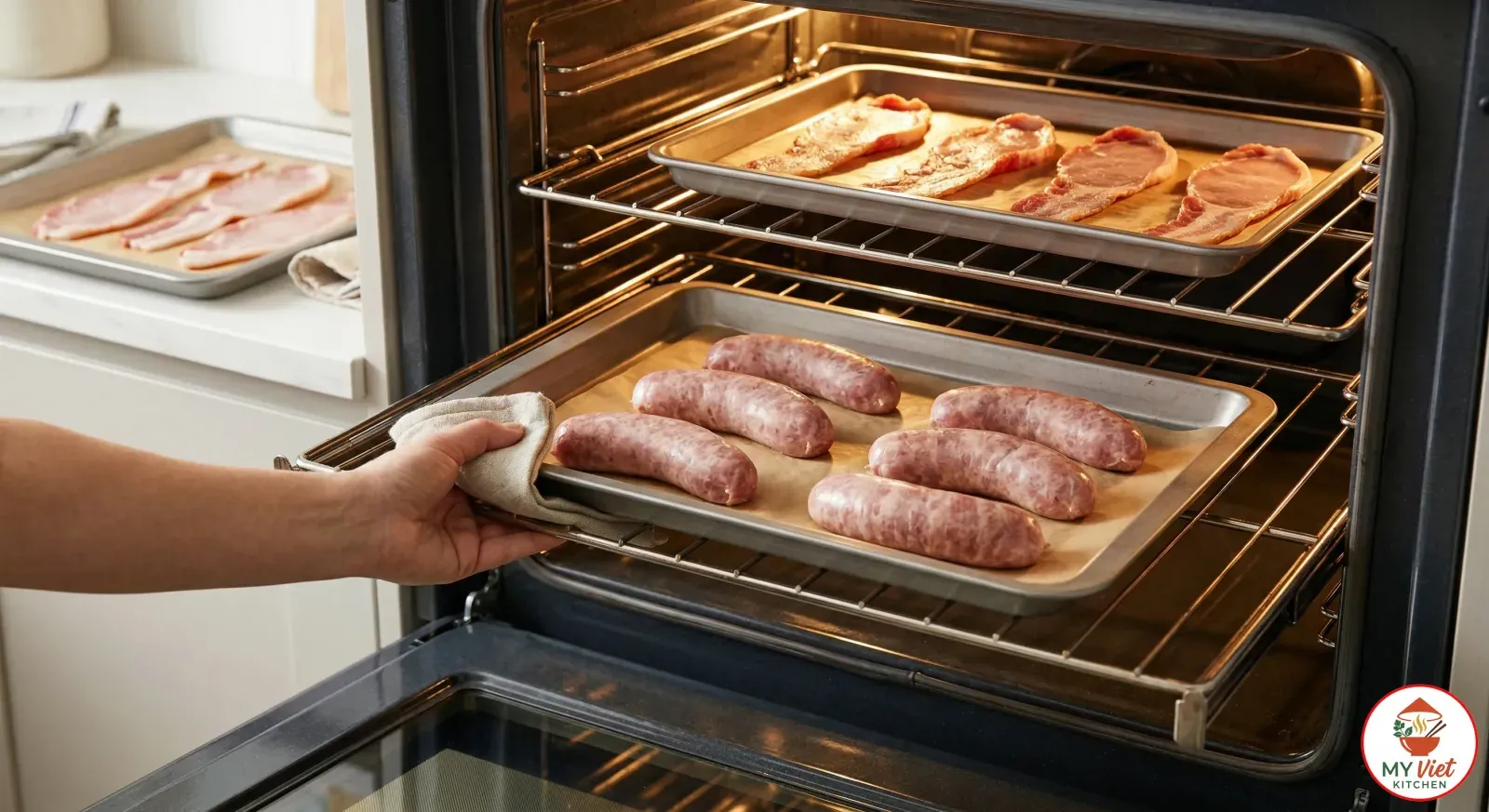
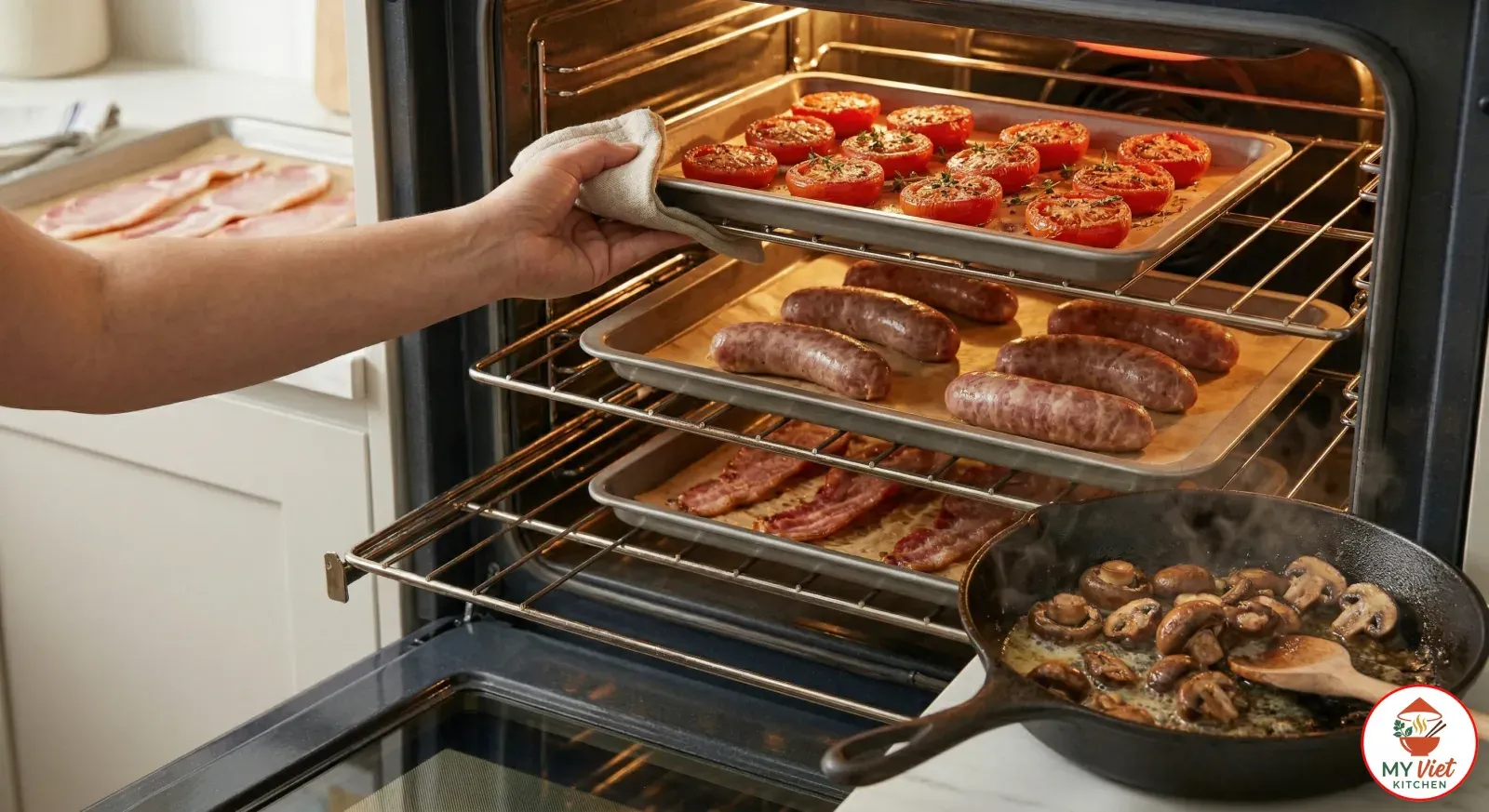
1 Preheat your oven to 400 degrees Fahrenheit. Place the sausages on a lightly oiled baking tray and put them in the oven. They need 20 to 25 minutes total, so starting them first gives you time to prepare everything else on the stovetop. Therefore, turn the sausages halfway through for even browning on all sides.
After the sausages have been in the oven for about 12 minutes, add the bacon slices to the same tray or a separate one. Generally, back bacon needs 10 to 12 minutes in the oven to get crispy around the edges while staying tender. Using the oven instead of a frying pan keeps your stovetop free for the eggs, mushrooms, and beans. As a result, every component finishes at roughly the same time.
Step 2: Grill the Tomatoes and Cook the Mushrooms
2 Cut the tomatoes in half crosswise. Place them cut-side up on the baking tray alongside the sausages for the last 10 minutes of cooking. Drizzle with a little olive oil and season with salt and pepper. As a result, the oven heat softens the tomatoes and concentrates their natural sweetness.
Meanwhile, heat a tablespoon of butter in a skillet over medium heat. Add the sliced mushrooms in a single layer. Do not stir them for the first 2 minutes. This allows the mushrooms to brown properly instead of steaming. After they develop color on one side, flip and cook for another 3 to 4 minutes until golden and tender. Then season with a pinch of salt and pepper. Then set them aside in a warm bowl while you move to the next component.
Step 3: Warm the Beans and Make the Toast
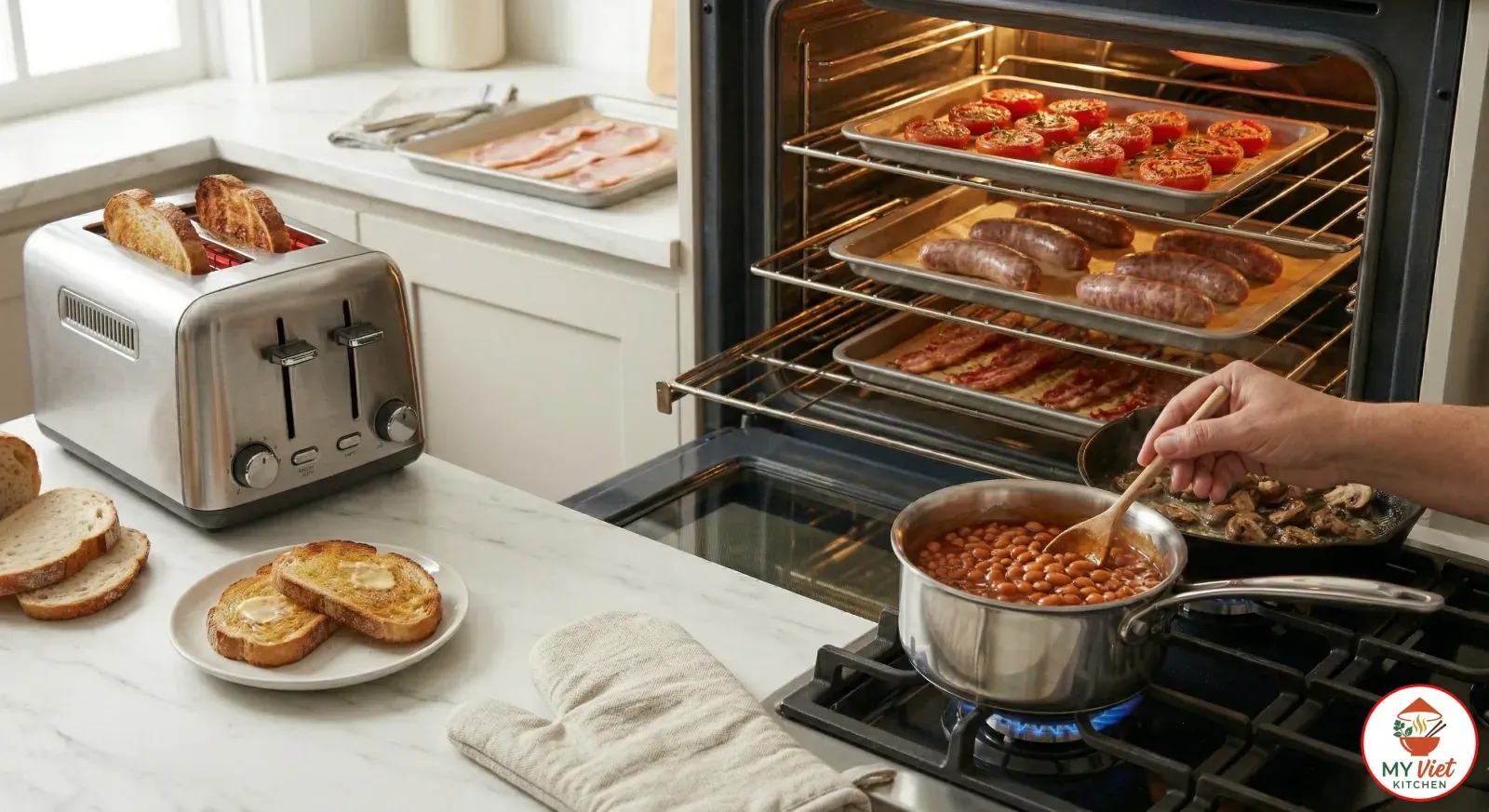
3 Pour the baked beans into a small saucepan and warm them over medium-low heat. Stir gently every minute or so to prevent them from sticking to the bottom. In general, the beans need about 5 minutes to heat through. Do not boil them vigorously, because high heat breaks the beans apart and makes the sauce thin and watery.
While the beans warm up, toast the bread slices. You can use a toaster, a grill pan, or the oven broiler. For a more traditional approach, fry the bread in a little bacon fat or butter until golden on both sides. Indeed, fried bread is richer and crunchier than toast, and it is a beloved option in many English cafes. Whichever method you choose, butter the slices generously while they are still hot.
Step 4: Fry the Eggs
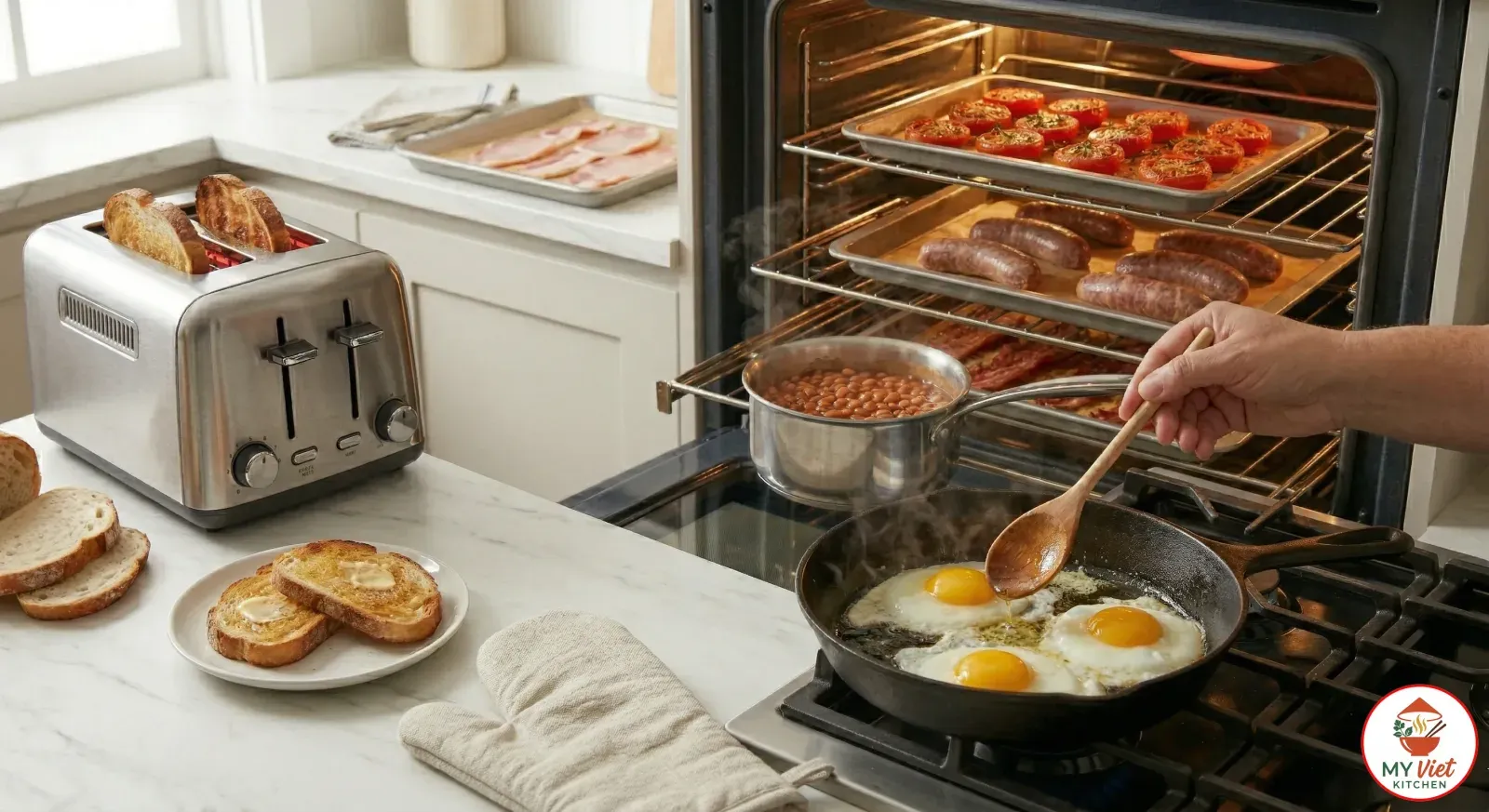
4 The eggs should be the very last thing you cook, because they taste best straight from the pan. Heat a tablespoon of oil and a small knob of butter in a non-stick skillet over medium-low heat. Once the butter foams and settles, crack the eggs gently into the pan. Leave enough space between each egg so they do not run together.
Cook the eggs for 2 to 3 minutes without touching them. The whites should set completely while the yolks stay soft and runny. Next, for a glossy finish, tilt the pan slightly and use a spoon to baste the top of each egg with the hot butter. This cooks the thin layer of white over the yolk without flipping. Finally, season with a small pinch of salt and pepper. However, if you prefer well-done yolks, cover the pan with a lid for an extra minute.
Step 5: Plate and Serve
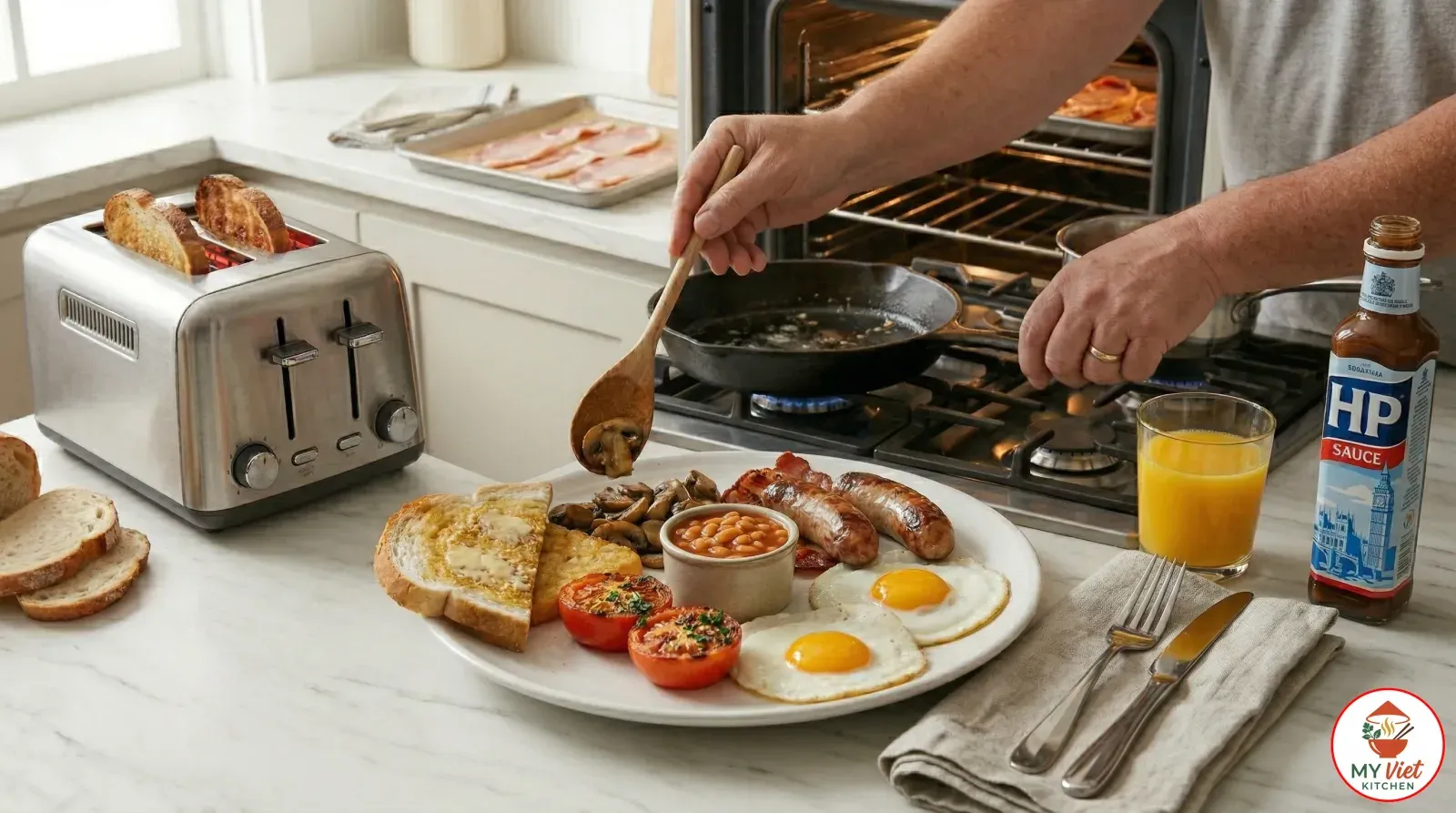
5 Use large, warmed plates for serving. Specifically, warming the plates in a low oven for a few minutes keeps the food hot longer. Arrange the sausages and bacon on one side of the plate. Place the fried egg next to them so the yolk is easy to break with a fork.
Spoon the baked beans into their own section of the plate. In particular, many people prefer to contain the beans so they do not run into the other items. Add the grilled tomatoes and sauteed mushrooms alongside. Finally, lean the toast against the edge of the plate or place it on a separate side plate. Serve the full English breakfast immediately while every component is still piping hot. A full English waits for no one.
Expert Tips for the Perfect Full English Breakfast
Master the Timing
The biggest challenge with a full English breakfast is getting everything ready at the same time. First, start the sausages because they take the longest. Then add the bacon and tomatoes to the oven partway through. Meanwhile, cook the mushrooms and warm the beans on the stovetop while the oven does its work. Lastly, fry the eggs just before plating. If anything finishes early, keep it warm on a plate in a low oven at 200 degrees Fahrenheit.
Use the Oven for Crowd Control
Cooking sausages and bacon in the oven rather than a frying pan is a game changer. The oven provides even, hands-off heat. As a result, you can fit large quantities on baking trays, which makes the full English breakfast practical for four or more people. Meanwhile, your stovetop stays free for eggs and mushrooms. Overall, this approach reduces stress and ensures consistent results.
Do Not Skimp on Quality Sausages
The sausage is one of the defining elements of a fry-up. Buy thick, high-quality pork sausages with at least 70 percent meat content. Cumberland sausages seasoned with black pepper or Lincolnshire sausages with sage are both excellent choices. By contrast, cheap, thin sausages with high filler content turn mushy and release water. Consequently, spending a little extra on the sausages elevates the entire breakfast.
Full English vs. Other British Breakfasts
Each region of the British Isles has its own version of the cooked breakfast. While the core stays similar, the additions and swaps reveal distinct local traditions. Here is a comparison of the most popular regional variations.
| Breakfast | Region | Key Differences |
|---|---|---|
| Full English | England | Back bacon, pork link sausages, fried eggs, beans, toast, tomatoes, mushrooms |
| Full Scottish | Scotland | Adds tattie scones, square Lorne sausage, haggis, and oatcakes |
| Full Irish | Ireland | Includes white pudding, soda bread, and potato farls alongside the standard items |
| Full Welsh | Wales | Features laverbread (seaweed paste) and cockles as distinctive additions |
| Ulster Fry | Northern Ireland | Adds soda farls, potato bread, and often serves pancakes alongside the fry-up |
Serving Suggestions
A full English breakfast is a complete meal in itself. However, a few additions and the right drink can make the experience even better. Here are the best ways to serve your fry-up.
The Perfect Accompaniments:
- HP Brown Sauce: This tangy, spiced condiment is the classic partner for a full English. Its vinegary sweetness cuts through the richness of bacon and sausages. Squeeze a generous line across the plate.
- Tomato ketchup: A simpler alternative to brown sauce. Many English diners swear by ketchup with their fried eggs and bacon. The debate between brown sauce and ketchup is a long-standing British tradition.
- English mustard: A dab of Colman’s English mustard alongside the sausages adds a sharp, sinus-clearing heat. Use sparingly, because English mustard is much hotter than the American variety.
- Bubble and squeak: This British classic made from leftover mashed potatoes and cabbage, pan-fried until crispy, adds a golden, savory cake to the plate. It is the perfect way to use up last night’s vegetables.
Beverage Pairings:
- English breakfast tea (essential): A strong cup of English breakfast tea with milk is the most iconic pairing. The tannins in the tea cleanse the palate between rich, fatty bites. Most British people consider the meal incomplete without it.
- Fresh orange juice: A glass of cold, freshly squeezed orange juice provides a bright, citrusy contrast to the heavy, savory plate. Its acidity refreshes and balances the richness.
- Filter coffee: A strong black coffee works beautifully if you prefer coffee over tea. Its bitterness pairs well with the salty bacon and sweet beans.
- Bloody Mary or Buck’s Fizz: For a celebratory weekend brunch, a spicy Bloody Mary or a Buck’s Fizz (champagne and orange juice) turns the full English into a special occasion.
Storage and Reheating
Refrigerator: Store leftover components separately in airtight containers. Cooked sausages and bacon keep for 3 to 4 days. Baked beans last up to 3 days. Mushrooms and tomatoes stay fresh for 2 days. Do not refrigerate fried eggs, because they lose their texture entirely.
Freezer: Cooked sausages and bacon freeze well for up to 3 months. Baked beans can also be frozen in portions for up to 2 months. Toast, eggs, tomatoes, and mushrooms do not freeze well. Thaw frozen items in the refrigerator overnight before reheating.
Reheating: Warm sausages and bacon in a 350-degree Fahrenheit oven for 8 to 10 minutes. Reheat beans in a saucepan over low heat with a splash of water. For mushrooms, a quick toss in a hot pan restores their texture. Always fry fresh eggs rather than reheating leftover ones. The yolks turn rubbery and chalky when reheated.
Common Mistakes to Avoid
1. Cooking Everything in One Pan
Trying to fry all the components in a single skillet is the most common mistake. Consequently, the pan gets overcrowded, temperatures drop, and nothing browns properly. Instead, use the oven for sausages, bacon, and tomatoes. Reserve the stovetop for eggs and mushrooms. This division of labor keeps each item at the right temperature and gives you better results across the board.
2. Frying Eggs on High Heat
High heat turns egg whites rubbery and crispy around the edges while leaving raw spots near the yolk. Instead, medium-low heat is the key. It cooks the whites gently and evenly. Therefore, the result is a tender, silky egg with a perfectly runny yolk. Undoubtedly, patience here makes all the difference between a good fried egg and a great one.
3. Serving on Cold Plates
A full English breakfast cools down fast because it has many thin, spread-out components. Furthermore, cold plates accelerate this problem. As a result, the bacon fat solidifies and the eggs lose their warmth within minutes. Warming your plates in a low oven for 5 minutes before plating solves this issue entirely. Indeed, it is a small step that professional kitchens never skip.
4. Boiling the Beans Too Hard
Baked beans need gentle heat. After all, a vigorous boil breaks the beans apart and thins the sauce. Instead, warm them slowly over medium-low heat, stirring occasionally. The sauce should stay thick and glossy. Additionally, some cooks add a knob of butter or a dash of Worcestershire sauce to the beans for extra flavor. Either way, low and slow is the approach.
Frequently Asked Questions
What is included in a full English breakfast?
A traditional full English breakfast includes bacon, pork sausages, fried eggs, baked beans, grilled tomatoes, sauteed mushrooms, and toast. Optional extras include black pudding, hash browns, fried bread, and bubble and squeak. The exact lineup varies by region and by the preferences of the cook. There is no single definitive version, which is part of the charm.
Why is it called a fry-up?
The name fry-up comes from the original cooking method. Traditionally, most of the components were fried one after another in a large pan. The bacon went in first, rendering fat that was then used to fry the sausages, eggs, mushrooms, tomatoes, and bread. While modern recipes use the oven and multiple pans for efficiency, the nickname has endured in everyday British speech for generations.
What is the difference between a full English and a full Scottish breakfast?
A full Scottish breakfast shares the same core of bacon, eggs, and sausages. However, it adds several uniquely Scottish elements. Tattie scones (griddle-cooked potato flatbreads) replace hash browns. Square Lorne sausage, made from a compressed loaf of seasoned pork, replaces link sausages. Haggis often appears alongside black pudding. Oatcakes may stand in for toast. The Scottish version is heartier and reflects distinct culinary traditions.
Can I make a full English breakfast for a crowd?
Absolutely. The oven method is the secret to scaling up. Arrange sausages, bacon, tomatoes, and even hash browns on large baking trays. They cook hands-free while you focus on eggs and beans. Keep finished components warm in a low oven at 200 degrees Fahrenheit. Fry the eggs in batches just before plating. With this approach, you can serve 8 to 10 people without breaking a sweat.
What is black pudding and do I need it?
Black pudding is a traditional British blood sausage made from pork blood, oatmeal, onions, and spices. It has a rich, earthy flavor and a crumbly, slightly grainy texture when sliced and fried until crispy. Black pudding adds authentic depth to a full English breakfast. However, it is entirely optional. Many people enjoy the fry-up without it. If you want to try it, slice it into rounds and fry for 2 minutes on each side until crispy.
Is a full English breakfast healthy?
A traditional full English contains about 750 to 900 calories, depending on portion sizes and cooking methods. It provides substantial protein, fat, and carbohydrates. To lighten it, grill the bacon instead of frying it, use turkey sausages, poach the eggs, and add extra vegetables. Most people enjoy a full English as an occasional weekend indulgence rather than a daily habit. The key is balance and moderation throughout the rest of the day.
Variations and Adaptations
Vegetarian Full English:
Replace the bacon and sausages with plant-based alternatives or grilled halloumi cheese. Add extra mushrooms, roasted peppers, and avocado slices. Baked beans, eggs, tomatoes, and toast remain the same. Vegetarian sausages have improved enormously in recent years. Many brands crisp up nicely and deliver a satisfying savory flavor that holds its own on the plate.
Vegan Full English:
Use vegan sausages, coconut bacon or smoky tempeh strips, and scrambled tofu instead of eggs. Keep the beans, mushrooms, tomatoes, and toast. Fry the tofu with turmeric and nutritional yeast for color and a savory, egg-like flavor. Spread the toast with vegan butter or avocado. This version is hearty, colorful, and entirely plant-based.
Lighter Full English:
Grill the bacon and sausages instead of frying them. Poach the eggs in simmering water for a fat-free alternative. Use reduced-sugar baked beans and add a handful of fresh spinach to the plate for extra nutrients. Skip the fried bread and opt for whole-grain toast instead. These swaps reduce the calorie count by 200 to 300 calories while keeping the spirit of the dish intact.
Full English Breakfast Sandwich:
Layer bacon, a fried egg, a halved sausage, and a spoonful of beans between two thick slices of buttered bread. Press it together gently. This handheld version captures all the flavors of a full English in a portable format. It is a popular option at British cafes and street food stalls. Add a squirt of brown sauce inside for the authentic experience.
The Cultural Significance of the Full English Breakfast
The full English breakfast is woven into the fabric of British identity. Its origins trace back to the 13th century, when Anglo-Saxon landowners served elaborate morning meals to impress their guests. By the Victorian era, the cooked breakfast had become a formal affair. Wealthy households employed dedicated kitchen staff to prepare eggs, meats, fish, and breads every morning. The tradition filtered down through the social classes over the following decades.
By the mid-20th century, the full English had become a working-class institution. Cafes and transport diners across the country, known as greasy spoons, served hearty fry-ups to laborers, truckers, and factory workers who needed fuel for long, physical days. These no-frills establishments became cultural landmarks in their own right. The phrase “full English” entered the national vocabulary as shorthand for a proper, no-nonsense British morning meal.
Today, the full English breakfast endures as a symbol of comfort and tradition. Hotels across England serve it to guests. Pubs offer all-day breakfast menus. Families gather around the table on Saturday mornings to share a leisurely fry-up. It connects generations. Grandparents teach their grandchildren how to fry the perfect egg. Friends debate whether beans should touch the egg. The full English breakfast is far more than food. It is a shared cultural experience that continues to bring people together.
Conclusion
A well-made full English breakfast is one of life’s great pleasures. Crispy bacon, golden sausages, a perfectly fried egg with a runny yolk, warm baked beans, and buttered toast create a plate that satisfies like nothing else. This recipe gives you a clear plan for cooking every component to perfection. Use the oven for the sausages and bacon, keep the stovetop for the eggs, and time everything so it arrives on the plate hot and ready. Follow these steps and you will serve a fry-up worthy of the best British cafes.
Looking for more classic British and European breakfast ideas? Explore our full collection of European dishes, including bangers and mash, Scotch eggs, and kedgeree. Each recipe comes with the same detailed instructions and expert tips to help you cook with confidence.