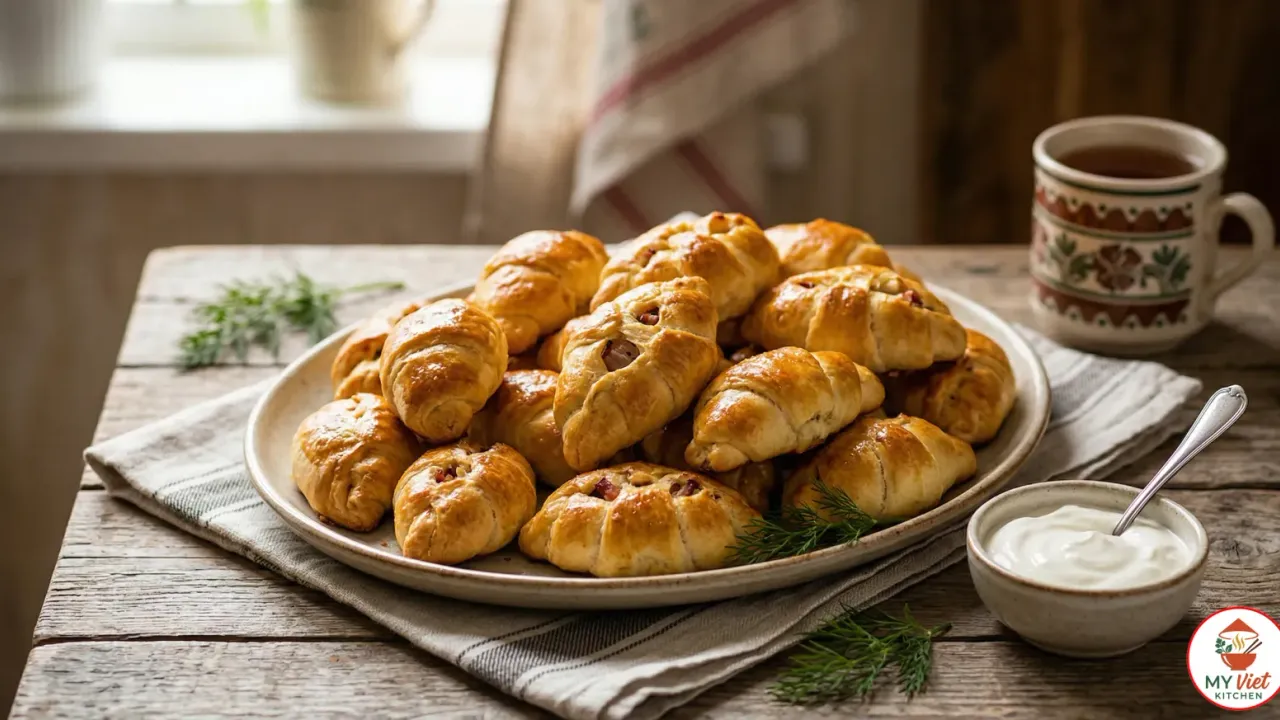
Piragi are the beloved Latvian bacon buns that belong on every holiday table, and this recipe shows you how to make them from scratch with a soft, buttery yeast dough wrapped around a smoky filling of diced bacon and onions. Also called bacon crescent rolls, these small, crescent-shaped piragi deliver a perfect balance of rich, pillowy bread and savory, deeply flavored filling in every bite. This piragi recipe follows the traditional Latvian technique that has passed through generations of Baltic home cooks. Whether you bake them for Christmas Eve, a summer solstice celebration, or a weekend gathering, these golden rolls disappear from the table faster than almost any other dish you can serve.
Prep Time: 40 minutes | Cook Time: 20 minutes | Servings: 40 rolls
Difficulty: Medium | Calories: ~95 per roll
What Makes Piragi Special?
Piragi hold a place in Latvian culture that goes far beyond a simple bread roll. They are the centerpiece of holiday gatherings, the first thing guests reach for at celebrations, and the recipe that every Latvian grandmother guards with pride. Walk into any Latvian home during Christmas, and you will find trays of freshly baked piragi cooling on the counter while the smoky scent of bacon fills the entire house. No other dish carries this level of emotional weight in Baltic cuisine.
So what makes these rolls different from other filled breads? First, the dough stands out. Latvian piragi dough is enriched with butter, eggs, and a touch of sugar, which creates a texture closer to brioche than ordinary bread. It bakes up soft, slightly sweet, and incredibly tender. Second, the filling stays simple on purpose. Smoked bacon and onions cooked together until the fat renders and the onions turn translucent give you a savory, smoky core that contrasts beautifully with the pillowy dough.
Moreover, the crescent shape is not just decorative. Latvian cooks shape each piragi with the seam facing up, which allows steam to escape during baking. Because of this design, the dough stays soft rather than getting soggy from trapped moisture. The curved shape also increases the ratio of golden, slightly crispy crust to soft interior. In the end, every bite gives you a thin shell of toasted bread on the outside and a warm pocket of bacon filling on the inside.

Choosing the Right Bacon for Piragi
The bacon is the heart of this recipe, so your choice determines the flavor of the entire batch. Traditional Latvian piragi use smoked pork belly or slab bacon, which has a deeper smoke flavor and a higher fat content than thin-sliced bacon. Here are your best options depending on what you can find at the store.
- Double-smoked slab bacon (best choice): This European-style bacon delivers the most authentic flavor. Its intense smokiness and firm texture dice evenly and hold up well during cooking. Look for it at Eastern European delis, specialty butchers, or the deli counter of well-stocked grocery stores. The extra smoking gives it a robust flavor that shines through the dough.
- Regular smoked bacon: Standard American-style smoked bacon works well for piragi if you dice it finely. Choose thick-cut slices because they hold their shape better during cooking. The fat renders out nicely, and the smoky flavor comes through in the finished rolls. This is the most convenient option for most home cooks.
- Smoked pork belly: If you can find unsliced smoked pork belly, it gives you the closest match to the traditional Latvian filling. Cut it into small cubes about the size of peas. The higher fat ratio keeps the filling moist and rich, and the smoke flavor penetrates more evenly through the larger pieces.
Ingredients for Piragi
For the Dough:
- 4 cups all-purpose flour
- 1 cup whole milk, warmed to 110 degrees Fahrenheit
- 2 1/4 teaspoons active dry yeast (1 standard packet)
- 1/4 cup granulated sugar
- 1/2 cup unsalted butter, softened to room temperature
- 2 large eggs, at room temperature
- 1 teaspoon salt
For the Bacon Filling:
- 1 pound smoked bacon, finely diced
- 2 large onions, finely diced
- 1/2 teaspoon freshly ground black pepper
For the Egg Wash:
- 1 egg yolk
- 1 tablespoon milk
Pro tip: Let the bacon filling cool completely before assembling the piragi. Warm filling melts the butter in the dough, which makes it sticky and nearly impossible to shape. A cooled filling also firms up slightly, so it stays in place as you fold and pinch each roll shut.
Step-by-Step Instructions
Step 1: Prepare the Yeast Dough
1 Warm the milk to about 110 degrees Fahrenheit. It should feel warm but not hot on the inside of your wrist. Pour the milk into a small bowl, then stir in the sugar and sprinkle the yeast over the surface. Let this mixture sit for 10 minutes until it turns foamy and bubbly. This bloom tells you the yeast is alive and active. If nothing happens after 10 minutes, your yeast may be expired, so start over with a fresh packet.
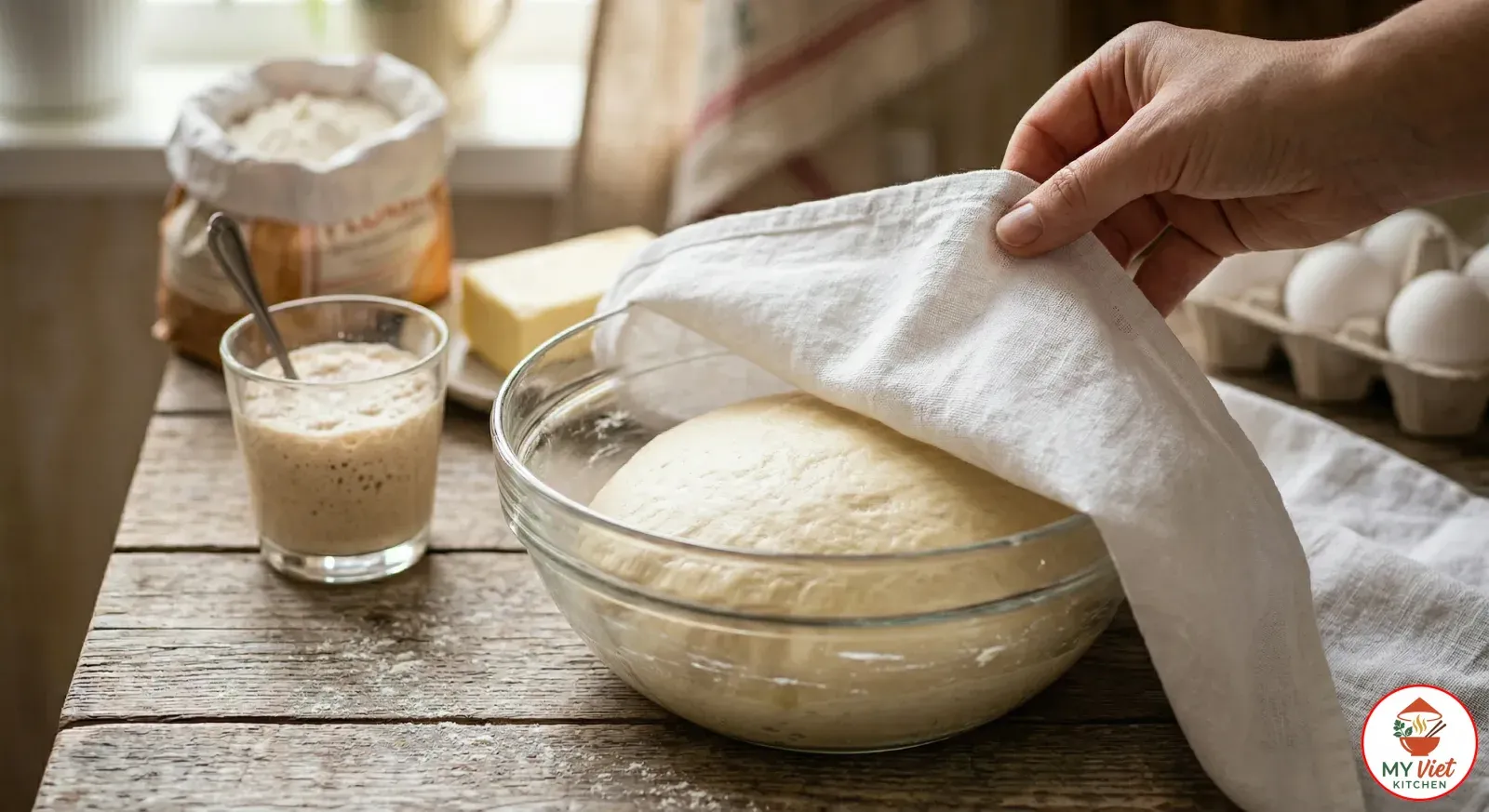
In a large mixing bowl, combine the flour and salt. Make a well in the center and add the softened butter, eggs, and the foamy yeast mixture. Stir with a wooden spoon until a shaggy dough forms, then turn it out onto a lightly floured surface. Knead for 8 to 10 minutes until the dough becomes smooth, soft, and slightly tacky to the touch. It should spring back when you press it with a finger. Place the dough in a greased bowl, cover with a damp towel or plastic wrap, and let it rise in a warm spot for about 1 hour until it doubles in size.
Step 2: Make the Bacon and Onion Filling
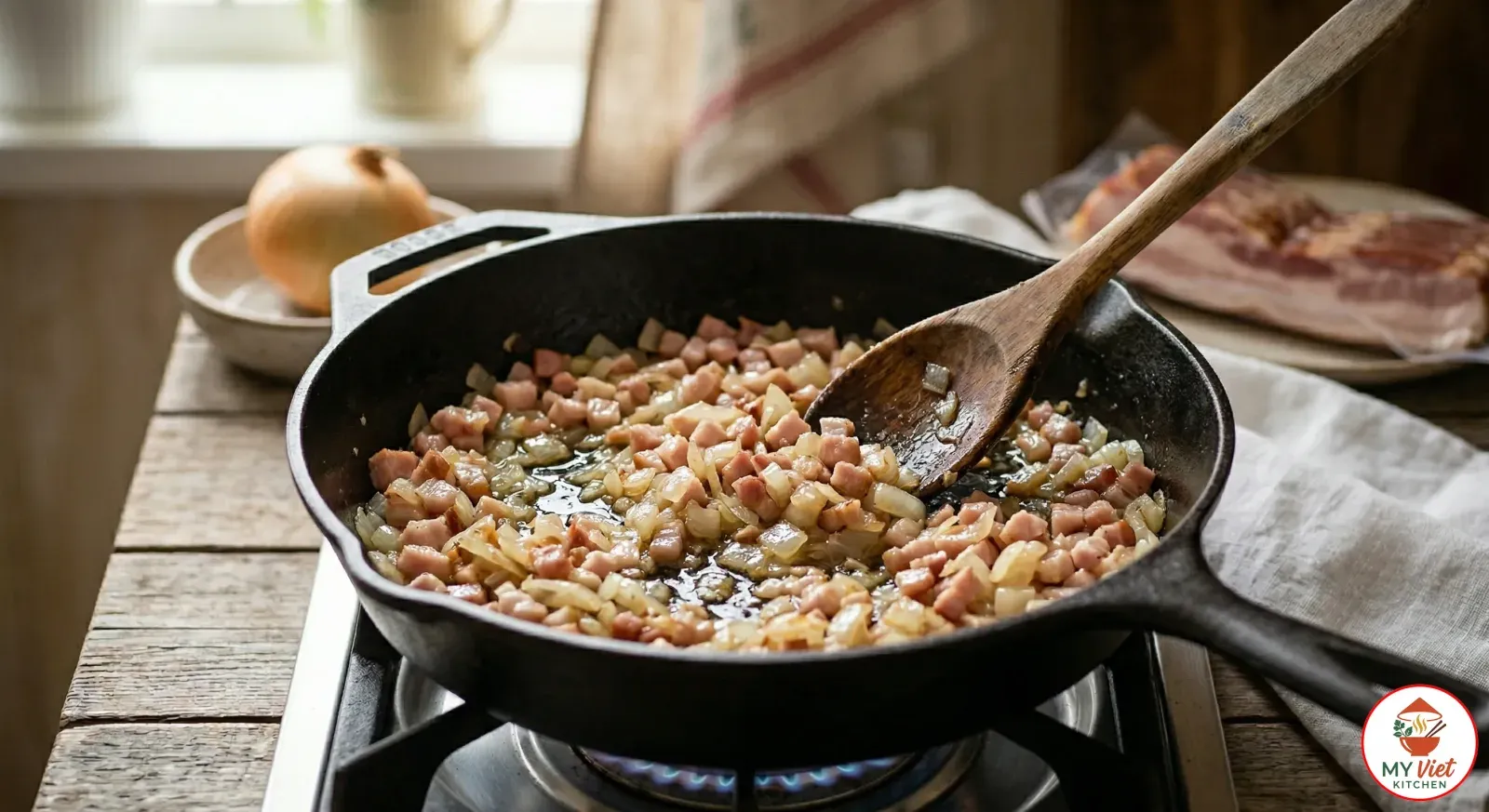
2 While the dough rises, prepare the filling. Dice the smoked bacon into small pieces about the size of peas. Heat a large skillet over medium heat and add the bacon. Cook for about 8 minutes, stirring occasionally, until the fat renders and the pieces turn lightly golden. You do not want the bacon crispy here, because it continues to cook inside the dough during baking. Overcooked bacon dries out and loses its tender, smoky quality.
Add the finely diced onions to the skillet with the bacon and its rendered fat. Cook the onions for another 8 minutes until they soften, turn translucent, and absorb the smoky bacon drippings. Season with the black pepper but skip additional salt, since the bacon provides plenty. Stir everything together, then transfer the filling to a plate and spread it out so it cools quickly. The filling must reach room temperature before you start shaping the piragi.
Step 3: Shape the Piragi into Crescents
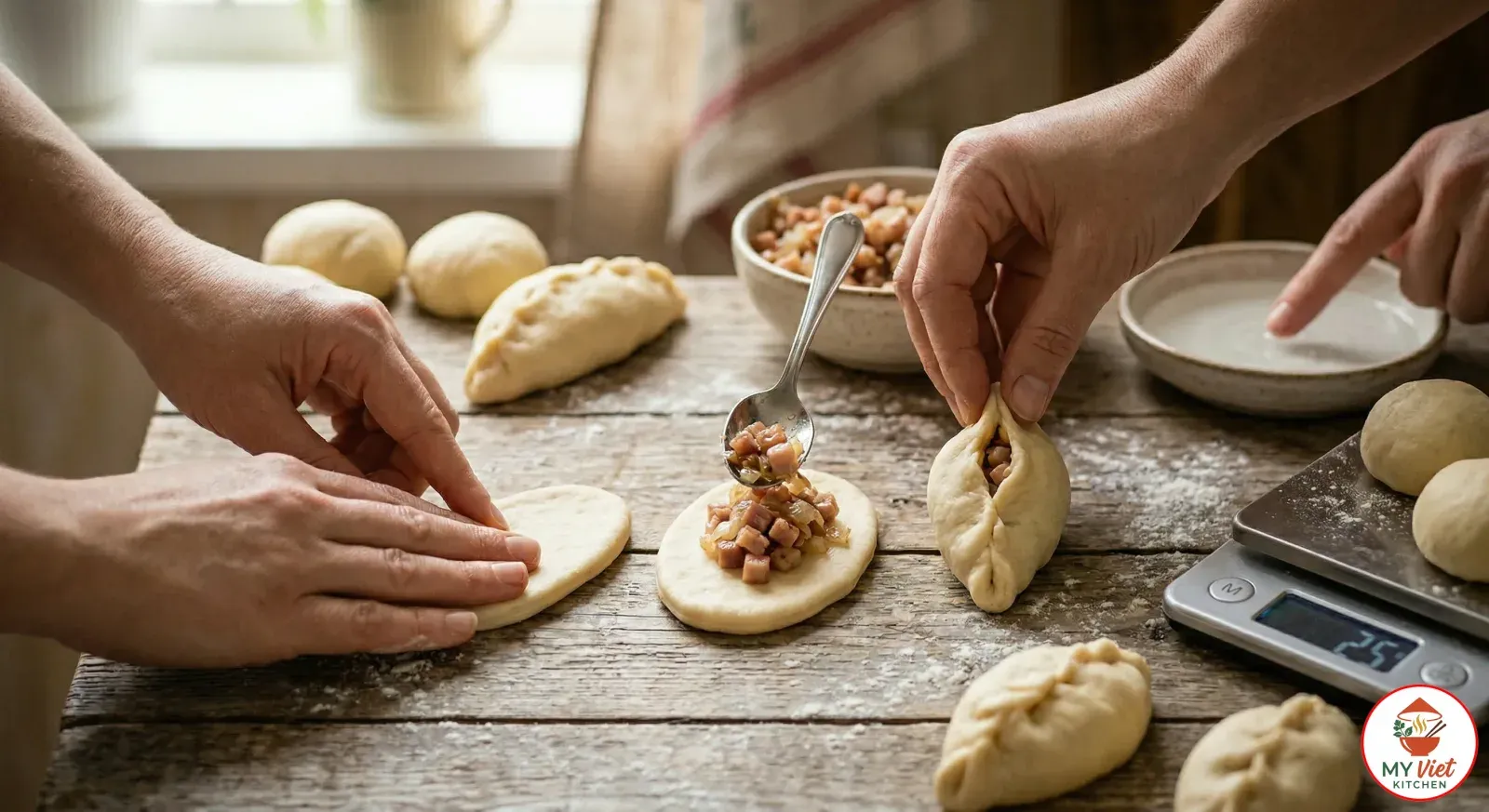
3 Once the dough has doubled, punch it down gently to release the air. Turn it out onto a lightly floured surface and divide it into 40 equal pieces. A kitchen scale helps here because even pieces bake at the same rate. Each piece should weigh roughly 25 grams. Roll each piece into a small, smooth ball between your palms.
Take one ball and flatten it into a thin oval about 3 inches long and a quarter inch thick. Place a heaping teaspoon of the cooled bacon filling in the center. Fold the long edges of the dough up and over the filling, pinching the seam firmly to seal it. Then curve the roll gently into a crescent shape with the pinched seam facing up. This open seam is the signature look of piragi. It lets steam escape during baking and creates a peek of golden filling on top. Repeat with all remaining pieces.
Step 4: Second Rise and Egg Wash
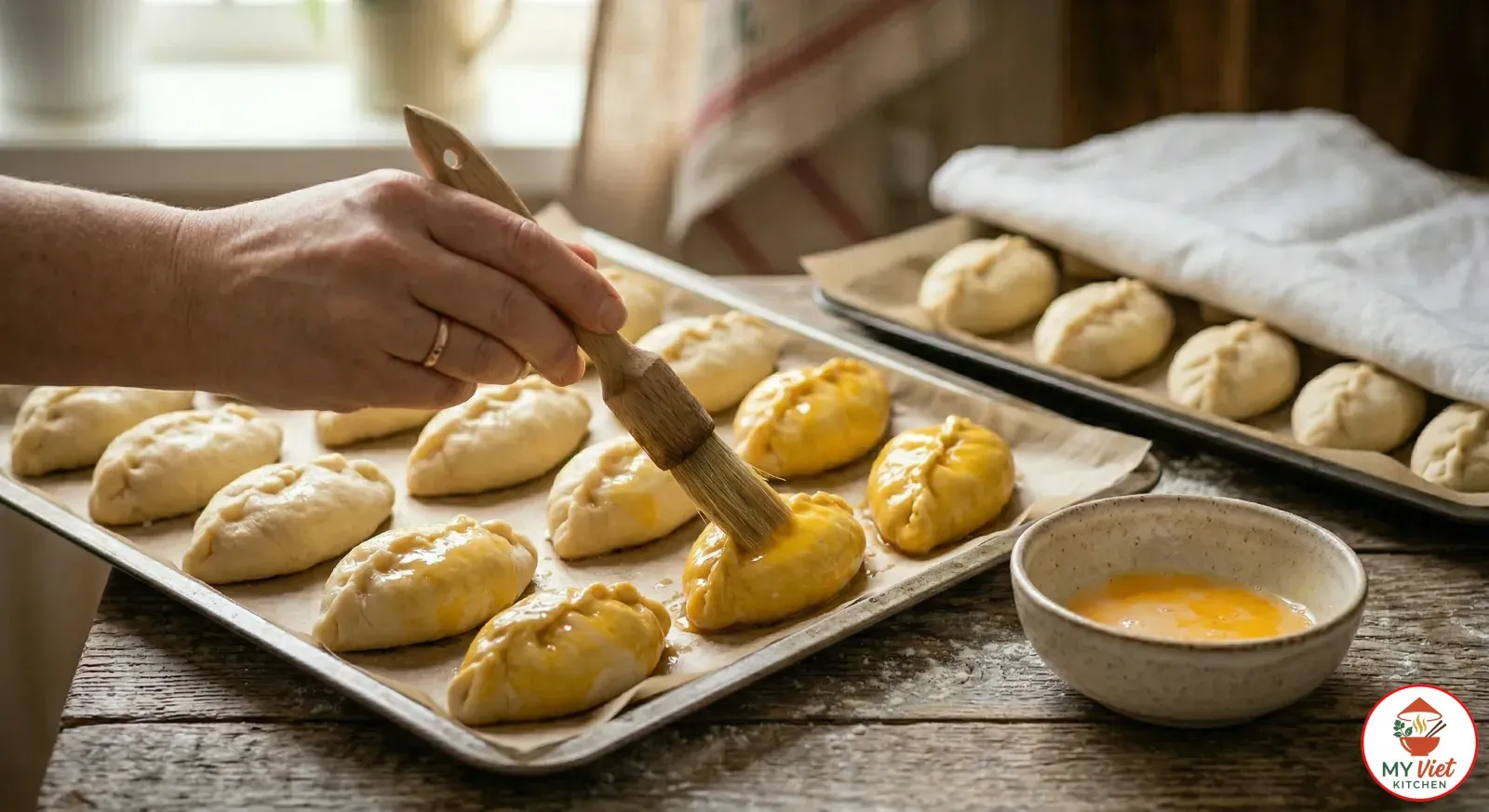
4 Place the shaped piragi on parchment-lined baking sheets, leaving about an inch of space between each roll. The rolls expand during the second rise and again in the oven, so give them room to grow without touching. Cover the sheets loosely with a clean kitchen towel and let the piragi rest for 20 minutes at room temperature. This brief second rise relaxes the dough and gives the finished rolls a lighter, airier texture.
After the rest, prepare the egg wash by beating the egg yolk with a tablespoon of milk. Brush each piragi generously with this mixture, making sure to coat the sides and the exposed seam on top. The egg wash does two important things. First, it creates the deep golden color that makes piragi so visually appealing. Second, it forms a thin, glossy shell on the surface that adds a slight crunch to the otherwise soft exterior.
Step 5: Bake Until Deep Golden Brown
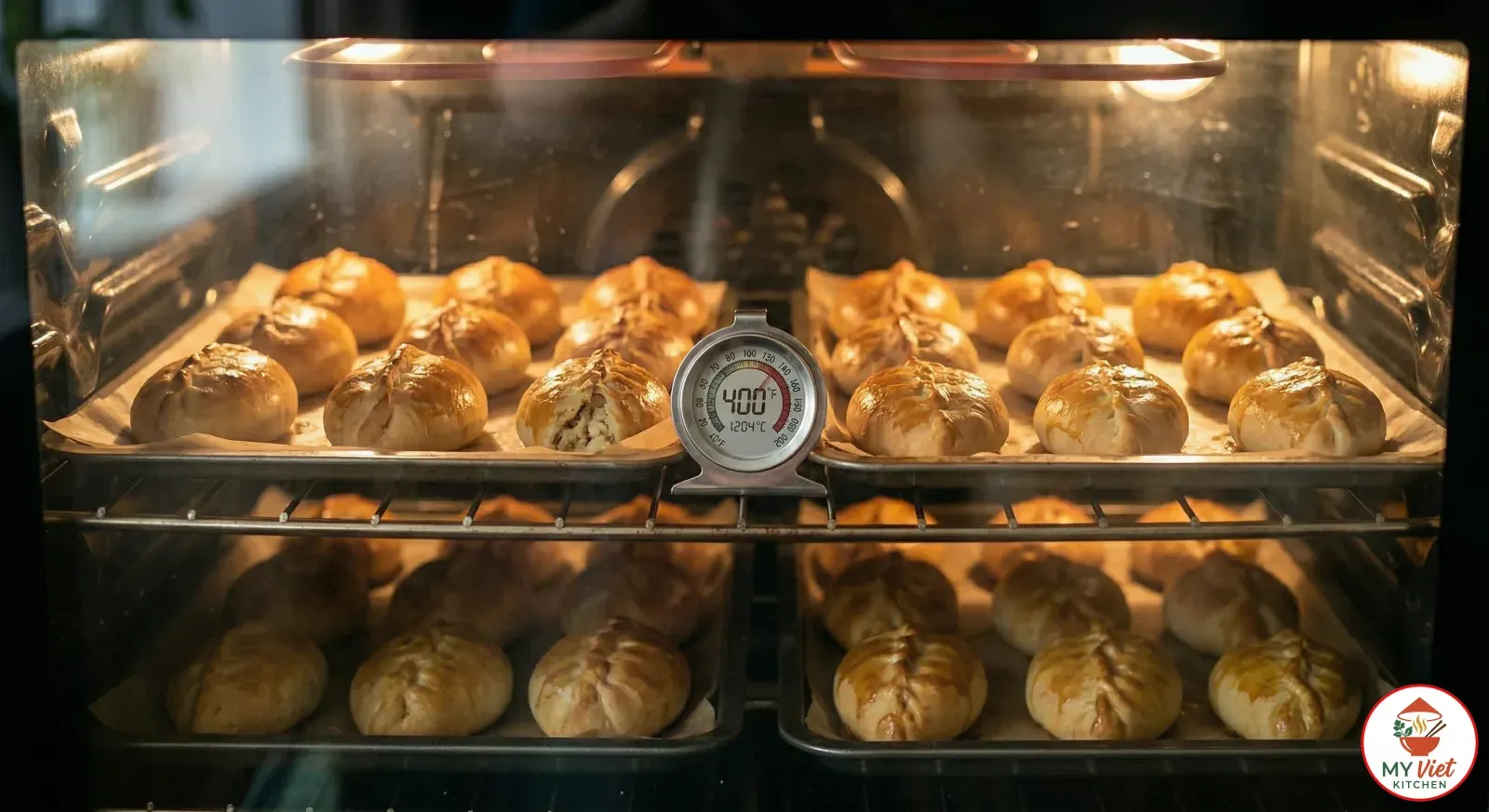
5 Place the baking sheets in an oven preheated to 400 degrees Fahrenheit. Bake for 15 to 20 minutes, rotating the sheets halfway through for even color. The piragi are done when they turn a deep, rich golden brown and feel firm to a gentle touch. If you tap the bottom of a roll, it should sound slightly hollow, which tells you the interior has baked through completely.
Remove the sheets from the oven and let the piragi cool on the pans for 5 minutes. Then transfer them to a wire rack. The short rest on the pan allows the filling to set slightly so it does not leak when you pick up a roll. Serve the piragi warm for the best experience. The contrast between the soft, buttery dough and the smoky bacon filling is at its peak when they come fresh from the oven. However, these rolls taste wonderful at room temperature too.
Expert Tips for Perfect Piragi
Get the Dough Texture Right
The dough for piragi should feel soft, smooth, and slightly tacky after kneading. If it sticks heavily to your hands, add flour one tablespoon at a time. If it feels stiff and dry, the rolls will turn out dense and tough. Because this is an enriched dough with butter and eggs, it needs more kneading than plain bread dough. Eight to ten minutes of steady kneading develops enough gluten to give the rolls structure while keeping them tender. You will know the dough is ready when it passes the windowpane test. Stretch a small piece thin, and it should stretch without tearing.
Seal the Seams Firmly
The most common problem with piragi is filling that leaks out during baking. To prevent this, pinch the seam firmly and make sure no filling touches the edges where the dough meets. Fat from the bacon can prevent the dough from sticking to itself. Therefore, keep the edges of each oval clean and free of grease before you fold them shut. If the dough resists sealing, dip your fingertip in water and dab it along the edge before pinching.
Cool the Filling Completely
Warm filling is the enemy of good piragi. When the bacon mixture is still hot, it melts the butter in the dough and makes shaping nearly impossible. Furthermore, the dough absorbs grease from warm filling, which leads to greasy, heavy rolls. Spread the cooked filling on a plate or sheet pan and let it cool for at least 20 minutes. If you are short on time, place the filling in the refrigerator for 10 minutes to speed up the process.
Piragi vs. Other Filled Rolls: A Comparison
Piragi belong to a large family of filled bread rolls found across Eastern Europe and beyond. Each culture shapes and fills its rolls differently, and the results taste distinctly different despite sharing a similar concept. Here is how Latvian piragi compare to their closest relatives from neighboring traditions.
| Roll | Country | Filling Style | Key Difference |
|---|---|---|---|
| Piragi | Latvia | Smoked bacon and onions | Crescent shape with open seam on top |
| Pirozhki | Russia | Meat, cabbage, or potato | Sealed oval shape, sometimes deep-fried |
| Kibinai | Lithuania | Mutton and onions | Half-moon shape with crimped edge |
| Kolache | Czech Republic | Fruit or cheese (open top) | Round with filling visible in center |
| Runza | Germany / Nebraska | Beef, cabbage, and onions | Rectangular pocket, fully sealed |
| Empanada | Spain / Latin America | Meat, cheese, or vegetables | Half-moon with fork-crimped edges |
Serving Suggestions
Latvians serve piragi at celebrations of all sizes, from intimate family dinners to large holiday feasts. The rolls work as appetizers, side dishes, or even the main event when you pile a platter high and let guests help themselves. Their small size makes them perfect finger food, and they taste wonderful at both warm and room temperature.
The Perfect Accompaniments:
- Sour cream: A simple bowl of cold sour cream is the most traditional dip for piragi. The cool tang cuts through the richness of the bacon and butter, and the creamy texture complements the soft dough perfectly.
- Latvian grey peas with bacon (peleki): This hearty side dish of dried grey peas cooked with bacon and onions is a classic Latvian holiday pairing. The earthy peas and additional smoky bacon create a deeply satisfying combination alongside fresh piragi.
- Pickled vegetables: Latvian-style pickled cucumbers, beets, or sauerkraut add a bright, acidic contrast to the richness of the rolls. The acidity refreshes the palate between bites and balances the heaviness of the dough and bacon.
- Fresh vegetable platter: Sliced radishes, cucumbers, and cherry tomatoes offer a light, crisp counterpoint. This simple accompaniment keeps the focus on the piragi while adding freshness to the table.
Beverage Pairings:
- Latvian beer: A cold Latvian lager or amber ale pairs naturally with the smoky, savory flavors of piragi. The carbonation and mild bitterness cleanse the palate between bites, while the malty notes complement the bread.
- Kvass: This mildly fermented rye bread drink is a traditional Baltic beverage that matches beautifully with piragi. Its slightly sour, earthy flavor echoes the grain flavors in the dough.
- Hot tea with honey: During the cold Latvian winters, a cup of strong black tea with honey alongside warm piragi is a classic comfort combination that has warmed Baltic families for generations.
- Dry white wine or sparkling wine: For a more festive pairing, a crisp dry white wine or sparkling wine cuts through the richness of the bacon filling. The acidity and bubbles refresh the palate and make piragi feel elegant enough for any celebration.
Storage and Reheating
Refrigerator: Store baked piragi in an airtight container for up to 4 days. The rolls stay soft thanks to the butter and eggs in the dough. Many Latvian families snack on cold piragi straight from the fridge the day after a celebration, and the flavor actually deepens as the bacon filling melds with the dough overnight.
Freezer: Piragi freeze exceptionally well for up to 3 months. For unbaked rolls, arrange the shaped piragi on a parchment-lined baking sheet and freeze until solid, then transfer to freezer bags. Bake them directly from frozen at 400 degrees Fahrenheit for 20 to 25 minutes. For already-baked piragi, cool them completely before placing in freezer bags with the air pressed out.
Reheating: Place the piragi on a baking sheet and warm them in a 350-degree Fahrenheit oven for 8 to 10 minutes. The oven’s dry heat restores the golden exterior and warms the bacon filling without drying out the soft dough. Avoid the microwave, because it makes the rolls chewy and rubbery instead of soft and tender. If reheating from frozen, add 5 extra minutes in the oven.
Common Mistakes to Avoid
1. Using Cold Ingredients for the Dough
Cold butter, cold eggs, and cold milk slow down the yeast and make the dough stiff. Consequently, the rolls turn out dense rather than light and pillowy. Let the butter soften at room temperature for at least an hour, take the eggs out of the fridge 30 minutes ahead, and warm the milk gently to 110 degrees. All these ingredients should feel warm or room temperature when they go into the bowl. This small step makes a dramatic difference in the final texture.
2. Overcooking the Bacon Filling
The bacon needs to render its fat and turn lightly golden, but it should not get crispy. Because the filling bakes again inside the dough for another 15 to 20 minutes, bacon that starts out crispy ends up dry and hard. Cook the bacon just until it releases its fat and the edges start to color. The onions should be soft and translucent, not browned. This ensures the filling stays moist and tender inside the baked rolls.
3. Rolling the Dough Too Thin
If you flatten each piece too thin, the dough cannot contain the filling. Grease seeps through, the seams split open during baking, and the rolls turn out flat rather than plump. Instead, keep each oval about a quarter inch thick. This thickness gives you enough dough to wrap the filling, seal the seam securely, and still produce a soft, bread-like roll. Thicker dough also rises better during the second proof and in the oven.
4. Skipping the Second Rise
After shaping, the piragi need 20 minutes of rest before they go in the oven. This second rise relaxes the gluten, which the shaping process tightened. If you skip it, the dough springs back aggressively in the oven and the rolls turn out tough and chewy. Give the shaped piragi their 20 minutes under a towel. You will notice them puff up slightly, and this extra rise makes the difference between dense rolls and light, tender ones.
Frequently Asked Questions
What is the difference between piragi and pirozhki?
Piragi are specifically Latvian crescent-shaped rolls filled with smoked bacon and onions, while pirozhki are Russian filled buns that come in many shapes with diverse fillings. The dough for piragi is richer with more butter and eggs, which creates a brioche-like softness. Piragi always feature the distinctive crescent shape with the seam on top, whereas pirozhki are typically sealed smooth on the bottom. The filling focus also differs. Piragi center entirely on the bacon and onion combination, while pirozhki use meat, cabbage, rice, mushrooms, and many other fillings.
Can I make piragi ahead of time and freeze them?
Absolutely, and freezing is the preferred method for Latvian families who need large batches for holidays. Shape the piragi completely, then freeze them on a baking sheet before transferring to bags. Bake directly from frozen at 400 degrees for 20 to 25 minutes. Alternatively, bake first, cool completely, then freeze for up to 3 months. Reheat from frozen in a 350-degree oven for about 12 minutes. Either way, the results are nearly as good as fresh.
What kind of bacon works best for piragi?
Double-smoked slab bacon or European-style smoked pork belly gives you the most authentic flavor. However, regular thick-cut smoked bacon works very well too. The key is to dice the bacon finely so it distributes evenly through the filling. Avoid turkey bacon or pre-cooked bacon, because they lack the fat that keeps the filling moist. The rendered bacon fat cooks the onions and adds richness, so you need real smoked pork for the best results.
Why did my piragi turn out dry and tough?
Several factors can cause dry piragi. Too much flour in the dough makes it stiff. Overbaking dries out the rolls because the lean filling cannot compensate. Rolling the dough too thin leaves insufficient bread to stay moist. Check your oven temperature with a thermometer, since ovens that run hot will overbake the outside before the inside finishes. If all else fails, try adding an extra tablespoon of softened butter to the dough recipe for more moisture and tenderness.
When do Latvians traditionally eat piragi?
Christmas Eve is the most important occasion for piragi. Families make hundreds of rolls and share them with guests, neighbors, and coworkers in the days leading up to the holiday. Piragi also appear during Jani, the Latvian midsummer solstice festival, alongside cheese, beer, and bonfires. Beyond holidays, piragi show up at birthdays, name days, weddings, and any gathering worth celebrating. In Latvia, if the occasion matters, piragi will be on the table.
Can I use a different filling instead of bacon?
The bacon and onion filling is traditional and by far the most popular, but the dough works with other savory fillings. Some Latvian families fill piragi with smoked ham and cheese, mushrooms and onions, or even sauerkraut. For a modern twist, try smoked salmon with dill cream cheese. Whatever filling you choose, keep it on the drier side because wet fillings prevent the seam from sealing and cause soggy dough. Also ensure the filling has enough fat for flavor and moisture.
Variations and Adaptations
Smoked Ham and Cheese Piragi:
Replace the bacon with finely diced smoked ham and add a small cube of mild cheese such as Gouda or Edam to the center of each roll. The cheese melts during baking and creates a gooey pocket alongside the smoky ham. This variation works especially well for children who prefer a milder flavor. Use about the same amount of ham as you would bacon, and dice it just as finely.
Mushroom and Onion Piragi:
For a meatless version, saute finely chopped mushrooms with onions in butter until all the moisture evaporates. Season with salt, pepper, and a pinch of dried thyme. The mushrooms need to be cooked until dry because excess moisture prevents the seam from sealing. This earthy filling appeals to vegetarians and tastes surprisingly rich thanks to the umami in the mushrooms and the buttery dough.
Mini Piragi for Party Appetizers:
Divide the dough into 60 pieces instead of 40 to create bite-sized piragi that work perfectly as party appetizers. The smaller rolls bake faster, so reduce the oven time to 12 to 15 minutes. These miniature versions disappear quickly at gatherings, so consider making a double batch. Arrange them on a platter around a bowl of sour cream for an impressive but simple spread.
Whole Wheat Piragi:
Replace half the all-purpose flour with whole wheat flour for a nuttier, heartier roll. The whole wheat version has more fiber and a deeper grain flavor that pairs well with the smoky bacon. Add an extra tablespoon of butter to compensate for the drier nature of whole wheat flour. The dough will be slightly denser, but the rolls still rise well and taste excellent. This adaptation modernizes the classic while keeping the essential character intact.
The Cultural Significance of Piragi
Piragi represent far more than a recipe in Latvian culture. They are a symbol of home, family, and the bonds that hold communities together through long winters and joyful celebrations. Making piragi is almost always a group activity. Grandmothers, mothers, and children gather around the kitchen table, each taking a role in the assembly line of rolling, filling, and shaping. Indeed, many Latvians learn to shape their first piragi before they learn to ride a bicycle. The act of making these rolls together is as important as eating them.
The connection between piragi and Latvian identity runs deepest during Christmas. On Christmas Eve, families set out enormous platters of freshly baked piragi alongside grey peas, sauerkraut, and other traditional dishes. The quantity matters as much as the quality. A generous table signals prosperity and generosity, and piragi are always the most abundant item. Latvian emigrants around the world keep this tradition alive, baking hundreds of piragi each December as a way to stay connected to their heritage. For the Latvian diaspora, the smell of bacon and onion filling baking inside buttery dough is the scent of home itself.
Furthermore, piragi carry significance during Jani, the midsummer solstice festival that marks the longest day of the year. On this night, Latvians gather outdoors around bonfires, sing folk songs, and eat traditional foods until sunrise. Piragi share the table with Jani cheese, a special caraway-studded cheese made only for this occasion. Together with cold beer and wildflower wreaths, the food creates a celebration that has endured for centuries. In the end, piragi connect Latvians to their land, their seasons, and each other in a way that no other dish can match.
Conclusion
This piragi recipe gives you everything you need to make the authentic Latvian bacon buns at home. The keys are a soft, well-kneaded dough enriched with butter and eggs, a properly cooled filling of smoky bacon and sweet onions, and careful shaping with a firm seal and the signature crescent curve. These three elements produce the golden rolls that Latvian families have treasured for generations. Whether you bake them for a holiday feast, a weekend gathering, or simply because you crave something warm and savory, piragi reward your effort with a flavor that is both comforting and deeply satisfying.
Ready to explore more European baking traditions? Browse our European dishes collection for recipes like blini, banitza, and pierogi. Each one brings a taste of a different culinary tradition to your kitchen table.