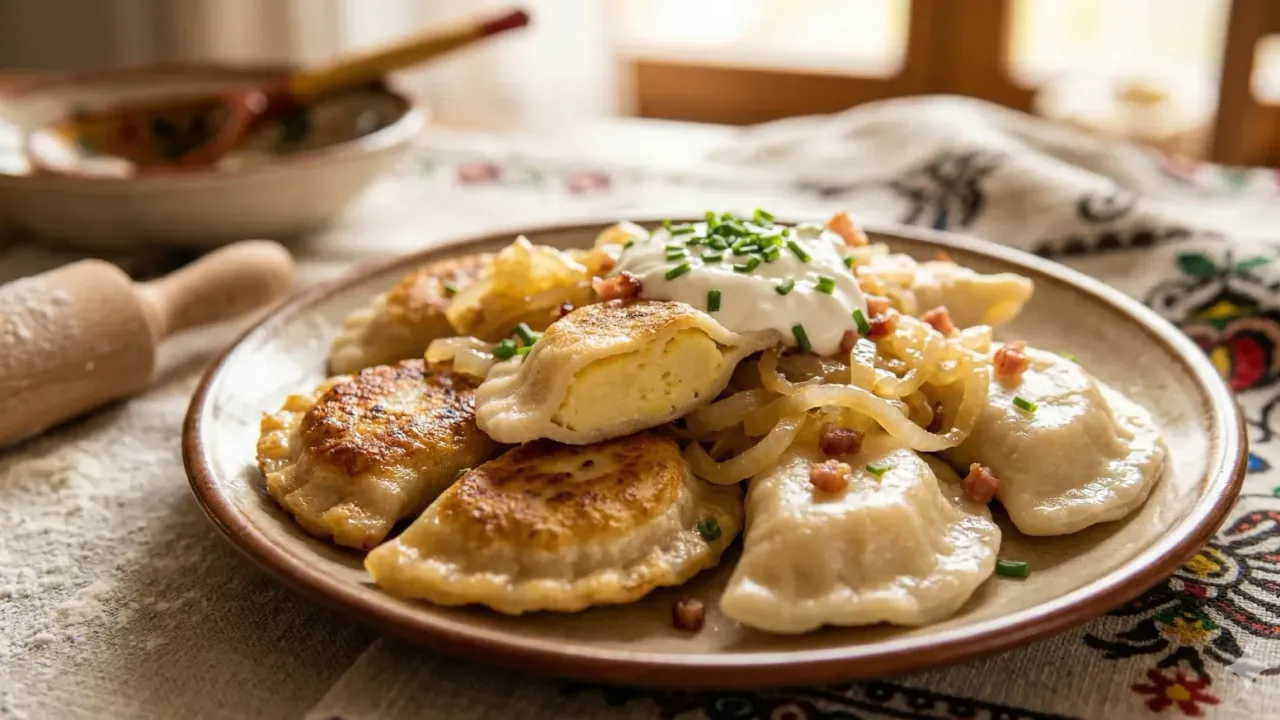
Pierogi are the heart and soul of Polish home cooking, and this pierogi recipe walks you through every step of making them from scratch. These tender, plump dumplings with a creamy potato and cheese filling are pure comfort on a plate. Whether boiled until soft or pan-fried to a golden crisp, pierogi have won fans far beyond Poland’s borders. This pierogi recipe gives you the skills to create perfect dumplings that taste just like a Polish grandmother made them.
Prep Time: 45 minutes | Cook Time: 20 minutes | Servings: 6 (about 40 pierogi)
Difficulty: Medium | Calories: ~390 per serving
What Makes Pierogi Special?
Pierogi are far more than simple dumplings. In Poland, they are a way of life. Every family has its own recipe, passed down from one cook to the next. The magic lies in the dough: soft, supple, and just thick enough to hold a rich filling without falling apart. When you bite into a well-made pierogi, the tender wrapper gives way to a warm, creamy center that melts on your tongue.
What makes this pierogi recipe stand out from other dumpling dishes is the sheer range of fillings. You can fill them with savory mashed potatoes and cheese, tangy sauerkraut and mushrooms, or even sweet fruits like blueberries. Additionally, the way you finish them matters just as much as what is inside. Boiled pierogi are soft and pillowy. Pan-fried pierogi get a crispy golden shell that adds a whole new layer of taste.
The history of pierogi stretches back to the 13th century. Some say the recipe came from China along trade routes, while others claim it was born in Eastern Europe. No matter the origin, pierogi have become Poland’s most loved dish. They show up at every holiday, family meal, and church festival across the country.

Choosing the Right Potato for Pierogi
The potato is the star of any classic pierogi recipe with ruskie filling. Picking the right type makes a big difference in texture and taste. Here are your best options.
- Yukon Gold (best choice): These waxy-starchy potatoes mash into a smooth, creamy filling that holds together well inside the dumpling. They have a rich, buttery flavor that pairs perfectly with farmer cheese. Yukon Gold potatoes never get gluey or gummy when mashed.
- Russet potatoes: These starchy potatoes mash very smoothly, but they can dry out fast. If you use russets, add an extra pat of butter to keep the filling moist. They work well but need a bit more care to avoid a crumbly texture.
- Red potatoes (not ideal): Although firm and waxy, red potatoes can produce a heavy, dense filling. They do not break down as easily during mashing, so you may end up with lumps. For the smoothest pierogi filling, stick with Yukon Gold.
Ingredients for Pierogi
Pierogi Dough:
- 3 cups all-purpose flour
- 1 large egg
- 2 tablespoons sour cream
- 1 tablespoon butter, melted
- 3/4 cup warm water
- 1/2 teaspoon salt
Potato and Cheese Filling (Ruskie):
- 2 pounds Yukon Gold potatoes, peeled and cubed
- 1 cup farmer cheese or dry curd cottage cheese
- 1 medium onion, finely diced
- 2 tablespoons butter for sauteing
- Salt and white pepper to taste
For Serving:
- 4 tablespoons butter for pan-frying
- 1 large onion, thinly sliced
- Sour cream
- Fresh chives, chopped
- Crispy bacon bits (optional)
Pro tip: The secret to tender pierogi dough is sour cream. It adds fat and acid that keep the gluten relaxed, so the dough stays soft even after boiling. Never skip the resting step either, because 30 minutes of rest lets the gluten relax and makes the dough much easier to roll out thin.
Step-by-Step Instructions
Step 1: Make the Dough
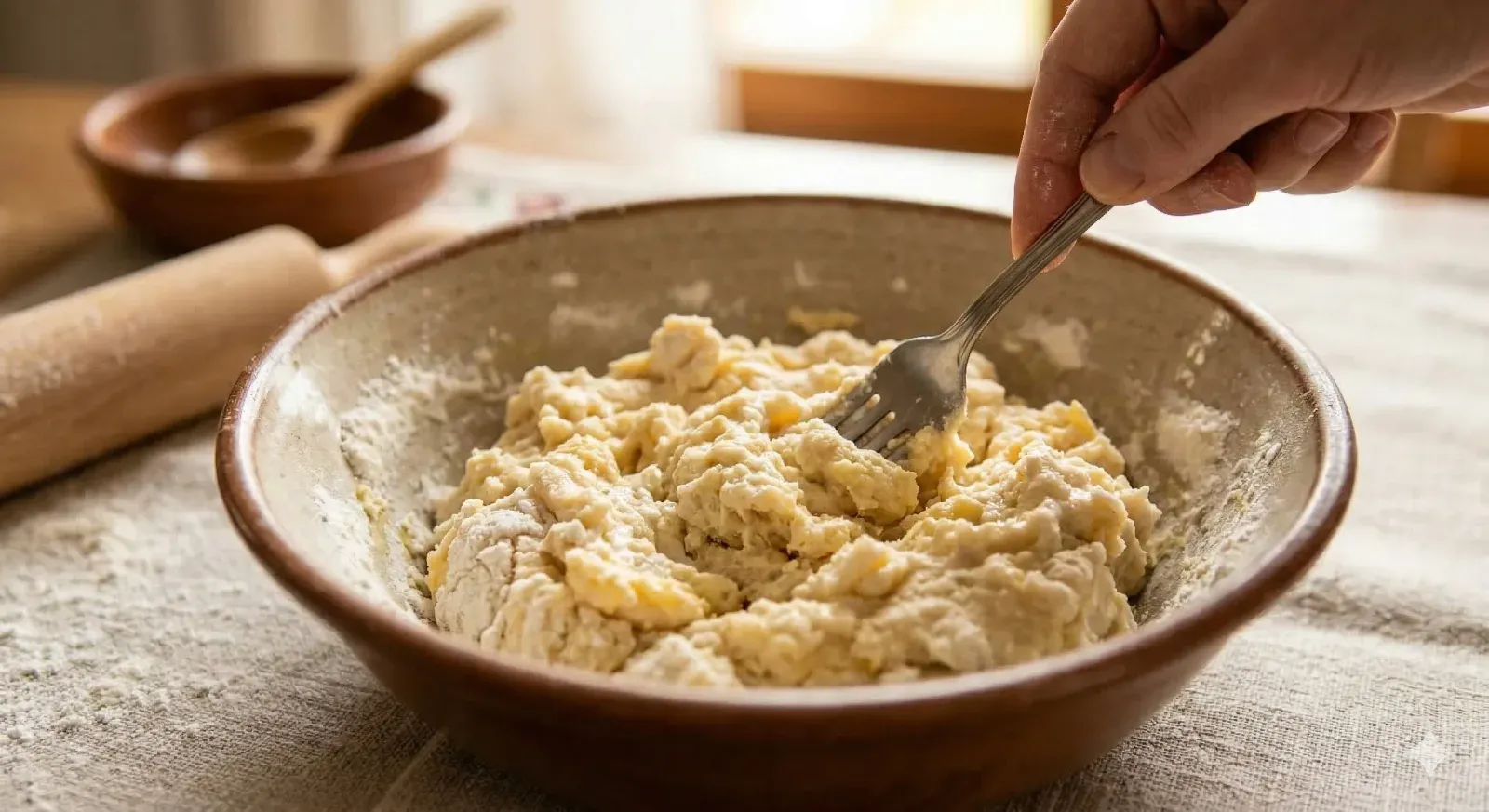
1 Combine the flour and salt in a large mixing bowl. Make a well in the center. Add the egg, sour cream, melted butter, and warm water into the well. Stir with a fork until a shaggy mass forms. Then turn the dough out onto a lightly floured surface and knead for 8 to 10 minutes. The dough should feel smooth, soft, and slightly elastic.
Wrap the dough tightly in plastic wrap and let it rest at room temperature for 30 minutes. This step is vital because it relaxes the gluten strands. As a result, the dough rolls out thin and stays tender after cooking. If you skip the rest, the dough will spring back and be hard to work with.
Step 2: Prepare the Filling
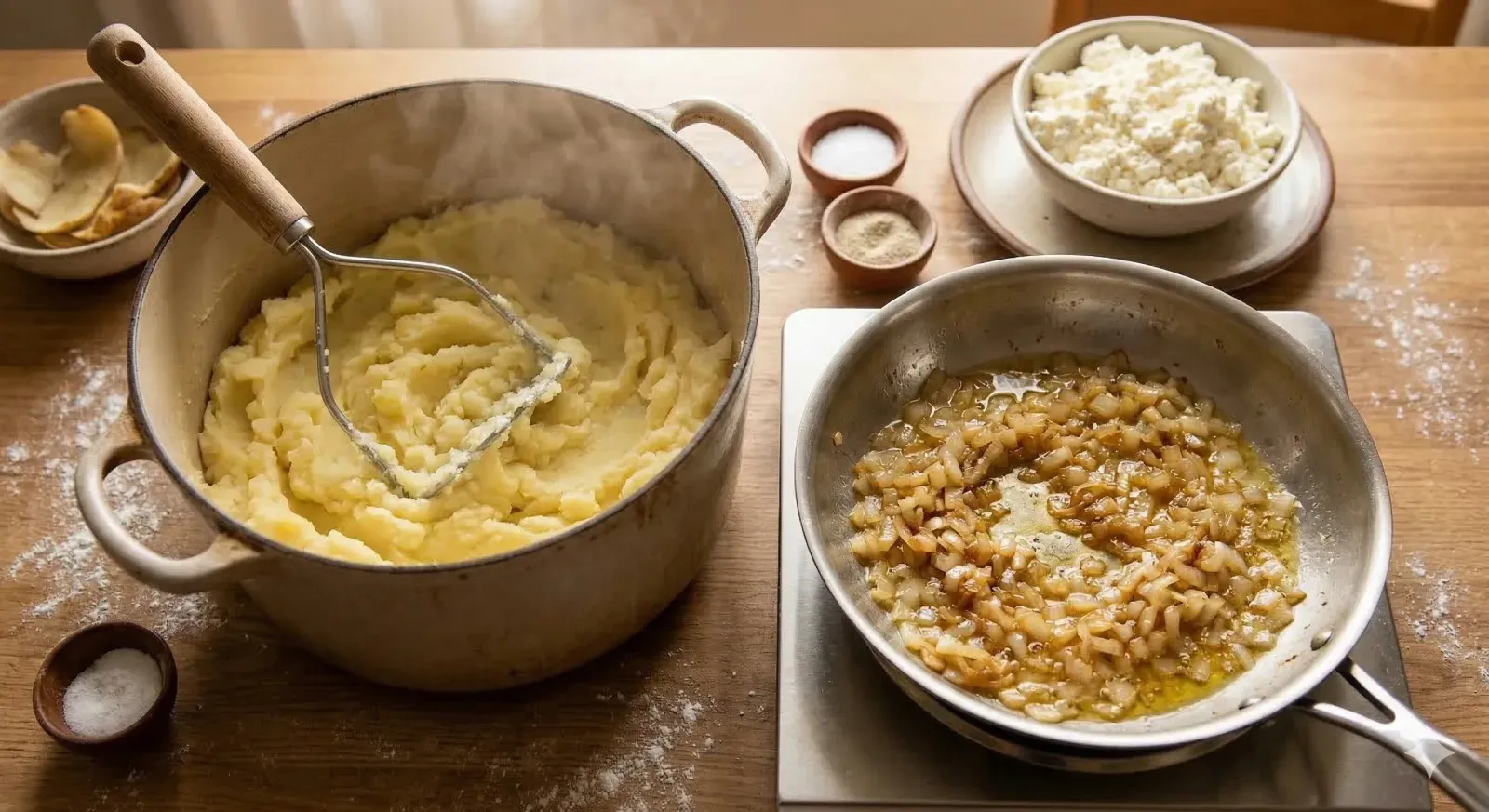
2 Place the peeled, cubed potatoes in a large pot of salted water. Bring to a boil and cook for 15 minutes until fork-tender. Drain well and return them to the hot pot. Let the steam escape for a minute, then mash until very smooth. Do not use a food processor, because it will make the potatoes gluey.
While the potatoes cook, saute the diced onion in 2 tablespoons of butter over medium heat for 5 to 7 minutes until soft and golden. Add the sauteed onion, farmer cheese, salt, and white pepper to the mashed potatoes. Mix until well blended. Taste and adjust the seasoning. Let the filling cool fully before you start filling the dumplings.
Step 3: Roll and Cut the Dough
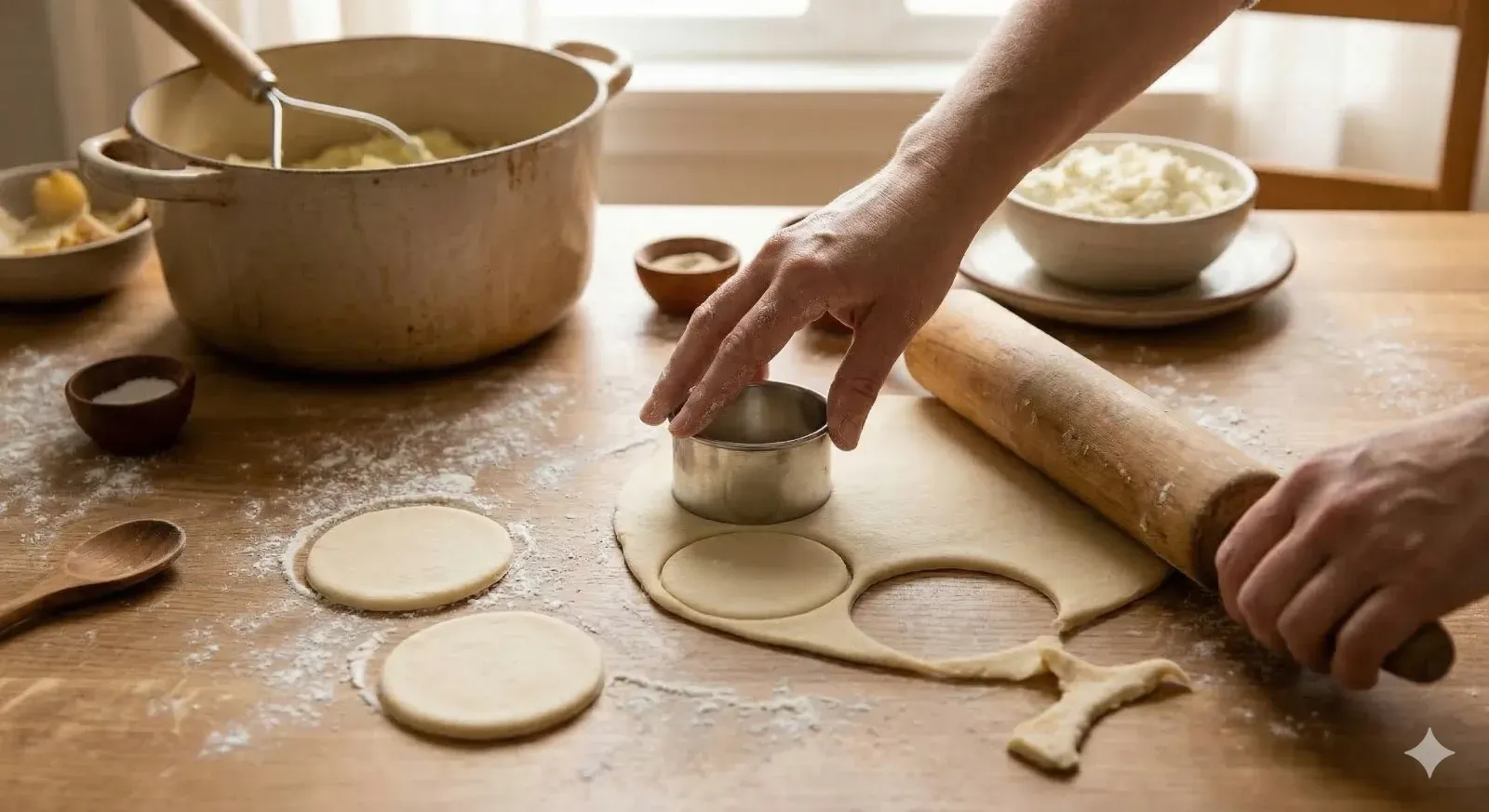
3 Divide the rested dough in half. Keep one half wrapped while you work with the other. On a lightly floured surface, roll the dough out to about 1/8-inch thick. It should be thin enough to be slightly see-through but still strong enough to hold filling.
Use a 3-inch round cutter or the rim of a glass to stamp out circles. You should get about 20 circles from each half. Gather the scraps, press them together gently, and re-roll to cut more. Work quickly so the dough does not dry out. If it starts to feel stiff, cover it with a damp towel.
Step 4: Fill and Seal
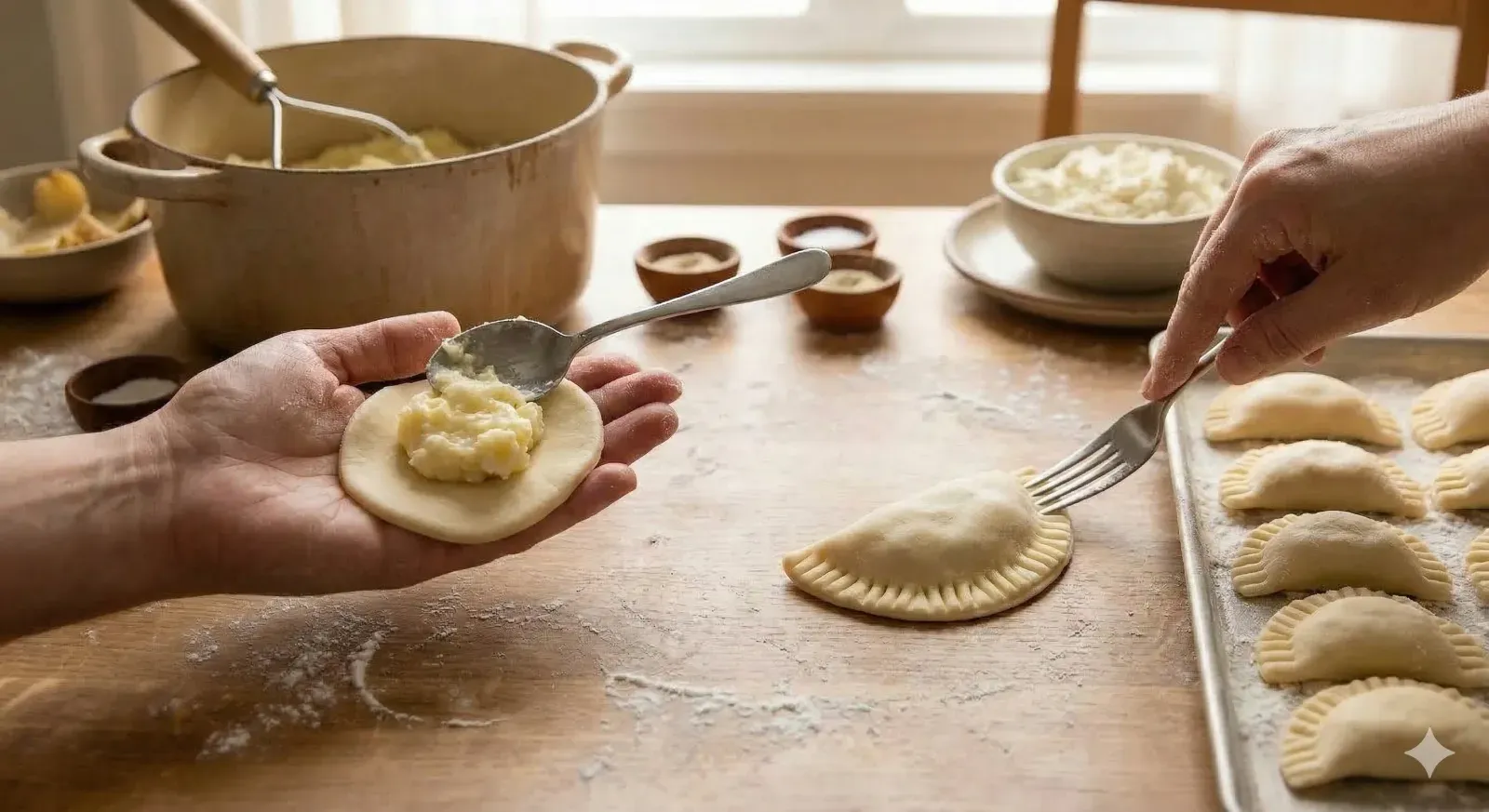
4 Place one dough circle in your palm. Spoon about a tablespoon of filling into the center. Do not overfill, because too much filling makes sealing very hard. Fold the circle in half to form a half-moon shape. Pinch the edges firmly, starting from one corner and working to the other side. Press out any air pockets as you go.
For a tight seal, crimp the edges with a fork. This also gives the pierogi a pretty border. Set each one on a lightly floured tray. Make sure they do not touch, or they will stick together. Repeat until all the dough and filling are used up.
Step 5: Boil the Pierogi
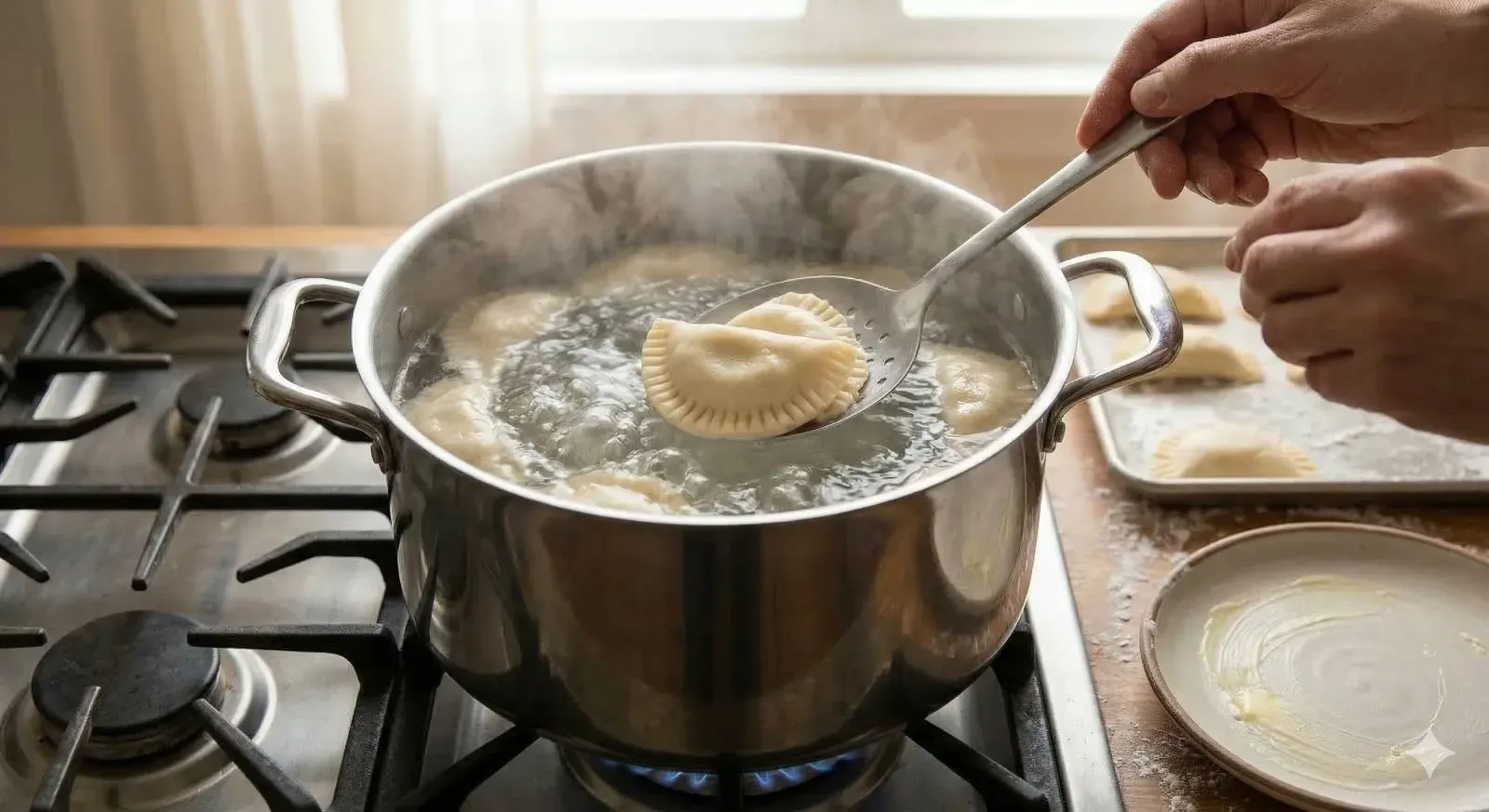
5 Bring a large pot of salted water to a rolling boil. Drop the pierogi in batches of 8 to 10 so the pot stays at a good boil. Stir gently right after adding them so they do not stick to the bottom. The pierogi will sink at first, then float to the top after 3 to 4 minutes.
Once they float, let them cook for one more minute. Then remove them with a slotted spoon and place on a buttered plate or tray. Toss them lightly in a bit of melted butter to keep them from sticking to each other. You can serve them boiled as is, or move on to the pan-frying step for added crunch.
Step 6: Pan-Fry and Serve
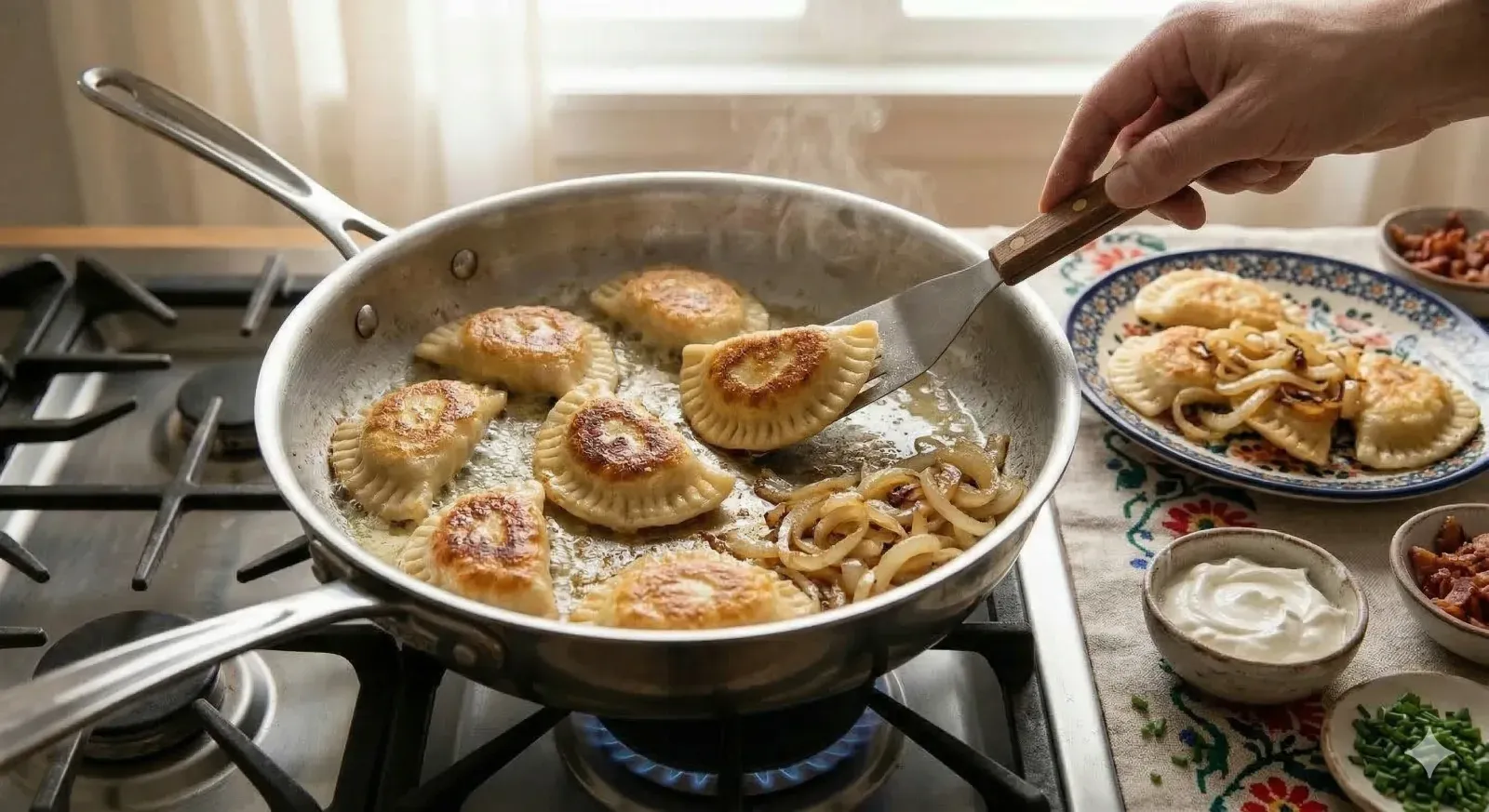
6 Melt 4 tablespoons of butter in a large skillet over medium heat. Add the thinly sliced onion and cook for 8 to 10 minutes, stirring now and then, until the onion turns deep golden and sweet. Push the onions to the side of the pan. Add the boiled pierogi in a single layer and fry for 2 to 3 minutes per side until crispy and golden brown.
Serve the pierogi hot on a warm plate. Top them with the sweet fried onions, a generous spoonful of sour cream, and a scatter of fresh chives. For extra richness, crumble crispy bacon bits over the top. This is how pierogi are meant to be enjoyed.
Expert Tips for the Perfect Pierogi Recipe
Let the Dough Rest
In any great pierogi recipe, a full 30-minute rest is the key to soft, easy-to-roll dough. During this time, the gluten relaxes and the flour fully absorbs the liquid. If you try to roll the dough right away, it will fight you and spring back. Rested dough rolls out thin in just a few passes and stays pliable while you work.
Cool the Filling Completely
Hot filling is the enemy of good pierogi. Warm potatoes create steam inside the dumpling, which makes the dough soggy and hard to seal. Always let your filling cool to room temperature before you start filling. You can even make the filling a day ahead and store it in the fridge to save time.
Seal Tightly to Prevent Leaks
An unsealed edge will pop open during boiling, and your filling will escape into the water. Press the edges firmly with your fingers first, then crimp with a fork for extra security. If the dough feels dry and will not stick, dab a tiny bit of water along the edge before folding. This creates a stronger bond.
Pierogi Across Eastern Europe
Poland is the most famous home of pierogi, but nearly every Eastern European country has its own version of these filled dumplings. Each culture brings unique fillings, shapes, and serving styles. Here is how the main types compare.
| Country | Name | Common Fillings | Serving Style |
|---|---|---|---|
| Poland | Pierogi | Potato-cheese, sauerkraut-mushroom, meat, fruit | Boiled then pan-fried in butter with onions |
| Ukraine | Varenyky | Potato, cherry, cottage cheese, cabbage | Boiled, served with sour cream and dill |
| Russia | Pelmeni | Pork, beef, lamb, or mixed meat | Boiled in broth, served with vinegar or butter |
| Czech Republic | Knedliky | Bread or potato dumplings, sometimes fruit-filled | Sliced and served as a side with gravy |
| Lithuania | Virtiniai | Curd cheese, meat, mushrooms | Boiled, served with sour cream and bacon |
Serving Suggestions
In Poland, pierogi are often served as a full meal on their own. A big plate of golden, pan-fried dumplings with sour cream and onions is all you need. However, if you want to build a bigger spread, these sides pair well.
Classic Accompaniments:
- Barszcz (Polish beet soup): A clear, ruby-red beet broth that is light and tangy. It is the classic starter before a plate of pierogi, especially during Christmas Eve dinner.
- Sauerkraut salad: Tangy, crunchy sauerkraut tossed with shredded carrots and a touch of sugar. Its acidity cuts through the richness of the buttery dumplings nicely.
- Polish sausage (kielbasa): Grilled or pan-fried kielbasa on the side adds a smoky, meaty element that rounds out the meal. Slice it into thick coins for easy serving.
- Fresh cucumber salad: Thinly sliced cucumbers in a sour cream and dill dressing. This cool, creamy side is very popular in Poland during summer months.
Beverage Pairings:
- Polish lager beer: A cold Tyskie, Zywiec, or Lech beer is the go-to drink with pierogi. The crisp, clean flavor washes down the rich dumplings perfectly.
- Kompot: A traditional Polish fruit drink made by simmering fresh or dried fruits. It is lightly sweet and very refreshing alongside a heavy dumpling meal.
- Chilled vodka: A small glass of Polish vodka, served ice-cold, is the classic pairing for savory pierogi. Sip it between bites for a true Polish experience.
- Apple juice: For a family-friendly option, fresh apple juice or cider pairs well with both savory and sweet pierogi alike.
Storage and Reheating
Refrigerator: Store cooked pierogi in a single layer in an airtight container for up to 3 days. Toss them in a little butter or oil so they do not stick together. They reheat best in a hot skillet with butter.
Freezer: Pierogi freeze very well for up to 3 months. Freeze them in a single layer on a tray first, then move them to freezer bags once solid. This stops them from sticking together. Cook from frozen by adding 1 to 2 extra minutes to the boiling time.
Reheating: Pan-frying is the best way to reheat pierogi. Melt butter in a skillet and fry them over medium heat for 3 to 4 minutes per side. You can also boil them briefly or bake at 375 degrees Fahrenheit for 10 minutes. Avoid the microwave, because it makes the dough rubbery.
Common Mistakes to Avoid
1. Rolling the Dough Too Thick
Thick dough produces heavy, chewy pierogi that feel dense and doughy. Roll the dough to about 1/8-inch thin so each dumpling is light and tender. If the dough keeps springing back, let it rest for a few more minutes before trying again.
2. Overfilling the Dumplings
Too much filling makes it hard to seal the edges, and the pierogi will burst open during boiling. One level tablespoon of filling per circle is the right amount. Leave at least a half-inch border of bare dough around the filling so you have room to press and crimp a tight seal.
3. Boiling Too Many at Once
Crowding the pot drops the water temp fast. This makes the pierogi stick together and cook unevenly. Work in small batches of 8 to 10. Keep the water at a steady boil, and stir gently right after adding each batch.
4. Skipping the Pan-Fry Step
Any good pierogi recipe will tell you: boiled pierogi are good, but pan-fried ones are great. That crispy golden shell from butter-frying adds flavor and texture that you cannot get from boiling alone. Even if you are short on time, a quick 2 minutes per side in a hot buttered pan makes a huge difference.
Frequently Asked Questions
What is the best filling for pierogi?
The most popular filling is pierogi ruskie: mashed potatoes mixed with farmer cheese and golden fried onions. Other classic options include tangy sauerkraut with wild mushrooms, seasoned ground meat, and sweet fillings like blueberry or strawberry for dessert pierogi. You can get creative and try fillings like spinach and feta or even pulled pork.
Can I freeze pierogi before cooking them?
Yes, and in fact this is one of the best things about pierogi. Freeze them raw on a tray in a single layer until solid. Then bag them up. They keep for 3 months. When ready to eat, drop them straight into boiling water from frozen. Just add an extra minute or two of cooking time.
Why are my pierogi tough?
Tough dough usually comes from too much flour or too much kneading. Measure your flour carefully and knead only until the dough is smooth. The sour cream and butter in this recipe help keep things tender. Also, make sure to rest the dough for a full 30 minutes before rolling.
Do I have to boil pierogi before frying?
Yes. Boiling cooks the raw dough all the way through. If you skip this step and fry raw pierogi, the outside will brown and crisp while the inside stays raw and gummy. Always boil first until they float, drain them well, and then fry in butter for that perfect crispy-tender combo.
What is the difference between pierogi and varenyky?
They are very close cousins. Pierogi is the Polish name, and varenyky is what Ukrainians call their version. Both use a simple dough and similar fillings. The main differences are regional: Ukrainians often favor cherry and sweet cheese fillings, while Polish pierogi lean toward potato-cheese and sauerkraut. Serving styles also vary slightly by region.
What do you serve with pierogi?
Sour cream, fried onions, and crispy bacon are the classic toppings. For sides, try a bowl of clear beet soup, a tangy sauerkraut salad, or a light cucumber salad. A cold Polish lager rounds out the meal. During the holidays, pierogi are part of a larger spread with fish, soups, and other traditional dishes.
Variations and Adaptations
Sauerkraut and Mushroom Pierogi:
This filling is the star of the Polish Christmas Eve table. Mix drained sauerkraut with sauteed wild mushrooms, onions, salt, and pepper. The tangy, earthy flavor is completely different from the potato version. These pierogi are always served boiled, never fried, during the holiday feast.
Meat Pierogi:
Use finely ground pork or beef cooked with onions, garlic, salt, and pepper. Some cooks add a splash of broth to keep the meat moist. Meat pierogi are hearty and filling, making them a great main course. Pan-fry them in butter for the best results.
Sweet Blueberry Pierogi:
Fill the dough with fresh or frozen blueberries mixed with a bit of sugar. Boil them gently and serve with a spoonful of sour cream and a sprinkle of powdered sugar. These sweet dumplings are a beloved Polish summer treat. Kids and adults love them equally.
The Cultural Significance of Pierogi
In Poland, pierogi are woven into the fabric of daily life and special events alike. Every major holiday features a big batch. On Christmas Eve, families serve pierogi with sauerkraut and mushroom filling as part of the 12-dish meatless feast. At weddings, guests expect trays of golden fried pierogi as part of the celebration spread.
Making pierogi is also a social event. Polish families often gather for “pierogi parties” where everyone sits around the table rolling, filling, and pinching dumplings together. Grandmothers teach the young ones how to get the dough just right. These shared cooking sessions keep the tradition alive and build strong bonds between loved ones.
Beyond Poland, pierogi have gained a huge following in places like Eastern Europe, Canada, and the United States. Cities like Pittsburgh and Chicago have deep Polish roots, and pierogi festivals draw thousands of visitors each year. The humble dumpling has become a global comfort food icon.
Conclusion
This pierogi recipe gives you everything you need to make perfect Polish dumplings at home. The keys to success are a well-rested dough, a cool and creamy filling, and a tight seal on every dumpling. Whether you serve them boiled with sour cream or pan-fried to a golden crisp, these pierogi will earn you fans at every table. Follow this pierogi recipe faithfully, and you will wonder why you ever bought them frozen.
Want to explore more Eastern European flavors? Browse our European dishes collection, including borscht, goulash, and beef stroganoff. Also check out our Asian dumpling recipes for more hands-on cooking fun.