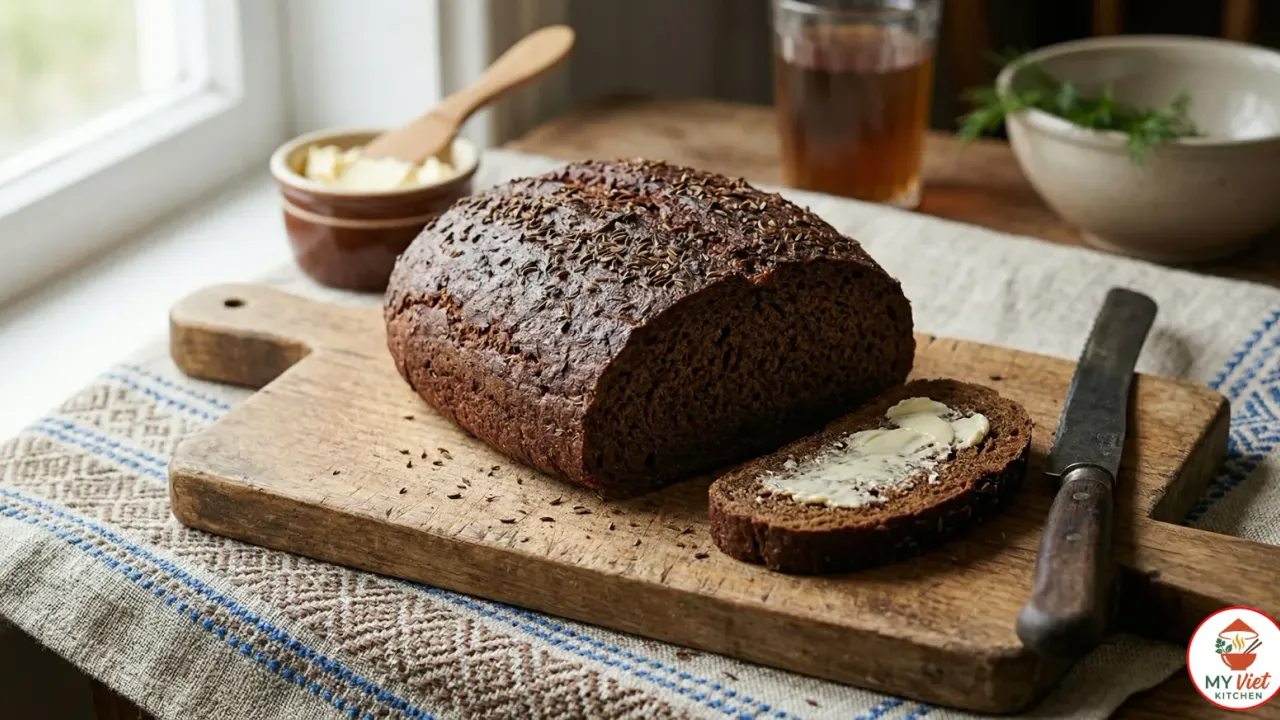
Rupjmaize is the dense, dark, and deeply flavorful rye bread that has anchored Latvian tables for centuries, and this recipe shows you how to bake it at home with coarse rye flour, malt, and caraway seeds. Known as Latvian black bread, this iconic loaf delivers a rich, earthy flavor with a moist crumb and a sturdy crust that stands up to hearty toppings. This rupjmaize recipe follows the traditional Latvian method of overnight soaking and slow fermentation to develop the bread’s signature depth. Whether you slice it thin for open-faced sandwiches or toast it alongside smoked fish and butter, every bite brings the soul of Baltic baking into your kitchen.
Prep Time: 30 minutes (plus 8-12 hours soaking) | Cook Time: 60 minutes | Servings: 12 slices
Difficulty: Medium | Calories: ~180 per serving
What Makes Rupjmaize Special?
Rupjmaize is not just bread in Latvia. It is a symbol of national identity, a thread that runs through every family meal, holiday celebration, and cultural gathering in the country. Latvians call it their “daily bread” without any hint of metaphor, because dark rye truly appears on the table at breakfast, lunch, and dinner. In fact, the Latvian word for hospitality literally translates to sharing bread and salt. No other food carries this much cultural weight in the Baltic region.
What sets rupjmaize apart from other rye breads is the combination of coarse-ground rye flour and rye malt. The malt, made from sprouted and dried rye grains, gives the bread its distinctive dark color and a sweet, toasty flavor that you cannot achieve with flour alone. During the overnight soaking step, enzymes in the malt break down starches in the rye flour into simple sugars. As a result, the bread develops a natural sweetness and a dark, mahogany crumb without any artificial coloring.
Moreover, rupjmaize relies on a long fermentation that builds layers of flavor over time. Traditional Latvian bakers use a rye sourdough starter that they maintain for years, sometimes passing it down through generations. The slow acid development from this starter gives the bread a gentle tang that balances the sweetness of the malt. Because rye flour absorbs more water than wheat, the finished loaf stays moist and fresh for up to a week, which made it essential in rural Latvia where baking happened only once every seven to ten days.

Choosing the Right Rye Flour
The flour is the foundation of authentic rupjmaize, and your choice affects both the texture and flavor of the final loaf. Latvian bakers use coarsely ground dark rye flour that includes much of the bran and germ. Here are the best options depending on what you can find at your local store.
- Coarse dark rye flour (best choice): Also labeled as whole grain rye or pumpernickel flour in some stores. This flour has a gritty texture, a grayish-brown color, and a strong rye aroma. It contains all the bran and germ, which gives the bread its dense, moist crumb and robust flavor. Look for it at European grocery stores, health food shops, or online from specialty mills like Bob’s Red Mill.
- Medium rye flour: A good backup option if you cannot find coarse rye. Medium rye has less bran than the dark variety, so the bread will be slightly lighter in color and texture. To compensate, add an extra tablespoon of rye malt and reduce the bread flour by two tablespoons. The flavor remains close to authentic.
- Light rye flour (not recommended): Light rye is too refined for rupjmaize. It lacks the bran, germ, and strong rye character that define this bread. If light rye is all you have, mix it with an equal amount of whole wheat flour and add extra malt. However, the result will taste more like a generic rye bread than true Latvian rupjmaize.
Ingredients for Rupjmaize
Main Dry Ingredients:
- 3 cups coarse dark rye flour
- 1 cup bread flour or all-purpose flour
- 2 tablespoons rye malt powder or barley malt syrup
- 1 tablespoon cocoa powder (for deeper color)
- 2 teaspoons salt
- 1 teaspoon ground coriander
- 1 tablespoon caraway seeds
Wet Ingredients:
- 1 1/2 cups warm water (110 degrees Fahrenheit)
- 2 tablespoons honey or dark molasses
- 1 packet (2 1/4 teaspoons) active dry yeast
- 1 tablespoon butter, softened
Optional but Recommended:
- 1 cup rye sourdough starter (for deeper flavor and better keeping quality)
Pro tip: Soak the rye flour with the malt overnight before mixing the final dough. This step, called a soaker, softens the coarse bran particles, activates enzymes that develop flavor, and gives the bread its signature moist, dense crumb. Skipping the soaker produces a gritty loaf that lacks the malty sweetness of authentic rupjmaize.
Step-by-Step Instructions
Step 1: Prepare the Rye Soaker (Night Before)
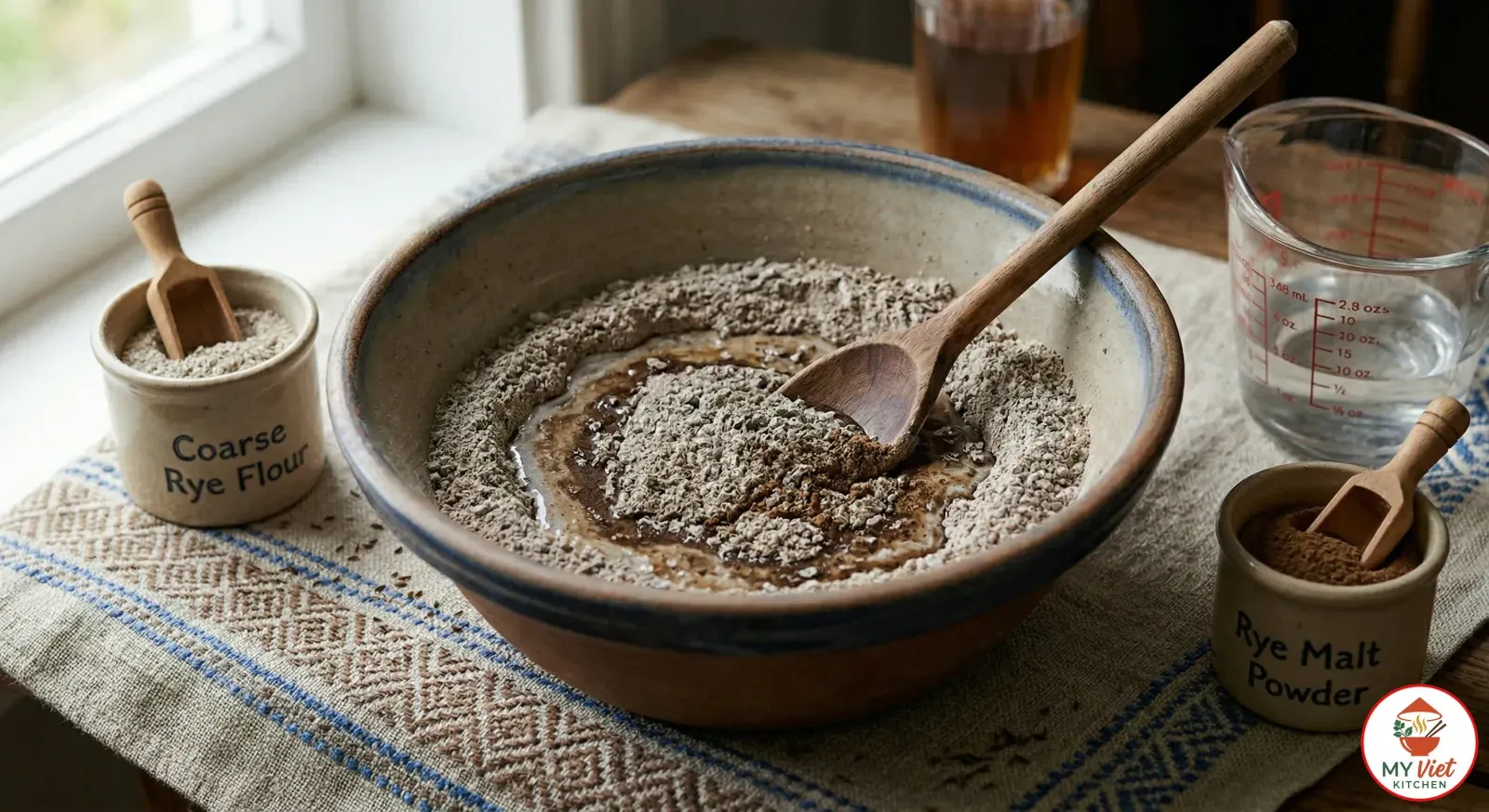
1 Combine the coarse dark rye flour with the rye malt powder and 1 cup of warm water in a large mixing bowl. Stir until everything is evenly moist, then cover the bowl tightly with plastic wrap. Let it rest at room temperature for 8 to 12 hours, or simply prepare it the night before you plan to bake.
This overnight soak is the secret to authentic rupjmaize. During those hours, enzymes in the rye malt break down starches into sugars, which creates the bread’s natural sweetness and dark color. The bran particles also absorb water and soften, so the finished bread has a smooth, moist crumb rather than a gritty texture. Without this step, your loaf will taste flat and feel rough on the tongue.
Step 2: Activate the Yeast and Mix the Dough
2 In a small bowl, dissolve the yeast in half a cup of warm water along with the honey. Let this sit for about 10 minutes until the surface turns frothy and bubbly. This confirms your yeast is active and ready to leaven the heavy rye dough. If nothing happens after 10 minutes, the yeast may be expired, so start again with a fresh packet.
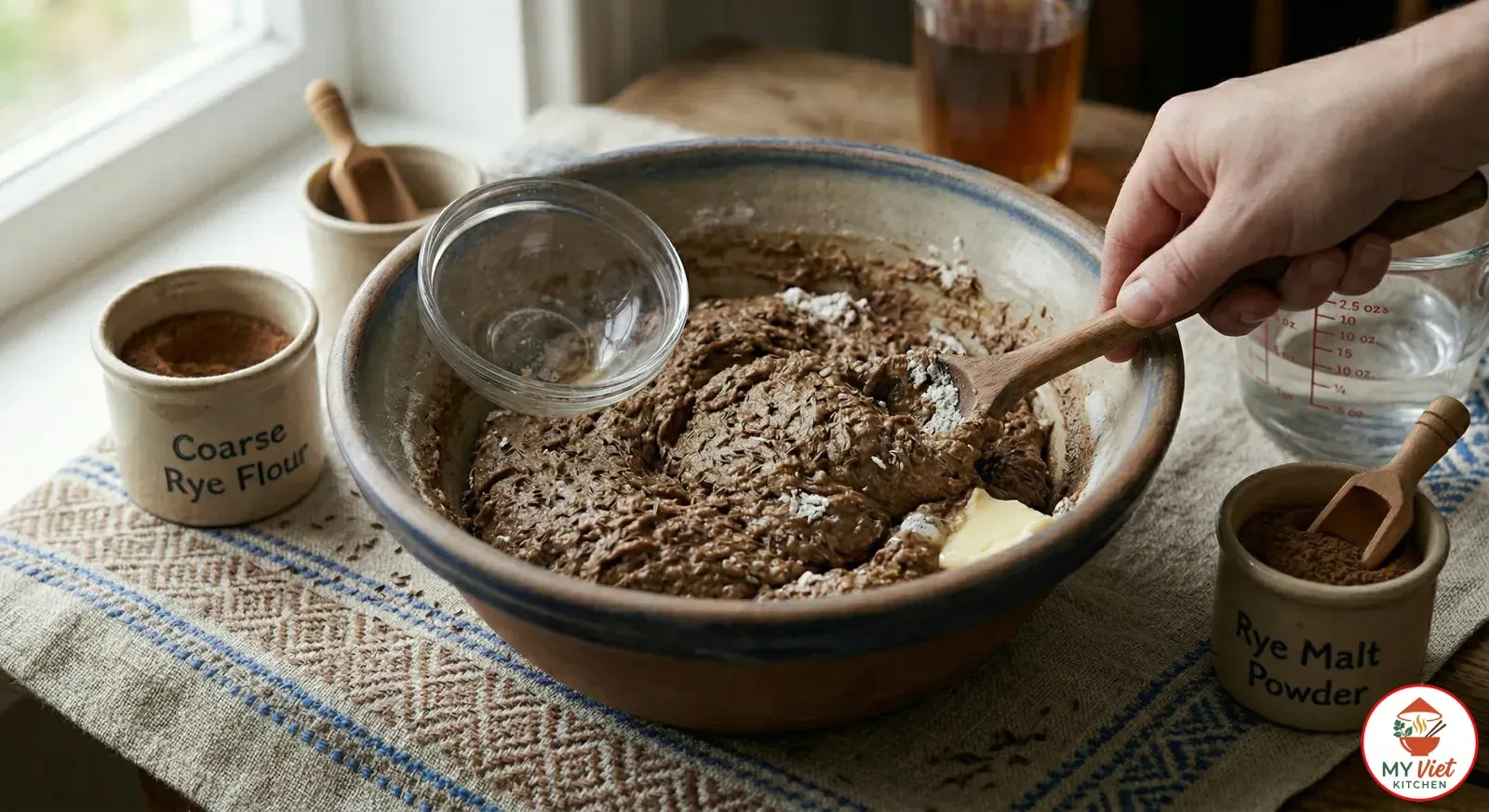
Add the yeast mixture to the rye soaker along with the bread flour, cocoa powder, salt, coriander, caraway seeds, softened butter, and sourdough starter if you have one. Stir firmly with a wooden spoon or a sturdy spatula until a thick, sticky dough forms. Rye dough looks and feels nothing like wheat dough. It stays heavy, tacky, and somewhat shaggy. Do not add extra flour to make it smooth, because that changes the ratio and produces a dry loaf. Embrace the stickiness, as that moisture is what keeps the bread soft for days.
Step 3: First Rise
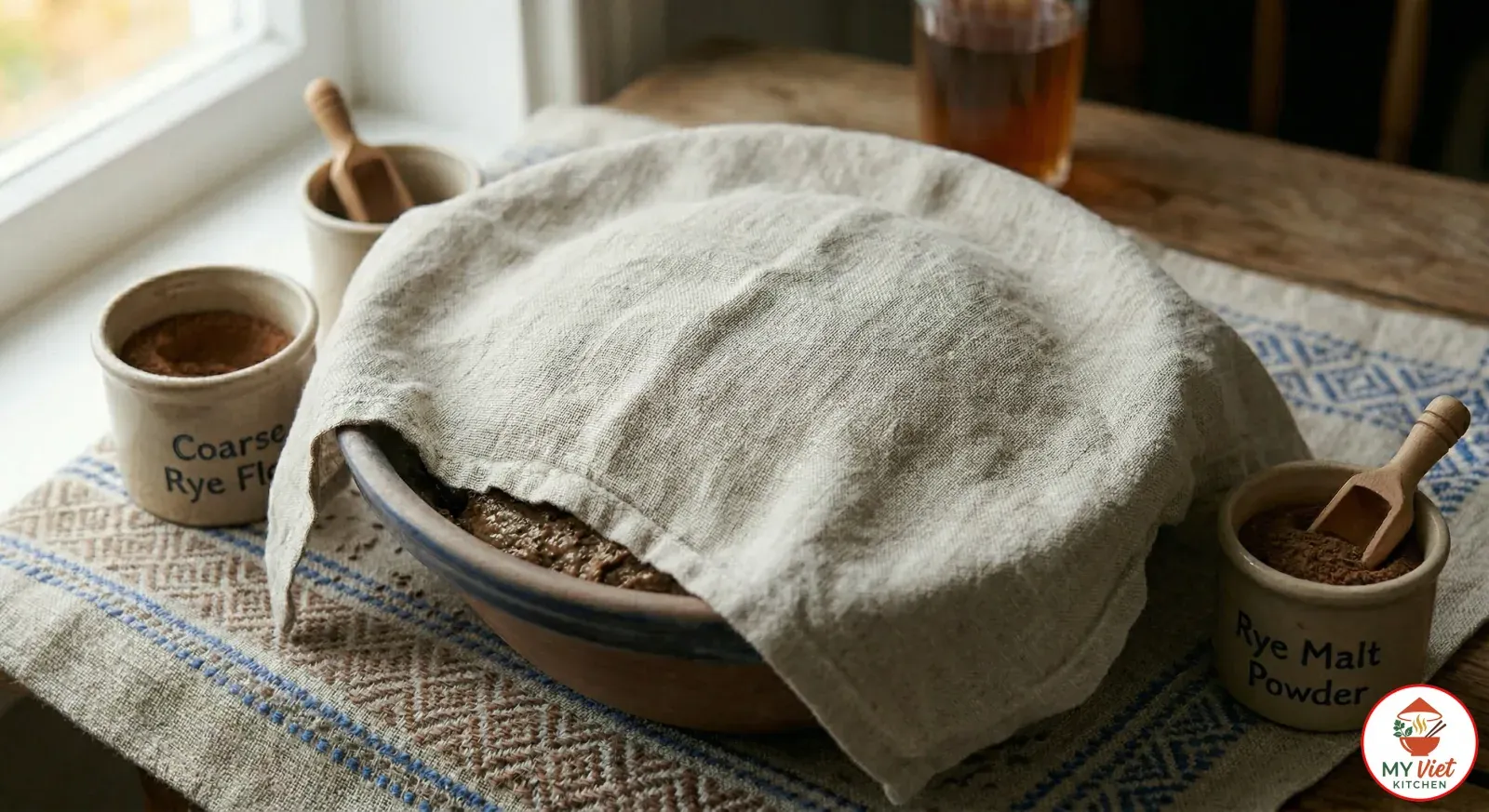
3 Cover the bowl with a damp kitchen towel or plastic wrap and place it in a warm spot. Let the dough rise for 2 to 3 hours. Rye ferments more slowly than wheat because it has far less gluten to trap gas bubbles. Expect the dough to grow by about half its original volume rather than doubling. A few cracks on the surface are perfectly normal and actually show that fermentation is happening.
If you are using a sourdough starter, the rise may take closer to 3 hours. The wild yeast and bacteria work at their own pace, but they reward your patience with a deeper, more complex flavor. You can also do this first rise in the refrigerator overnight for an even slower fermentation. Cold fermentation develops more sour notes and improves the bread’s shelf life.
Step 4: Shape the Loaf
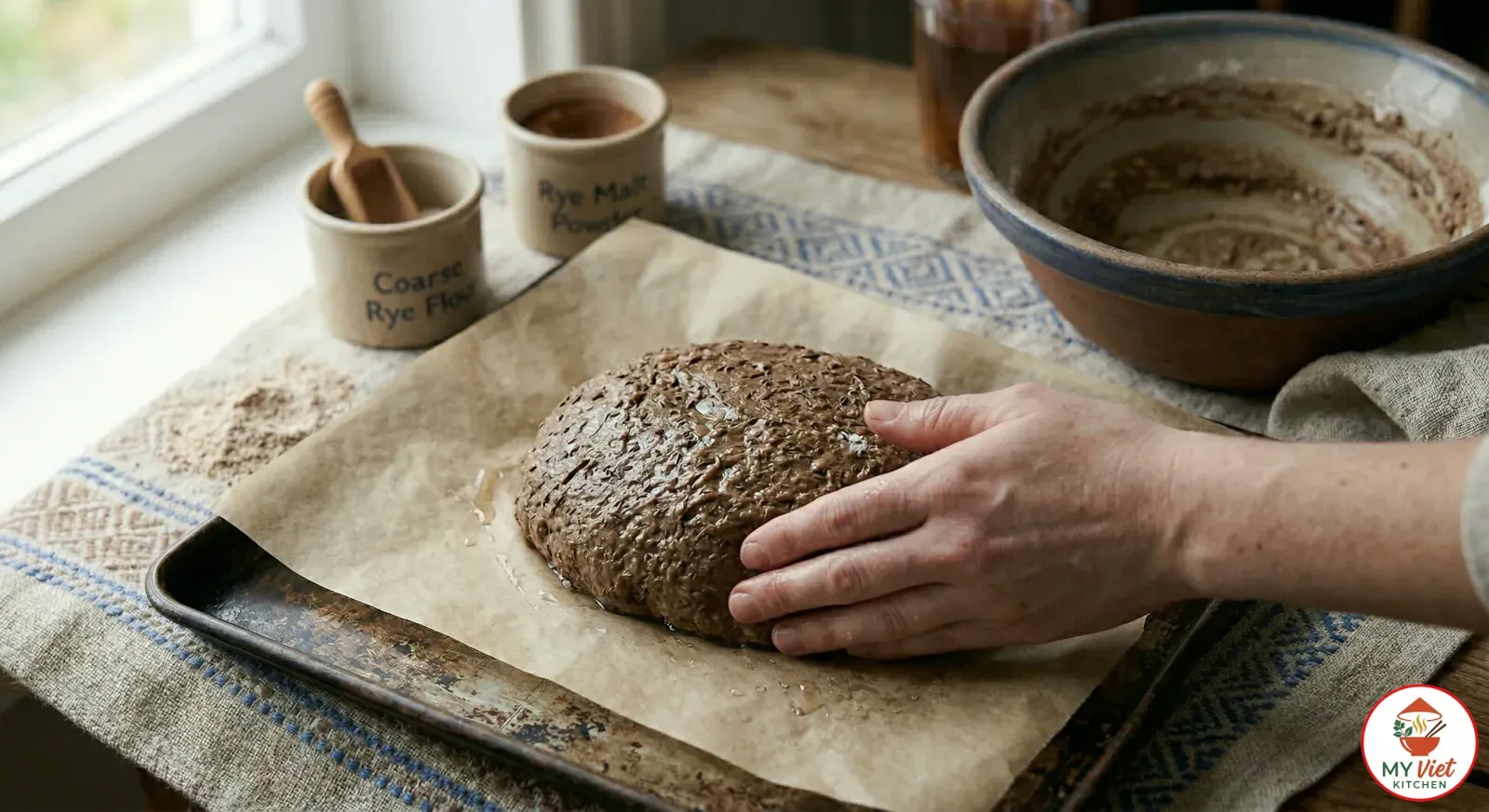
4 Wet your hands generously with water to prevent the sticky dough from clinging to your fingers. Turn the dough out onto a lightly floured surface and shape it into an oval or round loaf. Do not knead it at this stage, because aggressive handling destroys the fragile gas structure in rye dough. Simply fold the edges under to create surface tension, then smooth the top with your damp hands.
Transfer the shaped loaf onto a parchment-lined baking sheet or into a greased loaf pan. A loaf pan gives you the traditional rectangular shape that makes even sandwich slices. A free-form loaf on a baking sheet produces a rustic round with a thicker crust. Either way, cover the loaf loosely with a towel and let it proof for 1 to 1.5 hours. The surface should look slightly puffy but not dramatically risen.
Step 5: Bake the Rupjmaize
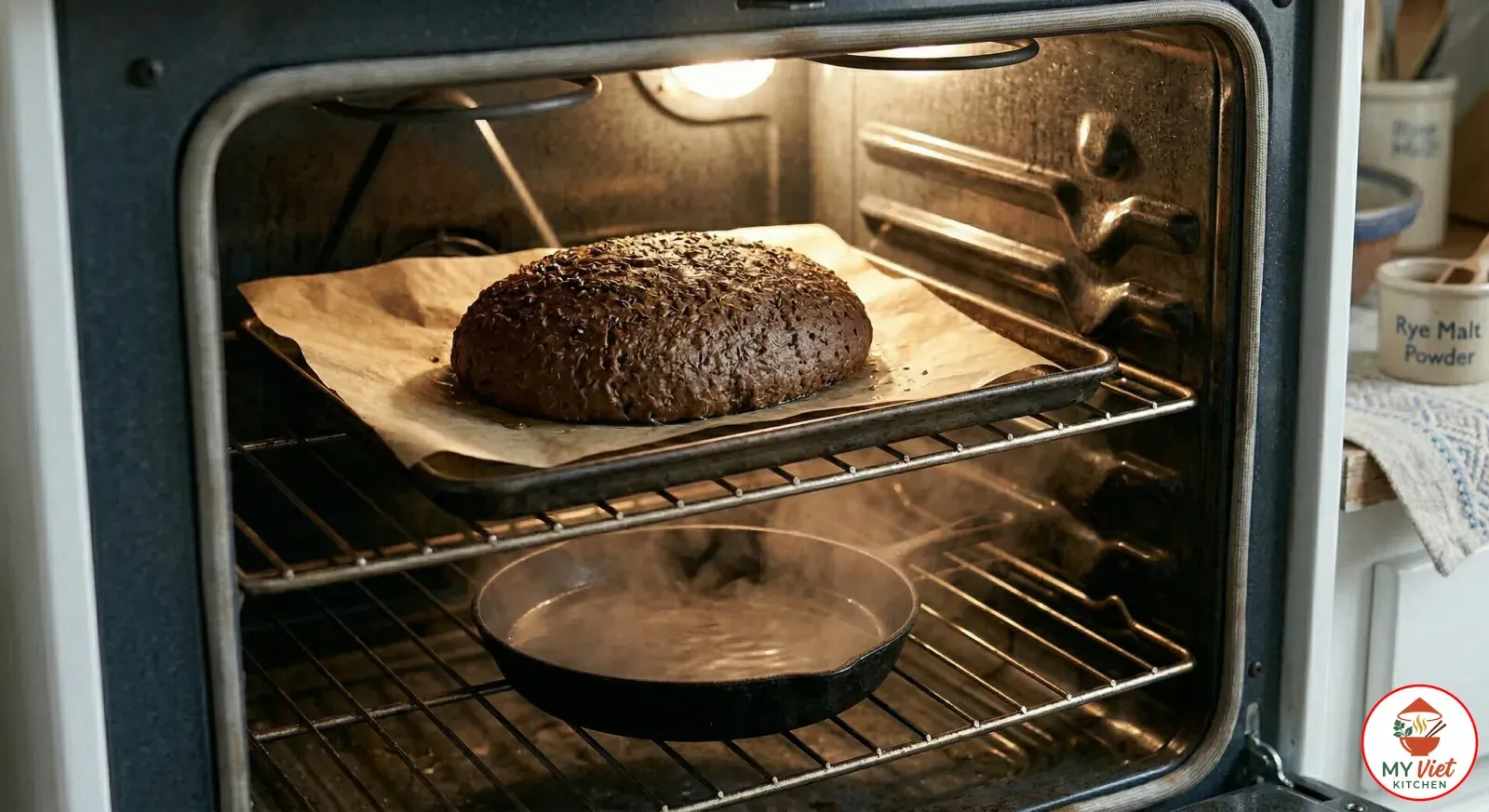
5 Preheat your oven to 375 degrees Fahrenheit. Place a small pan of hot water on the lower oven rack to create steam during the first 15 minutes of baking. This steam keeps the crust flexible while the bread expands, which prevents cracking. Before the loaf goes in, prick the top several times with a fork. This releases trapped air and prevents large bubbles from forming under the crust.
Bake for 55 to 65 minutes until the crust turns dark brown, almost mahogany, and an instant-read thermometer inserted into the center reads 200 degrees Fahrenheit. The dark color comes from the malt and rye, not from burning, so do not pull the loaf early just because it looks very dark. Remove the bread from the oven and immediately brush the top with warm water. This gives the crust a beautiful, glossy shine that is characteristic of Baltic rye breads.
Here is the hardest part of the entire recipe: you must wait before cutting. Place the loaf on a wire rack and let it cool completely for at least 4 hours. Many Latvian bakers wait a full day. During this time, the interior crumb continues to set as moisture moves from the center outward. If you cut too early, the inside will feel gummy and wet, which is not a sign of underbaking but simply a loaf that has not finished resting.
Expert Tips for Perfect Rupjmaize
Never Skip the Overnight Soaker
The soaker step is the foundation of good rupjmaize. Without it, the coarse rye bran stays gritty, the malt enzymes have no time to work, and the bread lacks its signature sweetness. Even if you are short on time, a minimum soak of 4 hours makes a noticeable difference. The full overnight soak is ideal because it gives the enzymes enough time to convert starches fully, which produces the deepest flavor and darkest color.
Embrace the Sticky Dough
Rye dough is supposed to be sticky. Unlike wheat, rye flour contains very little gluten. Instead, it has pentosans, which are sugars that absorb large amounts of water and form a gel-like structure. This gel is what gives rye bread its moist, dense crumb. If you add too much flour to make the dough easier to handle, you end up with a dry, crumbly loaf. Use wet hands, a wet spoon, and a light dusting of flour on your work surface. Accept the mess as part of the process.
Use Steam During Baking
A pan of hot water in the bottom of the oven creates steam that serves two purposes. First, it keeps the crust soft and flexible for the initial minutes, which allows the bread to expand fully before the crust hardens. Second, steam gelatinizes the starches on the surface of the loaf, which creates the glossy, slightly chewy crust typical of Baltic rye breads. Remove the water pan after 15 minutes so the crust can dry out and firm up during the remaining bake time.
Rupjmaize vs. Other Dark Rye Breads Around the World
Dark rye bread traditions stretch across northern and eastern Europe, and each country brings its own approach to the grain. Here is how rupjmaize compares to the most well-known dark rye breads from other baking traditions.
| Bread | Country | Key Feature | Main Difference from Rupjmaize |
|---|---|---|---|
| Rupjmaize | Latvia | Malt-sweetened, caraway, overnight soaker | The original, with distinctive malt depth |
| Pumpernickel | Germany | Extremely slow bake (16-24 hours) | Baked low and slow, denser and sweeter |
| Borodinsky | Russia | Coriander-heavy, malt syrup | More coriander, less caraway, scalded rye |
| Ruisleipa | Finland | Flat round shape with a hole | Thinner, crispier, traditionally dried on poles |
| Rugbrod | Denmark | Dense, seeded, often with cracked rye | Heavy seed content, used for smorrebrod |
| Leib | Estonia | Close cousin to rupjmaize | Very similar, sometimes includes potato |
Serving Suggestions
Latvians treat rupjmaize as the foundation of nearly every meal. The dense, flavorful crumb holds up to rich toppings without falling apart, which makes it the ideal base for open-faced sandwiches. Slice it thin, about a quarter inch, for the best balance between bread and topping.
The Perfect Accompaniments:
- Salted butter: The simplest and most traditional pairing. Good Latvian butter on fresh rupjmaize is a meal in itself. The sweet creaminess of butter contrasts with the malty tang of the rye, and this combination has sustained Latvian families for generations.
- Smoked sprats or sardines: Riga smoked sprats are one of Latvia’s most famous exports. Layered on buttered dark rye with a slice of hard-boiled egg and a sprig of dill, they create the quintessential Latvian open-faced sandwich.
- Cottage cheese with fresh herbs: Spread a thick layer of cottage cheese on toasted rupjmaize and top it with chopped dill, chives, and a pinch of salt. This light yet satisfying combination is a staple Latvian breakfast.
- Smoked salmon or gravlax: Thin slices of cold-smoked salmon on dark rye with cream cheese and capers. The smokiness echoes the toasty malt notes in the bread, while the cream cheese adds richness.
Beverage Pairings:
- Kvass: A mildly fermented drink made from dark rye bread. In Latvia, kvass and rupjmaize are two sides of the same coin. The drink is sweet, tangy, and refreshing, and it highlights the malty grain flavors in the bread.
- Black tea: Strong, unsweetened black tea is the everyday companion to Latvian rye bread. The tannins in the tea cut through the richness of buttered bread and smoked fish.
- Dark beer: A Baltic porter or dark lager mirrors the malty, toasty notes in rupjmaize. The shared grain character makes this a natural and harmonious pairing.
- Kefir or buttermilk: The tangy acidity of fermented dairy refreshes the palate between bites of dense, flavorful bread. Latvians often drink a glass of kefir alongside their rye bread sandwiches at lunch.
Storage and Reheating
Room temperature: Wrap rupjmaize tightly in a clean linen cloth or place it in a bread box. The bread stays fresh for 5 to 7 days at room temperature thanks to the natural acidity from rye fermentation. The flavor actually improves over the first two days as the crumb continues to develop and the malt sweetness deepens.
Freezer: Slice the loaf before freezing so you can take out only what you need. Wrap individual slices or portions tightly in plastic wrap, then place them in a freezer bag. The bread keeps well for up to 3 months in the freezer. Thaw slices at room temperature for 30 minutes or toast them directly from frozen.
Reheating: Toast thin slices in a toaster or on a dry skillet over medium heat for one to two minutes per side. Toasting brings out the malt and caraway aromas and crisps the surface beautifully. For a whole loaf that has gone slightly stale, wrap it in foil and warm it in a 300-degree oven for 15 minutes. Avoid the microwave, because it makes rye bread rubbery and tough.
Common Mistakes to Avoid
1. Cutting the Bread Too Soon
This is the single most common mistake with rye bread. The loaf needs at least 4 hours of cooling, and ideally a full overnight rest, before you cut into it. Rye starches continue to gel and set as the bread cools. If you slice too early, the inside will feel gummy and undercooked even though the bread reached the correct internal temperature. Patience here makes the difference between disappointing gummy bread and a perfectly moist crumb.
2. Adding Too Much Wheat Flour
It is tempting to add extra bread flour to make the dough less sticky and easier to handle. However, too much wheat changes the character of the bread entirely. Rupjmaize should be dense and moist, not light and airy. The recipe calls for a small amount of wheat flour to provide just enough structure, but rye should remain the dominant grain. Keep the ratio at roughly three parts rye to one part wheat for authentic results.
3. Expecting It to Rise Like Wheat Bread
Rye dough will never double in size the way wheat dough does. The limited gluten in rye cannot trap gas as effectively, so expect about a 50 percent rise at most. If you wait for the dough to double, it will overferment. Overfermented rye bread collapses in the oven and has a sour, unpleasant tang. Watch the clock and the slight puffiness of the surface rather than judging by volume alone.
4. Pulling the Loaf Early Because It Looks Dark
Rupjmaize is supposed to be dark. The mahogany color comes from rye malt, cocoa powder, and the Maillard reaction between the sugars and proteins in the crust. A dark loaf is not a burned loaf. Trust your thermometer over your eyes. The bread is done when the internal temperature hits 200 degrees Fahrenheit, regardless of how dark the crust appears. Pulling it early gives you an underbaked center that stays gummy no matter how long you let it cool.
Frequently Asked Questions
What does rupjmaize taste like?
Rupjmaize has a deep, layered flavor that combines earthy rye, sweet malt, and gentle sourness from fermentation. The caraway seeds add a warm, slightly anise-like aroma that hits you when you first break the loaf open. The texture is dense and moist with a slight chew, nothing like soft wheat bread. Many people describe the flavor as nutty, malty, and slightly sweet, with a satisfying grain character that lingers on the palate.
What is the difference between rupjmaize and pumpernickel?
Both breads use dark rye flour, but the baking method differs dramatically. Traditional German pumpernickel bakes at very low temperatures for 16 to 24 hours. This extremely slow process caramelizes natural sugars and produces a bread that is almost black, very dense, and naturally sweet. Rupjmaize bakes at a standard temperature for about an hour and gets its dark color from rye malt and cocoa rather than extended caramelization. The Latvian bread has a coarser texture, more pronounced caraway flavor, and a tangier profile.
Can I make rupjmaize without a sourdough starter?
Absolutely. Commercial yeast works well and produces a delicious loaf. The sourdough starter adds a deeper tang and extends the bread’s shelf life, but it is not essential. To add back some of that sour complexity, include a tablespoon of apple cider vinegar in the dough. The malt, caraway, and overnight soaker provide so much flavor on their own that the bread still tastes rich and authentic without a starter.
Why is my rye bread gummy inside?
Nine times out of ten, gummy rye bread means you sliced it before it had time to cool and set. Rye starches behave differently from wheat starches. They need hours of gradual cooling to firm up into a sliceable crumb. Let the loaf rest for at least 4 hours, though overnight is best. If you have waited long enough and the bread is still gummy, it may have been underbaked. Always check the internal temperature and aim for 200 degrees Fahrenheit before removing from the oven.
How long does rupjmaize stay fresh?
When wrapped tightly in cloth and stored at room temperature, rupjmaize stays fresh for 5 to 7 days. The natural acids from rye fermentation slow down staling and mold growth. Interestingly, the flavor of rupjmaize actually improves during the first two days as the malt sweetness rounds out. Do not refrigerate the bread, because cold temperatures speed up staling in all breads. For longer storage, slice and freeze for up to 3 months.
What do Latvians eat with rupjmaize?
Latvians eat rupjmaize at every meal. The most beloved pairing is salted butter, sometimes followed by smoked sprats, hard-boiled egg, and dill. For breakfast, cottage cheese with fresh herbs on toasted dark rye is a staple. At lunch, open-faced sandwiches with cold cuts, cheese, or pickled vegetables are common. In the evening, a simple slice with butter and a bowl of soup rounds out the day. The bread’s dense texture and bold flavor make it versatile enough to complement almost any topping.
Variations and Adaptations
Seeded Rupjmaize:
Add a quarter cup of sunflower seeds and two tablespoons of flax seeds to the dough along with the dry ingredients. The seeds add crunch, nutty flavor, and extra nutrition to each slice. Press a few extra seeds into the top of the loaf before baking for a decorative finish. This seeded version is popular in modern Latvian bakeries.
Honey Malt Rupjmaize:
For a sweeter loaf, double the honey to four tablespoons and add an extra tablespoon of rye malt. This creates a bread that leans slightly sweet, which pairs exceptionally well with butter, aged cheese, and fruit preserves. The extra sugars also darken the crust further and make the bread even more aromatic during baking.
Rupjmaize Bread Chips (Rupjmaizes Grauzdinsi):
Slice day-old rupjmaize into thin strips about a quarter inch thick. Toss them with a drizzle of oil and a sprinkle of garlic powder and salt. Spread them on a baking sheet and bake at 350 degrees for 12 to 15 minutes until crispy. These rye bread chips are one of Latvia’s most popular snacks, typically served alongside beer. They are crunchy, garlicky, and deeply addictive.
Rupjmaize Dessert (Rupjmaizes Kartojums):
This traditional Latvian dessert layers toasted dark rye breadcrumbs with whipped cream and lingonberry jam. Dry out leftover rupjmaize, then blitz it into crumbs and toast them in a skillet with butter and sugar until fragrant. Layer the sweetened crumbs with whipped cream and tart berries in glasses. It is an elegant way to use stale bread and a beloved Latvian treat that shows up at holiday tables throughout the year.
The Cultural Significance of Rupjmaize
Rupjmaize holds a sacred place in Latvian culture that goes far beyond nutrition. Latvians consider bread a gift that must never be wasted or dishonored. Traditionally, dropping bread on the floor means you must pick it up and kiss it as an act of respect. Throwing away bread was considered a moral failing in rural Latvia, where families depended on a single weekly bake to feed everyone. These customs persist today, and many Latvians still feel a pang of guilt at the thought of discarding even a stale crust.
The connection between rupjmaize and Latvian identity deepens during the summer solstice festival called Jani. On this night, families gather around bonfires, sing folk songs, and share tables loaded with dark rye bread, cheese, and beer. Rupjmaize sits at the center of the feast, sliced thick and spread with butter. In addition, Latvian wedding traditions include the bride and groom sharing bread and salt as a symbol of prosperity. Every major life event, from birth celebrations to funerals, features this bread on the table.
Furthermore, rupjmaize shaped Latvian survival during difficult times. Throughout centuries of foreign occupation and hardship, dark rye bread remained the one food that every family could produce. Rye grows in the harsh Baltic climate where wheat fails, and the grain stores well through long winters. Latvian farmers developed their bread traditions not just out of preference but out of necessity. In the end, rupjmaize became more than food. It became a symbol of resilience, self-sufficiency, and the unbroken bond between Latvian people and their land. Today, Latvia celebrates National Bread Day every year, and dark rye remains the star of the event.
Conclusion
This rupjmaize recipe gives you the full roadmap to baking authentic Latvian dark rye bread at home. The process requires patience, from the overnight soaker to the hours of cooling after baking, but the reward is a loaf with a depth of flavor that no store-bought bread can match. Remember the three essential keys: soak the rye flour overnight with malt, keep the dough sticky, and let the baked loaf cool completely before slicing. Follow these principles, and you will produce a dark, moist, aromatic bread that Latvian grandmothers would recognize and approve.
Looking to explore more traditional European breads? Browse our European dishes collection for recipes like Irish soda bread, focaccia, and blini. Each one brings a different European bread tradition to your home oven.