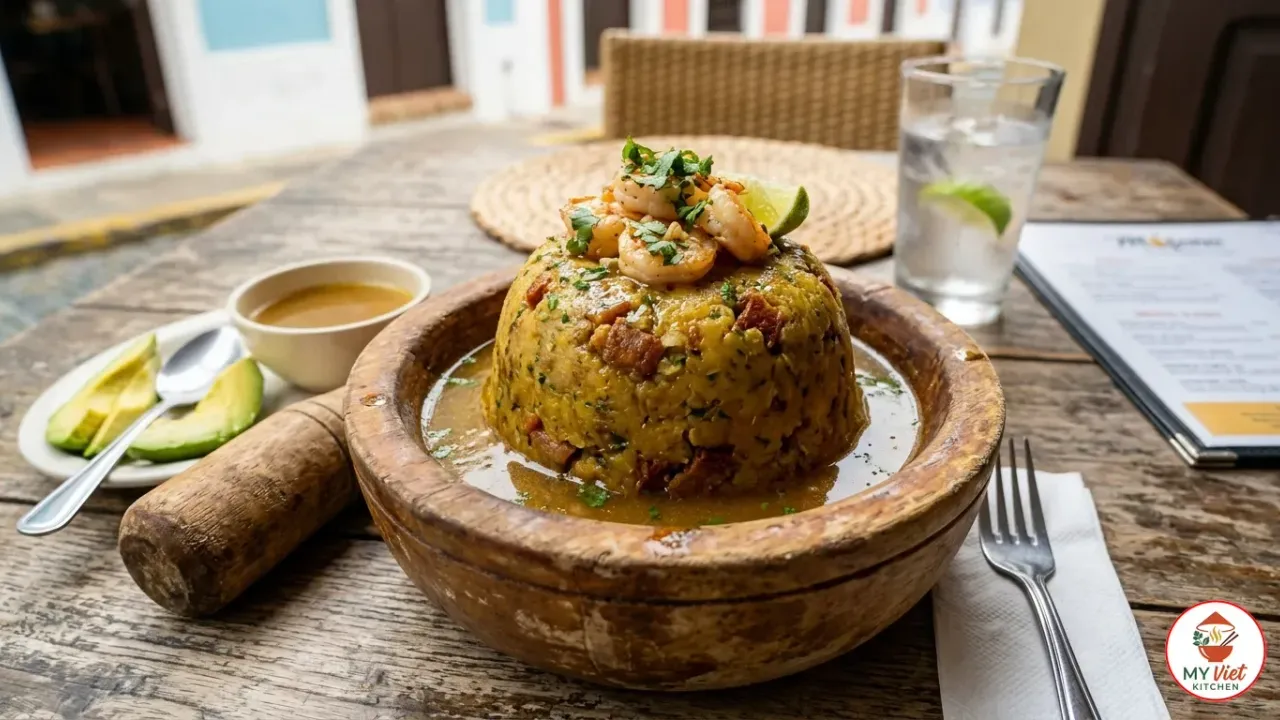
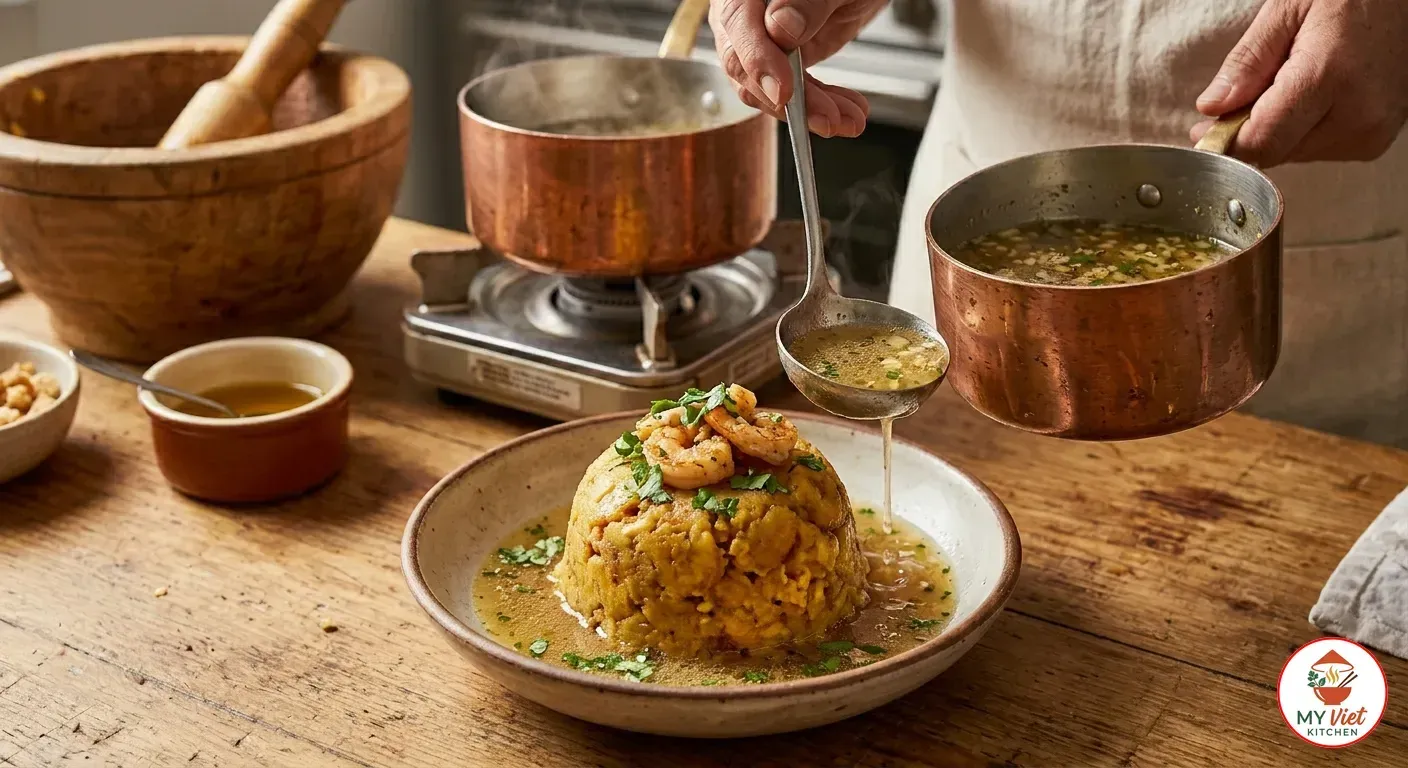
Mofongo is Puerto Rico’s most beloved comfort food, and one bite will tell you exactly why. This iconic dish turns humble green plantains into something special — fried until golden, then mashed with bold garlic, rich olive oil, and salty chicharrones (crispy pork cracklings) in a wooden mortar called a pilon. Served as a golden dome with warm chicken broth pooled around it, mofongo gives you textures and flavors that no other Caribbean dish can match.
Prep Time: 20 minutes | Cook Time: 25 minutes | Servings: 4
Difficulty: Medium | Calories: ~450 per serving
What Makes Mofongo Special?
Mofongo holds a place in Puerto Rican culture that goes far beyond just food. Walk into any restaurant on the island, from casual roadside stands in Luquillo to elegant dining rooms in Old San Juan, and you will find mofongo on the menu. Indeed, it is the dish that Puerto Ricans abroad miss most. It is also the first thing many travelers order when they land in San Juan. Simply put, mofongo has a flavor and texture that exists nowhere else in the culinary world.
In fact, the dish has deep African roots. West African slaves brought to Puerto Rico during the colonial era prepared fufu, a starchy mash made from boiled yams or cassava. Over centuries, Puerto Rican cooks adapted this technique using green plantains, which grew abundantly on the island. They added garlic from Spanish cooking traditions and chicharrones from the island’s thriving pig farming culture. As a result, mofongo was born from the fusion of three continents. Today, every bite carries the history of the Caribbean itself.
What truly sets mofongo apart from other plantain dishes is how it is mashed. First, the fried plantains are pounded in a pilon while still very hot. Because of this heat, the starches bind, while the garlic oil and pork fat create pockets of bold flavor through the mass. As a result, the texture lands somewhere between mashed potatoes and stuffing — dense, savory, and deeply satisfying. When the warm broth hits the dome, it softens the exterior while the interior stays firm. This contrast is what makes mofongo so addictive.

Choosing the Right Plantains
Plantains are the foundation of mofongo, and the ripeness level you choose determines whether the dish succeeds or fails. Not all plantains work for this recipe. Therefore, understanding the difference between green, yellow, and ripe plantains is essential before you start cooking.
- Green plantains (the only correct choice): These are firm, starchy, and hard to peel. The skin is dark green with no yellow spots. Green plantains have a mild, potato-like taste and high starch that lets them hold their shape during frying and bind when mashed. This is the only type that works for mofongo.
- Yellow plantains (not suitable): As plantains ripen, the starches turn to sugars. Yellow plantains are sweeter and softer. They work for maduros (sweet fried plantains) but will make a mushy, too-sweet mofongo that falls apart. Avoid these for this recipe.
- Black plantains (not suitable): Fully ripe plantains with black skin are very sweet and soft. They are great for desserts but all wrong for mofongo. The sugar burns too fast during frying, and the soft flesh cannot hold a dome shape.
Ingredients for Mofongo
Main Ingredients:
- 4 large green plantains, peeled and cut into 1-inch rounds
- 6 cloves garlic, minced
- 4 ounces (115g) chicharrones (pork cracklings), crushed
- 3 tablespoons extra virgin olive oil
- Vegetable oil for frying (about 3 cups)
- 1 teaspoon salt
- 1/2 teaspoon black pepper
For the Broth:
- 2 cups chicken broth
- 2 cloves garlic, smashed
- 1 tablespoon olive oil
- 1 tablespoon sofrito (optional but recommended)
- Salt to taste
For Serving:
- Garlic shrimp, braised chicken, or grilled steak (optional topping)
- Avocado slices
- Fresh cilantro for garnish
Pro tip: Buy your chicharrones from a Latin grocery store rather than a regular supermarket. The freshly fried kind sold by weight has a far superior crunch and pork flavor compared to the bagged snack versions. If you cannot find quality chicharrones, crispy bacon pieces work as a substitute. Crush the chicharrones into small, irregular pieces rather than a fine powder. You want bits of crunchy pork scattered throughout the mofongo for textural contrast.
Step-by-Step Instructions
Step 1: Peel and Slice the Plantains
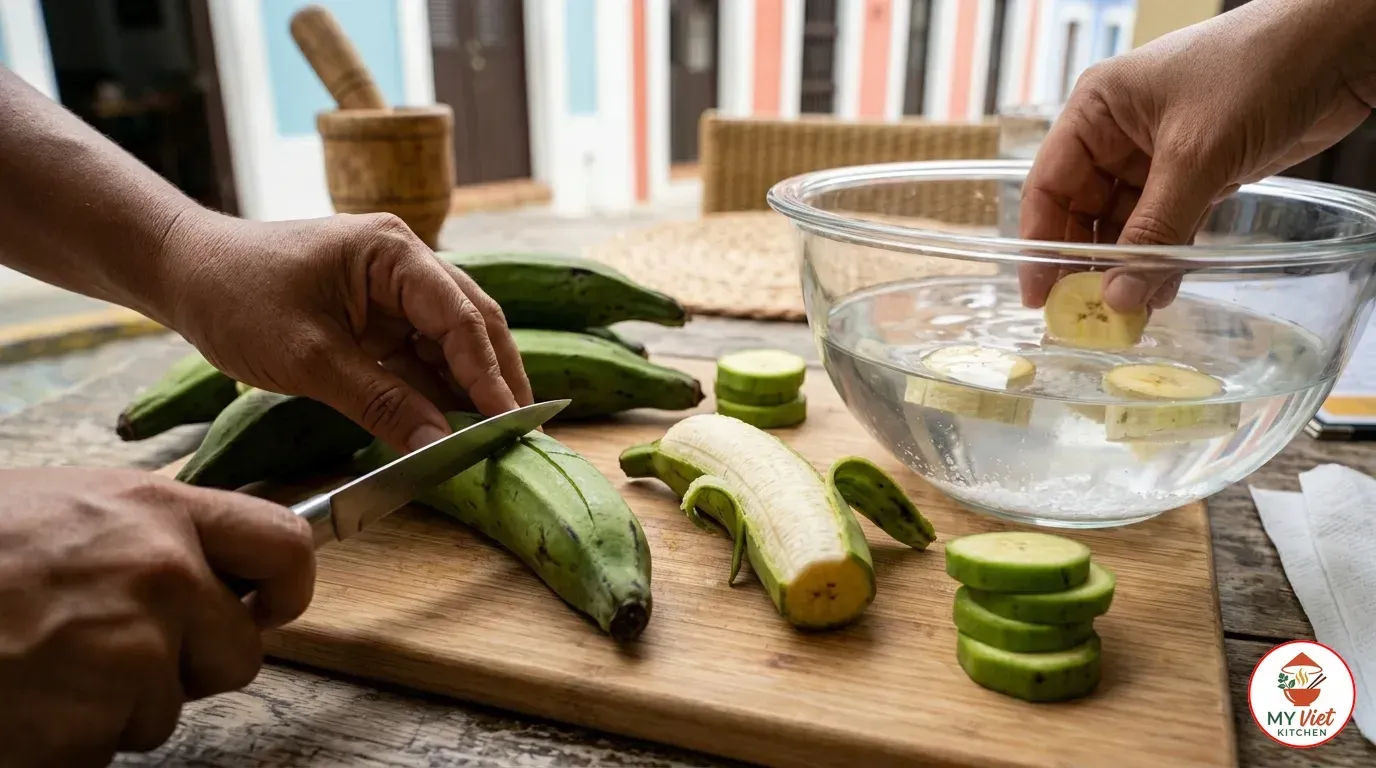
1 Green plantains are hard to peel, but there is a trick. Start by cutting off both ends with a sharp knife. Then score the skin along each ridge, cutting just through it without slicing the flesh. Use your thumb to pry the skin away in strips. Keep a bowl of warm water nearby. Dip your fingers in it often, since the moisture loosens the skin.
Once peeled, cut each plantain into rounds about 1 inch thick. Place the rounds immediately into a bowl of salted water. Soak them for 15 minutes. This step serves two purposes. First, the salt water seasons the plantains from the inside. Second, soaking removes excess surface starch that would otherwise cause the oil to foam during frying. Both of these benefits are essential for good results. Drain the rounds well and pat them fully dry with paper towels before frying. Any water left on the surface will cause the hot oil to splatter.
Step 2: Fry the Plantain Rounds
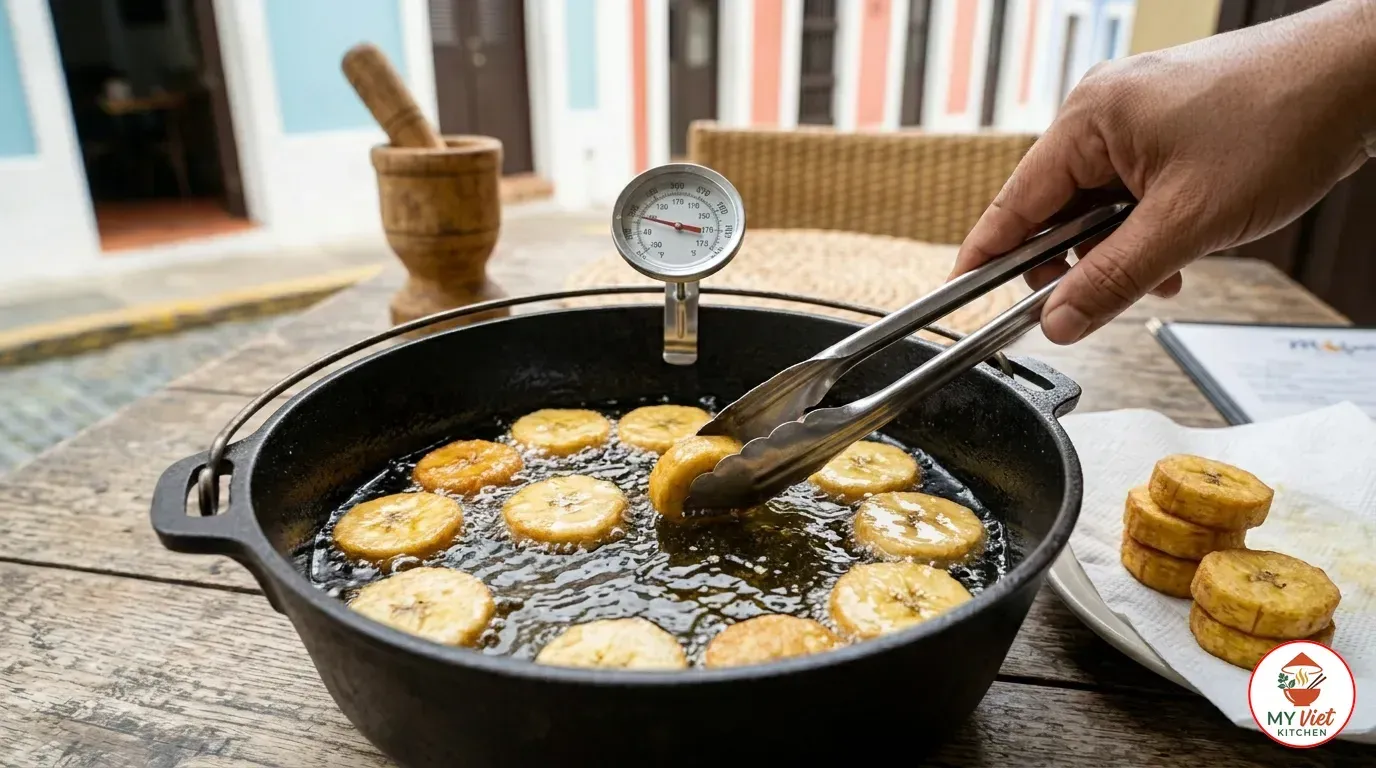
2 Pour oil into a deep skillet or Dutch oven to a depth of about 2 inches. Heat it to 350 degrees. Use a kitchen thermometer to check the temperature. If the oil is too cool, it produces greasy, soggy plantains. On the other hand, oil that is too hot browns the outside before the interior cooks through. Either way, both outcomes ruin the texture of your mofongo.
Fry the plantain rounds in small batches, about 8 to 10 pieces at a time. Crowding the pan drops the oil heat fast and leads to uneven cooking. Cook each batch for 5 to 7 minutes, turning often, until they turn light gold on all sides. When pressed with tongs, they should feel firm but not rock hard. They need to stay a bit soft inside so they mash well. Then transfer the fried rounds to a plate lined with paper towels. Work fast through the batches, because the plantains must stay hot for the mashing step.
Step 3: Prepare the Garlic Oil
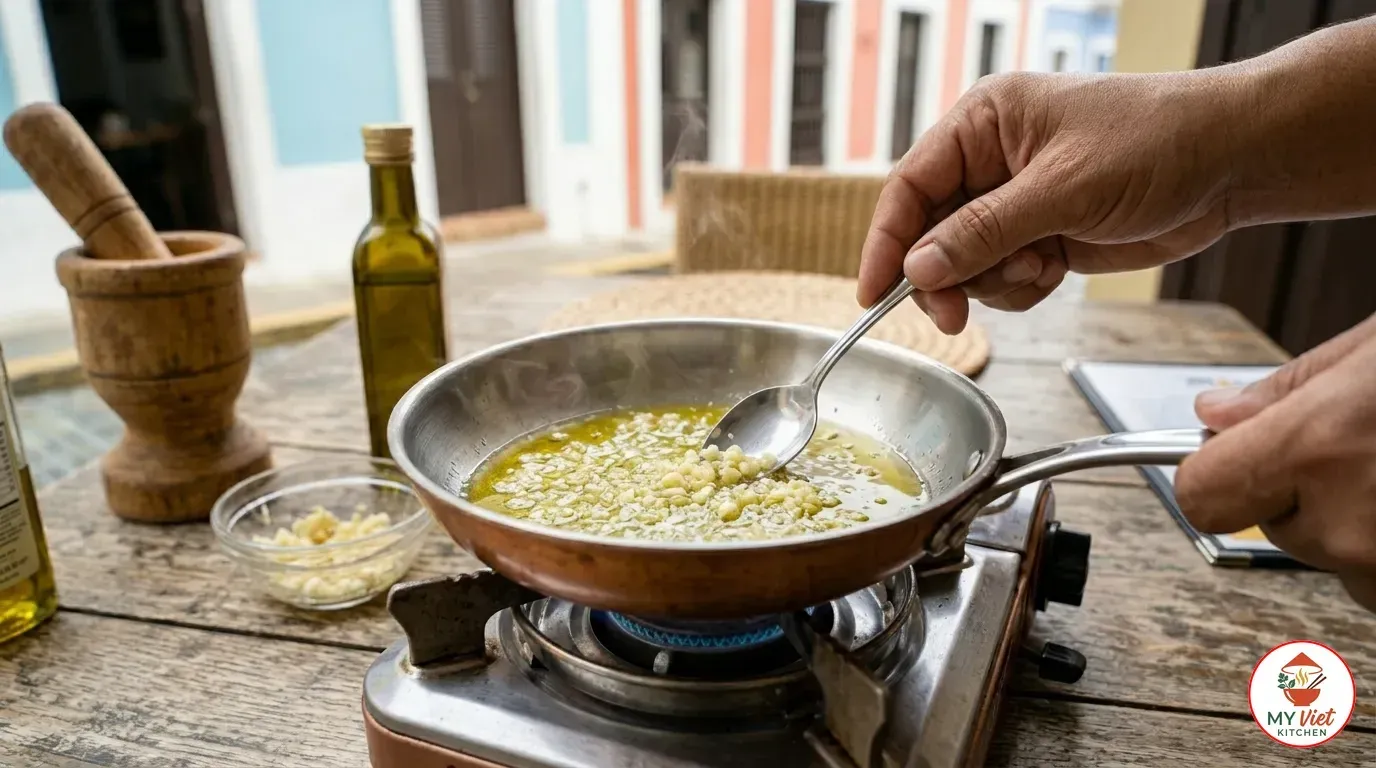
3 While frying the plantains, prepare the garlic oil that gives mofongo its soul. Heat 3 tablespoons of olive oil in a small skillet over medium-low heat. Add the minced garlic and cook gently for 1 to 2 minutes. Stir at all times and watch the color closely. The garlic should turn just barely gold and smell very fragrant. Remove the pan from heat right away when it hits this point.
Garlic burns in seconds, and burnt garlic tastes harsh and bitter. It will ruin the whole dish. However, low heat and constant stirring prevent this. Additionally, the olive oil soaks up the garlic flavor as it warms. This oil does more than just bind the mofongo. It spreads garlic flavor through every bite. Some cooks grind the raw garlic into the oil with a mortar first to make a strong paste. Either way works, but the sauteed version gives a milder, sweeter garlic taste.
Step 4: Mash the Mofongo
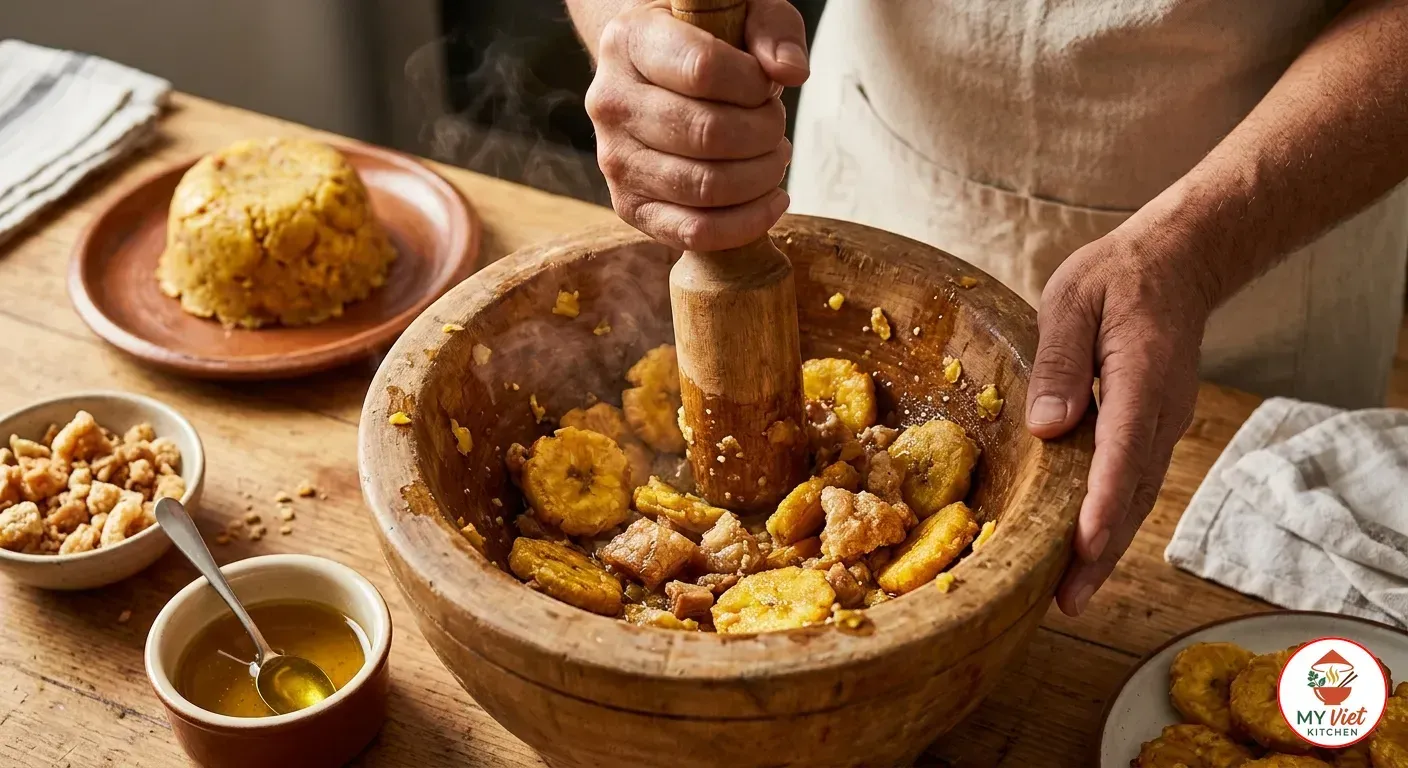
4 This is the most important step, and above all, speed matters. Because the plantains must be mashed while still hot, work quickly. Place a portion of fried plantain rounds into a large pilon (wooden mortar and pestle). Then add a generous spoonful of the garlic oil and a handful of crushed chicharrones. Begin pounding with the pestle using firm, even strokes.
Essentially, the goal is a cohesive mass that holds together but still has some texture. Mash until the plantain pieces break down and merge with the pork cracklings and garlic oil. You should see small bits of chicharron throughout the mixture. Avoid over-mashing into a completely smooth paste, as the slight chunkiness is part of the authentic texture. If you do not own a pilon, use a large sturdy bowl and the bottom of a heavy glass or a potato masher. Shape each batch into a rounded dome by pressing the mixture into a small bowl, then inverting it onto the serving plate. Work in batches of roughly one plantain per serving.
Step 5: Prepare the Broth and Serve
5 Heat the chicken broth in a small saucepan over medium heat. Add the smashed garlic cloves and olive oil. If using sofrito, stir it in now. Bring the broth to a gentle simmer and cook for 5 minutes to allow the flavors to meld. Taste and adjust the salt. The broth should be savory and aromatic with a clear garlic presence.
Next, place each mofongo dome on a plate or in a shallow bowl. Pour the warm broth around the base of the dome, not directly over the top. In this way, the broth pools around the mofongo so diners can break off pieces and dip them. Alternatively, serve the broth in a small cup on the side. For a complete meal, top the mofongo with garlic shrimp, braised chicken in tomato sauce, or sliced grilled steak. Garnish with fresh cilantro and serve immediately. Mofongo waits for no one — it is best enjoyed the moment it leaves the pilon.
Expert Tips for Perfect Mofongo
Keep Everything Hot
Temperature is the single most critical factor in making good mofongo. Specifically, cold or lukewarm plantains resist mashing and produce a dry, crumbly result. As they cool, the starches get stiff and hard to work with. Therefore, work in small batches and mash each one right after frying. Warm your pilon with hot water before you start. Some cooks even warm the garlic oil a bit before adding it. Every bit of heat helps the plantains bind into the smooth texture you want.
Use Enough Fat
Mofongo is not a low-fat dish, and attempting to reduce the oil produces disappointing results. In fact, the olive oil and pork fat from the chicharrones serve as both flavor carriers and binders. Without enough fat, the mashed plantains stay dry and crumbly instead of forming a smooth dome. So be generous with the garlic oil. If the mix feels too dry while mashing, add more olive oil. The fat also carries the garlic flavor deep into the plantain mass. As a result, every bite tastes well seasoned rather than bland in the center.
Do Not Over-Mash
A common mistake is pounding the mofongo until completely smooth. However, authentic mofongo keeps some texture. You want to see small chunks of plantain and bits of chicharron in the mass. Over-mashing pulls out too much starch and makes it gluey, like overworked mashed potatoes. Pound firmly but stop as soon as the mix holds together. That slight roughness is part of what makes mofongo so good to eat.
Mofongo vs. Other Plantain Dishes Across the Caribbean
Green plantains form the base of comfort food across the Caribbean and Latin America. Each country has its own take on this starchy fruit. Knowing these key differences helps you see what makes Puerto Rican mofongo so unique.
| Dish | Country | Key Ingredients | Key Characteristics |
|---|---|---|---|
| Mofongo | Puerto Rico | Fried green plantains, garlic, chicharrones | Mashed into a dome, served with broth, dense and savory |
| Mangu | Dominican Republic | Boiled green plantains, butter, onions | Smoother texture, served with fried eggs and salami |
| Fufu de Platano | Cuba | Boiled green plantains, garlic, pork broth | Softer consistency, often served alongside soup |
| Tostones | Caribbean-wide | Twice-fried green plantain rounds | Flat, crispy discs served as a side dish or snack |
| Machuquillo | Puerto Rico | Smashed fried plantains, olive oil, garlic | Looser, more rustic version without dome shaping |
Serving Suggestions
In Puerto Rico, mofongo is served in many ways, from a simple dome with broth to a grand platter topped with seafood. Because of this range, it works as a side, a main course, or the star of a feast. Here are the most popular ways to serve it.
Classic Protein Toppings:
- Camarones al ajillo (garlic shrimp): This is the most popular mofongo topping in Puerto Rico. Plump shrimp sauteed in olive oil, garlic, white wine, and a squeeze of lime. The garlicky sauce seeps into the mofongo dome and creates an irresistible combination.
- Pollo guisado (braised chicken): Tender chicken pieces braised in a tomato-based sauce with olives, capers, and sofrito. The rich sauce moistens the mofongo perfectly. This is the most common home-style serving method across the island.
- Churrasco (grilled skirt steak): Thinly sliced, well-seasoned grilled steak draped over the mofongo dome. The charred meat flavor contrasts the soft, garlicky plantain beautifully. Serve with a drizzle of chimichurri for added freshness.
- Caldo de pollo (chicken broth only): The simplest and most traditional serving. Just the mofongo dome with warm, garlicky chicken broth poured around it. This preparation lets the mofongo itself shine without distraction.
Beverage Pairings:
- Malta India: This non-alcoholic Puerto Rican malt beverage has a sweet, molasses-like flavor that complements the savory, garlicky mofongo. It is the most traditional drink pairing on the island and a nostalgic favorite for Puerto Ricans everywhere.
- Medalla Light beer: Puerto Rico’s most popular beer. Its light, crisp character refreshes the palate between bites of the rich, dense mofongo. The mild flavor does not compete with the bold garlic and pork.
- Pina colada: For a festive occasion, the creamy coconut and pineapple flavors of this iconic Puerto Rican cocktail create a tropical contrast to the savory plantain dome.
- Passion fruit juice: A refreshing non-alcoholic option. The tart, tropical acidity cuts through the richness of the chicharrones and olive oil. Serve it well chilled over ice.
Storage and Reheating
Refrigerator: Mofongo is best eaten fresh, as the texture changes significantly once cooled. If you must store leftovers, wrap the mofongo tightly in plastic wrap and refrigerate for up to 2 days. The dome will become dense and firm as the plantain starches retrogress. Plan to reheat it in a skillet rather than eating it cold.
Freezer: Freezing mofongo is not recommended. The plantain starches crystallize during freezing and produce a grainy, unpleasant texture upon thawing. If you want to prepare ahead, fry the plantain rounds and store them in the refrigerator. Mash them fresh with warm garlic oil and chicharrones when ready to serve. This make-ahead approach preserves the best texture.
Reheating: Break the cold mofongo into chunks and place them in a skillet with a tablespoon of olive oil and a few spoonfuls of chicken broth. Heat over medium heat, stirring and pressing the mixture together for about 5 minutes until hot throughout. The added fat and liquid restore much of the original texture. Alternatively, flatten the leftover mofongo into patties and pan-fry them until crispy on both sides. This creates a delicious variation that many Puerto Ricans prefer to the original dome.
Common Mistakes to Avoid
1. Using Ripe Plantains
Without doubt, this is the most basic mistake. Ripe or yellow plantains have too much sugar and too little starch to form a proper mofongo. The sweetness clashes with the garlic and pork, and the soft flesh falls into a mushy pile instead of holding a dome shape. Always use plantains that are fully green and rock-hard. If your grocery store only carries ripe ones, try a Latin or Caribbean market where green plantains are always in stock.
2. Letting the Plantains Cool Before Mashing
Cold plantains become rigid and refuse to bind together. As the temperature drops, the starch molecules crystallize, making the rounds hard and crumbly rather than pliable. You have a narrow window of about 2 to 3 minutes after frying to mash each batch successfully. Organize your workspace before you start frying. Have the pilon, garlic oil, and chicharrones within arm’s reach. Fry, transfer, and mash in one fluid motion without delay.
3. Skipping the Garlic Oil
Some cooks try to simplify the process by adding raw minced garlic directly to the pilon. Although this does add garlic flavor, it misses the key role of the olive oil. The oil is the binding agent that holds the mashed plantains together. Without it, the mofongo falls apart on the plate. Furthermore, raw garlic tastes sharp and harsh, while sauteed garlic in warm oil has a sweeter, milder flavor that blends well with the plantain.
4. Overcrowding the Frying Pan
Adding too many plantain rounds to the oil at once drops the temperature dramatically. Consequently, instead of frying crisply, the plantains soak up oil and turn greasy and soggy. Greasy plantains make heavy mofongo that sits in your stomach like a rock. So fry in small batches of 8 to 10 pieces at most. Keep the oil at a steady 350 degrees between batches. Patience during frying pays off in the final texture.
Frequently Asked Questions
What is mofongo made of?
Mofongo consists of three core components: fried green plantains, garlic-infused olive oil, and crushed chicharrones (pork cracklings). The plantains are sliced, fried until golden, and then mashed together with the garlic oil and chicharrones in a wooden mortar called a pilon. The mixture is shaped into a dome and served with warm chicken broth or topped with proteins like garlic shrimp, braised chicken, or grilled steak.
What is the difference between mofongo and tostones?
Both dishes start with fried green plantains, but the preparation and final result differ completely. Tostones are twice-fried plantain rounds that stay flat and crispy. They serve as a side dish or snack. Mofongo takes those same fried plantains and mashes them with garlic, olive oil, and pork cracklings into a soft, dense dome. The texture of tostones is crunchy, while mofongo is soft, savory, and almost stuffing-like. Tostones are a component; mofongo is a complete dish.
Can I make mofongo without chicharrones?
Yes. For a lighter version, substitute crispy bacon bits for the chicharrones. They provide a similar salty, smoky element. For a completely vegetarian mofongo, omit the pork and increase the garlic and olive oil. Some cooks add roasted garlic or sauteed onions to boost the flavor in meatless versions. Crushed fried shrimp offer another alternative for seafood lovers. While chicharrones deliver the most authentic taste and texture, the dish still works well with these substitutions.
Why is my mofongo dry or crumbly?
Three common causes produce dry, crumbly mofongo. First, the plantains cooled too much before mashing. Always mash them while scorching hot. Second, not enough garlic oil or olive oil was used. Because the fat acts as a critical binder, skimping on it causes problems. Third, the plantains were overcooked during frying, becoming too crispy and rigid to mash smoothly. Fry them until just golden and still slightly soft inside. If your mofongo feels dry during mashing, drizzle in more olive oil and pound again.
What do you serve with mofongo?
The most traditional accompaniment is warm chicken broth, poured around or over the mofongo dome. For a full meal, top it with camarones al ajillo (garlic shrimp), pollo guisado (braised chicken), or churrasco (grilled steak). Side dishes include avocado slices, a simple green salad, or Puerto Rican rice and beans. For a hearty spread, serve mofongo alongside a bowl of sancocho or asopao. The broth is essential, as it moistens the dense plantain and distributes additional flavor.
Can I reheat leftover mofongo?
Yes, although the texture will differ from fresh. Simply break the cold mofongo into pieces and warm them in a skillet with olive oil and a splash of chicken broth over medium heat. Stir and press the mixture for about 5 minutes until hot. Avoid microwaving, as it makes the plantains rubbery. For a creative alternative, flatten leftover mofongo into patties and pan-fry them until crispy on both sides. Many Puerto Ricans consider these pan-fried mofongo cakes a delicious dish in their own right.
Variations and Adaptations
Mofongo Relleno (Stuffed Mofongo):
In this popular restaurant variation, the mofongo is shaped into a bowl rather than a solid dome. Then the hollow center is filled with a generous portion of braised meat, shrimp in garlic sauce, or stewed vegetables. The mofongo acts as an edible vessel. As you eat inward, the filling and the plantain merge in every bite. This presentation is especially popular in the Ponce and Mayaguez regions of Puerto Rico. To make it at home, press the hot mofongo mixture against the sides and bottom of a deep bowl, leaving the center hollow.
Mofongo de Camarones (Shrimp Mofongo):
Instead of chicharrones, this coastal variation mashes chopped sauteed shrimp directly into the plantain. As a result, the shrimp juices and their delicate sweetness replace the porky richness of the traditional version. It is lighter and more elegant, and it pairs beautifully with a creamy garlic butter sauce instead of chicken broth. This version dominates menus along Puerto Rico’s western coast, especially in the fishing villages near Cabo Rojo and Rincon.
Mofongo de Yuca:
Replace the plantains entirely with fried cassava (yuca) for a different starchy base. Cassava mofongo has a smoother, stickier feel and a milder taste. The technique stays the same: fry, mash with garlic oil and chicharrones, shape, and serve with broth. While less common, this version has a loyal following in Puerto Rico’s mountain towns, where cassava has been a staple crop for centuries.
Vegetarian Mofongo:
For this version, skip the chicharrones and use extra garlic oil along with sauteed mushrooms for umami depth. Also add roasted garlic cloves directly to the pilon during mashing for a more intense flavor. Serve with vegetable broth infused with sofrito and a topping of sauteed vegetables, black beans, or avocado. While not traditional, this version captures the heart of the mofongo texture and its bold garlic flavor. A splash of soy sauce in the broth adds the savory depth that the missing pork would normally give.
The Cultural Significance of Mofongo
Mofongo is more than a recipe in Puerto Rico. It is a cultural symbol that represents the island’s identity as a place where African, Spanish, and Taino indigenous traditions merged into something entirely new. Consider its layered heritage: an African technique of mashing starchy roots, a Spanish love of garlic and olive oil, and a Caribbean abundance of plantains. All three converge in the pilon. For many Puerto Ricans, the rhythmic pounding of the pestle against the mortar is one of the most evocative sounds of home cooking — a sound that connects generations across decades and distance.
According to Taste Atlas, mofongo consistently ranks among the top dishes in global food databases, and it serves as an ambassador for Puerto Rican cuisine worldwide. In New York, Chicago, and Orlando — cities with large Puerto Rican communities — mofongo restaurants thrive as gathering places where the diaspora reconnects with island flavors. The dish also drives culinary tourism on the island itself. Visitors flock to the town of Guavate in the central mountain region, where open-air restaurants specialize in mofongo and roasted pork. For resources on authentic Puerto Rican cooking traditions, the Puerto Rico Tourism Company offers guides to regional specialties. Every family claims their version is the best, and every cook guards their garlic oil ratio like a sacred secret. That passionate possessiveness is perhaps the truest measure of how deeply mofongo matters to the people who make it.
Conclusion
Making mofongo at home is simpler than most people expect. You need green plantains, garlic, olive oil, chicharrones, and about 45 minutes of your time. The technique is forgiving as long as you keep the plantains hot and use enough fat. Once you master the basic dome, a world of variations opens up — from stuffed mofongo filled with braised meats to elegant seafood versions topped with garlic shrimp. This is a dish that rewards practice and invites creativity.
Discover more incredible Caribbean and Latin American recipes on our site. Try our feijoada for another bold, hearty classic, or explore our full collection of Caribbean dishes for more island-inspired flavors. If you make this mofongo recipe, share your experience in the comments below and let us know which topping you chose.