Churrasco is the soul of Brazilian outdoor cooking — a tradition of roasting seasoned meats over open flames that dates back centuries. Unlike sauced or spice-rubbed grilling styles, churrasco honors the meat itself. Instead, it relies on coarse salt and blazing fire to create a deeply caramelized crust and a juicy, tender interior. Whether you have visited a churrascaria (Brazilian steakhouse) or simply dream of that taste at home, this guide walks you through every step of mastering authentic Brazilian BBQ.
Prep Time: 30 minutes | Cook Time: 90 minutes | Servings: 8
Difficulty: Medium | Calories: ~520 per serving
What Makes Churrasco Special?
At its core, churrasco represents a philosophy of cooking that dates back to the gauchos — the cowboy herders of southern Brazil’s Rio Grande do Sul region. These nomadic cattlemen skewered big cuts of beef on their swords and roasted them near an open fire for hours. Even today, that same idea drives modern churrasco: big cuts, open flame, minimal seasoning, and patience.
What truly sets Brazilian BBQ apart from other grilling traditions is its restraint. While American barbecue layers smoke, rubs, and sauces, churrasco uses only rock salt — sometimes garlic — and lets the beef speak for itself. As a result, the coarse salt crust reacts with high heat to form a savory bark. That bark shatters against the tender, pink interior. It is primal, elegant cooking.
In Brazil, churrasco is far more than a cooking method. It is a social ritual. Families and friends gather for hours around the grill, called a churrasqueira. Then they cycle through cuts of meat served rodizio-style. The meal unfolds slowly, with conversation and cold caipirinhas filling the gaps between courses. You can bring that same warmth to your own table.

Choosing the Right Cut of Meat
Selecting the proper cuts is the most important step in churrasco. Specifically, Brazilian grill masters prize cuts with external fat caps rather than internal marbling. Here are the essential cuts for your spread.
- Picanha (top sirloin cap — best choice): The king of churrasco cuts, with a thick fat cap that bastes the meat while grilling. Look for a piece weighing about 2 pounds with an even fat layer.
- Costela (beef short ribs): Slow-grilled for maximum tenderness. These ribs develop deep, beefy flavor when cooked low over indirect heat for about 90 minutes.
- Fraldinha (flank steak): A leaner cut with bold beef flavor. It grills quickly over high heat and should be sliced thinly against the grain for the best texture.
- Linguica (smoked pork sausage): A garlicky, mildly spiced sausage that kicks off any churrasco feast. Grill it while guests wait for the larger cuts to finish.
Ingredients for Churrasco Brazilian BBQ
Main Ingredients:
- 2 lbs (900g) picanha (top sirloin cap)
- 1.5 lbs (680g) beef short ribs
- 1 lb (450g) linguica sausage
- 1 lb (450g) chicken thighs, bone-in and skin-on
- 3 tablespoons coarse sea salt
- 1 tablespoon freshly ground black pepper
- 2 tablespoons vegetable oil for the grill grates
For the Chimichurri Sauce:
- 1 cup fresh flat-leaf parsley, finely chopped
- 1/2 cup fresh cilantro, finely chopped
- 4 cloves garlic, minced
- 1/4 cup red wine vinegar
- 1/2 cup extra virgin olive oil
- 1 teaspoon red pepper flakes
- Salt to taste
For the Vinagrete Salsa:
- 1 red onion, finely diced
- 1 red bell pepper, diced
- 2 tomatoes, seeded and diced
- Juice of 2 limes
- 2 tablespoons extra virgin olive oil
- Salt and pepper to taste
Pro tip: Ask your butcher to leave the fat cap on the picanha. Many American butchers trim it off by default, but that fat is essential for authentic churrasco flavor and moisture.
Step-by-Step Instructions
Step 1: Prepare the Meats
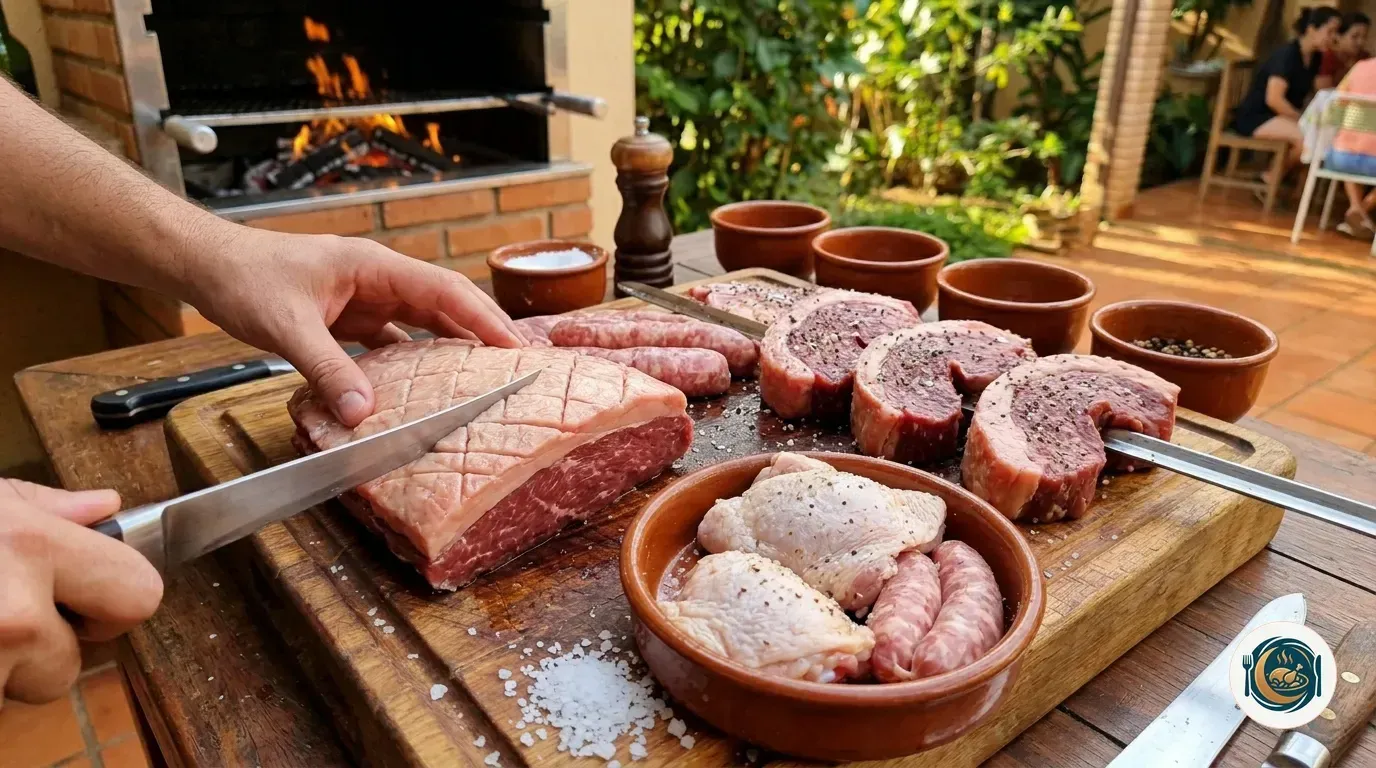
1Trim the picanha so that a quarter-inch fat cap remains. Cut it into thick C-shaped steaks by slicing against the grain into 1.5-inch portions. Then score the fat cap in a crosshatch pattern with a sharp knife. This step helps the fat render evenly and creates crispy edges. Season the picanha, short ribs, and chicken thighs on all sides with coarse sea salt and black pepper. Because coarse salt draws moisture to the surface, it speeds up browning and builds that signature salty crust.
Step 2: Make the Chimichurri Sauce
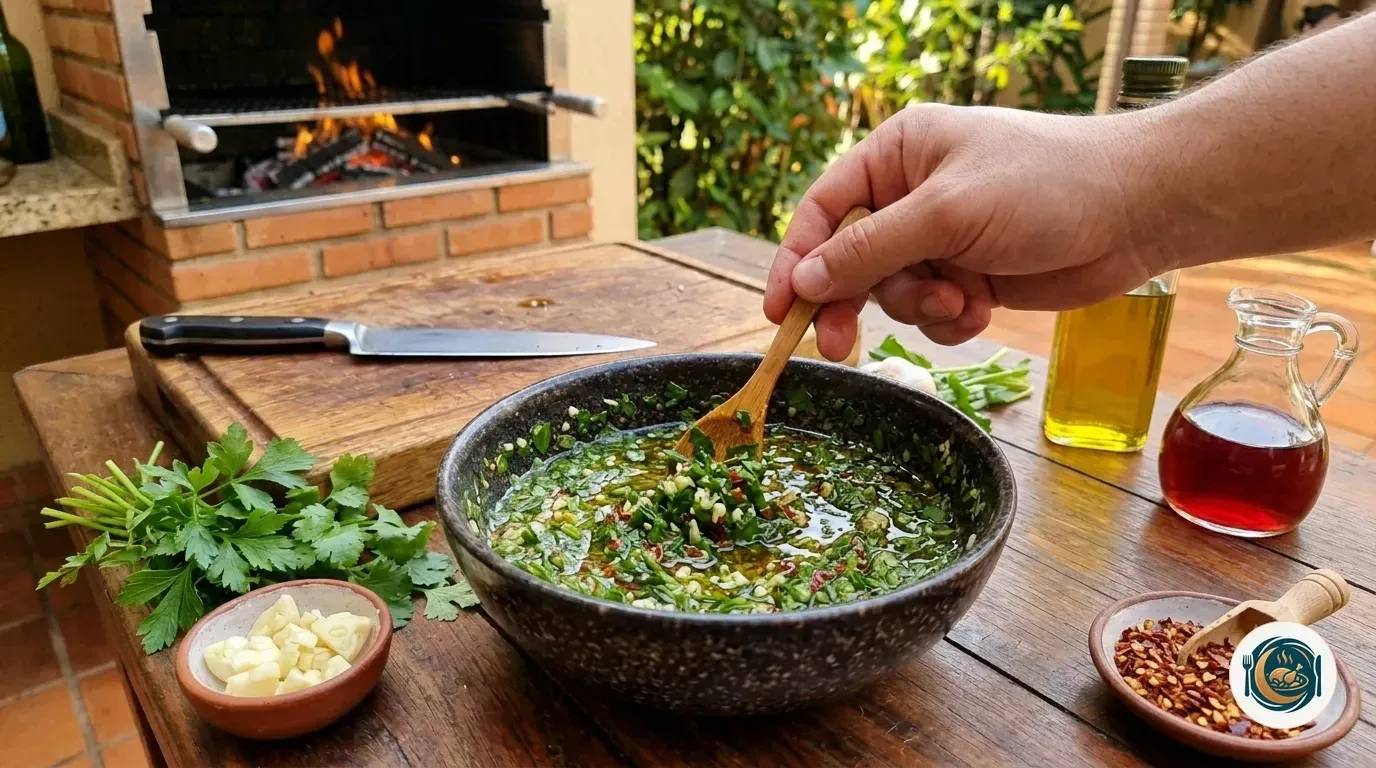
2Combine the chopped parsley and cilantro in a medium bowl. Add the minced garlic, red wine vinegar, olive oil, and red pepper flakes along with a pinch of salt. After that, stir well and let the mix rest at room temperature for at least 20 minutes. This resting time softens the raw garlic bite and lets the oil absorb the herb flavors.
Step 3: Prepare the Vinagrete Salsa
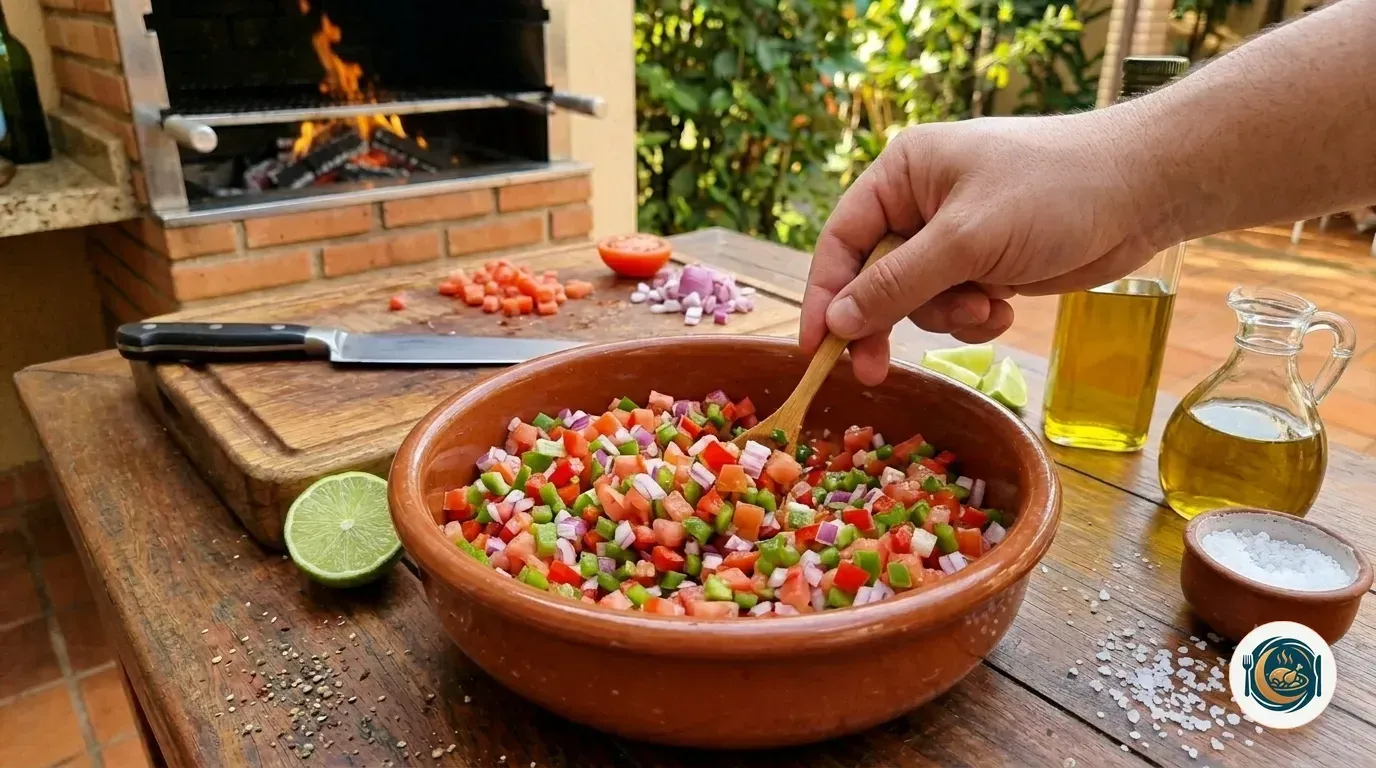
3Dice the red onion, bell pepper, and tomatoes into small, even pieces. Toss them in a bowl with the lime juice, olive oil, salt, and pepper. This bright salsa called vinagrete is a staple at every churrasco table. Its acidity cuts through the rich grilled meats and cleanses the palate between bites. For the best texture, make it right before serving.
Step 4: Set Up the Grill
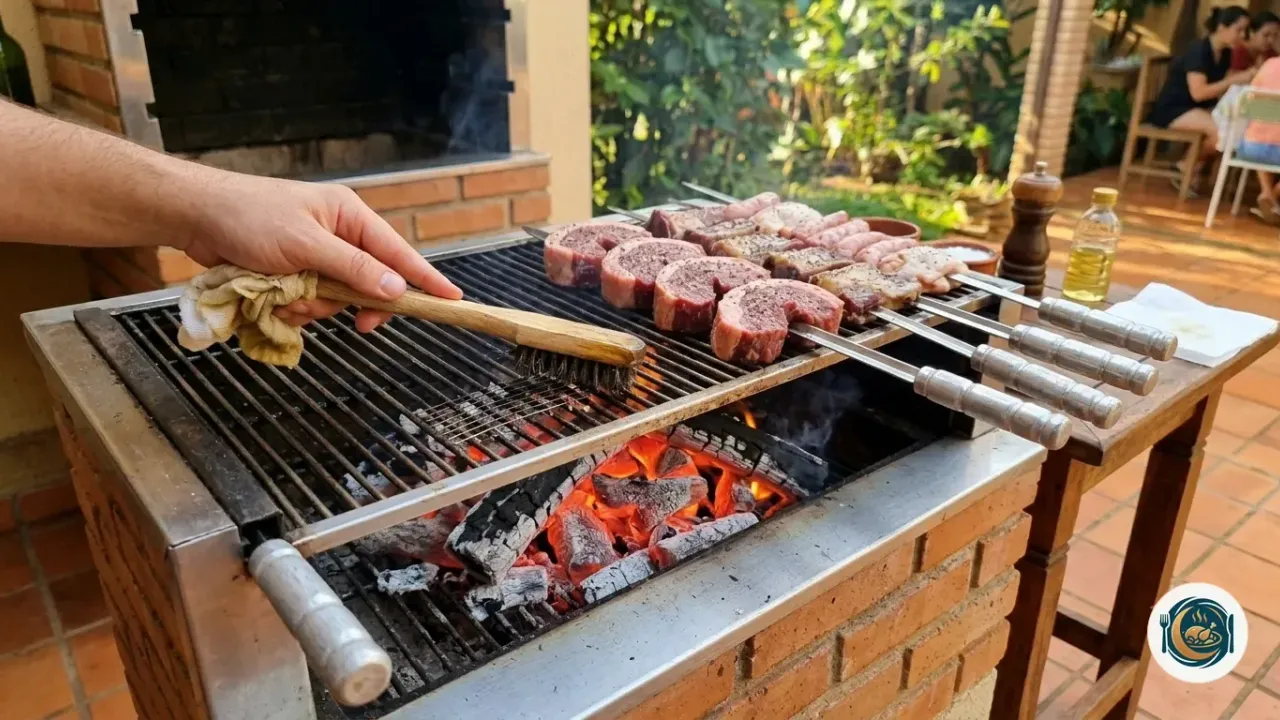
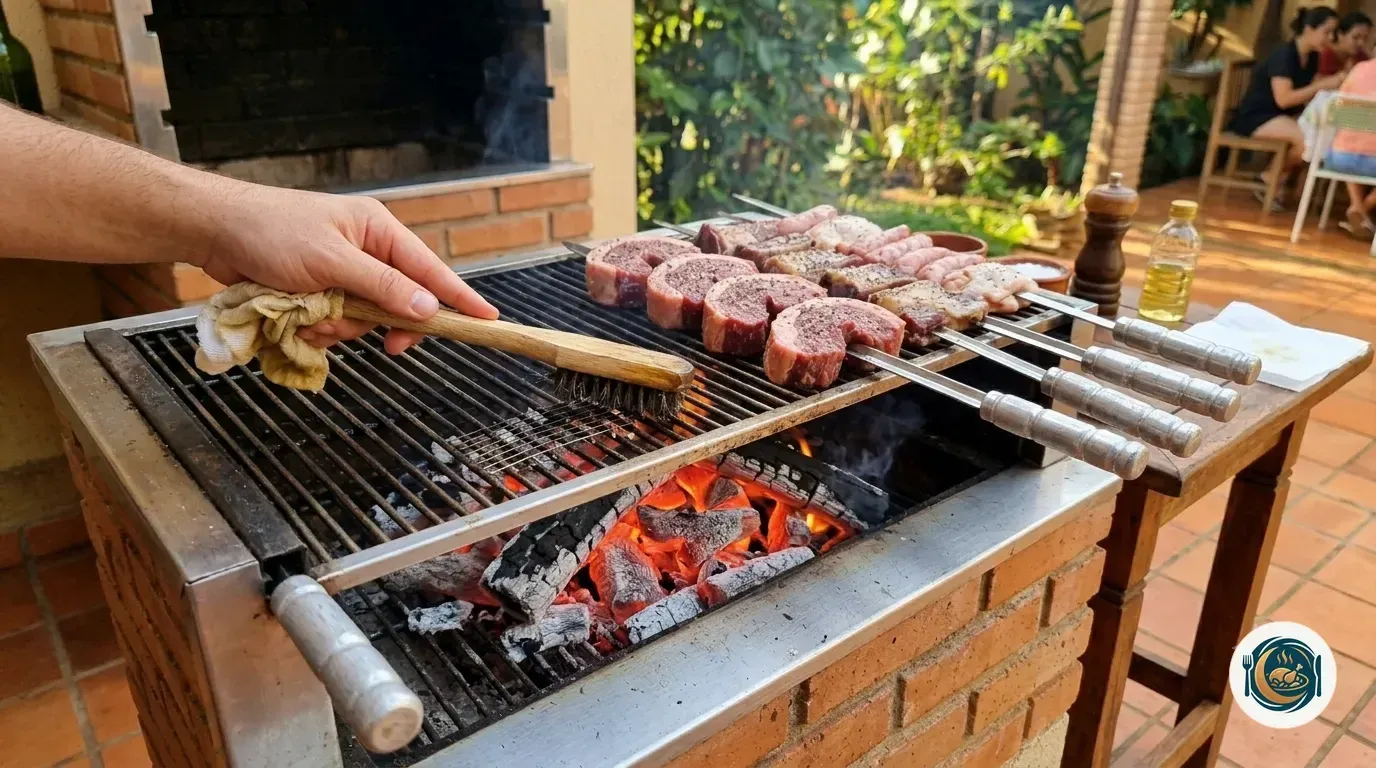
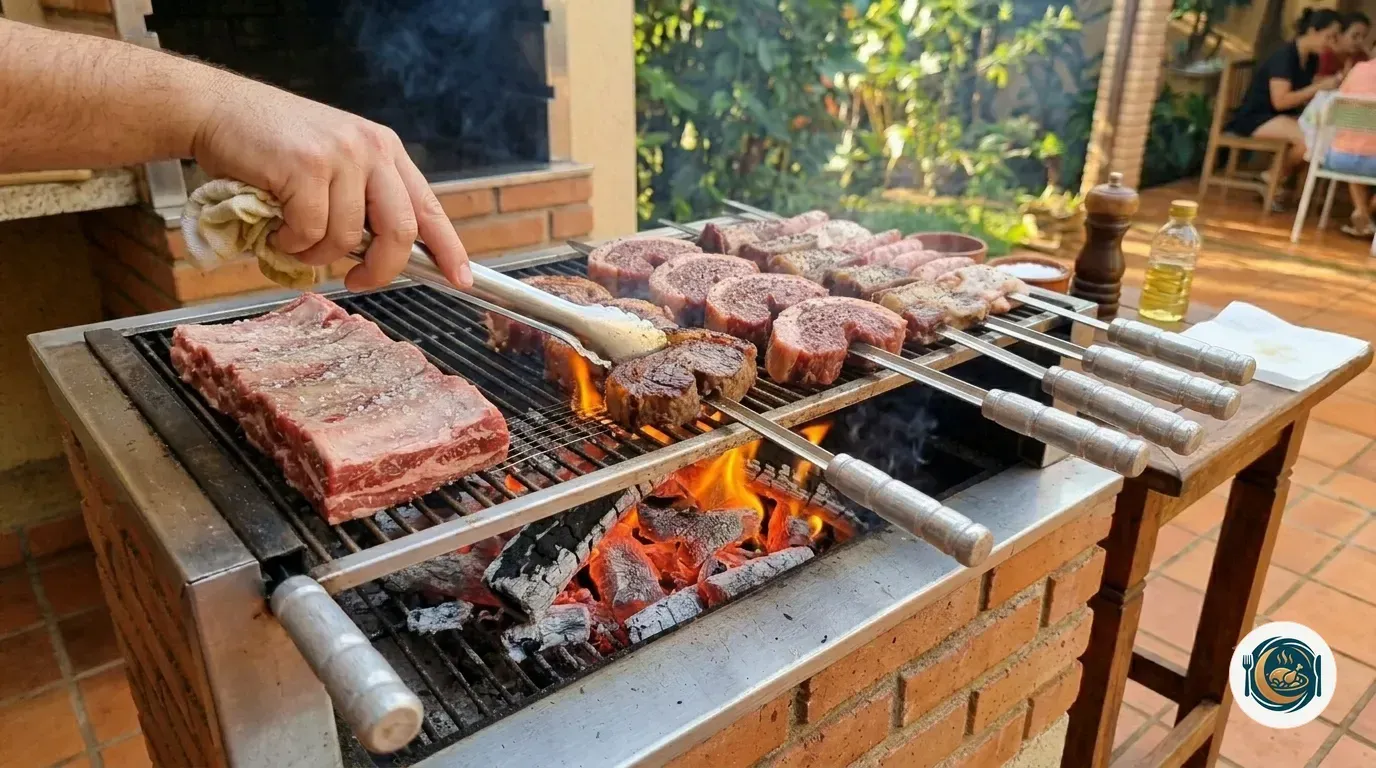
4Build a two-zone fire by banking all coals on one side of your grill. One side gives you hot, direct heat for searing. Meanwhile, the other side stays cooler for slow cooking. Aim for 450 to 500 degrees on the hot side. Clean the grates with a wire brush and oil them with a paper towel dipped in vegetable oil. If you use espeto skewers, thread the meat onto long metal rods now.
Step 5: Grill the Meats
5Start with the short ribs over indirect heat. Because they need 60 to 90 minutes to turn tender, give them a head start. Next, place the picanha fat-side down over direct heat and sear for 4 to 5 minutes until the fat turns golden. Flip and cook another 4 minutes for medium-rare. Grill the chicken thighs over medium heat for 7 minutes per side. Finally, cook the linguica sausage over direct heat, turning every couple of minutes until charred.
Step 6: Rest and Serve
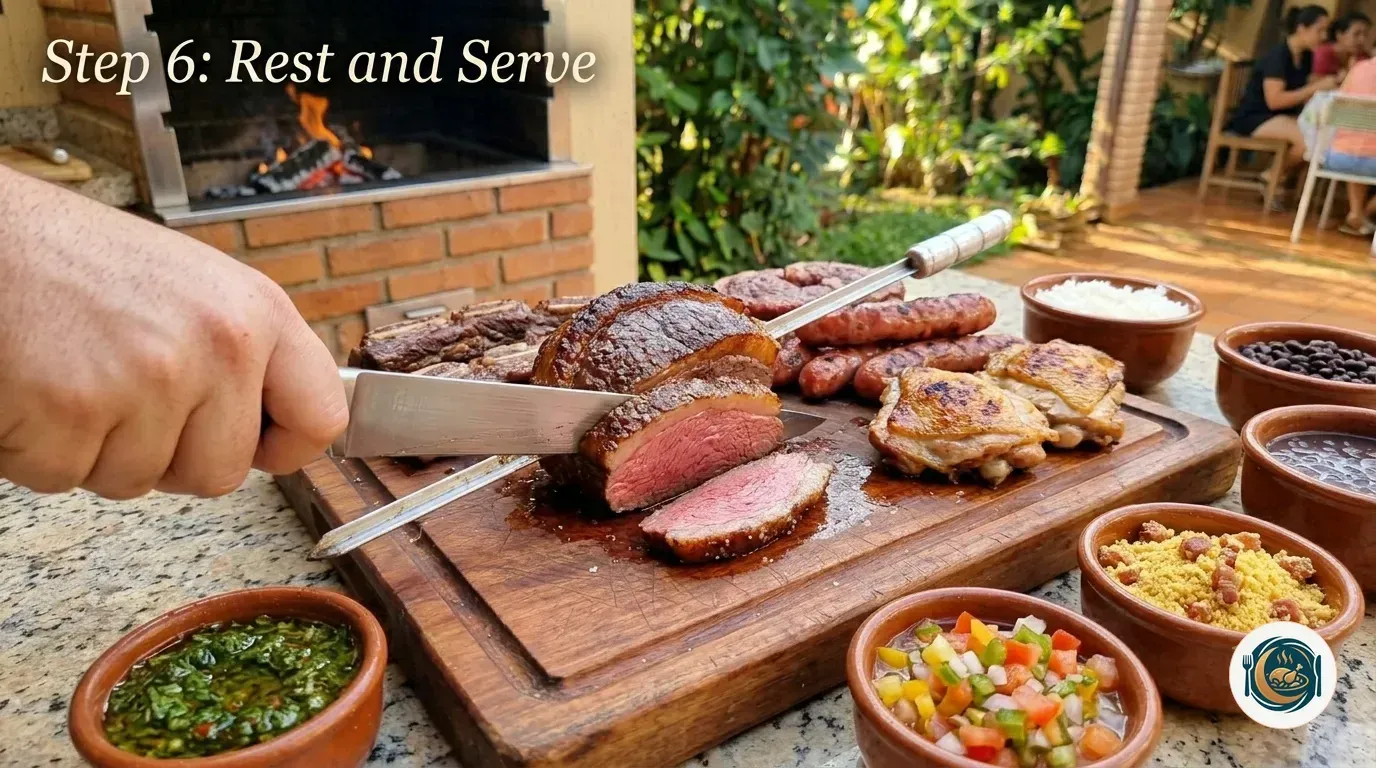
6Move all cooked meats to a cutting board and let them rest for 5 to 10 minutes. During this time, the fibers relax and soak up juices, so every slice stays moist. Carve the picanha into thin slices against the grain. Cut the ribs between the bones and slice the sausage on the diagonal. Arrange everything on a large board and serve family-style with chimichurri, vinagrete, farofa, white rice, and black beans.
Expert Tips for Perfect Churrasco
Use Coarse Salt, Never Fine
Coarse rock salt or sea salt is a must for churrasco. Fine table salt dissolves too fast and sinks deep into the meat, making it overly salty. In contrast, coarse crystals sit on the surface and draw out moisture to form a crust. Much of the excess falls off during grilling. The result is a well-seasoned exterior with a balanced interior.
Control Your Fire Temperature
The biggest mistake home cooks make is grilling over flames that are too hot or too cool. You want glowing red coals with a thin layer of white ash. If you see flames licking upward, wait a few more minutes. Hold your hand 6 inches above the grate. If you can keep it there for 3 seconds, the heat is right for searing.
Slice Against the Grain
Find the direction of the muscle fibers before slicing, then cut across them. Slicing with the grain makes chewy, stringy bites no matter how well you grilled the meat. However, cut against the grain and even a firm cut like flank steak turns tender.
Churrasco vs. Other Grilling Traditions
Brazilian churrasco belongs to a family of South American grilling traditions. Each country puts its own stamp on fire-roasted meat. Here is how churrasco compares to its closest relatives.
| Feature | Brazilian Churrasco | Argentine Asado | American BBQ |
|---|---|---|---|
| Primary seasoning | Coarse salt only | Salt, sometimes chimichurri | Dry rubs, sauces, marinades |
| Cooking method | Skewers over open flame | Flat grill (parrilla) | Low-and-slow smoking |
| Signature cut | Picanha | Asado de tira (short ribs) | Brisket, pork shoulder |
| Wood type | Charcoal or eucalyptus | Quebracho hardwood | Hickory, mesquite, oak |
| Serving style | Rodizio (continuous service) | Platter-style courses | Individual plates |
Serving Suggestions
Authentic churrasco is always a communal meal. The meats take center stage, but the sides and drinks lift the entire experience. Here is how to build a complete spread.
The Perfect Accompaniments:
- Farofa (toasted cassava flour): Adds a crunchy, nutty texture that pairs well with tender meat. Toast it with butter, garlic, and bacon bits.
- White rice and black beans: This staple pairing gives a hearty base that soaks up chimichurri and meat juices.
- Pao de queijo (cheese bread): Chewy, gluten-free rolls made with tapioca flour and cheese. They are the ideal side for grilled meats.
- Green salad with hearts of palm: A light, fresh contrast to the rich meats. Dress it with olive oil and lemon.
Beverage Pairings:
- Caipirinha: Brazil’s national cocktail made with cachaca, lime, and sugar. Its citrusy sharpness pairs brilliantly with smoky, salty meat.
- Argentine Malbec: A full-bodied red wine with enough tannin structure to stand up to the richness of grilled beef.
- Ice-cold lager beer: A crisp pilsner-style beer like Brahma or Skol is the most traditional pairing at Brazilian churrasco gatherings.
- Guarana soda: A fruity, lightly caffeinated Brazilian soft drink that works well for guests who prefer a non-alcoholic option.
Storage and Reheating
Refrigerator: Store leftover churrasco meats in an airtight container for up to 3 days. The flavors deepen overnight as the salt and smoke keep working into the meat.
Freezer: Wrap portions tightly in plastic wrap, then place them in a freezer-safe bag. Frozen churrasco keeps for up to 3 months. Thaw overnight in the fridge before reheating.
Reheating: Reheat sliced churrasco in a cast-iron skillet over medium-high heat for 2 to 3 minutes per side. This brings back some of the crispy crust. Avoid the microwave — it steams the meat and turns the outside soggy.
Common Mistakes to Avoid
1. Trimming Off the Fat Cap
Many home cooks trim visible fat by instinct, but the fat cap on picanha is essential. It renders during grilling and bastes the meat, keeping it juicy. Leave at least a quarter inch of fat and always start grilling fat-side down.
2. Overcooking the Picanha
Picanha tastes best at medium-rare to medium — between 130 and 140 degrees Fahrenheit inside. If you cook it past medium, the fat cap toughens instead of melting. Additionally, the meat loses its buttery texture. Use an instant-read thermometer to check.
3. Using Fine Salt Instead of Coarse
Fine salt dissolves on contact and sinks deep into the meat. As a result, you get an overly salty interior with no crust. Coarse rock salt forms a surface layer that promotes browning, and much of the excess falls away during grilling.
4. Cutting Meat Before Resting
Slicing meat right off the grill causes juices to flood onto the cutting board. Always rest your churrasco for at least 5 minutes. In particular, larger cuts like short ribs do even better with a full 10-minute rest.
Frequently Asked Questions
What is the difference between churrasco and American BBQ?
Churrasco uses simple salt and open-flame roasting on skewers. American BBQ relies on low-and-slow smoking with spice rubs and sauces. In short, churrasco celebrates the natural flavor of quality meat, while American BBQ builds layers of smoky, sweet, and tangy taste over hours.
What is the best cut of meat for churrasco?
Picanha (top sirloin cap) is the top choice. Its thick fat cap bastes the meat during grilling, keeping it very juicy. Other great options include beef short ribs, flank steak, and rump steak. Aim for three to four different cuts for a full spread.
Can I make churrasco without a charcoal grill?
Yes, a gas grill works well. Set one burner on high and leave another off to create two heat zones. You can also use your oven broiler. Place the meat on a rack over a sheet pan, 6 inches from the element. Flip halfway through for even cooking.
What sides go with churrasco?
Classic sides include farofa, white rice, black beans, vinagrete salsa, and pao de queijo. A green salad with hearts of palm adds a fresh contrast. For drinks, serve caipirinhas, cold beer, or guarana soda.
How do you pronounce churrasco?
In Brazilian Portuguese, churrasco is pronounced “shoo-HAHS-koo.” The “ch” sounds like “sh,” the double “r” carries an “h” sound, and the final “o” has a soft “oo” quality. In many Latin American Spanish-speaking countries, the word is pronounced “choo-RRAS-ko” with a rolled “r.”
Variations and Adaptations
Chicken Churrasco:
Swap the beef for bone-in chicken thighs and drumsticks. Marinate them in garlic, lime juice, and olive oil for at least 2 hours. The skin crisps nicely over charcoal, and the flavor still captures the spirit of churrasco. This works well for guests who skip red meat.
Seafood Churrasco:
In coastal Brazil, churrasco de frutos do mar features prawns, lobster tails, and firm fish like swordfish on skewers. Season with salt, garlic, and lime. Cook times are short — most seafood finishes in 3 to 5 minutes per side.
Vegetable Churrasco:
Pineapple rings, halloumi cheese, bell peppers, and thick zucchini slices all grill well churrasco-style. Brush them with garlic olive oil and add coarse salt. Grilled pineapple with cinnamon is a classic churrascaria dessert, so this stays true to tradition.
The Cultural Significance of Churrasco
Churrasco runs deeper in Brazilian culture than any single recipe can show. In the southern state of Rio Grande do Sul, the tradition is so central that September 20th is Dia do Gaucho, marked by massive feasts across the state. The gaucho culture of horsemanship, freedom, and communal fire-roasted meals forms a core part of southern Brazilian life.
Beyond the south, churrasco has become a unifying national custom. Every neighborhood has its own churrasqueira — from brick grills to simple barrel setups. Sunday churrasco with family is as sacred in Brazil as Thanksgiving in the United States. The tradition has spread worldwide through steakhouse chains. Even so, the truest form of churrasco remains the backyard gathering where the fire burns low and the meat keeps coming.
Conclusion
Making authentic churrasco at home is easier than you might think. You need quality meat, coarse salt, a hot charcoal fire, and the patience to cook each cut right. Master the two-zone grill setup, resist the urge to over-season, and always rest your meat before slicing. Do that, and you will match any churrascaria.
Ready to explore more grilling traditions from around the world? Check out our guides to Korean BBQ, Argentine asado, and Jamaican jerk chicken for more fire-roasted inspiration.