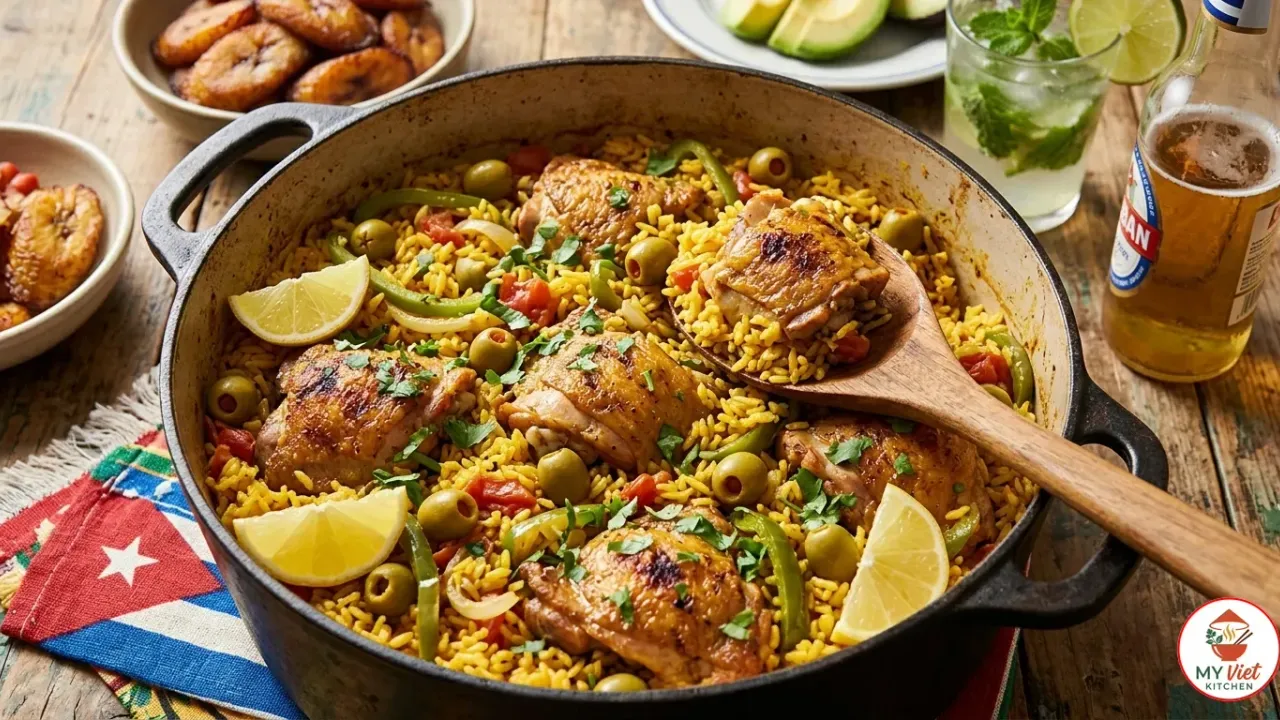
Arroz con Pollo is the crown jewel of Cuban home cooking. This beloved one-pot dish of golden saffron rice and tender seasoned chicken has sustained Cuban families for generations, filling kitchens with the intoxicating aroma of sofrito, cumin, and slow-simmered broth. Indeed, every bite delivers layers of earthy spice, tangy olives, and rich chicken flavor absorbed into each grain of perfectly cooked rice. Few dishes in Caribbean cuisine offer this much comfort with this little effort.
Prep Time: 25 minutes | Cook Time: 45 minutes | Servings: 6
Difficulty: Easy | Calories: ~480 per serving
What Makes Arroz con Pollo Special?
Arroz con pollo translates simply to “rice with chicken,” yet this name barely hints at the depth of flavor within the dish. Cuban arroz con pollo stands apart from other Latin American versions through its distinctive use of beer as a braising liquid. The beer adds a subtle malty sweetness and gentle carbonation that lightens the rice. Furthermore, combined with the tangy brine of pimiento-stuffed olives, the flavor profile becomes uniquely Cuban. Consequently, this version tastes brighter and more complex than its cousins across the Caribbean.
Historically, the dish traces its origins to the Spanish colonization of Cuba. Spanish settlers brought their tradition of arroz con pollo to the island. Over centuries, Cuban cooks adapted the recipe using local ingredients and their own culinary instincts. They added sofrito built from green bell peppers rather than the red peppers of Spain. In addition, they introduced Bijol powder, an annatto-based seasoning that gives the rice its signature golden hue without the cost of imported saffron. Ultimately, these small changes created a dish that is unmistakably Cuban in character.
What truly elevates Cuban arroz con pollo is the one-pot cooking method. The chicken sears in the same pot where the sofrito builds and the rice simmers. As a result, every flavor compound from the browned chicken skin, the caramelized onions, and the toasted spices dissolves into the cooking liquid. Then the rice absorbs all of it. By the time the lid comes off, every grain carries the full story of the dish. Moreover, this technique requires no special equipment and produces remarkably little cleanup. It is honest, practical cooking at its finest.

Choosing the Right Chicken
The chicken you select determines the richness and depth of the entire dish. Since the meat and rice cook together in one pot, the chicken must contribute fat, collagen, and flavor to the cooking liquid. Here is what works best and why.
- Bone-in, skin-on chicken thighs (best choice): Thighs contain more intramuscular fat than any other cut. The skin renders during searing and enriches the sofrito. Additionally, the bones release collagen during the simmer, which gives the rice a silky body that boneless cuts cannot achieve. Thighs also stay moist during the full cooking time. They are the traditional and optimal choice for arroz con pollo.
- Whole chicken, cut into pieces: Using a whole bird gives you a mix of dark and white meat. The drumsticks and thighs add richness while the breast pieces satisfy those who prefer leaner meat. Cut the breast portions smaller so they cook evenly with the dark meat. This approach is more traditional for large family gatherings.
- Boneless, skinless thighs (convenient alternative): These save time on searing and eating, though the dish loses some depth without the bones and skin. To compensate, use a richer chicken stock and adding an extra tablespoon of olive oil. The cooking time drops by about 5 minutes since boneless meat cooks faster.
Ingredients for Arroz con Pollo
For the Chicken:
- 3 pounds (1.4kg) bone-in, skin-on chicken thighs (about 6 pieces)
- 1 teaspoon ground cumin
- 1 teaspoon dried oregano
- Salt and black pepper to taste
- 2 tablespoons olive oil
For the Sofrito and Rice:
- 2 cups (400g) long-grain white rice
- 1 large onion, finely diced
- 1 green bell pepper, finely diced
- 4 cloves garlic, minced
- 1 can (14.5 oz) diced tomatoes with juices
- 1/2 cup (120ml) beer (lager style)
- 2 cups (480ml) chicken broth
- 1/2 teaspoon smoked paprika
- 1/4 teaspoon saffron threads (or 1 packet Bijol powder)
- 1 bay leaf
- 2 tablespoons fresh lime juice
For Garnish and Serving:
- 1/2 cup (75g) pimiento-stuffed green olives
- Fresh cilantro, roughly chopped
- Lime wedges
Pro tip: Steep the saffron threads in 2 tablespoons of warm chicken broth for at least 10 minutes before adding them to the pot. This step releases the water-soluble crocin pigment that gives the rice its golden color. Crumbling the threads between your fingers before steeping accelerates the process. If using Bijol powder instead, simply add it directly to the sofrito along with the other spices. Additionally, rinse the rice under cold water until the water runs clear. Removing surface starch prevents the grains from clumping together during cooking.
Step-by-Step Instructions
Step 1: Season and Sear the Chicken
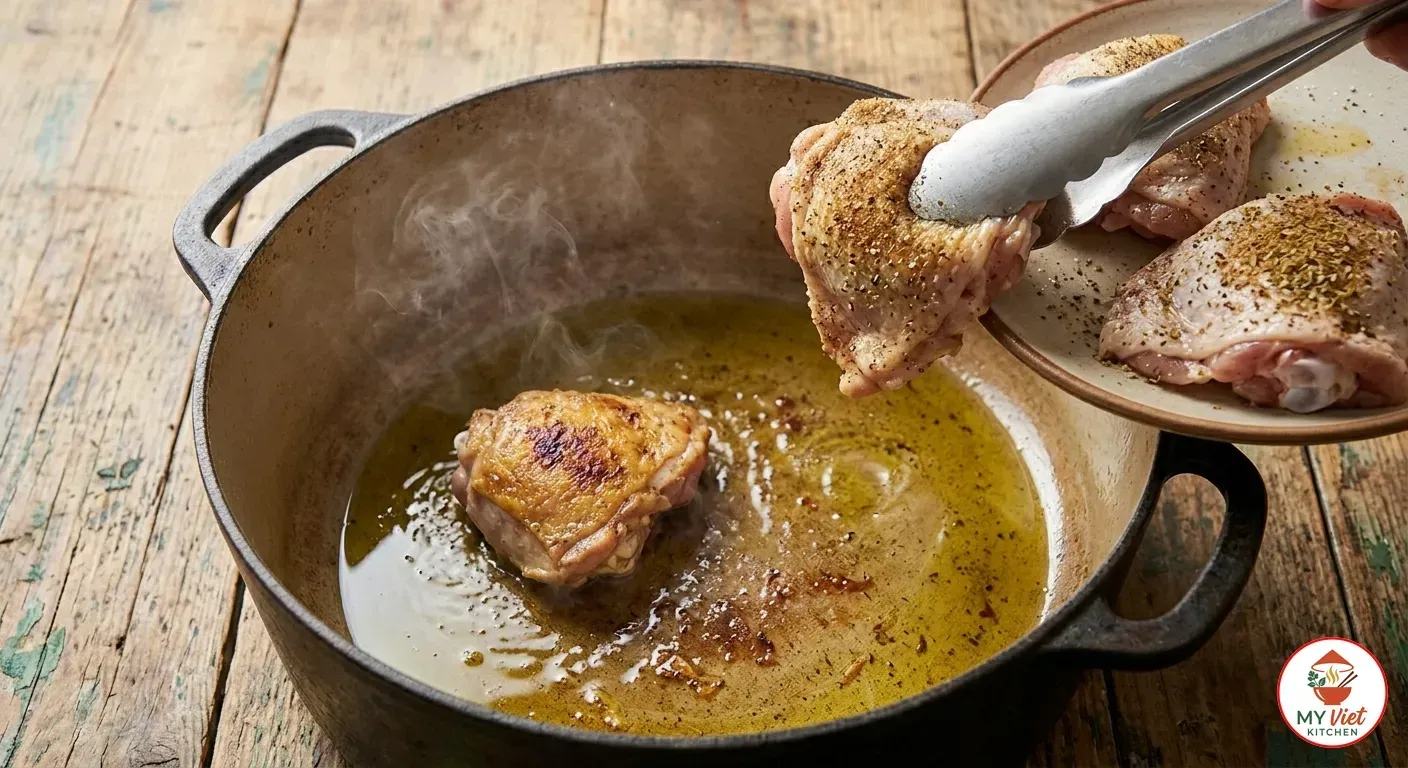
1 Pat the chicken thighs completely dry with paper towels. Moisture on the skin prevents browning and causes splattering. Then season both sides generously with salt, pepper, cumin, and oregano. Press the spices into the meat so they adhere. Heat the olive oil in a large Dutch oven or heavy-bottomed pot over medium-high heat until the oil shimmers.
Place the chicken thighs skin-side down in the hot oil. Do not move them for 4 to 5 minutes. The skin should release naturally from the pot once it develops a deep golden crust. Flip each piece and sear the other side for 2 minutes. In fact, the Maillard reaction happening on the chicken skin creates hundreds of flavor compounds that will dissolve into the rice later. Finally, transfer the seared chicken to a plate. Leave all the rendered fat and browned bits in the pot, because these fond deposits are pure flavor.
Step 2: Build the Sofrito
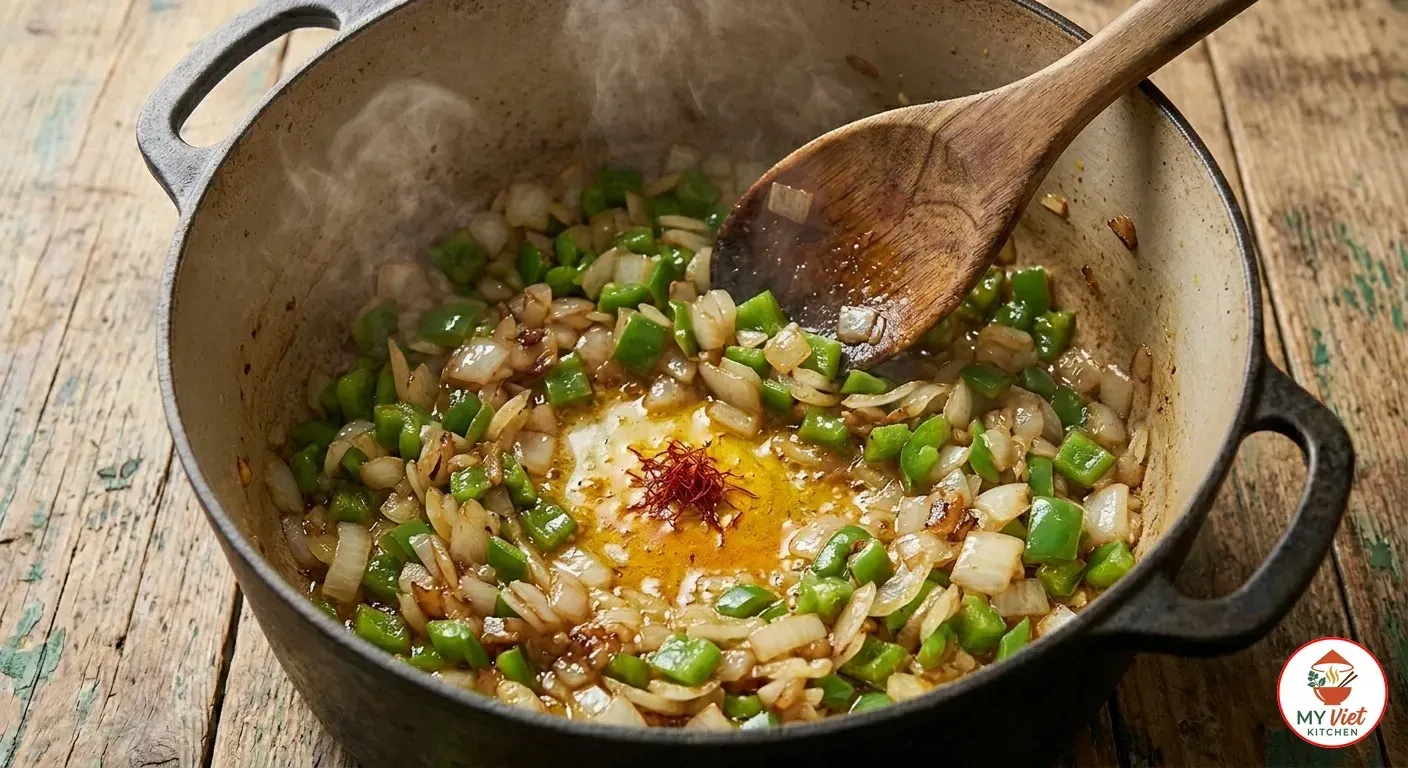
2 Reduce the heat to medium. Add the diced onion and green bell pepper to the pot with the rendered chicken fat. Stir to coat the vegetables in the fat and scrape up any browned bits from the bottom. Cook for 5 to 7 minutes, stirring occasionally, until the onion turns translucent and the pepper softens. The vegetables absorb the chicken flavor from the fond.
Add the minced garlic and cook for just 1 minute until fragrant. Garlic burns easily, so keep stirring. Next, add the smoked paprika and the saffron threads with their soaking liquid. Stir everything together and cook for 30 seconds. The fat carries the saffron color throughout the sofrito, turning it a deep golden hue. In essence, this aromatic base is the soul of Cuban arroz con pollo. Every flavor in the finished dish builds on this foundation.
Step 3: Toast the Rice
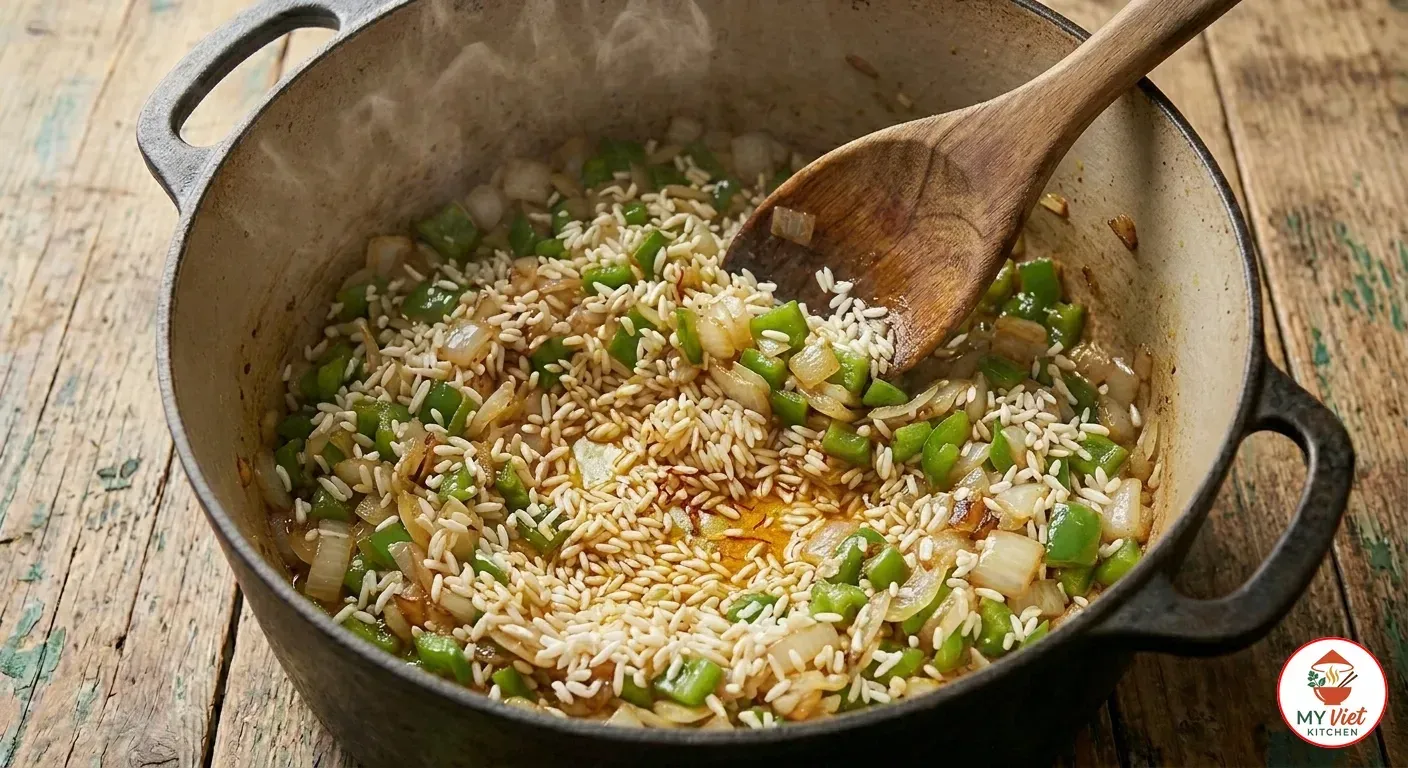
3 Add the rinsed and drained rice to the sofrito. Stir thoroughly so every grain gets coated in the aromatic fat. Toast the rice over medium heat for about 2 minutes. You will notice the edges of the grains becoming slightly translucent while the centers remain opaque. In short, this brief toasting step is essential for the final texture of your arroz con pollo.
Toasting rice in fat serves an important purpose, because the heat seals the outer starch layer on each grain. This creates a barrier that slows water absorption during cooking. As a result, the grains hold their shape and cook to a fluffy, separate texture instead of clumping into a sticky mass. Professional rice cooks across Latin America and the Middle East use this same technique. Yet it takes only 2 minutes but makes a dramatic difference in the finished dish.
Step 4: Add Liquids and Simmer
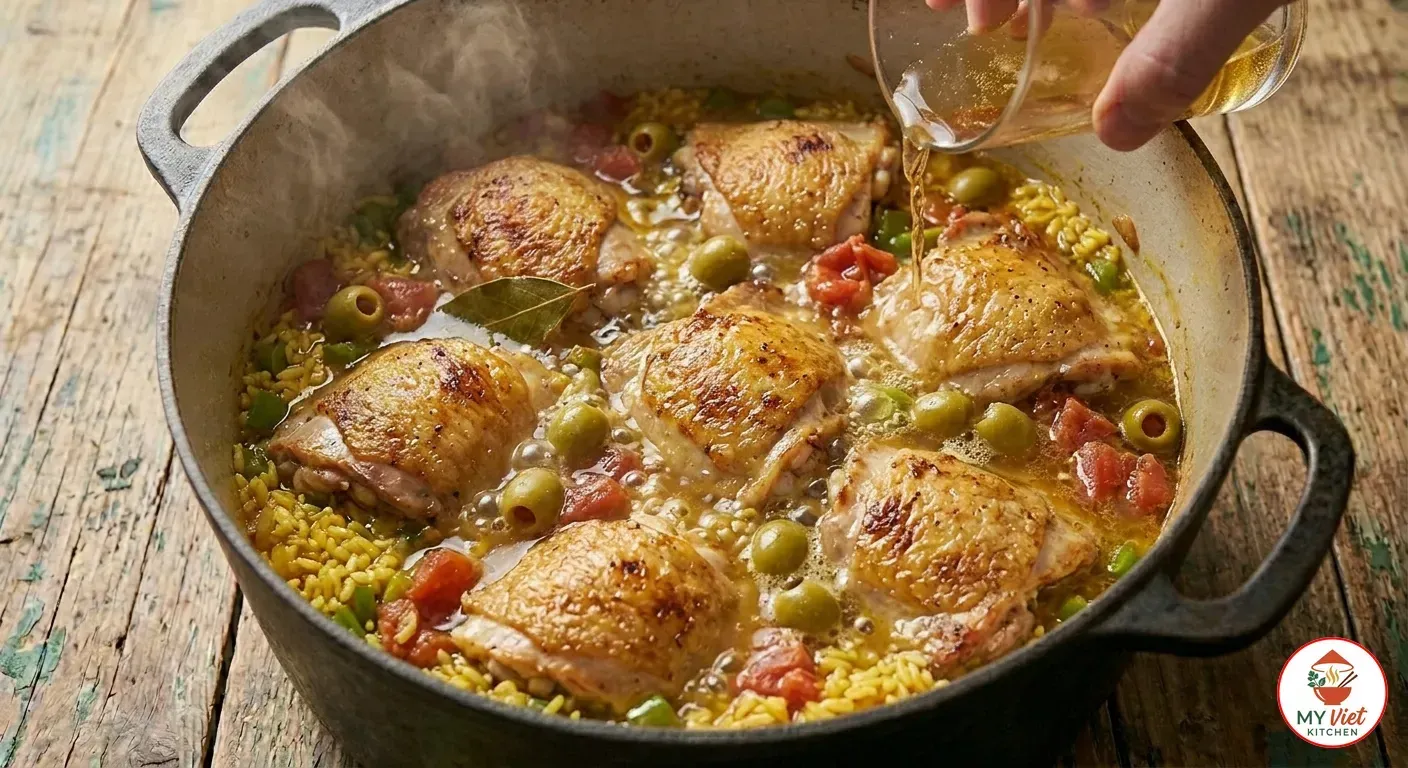
4 Pour the beer into the pot. It will bubble vigorously as it hits the hot rice and sofrito. Let the beer cook for about 1 minute to burn off the raw alcohol flavor. However, the malt sugars remain and add a subtle sweetness that balances the acidity of the tomatoes. Next, add the diced tomatoes with their juices, the chicken broth, bay leaf, and lime juice. Stir everything together well.
Bring the liquid to a boil over medium-high heat. Nestle the seared chicken thighs into the rice with the skin side facing up. The skin should sit above the liquid so it stays crispy rather than becoming soggy. Then scatter the pimiento-stuffed olives around the chicken pieces. Cover the pot tightly with a lid. Reduce the heat to low immediately. Cook for 25 to 30 minutes without lifting the lid. The steam trapped inside does the critical work of cooking the rice evenly from all sides.
Step 5: Rest and Serve
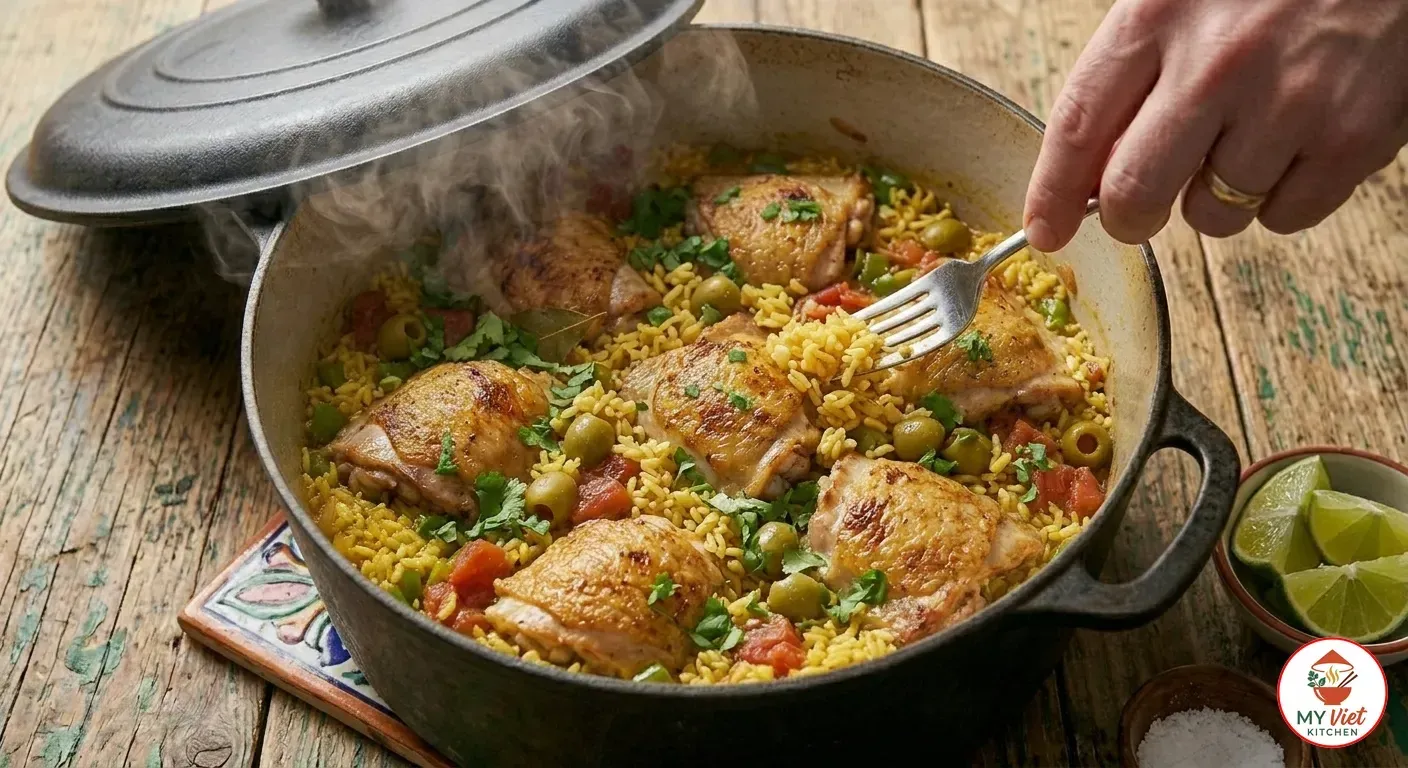
5 After 25 to 30 minutes, check the rice. All the liquid should be absorbed, and the rice grains should be tender but still have a slight bite at the center. At the same time, the chicken should read 165 degrees Fahrenheit on an instant-read thermometer. If liquid remains, simply cover and cook for 3 to 5 more minutes on low heat.
Remove the pot from the heat and let it rest, still covered, for a full 10 minutes. This resting period is essential. The residual steam redistributes throughout the pot and finishes cooking any slightly underdone grains. Equally important, the rice firms up as it cools slightly, making it easier to fluff. After resting, remove the bay leaf and discard it. Fluff the rice gently with a fork, being careful not to shred the chicken. Garnish generously with fresh cilantro and serve with lime wedges. A squeeze of fresh lime juice at the table brightens every bite.
Expert Tips for Perfect Arroz con Pollo
Get the Liquid Ratio Right
The single most important factor in arroz con pollo is the rice-to-liquid ratio. Too much liquid creates soggy, mushy rice, while too little leaves hard, undercooked grains at the bottom. For long-grain white rice, use approximately 1.5 cups of total liquid for every 1 cup of rice. In this recipe, the beer, canned tomatoes with juices, chicken broth, and lime juice combine to provide the correct amount. If you adjust the recipe size, maintain this ratio carefully. Also, remember that the chicken releases moisture as it cooks, so err slightly on the side of less liquid rather than more.
Do Not Lift the Lid
Once the pot is covered and the heat is set to low, resist every urge to peek. Each time you lift the lid, steam escapes. After all, that steam is actively cooking the top layer of rice. Losing it disrupts the even cooking process and can result in a dry top layer over an undercooked bottom. Trust the timing. If you hear gentle bubbling, the heat is correct. If you hear aggressive sizzling, reduce the heat slightly. The lid should stay on for the entire 25 to 30 minutes of cooking plus the 10-minute rest.
Achieve the Socarrat
Socarrat is the prized crispy rice crust that forms on the bottom of the pot. Many Cuban cooks consider it the best part. To develop socarrat, increase the heat to medium-high for the final 2 to 3 minutes of cooking before removing the pot from the stove. Listen for a faint crackling sound. That is the rice caramelizing against the hot metal. Do not stir. The socarrat should lift off in golden, crunchy pieces when you serve. Of course, this technique requires a heavy-bottomed pot that distributes heat evenly.
Arroz con Pollo Across Latin America
Nearly every Latin American country claims its own version of arroz con pollo. While the core concept of chicken cooked with rice remains constant, the seasonings, vegetables, and techniques vary dramatically from country to country. The following table highlights the most notable regional differences.
| Country | Key Ingredients | Distinguishing Characteristics |
|---|---|---|
| Cuba | Beer, saffron/Bijol, pimiento olives, sofrito | Golden color, briny olive flavor, moist texture |
| Peru | Aji amarillo, cilantro puree, dark beer | Vibrant green color, spicy, herbaceous |
| Colombia | Hogao sauce, sazon seasoning, peas, carrots | Red-orange hue, sweeter, more vegetables |
| Puerto Rico | Sofrito, alcaparrado, annatto oil | Rich orange color, capers, pigeon peas |
| Spain | Saffron, peas, roasted peppers, artichokes | Drier finish, paella-adjacent technique |
Serving Suggestions
Cuban arroz con pollo is a complete meal straight from the pot. However, the right accompaniments transform a weeknight dinner into a feast. Traditional Cuban sides provide contrast in texture, temperature, and acidity that elevate the experience.
Classic Accompaniments:
- Maduros (sweet fried plantains): Sliced ripe plantains fried until caramelized and golden add a sweet counterpoint to the savory, spiced rice. The soft, creamy interior and crispy edges provide a wonderful textural contrast. Maduros appear alongside arroz con pollo at nearly every Cuban table.
- Black beans (frijoles negros): Creamy Cuban black beans seasoned with cumin, oregano, and bay leaf are the traditional partner. Spoon them over the rice or serve them alongside in a small bowl. The combination of beans and rice forms a complete protein, making the meal even more nutritious.
- Avocado salad: Sliced ripe avocado dressed with lime juice, olive oil, and a pinch of salt provides a cool, creamy contrast to the warm, spiced rice. The healthy fats in avocado also help your body absorb the fat-soluble vitamins from the saffron and paprika.
- Ensalada de tomate: A simple salad of sliced tomatoes with thinly sliced red onion, dressed in lime juice and olive oil. The bright acidity cuts through the richness of the chicken and rice. This refreshing side is common in Cuban households during warm months.
Beverage Pairings:
- Mojito: The classic Cuban cocktail of rum, lime, mint, and soda water is a natural partner. The lime and mint mirror the cilantro and lime in the dish. The rum’s sweetness complements the saffron rice. Serve it ice-cold for the best contrast against the warm rice.
- Cuban-style lager: A light, crisp lager like Cristal or Bucanero completes the experience. The carbonation cleanses the palate between bites. Since the recipe already uses beer in the cooking liquid, pairing with the same style creates a harmonious connection between plate and glass.
- Agua fresca de tamarindo: This tart tamarind drink provides a non-alcoholic option with the right balance of sweet and sour. The tangy fruit flavor pairs beautifully with the cumin and saffron in the rice. It is refreshing and complements the meal without competing for attention.
Storage and Reheating
Refrigerator: Allow the arroz con pollo to cool to room temperature before transferring it to an airtight container. Store in the refrigerator for 3 to 4 days. The rice dries out slightly as it absorbs remaining moisture. This is normal and easily corrected during reheating. The saffron flavor actually deepens after a day in the fridge as the spice compounds continue to infuse the rice.
Freezer: Arroz con pollo freezes well for up to 2 months. Remove the chicken from the bone and shred it before freezing. Mix the shredded chicken back into the rice. Portion into individual freezer-safe containers for convenient single-serving meals. Leave about half an inch of headroom for expansion. Label each container with the date. Thaw overnight in the refrigerator before reheating.
Reheating: The stovetop method produces the best results. Place the arroz con pollo in a pot over medium-low heat. Add 2 to 3 tablespoons of chicken broth per serving to restore moisture. Stir gently and cover the pot. Heat for 5 to 7 minutes until steaming throughout. For microwave reheating, sprinkle a tablespoon of water over the rice and cover loosely with a damp paper towel. Heat in 90-second intervals, stirring between each. Avoid overheating, as the rice becomes rubbery when microwaved too long.
Common Mistakes to Avoid
1. Using the Wrong Rice
Long-grain white rice is essential for Cuban arroz con pollo. Short-grain or medium-grain varieties absorb too much liquid and turn sticky. Jasmine rice works in a pinch, though its floral aroma slightly alters the traditional flavor profile. Similarly, basmati is too delicate and can break apart during the simmer. Never use instant or parboiled rice, as neither absorbs the sofrito flavors properly. Standard long-grain white rice gives you the separate, fluffy grains that define this dish.
2. Crowding the Pot When Searing
Placing too many chicken pieces in the pot at once drops the temperature of the oil. Instead of searing, the chicken steams in its own moisture. Consequently, the result is pale, flabby skin with no caramelized crust. Sear the chicken in two batches if necessary, leaving at least an inch of space between each piece. The rendered fat and fond from proper searing are essential building blocks of flavor for the entire dish.
3. Stirring the Rice During Cooking
Stirring rice while it simmers breaks the grains and releases excess starch. The result is a gummy, porridge-like consistency instead of distinct, fluffy grains. Therefore, once you cover the pot, leave the rice completely undisturbed until the cooking time is finished. The only exception is a quick stir when you first add the rice to the sofrito to coat the grains evenly. After the liquids go in and the lid goes on, hands off until it is time to serve.
4. Skipping the Resting Period
Serving arroz con pollo immediately after cooking is a common mistake. In fact, the 10-minute rest off the heat is critical for two reasons. First, residual steam finishes cooking any slightly underdone grains near the top. Second, the rice firms up as it cools slightly, making it easier to fluff with a fork. Skipping this step often produces wet, unevenly cooked rice. Patience during this final stage rewards you with a perfect texture that holds up beautifully on the plate.
Frequently Asked Questions
What is the difference between Cuban arroz con pollo and Spanish arroz con pollo?
Cuban arroz con pollo uses beer as a cooking liquid and features pimiento-stuffed olives that give it a tangy, briny dimension. The Cuban version relies on green bell pepper in the sofrito and uses Bijol powder or saffron for color. Spanish arroz con pollo leans closer to paella, often using short-grain rice, saffron, peas, and roasted red peppers. The Spanish version tends toward a drier finish, while Cuban arroz con pollo produces a moister, more cohesive dish where the rice fully absorbs the chicken and sofrito flavors.
Can I use chicken breast instead of thighs for arroz con pollo?
You can, but thighs produce a significantly better result. Bone-in, skin-on thighs contain more fat and connective tissue that renders during cooking. This keeps the meat moist and enriches the rice with flavor. Breast meat dries out during the 30-minute simmer and lacks the depth that dark meat provides. If you must use breast, remove it from the pot after 15 minutes and shred it. Stir the shredded meat back into the finished rice just before serving to prevent overcooking.
What can I use instead of saffron in arroz con pollo?
Bijol powder is the most authentic Cuban substitute for saffron. It blends annatto seeds with corn flour and provides the same vibrant golden color at a fraction of the cost. Use one packet or half a teaspoon per batch. Turmeric is another alternative that delivers color but adds an earthy, slightly bitter flavor. Use only a quarter teaspoon of turmeric to avoid overpowering the other spices. For the closest flavor match, saffron threads steeped in warm broth remain the best option.
Why is my arroz con pollo mushy?
Mushy rice typically results from too much liquid, stirring during cooking, or cooking at too high a temperature. Use a precise 1-to-1.5 ratio of rice to total liquid. Once you add the chicken and cover the pot, do not lift the lid or stir. Keep the heat on low rather than medium. Toasting the rice in the sofrito fat for 2 minutes before adding liquid seals the starch and helps grains stay separate. Letting the pot rest covered for 10 minutes off the heat also firms up the texture.
Can I make arroz con pollo in a rice cooker?
Yes, though the best approach is a hybrid method. Sear the chicken and build the sofrito on the stovetop first to develop the deep flavors that make this dish special. Then transfer everything to the rice cooker. Use the standard white rice setting. The rice cooker manages the simmering temperature automatically. The one drawback is that the chicken skin will not stay crispy. For best results, broil the finished dish in the oven for 2 to 3 minutes before serving to restore some crispness to the skin.
How long does leftover arroz con pollo last?
Stored in an airtight container, arroz con pollo keeps well in the refrigerator for 3 to 4 days. The rice absorbs moisture as it cools, so add a splash of chicken broth when reheating. It also freezes well for up to 2 months. Portion into individual containers for convenient reheating. Thaw overnight in the refrigerator and warm gently on the stovetop with a little extra broth for the best texture.
Variations and Adaptations
Peruvian-Style Green Arroz con Pollo:
Replace the saffron and beer with a puree of fresh cilantro, aji amarillo paste, and dark beer. Blend one cup of packed cilantro leaves with the beer until smooth. The result is a vibrant green rice with a herbaceous, mildly spicy flavor profile. Add peas and diced carrots in the last 10 minutes of cooking. Serve with salsa criolla, a simple relish of sliced red onion, lime juice, and fresh aji peppers. This Peruvian variation is one of the most popular versions across South America.
Instant Pot Arroz con Pollo:
Use the saute function to sear the chicken and build the sofrito directly in the Instant Pot insert. Add the rice, liquids, and chicken. Reduce the chicken broth by a quarter cup since the pressure cooker traps all moisture. Seal the lid and cook on the rice setting or manual high pressure for 8 minutes. Let the pressure release naturally for 10 minutes before quick-releasing the remaining steam. The result is remarkably close to the stovetop version with significantly less hands-on time.
Arroz con Pollo with Brown Rice:
Substitute brown rice for white and increase the chicken broth by half a cup. Extend the covered cooking time to 45 to 50 minutes. Brown rice takes longer to absorb liquid because the bran layer slows water penetration. The nutty flavor of brown rice adds an earthy dimension that pairs well with the cumin and saffron. The texture will be chewier than the traditional version. This adaptation is popular with health-conscious cooks seeking more fiber and whole grains in their diet.
Vegetarian Arroz con Pollo:
Replace the chicken with thick slices of cauliflower steaks and use vegetable broth instead of chicken broth. Sear the cauliflower until deeply browned on both sides before removing it. Build the sofrito in the same pot. The cauliflower absorbs the saffron and cumin flavors beautifully. Add chickpeas for protein. Nestle the cauliflower into the rice just as you would the chicken. The cooking time remains the same. This plant-based version captures the spirit of the original while being completely meat-free.
The Cultural Significance of Arroz con Pollo
Arroz con pollo occupies a sacred place in Cuban culinary identity. It is the dish that grandmothers teach their grandchildren to cook first. It appears at birthday celebrations, Sunday dinners, and weeknight meals alike. Moreover, in Cuban-American communities from Miami to New Jersey, arroz con pollo serves as a tangible connection to the island and its traditions. The aroma of sofrito, saffron, and simmering chicken transports Cuban families back to kitchens they may have left decades ago. Food carries memory in ways that nothing else can.
The dish also tells the broader story of cultural exchange in the Caribbean. Spanish colonizers brought their rice and chicken traditions to Cuba. African slaves contributed techniques for building aromatic bases and layering spices. Meanwhile, indigenous Taino ingredients like peppers shaped the flavor profile. The result is a dish that belongs to no single culture but to all of them. According to Taste Atlas, arroz con pollo is recognized as one of the most iconic dishes of Latin American cuisine. Its simplicity and accessibility mean that nearly every Latin American household has its own version, each reflecting the unique culinary heritage of its region. From Havana to Lima to San Juan, arroz con pollo connects millions of families through the universal language of rice, chicken, and shared meals.
Conclusion
Cuban arroz con pollo proves that extraordinary flavor does not require extraordinary effort. One pot, a handful of pantry staples, and about an hour of your time produce a meal that feeds a crowd and fills the house with an aroma that brings everyone to the table. The key techniques are simple: sear the chicken properly, build a fragrant sofrito, toast the rice, and trust the covered simmer to do its work. Master those four steps and you will produce arroz con pollo that rivals any Cuban restaurant.
Ready to explore more Latin American and Caribbean classics? Browse our full collection of Latin American dishes for recipes like feijoada, jollof rice, and ropa vieja. If you try this arroz con pollo recipe, leave a rating and share your experience in the comments below.