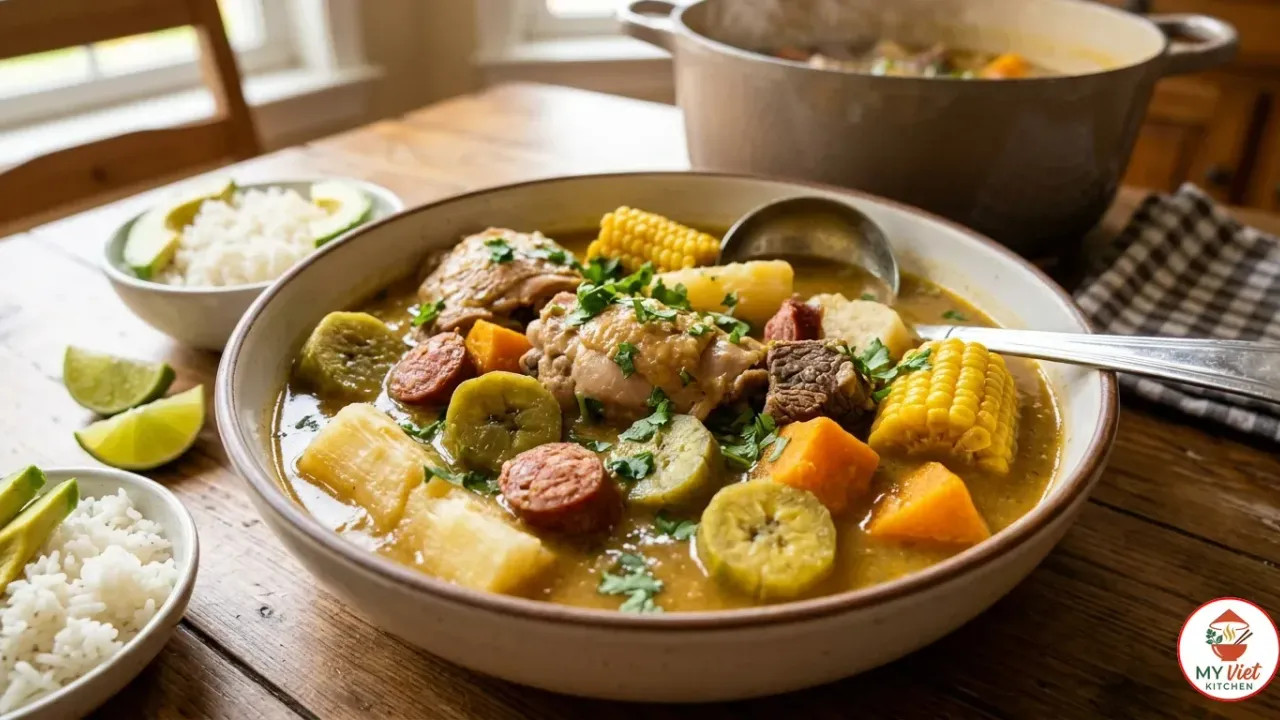
Sancocho is the undisputed national dish of the Dominican Republic, a magnificent one-pot stew of slow-simmered meats, starchy root vegetables, and fresh citrus that has anchored Dominican tables for centuries. Indeed, this hearty, soul-warming dish transcends the concept of mere soup. Every spoonful delivers tender meat falling off the bone, creamy chunks of yuca and plantain, and a thick, savory broth that carries the essence of the entire island’s culinary tradition. Few dishes in Caribbean cuisine match the generosity and depth of a properly made sancocho.
Prep Time: 40 minutes | Cook Time: 90 minutes | Servings: 10
Difficulty: Medium | Calories: ~520 per serving
What Makes Sancocho Special?
Sancocho is far more than a stew in the Dominican Republic. In fact, it is a cultural force that shows up at every major gathering. You will find it at Christmas Eve parties, Sunday dinners, and even post-hurricane recovery meals. The word comes from the Spanish verb “sancochar,” meaning to parboil. Yet the finished dish goes well beyond that humble start. Dominican sancocho stands apart from other Latin American stews because it uses multiple meats, relies on root vegetables to thicken the broth, and finishes with bright sour orange and lime.
What truly sets Dominican sancocho apart is its layered way of building flavor. First, the meats soak in citrus and oregano. Then they sear until a deep brown crust forms. After that, the root vegetables go in at careful stages so each one cooks to its ideal texture. Furthermore, the broth thickens on its own as the yuca and yautia release starch during the simmer. No flour, no roux, no tricks. As a result, the liquid turns velvety and rich, clinging to every piece of meat and vegetable. Each bowl is a full meal with protein, starch, and greens all in one pot.
The full festive version, known as sancocho de siete carnes, uses seven meats. It adds goat and longaniza sausage to the standard chicken, pork, and beef. This grand version shows up at holidays and big family events. However, for daily cooking, most homes use just three or four meats. In either case, the idea stays the same. Each protein adds its own fat, collagen, and taste to the pot. By the time the lid comes off, no single item takes over. Instead, they merge into something far greater than their parts.

Choosing the Right Meats for Sancocho
The meats you pick set the depth and feel of the final broth. Since sancocho simmers for over an hour, you need cuts that get better with long, slow heat. Lean cuts dry out and turn tough. So here is what works best and why.
- Bone-in chicken thighs (essential): Chicken provides the lightest layer of flavor and the most accessible protein. The bones release gelatin during simmering, which gives the broth body and a silky mouthfeel. Dark meat stays moist during the long cook time. Cut each thigh into two pieces through the bone for even cooking and easier serving.
- Pork shoulder (best choice for richness): Pork shoulder contains generous intramuscular fat and connective tissue that breaks down over heat. This collagen converts to gelatin and enriches the broth with a luxurious thickness. Cut the pork into generous one-inch cubes so the pieces hold their shape after simmering. Pork shoulder is the single most important meat for achieving a rich, satisfying sancocho.
- Beef stew meat: Beef adds a deeper, more robust flavor that balances the lighter chicken. Chuck or bottom round cut into one-inch cubes works best. The long simmering time tenderizes these tougher cuts completely. Beef also contributes a darker color to the broth.
- Smoked pork or longaniza sausage: A smoked element adds a layer of complexity that fresh meats alone cannot achieve. Dominican longaniza is the traditional choice. If unavailable, smoked pork chops or andouille sausage provide a similar effect. The smokiness permeates the entire broth and pairs beautifully with the fresh cilantro and citrus.
Ingredients for Sancocho
The Meats:
- 1 pound (450g) bone-in chicken thighs, cut into pieces
- 1 pound (450g) pork shoulder, cut into 1-inch cubes
- 1/2 pound (225g) beef stew meat, cut into 1-inch cubes
- 1/2 pound (225g) smoked pork chops or longaniza sausage, sliced
Root Vegetables and Starches:
- 1 large yuca (cassava), peeled and cut into 2-inch chunks
- 2 green plantains, peeled and cut into 2-inch rounds
- 1 ripe plantain, peeled and cut into 2-inch rounds
- 1/2 pound (225g) yautia (taro root), peeled and cut into chunks
- 1/2 pound (225g) auyama (Caribbean pumpkin or butternut squash), cubed
- 2 ears of corn, cut into 2-inch rounds
Aromatics and Seasonings:
- 1 large onion, finely diced
- 1 green bell pepper, finely diced
- 6 cloves garlic, minced
- 1/4 cup (60ml) fresh sour orange juice (or equal parts lime and orange juice)
- 2 tablespoons white vinegar
- 1 tablespoon dried oregano
- 1 bunch fresh cilantro, stems and leaves separated
- 4 culantro leaves (recao), roughly chopped
- 2 tablespoons olive oil
- Salt and black pepper to taste
- 3 quarts (2.8L) water
For Serving:
- Juice of 2 limes
- White rice
- Sliced avocado
Pro tip: If you cannot find fresh sour orange (naranja agria), combine equal parts fresh lime juice and fresh orange juice. This blend replicates the unique sweet-tart acidity that defines the Dominican marinade. Similarly, if culantro leaves are unavailable, double the amount of cilantro stems in the base. Culantro and cilantro share similar flavor compounds, though culantro is significantly more potent. One culantro leaf equals roughly five sprigs of cilantro in intensity.
Step-by-Step Instructions
Step 1: Marinate the Meats
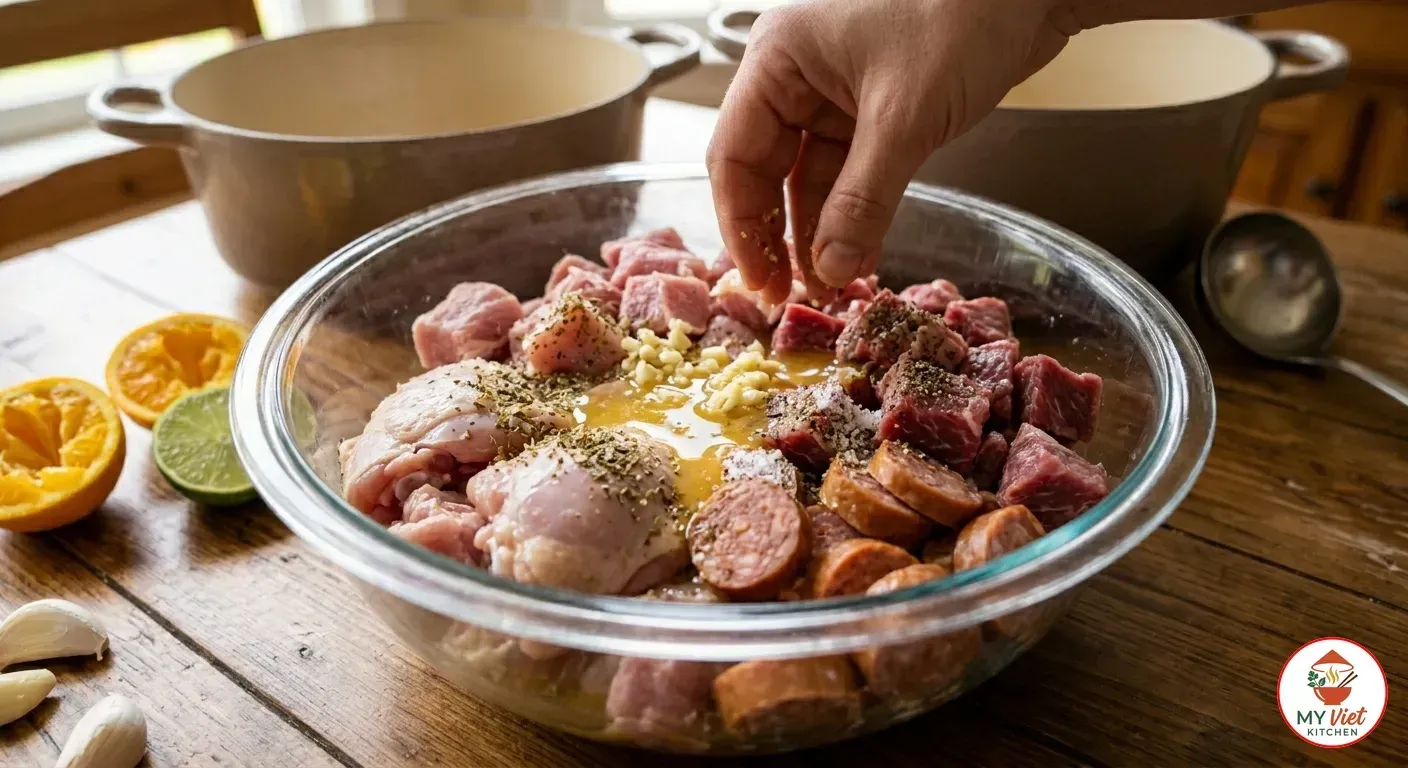
1 Combine the chicken thighs, pork shoulder, beef stew meat, and smoked pork in a large bowl. Add the sour orange juice, white vinegar, half of the minced garlic, oregano, salt, and pepper. Toss everything together until every piece of meat is evenly coated. Cover the bowl and let it sit at room temperature for 30 minutes, or refrigerate for up to 8 hours if you want a deeper flavor.
The citrus and vinegar in this marinade do two key things. First, the acid breaks down the surface proteins on each piece of meat. This lets the oregano and garlic sink deeper into the flesh. Second, the acid softens the outer layer, so the meats form a better crust when seared. In fact, Dominican cooks have used this trick for many years, long before food science could explain why it works. Simply put, the longer the meats sit in the marinade, the more flavor they absorb.
Step 2: Sear the Meats
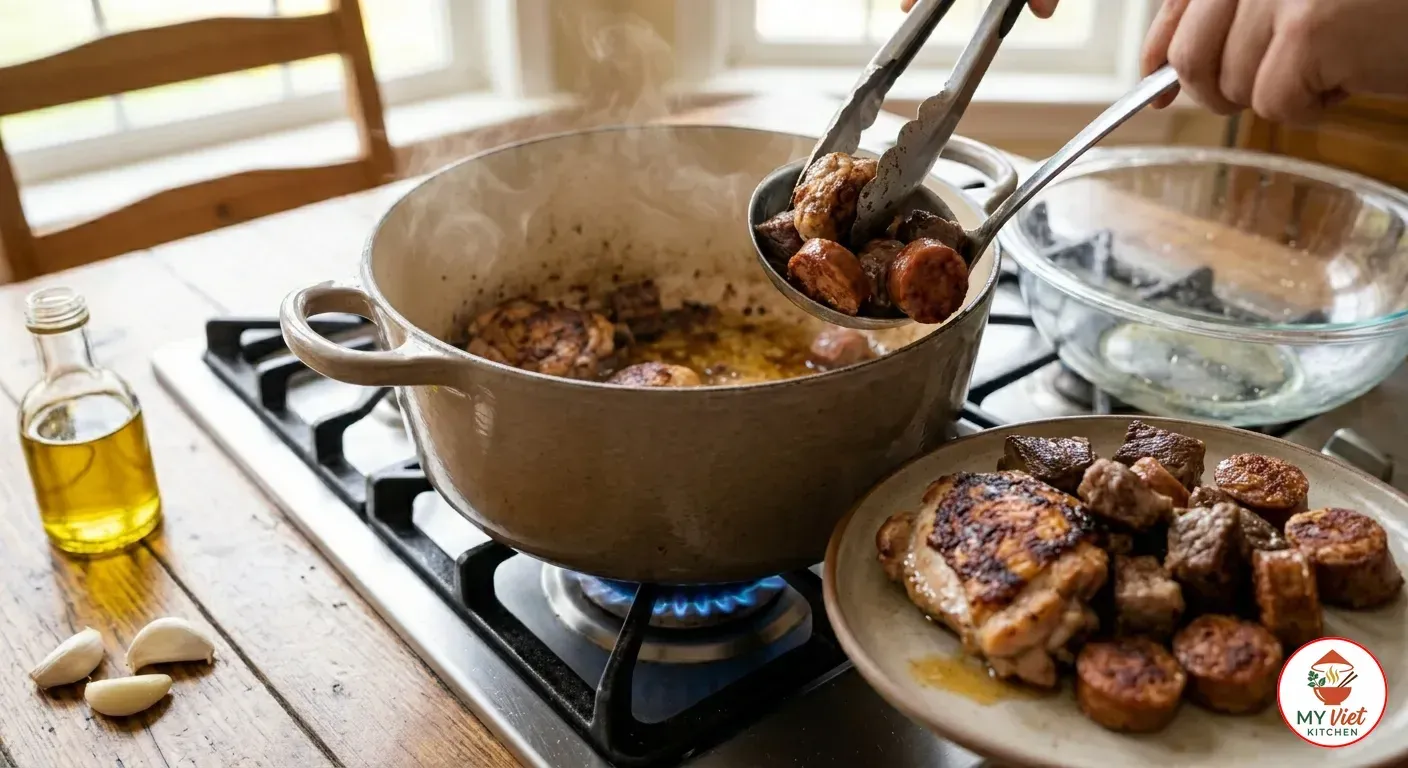
2 Heat the olive oil in a large heavy-bottomed stockpot or Dutch oven over medium-high heat. Lift the meats from the marinade, letting the excess liquid drip off. Reserve any remaining marinade. Working in batches to avoid crowding, sear the meats on all sides until deeply browned, about 3 to 4 minutes per batch. Transfer each batch to a plate as it finishes.
Browning the meats before they simmer is key to a great sancocho. The Maillard reaction forms rich, savory notes on the surface of each piece. Then these flavors melt into the broth during the long cook. Boiling alone simply cannot match this depth. Additionally, the fat from the pork and chicken stays in the pot. This fat carries flavor and coats every root vegetable that cooks in it. So do not skip this step, even if it adds time. In short, the gap between a good sancocho and a great one starts right here.
Step 3: Build the Aromatic Base
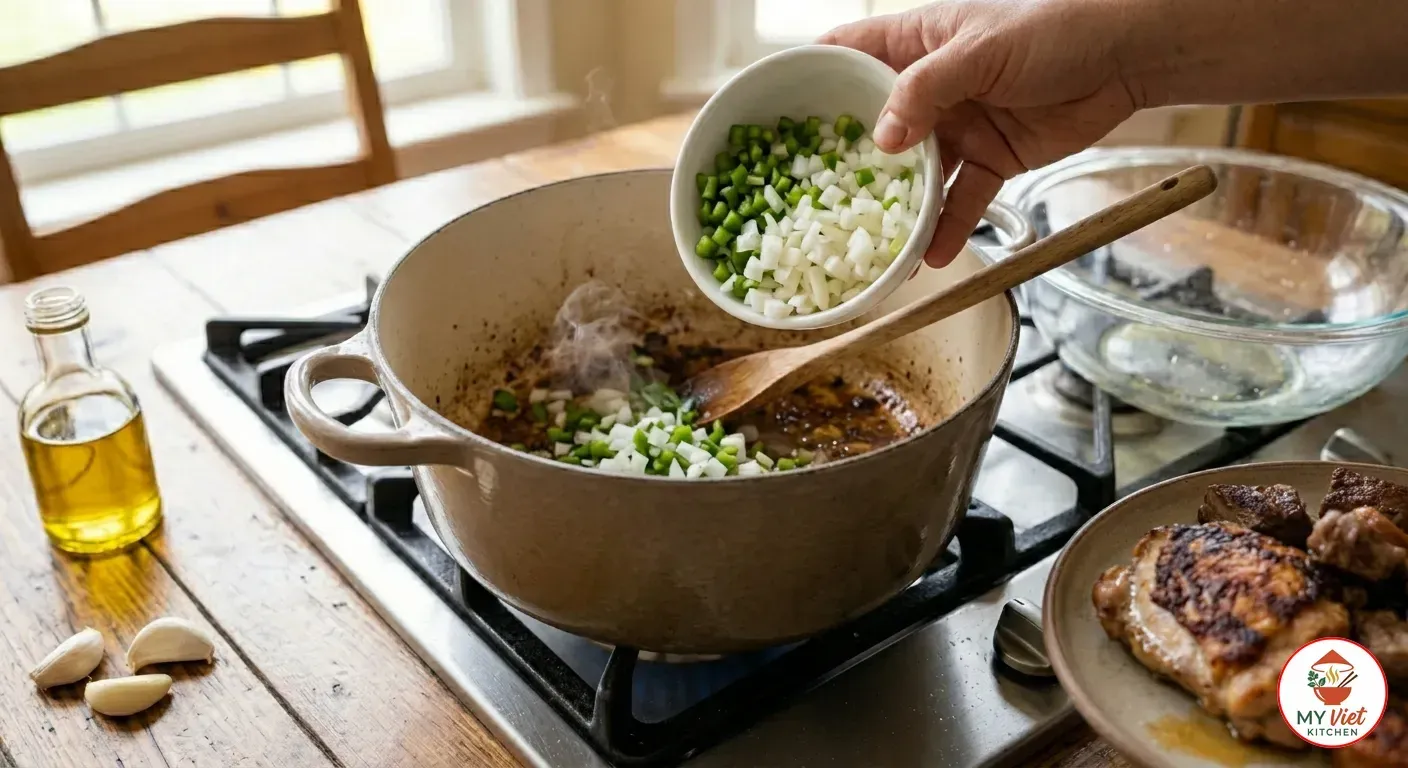
3 Reduce the heat to medium. Add the diced onion and green bell pepper to the pot with the rendered fat. Stir to coat the vegetables and scrape up any browned bits from the bottom. Cook for about 5 minutes until the onion turns translucent and the pepper softens. Then add the remaining minced garlic, the chopped culantro leaves, and the cilantro stems. Stir for 1 minute until fragrant.
Now return all the seared meats and their juices to the pot. Pour in the saved marinade and the water. Then bring the liquid to a boil over high heat. As a result, foam and bits will rise to the top. Skim this off with a ladle. Next, lower the heat to a gentle simmer. You want slow bubbles, not a rolling boil. Cover the pot most of the way, leaving a small gap for steam. Let the meats simmer for 30 minutes before adding any vegetables. This first stretch of time lets the tougher beef and pork start to break down.
Step 4: Add Root Vegetables in Stages
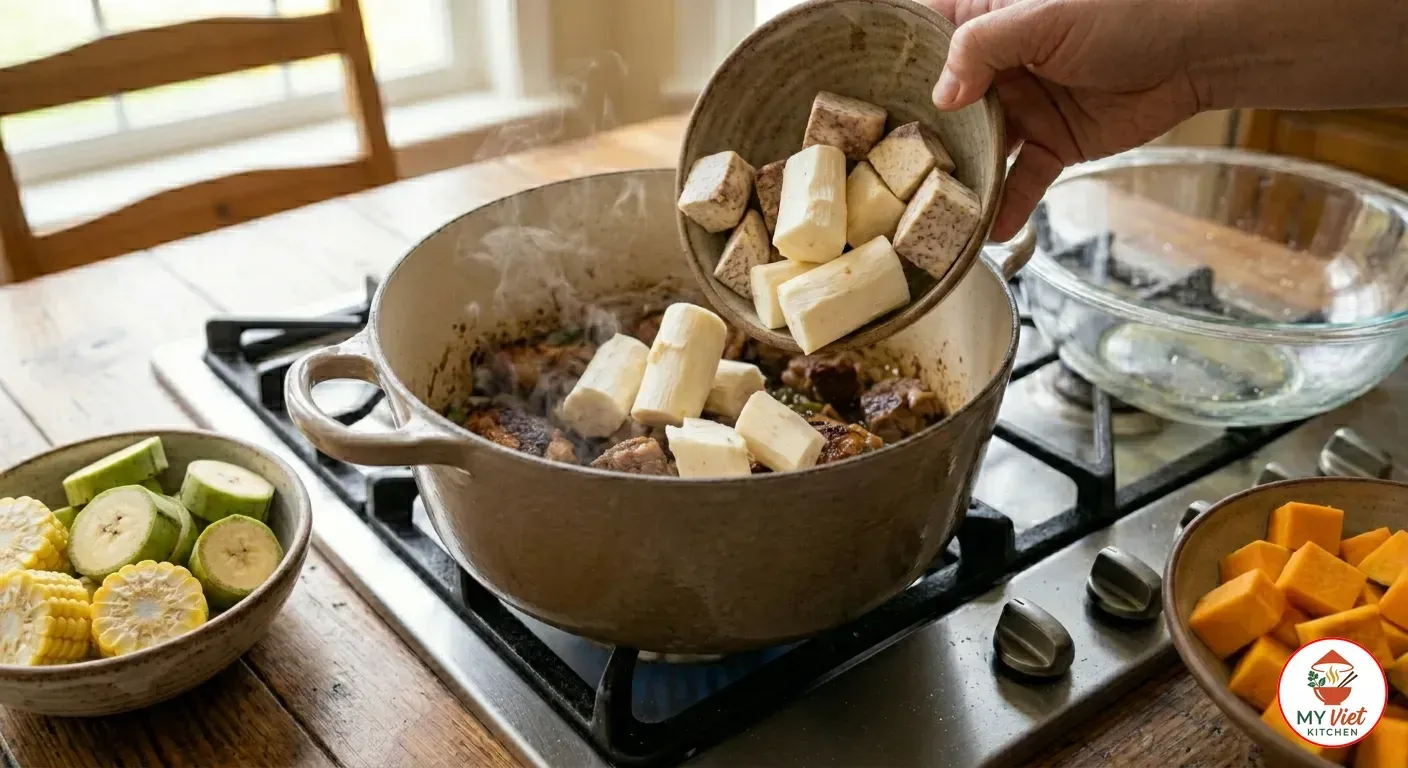
4 After the meats have simmered for 30 minutes, add the yuca and yautia to the pot. These dense root vegetables need the longest cooking time among the starches. Stir gently to submerge them in the broth. Continue simmering for 15 minutes. Next, add the green plantains, corn rounds, and auyama. Stir again and simmer for another 15 minutes. Finally, add the ripe plantain. Cook for 10 more minutes.
This staged method is the secret to great texture. Yuca needs about 25 minutes to turn tender and creamy while still holding its shape. Green plantains need roughly 20 minutes to cook through. However, ripe plantain turns to mush if it cooks too long, so it goes in last. Meanwhile, the auyama partly melts during cooking. This thickens the broth and adds a gentle sweetness. In essence, each vegetable has its own role. If you add them all at once, some will fall apart while others stay hard.
Step 5: Thicken and Season
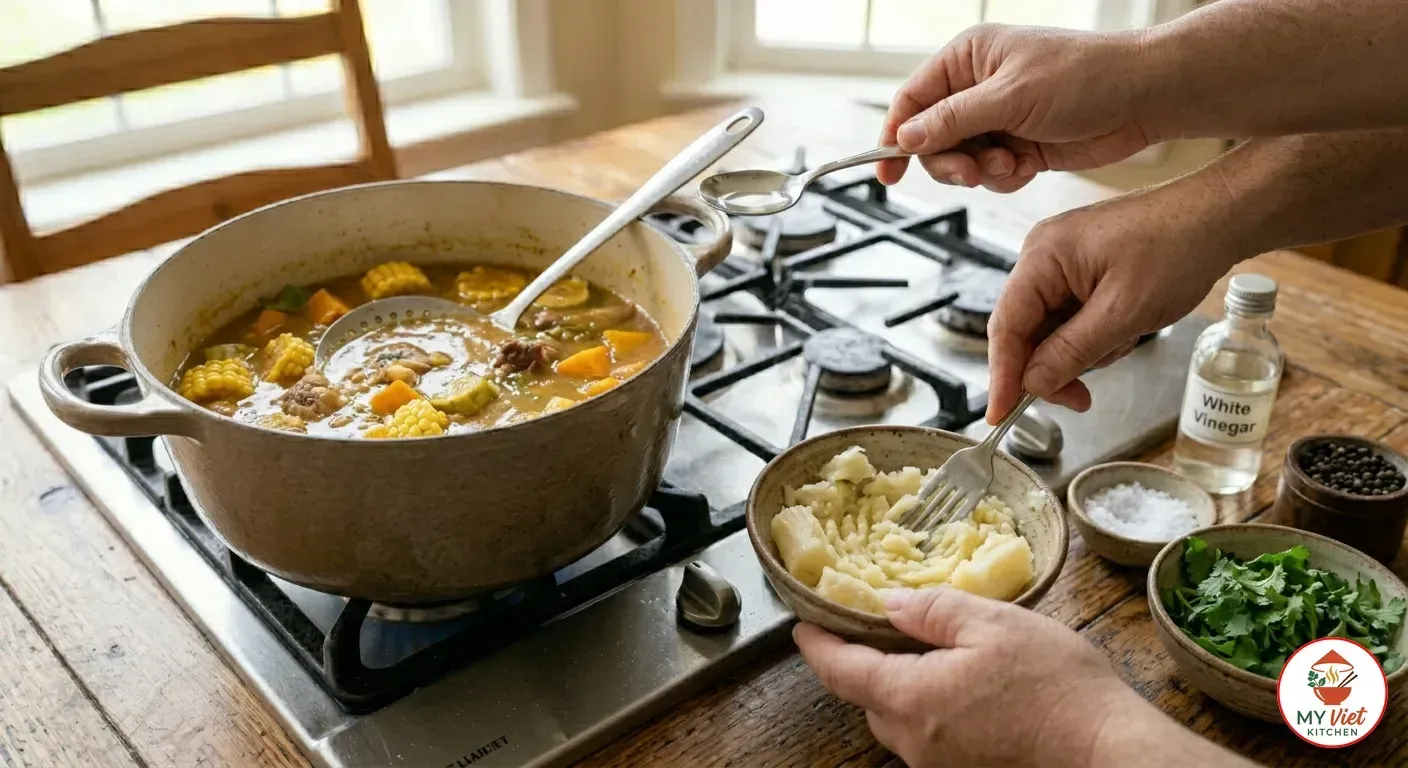
5 Using a slotted spoon, remove a few pieces of cooked yuca and yautia from the pot. Place them in a small bowl and mash thoroughly with a fork until smooth. Stir this starchy mash back into the broth. It will dissolve and thicken the liquid into a velvety consistency. This technique is the traditional Dominican method for achieving the characteristic body of sancocho.
Now taste the broth and fix the salt and pepper. At this point, it should taste deeply savory with a hint of citrus. If it seems flat, add a spoon of white vinegar to perk it up. Then stir in the chopped cilantro leaves. Always add herbs at the end to keep their bright color and fresh oils. After all, cooking cilantro too long turns it dull and mutes its punch. Therefore, tossing it in during the final minutes gives your sancocho the herbaceous lift that makes it truly Dominican.
Step 6: Rest and Serve
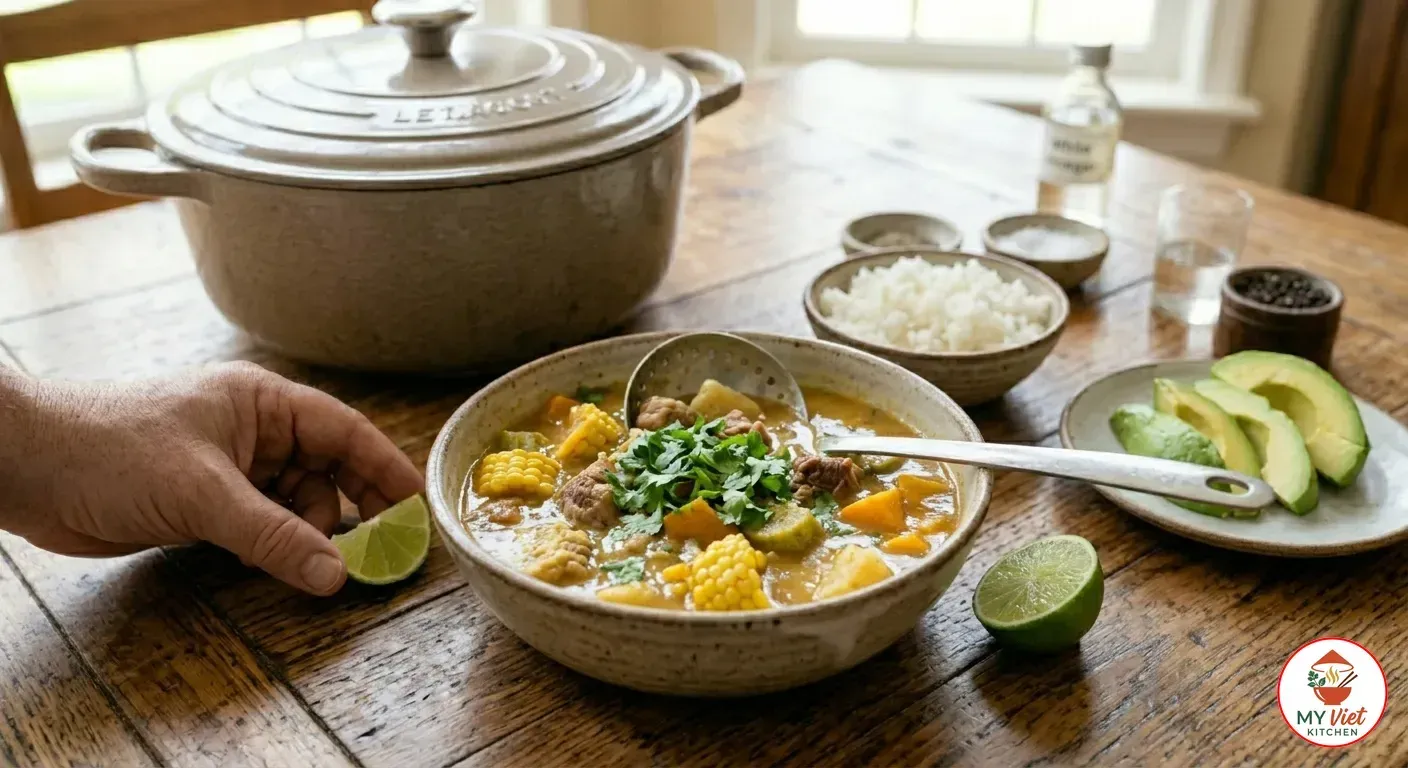
6 Remove the pot from the heat and let the sancocho rest for 10 minutes with the lid on. This resting period allows the broth to settle and the flavors to meld into their final harmony. The starches continue to absorb liquid, and the broth thickens slightly as it cools. Ladle generous portions into deep bowls, making sure each serving includes a variety of meats and vegetables.
Serve the sancocho over a mound of steamed white rice. Squeeze fresh lime juice generously over the top. The lime is not optional in Dominican tradition. It brightens the rich, heavy broth and ties all the flavors together. Place sliced avocado alongside each bowl. The cool, creamy avocado provides a beautiful contrast to the hot, savory stew. Some Dominican families also serve sancocho with a side of hot sauce for those who want extra heat.
Expert Tips for Perfect Sancocho
Control the Simmer Temperature
A gentle simmer gives you the clearest and most flavorful broth. If the pot boils too hard, the fats and proteins blend into a cloudy, greasy mess. So keep the heat low. You want just a few bubbles every few seconds. Also, this slow pace stops the root vegetables from falling apart too soon. In the end, the reward is a broth that tastes clean, rich, and layered. Each type of meat adds its own note to the mix.
Use the Right Pot
Sancocho needs a big pot because of the sheer volume of food. An 8-quart heavy-bottomed stockpot or Dutch oven works best. The thick base spreads heat evenly and stops the root vegetables from burning on the bottom. By contrast, thin pots create hot spots that scorch the starchy pieces before the rest of the stew finishes. If you do not own a pot that large, just split the batch into two smaller pots and mix them before serving.
Let It Rest Overnight
Many Dominican cooks say sancocho tastes best the next day. After all, the flavors keep growing as the stew cools in the fridge. The starches gel a bit, making the broth even thicker. Also, the meats soak up more of the broth. As a result, a reheated sancocho tastes richer and more unified than the day it was made. If you are cooking for a big event, making the sancocho a day early is a smart move. It also frees up your kitchen on the main day.
Sancocho Across the Caribbean and Latin America
Nearly every country in the Caribbean and Latin America has its own version of sancocho. While the concept of a slow-simmered meat and vegetable stew remains constant, the ingredients, seasonings, and traditions vary dramatically. The following table highlights the most notable regional differences.
| Country | Key Ingredients | Distinguishing Characteristics |
|---|---|---|
| Dominican Republic | Multiple meats, yuca, plantains, yautia, sour orange | Thick, starchy broth, up to seven meats, lime finish |
| Colombia | Chicken, potato, corn, guascas herb, capers | Called ajiaco, lighter broth, served with cream and avocado |
| Panama | Chicken, name yam, otoe, culantro, hot peppers | Spicier than Dominican version, uses aji chombo |
| Puerto Rico | Pork, chicken, sofrito, green bananas, calabaza | Sofrito-forward flavor, often includes pigeon peas |
| Venezuela | Beef, chicken, ocumo, mapuey, yuca | Called cruzado, uses unique root varieties, thinner broth |
Serving Suggestions
Dominican sancocho is a complete meal in itself, but the traditional accompaniments elevate the experience from satisfying to extraordinary. Every element on the table plays a specific role in balancing the rich, heavy stew.
Classic Accompaniments:
- White rice: Steamed long-grain white rice is non-negotiable. Dominicans serve the sancocho over or alongside the rice, allowing the starchy grains to absorb the thick broth. The rice provides a neutral base that lets the complex flavors of the stew shine. Cook the rice slightly drier than usual so it holds up in the broth.
- Sliced avocado: Cool, creamy avocado slices provide the essential contrast to the hot, savory stew. The healthy fats in avocado coat the palate and temper any residual heat from the pepper. In Dominican households, avocado appears alongside sancocho as reliably as bread appears with European soups.
- Fresh lime wedges: A generous squeeze of lime juice over each bowl is the final step that transforms the sancocho. The bright acidity cuts through the richness of the meats and starchy broth. Without lime, the dish can taste heavy and one-dimensional. With it, every flavor snaps into focus.
- Tostones (fried green plantains): Crispy, salty tostones served alongside the stew add a crunchy textural contrast. Dip them into the sancocho broth for an unforgettable combination of crispy exterior and rich, savory liquid. Tostones are especially popular at Dominican gatherings.
Beverage Pairings:
- Presidente beer: The Dominican Republic’s flagship lager is the natural companion for sancocho. Its light, crisp character and gentle carbonation cleanse the palate between bites of the rich stew. Serve it ice-cold for the best contrast against the steaming hot sancocho.
- Morir sonando: This traditional Dominican drink combines fresh orange juice with evaporated milk, sugar, and ice. The creamy, sweet beverage provides a cooling counterpoint to the hearty stew. The name translates to “to die dreaming,” and one sip alongside sancocho explains why.
- Agua de coco (coconut water): Fresh coconut water offers a light, hydrating option. Its subtle sweetness and mineral content complement the salty, savory broth without competing for attention. It is a popular choice during warm-weather sancocho gatherings.
Storage and Reheating
Refrigerator: Allow the sancocho to cool to room temperature before transferring it to airtight containers. Store in the refrigerator for 4 to 5 days. The sancocho actually improves during the first day of refrigeration, because the flavors continue to meld and the broth thickens as the starches gel. Many Dominican families intentionally make extra to enjoy the next-day version, which most agree tastes even better.
Freezer: Sancocho freezes well for up to 3 months. Remove the corn cobs before freezing since they take up space and do not reheat well. Portion into individual or family-sized freezer-safe containers. Leave half an inch of headroom for expansion. Label each container with the date. Thaw overnight in the refrigerator before reheating. The root vegetables may soften slightly after freezing, but the flavor remains excellent.
Reheating: The stovetop method works best. Place the sancocho in a pot over medium-low heat and warm gently, stirring occasionally. Add a splash of water or broth if the stew has thickened too much during storage. Heat until steaming throughout, about 10 to 12 minutes for a refrigerated portion. Avoid bringing it to a hard boil, as this can cause the root vegetables to break apart. For microwave reheating, cover loosely and heat in 2-minute intervals, stirring between each cycle.
Common Mistakes to Avoid
1. Adding All Vegetables at Once
This is the most common error that ruins the texture of sancocho. Dense roots like yuca need far more cook time than ripe plantain. If you toss them all in at once, the plantain melts away while the yuca stays hard and chalky. Instead, follow the staged schedule closely. Each vegetable goes in at a set time based on how dense it is. With patience, every piece will reach its ideal texture.
2. Skipping the Meat Searing Step
Tossing raw meat straight into water saves time but costs you huge flavor. The browning that happens during searing creates savory notes that melt into the broth as it cooks. By comparison, a sancocho made with unseared meat tastes flat and dull. Therefore, take the extra 15 minutes to brown each batch well. The dark bits stuck to the pot bottom are pure gold. They dissolve into the broth and lift the entire dish.
3. Using Too Much Water
Too much water thins the broth and stops it from getting the thick, stew-like body that defines sancocho. So use three quarts for this recipe and resist the urge to pour in more. The root vegetables give off starch as they cook, and this starch thickens the broth on its own. However, if you start with too much water, the starch spreads too thin to matter. If the broth still seems watery near the end, just mash a few more chunks of yuca into it instead of trying to boil the liquid down.
Frequently Asked Questions
What meats are traditionally used in Dominican sancocho?
Traditional Dominican sancocho uses up to seven meats in the ceremonial version called sancocho de siete carnes. The most common combination includes chicken, pork shoulder, beef stew meat, smoked pork chops, goat, longaniza sausage, and pork ribs. Home cooks often simplify the recipe to three or four meats depending on availability and budget. Chicken and pork are considered essential. Each meat contributes different fat content and flavor compounds to the broth, creating layers of richness that a single protein cannot replicate.
What is the difference between sancocho and mondongo?
Both are hearty Caribbean stews, but they differ significantly in their primary ingredients. Sancocho uses whole cuts of multiple meats along with a variety of root vegetables. Mondongo is built around tripe, which requires extensive cleaning and pre-boiling before the stew can be assembled. The flavor profiles also differ. Sancocho tastes rich and meaty with a thick, starchy broth, while mondongo has a more gelatinous texture and a distinctive earthy flavor from the organ meat.
Can I make sancocho in a slow cooker?
Yes, sancocho adapts well to a slow cooker. Sear the meats on the stovetop first to develop the browning that gives the broth its depth. Transfer everything to the slow cooker and add the root vegetables in layers with the densest on the bottom. Cook on low for 6 to 8 hours or high for 4 to 5 hours. Add the ripe plantain during the last hour to prevent it from disintegrating. The slow cooker method produces exceptionally tender meats because the gentle heat breaks down collagen more gradually.
What can I substitute for yuca in sancocho?
Large waxy potatoes or parsnips provide the closest texture if yuca is unavailable. Malanga or taro root works well as another alternative. However, the most convenient substitute is frozen yuca, which is widely available in the freezer section of Latin American and Asian grocery stores. Frozen yuca is pre-peeled, pre-cut, and cooks identically to fresh. Avoid sweet potato, because its high sugar content and soft texture alter the character of the broth significantly.
Why is my sancocho broth thin and watery?
Thin broth means the starch from the root vegetables has not thickened the liquid sufficiently. Remove a few pieces of cooked yuca or yautia, mash them thoroughly, and stir the mash back into the pot. This releases starch that thickens the broth naturally. Simmering uncovered for the final 15 to 20 minutes also allows water to evaporate and concentrates flavors. Make sure your heat stays at a gentle simmer. Aggressive boiling emulsifies fats and clouds the broth without actually thickening it.
How long does leftover sancocho last?
Stored in an airtight container, sancocho keeps well in the refrigerator for 4 to 5 days. The flavors actually deepen overnight as the meats and vegetables continue to release their essence into the broth. It also freezes well for up to 3 months. Remove corn cobs before freezing. Thaw overnight in the refrigerator and reheat gently on the stovetop. Add a splash of water if the broth has thickened too much during storage.
Variations and Adaptations
Sancocho de Siete Carnes (Seven-Meat Sancocho):
The grand ceremonial version adds goat meat, pork ribs, and longaniza sausage to the base recipe of chicken, pork shoulder, and beef. Add the goat meat with the beef at the beginning since it needs the same long cooking time. Slice the longaniza into thick rounds and add it with the first batch of root vegetables. The seven-meat version feeds large gatherings and traditionally appears at Christmas, New Year, and Independence Day celebrations. Expect the broth to be significantly richer and more complex.
Chicken-Only Sancocho (Sancocho de Pollo):
For a lighter, faster version, use a whole chicken cut into pieces instead of multiple meats. This version is common for everyday meals in Dominican households. Increase the chicken to 3 pounds to compensate for the missing pork and beef flavors. The cooking time drops by about 20 minutes since you only need to simmer the chicken until tender. While simpler, this version still delivers the essential sancocho experience of rich broth, starchy vegetables, and fresh citrus.
Vegetarian Sancocho:
Replace the meats with hearty vegetables like large chunks of eggplant, portobello mushrooms, and chickpeas. Use vegetable broth instead of water. The mushrooms provide umami depth that partially compensates for the missing meat. Add a tablespoon of soy sauce to boost the savory character. Double the amount of root vegetables and add cubed sweet potato for extra body. While this version departs significantly from tradition, it captures the spirit of sancocho through the same combination of starchy, thick broth and generous portions.
Instant Pot Sancocho:
Use the saute function to sear the meats and build the aromatic base directly in the Instant Pot. Add the root vegetables in one batch since the pressure cooker cooks everything evenly regardless of density. Reduce the water by one cup since no liquid evaporates during pressure cooking. Seal and cook on high pressure for 25 minutes. Use a natural release for 15 minutes before quick-releasing the remaining steam. Add the ripe plantain after opening the lid and let it cook in the residual heat for 10 minutes. This method cuts the total time in half while still producing a deeply flavorful sancocho.
The Cultural Significance of Sancocho
Sancocho holds a place in Dominican life that no other dish can match. It is the food of joy and recovery, of family bonds and national pride. For example, on Christmas Eve, Dominican families crowd around huge pots of sancocho de siete carnes. The prep often starts a day early and pulls in grandparents, parents, and children alike. Moreover, after storms and disasters, whole neighborhoods come together to cook sancocho over open fires. In this way, sharing the stew strengthens social ties when people need them most.
The dish also shows the mixed heritage of the Dominican Republic. First, the Taino people gave the world yuca and yautia, roots they ate for thousands of years. Then Spanish settlers brought cocido, their own meat and vegetable stew. Later, African cooks added layered spicing and the use of green plantains for starch. According to Taste Atlas, sancocho ranks among the most iconic dishes of the Caribbean. Today, in the Dominican diaspora from New York to Europe, making sancocho ties families to an island many have not seen in years. Indeed, the smell of simmering meats and roots takes them back home like nothing else. Sancocho is not just food. It is memory, identity, and love in a pot.
Conclusion
Dominican sancocho proves that great food is often simple at its core. You need meats, root vegetables, water, and time. That is all it takes to make a stew that feeds a crowd and warms the soul. The key steps are easy to follow: marinate the meats in citrus, sear them well, add the vegetables in stages, and then let the pot do the rest. Once you master those basics, you will make sancocho that honors the Dominican families who have shaped this recipe for hundreds of years.
Ready to explore more Caribbean and Latin American classics? Browse our collection of Latin American dishes for recipes like arroz con pollo, ropa vieja, and feijoada. If you try this sancocho recipe, leave a rating and share your experience in the comments below.