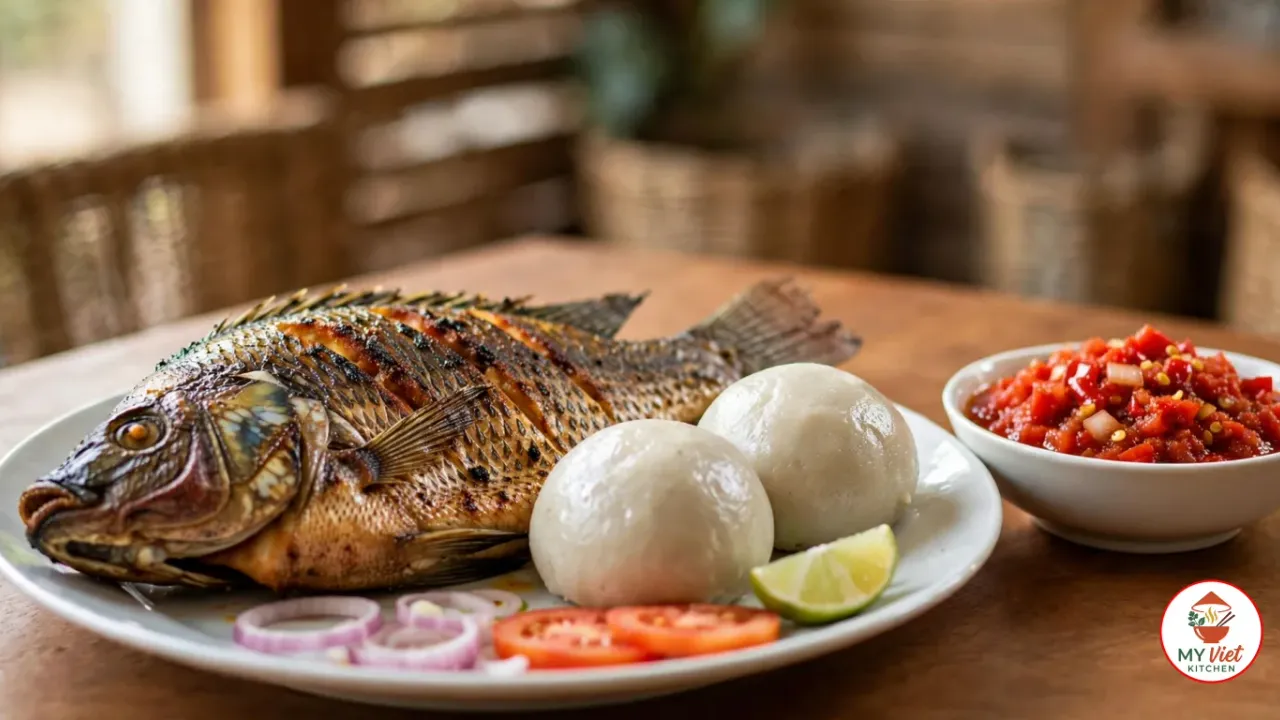
Banku with tilapia is Ghana’s most celebrated pairing of land and sea, and this authentic recipe brings that bold Ghanaian flavor to your kitchen. Banku is a fermented corn and cassava dough stirred into a smooth, tangy ball. The whole tilapia gets a rub of ginger and lime before grilling until the skin turns golden and crispy. Together with a fiery fresh pepper sauce, this banku with tilapia recipe delivers the complete Ghanaian dining experience that locals have enjoyed for generations.
Prep Time: 30 minutes | Cook Time: 45 minutes | Servings: 4
Difficulty: Medium | Calories: ~480 per serving
What Makes Banku with Tilapia Special?
Banku with tilapia holds a special place in Ghanaian cuisine because it brings together two elements that define the country’s food identity. Banku represents the starchy, fermented staples that anchor most Ghanaian meals. Meanwhile, the grilled tilapia showcases the country’s deep connection to freshwater fishing along the Volta River and Lake Volta. Each bite brings tangy, slightly sour dough against smoky, crispy fish skin and the burning heat of fresh pepper sauce. These contrasting flavors and textures create a harmony that no single dish can achieve alone.
Unlike many starchy African sides, banku gets its character from fermentation. The corn dough sits for one to three days before cooking. This process develops lactic acid, which gives banku its signature tang. According to food scholars, this technique dates back centuries in the Ga and Ewe communities of southern Ghana. Fermentation also breaks down starches, so banku is easier to digest than plain corn. Furthermore, the process adds beneficial probiotics, making banku a surprisingly nutritious staple food.
In Ghana, you will find banku with tilapia at nearly every outdoor restaurant, known locally as a “chop bar.” Street vendors grill whole tilapia over charcoal along the roadside. The smoky aroma draws hungry customers all afternoon and evening. Everyone from market traders to office workers enjoys banku with tilapia as a satisfying main meal. Additionally, this dish is naturally gluten-free and dairy-free, so it suits people with common food allergies.

Choosing the Right Tilapia
The quality of your tilapia shapes how well your banku with tilapia turns out. In Ghana, cooks prefer whole fish because it stays juicier on the grill. The skin also crisps up beautifully over charcoal. Here are the main options to consider when shopping.
- Fresh whole tilapia (best choice): Look for fish with clear, bright eyes, firm flesh that springs back when pressed, and a clean, mild smell. Fresh tilapia grills evenly and develops the crispiest skin. Each fish should weigh about 12 to 16 ounces for ideal portion size.
- Frozen whole tilapia: A good alternative when fresh is unavailable. Thaw the fish completely in the refrigerator overnight before grilling. Pat the skin very dry with paper towels because excess moisture prevents the skin from crisping properly on the grill.
- Tilapia fillets (avoid for this recipe): While fillets cook faster, they lack the bones and skin that contribute flavor and texture to traditional banku with tilapia. Fillets also tend to fall apart on the grill, making them difficult to serve alongside the banku in the authentic Ghanaian style.
Ingredients for Banku with Tilapia
For the Banku:
- 2 cups fermented corn dough
- 1 cup cassava dough (also called cassava paste)
- 3 cups water
- 1 teaspoon salt
For the Grilled Tilapia:
- 4 whole tilapia fish (12 to 16 ounces each), cleaned and scored
- 2 tablespoons vegetable oil
- 1 teaspoon salt
- 1 teaspoon ground ginger
- 1 teaspoon garlic powder
- Juice of 2 limes
For the Fresh Pepper Sauce:
- 6 fresh tomatoes, roughly chopped
- 4 fresh red chili peppers (kpakpo shito or habanero)
- 2 medium onions, quartered
- 2 cloves garlic
- 1 tablespoon vegetable oil
- Salt to taste
Pro tip: For the most authentic banku, buy fermented corn dough from an African grocery store rather than making it from scratch. Store-bought dough has already developed the right level of sourness and saves you two to three days of fermentation time. If you prefer a milder tang, reduce the fermentation time or mix in a small amount of fresh corn dough.
Step-by-Step Instructions
Step 1: Prepare the Fermented Dough
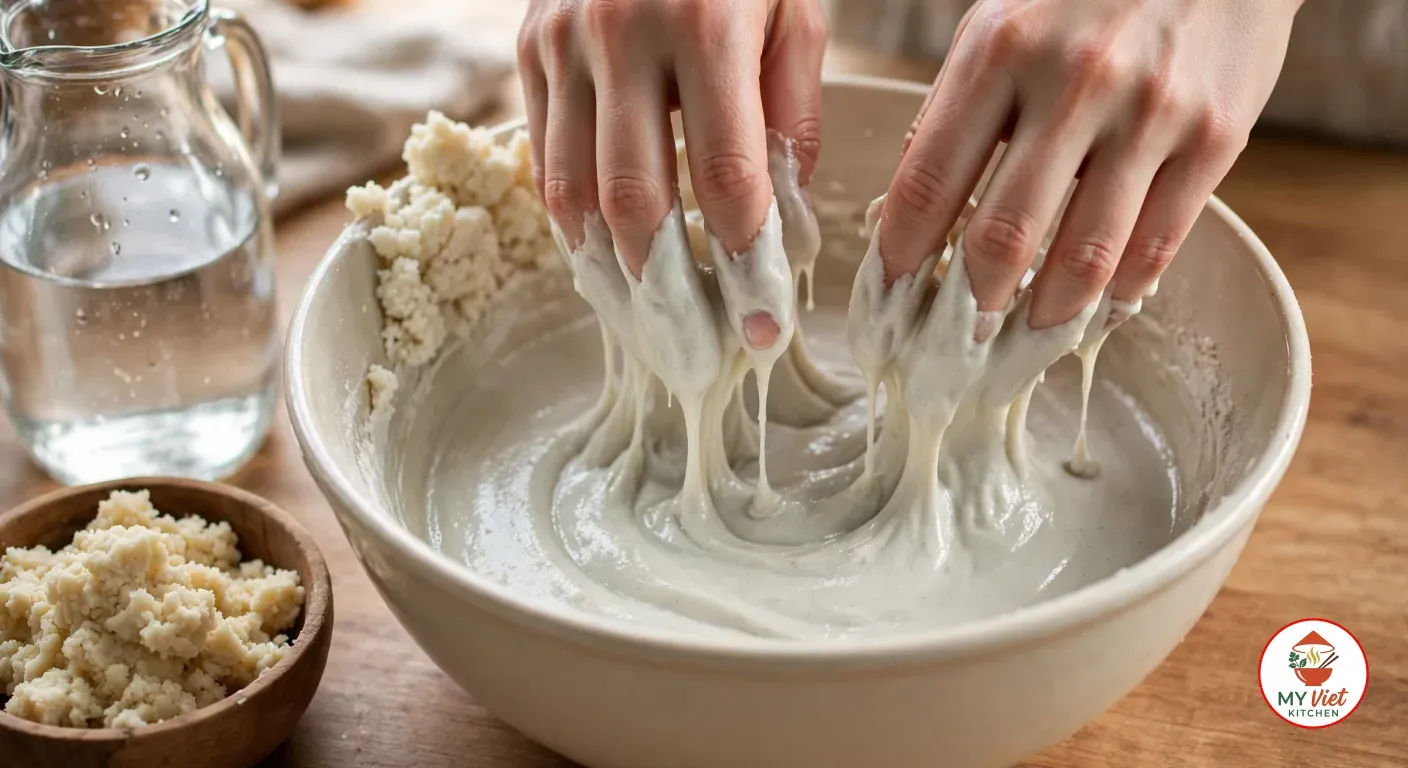
1Combine the fermented corn dough and cassava dough in a large mixing bowl. Add one cup of water and use your hands or a wooden spoon to blend everything into a smooth batter. It should flow slowly when you lift the spoon, like thick pancake batter. If the mix feels too thick, add water one tablespoon at a time. Break up every lump now because lumps in the raw batter turn into hard lumps in the finished banku. Once formed, those lumps are impossible to stir out.
Step 2: Cook the Banku
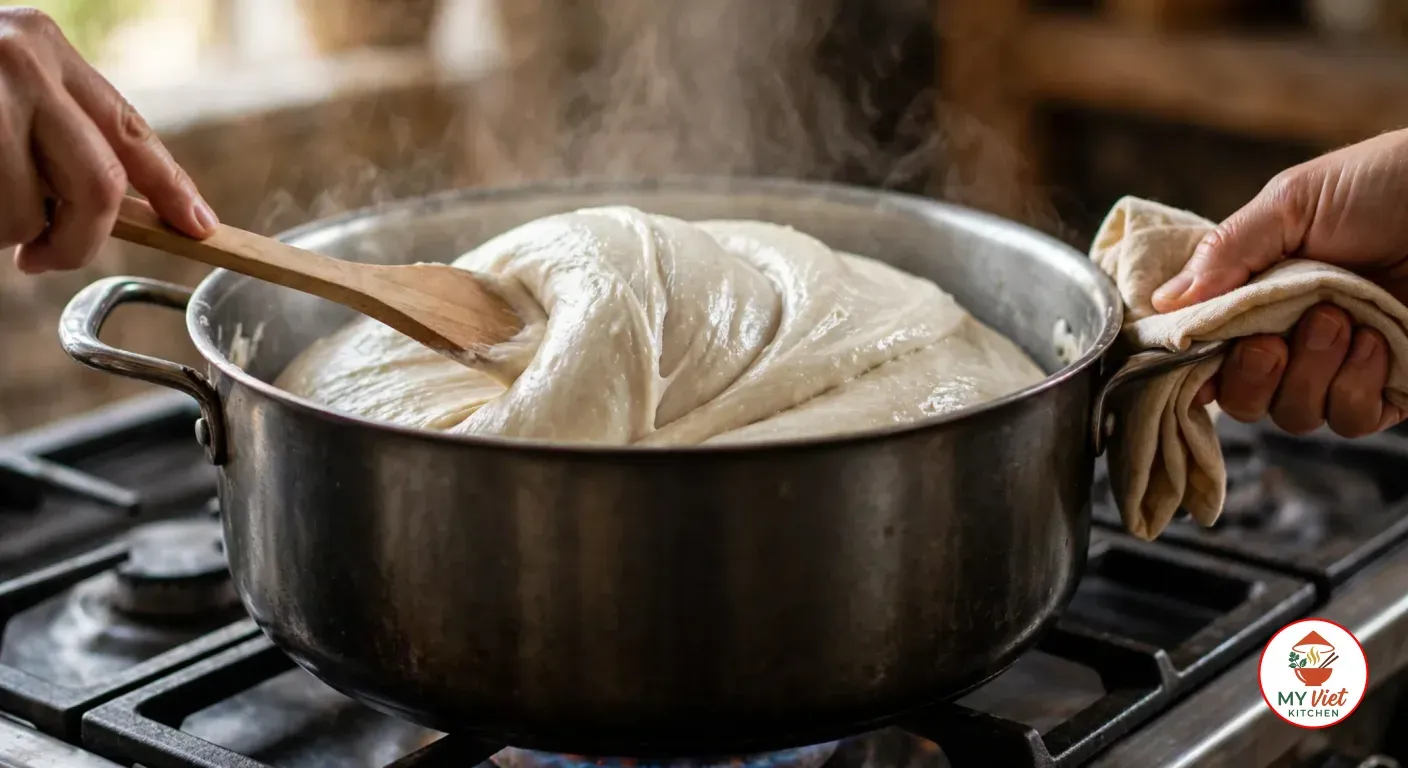
2Pour two cups of water into a large, heavy-bottomed pot and bring it to a rolling boil over high heat. Reduce the heat to medium. Gradually pour in the dough batter while stirring with a wooden spatula or a traditional banku ta. Stir vigorously in a circular motion for 15 to 20 minutes. The mixture will thicken and become harder to stir. This means the banku is cooking properly. Keep stirring until the dough pulls away from the sides of the pot. The surface should look smooth and glossy, and the banku should hold its shape on the spatula. Add the salt during the last two minutes of cooking.
Step 3: Season and Grill the Tilapia
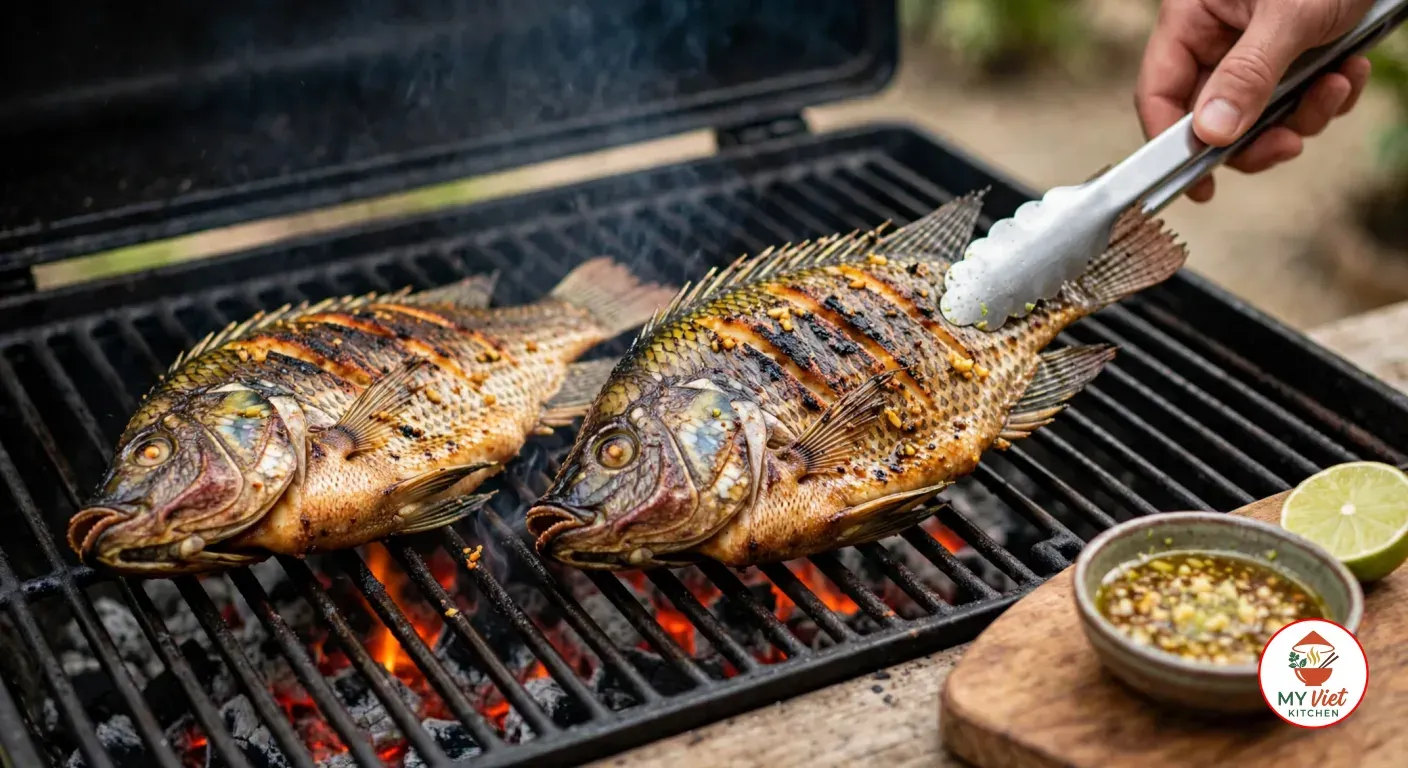
3While the banku cooks, prepare the tilapia. Rinse the cleaned fish under cold water and pat them dry with paper towels. Use a sharp knife to make three diagonal scores on each side of the fish, cutting about a quarter inch deep into the flesh. In a small bowl, mix the lime juice, ground ginger, garlic powder, salt, and oil. Rub this marinade over and inside each fish. Press it into the score marks so the flavor enters the flesh. Let the tilapia sit for at least 15 minutes. Then grill over medium-high charcoal or a gas grill for 7 to 8 minutes per side. The fish is ready when the skin turns golden brown and the flesh flakes easily with a fork.
Step 4: Make the Pepper Sauce
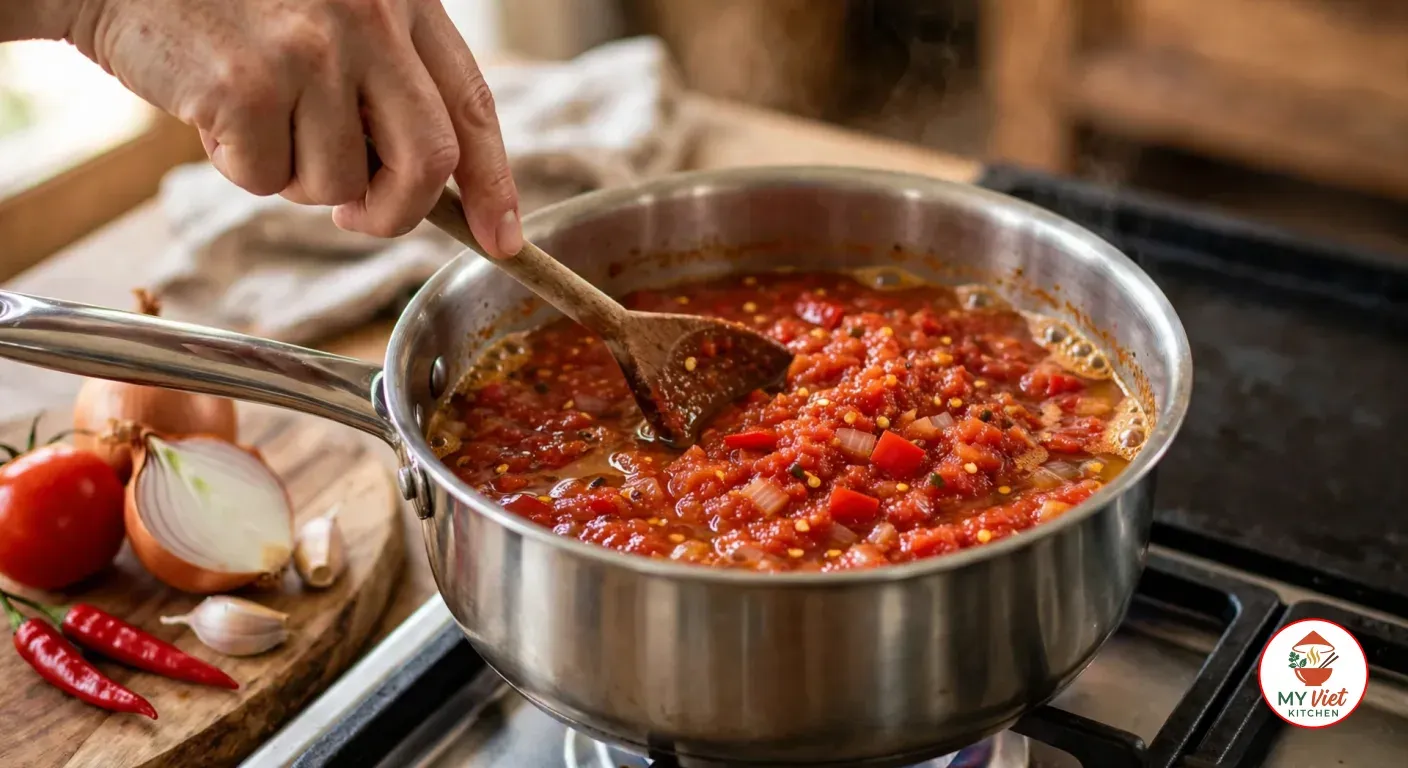
4Add the chopped tomatoes, chili peppers, onions, and garlic to a blender. Pulse several times until you get a coarse, chunky paste. Do not over-blend. You want texture, not a smooth puree. Heat one tablespoon of oil in a saucepan over medium heat. Pour in the blended mix and stir well. Cook for 10 to 12 minutes, stirring now and then, until the sauce thickens. The raw tomato smell should fade away. The sauce will reduce by about one third and turn a deeper red. Season with salt to taste. For extra heat, add more chili peppers or a spoonful of shito at the end.
Step 5: Shape the Banku and Serve
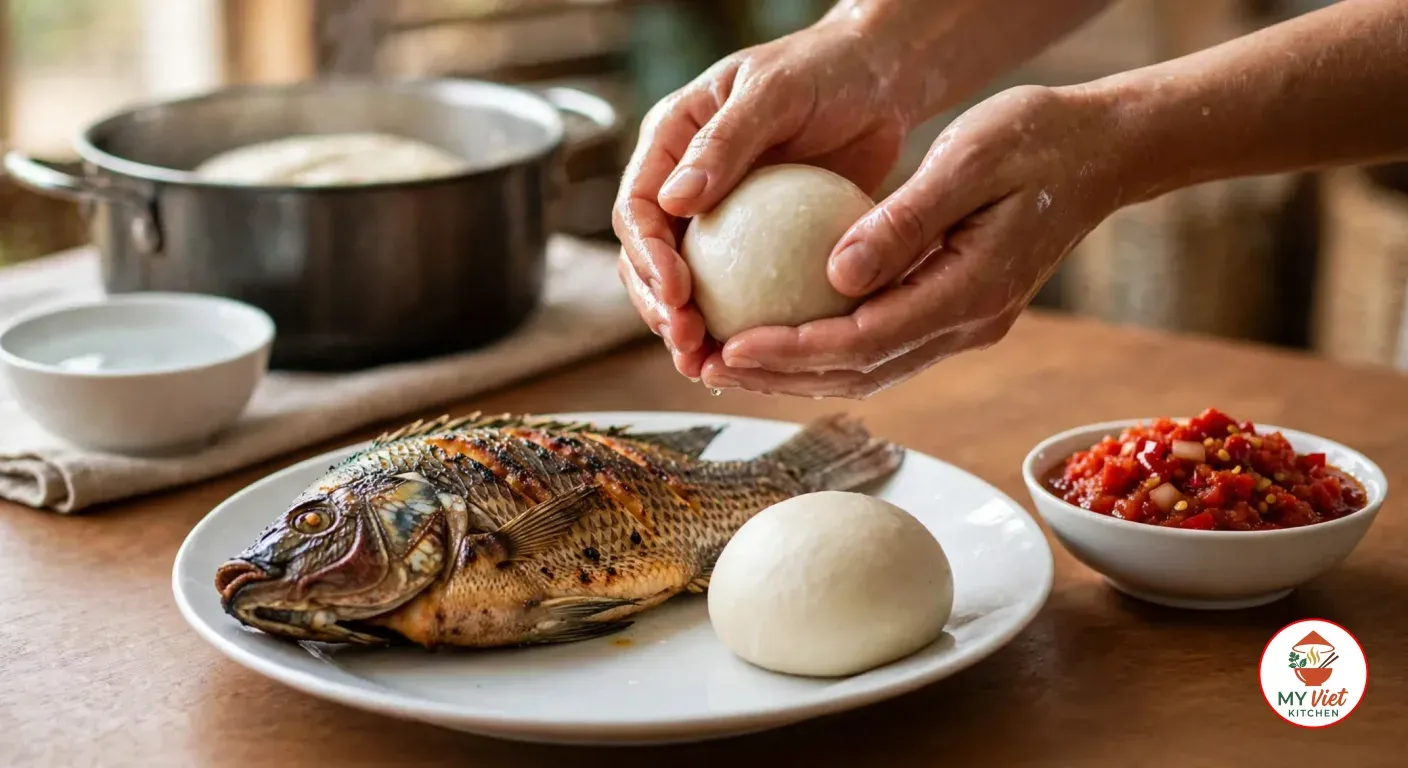
5Wet your hands with cold water to prevent sticking. Scoop a portion of banku and roll it between your palms into a smooth, round ball about the size of a tennis ball. Place each ball on a plate next to a whole grilled tilapia. Spoon the pepper sauce into a small bowl on the side. In Ghana, people tear off small pieces of banku with their fingers. They use the dough to pick up flakes of fish, then dip everything into the pepper sauce. Serve immediately while the banku is warm and the tilapia skin is still crispy.
Expert Tips for Perfect Banku with Tilapia
Master the Stirring Technique
Stirring banku requires effort and patience. Use a sturdy wooden spatula and stir in one direction with firm strokes. In Ghana, experienced cooks “pull” the dough from the bottom upward, then fold it over. Switching directions often leads to uneven texture. Keep the heat at medium to prevent scorching. If the banku sticks, add a splash of hot water and keep stirring. The whole process takes 15 to 20 minutes of steady work.
Get Crispy Fish Skin Every Time
Crispy tilapia skin requires good prep and heat control. First, pat the fish completely dry. Moisture creates steam instead of crisping. Second, oil the grill grates to prevent sticking. Third, do not move the fish during the first five minutes. Let the skin sear and release on its own. If you flip too early, the skin tears and sticks. The fish is ready to flip when it lifts cleanly from the grill.
Balance the Fermentation Level
Sourness varies based on how long the corn dough ferments. For a mild tang, use dough that sat for one to two days. For a stronger, more traditional flavor, allow three days. If the dough tastes too sour, mix in fresh corn dough to soften the tang. Always taste the raw dough before cooking so you can adjust to your liking.
Banku vs. Other Ghanaian Starchy Staples
Ghana offers several starchy staples that accompany soups and grilled meats. Each one has a unique preparation method and texture. Here is how banku compares to the other popular options you might encounter in Ghanaian cooking.
| Feature | Banku | Fufu | Kenkey | Tuo Zaafi |
|---|---|---|---|---|
| Main Ingredient | Fermented corn and cassava | Cassava and plantain | Fermented corn | Millet or corn flour |
| Texture | Smooth and slightly stretchy | Very smooth and elastic | Firm and dense | Thick and porridge-like |
| Flavor | Mildly sour and tangy | Mild and neutral | Strongly sour | Mild and earthy |
| Cooking Method | Stirred on stovetop | Pounded in mortar | Wrapped and steamed | Stirred on stovetop |
| Best Paired With | Grilled tilapia, pepper sauce | Light soup, palm nut soup | Fried fish, shito | Ayoyo soup |
| Region of Origin | Southern Ghana (Ga, Ewe) | Akan regions | Ga people, Accra | Northern Ghana |
Serving Suggestions
In Ghana, banku with tilapia arrives at the table as a complete meal. However, you can elevate the experience with traditional accompaniments and side dishes. Here are the most authentic ways to serve this Ghanaian classic.
The Perfect Accompaniments:
- Shito (Ghanaian black pepper sauce): This dark, oily chili sauce made from dried shrimp, ginger, and scotch bonnet peppers adds an umami-rich depth that transforms the dish. A spoonful of shito alongside the fresh pepper sauce gives you two layers of heat and flavor.
- Fresh sliced onions and tomatoes: A simple side salad of raw onion rings, tomato slices, and a squeeze of lime is the standard garnish at Ghanaian chop bars. The raw vegetables provide a refreshing crunch that contrasts with the soft banku.
- Kelewele (spiced fried plantains): For a heartier meal, add a side of kelewele. The sweet, spicy plantain cubes complement the tangy banku and smoky tilapia beautifully.
- Steamed okra or garden egg stew: These vegetable sides add nutrition and variety to the plate. The slimy texture of cooked okra actually helps the banku slide down smoothly, which is why many Ghanaians pair them together.
Beverage Pairings:
- Sobolo (hibiscus drink): This refreshing Ghanaian hibiscus juice with ginger and cloves cleanses the palate between bites and balances the heat of the pepper sauce.
- Fresh coconut water: The natural sweetness and cooling effect of coconut water provide relief from the spicy pepper sauce, making it an ideal pairing for this fiery meal.
- Club beer or Star lager: A cold Ghanaian beer is the most popular choice among locals. The crisp, light beer washes down the starchy banku and refreshes the palate after each bite of spicy grilled tilapia.
Storage and Reheating
Refrigerator: Store leftover banku in an airtight container for up to 3 days. The banku will firm up significantly in the refrigerator, so you will need to reheat it to restore its soft texture. Keep the grilled tilapia in a separate container for up to 2 days. Store the pepper sauce separately for up to 4 days.
Freezer: Banku freezes well for up to 2 months. Wrap individual portions tightly in plastic wrap, then place them in freezer bags. The grilled tilapia can also freeze for up to 1 month. Thaw both components in the refrigerator overnight before reheating.
Reheating: The best way to reheat banku is by steaming. Wrap the banku ball in a damp cloth or banana leaf, then place it in a steamer basket over boiling water for 10 to 15 minutes. This method restores the soft, smooth texture without drying out the dough. Reheat the tilapia in a hot oven at 375 degrees Fahrenheit for 8 to 10 minutes to re-crisp the skin. Avoid microwaving the fish because it makes the skin rubbery.
Common Mistakes to Avoid
1. Not Stirring Continuously
Banku requires constant, vigorous stirring throughout cooking. If you stop for even a minute, the dough forms lumps and scorches at the bottom. These lumps cannot be smoothed out later. So commit to 15 to 20 minutes of steady stirring. Ask someone to help if your arms get tired. A heavy pot distributes heat evenly and reduces burning.
2. Using Unfermented Corn Dough
Fresh, unfermented corn dough produces a bland result. It lacks the tang of authentic banku. Fermentation develops sour flavor, improves texture, and makes corn nutrients easier to absorb. Without it, the result tastes like plain corn porridge. Always use properly fermented dough. If you bought corn flour paste, let it ferment for at least 24 hours before cooking.
3. Overcooking the Tilapia
Tilapia cooks quickly. Leaving it on the grill too long turns the flesh dry and chalky. A whole tilapia needs only 7 to 8 minutes per side over medium-high heat. Check the thickest part near the backbone. When the flesh flakes easily with a fork, it is done. Overcooked tilapia loses juiciness and falls apart, making it hard to eat with banku.
Frequently Asked Questions
How do I know when the banku is done?
Banku is ready when it pulls away cleanly from the sides of the pot. It should have a smooth, glossy surface and hold its shape on the spatula. Press a wet finger into it. If nothing sticks, the cooking is complete. Undercooked banku feels grainy and clings to everything. Properly cooked banku is smooth, elastic, and easy to shape into balls.
Can I fry the tilapia instead of grilling it?
Yes, fried tilapia pairs well with banku and is very common in Ghana. Heat oil in a deep skillet to 350 degrees Fahrenheit. Fry the seasoned whole tilapia for 5 to 6 minutes per side until crispy and golden. Fried tilapia has a crunchier skin and slightly oilier finish than grilled. Both methods taste excellent with banku, so choose based on your preference.
What makes Ghanaian pepper sauce different from other hot sauces?
Ghanaian pepper sauce uses fresh, whole ingredients blended into a coarse paste. It is lightly cooked, not heavily processed. Fresh tomatoes, raw onions, and whole chili peppers create a bright, vibrant heat. This differs from bottled hot sauces. You can taste each ingredient: the sweet tomatoes, sharp onions, and clean burn of the peppers all come through in one bite.
Is banku with tilapia healthy?
Banku with tilapia offers a balanced nutritional profile. Tilapia provides lean protein, omega-3 fatty acids, and B vitamins. Fermented corn dough contributes complex carbs, fiber, and probiotics. Meanwhile, the pepper sauce adds vitamins A and C from the tomatoes and peppers. Overall, this meal delivers about 480 calories per serving with a good balance of macronutrients.
Variations and Adaptations
Banku with Okra Stew:
For a vegetarian version, replace the grilled tilapia with a rich okra stew. Slice fresh okra and cook it with tomatoes, onions, palm oil, and dried crayfish until the stew becomes thick and slightly viscous. The natural sliminess of okra creates a sauce that clings to the banku perfectly. This variation is popular during the lean fishing season when fresh tilapia is scarce.
Banku with Fried Red Snapper:
Red snapper offers a meatier, more flavorful alternative to tilapia. Season the whole snapper with the same ginger-lime marinade and deep fry it until the skin is shatteringly crispy. The firmer flesh of red snapper holds up well to the pepper sauce, and the richer flavor complements the tangy banku even more intensely than tilapia. This upscale variation appears at Ghanaian restaurants and special occasions.
Spicy Shito-Rubbed Tilapia:
For an extra layer of flavor, rub the tilapia with a mixture of shito (Ghanaian black pepper sauce) and the standard ginger-lime marinade before grilling. The shito adds a smoky, umami-rich crust to the fish that is absolutely addictive. This variation is a favorite among Ghanaians who love intense, bold flavors. Use about one tablespoon of shito per fish, spread evenly over the skin and inside the score marks.
The Cultural Significance of Banku with Tilapia
Banku with tilapia is more than a meal in Ghana. It represents the cultural identity of the Ga and Ewe peoples of the country’s southern coastal and Volta regions. Accra’s Ga people, among the earliest inhabitants of Ghana’s capital, created banku as their signature staple centuries ago. For the Ga, sharing banku with tilapia at a family gathering symbolizes hospitality and community. During the annual Homowo festival, which marks the end of a historical famine, banku takes center stage at feasts across the city.
Tilapia also carries deep cultural weight in this dish. Lake Volta, the world’s largest artificial lake by surface area, provides tilapia to millions of Ghanaians. Fishing communities around the lake depend on tilapia as both a food source and an economic lifeline. When Ghanaians eat banku with tilapia, they connect with a food chain that stretches from the lake’s fishing boats to the charcoal grills of roadside vendors. As a result, this dish embodies the bond between Ghana’s freshwater resources and its food traditions.
Moreover, banku with tilapia has become a national unifier. Although it originated with specific ethnic groups, today every Ghanaian recognizes it as a national treasure. From upscale restaurants in Accra to humble chop bars in rural villages, banku with tilapia appears on menus everywhere. It has also traveled internationally with the Ghanaian diaspora, and you can find it at African restaurants in London, New York, Toronto, and other cities with large Ghanaian communities. In this way, banku with tilapia serves as a delicious ambassador for Ghanaian culture around the world.
Conclusion
Banku with tilapia is a cornerstone of Ghanaian cuisine. It brings together tangy fermented dough, smoky grilled fish, and fiery pepper sauce in one unforgettable meal. Use properly fermented corn dough, stir the banku with patience, and grill the tilapia until the skin turns golden and crispy. These steps recreate the authentic Ghanaian experience at home. Bold flavors and satisfying textures explain why this dish has remained a Ghanaian favorite for generations.
If you enjoyed this recipe, explore more of our African food collection for dishes from across the continent. Try our kelewele recipe for spiced Ghanaian fried plantains, or discover jollof rice for the iconic West African one-pot rice dish that pairs wonderfully with grilled tilapia.