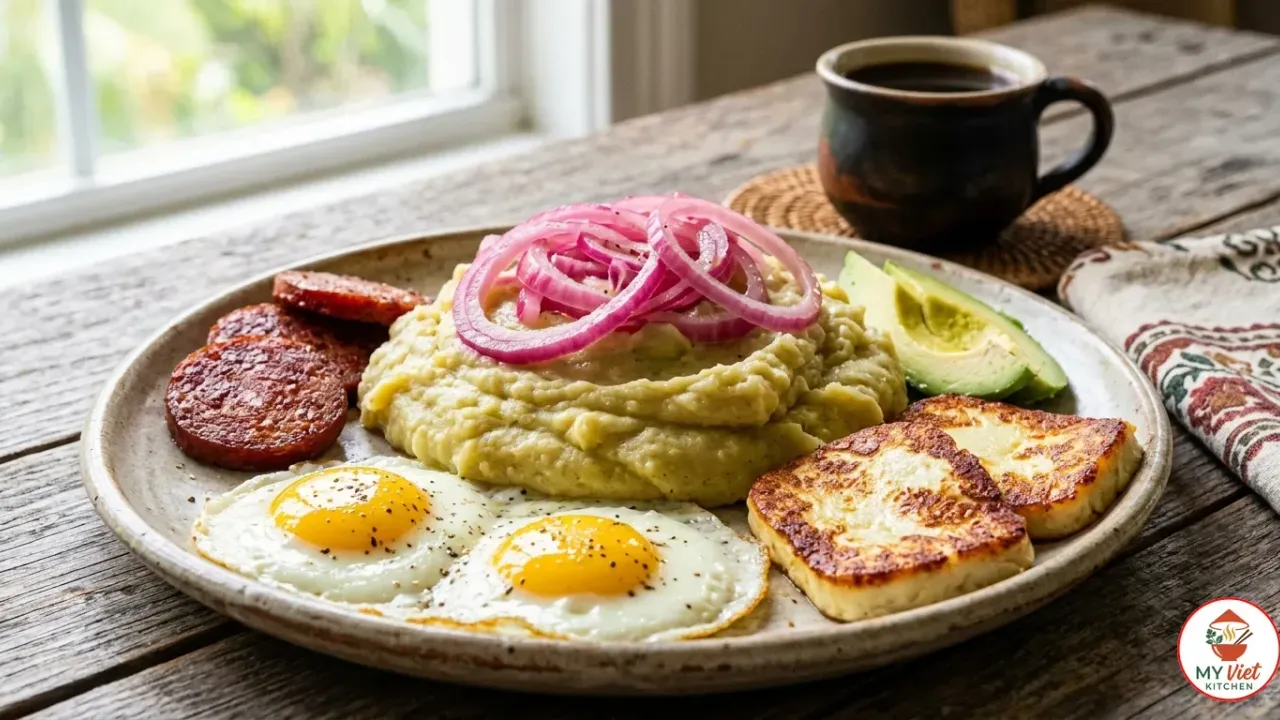
Mangu is the breakfast that built a nation. This beloved Dominican dish of mashed green plantains topped with tangy pickled red onions has fueled mornings across the island for generations. Simple yet deeply satisfying, mangu delivers a creamy, starchy comfort that no other breakfast can match. Whether you grew up eating it in Santo Domingo or you are discovering it for the first time, this recipe captures the authentic heart of Dominican home cooking.
Prep Time: 10 minutes | Cook Time: 25 minutes | Servings: 4
Difficulty: Easy | Calories: ~310 per serving
What Makes Mangu Special?
Mangu stands apart from other plantain dishes because of its elegant simplicity. While mofongo relies on frying and pounding, and tostones demand double-frying precision, mangu takes the gentlest approach. Green plantains boil until tender, then meet butter and olive oil in a bowl where they transform into something remarkably creamy. In fact, the starchy cooking water holds the secret. It holds dissolved plantain starch. This starch acts as a natural binder, making the mash smooth and creamy on the palate.
The pickled red onion topping elevates mangu from simple starch to a complete flavor experience. Sharp vinegar cuts through the richness of the butter and oil. Meanwhile, the sweetness of the softened onions contrasts the earthy plantain base. Together, they create a balance of tangy, savory, and rich that makes each bite compelling. As a result, this combination has remained unchanged for centuries because it needs no improvement. Dominican cooks understood long ago that restraint, not complexity, produces the most satisfying food.
In the Dominican Republic, mangu is more than breakfast. It is a cultural identity. Families pass the recipe down without cups or written notes. The feel lives in the hands. Every Dominican cook knows when the plantains are soft, how much water to add, and how hard to mash. Consequently, mangu connects generations through a shared ritual that starts before sunrise and brings the whole family to the table.

Choosing the Right Plantains
Good mangu starts at the market. Not all plantains work for this dish. In particular, the ripeness stage decides whether you get authentic mangu or a sweet, mushy mess. Here is what to look for.
- Green plantains (essential): Choose plantains that are completely green with no yellow patches. The skin should feel firm and resist pressure when squeezed. Green plantains have the most starch and the least sugar. This gives you the dense, savory base that defines mangu. They peel with more effort, but this firmness means the right texture after mashing.
- Slightly green with minor yellow (acceptable): Plantains just starting to turn yellow still have enough starch for a decent mangu. The texture will be a bit softer and a touch sweeter. Use these if fully green ones are not at the store. However, expect a less firm mash.
- Yellow or ripe plantains (not suitable): Once plantains turn fully yellow, the starch has turned to sugar. Mashing ripe ones gives you a sweet, loose puree that bears no likeness to real mangu. Instead, save yellow plantains for maduros (fried sweet plantains). Never swap ripe for green in this recipe.
Ingredients for Mangu
For the Mashed Plantains:
- 4 large green plantains, peeled and cut into 2-inch pieces
- 6 cups (1.4L) water
- 1 tablespoon salt for boiling
- 3 tablespoons unsalted butter
- 2 tablespoons extra virgin olive oil
- 1/2 cup reserved plantain cooking water
- Salt and black pepper to taste
For the Pickled Red Onions:
- 2 large red onions, thinly sliced into rings
- 2 tablespoons white vinegar
- 1 tablespoon olive oil
- 1/2 teaspoon salt
- 1/4 teaspoon black pepper
For the Traditional Los Tres Golpes Sides:
- 4 large eggs, fried sunny-side up
- 8 slices Dominican salami, fried until crispy
- 4 slices queso de freir (Dominican frying cheese)
Pro tip: Reserve more cooking water than you think you need. The plantain starch in this water is the key to a creamy, smooth mangu. You can always add more, but you cannot take it back once the mash is too dry. Start with a quarter cup and add more gradually until you reach the perfect consistency. Additionally, use cold water to start boiling the plantains rather than dropping them into already boiling water. A cold start ensures even cooking from the outside to the center.
Step-by-Step Instructions
Step 1: Peel and Cut the Plantains
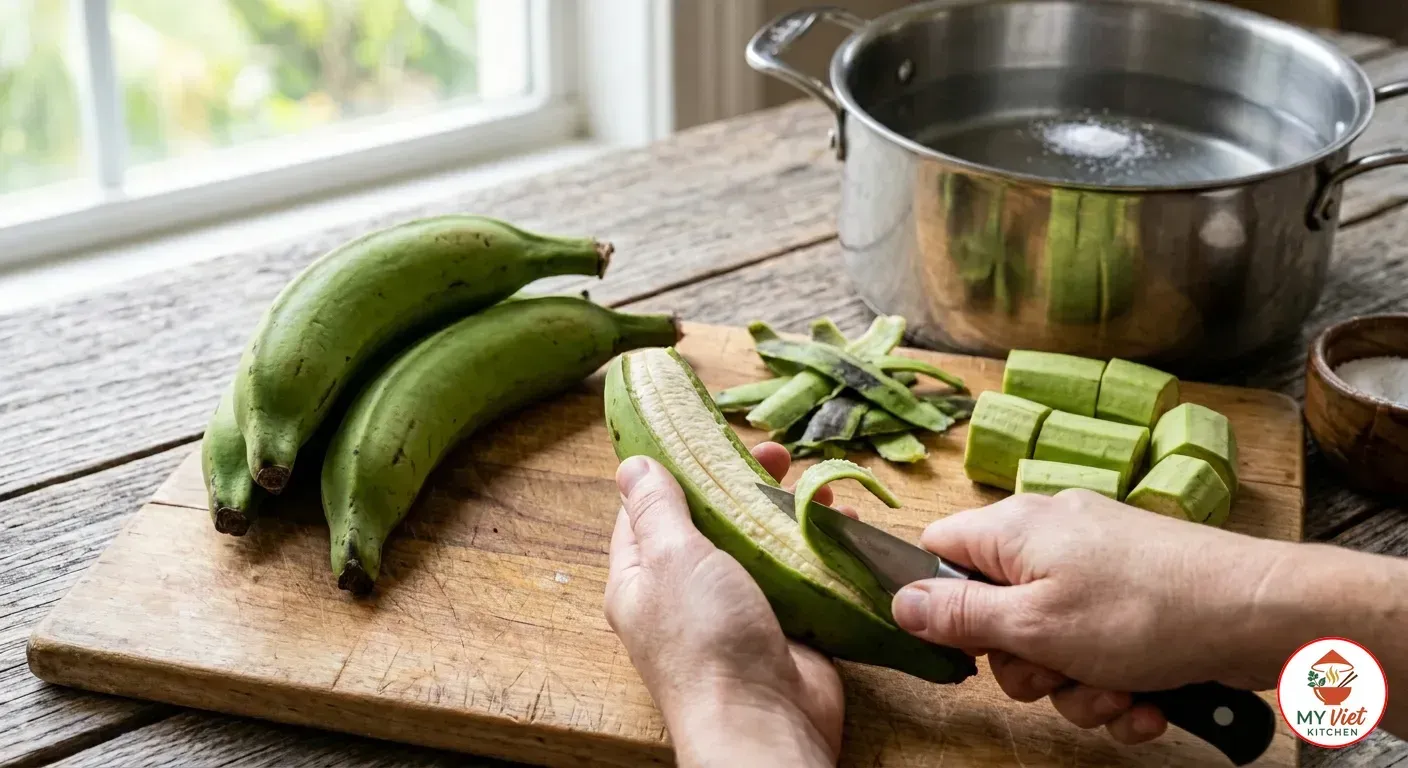
1 Begin by trimming both ends off each green plantain with a sharp knife. Score the skin lengthwise along each natural ridge, cutting through the peel but not into the flesh beneath. You should make three or four cuts per plantain. Then use your thumb to pry the skin away in sections. Green plantain skin clings tightly, so work with care.
Once peeled, cut each plantain into 2-inch pieces. Uniform pieces ensure even cooking. Because if some chunks are thicker than others, the thin pieces turn mushy before the thick ones soften. Place the cut plantains into a large pot and cover with 6 cups of cold water. Add the tablespoon of salt. Most importantly, starting in cold water allows the plantains to heat gradually. This gentle approach cooks them evenly from the outside in, preventing a soft exterior with a hard core.
Step 2: Boil the Plantains Until Tender
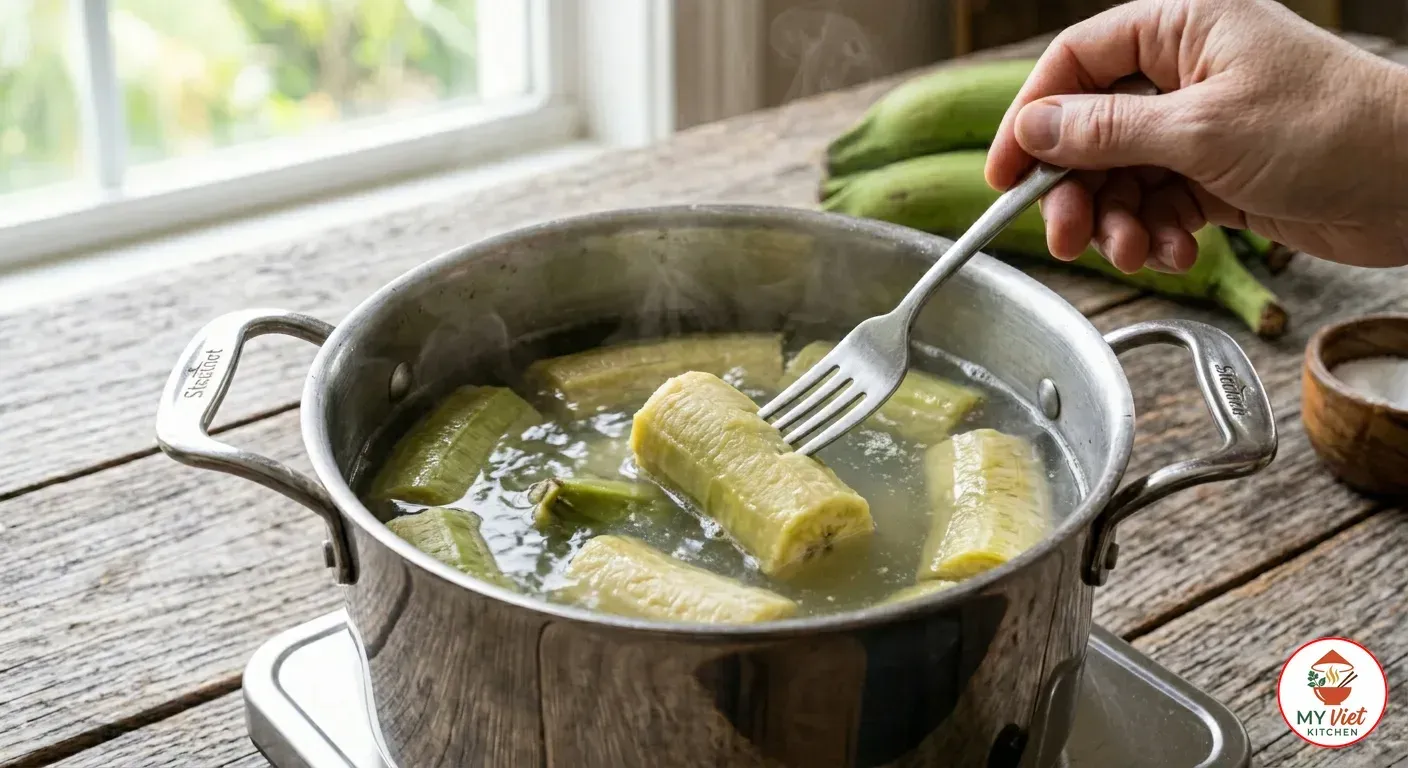
2 Bring the pot to a boil over high heat. Once boiling, reduce the temperature to a steady simmer. Cook the plantains for 20 to 25 minutes. The exact time depends on the size of your pieces and how green the plantains are. Very green, firm plantains may need the full 25 minutes. After that, test for doneness by piercing a piece with a fork. It should slide through easily with no resistance.
Before draining, reserve at least half a cup of the starchy cooking liquid. This cloudy water holds dissolved plantain starch. It is the key to a proper mangu texture. Pour it into a measuring cup and set it aside. Next, drain the plantains thoroughly in a colander. Do not rinse them, because the residual starch on the surface helps the butter and oil bind into the mash. Transfer the hot plantains immediately to a large mixing bowl.
Step 3: Mash the Plantains
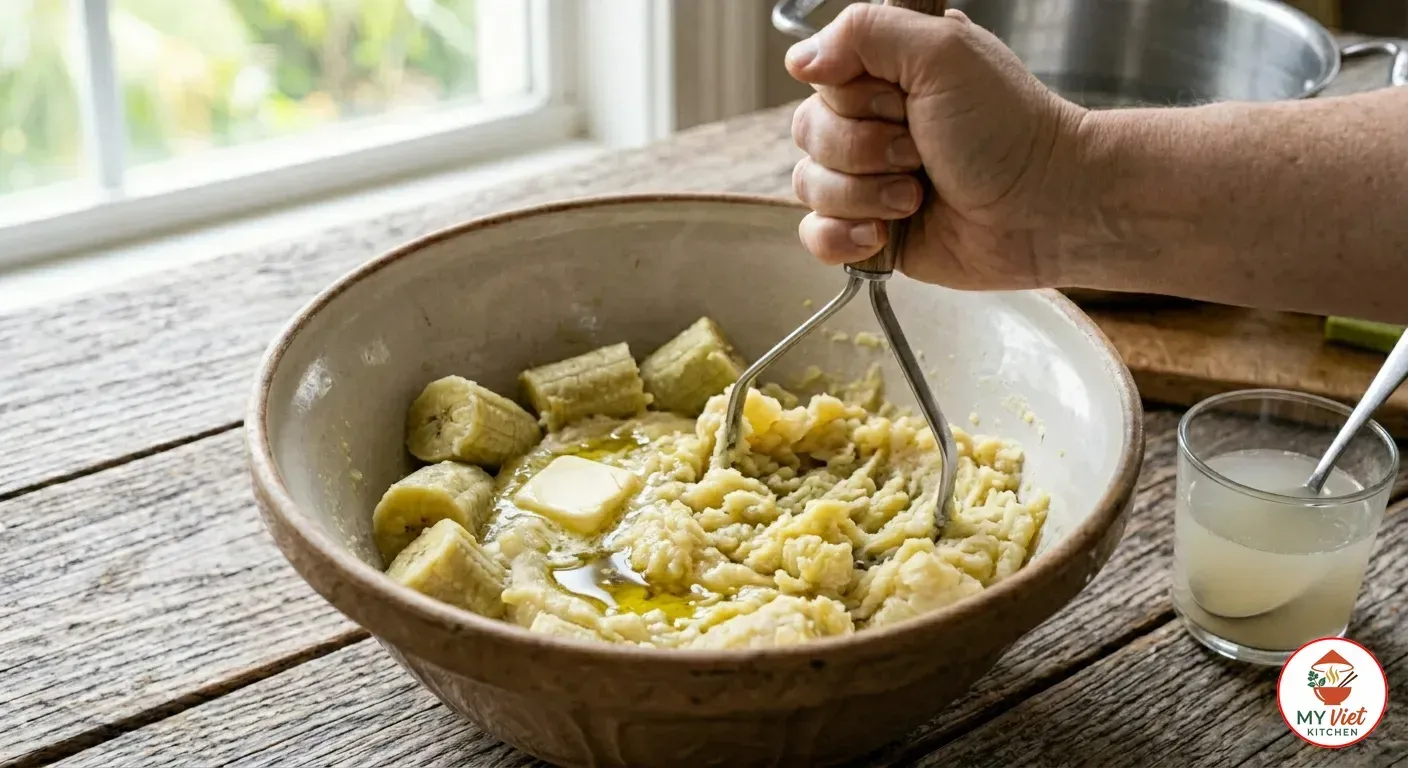
3 Add the butter and olive oil to the hot plantains immediately. The heat melts the butter on contact. This lets the fat soak into the starch right away. Then begin mashing with a potato masher or a large fork. Work the plantains vigorously, pressing down and twisting to break apart every chunk.
Next, add the reserved cooking water gradually, starting with a quarter cup. Mash and stir between additions. The water loosens the mix and wakes up the starch, giving you a smooth, creamy result. It should be thick enough to hold its shape on a plate but soft enough to spread with ease. Some cooks prefer a chunky mangu with visible bits, while others mash until fully smooth. Both styles are authentic. Finally, season with salt and pepper to taste. It should taste savory with a hint of buttery richness.
Step 4: Prepare the Pickled Red Onions
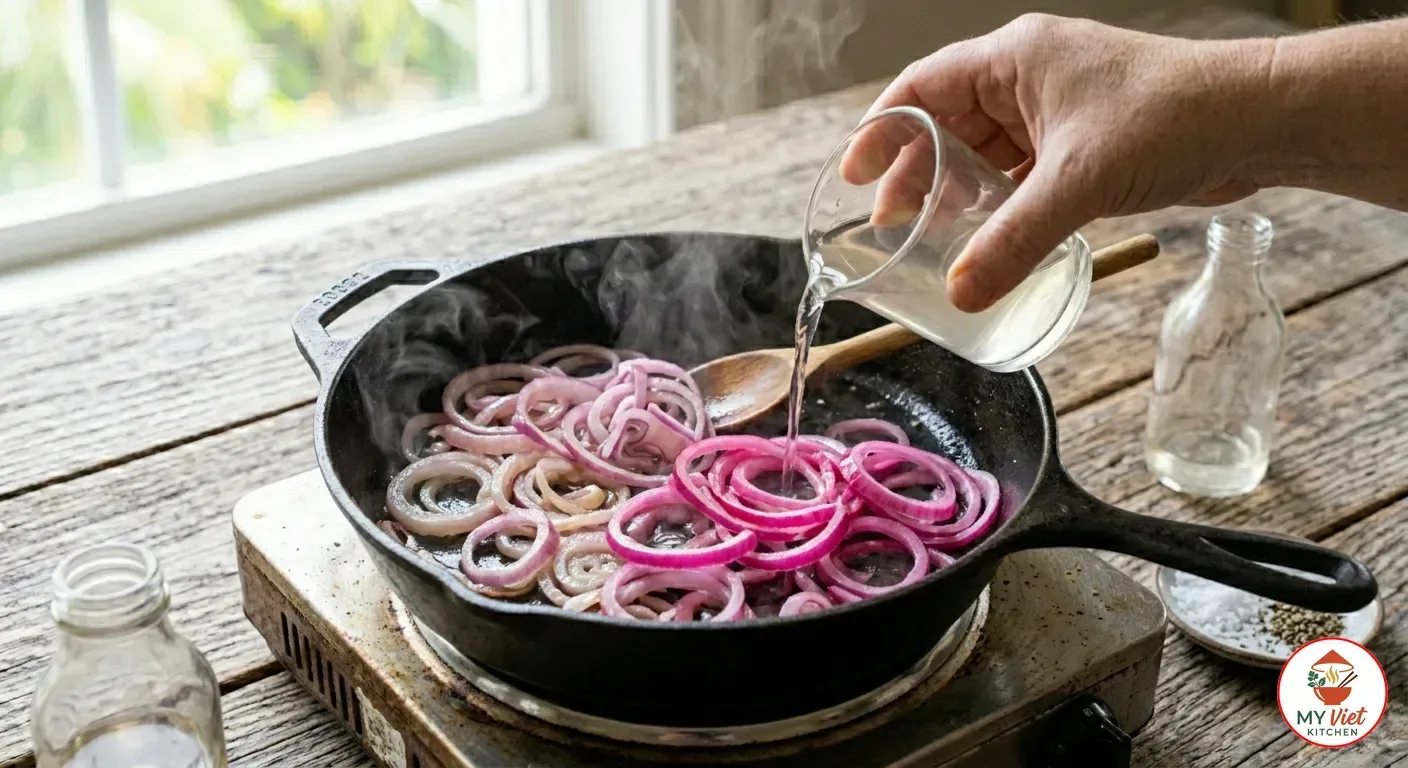
4 While the plantains boil, prepare the onion topping. Heat a tablespoon of olive oil in a skillet over medium heat. Add the thinly sliced red onions. Cook for 3 to 4 minutes, stirring occasionally, until the onions soften and begin to wilt. They should lose their raw crunch but still retain a slight bite.
Pour in the white vinegar and season with salt and pepper. The vinegar transforms the onions at once. They brighten in color and pick up a sharp tang that cuts the rich plantain base. Cook for 2 more minutes, then remove the skillet from the heat. The onions will continue to soften in the residual heat. Do not overcook them to the point of becoming completely limp. Instead, the ideal topping has a mix of soft and slightly firm, with a bright vinegar tang.
Step 5: Serve the Mangu
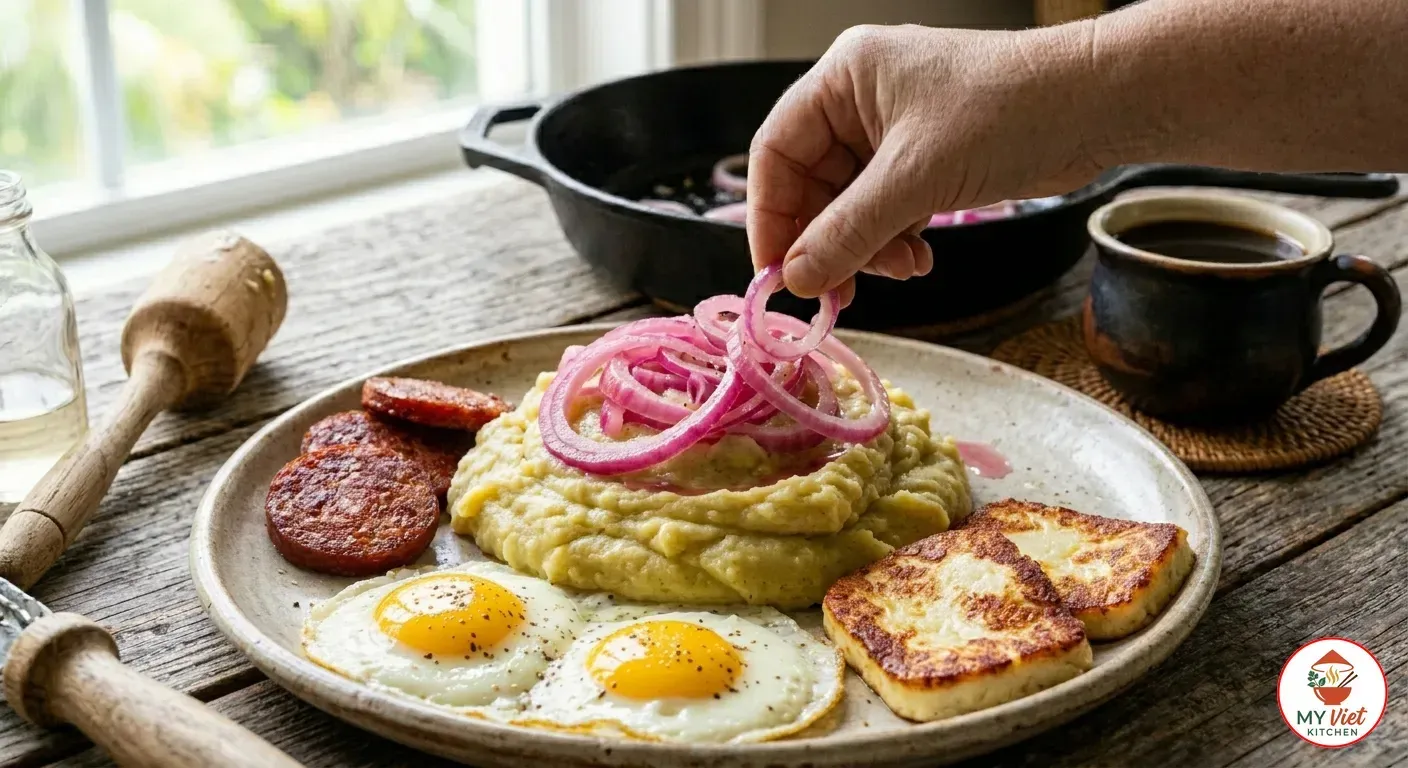
5 Mound a generous portion of the mashed plantains in the center of each plate. Then create a slight well or flatten the top to hold the onion topping. Spoon the warm pickled red onions over the mangu, allowing the vinegar liquid to drizzle down the sides. The purple-red onions against the pale plantain mash look as good as they taste.
For the complete los tres golpes experience, arrange fried eggs, crispy fried salami, and golden queso frito alongside the mangu on the same plate. Indeed, each component plays a specific role. Runny egg yolk enriches the plantain when mixed together. Meanwhile, the salty, crispy salami provides texture contrast. Additionally, the fried cheese adds a mild creaminess. Together, these four elements compose the most celebrated breakfast plate in Dominican cuisine. Serve immediately while everything remains hot.
Expert Tips for Perfect Mangu
Master the Cooking Water Technique
The reserved cooking water is not merely a convenience. It is the foundation of mangu’s signature texture. As green plantains boil, they release amylose starch into the water. This starch works as a natural binder when mixed back into the mash. It binds the butter and oil into the plantain for a creamy, cohesive texture. For instance, think of it the same way pasta water finishes an Italian sauce. The starch is the invisible ingredient that makes everything work together. So always save more than you think you need.
Mash While the Plantains Are Hot
Timing matters for the mashing step. Hot plantains absorb fat much better than cool ones. The starch in the flesh is fully swollen from boiling. At high heat, it takes in butter and oil eagerly. However, if you let them cool, the starch starts to firm up. The texture turns gummy and fights a smooth mash. Work quickly after draining. Have your butter and oil measured and ready before the plantains finish cooking. Ultimately, speed at this stage directly determines the quality of the final mangu.
Balance the Vinegar in the Onions
The onion topping should taste bright and tangy, not too sour. Start with two tablespoons of white vinegar. Taste the onions after cooking and adjust from there. If they seem too sharp, add a tiny pinch of sugar to round out the acidity. Some cooks also add a squeeze of lime juice for extra citrus punch. The onions should lift the mangu, not overpower it. Furthermore, thin slicing helps them cook evenly and soak up the vinegar.
Mangu vs Other Caribbean Plantain Dishes
Plantains appear in kitchens across the Caribbean and Latin America. Each culture has its own spin. Knowing the differences helps you see what makes Dominican mangu stand out.
| Dish | Country | Preparation | Key Characteristics |
|---|---|---|---|
| Mangu | Dominican Republic | Boiled and mashed with butter | Smooth, creamy, served with pickled onions for breakfast |
| Mofongo | Puerto Rico | Fried and pounded with garlic | Dense, garlicky, shaped into a dome with pork cracklings |
| Fufu de Platano | Cuba | Boiled and mashed with garlic | Similar to mangu but with heavier garlic flavor and pork broth |
| Tostones | Various Caribbean | Double-fried green plantain discs | Crispy exterior, soft interior, served as a side dish |
| Machuca | Honduras | Boiled and mashed with coconut milk | Creamy, coconut-scented, paired with seafood |
Serving Suggestions
Mangu is traditionally a breakfast dish in the Dominican Republic. However, it works well beyond the morning meal. The creamy, starchy base pairs nicely with many proteins and toppings at lunch and dinner too.
The Classic Dominican Breakfast:
- Fried eggs: Sunny-side up with runny yolks that mix into the warm mangu, creating a rich, golden sauce on the plate. This is the most essential pairing in Dominican breakfast culture.
- Fried Dominican salami: Thick slices of Dominican-style salami crisped in a hot pan. The salty, spiced meat gives a nice crunch against the smooth plantain mash. No other salami has the same flavor as the Dominican kind.
- Queso frito: Slices of Dominican white frying cheese seared until golden on both sides. The cheese goes soft inside while the crust turns crispy. Its mild, milky taste offsets the bold salami and tangy onions.
- Avocado slices: A popular add-on that brings healthy fat and a cool, creamy bite. Buttery avocado goes well with the starchy plantain base.
Beverage Pairings:
- Dominican coffee: Strong, dark, and sweetened, Dominican coffee is the traditional morning partner for mangu. The bitter roast notes complement the starchy richness of the dish perfectly.
- Fresh orange juice: Fresh-squeezed orange juice cuts through the rich butter and fried sides. It refreshes the palate between bites.
- Morir sonando: This loved Dominican drink blends orange juice with milk and sugar over ice. The creamy citrus taste goes great with a savory mangu plate.
Storage and Reheating
Refrigerator: Allow the mangu to cool to room temperature before storing. Transfer to an airtight container and refrigerate for up to 2 days. The mash will firm up as the starch sets. Store the pickled onions separately in their own container to maintain their bright flavor and prevent them from making the mangu soggy.
Freezer: Mangu does not freeze well. The starch breaks down when frozen and thawed, leaving a gummy, bad texture. For best results, prepare mangu fresh each time. If you must freeze it, use small pots and know the texture will not be as good after thawing.
Reheating: Warm leftover mangu on the stovetop over medium-low heat. Add a splash of water or milk, one tablespoon at a time, while stirring constantly. The liquid brings back the starch and makes it smooth and creamy again. A microwave works in a pinch but tends to make dry spots. Stir halfway through and add liquid as needed. The onion topping is best prepared fresh, though leftover onions taste fine at room temperature.
Common Mistakes to Avoid
1. Using Ripe Plantains Instead of Green
This is the single most common mistake newcomers make. Ripe yellow or spotted plantains have converted their starch into sugar. Mashing them produces a sweet puree, not the savory, dense mangu that the dish demands. Therefore, always select plantains that are firm and uniformly green. If your market only carries semi-ripe plantains, wait for a fresh shipment rather than compromising. The wrong plantain stage makes this recipe impossible to save.
2. Discarding the Cooking Water
Pouring all the cooking water down the drain is a critical error. In fact, that cloudy, starchy liquid is the key ingredient for achieving the proper mangu consistency. Without it, you end up adding extra butter or milk to compensate, which changes the flavor profile entirely. So always reserve at least half a cup before draining. Set it aside in a measuring cup where you will not forget it.
3. Letting the Plantains Cool Before Mashing
Cool plantains resist smooth mashing. Specifically, as the starch cools, it retrogrades and becomes firm and sticky. The butter does not melt properly into the mash. The result is a lumpy, heavy texture instead of a smooth, creamy one. Have all your ingredients measured and your mixing bowl ready before the plantains finish boiling. Speed matters here, so drain the plantains and begin mashing within 30 seconds.
4. Overcooking the Pickled Onions
The onion topping should retain some texture and bite. Cooking them until completely soft and limp removes the pleasant contrast against the creamy mangu. Instead, pull the onions from the heat while they still hold their shape. They continue softening in the residual heat. The ideal onion has a tender exterior with a slight resistance when you bite through it, dressed in a tangy vinegar coating.
Frequently Asked Questions
What is mangu made of?
Mangu is made from boiled green plantains mashed with butter, olive oil, and reserved starchy cooking water. The mash is topped with sauteed red onions dressed in white vinegar. For the traditional Dominican breakfast plate called los tres golpes, mangu is served alongside fried eggs, fried Dominican salami, and fried white cheese. The recipe requires only a handful of simple ingredients, yet the technique of using the cooking water creates a remarkably creamy texture.
Can I use ripe plantains for mangu?
No. Authentic mangu requires green, unripe plantains with high starch content and low sugar. Ripe plantains create a sweet, soft puree that lacks the dense, savory quality that defines the dish. Always choose completely green plantains with firm skin and no yellow spots. The starch in green plantains is what produces the proper mashed texture when combined with butter, oil, and cooking water.
What is the difference between mangu and mofongo?
Both dishes use green plantains, but the preparation differs significantly. Mangu involves boiling the plantains and mashing them with butter and oil for a smooth, creamy result. Mofongo, a Puerto Rican creation, fries the plantains first and then pounds them in a wooden mortar with garlic, olive oil, and pork cracklings. Mofongo has a denser, crunchier texture from the frying step. Mangu is primarily a breakfast dish, while mofongo typically serves as a main course or side at lunch and dinner.
How do I peel green plantains easily?
Cut off both ends of the plantain first. Score the skin lengthwise along each natural ridge, slicing through the peel without cutting into the flesh. Pry the skin away in sections using your thumb. If the skin resists, soak the scored plantain in warm water for 5 minutes to loosen the grip. A small amount of cooking oil on your hands prevents the sticky residue from coating your fingers. Work patiently. Green plantain skin is far more stubborn than ripe plantain skin.
Can I make mangu ahead of time?
You can prepare mangu up to one day in advance. Store the mashed plantains in an airtight container in the refrigerator. The mixture firms up as it cools, but it reheats well on the stovetop with added water or milk. Prepare the pickled red onions fresh for the best flavor and texture. Mangu does not freeze successfully because the starch structure breaks down during the freeze-thaw cycle, producing a gummy texture.
What does los tres golpes mean?
Los tres golpes means “the three hits” in Spanish. It describes the three classic accompaniments that complete a traditional Dominican mangu breakfast: fried eggs, fried Dominican salami, and fried white cheese called queso frito. Together with the mangu itself, these four elements form the most iconic breakfast plate in the Dominican Republic. The name reflects how hearty and substantial the meal is, providing lasting energy throughout the morning.
Variations and Adaptations
Mangu with Garlic Butter:
Add four minced garlic cloves to the butter before incorporating it into the mashed plantains. The garlic melts into the hot mash and permeates every bite with a savory depth. This variation borrows from Cuban fufu traditions and works beautifully for lunch or dinner service. The garlic aroma transforms mangu from a mild, buttery base into something more assertive and aromatic.
Vegan Mangu:
Replace the butter with an equal amount of high-quality coconut oil or vegan butter. Use extra olive oil to compensate for the reduced fat. The cooking water technique works identically with plant-based fats. For the toppings, skip the traditional fried eggs and cheese. Instead, serve with sauteed black beans, avocado slices, and the standard pickled red onions. This version maintains the essential mangu texture while fitting a completely plant-based diet.
Mangu con Chicharron:
Top the mashed plantains with crispy pork cracklings (chicharron) instead of or alongside the pickled onions. The crunchy pork skin shatters against the creamy plantain base. This variation is popular in rural Dominican communities where freshly fried chicharron is readily available. The rendered pork fat that drips from the cracklings mingles with the mangu and adds an extra layer of richness.
Mangu for Dinner:
Serve mangu as a starchy side dish alongside braised chicken, stewed beans, or grilled pork chops. The neutral, creamy base functions similarly to mashed potatoes in a European context. It absorbs sauces and gravies beautifully. For a dinner presentation, pipe or shape the mangu into individual portions using a ring mold. Top with the pickled onions for color and serve alongside your chosen protein.
The Cultural Significance of Mangu
Mangu occupies a place in Dominican culture that goes far beyond the kitchen. It is a symbol of national identity, resilience, and home. For Dominicans living abroad, making mangu connects them to their roots like few other foods can. The aroma of boiling plantains and sizzling onions triggers memories of childhood mornings and family gatherings. According to Taste Atlas, mangu is consistently recognized as one of the most important dishes in Caribbean cuisine.
The origins of mangu trace back to West African culinary traditions brought to the Caribbean during the colonial era. The word “mangu” likely derives from the Congolese term “mangusi,” which refers to mashed food. African slaves on the island adapted their ancestral recipes using the plantains that grew in abundance. Over centuries, mangu evolved into its current form. It absorbed Spanish touches like butter and olive oil while keeping its African core identity. This blending of cultures in a single dish reflects the broader story of Dominican history. Today, mangu appears on breakfast tables in every Dominican neighborhood, from Caribbean kitchens in Washington Heights to seaside restaurants in Punta Cana. It remains a powerful reminder that the simplest foods often carry the deepest meaning.
Conclusion
Mangu proves that extraordinary food does not require extraordinary ingredients. Four green plantains, a knob of butter, a splash of olive oil, and a handful of red onions. Yet that is all it takes to create a dish that has nourished an entire nation for centuries. The technique is forgiving. The ingredients are affordable. And yet the result delivers a depth of comfort and satisfaction that rivals any elaborate breakfast in the world. Once you master the cooking water method and learn to mash while the plantains are hot, you will produce authentic Dominican mangu every single time.
Ready to explore more Caribbean and Latin American classics? Browse our collection of Caribbean dishes for recipes like jollof rice, feijoada, and classic comfort foods from around the world. If you try this mangu recipe, leave a rating and share your experience in the comments below.