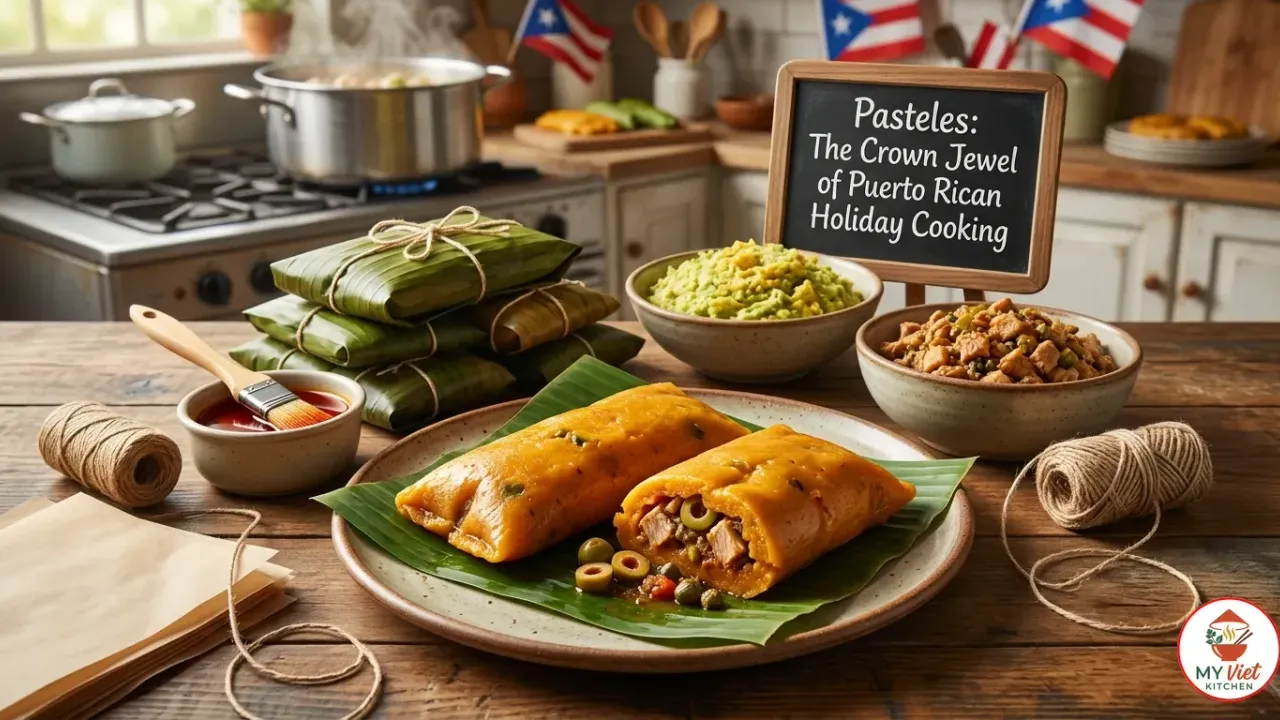
Pasteles are the crown jewel of Puerto Rican holiday cooking. These tender parcels of green banana and root vegetable masa, wrapped around a savory pork filling seasoned with sofrito, olives, and capers, then steamed inside fragrant banana leaves, represent one of the Caribbean’s most extraordinary culinary traditions. Every December, Puerto Rican families gather in kitchens to make pasteles by the dozen. The process is labor-intensive and deeply communal. Indeed, few dishes carry this much cultural weight or deliver this much flavor in a single bite.
Prep Time: 90 minutes | Cook Time: 60 minutes | Servings: 20 pasteles
Difficulty: Hard | Calories: ~310 per serving
What Makes Pasteles Special?
Pasteles occupy a category entirely their own. While the concept of filled dough wrapped in leaves and steamed exists across Latin America, the Puerto Rican version stands apart because of its unique masa. Instead of corn, the dough uses grated green bananas and starchy root vegetables like yautia. This produces a texture that is silky, dense, and slightly sticky. As a result, it clings to the filling in a way that corn-based tamales never could. The masa absorbs the annatto oil during mixing, which turns it a warm golden orange. Consequently, every pastel has a rich color before it even touches the pot.
The filling is equally distinctive. Puerto Rican sofrito, a fragrant blend of peppers, cilantro, garlic, and onion, forms the aromatic backbone. Recaito adds another layer of herbaceous depth. Manzanilla olives and capers introduce briny, tangy notes that cut through the richness of the slow-cooked pork. Together, these flavors create a filling that is simultaneously savory, bright, and deeply satisfying. No single ingredient dominates. Instead, they build upon each other in harmony like instruments in an orchestra.
What truly elevates pasteles is the banana leaf wrapper. During steaming, the leaf imparts a subtle earthy, almost tea-like aroma to the masa. It also creates a natural seal that traps steam and flavor inside the packet. The result is a self-contained parcel of concentrated Puerto Rican flavor. Unwrapping a pastel at the table releases a rush of fragrant steam. That moment is part of the magic. In the end, pasteles are not just food. They are an experience that connects generations of Puerto Rican families through shared labor and shared meals.

Choosing the Right Green Bananas
The green bananas form the foundation of pasteles masa. Selecting the right ones determines whether your masa holds together beautifully or falls apart during cooking. Here is what to look for at the market.
- Firm, bright green bananas (best choice): Choose bananas that are completely green with no yellow spots. Additionally, they should feel rock-hard when squeezed. Green bananas contain the highest concentration of starch, which is essential for a cohesive masa. Because bananas ripen quickly, the starch converts to sugar, making them too soft and sweet for pasteles. Buy them several days before you plan to cook and store them in a cool place to prevent ripening.
- Green plantains (supplemental): Adding one or two green plantains to the masa increases the starch content and gives the dough more body. In fact, plantains are larger and starchier than regular bananas. They contribute a slightly firmer texture. Use them as a supplement alongside green bananas, not as a complete replacement.
- Yautia or malanga (essential): This starchy root vegetable is the secret to the characteristic silky texture of pasteles masa. Yautia breaks down into a smooth, almost gelatinous paste when grated. It binds the green banana shreds together. Without it, however, the masa will taste flat and lack cohesion. Look for yautia at Latin American or Caribbean grocery stores. It resembles a hairy, brown tuber similar to taro root.
Ingredients for Pasteles
For the Masa:
- 5 pounds (2.3kg) green bananas, peeled
- 2 pounds (900g) yautia (taro root), peeled
- 1 green plantain, peeled
- 1 cup (240ml) whole milk
- 1/2 cup (120ml) annatto oil (aceite de achiote)
- 2 teaspoons salt
For the Pork Filling:
- 2 pounds (900g) boneless pork shoulder, cut into small cubes
- 2 tablespoons annatto oil
- 1 cup sofrito
- 1/2 cup recaito
- 1 cup (240ml) tomato sauce
- 1/2 cup manzanilla olives, halved
- 2 tablespoons capers
- 2 packets sazon seasoning
- 1 teaspoon ground cumin
- Salt and pepper to taste
For Wrapping and Assembly:
- 1 package banana leaves, thawed and cleaned
- Kitchen twine or butcher string
- Parchment paper, cut into 12x12 inch squares
Pro tip: Peel the green bananas under running water or with gloves. The sap from green bananas stains hands and sticks to everything. Rubbing your hands with vegetable oil before peeling creates a barrier that prevents staining. Additionally, grate the bananas and yautia as quickly as possible after peeling. Exposure to air causes oxidation, which turns the masa dark and affects its appearance. A squeeze of lime juice into the grated mixture slows this browning significantly.
Step-by-Step Instructions
Step 1: Prepare the Filling
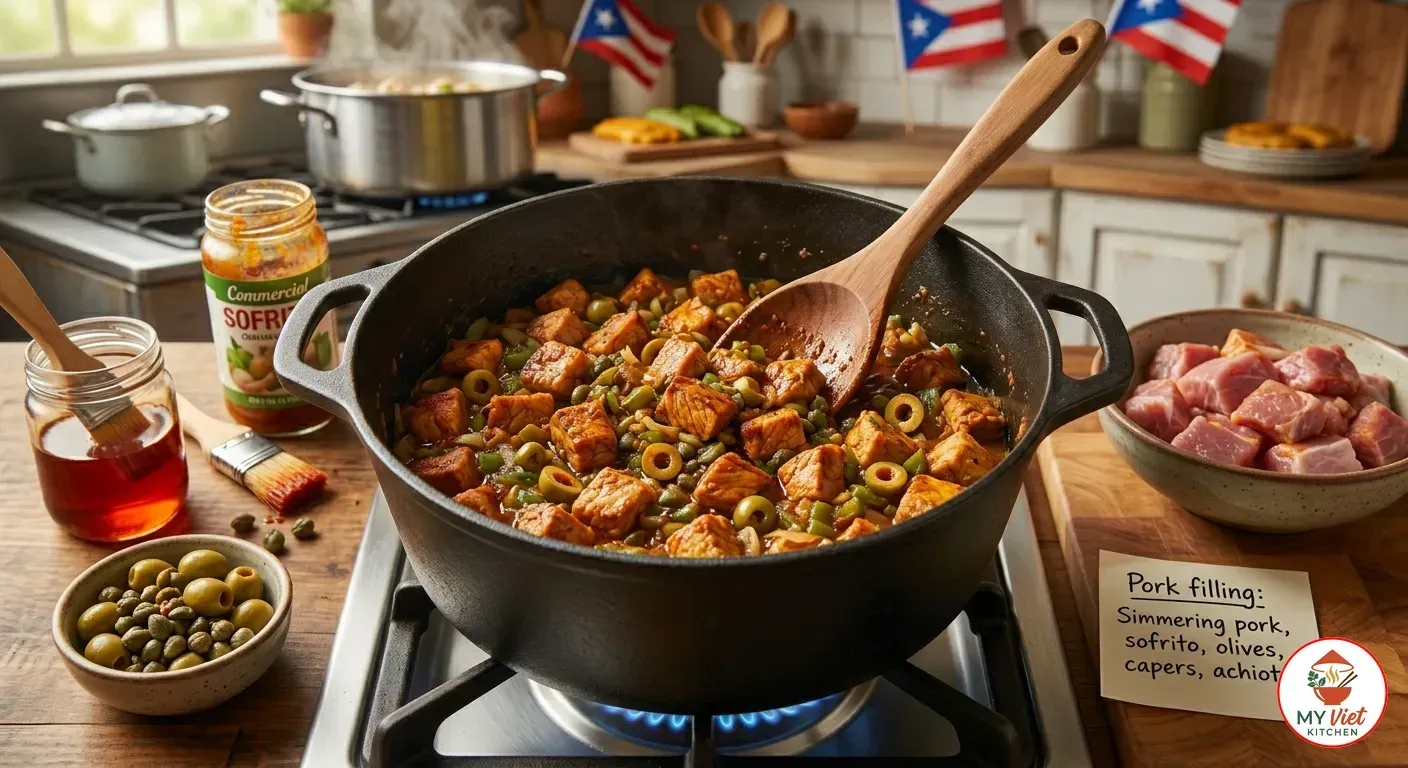
1 Begin with the filling because it needs time to cool before assembly. Cut the pork shoulder into small cubes, roughly half an inch on each side. Season the pork with sazon packets, ground cumin, salt, and pepper. Then toss the cubes until evenly coated. Heat the annatto oil in a large heavy-bottomed pot over medium-high heat. Sear the pork in batches until browned on all sides, about 3 to 4 minutes per batch.
After browning all the pork, add the sofrito and recaito to the same pot. Stir and cook for 3 minutes until fragrant. Pour in the tomato sauce. Add the halved olives and capers. Stir everything together and bring to a gentle simmer. Reduce the heat to medium-low, cover, and cook for 30 to 40 minutes until the pork is fork-tender and the sauce has thickened into a rich, glossy gravy. Most importantly, the filling should be saucy but not watery. Remove from heat and allow it to cool completely. Otherwise, warm filling melts the masa during assembly and causes the pasteles to fall apart.
Step 2: Make the Masa
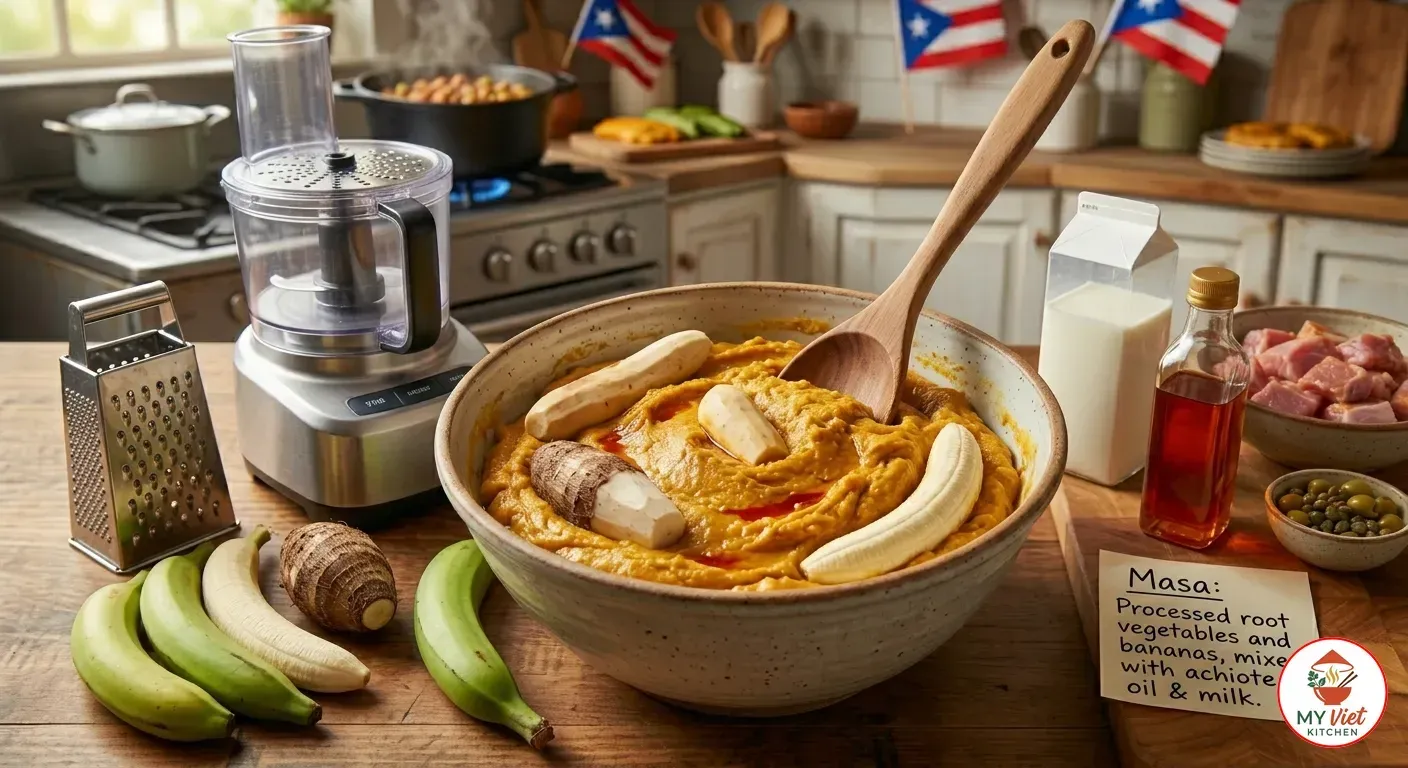
2 Peel all the green bananas, yautia, and plantain. Work quickly to minimize oxidation. Grate them using the finest holes on a box grater, or pulse them in a food processor until the mixture becomes a smooth, thick paste. In comparison, a food processor saves significant time and produces a more uniform texture. Transfer the grated mixture to a very large bowl.
Add the whole milk, annatto oil, and salt to the grated mixture. Mix thoroughly with your hands or a sturdy wooden spoon until the masa is smooth, spreadable, and uniformly golden in color. The consistency should resemble thick pancake batter. If the masa seems too thick, accordingly add milk one tablespoon at a time. If it seems too loose, add more grated banana. The annatto oil is essential here. It provides the signature color and contributes a subtle, earthy flavor that is characteristic of authentic pasteles. Finally, taste the masa and adjust the salt now, before assembling.
Step 3: Prepare the Banana Leaves
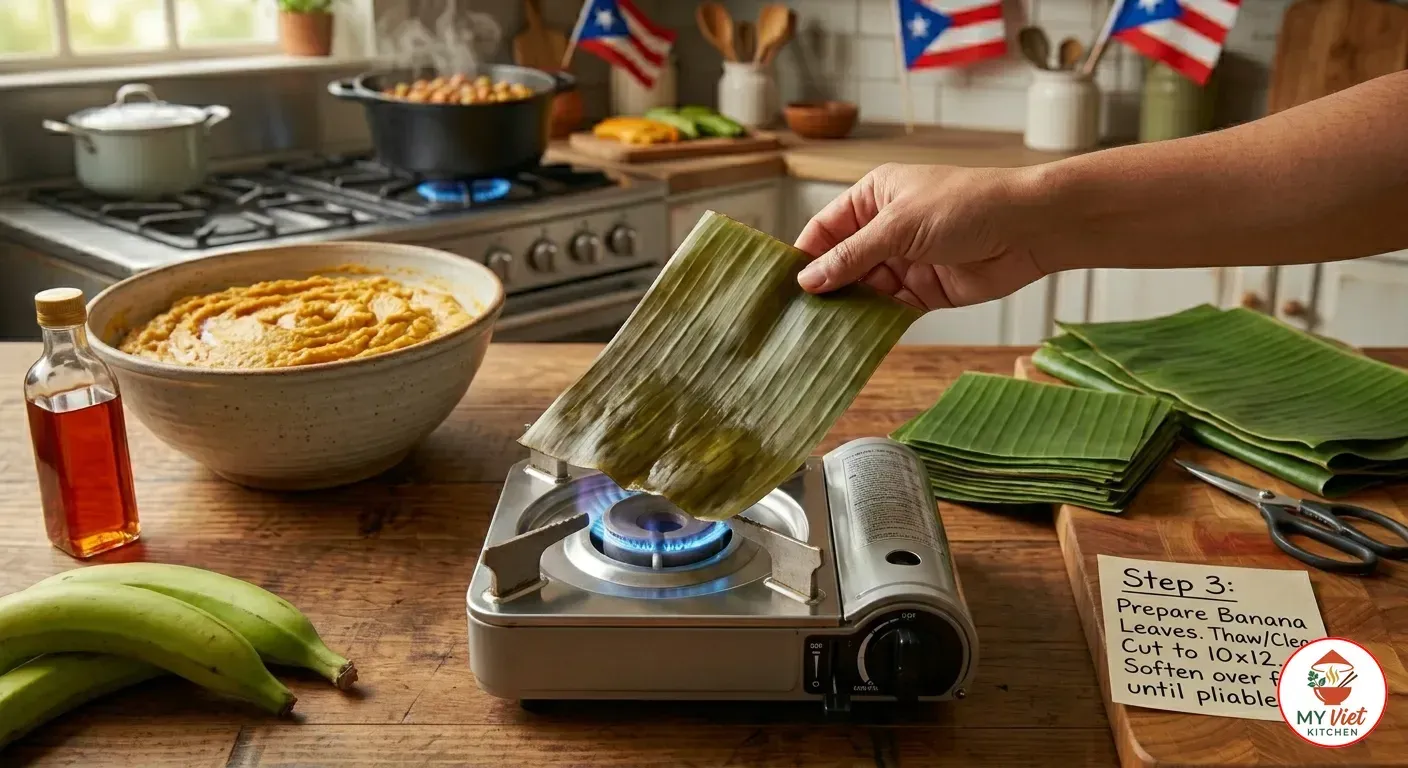
3 Remove the banana leaves from the package and thaw them completely if frozen. Wipe each leaf clean with a damp cloth to remove any dust or residue. Cut them into rectangles roughly 10 by 12 inches. Also, inspect each piece and discard any sections with large holes or tears.
Next, soften the leaves by passing them briefly over an open flame or a hot dry skillet. Hold each leaf over medium heat for just 3 to 5 seconds per side. Consequently, the color will shift from bright green to a deeper olive tone. This step is not optional. Raw banana leaves are stiff and crack when folded, which allows water to leak into the pasteles during boiling. Softened leaves bend smoothly and create a tight seal. Afterwards, stack the prepared leaves and set them aside. Place one sheet of parchment paper under each banana leaf rectangle when you begin assembling.
Step 4: Assemble the Pasteles
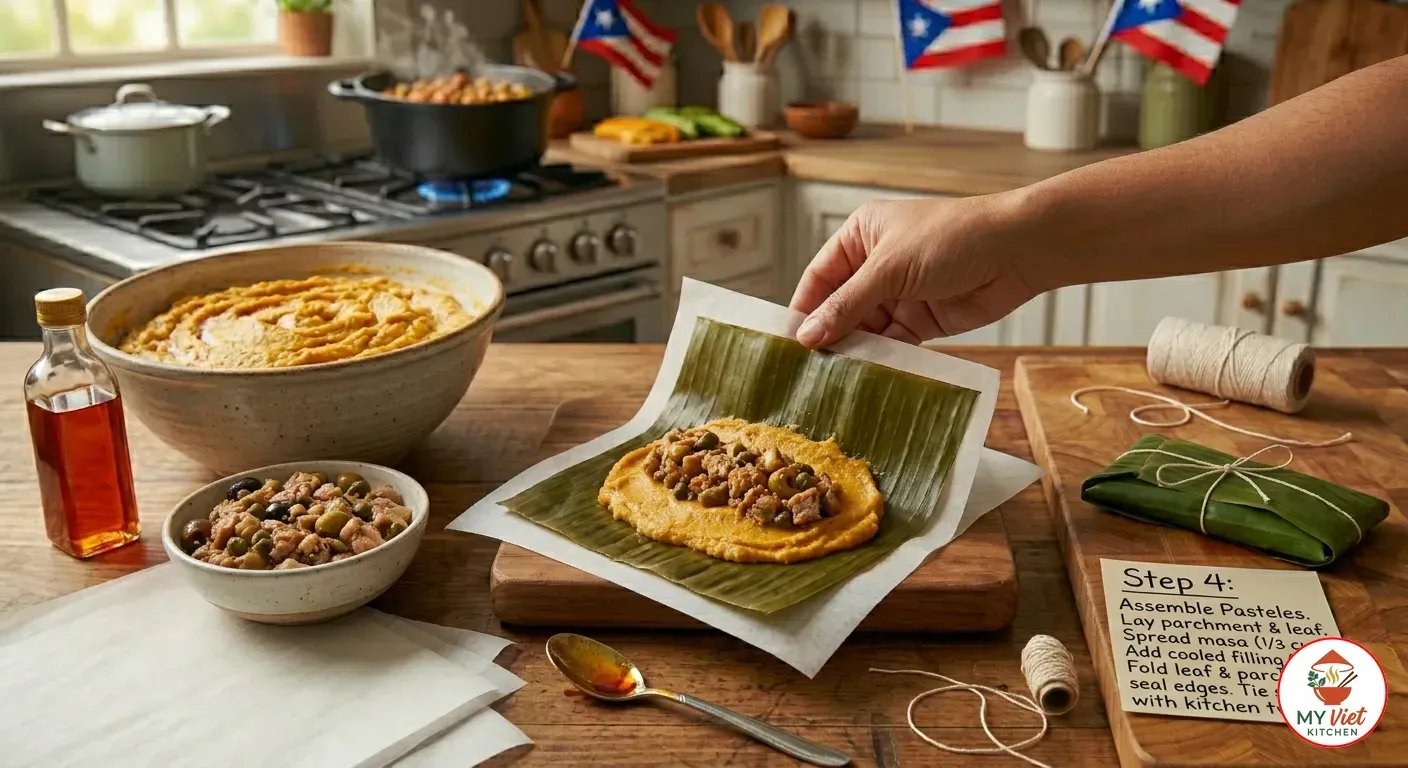
4 First, set up an assembly station with the masa, filling, banana leaves, parchment squares, and kitchen twine within easy reach. Place one parchment square on the work surface. Lay a banana leaf rectangle on top, with the smoother side facing up. Spoon roughly one-third cup of masa onto the center of the leaf.
Using the back of a spoon dipped in annatto oil, spread the masa into an oval shape about 6 inches long and 4 inches wide. Also, keep the layer roughly a quarter inch thick. Place 2 tablespoons of the cooled pork filling in the center of the masa oval. Fold the banana leaf and parchment in half lengthwise so the masa edges meet and enclose the filling. Press gently to seal. Subsequently, fold the top and bottom ends inward to create a compact rectangular packet. Tie securely with kitchen twine in both directions. The packet should feel snug and firm. Repeat until all the masa and filling are used.
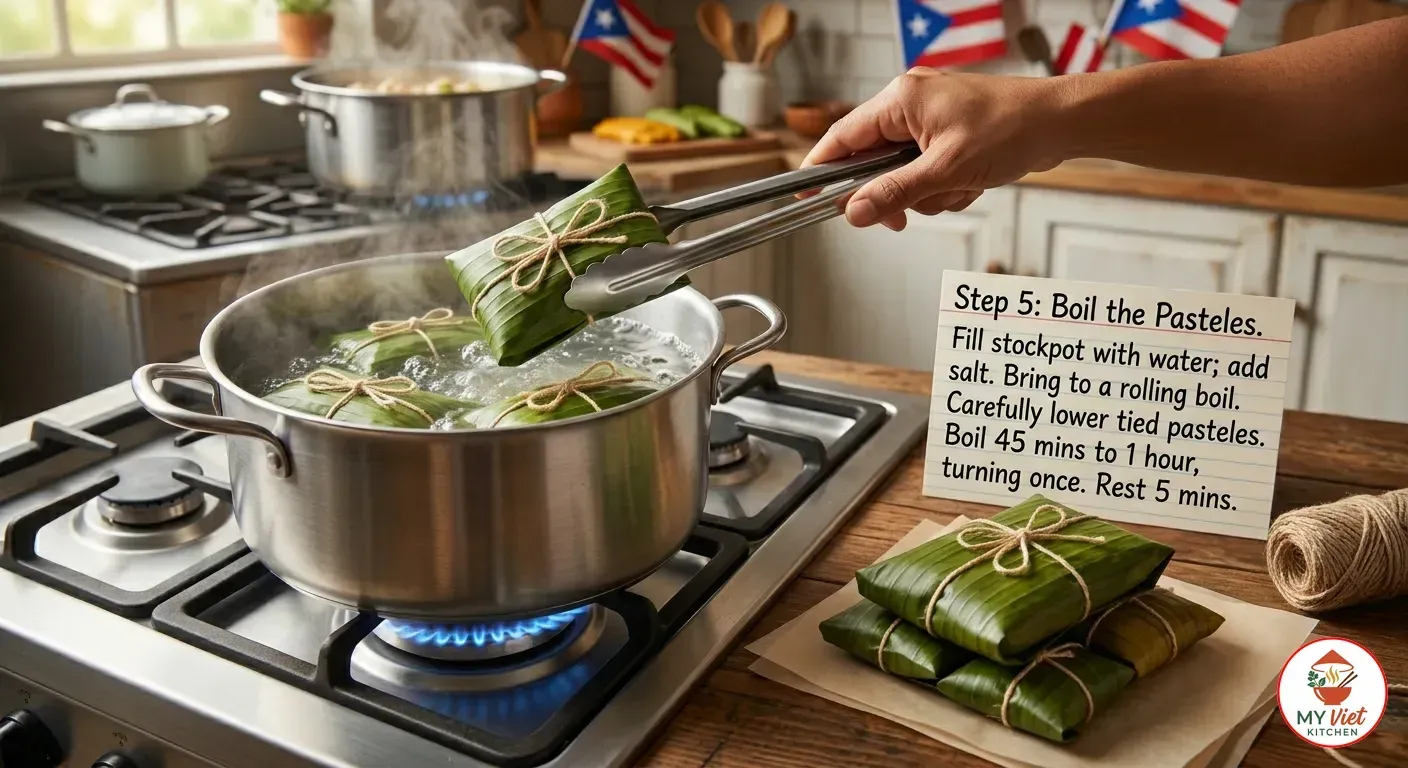
Step 5: Boil the Pasteles
5 Fill a very large stockpot with water and add a generous tablespoon of salt. Bring it to a rolling boil over high heat. Carefully lower the pasteles into the boiling water. Do not overcrowd the pot. Instead, cook in batches if necessary, leaving enough space for the pasteles to move freely.
Boil the pasteles for 45 minutes to 1 hour. Furthermore, turn them once halfway through cooking to ensure even heat distribution. The masa needs sustained high heat to set properly. After cooking, remove the pasteles from the water with tongs. Let them rest on a wire rack for 5 minutes before serving. Specifically, this brief rest allows the masa to firm up slightly, making them easier to unwrap. Cut the twine, carefully open the banana leaf, and slide the pastel onto a plate. The masa should pull away from the leaf cleanly. Serve immediately while the pasteles are still hot and fragrant.
Expert Tips for Perfect Pasteles
Use Annatto Oil Generously
Annatto oil does more than color the masa. In addition, it adds a subtle warmth and earthiness that is central to the flavor profile of authentic pasteles. The oil also helps the masa spread smoothly on the banana leaf and prevents it from sticking. Dip your spoon in annatto oil before spreading each portion of masa. As a consequence, this small step speeds up assembly and produces a more uniform layer. Moreover, the oil creates a slight barrier between the masa and the leaf, which makes unwrapping easier after cooking.
Grate the Vegetables as Finely as Possible
The texture of the masa depends entirely on how finely you grate the green bananas and yautia. For that reason, coarse shreds produce a lumpy, grainy masa that does not hold together well. Aim for the consistency of a thick, smooth paste. A food processor fitted with the finest grating disc works best. If using a box grater, use the smallest holes and press firmly. In like manner, some experienced cooks run the grated mixture through the food processor a second time to achieve an even smoother result. The extra effort pays off in a dramatically better texture.
Cool the Filling Completely Before Assembly
This is perhaps the most commonly overlooked step. Warm or hot filling melts the raw masa on contact. The heat breaks down the starch structure before it has a chance to set during boiling. Therefore, the result is pasteles that are soggy, mushy, and fall apart when unwrapped. Always let the filling cool to room temperature. For faster cooling, spread it on a sheet pan in a thin layer. Alternatively, you can refrigerate it for 30 minutes before assembling. Cold filling produces the cleanest, firmest pasteles every time.
Pasteles Compared to Other Wrapped Latin American Dishes
Wrapped and steamed dishes appear throughout Latin American cuisine. Each culture uses local ingredients to create its own interpretation. The following comparison highlights how pasteles differ from related dishes across the region.
| Dish | Country | Dough Base | Wrapper |
|---|---|---|---|
| Pasteles | Puerto Rico | Green banana and yautia | Banana leaves |
| Tamales | Mexico | Corn masa harina | Corn husks |
| Hallacas | Venezuela | Corn masa with broth | Banana leaves |
| Nacatamal | Nicaragua | Corn masa with lard | Banana leaves |
| Humitas | Ecuador/Chile | Fresh ground corn | Corn husks |
Serving Suggestions
Pasteles are traditionally served as part of a larger Puerto Rican holiday spread. However, they also stand beautifully on their own as a satisfying main course any time of year. The right accompaniments enhance the experience without competing with the complex flavors inside each parcel.
Classic Accompaniments:
- Arroz con gandules: Rice cooked with pigeon peas and sofrito is the quintessential Puerto Rican side dish for pasteles. The seasoned rice adds another dimension of flavor and provides a starchy complement to the masa. This pairing is virtually mandatory at Christmas dinner.
- Pique sauce (hot sauce): A homemade Puerto Rican hot sauce made with vinegar, peppers, and garlic adds a sharp, fiery kick. The acidity cuts through the richness of the pork filling and the density of the masa. Drizzle it sparingly over the unwrapped pastel.
- Ensalada de bacalao: A cold salad of salt cod with avocado, tomato, and onion dressed in olive oil provides a refreshing contrast. The cool, briny salad balances the warm, rich pasteles beautifully.
- Tostones: Twice-fried green plantain discs add a salty crunch that complements the soft, steamed masa. Serve them alongside the pasteles for textural contrast.
Beverage Pairings:
- Coquito: This Puerto Rican coconut eggnog made with rum, coconut milk, and cinnamon is the traditional holiday drink served alongside pasteles. Its creamy sweetness provides a rich counterpoint to the savory parcels. Every family has a closely guarded coquito recipe.
- Medalla Light beer: Puerto Rico’s favorite lager is crisp, light, and refreshing. The carbonation cleanses the palate between bites of the dense, flavorful pasteles. It is the casual choice for family gatherings.
- Cafe con leche: Strong Puerto Rican coffee with steamed milk pairs surprisingly well with pasteles, especially for breakfast the morning after a holiday celebration. The bitterness of the coffee complements the savory filling.
- Malta India: This non-alcoholic malt beverage is a beloved Puerto Rican staple. Its sweet, malty flavor and light carbonation pair naturally with the starchy masa and seasoned meat.
Storage and Reheating
Refrigerator: Store cooked pasteles in their banana leaf wrappers in an airtight container for up to 4 days. The wrappers help retain moisture and prevent the masa from drying out. The flavor develops further overnight as the spices in the filling continue to permeate the masa. Many people find that pasteles taste even better the next day.
Freezer: Pasteles are one of the best foods for freezing. Wrap assembled or cooked pasteles individually and store them in freezer bags for up to 3 months. Remove as much air as possible from the bags to prevent freezer burn. To cook frozen raw pasteles, add them directly to boiling water without thawing. Increase the cooking time by 15 to 20 minutes. For frozen cooked pasteles, boil for 20 minutes or steam until heated through.
Reheating: The best method for reheating pasteles is boiling them in their wrappers for 15 to 20 minutes. This restores the steamed texture perfectly. Alternatively, unwrap the pastel and heat it in a skillet with a small amount of oil over medium heat. This method crisps the outside of the masa while keeping the interior soft. Avoid microwaving, as it tends to make the masa rubbery and unevenly hot.
Common Mistakes to Avoid
1. Using Ripe Bananas Instead of Green
Ripe bananas contain far too much sugar and not enough starch. The masa will taste sweet, refuse to hold its shape, and turn into a gummy mess during boiling. In short, only completely green, rock-hard bananas produce the correct starchy, savory masa. If your bananas have begun to show yellow spots, they are too ripe for pasteles. Buy them several days early and refrigerate if needed to slow ripening.
2. Wrapping Too Loosely
Above all, loose wrapping allows boiling water to seep into the pasteles. The water dilutes the masa, washes out the seasoning, and produces a waterlogged, bland result. Every pastel must be wrapped tightly and tied securely with kitchen twine. After folding, press the packet gently to remove air pockets. The twine should be snug but not so tight that it cuts through the banana leaf. A well-wrapped pastel feels firm and compact in your hand.
3. Spreading the Masa Too Thick
An overly thick layer of masa creates pasteles that are doughy and stodgy. As a result, the center takes too long to cook, while the edges become overcooked and tough. Aim for a uniform quarter-inch thickness. Spread the masa evenly with the back of an oiled spoon. Consequently, thinner masa cooks more evenly, sets faster, and produces a better ratio of filling to dough. The masa should complement the filling, not overwhelm it.
4. Not Softening the Banana Leaves
Raw banana leaves are brittle and will crack along the central vein when folded. Unfortunately, these cracks allow water to penetrate the pasteles during boiling. A few seconds over heat transforms the leaves from stiff and fragile to soft and flexible. Do not skip this step. Even so, the brief heat treatment improves their folding properties dramatically and creates a more reliable seal.
Frequently Asked Questions
What is the difference between pasteles and tamales?
Pasteles and tamales share the basic concept of filled dough steamed in leaves, but the ingredients differ significantly. Tamales use corn-based masa harina, while pasteles use a dough made from grated green bananas and root vegetables like yautia. Tamales are typically wrapped in corn husks, whereas pasteles use banana leaves. The texture of pasteles is denser and silkier compared to the lighter, grainier quality of tamales. Both are deeply rooted in their respective cultures, with pasteles belonging to Puerto Rican tradition and tamales to Mexican and Central American cuisine.
Can I make pasteles ahead of time and freeze them?
Yes, and in fact most families do exactly that. Pasteles freeze beautifully for up to 3 months. You can freeze them either raw or cooked. For raw pasteles, freeze them in a single layer on a baking sheet first, then transfer to freezer bags. Cook from frozen by adding 15 to 20 extra minutes of boiling time. Cooked pasteles also reheat well from frozen. Boil them for 20 minutes or until heated through. Making large batches and freezing is the traditional approach during the holiday season.
What can I use instead of banana leaves for pasteles?
Aluminum foil is the most practical substitute. Cut it into squares and line each piece with parchment paper to prevent the masa from sticking. The pasteles will cook identically, though you lose the subtle earthy aroma that banana leaves contribute. Some cooks use corn husks as an alternative, but this changes the dish’s character. Before substituting, check Latin American and Asian grocery stores for frozen banana leaves. They are widely available and inexpensive. A single package contains enough leaves for several batches of pasteles.
Why are my pasteles falling apart when I unwrap them?
Three common issues cause this problem. First, the masa may be too wet or thin. It should be thick and spreadable, not pourable. Add more grated banana or yautia to thicken it. Second, the cooking time may be insufficient. Pasteles need a full 45 minutes to 1 hour of boiling for the starch to gelatinize and set. Third, loose wrapping allows water to seep in and dissolve the masa. Ensure each packet is folded tightly and tied securely before boiling. Address all three factors, and your pasteles will hold their shape perfectly.
What is annatto oil and how do I make it?
Annatto oil is cooking oil infused with annatto seeds, known as aceite de achiote in Spanish. It provides the signature golden-orange color and a mild, earthy flavor. To make it at home, heat one cup of vegetable oil over medium-low heat. Add two tablespoons of annatto seeds and stir for 3 to 5 minutes until the oil turns deep reddish-orange. Strain out the seeds and cool completely. Store it in a sealed jar at room temperature for up to a month. Pre-made annatto oil is also available at Latin grocery stores if you prefer convenience.
Can I make pasteles with chicken or other fillings?
Absolutely. Chicken pasteles are extremely popular in Puerto Rico. Use boneless chicken thighs for the most flavor and moisture. Season and cook the filling the same way as the pork version. Some families make a combination of pork and chicken. Vegetarian pasteles filled with seasoned chickpeas or sauteed vegetables with sofrito are becoming increasingly common. The key is to keep any filling well-seasoned and slightly saucy. The mild masa needs a flavorful, moist filling to create the right balance in each bite.
Variations and Adaptations
Chicken Pasteles:
Replace the pork shoulder with boneless, skinless chicken thighs. Season and cook the filling identically. Chicken thighs stay moist and tender during the simmering process. They shred easily, which distributes the meat more evenly throughout each pastel. The flavor is lighter than pork but still deeply savory when combined with sofrito, olives, and capers. Chicken pasteles are a popular choice for those who prefer a leaner option without sacrificing the traditional flavor profile.
Pasteles de Yuca:
Some regions substitute yuca (cassava) for green bananas in the masa. Yuca produces an even starchier, chewier texture. Peel and grate the yuca finely, then mix with annatto oil, milk, and salt just as you would with green banana masa. The resulting pasteles have a slightly different mouthfeel that many people love. This variation works especially well for those who find the green banana flavor too pronounced.
Pasteles en Hoja de Platano con Cerdo y Garbanzos:
This variation adds chickpeas to the pork filling. Cook the chickpeas until tender and fold them into the finished filling. The chickpeas add a nutty flavor and a pleasant textural contrast against the soft masa and tender pork. This heartier version is popular for large family gatherings where the pasteles need to stretch further.
Vegetarian Pasteles:
Create a filling using sauteed mushrooms, black beans, roasted peppers, and sofrito. Season generously with sazon and cumin. Add olives and capers for the briny notes that define the traditional version. A tablespoon of soy sauce or tamari boosts the umami depth. The masa remains unchanged. This adaptation proves that the wrapping and masa technique alone carry enormous flavor, even without meat.
The Cultural Significance of Pasteles
Pasteles are far more than a recipe in Puerto Rican culture. They are a ritual that binds families together across generations. Every December, the tradition of making pasteles becomes a communal event. Grandmothers, parents, and children gather in the kitchen. Each person takes a role in the process. The grandmothers grate the bananas. An aunt tends the filling on the stove. A cousin spreads the masa on the leaves. The children learn to wrap and tie. This assembly-line approach transforms a labor-intensive recipe into a celebration of togetherness.
Notably, the recipes pass orally from generation to generation. Measurements are rarely exact. “A handful of this” and “enough of that” replace cups and tablespoons. Every family’s pasteles taste slightly different because of these personal touches. According to Taste Atlas, pasteles rank among the most iconic dishes of Puerto Rican cuisine. Moreover, the tradition extends far beyond the island itself. In New York, Chicago, Orlando, and every city with a significant Puerto Rican diaspora, families continue making pasteles each holiday season. The dish becomes a way of maintaining cultural identity, honoring ancestors, and teaching younger generations the flavors of home. For many Puerto Ricans living far from the island, the annual pasteles-making session is the most meaningful food tradition of the year.
Conclusion
Making pasteles is an investment of time, effort, and love. There is no shortcut to the real thing. Yet, the reward is truly extraordinary. Each unwrapped parcel delivers a combination of textures and flavors that no other dish can replicate. The silky, golden masa, the savory, olive-studded pork, the earthy whisper of the banana leaf — together they create something that transcends ordinary cooking. Start with this recipe, make a big batch, and freeze the rest. You will have a taste of Puerto Rico waiting in your freezer whenever you need it.
Craving more Caribbean and Latin American flavors? Explore our collection of Latin American dishes for recipes like feijoada, classic American comfort food, and more global favorites. If you try this pasteles recipe, leave a rating and share your experience in the comments below.