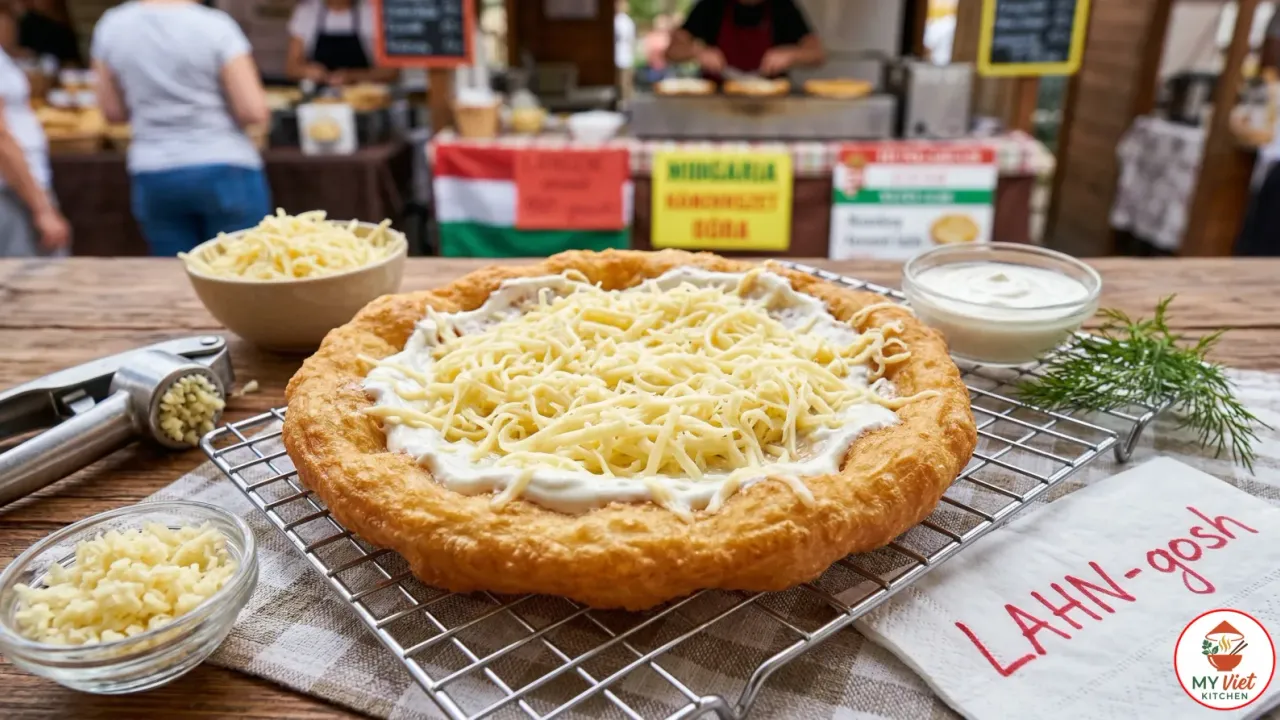
Langos is the iconic Hungarian deep-fried bread that delivers a crispy, golden shell around a soft, pillowy center, and this recipe shows you how to make it at home with a simple yeast dough and a handful of pantry staples. Pronounced LAHN-gosh, this beloved street food has been a staple of Hungarian markets and festivals for generations. This langos recipe follows the traditional approach that Budapest street vendors use every day. Whether you top it with the classic garlic sour cream and cheese or go for something more creative, every bite gives you the satisfying crunch and tender chew that makes langos one of the greatest fried breads in the world.
Prep Time: 90 minutes (including rise) | Cook Time: 20 minutes | Servings: 8
Difficulty: Easy | Calories: ~320 per serving
What Makes Langos Special?
Langos is not just fried bread. It is the soul of Hungarian street food culture, sold from market stalls, beach kiosks around Lake Balaton, and festival stands across the entire country. Walk through any Hungarian market in the morning, and the smell of hot oil and yeast dough pulls you straight to the langos vendor. Customers line up with visible anticipation, because nothing else delivers the same combination of crunch, chew, and rich toppings in a single handheld package.
So what sets langos apart from other fried breads around the world? First, the dough uses milk and butter alongside the standard flour and yeast. This enriched dough creates a tender, almost brioche-like interior that contrasts sharply with the crispy fried shell. Second, the shaping matters enormously. Hungarian cooks stretch the center thinner than the edges, so the middle puffs up during frying while the rim stays dense and chewy. As a result, you get two distinct textures in every single piece.
Moreover, the topping tradition elevates langos well beyond a basic fried dough. The classic combination of garlic-rubbed sour cream and freshly grated cheese melts into the hot surface and turns the bread into something far more satisfying. Because the toppings go on while the langos is still steaming hot, the cheese softens and the garlic cream soaks slightly into the crispy top layer. In the end, the line between bread and topping blurs into one rich, harmonious bite.

Choosing the Right Flour for Langos
The flour you use directly affects the texture of your langos. Hungarian cooks have strong opinions about this, and the choice depends on whether you want a chewier or lighter result. Here are the best options for homemade langos.
- All-purpose flour (best choice for home cooks): This gives you a balanced dough that fries up crispy on the outside and tender inside. All-purpose flour has enough gluten to create structure without making the bread too chewy or tough. It is the most reliable option for consistent results every time you fry.
- Bread flour: The higher protein content produces a chewier, more structured langos with a slightly thicker crust. If you like a more substantial, bready texture with extra chew, bread flour is your choice. However, the dough will be stiffer and harder to stretch thin.
- Half potato flour blend: Some traditional recipes call for adding mashed potato to the dough. The potato starch creates an especially soft, moist interior that stays tender longer. Replace one cup of flour with one cup of riced or mashed potato for this variation. This is how many older Hungarian recipes were made before wheat flour was cheap and plentiful.
Ingredients for Langos
Main Dough Ingredients:
- 3 cups all-purpose flour (375 grams)
- 1 teaspoon salt
- 1 teaspoon sugar
- 2 1/4 teaspoons instant yeast (one standard packet)
- 1 cup warm milk at 110 degrees Fahrenheit (240 ml)
- 2 tablespoons butter, melted
- 1/4 cup warm water (60 ml)
For Frying:
- Vegetable oil or sunflower oil for deep frying (about 4 cups)
For the Classic Topping:
- 1 cup sour cream (full-fat for best results)
- 3 cloves garlic, minced or pressed through a garlic press
- 1 1/2 cups shredded cheese (Emmental, mozzarella, or a mix)
- Pinch of salt for the garlic sour cream
Pro tip: Use warm milk instead of hot milk when mixing the dough. Milk above 130 degrees Fahrenheit kills the yeast, which means the dough will not rise. Test the temperature with your finger. It should feel comfortably warm, like bathwater, not hot. This small detail makes the difference between puffy, light langos and flat, dense discs.
Step-by-Step Instructions
Step 1: Make the Dough
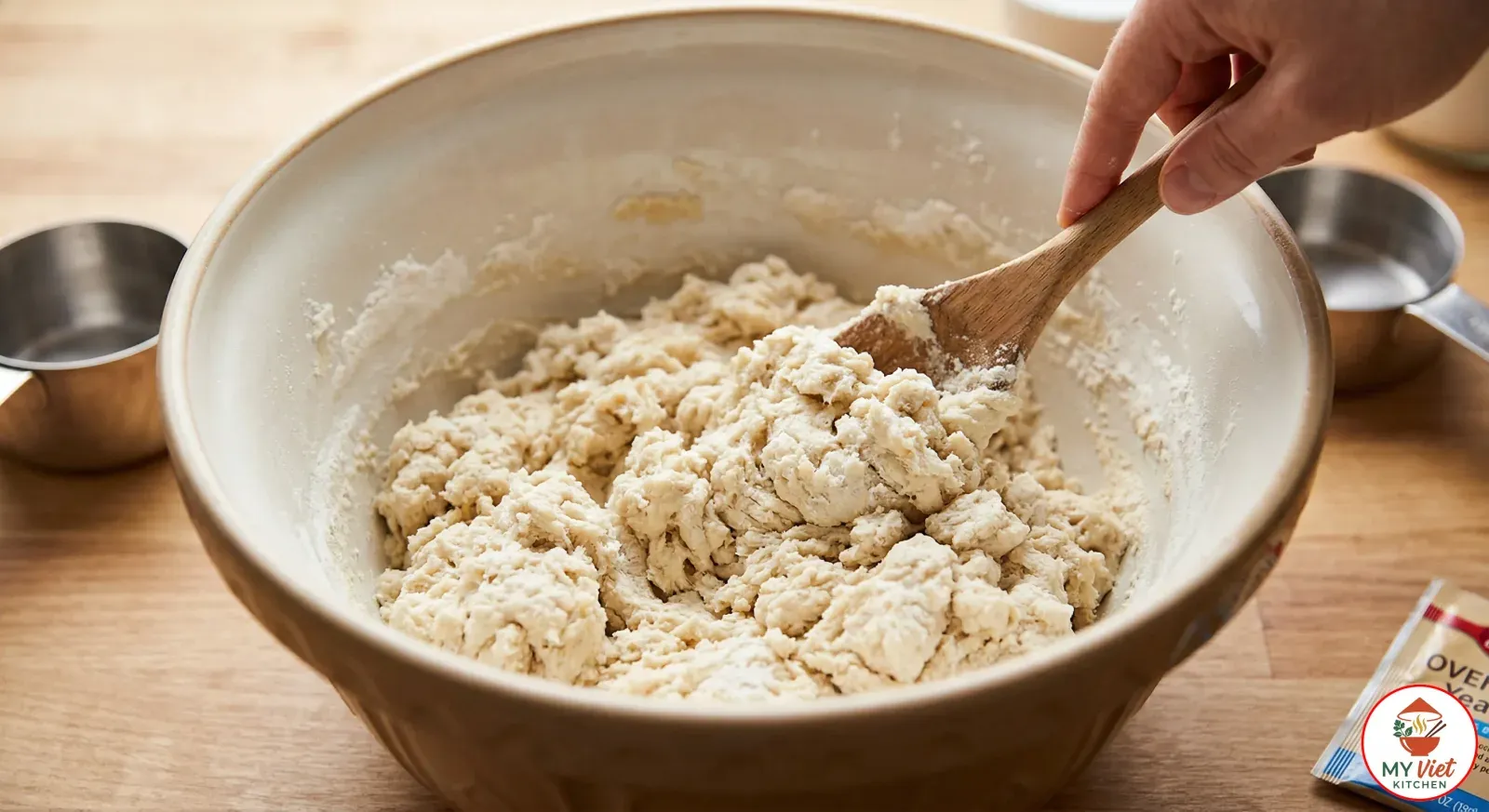
1 First, combine the flour, salt, sugar, and instant yeast in a large mixing bowl. Stir them together so the yeast distributes evenly through the flour. Then add the warm milk, melted butter, and warm water all at once. Mix with a wooden spoon until a shaggy, rough dough forms and no dry flour remains visible.
Turn the dough out onto a lightly floured surface and knead it for 8 to 10 minutes. The dough should transform from sticky and rough to smooth, elastic, and slightly tacky. You will know it is ready when you press a finger into it and the dough springs back slowly. Then place it in a lightly oiled bowl, cover with plastic wrap or a damp towel, and let it rise in a warm spot for 60 minutes until it doubles in size. The rise time is what builds the air pockets that make langos puffy and light when fried.
Step 2: Shape the Langos Rounds
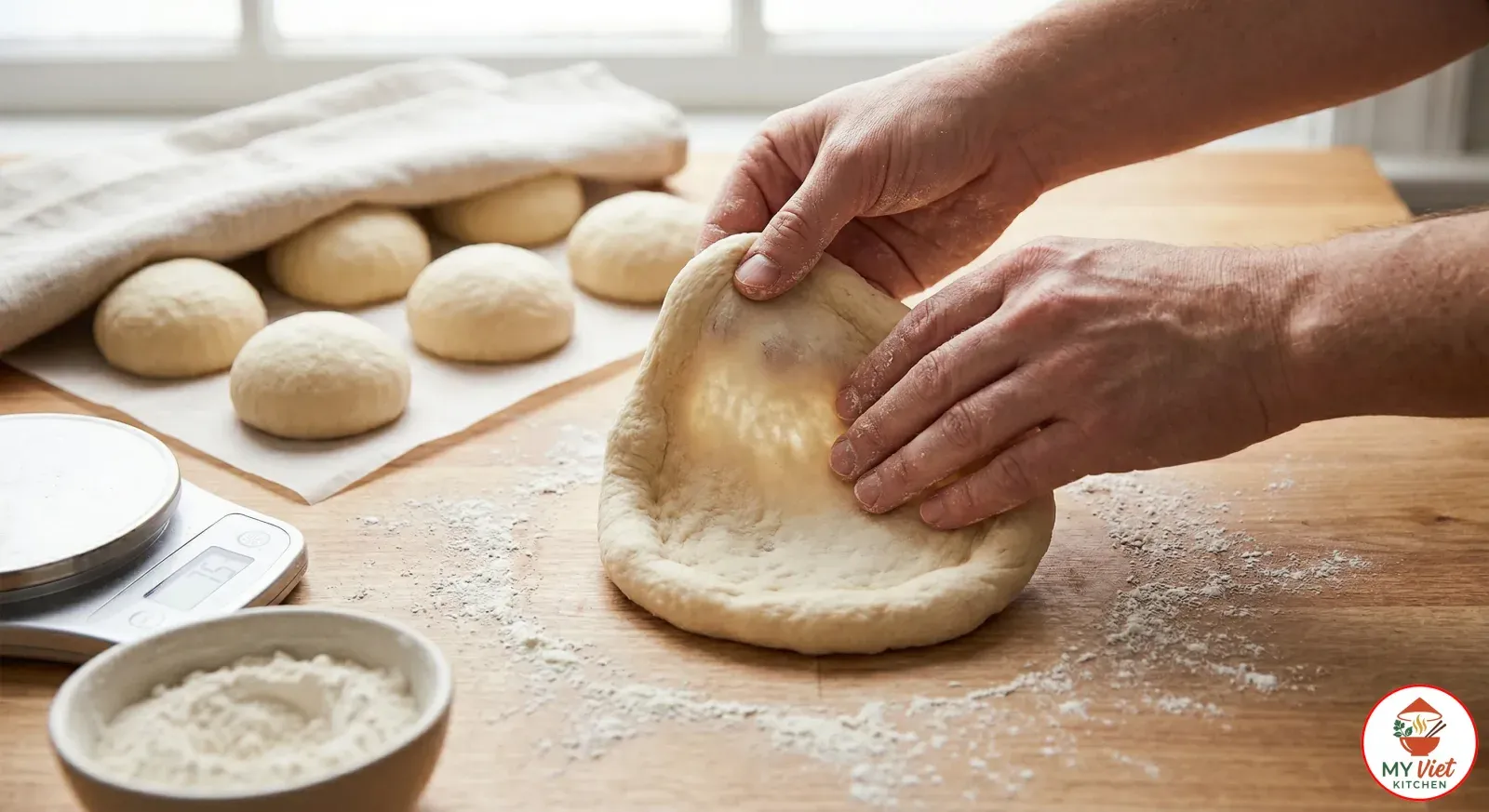
2 Once the dough has doubled, punch it down gently to release the large gas bubbles. Then turn it out onto a floured surface and divide it into 8 equal pieces. Each piece should weigh about 75 grams. Roll each piece into a ball, then cover the balls with a towel and let them rest for 10 minutes. This brief rest relaxes the gluten, which makes the dough much easier to stretch.
Take one ball and flatten it with your palms on the floured surface. Then stretch and press it into a round disc about 6 to 7 inches across and roughly a quarter inch thick. Here is the key technique: make the center slightly thinner than the edges. The thin center puffs up dramatically in the hot oil, while the thicker rim stays dense and chewy. This contrast is what gives authentic langos its signature texture. If the dough springs back stubbornly, let it rest another minute before stretching again.
Step 3: Heat the Oil to the Right Temperature
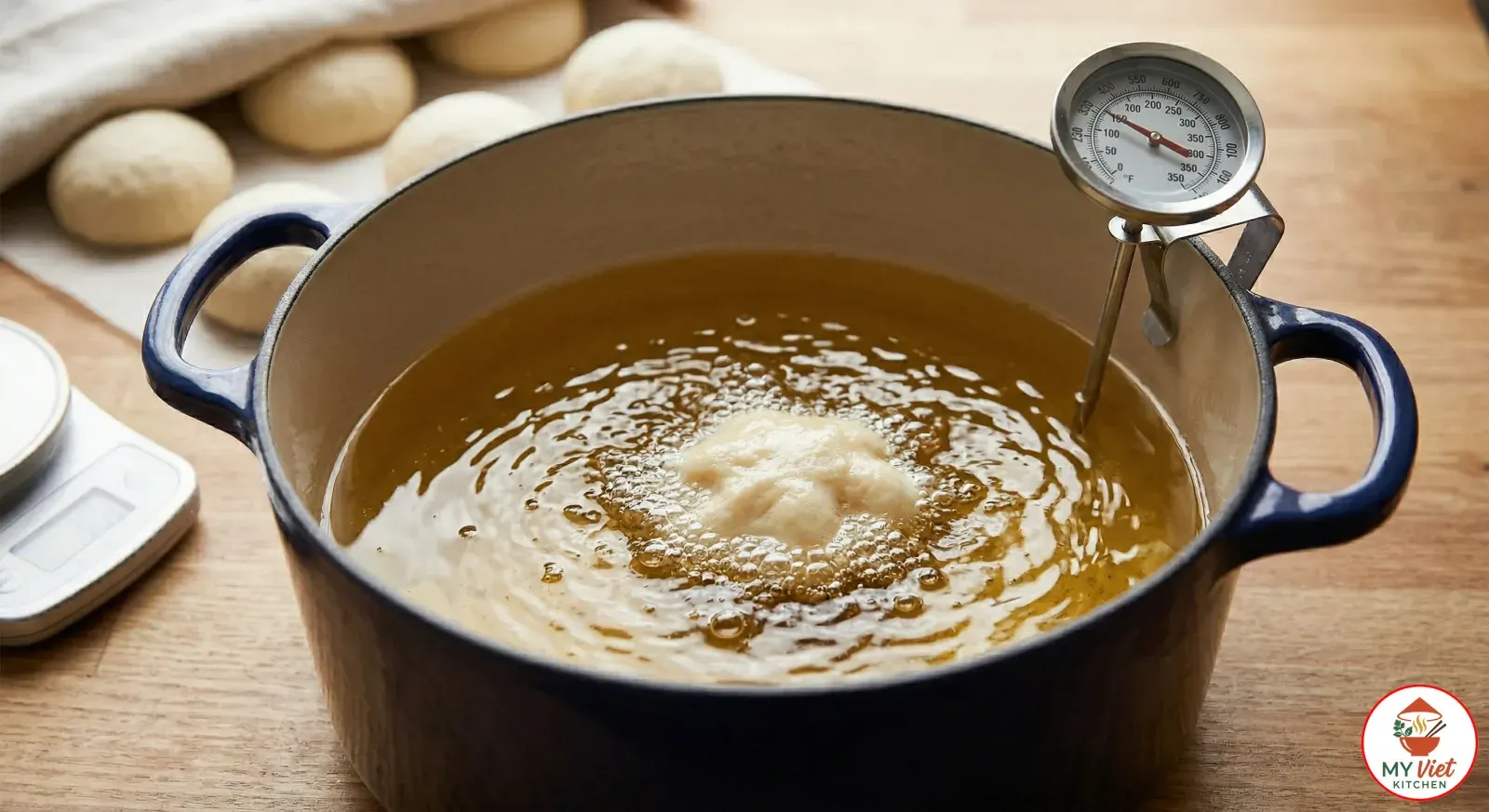
3 Pour vegetable oil into a large, deep skillet or Dutch oven to a depth of about 2 inches. Heat the oil over medium-high heat until it reaches 350 degrees Fahrenheit. Use a deep-fry thermometer or candy thermometer to monitor the temperature accurately. This step requires patience, because rushing it leads to uneven frying.
The temperature of the oil controls everything about the final result. If the oil is too hot, the outside burns dark brown while the inside stays raw and doughy. If the oil is too cool, the dough sits in the fat for too long and absorbs it like a sponge. At 350 degrees, the surface of the langos seals almost instantly, which traps steam inside and creates that characteristic puff. To test without a thermometer, drop a small piece of dough into the oil. It should sizzle immediately and rise to the surface within a few seconds.
Step 4: Fry Until Deep Golden Brown
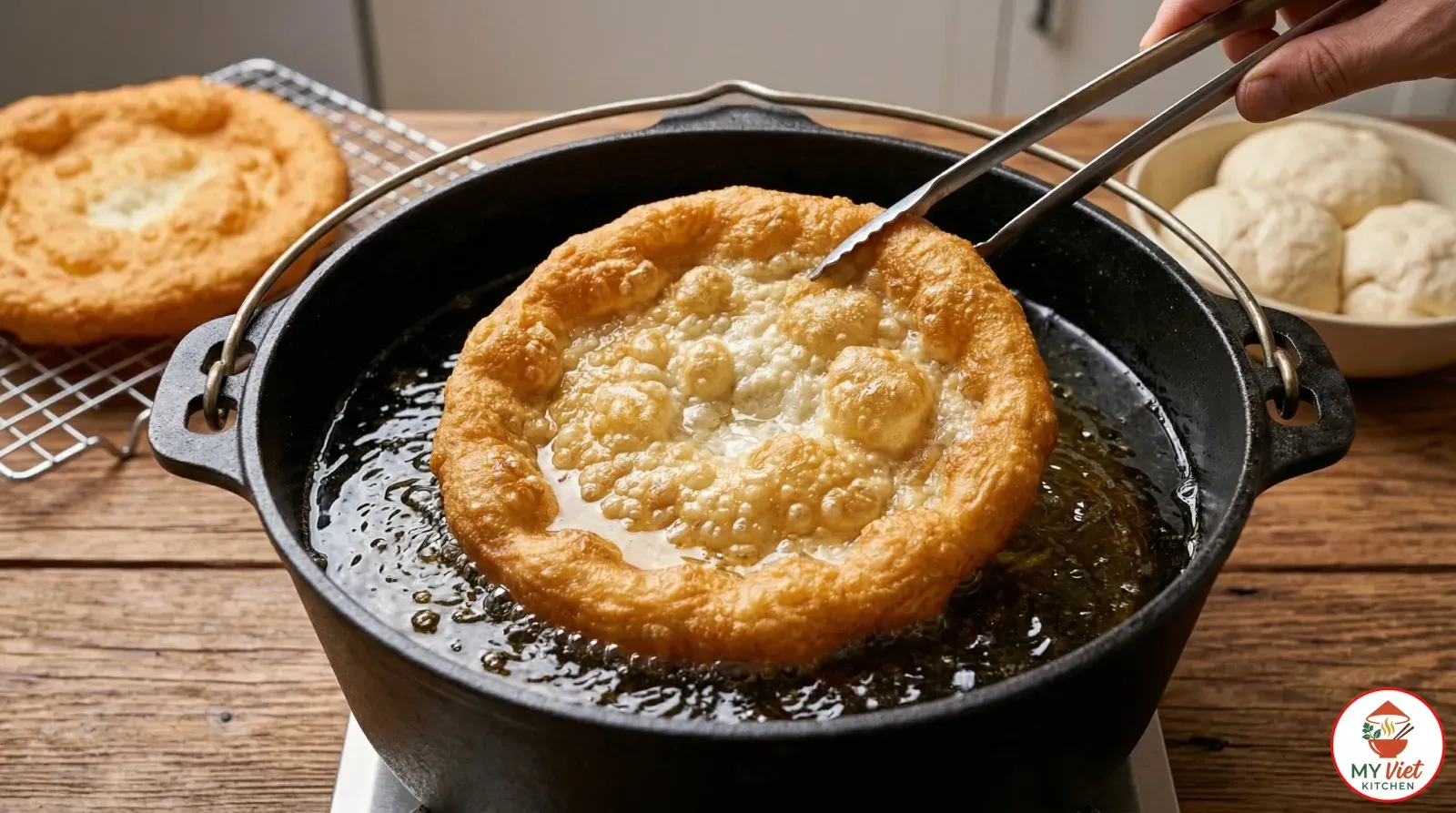
4 Carefully slide one shaped dough disc into the hot oil. The langos will sink briefly, then float to the surface as it puffs with steam. Fry for 2 to 3 minutes on the first side until the bottom turns deep golden brown. Then use tongs or a large slotted spoon to flip it gently. Fry the second side for another 2 minutes until equally golden.
Transfer the fried langos to a wire rack set over a sheet pan. A wire rack is better than paper towels because it allows air to circulate under the bread, so the bottom stays crispy instead of steaming and turning soft. Fry only one or two pieces at a time, depending on the size of your pan. Adding too many pieces at once drops the oil temperature and leads to greasy, heavy results. After each batch, let the oil return to 350 degrees before adding the next round.
Step 5: Top and Serve Immediately
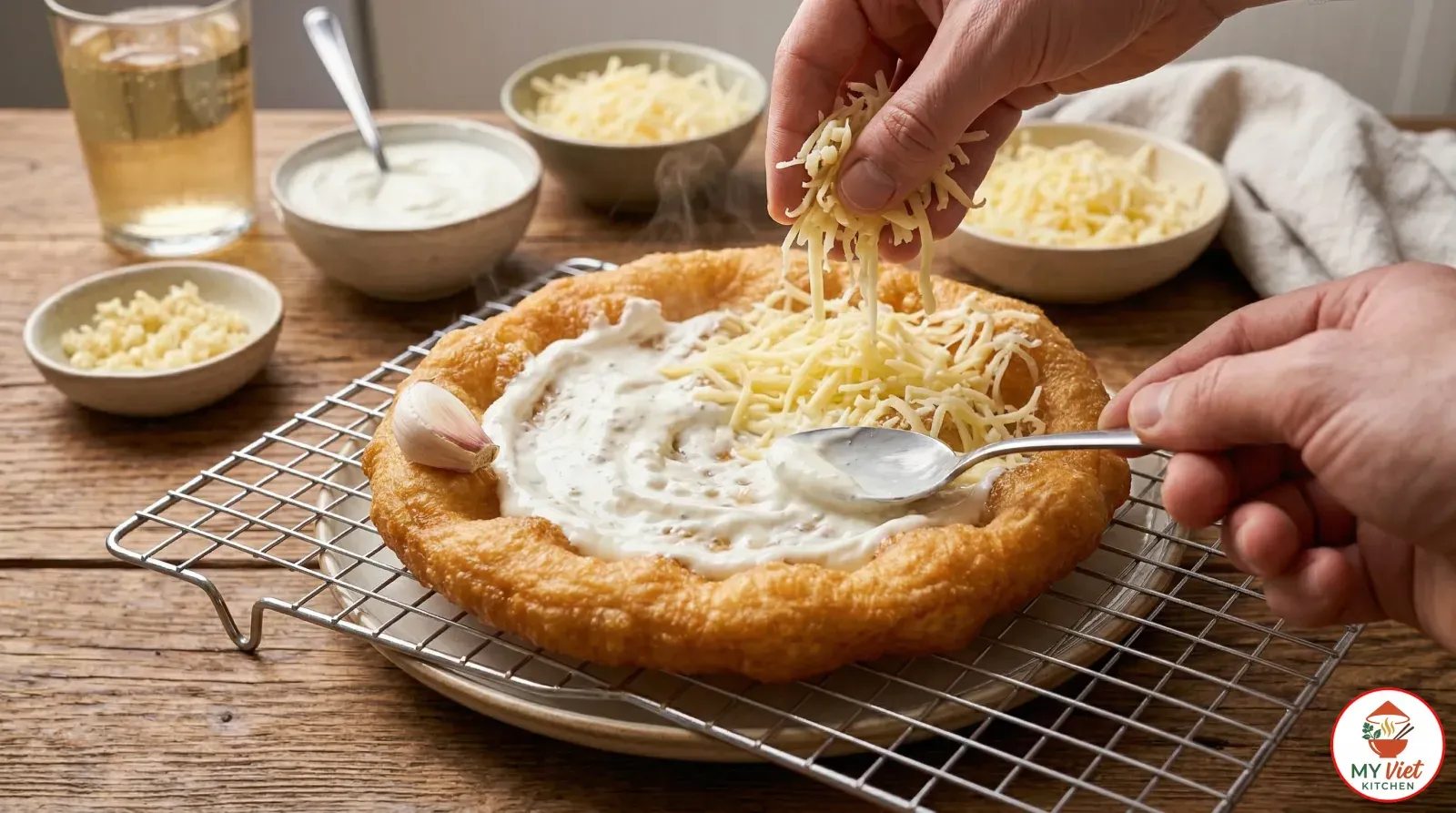
5 While the langos fries, prepare the garlic sour cream topping. Mix the sour cream with the minced garlic and a pinch of salt in a small bowl. The garlic should be finely minced or pressed so it blends smoothly into the cream. Some vendors rub a halved raw garlic clove directly on the hot bread first, then spread the sour cream. Both methods work well, so choose whichever style you prefer.
Spread a generous layer of garlic sour cream over the hot langos while it is still steaming. Then scatter shredded cheese over the sour cream so the heat from the bread melts it into soft, stretchy strands. Serve immediately, because langos tastes best within the first few minutes of frying. The contrast between the crunchy exterior, the soft interior, the cool tang of sour cream, and the melted cheese is what makes this dish unforgettable.
Expert Tips for Perfect Langos
Let the Dough Rise Fully
Underproofed dough produces dense, heavy langos that absorbs too much oil. The dough should double in size during the rise, which takes about 60 minutes in a warm kitchen. If your kitchen is cold, place the covered bowl near a warm oven or in a microwave with a cup of hot water beside it. Well-risen dough contains air pockets that expand in the hot oil, which gives you the light, puffy texture that defines great langos.
Stretch the Center Thinner Than the Edges
This shaping technique is essential for authentic Hungarian langos. Press and stretch the center of each disc until it is noticeably thinner than the outer rim. During frying, the thin center puffs up into a dramatic bubble while the thicker edge stays flat, dense, and chewy. As a result, you get two textures in one piece of bread. If the center is too thick, the langos will fry flat and dense throughout.
Monitor Oil Temperature Constantly
Consistent oil temperature is the single most important factor in frying langos. Keep a thermometer in the oil at all times and adjust the heat as needed between batches. Each piece of cold dough drops the oil temperature by about 15 to 20 degrees. Wait for the oil to recover before adding the next piece. Indeed, this patience separates crispy, light langos from greasy, oil-soaked disappointment.
Langos vs. Other Fried Breads: A Comparison
Fried bread exists in nearly every food culture on the planet, yet each version reflects the ingredients, techniques, and tastes of its homeland. Here is how Hungarian langos compares to other beloved fried breads from around the world.
| Fried Bread | Country | Dough Base | Key Difference |
|---|---|---|---|
| Langos | Hungary | Milk and butter enriched yeast dough | Served flat with sour cream and cheese toppings |
| Fry Bread | United States (Native American) | Simple flour, water, and baking powder | No yeast, uses chemical leavening for puffiness |
| Beignets | France / New Orleans | Egg-enriched yeast dough | Cut into squares, dusted with powdered sugar |
| Puri | India | Whole wheat flour and water | Unleavened, puffs into a ball from steam alone |
| Zeppole | Italy | Light yeast or choux dough | Shaped into balls or rings, often filled with cream |
| Youtiao | China | Flour with baking powder and ammonia | Twisted into long sticks, eaten with congee or soy milk |
Serving Suggestions
In Hungary, langos is primarily street food eaten on its own as a satisfying snack or light meal. However, it also works well as part of a larger spread, especially for casual gatherings and summer cookouts. The key is to serve it immediately after frying, because the crispy texture fades quickly as the bread cools.
The Perfect Accompaniments:
- Garlic sour cream and cheese (the classic): Spread garlicky sour cream over the hot bread and top with shredded Emmental or mozzarella. The heat melts the cheese into soft, stretchy strands. This is the combination you will find at nearly every langos stall in Budapest.
- Lecso (Hungarian pepper stew): Spoon warm lecso over langos for a heartier meal. The sweet peppers, tomatoes, and paprika in the stew complement the rich, fried bread beautifully. This pairing turns langos into a complete dinner plate.
- Fresh cucumber and tomato salad: A simple salad with thinly sliced cucumber, ripe tomatoes, and a splash of vinegar cuts through the richness of the fried bread. The cool, crisp vegetables provide a refreshing contrast.
- Smoked salmon with dill cream: For an elevated version, top the langos with smoked salmon, a dollop of dill-infused sour cream, and a squeeze of lemon. This combination transforms street food into something elegant enough for a dinner party appetizer.
Beverage Pairings:
- Hungarian beer: A cold, crisp lager like Dreher or Borsodi is the most popular companion for langos at summer festivals. The light bitterness and carbonation cleanse the palate between bites of rich fried bread.
- Froccs (wine spritzer): Hungarians mix white wine with soda water to create froccs, a refreshing summer drink that pairs naturally with heavy street food. The bubbles and acidity cut through the oil perfectly.
- Sparkling water with lemon: For a non-alcoholic option, sparkling water with fresh lemon cleanses the palate and keeps the focus on the flavors of the langos itself.
- Elderflower lemonade: A traditional Hungarian summer drink made from elderflower syrup and fresh lemon. Its floral sweetness provides a delightful contrast to the savory, garlicky toppings.
Storage and Reheating
Refrigerator: Store fried langos in an airtight container for up to 2 days. The texture changes significantly after refrigeration, because the crispy exterior softens as moisture migrates from the interior to the crust. However, reheating brings back much of the original crunch.
Freezer: You can freeze the uncooked dough balls for up to 1 month. After the first rise, divide the dough into portions, wrap each one tightly in plastic wrap, and freeze them flat. Thaw in the refrigerator overnight, then bring to room temperature for 30 minutes before shaping and frying. Alternatively, freeze already-fried langos for up to 2 weeks, though the texture is never quite the same.
Reheating: Reheat leftover langos in a 400-degree Fahrenheit oven for 5 to 7 minutes until the exterior crisps up again. Place the bread directly on the oven rack for the best air circulation. A brief blast in a hot oven restores much of the original crunch. Avoid the microwave entirely, because it turns the crispy shell into a soft, chewy blanket. Add fresh toppings after reheating rather than before.
Common Mistakes to Avoid
1. Frying at the Wrong Temperature
This is the most common langos mistake by far. Oil that is too hot burns the exterior while the inside stays raw and doughy. Oil that is too cool lets the dough absorb fat like a sponge, which results in heavy, greasy bread. Use a thermometer and keep the oil at a steady 350 degrees Fahrenheit throughout frying. Adjust the burner constantly, because each piece of dough changes the oil temperature.
2. Not Rising the Dough Long Enough
Rushing the rise produces dense, flat langos without the signature puffy texture. The dough needs a full 60 minutes to double in size. In a cold kitchen, this may take even longer. Check the dough by pressing a finger into it. If the indent fills back slowly, the dough is ready. If it springs back instantly, it needs more time. Patience during this step pays off with dramatically better results.
3. Crowding the Frying Pan
Adding too many pieces of dough at once drops the oil temperature sharply. When that happens, every piece in the pan absorbs excess oil and fries unevenly. Instead, fry one or two pieces at a time, depending on the size of your pan. Give each piece enough space to float freely and puff without touching the others. Wait for the oil to return to 350 degrees before adding the next batch.
4. Adding Toppings After the Langos Cools
Langos must be topped while it is still steaming hot. The heat from the freshly fried bread melts the cheese and warms the sour cream, which creates that signature melted, stretchy topping that defines the dish. If you wait too long, the cheese sits cold on top and the bread loses its crunch. Have your toppings ready before the first piece comes out of the oil, so you can assemble and serve without delay.
Frequently Asked Questions
What is langos?
Langos is a traditional Hungarian deep-fried flatbread made from an enriched yeast dough containing flour, milk, butter, and yeast. After the dough rises, it is shaped into flat rounds and fried in hot oil until golden and puffy. Hungarians top it with garlic-rubbed sour cream and grated cheese, though dozens of other toppings exist. It is one of the most beloved street foods in Hungary and has spread across Central and Eastern Europe.
What is the best oil for frying langos?
Sunflower oil and regular vegetable oil both work perfectly for frying langos. They have high smoke points and neutral flavors that let the bread and toppings shine through. Avoid olive oil, because its lower smoke point causes it to break down at frying temperatures. Also avoid coconut oil, which adds an unwanted flavor. Whatever oil you choose, use enough to reach a depth of 2 inches in your pan so the langos can float and fry evenly on both sides.
Can I bake langos instead of frying it?
Baking is possible, though the result differs significantly from traditional fried langos. Bake at 425 degrees Fahrenheit for 12 to 15 minutes on a preheated baking sheet. Brush the dough with oil before baking to help it brown. Baked langos is lighter and crispier on the surface, but it lacks the rich, puffy, chewy interior of the fried version. For a middle ground, try shallow-frying in a skillet with about half an inch of oil.
What are the most popular langos toppings?
The classic topping is garlic sour cream with shredded cheese melted on top. Beyond that, Hungarian vendors offer a wide range of options. Savory choices include ham and cheese, bacon and onion, sauteed mushrooms, and smoked salmon with dill cream. Sweet toppings like Nutella with powdered sugar, cinnamon sugar, and jam are also common. At Lake Balaton and Budapest markets, you will find stands offering twenty or more topping combinations.
How do I keep langos from absorbing too much oil?
Three factors prevent greasy langos. First, maintain steady oil temperature at 350 degrees Fahrenheit. Second, make sure the dough has risen fully before frying, because well-proofed dough contains air pockets that resist oil absorption. Third, drain each piece on a wire rack instead of paper towels, so the bottom stays crispy rather than steaming in trapped oil. Following all three steps gives you bread that is golden and light rather than heavy and greasy.
Can I make langos dough the night before?
Absolutely, and overnight refrigeration actually improves the flavor. After the initial rise, punch down the dough, cover the bowl tightly with plastic wrap, and refrigerate for up to 24 hours. The cold, slow fermentation develops deeper, more complex flavors in the bread. Take the dough out 30 minutes before shaping so it warms up and becomes easier to stretch. Then shape, fry, and top as usual.
Variations and Adaptations
Potato Langos (Krumplis Langos):
This is the older, more traditional version of langos that predates the modern all-flour recipe. Replace one cup of flour with one cup of riced or finely mashed potato. The starch from the potato makes the interior incredibly moist and soft, and the langos stays tender longer than the plain flour version. Many Hungarian grandmothers insist that potato langos is the only real langos. Use leftover boiled potatoes for the easiest preparation.
Sweet Langos (Edes Langos):
For a dessert version, skip the garlic and cheese entirely. Instead, spread Nutella or fruit jam over the hot fried bread, then dust it generously with powdered sugar. Alternatively, toss the freshly fried langos in cinnamon sugar while it is still glistening with oil. Sweet langos is especially popular at summer festivals and among children. The contrast between the slightly salty fried dough and the sweet toppings works beautifully.
Pizza-Style Langos:
Top the fried bread with tomato sauce, mozzarella, and your favorite pizza toppings for a Hungarian twist on flatbread pizza. The fried base adds a richness that baked pizza dough cannot match. Popular additions include sliced pepperoni, bell peppers, olives, and fresh basil. This variation has become increasingly popular at Hungarian food festivals in recent years.
Baked Langos (Lighter Version):
For a lighter take, brush the shaped dough with olive oil and bake on a preheated baking sheet at 425 degrees Fahrenheit for 12 to 15 minutes. The result is crispier and less rich than fried langos, but it still carries the yeasty flavor of the dough. Brush with garlic butter as soon as it comes out of the oven to add moisture and flavor. This version works well for weeknight dinners when you want the langos experience without the deep frying.
The Cultural Significance of Langos
Langos holds a deep and personal place in Hungarian culture that extends far beyond its role as street food. The word itself comes from the Hungarian word lang, meaning flame, because the earliest versions were baked on the wall of wood-fired ovens rather than fried. Over the centuries, the recipe evolved from a simple peasant bread into the beloved deep-fried street food that it is today. Every Hungarian has childhood memories of eating langos at the market, the lake, or the local pool, and those memories tie the dish to feelings of summer, freedom, and simple pleasure.
The connection between langos and Hungarian identity runs especially strong around Lake Balaton, where beach vendors have sold langos to vacationers since the mid-twentieth century. For Hungarians, a summer trip to Balaton is not complete without at least one piece of langos eaten on the shore. The dish has also become a symbol of Hungarian hospitality across Central Europe. You will find langos stands in Slovakia, Czech Republic, Austria, and Serbia, each putting its own local twist on the toppings while keeping the Hungarian base recipe intact.
Furthermore, langos has experienced a global revival in recent years as street food culture has gained popularity worldwide. In the end, food trucks in London, New York, and Melbourne now serve Hungarian langos alongside tacos and banh mi. Despite this international growth, the heart of langos remains in Hungary. Walk through the Great Market Hall in Budapest on any given morning, and you will see the same scene that has played out for decades: a vendor stretching dough, a pot of oil shimmering with heat, and a crowd waiting for their golden piece of bread topped with sour cream and cheese.
Conclusion
This langos recipe gives you everything you need to recreate the iconic Hungarian deep-fried bread at home. The keys are a well-risen enriched dough, oil heated to a steady 350 degrees, and toppings applied while the bread is still steaming hot. These three steps produce the signature contrast of crispy golden shell and soft, pillowy center that makes langos one of the best street foods in the world. Whether you go classic with garlic sour cream and cheese or experiment with sweet toppings, each piece delivers the rich, satisfying bite that Hungarians have loved for generations.
Ready to explore more European street food and comfort food traditions? Browse our European dishes collection for recipes like banitza, Belgian waffles, and blini. Each one brings a taste of a different culinary tradition to your kitchen table.