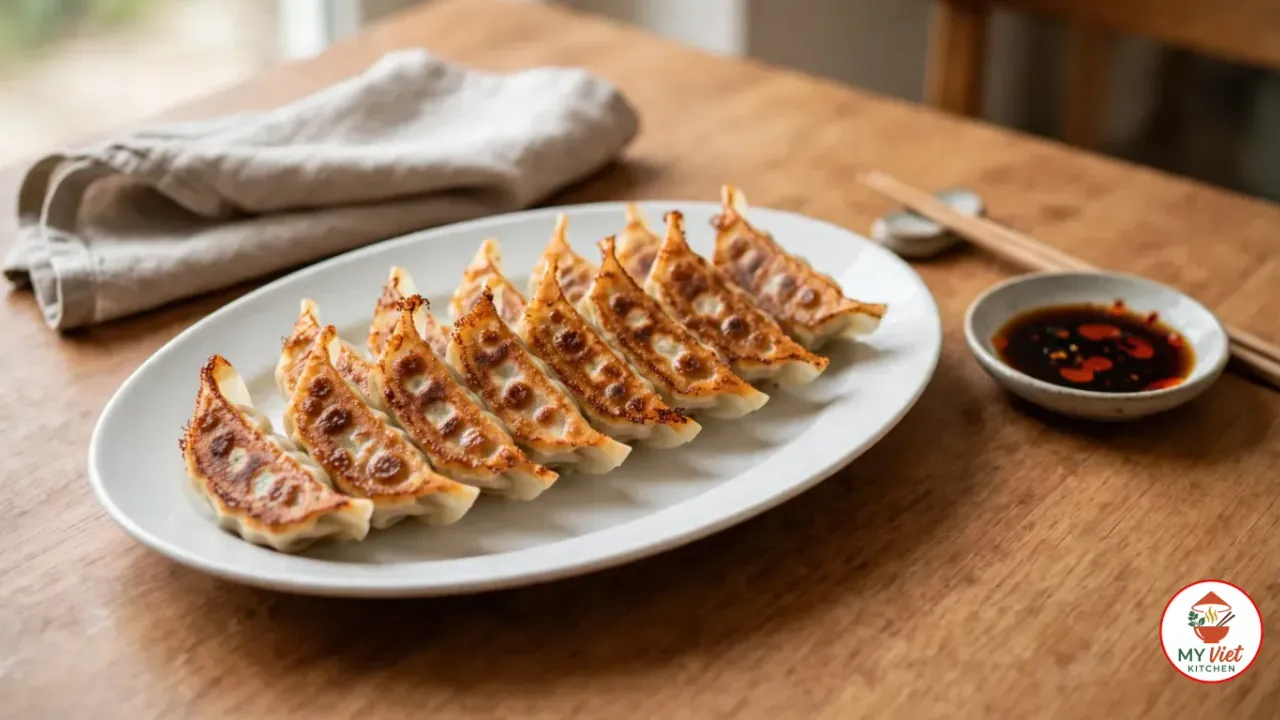
Gyoza are Japanese pan-fried dumplings: thin wheat wrappers pleated around a garlicky pork and cabbage filling, browned on one flat side, then steamed under a lid. This recipe makes 40, enough for four as a main meal. You salt and squeeze the cabbage, knead the filling until sticky, pleat each dumpling along one edge, and cook them in three batches. Fry, steam, then fry again: that order gives a crisp bottom and a tender top.
Prep Time: 50 minutes | Cook Time: 25 minutes | Total Time: 1 hour 15 minutes | Servings: 4
Difficulty: Medium | Calories: ~570 per serving

How Is Gyoza Different from Chinese Jiaozi?
Gyoza are the Japanese take on jiaozi, the Chinese dumpling. After World War II, many Japanese settlers returned from Manchuria with a love of northern Chinese food, and gyoza quickly became popular in Japanese home kitchens (Just One Cookbook).
Many of those repatriates opened yatai, or food stalls, serving ramen, and began offering gyoza on the side. Pan-fried gyoza are sold as a side in many ramen and Chinese restaurants in Japan. You can buy them, and the wrappers, in supermarkets across the country, frozen or ready to eat (Wikipedia).
Wikipedia names two differences from Chinese jiaozi: a rich garlic flavour, and thinner wrappers, because most Japanese restaurants use machine-made ones. It adds that jiaozi vary so much across China that the line blurs there. Thin-skinned jiaozi are easy to find at restaurants in Shanghai, for example (Wikipedia).
The pork-to-cabbage balance is where home recipes split. Nami of Just One Cookbook likes 1 to 1.5 parts cabbage for every part pork, and notes that traditional Japanese gyoza often use twice as much cabbage as meat (Just One Cookbook).
Nagi of RecipeTin Eats, cooking her mother’s recipe, goes the other way. She finds that gyoza outside Japan often carry more cabbage and very little garlic, and tells you not to skimp on either the meat or the garlic (RecipeTin Eats). This recipe sits at the meaty end: 1 pound of pork to 2 cups of cabbage, with three cloves of garlic.
How Do You Pleat Gyoza?
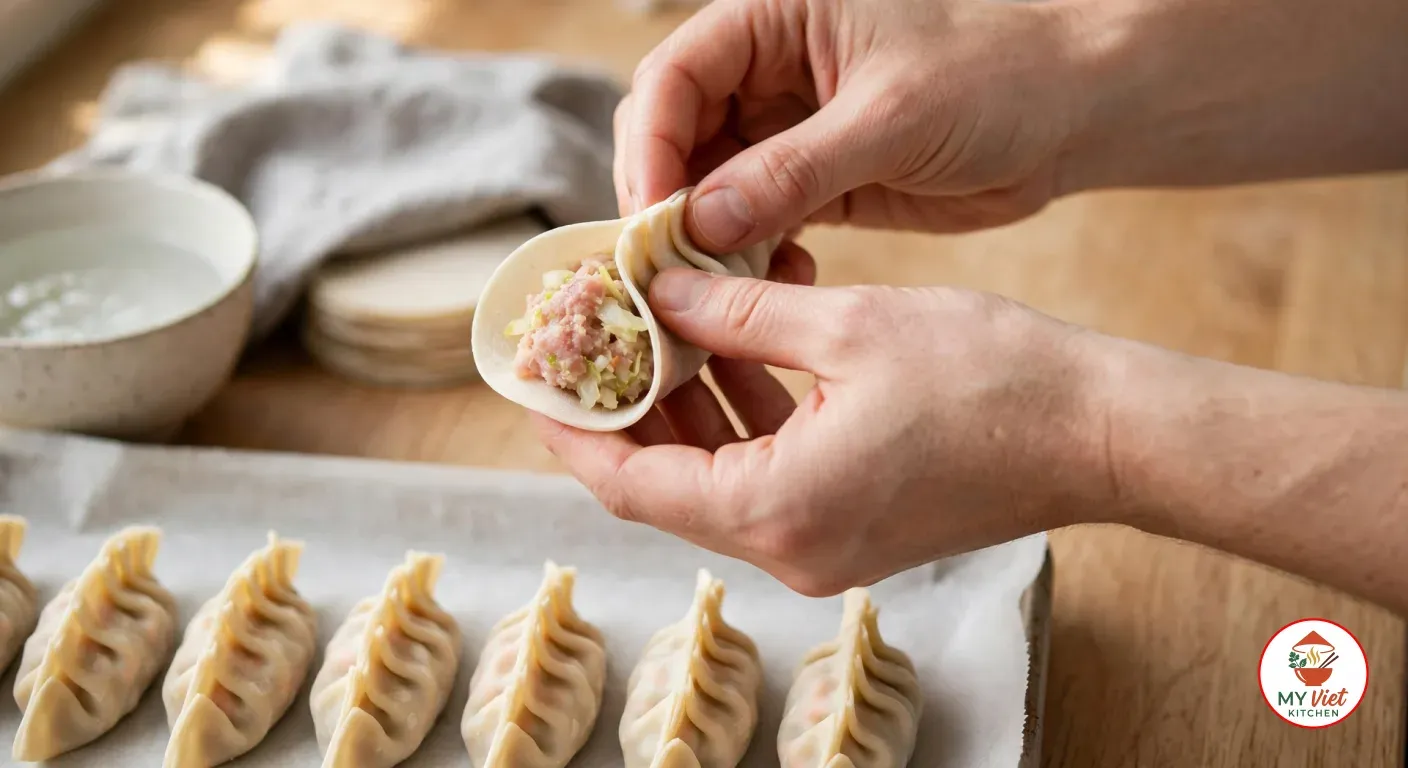
Japanese gyoza use just two folds, according to Just One Cookbook: pleats leaning toward the centre from both sides, or pleats all leaning toward one side. Either way, you fold the wrapper in half over the filling, then make a pleat about every 1/4 inch (6 mm) in the front half. Press each one tightly against the smooth back half to seal it (Just One Cookbook).
This recipe uses the one-side fold. Start at one corner and work across, five or six pleats in all. The finished dumpling is a crescent, pleated on the front and smooth on the back.
Three habits make the job easier. Keep the stack of wrappers under a damp cloth, since the edges dry out quickly. Use one level tablespoon of filling, no more: too much makes the wrappers hard to seal. And press the base flat as you finish each dumpling, so it sits upright in the pan on the side that browns. Then cook or freeze the tray straight away. The filling is moist, and wrappers left too long go soft (Just One Cookbook).
The video above is Just One Cookbook’s own. Going by its chapter list, Nami cuts the cabbage, green onions and shiitake mushrooms, kneads the filling, folds the gyoza, shows the fold a second time, gives a freezing tip and cooks them (Just One Cookbook). Her filling uses green cabbage, shiitake and less pork than this one. Her written recipe cooks the gyoza with the same fry, steam and sesame-oil finish.
How Do You Get a Crisp Bottom and a Tender Top?
The pan-fried style, yaki-gyoza, is the most popular way to cook them. The dumplings fry on one flat side until the skin crisps; then water goes in and a lid goes on, so the upper part steams (Wikipedia). The last minute, uncovered, matters as much. RecipeTin Eats cooks until the water has completely evaporated, so the golden underside is not wet and soggy (RecipeTin Eats).
Pick a pan with a tight lid. Just One Cookbook uses a nonstick or carbon steel frying pan over medium heat. When a reader’s gyoza stuck, the site’s team pointed to pan temperature: heat the pan fully before adding the oil, and put the dumplings in once the oil is hot (Just One Cookbook).
Recipes differ on water and spacing. Just One Cookbook adds 4 tablespoons per panful and leaves space between the dumplings so they don’t touch (Just One Cookbook). RecipeTin Eats sets about 12 in rows, slightly overlapping, and pours 1/3 cup of water around them, then cooks for about 3 to 4 minutes (RecipeTin Eats). Here you use 1/4 cup for about 13, spaced apart.
The sesame oil at the end comes from Just One Cookbook, which drizzles it around the pan once the water is gone (Just One Cookbook). In the site’s winged gyoza recipe, Nami writes that sesame oil gives a nutty aroma and adds extra crunch and crispiness (Just One Cookbook).
Want a lacy crust joining the dumplings? That is hanetsuki gyoza, or gyoza with wings. In place of plain water you pour in a thin mix of 1 to 2 teaspoons of flour or potato starch per 100 ml of water, which cooks into a crisp sheet (Just One Cookbook).
Just One Cookbook says the style was first made at Niihao, a restaurant in Kamata, Tokyo. Its Japanese owner-chef had been left behind in China as a child at the end of World War II, and took the idea from a dumpling dish in Dalian (Just One Cookbook).
Ingredients for Gyoza
For the Filling:
- 2 cups (150 g) finely chopped napa cabbage
- 1 teaspoon fine salt
- 1 pound (450 g) minced pork
- 4 green onions, thinly sliced
- 3 cloves garlic, minced
- 1 tablespoon grated fresh ginger
- 1 tablespoon soy sauce
- 1 tablespoon toasted sesame oil
- 1/2 teaspoon ground white pepper
For Wrapping and Cooking:
- 40 round gyoza wrappers
- 3 tablespoons (45 ml) neutral cooking oil (1 tablespoon per batch)
- 3/4 cup (180 ml) water (1/4 cup per batch)
- 1 tablespoon toasted sesame oil (1 teaspoon per batch)
For the Dipping Sauce:
- 1/4 cup (60 ml) soy sauce
- 1/4 cup (60 ml) unseasoned rice vinegar
- 1 teaspoon chili oil (la-yu), or to taste
Step-by-Step Instructions
Step 1: Prepare the Cabbage
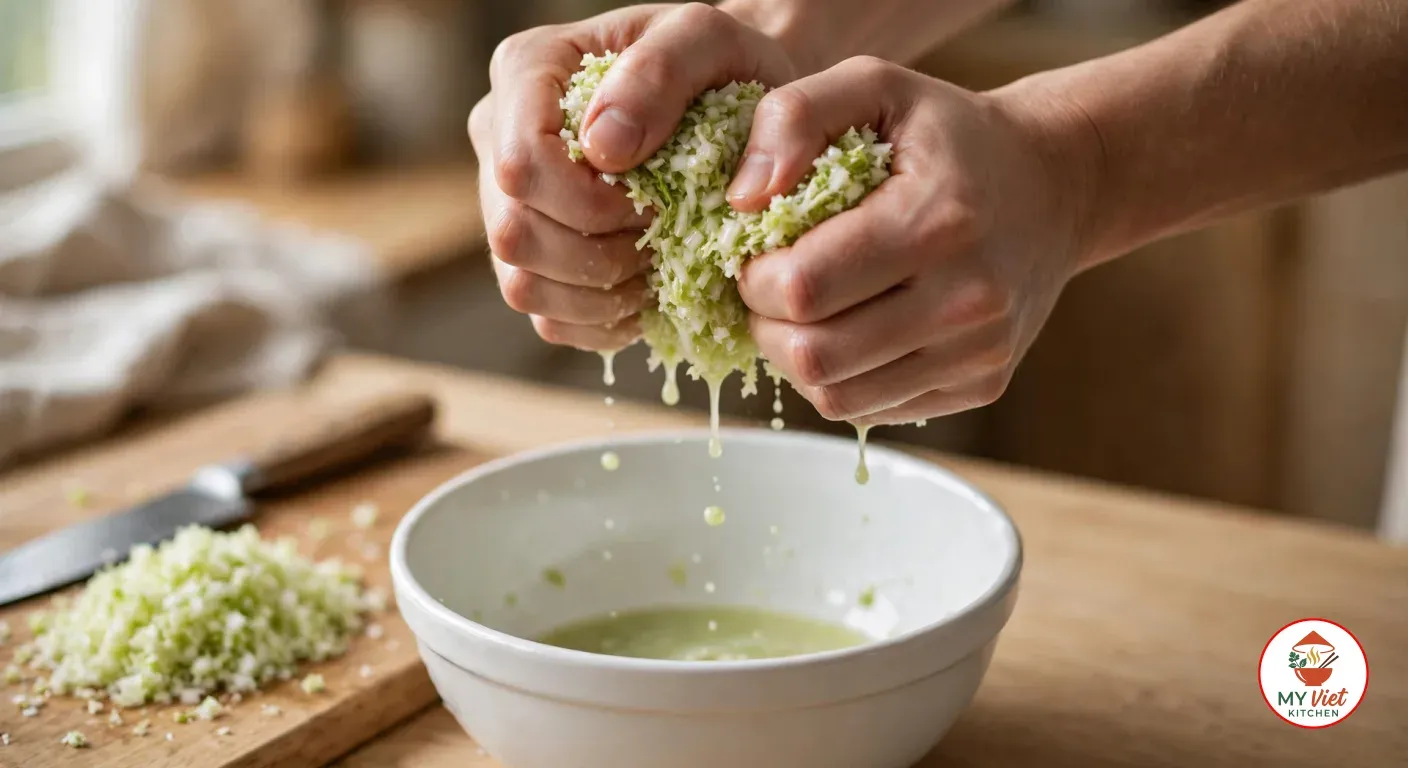
1Chop the napa cabbage very finely, mincing the thick white ribs smaller than the leaves. Toss it with the salt in a bowl and leave it for 10 minutes to wilt. Squeeze it hard by the handful, or wrapped in a clean kitchen towel, until almost no more liquid runs out. Dry cabbage keeps the filling from soaking the wrappers.
Step 2: Mix the Filling
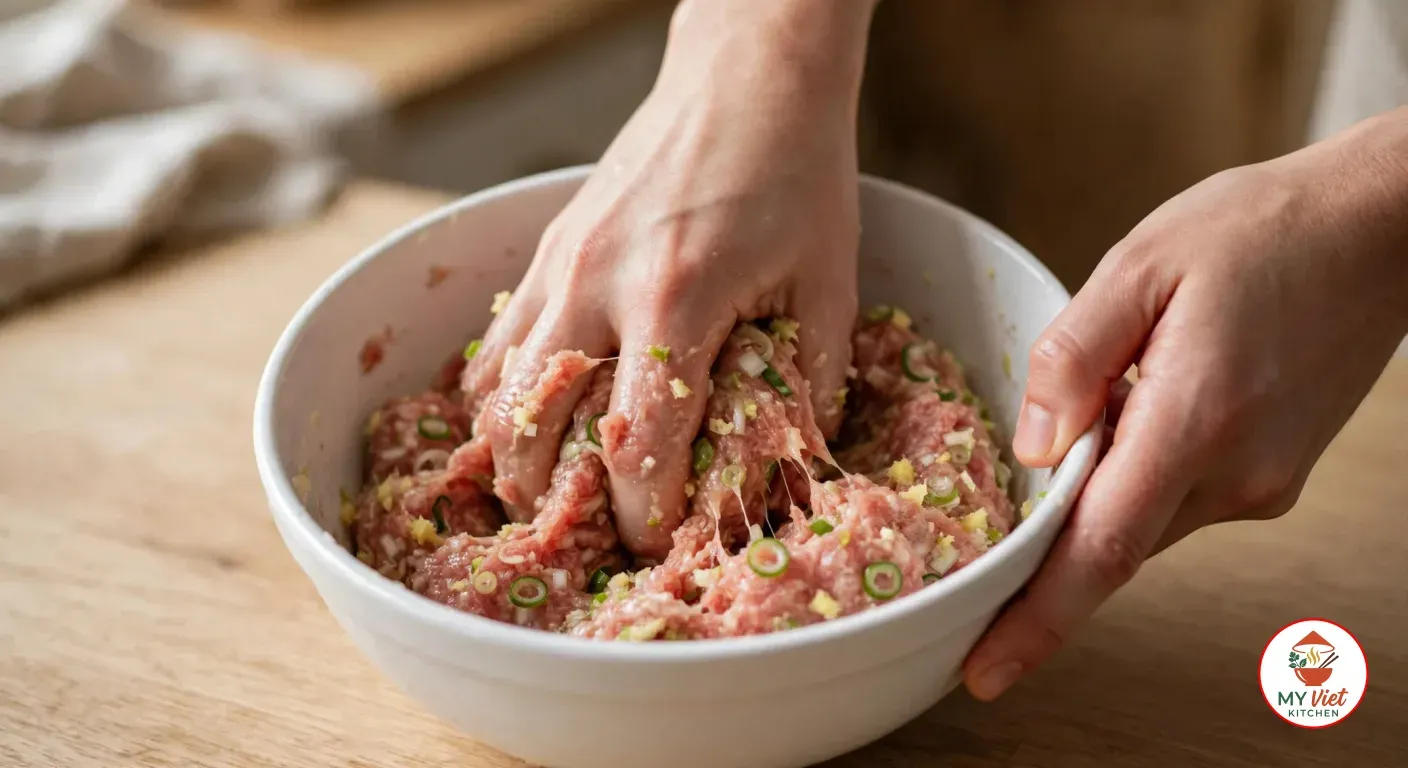
2Put the pork, squeezed cabbage, green onions, garlic, ginger, soy sauce, sesame oil and white pepper in a large bowl. Knead with one hand for about 2 minutes, until the mixture turns sticky and slightly paler and holds together in one mass.
Step 3: Wrap the Gyoza
3Keep the wrappers under a damp towel. Put a level tablespoon of filling in the centre of one wrapper and moisten the outer 1/4 inch (6 mm) of the rim with a fingertip dipped in water. Fold it in half without sealing. From one corner, pleat the front edge only, about every 1/4 inch, 5 to 6 pleats in all, pressing each against the smooth back edge. Flatten the base so the dumpling stands up and set it on a parchment-lined tray under plastic wrap. Cook or freeze the gyoza as soon as they are all wrapped.
Step 4: Pan-Fry the Gyoza
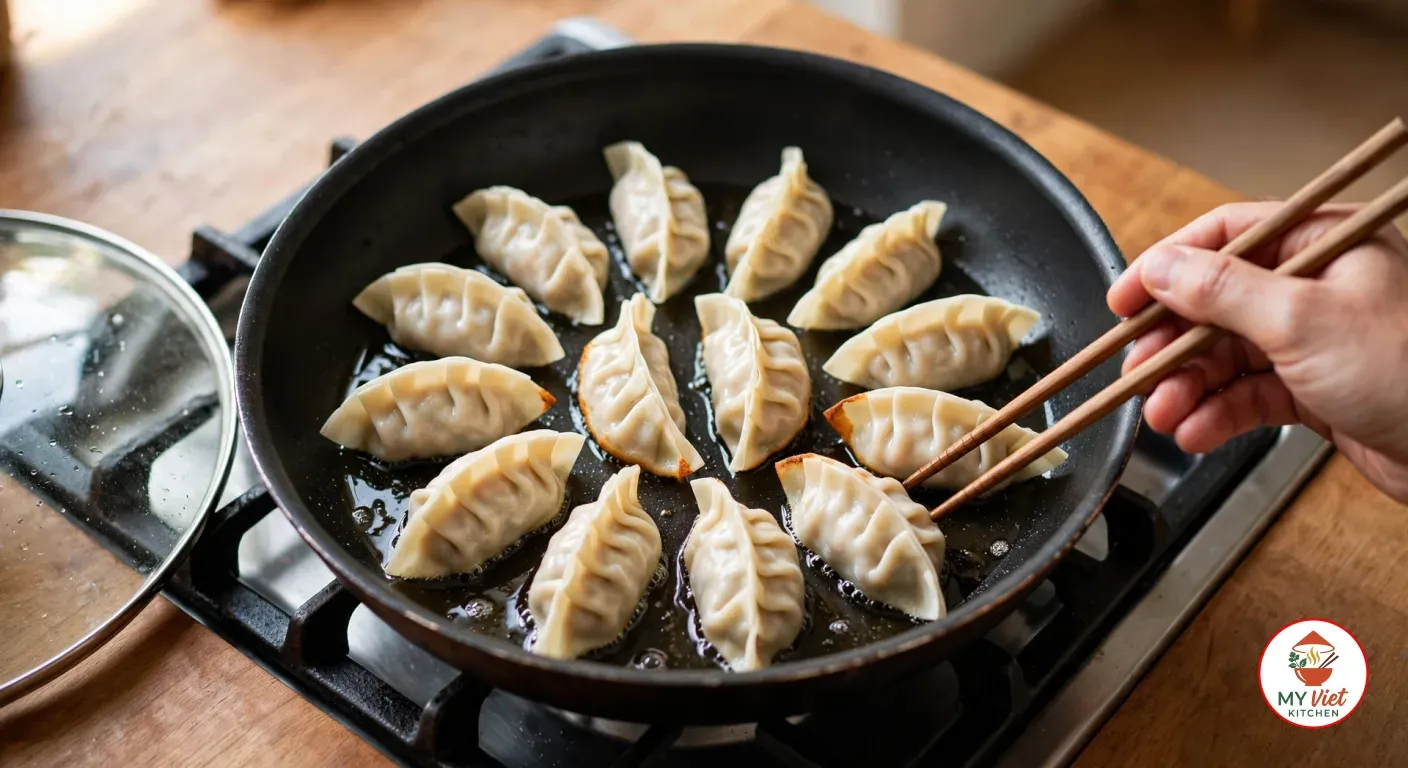
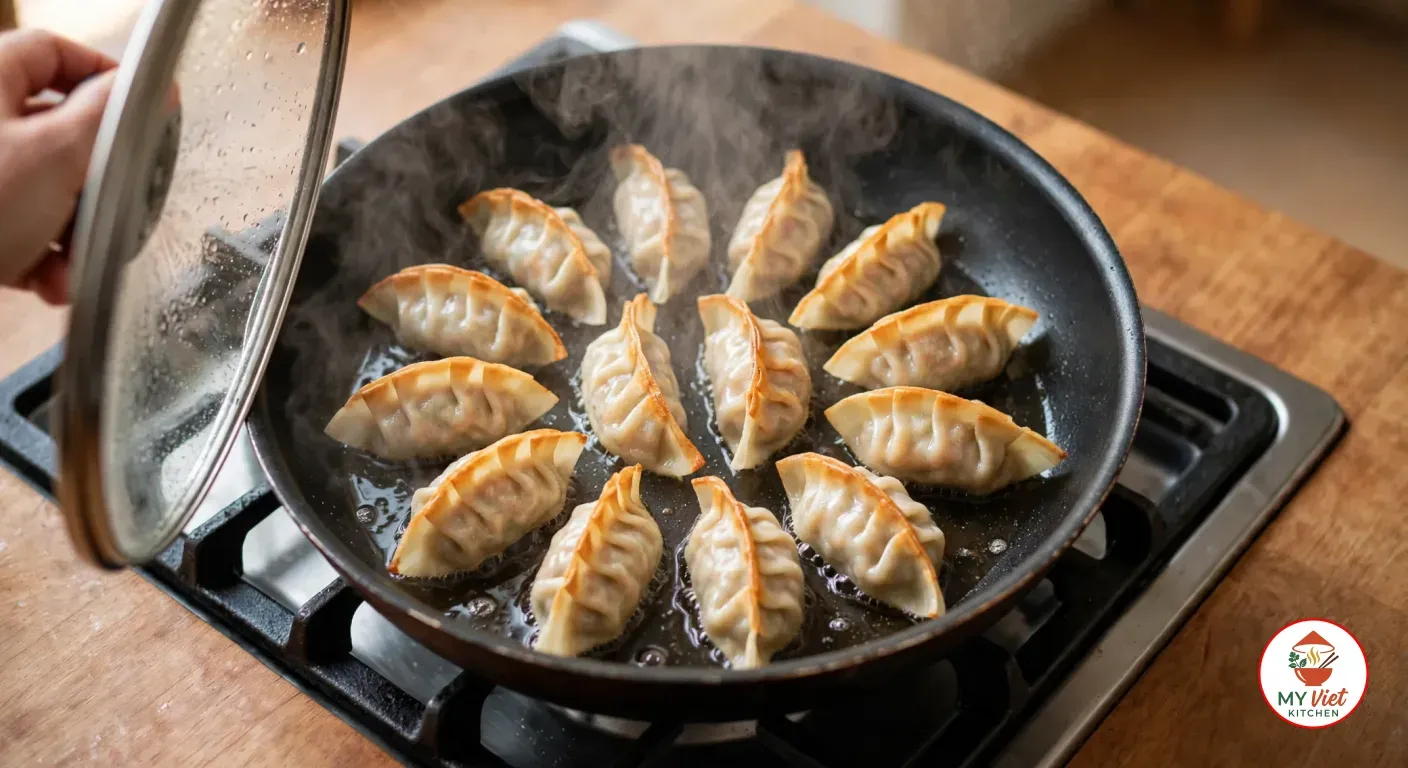
4Heat a 12-inch (30 cm) non-stick frying pan with a tight-fitting lid over medium heat, then add 1 tablespoon of the neutral oil. Stand about 13 gyoza, a third of the batch, flat side down in a circle with a small gap between each one. Leave them alone until the undersides are golden brown and lift cleanly off the pan, 2 to 3 minutes.
Step 5: Steam and Finish
5Pour 1/4 cup (60 ml) of the water around the dumplings and cover the pan at once. Steam for about 3 minutes, until most of the water has evaporated. Uncover and cook for about 1 minute more, until the pan is dry. Drizzle 1 teaspoon of the sesame oil around the gyoza and fry for another minute, until the bottoms are deep golden and crisp and the tops look slightly translucent. Cook the other two batches the same way, wiping the pan if any bits have burned.
Step 6: Make the Dipping Sauce and Serve
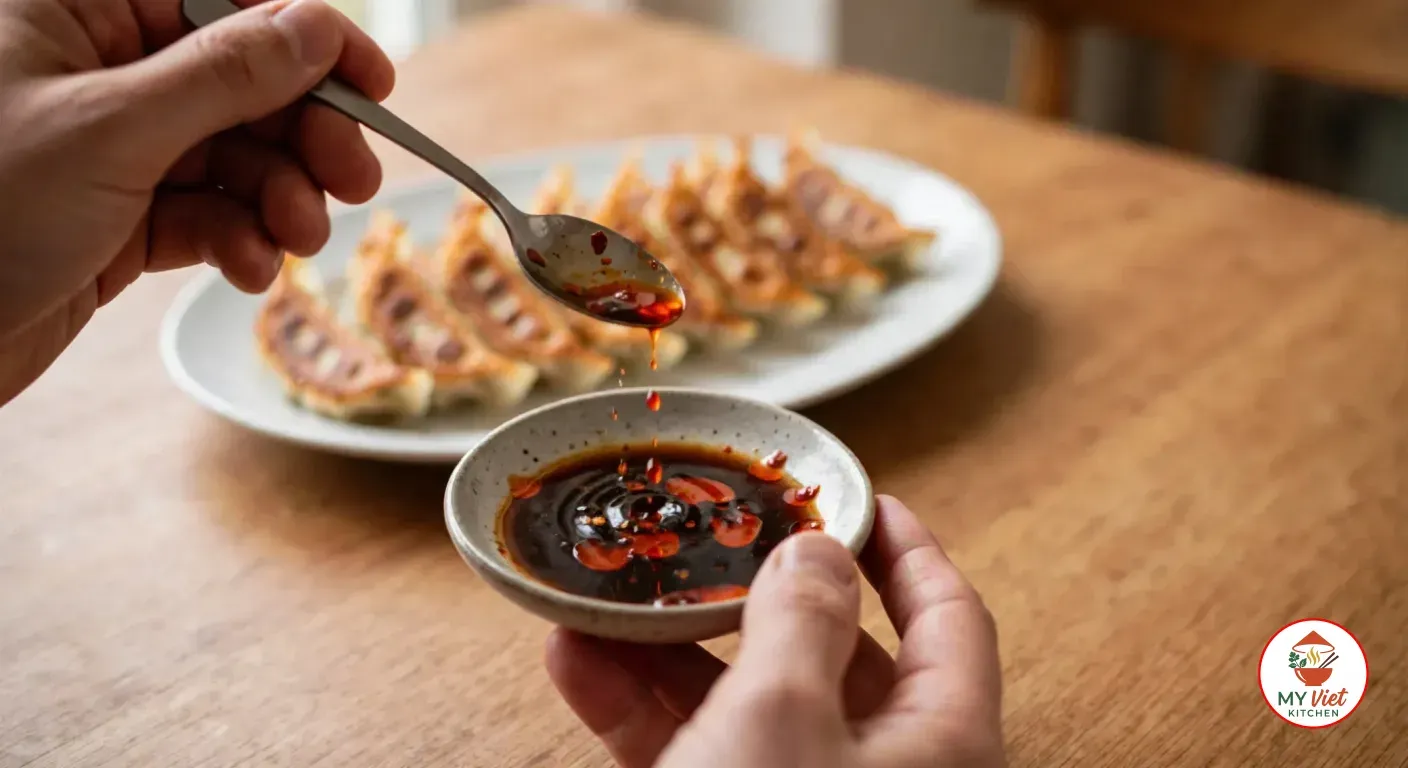
6While the first batch cooks, stir the soy sauce and rice vinegar together and add chili oil to taste, in one small bowl or in individual dishes. Lift each batch onto a plate with a thin spatula, crisp bottoms facing up, and serve it straight away with the sauce.
Frequently Asked Questions
Can you freeze uncooked gyoza?
Yes: freeze them on a tray first, then bag them. Just One Cookbook lays the uncooked gyoza out in a single layer without touching and freezes them until solid, so they won’t stick together in the bag. Packed in an airtight freezer bag, they keep for up to a month. Cook them straight from frozen and steam them 1 to 2 minutes longer (Just One Cookbook). RecipeTin Eats also cooks them from frozen, with a splash of extra water and 2 more minutes in the pan (RecipeTin Eats).
Can you use store-bought gyoza wrappers?
Yes. Just One Cookbook’s recipe calls for store-bought gyoza wrappers, preferably a Japanese brand (Just One Cookbook). Its alternative is to make your own wrappers, which need only flour, salt and water (Just One Cookbook). RecipeTin Eats notes that round wonton wrappers are also sold as gow gee or gyoza wrappers, and in Australia they sit in the supermarket fridge alongside the noodles (RecipeTin Eats). Wikipedia adds that the wrappers are increasingly easy to find in Asian markets around the world (Wikipedia).
What is the difference between gyoza and potstickers?
Pan-fried gyoza are a Japanese version of what English speakers often call potstickers, cooked by the same fry-then-steam method. In the West, pan-fried jiaozi may be called potstickers, a name derived from the Chinese guōtiē. In northern China, though, guotie are usually elongated, often with both ends left open, and are considered a separate type of dumpling from jiaozi (Wikipedia).
Why are my gyoza soggy?
Usually because the cabbage went in wet or the wrapped dumplings sat too long. Just One Cookbook names skipping the cabbage-salting step as the most common cause, and says to cook or freeze folded gyoza right away (Just One Cookbook). In the pan, let the water evaporate completely before the gyoza come out, so the golden underside isn’t left wet and soggy (RecipeTin Eats).
Sources
- Gyoza Recipe 餃子, Namiko Hirasawa Chen, Just One Cookbook, May 2026 (first published February 2011)
- How to Fold Gyoza, Namiko Hirasawa Chen, Just One Cookbook, modified February 2025
- Gyoza with Wings (Hanetsuki Gyoza) 羽根つき餃子, Namiko Hirasawa Chen, Just One Cookbook, July 2018 (modified February 2025)
- Japanese GYOZA (Dumplings), Nagi, RecipeTin Eats, January 2016 (modified June 2025)
- Jiaozi, Wikipedia
- Easy Homemade Japanese Gyoza Recipe, Just One Cookbook, YouTube, October 2024