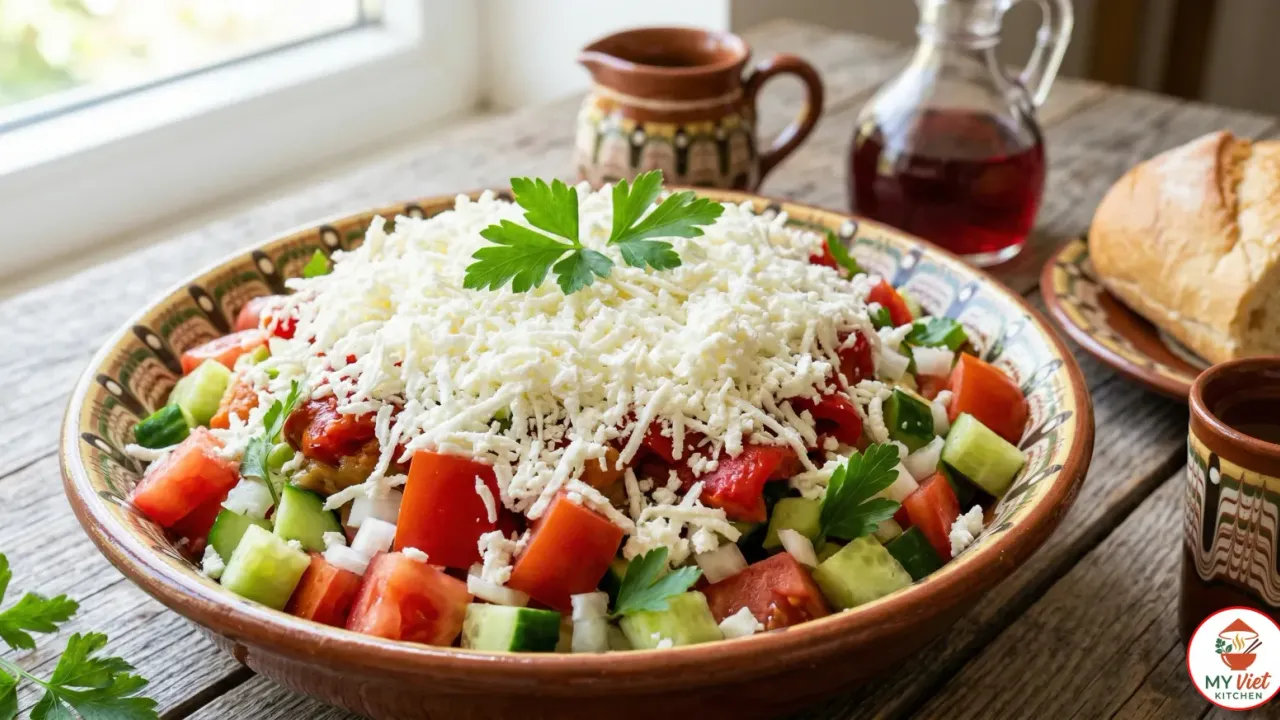
Shopska salad is the most famous salad in Bulgaria, a bright mix of fresh summer produce topped with a thick layer of grated white cheese. This recipe shows you how to make it the way Bulgarians do. Known as shopska salata, the dish layers ripe tomatoes, crisp cucumbers, roasted peppers, and onion under a fluffy blanket of grated sirene cheese. This shopska salad recipe follows the real method that has made it a star of Bulgarian cuisine. Serve it as a cool starter, a light lunch, or a side for grilled meats. Every bite gives you a perfect mix of sweet, tangy, and salty flavors.
Prep Time: 15 minutes | Cook Time: 15 minutes (for roasting peppers) | Servings: 4
Difficulty: Easy | Calories: ~180 per serving
What Makes Shopska Salad Special?
Shopska salad is far more than a bowl of chopped veggies. It is the top salad of Bulgaria, served at nearly every meal from casual dinners to fancy restaurant courses. Order any meal at a place in Bulgaria, and your server will likely bring shopska salad before you even ask. No other salad in the Balkans holds this kind of status.
What sets this salad apart from other fresh salads is the way the cheese sits on top. Instead of crumbling cheese into the mix, Bulgarian cooks grate it on a box grater so it falls in light, fluffy shreds. As a result, the cheese forms an airy blanket that slowly soaks up the tomato juices and olive oil below. This makes a creamy layer between the cheese and the veggies that no other method can match.
On top of that, the colors of shopska salad match the Bulgarian flag: white cheese on top, green from the cucumbers, and red from the tomatoes and peppers. This is no accident. In the 1960s, the tourism board pushed shopska salad as a symbol of the country, and the flag colors helped lock in its fame. Since then, the salad has become part of what it means to be Bulgarian, much like pasta is to Italy or sushi is to Japan.

Choosing the Right Cheese for Shopska Salad
The cheese is the crown of this salad, so your choice shapes whether it tastes real or just close. Bulgarian cooks use sirene, a white brined cheese at the heart of their food culture. Here are your best options based on where you shop.
- Sirene (Bulgarian white cheese, best choice): Sirene has a mild, creamy tang with a crumbly feel that grates into light, fluffy shreds. It is less salty than feta and melts gently when it meets warm tomato juices. Look for it at Eastern European shops or order it online.
- Feta cheese: The most common swap worldwide. Feta is sharper and saltier than sirene, so skip any added salt. Greek feta made from sheep milk comes closest in taste. For the best grating result, choose a block of feta rather than pre-crumbled, and chill it in the freezer for 15 minutes before you grate it.
- Ricotta salata or telemea: These brined cheeses have a milder taste that sits between feta and sirene. Romanian telemea is very close to sirene in both taste and feel. Ricotta salata grates neatly and has a mild saltiness that works well in this salad.
Ingredients for Shopska Salad
Main Ingredients:
- 3 large ripe tomatoes, diced into half-inch pieces
- 2 medium cucumbers, peeled and diced
- 2 roasted red peppers or 1 large fresh bell pepper, diced
- 1 small white onion, finely diced
- 7 ounces sirene cheese or feta cheese, coarsely grated
For the Dressing:
- 2 tablespoons extra virgin olive oil
- 1 tablespoon red wine vinegar
- 1/2 teaspoon salt (reduce if using feta)
For the Garnish:
- Fresh flat-leaf parsley, roughly chopped
- Freshly ground black pepper (optional)
Pro tip: Use the ripest tomatoes you can find. Since shopska salad has no cooking step, every item must taste great on its own. Ripe summer tomatoes make the biggest change. In winter, go for cherry or grape tomatoes, which have more flavor than pale store-bought ones.
Step-by-Step Instructions
Step 1: Prepare the Vegetables
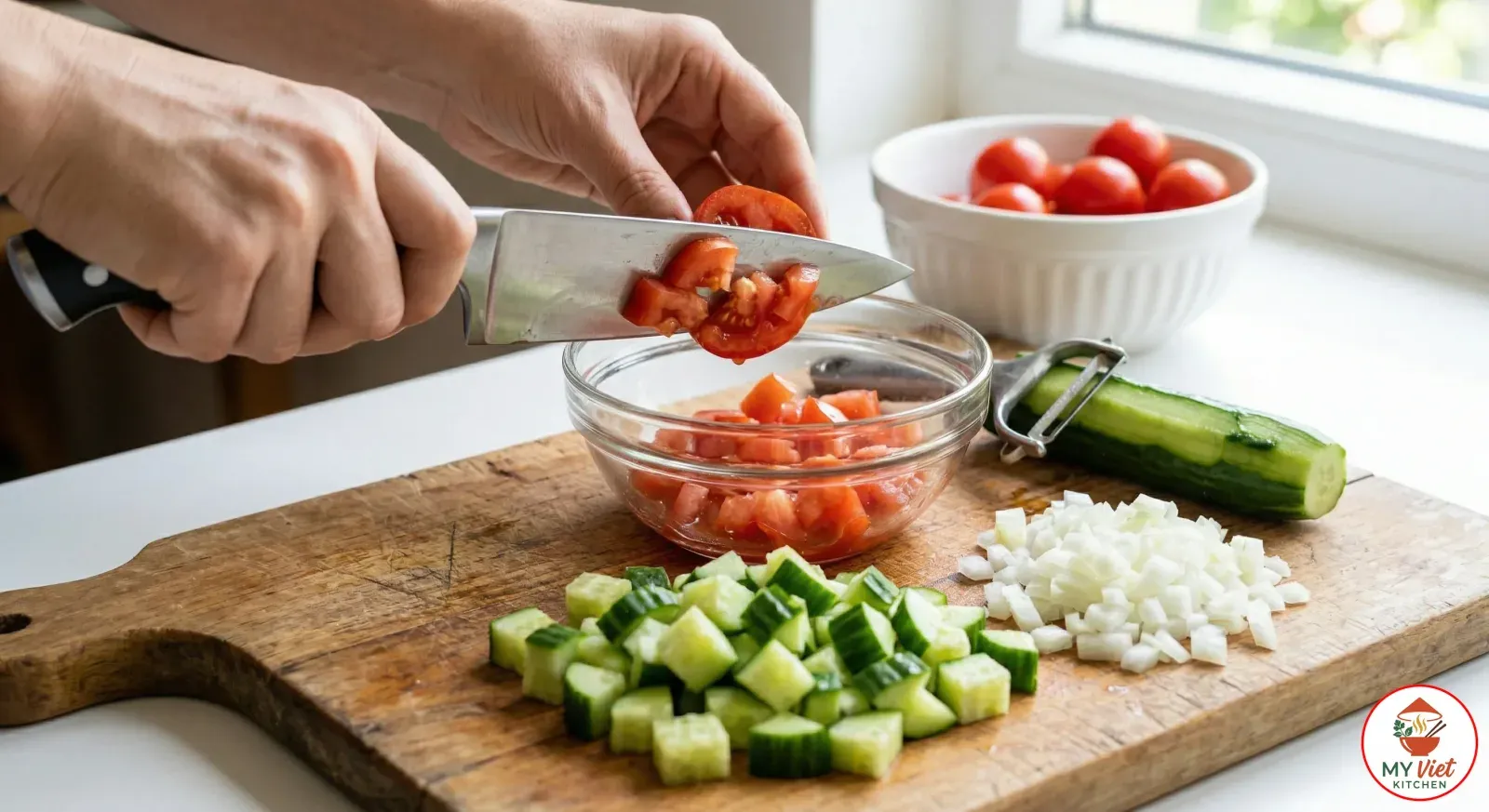
1 Start by dicing the tomatoes into half-inch pieces. Cut them over a bowl to catch the juices, since those juices add to the dressing that makes shopska salad so good. Then peel the cucumbers and dice them to the same size. Finely dice the white onion. Even cuts matter here. Same-sized pieces make sure you get a bit of all the veggies in each bite.
If you want a milder onion taste, soak the diced onion in cold water for five minutes, then drain it well. This quick step takes away the sharp bite but keeps the crisp feel the salad needs. Many Bulgarian cooks do this in summer when onions tend to be stronger.
Step 2: Roast the Peppers
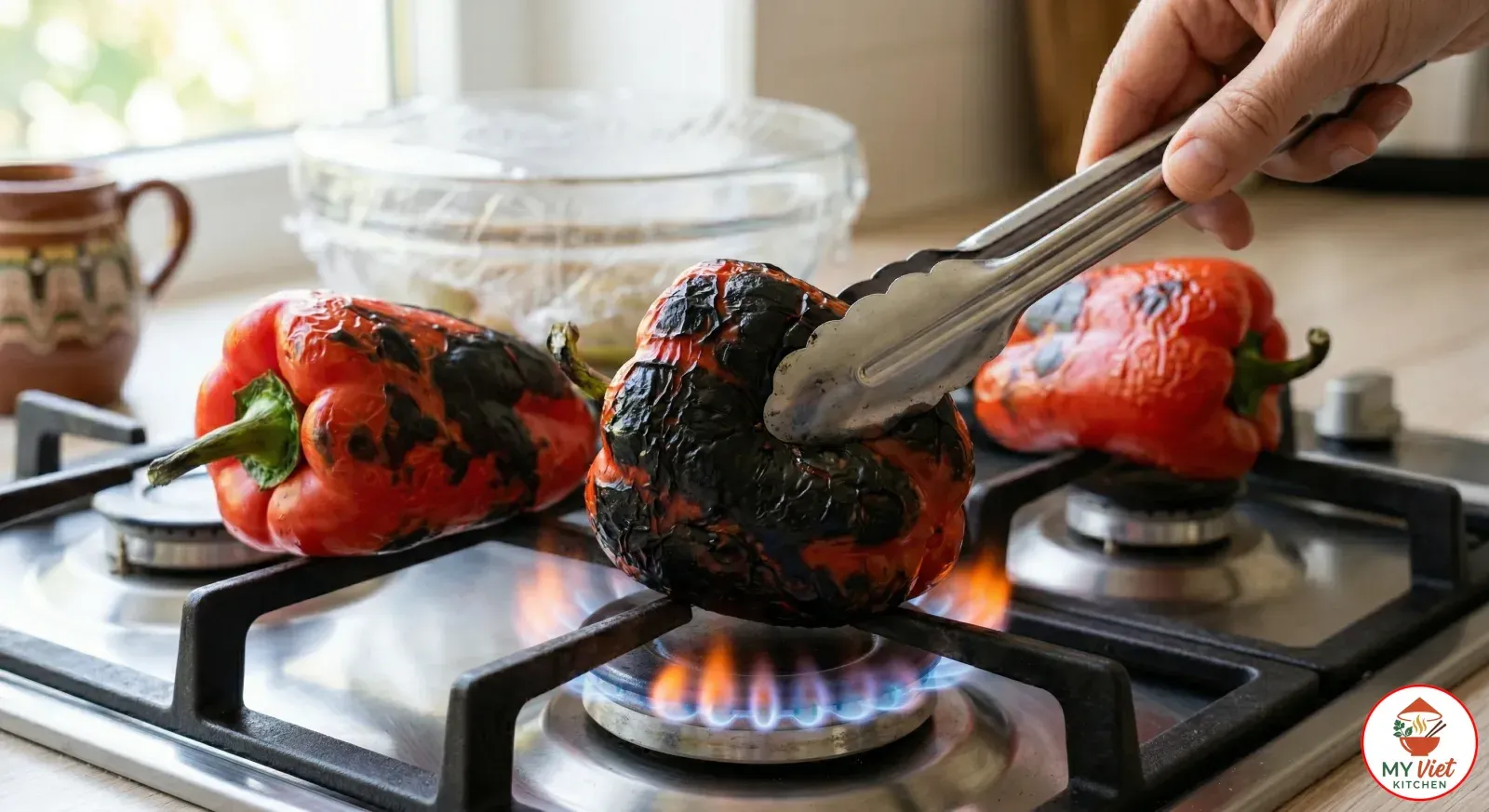
2 Place whole red peppers right over a gas flame, turning them with tongs every two to three minutes until the skin chars on all sides. If you do not have a gas stove, set your broiler to high and place the peppers on a sheet pan about four inches from the heat. You want a fully black exterior while the flesh inside stays tender and smoky.
Move the charred peppers to a bowl and cover it tightly with plastic wrap. Let them steam for 15 minutes. The steam loosens the skin so it peels off with ease. After that, rub the skins off under running water. Remove the stems and seeds, then dice the soft, smoky flesh into half-inch pieces. These roasted peppers add a sweet, smoky depth that fresh peppers cannot match.
Step 3: Assemble and Dress the Salad
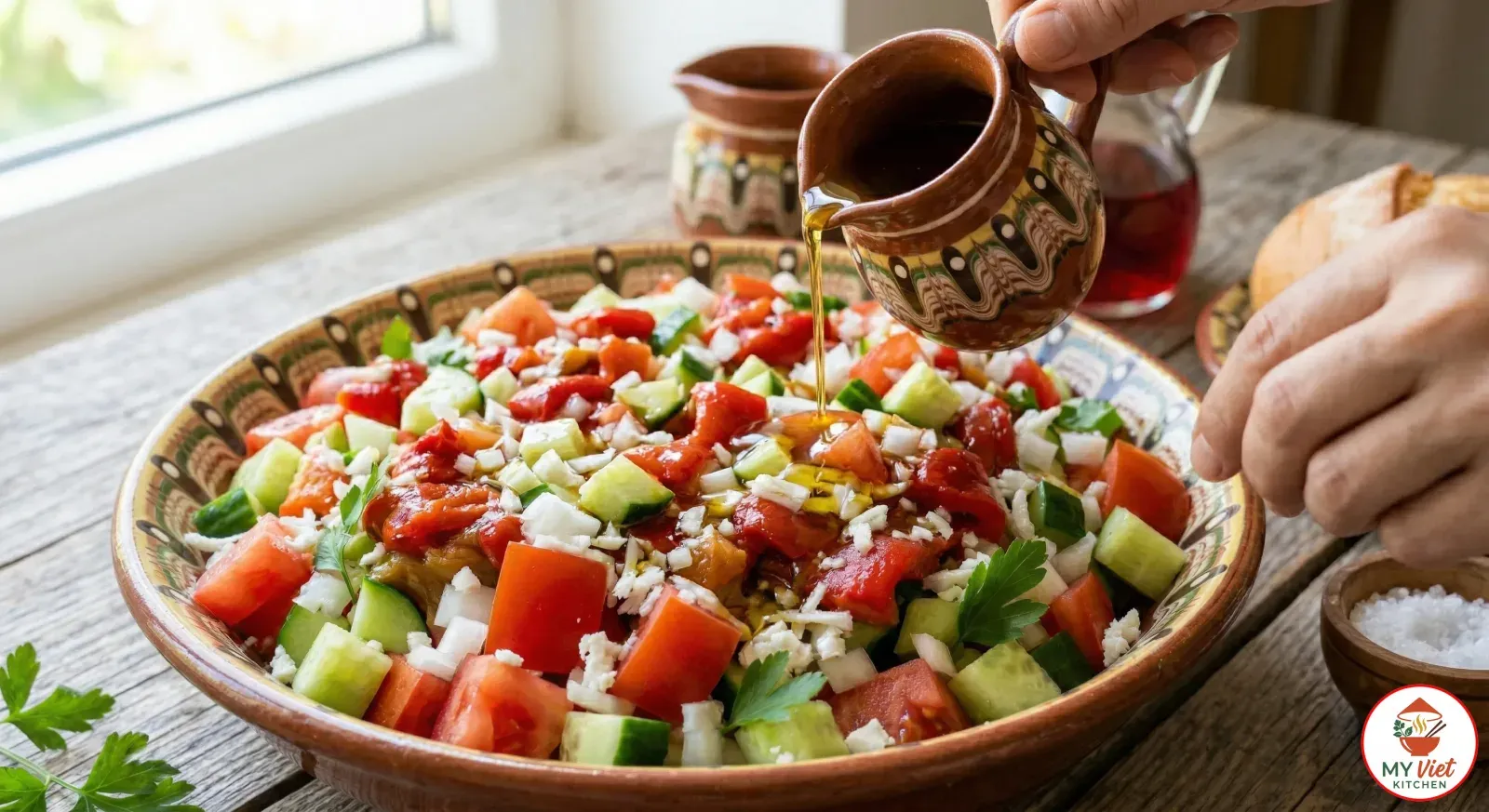
3 Put all the diced veggies in a large, shallow bowl or on a wide plate. Shallow dishes work best since they let you spread the veggies in one layer, giving the cheese more room to cover. Add salt, then drizzle the olive oil and red wine vinegar on top. Toss gently with a spoon, lifting from the bottom to coat every piece.
Do not add too much dressing. The tomatoes give off their own juices as they sit, and the oil should lift the fresh flavors, not drown them. Two spoons of oil and one of vinegar is enough for four servings. After tossing, taste a piece and adjust the salt or vinegar if needed. The flavor should lean bright and tangy, since the cheese adds richness on top.
Step 4: Top with Grated Sirene Cheese
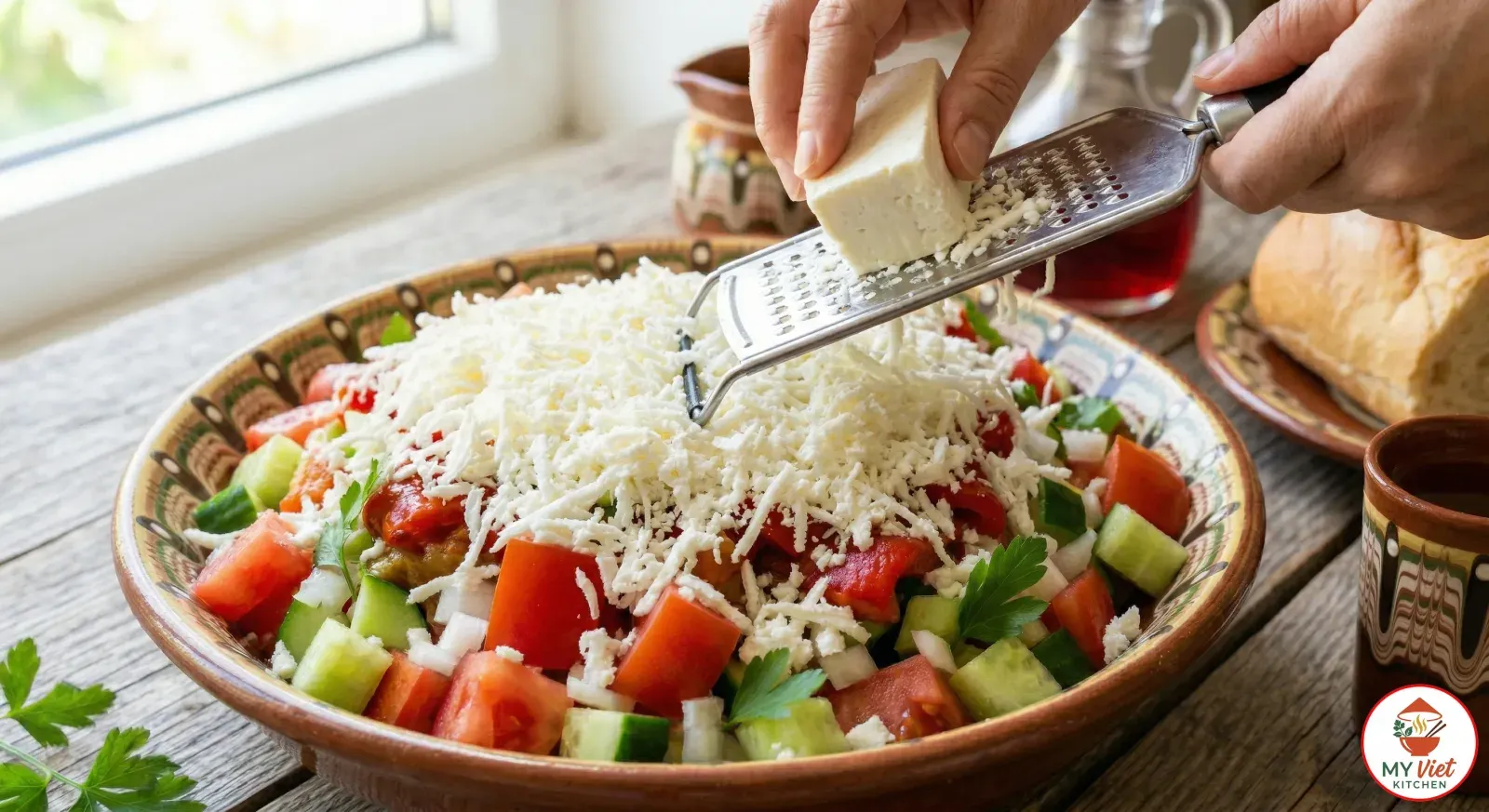
4 This is the step that turns a simple veggie salad into real shopska salad. Use the large holes of a box grater to grate the sirene cheese right over the veggies. Let the shreds fall into a thick, fluffy layer that covers most of the salad below. In Bulgaria, the cheese should be so thick that you can barely see the veggies under it.
Add fresh parsley and a crack of black pepper if you like. Serve the salad right away while the cheese is still light and fluffy. Over time, the cheese soaks up juice from the tomatoes, which gives it a nice creamy feel but kills the airy look. For the best taste and look, bring the salad to the table as soon as you grate the cheese.
Expert Tips for Perfect Shopska Salad
Use the Ripest Tomatoes You Can Find
Since shopska salad is all raw, the tomatoes carry the dish. Bland, pale tomatoes will ruin it no matter what else you do right. In summer, use vine-ripe ones that smell sweet at the stem. In colder months, cherry or grape tomatoes taste better than big store kinds. Bulgarians wait until July and August to make shopska salad at its peak, because the tomatoes make or break it.
Grate the Cheese, Never Crumble It
Grating is what gives shopska salad its look and feel. Crumbled cheese sits in chunks on top, but grated cheese forms a light, snowy layer that melts into the juices below. Use the large holes of a box grater and let the shreds fall loosely. Do not press or pack them down. If the cheese is too soft to grate, chill it in the freezer for 10 to 15 minutes. This firms it up just enough for clean shreds.
Keep the Dressing Simple
Real shopska salad uses only olive oil and vinegar. No lemon, no garlic, no herbs in the dressing. This is on purpose, because it lets the fresh flavors of the veggies and cheese shine through. Bulgarians would never add balsamic or dried oregano. Stick with good olive oil and red wine vinegar. The best shopska salad tastes like a garden, not a spice rack.
Shopska Salad vs. Other Balkan Salads
Every Balkan country has its own take on a fresh veggie salad, but the details differ in key ways. Here is how shopska salad stacks up against its closest cousins.
| Salad | Country | Key Ingredients | Main Difference from Shopska |
|---|---|---|---|
| Shopska Salad | Bulgaria | Tomato, cucumber, pepper, onion, grated sirene | Thick grated cheese topping is the defining feature |
| Serbian Salad | Serbia | Tomato, cucumber, onion, oil | No peppers and no cheese topping |
| Greek Salad (Horiatiki) | Greece | Tomato, cucumber, pepper, onion, olives, feta slab | Uses a slab of feta, adds olives and capers |
| Shepherd Salad (Coban Salatasi) | Turkey | Tomato, cucumber, pepper, onion, parsley | No cheese, finer dice, more parsley and lemon |
| Ovcharska Salad | Bulgaria | Shopska base plus ham, egg, olives, mushrooms | Extended shopska with protein additions |
Serving Suggestions
In Bulgaria, shopska salad comes out at the start of almost every meal. It works as a fresh opener while the main course finishes on the grill or stove. The salad goes well with grilled meats, baked dishes, and stews, but it also stands alone as a light meal on hot summer days.
The Perfect Accompaniments:
- Grilled kebapche (Bulgarian sausages): The smoky, spiced minced meat pairs beautifully with the cool, crisp vegetables and tangy cheese. This is the most classic Bulgarian pairing for shopska salad.
- Kyufte (Bulgarian meatballs): Flat, seasoned patties grilled over charcoal. Their rich, savory flavor finds balance against the fresh acidity of the salad.
- Crusty bread: Thick slices of white bread to soak up the tomato juices and olive oil that pool at the bottom of the bowl. No Bulgarian would let those juices go to waste.
- Banitza (Bulgarian cheese pastry): The flaky, cheesy pastry alongside a fresh shopska salad creates a satisfying contrast of warm and cool, crispy and juicy.
Beverage Pairings:
- Rakia (Bulgarian fruit brandy): The traditional pairing. Bulgarians sip cold rakia alongside shopska salad as a starter before the main meal. The anise or grape notes complement the fresh vegetables beautifully.
- White wine: A crisp Bulgarian Dimyat or Sauvignon Blanc matches the salad’s bright acidity and the creamy tang of the cheese. Serve it well chilled.
- Ayran (yogurt drink): A cold, salted yogurt beverage that reinforces the dairy element and cools the palate. Especially refreshing on hot summer days.
- Sparkling water with lemon: A light, non-alcoholic option that cleanses the palate between bites without competing with the delicate flavors of the salad.
Storage and Make-Ahead Tips
Refrigerator: Store undressed, diced veggies in a sealed box for up to one day. Keep the cheese apart and grate it fresh when you serve. Once dressed, shopska salad tastes best within 30 minutes. After that, the salt pulls water from the tomatoes, which thins the dressing and makes the salad soggy.
Freezer: Shopska salad does not freeze well. The fresh veggies lose all their crunch when frozen and thawed. So always make shopska salad fresh and eat it the same day. If you have leftover veggies, blend them into a cold soup rather than trying to freeze them.
Make-ahead plan: Dice all the veggies up to a few hours early. Store each one on its own in the fridge so the tomato juices do not make things soggy. When you are ready, just mix, dress, add cheese, and serve. This works great for dinner parties and cookouts.
Common Mistakes to Avoid
1. Using Unripe or Flavorless Tomatoes
Shopska salad lives or dies by the quality of its raw parts. Pale, mealy tomatoes will give you a bland salad no matter how much cheese or oil you add. Always pick ripe ones that smell sweet and give slightly when pressed. If good tomatoes are not in season, use halved cherry tomatoes instead. They have more sweetness and juice than big pale ones from the store.
2. Crumbling the Cheese Instead of Grating It
Crumbling makes dense chunks that sit heavy on the salad. Grating gives you light, airy shreds that form the snowy top and melt gently into the juices. This change in feel is key to the real shopska salad. Use the large holes of a box grater. If the cheese feels too soft, firm it up in the freezer for a few minutes first.
3. Adding Too Many Extra Ingredients
It is tempting to add olives, capers, lettuce, or herbs, but that turns shopska salad into a whole new dish. The beauty of this salad lies in keeping it simple. Each item plays a role, and adding extras throws off the balance. If you want olives and capers, make a Greek salad. Keep shopska salad clean and let four veggies and one cheese do the talking.
4. Dressing the Salad Too Far in Advance
Salt and acid pull water out of the veggies, mostly the tomatoes. If you dress the salad more than 30 minutes early, the bowl fills with thin liquid. The veggies go limp, and the cheese turns soggy. So dress it right before you eat. This keeps the crunch and the bright flavors alive.
Frequently Asked Questions
What is shopska salad made of?
Shopska salad has diced ripe tomatoes, cucumbers, roasted or fresh peppers, and onion, dressed with olive oil and red wine vinegar. A thick layer of grated sirene cheese goes on top, and some cooks add fresh parsley. The list of items is short on purpose, since each one must taste great on its own. In fact, this simplicity is what makes the dish so loved.
What can I use instead of sirene cheese?
Feta cheese is the most common swap. Pick a block of Greek feta made from sheep milk for the closest match. Since feta is saltier than sirene, cut the salt in your dressing. You can also try Romanian telemea or ricotta salata, both milder in taste. Stay away from pre-crumbled cheese in bags. It has a dry, dusty feel that does not grate well.
Is shopska salad healthy?
Shopska salad is a great pick for healthy eating. One serving has about 180 calories, with lots of vitamins A and C from the tomatoes and peppers, water from the cucumbers, and protein plus calcium from the cheese. The olive oil adds good fats. Since nothing is cooked, the veggies keep all their nutrients. On top of that, the salad is gluten-free and fits any vegetarian diet.
Should I use roasted or fresh peppers?
Real Bulgarian shopska salad uses roasted red peppers, which bring a deep, smoky sweetness that lifts the whole dish. Roasting softens them so they blend better with the juicy tomatoes and crisp cucumbers. That said, fresh bell peppers work fine when you want a quicker prep. They add more crunch and a brighter taste. Both ways are valid, and it depends on the season and where you are.
Why is shopska salad the national salad of Bulgaria?
Shopska salad earned its fame because its colors match the Bulgarian flag: white cheese, green cucumbers, and red tomatoes and peppers. The tourism board pushed it in the 1960s as a national symbol, and the dish took off both at home and abroad. Beyond the colors, the salad shows off Bulgaria’s rich farmland. Every item in it grows well in Bulgarian gardens during summer, so it is a feast that honors the land itself.
Can I make shopska salad ahead of time?
You can prep the veggies early, but do not dress the salad or add cheese until you serve. Dice the tomatoes, cucumbers, peppers, and onion. Then store them in sealed boxes in the fridge for up to a few hours. When it is time to eat, mix them, add the dressing, and grate the cheese on top. This keeps the textures crisp and the cheese fluffy.
Variations and Adaptations
Ovcharska Salad (Shepherd’s Salad):
This bigger version starts with the shopska base and adds sliced boiled eggs, diced ham, mushrooms, and olives. It turns a light starter into a filling main dish. The added protein makes it hearty enough for lunch on its own. Think of it as shopska salad that grew up into a full meal.
Grilled Vegetable Shopska:
Instead of roasting just the peppers, grill all the veggies lightly before you put the salad together. Place halved tomatoes, thick cucumber slices, and pepper halves on a hot grill for two to three minutes per side. The char adds smoke to every part, not just the peppers. Let them cool before you dice and mix. This version works great for outdoor cookouts.
Vegan Shopska Salad:
Swap the sirene for firm tofu that you crumble and soak in lemon juice, olive oil, and a pinch of salt for 30 minutes. The acid and salt give the tofu a tangy, cheese-like taste. You can also use a plant-based feta made from nuts. The flavor differs from the real thing, but the look stays true to the shopska style: a white topping over bright, colorful veggies.
Spicy Shopska:
Add finely diced hot chili peppers or a drizzle of lyutenitsa, a smoky Bulgarian pepper relish, to the dressing. This version brings a gentle heat that plays well against the cool veggies and creamy cheese. Start with a small amount and build up to your taste. In southern Bulgaria, cooks often toss in a mild chili as a normal part of shopska salad.
The Cultural Significance of Shopska Salad
Shopska salad holds a place in Bulgarian life that goes far past its role as a starter. It is the dish that defines summer, when gardens fill up with tomatoes, peppers, and cucumbers. Every Bulgarian family grows at least some of these veggies, and the first ripe tomato marks the start of shopska salad season. From June through September, this salad shows up on tables all over the country as surely as the sun rises.
The name comes from the Shopluk region near Sofia, though today every part of Bulgaria claims the salad as its own. Pride in shopska salad runs deep and wide. When Bulgarians travel abroad, they judge restaurants by the quality of their shopska salad. If a place cannot make a good one, nothing else on the menu will be right either. In this way, shopska salad acts as a test of Bulgarian food know-how.
Also, shopska salad ties into the Bulgarian way of eating with the seasons. Bulgarians do not make this salad in January with pale tomatoes. They wait for summer, enjoy the salad at its peak, and then switch to pickled veggies and stews when fall comes. This love for seasonal food runs deep in their culture, and shopska salad shows it best. In the end, the dish is more than a recipe. It says that good food should come from good items, grown close to home, and eaten at the right time.
Conclusion
This shopska salad recipe gives you the real Bulgarian way to make one of the best salads in all of Europe. The keys are ripe tomatoes, roasted peppers, a simple oil and vinegar dressing, and a thick layer of grated sirene cheese on top. These four parts come together into something greater than the sum, giving you freshness, crunch, tang, and cream in every bite. Serve it as a summer starter, a side for grilled meats, or a light lunch on its own. Shopska salad brings the taste of a Bulgarian summer right to your table.
Ready to explore more Bulgarian and Balkan recipes? Browse our European dishes collection for recipes like banitza, moussaka, and Greek salad. Each one brings a taste of a different culinary tradition to your kitchen.