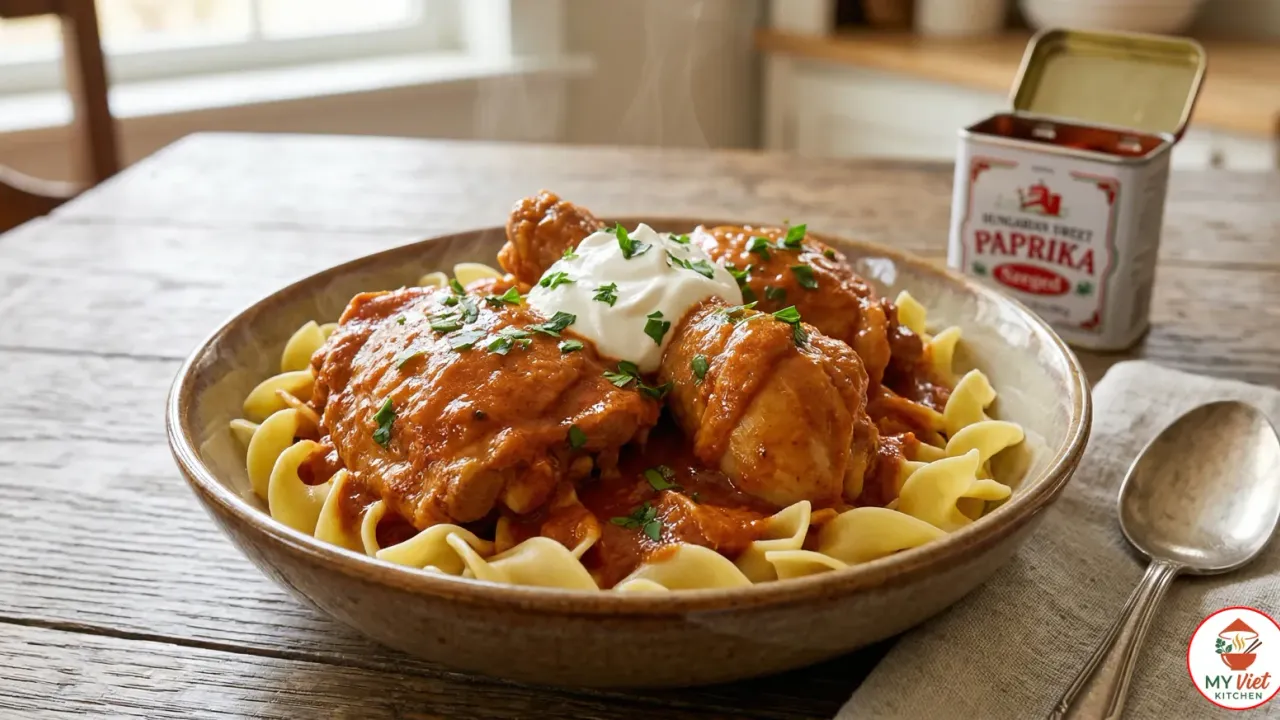
Chicken paprikash is the beloved Hungarian stew where tender bone-in chicken simmers in a vibrant sauce built on sweet paprika and finished with tangy sour cream. Known in Hungary as csirkepaprikas, this dish transforms a handful of humble ingredients into a deeply satisfying meal that has warmed Hungarian tables for generations. This chicken paprikash recipe follows the traditional method, starting with a slow-cooked onion base, blooming the paprika off heat to protect its delicate flavor, and finishing with a velvety sour cream sauce that clings to every piece of chicken. Serve it over egg noodles or soft nokedli dumplings for an authentic Hungarian dinner.
Prep Time: 20 minutes | Cook Time: 45 minutes | Servings: 4
Difficulty: Easy | Calories: ~480 per serving
What Makes Chicken Paprikash Special?
Chicken paprikash stands apart from every other chicken stew because the paprika is not just a seasoning. It is the foundation of the entire dish. Hungarian cooks build the sauce around generous amounts of sweet paprika, and the spice carries the flavor from start to finish. While many Western recipes treat paprika as a sprinkle of color, this dish uses three full tablespoons. As a result, you taste the warm, fruity depth that only quality Hungarian paprika delivers.
The sour cream finish is the second element that sets this stew apart. Unlike goulash, which stays broth-based, chicken paprikash gets its signature creamy texture from a generous amount of sour cream stirred in at the end. This dairy addition transforms the bright red paprika broth into a rich, pink-orange sauce with a gentle tang. Because the sour cream goes in just before serving, it stays silky and fresh rather than cooking down into the liquid.
Moreover, the technique of simmering bone-in chicken pieces directly in the sauce creates a depth of flavor that no boneless shortcut can replicate. The bones release gelatin into the liquid over 40 minutes of gentle cooking. In turn, the sauce thickens naturally and develops a body that coats the back of a spoon. This slow exchange between chicken and sauce is what gives authentic chicken paprikash its soul-warming quality.

Choosing the Right Paprika
Paprika is the heart of this dish, so your choice of spice determines how your chicken paprikash tastes. Not all paprika is the same. The variety, origin, and freshness make a dramatic difference in color, flavor, and aroma. Here are your best options.
- Hungarian sweet paprika (edes, best choice): This is the essential variety for authentic chicken paprikash. It has a deep brick-red color, a mild sweetness, and a fruity warmth that no other spice replicates. Look for brands from Szeged or Kalocsa, the two main paprika-producing regions of Hungary. Fresh Hungarian paprika should smell fragrant and slightly sweet when you open the tin.
- Hungarian hot paprika (eros): Use this in small amounts alongside sweet paprika if you want gentle heat. Hot Hungarian paprika adds spiciness without changing the fundamental flavor of the dish. Start with half a teaspoon and adjust upward. Traditional cooks often mix a pinch of hot paprika into the sweet variety for complexity.
- Regular grocery store paprika: Most supermarket paprika is mild and lacks the depth of Hungarian varieties. If this is your only option, use it, but increase the amount by a tablespoon and add a pinch of cayenne for warmth. The color will be lighter and the flavor thinner, so consider ordering genuine Hungarian paprika online for the best results.
Ingredients for Chicken Paprikash
Main Ingredients:
- 3 pounds bone-in, skin-on chicken thighs and drumsticks (about 6 to 8 pieces)
- 2 large yellow onions, finely diced
- 2 cloves garlic, minced
- 1 large green bell pepper, diced
- 1 large ripe tomato, chopped (or 2 tablespoons tomato paste)
- 1 cup chicken broth
For the Paprika Base:
- 3 tablespoons Hungarian sweet paprika
- 1 teaspoon hot Hungarian paprika (optional, for gentle heat)
- 2 tablespoons lard or unsalted butter
- 1 tablespoon vegetable oil
For the Sour Cream Sauce:
- 1 cup full-fat sour cream
- 2 tablespoons all-purpose flour
- 1 teaspoon salt
- 1/2 teaspoon freshly ground black pepper
- Fresh parsley for garnish
Pro tip: Always bloom the paprika off the heat. Paprika burns in seconds over a hot flame, which turns it bitter and ruins the sauce. Instead, remove the pot from the burner, stir in the paprika, and let the residual heat of the onions release its essential oils. This technique preserves the spice’s full, sweet flavor.
Step-by-Step Instructions
Step 1: Cook the Onion Base
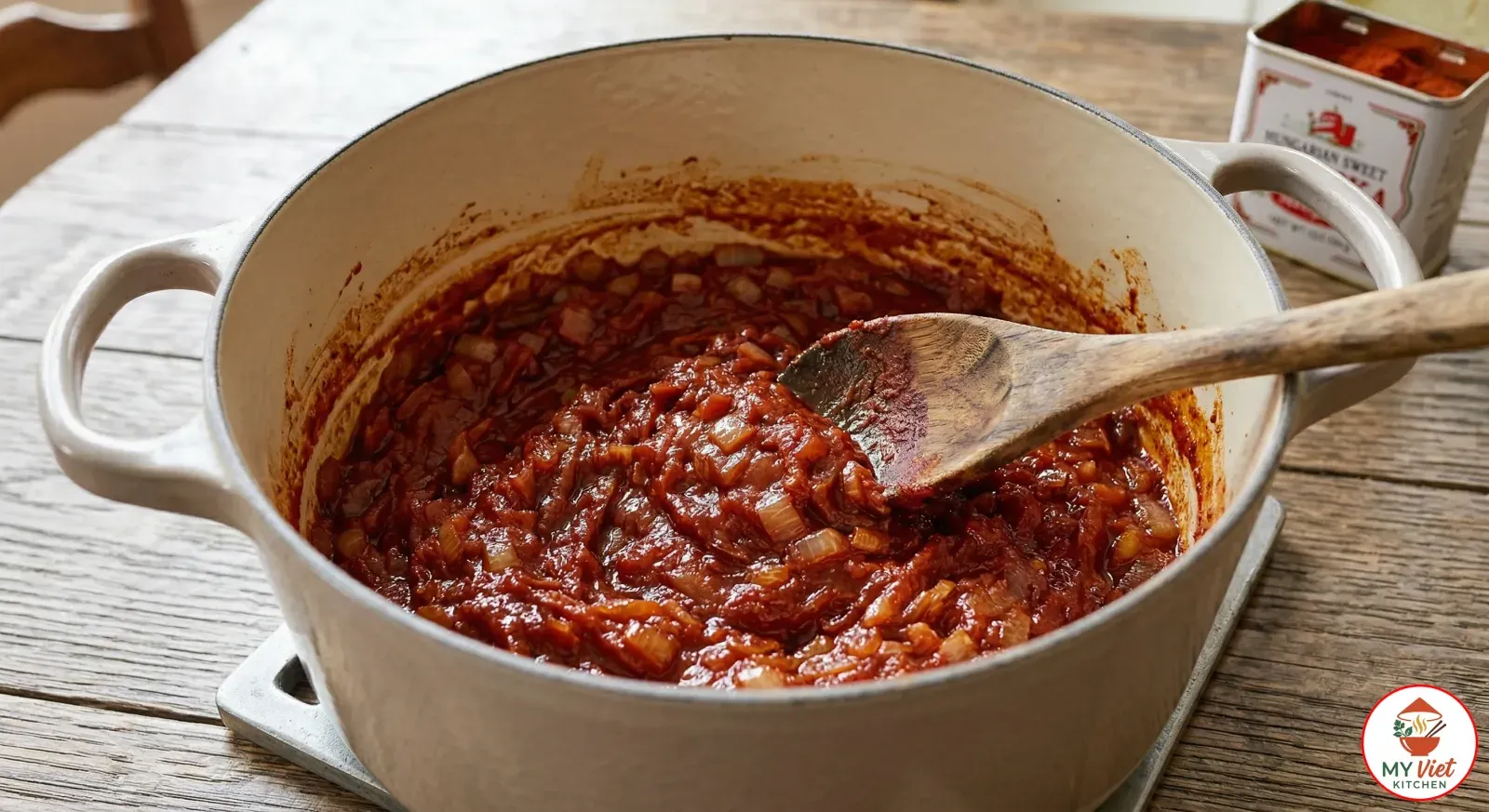
1 Heat the lard or butter with the vegetable oil in a large Dutch oven over medium heat. Add the finely diced onions and stir to coat them in the fat. Cook for 10 to 12 minutes, stirring occasionally, until the onions turn completely soft and translucent. You want them melted down into a near-paste, not browned. Hungarian cooks call this the “alap,” and it forms the flavor foundation of the entire dish.
Once the onions are soft, remove the pot from the heat entirely. Add the sweet paprika and hot paprika to the onions. Then stir continuously for about 30 seconds. The residual heat from the onions is enough to bloom the paprika and release its aromatic compounds. Because you work off the heat, there is no risk of the paprika scorching and turning bitter. The mix should look like a thick, deep red paste at this point.
Step 2: Build the Sauce Base
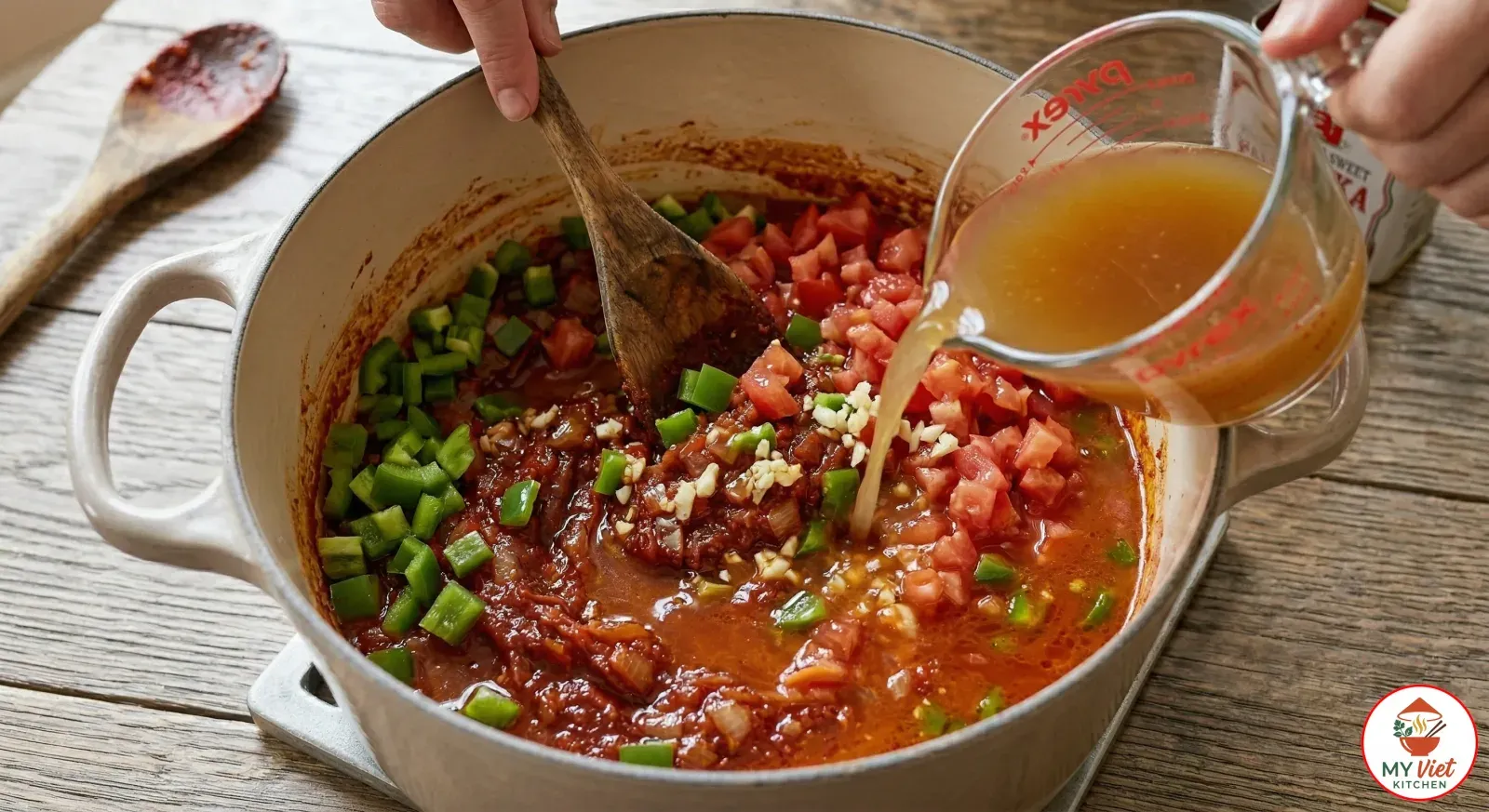
2 Return the pot to medium heat. Add the minced garlic, diced green pepper, and chopped tomato to the paprika-onion paste. Stir everything together for about two minutes, allowing the vegetables to soften slightly. The tomato breaks down quickly and adds acidity that balances the sweetness of the paprika. If fresh tomatoes are not available, two tablespoons of tomato paste works as a reliable substitute.
Pour in the chicken broth and stir well to dissolve the paprika paste into the liquid. The sauce should turn a vibrant red-orange color. Bring it to a gentle simmer, then reduce the heat to low. At this stage, the sauce looks thin, but it will concentrate and thicken significantly during the long simmer with the chicken. Taste it now and adjust the salt if needed.
Step 3: Simmer the Chicken
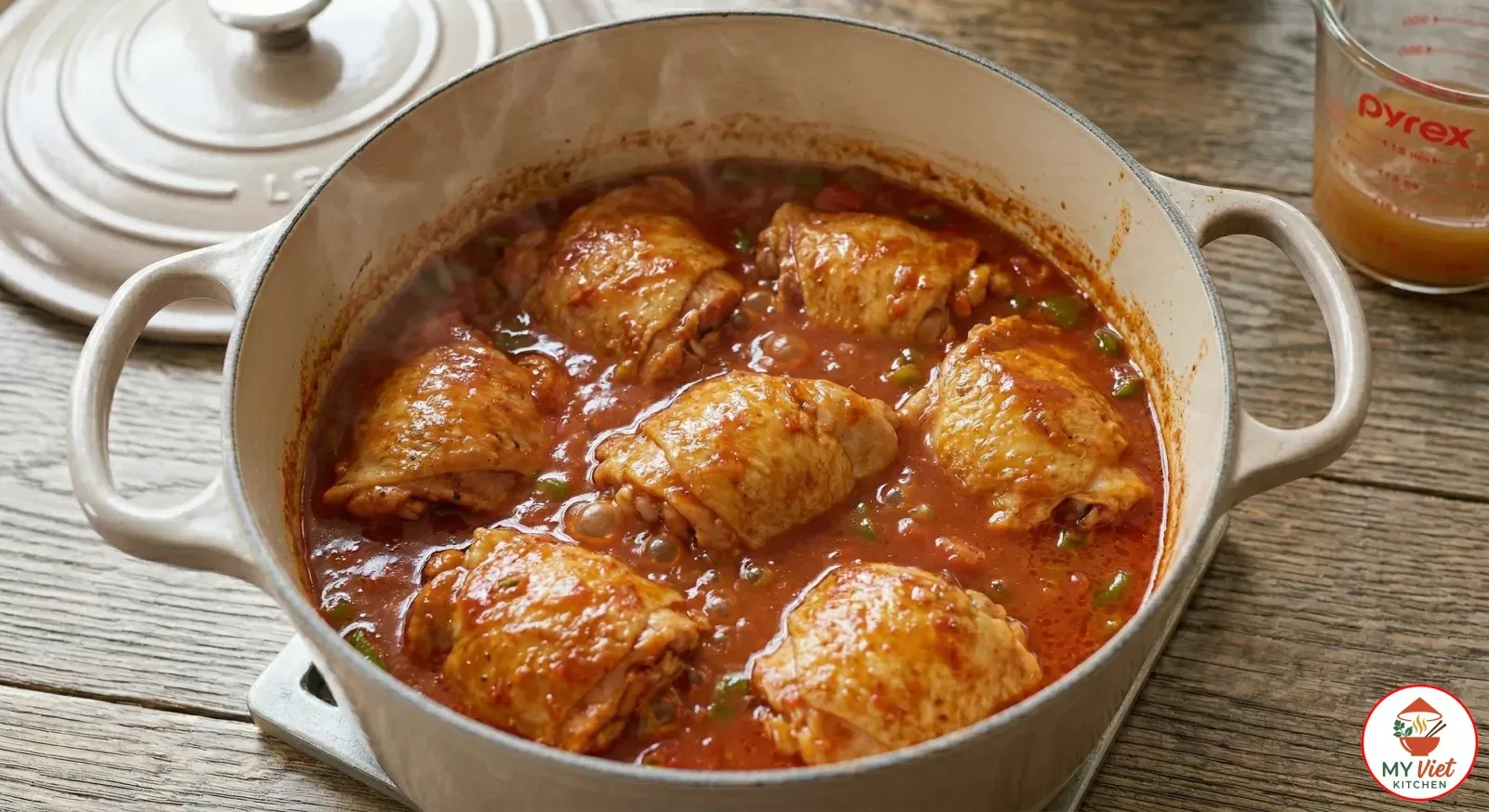
3 Season the chicken pieces with salt and pepper on both sides. Nestle them into the simmering sauce in a single layer. The liquid should come about halfway up the chicken pieces. If it does not, add a splash more broth. Cover the pot with a tight-fitting lid and let the chicken simmer gently over low heat for 35 to 40 minutes.
Resist the urge to lift the lid frequently. Every time you open the pot, you lose steam and slow down the cooking. The chicken is done when the meat pulls away from the bone with no resistance. The internal temperature should reach 175 degrees Fahrenheit for dark meat, which ensures the collagen in the thighs has fully broken down. This long, gentle simmer is what gives the sauce its naturally thick, silky texture.
Step 4: Finish with the Sour Cream Sauce
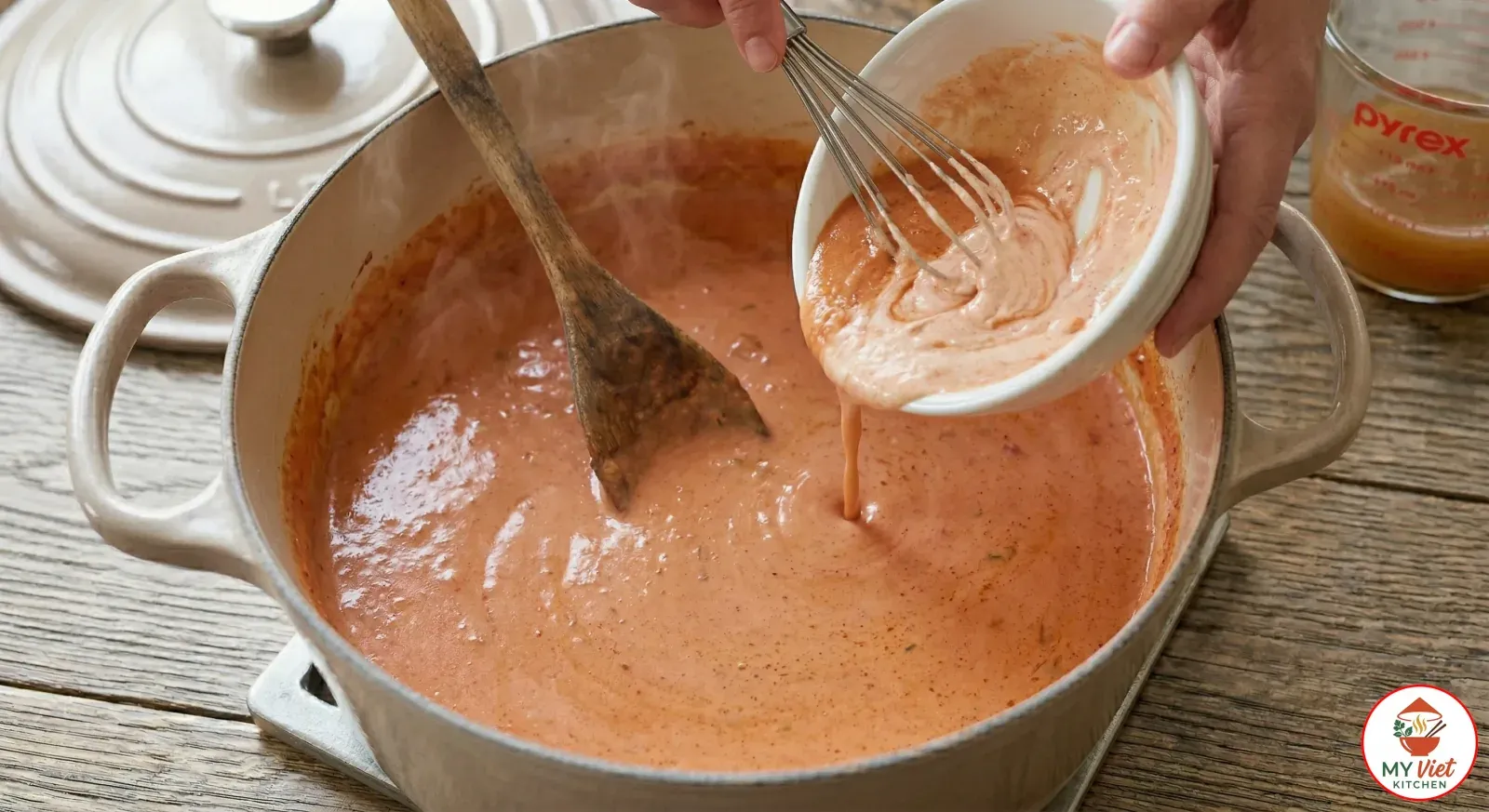
4 Carefully lift the chicken pieces out of the pot and set them on a plate. In a small bowl, whisk the flour into the sour cream until completely smooth. This flour acts as a stabilizer that prevents the sour cream from curdling when it hits the hot sauce. Next, ladle two or three spoonfuls of the hot sauce into the sour cream bowl and whisk to combine. This tempering step brings the sour cream up to temperature gradually.
Pour the tempered sour cream mixture into the pot while stirring constantly. Continue to stir over medium-low heat for 3 to 4 minutes until the sauce thickens to the consistency of heavy cream. The color transforms from bright red to a beautiful pink-orange. Do not let the sauce boil after adding the sour cream, because boiling causes the dairy to curdle and turn grainy. Finally, return the chicken to the pot and warm everything through for 2 minutes.
Step 5: Serve Over Noodles or Dumplings
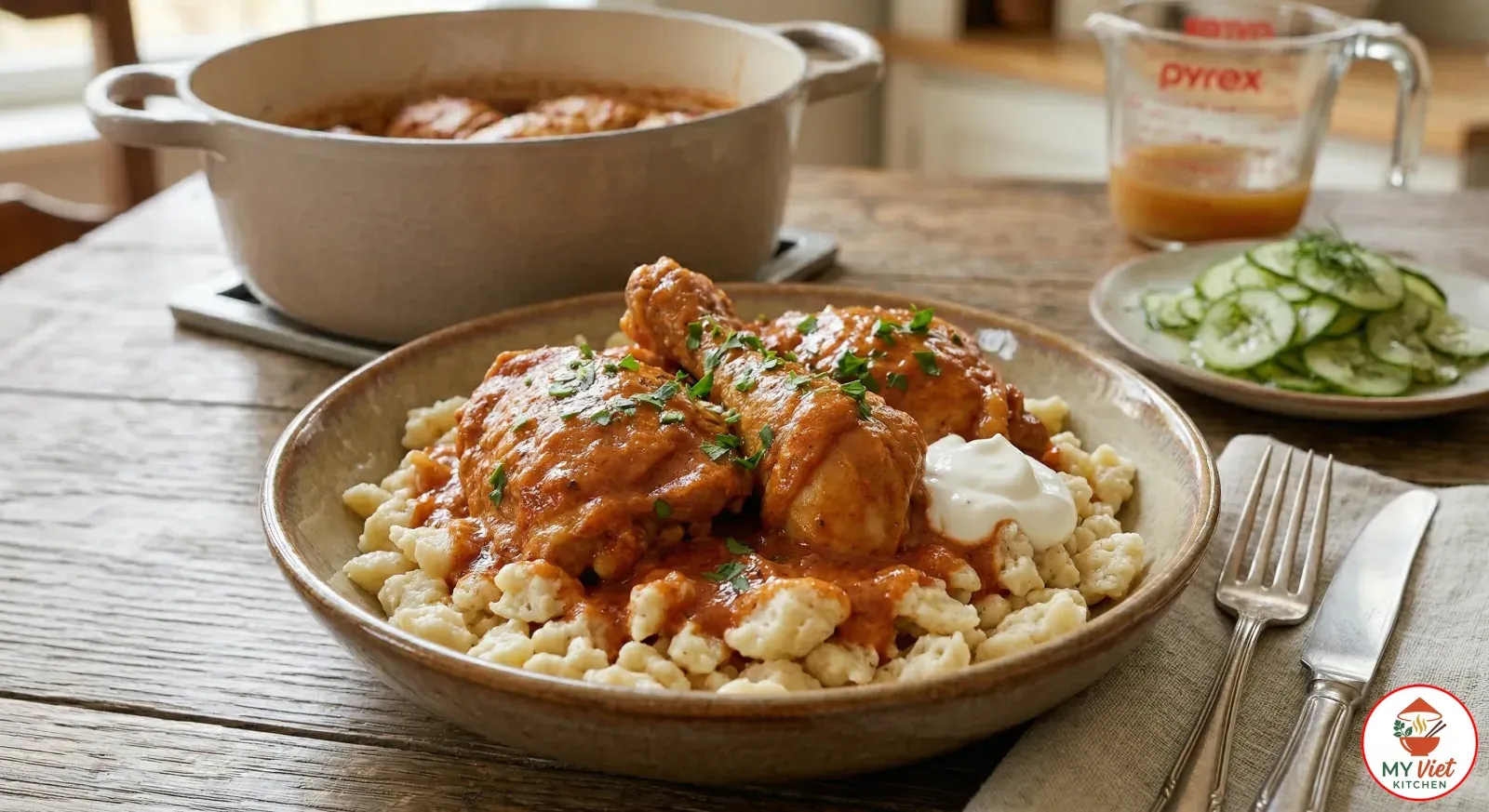
5 Spoon the chicken paprikash over a bed of cooked egg noodles or freshly made nokedli dumplings. Ladle generous amounts of the creamy paprika sauce over the chicken and noodles, making sure every piece gets well coated. Garnish with chopped fresh parsley for a bright pop of color and herbal freshness.
Serve immediately while the sauce is warm and fluid. As it cools, the sauce thickens further, so have extra broth on hand if you need to thin it at the table. For an extra touch of authenticity, place a small bowl of sour cream on the table so guests can add more to their liking. Each plate should show off the rich pink-orange sauce, the tender chicken falling off the bone, and the soft noodles soaking up every drop.
Expert Tips for Perfect Chicken Paprikash
Never Brown the Chicken First
Unlike most Western stews, traditional chicken paprikash does not call for searing or browning the chicken before it goes into the sauce. Browning creates a crusty exterior that prevents the sauce from penetrating the meat. Instead, Hungarian cooks place the raw chicken directly into the simmering paprika liquid. This way, the chicken absorbs the paprika flavor from the outside in, and the sauce stays smooth and unified. Many modern recipes add a browning step, but authentic Hungarian home cooks skip it.
Use Fresh Paprika for Maximum Flavor
Paprika loses its potency faster than most spices. A tin that has sat in your cupboard for over a year delivers weak color and flat flavor. For the best results, buy Hungarian paprika in small quantities and replace it every six to eight months. Store it in a cool, dark place, ideally in the refrigerator, to preserve its volatile oils. When you open a fresh tin, the aroma should be strong, sweet, and slightly fruity. If it smells dusty or bland, it is past its prime.
Temper the Sour Cream Properly
Adding cold sour cream directly to a hot pot is the fastest way to ruin the sauce. The sudden temperature shock causes the dairy proteins to seize, resulting in a grainy, curdled mess. Instead, whisk flour into the sour cream first to stabilize it. Then add a few spoonfuls of hot sauce into the sour cream bowl to bring the temperature up gradually. After that, pour the warm mixture into the pot while stirring. This simple technique keeps the sauce perfectly smooth.
Chicken Paprikash vs. Hungarian Goulash
These two dishes share Hungarian roots and generous paprika, but they are fundamentally different in technique, texture, and flavor. Understanding the distinction helps you appreciate what makes each one unique.
| Feature | Chicken Paprikash | Hungarian Goulash |
|---|---|---|
| Protein | Bone-in chicken pieces | Cubed beef or pork |
| Sauce base | Onions, paprika, sour cream | Onions, paprika, broth only |
| Dairy | Finished with sour cream | No dairy at all |
| Texture | Thick, creamy, pink-orange | Thin, brothy, deep red |
| Cook time | 45 minutes to 1 hour | 2 to 3 hours |
| Served with | Egg noodles or nokedli | Bread or boiled potatoes |
| Occasion | Weeknight family dinner | Weekend slow-cooked meal |
Serving Suggestions
Hungarian families serve chicken paprikash as a complete meal, usually with a starchy side that soaks up the rich sauce. The dish needs accompaniments that complement without competing with the bold paprika and sour cream flavors.
The Perfect Accompaniments:
- Nokedli (Hungarian egg dumplings): These small, soft dumplings are the most traditional pairing. Their pillowy texture absorbs the paprika sauce beautifully. Make them fresh by pushing a thick egg batter through a colander into boiling water.
- Wide egg noodles: The most accessible option outside of Hungary. Flat, wide noodles hold the sauce in their curves and create a satisfying base for the stew. Cook them al dente so they do not turn mushy under the warm sauce.
- Cucumber salad (uborkasalata): Thinly sliced cucumbers dressed in a sweet vinegar and sour cream dressing. The cool, crisp salad refreshes the palate between bites of the rich, warm stew.
- Crusty bread: A simple loaf of white bread does excellent work for mopping up every last drop of the paprika sauce from the plate. Hungarian families always keep bread on the table for this purpose.
Beverage Pairings:
- Egri Bikaver (Bull’s Blood): This medium-bodied Hungarian red wine from the Eger region stands up to the richness of the paprika sauce without overpowering the sour cream.
- Hungarian Furmint: A crisp white wine from the Tokaj region. Its bright acidity cuts through the creamy sauce and complements the paprika warmth.
- Pilsner beer: A cold, light lager cleanses the palate between bites. Hungarian brands like Dreher or Borsodi are traditional choices.
- Sparkling water with lemon: For a non-alcoholic option, the effervescence and citrus cut through the richness of the sauce effectively.
Storage and Reheating
Refrigerator: Store chicken paprikash in an airtight container for up to 3 days. The flavor actually improves overnight as the paprika deepens and the sauce melds together. Keep the noodles or dumplings stored separately, because they absorb the sauce and become mushy if left sitting in it.
Freezer: Freeze the chicken and sauce without sour cream for up to 2 months. The dairy separates and turns grainy when frozen and thawed. Instead, freeze the base sauce with the chicken, and stir in fresh sour cream after you reheat it. Thaw overnight in the refrigerator before reheating.
Reheating: Warm chicken paprikash gently over low heat on the stovetop, stirring occasionally. Add a splash of chicken broth if the sauce has thickened too much during storage. Do not boil the sauce, because the sour cream will break and curdle. Microwave reheating works in a pinch, but use 50 percent power and stir every 30 seconds to avoid hot spots that can separate the cream.
Common Mistakes to Avoid
1. Burning the Paprika
Paprika contains sugar that burns quickly over direct heat. Once it scorches, the entire dish tastes bitter and acrid. Always remove the pot from the burner before adding paprika to the onions. The residual heat from the softened onions is more than enough to bloom the spice. If you smell even a hint of burning, start over with fresh onions and paprika. There is no way to mask burnt paprika flavor in the finished dish.
2. Using Smoked Paprika Instead of Sweet
Smoked paprika, commonly known as pimenton, belongs to Spanish cooking. It gives food a campfire-like flavor that completely changes the character of chicken paprikash. Traditional Hungarian paprika is air-dried, not smoked, so it delivers a clean, fruity sweetness. If you use smoked paprika, you will make a tasty dish, but it will not taste like authentic Hungarian chicken paprikash. Save the smoked variety for chorizo and Spanish stews.
3. Boiling the Sauce After Adding Sour Cream
Sour cream curdles and separates at high temperatures. Once you stir it into the sauce, keep the heat at medium-low and stir constantly. The sauce should simmer gently, with small bubbles appearing around the edges, but never reach a full rolling boil. If the sauce does break, you can try blending it with an immersion blender. However, prevention is far easier than repair. Stay patient, keep the heat low, and your sauce will stay perfectly creamy.
4. Not Cooking the Onions Long Enough
The onions need a full 10 to 12 minutes of slow cooking until they melt into a soft, translucent paste. Many cooks rush this step, which leaves onion chunks floating in the sauce. These raw pieces give the dish a harsh, sharp bite instead of the mellow sweetness that defines a great paprikash. Take your time with the onions. They should nearly dissolve into the fat before the paprika goes in. This patience pays off in a smoother, more refined sauce.
Frequently Asked Questions
What is the difference between chicken paprikash and chicken goulash?
Chicken paprikash features a creamy sauce finished with sour cream, while goulash is a broth-based soup that never contains dairy. Paprikash uses bone-in chicken, and goulash traditionally calls for cubed beef simmered for hours. Both dishes rely on generous amounts of Hungarian paprika, but the sour cream in paprikash gives it a completely different texture and taste. In short, paprikash is rich and creamy, while goulash is lean and brothy.
What kind of paprika should I use for chicken paprikash?
Hungarian sweet paprika, labeled as edes, is essential. Look for brands from the Szeged or Kalocsa regions for the best flavor. Sweet paprika provides the deep red color and mild, fruity warmth that defines this dish. You can add a pinch of hot Hungarian paprika for gentle heat. However, avoid smoked Spanish paprika entirely, because it adds a campfire flavor that does not belong in this recipe.
Can I use boneless chicken for paprikash?
Boneless chicken thighs work, though the sauce will lack the rich body that bones provide. Bones release collagen and gelatin during the simmer, which thickens the sauce naturally and adds silkiness. If you use boneless thighs, reduce the cooking time to 20 to 25 minutes. Avoid chicken breasts for this dish, because they dry out during the slow simmer and turn stringy.
Why did my sour cream curdle in the sauce?
Sour cream curdles when it meets liquid that is too hot. To prevent this, whisk flour into the sour cream before adding it to the pot. The flour stabilizes the dairy proteins. Also, temper the mixture by stirring a few spoonfuls of hot sauce into the sour cream first. Then pour it slowly into the pot while stirring. Most importantly, never let the sauce boil once the sour cream is in.
What are nokedli and how do I make them?
Nokedli are small, soft Hungarian egg dumplings, similar to German spaetzle. Mix two cups of flour with two eggs, a pinch of salt, and enough water to form a thick batter. Push the batter through a colander or spaetzle maker into boiling salted water. The dumplings float to the surface in two to three minutes, which means they are ready. Drain them and toss with a little butter before serving alongside your chicken paprikash.
Can I make chicken paprikash ahead of time?
Absolutely, and it actually tastes better the next day. The paprika flavor deepens and the sauce melds together during overnight rest. Cook the dish completely, cool it, and refrigerate for up to three days. Reheat gently on the stovetop over low heat. Add a splash of broth if the sauce has thickened. Do not freeze paprikash with sour cream in it, because the dairy separates during thawing.
Variations and Adaptations
Veal Paprikash (Borjupaprikas):
Replace the chicken with two pounds of cubed veal shoulder. The meat needs about 90 minutes of simmering instead of 40. Veal produces an even silkier sauce because it has more collagen than chicken. The flavor is more delicate and refined, which makes this the version you find in upscale Hungarian restaurants. Finish it with the same sour cream technique.
Mushroom Paprikash (Gombapaprikas):
For a vegetarian adaptation, substitute the chicken with two pounds of mixed mushrooms. Cremini, oyster, and king trumpet mushrooms all work well. Saute the mushrooms in butter until they release their liquid and turn golden before adding them to the paprika sauce. Use vegetable broth instead of chicken broth. The cooking time drops to 15 minutes since mushrooms tenderize quickly. This version is surprisingly rich and satisfying.
Pork Paprikash (Sertespaprikas):
Bone-in pork shoulder chops make an excellent substitute for chicken. The higher fat content of pork creates an even more luxurious sauce. Cut the shoulder into thick slices and simmer for about an hour until the pork is fork-tender. The paprika and sour cream combination works beautifully with the natural sweetness of pork. This variation is popular in the countryside regions of Hungary.
Instant Pot Chicken Paprikash:
Use the saute function to cook the onions and bloom the paprika. Add the chicken, broth, peppers, and tomato, then pressure cook on high for 15 minutes with a 10-minute natural release. Remove the chicken, stir in the sour cream mixture on the saute setting at low heat, and return the chicken to the pot. The pressure cooker produces fall-off-the-bone chicken in a fraction of the time, though the sauce may need a few extra minutes to reduce and thicken.
The Cultural Significance of Chicken Paprikash
Chicken paprikash holds a central place in Hungarian culinary identity. It is the dish that Hungarian grandmothers teach first, the recipe that families argue about at holiday tables, and the meal that expats miss most when they live abroad. While paprikash may seem like a simple stew, its preparation carries the weight of generations of tradition. Each family guards its own recipe, and debates over the proper amount of sour cream, whether to add tomato, or how fine to dice the onion can last for hours.
The dish owes its existence to paprika itself, which arrived in Hungary during the 16th century through Ottoman trade routes. Hungarian farmers in the southern plains began cultivating the pepper, and within a few generations, it became the defining spice of the national cuisine. By the 19th century, paprika had transformed from a peasant seasoning into a symbol of Hungarian identity. Chicken paprikash emerged during this period as one of the first dishes built entirely around the spice’s flavor, rather than using it as a garnish.
Today, chicken paprikash remains one of the most frequently cooked dishes in Hungarian homes. It appears at Sunday family dinners, weeknight suppers, and celebration feasts with equal regularity. In restaurants across Budapest, you will find it on nearly every traditional menu, served over nokedli with an extra dollop of sour cream. Furthermore, the dish has traveled far beyond Hungary’s borders, appearing in Polish, Slovak, and Austrian kitchens in their own adapted versions. Yet the Hungarian original, with its precise technique and carefully balanced sauce, continues to set the standard.
Conclusion
This chicken paprikash recipe delivers the authentic Hungarian experience with a few essential techniques. Bloom the paprika off heat to preserve its sweet flavor. Simmer bone-in chicken slowly to build body in the sauce. Temper the sour cream carefully to keep it silky. These three steps are the difference between ordinary paprika chicken and the real thing. Once you master them, you have a weeknight dinner that feels like a Sunday celebration.
Ready to explore more Hungarian and European comfort food? Browse our European dishes collection for recipes like beef stroganoff, beef bourguignon, and borscht. Each one brings the warmth of European home cooking to your kitchen table.