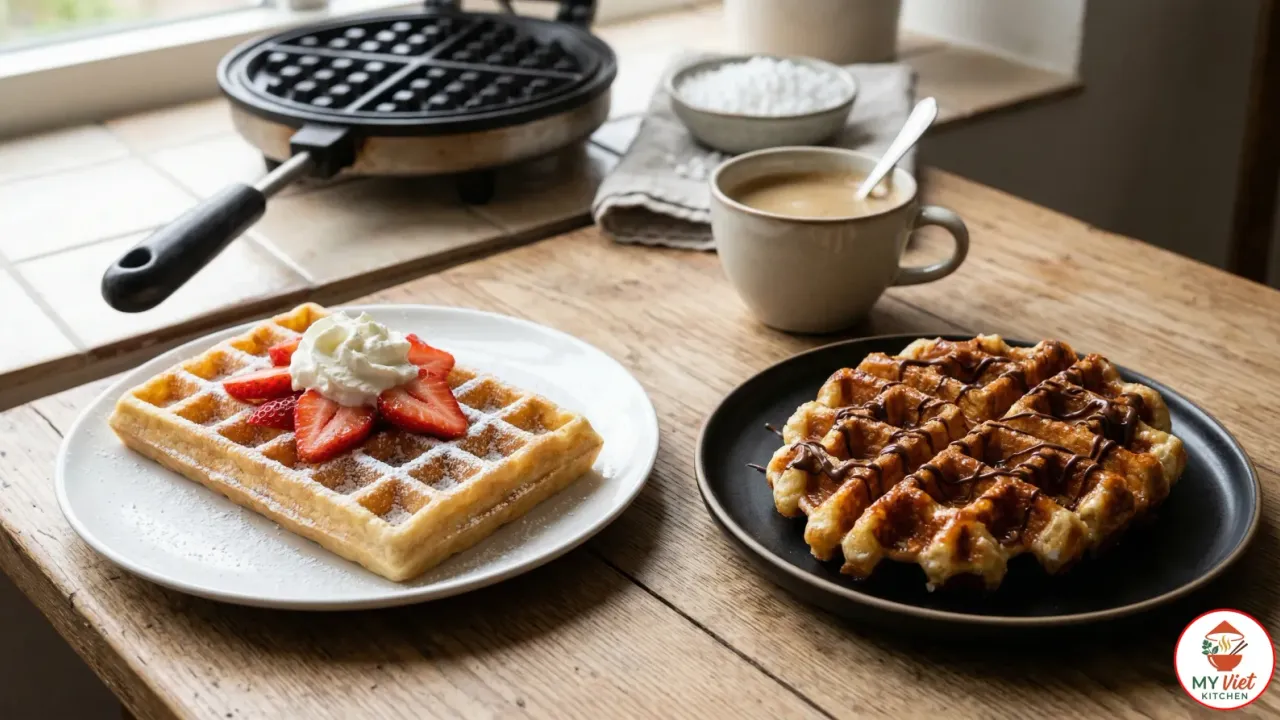
Belgian waffles are among the most beloved breakfast treats in the world, and this complete Belgian waffle recipe teaches you how to make both iconic styles at home. From the light, crispy Brussels waffle to the dense, caramel-crusted Liege waffle, Belgium has given us two masterpieces of batter and iron. Each style carries its own history, texture, and flavor profile. Whether you crave something airy with powdered sugar or something rich with caramelized pearl sugar pockets, this recipe delivers both.
Prep Time: 25 minutes | Cook Time: 20 minutes (plus 90 minutes rising) | Servings: 8 waffles
Difficulty: Medium | Calories: ~320 per waffle
What Makes Belgian Waffles Special?
The secret behind authentic Belgian waffles is yeast. Unlike American waffles that rely on baking powder for a quick rise, Belgian waffles use a yeast-leavened dough that develops flavor over time. This slow fermentation produces a complex, slightly tangy depth that no chemical leavener can replicate. The result is a waffle with a crisp golden shell and an interior that is impossibly light. Every bite carries the subtle richness of butter and the warmth of vanilla, layered over that distinctive yeast character.
Belgium takes its waffles seriously, and the country offers two entirely different traditions. The Brussels waffle, known locally as the gaufre de Bruxelles, is rectangular with deep pockets. It achieves its ethereal lightness through beaten egg whites folded into the batter just before cooking. Meanwhile, the Liege waffle, or gaufre de Liege, traces its origins to the city of Liege in the Wallonia region. It uses a thicker, brioche-like dough studded with chunks of Belgian pearl sugar. As the waffle cooks, those sugar pieces melt and caramelize on the hot iron, forming a glossy, crackling shell that shatters under your teeth.
Both styles share a common foundation of flour, butter, eggs, and yeast. However, the final texture and sweetness differ dramatically. Brussels waffles are lighter and depend on toppings for flavor. Liege waffles are rich enough to eat plain, since the caramelized pearl sugar provides built-in sweetness throughout. Understanding these differences is essential before you start cooking. It determines which variation you prepare and how you serve it. In Belgium, confusing the two styles is a culinary faux pas that locals take quite seriously.
Choosing the Right Flour for Belgian Waffles
Flour is the structural backbone of your waffle. Selecting the proper type affects the texture, crispness, and chew of both Brussels and Liege versions. Here are the best options for achieving authentic results at home.
- All-purpose flour (best choice): This is the most reliable option for both waffle styles. With a moderate protein content of 10 to 12 percent, it creates enough gluten structure to hold the waffle together while staying tender. All-purpose flour absorbs butter and milk evenly, producing a consistent batter every time. Most Belgian home bakers use their local equivalent of this flour.
- Bread flour: Higher in protein at 12 to 14 percent, bread flour produces a chewier, sturdier waffle. It works particularly well for Liege waffles, where you want a denser, more brioche-like texture that can support the pearl sugar without collapsing. However, it can make Brussels waffles too tough, so use it selectively.
- Pastry flour: Lower in protein, pastry flour creates an exceptionally tender and delicate waffle. It suits Brussels waffles beautifully, enhancing the airy quality that defines the style. For Liege waffles, the structure may be too fragile to hold the heavy pearl sugar. Blend it with all-purpose flour at a ratio of half and half for a balanced result.
- Self-rising flour (not recommended): Because Belgian waffles use yeast for leavening, self-rising flour adds unwanted baking powder and salt. The double leavening creates an unpredictable rise and a chemical aftertaste. Always start with plain flour and control the leavening yourself for consistent, authentic results.
Ingredients for Belgian Waffles
Base Dough (Shared):
- 2 cups all-purpose flour
- 1 tablespoon granulated sugar
- 2 1/4 teaspoons instant yeast (1 packet)
- 1/2 teaspoon salt
- 3/4 cup whole milk, lukewarm
- 2 large eggs, room temperature
- 1 teaspoon vanilla extract
- 8 tablespoons unsalted butter, melted and slightly cooled
For Liege Waffles:
- 3/4 cup Belgian pearl sugar (do not substitute granulated sugar)
For Brussels Waffles:
- 2 large egg whites, beaten to stiff peaks
For Serving:
- Powdered sugar for dusting (Brussels style)
- Fresh strawberries or blueberries
- Whipped cream
- Melted Belgian chocolate (Liege style)
- Pure maple syrup (optional)
Pro tip: Belgian pearl sugar is the non-negotiable ingredient for Liege waffles. These coarse, opaque sugar chunks resist melting at lower temperatures, so they hold their shape inside the dough and only caramelize when pressed against the hot waffle iron. You can find them at specialty baking stores or online. In a pinch, crush sugar cubes with a rolling pin into pea-sized pieces. Regular granulated or turbinado sugar dissolves too quickly and will not create the signature caramelized crust.
Step-by-Step Instructions
Step 1: Activate the Yeast Dough
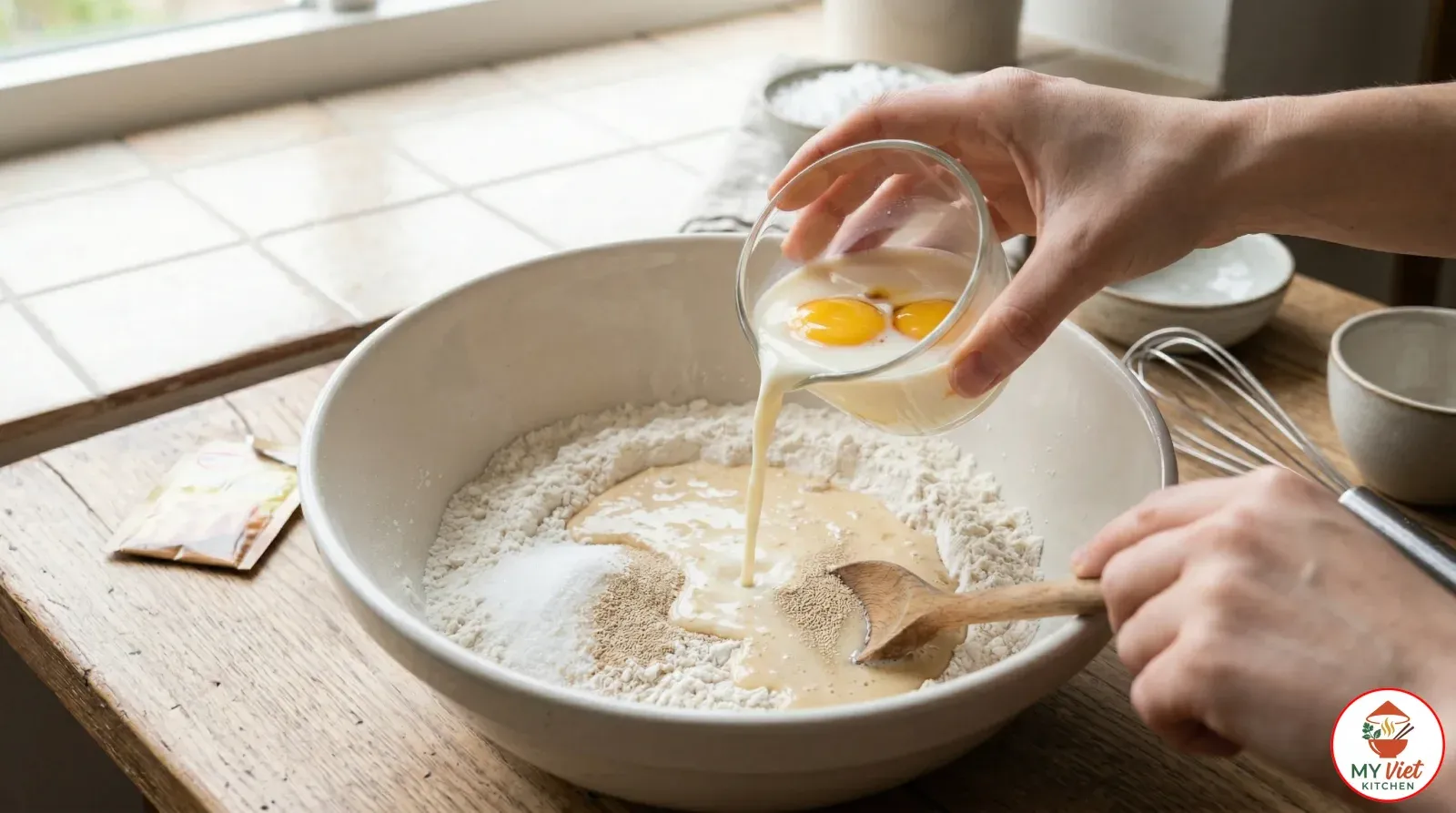
1 Whisk together the flour, sugar, instant yeast, and salt in a large mixing bowl. In a separate bowl, combine the lukewarm milk, eggs, and vanilla extract. Pour the wet mixture into the dry ingredients and stir with a wooden spoon until a shaggy, rough dough forms. Do not worry about lumps at this stage.
The milk temperature matters here. It should feel warm to the touch, around 100 to 110 degrees Fahrenheit. Too hot and you will kill the yeast. Too cold and the fermentation will stall. Lukewarm milk gives the yeast the gentle warmth it needs to activate quickly. Stir just until no dry flour remains visible in the bowl.
Step 2: Incorporate the Butter
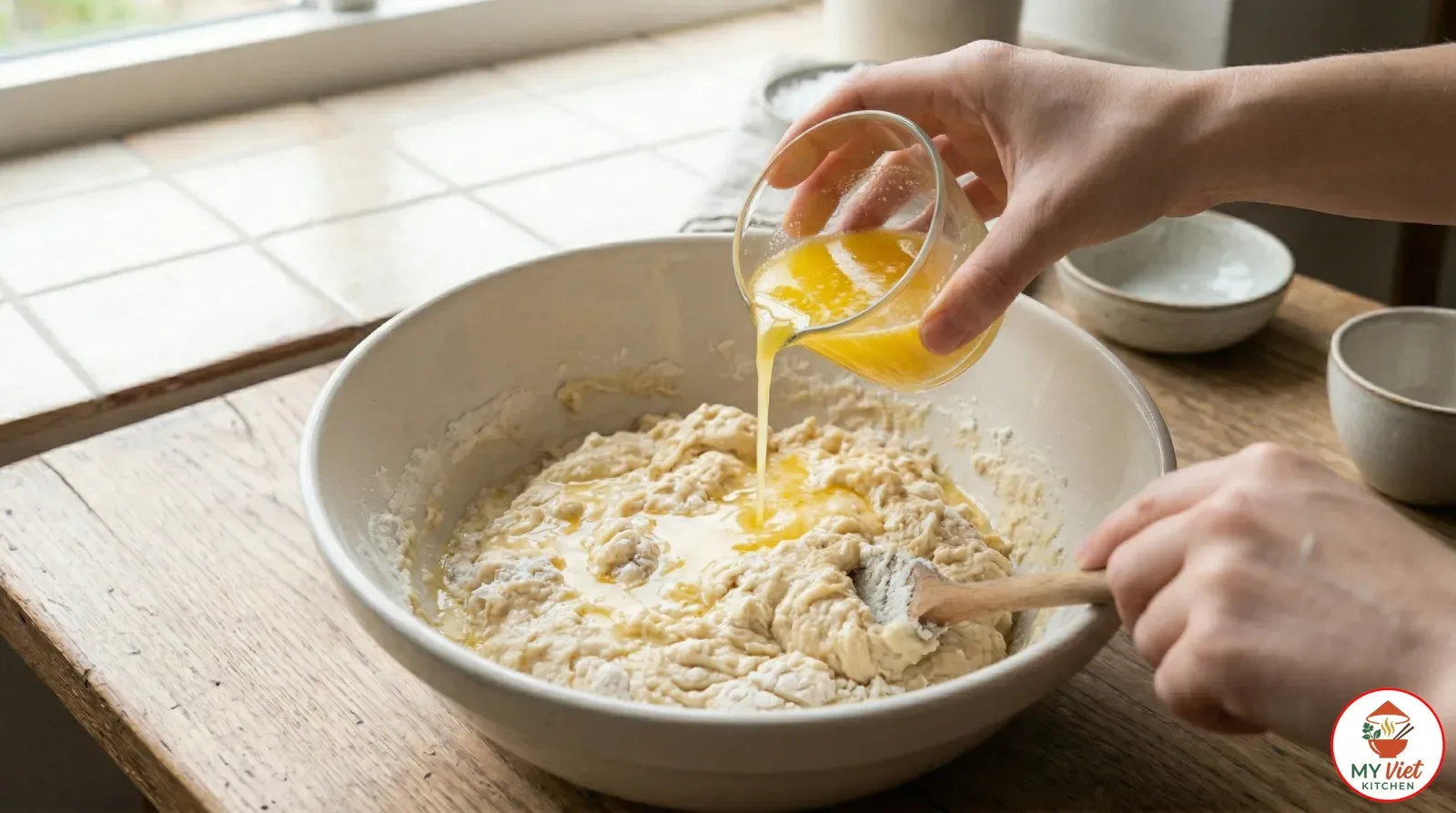
2 Drizzle the melted butter into the dough in three additions, stirring vigorously after each one. The butter should be melted but not piping hot. If it is too warm, it can begin cooking the eggs in the batter. Let it cool for 5 minutes after melting before adding it to the bowl.
Stir the dough energetically for about 3 minutes. It will transform from rough and shaggy to smooth, thick, and glossy. The gluten strands develop during this mixing, giving the waffle structure. Cover the bowl tightly with plastic wrap and set it in a warm, draft-free spot. Let the dough rise for 90 minutes until it has doubled in volume. The surface should look puffy and slightly bubbly. This slow rise is what separates Belgian waffles from their American counterparts.
Step 3: Split and Customize the Batter
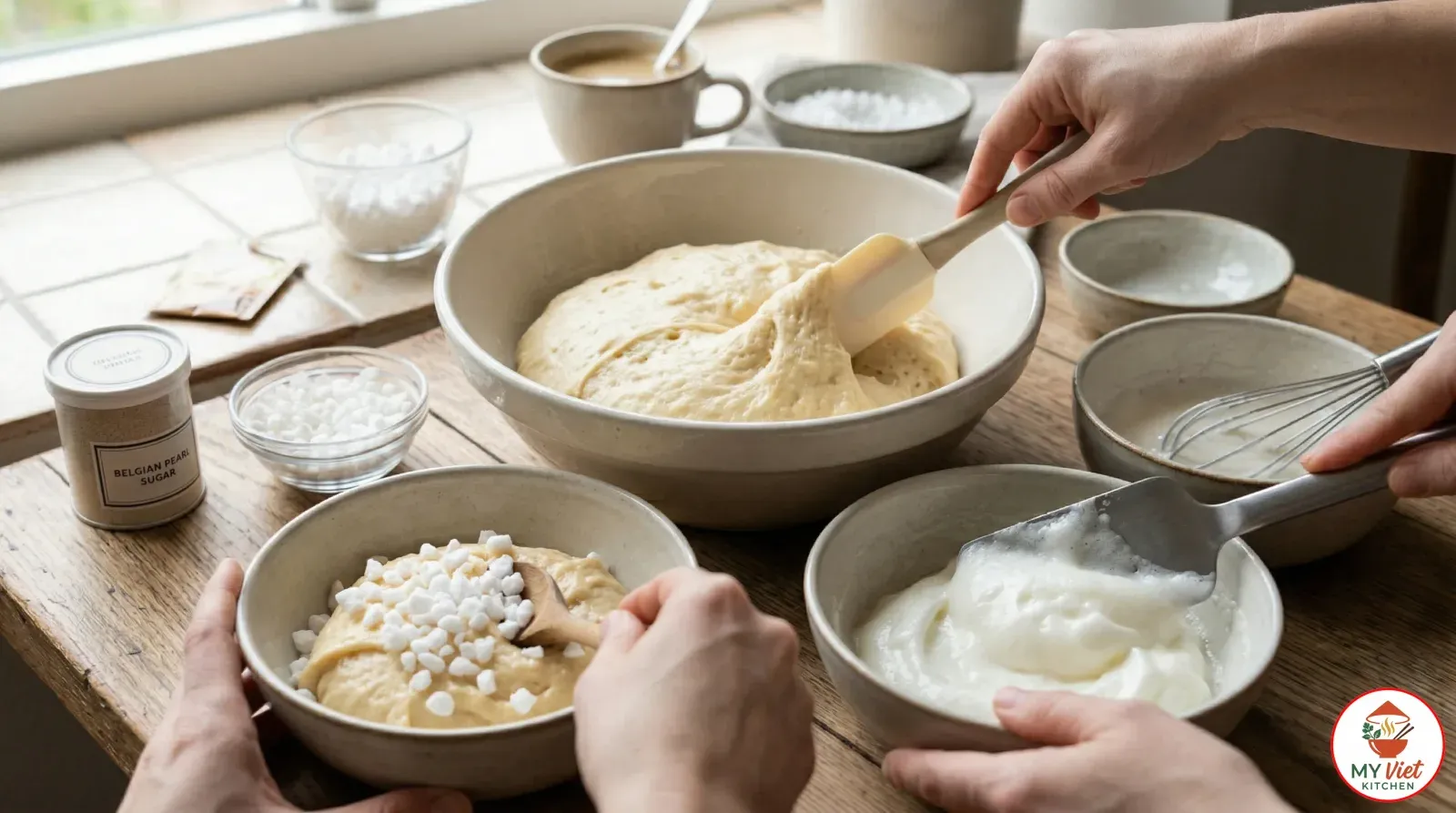
3 Once the dough has risen fully, gently deflate it with a spatula. Divide the dough into two equal portions. One half becomes your Liege waffles, and the other becomes your Brussels waffles. This single base dough adapts beautifully to both styles with just one additional ingredient each.
For the Liege portion, fold in the pearl sugar using a spatula or your hands. Distribute the sugar chunks evenly throughout the dough without crushing them. For the Brussels portion, beat the two egg whites in a clean bowl until they form stiff, glossy peaks. Then fold the whites into the dough gently, using a lifting motion to preserve as much air as possible. This folding technique is what gives Brussels waffles their famously airy interior.
Step 4: Preheat and Prepare the Waffle Iron
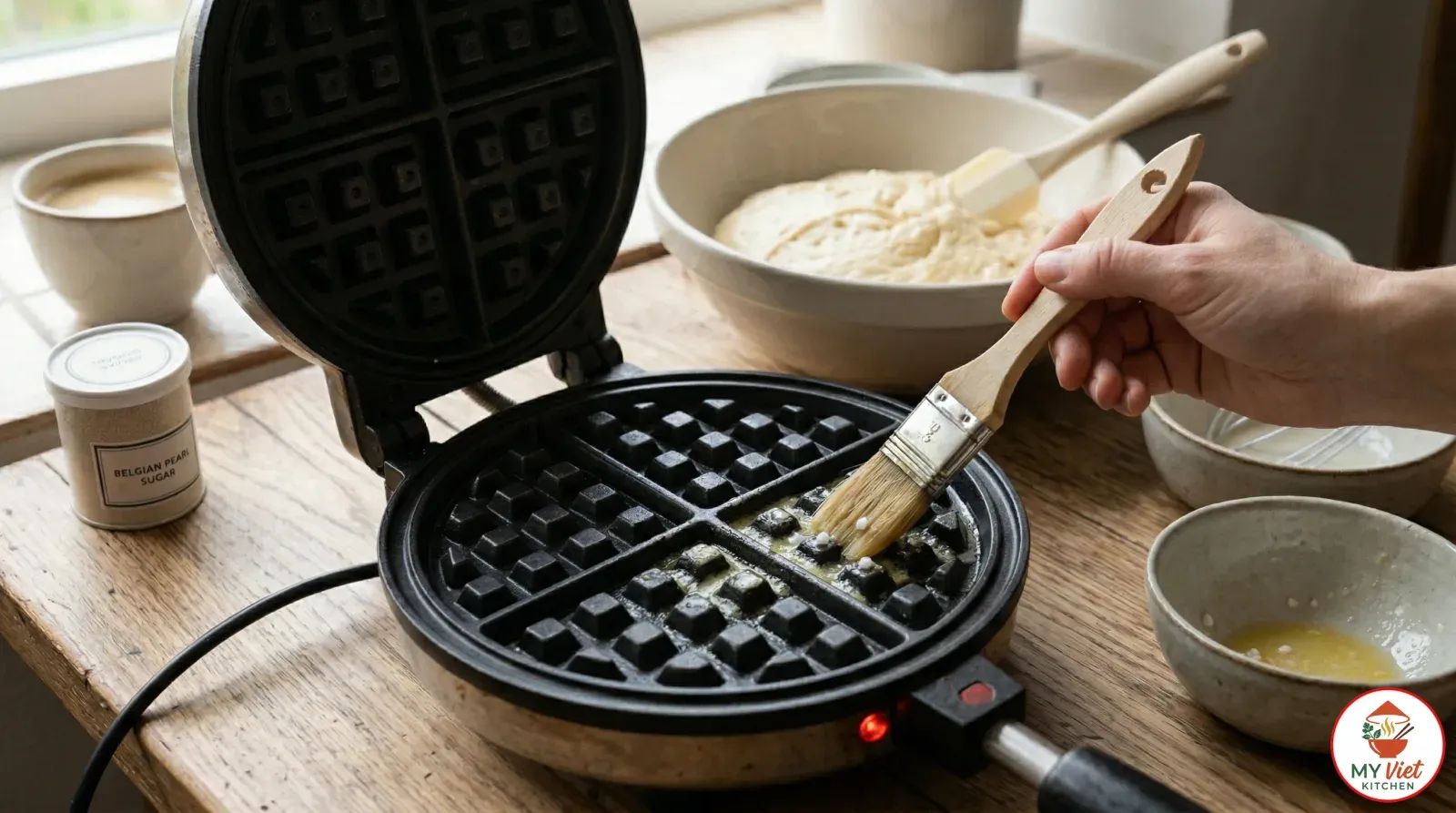
4 Plug in your waffle iron and set it to medium-high heat. Allow it to preheat for a full 5 minutes before cooking. An evenly heated iron prevents pale spots and ensures a uniform golden crust. Most waffle irons have an indicator light that turns off when the plates reach the target temperature.
Brush both plates lightly with melted butter or spray with non-stick cooking spray. Even on non-stick surfaces, a thin layer of fat helps the waffle release cleanly and promotes browning. For Liege waffles in particular, the butter helps the pearl sugar caramelize into a gorgeous amber glaze. Do not use too much, though. Excess butter pools in the grooves and causes the waffle to fry unevenly.
Step 5: Cook the Liege Waffles
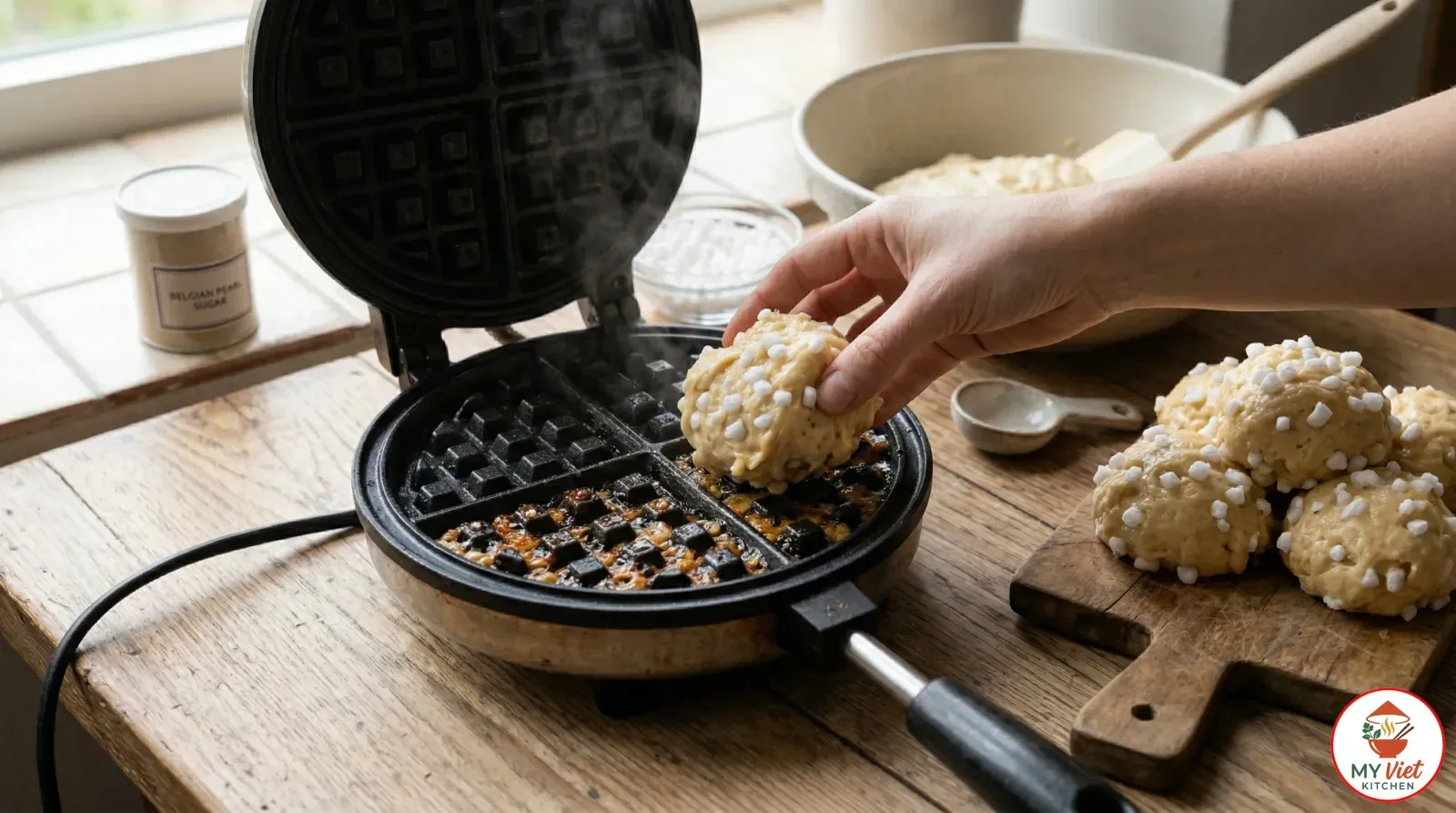
5 Scoop a ball of Liege dough about the size of a tennis ball. Place it directly in the center of the hot waffle iron. Close the lid firmly and press down slightly if your iron allows it. The pressure helps spread the thick dough and pushes the pearl sugar against the hot plates where it begins to caramelize.
Cook for 3 to 4 minutes without opening the lid during the first 2 minutes. The waffle is ready when the exterior turns deep golden brown and you can smell the intoxicating scent of caramelized sugar. Carefully lift the waffle out with a fork or tongs. The caramelized sugar will be extremely hot, so handle with care. Place the finished waffle on a wire rack rather than a plate. A rack allows air to circulate underneath, keeping the bottom crisp instead of steaming it soft.
Step 6: Cook the Brussels Waffles
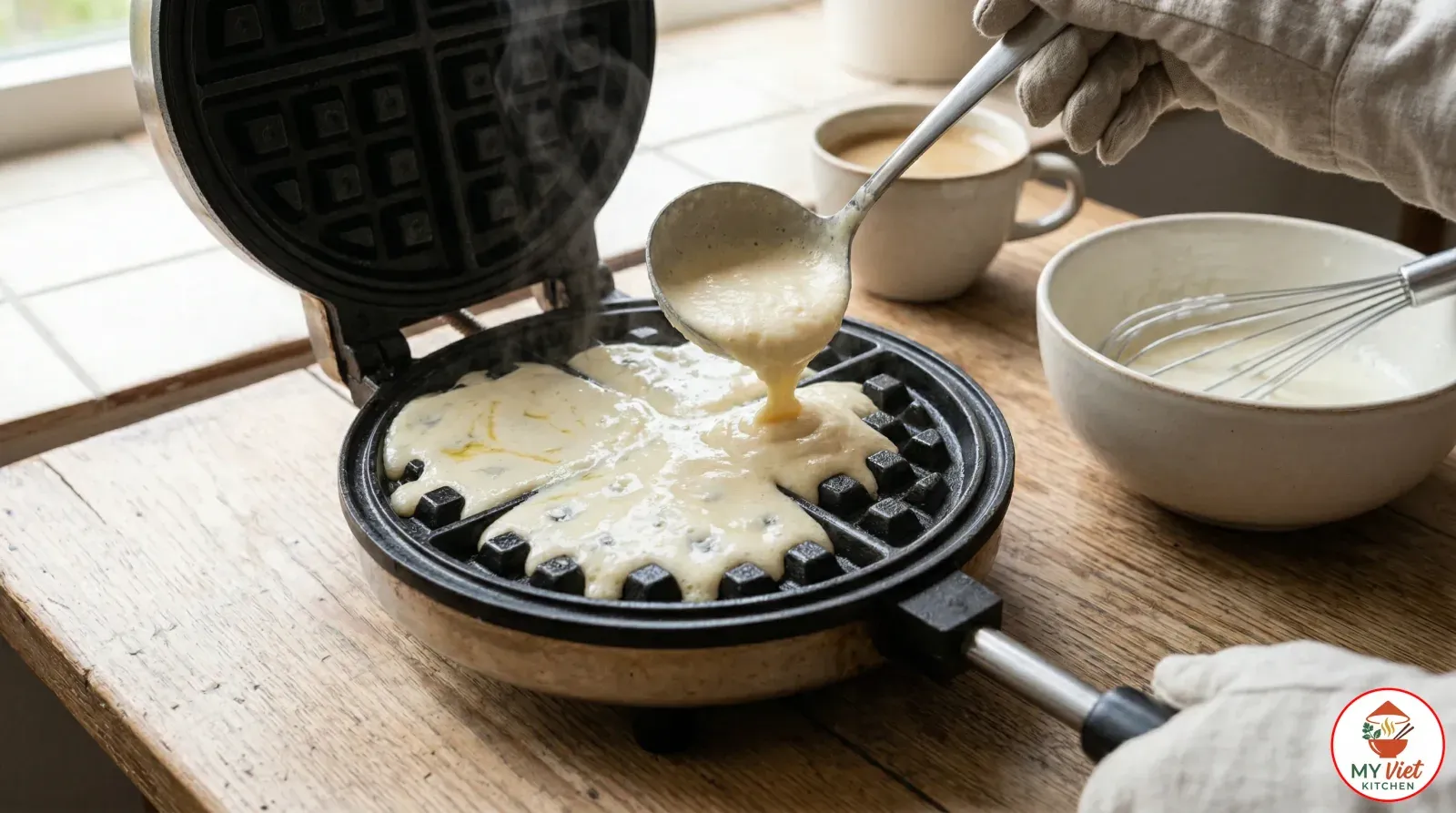
6 Pour approximately half a cup of the Brussels batter onto the center of the hot waffle iron. Close the lid gently and let the batter spread naturally under its own weight. Do not press down hard. The airy egg white batter needs room to rise and expand inside the iron, which creates the signature light, cloud-like interior.
Cook for 4 to 5 minutes. Brussels waffles take slightly longer than Liege because the batter is wetter and needs more time to set. The waffle is done when it turns a beautiful golden color and releases easily from the plates without sticking. If it resists, give it another 30 seconds. Transfer to a wire rack immediately. These waffles are at their absolute best within 5 minutes of cooking, when the outside is still crackling crisp and the inside remains pillowy soft.
Step 7: Serve Immediately
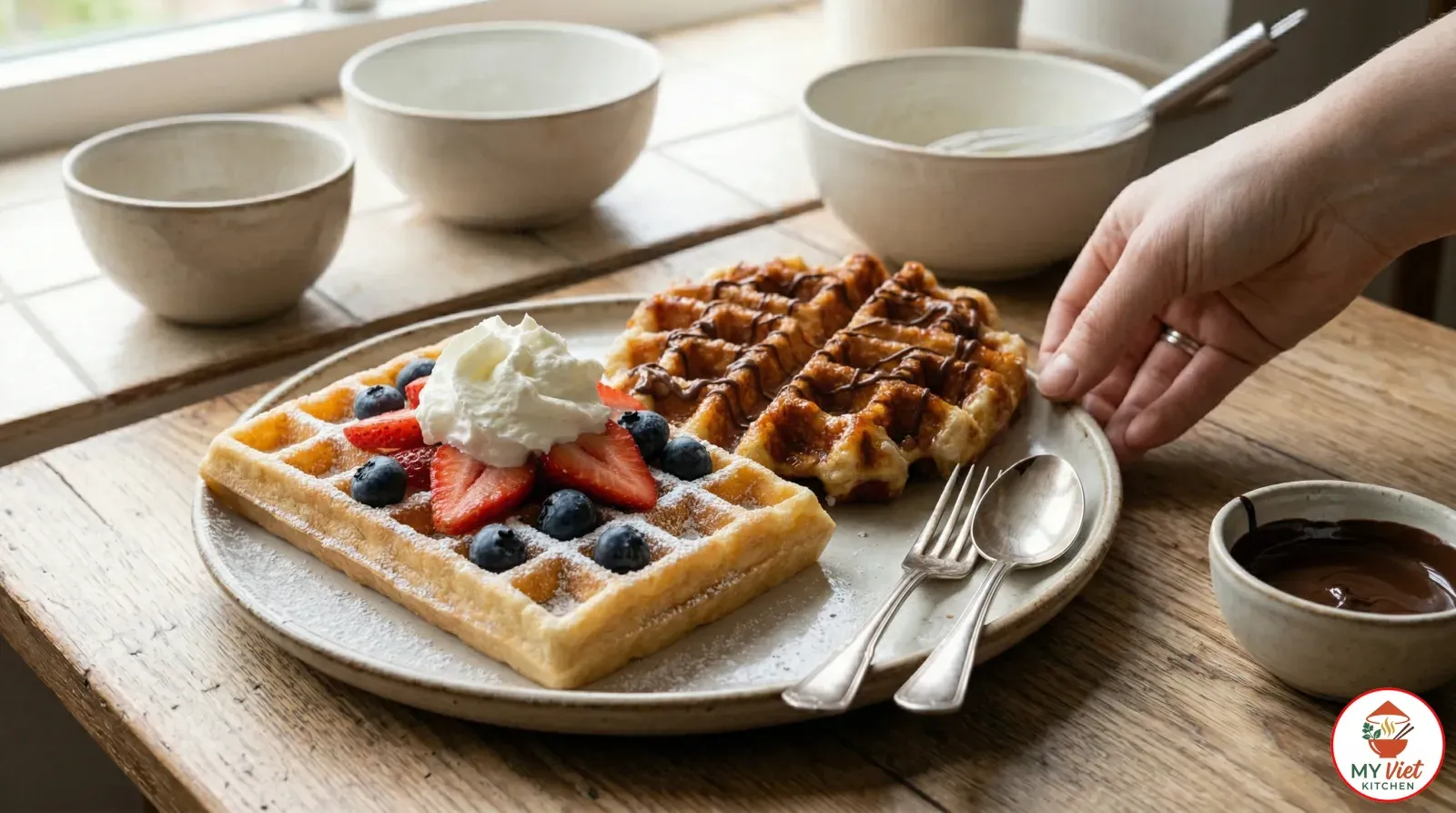
7 Transfer each waffle to a serving plate while still warm. For Brussels waffles, dust generously with powdered sugar and top with a mound of freshly whipped cream. Scatter fresh strawberries or blueberries over the top. The deep pockets hold toppings beautifully, catching pools of cream and berry juice.
For Liege waffles, simplicity is key. The caramelized pearl sugar provides all the sweetness you need. Serve them plain or with just a light drizzle of melted Belgian dark chocolate. A small dollop of whipped cream on the side works well too. Resist the urge to overload Liege waffles with syrup or heavy toppings. Their beauty lies in the interplay between the soft, buttery interior and the crackly sugar crust. Let that contrast speak for itself.
Expert Tips for Perfect Belgian Waffles
Use Room Temperature Ingredients
Cold eggs and cold milk slow down yeast activity and produce a sluggish rise. Take your eggs and milk out of the refrigerator at least 30 minutes before you start. Room temperature ingredients blend more smoothly into the dough. They also help the butter incorporate evenly rather than seizing into clumps. This small step makes a noticeable difference in the final texture and rise of your waffles.
Do Not Over-Mix the Brussels Batter
When you fold the beaten egg whites into the Brussels waffle batter, use a gentle hand. Vigorous stirring deflates the air bubbles that give these waffles their legendary lightness. Use a large spatula and fold in broad, sweeping motions. It is perfectly fine to have a few small streaks of white remaining in the batter. Those streaks dissolve during cooking, and your waffles will be much lighter for your restraint.
Add Pearl Sugar at the Right Moment
Fold the pearl sugar into the Liege dough only after the rise is complete and just before cooking. Adding it too early gives the sugar time to draw moisture from the dough. This makes the batter wet and sticky while dissolving some of the sugar prematurely. You want those chunks intact when they hit the hot iron. The late addition preserves their structure so they caramelize properly during cooking.
Brussels vs. Liege: A Regional Comparison
Belgium may be a small country, but its waffle traditions reflect deep regional pride. The two styles come from different cities, different techniques, and different eating occasions. This comparison helps you understand the nuances that make each one special.
| Feature | Brussels Waffle | Liege Waffle |
|---|---|---|
| Shape | Rectangular, uniform grid | Irregular, round edges |
| Texture | Light, airy, crisp | Dense, chewy, caramelized |
| Sweetness | Mild, relies on toppings | Sweet from pearl sugar |
| Batter Type | Lighter with egg whites | Thick brioche-like dough |
| Key Ingredient | Beaten egg whites | Belgian pearl sugar |
| Typical Toppings | Powdered sugar, cream, fruit | Eaten plain or with chocolate |
| Origin City | Brussels (Flanders) | Liege (Wallonia) |
Serving Suggestions
Belgian waffles shine at breakfast, brunch, dessert, or as an afternoon treat. Their versatility makes them appropriate for nearly any occasion. The key is matching your toppings and pairings to the style of waffle you have prepared.
Classic Accompaniments:
- Fresh berries and whipped cream: Strawberries, blueberries, and raspberries are the quintessential topping for Brussels waffles. Their tartness balances the buttery dough perfectly. Pile on freshly whipped cream for an indulgent finish that stays light on the palate.
- Melted Belgian chocolate: A drizzle of dark or milk Belgian chocolate turns a Liege waffle into pure dessert. The bittersweet chocolate complements the caramelized sugar beautifully. Use Callebaut or Cote d’Or for the most authentic Belgian pairing.
- Nutella and sliced bananas: This combination is a favorite at Belgian waffle stands throughout Europe. The hazelnut spread melts into the warm waffle surface, while the banana adds a creamy, fruity layer. It appeals to adults and children equally.
- Speculoos spread: This spiced cookie butter, made from crushed Belgian speculoos biscuits, is an increasingly popular waffle topping. Its warm cinnamon and caramel notes pair especially well with the yeast-based dough of both waffle styles.
Beverage Pairings:
- Belgian hot chocolate: Rich, thick Belgian hot chocolate made with real cocoa is the ultimate match for a fresh waffle on a cold morning. The bittersweet chocolate and creamy texture complement every bite.
- Cafe au lait: Strong coffee softened with warm milk cuts through the butter richness of the waffle. The mild bitterness enhances the caramelized flavors in Liege waffles especially. Serve it in a generous bowl, French-Belgian style.
- Fresh-squeezed orange juice: The bright acidity of orange juice provides a clean, refreshing contrast to the sweet, buttery waffle. This classic breakfast pairing never goes out of style and works with both waffle styles.
- Belgian abbey beer: For a brunch twist, a Belgian dubbel or tripel beer with its fruity, spicy notes pairs surprisingly well with Liege waffles. The yeast character in the beer mirrors the yeast in the waffle dough.
Storage and Reheating
Refrigerator: Store leftover cooked waffles in an airtight container for up to 3 days. Place parchment paper between each waffle to prevent sticking. The texture softens in the fridge, but reheating restores much of the crispness. Both styles hold up well when properly stored.
Freezer: Belgian waffles freeze beautifully for up to 2 months. Cool them completely on a wire rack first. Arrange in a single layer on a baking sheet, freeze until solid, then transfer to a freezer bag. Reheat directly from frozen in a toaster or oven at 375 degrees Fahrenheit for 5 minutes. There is no need to thaw them ahead of time.
Reheating: A toaster or toaster oven is the best method for reheating Belgian waffles. Two minutes on medium heat restores the crispy exterior without drying out the inside. Alternatively, use your oven at 375 degrees for 5 minutes, placing the waffles directly on the rack for air circulation. Never microwave Belgian waffles. The microwave turns the exterior rubbery and eliminates the essential crispness that defines the dish.
Common Mistakes to Avoid
1. Using Baking Powder Instead of Yeast
Many recipes claim to be “Belgian” while using baking powder as the leavener. This shortcut produces a fundamentally different waffle. True Belgian waffles require yeast for their characteristic flavor, texture, and aroma. The 90-minute rise is not optional. It develops the complex, slightly tangy taste that separates an authentic Belgian waffle from an ordinary one. Plan ahead and give the yeast time to work its magic.
2. Substituting Granulated Sugar for Pearl Sugar
Regular white sugar dissolves completely in the hot dough and during cooking. It sweetens the batter uniformly but creates none of the caramelized pockets that define a Liege waffle. Pearl sugar resists melting until pressed against the iron’s surface, where it forms glossy, crunchy patches of caramel. Without it, you are making a sweet yeast waffle, not a Liege waffle. Invest in real pearl sugar or crush sugar cubes as a substitute.
3. Opening the Iron Too Early
Lifting the lid before the waffle has set causes it to tear in half. The batter sticks to both plates and rips apart when separated prematurely. Wait at least 2 minutes before checking. A properly cooked waffle releases from the iron with minimal resistance. If it sticks, it needs more time. Patience during cooking is just as important as patience during the rising stage.
4. Stacking Waffles on a Plate
Piling hot waffles on top of each other traps steam between them. That trapped moisture softens the crisp exterior within minutes. Always place finished waffles on a wire rack in a single layer. If you need to keep them warm while cooking the rest of the batch, set the rack inside a 200-degree oven. This holds the temperature without sacrificing the crunch.
Frequently Asked Questions
What is the difference between Brussels and Liege waffles?
Brussels waffles are rectangular with a light, airy texture achieved by folding beaten egg whites into the batter. They are crisp on the outside and cloud-like inside, usually served with powdered sugar, cream, or fruit. Liege waffles, on the other hand, use a denser brioche-style dough studded with Belgian pearl sugar. The sugar caramelizes during cooking, creating an irregular-shaped waffle with a glossy, crunchy exterior. Liege waffles are sweeter and richer, often eaten plain or with just a drizzle of chocolate.
Can I make Belgian waffles without pearl sugar?
Brussels waffles do not require pearl sugar at all, so the recipe works perfectly without it. For Liege waffles, however, pearl sugar is the defining ingredient. Without it, you lose the caramelized crust that makes the style unique. If Belgian pearl sugar is unavailable, crush sugar cubes into coarse, pea-sized chunks with a rolling pin. This homemade alternative holds its shape well enough to caramelize on the iron. Standard granulated sugar dissolves too quickly and fails to produce the desired effect.
Why are my Belgian waffles not crispy?
Soft waffles usually result from an iron that is not hot enough, excess moisture in the batter, or improper cooling after cooking. Preheat your waffle iron for at least 5 full minutes before adding any batter. Make sure the melted butter has cooled slightly before mixing it in, as very hot butter thins the dough. Most importantly, always cool waffles on a wire rack rather than stacking them on a plate. The rack allows steam to escape from all sides, preserving the crispy shell.
Can I freeze Belgian waffles?
Yes, both Brussels and Liege waffles freeze exceptionally well. Let them cool completely on a wire rack first. Then arrange them in a single layer on a parchment-lined baking sheet and freeze until solid. Transfer the frozen waffles to a freezer bag with parchment between each layer. They keep for up to 2 months. Reheat them directly from frozen in a toaster or at 375 degrees Fahrenheit in the oven for about 5 minutes. They come out nearly as good as fresh.
Do I need a special waffle iron for Belgian waffles?
A Belgian waffle iron with deeper pockets gives you the most authentic results. The deep grid pattern is what creates those thick, substantial waffles with pockets that hold toppings beautifully. Still, a standard waffle iron works in a pinch. The waffles come out thinner but taste just as good. For Liege waffles specifically, a heavy cast-iron waffle maker distributes heat more evenly. Even heat is critical for caramelizing the pearl sugar uniformly across the surface.
What makes Belgian waffles different from American waffles?
The fundamental difference is leavening. Belgian waffles rely on yeast, which requires a 90-minute rise and produces a complex, slightly tangy flavor. American waffles use baking powder for instant lift, resulting in a denser, more uniform texture. Belgian waffles also feature deeper pockets, a crispier exterior, and a more open, airy crumb inside. Furthermore, the yeast fermentation process gives Belgian waffles a subtle depth of flavor that baking powder simply cannot replicate.
Variations and Adaptations
Chocolate Chip Liege Waffles:
Add half a cup of dark chocolate chips along with the pearl sugar when folding into the Liege dough. The chocolate melts into gooey pockets during cooking, creating a waffle that is part pastry and part candy bar. Use high-quality Belgian chocolate with at least 60 percent cocoa for the richest flavor. This variation is wildly popular at waffle trucks across Europe and makes a spectacular dessert.
Cinnamon Spice Brussels Waffles:
Whisk 1 teaspoon of ground cinnamon and a quarter teaspoon of ground cardamom into the dry ingredients before mixing. The warm spices complement the yeast flavor beautifully. Serve these with a dusting of cinnamon sugar and a drizzle of warm maple syrup. They fill the kitchen with the most extraordinary aroma during cooking. This adaptation works especially well during the autumn and winter months.
Gluten-Free Belgian Waffles:
Replace the all-purpose flour with a quality gluten-free flour blend that includes xanthan gum. Bob’s Red Mill 1-to-1 Baking Flour is a reliable choice. The texture will be slightly denser than traditional Belgian waffles, but the yeast still provides excellent flavor and some lift. For the Brussels style, the beaten egg whites become even more important in a gluten-free version, as they provide much of the structure that gluten normally supplies.
The Cultural Significance of Belgian Waffles
In Belgium, waffles are not merely breakfast food. They are woven into the cultural identity of two distinct regions. The Brussels waffle emerged in the mid-18th century, gaining international fame at the 1958 World’s Fair held in Brussels. The Liege waffle has even deeper roots, with oral traditions tracing it to an 18th-century prince-bishop who asked his cook to create a pastry using pearl sugar. Both stories reflect a nation that values its culinary heritage deeply.
Walk through any Belgian city today, and you will encounter waffle stands on nearly every corner. The scent of caramelized sugar and warm batter drifts through cobblestone streets from Brussels to Bruges to Liege itself. Locals buy them as an afternoon snack, eating them by hand while walking. Tourists line up for them as an essential Belgian experience. These waffles have become ambassadors for Belgian cuisine worldwide, second only to chocolate and beer in cultural recognition.
What makes the Belgian waffle tradition remarkable is its democratic nature. A waffle from a street vendor costs just a few euros, yet the quality rivals what you find in fine patisseries. The recipe has remained largely unchanged for generations. Grandparents teach their grandchildren the proper way to fold pearl sugar into dough, and families argue passionately about whether Brussels or Liege style is superior. These debates are never fully settled, which is precisely the point. Both styles represent the best of Belgian baking, and both deserve a place in every home kitchen.
Conclusion
This Belgian waffle recipe equips you to make both legendary styles from a single yeast dough. The process is straightforward: mix, rise, customize, and cook. Brussels waffles deliver lightness and elegance, while Liege waffles offer richness and caramelized indulgence. Mastering both gives you a complete understanding of what Belgian waffles truly are.
Once you taste the difference that yeast fermentation and pearl sugar make, store-bought frozen waffles will never satisfy you again. Make a double batch and freeze half for easy weekday breakfasts. Share them at brunch gatherings, where they never fail to impress. Whether you dress them up with berries and cream or eat them warm and plain from the iron, these waffles bring a genuine piece of Belgium to your table.
Looking for more European breakfast and dessert inspiration? Explore our full collection of European dishes, including French crepes, Portuguese pasteis de nata, and Austrian sachertorte. Each recipe brings the same level of tested technique and detailed instruction to help you cook with confidence.