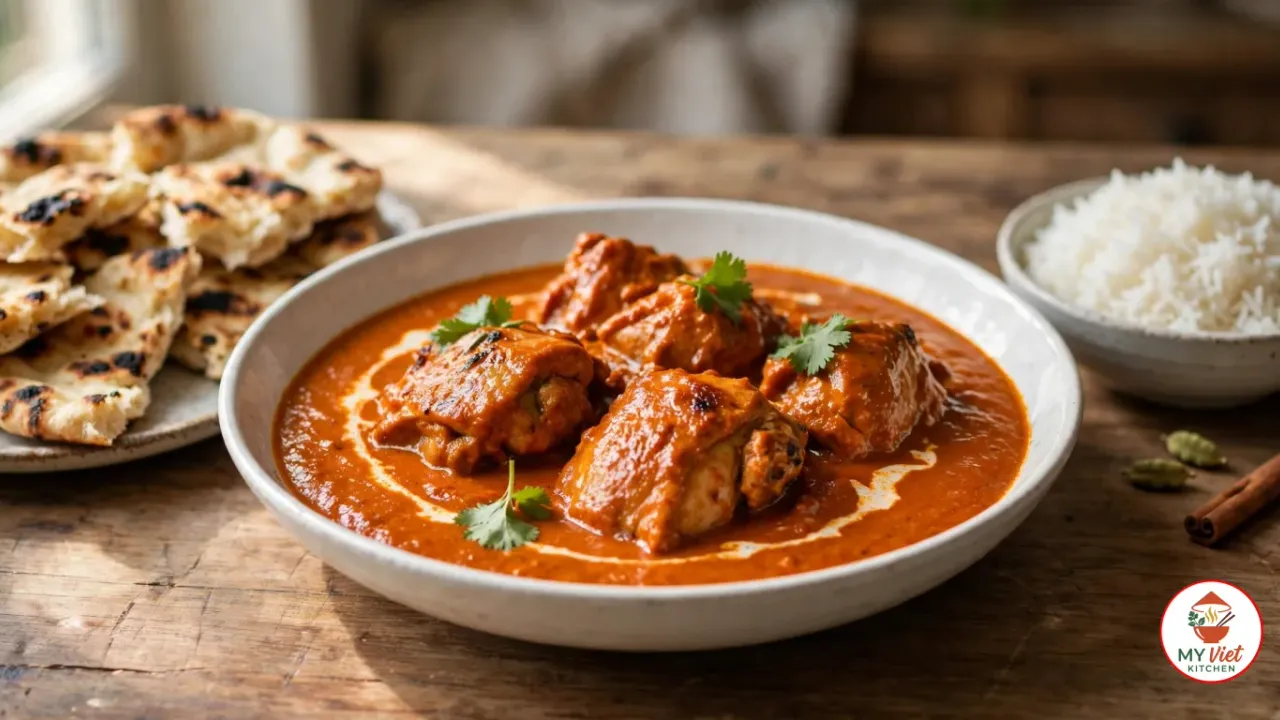
Butter chicken is a North Indian curry of yogurt-marinated chicken, charred over high heat and then simmered in a smooth tomato sauce rich with butter and cream. In Hindi it is called murgh makhani. This recipe sears boneless thighs in a heavy pan instead of a tandoor. Plan on at least 4 hours of marinating, then about 50 minutes at the stove.
Prep Time: 25 minutes (plus 4 hours marinating) | Cook Time: 50 minutes | Servings: 4
Difficulty: Easy | Calories: ~650 per serving

Where Does Butter Chicken Come From?
Most accounts trace butter chicken to Moti Mahal, a restaurant in Old Delhi’s Daryaganj neighborhood run by Punjabi refugees from Peshawar after the 1947 Partition. The common story is that its cooks simmered unsold tandoori chicken in a buttery tomato sauce so it would not dry out (Wikipedia).
Who invented it is still argued over. In 2024 the family of Moti Mahal’s founder, Kundan Lal Gujral, sued the newer Daryaganj restaurant chain in the Delhi High Court. Moti Mahal says Gujral first made the dish in Peshawar in the 1930s. Daryaganj says its late relative Kundan Lal Jaggi was Gujral’s partner when the Delhi restaurant opened in 1947, and that the dish was invented there (Reuters via NBC News).
How Do You Get Tandoor Flavor Without a Tandoor?
Restaurant butter chicken starts as chicken cooked in a tandoor, a clay oven that runs far hotter than a home oven. The fierce heat chars the yogurt coating in spots before the meat dries out. A home kitchen can get close in three ways:
- A heavy pan on high heat (used in this recipe). Cast iron or thick stainless steel holds its heat when the chicken goes in. Sear in two batches, with space between the pieces, and leave each side alone for 2 to 3 minutes.
- The broiler. Spread the marinated pieces on a foil-lined rack and broil about 10 cm (4 in) below the element for 8 to 10 minutes, turning once, until charred at the edges. Then skip step 2 and add the oil to the pan with the butter in step 3.
- A charcoal grill. Thread the chunks onto skewers and grill over hot coals for 3 to 4 minutes per side. The smoke gets you closest to the taste of a tandoor.
Whichever you choose, the chicken only needs color at this stage. It finishes cooking in the sauce, which keeps it moist.
What Do Kasuri Methi and Kashmiri Chili Add?
Kashmiri chili powder gives the marinade and the sauce their deep red color with little heat. If you can’t find it, use 2½ teaspoons of sweet paprika and ½ teaspoon of cayenne for the tablespoon in the marinade, or paprika alone for a milder curry.
Kasuri methi is dried fenugreek leaves, sold in small boxes at Indian grocers and online. Rub the leaves between your palms over the pan to release their aroma. They add a savory, slightly bitter note that cuts through the cream. One teaspoon is enough for 800 g of chicken, since more can turn the sauce bitter. If you have none, leave it out; fenugreek seeds taste different and won’t do the same job.
Why Finish the Sauce With Cold Butter?
Cream goes in last, over low heat, because a long simmer would reduce it and make the sauce heavy. Cold butter then thickens and glosses the sauce. Swirled into the pan, it melts slowly and blends in instead of pooling on top as melted fat. Keep the sauce below a boil from here on, since boiling tomato and cream together can make the sauce split.
Ingredients for Butter Chicken
For the Chicken Marinade:
- 800 g (1¾ lb) boneless chicken thighs, cut into 5 cm (2 in) chunks
- 1 cup (240 g) full-fat plain yogurt
- 2 tablespoons lemon juice
- 1 tablespoon Kashmiri red chili powder
- 1 teaspoon ground turmeric
- 1/2 tablespoon garam masala
- 1 teaspoon ground cumin
- 1 tablespoon ginger paste
- 1 tablespoon garlic paste
- 1 teaspoon salt
For the Makhani Sauce:
- 3 tablespoons butter, divided (1 for searing, 2 for the sauce)
- 1 tablespoon vegetable oil
- 2 green cardamom pods
- 1 cinnamon stick
- 2 whole cloves
- 1 bay leaf
- 1 large onion, finely diced
- 1 tablespoon ginger paste
- 1 tablespoon garlic paste
- 400 g (14 oz) canned crushed tomatoes
- 1 tablespoon tomato paste
- 1/2 tablespoon garam masala
- 1 teaspoon dried fenugreek leaves (kasuri methi)
- 1 teaspoon sugar
- 150 ml (2/3 cup) heavy cream, plus a little for drizzling
For Finishing:
- 2 tablespoons cold butter
- Fresh cilantro, to garnish
- Naan or steamed basmati rice, to serve
Step-by-Step Instructions
Step 1: Marinate the Chicken
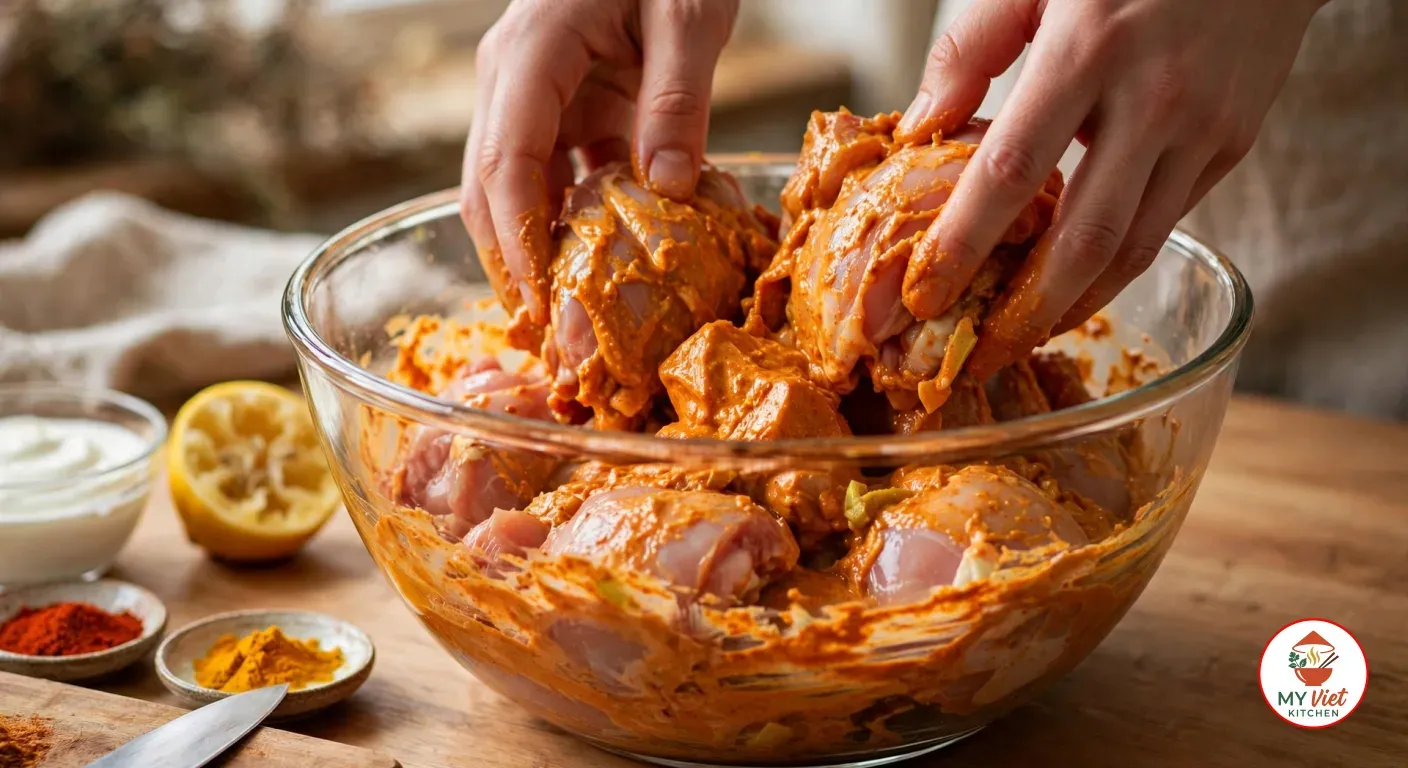
1 Cut the chicken thighs into 5 cm (2 in) chunks. Smaller pieces tend to dry out before they char. In a large bowl, stir together the yogurt, lemon juice, Kashmiri chili powder, turmeric, half the garam masala, the cumin, 1 tablespoon each of ginger and garlic paste, and the salt, until the marinade is an even orange-red.
Add the chicken and turn every piece until it is coated. Cover the bowl and refrigerate for at least 4 hours, or overnight, which gives the spices more time to season the meat.
Step 2: Sear the Marinated Chicken
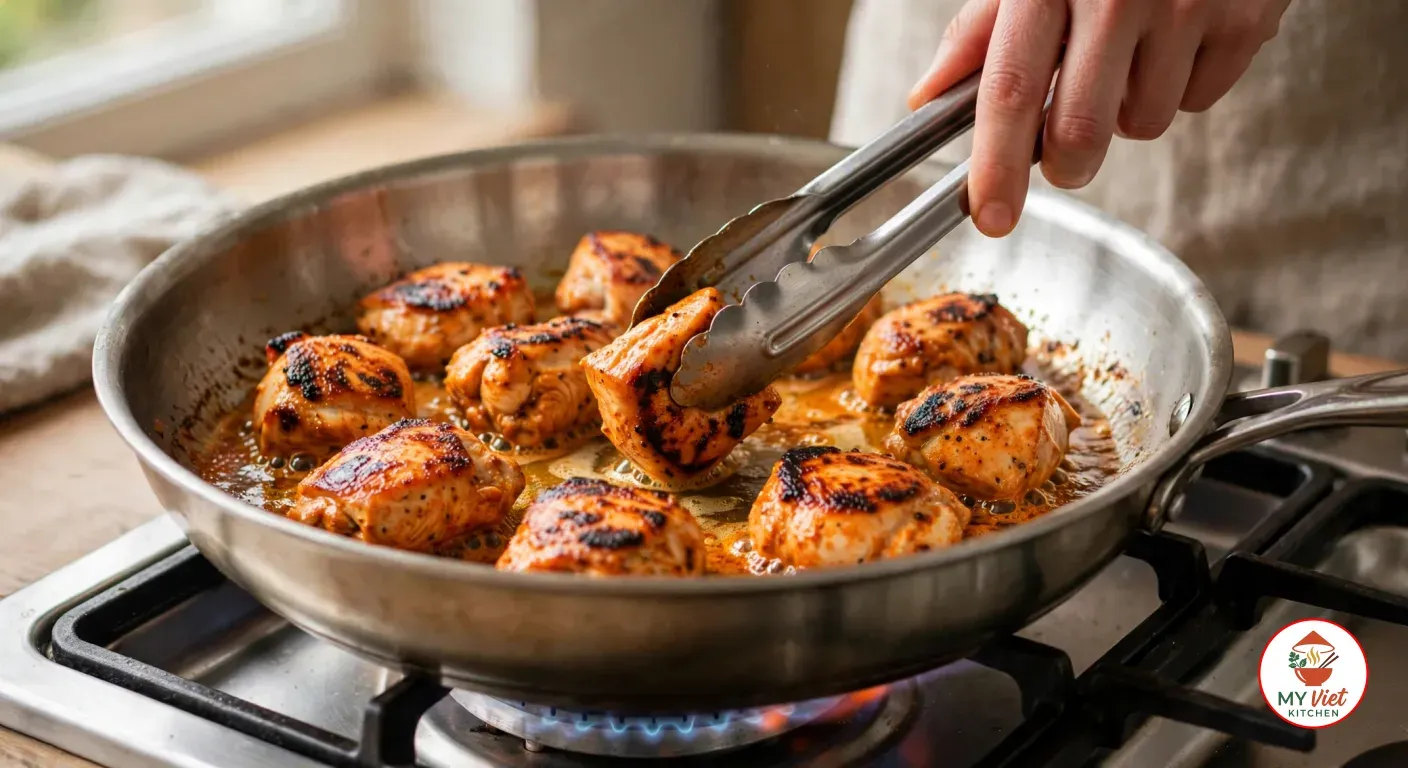
2 Heat the oil and 1 tablespoon of butter in a large, heavy-bottomed pan over high heat until the butter stops foaming. Lift the chicken out of the marinade and let the excess drip back into the bowl; a thin coat should stay on. Throw away the marinade left in the bowl.
Sear the chicken in two batches so the pieces sit about 2 cm apart. Leave each side for 2 to 3 minutes, until dark charred spots form, then turn the pieces with tongs. A crowded pan lets the yogurt’s water steam the chicken instead of browning it. The centers can stay pink, since the chicken finishes cooking in the sauce. Move the pieces to a plate.
Step 3: Build the Makhani Sauce Base
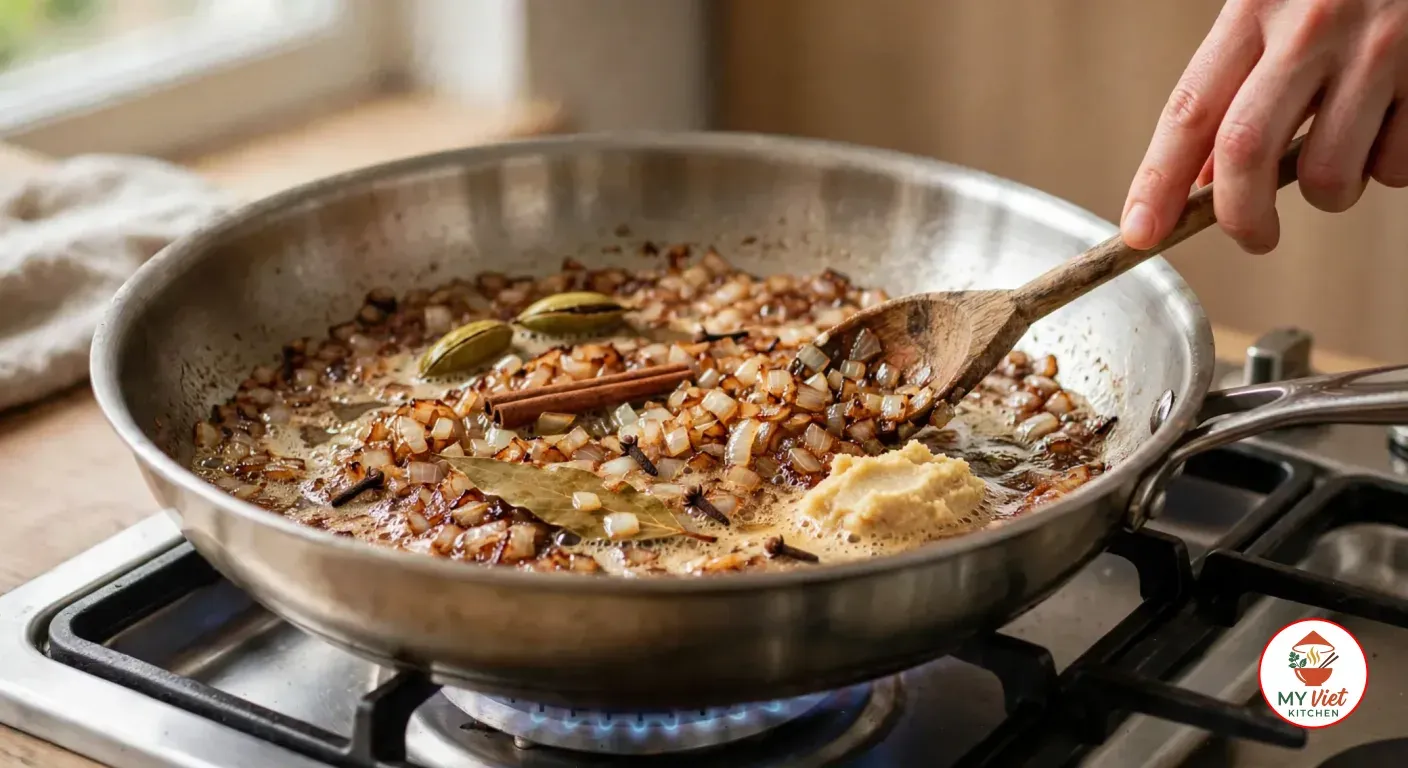
3 Lower the heat to medium and add 2 tablespoons of butter to the same pan. Add the cardamom pods, cinnamon stick, cloves and bay leaf, and stir for about 30 seconds, until fragrant. Scrape up the browned bits the chicken left behind as you stir.
Add the diced onion and cook for 8 to 10 minutes, stirring every minute or two, until it is soft and deep golden. Stir in the remaining 1 tablespoon each of ginger and garlic paste and cook for 1 minute, until the raw garlic smell is gone.
Step 4: Simmer the Tomato Sauce
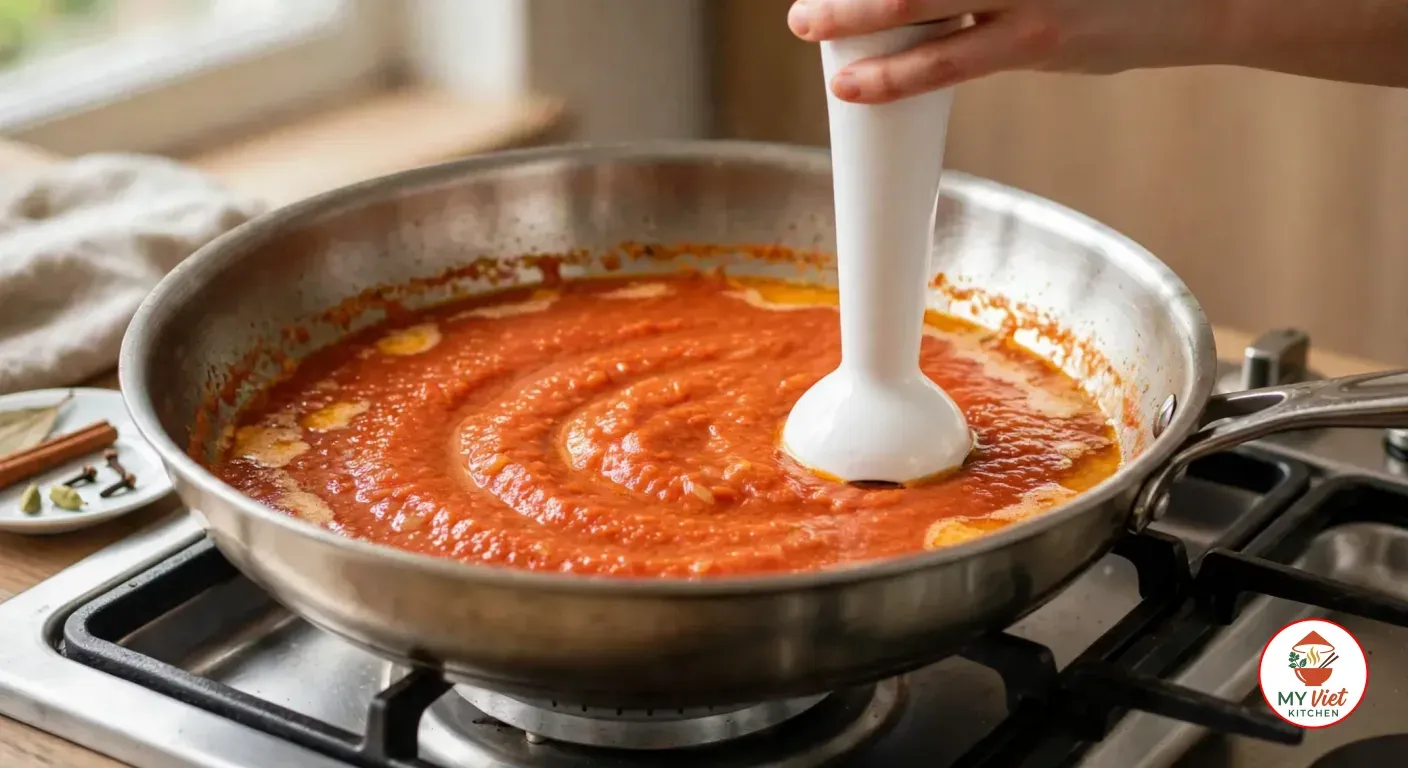
4 Add the crushed tomatoes and tomato paste and stir well. Simmer on medium heat for about 10 minutes, stirring now and then, until the sauce thickens and small pools of orange oil appear at the edges. That separation shows the tomatoes have cooked down and lost their raw, sharp taste.
Take out the cardamom pods, cinnamon stick, cloves and bay leaf. Off the heat, blend the sauce in the pan with an immersion blender until it is completely smooth. With a countertop blender, let the sauce cool for 5 minutes, fill the jar no more than half full, and hold the lid down with a folded towel.
Step 5: Combine Chicken and Sauce
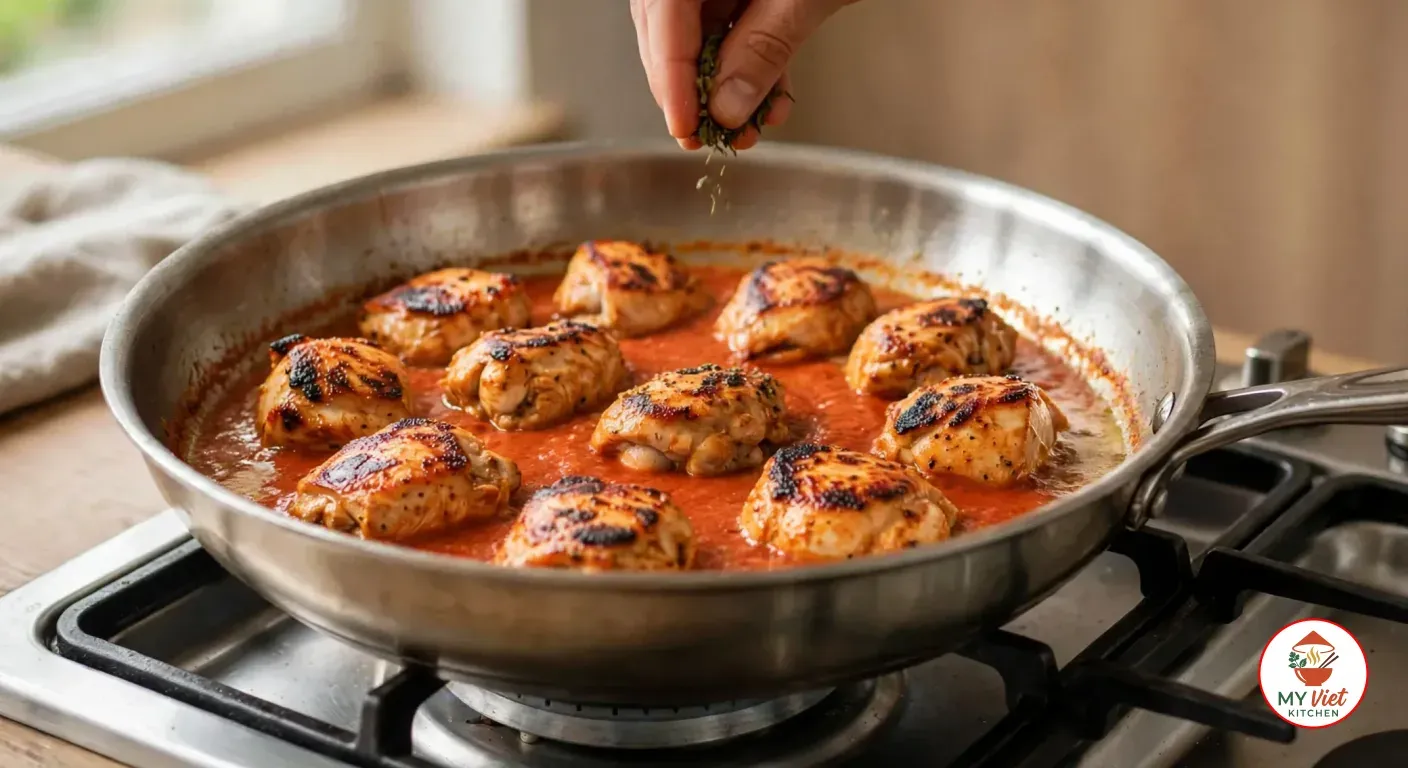
5 Return the pan to medium-low heat. Add the remaining garam masala and the sugar, then crush the kasuri methi between your palms over the pan and stir it in.
Add the seared chicken and any juices from the plate. Simmer gently, uncovered, for 12 to 15 minutes, stirring now and then so the sauce doesn’t catch on the bottom. The chicken is done when the thickest piece reads 74 °C (165 °F) on an instant-read thermometer, the USDA minimum for poultry.
Step 6: Finish with Cream and Butter
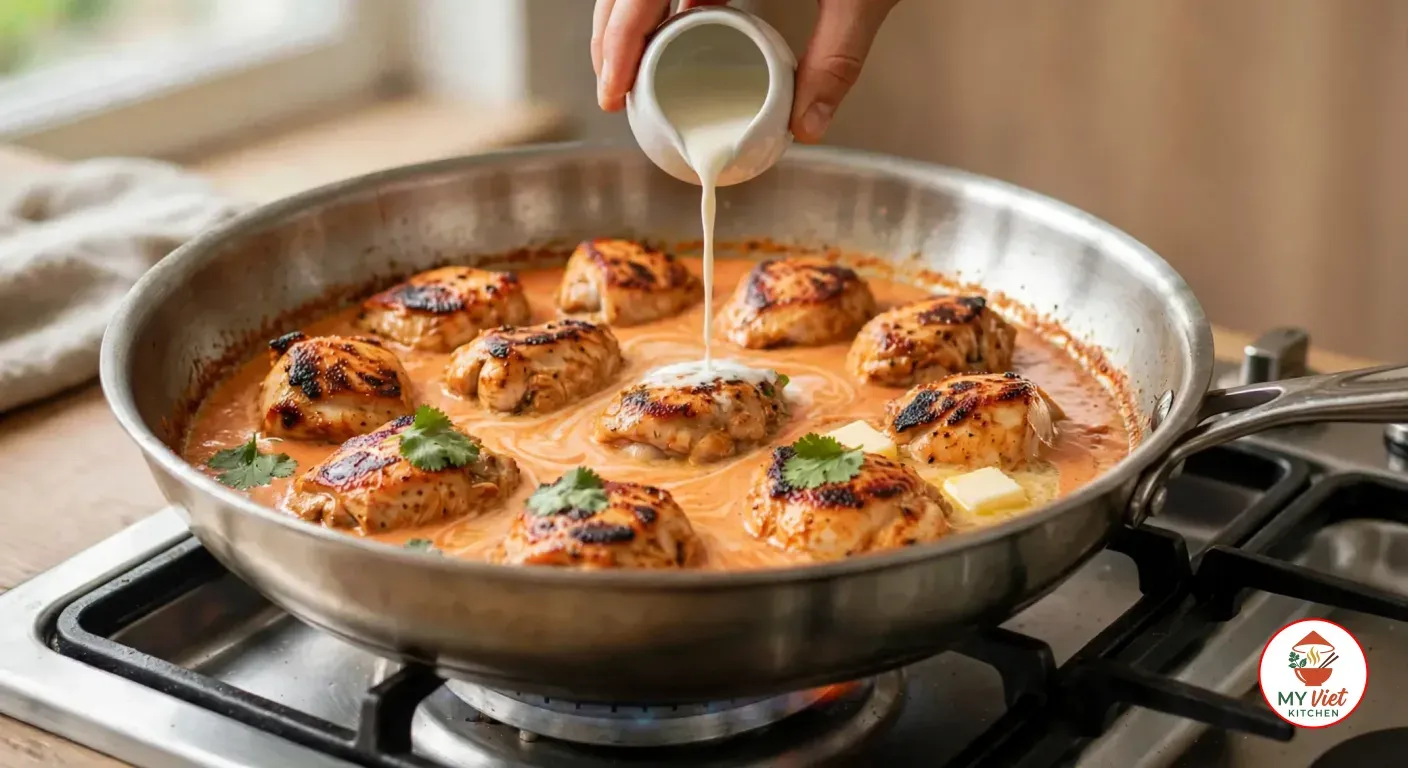
6 Turn the heat to low. Stir in the cream, and the sauce will turn from deep red to soft orange. Add the 2 tablespoons of cold butter and swirl the pan until it melts into a glossy sauce. Don’t let it boil from here on.
Taste and add salt if needed. Garnish with cilantro and a thin drizzle of cream. Serve right away with naan or basmati rice. The sauce thickens as it sits, so loosen leftovers with a splash of water when you reheat them.
Frequently Asked Questions
What is the difference between butter chicken and tikka masala?
Restaurant versions overlap, but butter chicken usually has the smoother, milder sauce. It leans on butter, cream and kasuri methi, while chicken tikka masala tends to have more onion, more chili and a thicker gravy. Both start with yogurt-marinated chicken charred in a tandoor or a hot pan.
Can I use chicken breast instead of thighs?
Yes, but cut it into larger 6 cm (2½ in) chunks and shorten the simmer in step 5 to 8 to 10 minutes. Breast has less fat than thigh and dries out sooner, so take it off the heat as soon as it reaches 74 °C (165 °F).
How do I make butter chicken milder?
Swap the Kashmiri chili powder for the same amount of sweet paprika. Kashmiri chili is already mild and is used mostly for its red color, so paprika keeps the color with almost no heat. Keep the garam masala, which adds aroma rather than heat.
How long does butter chicken keep?
Refrigerate it within 2 hours of cooking and eat it within 3 to 4 days, or freeze it for 3 to 4 months, as the USDA advises for leftovers. Reheat it gently until it reaches 74 °C (165 °F), adding a splash of water if the sauce has thickened. A cream sauce may separate a little after freezing; whisk it as it warms.
Is butter chicken gluten-free?
The curry itself has no gluten-containing ingredients. Naan is made with wheat flour, so serve it with rice instead, and check packaged spice blends for added flour.
Sources
- Butter chicken, Wikipedia
- Who invented butter chicken? Indian judge to rule in dispute over global favorite, Reuters via NBC News, January 2024
- Safe Minimum Internal Temperature Chart, USDA Food Safety and Inspection Service
- Leftovers and Food Safety, USDA Food Safety and Inspection Service