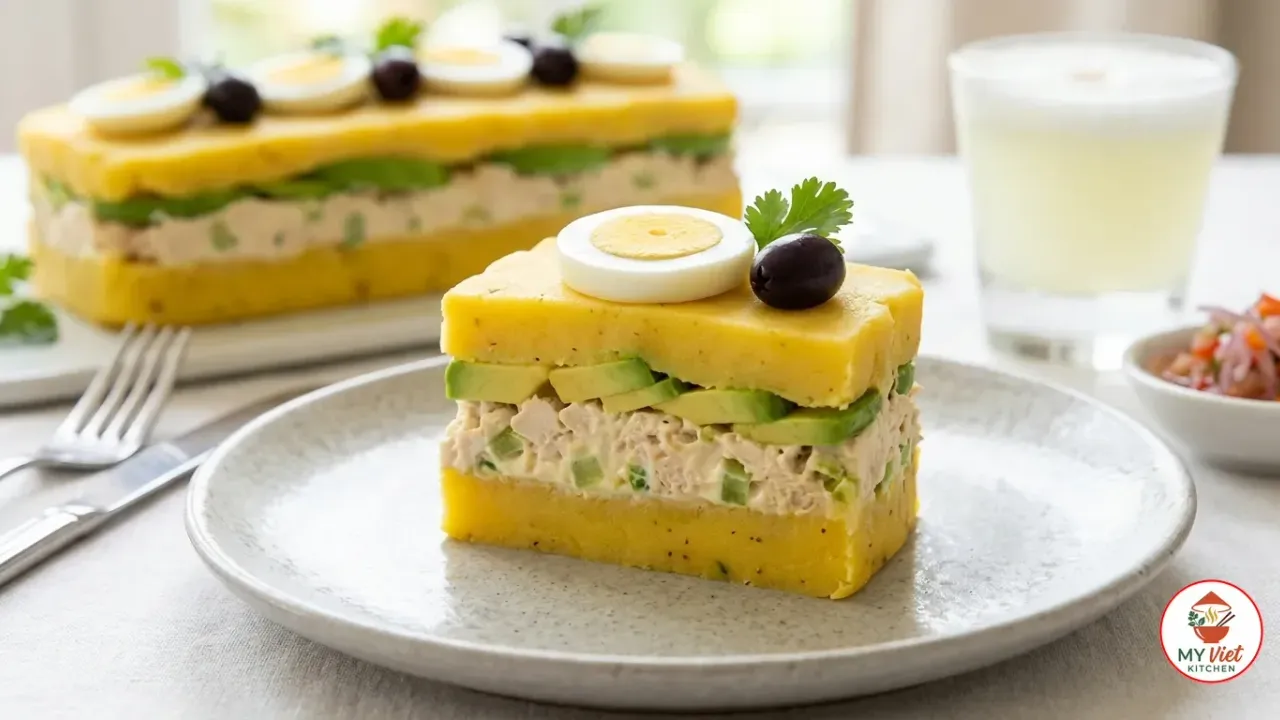
Causa limena is one of Peru’s most elegant and beloved dishes, a chilled layered potato creation that turns humble ingredients into something truly stunning. This causa limena recipe shows you how to build the perfect causa at home, with silky yellow potatoes seasoned with aji amarillo and fresh lime juice, layered over a creamy chicken filling and ripe avocado. Whether you are hosting a dinner party or exploring Peruvian cuisine for the first time, this causa limena recipe delivers bold flavor with a beautiful presentation that impresses every time.
Prep Time: 40 minutes | Cook Time: 25 minutes | Servings: 6
Difficulty: Easy | Calories: ~310 per serving
What Makes Causa Limena Special?
Causa limena stands apart from any other potato dish in the world. While most cultures serve potatoes hot, causa limena flips the script entirely. It is served cold, molded into neat layers, and eaten as an appetizer or light main course. The dish originates from Lima, Peru’s coastal capital, where cooks have refined it over centuries into a showcase of balance and texture. Each layer plays a specific role: the golden potato provides a smooth, slightly tangy base, the filling adds richness and protein, and the avocado delivers creamy freshness.
The magic of causa limena lies in its simplicity. There are no complicated techniques or rare equipment. You boil potatoes, season them boldly, prepare a filling, and stack everything in neat layers. Yet the result looks and tastes like something from a fine dining restaurant. The bright yellow color from aji amarillo makes causa visually striking on any table. Additionally, the contrast between the cool, smooth potato and the creamy filling creates a texture experience unlike anything else in Peruvian cuisine.
In Peru, causa limena appears at celebrations, family gatherings, and restaurants of every level. Street vendors sell individual portions in cups. High-end restaurants shape them into elaborate towers. Consequently, regardless of how you present it, the flavor profile remains the same: tangy lime, warm aji amarillo spice, rich filling, and the earthy comfort of perfectly seasoned potatoes. This causa limena recipe captures all of that authentic character.
Choosing the Right Potatoes for Causa Limena
The potato is the foundation of every causa limena, so choosing the right variety matters enormously. You need a potato that mashes smoothly, holds together well, and has a naturally golden hue. Here are your best options.
- Yukon Gold (best choice): These yellow-fleshed potatoes produce the smoothest, creamiest mash with a naturally buttery flavor. They hold their color beautifully and compress into firm layers without crumbling. Yukon Gold potatoes are widely available at most grocery stores.
- Papa amarilla (traditional Peruvian): This is the authentic choice used in Peru. Papa amarilla has an intensely golden flesh and a rich, almost nutty taste. If you can find them at a Latin American market, they produce the most traditional causa limena. However, they can be difficult to source outside South America.
- Yellow Finn potatoes: Another excellent option with golden flesh and a smooth texture when mashed. Yellow Finns fall between Yukon Gold and papa amarilla in terms of flavor richness. They work very well if your store carries them.
Ingredients for Causa Limena
For the Potato Layer:
- 2 pounds yellow potatoes (Yukon Gold), peeled and quartered
- 3 tablespoons aji amarillo paste
- 1/4 cup fresh lime juice (about 3 limes)
- 1/4 cup extra virgin olive oil
- 1 teaspoon salt
- 1/2 teaspoon white pepper
For the Chicken Filling:
- 2 cups cooked shredded chicken breast
- 1/2 cup mayonnaise
- 1 stalk celery, finely diced
- 2 tablespoons red onion, finely minced
- 1 tablespoon fresh lime juice
- Salt and pepper to taste
For Assembly and Garnish:
- 1 ripe avocado, thinly sliced
- 2 hard-boiled eggs, sliced into rounds
- Black olives (botija olives if available)
- Fresh cilantro or parsley for garnish
- Extra virgin olive oil for drizzling
Pro tip: Mash the potatoes while they are still hot. Hot potatoes absorb the lime juice and aji amarillo paste much more evenly than cold ones. If the potatoes cool before you season them, the dough becomes stiff and the flavors sit on the surface instead of blending throughout.
Step-by-Step Instructions
Step 1: Boil and Mash the Potatoes
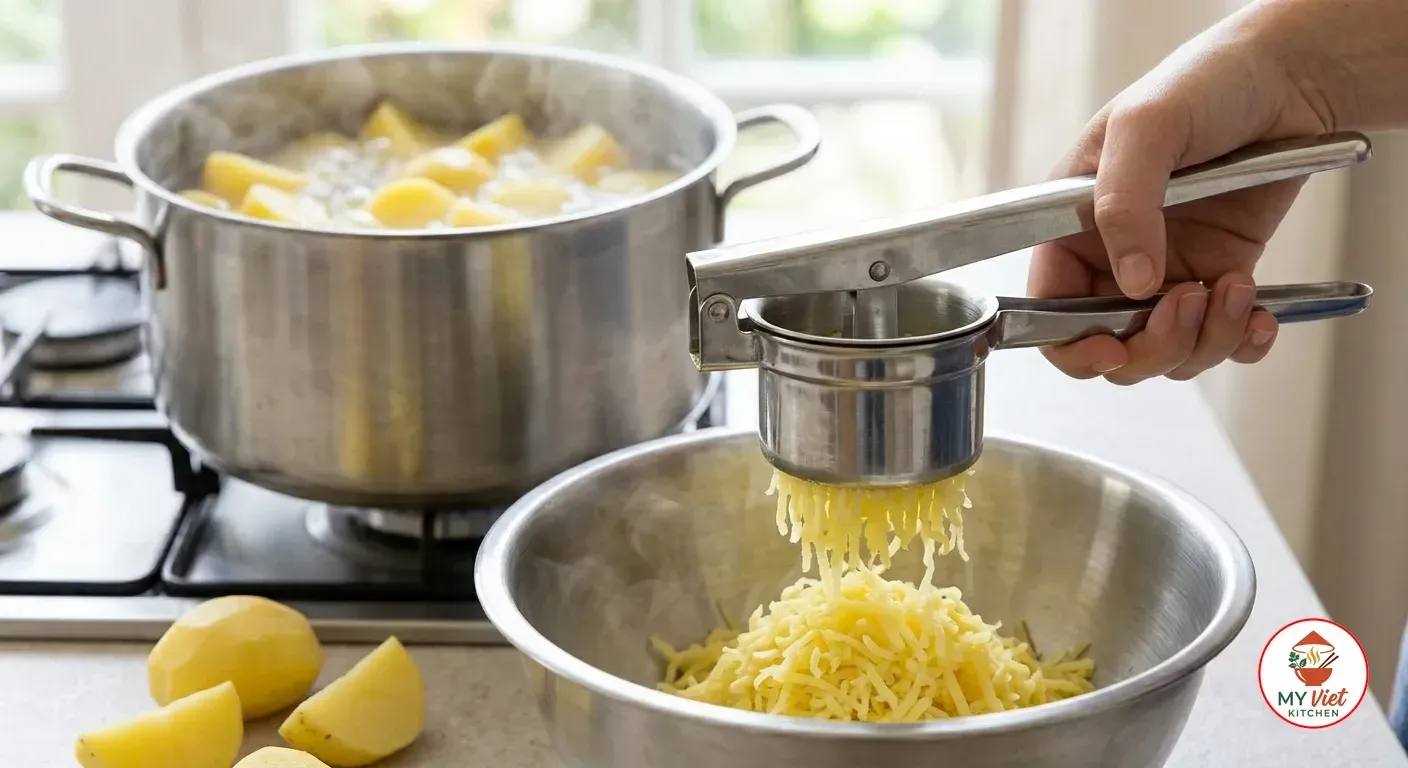
1 Peel the yellow potatoes and cut them into even chunks about 2 inches across. Place them in a large pot of cold, salted water. Bring to a boil over high heat, then reduce to a steady simmer. Cook for 15 to 20 minutes until a fork slides through the center of a chunk with zero resistance. The potatoes must be completely tender for a smooth causa.
Drain the potatoes thoroughly and return them to the warm pot. Use a potato ricer or fine-mesh sieve to press the potatoes into a smooth paste. A ricer gives the best results because it eliminates every lump. If you only have a masher, work the potatoes until they feel silky and uniform. Even small lumps will show in the finished layers, so take your time with this step.
Step 2: Season the Potato Dough
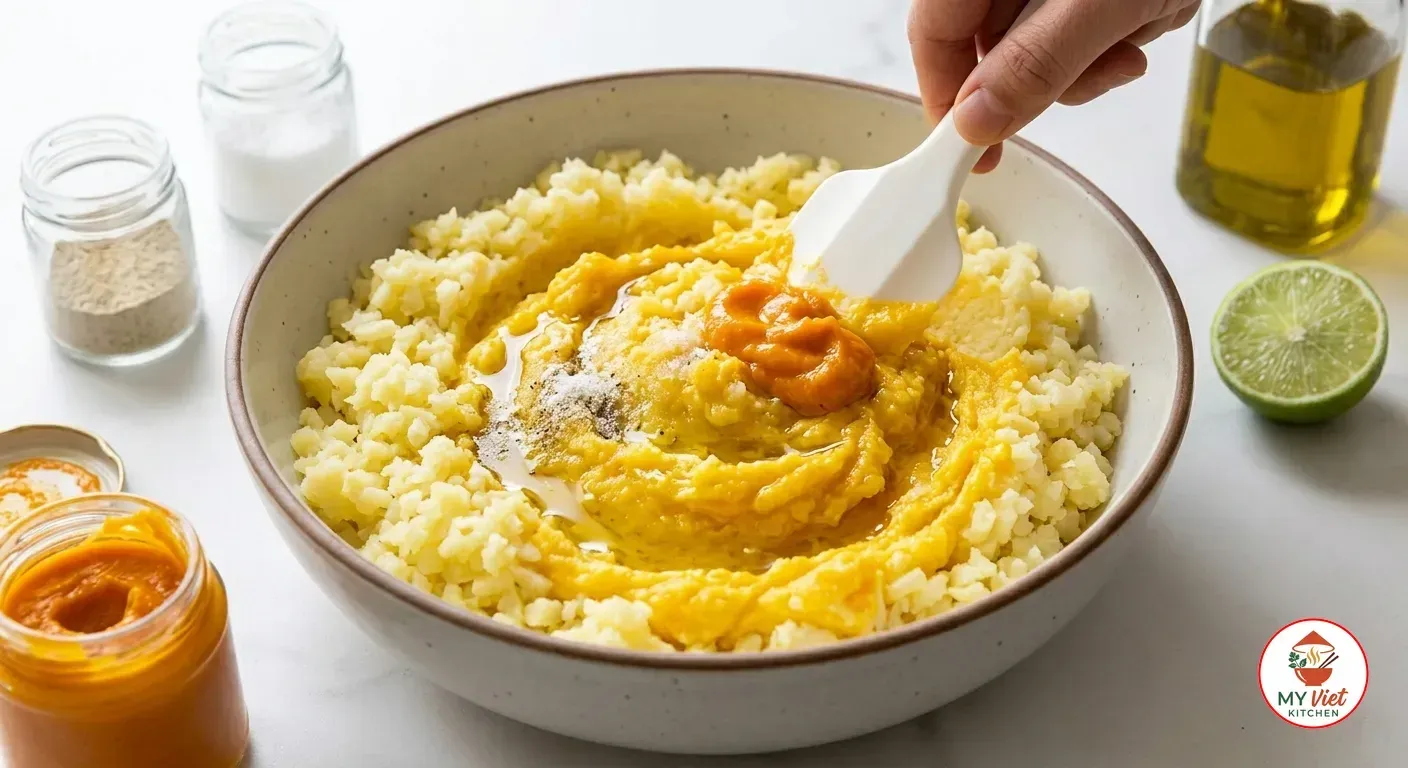
2 While the mashed potatoes are still warm, add the aji amarillo paste, fresh lime juice, olive oil, salt, and white pepper. Mix everything together with a fork or spatula until the dough turns a uniform, vibrant golden yellow. The aji amarillo provides both the signature color and a warm, fruity heat that defines every authentic causa limena.
Taste the potato dough and adjust the seasoning. It should taste bright from the lime, gently spicy from the aji amarillo, and well salted. Keep in mind that the filling and garnishes will add their own flavors, so the potato layer should be bold enough to stand on its own. Let the seasoned dough cool to room temperature before assembling. Warm dough will wilt the avocado and melt the filling.
Step 3: Prepare the Chicken Filling
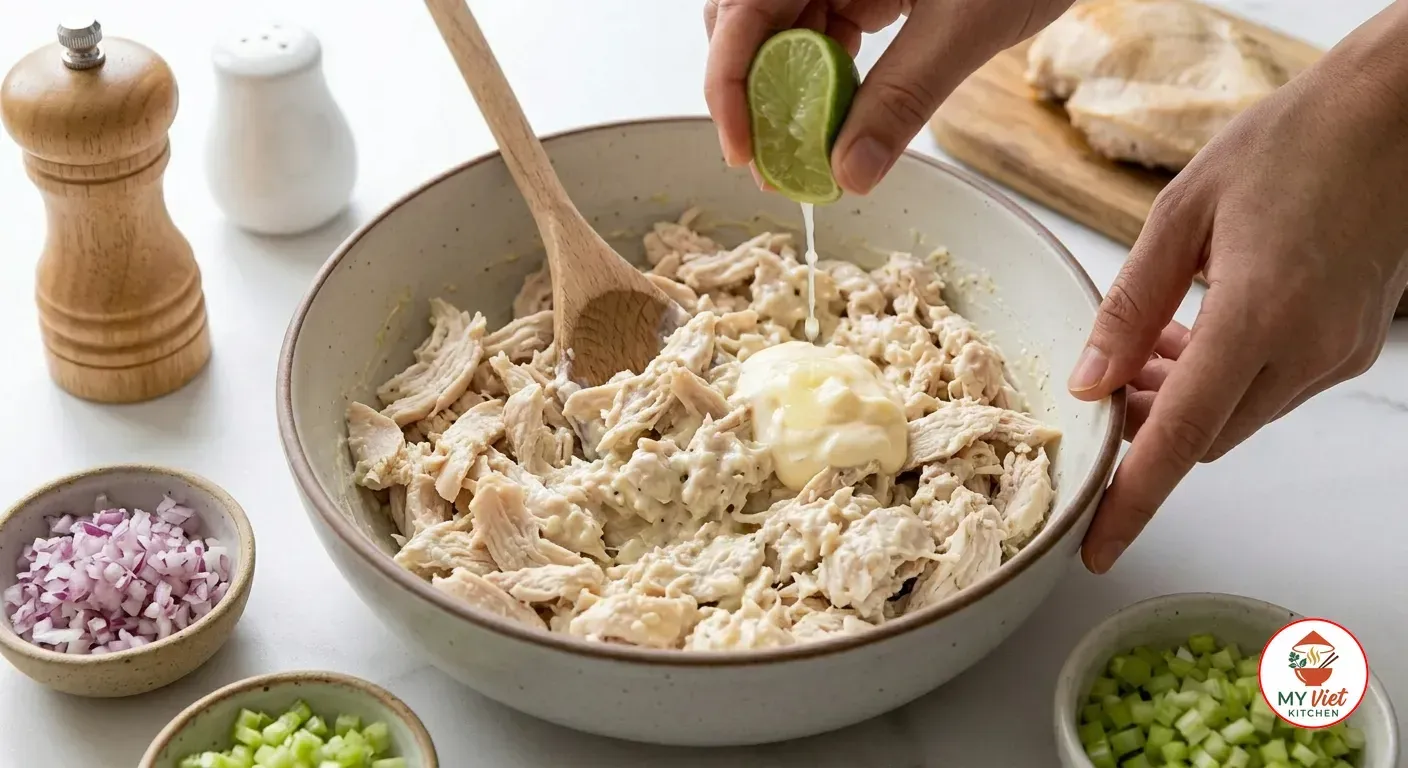
3 In a medium bowl, combine the shredded chicken breast with mayonnaise, finely diced celery, minced red onion, and lime juice. Season with salt and pepper, then stir until the filling is creamy and evenly mixed. The mayonnaise binds the filling and adds richness, while the celery provides a subtle crunch that contrasts nicely with the smooth potato layers.
For the best flavor, use chicken that you poached or roasted yourself. Shred it by hand rather than chopping it with a knife. Hand-shredded chicken creates irregular pieces that hold the mayonnaise better and give the filling a more interesting texture. If you prefer tuna, substitute two cans of well-drained solid tuna for the chicken. Both fillings work beautifully in this causa limena recipe, and either one produces an authentic result.
Step 4: Layer the Causa
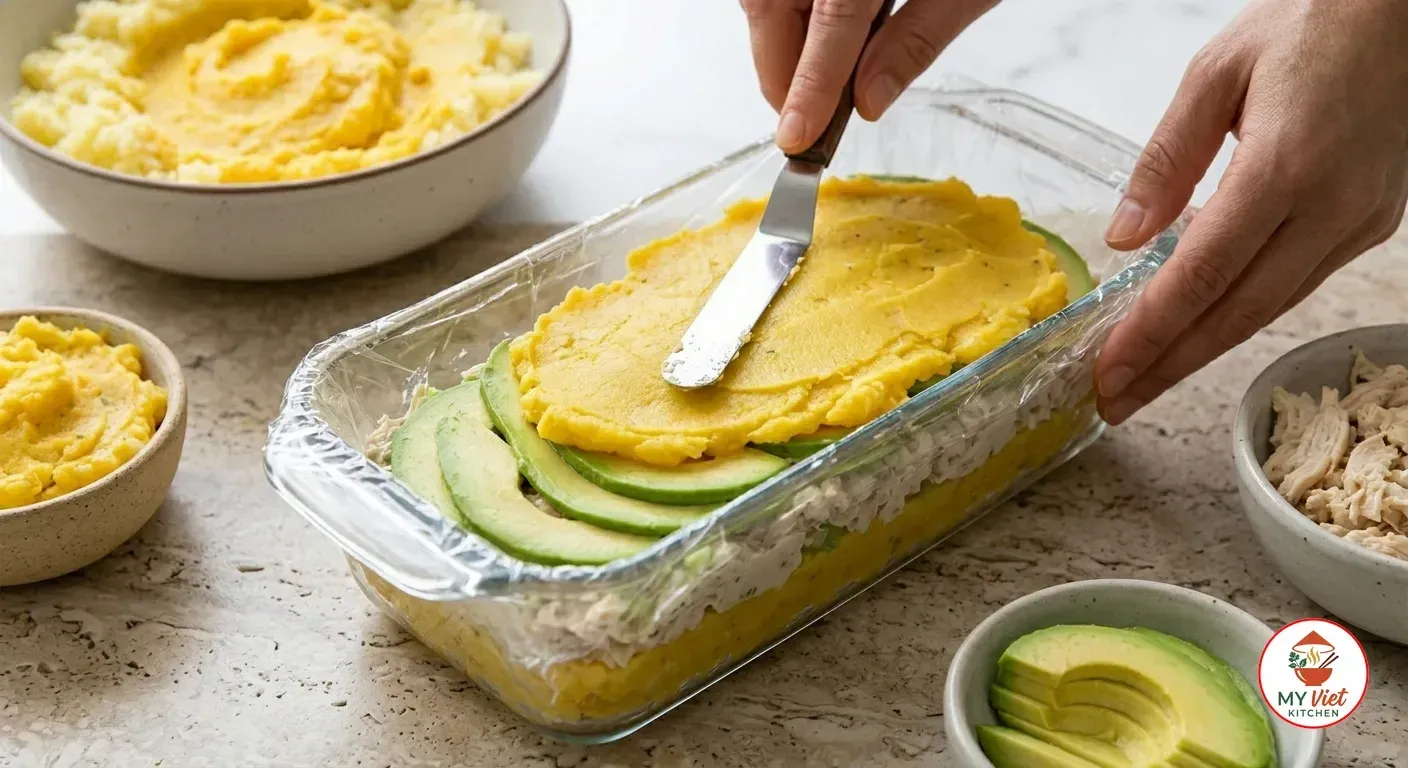
4 Line a rectangular dish, loaf pan, or ring mold with plastic wrap, leaving enough overhang on all sides to fold over the top later. Take half of the seasoned potato dough and press it into the bottom of the mold in a firm, even layer about half an inch thick. Use damp fingers or the back of a spoon to smooth the surface completely flat.
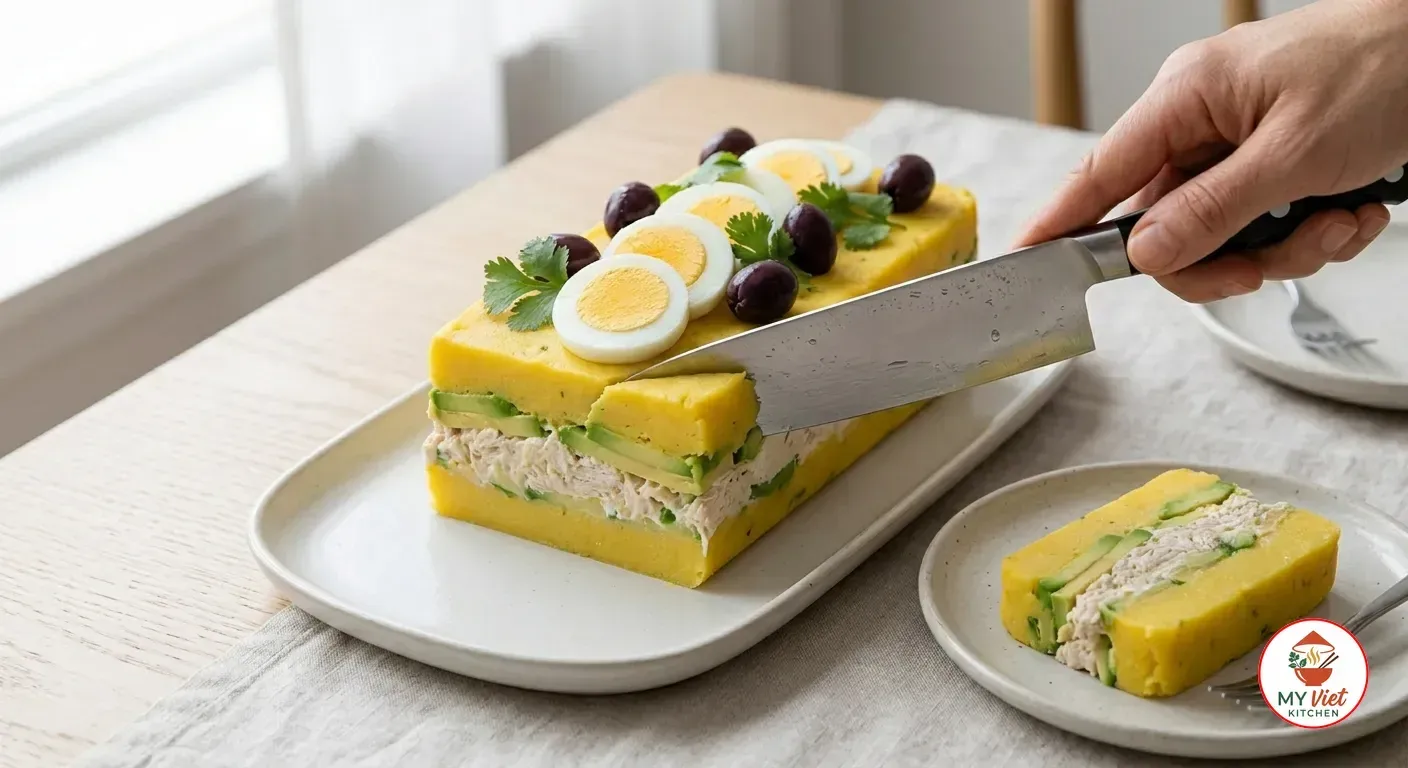
Spread the chicken filling evenly over the first potato layer. Then arrange the sliced avocado in a single layer on top of the filling. Finally, press the remaining potato dough over the avocado to create the top layer. Smooth the surface, fold the plastic wrap over the top, and press down gently to compact all the layers together. The plastic wrap makes unmolding effortless later.
Step 5: Chill and Serve
5 Place the covered causa in the refrigerator for at least 1 hour, though 2 to 3 hours produces the firmest results. Chilling sets the layers so the causa holds its shape when you slice it. This resting time also allows the lime and aji amarillo flavors to meld together throughout the potato dough.
When ready to serve, flip the mold onto a serving plate and peel away the plastic wrap. Garnish the top with sliced hard-boiled eggs, black olives, and a scattering of fresh cilantro or parsley. Drizzle a thin line of olive oil over the surface for shine. Slice the causa into individual portions with a sharp, wet knife for the cleanest cuts. Serve immediately while still cool.
Expert Tips for the Perfect Causa Limena Recipe
Use a Potato Ricer for the Smoothest Texture
A potato ricer is the single most important tool for making causa limena. It presses the cooked potatoes through tiny holes, producing a dough that feels like silk. A regular masher can leave small lumps that become visible in the finished layers. If you do not own a ricer, push the potatoes through a fine-mesh sieve with the back of a spoon. The extra effort pays off with a flawless, professional look.
Season the Potatoes While Hot
Hot potatoes absorb liquid seasonings far better than cold ones. When you add the lime juice, aji amarillo, and oil to warm mashed potatoes, the starches draw the flavors deep into the dough. If you wait until the potatoes cool, the seasonings coat the surface but never truly penetrate. This principle applies to many potato dishes, but it is especially critical for causa limena because the dough must taste bold on its own.
Do Not Skip the Chilling Time
Refrigeration is not optional for this dish. The cold temperature firms the potato layers so they hold their shape during slicing. It also allows the lime juice and aji amarillo to meld into a cohesive flavor. Rushing this step by serving too early results in a causa that falls apart on the plate. Plan for at least 1 hour of chilling, although 2 to 3 hours is ideal.
Causa Limena vs. Other Peruvian Potato Dishes
Peru is the birthplace of the potato, and Peruvian cuisine features dozens of potato preparations. Here is how causa limena compares to other popular Peruvian potato dishes.
| Feature | Causa Limena | Papa a la Huancaina | Ocopa |
|---|---|---|---|
| Serving temp | Cold | Room temperature | Room temperature |
| Potato form | Mashed and layered | Sliced rounds | Sliced rounds |
| Key flavoring | Aji amarillo, lime | Aji amarillo cheese sauce | Huacatay, peanuts |
| Protein filling | Chicken, tuna, or shrimp | None (sauce only) | None (sauce only) |
| Texture | Smooth layers with creamy filling | Firm slices with creamy sauce | Firm slices with thick sauce |
| Origin city | Lima | Huancayo | Arequipa |
Serving Suggestions
Causa limena is traditionally served as an appetizer at Peruvian gatherings and celebrations. Its chilled nature makes it especially popular during warm months. Because you prepare it ahead and serve it cold, causa limena is also one of the best dishes for entertaining. Here are the accompaniments that complete the experience.
The Perfect Accompaniments:
- Salsa criolla: A bright relish of thinly sliced red onion, lime juice, aji amarillo, and cilantro. The sharp acidity cuts through the rich potato and mayonnaise layers with refreshing contrast.
- Aji verde sauce: A creamy green chili sauce made from fresh peppers, cilantro, and mayonnaise. Drizzle it over individual slices of causa or serve it on the side as a dip for extra heat.
- Mixed green salad: A simple salad with arugula, cherry tomatoes, and a light vinaigrette balances the richness of the causa. The peppery greens complement the aji amarillo warmth nicely.
- Choclo (Peruvian corn): Large-kernel Peruvian corn served alongside adds a starchy, slightly chewy contrast. If choclo is unavailable, any fresh corn on the cob works well.
Beverage Pairings:
- Pisco sour: Peru’s iconic cocktail pairs beautifully with the citrus notes in causa limena. The tangy lime and frothy egg white mirror the bright flavors of the potato dough.
- Sauvignon Blanc: A crisp, citrus-forward white wine complements the cold, creamy layers. Chilean or Argentine Sauvignon Blanc pairs especially well with the aji amarillo spice.
- Chicha morada: This traditional Peruvian purple corn drink offers a sweet, fruity contrast to the savory causa. It is the classic non-alcoholic pairing for Peruvian appetizers.
- Sparkling water with lime: A simple, refreshing choice that cleanses the palate between bites without competing with the delicate flavors of the causa limena.
Storage and Reheating
Refrigerator: Store assembled causa limena covered in plastic wrap for up to 2 days. The flavors actually improve after sitting overnight, as the lime and aji amarillo continue to infuse the potato. Keep garnishes like avocado and herbs separate until serving to prevent browning.
Freezer: Causa limena does not freeze well because the potato texture changes when thawed. The avocado also turns brown and mushy after freezing. For best results, make causa limena fresh or store it in the refrigerator only. If you must prepare far in advance, freeze the seasoned potato dough without the filling for up to 1 month, then thaw and assemble fresh.
Reheating: Causa limena should never be reheated. It is designed to be served cold. Simply remove it from the refrigerator 10 minutes before serving so it loses the extreme chill. Room-temperature causa has softer potato layers and more pronounced flavors than one straight from the fridge.
Common Mistakes to Avoid
1. Using the Wrong Type of Potato
Waxy potatoes like red-skinned or fingerling varieties do not mash smoothly enough for causa limena. They leave a grainy, sticky texture that ruins the elegant layered structure. Russet potatoes mash well but lack the golden color and buttery flavor of yellow varieties. Always use Yukon Gold or another yellow-fleshed potato for the best results.
2. Not Draining the Potatoes Thoroughly
Excess water in the mashed potatoes makes the dough soggy and prevents it from holding firm layers. After boiling, drain the potatoes completely, then return them to the warm pot for a minute to let any remaining moisture evaporate. This step ensures that your causa limena sets properly in the refrigerator and slices cleanly.
3. Skipping the Chilling Step
Serving causa limena without proper chilling results in a dish that collapses when you try to slice it. The cold temperature is what binds the layers together and gives the causa its clean, architectural look. Always refrigerate for at least 1 hour before unmolding. Patience here makes the difference between a stunning presentation and a messy one.
4. Overfilling the Layers
Too much chicken filling or avocado between the potato layers causes the causa to split apart when sliced. Keep the filling layer about half an inch thick and the avocado in a single, even layer. The potato should be the star, with the filling providing flavor contrast rather than overwhelming the structure. A controlled hand during assembly produces the most beautiful slices in any causa limena recipe.
Frequently Asked Questions
What is causa limena?
Causa limena is a traditional Peruvian layered potato dish from Lima. It features smooth mashed yellow potatoes seasoned with aji amarillo paste and fresh lime juice, layered with a filling of chicken, tuna, or seafood. The dish is served chilled and garnished with avocado, hard-boiled eggs, and black olives. It works as an appetizer or light main course and is one of Peru’s most iconic cold dishes.
What does aji amarillo taste like?
Aji amarillo is a bright orange Peruvian chili with moderate heat and a fruity, slightly floral flavor. It tastes warm and mildly spicy with a subtle sweetness that sets it apart from other chili peppers. In causa limena, it provides the signature golden color and a gentle kick that pairs perfectly with the tangy lime juice. You can find aji amarillo paste in jars at Latin American grocery stores or online.
Can I make causa limena ahead of time?
Absolutely. Causa limena is one of the best make-ahead dishes in Peruvian cuisine. Assemble it up to 24 hours before serving and store it covered in the refrigerator. The chilling time actually benefits the dish, allowing flavors to meld and layers to set firmly. Add fresh garnishes like avocado slices and herbs just before serving to keep them vibrant.
What type of potato is best for causa limena?
Yellow-fleshed potatoes produce the best causa limena. Yukon Gold is the most widely available choice and delivers a smooth, buttery mash with a naturally golden color. In Peru, cooks use papa amarilla, which has an even richer flavor. Avoid waxy potatoes like red-skinned varieties, as they mash with a grainy texture that does not work for the smooth layers this dish requires.
Is causa limena served hot or cold?
Causa limena is always served cold or at cool room temperature. The chilling process firms the potato layers so the dish holds its shape when sliced. The cold temperature also makes causa a refreshing starter, especially in warm weather. Never heat causa limena, as warming breaks down the layered structure and melts the avocado filling into mush.
Can I make causa limena without aji amarillo?
While aji amarillo is essential for authentic causa limena, you can make a close substitute by blending roasted yellow bell pepper with a small amount of cayenne or habanero for heat. Add a pinch of turmeric for color. The flavor will differ from the traditional version, but the dish will still taste vibrant and satisfying. For the most authentic causa limena recipe results, order aji amarillo paste online from a Peruvian food supplier.
Variations and Adaptations
Tuna Causa Limena:
Replace the chicken filling with two cans of high-quality solid tuna, well drained. Mix the tuna with mayonnaise, diced celery, a squeeze of lime, and salt. Tuna causa is actually the most traditional version of this dish and remains the most popular variation in Lima. The clean, briny flavor of good tuna pairs exceptionally well with the aji amarillo potato.
Shrimp or Crab Causa:
For a more elegant version, use cooked shrimp or lump crab meat as the filling. Toss the seafood with a light dressing of mayonnaise, lime juice, and a pinch of aji amarillo. Seafood causa is a favorite at upscale Peruvian restaurants and works beautifully as a dinner party appetizer. The sweetness of the shellfish contrasts with the tangy, spicy potato in a particularly refined way.
Vegetarian Causa with Roasted Vegetables:
Skip the protein entirely and fill the causa with layers of roasted red peppers, grilled zucchini, and sun-dried tomatoes. Add a spread of creamy hummus or guacamole between the layers for richness. This plant-based version is colorful, flavorful, and just as impressive as the traditional meat-filled causa limena. This vegetarian causa limena recipe proves that the potato layers can stand alongside almost any filling.
The Cultural Significance of Causa Limena
Causa limena is deeply woven into Peru’s culinary identity. The word “causa” comes from the Quechua word “kausaq,” meaning “that which gives life,” a reference to the potato’s essential role in Andean survival for thousands of years. Peru is home to over 3,000 native potato varieties, and the potato remains the most important food in the country. Causa limena celebrates this heritage by transforming the humble tuber into something refined and beautiful.
According to popular legend, causa also has a patriotic origin. During Peru’s war of independence in the early 19th century, women sold layered potato dishes on the streets to raise funds “for the cause” (por la causa). Whether or not this story is historically accurate, it reflects the deep emotional connection that Peruvians feel toward this dish. Causa limena is more than food. It represents resourcefulness, pride, and the ability to create elegance from simple ingredients.
Today, causa limena appears at every major Peruvian celebration, from birthdays to national holidays. In Lima’s finest restaurants, chefs compete to create the most inventive versions, layering in octopus, crab, and exotic sauces. Yet the soul of the dish never changes: golden potatoes, bright lime, warm aji amarillo, and a filling that makes each bite complete. When you make causa limena at home, you join a tradition that stretches back through centuries of Peruvian cooking.
Conclusion
This causa limena recipe gives you everything you need to master one of Peru’s most beloved dishes. The keys are straightforward: choose yellow potatoes, mash them while hot, season boldly with aji amarillo and lime, and layer the filling with a careful hand. After chilling, you get a dish that looks as stunning as it tastes, with clean slices that reveal golden potato, creamy filling, and fresh avocado in every portion.
Looking for more South American recipes? Explore our American dishes collection for recipes like anticuchos, ajiaco, and arepas. You can also browse our full range of Peruvian dishes for even more authentic flavors from this incredible cuisine.