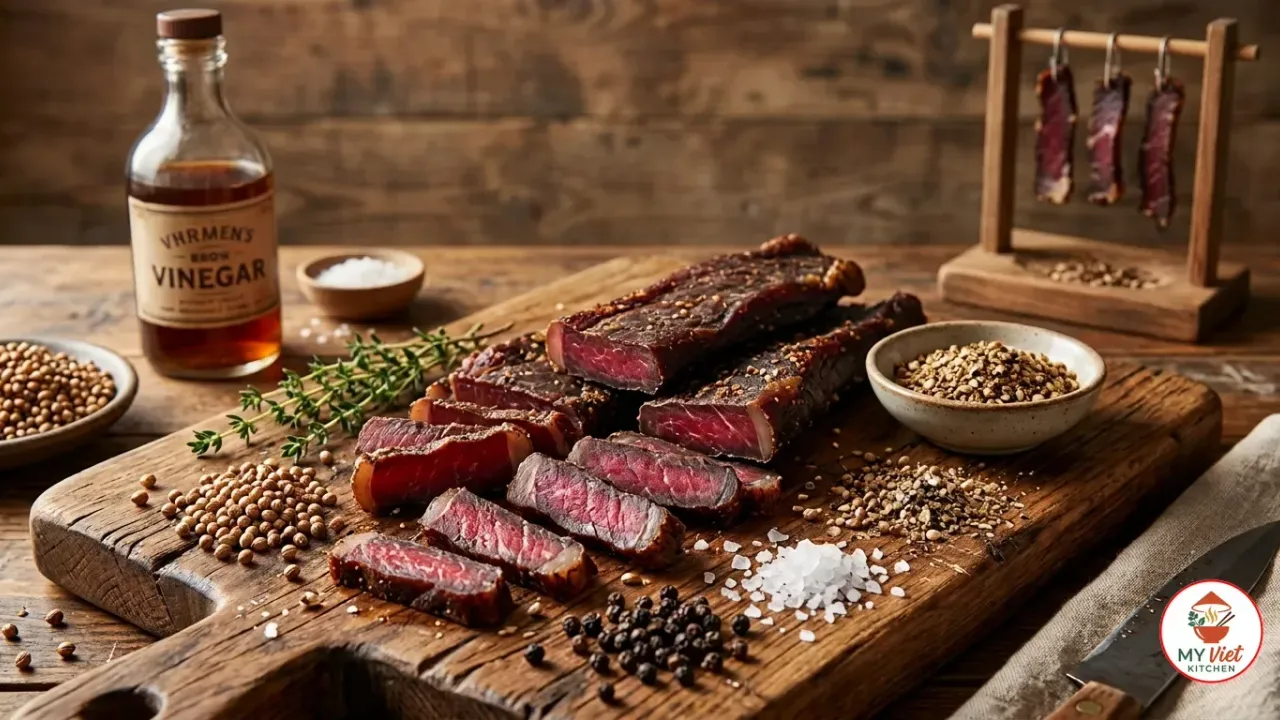
Biltong is South Africa’s legendary dried cured meat, and this biltong recipe teaches you how to make it at home from scratch. Unlike jerky, biltong uses vinegar curing and air drying to produce thick, tender strips with deep spice flavor. South Africans have perfected this preservation technique for over 400 years, and now you can bring that tradition into your own kitchen. In fact, all you need is quality beef, a handful of spices, vinegar, and a few days of patience.
Prep Time: 30 minutes | Cook Time: 0 minutes (3-5 days drying) | Servings: 8
Difficulty: Easy | Calories: ~230 per serving
What Makes This Biltong Recipe Special?
Biltong is far more than dried meat. It is a cornerstone of South African food culture that dates back to the 17th century, when Dutch settlers needed to preserve beef during long treks across the African interior. They combined vinegar, salt, and local spices to cure meat before hanging it to dry in the open air. Eventually, the result was a snack so flavorful and satisfying that it became a national obsession.
What sets this biltong recipe apart from other dried meat preparations is the spice profile. Toasted coriander seeds provide a warm, citrusy backbone. Coarse black pepper adds heat. Brown vinegar creates a tangy crust that also protects the meat during drying. Together, these simple ingredients produce something far greater than the sum of its parts. Additionally, the air-drying method preserves nutrients better than heat-based dehydration.
This recipe works for beginners and experienced makers alike. You do not need expensive equipment. Indeed, a simple fan and some hooks get the job done perfectly. The active work takes about 30 minutes. After that, you simply let time and airflow transform the raw beef into one of the most addictive snacks on the planet.

Choosing the Right Beef for Biltong
The cut of beef you choose directly affects the taste and texture of your finished biltong. In South Africa, butchers sell specific cuts labeled for biltong making. Here are the three best options for a great biltong recipe at home.
- Silverside (best choice): Also called bottom round in the United States, silverside is the most popular cut for biltong in South Africa. It has a tight, even grain with minimal fat running through the meat. This produces clean slices with a consistent texture from edge to center.
- Topside (top round): Topside is another excellent choice that produces slightly leaner biltong. The meat dries evenly and slices beautifully. Many South African butchers recommend topside for first-time biltong makers because it is forgiving and consistent.
- Eye of round: This cylindrical cut produces uniform strips that dry at the same rate throughout. Eye of round is very lean, which means the biltong lasts longer without the fat turning rancid. However, the result can be slightly drier than silverside.
Ingredients for Biltong
Main Ingredients:
- 4 pounds beef silverside or top round
- 1 cup brown malt vinegar or apple cider vinegar
Biltong Spice Mix:
- 4 tablespoons whole coriander seeds, toasted and crushed
- 1/4 cup coarse salt (not table salt)
- 2 tablespoons coarsely ground black pepper
- 1 tablespoon brown sugar
- 1 teaspoon bicarbonate of soda (baking soda)
- 1/2 teaspoon ground cloves (optional)
Equipment Needed:
- Bent paper clips or butcher hooks for hanging
- A biltong box, drying rack, or well-ventilated space
- A small fan for consistent airflow
- Mortar and pestle or spice grinder
Pro tip: The coriander is the signature flavor of authentic biltong. Always toast whole seeds in a dry pan until they release their aroma, then crush them coarsely. Pre-ground coriander lacks the bold, citrusy punch that defines great South African biltong. This single step makes the biggest difference in flavor.
Step-by-Step Instructions
Step 1: Prepare and Trim the Beef
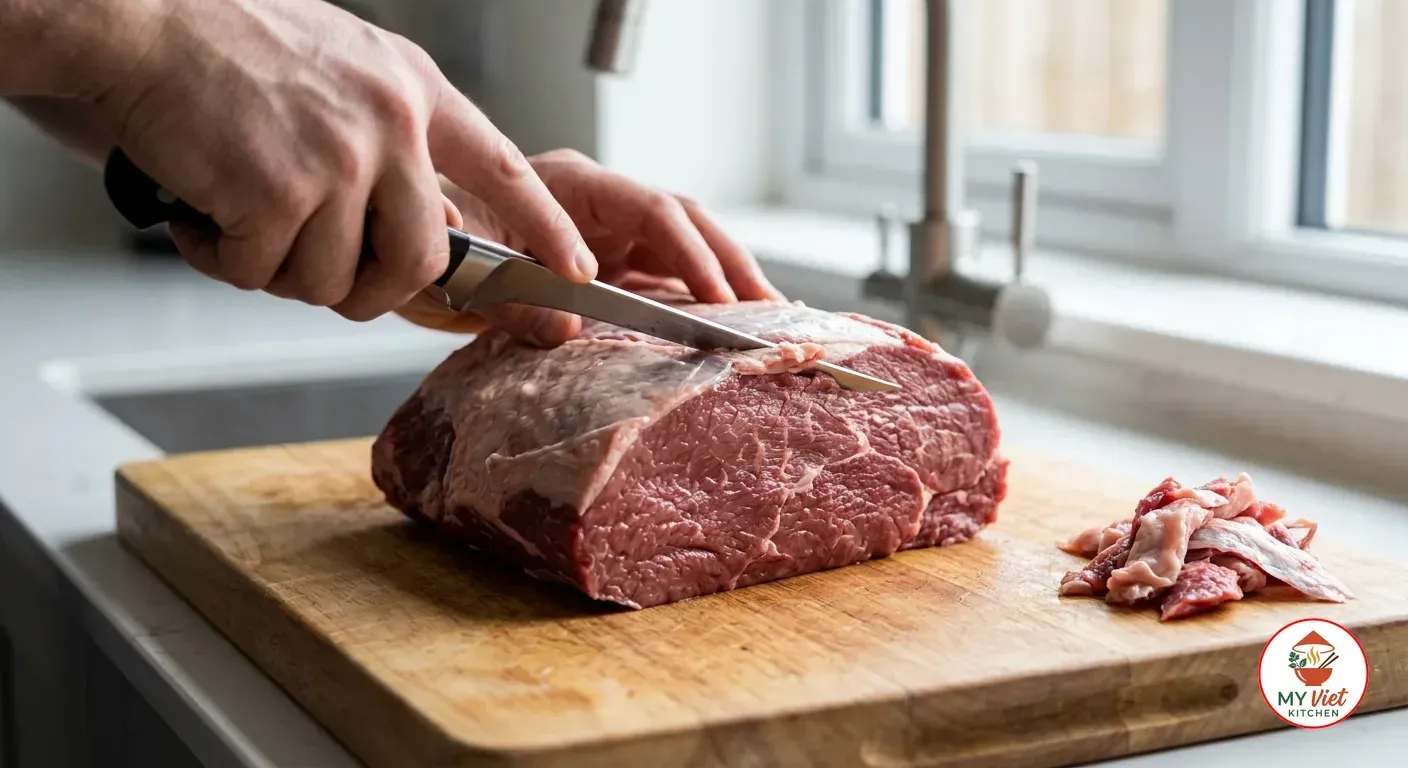
1 Start by selecting a quality piece of beef silverside or top round weighing about 4 pounds. Place the meat on a clean cutting board and trim away any tough sinew or silver skin using a sharp knife. Leave a thin layer of fat on one side if present, because this fat adds flavor during the drying process. In particular, South African biltong lovers prize this fat strip.
Cut the meat into strips about 1 inch thick, slicing along the grain of the muscle. Cutting along the grain is essential for traditional biltong. It gives each piece a satisfying chew when you tear it apart later. If you prefer softer biltong, you can cut slightly against the grain, but most South Africans insist on cutting with it.
Step 2: Apply the Vinegar Wash
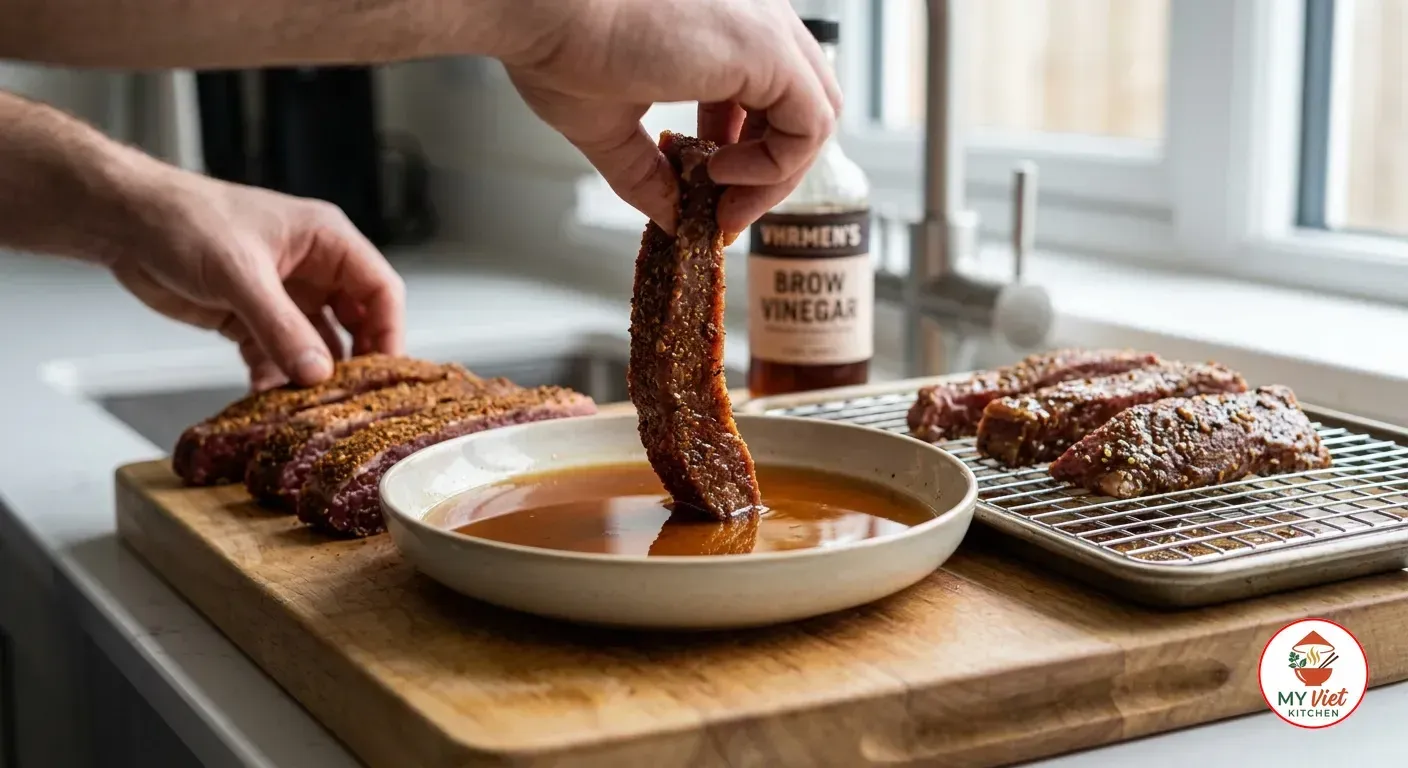
2 Pour the brown malt vinegar into a shallow dish large enough to dip each strip. Take one strip at a time and submerge it briefly in the vinegar, turning it so that every surface gets coated. The vinegar serves two critical purposes in this biltong recipe. First, it sterilizes the surface of the meat, which prevents harmful bacteria from growing during the drying process. Second, it creates a slightly tacky surface that helps the spice rub stick firmly to the meat.
After dipping, shake off the excess vinegar and place the strip on a clean tray or wire rack. Do not let the meat sit in a pool of vinegar. You want the surface damp but not dripping wet. Then repeat this process with every strip until all the meat is coated.
Step 3: Mix and Apply the Spice Rub
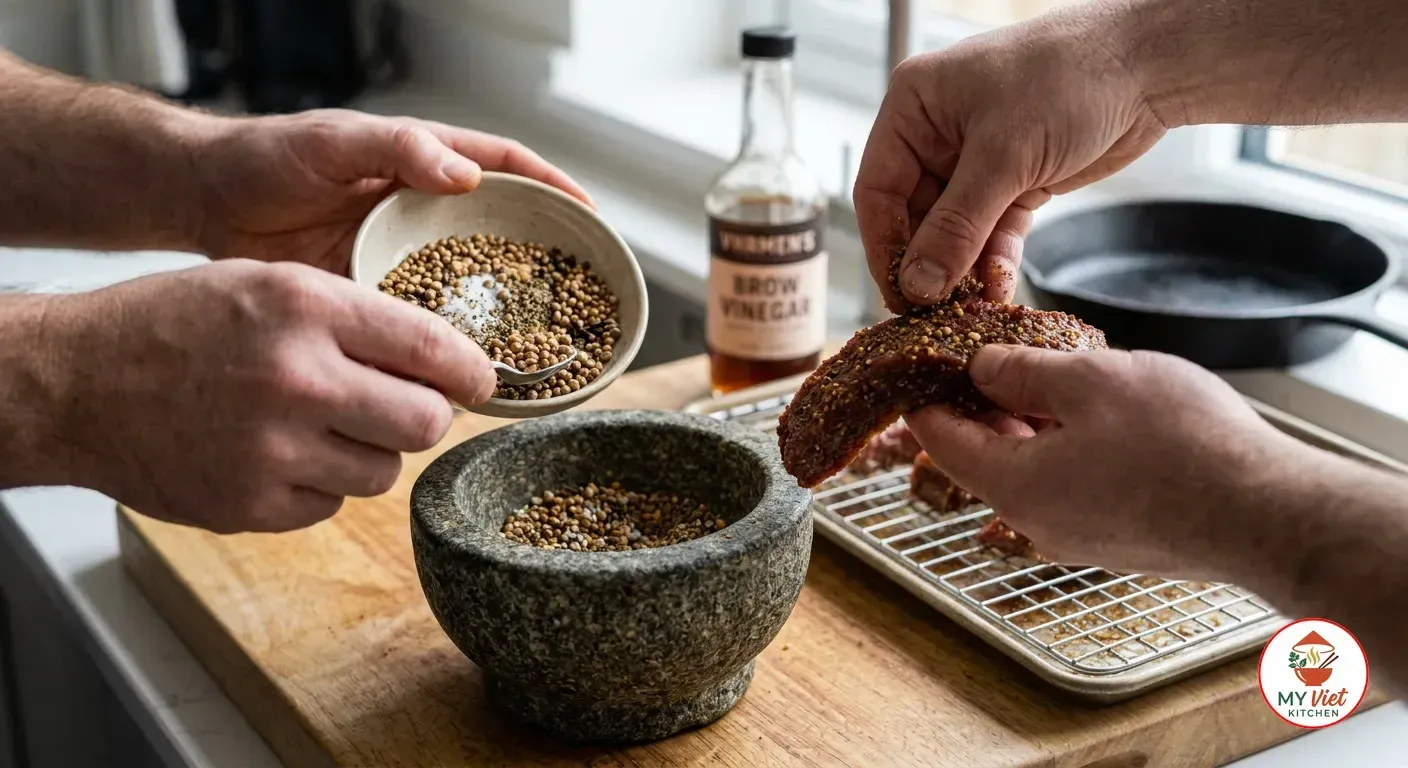
3 Place the whole coriander seeds in a dry skillet over medium heat. Toast them for 2 to 3 minutes, shaking the pan frequently, until the seeds darken slightly and release a warm, citrusy aroma. Next, transfer the toasted seeds to a mortar and pestle and crush them coarsely. You want a mix of broken pieces and some powder, not a fine grind. This coarse texture creates the characteristic crust on authentic biltong.
In a bowl, combine the crushed coriander with the coarse salt, black pepper, brown sugar, bicarbonate of soda, and ground cloves. Mix well. Take each vinegar-coated strip and press it firmly into the spice mixture, coating every surface generously. Pat the spices into the meat with your hands. The vinegar creates a bond that holds the rub in place throughout the drying process.
Step 4: Marinate the Beef Overnight
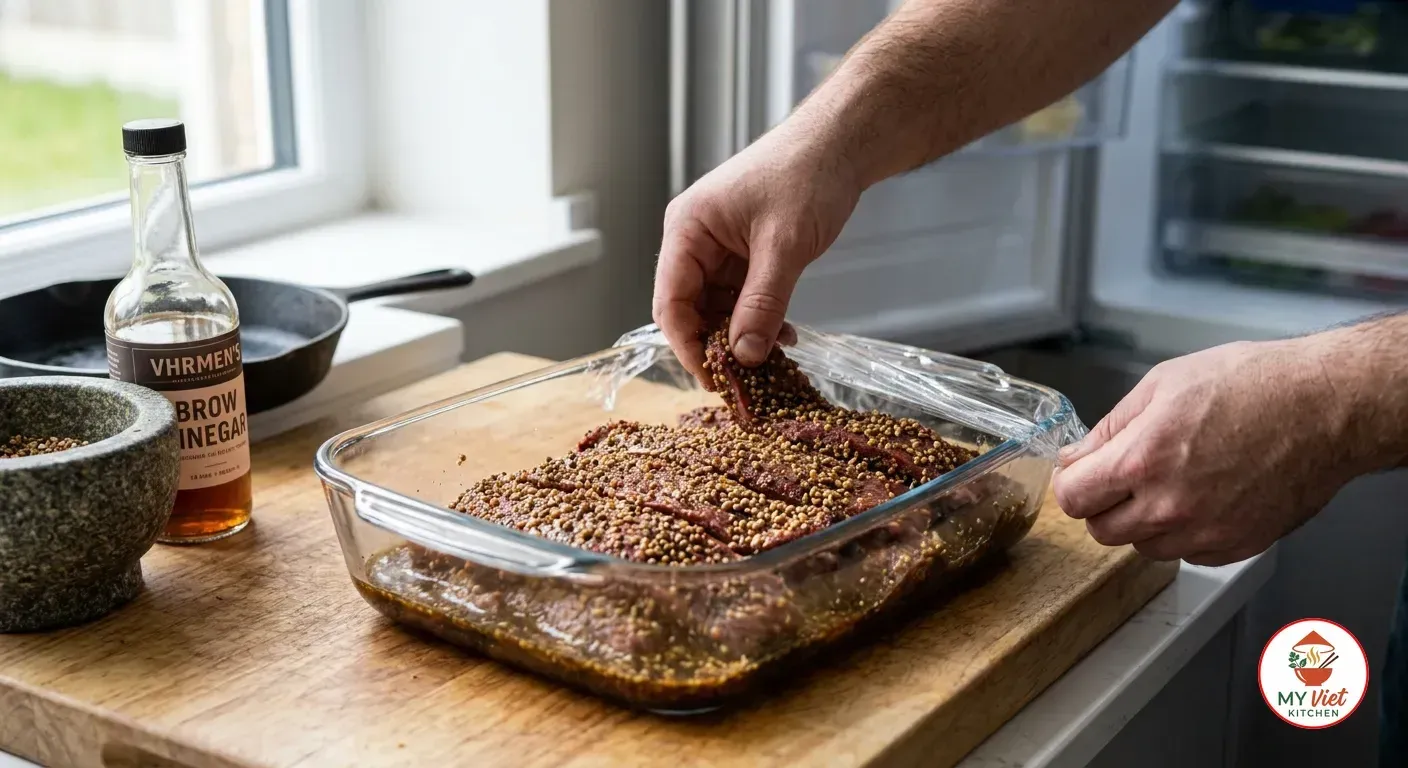
4 Layer the spiced beef strips in a glass, ceramic, or food-safe plastic container. Avoid metal containers because the vinegar reacts with certain metals. Place the first layer of strips flat, then stack the remaining strips on top. Cover the container tightly with a lid or plastic wrap and place it in the refrigerator. Let the meat cure for 12 to 24 hours.
Halfway through the curing time, open the container and turn each strip over. The salt draws moisture from the meat and creates a brine at the bottom of the container. Turning the strips ensures even curing on all sides. Most importantly, this overnight step is when the magic happens. The salt penetrates the meat while the coriander and pepper develop their full flavor. As a result, the beef transforms from raw meat into something that already smells like proper South African biltong.
Step 5: Hang and Dry the Biltong
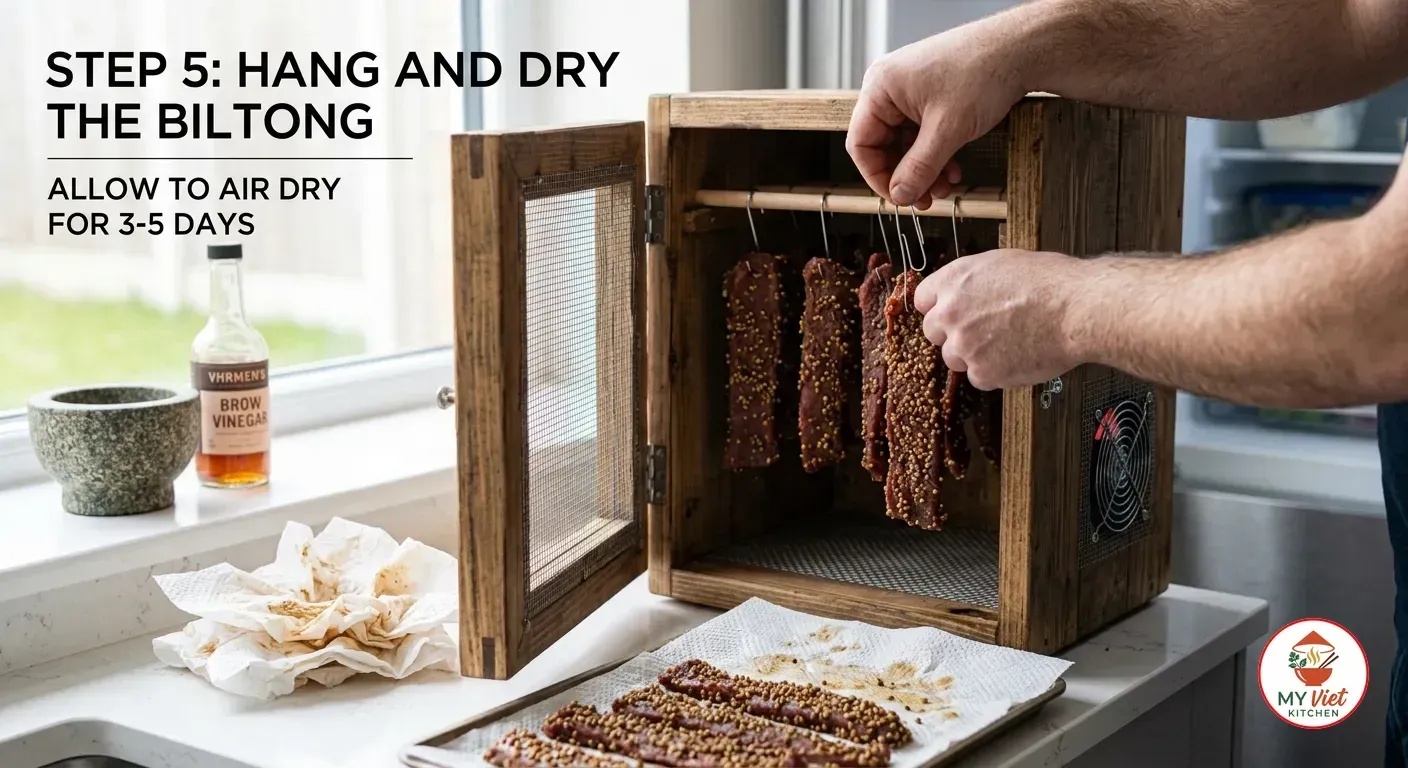
5 Remove the strips from the container and gently pat them with paper towels to remove excess moisture. Do not rinse off the spices. Instead, bend a paper clip into an S-shape or use butcher hooks to create a hanging point at one end of each strip. Hang the strips in your biltong box, drying cabinet, or a well-ventilated room with a fan pointed at the meat.
The drying process takes 3 to 5 days depending on the thickness of your strips, humidity levels, and how dry you prefer your biltong. Check the strips daily by pressing them gently. Specifically, for wet biltong, remove them after 2 to 3 days when the outside feels firm but the center is still soft and pink. For medium biltong, wait until day 4. For fully dried biltong, leave them for 5 to 7 days. Most South Africans prefer medium biltong that offers a dry, spiced exterior with a moist, ruby-red center.
Expert Tips for the Perfect Biltong Recipe
Toast Your Coriander Seeds
Coriander is the defining spice in every authentic biltong recipe. Toasting the whole seeds before crushing them releases volatile oils that produce a much deeper, nuttier flavor. Pre-ground coriander from a jar simply cannot match this. Therefore, invest two minutes in toasting and your biltong will taste noticeably better. Crush the seeds coarsely rather than grinding them to a powder. The chunky pieces create a textured crust.
Control the Airflow
Consistent airflow is the most important factor in drying biltong safely and evenly. Without adequate ventilation, the outside dries too fast while the inside stays wet, which creates conditions for spoilage. Point a fan directly at the hanging strips and keep it running throughout the drying period. The air should move constantly but not blast the meat. A gentle, steady breeze works best.
Use Coarse Salt, Not Table Salt
Coarse salt draws moisture slowly and evenly from the meat. In contrast, table salt dissolves too quickly, which creates an overly salty crust before the interior has time to cure. Rock salt, kosher salt, or coarse sea salt all work well for this biltong recipe. However, the grain size matters more than the type, so choose the coarsest option available to you.
Biltong Compared to Other Dried Meats
Biltong stands apart from dried meats around the world due to its unique preparation method. Here is how it compares to similar preserved meat snacks from other cultures and countries.
| Dried Meat | Origin | Drying Method | Key Flavors | Texture |
|---|---|---|---|---|
| Biltong | South Africa | Air-dried with fan | Coriander, vinegar, pepper | Tender, moist center |
| Beef Jerky | United States | Dehydrated with heat | Soy sauce, smoke, sugar | Chewy, dry throughout |
| Bresaola | Italy | Air-dried, aged | Juniper, cinnamon, cloves | Thin, silky slices |
| Cecina | Spain / Mexico | Air or smoke dried | Paprika, garlic, salt | Thin, slightly smoky |
| Pastirma | Turkey | Air-dried with paste | Fenugreek, garlic, paprika | Firm, intensely spiced |
Serving Suggestions
In South Africa, biltong is enjoyed at every occasion from rugby matches to road trips, braais to birthday parties. The traditional way to serve it is simply sliced thin or torn into strips. However, creative cooks have found many other ways to enjoy this versatile snack.
Classic Ways to Enjoy Biltong:
- Sliced thin as a snack: Use a sharp knife to cut paper-thin slices across the grain. This is how most South Africans eat biltong. The thin slices melt in your mouth and deliver concentrated flavor.
- Shaved over salads: Use a vegetable peeler to create thin biltong shavings over green salads, grain bowls, or avocado toast. The salty, spiced meat adds depth to any fresh dish.
- Biltong and cheese platter: Pair sliced biltong with aged cheddar, dried fruit, and crackers. This combination is a staple at South African gatherings and braais. The salty biltong and sharp cheese complement each other perfectly.
- Biltong in potjiekos or stews: Chop biltong into small pieces and add it to stews or potjiekos for extra protein and a burst of spiced, umami flavor. It works as a seasoning as much as an ingredient.
Beverage Pairings:
- South African Pinotage: This bold red wine with smoky, plum-forward flavors stands up to the concentrated spice of biltong. The tannins cut through the salt and complement the coriander beautifully.
- Castle Lager or craft beer: A cold, crisp lager is the classic South African pairing for biltong. The carbonation cleanses the palate between bites. India pale ales also work well because the hop bitterness matches the pepper.
- Rooibos iced tea: For a non-alcoholic option, chilled rooibos tea with a squeeze of lemon provides an earthy, herbal contrast to the savory meat. This pairing is refreshing on warm days.
Storage and Shelf Life
Room temperature: Store biltong in a paper bag or breathable cloth bag at room temperature for 3 to 4 days. Paper allows air circulation and prevents moisture from building up. Above all, never store biltong in sealed plastic bags at room temperature because trapped moisture promotes mold growth.
Refrigerator: Wrap biltong loosely in paper towels and place it in the refrigerator for up to 2 weeks. The cold temperature slows any further drying and preserves the texture you achieved. Before eating, remove it from the fridge 30 minutes before eating to let the flavors come alive at room temperature.
Freezer: To store biltong long-term, vacuum seal or tightly wrap portions in plastic wrap and freeze for up to 6 months. Thaw in the refrigerator overnight when ready to eat. The texture remains excellent after freezing, especially if the biltong was dried to a medium stage before freezing.
Common Mistakes to Avoid
1. Using Pre-Ground Coriander
Pre-ground coriander loses most of its essential oils within weeks of grinding. When you use it for biltong, the result tastes flat and one-dimensional. Instead, always start with whole coriander seeds, toast them, and then crush them yourself. This simple step delivers five times more flavor. It is the difference between ordinary dried meat and authentic South African biltong.
2. Drying in High Humidity Without a Fan
Humidity is the enemy of good biltong. If the air around the drying meat is too moist and stagnant, the surface stays damp and bacteria can grow. Always use a fan to keep air moving across the strips. If you live in a humid climate, consider building a simple biltong box with a light bulb inside to generate gentle warmth. Running a dehumidifier in the room also helps significantly.
3. Cutting Against the Grain Before Drying
Cutting against the grain before drying causes the meat to fall apart as it loses moisture. The muscle fibers separate and the strips become crumbly rather than chewy. Because of this, always cut along the grain for the drying stage. You can then slice the finished biltong against the grain for serving. This technique gives you firm strips during drying and tender bites when eating.
4. Over-Salting the Meat
Salt concentrates as the meat dries, so what tastes mildly salty on raw beef becomes intensely salty in the finished biltong. Therefore, follow the measurements in this biltong recipe carefully and resist the urge to add extra salt. If you are unsure, use slightly less salt than the recipe calls for. You can always sprinkle a little extra on the finished product, but you cannot remove salt from over-cured biltong.
Frequently Asked Questions
What is the difference between biltong and jerky?
These two dried meats differ in preparation, flavor, and texture. Biltong uses vinegar curing and air drying, while jerky relies on heat from a dehydrator or oven. In contrast, biltong strips are thicker, producing a tender center with a spiced crust. Jerky is typically thinner and chewier throughout. The flavor profiles also diverge: traditional biltong features coriander and vinegar, while jerky often uses soy sauce, liquid smoke, and sugar. Both are delicious, but they are distinct traditions from different parts of the world.
How long does it take to make biltong at home?
Initially, the active preparation takes about 30 minutes, covering trimming, slicing, applying vinegar, and rubbing on spices. After that, the meat cures in the refrigerator for 12 to 24 hours. Subsequently, the drying phase takes 3 to 5 days depending on thickness and your preferred dryness level. In total, expect the full process to take 4 to 7 days from start to first bite.
What is the best cut of meat for a biltong recipe?
Silverside, also called bottom round, is the most traditional and widely used cut for biltong in South Africa. Additionally, topside and eye of round also produce excellent results. These lean cuts from the hindquarter have tight grain structures that dry evenly and slice cleanly. Avoid fatty cuts because exposed fat can turn rancid during the multi-day drying process.
Can I make biltong without a biltong box?
Absolutely. Many South Africans make biltong by simply hanging strips from a curtain rod, shower rod, or wire rack in a spare room with a fan running. The key requirements are good air circulation and low humidity. You can also build a basic drying setup from a cardboard box with ventilation holes and a small computer fan. A dedicated biltong box is convenient but not essential for great results.
How do I know when biltong is ready?
Press the thickest part of a strip between your thumb and forefinger. When it feels soft with give in the center, that is wet biltong, which is ready after 2 to 3 days. Once the outside feels firm but the center still yields slightly, that is medium biltong at 3 to 4 days. Completely firm strips throughout indicate dry biltong at 5 to 7 days. Most people prefer the medium stage, so start checking at day 3.
How long does homemade biltong last?
At room temperature in a paper bag, biltong lasts 3 to 4 days. In the refrigerator wrapped in paper towels, it keeps for up to 2 weeks. Vacuum-sealed biltong lasts up to a month without refrigeration. For the longest storage, freeze it for up to 6 months. The key is avoiding trapped moisture, so always choose breathable storage at room temperature. However, in practice, homemade biltong rarely lasts long because it disappears quickly.
Variations and Adaptations
Chili Biltong (Spicy Version):
Add 2 tablespoons of crushed red chili flakes and 1 teaspoon of cayenne pepper to the spice rub. The heat builds during the drying process and creates a fiery biltong that packs serious punch. This variation is popular among South African biltong fans who like extra kick. Adjust the chili quantity to your preference. For even more heat, add ground bird’s eye chili to the mix.
Game Meat Biltong (Traditional Version):
Replace the beef with venison, kudu, springbok, or ostrich. Game meats are the original proteins used for biltong before cattle farming became widespread. These lean meats produce intensely flavored biltong with a distinctive wild character. Use the same spice rub and method, but reduce the drying time by about a day because game meats are naturally leaner and dry faster.
Garlic and Herb Biltong:
Add 2 teaspoons of garlic powder and 1 teaspoon of dried rosemary to the spice mix. The garlic adds a savory depth while the rosemary brings a piney, aromatic note. This modern variation appeals to people who want more complexity in their biltong recipe. Some makers also add onion powder for an extra layer of flavor.
Worcestershire Biltong (Wet Rub Version):
Replace half the vinegar with Worcestershire sauce for a deeper, more savory flavor profile. The Worcestershire adds umami, subtle sweetness, and a complex tang. This variation produces darker biltong with a richer taste. It works especially well with topside beef. Some South African families guard this variation as their secret recipe.
The Cultural Significance of Biltong
Biltong holds a place in South African culture that goes far beyond a simple snack. It is woven into the national identity, tied to history, community, and the outdoors. Understanding this cultural depth makes following a biltong recipe feel like participating in a tradition that spans centuries.
The origins of biltong trace back to the Voortrekkers, Dutch settlers who migrated inland from the Cape Colony in the 1830s and 1840s during the Great Trek. They needed portable, high-protein food that could survive weeks of travel without refrigeration. Building on indigenous preservation methods and European curing traditions, they developed what became modern biltong. The word itself combines the Dutch “bil” (buttock, referring to the meat cut) and “tong” (strip). This preserved meat sustained families through some of the most challenging journeys in South African history.
Today, biltong is everywhere in South Africa. Dedicated biltong shops operate in every town and shopping center. Families make it at home and share their prized recipes across generations. It appears at braais, sports events, and road trips. South Africans who move abroad often name biltong as the food they miss most. The craft of making biltong connects modern South Africans to their ancestors and to the land in a way that few other foods can match. Explore more of this rich culinary heritage in our collection of African dishes.
Conclusion
This biltong recipe gives you everything you need to make authentic South African dried cured meat at home. The process is straightforward. Trim and slice the beef. Apply the vinegar wash. Rub on the toasted coriander spice mix. Cure overnight. Then hang and dry for a few days. The result is a deeply flavored, protein-packed snack that rivals anything from a South African biltong shop. Once you make your first batch, you will understand why millions of South Africans consider biltong an essential part of life.
Ready to explore more South African and African flavors? Browse our collection of African dishes, including bobotie, bunny chow, and chakalaka. Also try our boerewors recipe for another iconic South African favorite.