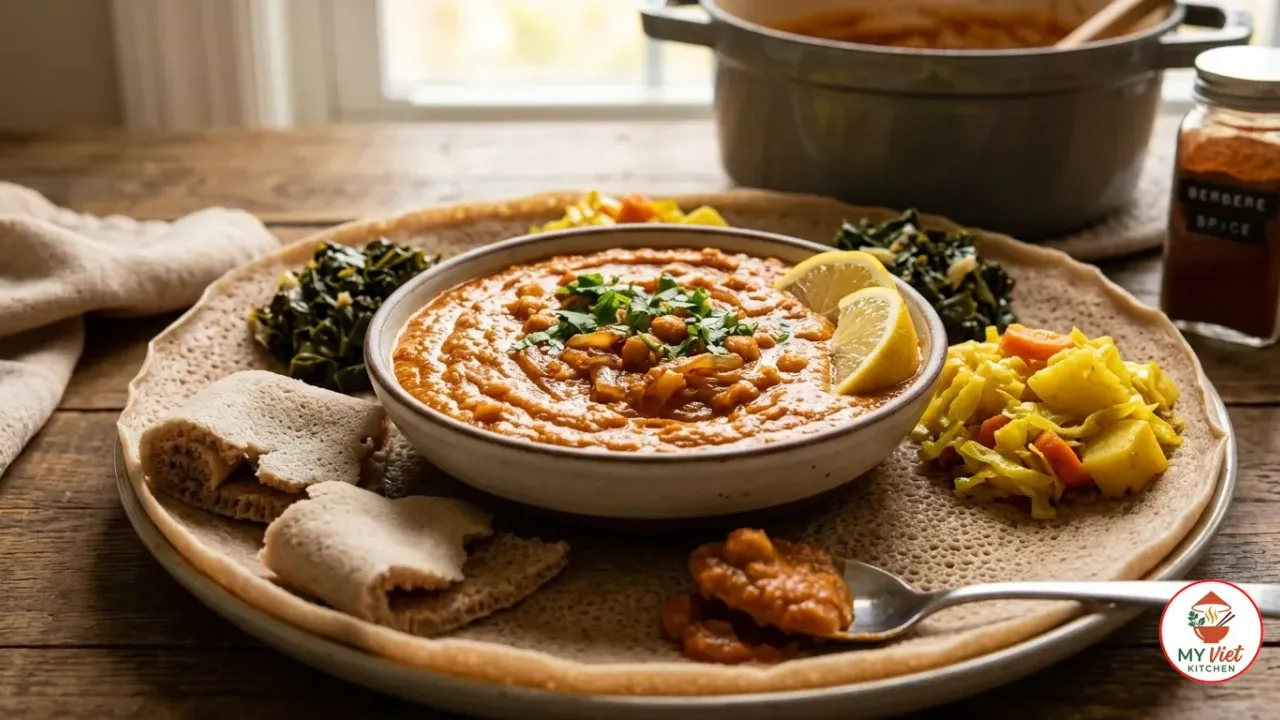
Shiro wat is the ultimate comfort food in Ethiopian cuisine, and this authentic shiro wat recipe shows you how to make it at home in under 40 minutes. This thick, creamy stew uses roasted chickpea flour simmered with onions, garlic, berbere spice, and a touch of tomato paste. If you want a hearty, naturally vegan meal that is rich in flavor and loaded with plant-based protein, this shiro wat recipe delivers every time.
Prep Time: 10 minutes | Cook Time: 30 minutes | Servings: 4
Difficulty: Easy | Calories: ~290 per serving
What Makes Shiro Wat Special?
Shiro wat holds a unique place in Ethiopian food culture. While dishes like doro wat and tibs rely on meat, shiro wat proves that the most satisfying Ethiopian meals can come from humble plant-based ingredients. A bag of roasted chickpea flour, a few aromatics, and a generous spoonful of berbere spice are all you need. The result is a stew so thick and velvety that it clings perfectly to torn pieces of injera.
This shiro wat recipe gets its depth from two key techniques. First, the onions cook low and slow until they caramelize and form a rich, sweet base. Second, the berbere spice blooms in the hot oil, releasing layers of warmth from chili, fenugreek, cardamom, and coriander. These two steps turn a simple chickpea flour stew into something complex and deeply satisfying. The stew thickens naturally as the flour absorbs liquid, so you do not need any cream or thickeners.
In Ethiopia, shiro wat appears on nearly every table during the many Orthodox fasting days that fill the calendar. Because the dish contains no meat, dairy, or eggs, it fits perfectly within fasting rules. However, Ethiopians enjoy shiro on non-fasting days too, often as a quick weeknight dinner. Its ease and speed make it one of the most practical dishes in the entire cuisine. Once you try this shiro wat recipe, you will understand why millions of people eat it several times a week.

Choosing the Right Shiro Flour
The star ingredient in this shiro wat recipe is shiro flour, a finely ground powder made from roasted chickpeas. The type of flour you use has a big impact on the final taste and texture of your stew. Here are the three main options you will find.
- Plain shiro flour: This is pure roasted chickpea flour with no added spices. It gives you full control over the seasoning. You add your own berbere, garlic, and ginger separately. This works best if you want to adjust the heat level to your taste.
- Shiro mitin (best choice): This pre-spiced blend mixes roasted chickpea flour with dried garlic, ginger, fenugreek, and sometimes dried basil. It saves time and gives the stew a deeper, more complex flavor right from the start. Most Ethiopian families keep a bag of shiro mitin in their pantry at all times.
- Homemade shiro flour: If you cannot find shiro flour at a store, you can roast dried chickpeas in a dry pan until golden and fragrant, then grind them in a spice grinder or blender until very fine. The result is fresh and nutty, though it takes extra effort. Sift out any large pieces for the smoothest stew.
Ingredients for Shiro Wat Recipe
Main Ingredients:
- 1 cup shiro flour (roasted chickpea flour)
- 2.5 cups warm water
- 3 tablespoons olive oil or vegetable oil
- 1 teaspoon salt
- 1/2 teaspoon black pepper
- Juice of half a lemon
For the Aromatics and Spices:
- 1 large red onion, finely diced
- 4 cloves garlic, minced
- 1 teaspoon fresh ginger, grated
- 2 tablespoons berbere spice blend
- 1 teaspoon ground turmeric
- 1 tablespoon tomato paste
For Serving:
- Injera flatbread for serving
- Fresh lemon wedges on the side
- Chopped fresh cilantro or Ethiopian basil for garnish
Pro tip: Always whisk the shiro flour into warm water in a separate bowl before adding it to the pot. If you add dry flour straight into the hot onion base, you will get stubborn lumps that are very hard to smooth out. A slow pour with constant stirring is the secret to a silky shiro wat.
Step-by-Step Instructions
Step 1: Cook the Onion Base
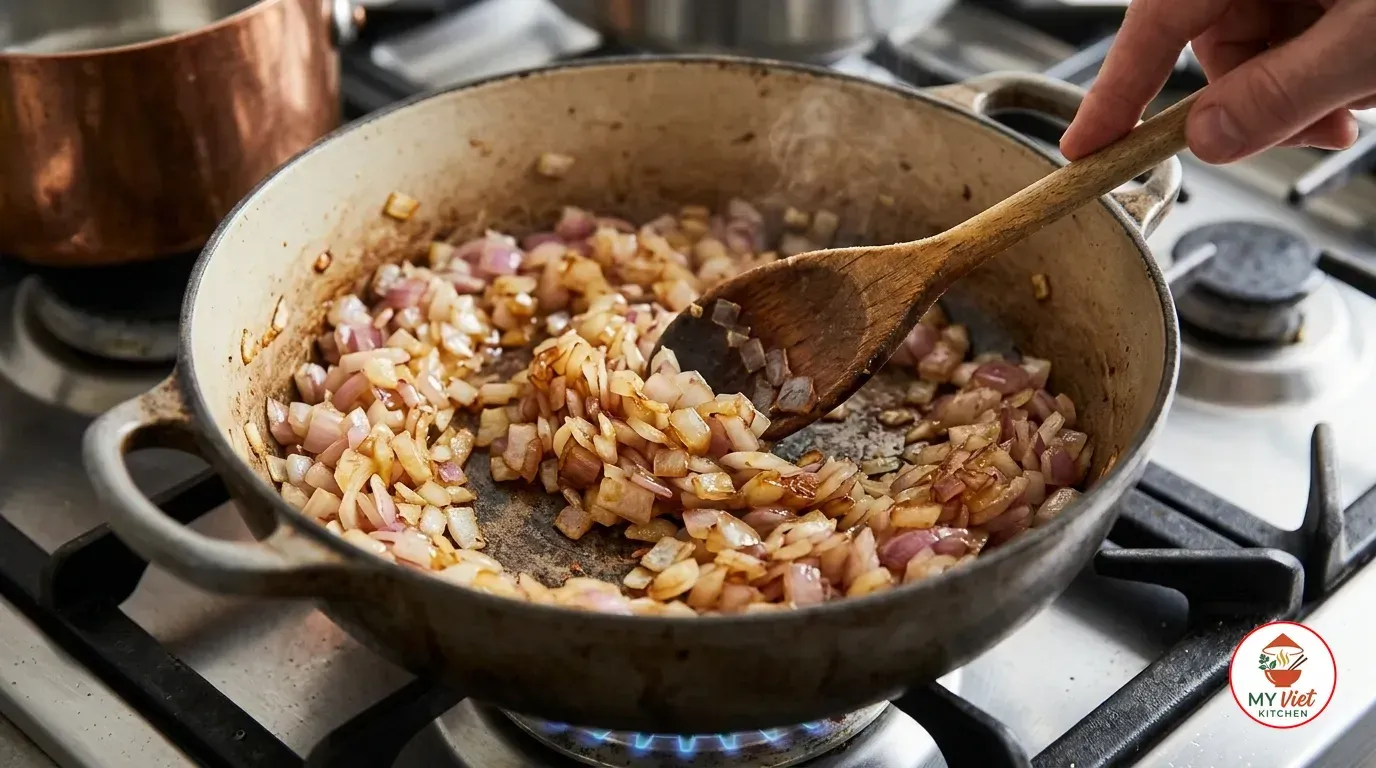
1Start by dicing the red onion as finely as you can. Place the onion in a dry, heavy-bottomed pot over medium heat. Stir often and cook for about eight minutes until the onion softens and turns golden brown. Cooking the onion without oil first draws out its natural moisture and concentrates its sweetness. After eight minutes, add the oil and stir to coat the onion evenly. This technique is the foundation of nearly every Ethiopian stew, and it builds a deep flavor base for your shiro wat recipe.
Step 2: Add Aromatics and Spices
2Add the minced garlic, grated ginger, berbere spice, ground turmeric, and tomato paste to the pot. Stir everything together for two minutes over medium heat. The berbere should darken slightly and release a warm, smoky aroma that fills your kitchen. This step is called blooming, and it activates the oils inside the spices so they deliver their full flavor into the stew. If the mixture seems dry, add a splash of water to stop the spices from burning on the bottom of the pot.

Step 3: Mix and Pour the Shiro Flour
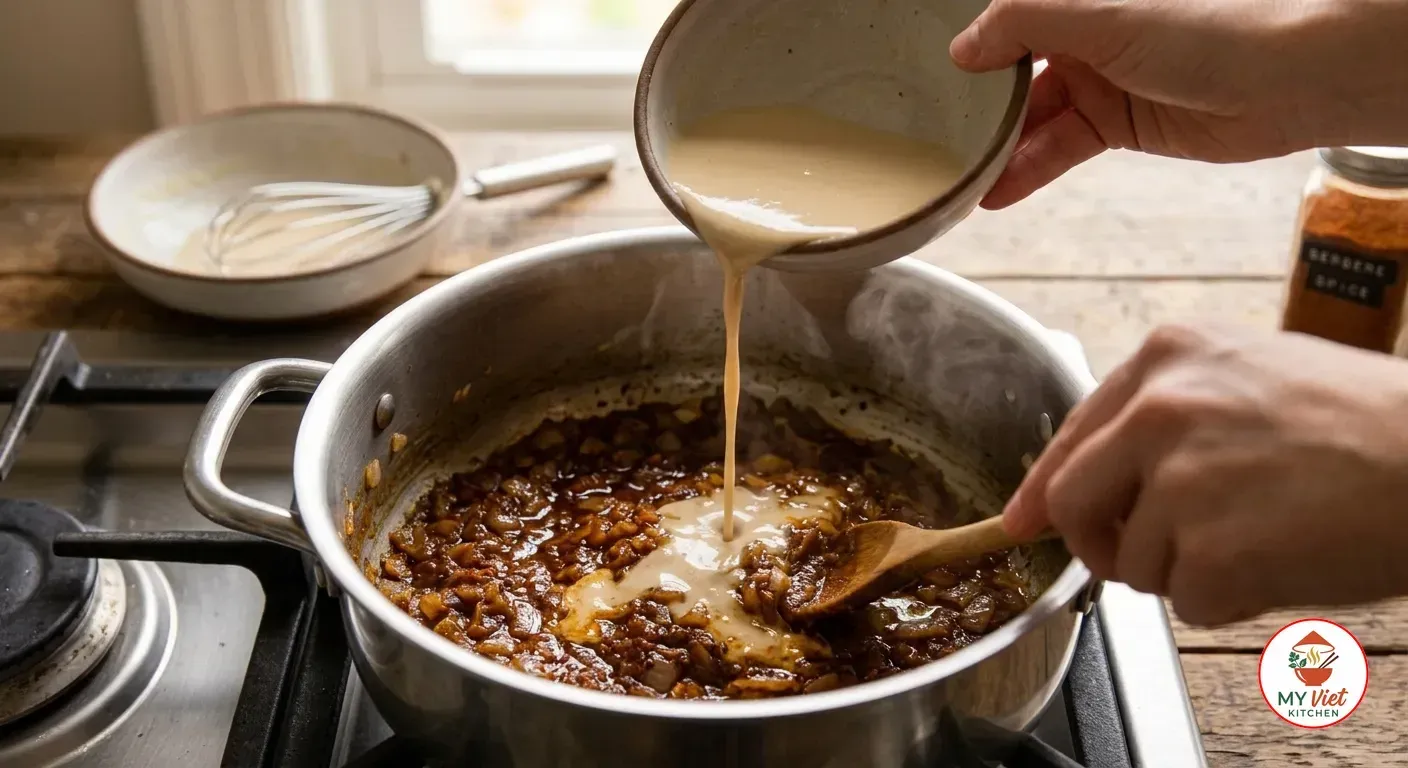
3In a separate bowl, whisk the shiro flour into the warm water until you have a smooth, lump-free mixture. It should look like a thin batter. Now slowly pour this mixture into the pot while stirring the onion base with a wooden spoon or whisk. Pour in a thin, steady stream and stir without stopping. This constant motion keeps lumps from forming. Once all the flour mixture is in the pot, stir well and scrape the bottom to make sure nothing sticks.
Step 4: Simmer Until Thick and Creamy
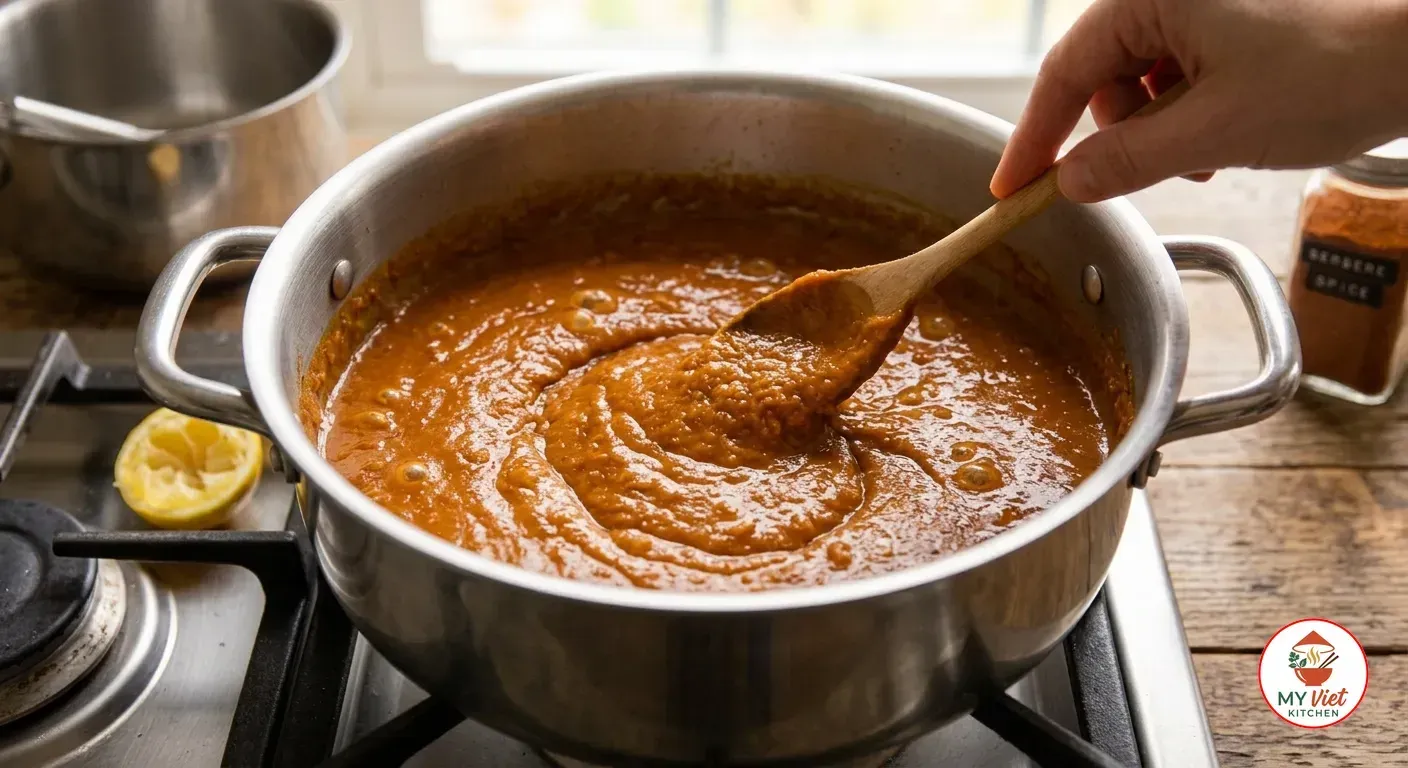
4Turn the heat down to low and let the stew simmer for fifteen to twenty minutes. Stir every few minutes so the bottom does not scorch. As it cooks, the shiro wat will thicken steadily into a smooth, creamy consistency that coats the back of a spoon. If the stew gets too thick, add a few tablespoons of warm water to thin it out. Season with salt, black pepper, and a good squeeze of lemon juice. Taste and adjust the spice. Serve the shiro wat hot on a large plate lined with injera, and garnish with fresh herbs.
Expert Tips for Perfect Shiro Wat
Cook the Onions Low and Slow
The onion base is the soul of this shiro wat recipe. Rushing the onions on high heat gives you a flat, one-note flavor. Instead, keep the heat at medium and let them cook gently for at least eight minutes. You want them golden, soft, and sweet. This patience pays off with a stew that tastes rich and layered from the very first bite.
Stir Often During Simmering
Shiro flour has a tendency to settle on the bottom and stick. Once the stew starts to thicken, stir it every two to three minutes. Use a flat-edged wooden spoon so you can scrape the entire bottom of the pot. If you walk away for too long, the flour can burn and leave a bitter taste. Consistent stirring also helps the stew thicken evenly and stay silky smooth.
Control the Thickness With Water
The beauty of shiro wat is that you can adjust its thickness to your preference. For a stew that holds its shape on the plate, use less water and cook longer. For a thinner, soup-like version that pools around the injera, add extra water toward the end. Ethiopian households debate the ideal thickness endlessly, so find the level that you enjoy most and make it your own.
Shiro Wat vs Other Ethiopian Stews
Ethiopian cuisine features many types of stews, each with its own base and character. This table shows how shiro wat compares to the other major Ethiopian stews you might encounter at a traditional meal.
| Stew | Main Ingredient | Texture | Protein Source |
|---|---|---|---|
| Shiro Wat | Roasted chickpea flour | Thick, smooth, and creamy | Chickpeas (plant-based) |
| Misir Wat | Red lentils | Chunky with soft lentil pieces | Lentils (plant-based) |
| Doro Wat | Chicken and boiled eggs | Rich and saucy | Chicken |
| Kik Alicha | Split peas | Mild and slightly grainy | Split peas (plant-based) |
Serving Suggestions
In Ethiopia, shiro wat never sits alone on the plate. The stew forms part of a larger spread that balances flavors, textures, and colors. Building the right meal around your shiro wat turns a simple dish into a full Ethiopian dining experience.
The Perfect Accompaniments:
- Injera: This spongy, tangy flatbread made from teff flour is the essential partner for shiro wat. Tear off pieces and use them to scoop up the thick stew. The sour tang of injera cuts through the rich, spiced chickpea flavor perfectly.
- Gomen (collard greens): Sauteed collard greens with garlic add a fresh, earthy contrast to the creamy shiro. The mild bitterness of the greens balances the warm spices in the stew and adds color to the plate.
- Atakilt wat (cabbage and potato): This mild, turmeric-spiced vegetable dish provides a cooling balance to the heat of the berbere in the shiro wat. Together they create a complete fasting plate.
- Kitfo: On non-fasting days, add kitfo to the same platter for a contrast between the creamy vegan stew and the rich, spiced raw beef. The combination showcases the range of Ethiopian cooking.
Beverage Pairings:
- Ethiopian honey wine (tej): The sweet, golden wine made from honey and gesho leaves pairs beautifully with the warm spices in shiro wat. The sweetness tempers the berbere heat and complements the nutty chickpea flavor.
- Fresh ginger tea: A cup of hot ginger tea is a popular choice alongside Ethiopian stews. The bright ginger flavor echoes the ginger in the stew and helps with digestion after a hearty meal.
- Ethiopian coffee: Finish your meal with a traditional Ethiopian coffee ceremony. Ethiopia is the birthplace of coffee, so ending with a freshly roasted cup feels both natural and deeply satisfying.
Storage and Reheating
Refrigerator: Store leftover shiro wat in an airtight container for up to 4 days. The flavors actually deepen overnight as the spices continue to meld with the chickpea flour. Leftover shiro makes an excellent spread for sandwiches or a dip for bread.
Freezer: Freeze cooled shiro wat in freezer-safe containers for up to 3 months. Leave a bit of space at the top since the stew expands as it freezes. Thaw overnight in the refrigerator before reheating for the best results.
Reheating: Warm leftover shiro wat on the stove over low heat, stirring often. Add a few tablespoons of water because the stew thickens considerably as it cools. Stir until smooth and heated through. Avoid the microwave when possible, because it can create hot spots and make the texture uneven.
Common Mistakes to Avoid
1. Adding Dry Flour Directly to the Pot
This is the most common mistake that beginners make with shiro wat. If you dump dry shiro flour into the hot onion base, it clumps instantly and you end up with a lumpy, uneven stew. Always mix the flour with warm water in a separate bowl first. Whisk until smooth, then pour the mixture into the pot slowly while stirring. This simple step prevents every lump problem.
2. Rushing the Onions
Turning the heat up high to speed up the onions is tempting, but it ruins the flavor base. High heat burns the outside of the onion while leaving the inside raw. You get a bitter, harsh taste instead of the deep sweetness that comes from slow cooking. Keep the heat at medium and stir often. The eight minutes you spend on the onions pays off in the final flavor of the stew.
3. Forgetting to Stir During Simmering
Shiro flour settles fast and sticks to the bottom of the pot. If you forget to stir for more than a few minutes, the bottom layer burns and gives the whole stew a bitter, scorched taste. Set a timer to remind yourself to stir every two to three minutes during the simmering stage. Use a flat wooden spoon that can scrape the bottom clean with each pass.
Frequently Asked Questions
What is shiro wat in Ethiopian cuisine?
Shiro wat is a thick, creamy Ethiopian stew made from roasted chickpea flour simmered with onions, garlic, and berbere spice. It is one of the most popular dishes in Ethiopia, especially during Orthodox fasting periods when meat and dairy are not allowed. The dish is naturally vegan and provides a good amount of plant-based protein from the chickpeas. Nearly every Ethiopian household eats shiro wat at least once a week.
What is the difference between shiro and misir wat?
Both shiro wat and misir wat are beloved vegan Ethiopian stews, but they use different base ingredients. Shiro wat uses roasted chickpea flour, which gives it a smooth, thick, and creamy texture. Misir wat uses whole or split red lentils that break down during cooking into a chunkier stew with visible lentil pieces. Both stews use berbere spice and onions as their seasoning foundation, but the final texture and flavor differ noticeably.
Where can I buy shiro flour?
You can find shiro flour at Ethiopian or East African grocery stores, online specialty food shops, and some well-stocked international markets. Look for packages labeled shiro powder or shiro mitin. The mitin version comes pre-spiced with garlic, ginger, and other seasonings already mixed in. If you cannot find shiro flour locally, you can order it from online retailers or make it at home by roasting dried chickpeas and grinding them to a fine powder.
Is shiro wat gluten-free and vegan?
Yes, this shiro wat recipe is both naturally gluten-free and vegan. The main ingredient is roasted chickpea flour, which contains no gluten. The stew uses oil instead of butter, so it stays dairy-free as well. If you serve it with injera made from pure teff flour, the entire meal remains gluten-free. Teff is a gluten-free grain native to Ethiopia. Always check labels on store-bought shiro flour to make sure no wheat has been added during processing.
How do I prevent lumps in my shiro wat?
The key to smooth shiro wat is preparation. Whisk the shiro flour into warm water in a separate bowl before you add it to the pot. Stir the water-flour mixture until it is completely smooth with no visible lumps. Then pour it into the pot in a slow, thin stream while you stir the pot without stopping. If a few small lumps still form, switch to a whisk and beat them out. Alternatively, use an immersion blender for a few seconds to smooth things out.
Variations and Adaptations
Tegabino Shiro (Baked Shiro):
Tegabino is a richer version of shiro wat that adds extra oil and sometimes niter kibbeh spiced butter. The stew is poured into a clay pot and baked in the oven until the top forms a slight crust. The baking step intensifies the flavor and gives the dish a unique texture. This version is popular in restaurants and for special occasions when you want to impress your guests.
Shiro Fit Fit (Mixed Shiro):
For a heartier meal, tear pieces of day-old injera into the hot shiro wat and stir them in. The bread soaks up the stew and creates a thick, porridge-like dish called fit fit. This is a common breakfast in many Ethiopian homes. It fills you up fast and uses leftover injera that might otherwise go to waste. Add extra berbere on top for a spicy morning kick.
Spicy Shiro (Extra Berbere):
If you love heat, double the berbere in this shiro wat recipe and add a diced fresh chili pepper during the simmering stage. The extra spice transforms the mild, creamy stew into a fiery dish that warms you from the inside out. Ethiopian households in the southern regions tend to prefer this hotter version. Start with a small amount of extra berbere and build up until you reach your ideal heat level.
The Cultural Significance of Shiro Wat
Shiro wat is far more than just a meal in Ethiopia. It is a symbol of community, faith, and resourcefulness. The Ethiopian Orthodox Church prescribes more than 200 fasting days each year, during which followers avoid all animal products. Shiro wat, along with other legume-based stews, becomes the centerpiece of every fasting meal. The dish feeds families affordably while still providing protein and satisfaction. Even the poorest households can put a bowl of shiro on the table.
Beyond fasting, shiro wat represents the idea that simple ingredients, prepared with care, can produce extraordinary results. Ethiopian grandmothers pass down their shiro techniques through generations. Each family has its own ratio of spices, its own preferred thickness, and its own secret touches. Furthermore, shiro connects the Ethiopian highlands to the daily rhythms of life, from busy workday lunches to quiet family dinners. For anyone interested in exploring Ethiopian cuisine, shiro wat is the perfect starting point because it captures the heart of the culture in a single bowl.
If you want to explore more Ethiopian and African dishes, check out our African recipes collection. From the sizzling heat of tibs to the spiced richness of doro wat, each dish opens a new window into this ancient and vibrant food tradition.
Conclusion
This shiro wat recipe brings one of Ethiopia’s most beloved comfort foods to your kitchen. The steps are straightforward: cook the onions slowly, bloom the spices, whisk the flour into water, and simmer until thick and creamy. The whole dish takes under 40 minutes and uses ingredients that are easy to find. Whether you follow a vegan diet or simply want to try something new, this stew delivers deep flavor with minimal effort.
Serve your shiro wat on a bed of spongy injera with a side of sauteed greens and a cup of Ethiopian coffee to complete the experience. Once you taste the warm, spiced, velvety stew with the tangy bread, you will understand why this dish has fed a nation for generations. Explore more recipes from our collection and discover the bold, diverse flavors of African cooking.