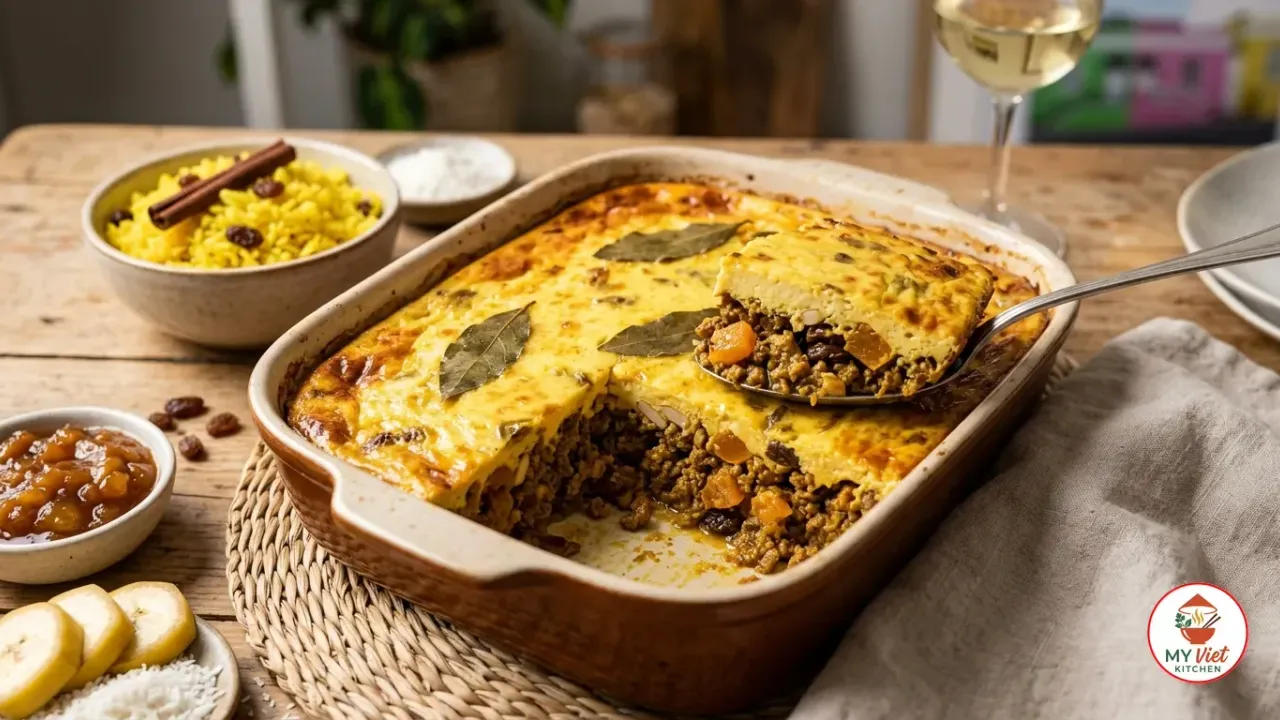
Bobotie is South Africa’s most cherished comfort food, and this bobotie recipe shows you exactly how to make it at home. This iconic baked dish layers warmly spiced curried mince with a silky golden egg custard topping. Born from the Cape Malay kitchens of Cape Town, bobotie carries centuries of history in every bite. Curry powder, dried fruit, chutney, and a creamy custard crown make this dish truly unlike anything else.
Prep Time: 20 minutes | Cook Time: 45 minutes | Servings: 6
Difficulty: Easy | Calories: ~420 per serving
What Makes This Bobotie Recipe Special?
Bobotie stands alone in the world of baked meat dishes. While shepherd’s pie uses mashed potato and moussaka uses eggplant, bobotie tops its spiced filling with egg custard. This custard puffs up and turns golden in the oven. This custard seals in all the moisture and creates a contrast between the creamy top and the richly spiced meat below.
The spice profile is what truly sets this dish apart. Cape Malay cuisine blends Asian spices with South African ingredients. Curry powder, turmeric, cumin, and cinnamon build a warm base. Then chutney, apricot jam, and dried fruit add a sweet note. A splash of vinegar cuts through the richness. No other cuisine combines these elements in quite the same way.
What makes this bobotie recipe especially rewarding is how simple it is to prepare. The meat filling comes together in one skillet in about 20 minutes. Then you pour the custard over the top and let the oven do the rest. Despite the modest effort, the result tastes remarkably sophisticated. As a result, the layers of flavor develop as the dish bakes, and the kitchen fills with an aroma that draws everyone to the table.

Choosing the Right Meat for Bobotie
The type of ground meat you use shapes the texture and richness of the finished dish. Indeed, South African cooks have strong opinions on this topic. Here are the three best options for an authentic bobotie recipe.
- Ground beef (best choice): Regular ground beef with 15 to 20 percent fat is the most common choice. The fat keeps the filling moist and carries the spice flavors well. Lean beef dries out in the oven, so avoid extra lean cuts.
- Ground lamb (traditional option): Many Cape Malay families consider lamb the original and most authentic choice for bobotie. Lamb pairs well with the curry spices and dried fruit. If you enjoy the rich flavor of lamb, this is the way to go.
- Mixed beef and lamb (premium version): A mix of equal parts beef and lamb gives you the best of both. The beef adds structure and a clean base. Meanwhile, the lamb brings depth and richness. Many South African butchers sell this blend for bobotie.
Ingredients for Bobotie
Meat Filling:
- 2 pounds ground beef or lamb
- 2 large onions, finely diced
- 3 cloves garlic, minced
- 2 slices white bread, torn into pieces
- 1 cup whole milk (for soaking bread)
- 1/3 cup dried apricots, chopped
- 1/4 cup raisins or sultanas
- 1/4 cup slivered almonds
- 2 tablespoons fruit chutney
- 1 tablespoon apricot jam
- 2 tablespoons white wine vinegar
- 2 tablespoons vegetable oil
Spice Blend:
- 2 tablespoons curry powder
- 1 teaspoon ground turmeric
- 1 teaspoon ground cumin
- 1/2 teaspoon ground cinnamon
- 1/2 teaspoon ground coriander
- 1/4 teaspoon ground cloves
- 1/4 teaspoon ground allspice
- Salt and black pepper to taste
Egg Custard Topping:
- 3 large eggs
- 1 cup whole milk
- 1/4 teaspoon ground turmeric
- Pinch of salt
For Garnish and Aroma:
- 4 to 6 bay leaves
- 6 lemon leaves or extra bay leaves
Pro tip: The bread soaked in milk is the secret binding agent in authentic bobotie. It gives the meat filling a soft, almost mousse-like texture instead of a dry, crumbly one. Do not skip this step. Squeeze the excess milk from the bread before mixing it into the meat, and reserve that milk for the custard topping.
Step-by-Step Instructions
Step 1: Soak the Bread and Prepare the Fruit
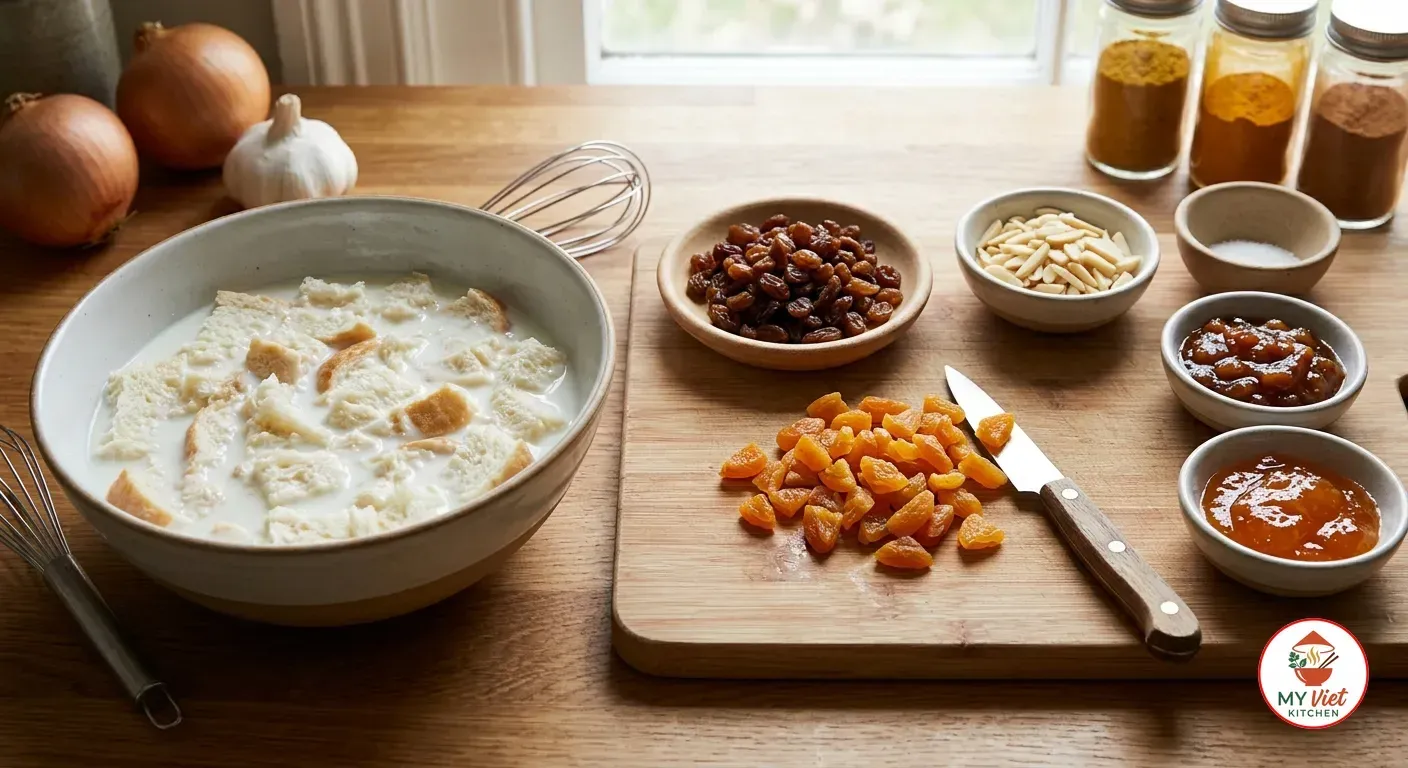
1 Tear the bread slices into small pieces and place them in a bowl. Pour 1 cup of whole milk over the bread and let it soak for 10 minutes. While the bread soaks, chop the dried apricots into small pieces roughly the size of raisins. Measure out the raisins, slivered almonds, chutney, and apricot jam so everything stands ready when you need it.
After 10 minutes, gently squeeze the bread to remove the excess milk. Set the squeezed bread aside on a plate. Pour the leftover milk into a measuring cup and save it. You will add this milk to the custard topping later. This soaked bread is what gives traditional bobotie its distinctive soft texture.
Step 2: Cook the Spiced Meat Filling
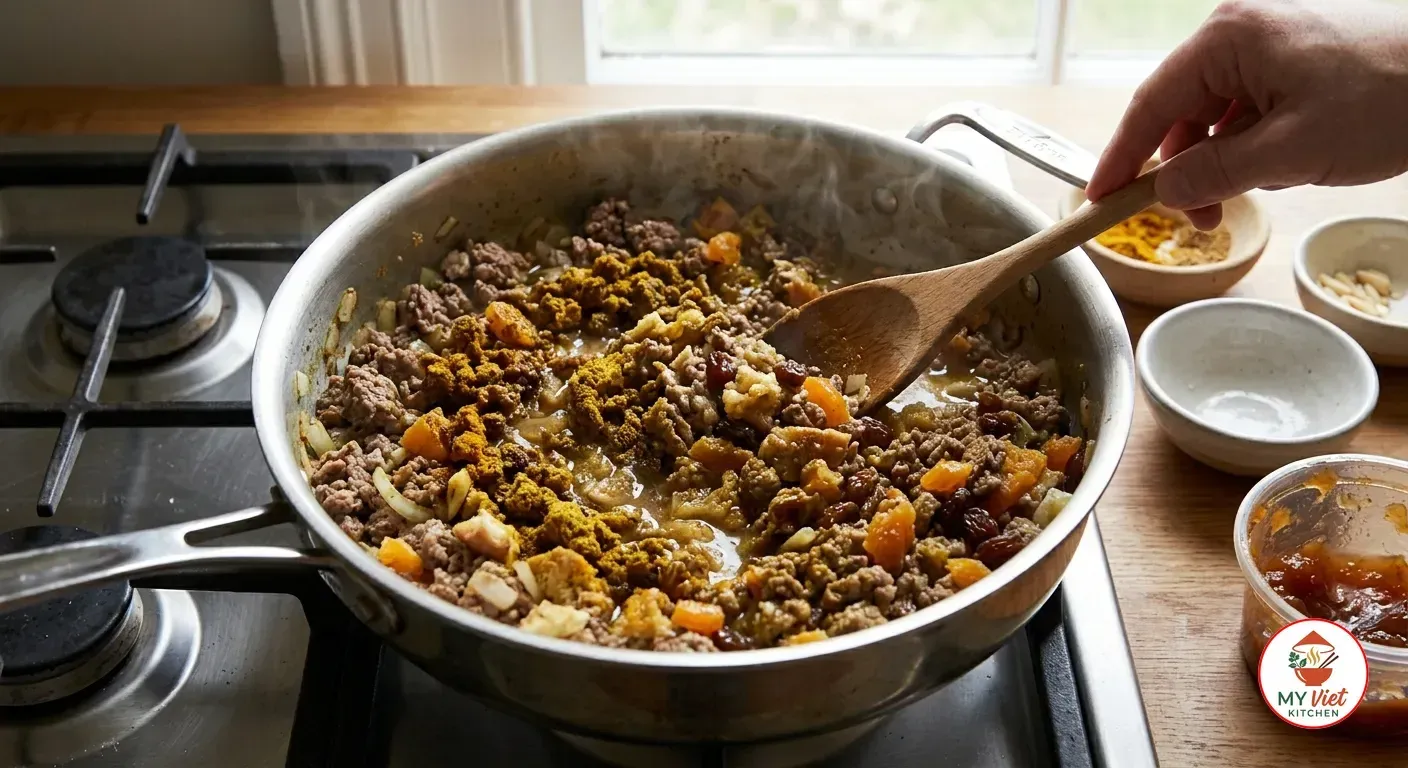
2 Heat the vegetable oil in a large skillet over medium heat. Add the diced onions and cook for 5 to 6 minutes, stirring occasionally, until they turn soft and golden. Then add the minced garlic and stir for 1 minute until fragrant. Now add all the ground spices: curry powder, turmeric, cumin, cinnamon, coriander, cloves, and allspice. Stir constantly for 1 minute to bloom the spices in the hot oil.
Add the ground meat to the skillet. Break it apart with a wooden spoon and cook for 8 to 10 minutes until fully browned. As the meat cooks, the spices coat every piece and build deep flavor. Once browned, add the squeezed bread, chopped apricots, raisins, almonds, chutney, jam, and vinegar. Stir everything together well. Season with salt and pepper. Cook for 3 more minutes to let the flavors combine. The filling should be moist but not soupy.
Step 3: Transfer to Baking Dish and Add Bay Leaves
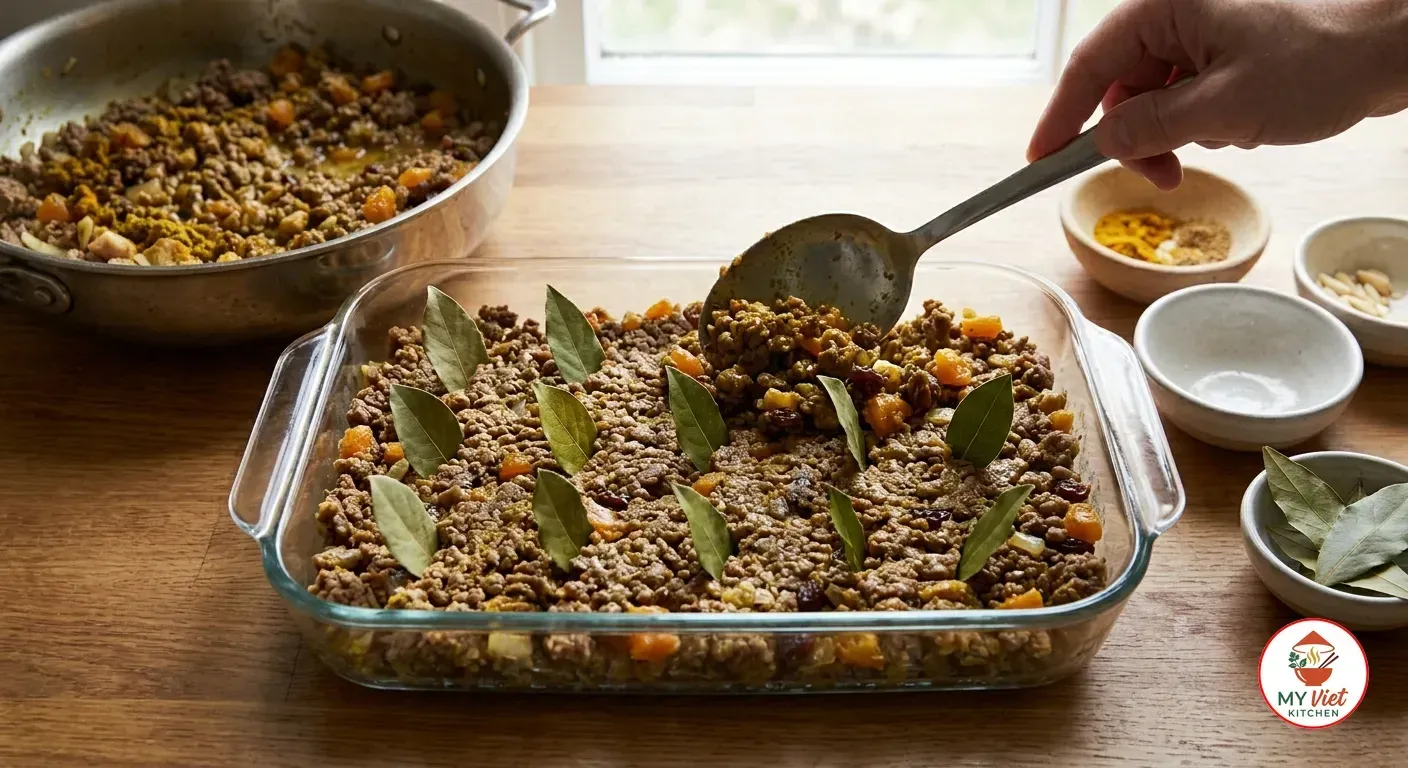
3 Preheat your oven to 350 degrees Fahrenheit (180 degrees Celsius). Lightly grease a 9x13 inch baking dish with butter or cooking spray. Spoon the spiced meat filling into the dish and press it down firmly with the back of the spoon. Create a smooth, even surface across the top. This ensures the custard covers the filling uniformly.
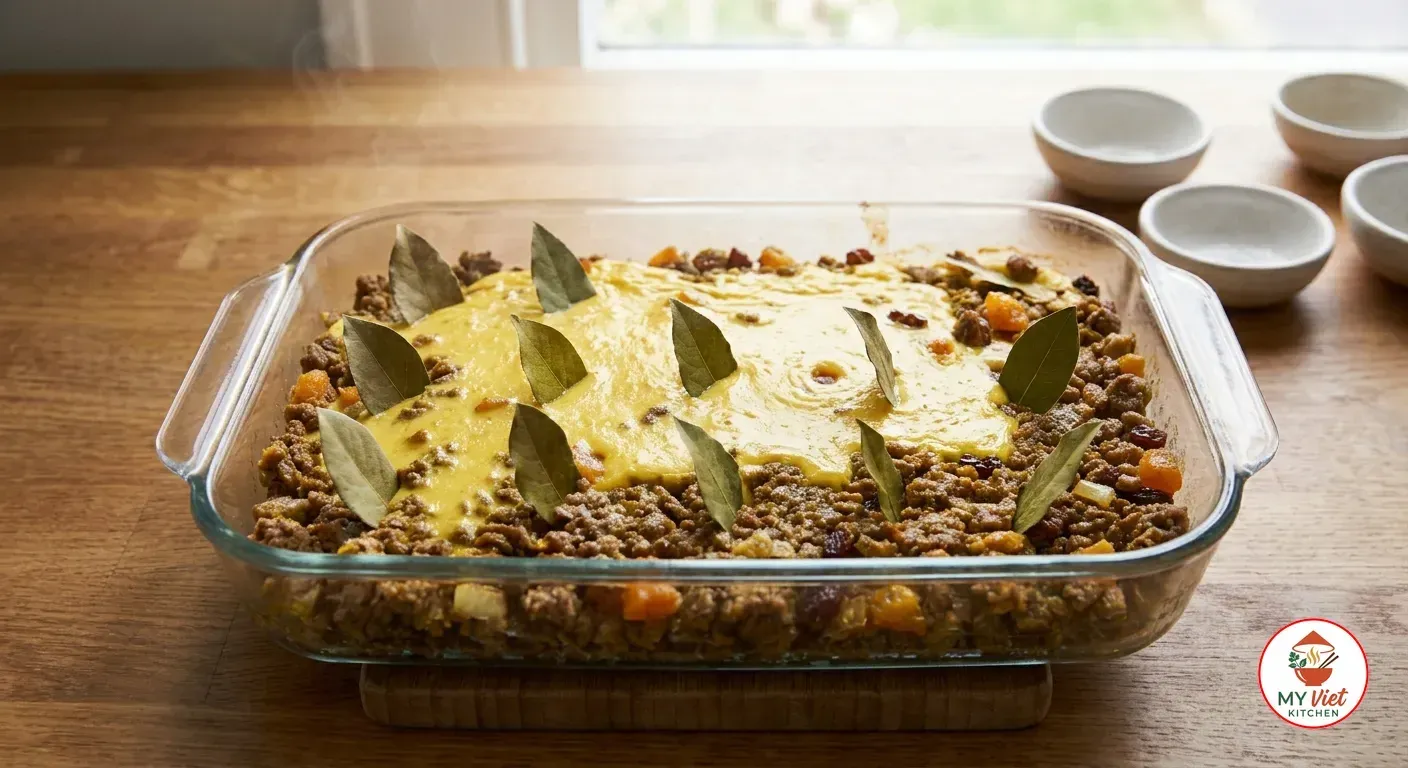
Tuck the bay leaves and lemon leaves into the surface of the meat at regular intervals. Push them in at a slight angle so they stand up partially from the filling. These leaves release oils during baking. They fill the dish with a subtle, herbal note. Cape Malay cooks see the bay leaves as essential. They add both beauty and flavor.
Step 4: Make and Pour the Egg Custard Topping
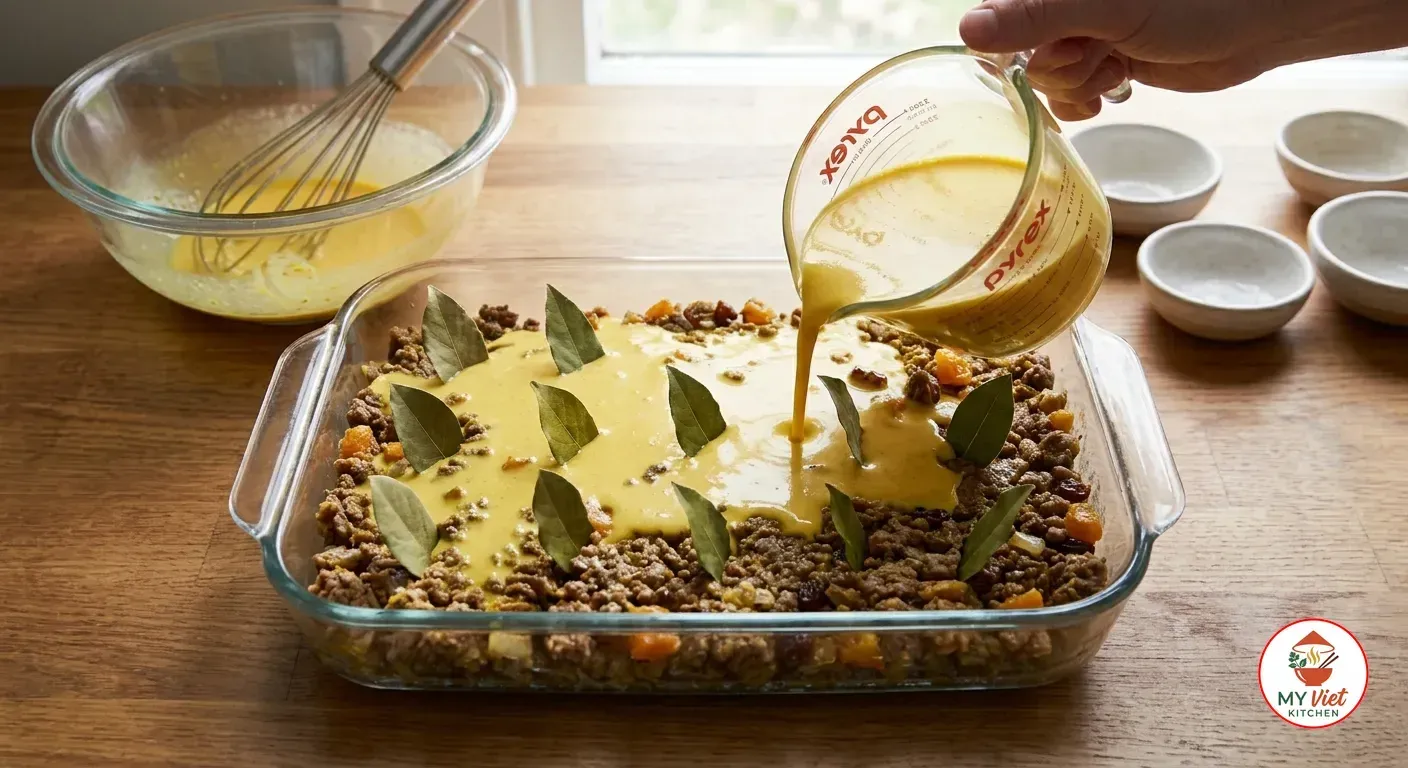
4 In a mixing bowl, whisk together the 3 eggs, 1 cup of fresh milk, turmeric, and a pinch of salt until completely smooth. Add the reserved milk from the bread soaking step and whisk again. The turmeric gives the custard its signature golden color. Pour this mixture gently and evenly over the meat filling.
Pour slowly so the custard does not disturb the bay leaves. The liquid should cover the full surface of the meat. If any spots remain bare, tilt the dish to spread the custard. This egg topping is what makes bobotie different from every other spiced meat bake.
Step 5: Bake Until Golden and Set
5 Place the baking dish in the center of the preheated oven. Bake for 35 to 45 minutes until the egg custard sets completely and turns a beautiful golden brown on top. It is ready when the custard feels firm and does not jiggle in the center. The edges may puff up a bit, and that is fine.
Remove the bobotie from the oven and let it rest for 10 minutes before serving. This resting period is important because it allows the layers to settle and firm up. Cutting into it immediately results in a loose, runny portion. After resting, the slices hold together beautifully. Therefore, serve generous portions of this bobotie recipe alongside yellow turmeric rice and your favorite chutney.
Expert Tips for the Perfect Bobotie Recipe
Use Quality Curry Powder
The curry powder is the backbone of any great bobotie recipe, so choose a good one. South African curry powders tend to be milder than Indian types. If you can find a Cape Malay blend, use it. Otherwise, a mild Madras curry powder works well. However, avoid hot curry powders. They overpower the sweet-savory balance that defines authentic bobotie.
Do Not Overbake the Custard
The egg custard should be just set, not dry or rubbery. Instead, start checking at 35 minutes. The center should have a very slight wobble when you shake the dish gently. It continues to cook from residual heat after you remove it from the oven. Overbaking causes cracks and a rubbery feel.
Let the Filling Cool Slightly Before Adding Custard
If you pour the egg custard over a very hot filling, the eggs begin to cook immediately on contact. Consequently, the custard sets unevenly. Let the meat filling cool in the baking dish for about 5 minutes before pouring the custard over it. As a result, this small step produces a much smoother, more uniform topping.
Bobotie Compared to Other Baked Meat Dishes
Bobotie belongs to a global family of baked meat dishes, yet it stands apart from every one of them. In comparison, here is how it stacks up against similar dishes from other cuisines around the world.
| Dish | Origin | Topping | Key Spices | Distinguishing Feature |
|---|---|---|---|---|
| Bobotie | South Africa | Egg custard | Curry, turmeric, cinnamon | Sweet-savory with dried fruit |
| Shepherd’s Pie | United Kingdom | Mashed potato | Thyme, Worcestershire | Hearty, rustic, no sweetness |
| Moussaka | Greece | Bechamel sauce | Cinnamon, nutmeg, oregano | Layered with eggplant slices |
| Pastitsio | Greece | Bechamel sauce | Cinnamon, nutmeg | Layered with tubular pasta |
| Kibbeh bil Sanieh | Lebanon | Bulgur crust | Allspice, cinnamon, pine nuts | Cracked wheat shell |
Serving Suggestions
In South Africa, bobotie is never served alone. It arrives at the table surrounded by a colorful spread of condiments and side dishes. The traditional accompaniments balance the rich, spiced filling with bright, fresh, and tangy elements. Here is how to build the complete bobotie recipe experience at home.
The Perfect Accompaniments:
- Yellow turmeric rice (geelrys): This is the most traditional side dish for bobotie. Cook basmati rice with turmeric, a cinnamon stick, a few raisins, and a bay leaf. The mild, golden rice absorbs the spiced meat juices and ties the whole meal together.
- Fruit chutney: Mrs. Ball’s chutney is the iconic South African brand served alongside bobotie. Its tangy, sweet-spicy flavor complements the curried meat perfectly. Mango chutney works as a widely available substitute.
- Sliced banana and desiccated coconut: These simple toppings are a beloved South African tradition. The cool banana and sweet coconut provide a refreshing contrast to the warm spices in the bobotie.
- Sambals: Small bowls of chopped tomato, diced onion, sliced chili, and fresh cilantro give each diner the chance to customize their plate with added freshness and heat.
Beverage Pairings:
- South African Chenin Blanc: This crisp, fruity white wine is the classic pairing for bobotie. Its bright acidity and tropical fruit notes cut through the rich meat and complement the sweet-savory spices.
- Pinotage: If you prefer red wine, South Africa’s signature grape Pinotage offers smoky, berry-forward flavors that stand up to the bold curry spices without overwhelming the custard.
- Rooibos tea: This naturally caffeine-free South African tea has earthy, slightly sweet notes that pair beautifully with bobotie. Serve it hot or iced depending on the season.
- Ginger beer: A spicy, non-alcoholic ginger beer adds a lively kick that echoes the warm spices in the dish. South African brands like Stoney are the traditional choice.
Storage and Reheating
Refrigerator: Store leftover bobotie in an airtight container for up to 4 days. Like most spiced dishes, bobotie tastes even better the next day because the curry and dried fruit flavors continue to develop. In fact, the custard topping firms up nicely when cold, which makes slicing cleaner.
Freezer: Bobotie freezes well for up to 3 months. Cut it into individual portions and wrap each one tightly in plastic wrap before placing them in freezer bags. Thaw overnight in the refrigerator before reheating. The custard topping may soften slightly after freezing but still tastes excellent.
Reheating: Reheat individual portions in the oven at 325 degrees Fahrenheit (165 degrees Celsius) for 15 to 20 minutes. Cover with foil to prevent the custard from drying out. You can also reheat in the microwave for 2 to 3 minutes, though the oven produces a better texture. Avoid high heat because it makes the custard rubbery.
Common Mistakes to Avoid
1. Skipping the Bread Soaking Step
The milk-soaked bread is not just a filler. In fact, it acts as a binding agent that gives the meat filling its characteristic soft, almost pudding-like texture. Without it, the filling turns dry and crumbly after baking. Therefore, always soak the bread for the full 10 minutes and squeeze out the excess milk before adding it to the meat.
2. Using Too Much Liquid in the Filling
The meat filling should be moist but not wet. If there is excess liquid in the skillet, the custard will not set properly on top. It will slide off to the sides and create a watery layer between the meat and the topping. So cook the filling until the moisture evaporates and the mixture holds together when pressed with a spoon.
3. Forgetting the Bay Leaves
Bay leaves are not just decoration in bobotie. They release aromatic oils during baking that perfume the entire dish from the inside. Without them, the bobotie lacks a subtle herbal depth. So press them firmly into the meat surface so they stand upright and infuse both the filling and the custard as the dish bakes.
4. Cutting Into the Bobotie Too Soon
Patience matters after the bobotie comes out of the oven. The dish needs a full 10 minutes of resting time for the custard to finish setting and the filling to firm up. If you cut into it immediately, the portions fall apart and the custard runs. So wait those 10 minutes and your slices will hold together beautifully.
Frequently Asked Questions
What does bobotie taste like?
Bobotie has a warm, mildly spiced flavor with a unique sweet-savory balance. The curried meat filling is aromatic and slightly fruity from the raisins and apricots. The egg custard on top adds a creamy, quiche-like layer that contrasts beautifully with the spiced meat. Think of it as a cross between a curried meat pie and a savory custard bake. Overall, the effect is comforting, complex, and surprisingly elegant.
What is the origin of bobotie?
Bobotie traces its roots to the Cape Malay community of Cape Town, South Africa. The dish was shaped by spice traders and cooks from Indonesia and Malaysia. They arrived at the Cape through the Dutch East India Company in the 17th century. They then adapted their spiced meat dishes using local ingredients. The result became one of South Africa’s most beloved national dishes. The earliest written recipe for bobotie dates all the way back to 1609.
Can I make bobotie with chicken or lamb instead of beef?
Yes, bobotie works beautifully with ground lamb, chicken, turkey, or a combination of meats. Lamb gives a richer, more traditional flavor that many Cape Malay families prefer. Chicken creates a lighter version that is equally delicious. Some modern South African cooks also make vegetarian bobotie using lentils mixed with mushrooms as the base. Each variation keeps the essential character of this bobotie recipe.
What do you serve with bobotie?
The traditional accompaniment is yellow turmeric rice called geelrys. Alongside the rice, South Africans serve fruit chutney, sliced banana, desiccated coconut, and small bowls of sambals made from chopped tomato and onion. These condiments create a colorful spread that lets each diner customize their plate. A simple green salad also works well for a lighter meal.
Can I prepare bobotie ahead of time?
Absolutely. You can make the meat filling up to a full day ahead and store it in the refrigerator. When you are ready to bake, bring the filling to room temperature, transfer it to the baking dish, and pour fresh egg custard over the top. The flavors actually improve overnight because the spices continue to meld. However, always make the custard fresh right before baking for the best results.
Is bobotie gluten-free?
Traditional bobotie is not gluten-free because it uses bread soaked in milk as a binding agent. However, you can easily substitute with gluten-free bread or use one-third cup of almond meal instead. The texture changes slightly but the flavor remains authentic. Also, check that your curry powder and chutney are certified gluten-free before serving to anyone with celiac disease or gluten sensitivity.
Variations and Adaptations
Lentil Bobotie (Vegetarian):
Replace the ground meat with 2 cups of cooked brown or green lentils mixed with 1 cup of finely chopped mushrooms. Follow the same spice blend and method. The lentils absorb the curry beautifully, and the mushrooms add a meaty depth. This version of the bobotie recipe is popular in modern South African households and serves as an excellent plant-based alternative.
Chicken Bobotie (Lighter Version):
Use ground chicken or turkey instead of beef. Reduce the curry powder to 1.5 tablespoons because poultry has a milder base flavor. Add an extra tablespoon of chutney to compensate for the lower fat content. This version bakes in the same time and produces a lighter dish that works well for warm weather meals.
Mini Bobotie Cups (Party Version):
Press the spiced meat filling into greased muffin tin cups. Pour a tablespoon of custard into each cup and tuck in a small bay leaf. Bake at the same temperature for 20 to 25 minutes. These individual portions make elegant party appetizers or lunch box additions. Moreover, they freeze perfectly in single servings.
Cape Malay Bobotie with Extra Fruit:
For a sweeter, more traditional Cape Malay profile, increase the dried apricots to half a cup and add 2 tablespoons of chopped dried mango. Use an extra tablespoon each of chutney and apricot jam. Consequently, this version leans into the sweet-savory character and tastes especially good with a generous side of yellow rice and coconut.
The Cultural Significance of Bobotie
Bobotie is more than a recipe in South Africa. It is a national symbol, a comfort food, and a living piece of history that connects the country to its complex multicultural past. It shows up on Heritage Day menus, at family meals, and in school lunches. South Africans love bobotie the way Americans love Thanksgiving turkey.
The story of bobotie begins in the 17th century when the Dutch East India Company established a refreshment station at the Cape of Good Hope. Workers, exiles, and enslaved people arrived from Indonesia, Malaysia, India, and Madagascar. They brought their food traditions and adapted them to local ingredients. In particular, the Cape Malay community blended their spice knowledge with local meats. Bobotie emerged from this rich cultural exchange as something entirely new.
Today, bobotie holds a special place in the diverse landscape of African cuisine. It was selected to represent South Africa at the 1999 International Exhibition in Berlin. In Cape Town’s Bo-Kaap neighborhood, the historic heart of the Cape Malay community, families continue to make bobotie using recipes handed down through generations. Every home has its own version, with secret ratios of spice, fruit, and chutney.
Conclusion
This authentic bobotie recipe delivers one of South Africa’s most beloved dishes right to your kitchen table. The key steps are simple. Soak the bread. Bloom the spices. Build a rich meat filling. Then crown it with golden egg custard. Every part works to create a dish that is warm, fragrant, and deeply good. Whether you are new to African cuisine or recreating a taste of home, this bobotie recipe gives you all you need.
Ready to explore more South African and African flavors? Browse our collection of African dishes, including bunny chow, Cape Malay curry, and chakalaka. Also discover our Moroccan tagine for another iconic African favorite.