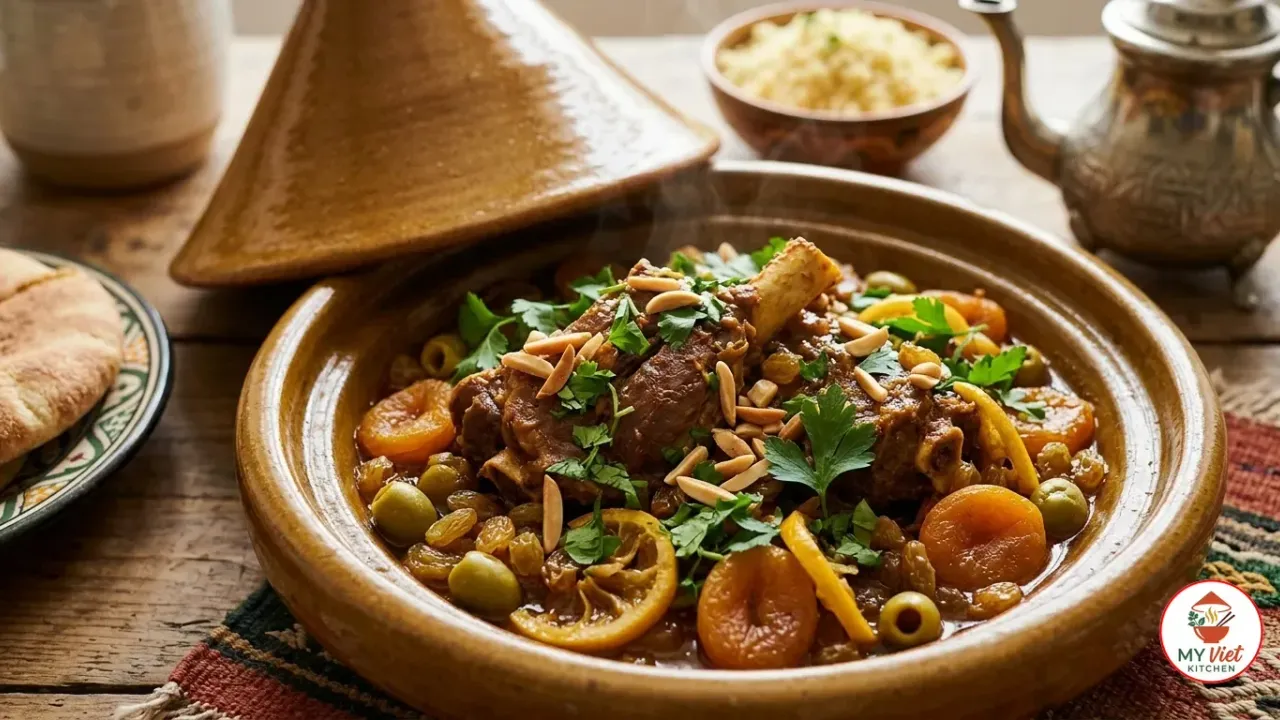
Moroccan tagine is one of the most aromatic and deeply satisfying dishes in all of North African cuisine. This legendary slow-cooked stew brings together tender meat, warm spices, sweet dried fruit, and bright preserved lemons in one glorious pot. Named after the cone-shaped clay vessel it is cooked in, this Moroccan tagine recipe turns simple ingredients into a richly layered meal. Whether you use a traditional tagine pot or a Dutch oven, this step-by-step guide delivers authentic results every time.
Prep Time: 25 minutes | Cook Time: 1 hour 45 minutes | Servings: 6
Difficulty: Medium | Calories: ~480 per serving
What Makes This Moroccan Tagine Recipe Special?
A Moroccan tagine is unlike any other stew you have tasted. While most braises rely on heavy reductions and bold acidity, tagine takes the opposite path. It builds flavor through patience and layered aromatics. Sweet and savory elements marry gently over low heat. The result is a sauce that is silky, fragrant, and complex without tasting heavy.
What truly sets this dish apart is the balance of contrasting flavors. Warm spices like cumin, cinnamon, and saffron form a rich, perfumed base. Dried apricots and honey add gentle sweetness. Then preserved lemons and briny olives cut through the richness with a salty, citrus punch. Because these flavors meld slowly over low heat, each bite brings something new.
The traditional tagine pot itself plays an important role. Its conical lid traps rising steam and drips the moisture back down onto the food. As a result, the meat cooks in its own juices and stays very moist. However, a Dutch oven achieves the same melt-in-your-mouth tenderness. This Moroccan tagine recipe works beautifully with either vessel.
Choosing the Right Meat for Moroccan Tagine
The protein you choose shapes the entire character of your tagine. Moroccan cooks pick their meat with care. The slow-braising method demands cuts with good fat and connective tissue. Here are your best options for this Moroccan tagine recipe.
- Bone-in lamb shoulder (best choice): This is the most traditional cut for Moroccan tagine. The bones add richness to the sauce, and the marbled fat melts slowly into the broth. After 90 minutes of gentle simmering, the lamb becomes fork-tender and falls apart at the lightest touch.
- Chicken thighs (faster option): Bone-in, skin-on chicken thighs make an excellent tagine in about 45 minutes. Sear the skin side until golden and crispy before braising. The dark meat stays juicy throughout the long cook, and the rendered chicken fat enriches the spiced sauce.
- Beef chuck (heartier version): Beef chuck works well but requires about 2 to 2.5 hours of simmering to become fully tender. The beefy flavor pairs particularly well with prunes instead of apricots, which is a popular variation in Fez.
Ingredients for Moroccan Tagine
Main Ingredients:
- 2 pounds bone-in lamb shoulder, cut into 2-inch chunks
- 2 large onions, finely diced
- 4 cloves garlic, minced
- 1 tablespoon fresh ginger, grated
- 1 can (14 ounces) diced tomatoes
- 2 cups chicken or lamb stock
- 3 tablespoons olive oil
Spice Blend:
- 2 teaspoons ground cumin
- 2 teaspoons ground coriander
- 1 teaspoon ground cinnamon
- 1 teaspoon ground turmeric
- 1/2 teaspoon ground ginger
- 1/4 teaspoon saffron threads, crumbled
- 1 teaspoon ras el hanout
- Salt and black pepper to taste
Sweet and Savory Additions:
- 1/2 cup dried apricots
- 1/4 cup golden raisins
- 2 preserved lemons, pulp discarded, rind sliced
- 1/2 cup green olives, pitted
- 2 tablespoons honey
Garnish:
- 1/4 cup fresh cilantro, chopped
- 1/4 cup fresh flat-leaf parsley, chopped
- 2 tablespoons toasted slivered almonds
Pro tip: The secret to an extraordinary Moroccan tagine recipe is blooming your spices in hot oil before adding any liquid. This step takes just 60 seconds but releases the essential oils locked inside each spice. Without this crucial step, your tagine will taste flat and one-dimensional instead of warm and deeply layered.
Step-by-Step Instructions
Step 1: Season and Sear the Meat
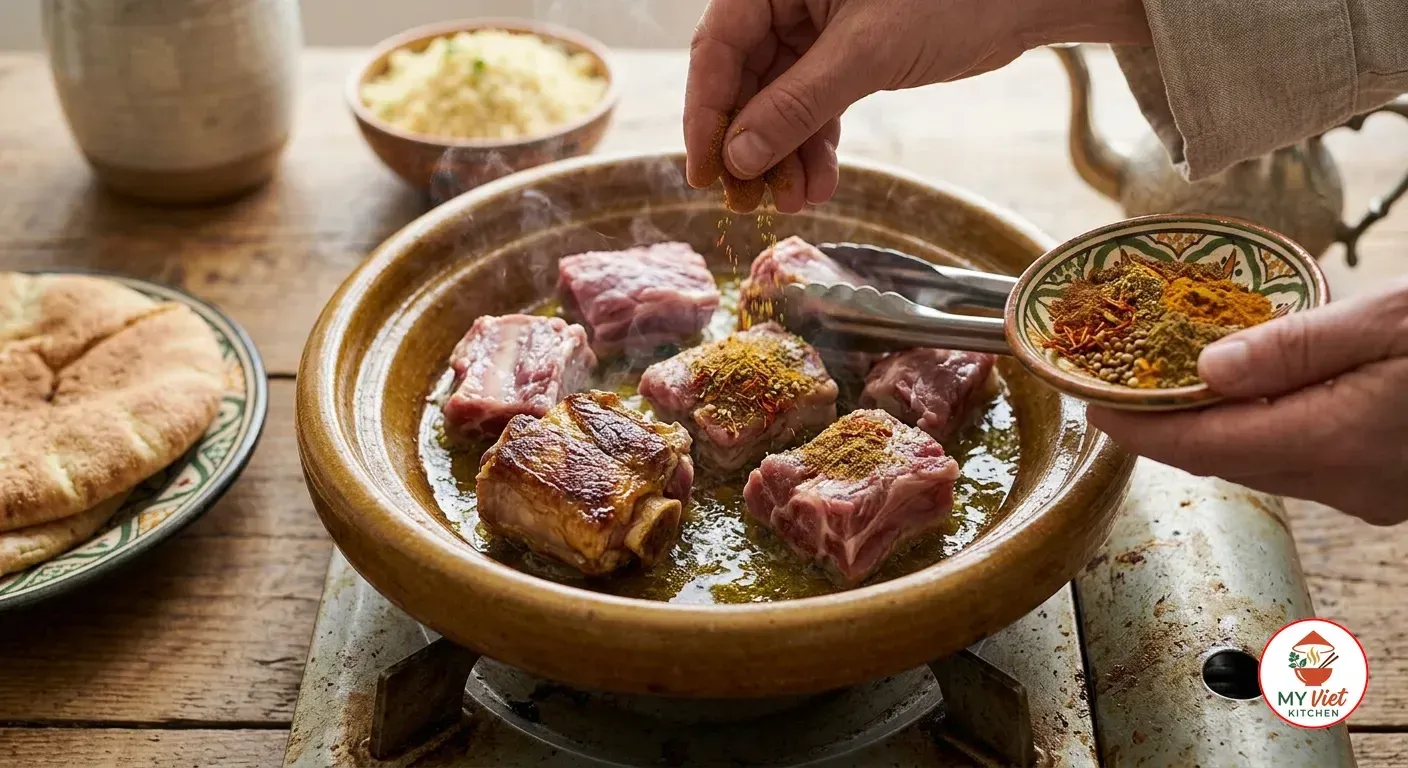
1 Pat the lamb chunks completely dry with paper towels. This step matters because moisture on the surface stops browning. Season the meat well with salt, pepper, cumin, and turmeric. Heat olive oil in the base of your tagine pot or a heavy-bottomed Dutch oven over medium-high heat until the oil shimmers.
Working in batches to avoid crowding the pot, sear the lamb for 3 to 4 minutes per side until a deep golden-brown crust forms. Do not move the pieces while they sear. This browning triggers the Maillard reaction, which builds the rich, savory base of your entire sauce. Transfer the seared meat to a plate and set it aside.
Step 2: Build the Aromatic Base
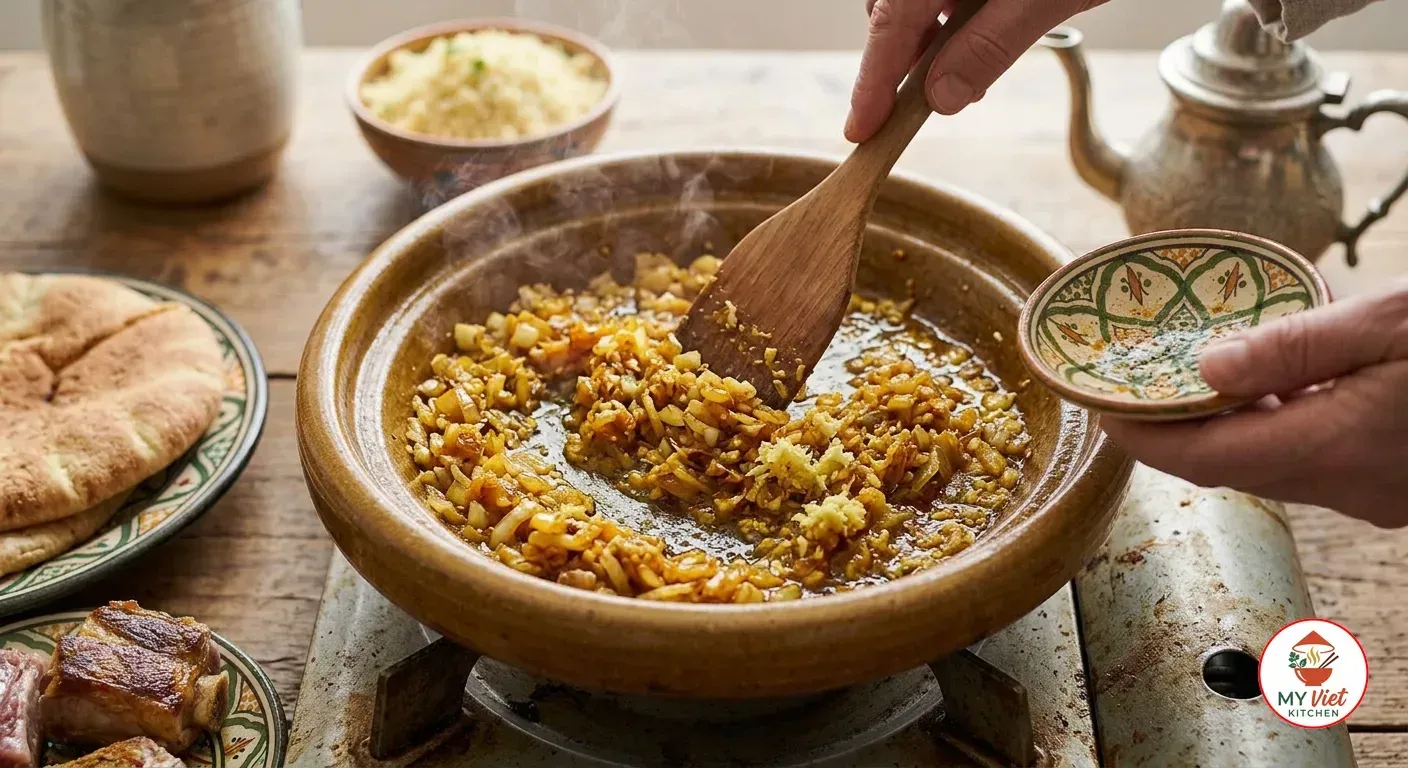
2 Reduce the heat to medium and add the finely diced onions to the same pot. Cook for 5 to 6 minutes, stirring occasionally, until the onions soften and turn golden. The onions will lift all the browned bits from the meat, which adds great depth. Next, add the minced garlic and grated fresh ginger. Stir for about 1 minute until the kitchen fills with their aroma.
Now add all the remaining ground spices: coriander, cinnamon, ground ginger, saffron, and ras el hanout. Stir constantly for 1 minute to bloom the spices in the hot oil. You will notice the color deepen and the fragrance intensify dramatically. This step brings out the full aroma of every spice in your Moroccan tagine recipe.
Step 3: Combine and Begin the Slow Simmer
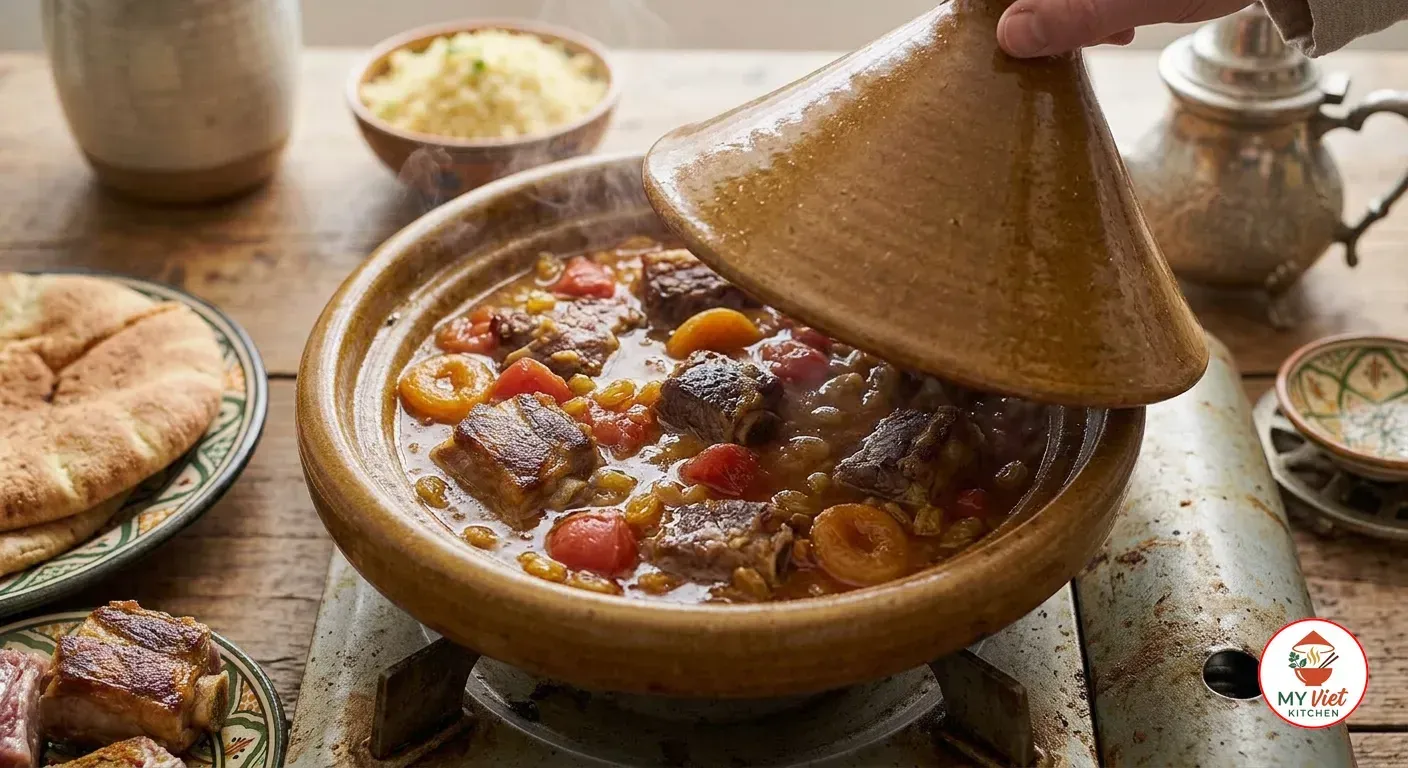
3 Return the seared lamb and any accumulated juices to the pot. Add the diced tomatoes with their liquid, warm stock, dried apricots, and golden raisins. Stir gently to combine everything into the spiced base. The liquid should come about two-thirds of the way up the meat. If needed, add a splash more stock.
Bring the mixture to a gentle boil, then immediately reduce the heat to the lowest possible setting. Cover with the conical tagine lid or a tight-fitting Dutch oven lid. Let the tagine simmer undisturbed for 1 hour and 30 minutes. During this time, the collagen in the lamb melts slowly and the spices soak into every piece. Check once at the halfway mark to ensure a gentle bubble continues. If the liquid reduces too quickly, add a few tablespoons of stock.
Step 4: Add Preserved Lemons and Olives
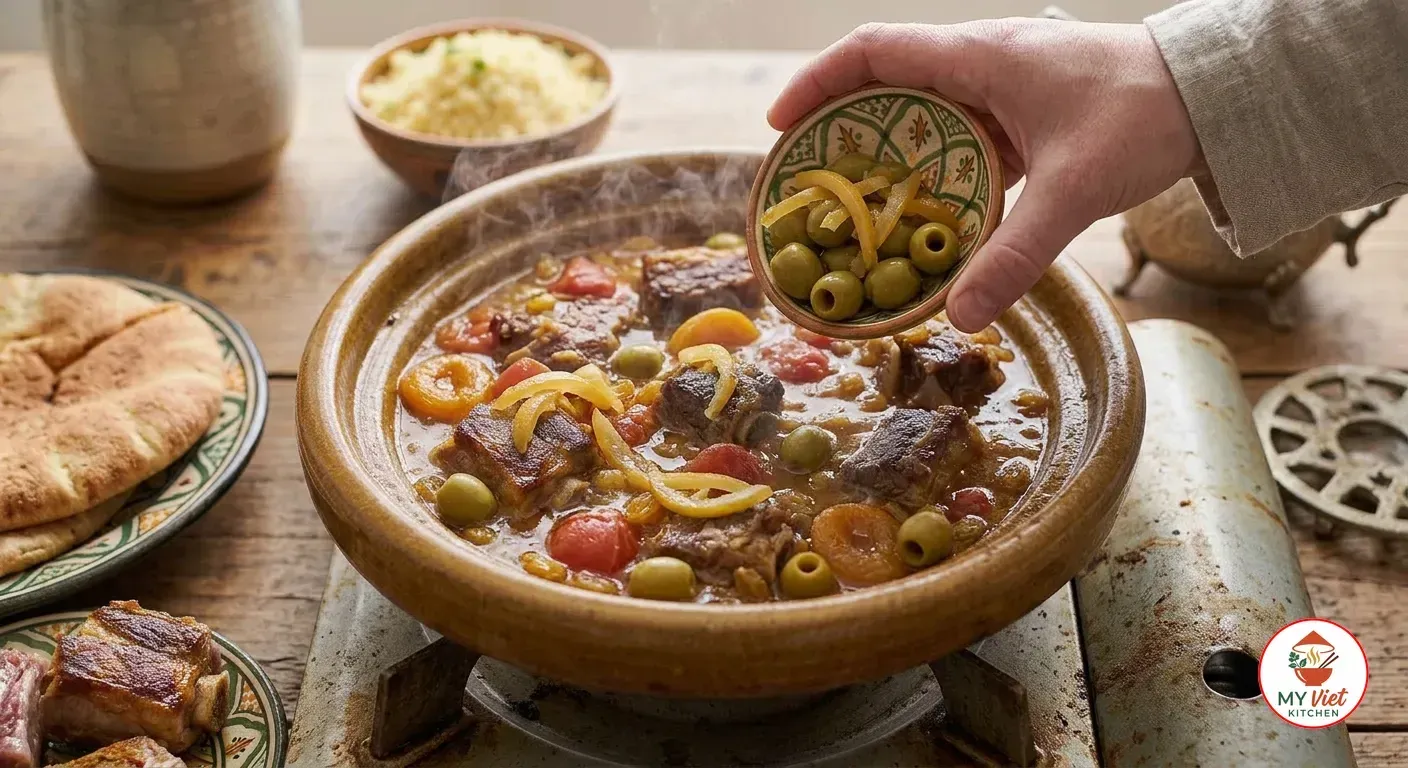
4 After 90 minutes, remove the lid and check the meat. It should be very tender and nearly falling off the bone. Now add the preserved lemon rinds, pitted green olives, and honey. Stir gently, being careful not to break the meat apart. These last touches give Moroccan tagine its bright, sweet-salty finish.
Continue simmering uncovered for 15 more minutes. This allows the sauce to thicken slightly and the new flavors to meld with the stew. Taste the sauce and adjust the seasoning. If it needs more sweetness, add another drizzle of honey. If it needs brightness, squeeze in a little fresh lemon juice. The goal is a perfectly balanced sauce that hits every note: warm, sweet, salty, and tangy.
Step 5: Garnish and Serve
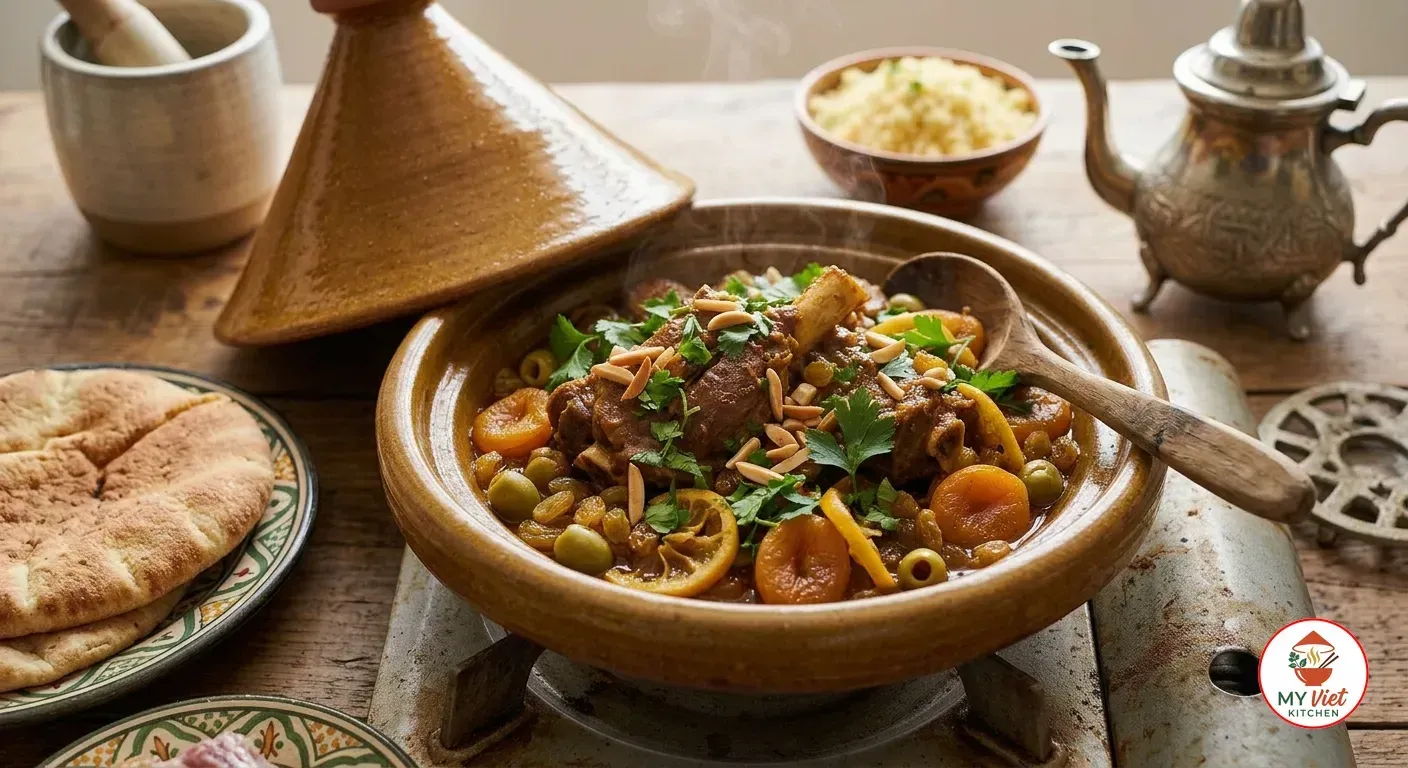
5 Remove the tagine from heat. Scatter generous handfuls of freshly chopped cilantro and flat-leaf parsley over the top. Then sprinkle the toasted slivered almonds across the surface for a satisfying crunch. The fresh herbs add a burst of color that lifts the warm, slow-cooked stew beneath.
Serve the tagine directly from the pot at the center of the table. Diners tear off pieces of warm Moroccan bread and use them to scoop up the tender meat and silky sauce. You can also serve it over a bed of fluffy couscous or alongside steamed rice.
Expert Tips for the Perfect Moroccan Tagine Recipe
Sear the Meat in Small Batches
Crowding the pot makes the meat steam instead of sear. When too many pieces sit in the pan at once, the heat drops and moisture pools. As a result, you lose that golden-brown crust that provides the deep savory base. Therefore, sear in two or three batches with space between each piece.
Keep the Heat Low and Steady
The magic of tagine happens at a bare simmer, not a fast boil. High heat makes the meat tough and dries out the liquid too fast. Instead, keep the gentlest bubble going the whole time. If you use a clay tagine, a heat diffuser placed between the pot and the burner helps distribute heat evenly and prevents hot spots.
Add Delicate Ingredients at the End
Preserved lemons, olives, and honey go in during the final 15 minutes. Adding them too early causes the lemons to turn bitter, the olives to become mushy, and the honey to lose its distinct floral sweetness. By adding them late, you keep their flavors sharp and build a sauce with clear layers rather than a flat braise.
Regional Tagine Styles Across Morocco
Every region of Morocco puts its own stamp on the tagine. The ingredients shift based on local produce, climate, and cultural traditions. Here is how the major regional styles compare across the country.
| Region | Signature Tagine | Key Ingredients | Flavor Profile |
|---|---|---|---|
| Marrakech | Lamb with prunes and almonds | Prunes, toasted almonds, cinnamon, honey | Sweet, warm, richly spiced |
| Fez | Chicken with preserved lemons | Preserved lemons, green olives, saffron | Bright, tangy, aromatic |
| Casablanca | Fish tagine (Hout) | White fish, chermoula, tomatoes, peppers | Fresh, herbaceous, coastal |
| Saharan South | Camel or goat tagine | Dates, cumin, dried herbs, smen (aged butter) | Earthy, deeply savory, rustic |
| Essaouira | Seafood tagine | Shrimp, mussels, chermoula, saffron | Briny, saffron-forward, delicate |
Serving Suggestions
In Morocco, tagine is always the centerpiece of the table, placed in the middle for everyone to share. The communal style of eating reflects the warmth of Moroccan hospitality. Traditionally, diners tear off pieces of khobz, the round Moroccan flatbread, and use them to scoop up the tender meat and fragrant sauce.
The Perfect Accompaniments:
- Fluffy couscous: This is the most classic pairing. The tiny grains absorb the rich sauce beautifully and add a light, pillowy texture that balances the hearty stew.
- Moroccan bread (khobz): A round, crusty flatbread baked in wood-fired ovens. It serves as both utensil and side dish, because diners use it to scoop every last drop of sauce.
- Harira soup: This tomato-lentil soup is a popular starter before a tagine meal, especially during Ramadan.
- Moroccan carrot salad: A simple side of grated carrots dressed with lemon, cumin, and fresh mint provides a refreshing contrast to the warm stew.
Beverage Pairings:
- Moroccan mint tea: The national drink of Morocco. Fresh spearmint steeped with green tea and plenty of sugar is the traditional accompaniment, served in small glasses from a silver teapot.
- Red wine (Grenache or Syrah): A medium-bodied red with warm fruit notes complements the spiced lamb beautifully without overpowering the delicate flavors.
- Almond milk drink: A traditional Moroccan beverage made with ground almonds, sugar, and orange blossom water. It is creamy, fragrant, and ideal alongside rich tagine.
- Fresh orange juice: Morocco produces exceptional oranges, and freshly squeezed juice is served at nearly every meal. Its bright acidity complements the warm spices perfectly.
Storage and Reheating
Refrigerator: Store leftover tagine in an airtight container for up to 4 days. Like most slow-cooked stews, tagine develops even deeper flavor as it sits overnight. Many Moroccan cooks deliberately make extra because they know tomorrow’s reheated tagine will taste even better.
Freezer: Moroccan tagine freezes beautifully for up to 3 months. Portion it into freezer-safe containers, leaving a little room for expansion. Thaw in the refrigerator overnight before reheating. The preserved lemons and olives hold up well during freezing.
Reheating: Gently reheat on the stovetop over low heat, adding 2 to 3 tablespoons of stock or water to loosen the sauce. Cover and warm for 10 to 15 minutes, stirring occasionally. Avoid using high heat because it can toughen the meat. Add fresh herbs and toasted almonds after reheating for the best presentation.
Common Mistakes to Avoid
1. Skipping the Searing Step
Browning the meat before braising is non-negotiable. Without it, your tagine will lack the deep, savory taste that makes this dish shine. The Maillard reaction during searing creates lots of new flavor. Just boiling raw meat in the sauce gives a flat, dull result.
2. Using Too Much Liquid
Tagine is not a soup. The liquid should come about two-thirds up the meat, not cover it entirely. The cone lid or tight pot sends steam back into the food. So you need far less liquid than a normal stew. If the sauce looks too thin at the end, simply simmer uncovered for a few extra minutes to concentrate the flavors.
3. Cooking on High Heat
High heat is the enemy of tender tagine. A hard boil makes the meat seize up and turn tough. Instead, keep the heat as low as it goes. The liquid should just barely bubble. Patience is the key here. Low heat and a long cook time give you the silky, fall-apart feel that makes great tagine.
4. Adding All Ingredients at Once
Tagine is a dish of layered flavors, not a one-pot dump. The meat sears first. Then the aromatics build. Next the spices bloom. Finally, the light items go in at the end. Each stage adds a new layer. If you add it all at once, the lemons turn bitter and the honey goes flat.
Frequently Asked Questions
Do I need a tagine pot to make Moroccan tagine?
No, a heavy-bottomed Dutch oven with a tight lid works perfectly. The conical tagine lid circulates steam in a unique way, but a Dutch oven traps moisture just as effectively. If you do use a clay tagine, start on low heat and consider placing a heat diffuser under it to prevent cracking from thermal shock.
What is the best meat for Moroccan tagine?
Bone-in lamb shoulder is the most traditional and flavorful choice. The connective tissue melts during slow cooking and naturally enriches the sauce. Chicken thighs are a faster alternative that cook in about 45 minutes. Beef chuck also works well but requires a longer cooking time of roughly 2 to 2.5 hours to become fork-tender.
What is ras el hanout?
Ras el hanout is a North African spice blend whose name translates to “head of the shop.” It represents the best spices a merchant has to offer. Typically, it contains cardamom, clove, cinnamon, nutmeg, coriander, cumin, turmeric, and paprika. Some blends also include rose petals or lavender. Every spice shop in Morocco has its own secret ratio.
Can I make Moroccan tagine ahead of time?
Absolutely. Tagine is one of the best make-ahead dishes because the flavors deepen overnight as the spices continue to meld. Cook it a full day ahead, let it cool completely, and store in the refrigerator. Reheat gently on the stovetop over low heat. Just add the fresh herbs and toasted almonds right before serving.
What can I substitute for preserved lemons?
If preserved lemons are unavailable, combine the zest of one fresh lemon with half a teaspoon of salt and a pinch of sugar. Add this mixture during the last 10 minutes of cooking. The flavor will not be identical, but it delivers a similar bright, salty-citrus note. You can also make your own preserved lemons at home with just lemons and salt, though they need about 3 weeks to cure.
Is Moroccan tagine gluten-free?
The tagine stew itself is naturally gluten-free because it contains meat, vegetables, spices, and dried fruit with no wheat-based thickeners. However, it is traditionally served with couscous, which contains wheat. For a gluten-free meal, serve your tagine over steamed rice, quinoa, or with gluten-free flatbread instead.
Variations and Adaptations
Chicken Tagine with Preserved Lemons:
Replace the lamb with 3 pounds of bone-in chicken thighs. Reduce the simmering time to 45 minutes. Use more preserved lemons and increase the olives for a brighter, lighter version. This variation from Fez is arguably the most famous tagine in Morocco. It cooks faster and works beautifully for weeknight dinners.
Lamb Tagine with Prunes and Almonds:
Swap the apricots and raisins for 1 cup of pitted prunes soaked in warm tea for 15 minutes. Add a generous sprinkle of sesame seeds alongside the almonds at the end. This Marrakech-style variation is sweeter and more decadent. The prunes melt into the sauce and create a luscious, almost caramelized richness.
Vegetable Tagine (Vegan):
Skip the meat entirely and use a hearty mix of root vegetables: sweet potatoes, carrots, turnips, and chickpeas. Use vegetable stock and add the vegetables in stages based on cooking time. Hard vegetables go in first, while softer ones like zucchini join in the last 20 minutes. This version is naturally vegan and still delivers incredible depth.
Fish Tagine (Hout):
Use firm white fish like cod, halibut, or sea bass. Marinate the fish in chermoula, a paste of cilantro, garlic, cumin, and paprika, for 30 minutes. Layer the fish over a bed of sliced tomatoes and peppers in the tagine. Cook for just 20 to 25 minutes. This coastal version from Essaouira is lighter and cooks much faster than meat tagines.
The Cultural Significance of Moroccan Tagine
Tagine is far more than a cooking method in Morocco. It is a daily ritual, a family tradition, and a cornerstone of Moroccan identity. In homes across the country, the tagine pot sits on a charcoal brazier called a majmar, gently bubbling away while the family gathers. The dish represents the Moroccan philosophy of slow, communal living.
The origins of tagine stretch back centuries to the Berber people of North Africa. They made the cone-shaped clay pot as a portable cooking vessel for nomadic life. The design was clever: the tall lid trapped precious moisture in the dry desert air, and the heavy base spread heat evenly over open coals. Over time, Arab and Andalusian traders added new ingredients like saffron, preserved lemons, and dried fruits to the Berber base.
Today, tagine plays a central role in Moroccan celebrations and hospitality. When guests arrive at a Moroccan home, a freshly prepared tagine is the ultimate gesture of welcome. The host uncovers the conical lid at the table in a moment of ceremony, revealing the aromatic stew inside. During Ramadan, tagine frequently appears at the iftar meal to break the fast, providing nourishment, warmth, and comfort after a long day.
In the global food community, Moroccan tagine has gained devoted followers for its bold spice combinations and remarkably tender results. It stands for a way of cooking that values patience over speed and balance over force.
Conclusion
This authentic Moroccan tagine recipe is a deeply rewarding dish to prepare at home. The key to success lies in three fundamentals: searing the meat until deeply browned, blooming the spices in hot oil, and simmering on the lowest heat until the lamb surrenders to the fork. Follow this Moroccan tagine recipe step by step, and you will produce a stew with extraordinary depth. The warm spices, sweet dried fruit, and bright preserved lemons create a flavor experience unlike anything else.
Ready to explore more North African flavors? Browse our collection of African dishes, including harira, couscous, and shakshuka. Also discover our stew recipes from around the world for more inspiration.