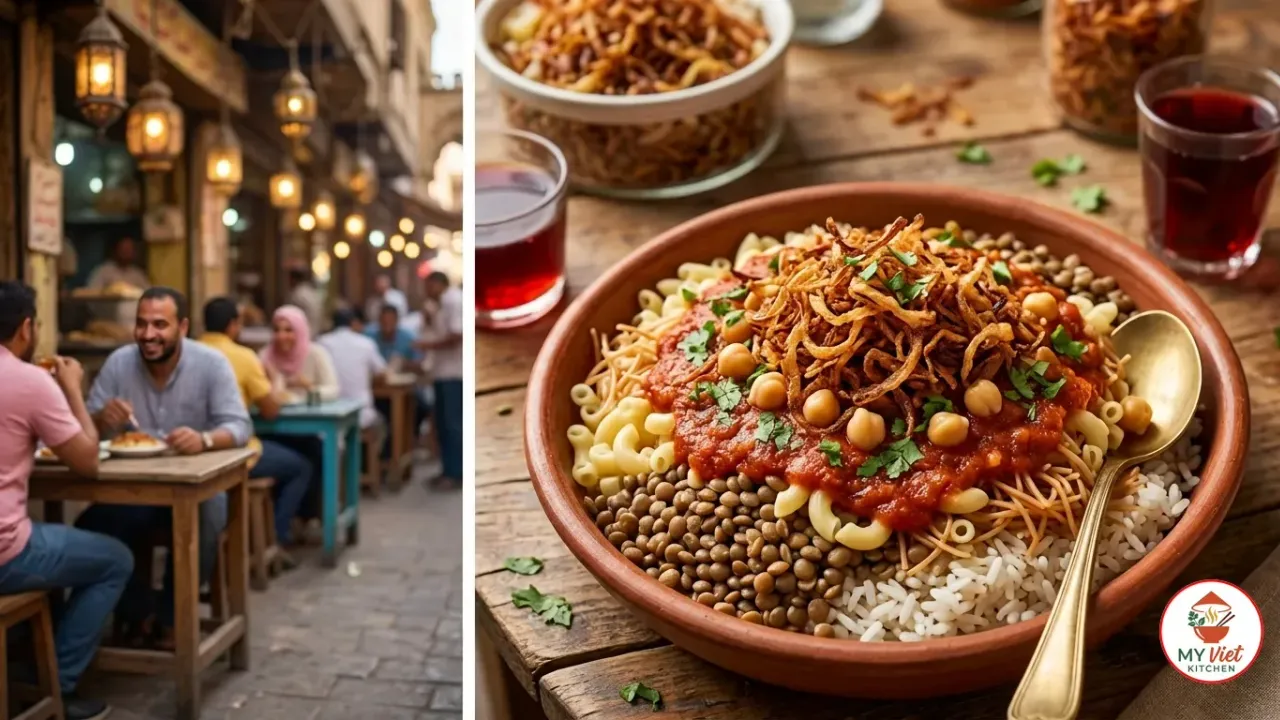
Koshari is the undisputed national dish of Egypt, and this koshari recipe shows you exactly how to recreate this iconic street food at home. Layers of rice, brown lentils, macaroni, and vermicelli come together under a blanket of spiced tomato sauce, tangy garlic vinegar dakka, chickpeas, and a towering crown of crispy fried onions. Known also as koshary, this dish feeds millions of Egyptians every day from dedicated street carts and restaurants across Cairo, Alexandria, and beyond.
Prep Time: 20 minutes | Cook Time: 50 minutes | Servings: 6
Difficulty: Easy | Calories: ~480 per serving
What Makes This Koshari Recipe Special?
Koshari stands apart from every other comfort food in the world because of its audacious layering of carbohydrates. Rice, lentils, two types of pasta, and chickpeas share the same bowl. On paper, this combination sounds excessive. Yet in practice, it works brilliantly. Each component contributes a different texture, and the sauces tie everything together into a unified, deeply satisfying meal.
The genius of this koshari recipe lies in the contrast between its components. The soft, starchy base absorbs the tangy tomato sauce. Meanwhile, the garlic vinegar dakka cuts through the richness with sharp acidity. Then the crispy fried onions shatter on top, adding caramelized sweetness and crunch. Every spoonful delivers something different, which is why Egyptians never tire of eating this dish daily.
This koshari recipe follows the traditional method used by Cairo’s best koshari shops. The key differences between a mediocre version and an exceptional one come down to three things. First, the tomato sauce must be properly spiced and reduced to a thick consistency. Second, the dakka needs enough garlic and vinegar to punch through the carbohydrate layers. Third, the fried onions must reach a deep golden brown without burning.

Choosing the Right Lentils for Koshari
The lentils in koshari must hold their shape after cooking. This is essential because mushy lentils disappear into the rice and destroy the layered texture that defines the dish. Therefore, choosing the correct type of lentil matters greatly.
- Brown lentils (best choice): These are the traditional lentils for Egyptian koshari. They cook in 15 to 20 minutes and hold their shape perfectly. Their mild, earthy flavor blends well with the rice without overpowering the sauces.
- Green lentils: A good alternative that takes slightly longer to cook, around 20 to 25 minutes. Green lentils have a firmer texture and a slightly peppery flavor. They work well if you prefer a more robust bite in your koshari.
- Red or yellow lentils (avoid): These varieties cook down into a soft puree. While they taste wonderful in soups and dals, they lack the structural integrity that koshari demands. If you use them, the lentil layer vanishes into the rice.
Ingredients for Koshari
Base Layers:
- 1 cup Egyptian short-grain rice (or any short-grain rice)
- 1 cup brown lentils, rinsed and picked over
- 1 cup elbow macaroni
- 1/2 cup small ditalini pasta or vermicelli
- 1 can (15 ounces) chickpeas, drained and rinsed
Crispy Fried Onions:
- 3 large onions, thinly sliced into rings
- 1 cup vegetable oil for frying
- Pinch of salt
Spiced Tomato Sauce:
- 2 cups crushed tomatoes
- 4 cloves garlic, minced
- 2 tablespoons white vinegar
- 1 teaspoon ground cumin
- 1/2 teaspoon ground coriander
- 1/4 teaspoon cayenne pepper
- 1 tablespoon vegetable oil
- Salt and black pepper to taste
Dakka (Garlic Vinegar Sauce):
- 6 cloves garlic, minced or crushed
- 3 tablespoons white vinegar
- 2 tablespoons lemon juice
- 1 teaspoon ground cumin
- 1/2 teaspoon crushed red pepper flakes
- Salt to taste
Pro tip: Egyptian short-grain rice absorbs the tomato sauce better than long-grain varieties. If you cannot find Egyptian rice, use any short-grain or medium-grain rice. Basmati stays too separate and does not absorb the sauces as effectively.
Step-by-Step Instructions
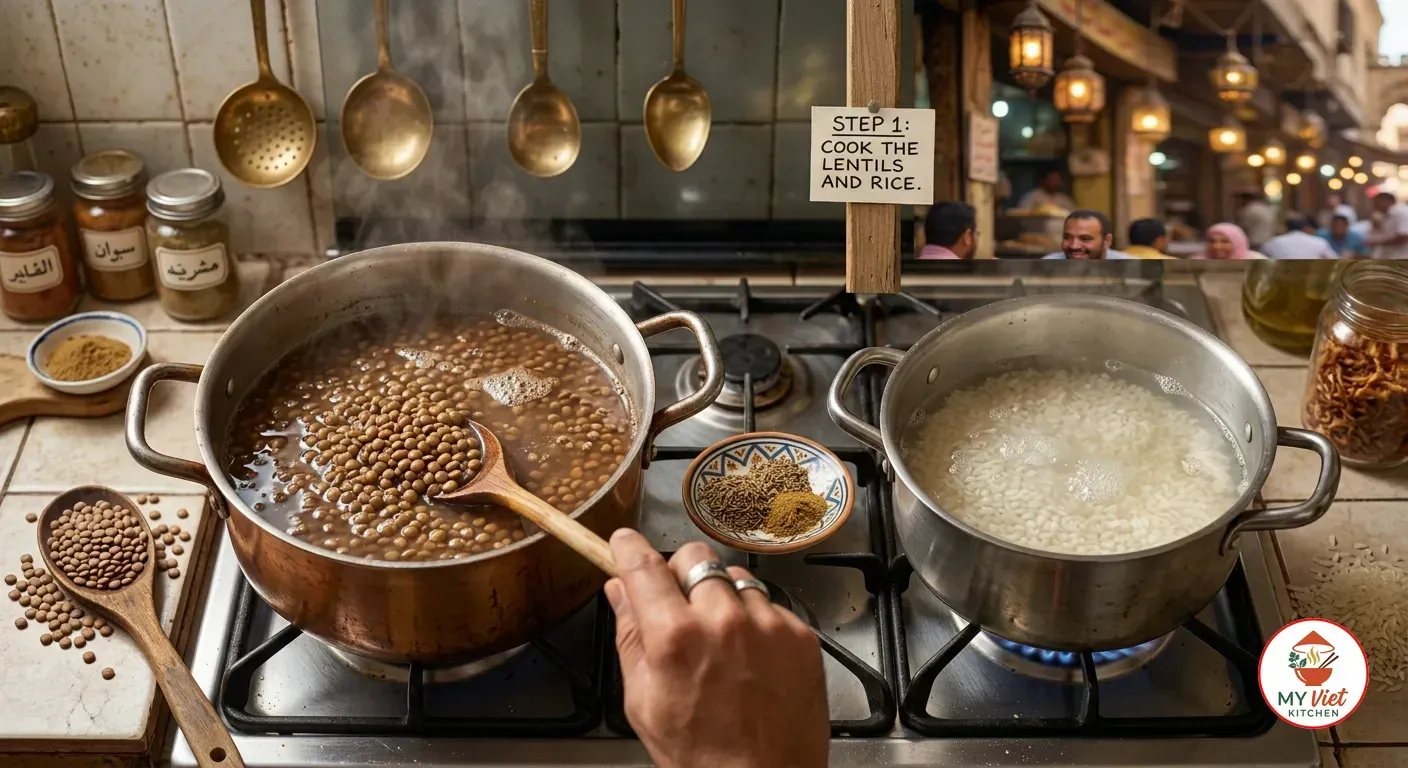
Step 1: Cook the Lentils and Rice
1 Rinse the brown lentils under cold water and pick out any debris. Place them in a pot with 3 cups of water and half a teaspoon of salt. Bring to a boil, then reduce the heat to a gentle simmer. Cook for 15 to 20 minutes until the lentils are tender but still hold their individual shape. Then drain immediately and spread them on a plate to stop the cooking.
While the lentils cook, rinse the rice under cold water until the water runs clear. This step removes excess starch and prevents the grains from clumping together. Cook the rice in 1.5 cups of salted water. Bring it to a boil, then cover and reduce the heat to low. Let it steam for 15 minutes without lifting the lid. After 15 minutes, remove from heat and let it rest covered for 5 more minutes. Then fluff with a fork.
Step 2: Cook the Pasta
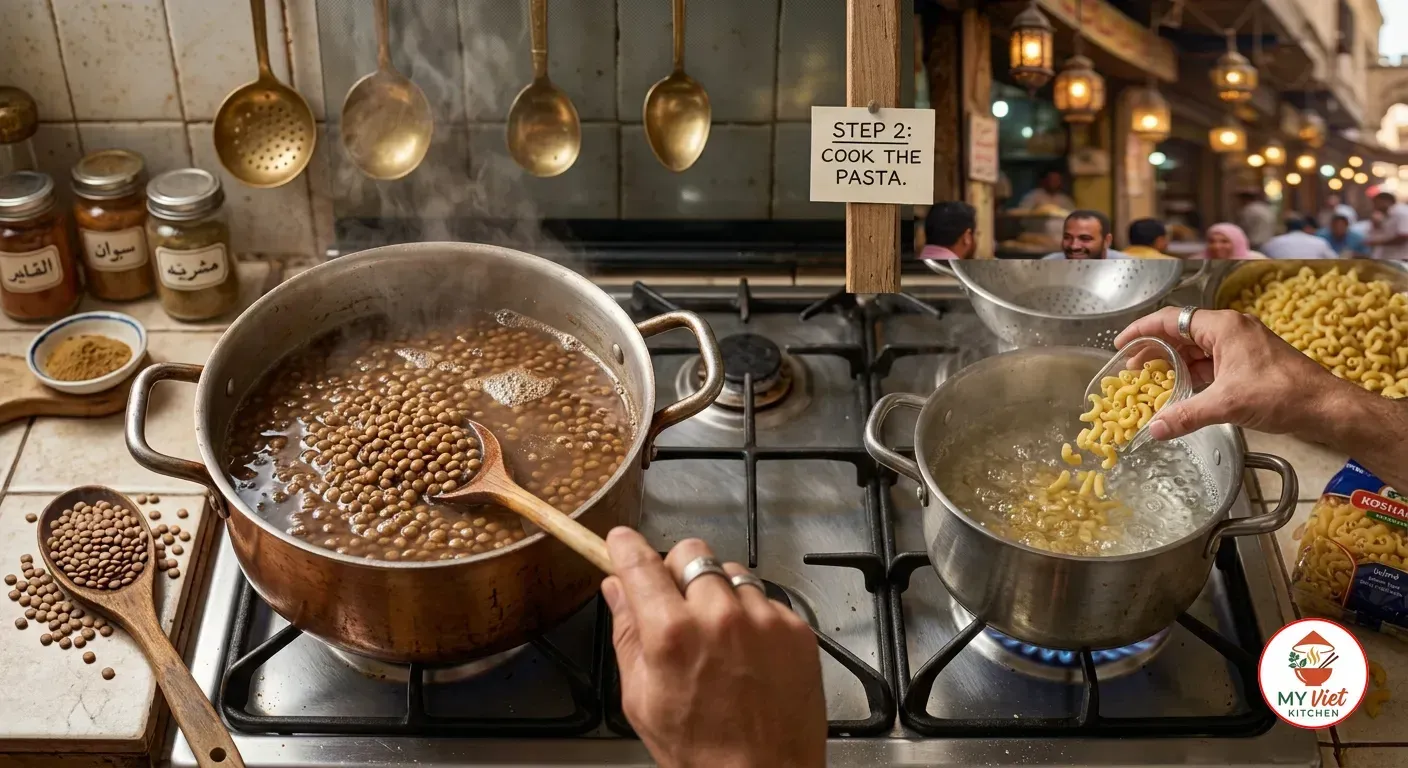
2 Bring a large pot of salted water to a rolling boil. Add the elbow macaroni and cook for 7 to 8 minutes until al dente. The pasta should have a slight firmness at the center because it will continue to soften when you add the hot sauce later. Drain the macaroni and rinse briefly with cold water to stop the cooking process.
For the vermicelli, heat a teaspoon of oil in a small pan over medium heat. Add the dry vermicelli and toast it, stirring constantly, until it turns golden brown. This takes about 2 minutes and adds a nutty flavor to the finished dish. Then transfer the toasted vermicelli to boiling water and cook for just 3 minutes. Drain and set aside with the macaroni.
Step 3: Fry the Crispy Onions
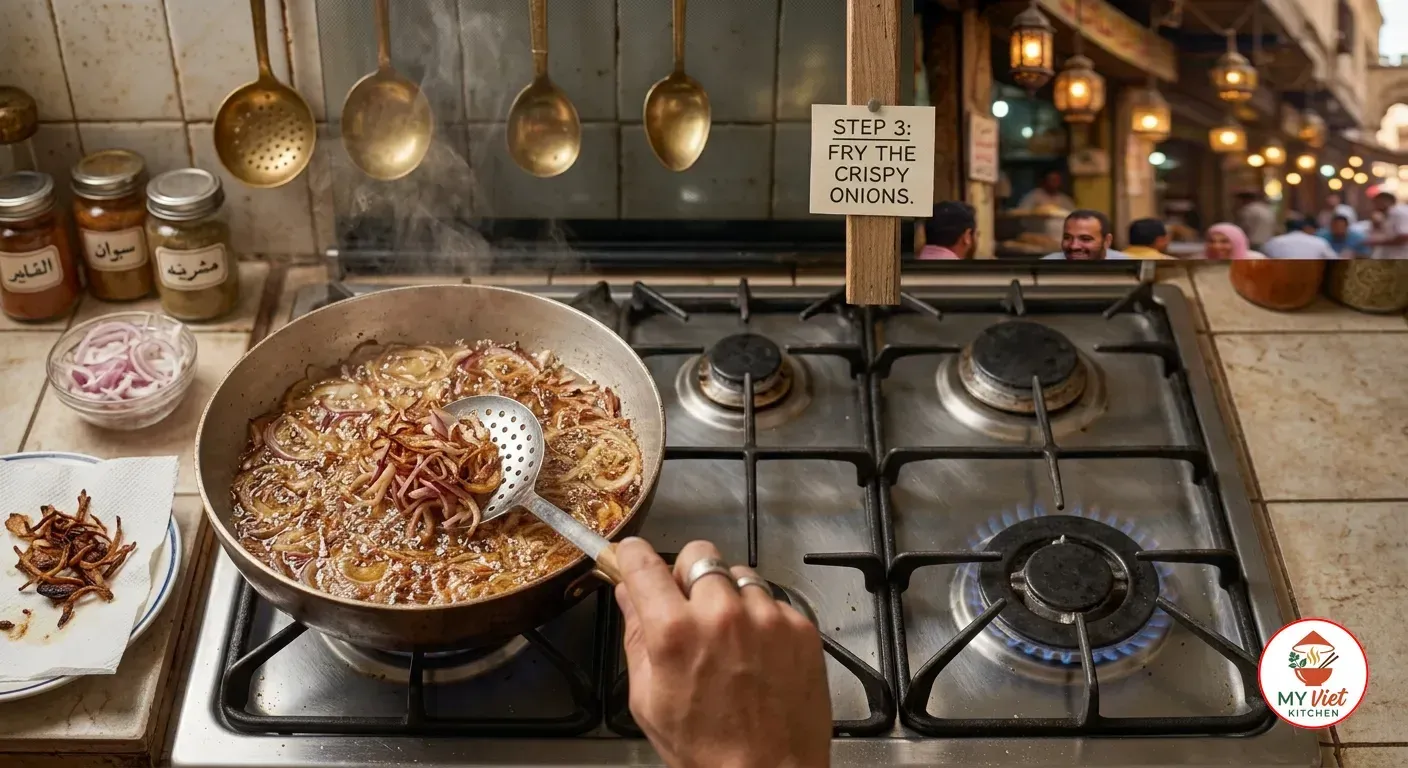
3 Slice 3 large onions into thin, even rings. Separate the rings and pat them dry with paper towels. Moisture causes the oil to splatter and prevents the onions from crisping properly. Heat 1 cup of vegetable oil in a deep pan or skillet over medium-high heat. The oil should reach about 350 degrees Fahrenheit.
Fry the onions in two or three batches to avoid crowding the pan. Stir them frequently with a slotted spoon. Initially, the onions will soften and release moisture. After about 6 to 8 minutes per batch, they will begin to turn golden. Continue frying until they reach a deep amber color. Remove them with a slotted spoon and drain on paper towels. Season immediately with a pinch of salt. The onions will crisp further as they cool. These fried onions are the crowning glory of any great koshari recipe.
Step 4: Make the Tomato Sauce and Dakka
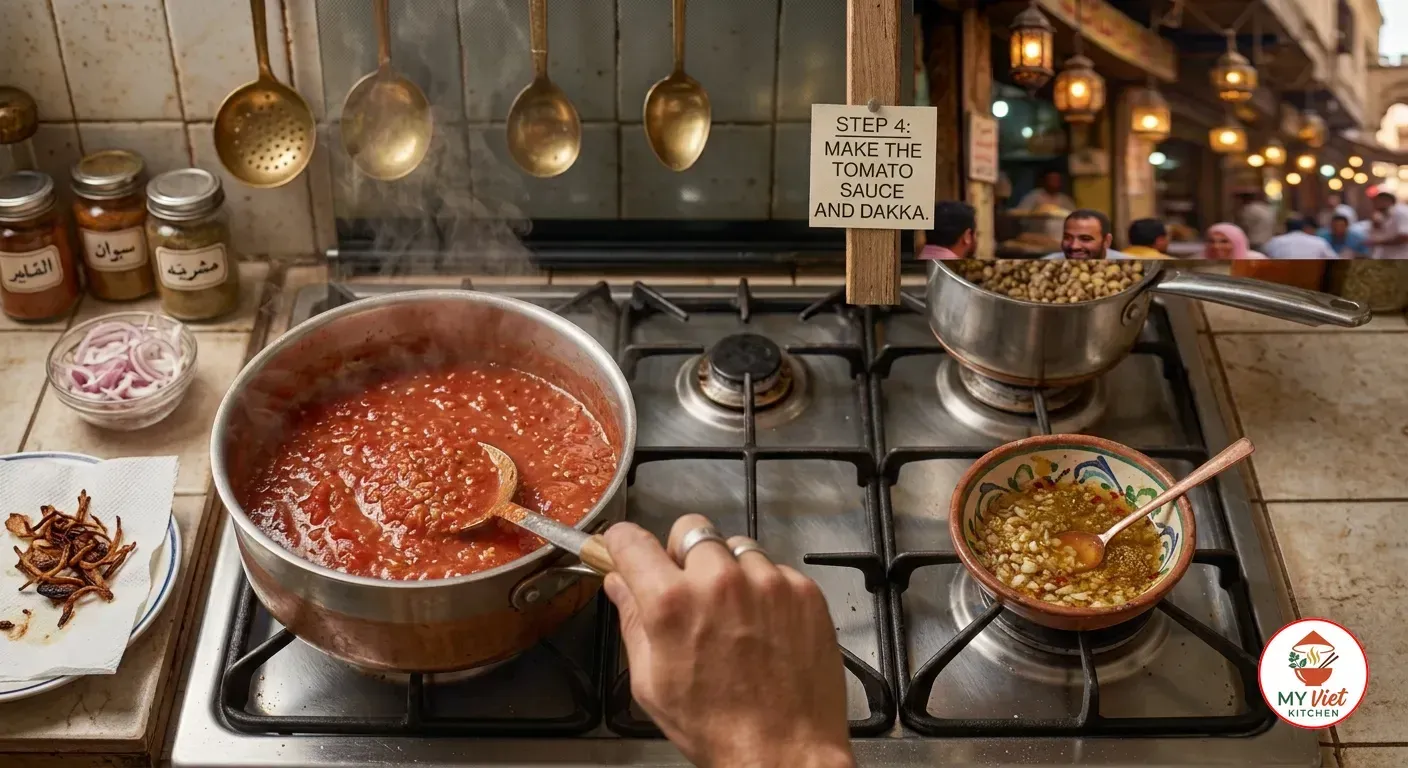
4 Heat 1 tablespoon of vegetable oil in a saucepan over medium heat. Add the minced garlic and stir for 30 seconds until fragrant. Do not let the garlic brown because it turns bitter quickly. Pour in the crushed tomatoes and add the white vinegar, ground cumin, ground coriander, and cayenne pepper. Season with salt and black pepper.
Bring the sauce to a gentle simmer and cook for 15 minutes, stirring occasionally. The sauce should reduce and thicken noticeably. A thick sauce clings to the rice and lentils instead of pooling at the bottom of the bowl. While the tomato sauce simmers, prepare the dakka. Combine the minced garlic, white vinegar, lemon juice, ground cumin, red pepper flakes, and salt in a small bowl. Stir well and then let it sit for at least 10 minutes so the flavors meld. The dakka should taste sharp, garlicky, and assertive.
Step 5: Assemble and Serve the Koshari
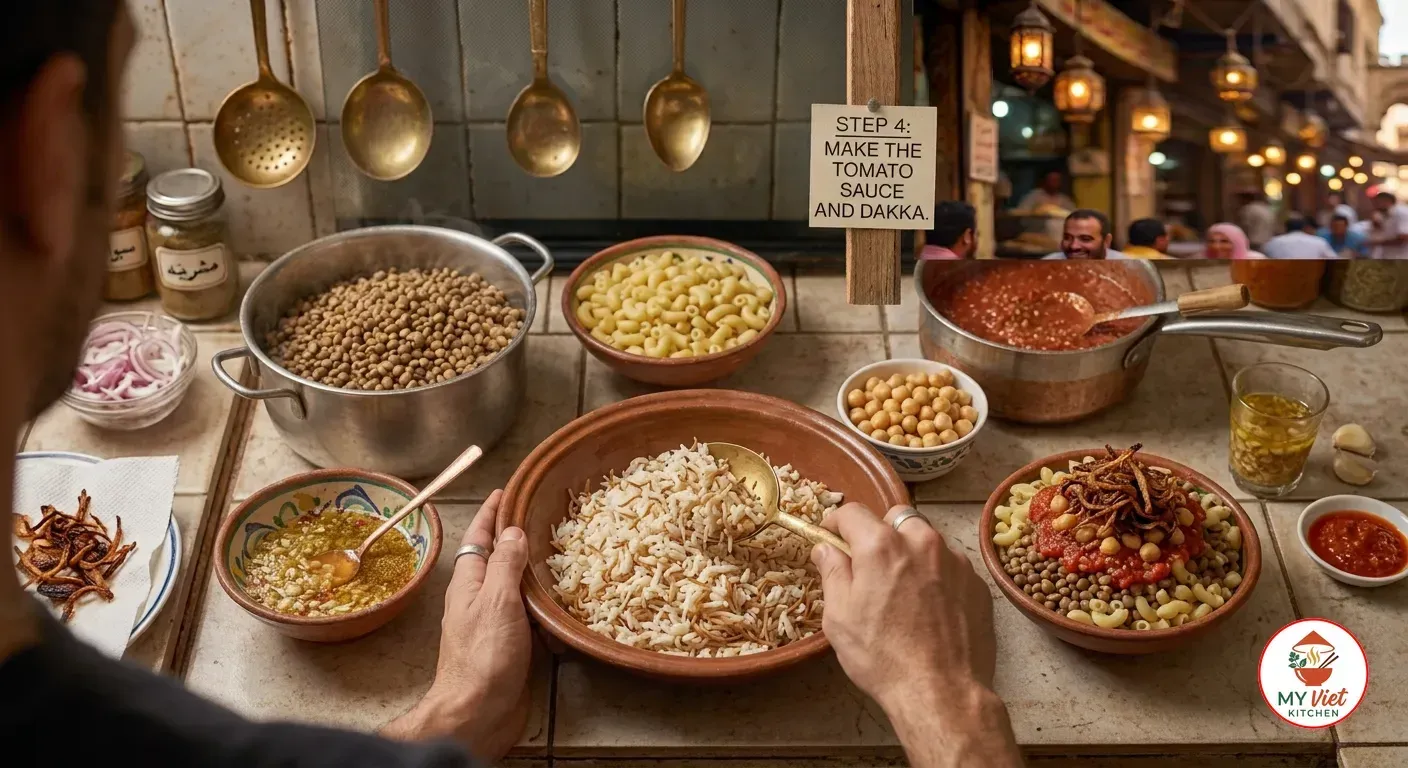
5 Begin by spreading the cooked rice across a large serving platter or individual bowls. Add the lentils over the rice and then scatter the macaroni and vermicelli on top. Gently toss the layers together with a fork. Ideally, you want the components lightly mixed but still visually distinct.
Warm the chickpeas in the remaining tomato sauce or microwave them briefly. Spoon the chickpeas over the grain and pasta mixture. Ladle the hot spiced tomato sauce generously over the entire dish. Then drizzle the dakka over the top according to your heat preference. Finally, pile a generous mountain of crispy fried onions on the very top. Serve this koshari recipe immediately while the sauce is hot and the onions are still crunchy.
Expert Tips for the Perfect Koshari Recipe
Toast the Vermicelli Before Boiling
Toasting the vermicelli in oil before cooking it in water is a step that many home cooks skip. However, this technique transforms the flavor entirely. The Maillard reaction creates nutty, caramelized notes that add depth to the finished koshari. Stir constantly during toasting because vermicelli goes from golden to burnt in seconds. This small extra step separates a good koshari recipe from an outstanding one.
Fry the Onions Low and Slow
Patience with the fried onions pays enormous dividends. If you rush them over high heat, the exterior burns while the interior stays soft. Instead, maintain a steady medium-high temperature and stir frequently. The onions should take 6 to 8 minutes per batch to reach the correct deep golden color. Therefore, remove them slightly before they look done because they continue to darken off the heat. Perfectly fried onions should shatter when you bite into them.
Make the Dakka Bold
The dakka is the secret weapon of great koshari. Many recipes understate the amount of garlic and vinegar needed. In Cairo’s best koshari shops, the dakka hits you with an immediate garlic punch followed by a vinegar sting. Do not be shy with these ingredients. The bold acidity of the dakka is what prevents a large bowl of carbohydrates from tasting heavy or one-dimensional. Taste it before serving and adjust until it feels sharp enough to cut through the starch.
Koshari Compared to Other Grain and Legume Dishes
Koshari belongs to a global family of dishes that combine grains and legumes for a complete protein. However, its use of multiple pasta shapes and two distinct sauces makes it unique. Here is how koshari compares to similar dishes from other cuisines.
| Dish | Origin | Base | Protein | Distinguishing Feature |
|---|---|---|---|---|
| Koshari | Egypt | Rice, pasta, vermicelli | Lentils, chickpeas | Two sauces plus crispy onions |
| Mujaddara | Lebanon | Rice or bulgur | Lentils | Caramelized onions, no pasta |
| Kitchari | India | Rice | Mung beans | Cooked together as a porridge |
| Waakye | Ghana | Rice | Black-eyed peas | Cooked with sorghum leaves |
| Rice and Beans | Caribbean | Rice | Kidney beans | Coconut milk base |
Serving Suggestions
In Egypt, koshari arrives as a complete meal. The combination of rice, lentils, pasta, and chickpeas provides carbohydrates, protein, and fiber in a single bowl. Most Egyptians eat koshari on its own without any sides. However, a few additions can enhance the experience for those who want variety.
The Perfect Accompaniments:
- Extra dakka on the side: Egyptians often ask for additional dakka at koshari shops. Serve a small bowl alongside the main dish so each person can adjust the garlic and vinegar intensity to their preference.
- Egyptian hot sauce (shatta): A fiery condiment made from crushed red chilies, garlic, and vinegar. It adds serious heat for those who want their koshari extra spicy. Drizzle it over the assembled bowl or serve it in a small dish on the side.
- Fresh green salad: A simple salad of chopped tomatoes, cucumbers, and fresh herbs dressed with lemon juice provides a cool, crisp contrast to the warm, starchy koshari. This combination works especially well during the summer months.
- Pickled turnips or carrots: The tangy, bright pink pickled turnips found in Egyptian cuisine add color and acidity. They cut through the richness and cleanse the palate between bites.
Beverage Pairings:
- Karkade (hibiscus tea): This deep red Egyptian tea served cold is the most traditional pairing for koshari. Its tart, floral flavor refreshes the palate between bites of the rich, carbohydrate-heavy dish.
- Lemon with mint drink: A tall glass of fresh lemon juice with muddled mint leaves and a touch of sugar provides a cooling counterpoint. This is a staple at Egyptian street food stalls during the hot months.
- Tamarind juice: Sweet and sour tamarind juice is another popular Egyptian street drink. Its fruity acidity pairs naturally with the cumin and tomato flavors in koshari.
- Sparkling water with lemon: For a simple option, carbonated water with a squeeze of lemon helps cleanse the palate. The effervescence cuts through the density of the grains and legumes.
Storage and Reheating
Refrigerator: Store each component of koshari separately in airtight containers. Your rice, lentils, and pasta keep well for up to 4 days. Meanwhile, the tomato sauce stores for up to 5 days. Notably, the dakka lasts a full week in the refrigerator. Keeping the components separate prevents the dish from becoming a soggy, indistinct mass.
Freezer: Your tomato sauce freezes beautifully for up to 3 months. Similarly, the cooked rice and lentils freeze well for the same duration. However, the macaroni becomes soft and loses its texture after freezing. For the best results, cook fresh pasta when you reheat frozen koshari components.
Reheating: Warm the rice, lentils, and pasta together in a microwave or on the stovetop with a splash of water to prevent drying out. Heat the tomato sauce separately until it simmers. Assemble the dish fresh with warm components, hot sauce, room-temperature dakka, and freshly fried or reheated onions. Microwave the onions for 10 seconds to restore some crunch if needed.
Common Mistakes to Avoid
1. Overcooking the Lentils
Mushy lentils ruin the texture of koshari completely. The lentils must hold their individual shape so they remain visible and distinct within the layered dish. So check them frequently after 12 minutes of cooking. They should be tender when you bite into one but still intact. Drain them the moment they reach this point because they continue to soften from residual heat.
2. Under-Frying the Onions
Pale, limp onions do not belong on koshari. The fried onions should be a deep golden brown that borders on dark amber. Onions that are removed too early stay soft and chewy instead of shattering with each bite. Push the color further than you think you should. They will lighten slightly as they cool. Importantly, the caramelized sugars in deeply fried onions provide a sweet contrast to the tangy sauces.
3. Making the Tomato Sauce Too Thin
A watery tomato sauce runs straight to the bottom of the bowl and leaves the top layers dry. Simmer the sauce for the full 15 minutes until it thickens noticeably. You should be able to drag a spoon across the bottom of the pan and see the trail hold for a moment. If the sauce still looks thin, continue cooking uncovered for 5 more minutes. Thick sauce coats every grain and noodle properly.
4. Skipping the Dakka
Some recipes treat the dakka as optional. It is not. Without the garlic vinegar sauce, koshari tastes flat and monotonous. The dakka provides the sharp acidity and heat that balances the starchy base. Specifically, it is the element that makes you want to take another bite. Egyptian koshari without dakka is like pasta without sauce. Always include it for an authentic koshari recipe result.
Frequently Asked Questions
What is koshari?
Koshari is Egypt’s national dish and most beloved street food. It consists of layers of rice, brown lentils, elbow macaroni, and vermicelli, topped with a spiced tomato sauce, a garlic vinegar condiment called dakka, chickpeas, and a generous pile of crispy fried onions. Dedicated koshari shops across Egypt serve this dish from morning until late at night. It is affordable, filling, and naturally vegan.
Is koshari vegan?
Yes, traditional Egyptian koshari is completely plant-based. It contains no meat, dairy, eggs, or animal products of any kind. The protein comes from the combination of brown lentils and chickpeas, which together provide a complete amino acid profile. This makes koshari one of the most satisfying vegan meals in world cuisine. No modifications are needed to make it suitable for a vegan diet.
What does koshari taste like?
Koshari delivers a complex experience of textures and flavors in every bite. Its base of rice, lentils, and pasta tastes mild, earthy, and comforting. Then the spiced tomato sauce adds warmth with cumin, coriander, and a gentle cayenne heat. Meanwhile, the dakka punches through with sharp garlic and vinegar. Finally, the crispy fried onions provide a sweet, crunchy contrast on top. Together, these layers create a dish that tastes far more exciting than its humble ingredients suggest.
Can I make koshari ahead of time?
You can absolutely prepare all the components in advance. Cook the rice, lentils, pasta, and tomato sauce separately and store them in the refrigerator for up to 3 days. The dakka actually improves after sitting overnight as the garlic mellows slightly. However, fry the onions fresh on the day you plan to serve. Assemble the koshari just before eating so the onions stay crispy and the sauces remain distinct.
What type of lentils are best for koshari?
Brown lentils are the traditional and best choice for any koshari recipe. They hold their shape after cooking, which preserves the distinct layered texture of the dish. Green lentils also work well as a substitute. Avoid red or yellow lentils because they break down into mush during cooking. The individual lentil grains should remain visible and slightly firm when you bite into the finished koshari.
What is dakka sauce?
Dakka is a raw garlic and vinegar condiment that is essential to authentic Egyptian koshari. You make it by combining crushed raw garlic with white vinegar, fresh lemon juice, ground cumin, and crushed red pepper flakes. The result is a pungent, spicy, and acidic sauce that cuts through the heaviness of the rice and pasta layers. Every koshari shop in Cairo and Alexandria serves dakka alongside the main tomato sauce. It is not optional.
Variations and Adaptations
Koshari with Meat:
While traditional koshari is vegan, some modern Egyptian restaurants offer a version with braised beef or lamb. Cut the meat into small cubes and braise it in the tomato sauce until fork-tender. This adds richness and turns koshari into an even heartier meal. Layer the meat on top of the grain base before adding the sauce and crispy onions. This variation works particularly well for feeding large groups.
Gluten-Free Koshari:
Replace the elbow macaroni and vermicelli with gluten-free pasta shapes. Brown rice pasta or chickpea pasta holds up well in this dish. Cook the gluten-free pasta according to its package directions and be careful not to overcook it because gluten-free pasta turns mushy faster than wheat pasta. All other components of koshari are naturally gluten-free, so this is the only substitution needed.
Spicy Koshari:
For a hotter version, double the cayenne pepper in the tomato sauce and increase the red pepper flakes in the dakka. You can also add a tablespoon of Egyptian shatta (hot chili paste) directly into the tomato sauce during simmering. In Egypt, customers at koshari shops often request extra shatta drizzled over their bowl. This turns the normally mild dish into a fiery challenge.
Quick Weeknight Koshari:
To save time on a busy evening, use canned lentils instead of cooking dried ones. Skip the vermicelli entirely and double the elbow macaroni. Use store-bought crispy fried onions from an Asian grocery store instead of frying your own. These shortcuts reduce the active cooking time to about 25 minutes while still delivering a satisfying koshari recipe for busy weeknights.
The Cultural Significance of Koshari
Koshari is more than food in Egypt. It is a symbol of national identity, economic accessibility, and cultural fusion that tells the story of modern Egyptian society through a single bowl. Understanding this history deepens every bite.
The origins of koshari trace back to the late 19th and early 20th centuries when Egypt was a crossroads of cultures. The dish draws from Indian khichdi (rice and lentils), Italian pasta, and Middle Eastern tomato-based sauces. British colonial soldiers, Italian workers building infrastructure, and Indian traders all contributed ingredients and techniques that eventually merged into what Egyptians now claim as entirely their own.
Today, koshari holds a special place in Egyptian daily life. Dedicated koshari shops outnumber any other type of restaurant in Cairo. A large portion costs just a few Egyptian pounds, making it the most affordable restaurant meal in the country. During Ramadan, koshari shops see their biggest crowds. Families break their fast with heaping bowls of this comforting dish. Workers eat it for lunch. Students eat it for dinner. Koshari feeds Egypt and the broader African food landscape with democratic generosity, nourishing everyone equally regardless of social class.
Conclusion
This authentic koshari recipe brings Egypt’s most beloved street food to your kitchen with all its layers, textures, and bold flavors intact. The process involves several components, but each one is simple to prepare. Cook the rice and lentils until perfectly tender. Boil and toast the pasta. Fry the onions until shatteringly crisp. Simmer a thick tomato sauce and mix a punchy dakka. Then assemble everything into a towering bowl that delivers satisfaction in every single bite.
Ready to explore more Egyptian and African flavors? Browse our full collection of African dishes, including ful medames, shakshuka, and Moroccan tagine. Also try our jollof rice for another iconic African favorite.