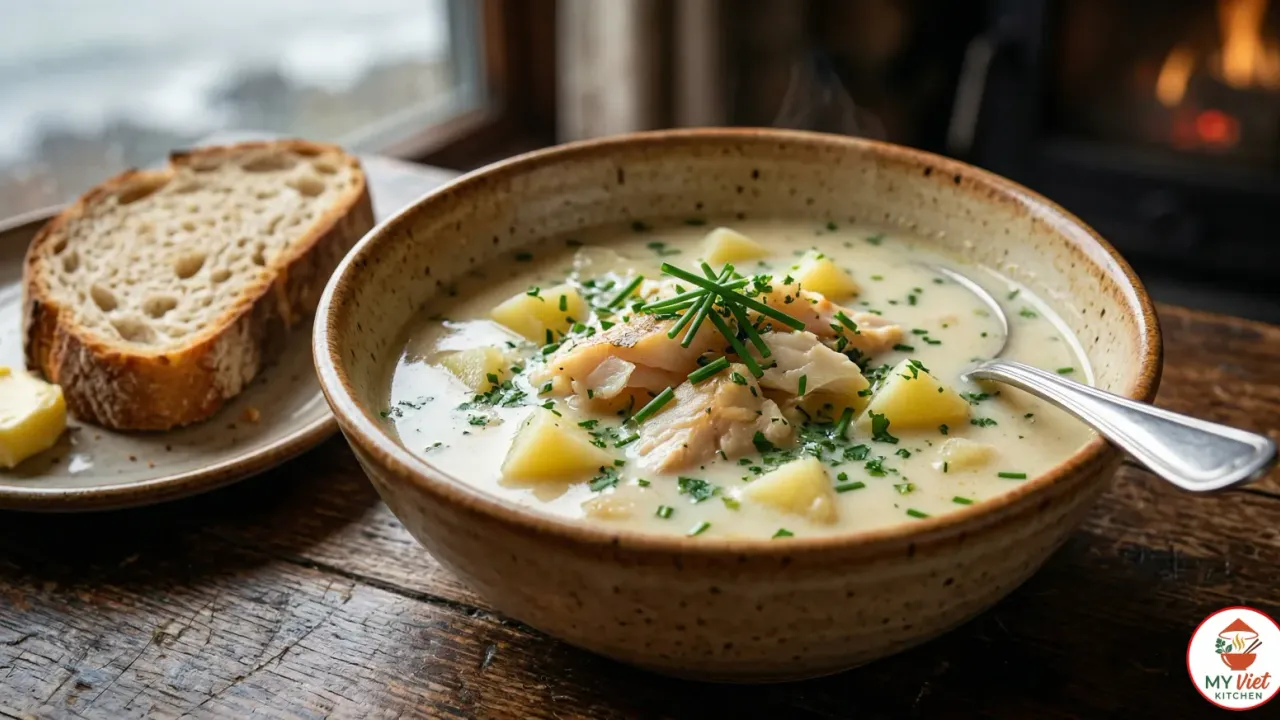
Cullen skink is Scotland’s most celebrated soup, a thick and smoky bowl of comfort built on smoked haddock, potatoes, and cream. This classic Scottish smoked haddock soup hails from the small fishing town of Cullen on the northeast coast, where generations of fishermen transformed their daily catch into one of the finest soups in European cuisine. Whether you are braving a damp Highland evening or simply craving something rich and warming, this cullen skink recipe delivers deep, smoky satisfaction in every spoonful.
Prep Time: 15 minutes | Cook Time: 35 minutes | Servings: 4
Difficulty: Easy | Calories: ~420 per serving
What Makes Cullen Skink Special?
Cullen skink stands apart from every other fish soup because of one ingredient: smoked haddock. In fact, the fish is cold-smoked over wood chips, which infuses the flesh with a deep, golden smokiness that no fresh fish can replicate. When you poach this smoked haddock in milk, the liquid absorbs that flavor and becomes the foundation of the entire soup. As a result, every spoonful carries a gentle, woody smoke that lingers on the palate.
Unlike many cream-based soups that rely on flour or roux for thickness, cullen skink gets its body from potatoes. Specifically, you mash a portion of the cooked potatoes directly into the broth, and they dissolve into a silky, starchy base. This technique creates a soup that feels luxurious without being heavy. Meanwhile, the remaining potato chunks add texture and substance, so each bowl feels like a complete meal rather than a starter course.
The simplicity of cullen skink is also its greatest strength. After all, with fewer than ten core ingredients, there is nowhere to hide. Every element must earn its place. The onions and leeks provide a sweet, aromatic backbone. Then the cream adds richness without overwhelming the smokiness. And the fresh chives on top bring a sharp, green brightness that cuts through all that velvety warmth. This balance of smoke, cream, and earth is what makes cullen skink one of the greatest soups in the world.

Choosing the Right Smoked Haddock
The quality of your smoked haddock determines the quality of your cullen skink. Of course, not all smoked fish is the same, so it pays to know what you are buying before you start cooking.
- Finnan haddie (best choice): This is the traditional smoked haddock from the village of Findon near Aberdeen. It is cold-smoked over green wood and peat, which gives it a pale golden color and a delicate, authentic flavor. Finnan haddie is the gold standard for cullen skink. Look for it at fishmongers or specialty stores.
- Naturally smoked haddock: These fillets have a golden-yellow color from the smoking process alone, without added dye. They offer a genuine smoky flavor and flake beautifully when poached. Check the label to confirm the color comes from smoking and not from artificial coloring.
- Dyed smoked haddock: Bright yellow haddock has been treated with annatto or tartrazine dye to enhance its appearance. The flavor tends to be milder and less complex than naturally smoked fish. While it works in a pinch, it is not the ideal choice for authentic cullen skink.
- Smoked cod (alternative): If you cannot find smoked haddock, smoked cod is the closest substitute. The texture is slightly firmer, and the flavor is a touch milder. However, it still delivers the smoky backbone that this soup requires.
Ingredients for Cullen Skink
Main Ingredients:
- 1 pound smoked haddock fillets (finnan haddie)
- 2 cups whole milk
- 1 cup water
- 1 bay leaf
For the Soup Base:
- 2 tablespoons butter
- 1 large onion, finely diced
- 1 leek, white and light green parts, sliced
- 1 pound Yukon Gold potatoes, peeled and diced
For Finishing:
- 1/2 cup heavy cream
- 2 tablespoons fresh chives, chopped
- 1 tablespoon fresh parsley, chopped
- Salt and white pepper to taste
- Crusty bread for serving
Pro tip: Use whole milk rather than low-fat for the poaching liquid. The milk fat carries the smoky flavor from the haddock much more effectively than water alone. After poaching, that infused milk becomes liquid gold for building your soup base. Do not discard a single drop.
Step-by-Step Instructions
Step 1: Poach the Smoked Haddock
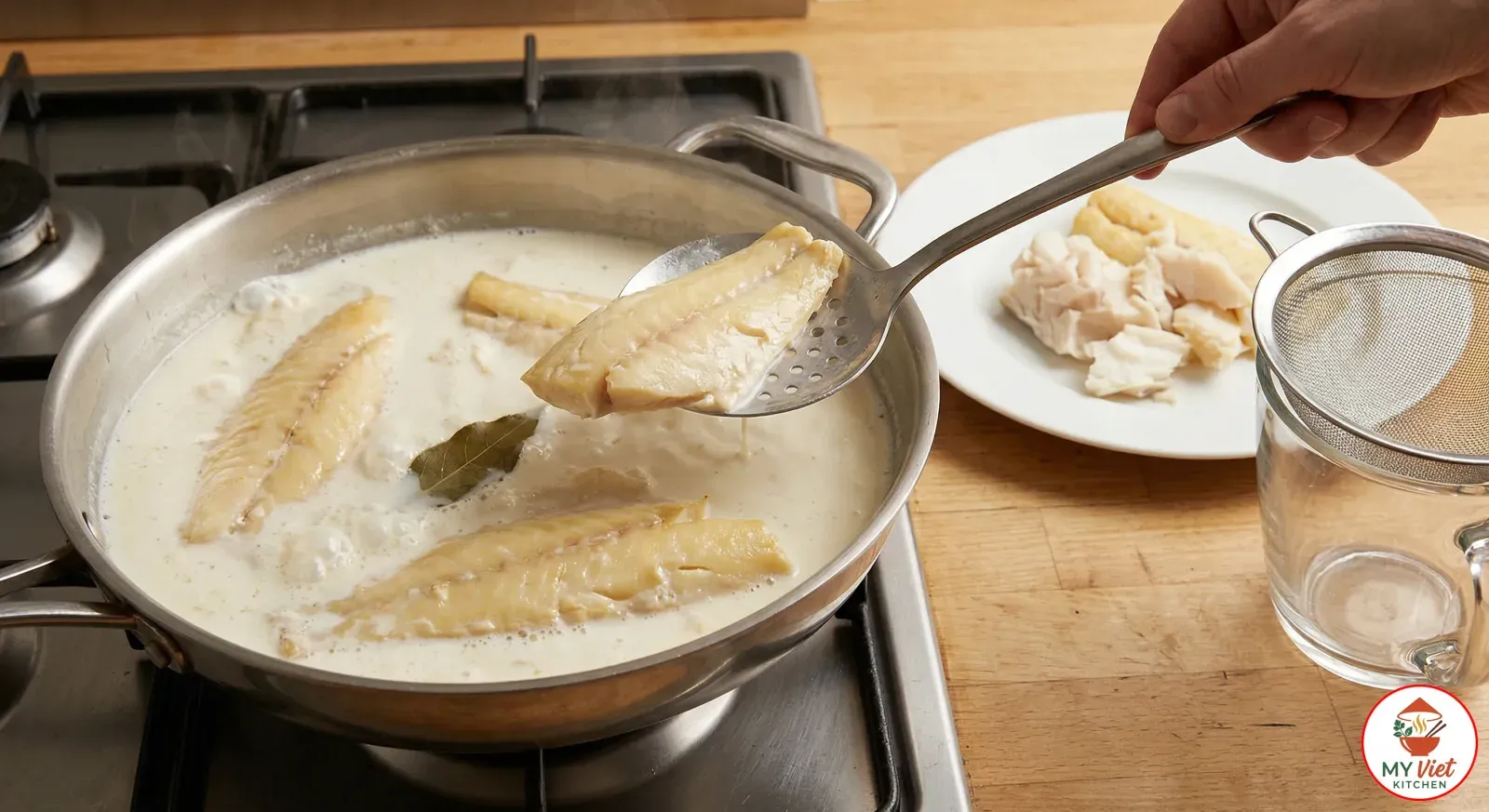
1 Place the smoked haddock fillets in a wide, shallow pan with the skin side facing down. Pour the milk and water over the fish until it is just covered. Drop in the bay leaf. Bring the liquid to a gentle simmer over medium heat. Do not let it boil, because boiling toughens the fish and causes the milk to curdle.
After that, poach the haddock for 8 to 10 minutes until the flesh turns opaque and flakes easily when pressed with a fork. Then carefully lift the fish out with a slotted spoon and set it on a plate. Strain the poaching liquid through a fine sieve into a jug. Indeed, this smoky milk is the soul of your cullen skink. Discard the bay leaf. Once the fish is cool enough to handle, flake it into large chunks and remove any skin and small bones. Set the flaked fish aside for later.
Step 2: Cook the Aromatics and Potatoes
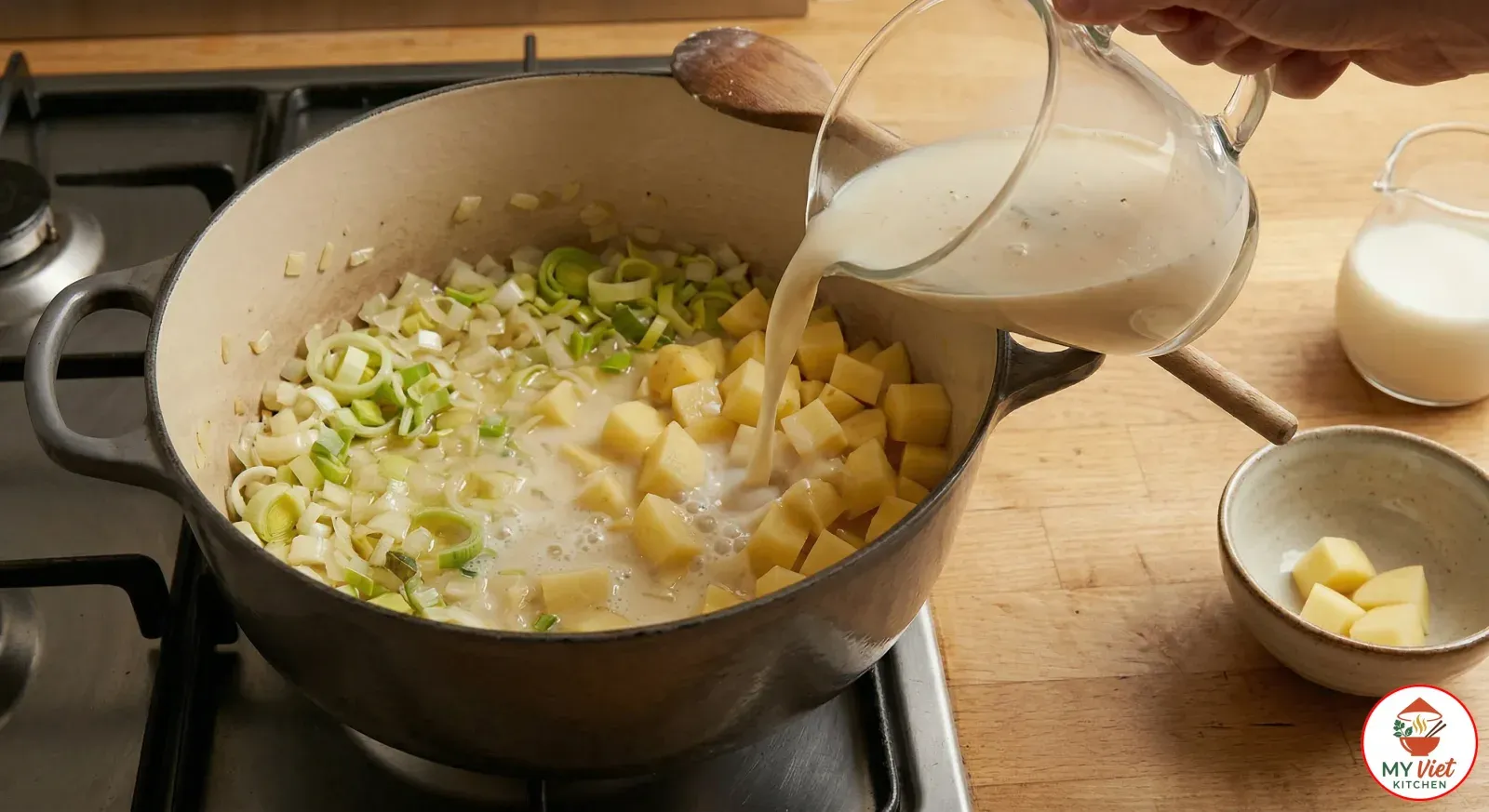
2 First, melt the butter in a large, heavy-bottomed pot over medium heat. Add the finely diced onion and sliced leek. Stir to coat them in the butter. Cook gently for 5 to 7 minutes, stirring occasionally, until the vegetables are soft and translucent. Above all, you do not want any color on them, so keep the heat moderate.
Next, add the diced potatoes to the pot. Pour in the reserved smoky poaching liquid. The liquid should just cover the potatoes. If it does not, add a splash of extra milk. Bring to a simmer and cook for 15 to 20 minutes until the potatoes are completely tender. At that point, a knife should slide through them with no resistance. The potatoes will absorb some of that smoky milk as they cook, which layers even more flavor into every bite.
Step 3: Build the Soup Base
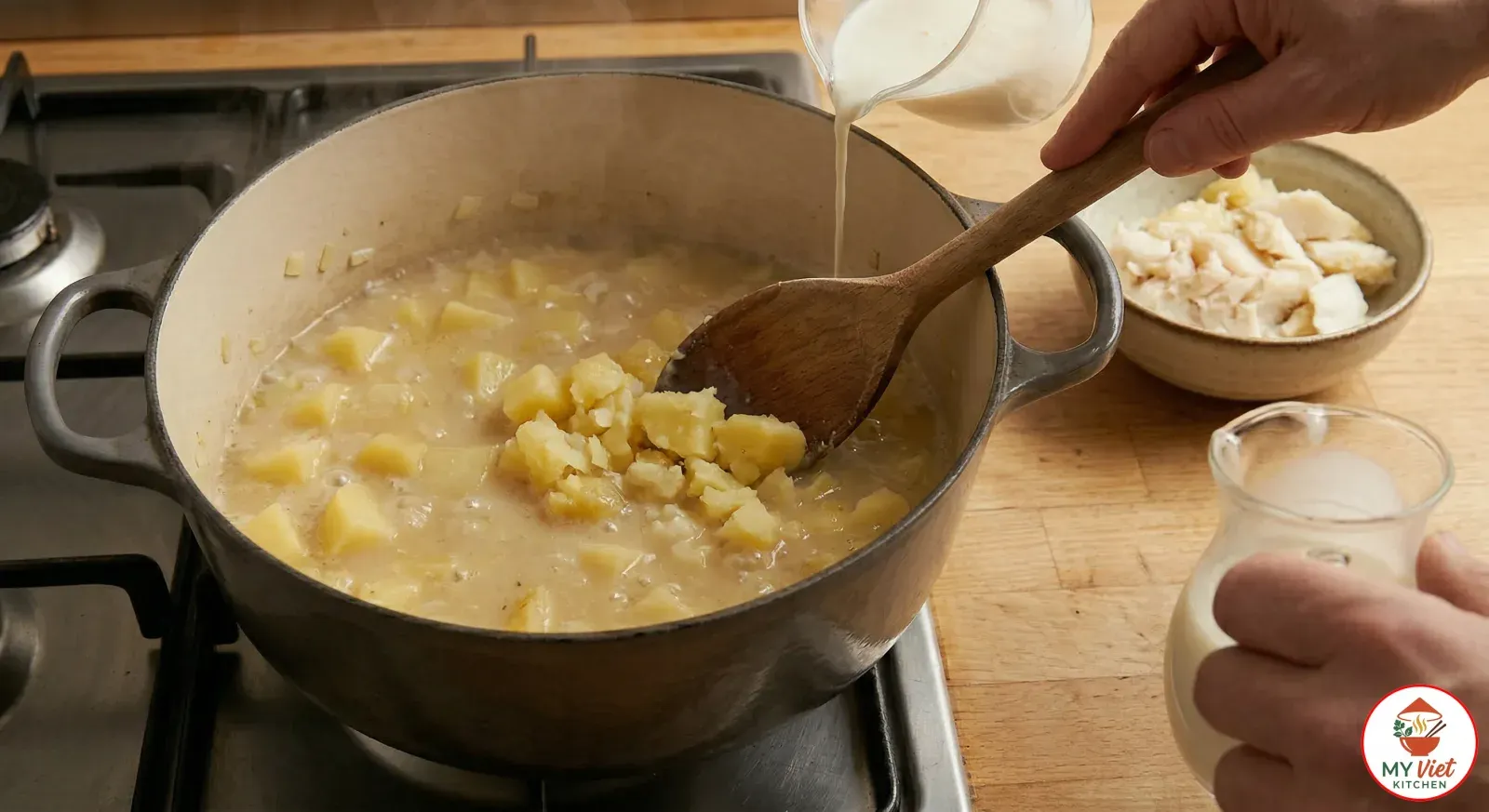
3 Here is where cullen skink gets its signature texture. Use the back of a wooden spoon or a potato masher to crush roughly one third of the potatoes against the side of the pot. As they break down, their starch dissolves into the broth and thickens it naturally. As a result, this gives the soup a creamy, velvety body without any flour or cornstarch.
However, leave the remaining potato chunks intact so the soup has interesting texture. Now pour in the heavy cream and stir gently. Bring the soup back to a low simmer for 2 to 3 minutes. The broth should look thick, creamy, and slightly golden from the smoky milk. Taste and adjust the seasoning with salt and white pepper. Notably, white pepper is traditional because it blends into the pale soup without leaving visible black specks.
Step 4: Finish and Serve
4 Gently fold the flaked smoked haddock into the soup. Most importantly, be careful not to stir too vigorously, because you want the fish to stay in generous chunks rather than breaking into tiny shreds. Let the soup simmer for just 2 minutes so the fish heats through. After all, the haddock is already cooked from the poaching step, so it only needs to warm up.
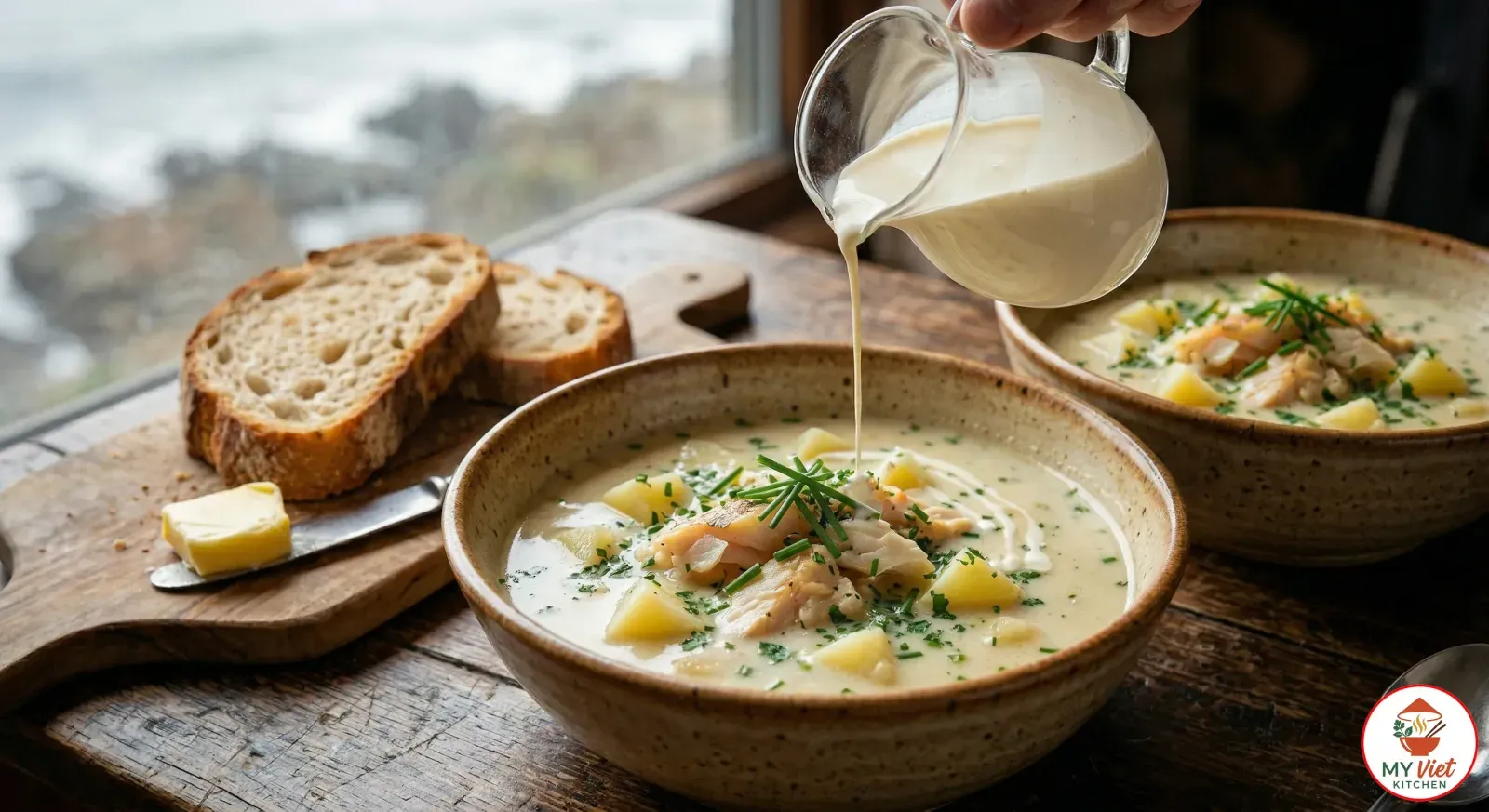
Ladle the cullen skink into warm bowls. Scatter the chopped chives and parsley over the top. A final drizzle of cream across the surface adds a beautiful finishing touch. Serve immediately with thick slices of warm, crusty bread on the side. In fact, the bread is essential for soaking up every last drop of that smoky, creamy broth. For the best experience, eat the soup while it is hot and let each spoonful warm you from the inside out.
Expert Tips for Perfect Cullen Skink
Never Boil the Milk
The most important rule when making cullen skink is to keep the heat gentle. Boiling milk causes it to curdle and form an unpleasant grainy texture. Instead, maintain a bare simmer where tiny bubbles appear at the edges of the pan. This low temperature poaches the haddock perfectly while extracting maximum smoky flavor into the liquid. Ultimately, patience with the heat is the difference between a silky soup and a broken one.
Save Every Drop of Poaching Liquid
The milk that you poach the haddock in becomes intensely flavored with smoke, salt, and fish essence. It is the backbone of the entire soup. Although straining it removes any skin fragments or bones, all that flavor stays in the liquid. If you accidentally pour it away, the soup will taste flat and one-dimensional. Therefore, treat that poaching liquid like gold and build the rest of the dish around it.
Mash Only a Third of the Potatoes
The balance between mashed and whole potatoes is crucial to cullen skink. For instance, crushing too many potatoes makes the soup thick and stodgy like a puree. Crushing too few leaves the broth thin and watery. Mashing about one third gives you the ideal consistency. In turn, the dissolved starch thickens the broth to a creamy, chowder-like texture. Meanwhile, the remaining chunks provide satisfying bites that make each spoonful interesting.
Cullen Skink Compared to Other Fish Soups
Scotland’s famous soup has cousins across the Atlantic and beyond. Here is how cullen skink compares to other well-known fish soups from different traditions.
| Feature | Cullen Skink (Scotland) | New England Clam Chowder (USA) | Bouillabaisse (France) |
|---|---|---|---|
| Primary fish | Smoked haddock | Clams | Mixed fresh seafood |
| Base liquid | Milk and cream | Milk and cream | Fish stock and tomato |
| Thickener | Mashed potatoes | Flour roux | None (brothy) |
| Key flavor | Smoky and creamy | Briny and rich | Herbal and saffron |
| Texture | Thick and velvety | Thick and chunky | Thin and aromatic |
| Gluten-free | Yes (naturally) | No (contains flour) | Yes (typically) |
Serving Suggestions
Cullen skink is hearty enough to serve as a main course, especially with the right accompaniments. In Scotland, it often appears as a starter at formal dinners. However, a generous bowl with good bread makes a satisfying meal on its own.
The Perfect Accompaniments:
- Crusty sourdough bread: The tangy flavor and chewy crust pair beautifully with the creamy soup. Tear off chunks and use them to mop up the smoky broth from the bottom of the bowl.
- Scottish oatcakes: These crisp, savory oat biscuits are a traditional Scottish accompaniment. Their nutty crunch adds contrast to the soft, creamy soup. They also keep the meal authentically Scottish.
- Simple green salad: A lightly dressed salad with peppery watercress or rocket leaves provides a fresh, crisp contrast. The bitterness of the greens balances the richness of the cream and haddock.
- Bannock bread: This traditional Scottish flatbread made with oats or barley flour is the most authentic pairing. It has a dense, slightly sweet character that complements the smoky soup perfectly.
Beverage Pairings:
- Dry white wine (best match): A crisp Chablis or Muscadet complements the smoky fish without competing. The mineral acidity cuts through the cream and refreshes the palate between spoonfuls.
- Scottish ale: A golden ale from a Scottish brewery like Belhaven or Cairngorm pairs naturally with this soup. The malty sweetness echoes the smoky warmth of the haddock.
- Scotch whisky: A dram of lightly peated single malt served alongside the soup creates a quintessentially Scottish experience. The smoke in the whisky mirrors the smoke in the fish.
- Hot tea or sparkling water: For a non-alcoholic pairing, strong black tea works surprisingly well. Sparkling water with a squeeze of lemon also cleanses the palate between bites of this rich soup.
Storage and Reheating
Refrigerator: Store cullen skink in an airtight container for up to 3 days. The flavors actually deepen overnight as the smoky haddock continues to infuse the broth. Keep the soup separate from any leftover bread to prevent sogginess.
Freezer: Cullen skink freezes well for up to 2 months. The cream and potatoes may change texture slightly after thawing, but a gentle reheat with a splash of fresh milk restores the consistency. Freeze in individual portions for convenient single servings.
Reheating: Warm the soup gently in a saucepan over low heat, stirring occasionally. Add a splash of milk or cream if the soup has thickened too much in the fridge. Do not boil, because high heat can cause the cream to separate and the fish to become tough. Taste and adjust the seasoning after reheating, since chilling can dull the salt and pepper levels.
Common Mistakes to Avoid
1. Boiling the Poaching Milk
This is the most common error when making cullen skink. Boiling causes milk proteins to denature and clump together, which creates a grainy, curdled texture in the soup. Instead, keep the heat at a gentle simmer. Tiny bubbles should appear at the edges, but the surface should never reach a rolling boil. This gentle approach also prevents the smoked haddock from becoming rubbery and tough.
2. Using Fresh Fish Instead of Smoked
Regular haddock or cod will not produce authentic cullen skink. The entire character of the soup depends on the smoky flavor that cold-smoked haddock provides. Fresh fish makes a perfectly good chowder, but it is a different dish entirely. If you cannot find smoked haddock, try smoked cod or even hot-smoked trout as a substitute rather than using unsmoked fish.
3. Over-Mashing the Potatoes
Mashing all the potatoes turns cullen skink into a thick, starchy puree that loses the character of a soup. The beauty of this dish lies in its texture contrast, with creamy broth studded with tender potato chunks and flakes of smoky fish. Consequently, only crush a third of the potatoes and leave the rest in distinct pieces. This balance is what separates a great cullen skink from a mediocre one.
4. Breaking the Fish into Tiny Pieces
When you add the flaked haddock back to the soup, stir as gently as possible. Vigorous stirring shreds the fish into tiny fragments that disappear into the broth. Instead, fold the fish in with a large spoon using slow, sweeping motions. You want generous, visible chunks of smoky haddock in every bowl. Those chunky flakes are one of the great pleasures of eating cullen skink.
Frequently Asked Questions
What does cullen skink taste like?
Cullen skink has a rich, smoky flavor balanced by creamy, velvety broth. The smoked haddock provides the dominant taste, which is savory and gently woody. Potatoes add earthy substance, while the cream rounds everything into a smooth, comforting bowl. If you enjoy smoked salmon or smoked trout, you will love the similar but more delicate smokiness in this soup.
What is the difference between cullen skink and fish chowder?
The key distinction is the smoked haddock. Most fish chowders use fresh, unsmoked fish or shellfish. Cullen skink also thickens naturally with mashed potatoes rather than a flour roux, which makes it gluten-free. Additionally, cullen skink uses milk as the poaching and soup base, while many American chowders start with a butter and flour combination. The result is a lighter, smokier soup with a cleaner flavor.
Can I make cullen skink with regular haddock?
Technically yes, but the soup will taste fundamentally different. The smoke is what makes cullen skink distinctive. Without it, you have a pleasant potato and fish soup, but not a true cullen skink. If smoked haddock is unavailable, add half a teaspoon of smoked paprika and a tiny dash of liquid smoke to approximate the flavor. Smoked cod also works as a reasonable substitute.
Where does cullen skink come from?
The soup originates from the town of Cullen in Moray, on the northeast coast of Scotland. The word skink comes from the Scots Gaelic word for broth. Local fishing families created this dish using the smoked haddock that was abundant along the Moray Firth. Over the centuries, it spread from a humble fisherman’s meal to a nationally celebrated Scottish classic that appears on restaurant menus around the world.
Is cullen skink gluten-free?
Yes, traditional cullen skink is naturally gluten-free. The soup uses mashed potatoes as its thickener instead of flour. However, always check the packaging on your smoked haddock, because some producers add breadcrumbs or other coatings during processing. Serve with gluten-free bread or oatcakes made from certified gluten-free oats to keep the entire meal safe for those with celiac disease.
Can I freeze cullen skink?
Cullen skink freezes well for up to 2 months in airtight containers. After thawing in the fridge overnight, reheat gently over low heat. Stir in a splash of fresh milk or cream to restore the original silky texture. The potatoes may soften further during freezing, but this actually helps the soup become even creamier. Do not refreeze after thawing.
Variations and Adaptations
Luxury Cullen Skink with Cream and Leeks:
Double the cream and add an extra leek for a richer, more indulgent version. Finish with a drizzle of truffle oil and a scattering of crispy shallots on top. This elevated version works beautifully as a dinner party starter. Serve it in small bowls to keep the portions elegant. The extra richness transforms a humble fisherman’s soup into something fit for a fine dining table.
Lighter Cullen Skink:
Replace the heavy cream with extra whole milk for a lighter version that still tastes satisfying. Use less butter and add an extra potato to maintain thickness without the extra fat. This adaptation brings the calories down while preserving the smoky, creamy character. It is a good option for anyone watching their intake but still craving that classic cullen skink experience.
Cullen Skink with Sweetcorn:
Add a cup of sweetcorn kernels to the soup along with the potatoes. The corn adds a subtle sweetness and a pleasant pop of texture that pairs well with the smoky haddock. This variation bridges the gap between Scottish cullen skink and American corn chowder. It is especially popular with children who enjoy the sweeter, milder flavor profile.
Dairy-Free Cullen Skink:
Substitute the milk with unsweetened oat milk and the cream with coconut cream for a dairy-free version. Oat milk is the best plant-based option because its natural creaminess mimics whole milk without an overpowering flavor. Use olive oil instead of butter for sweating the onions and leeks. The smoky haddock still carries the soup, so the flavor remains remarkably close to the original.
The Cultural Significance of Cullen Skink
Cullen skink occupies a special place in Scottish culinary heritage. It was born from necessity, created by fishing communities along the Moray Firth who smoked their catch to preserve it through long winters. Those fishermen and their families needed hearty, warming meals that could be prepared quickly with ingredients they had on hand. Smoked haddock, potatoes, onions, and milk were staples in every coastal Scottish kitchen. From those humble beginnings, one of the world’s great soups emerged.
Today, cullen skink appears on menus at Scotland’s finest restaurants and at Burns Night suppers across the globe. It often serves as a first course before haggis at celebrations of the national poet Robert Burns. The soup has also become a point of national pride. At food festivals and competitions throughout Scotland, chefs compete to make the best cullen skink, each putting their own subtle twist on the traditional recipe while respecting its foundations.
Beyond Scotland, cullen skink has earned recognition as one of the finest soups in European cooking. Food writers and chefs from around the world praise its elegant simplicity and depth of flavor. It proves that great cuisine does not require expensive or exotic ingredients. Instead, it requires an understanding of how simple elements work together. A piece of smoked fish, some potatoes, and a splash of milk can become something extraordinary when handled with care and respect for tradition.
Conclusion
Cullen skink is Scottish comfort food at its absolute finest. Smoky haddock dissolves into creamy, potato-thickened broth to create a soup that warms you from the first spoonful to the last. This recipe walks you through every detail, from choosing the right smoked haddock to building that silky base with mashed potatoes and cream. The technique is simple, but the flavors are anything but ordinary. Follow these steps and you will produce a bowl of cullen skink worthy of any Scottish kitchen.
Ready to explore more classic European soups and comfort dishes? Browse our full collection of European dishes, including bangers and mash, beef bourguignon, and Irish stew. Discover recipes from across the continent, each made with the same care and attention to authentic technique.