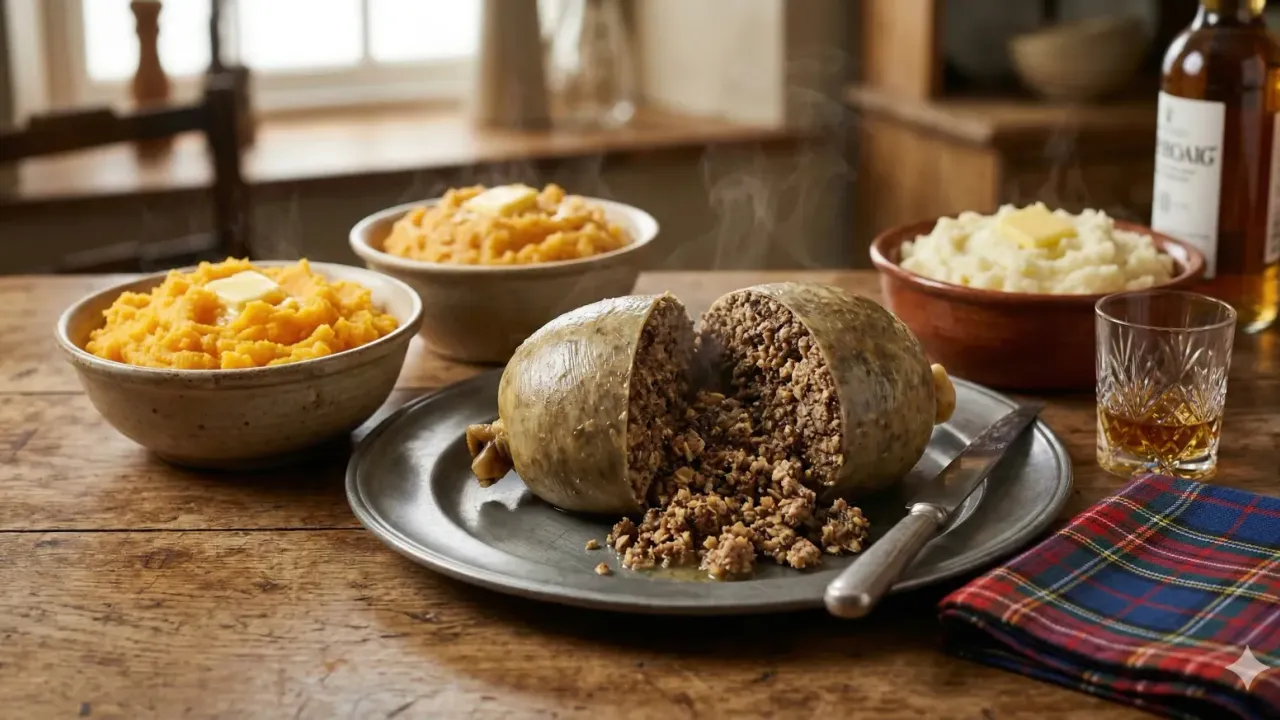
Haggis is Scotland’s most iconic dish, and this recipe walks you through every step of making it from scratch. This savory mix of sheep offal, toasted oatmeal, onions, and warming spices has fed Scots for centuries. Although its reputation scares some people, the taste tells a different story entirely. Rich, peppery, and deeply satisfying, haggis rewards anyone brave enough to try it. Whether you are preparing a Burns Night feast or simply curious about Scottish cooking, this haggis recipe delivers the real thing.
Prep Time: 45 minutes | Cook Time: 3 hours | Servings: 8
Difficulty: Intermediate | Calories: ~370 per serving
What Makes Haggis Special?
Haggis stands apart from other offal dishes because of its brilliant balance of textures and flavors. The toasted oatmeal gives it a nutty, grainy bite. Meanwhile, the suet melts during cooking to create a rich, almost creamy interior. The spice blend of black pepper, nutmeg, mace, and coriander warms you from the inside out. In fact, no other dish combines these elements quite the same way. It is comfort food at its most honest.
What truly sets haggis apart is the resourcefulness behind it. Scottish crofters and farmers wasted nothing from their animals. Therefore, they turned the heart, liver, and lungs into something extraordinary. The sheep stomach served as a natural cooking vessel. Oatmeal stretched the filling into a hearty meal for the whole family. This nose-to-tail philosophy is now celebrated by chefs worldwide. However, the Scots have been doing it for hundreds of years.
Haggis first appeared in Scottish literature in the 1400s, although similar dishes existed long before that. Robert Burns immortalized it in 1787 with his poem “Address to a Haggis.” Consequently, every January 25th, Scots around the world gather for Burns Night suppers. The haggis is piped in on a silver platter, and Burns’ words are recited before the host ceremonially slices it open. Few dishes carry this kind of cultural weight.

Choosing the Right Offal
The quality of your offal determines the quality of your haggis. Fresh, well-sourced organ meats make all the difference. Here are your best options for finding the right ingredients.
- Local butcher shop (best choice): A good butcher can source fresh sheep liver, heart, and lungs. Moreover, they can often provide a cleaned sheep stomach on request. Build a relationship with your butcher and give them a few days’ notice. This is by far the best route for authentic haggis.
- Halal or ethnic butchers: These shops regularly stock organ meats that mainstream grocers do not carry. Additionally, they often sell whole pluck (liver, heart, and lungs still connected), which is exactly what you need for traditional haggis.
- Lamb liver and heart only (US-friendly): Since sheep lungs are banned in US food commerce, you can substitute by increasing the liver and heart proportions. The flavor is still excellent. Nevertheless, if you can source lungs legally, the texture will be lighter and more traditional.
- Online specialty suppliers: Several online butchers ship fresh or frozen offal nationwide. Furthermore, Scottish food importers sell ready-made haggis that just needs reheating. These are a solid backup if fresh offal is hard to find locally.
Ingredients for Haggis
Main Filling:
- 1 pound sheep liver
- 1 sheep heart
- 1 set sheep lungs (where legal, otherwise increase liver and heart)
- 2 cups steel-cut oatmeal, toasted
- 2 large onions, finely diced
- 250 grams beef or lamb suet, grated
Spices and Seasoning:
- 1 teaspoon ground black pepper
- 1 teaspoon ground coriander
- 1/2 teaspoon ground nutmeg
- 1/2 teaspoon ground mace
- 1 teaspoon salt
- 1/2 teaspoon cayenne pepper
- Juice of 1 lemon
Casing and Liquid:
- 1 sheep stomach, cleaned and soaked overnight
- 1 cup lamb or beef stock (or reserved offal cooking liquid)
- Butcher’s twine for tying
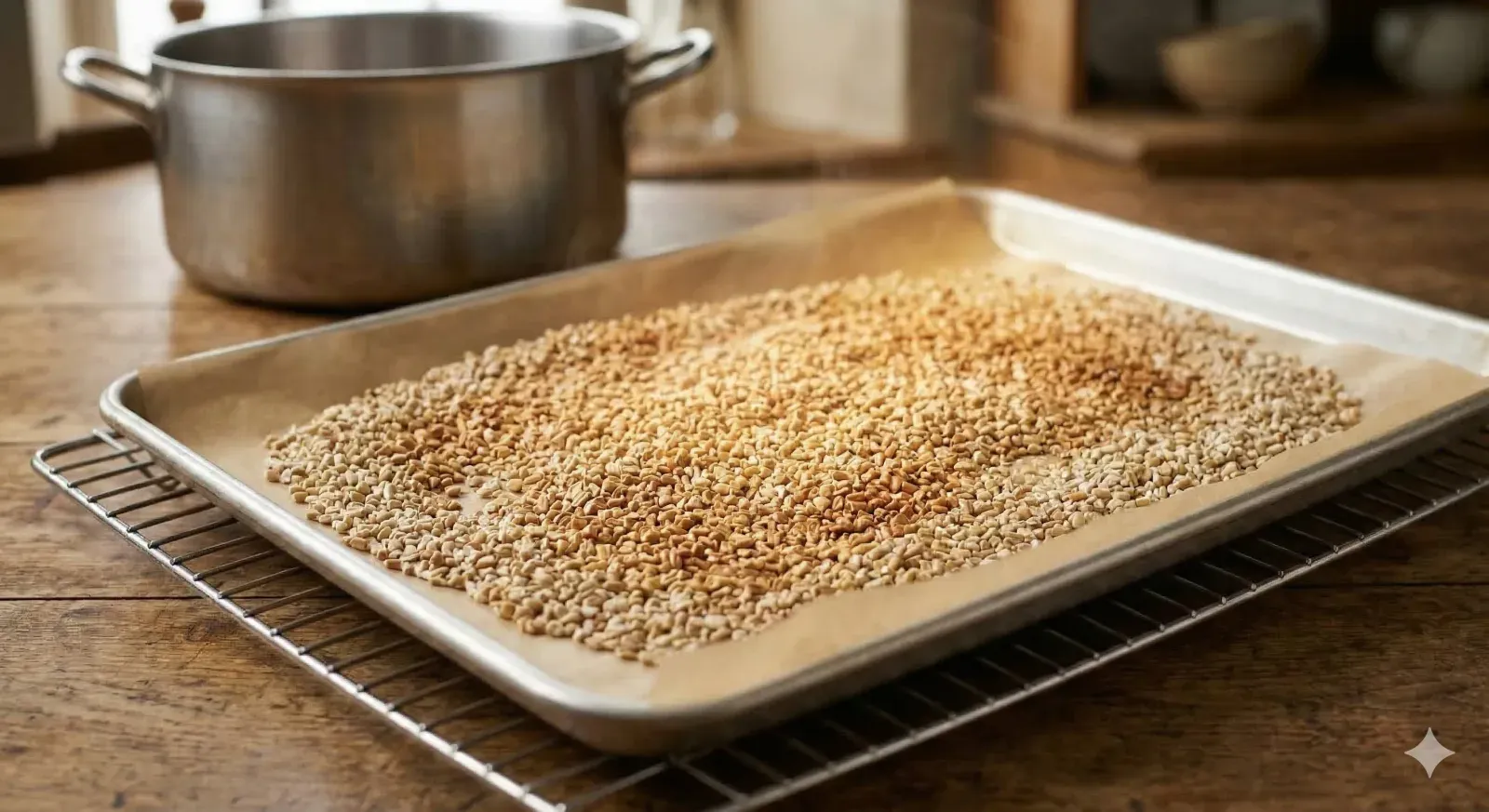
Pro tip: Toast the oatmeal before mixing it into the filling. Spread it on a baking sheet and bake at 350 degrees Fahrenheit for 10 to 12 minutes until golden. This simple step adds a deep, nutty flavor that raw oatmeal cannot deliver. It also helps the oats absorb the suet and stock more evenly during cooking.
Step-by-Step Instructions
Step 1: Prepare the Offal
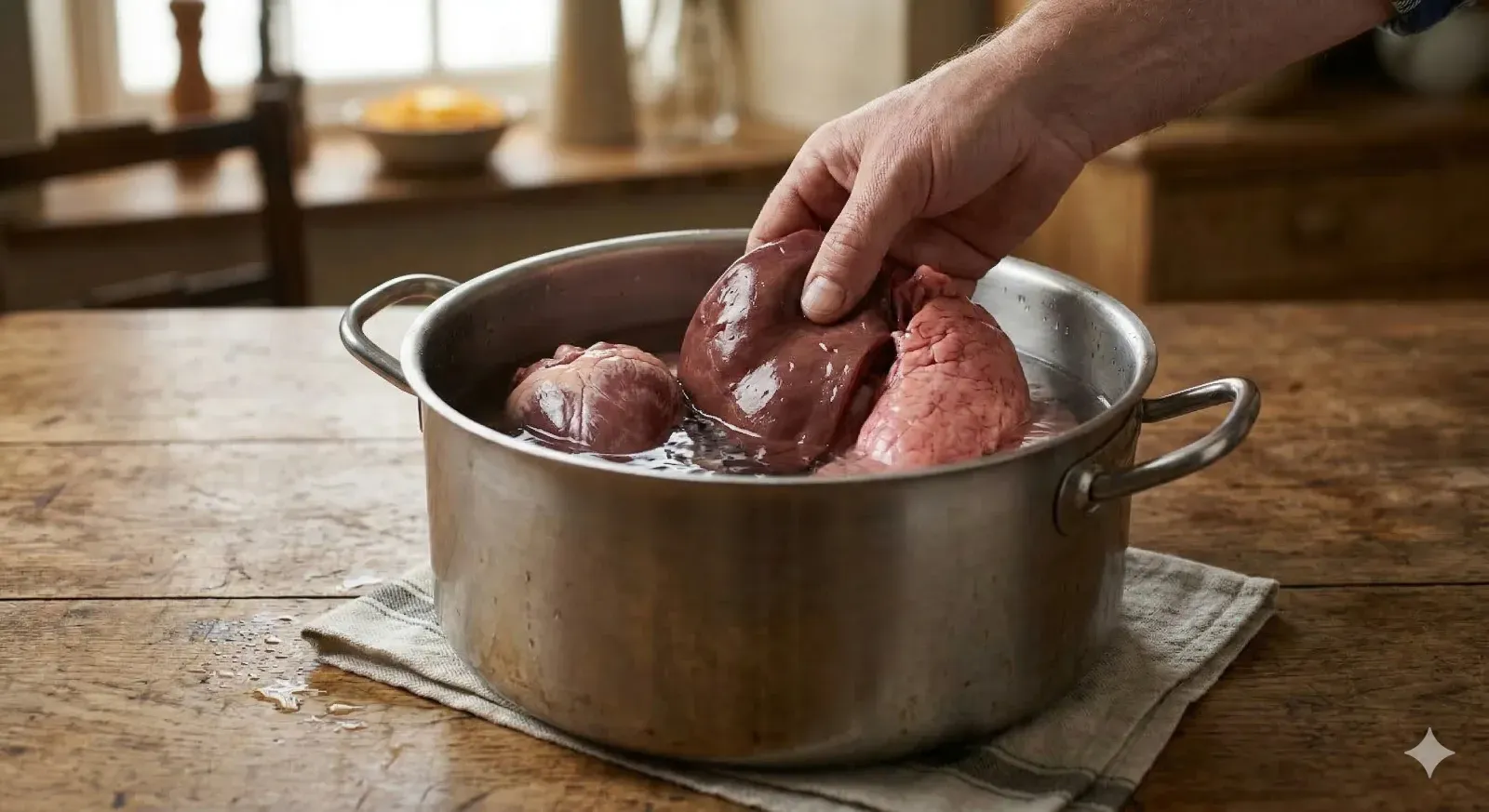
1 Rinse the sheep liver, heart, and lungs thoroughly under cold running water. Place them in a large stockpot and cover with cold water by at least two inches. Bring the pot to a boil over high heat. As a result, foam and impurities will rise to the surface. Skim these off with a spoon.
Reduce the heat to a gentle simmer. Cook the offal for about 90 minutes until each piece is completely tender. The liver should be firm but not rubbery. Meanwhile, the heart will take the longest to soften. Remove the offal from the pot and let it cool on a cutting board. Save at least one cup of the cooking liquid. You will need this stock later to moisten the filling.
Step 2: Toast the Oatmeal
2 Spread the steel-cut oatmeal across a dry baking sheet in an even layer. Place it in a 350-degree Fahrenheit oven. Toast for 10 to 12 minutes, stirring once halfway through. The oats should turn golden brown and smell nutty.
Toasting is a critical step that many recipes skip. However, it transforms the oatmeal from bland filler into a flavorful backbone. The Maillard reaction creates complex, roasted notes that give haggis its characteristic depth. Additionally, toasted oats absorb fat and liquid more effectively. This means your finished haggis will have a better texture throughout.
Step 3: Mince and Mix the Filling
3 Finely mince the cooled liver, heart, and lungs. You can chop by hand for a chunkier texture. Alternatively, pulse briefly in a food processor for a smoother result. Aim for pieces no larger than a pea. The mince should be uneven rather than a paste. This variety of texture is what makes haggis interesting to eat.
Transfer the minced offal to a large mixing bowl. Add the finely diced onions, grated suet, and toasted oatmeal. Then add all the spices: black pepper, coriander, nutmeg, mace, salt, and cayenne. Squeeze in the lemon juice. Pour in the reserved stock gradually. Mix everything together with your hands until well combined. The mixture should be moist but not sloppy. In other words, it should hold its shape loosely when squeezed, then crumble apart gently. If it feels too dry, add more stock one tablespoon at a time.
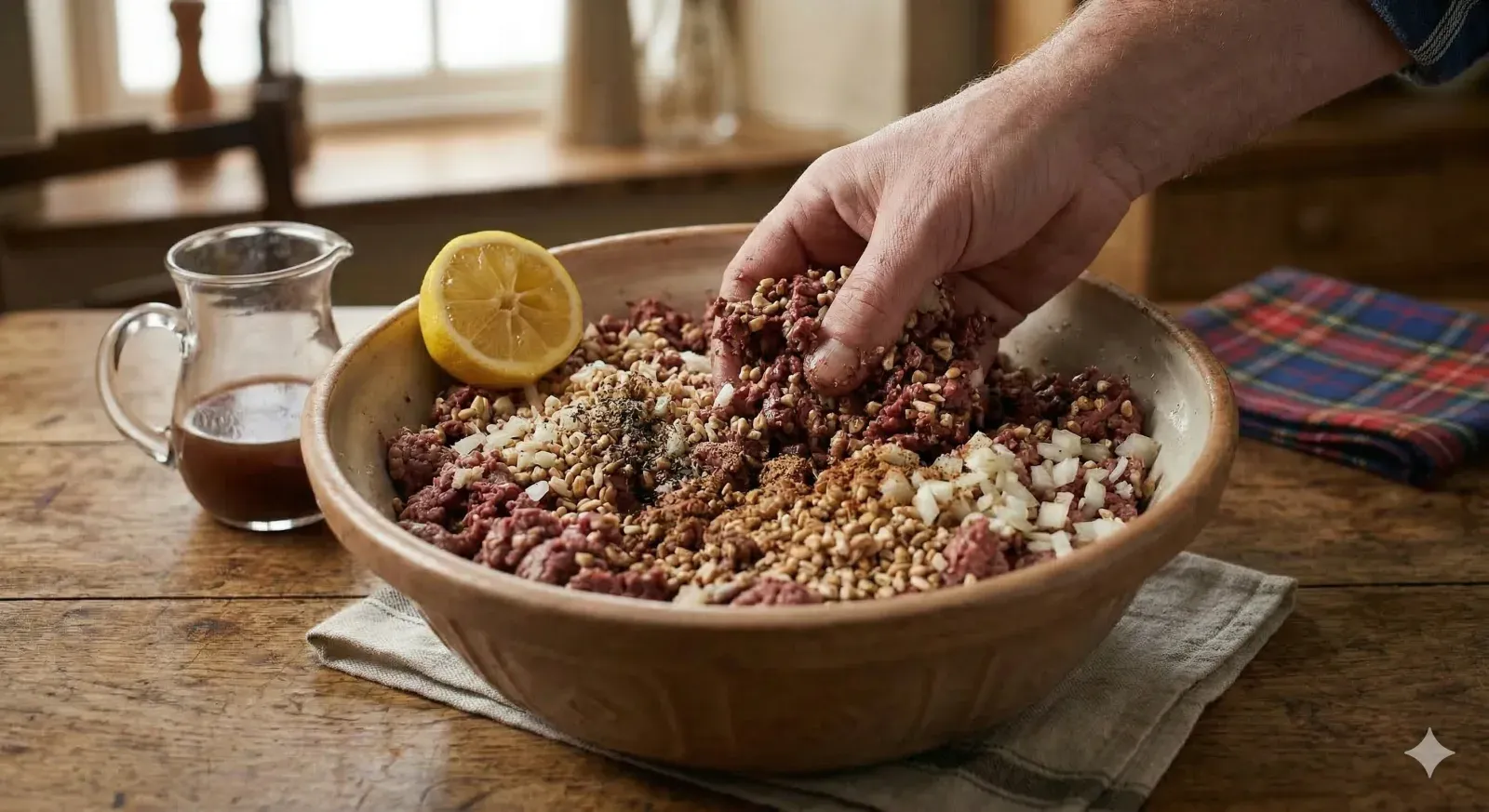
Step 4: Fill the Stomach Casing
4 Lay the cleaned and soaked sheep stomach out on a clean work surface. Spoon the haggis mixture into the cavity. Fill it only about two-thirds full. This is crucial because the oatmeal will swell during cooking. Consequently, overfilling will cause the stomach to burst.
Press out any trapped air pockets as you fill it. Then gather the opening and tie it tightly with butcher’s twine. Use a clean needle to prick the casing in two or three places. These tiny holes allow steam to escape safely. Furthermore, they prevent pressure from building up inside during the long simmer. Your haggis should look like a plump, round ball.
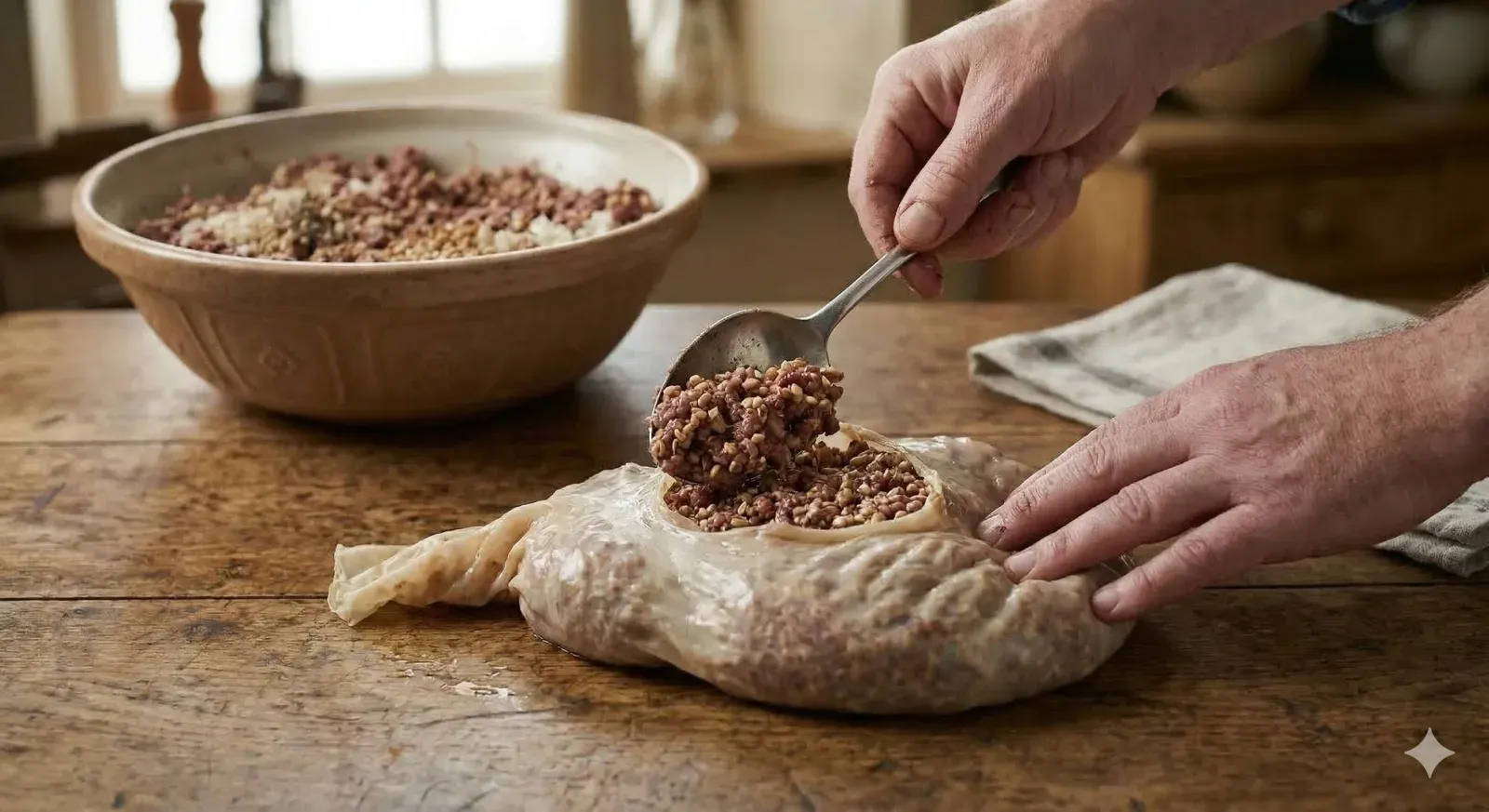
Step 5: Simmer the Haggis
5 Place the filled haggis gently into a large pot of simmering water. The water should cover the haggis by at least two inches. Keep the heat low and steady. The water must stay at a gentle simmer with small bubbles. A rolling boil will destroy the casing.
Cook for approximately 3 hours. Top up with hot water whenever the level drops below the haggis. Besides maintaining the water level, there is little else to do during this stage. The long, slow simmer allows the suet to melt through the oatmeal. Similarly, the spices infuse deeply into the offal. This patient cooking is what transforms raw ingredients into something remarkable.
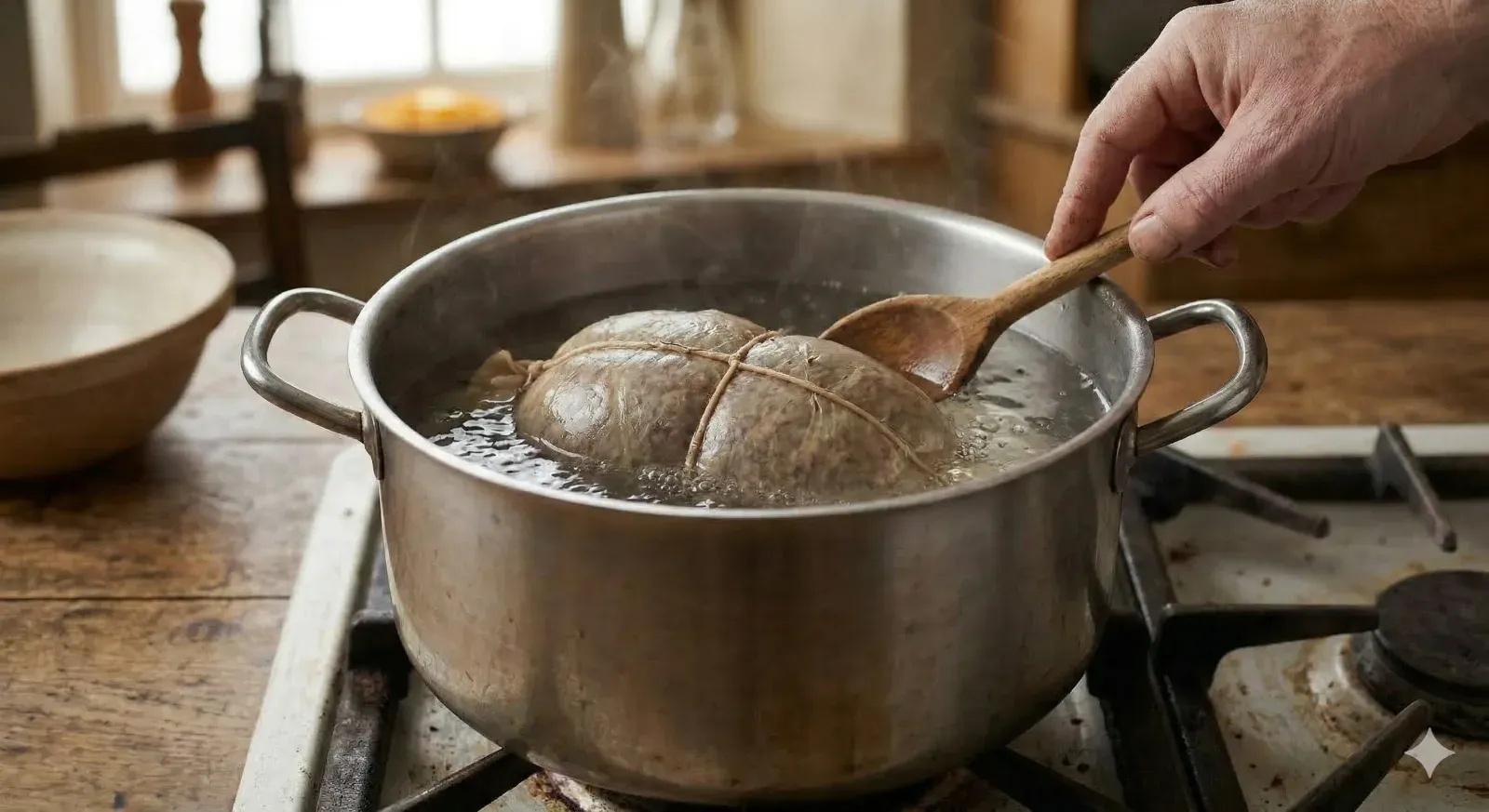
Step 6: Rest and Serve
6 Carefully lift the haggis from the pot using a large slotted spoon or two spatulas. Set it on a warm serving platter. Let it rest for 10 minutes so the filling firms up slightly. Then bring it to the table whole for maximum dramatic effect.
Cut the casing open with a sharp knife. The steaming, fragrant filling will spill out. Spoon generous portions onto warmed plates alongside mashed neeps and tatties. For an authentic finishing touch, drizzle a whisky cream sauce over the top. Your haggis is now ready to eat.
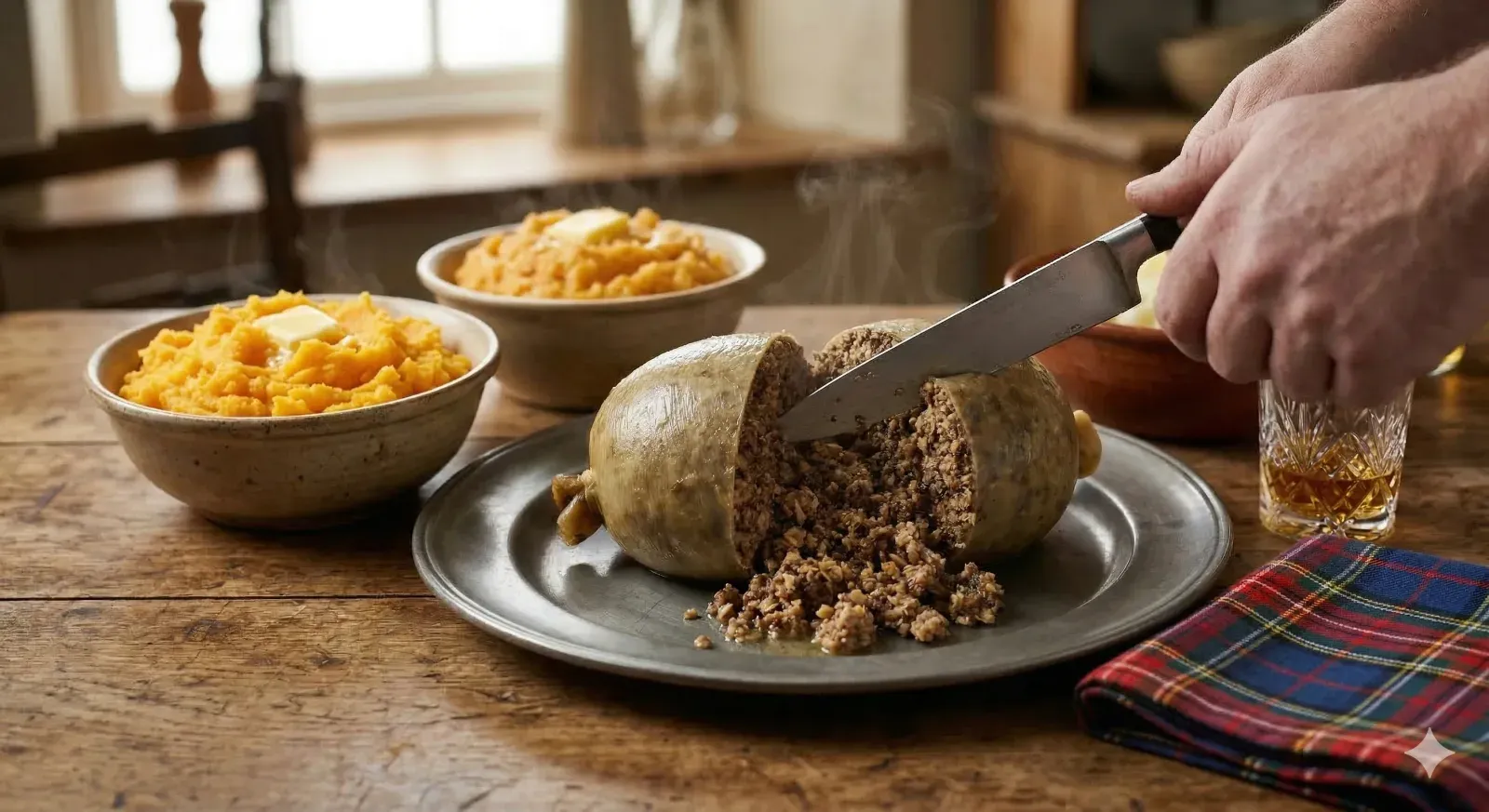
Expert Tips for Perfect Results
Get the Moisture Balance Right
The filling must be moist enough to steam properly but not so wet that it turns to mush. Add stock gradually and stop when the mixture holds together loosely. If it feels soupy, add a handful more toasted oatmeal. As a result, you will get a filling that is crumbly, rich, and perfectly textured after cooking.
Never Overfill the Casing
Steel-cut oats expand significantly when cooked. Therefore, filling the stomach more than two-thirds is asking for trouble. A burst casing means your filling leaks into the cooking water. Instead, leave plenty of room for the oatmeal to swell. A gently rounded haggis is better than an overstuffed one that explodes.
Low and Slow is the Rule
Patience defines great haggis. The 3-hour simmer cannot be rushed. High heat causes the suet to render too fast, leaving the filling dry and grainy. Likewise, the casing becomes fragile under a hard boil. Keep the water at a bare simmer and let time do the work. The reward is a haggis that practically melts on your tongue.
Haggis Styles Across Scotland and Beyond
While the core recipe stays consistent, haggis varies by region and by butcher. Here is a comparison of the most common styles and modern adaptations you will encounter.
| Style | Key Features | Typical Use | Best For |
|---|---|---|---|
| Traditional (Highlands) | Sheep pluck, pinhead oatmeal, heavy suet, strong pepper | Burns Night, formal dinners | Purists and special occasions |
| Lowland Style | Slightly milder spicing, finer mince | Everyday meals, pub fare | First-timers who want a gentler flavor |
| Vegetarian Haggis | Lentils, beans, oatmeal, mushrooms, turnip | Burns Night for vegetarians | Plant-based eaters and lighter meals |
| Haggis Pakora (Fusion) | Crumbled haggis in spiced chickpea batter, deep-fried | Pub starters, street food | Adventurous eaters, parties |
| Haggis Bon Bons | Rolled haggis balls, breaded and deep-fried | Bar snacks, appetizers | Casual entertaining and pub menus |
Serving Suggestions
Haggis deserves the right accompaniments. The traditional sides are simple yet perfect. Here is how to build a complete haggis meal that honors Scottish tradition while leaving room for personal touches.
Classic Accompaniments:
- Neeps (mashed turnip/swede): Boil swede until tender, then mash with butter and white pepper. The mild sweetness of neeps balances the rich, peppery haggis perfectly. This pairing is non-negotiable at a Burns Night supper.
- Tatties (mashed potatoes): Creamy mashed potatoes provide a smooth, buttery base. Use floury potatoes like Maris Piper or King Edward. Additionally, a generous knob of butter and a splash of cream make them irresistible.
- Whisky cream sauce: Simmer double cream with a good measure of Scotch whisky, a pinch of mustard, and cracked black pepper. Drizzle it over the haggis just before serving. This sauce ties the whole plate together.
- Crusty bread or oatcakes: Simple oatcakes or warm bread mop up every last bit of sauce and haggis. They add a satisfying crunch to an otherwise soft-textured meal.
Beverage Pairings:
- Scotch whisky: A single malt is the classic match. Smoky Islay whiskies like Laphroaig or Lagavulin pair dramatically with haggis. For something gentler, try a Speyside malt like Glenfiddich.
- Scottish ale: A malty Scottish 80-shilling ale or a rich wee heavy complements the earthy flavors beautifully. Belhaven or Innis & Gunn are excellent options.
- Red wine: A medium-bodied Pinot Noir or a rustic Cotes du Rhone works surprisingly well. The wine’s acidity cuts through the suet richness. Conversely, avoid heavy oaked wines that would overpower the dish.
- Non-alcoholic: Sparkling water with lemon or a tart apple cider cleanses the palate between bites. For a warm option, try a pot of strong Scottish breakfast tea.
Storage and Reheating
Refrigerator: Cooked haggis keeps well in the fridge for up to 4 days. Store it in a sealed container or wrap tightly in cling film. The flavors actually deepen overnight, so leftovers often taste even better the next day.
Freezer: Haggis freezes beautifully for up to 3 months. Wrap individual portions in foil, then place them in a freezer bag. Thaw overnight in the fridge before reheating. Freezing does not affect the texture or taste.
Reheating: The best method is to wrap the haggis in foil and warm it in a 350-degree Fahrenheit oven for 20 to 25 minutes. Alternatively, microwave individual portions for 2 to 3 minutes with a splash of stock to keep it moist. You can also slice it and pan-fry in butter until crispy on the outside. In fact, pan-fried leftover haggis makes an incredible breakfast.
Common Mistakes to Avoid
1. Overfilling the Casing
This is the number one cause of haggis failure. The oatmeal swells dramatically during the long simmer. As a result, a tightly packed casing will split open within the first hour. Always fill only two-thirds full and leave room for expansion. Better to have a slightly smaller haggis than a burst one.
2. Boiling Instead of Simmering
Vigorous boiling destroys both the casing and the texture. The suet renders too quickly, and the filling becomes dense and greasy. Instead, maintain a gentle simmer with tiny bubbles barely breaking the surface. Low heat is the key to a creamy, rich haggis with the right consistency.
3. Using Instant Oats
Instant or rolled oats dissolve into mush during the 3-hour cook. Steel-cut oatmeal or pinhead oatmeal holds its shape and provides the essential grainy texture. Furthermore, the coarser oats absorb suet without turning to paste. This distinction makes or breaks the final result.
4. Skipping the Toasting Step
Raw oatmeal tastes flat and starchy in the finished haggis. Toasting develops nutty, roasted flavors through the Maillard reaction. It takes barely 10 minutes but adds enormous depth. Consequently, this small effort makes a noticeable difference that every taster will detect.
Frequently Asked Questions
What does haggis taste like?
Haggis has a rich, savory, and slightly nutty flavor. The oatmeal gives it a pleasant grainy texture. Meanwhile, the spices add warmth without any real heat. It tastes similar to a well-seasoned sausage or meatloaf. Most people who try it for the first time are genuinely surprised by how delicious it is.
Why is haggis illegal in the United States?
Traditional haggis contains sheep lungs, which the USDA has banned from commercial sale since 1971. The ban covers all livestock lungs used in food products. However, you can still make haggis at home in the US by leaving out the lungs. Simply increase the liver and heart portions instead. The flavor remains excellent.
Can I make haggis without a sheep stomach?
Absolutely. Many modern cooks use a large oven-safe casserole dish or a pudding basin covered tightly with foil. Synthetic sausage casings also work well. The flavor stays the same regardless of the vessel. Moreover, cleanup is much easier without a natural casing.
What do you serve with haggis?
The classic pairing is neeps and tatties: mashed turnip and mashed potatoes. A whisky cream sauce is the traditional finishing drizzle. For Burns Night, a dram of Scotch whisky on the side completes the experience. These simple sides let the haggis shine as the star of the plate.
How long does haggis take to cook?
Homemade haggis takes about 3 hours and 45 minutes total. The offal needs 90 minutes of simmering first. Then the assembled haggis cooks for another 3 hours at a gentle simmer. In contrast, store-bought haggis only needs about 45 minutes of simmering to heat through completely.
Is haggis healthy?
Haggis is surprisingly nutritious. The organ meats provide high levels of iron, protein, and B vitamins. Additionally, the oatmeal contributes fiber and slow-release energy. A typical serving contains about 370 calories. Compared to many processed convenience foods, haggis is genuinely nutrient-dense.
Variations and Adaptations
Vegetarian Haggis:
Replace the offal with a mix of red lentils, kidney beans, and finely chopped mushrooms. Use vegetable suet instead of animal suet. Keep the oatmeal, onions, and all the spices the same. This version has been popular in Scotland since the 1980s. In fact, many Scots eat vegetarian haggis regularly, not just on Burns Night.
Haggis Pakora:
Crumble cooked haggis into balls. Dip them in a spiced chickpea flour batter with cumin, turmeric, and chili. Deep-fry until golden and crunchy. This Scottish-Indian fusion dish has become a beloved pub starter across Scotland. It shows how haggis adapts brilliantly to other culinary traditions.
Haggis Toastie (Grilled Sandwich):
Spread crumbled haggis on thick-cut bread. Top with sliced cheddar and a smear of wholegrain mustard. Grill in a panini press or dry skillet until the cheese melts and the bread is crispy. This is comfort food at its finest. Besides being quick, it is the best way to use leftover haggis.
Haggis-Stuffed Chicken:
Butterfly a chicken breast and stuff it with a spoonful of haggis. Wrap in bacon and roast at 400 degrees Fahrenheit for 25 minutes. The haggis melts into the chicken, creating a juicy, flavor-packed main course. This adaptation is popular in modern Scottish restaurants.
The Cultural Significance of Haggis
Haggis is far more than a recipe. It is a symbol of Scottish identity, resilience, and pride. Robert Burns wrote his famous “Address to a Haggis” in 1787, calling it the “great chieftain o’ the puddin-race.” Every January 25th, Scots worldwide celebrate Burns Night with a ritual that revolves entirely around haggis. The dish is piped in by a bagpiper. A guest recites Burns’ poem. Then the host plunges a knife into the casing as the crowd cheers.
Beyond Burns Night, haggis appears at weddings, Hogmanay celebrations, and everyday pub menus across Scotland. It represents the Scottish values of thrift and ingenuity. Nothing is wasted. Every part of the animal is honored and transformed. This nose-to-tail philosophy now influences fine dining chefs around the world. Nevertheless, the Scots have practiced it since long before it became fashionable.
Haggis also connects to the broader story of European food heritage. Similar offal-and-grain dishes exist across the continent, from English faggots to Scandinavian palt. Each culture found its own way to make humble ingredients extraordinary. Haggis simply does it better than most. Its flavors are bold, its history is rich, and its place at the Scottish table is forever secured.
Conclusion
This haggis recipe proves that Scotland’s national dish deserves its legendary status. The combination of offal, toasted oatmeal, suet, and warming spices creates something deeply satisfying. Follow these steps carefully, keep the heat gentle, and do not overfill the casing. Your reward will be a haggis that fills the kitchen with an incredible aroma and fills your guests with genuine admiration.
Whether you serve it at a Burns Night supper or on a cold Tuesday evening, haggis brings warmth and character to the table. Give this recipe a try and discover why the Scots have loved it for centuries. Looking for more classic European recipes? Explore our full collection of European dishes, including Cullen Skink, Shepherd’s Pie, and Hungarian Goulash.