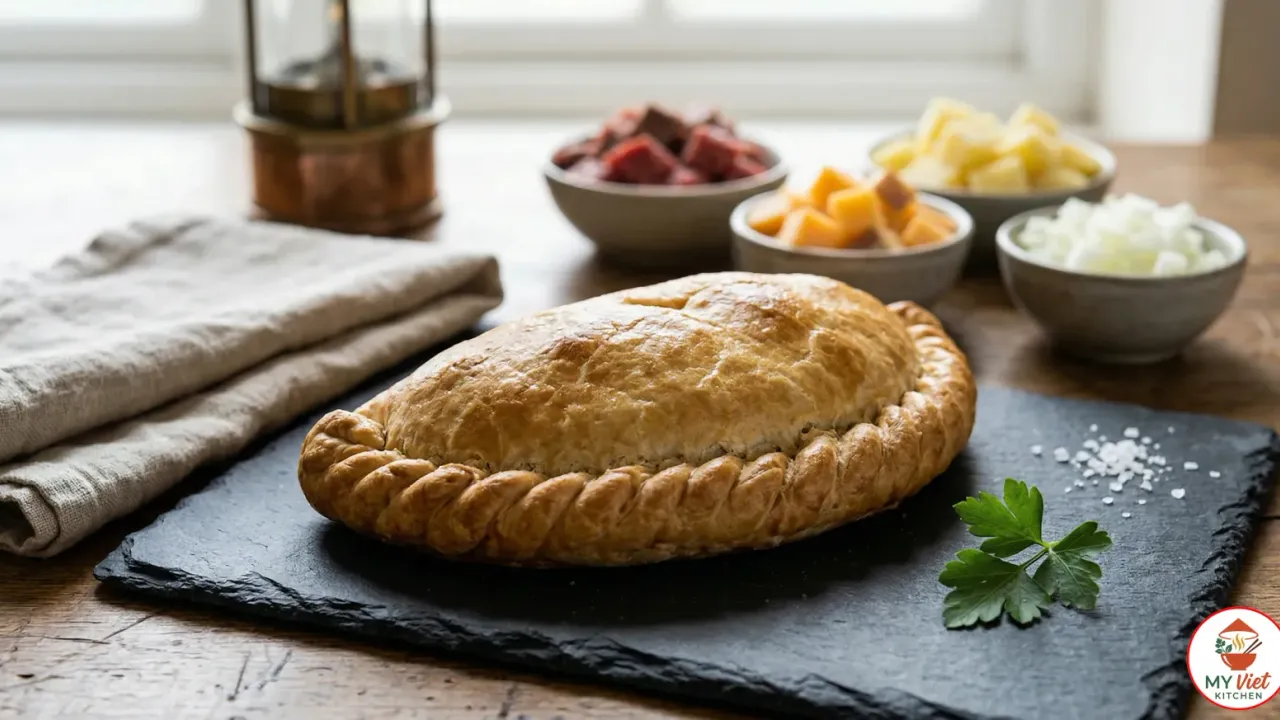
The Cornish pasty is one of the most iconic foods in English culinary history. This golden, D-shaped pastry wraps a hearty filling of beef, potato, swede, and onion inside a flaky shortcrust crust with a distinctive crimped edge. Originating in the tin mines of Cornwall, the cornish pasty has traveled from the depths of the earth to kitchen tables around the world. This recipe shows you how to make an authentic version at home, complete with the traditional rope-crimped seal and a filling that produces its own rich, savory juices.
Prep Time: 45 minutes | Cook Time: 55 minutes | Servings: 4
Difficulty: Medium | Calories: ~650 per serving
What Makes the Cornish Pasty Special?
The Cornish pasty stands apart from every other meat pastry because of one fundamental principle: the filling goes in raw. Unlike pies and turnovers that use pre-cooked fillings, a traditional Cornish pasty seals uncooked beef, potato, swede, and onion inside the pastry. As the pasty bakes, those raw ingredients steam-cook together in their own juices. As a result, the filling develops a depth of flavor that no pre-cooked mixture can match. During baking, the beef releases its collagen, the potato absorbs the meaty juices, and the swede adds a subtle sweetness that balances the whole dish.
The pastry itself is equally important. A proper Cornish pasty uses a sturdy shortcrust that can hold together during baking without becoming tough. Traditionally, bakers used lard in the dough because it creates a flakier, more tender crust than butter alone. The pastry must be strong enough to contain the filling and its juices, yet delicate enough to shatter pleasantly with each bite. This balance between strength and tenderness is what separates a great pasty from an ordinary one.
Then there is the crimp. That thick, rope-like edge running along the side of the pasty is not just decorative. In the 18th and 19th centuries, Cornish tin miners carried pasties underground as their lunch. Because the mines contained arsenic, miners held the pasty by the crimped crust and threw it away after eating the filling. The crimp served as a disposable handle, keeping poisonous dust away from the food. Today, the crimp seals the pastry shut and prevents the juices from leaking. It remains the most recognizable feature of an authentic Cornish pasty.

Choosing the Right Beef for Your Cornish Pasty
The cut of beef you choose will define the flavor and texture of your Cornish pasty. Not every cut works well inside a sealed pastry. Here is what you need to know before you head to the butcher.
- Beef skirt (traditional choice): This is the authentic cut used in Cornwall for generations. Beef skirt has a loose grain and a good amount of connective tissue. During the long baking time, that connective tissue melts into gelatin and creates a rich, almost gravy-like sauce inside the pasty. Ask your butcher for thick skirt, also called bavette in some shops.
- Chuck steak (best alternative): If you cannot find beef skirt, chuck steak is an excellent substitute. It comes from the shoulder and has a generous amount of intramuscular fat. This fat keeps the filling moist during baking. Chuck is widely available and affordable, making it a practical choice for home cooks.
- Rump steak (leaner option): Rump works if you prefer a leaner filling, but it lacks the fat and collagen of skirt or chuck. As a result, the filling can be slightly drier. If using rump, add an extra tablespoon of butter inside each pasty to compensate for the lower fat content.
- Avoid sirloin or fillet: These expensive cuts are too lean for pasties. They dry out during the long baking time and produce a tough, stringy filling. Save premium steaks for the grill, and use fattier cuts for your pasties instead.
Ingredients for Cornish Pasty
Shortcrust Pastry:
- 3 1/2 cups all-purpose flour
- 1 teaspoon salt
- 3/4 cup cold lard or butter, cubed
- 1/4 cup cold butter, cubed
- 6-8 tablespoons ice water
Filling:
- 12 ounces beef skirt steak, cut into small cubes
- 1 large potato (about 8 ounces), peeled and diced small
- 6 ounces swede (rutabaga), peeled and diced small
- 1 medium onion, finely chopped
- Salt and freshly ground black pepper to taste
Assembly:
- 2 tablespoons butter, cut into small pieces
- 1 egg, beaten (for egg wash)
Pro tip: Keep every ingredient as cold as possible. Cold fat is the secret to flaky pastry. If the butter or lard softens before baking, it melts into the flour instead of creating distinct layers. Cube the fat, freeze it for ten minutes, and use ice water for the dough. Also, chill the assembled pasties for 15 minutes before baking. This firms up the pastry and gives you a much flakier result.
Step-by-Step Instructions
Step 1: Make the Pastry Dough
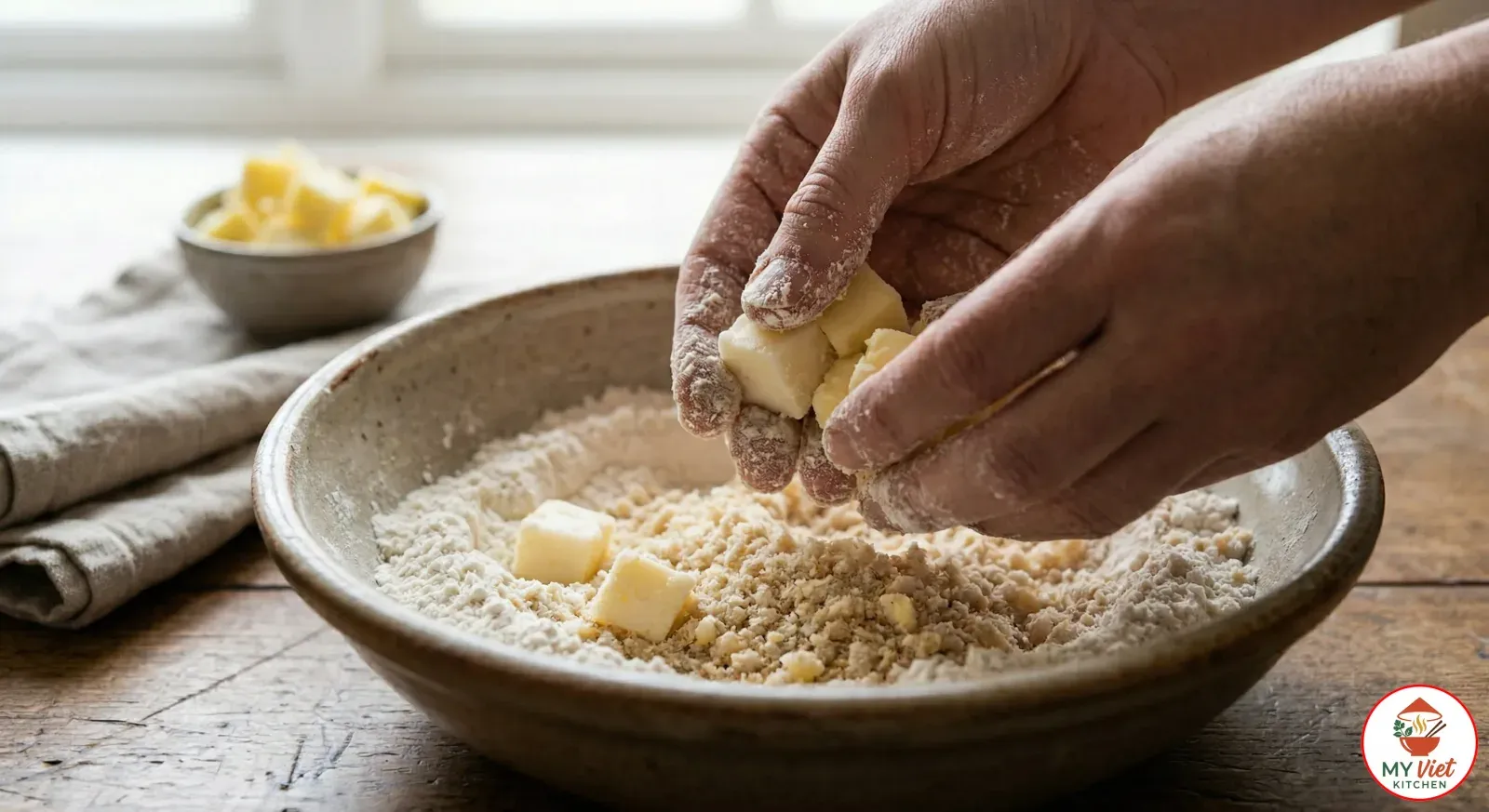
1 Combine the flour and salt in a large mixing bowl. Add the cubed cold lard and butter. Using your fingertips, rub the fat into the flour until the mixture resembles coarse breadcrumbs. Work quickly to keep the fat cold. You should still see small visible pieces of fat throughout the mixture, because these create flaky layers during baking.
Add the ice water one tablespoon at a time, stirring with a knife after each addition. Most importantly, stop adding water as soon as the dough begins to clump together. Turn it out onto a lightly floured surface and bring it together with your hands. Do not knead the dough. Instead, press it gently into a flat disc. Wrap the disc tightly in cling film and refrigerate for at least 30 minutes. This resting period relaxes the gluten and makes the pastry easier to roll without shrinking.
Step 2: Prepare the Filling
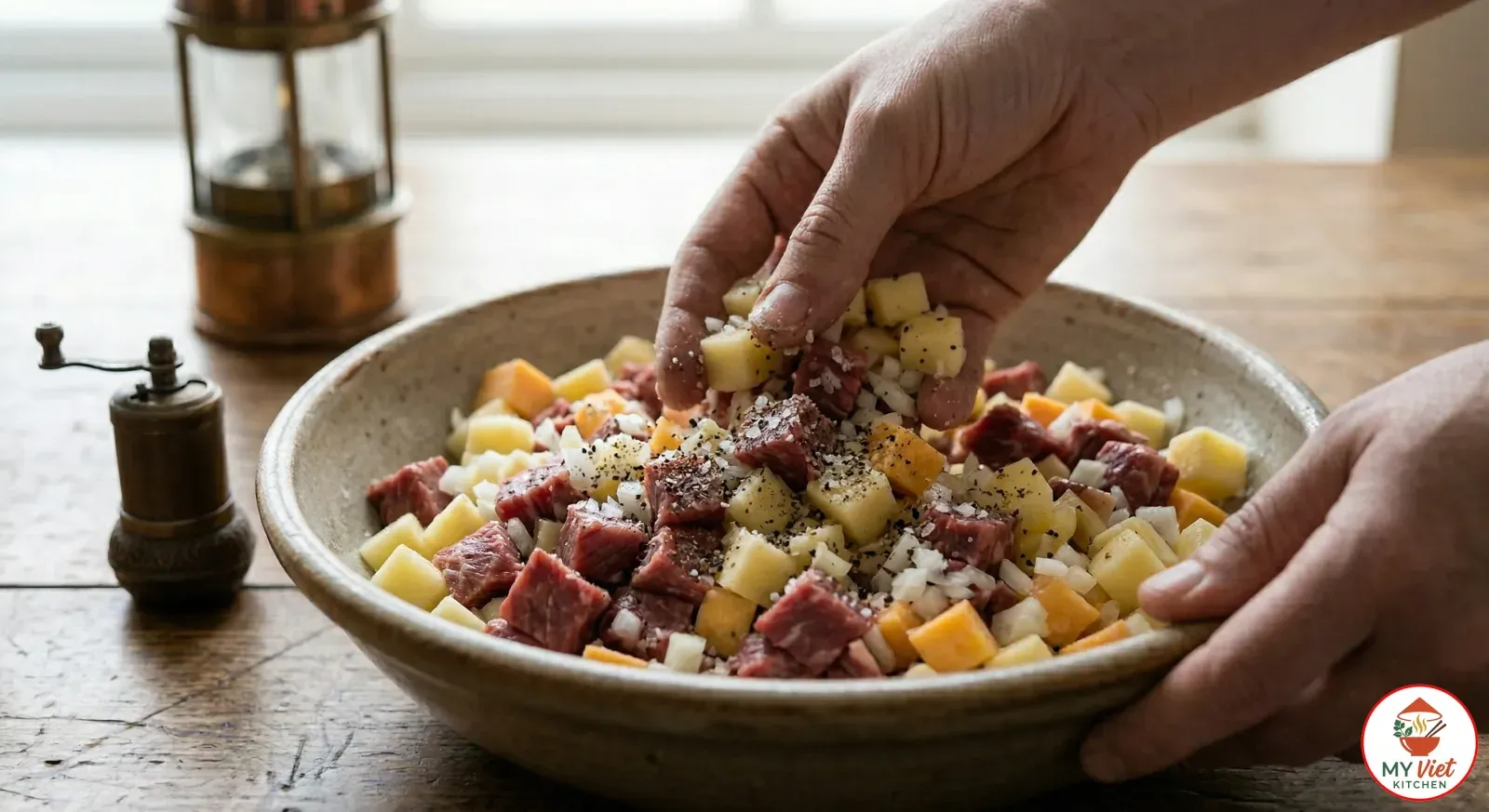
2 While the dough rests, prepare the filling. Cut the beef skirt into small cubes no larger than half an inch. Similarly, smaller pieces cook more evenly inside the sealed pastry. Peel the potato and dice it to a similar size. Then peel the swede and cut it into matching small cubes. Finely chop the onion so it distributes evenly throughout the filling.
Combine all the vegetables and beef in a large bowl. Season generously with salt and freshly ground black pepper. Toss everything together so the seasoning coats each piece. The filling must be well seasoned before it goes into the pastry, because you cannot adjust it once the pasty is sealed. Taste a small piece of the raw onion-potato mixture to gauge the salt level. It should taste slightly overseasoned now, since the potato and swede will absorb much of the salt during baking.
Step 3: Assemble the Pasties
3 Remove the chilled dough from the fridge. Divide it into four equal portions. Roll each portion on a lightly floured surface into a circle roughly 9 inches in diameter. Use a plate or bowl as a template if you want a perfectly round shape. The pastry should be about one-eighth of an inch thick. Too thin and it tears; too thick and it turns doughy instead of flaky.
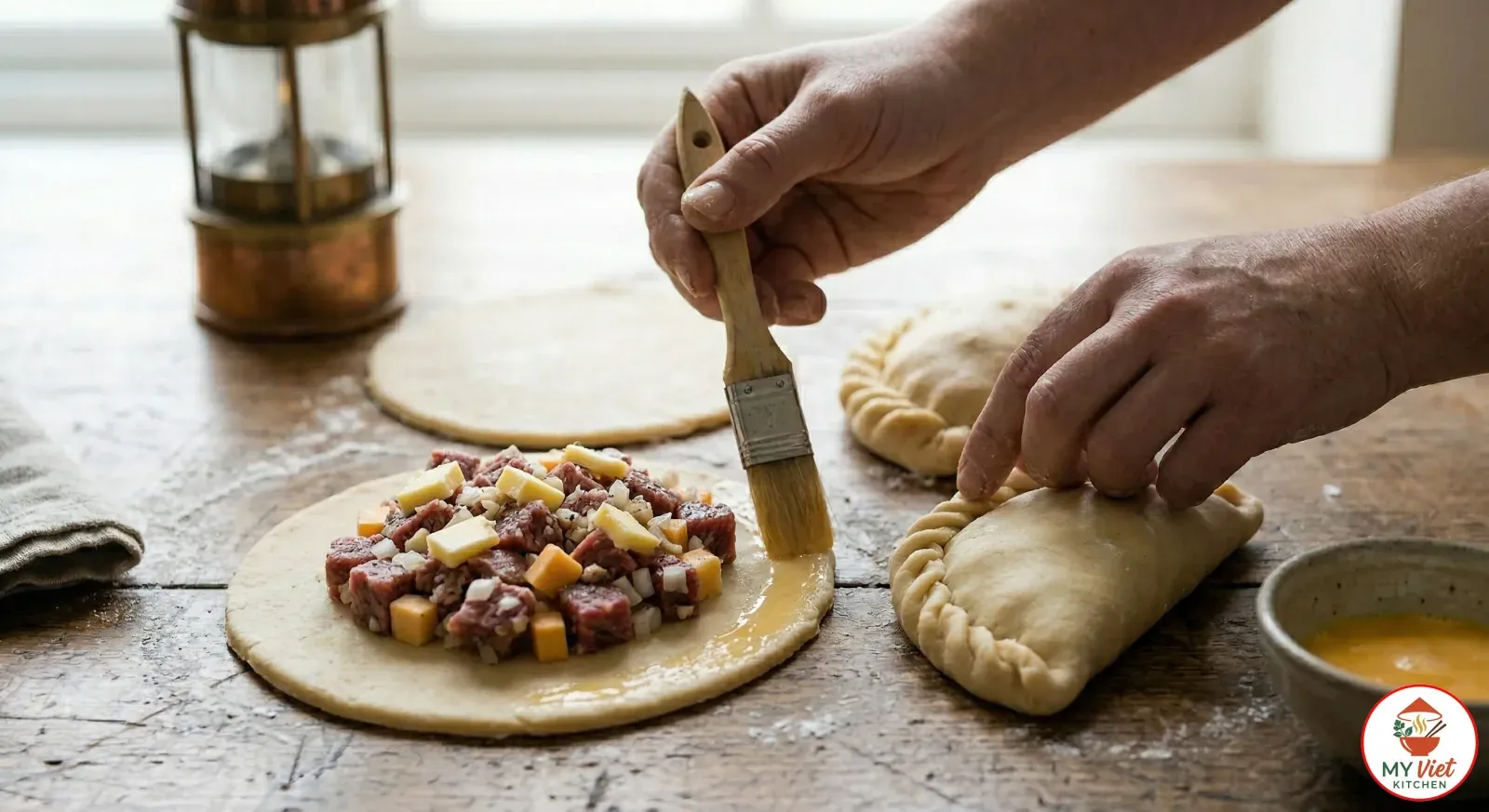
Pile a quarter of the filling onto one half of each pastry circle, leaving a one-inch border around the edge. Place a few small pieces of butter on top of the filling. The butter melts during baking and enriches the natural juices. Now comes the crimping. Brush the border with a little beaten egg, then fold the empty half of the pastry over the filling to form a D shape. Press the edges firmly to seal. Starting at one end, fold the edge over itself in small, overlapping folds to create the traditional rope crimp. This takes practice, so do not worry if your first attempt looks rough. The crimp improves with every pasty you make.
Step 4: Bake the Pasties
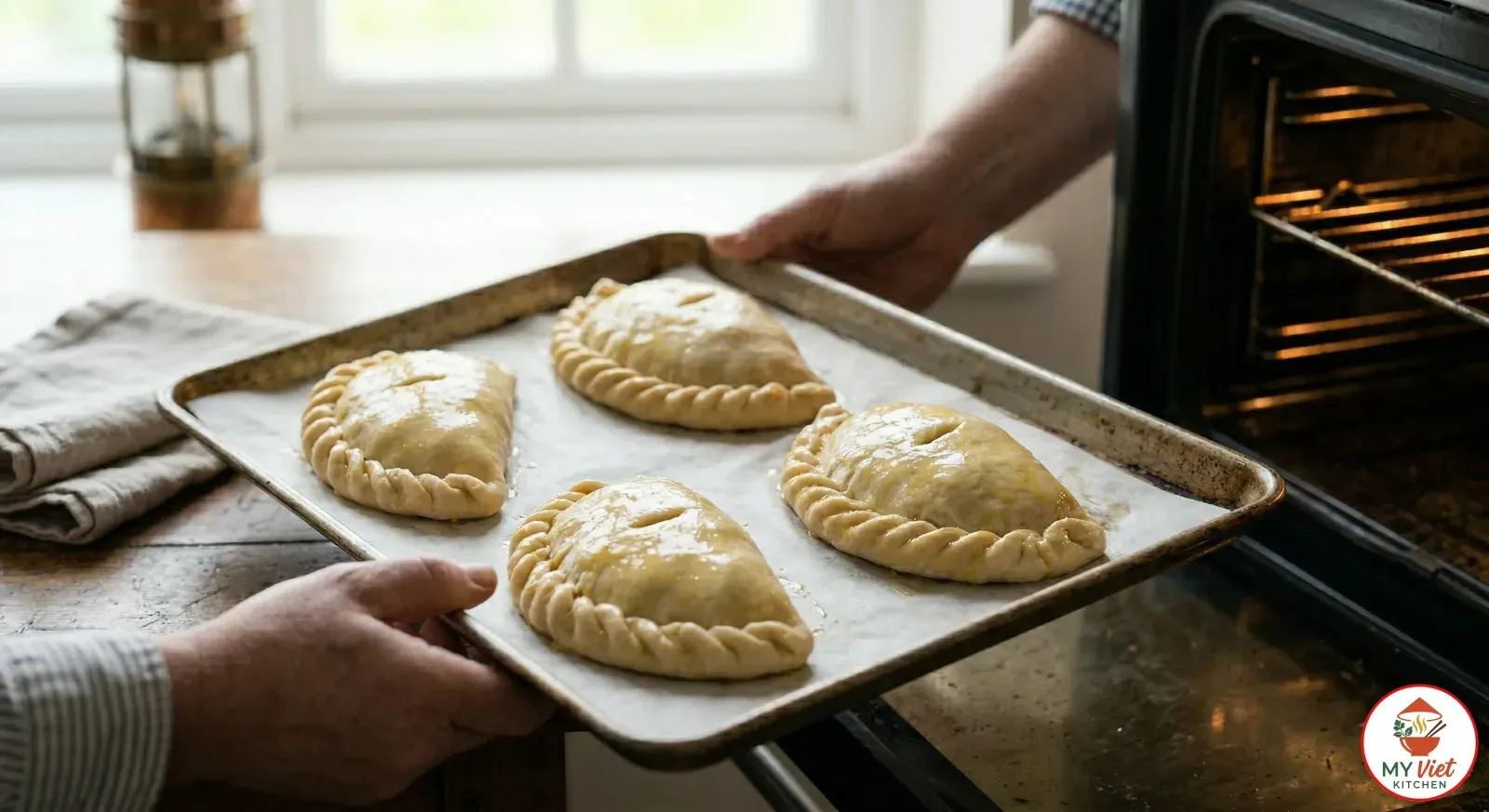
4 Preheat your oven to 425 degrees Fahrenheit (220 degrees Celsius). Line a baking sheet with parchment paper and place the assembled pasties on it, leaving space between each one. Cut a small slit in the top of each pasty to allow steam to escape. Brush the entire surface with beaten egg. This gives the pastry a beautiful golden-brown gloss.
Bake at 425 degrees for 15 minutes. This initial blast of high heat sets the pastry and begins building the golden crust. After 15 minutes, reduce the temperature to 350 degrees Fahrenheit (180 degrees Celsius). Continue baking for another 40 minutes until the pastry is deep golden brown and the filling is cooked through. You will hear the juices bubbling inside, which is a sign that the meat and vegetables are perfectly steamed. Remove from the oven and let the pasties rest for 10 minutes before eating. The filling is extremely hot straight from the oven, and the resting time allows the juices to settle.
Expert Tips for Perfect Cornish Pasties
Use Lard for the Best Pastry
Traditional Cornish bakers use lard in their pastry because it produces a flakier, more tender crust than all-butter dough. In fact, lard has a higher melting point than butter, which means the fat stays solid longer in the oven and creates more distinct layers. A combination of three parts lard to one part butter gives you the best of both worlds: flakiness from the lard and rich flavor from the butter. If you prefer not to use lard, all butter works, but increase the total fat by two tablespoons to compensate.
Cut All Vegetables the Same Size
Uniform pieces cook at the same rate. If your potato cubes are larger than your swede cubes, the potato will still be hard when the swede is soft. Therefore, cut everything to roughly the same size, about half an inch or slightly smaller. This ensures that every ingredient finishes cooking at the same time. The beef can be slightly larger since it shrinks during baking.
Season the Filling Generously
Potato and swede absorb salt as they cook. If you season the raw filling lightly, the baked pasty will taste bland. Use more salt and pepper than you think you need. In particular, a generous grind of black pepper is essential for an authentic Cornish pasty. Some bakers in Cornwall add up to a teaspoon of pepper per pasty. The heat mellows during baking and becomes a warm, background note rather than an aggressive bite.
Cornish Pasty vs Other Meat Pastries
Many cultures have their own version of meat wrapped in pastry. Here is how the Cornish pasty compares to other popular pastries from around the world.
| Feature | Cornish Pasty (England) | Empanada (Latin America) | Samosa (South Asia) |
|---|---|---|---|
| Shape | D-shaped with side crimp | Half-moon, edge-pressed | Triangular or cone |
| Pastry | Shortcrust with lard | Wheat dough, sometimes flaky | Wheat or maida, deep-fried |
| Filling | Raw beef, potato, swede, onion | Cooked beef, chicken, or cheese | Spiced potato, peas, or meat |
| Cooking method | Baked at high then low heat | Baked or fried | Deep-fried or baked |
| Portability | Designed as a miners lunch | Street food and snack | Street food and appetizer |
Serving Suggestions
A Cornish pasty is a complete meal in one hand. Traditionally, miners ate them without any sides at all. However, at home, a few accompaniments can turn a single pasty into a more substantial dinner.
Classic Accompaniments:
- Baked beans: A quintessentially British pairing. Warm baked beans ladled alongside a pasty is a classic lunch combination found in chip shops and cafes across Cornwall and beyond.
- Green salad: A simple salad of mixed leaves with a light vinaigrette provides freshness that balances the rich, meaty filling. The acidity of the dressing cuts through the pastry’s buttery richness.
- Mushy peas: Just as they pair well with fish and chips, mushy peas work alongside a Cornish pasty too. Their soft, minty flavor complements the beef and root vegetables inside the pastry.
- Pickled onions or chutney: A spoonful of tangy pickle or fruity chutney adds a sharp contrast to the savory filling. Branston pickle is a particularly popular choice in England.
Beverage Pairings:
- Cornish ale (best match): A locally brewed amber or pale ale from Cornwall pairs perfectly. Brands like Sharp’s Doom Bar or Skinner’s Betty Stogs complement the savory beef filling without overpowering it.
- Dry cider: West Country cider from Somerset or Devon has a crisp apple tartness that refreshes the palate between bites of rich pastry and beef.
- English breakfast tea: A strong cup of tea is the most traditional non-alcoholic pairing. The tannins in black tea cut through the richness of the lard-based pastry.
- Sparkling water with lemon: For a lighter option, sparkling water with a squeeze of lemon cleanses the palate and keeps the focus on the flavors of the pasty.
Storage and Reheating
Refrigerator: Baked Cornish pasties keep well in the fridge for up to 3 days. Wrap each one individually in foil or place them in an airtight container. The pastry softens slightly during refrigeration, but reheating in the oven restores its crispness. The filling actually improves overnight as the flavors meld together.
Freezer: Both baked and unbaked pasties freeze well for up to 3 months. For unbaked pasties, assemble them completely, then freeze on a tray before wrapping individually. For baked pasties, cool them fully before freezing. Wrap tightly in foil and then in a freezer bag to prevent freezer burn.
Reheating: Place refrigerated or thawed pasties in a 350-degree Fahrenheit oven for 15 to 20 minutes. For frozen baked pasties, heat at 375 degrees for 25 to 30 minutes. Avoid the microwave, because it makes the pastry soggy instead of flaky. If baking from frozen and unbaked, add 15 extra minutes to the original baking time and do not thaw first.
Common Mistakes to Avoid
1. Using Pre-Cooked Filling
The defining characteristic of a Cornish pasty is that raw ingredients cook inside the sealed pastry. In other words, pre-cooking the beef or vegetables defeats the purpose. When raw ingredients steam together, they exchange flavors and create their own natural gravy. Pre-cooked filling produces a drier, less flavorful result. Trust the process and put the filling in raw.
2. Rolling the Pastry Too Thin
Thin pastry tears under the weight of the filling and leaks juice during baking. Aim for about one-eighth of an inch thick. The pastry needs to be strong enough to hold a generous amount of raw filling without splitting. If it tears while you crimp, patch it with a small piece of dough and press firmly. Consequently, a slightly thicker pastry is always better than one that is too thin.
3. Not Sealing the Crimp Properly
A loose crimp lets steam and juices escape. After all, those juices are the natural gravy that makes a Cornish pasty so special. Press the edges together firmly before you begin crimping. Brush beaten egg along the border to help it stick. Then fold each crimp tightly, overlapping the previous one. Test the seal by gently pressing the pasty. If you see any gaps, pinch them closed.
4. Adding Carrots or Gravy to the Filling
A genuine Cornish pasty contains only beef, potato, swede, and onion. Carrots, peas, and gravy are common additions in mass-produced pasties, but they do not belong in the traditional recipe. The Protected Geographical Indication specifically excludes these ingredients. Adding liquid gravy makes the pastry soggy, while carrots introduce an unwanted sweetness. Stick with the original four ingredients for the most authentic flavor.
Frequently Asked Questions
What is a traditional Cornish pasty made of?
A traditional Cornish pasty contains four filling ingredients: beef skirt, potato, swede (also called rutabaga), and onion. The filling goes into the pastry raw and cooks inside during baking. Seasoning is limited to salt and black pepper. No carrots, peas, or liquid gravy belong in an authentic version. The pastry itself uses flour, lard, butter, salt, and water.
Why is beef skirt the best cut for a Cornish pasty?
Beef skirt has a loose grain with plenty of connective tissue and fat. During the long baking time, the connective tissue melts into gelatin and creates rich, natural juices inside the pasty. Leaner cuts like sirloin or fillet lack this collagen. As a result, they dry out during baking and produce a tough, stringy filling. Beef skirt gives you that moist, almost gravy-like texture that defines a proper Cornish pasty.
What is the difference between a Cornish pasty and a meat pie?
A Cornish pasty is a self-contained, hand-held pastry with a crimped edge. The raw filling cooks inside the sealed dough. A meat pie typically sits in a tin or dish and has a separate pastry lid placed over a pre-cooked filling. Pasties are portable and require no plate or cutlery. Pies are served at the table and eaten with a fork. The cooking method, shape, and purpose differ entirely between the two.
Can I freeze Cornish pasties?
Absolutely. Cornish pasties freeze beautifully in both baked and unbaked forms. For the best results, freeze unbaked pasties on a tray until solid, then wrap them individually. Bake directly from frozen by adding 15 minutes to the cooking time. Baked pasties should cool completely before freezing. Either way, they keep for up to 3 months in the freezer without losing quality.
Why do Cornish pasties have a crimped edge?
The crimped edge served a practical purpose in the tin mines of Cornwall. Miners worked with arsenic-contaminated hands. They held the pasty by the thick crust and discarded it after eating the filling. The crimp kept their dirty fingers away from the food. It also seals the pastry shut, preventing the precious juices from leaking during baking. Today, the crimp is both a seal and a signature of authenticity.
Do Cornish pasties have Protected Geographical Indication?
Yes. Since 2011, the Cornish pasty has held Protected Geographical Indication status. This legal protection means that only pasties made in Cornwall using the traditional recipe can carry the name Cornish pasty. The protected recipe requires at least 12.5 percent beef and 25 percent vegetables. The filling must be uncooked when it enters the pastry. This designation puts the Cornish pasty in the same category as Champagne, Parma ham, and Stilton cheese.
Variations and Adaptations
Cheese and Onion Pasty:
Replace the beef with a generous amount of grated mature cheddar and sliced onion. Add diced potato to give the filling body. Season with salt, pepper, and a pinch of mustard powder. This vegetarian version is extremely popular in Cornwall and has its own devoted following. The cheese melts into the potato during baking, creating a rich and satisfying filling.
Chicken and Mushroom Pasty:
Use diced raw chicken thigh instead of beef. Add sliced mushrooms, diced potato, and a little fresh thyme. Chicken thigh stays moist during baking because it has more fat than breast meat. The mushrooms release liquid as they cook, which blends with the chicken juices to create a delicious filling. Season with salt, pepper, and a touch of garlic.
Lamb and Mint Pasty:
Substitute diced lamb shoulder for the beef. Add potato, onion, and a handful of fresh chopped mint leaves. Lamb shoulder has enough fat to keep the filling juicy. The mint adds a bright, herbal note that cuts through the richness of the lamb. This variation works particularly well in spring when lamb is at its best and fresh mint is abundant.
Vegan Pasty:
Replace the lard and butter in the pastry with vegetable shortening and dairy-free margarine. For the filling, use diced sweet potato, chickpeas, spinach, and onion with cumin and smoked paprika. Skip the egg wash and brush the pastry with plant milk instead. This modern adaptation offers all the satisfaction of a traditional pasty without any animal products.
The Cultural Significance of the Cornish Pasty
The Cornish pasty is far more than a recipe. It is a symbol of Cornwall’s identity, woven into the fabric of the region’s history for centuries. The earliest written reference to pasties in Cornwall dates back to the 1200s, although the modern form with its characteristic crimp emerged during the 18th century. Tin and copper miners adopted the pasty as their underground lunch because it was portable, filling, and stayed warm for hours wrapped in cloth. Miners’ wives would carve their husband’s initials into the pastry so each man could identify his own lunch.
The Cornish pasty also traveled the world with emigrating miners. When Cornish mining communities moved to Michigan, Mexico, Australia, and South Africa, they brought their pasties with them. In the Upper Peninsula of Michigan, the pasty became so deeply rooted that it remains a regional staple to this day. Local bakeries sell thousands of pasties each week, a direct legacy of Cornish miners who arrived in the 1800s. This global spread shows how a simple working-class lunch from a small English county became an international food with deep cultural roots.
In Cornwall itself, the pasty remains a source of fierce pride. The 2011 Protected Geographical Indication was the result of years of campaigning by Cornish bakers. Pasty shops line the streets of every Cornish town, from Padstow to Penzance. The annual World Pasty Championships, held at the Eden Project in Cornwall, attract entries from around the globe. For the people of Cornwall, the pasty represents something deeper than food. It connects them to their mining heritage, their landscape, and their identity as a distinct culture within England.
Conclusion
The Cornish pasty is a masterclass in simple, honest cooking. Four filling ingredients, a sturdy shortcrust pastry, and a traditional rope crimp are all you need to create one of England’s most beloved foods. The key is using quality beef skirt, keeping the fat cold for flaky pastry, and trusting the raw filling to steam-cook inside the sealed dough. Follow these steps carefully, and you will produce golden, juicy pasties that rival anything from a Cornish bakery. Every bite delivers tender beef, soft potato, sweet swede, and the rich natural gravy that only raw-filled pasties can produce.
Ready to explore more classic British and European pastries? Browse our full collection of European dishes, including bangers and mash, shepherd’s pie, and beef Wellington. Each recipe brings the same attention to authentic technique and carefully tested instructions.