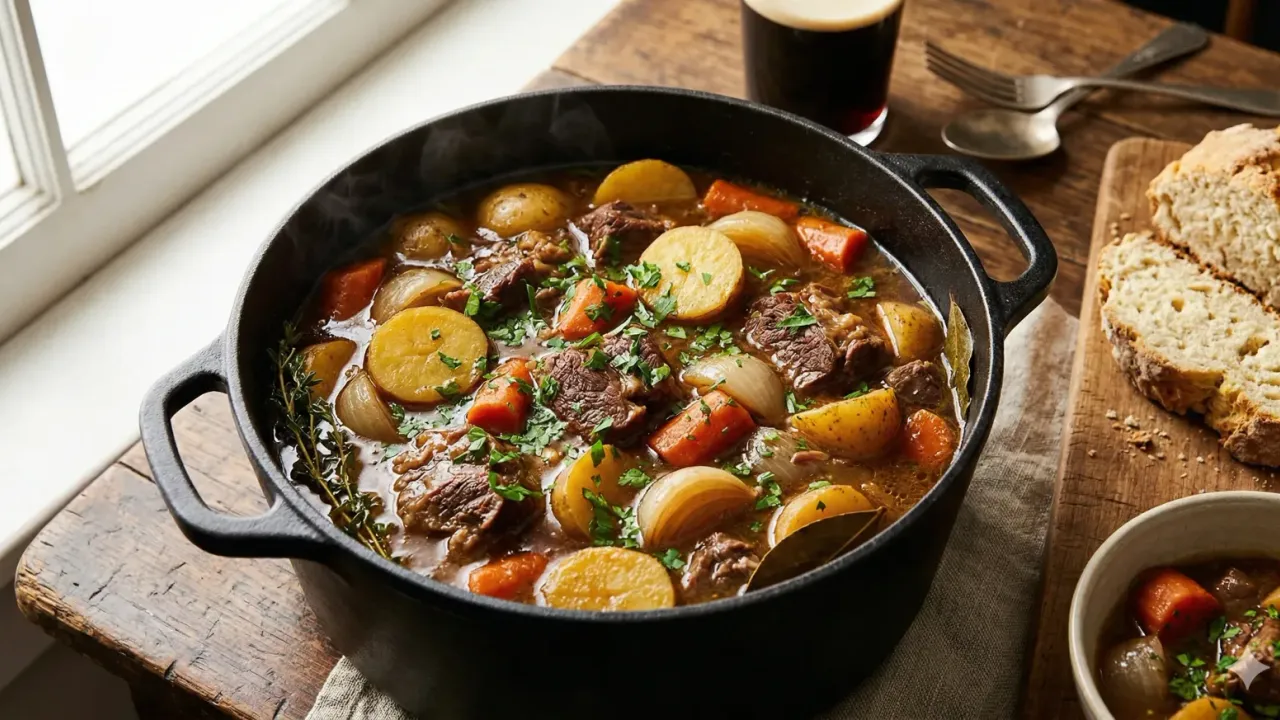
Irish stew is the soul of Irish comfort cooking. This legendary one-pot dish brings tender lamb, hearty potatoes, sweet carrots, and soft onions together in a rich, warming broth. Moreover, this traditional Irish stew recipe captures the authentic flavors of Ireland with humble ingredients and patient simmering. Whether you are celebrating St. Patrick’s Day or simply craving something deeply satisfying, this stew belongs on your table.
Prep Time: 20 minutes | Cook Time: 2 hours | Servings: 6
Difficulty: Easy | Calories: ~480 per serving
What Makes Irish Stew Special?
Irish stew stands apart from every other stew in the world because of what it leaves out. There is no tomato paste. There is no red wine. No herbs by the handful or spice blends to mask the core ingredients. Instead, the dish relies entirely on lamb, potatoes, onions, and carrots. A few sprigs of thyme and a bay leaf provide gentle seasoning. Everything else comes from time. The slow, patient simmer transforms tough lamb shoulder into meltingly tender meat. Starchy potatoes dissolve into the broth and thicken it naturally. This simplicity is the genius of Irish cooking.
What truly elevates Irish stew is its deep connection to the land. For centuries, Irish families relied on the ingredients available from their own farms and gardens. Sheep grazed the green hillsides. Potatoes grew in every plot. Onions and carrots stored easily through long, damp winters. Therefore, Irish stew was not born from a cookbook. It emerged from necessity and survival. The result is a dish that tastes honest and grounded in a way that more elaborate recipes rarely achieve.
Furthermore, Irish stew improves with time. The flavors deepen overnight as the lamb fat, collagen, and vegetable juices meld together. A pot of stew made on Sunday tastes even better on Monday. Many Irish cooks will tell you this is not a dish you rush. It rewards patience at every stage, from the initial sear to the final slow simmer. In fact, the very best Irish stew demands nothing more than good ingredients, a heavy pot, and an unhurried afternoon.

Choosing the Right Lamb
The cut of lamb you choose determines whether your Irish stew turns out tender or tough. Not all cuts respond the same way to slow cooking. Here are the best options for a rich, fall-apart result.
- Bone-in lamb shoulder (best choice): This cut has the ideal balance of meat, fat, and connective tissue. The bones release collagen and marrow during simmering. As a result, the broth develops a velvety, almost silky body that no boneless cut can match.
- Lamb neck: Rich in connective tissue and deeply flavored, neck pieces fall apart beautifully after two hours of simmering. They produce an exceptionally gelatinous broth. However, they have more small bones to work around at the table.
- Lamb shanks: These produce a spectacular broth and dramatic presentation. Each shank serves one person generously. Nevertheless, they require slightly longer cooking time than shoulder. Plan for an extra 30 minutes of simmering.
- Boneless lamb shoulder: Convenient and widely available, this cut still delivers good flavor. It cooks slightly faster than bone-in cuts. On the other hand, you lose the collagen contribution from the bones. Add extra stock to compensate for the thinner broth.
- Mutton (traditional): If you can source mutton from a good butcher, it is the most authentic choice. Mutton has a stronger, more complex flavor than young lamb. It needs longer cooking but rewards you with unmatched depth. Historically, Irish stew was always made with mutton, not lamb.
Ingredients for Irish Stew
Main Ingredients:
- 2.5 pounds bone-in lamb shoulder, cut into 2-inch chunks
- 2 pounds Yukon Gold potatoes, peeled and cut into thick rounds
- 3 large carrots, peeled and cut into 1-inch pieces
- 2 large onions, quartered
- 4 cups lamb or beef stock
- 2 cups water
- 3 sprigs fresh thyme
- 1 bay leaf
- 2 tablespoons butter
- Salt and black pepper to taste
For Finishing:
- 2 tablespoons fresh parsley, chopped
- 1 tablespoon all-purpose flour (optional, for extra thickening)
- Crusty soda bread for serving
Optional Additions:
- 2 leeks, cleaned and sliced into rings
- 1 small turnip, peeled and diced
- 2 stalks celery, sliced
- 1 parsnip, peeled and diced
- 1 tablespoon Worcestershire sauce
Pro tip: Always sear the lamb in small batches rather than crowding the pot. Overcrowding drops the temperature and causes the meat to steam instead of brown. That deep brown crust from searing creates the foundation of flavor for the entire stew. The Maillard reaction produces hundreds of complex flavor compounds that dissolve into the broth during simmering. Skipping or rushing this step is the single biggest mistake home cooks make with Irish stew.
Step-by-Step Instructions
Step 1: Season and Sear the Lamb
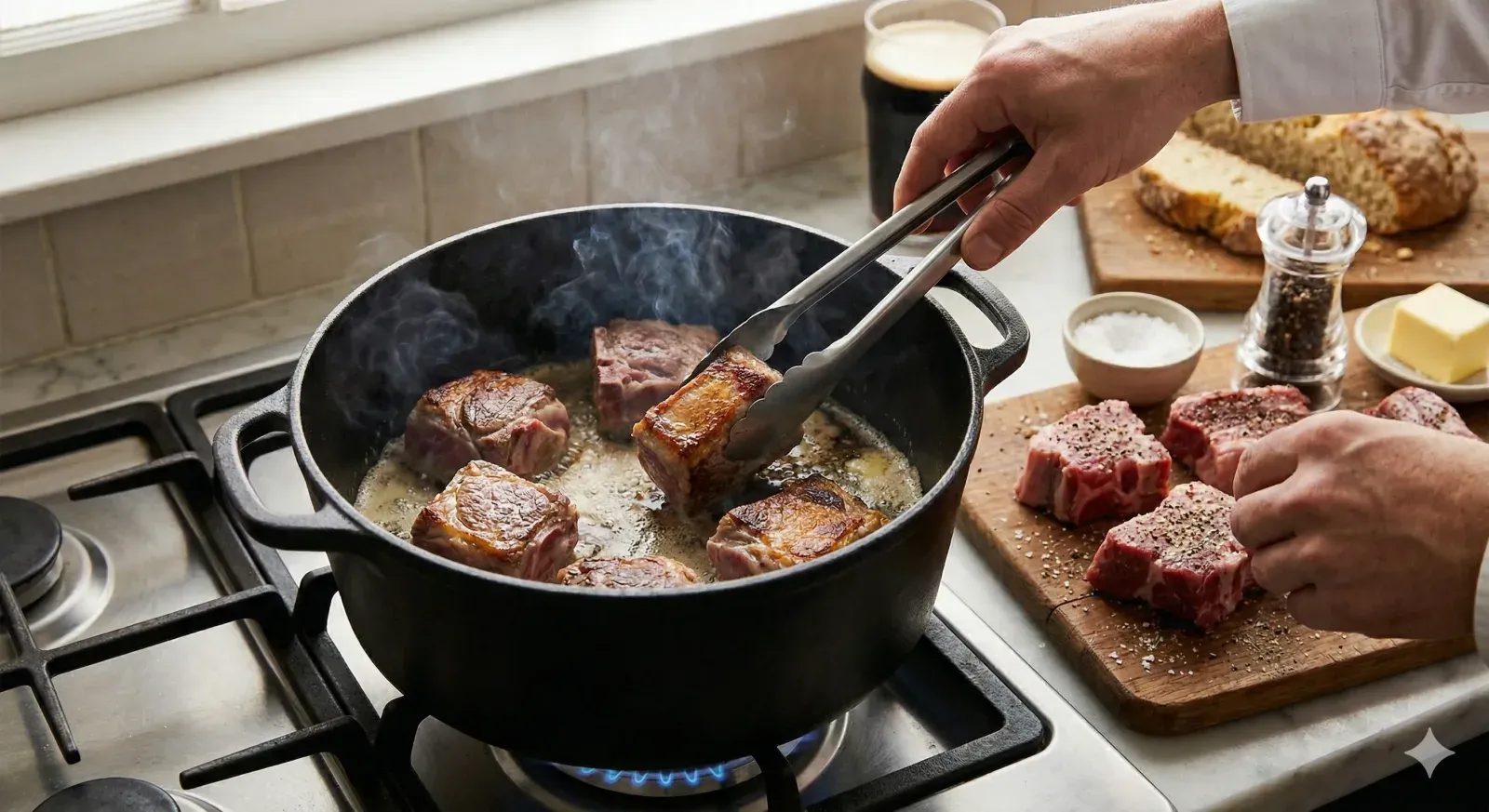
1 Pat the lamb pieces completely dry with paper towels. Moisture on the surface prevents browning. Then season the lamb generously on all sides with salt and black pepper. Melt the butter in a large, heavy-bottomed Dutch oven over medium-high heat. Wait until the butter stops foaming and begins to smell nutty.
Working in batches of 5 to 6 pieces, sear the lamb for 3 to 4 minutes per side. Do not move the pieces while they sear. Let the heat do its work. You want a deep golden-brown crust on at least two sides. As a result, the bottom of the pot will develop a dark fond. That fond holds tremendous flavor. Transfer each batch to a plate and set aside. This step takes about 15 minutes, and it is worth every second.
Step 2: Build the Stew Base
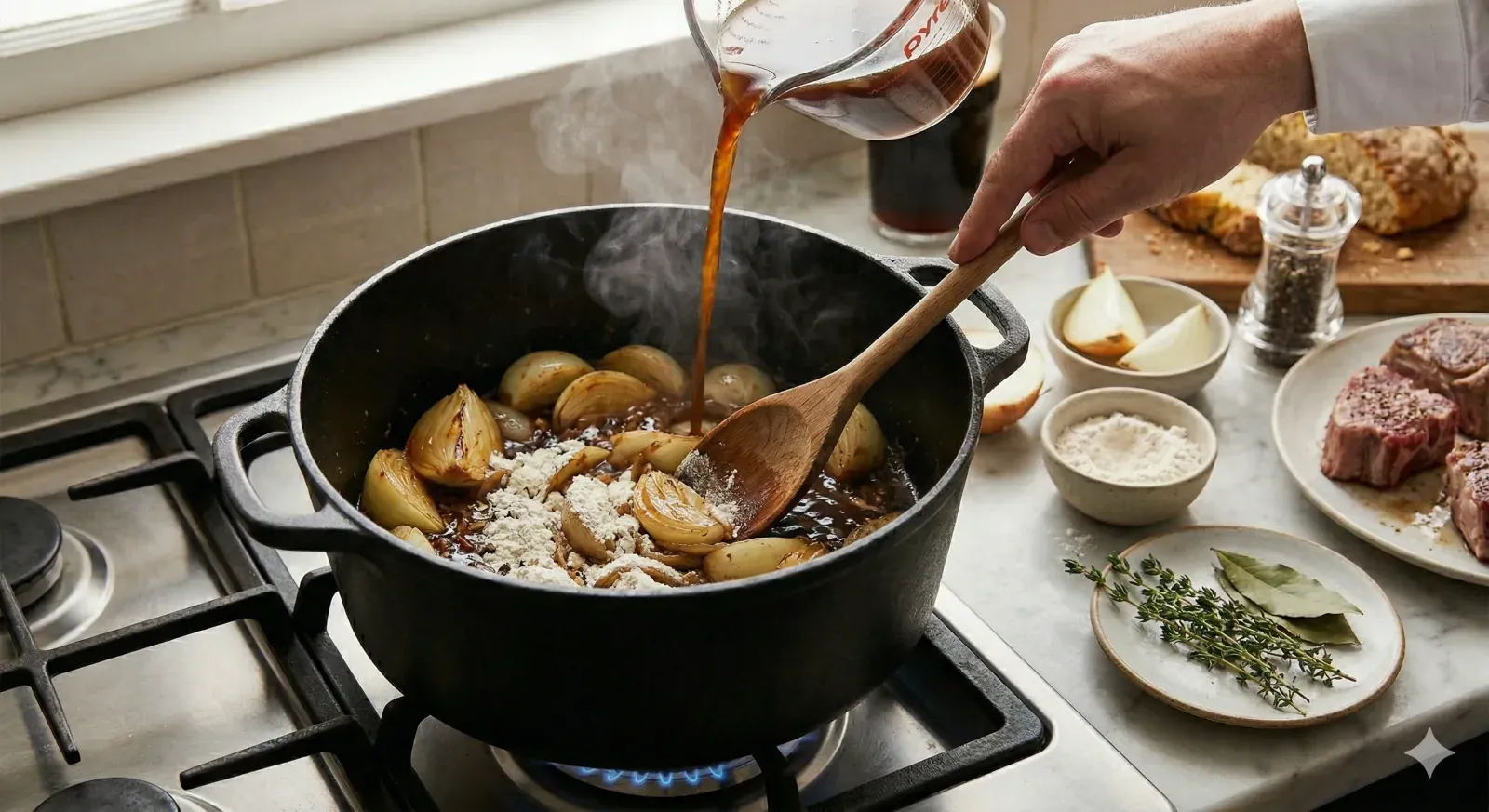
2 Reduce the heat to medium. Add the quartered onions to the pot. Cook them for about 5 minutes, stirring occasionally, until they soften and begin to turn translucent. The onions will pick up the browned bits from the bottom of the pot. If using flour for extra thickening, sprinkle it over the onions now. Stir for 1 minute to cook out the raw flour taste.
Pour in the lamb stock and water. Use a wooden spoon to scrape up every bit of fond from the bottom. This process, called deglazing, transfers all those concentrated flavors into the liquid. Return the seared lamb pieces and any juices from the plate to the pot. Tuck in the thyme sprigs and bay leaf. The liquid should come about three-quarters up the meat. Do not worry about covering everything completely. The vegetables will add more moisture as they cook.
Step 3: Add Vegetables and Simmer
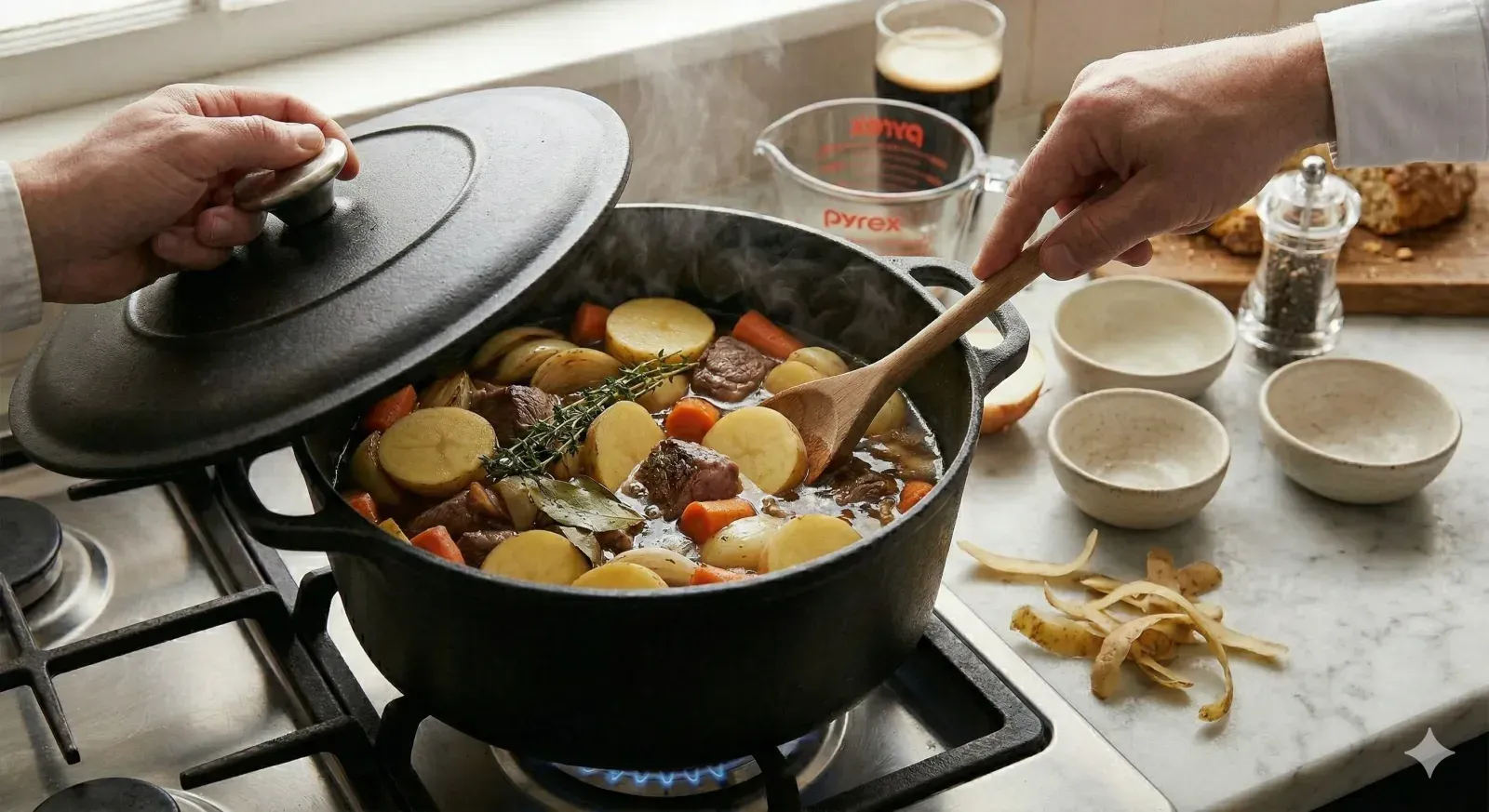
3 Layer the potato rounds and carrot pieces on top of the lamb. Arrange the potatoes so they sit partly submerged in the broth. The tops that poke above the liquid will steam rather than boil. This creates a pleasant contrast between creamy potatoes below and slightly firmer ones on top. Bring the pot to a gentle boil over medium heat.
Once bubbling, reduce the heat to the lowest setting. Cover the pot with a tight-fitting lid. Let the stew simmer gently for 1.5 to 2 hours. Check it every 30 minutes to ensure it maintains a lazy, barely perceptible bubble. Aggressive boiling toughens the lamb and breaks the potatoes apart too quickly. After 90 minutes, test the lamb. It should pull apart easily with a fork. The outer layer of potatoes will have dissolved into the broth, thickening it naturally. Meanwhile, the inner pieces remain intact and tender.
Step 4: Finish and Serve
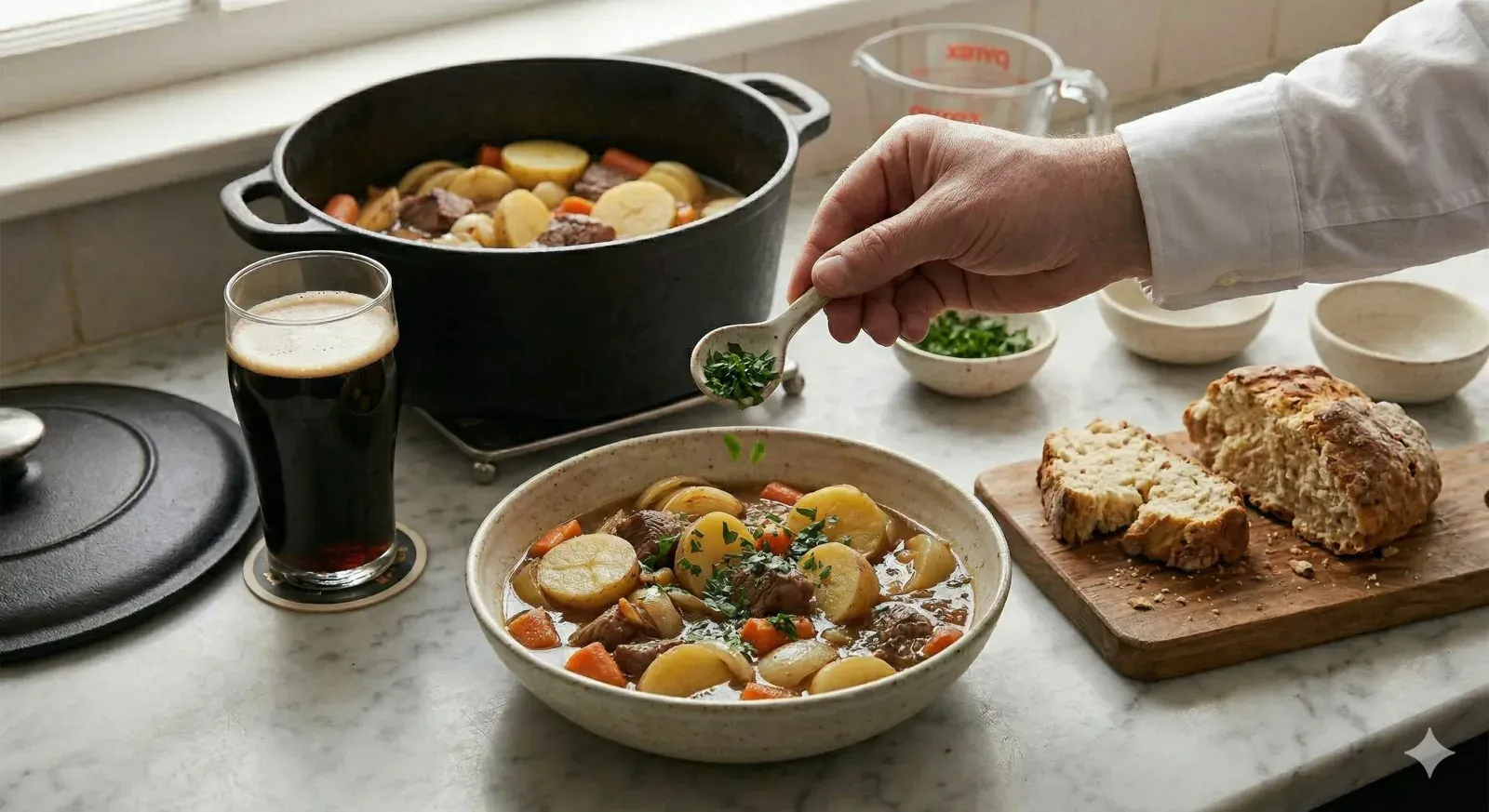
4 Remove the thyme sprigs and bay leaf from the pot. Taste the broth carefully and adjust the seasoning with salt and pepper. The broth should be deeply savory with a gentle sweetness from the carrots and onions. If it tastes flat, a pinch more salt will bring everything into focus. Stir gently to avoid breaking up the potatoes too much.
Ladle the stew into warm bowls, making sure each serving gets plenty of lamb, potatoes, and carrots along with a generous amount of broth. Scatter freshly chopped parsley over the top. The bright green herbs add color and a fresh note that lifts the rich, long-cooked flavors. Serve immediately with thick slices of crusty soda bread for soaking up every last drop of broth. In fact, the bread is not optional. It completes the experience.
Expert Tips for Perfect Irish Stew
Sear in Small Batches
Crowding the pot is the enemy of good searing. When too many pieces of lamb sit in the pan at once, they release moisture faster than it can evaporate. The meat steams instead of browning. As a result, you lose the deep, caramelized crust that gives the stew its backbone of flavor. Work in batches of 5 to 6 pieces, leaving plenty of space between them. The extra time pays off enormously in the finished dish.
Keep the Simmer Gentle
A rolling boil is the worst thing for Irish stew. High heat causes the proteins in lamb to seize and tighten, producing dry, stringy meat. Instead, maintain the faintest bubble. You should barely see movement on the surface. This low temperature allows the collagen in the lamb shoulder to dissolve slowly into gelatin. Consequently, the meat becomes silky and the broth turns rich and velvety. Patience is the most important ingredient.
Let the Potatoes Do the Work
Starchy potatoes are the traditional thickener in Irish stew. As they simmer, their outer layers break down and dissolve into the broth. This creates a naturally thick, creamy consistency without any flour or cornstarch. Choose Yukon Gold or russet potatoes for the best result. Waxy potatoes hold their shape too well and will not thicken the broth. Cut the potatoes into thick rounds so some pieces dissolve while others stay intact for texture.
Rest the Stew Before Serving
After cooking, let the stew rest off the heat for 10 to 15 minutes with the lid slightly ajar. This resting period allows the broth to settle and thicken further. The lamb reabsorbs some of the surrounding liquid, becoming even more succulent. Additionally, the temperature drops to a comfortable eating level. Like all great slow-cooked dishes, Irish stew benefits from a brief pause between the pot and the bowl.
Irish Stew vs Other Regional Stews
Stews exist in virtually every food culture. However, each region puts its own stamp on the concept. Here is how traditional Irish stew compares to other famous European stews.
| Stew | Meat | Key Flavors | Origin | Key Differences |
|---|---|---|---|---|
| Irish Stew | Lamb or mutton | Thyme, bay leaf, simple broth | Ireland | No tomato or wine; potatoes thicken naturally |
| Beef Bourguignon | Beef chuck | Red wine, mushrooms, pearl onions | France | Wine-based braising liquid; more complex herbs |
| Goulash | Beef or pork | Paprika, caraway, peppers | Hungary | Paprika-driven; thinner, soupier consistency |
| Lancashire Hotpot | Lamb | Onions, Worcestershire sauce | England | Sliced potatoes layered on top and baked until crispy |
| Navarin | Lamb | Tomato, turnips, spring vegetables | France | Includes tomato paste; lighter, more refined |
Serving Suggestions
Irish stew is a complete meal on its own. The lamb provides protein, the potatoes deliver carbohydrates, and the carrots and onions add vitamins. Still, a few well-chosen accompaniments enhance the experience and round out the table beautifully.
The Perfect Accompaniments:
- Irish soda bread: This is the essential partner for Irish stew. The dense, slightly tangy bread soaks up the broth perfectly. Tear it into thick chunks rather than slicing for the most authentic approach.
- Colcannon: A generous mound of buttery colcannon alongside the stew creates a deeply satisfying Irish feast. The creamy mashed potatoes with cabbage complement the brothy stew perfectly.
- Buttered cabbage: Simple steamed or boiled cabbage tossed with butter and pepper adds a fresh, clean element. The mild sweetness of the cabbage balances the richness of the lamb.
- Brown bread with butter: Traditional Irish brown bread made with wholemeal flour has a nutty, earthy flavor. A thick slice spread with salted butter is sublime for mopping up the last of the broth.
- Simple green salad: For a lighter touch, a peppery salad of watercress or arugula dressed with lemon vinaigrette cuts through the stew’s richness beautifully.
Beverage Pairings:
- Irish stout (Guinness): The roasted, bitter notes of dry stout pair magnificently with the rich lamb broth. The creamy head and dark malt character complement the hearty, savory flavors without overwhelming them.
- Irish red ale: Smooth and malty with caramel undertones, red ale mirrors the gentle sweetness of the carrots and onions. It is an approachable pairing that works for everyone at the table.
- Red wine (Pinot Noir): A medium-bodied Pinot Noir with earthy, mushroom notes complements lamb beautifully. Its moderate tannins cleanse the palate between rich, brothy spoonfuls.
- Hot Irish breakfast tea: A strong pot of Barry’s or Lyons tea with a splash of milk is the non-alcoholic standard. Irish families have served tea alongside stew for generations. It warms from the inside just as the stew does.
Storage and Reheating
Refrigerator: Store leftover Irish stew in an airtight container for up to 4 days. The stew actually tastes better the next day. Overnight, the flavors meld and deepen as the lamb fat and herbs infuse fully into the broth. Allow it to cool to room temperature before refrigerating. A layer of fat may solidify on top. Simply skim it off before reheating or stir it back in for richness.
Freezer: Irish stew freezes exceptionally well for up to 3 months. Portion it into individual containers for easy thawing. Press plastic wrap directly onto the surface before sealing. This prevents freezer burn. Thaw overnight in the refrigerator before reheating.
Reheating: Warm the stew gently in a pot over medium-low heat. Add a splash of stock or water if the broth has thickened too much during storage. Stir occasionally and heat until the lamb is piping hot throughout. Avoid boiling aggressively, because this can make the reheated lamb tough. Alternatively, reheat individual portions in the microwave at medium power for 3 to 4 minutes, stirring halfway through.
Common Mistakes to Avoid
1. Skipping the Sear
Some recipes tell you to simply add raw lamb to the pot with the liquid. This produces a flat, one-dimensional stew. Searing creates hundreds of new flavor compounds through the Maillard reaction. That brown crust on the meat dissolves into the broth during simmering. Without it, the stew lacks depth and complexity. Always take the time to sear your lamb properly.
2. Boiling Instead of Simmering
A hard boil destroys the texture of both the lamb and the potatoes. The meat contracts and turns stringy. The potatoes disintegrate into a starchy paste. Instead, keep the heat as low as possible. You want barely visible bubbles breaking the surface every few seconds. This gentle simmer coaxes tenderness from the lamb while keeping the potatoes intact enough to provide satisfying chunks in every bowl.
3. Adding Too Many Ingredients
Modern recipes often overload Irish stew with tomatoes, wine, Guinness, or a parade of herbs. These additions may taste fine, but they mask the pure lamb-and-potato character that defines the dish. Traditional Irish stew succeeds through restraint. Let the quality of your lamb and potatoes speak for themselves. A few sprigs of thyme and a bay leaf are all the seasoning you need beyond salt and pepper.
4. Using Lean Meat
Lean lamb leg or loin might seem like a healthier choice, but these cuts dry out during long cooking. Irish stew needs the fat and connective tissue found in shoulder and neck cuts. That fat melts into the broth and carries flavor. The connective tissue converts to gelatin, giving the broth its signature body. Without these elements, you end up with dry meat floating in thin, watery liquid.
Frequently Asked Questions
What meat is traditional in Irish stew?
Traditional Irish stew uses mutton or lamb, specifically tougher cuts like shoulder or neck. These cuts contain connective tissue that breaks down during slow cooking. As a result, the broth becomes rich and silky. Beef was not part of the original recipe. Lamb shoulder with the bone in remains the most authentic and flavorful choice. If you can find mutton from a specialty butcher, it delivers an even deeper, more complex flavor that many Irish cooks prefer.
What is the difference between Irish stew and beef stew?
The differences are significant. Irish stew traditionally uses lamb or mutton with potatoes, carrots, and onions in a simple broth. Beef stew relies on beef chuck and often includes tomato paste, red wine, and a wider variety of vegetables. Moreover, Irish stew lets the potatoes thicken the broth naturally. Beef stew typically uses flour or cornstarch for a thick gravy. The flavor profiles are entirely different, with Irish stew tasting cleaner and more focused on its core ingredients.
Should I use bone-in or boneless lamb for Irish stew?
Bone-in lamb shoulder produces the best results by far. The bones release collagen and marrow during the long simmer. This gives the broth a velvety body that boneless meat cannot replicate. However, boneless lamb shoulder works if you prefer easier eating. Just add an extra cup of stock to compensate for the thinner broth. You can also ask your butcher to crack the bones so the marrow releases more readily during cooking.
How do you thicken Irish stew without flour?
The most traditional and effective method is to let starchy potatoes do the thickening. Use Yukon Gold or russet potatoes cut into rounds. During simmering, the outer layers dissolve into the broth naturally. You can also mash a few potato pieces against the side of the pot and stir them in. This creates a thick, creamy consistency without any added flour or cornstarch. It is the original Irish method and produces the most authentic texture.
Can I make Irish stew in a slow cooker?
Absolutely. Irish stew adapts beautifully to a slow cooker. Sear the lamb first in a skillet on the stovetop for maximum flavor. Then transfer everything to the slow cooker. Cook on low for 7 to 8 hours or on high for 4 to 5 hours. The low, steady heat produces exceptionally tender lamb. Keep in mind that potatoes may break down more than in a Dutch oven. Therefore, cut them slightly larger to ensure some pieces remain intact.
How long does Irish stew keep in the fridge?
Irish stew keeps well for up to 4 days in an airtight container in the refrigerator. The flavors actually improve overnight as the lamb, potatoes, and herbs meld together. Reheat gently on the stovetop over medium-low heat. Add a splash of stock if the broth has thickened too much. Irish stew also freezes well for up to 3 months. Thaw overnight in the fridge and reheat slowly for the best texture.
Variations and Adaptations
Guinness Irish Stew:
Replace one cup of stock with a cup of Guinness stout. The dark beer adds roasted malt notes and a subtle bitterness that complements the lamb beautifully. Add the stout during the deglazing step and let it reduce for 2 minutes before adding the remaining stock. While not strictly traditional, this variation has become hugely popular both in Ireland and abroad. The stout darkens the broth and adds an irresistible depth.
Beef Irish Stew:
For those who prefer beef, substitute beef chuck cut into 2-inch cubes. Increase the cooking time by 30 minutes, as beef chuck needs slightly longer to become tender. Use beef stock instead of lamb stock. The result tastes different from the traditional version but stands as a hearty, satisfying stew in its own right. Many modern Irish families now make their stew with beef. Both versions are welcome at the table.
Root Vegetable Irish Stew:
Expand the vegetable component with turnips, parsnips, and celery root. Cut them into similar sizes as the carrots so they cook evenly. These root vegetables were common in Irish kitchens and add earthy sweetness to the broth. Add them at the same time as the potatoes and carrots. This variation produces a more complex stew that showcases the full range of Irish winter vegetables.
Oven-Braised Irish Stew:
After building the stew base on the stovetop, transfer the covered Dutch oven to a preheated oven at 325 degrees Fahrenheit. Braise for 2 to 2.5 hours. The oven provides even, consistent heat from all directions. As a result, the stew cooks more uniformly than on the stovetop. This method eliminates the risk of hot spots that can scorch the bottom. Many professional chefs prefer oven braising for exactly this reason.
The Cultural Significance of Irish Stew
Irish stew is more than a recipe. It is a symbol of Irish identity, resilience, and community. For centuries, this simple dish sustained farming families through harsh winters and lean times. The ingredients reflected what the land provided: sheep from the hillsides, potatoes from the fields, and root vegetables from the garden. Nothing was wasted. Even the toughest cuts of mutton became tender and nourishing after hours in the pot.
During the Great Famine of the 1840s, the potato’s central role in Irish life became tragically clear. When blight destroyed the crops, millions suffered. After the famine, dishes built around potatoes carried deep emotional significance. Irish stew became an expression of gratitude and survival. Families gathered around the pot not just for nourishment but for connection. The act of sharing a bowl of stew reinforced bonds that hardship had tested.
Today, Irish stew remains a proud cultural marker. It appears at family gatherings, holiday celebrations, and pub menus throughout Ireland and the global Irish diaspora. On St. Patrick’s Day, Irish stew takes center stage alongside colcannon and soda bread. It connects modern Irish people to their ancestors and tells the story of a nation that turned humble ingredients into something profoundly comforting. Every bowl carries that history forward.
Conclusion
This Irish stew recipe gives you everything you need to create a truly authentic pot of Ireland’s most beloved comfort food. The keys are simple: choose bone-in lamb shoulder, cut your potatoes thick, and let the stew simmer slowly until the meat falls apart. Do not overcomplicate it. The beauty of Irish stew lies in its honest simplicity and the patience you bring to the process.
Whether you serve it on a cold evening with crusty soda bread or bring it to the table for a St. Patrick’s Day celebration, this stew satisfies like few other dishes can. It warms from the inside and connects you to centuries of Irish culinary tradition. For more classic recipes from across Europe, explore our full collection of European dishes, including colcannon, shepherd’s pie, and goulash.