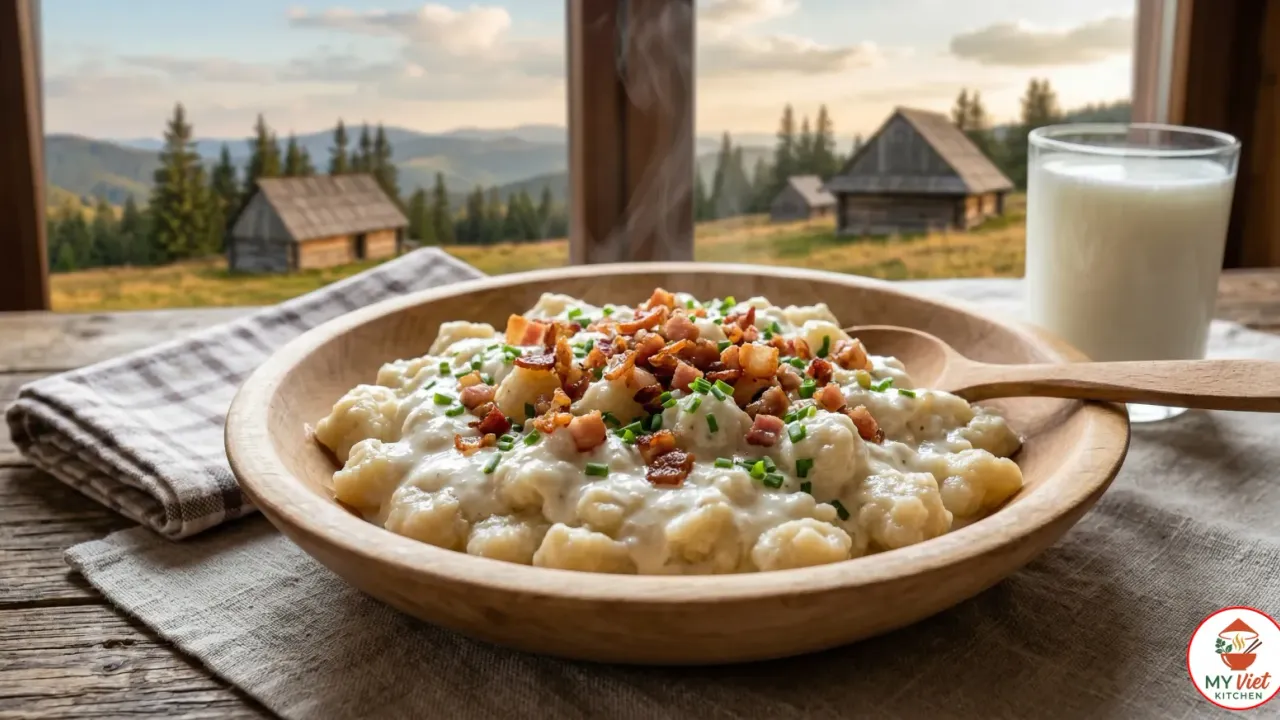
Bryndzove halusky is the beloved national dish of Slovakia, and this recipe walks you through every step to make these comforting potato dumplings at home. Known as bryndzove halusky in Slovak, this rustic dish combines soft, pillowy potato dumplings with tangy bryndza sheep cheese and crispy smoked bacon for a meal that warms you from the inside out. This authentic bryndzove halusky recipe follows the traditional Slovak method that shepherds and mountain families have enjoyed for centuries. Once you experience the combination of creamy cheese clinging to tender dumplings with salty, crunchy bacon on top, you will understand why Slovaks consider this their proudest culinary treasure.
Prep Time: 25 minutes | Cook Time: 20 minutes | Servings: 4
Difficulty: Easy | Calories: ~520 per serving
What Makes Bryndzove Halusky Special?
Bryndzove halusky is far more than a simple plate of dumplings with cheese. In fact, it is the dish that defines Slovak cuisine and carries the spirit of the Carpathian Mountains in every bite. Walk into any Slovak restaurant, from a rustic koliba lodge to an elegant Bratislava dining room, and you will find bryndzove halusky on the menu. Order it on a cold winter evening, and you get a steaming bowl of soft potato dumplings coated in tangy sheep cheese sauce with golden bacon bits on top. Every element reflects Slovakia’s pastoral roots.
What sets bryndzove halusky apart from other dumpling dishes is the bryndza cheese. This tangy sheep cheese has a flavor that no other cheese can match. It carries a sharp, acidic bite balanced by a rich creaminess that melts into the hot dumplings. As a result, the dish tastes complex and deeply satisfying despite having just a handful of ingredients. Because bryndza does all the heavy lifting, it turns plain potato dumplings into something special.
Furthermore, the simplicity of bryndzove halusky tells you much about Slovak food culture. Slovak cooks prize honest, hearty food made from local ingredients. Potatoes grow in the Slovak countryside. Sheep graze on mountain pastures and give the milk for bryndza. Pigs provide the smoked bacon. So this dish is a celebration of the land itself, built from three humble items and lifted by tradition into a national icon.

Choosing the Right Potatoes for Bryndzove Halusky
The potato you choose shapes the texture of your dumplings more than any other choice. Because of this, Slovak cooks always reach for the starchiest options they can find. Here are your best picks based on what you can source at your local store.
- Russet potatoes (best choice): These high-starch potatoes produce the lightest, most tender halusky. Their dry, fluffy texture means you need less flour to bind the dough, which keeps the dumplings soft rather than heavy. The starch also helps the dough hold together naturally when dropped into boiling water. Russets are widely available and affordable, making them the ideal choice for this recipe.
- Yukon Gold potatoes: A good all-purpose alternative with moderate starch content. Yukon Golds produce dumplings with a slightly denser texture and a buttery, golden color. You may need a tablespoon or two of extra flour compared to Russets, but the results are still excellent. Many Slovak cooks in North America prefer Yukon Golds because they provide a nice balance between lightness and body.
- Waxy potatoes (avoid): Red potatoes, fingerlings, and new potatoes have high moisture and low starch content. They produce a wet, sticky dough that requires excessive flour to hold together. The extra flour makes the dumplings tough and gummy instead of soft and tender. If these are your only option, peel and grate them, then squeeze out as much liquid as physically possible before mixing the dough.
Ingredients for Bryndzove Halusky
Main Ingredients:
- 2 pounds starchy potatoes (Russet or Yukon Gold)
- 1.5 cups all-purpose flour, plus more as needed
- 1 large egg
- 1 teaspoon salt
For the Cheese Sauce:
- 8 ounces bryndza sheep cheese (or substitute: equal parts feta and sour cream)
- 2 tablespoons butter
- Salt and black pepper to taste
For the Topping:
- 6 slices thick-cut smoked bacon, diced
- Fresh chives for garnish
Pro tip: If you cannot find authentic bryndza, mix equal parts crumbled feta cheese and full-fat sour cream until smooth. This combination closely mimics the tangy, creamy character of real bryndza. However, for the most authentic experience, seek out bryndza at Eastern European grocery stores or order it online. The flavor difference is significant and worth the extra effort.
Step-by-Step Instructions
Step 1: Prepare the Potato Dough
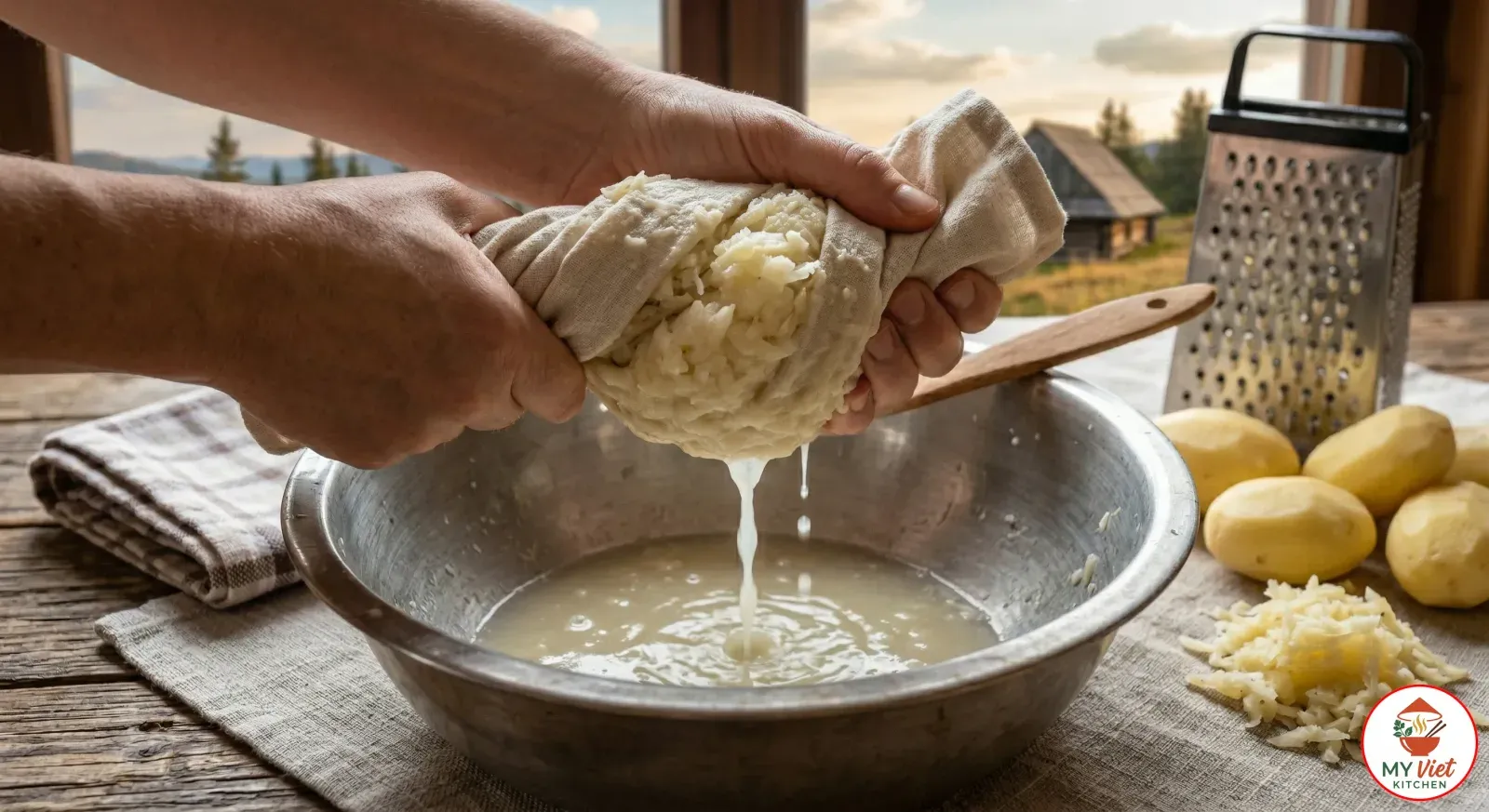
1 First, peel the potatoes and grate them finely using the small holes of a box grater or a food processor. Fine grating matters because it releases potato starch, which acts as a natural binder for the dough. Then place the grated potato in a clean kitchen towel and squeeze out as much liquid as you can. This step is key for light, tender dumplings. Too much moisture forces you to add extra flour, and that excess flour makes the dumplings tough.
Next, transfer the squeezed potato to a large mixing bowl. Add the egg and salt, then stir in the flour bit by bit until a soft, sticky dough forms. The exact flour amount depends on how wet your potatoes are. So start with one cup and add more a spoon at a time. The dough should feel softer than bread dough but firm enough to hold its shape when scooped. Let it rest for 5 minutes while you cook the bacon.
Step 2: Cook the Bacon Until Crispy
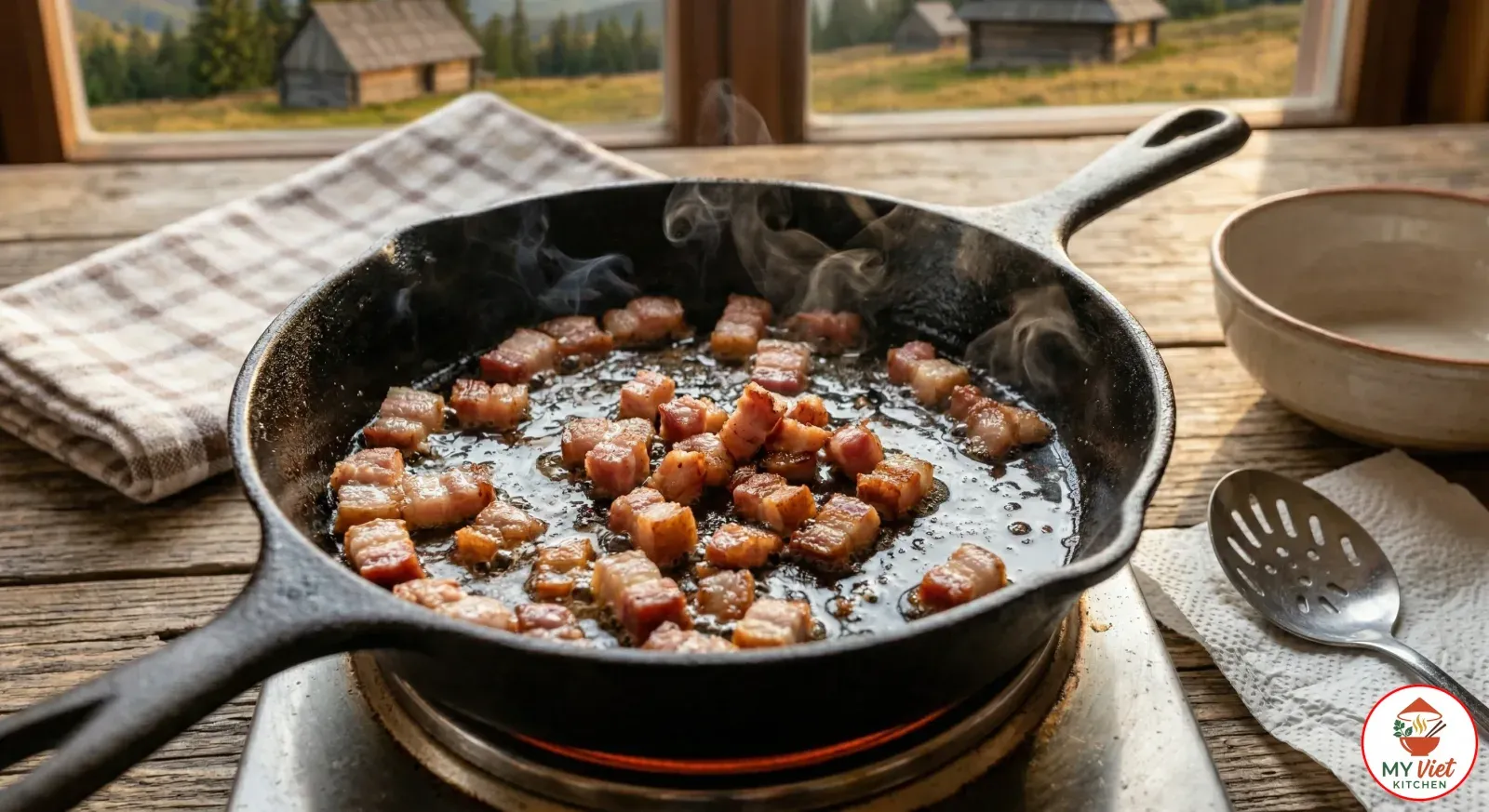
2 Dice the smoked bacon into small pieces about the size of your thumbnail. Traditionally, Slovak cooks use slanina, a smoked pork belly with a robust, smoky taste. However, thick-cut smoked bacon makes a great substitute. Place the diced bacon in a cold, dry skillet and set it over medium heat. Starting in a cold pan lets the fat render slowly and evenly. As a result, you get crispier bacon with less risk of burning.
Cook for about 8 minutes, stirring now and then, until the pieces turn golden and crispy. Meanwhile, the kitchen will fill with a rich, smoky aroma. Then remove the bacon bits with a slotted spoon and place them on a paper towel to drain. Also reserve the rendered bacon fat in the skillet. Later, you will drizzle this liquid gold over the finished dumplings for extra smoky richness.
Step 3: Shape and Boil the Dumplings
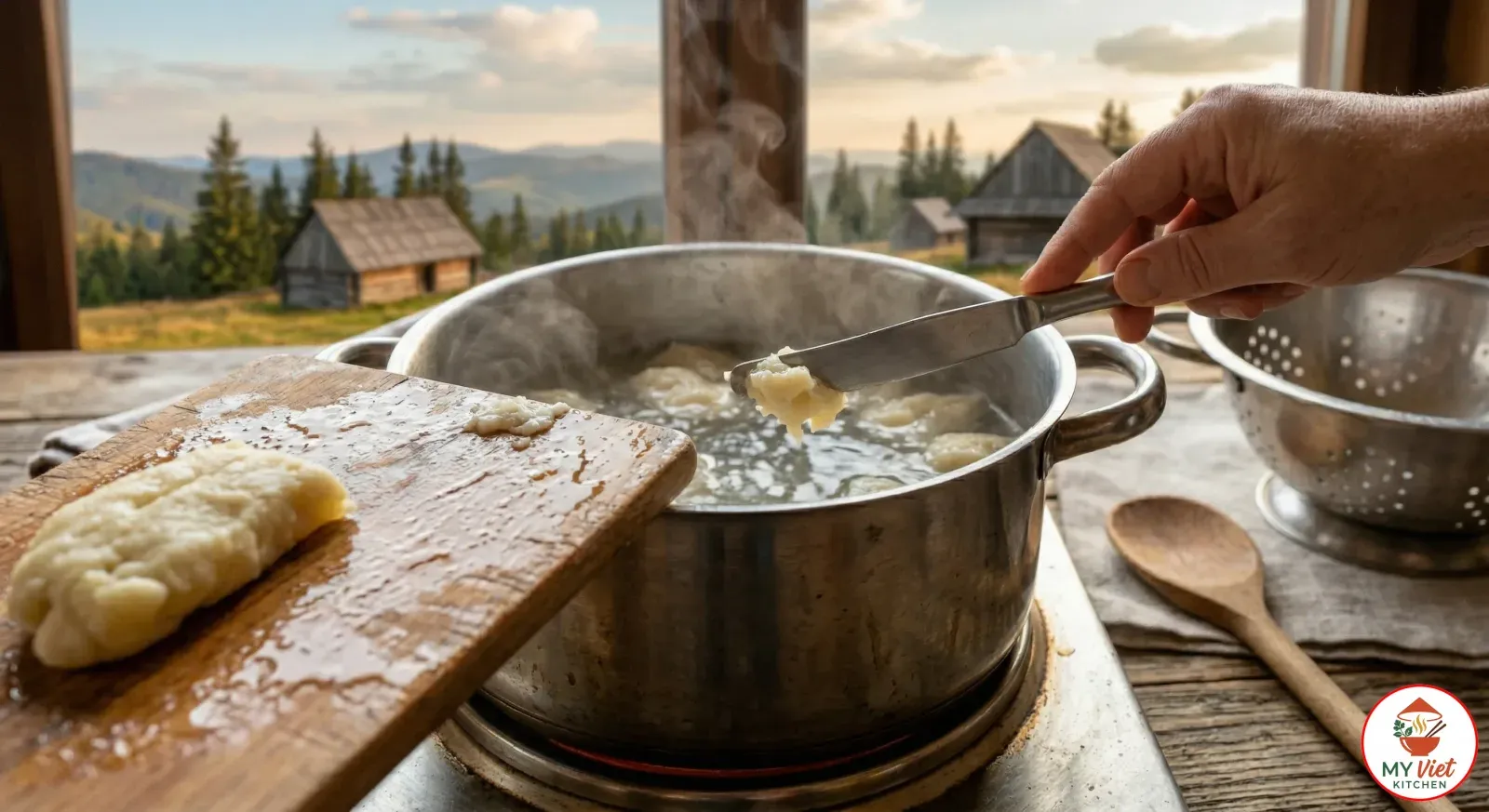
3 Bring a large pot of salted water to a rolling boil. The pot should be large enough so the dumplings can float freely. If crowded, they stick together and cook unevenly. Before you begin shaping, take a cutting board and wet it with water to stop the dough from sticking. Then place a portion of dough on the wet board.
Now use a butter knife or spoon edge to scrape small pieces of dough into the boiling water. Each piece should be roughly the size of a large olive. Do not worry about making them uniform, because irregular shapes are traditional. In fact, the bumps and ridges catch more cheese sauce later. Work in batches of 15 to 20 at a time. The halusky sink at first, then float to the top after 2 to 3 minutes. Once they float, scoop them out with a slotted spoon and drain well in a colander.
Step 4: Mix with Bryndza Cheese
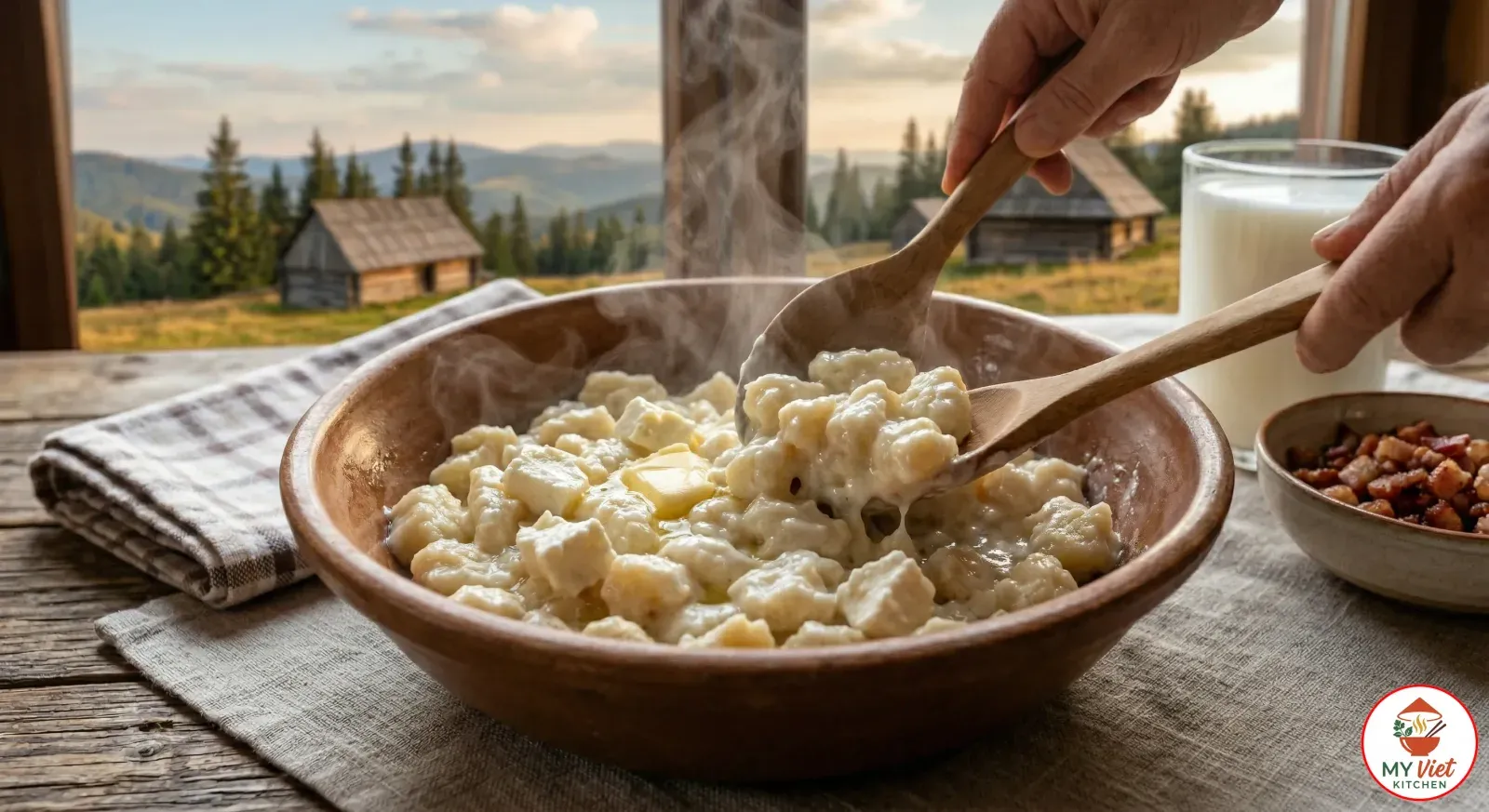
4 This is where the magic happens. Transfer the hot, drained dumplings to a large warm bowl. Then add the bryndza and butter right away while the dumplings are still steaming. The heat melts the butter and softens the cheese, so it coats each dumpling in a creamy, tangy sauce. Toss gently with a spoon until every piece glistens with the cheese mix.
After that, taste and adjust with salt and pepper. The bryndza itself carries a lot of salt, so taste before adding more. If the mix seems too thick, add a spoon of the hot cooking water to thin it. The final texture should feel creamy rather than dry. Also, each dumpling should wear a visible coat of melted bryndza. Work quickly here, because the cheese blends best when the dumplings are at their hottest.
Step 5: Serve with Crispy Bacon and Chives
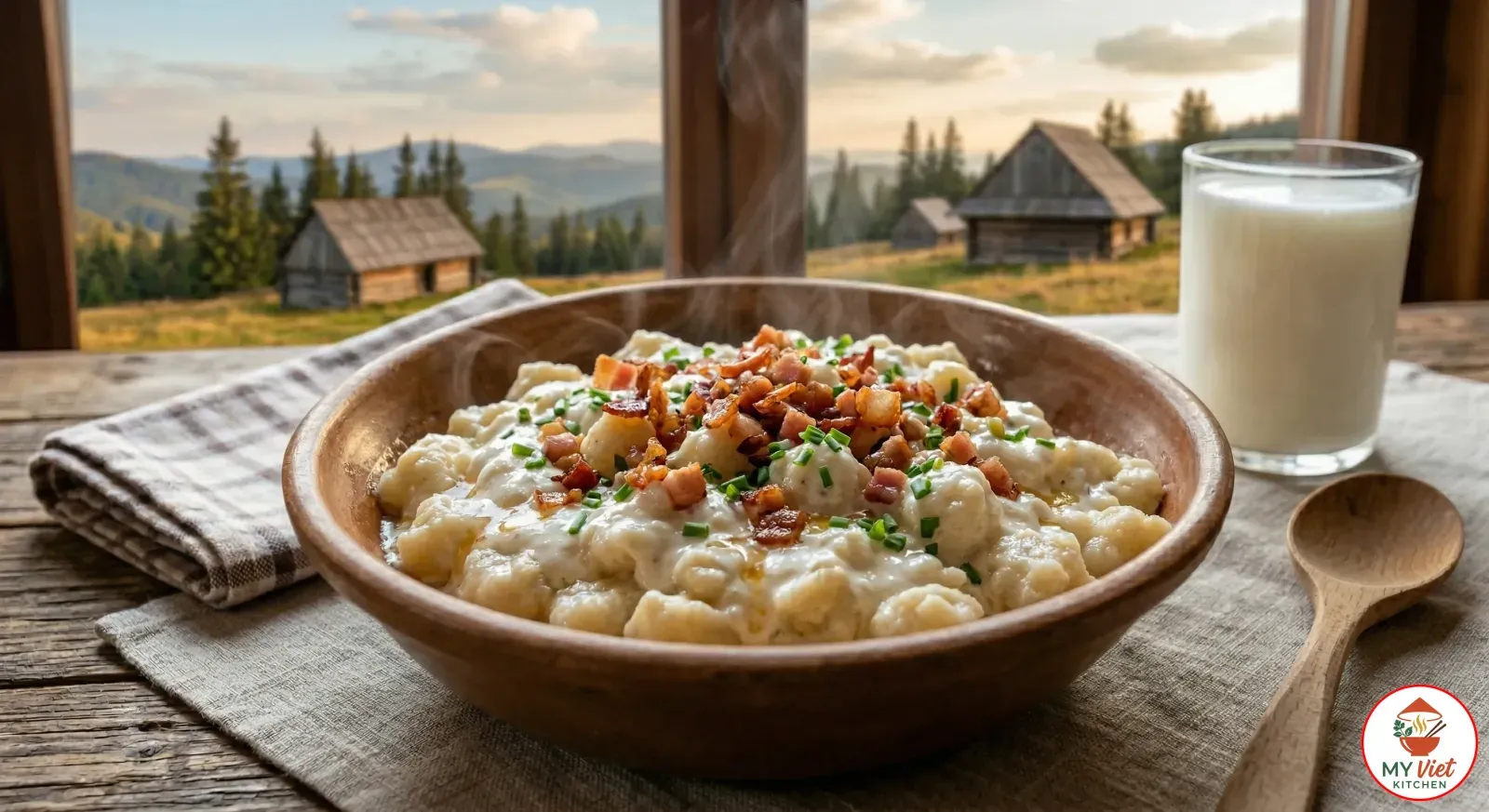
5 Finally, divide the bryndzove halusky among warmed plates or bowls. Scatter the crispy bacon bits over the top of each portion. Then drizzle a spoonful of the warm bacon fat over everything. This fat adds a final layer of smoky richness that ties the dish together. Also garnish with freshly snipped chives for a pop of color and mild onion flavor.
Serve the bryndzove halusky right away while the cheese is still warm. This dish does not get better with waiting. Instead, the dumplings absorb the sauce as they cool, and the bacon goes soft. So bring it straight from the kitchen to the table. In Slovakia, the dish often arrives in a shallow wooden bowl, though any warm plate works well at home.
Expert Tips for Perfect Bryndzove Halusky
Squeeze the Potatoes Thoroughly
Removing excess moisture from the grated potatoes is the single most important step. Wrap the potato tightly in a kitchen towel and twist hard until no more liquid drips out. Some cooks even use a ricer or press for extra dryness. The drier your potato, the less flour you need. Consequently, less flour means softer halusky that melt on your tongue rather than sitting heavy.
Add Flour Gradually
Since every batch of potatoes holds a different amount of moisture, the flour amount varies each time. Start with less flour than you think you need. Then add more a spoon at a time. The dough should feel soft, moist, and a bit sticky. If it feels firm like bread dough, you added too much flour. So trust the process and resist the urge to over-flour. A sticky dough always makes better halusky than a firm one.
Keep the Cheese at Room Temperature
Take the bryndza out of the fridge at least 30 minutes before you use it. Cold cheese does not melt or blend as smoothly into hot dumplings. In contrast, room-temperature bryndza spreads easily and coats the halusky the moment they meet. This small detail makes a big difference in the final texture. If you forget to warm the cheese, just microwave it for 10 seconds to take the chill off.
Bryndzove Halusky vs. Other European Dumplings
Central Europe loves its dumplings, and each country has its own version. To illustrate how bryndzove halusky compares to its neighbors, here is a side-by-side look at the most popular dumpling dishes in the region.
| Dish | Country | Base Ingredient | Key Feature |
|---|---|---|---|
| Bryndzove halusky | Slovakia | Raw grated potato | Tossed with bryndza sheep cheese and bacon |
| Spaetzle | Germany | Flour and egg batter | Served as a side dish with gravy or cheese |
| Nokedli | Hungary | Flour and egg batter | Small, light dumplings served with goulash or stews |
| Pierogi | Poland | Wheat flour dough | Filled dumplings with potato, cheese, or meat |
| Knedliky | Czech Republic | Bread or potato | Large boiled dumplings sliced into rounds |
Serving Suggestions
Bryndzove halusky is a full meal on its own. The mix of potato dumplings, rich cheese, and smoky bacon gives you all you need. However, Slovaks often enjoy it with a few simple sides that make the meal even better.
The Perfect Accompaniments:
- Sour milk or buttermilk (zstiepane mlieko): Slovaks traditionally drink sour milk or buttermilk alongside bryndzove halusky. The cool, tangy beverage cuts through the richness of the cheese and bacon, cleansing the palate between bites. This pairing dates back centuries to the mountain shepherding communities where both products came from the same flock of sheep.
- Fresh garden salad: A simple salad of lettuce, tomato, cucumber, and a light vinaigrette provides a crisp, refreshing contrast to the hearty dumplings. The acidity of the dressing complements the tangy bryndza beautifully.
- Pickled vegetables: Quick-pickled cabbage, gherkins, or beet salad add a tangy crunch that balances the creamy, starchy main dish. Pickled vegetables appear on Slovak tables regularly and pair naturally with most traditional dishes.
Beverage Pairings:
- Slovak beer: A cold Slovak lager like Zlaty Bazant or Saris is the most popular pairing. The beer’s clean bitterness and carbonation refresh the palate between rich, cheesy bites of halusky.
- Dry white wine: A crisp, dry white wine from the Slovak wine regions around Tokaj or the Small Carpathians cuts through the richness of the bryndza and complements the smoky bacon.
- Buttermilk: For a non-alcoholic and deeply traditional option, a glass of cold buttermilk is the classic Slovak choice. Its tangy flavor mirrors and enhances the bryndza on the plate.
Storage and Reheating
Refrigerator: Store leftover bryndzove halusky in an airtight container for up to 3 days. The dumplings absorb the cheese sauce during storage, so the texture changes slightly. Before reheating, stir in a tablespoon of fresh bryndza or sour cream to restore the creamy coating.
Freezer: Plain cooked halusky dumplings without the cheese freeze well for up to 2 months. Spread them on a baking sheet in a single layer, freeze until solid, then transfer to a freezer bag. The assembled dish with bryndza does not freeze well because the cheese texture deteriorates after thawing. Cook the dumplings in advance and add fresh bryndza when you reheat them.
Reheating: Warm leftover bryndzove halusky in a skillet with a tablespoon of butter over medium-low heat. Stir gently until heated through, about 5 minutes. Add a spoonful of bryndza or sour cream to refresh the sauce. Alternatively, reheat in a covered dish in the oven at 300 degrees Fahrenheit for 15 minutes. Top with freshly crisped bacon before serving, since reheated bacon loses its crunch. Avoid the microwave if possible, because it tends to make the dumplings rubbery.
Common Mistakes to Avoid
1. Using Too Much Flour in the Dough
This is the most common error that ruins bryndzove halusky. Too much flour produces dense, heavy dumplings that taste like boiled bread. Instead, the dough should feel soft and a bit sticky. If it seems too wet, squeeze the grated potato more rather than adding extra flour. After all, the egg and potato starch provide binding on their own. So you need less flour than you might expect.
2. Not Draining the Dumplings Properly
Waterlogged dumplings dilute the bryndza and make the dish watery instead of creamy. After scooping the halusky from the water, let them sit in a colander for a full minute. Then give the colander a gentle shake to release trapped water. Properly drained halusky absorb cheese evenly, while wet ones create puddles on the plate.
3. Letting the Dumplings Cool Before Adding Cheese
Timing is everything here. The bryndza needs heat from fresh dumplings to melt and form its creamy coat. If the dumplings cool, the cheese sits on top in cold lumps. Therefore, have the bryndza measured and ready before you boil. The moment the last batch drains, toss them with cheese right away. Speed matters more at this point than at any other step.
4. Crowding the Pot While Boiling
Dropping too many dumplings in at once makes them stick together and cook unevenly. Also, the water temperature drops when you add a large batch. This leads to soggy, soft dumplings. Instead, work in batches of 15 to 20 pieces at a time. Make sure the water returns to a full boil between batches so each dumpling can float freely.
Frequently Asked Questions
What is bryndza cheese and where can I buy it?
Bryndza is a tangy, creamy sheep cheese from Slovakia. It holds Protected Geographical Indication status in the EU. Specifically, it has a soft, spreadable texture like cream cheese but with a sharper, more complex flavor. You can find it at Eastern European stores, online cheese shops, or large international markets. If bryndza proves hard to source, simply mix equal parts crumbled feta and full-fat sour cream for the closest substitute.
What type of potatoes work best for bryndzove halusky?
Starchy potatoes like Russet or Yukon Gold work best. Their high starch content binds the dough and gives the dumplings a soft, tender texture. On the other hand, waxy potatoes hold too much moisture and too little starch. Because of this, you end up adding too much flour, which makes the dumplings tough. So always pick the starchiest potatoes you can find for the lightest bryndzove halusky.
Can I make bryndzove halusky without a halusky board?
Yes, you can. A halusky board makes the job faster, but you can easily use a wet cutting board and a knife to scrape small dough pieces into the water. You can also press the dough through a colander with large holes. The shape does not need to be perfect. In fact, irregular dumplings are traditional and they catch more cheese sauce in their bumps and ridges.
Is bryndzove halusky the national dish of Slovakia?
Yes, bryndzove halusky holds the title of Slovakia’s national dish. It represents the country’s pastoral heritage and culinary identity. The dish appears across the entire nation, from humble mountain huts where shepherds eat it after a long day to upscale restaurants in Bratislava where chefs present it with modern flair. Slovaks take deep pride in this dish and consider it the ultimate expression of their food culture.
What is the difference between halusky and spaetzle?
Although both are Central European dumplings, they differ in key ways. Slovak halusky use raw grated potato, which gives them a denser texture and a clear potato flavor. In contrast, German spaetzle rely on flour, eggs, and liquid with no potato at all. Halusky also tend to be larger and less uniform. Most importantly, halusky pair with bryndza cheese as a full meal, while spaetzle usually serve as a side dish with meat and gravy.
How do I store and reheat leftover bryndzove halusky?
Store leftovers in an airtight container in the fridge for up to 3 days. Then reheat gently in a skillet with butter over low heat, stirring now and then. Also add a spoonful of fresh bryndza or sour cream to bring back the creamy texture. The full dish does not freeze well because the cheese changes after thawing. However, plain cooked dumplings freeze well for up to 2 months. Just thaw, reheat, and add fresh cheese to serve.
Variations and Adaptations
Strapacky (Cabbage Halusky):
For this version, replace the bryndza with sauteed shredded cabbage. Cook the cabbage slowly with bacon and a touch of sugar until it turns golden brown. Then toss it with the boiled halusky. Strapacky offers a sweet, savory, and smoky flavor that contrasts nicely with the tangy bryndza version. Indeed, many Slovak families switch between the two dishes all week long.
Vegetarian Bryndzove Halusky:
Just omit the bacon and drizzle melted butter or olive oil over the dish instead. The bryndza carries enough flavor on its own. For crunch, top with toasted breadcrumbs. For sweetness, add caramelized onions. Or for earthy depth, try roasted mushrooms. Similarly, some modern Slovak restaurants use crispy fried shallots in place of bacon for a vegetarian option.
Halusky with Smoked Cheese:
Instead of bryndza, use oscypek or another smoked sheep cheese for a bolder taste. Grate it and toss with hot dumplings along with a splash of cream to help it melt. This version comes from the mountainous Tatra region, where smoked cheeses are a local staple. Together with crispy bacon, the smoky cheese creates an intensely savory dish.
Gluten-Free Bryndzove Halusky:
Replace the all-purpose flour with a gluten-free blend or fine rice flour. Because the potato starch already provides most of the binding, this swap works well. You may need a bit less flour, since rice flour absorbs moisture in a different way. Before cooking the full batch, test one dumpling first and adjust the dough as needed.
The Cultural Significance of Bryndzove Halusky
Bryndzove halusky holds a place in Slovak culture that few dishes in any country can match. It is more than a recipe. Indeed, it is a symbol of national identity found on restaurant menus, folk festival programs, and family debates alike. Ask any Slovak abroad what food they miss most, and bryndzove halusky is almost always the answer. The dish connects people to their homeland through flavor and memory.
The roots of this dish reach deep into Slovakia’s pastoral history. For centuries, shepherds in the Carpathian Mountains tended sheep that gave milk for bryndza. They carried potatoes, flour, and cheese up to mountain pastures and cooked hearty meals over open fires. Over time, this shepherd’s meal traveled down to valley kitchens and eventually to city restaurants. As a result, it became the defining dish of an entire nation. In fact, the EU granted Slovak bryndza Protected Geographical Indication status in 2008.
Furthermore, bryndzove halusky plays a key role in Slovak festivals. The annual bryndzove halusky eating contest in Turciansky Peter draws people from across the country. Folk festivals feature halusky cooking demos and tastings too. Families serve it at celebrations, holidays, and Sunday lunches. The dish has even become a friendly rivalry with neighbors, since Slovaks insist their halusky tops any dumpling dish in Europe. In the end, this humble plate of potato dumplings with sheep cheese tells the story of a people and a land worth celebrating. Discover more in our European dishes collection.
Conclusion
This bryndzove halusky recipe gives you all you need to make Slovakia’s national dish at home. The keys are simple: choose starchy potatoes, squeeze out all moisture, use less flour, and toss the dumplings with bryndza while they are piping hot. Then top with crispy bacon and serve right away. Once you master these steps, you will have a dish that captures the heart of Slovak cooking.
Ready to explore more Central European comfort food? Browse our European dishes collection for recipes like Hungarian goulash, Polish pierogi, and German kasespatzle. Each one brings a different tradition of hearty European cooking to your kitchen table.