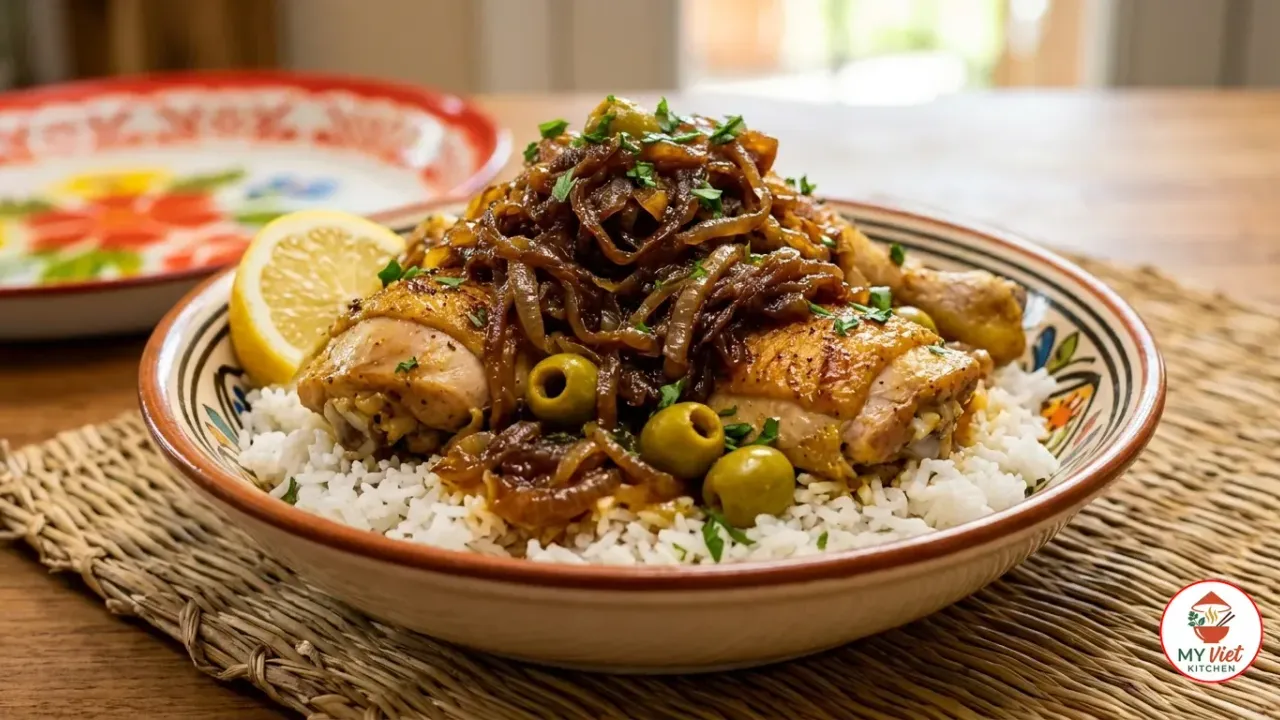
Poulet yassa is the crown jewel of Senegalese home cooking and one of West Africa’s most beloved chicken dishes. This tangy, aromatic recipe features chicken pieces marinated in fresh lemon juice and Dijon mustard, browned until golden, and then smothered in a mountain of caramelized onions with green olives and a bright, citrusy sauce. Also known simply as yassa au poulet, this dish captures the bold, balanced flavors that define Senegalese cuisine. This recipe guides you through making authentic poulet yassa at home in about 80 minutes of active cooking time.
Prep Time: 30 minutes | Cook Time: 50 minutes | Servings: 6
Difficulty: Easy | Calories: ~480 per serving
What Makes Poulet Yassa Special?
Poulet yassa stands apart from other chicken dishes because of its extraordinary onion-to-chicken ratio. While most recipes treat onions as a background ingredient, this Senegalese classic uses roughly twice as many onions as chicken by weight. The onions cook down slowly until they transform into a golden, jammy sauce that is simultaneously sweet, tangy, and savory. That thick onion sauce is what makes every bite of poulet yassa unforgettable.
The dish originates from the Casamance region in southern Senegal, where the Jola people first developed it. Over time, poulet yassa spread throughout the entire country and across West Africa. As a result, today it appears on dinner tables from Dakar to Abidjan and in Senegalese restaurants worldwide. According to culinary historians, the yassa technique of marinating protein in lemon and onions dates back centuries in the Casamance. Indeed, it was first applied to fish before chicken became the most popular version.
Beyond its cultural importance, poulet yassa also delivers strong nutritional value. The dish provides lean protein from the chicken and healthy fats from the peanut oil. Additionally, the large amount of onions brings quercetin and antioxidants to the meal. The lemon juice adds vitamin C while the mustard offers anti-inflammatory benefits. In short, this is comfort food that also nourishes your body with every serving.

Choosing the Right Chicken for Poulet Yassa
The cut of chicken you choose affects both the flavor and texture of your finished poulet yassa. Here are the best options for this recipe.
- Whole chicken, cut into 8 pieces (best choice): A whole chicken gives you a mix of white and dark meat. The bones add richness to the sauce during simmering, and each piece absorbs the lemon marinade at a different rate. This is the traditional Senegalese approach.
- Bone-in, skin-on thighs and drumsticks: Dark meat stays juicier during the long cooking process and has more flavor than breast meat. If you prefer uniform pieces, thighs and drumsticks are an excellent choice that simplifies the cooking time.
- Boneless chicken thighs: For a quicker version, boneless thighs work well. They cook faster and are easier to eat. However, you lose the bone-enriched sauce. Reduce the simmering time by 10 minutes to prevent overcooking.
Ingredients for Poulet Yassa
For the Marinade:
- 1 whole chicken (about 3.5 pounds), cut into 8 pieces
- 1/2 cup fresh lemon juice (about 4 lemons)
- 3 tablespoons Dijon mustard
- 4 cloves garlic, minced
- 1 teaspoon black pepper
- Salt to taste
For the Onion Sauce:
- 6 large onions, thinly sliced into half-moons
- 3 tablespoons peanut oil or vegetable oil
- 1/2 cup pitted green olives
- 1 Scotch bonnet pepper or habanero, left whole
- 2 bay leaves
- 1 tablespoon apple cider vinegar
- 1 chicken bouillon cube
For Serving:
- Steamed white rice (jasmine or basmati)
- Fresh lemon wedges for garnish
- Chopped fresh parsley (optional)
Pro tip: Use fresh lemon juice rather than bottled for your poulet yassa marinade. Fresh lemons deliver a brighter, more complex citrus flavor that bottled juice cannot match. The natural oils from the lemon zest also transfer into the marinade during squeezing, which adds aromatic depth to the finished dish.
Step-by-Step Instructions
Step 1: Marinate the Chicken
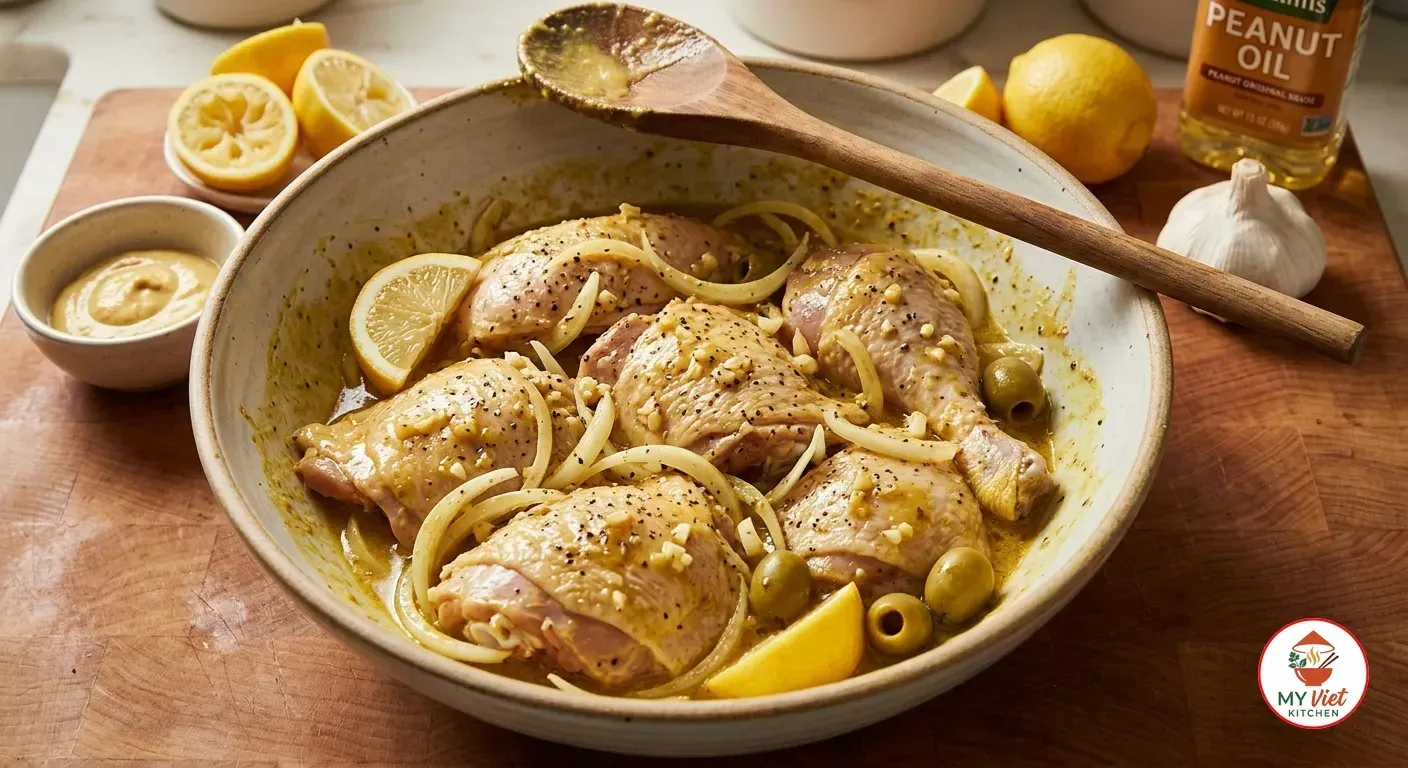
1 Start by preparing the marinade. In a large bowl, whisk together the fresh lemon juice, Dijon mustard, minced garlic, black pepper, and a generous pinch of salt. The mustard acts as an emulsifier that helps the lemon juice coat and penetrate the chicken evenly.
Next, add the chicken pieces to the bowl and turn them to coat every surface. Then scatter the thinly sliced onions over the chicken. Cover the bowl tightly with plastic wrap and place it in the refrigerator. Let the chicken marinate for at least 4 hours, though overnight gives the best results. The acid in the lemon juice gently breaks down the muscle fibers. As a result, the meat becomes remarkably tender. Meanwhile, the onions absorb the tangy marinade liquid, which later becomes the base of the sauce.
Step 2: Brown the Chicken
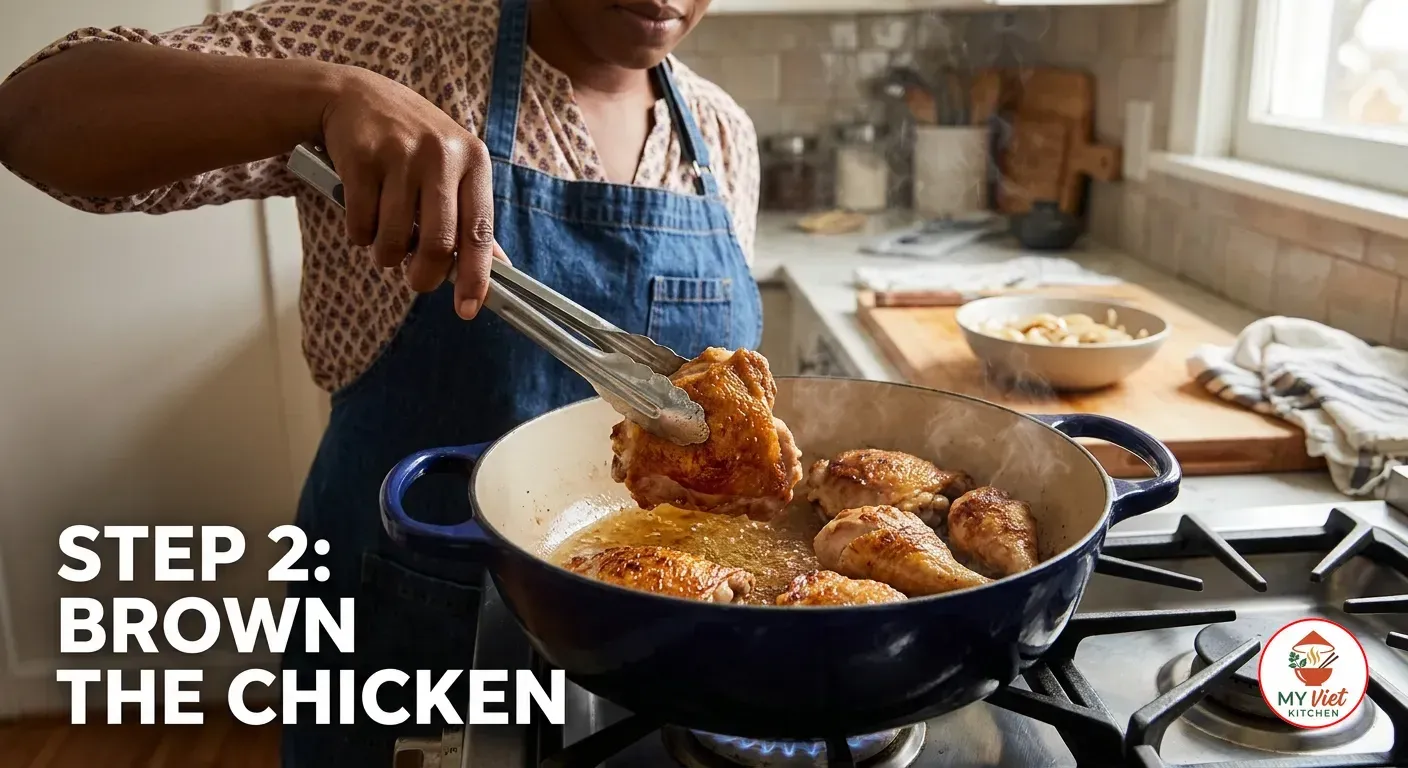
2 First, remove the chicken from the marinade and pat the pieces dry with paper towels. Then separate the sliced onions from the liquid and reserve both. Drying the chicken before browning is essential because wet surfaces steam instead of searing, and you want golden, crispy skin.
Heat 2 tablespoons of peanut oil in a large Dutch oven over medium-high heat. When the oil shimmers, add the chicken pieces skin-side down. Brown them for about 4 minutes per side until you get a deep golden color. If needed, work in batches to avoid crowding the pot. After that, transfer the browned chicken to a clean plate. The Maillard reaction creates hundreds of new flavor compounds on the surface that enrich the final sauce.
Step 3: Caramelize the Onions
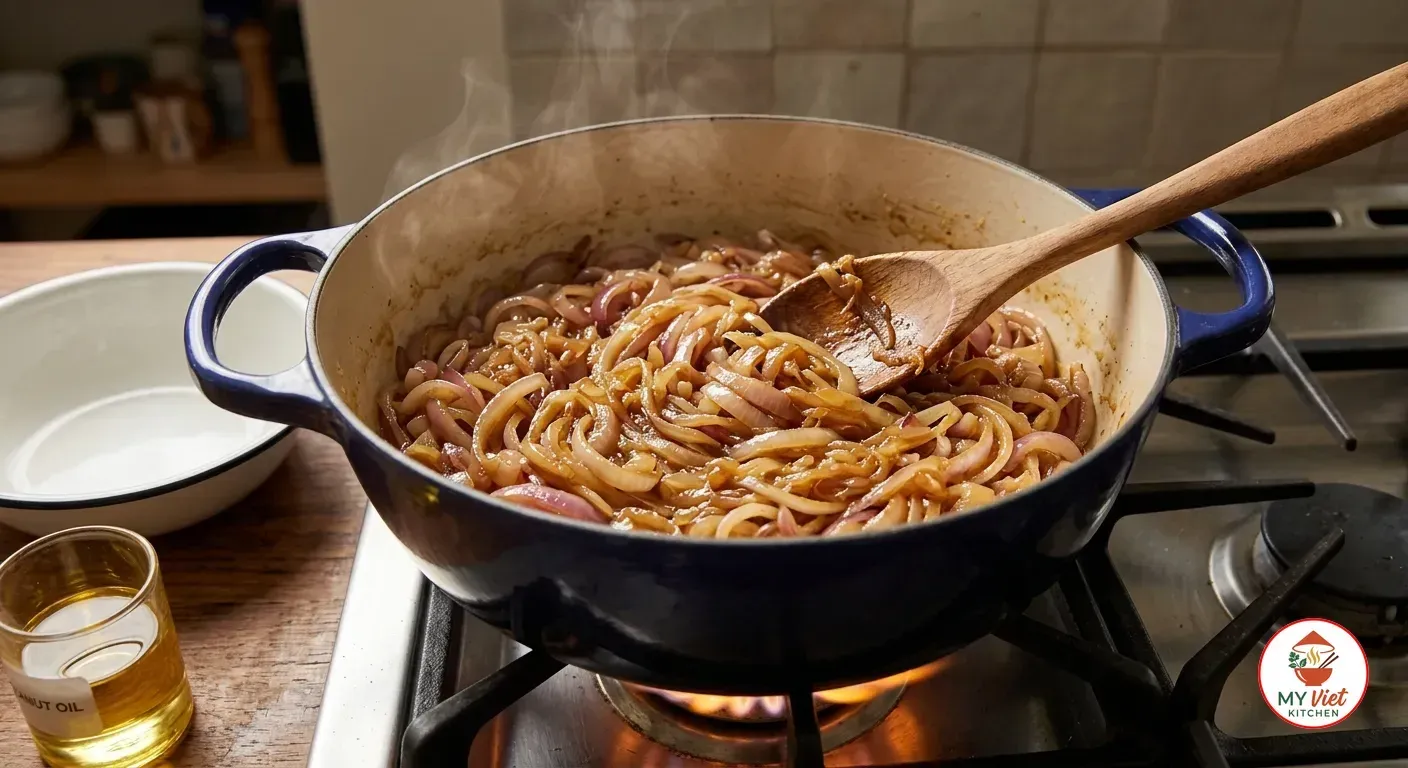
3 In the same pot, add the remaining tablespoon of peanut oil. Drop in all the reserved marinated onions at once. The massive pile of onions will seem like too much, but they cook down to roughly one quarter of their original volume. Stir them to pick up the browned bits from the chicken.
Cook the onions over medium heat for 20 to 25 minutes. Stir them every 3 to 4 minutes to ensure even browning. At first, the onions release moisture and steam. Then as the water dries up, they begin to turn golden and soft. Eventually, they develop a deep amber color and a sweet, jammy feel. This slow process is the heart of poulet yassa. If you rush this step with high heat, you get burnt onions rather than the silky, sweet sauce you want.
Step 4: Simmer the Poulet Yassa
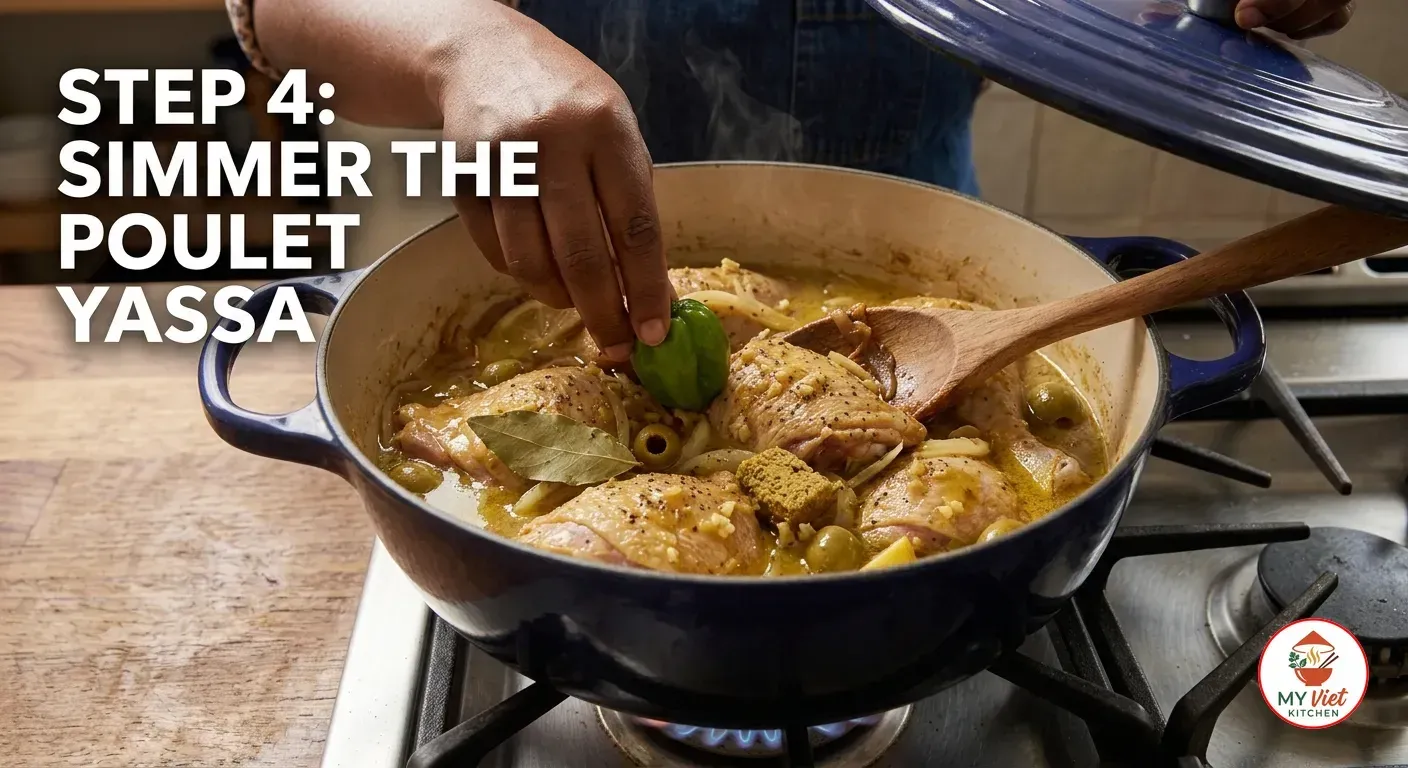
4 Once the onions reach a deep golden brown, return the chicken pieces to the pot. Nestle them into the bed of caramelized onions. Pour the reserved marinade liquid over the chicken. Then add the whole Scotch bonnet pepper, bay leaves, pitted green olives, apple cider vinegar, and crumbled bouillon cube.
Stir gently to mix everything without breaking the chicken apart. Then cover the pot tightly and reduce the heat to low. Let the poulet yassa simmer for 25 minutes. During this time, the chicken cooks through while soaking up the tangy onion sauce. Because you keep the Scotch bonnet pepper whole, it gives gentle warmth without harsh heat. Also, check the pot once halfway through and flip the chicken so both sides soak in the sauce equally.
Step 5: Serve with Steamed Rice
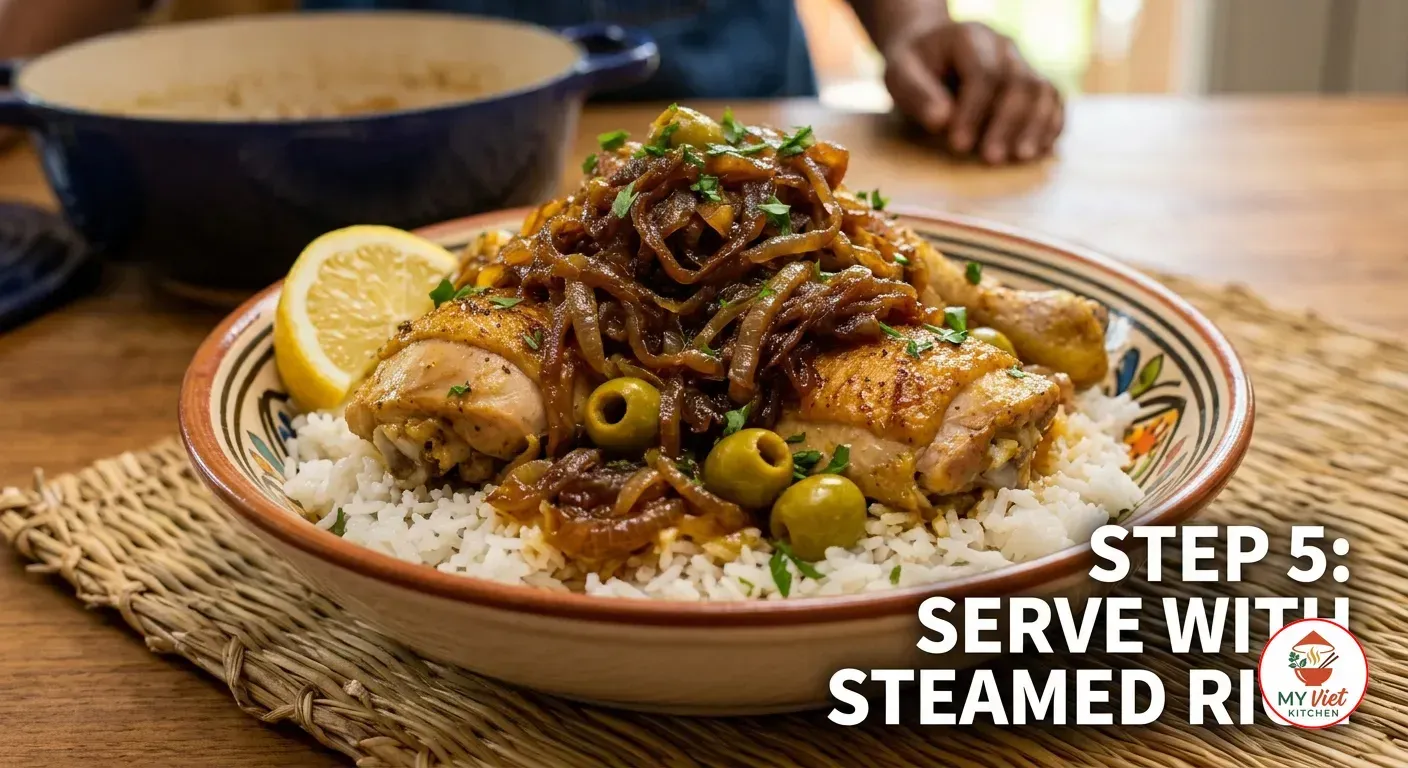
5 First, remove the bay leaves and the whole Scotch bonnet pepper from the pot. Then taste the sauce and adjust the salt. If you want more brightness, squeeze in an extra tablespoon of fresh lemon juice. The finished sauce should taste tangy, sweet from the onions, and deeply savory with a gentle mustard warmth.
Next, arrange the chicken pieces on a large serving platter or on plates. Spoon the onion sauce over each piece, making sure to include plenty of olives. Serve right away with fluffy steamed white rice. In Senegal, the rice goes on the plate first and the chicken sits right on top, so every grain soaks up that tangy onion flavor. Finally, garnish with fresh lemon wedges and chopped parsley for color.
Expert Tips for Perfect Poulet Yassa
Marinate Overnight for Maximum Flavor
While 4 hours of marination works, overnight rest in the refrigerator transforms the chicken completely. The lemon juice and mustard penetrate deep into the meat during those extra hours. As a result, every bite carries the tangy, aromatic flavor rather than just the surface. Additionally, the onions in the marinade soften and absorb the citrus, which means they caramelize faster and more evenly in the pot.
Do Not Rush the Onion Caramelization
Above all, the onions require patience. Cooking them over medium heat for a full 20 to 25 minutes builds the natural sugars through the Maillard reaction. If you crank up the heat to save time, the onions scorch on the outside while staying raw in the center. On the other hand, properly cooked onions melt into the sauce and create a silky, sweet base. This step is the single most important part of the entire recipe.
Keep the Scotch Bonnet Whole
In traditional poulet yassa, the Scotch bonnet pepper goes into the sauce whole and uncut. As a result, it releases a gentle fruity warmth without the harsh heat that comes from the seeds inside. However, if you break the pepper open during cooking, the dish becomes much spicier. For a completely mild version, use a sweet bell pepper instead.
Yassa Across Senegal and West Africa
While poulet yassa originated in the Casamance region, different parts of Senegal and neighboring countries have developed their own versions. Here is how the dish changes as it travels across the region.
| Region | Key Differences |
|---|---|
| Casamance (original) | Uses wood-fired grilling before simmering. The chicken gets a distinctive smoky flavor from charcoal. Onions are cooked until extremely soft and almost dissolved into the sauce. Green olives are always included. |
| Dakar (urban Senegal) | Often skips the grilling step and browns the chicken in a pot instead. Uses more Dijon mustard for a sharper flavor. Some cooks add a splash of white wine vinegar for extra tang. Served at restaurants and celebrations throughout the capital. |
| Gambia | Known locally as yassa, the Gambian version often uses more lemon juice and less mustard. Some cooks add tomato paste to the onion sauce for a slightly different color and sweetness. Served with the same steamed rice tradition. |
| Ivory Coast | The Ivorian adaptation sometimes includes carrots and bell peppers in the onion base. The sauce tends to be thinner and more broth-like compared to the thick Senegalese version. Often paired with attieke (fermented cassava couscous) instead of rice. |
| Guinea-Bissau | This version frequently adds palm oil to the sauce for a richer, more orange-hued result. The marination time tends to be shorter, and the dish often includes more garlic and ginger for extra aromatic punch. |
Serving Suggestions
In Senegal, poulet yassa arrives at the table as a generous main course meant to feed the whole family. The tangy onion sauce demands a starchy companion to soak up every last drop. Here are the best ways to round out the meal.
The Perfect Accompaniments:
- Steamed white rice: This is the most traditional and popular pairing for poulet yassa. Jasmine rice or broken rice works best because the grains absorb the tangy sauce beautifully. Pile the rice high and top it with chicken and plenty of onion sauce.
- Couscous: Fine-grain couscous makes an excellent alternative to rice. The small grains trap the onion sauce in every bite. In some parts of Senegal, couscous replaces rice as the preferred starch for yassa dishes.
- Fonio: This ancient West African grain has a light, fluffy texture similar to couscous. Fonio pairs naturally with poulet yassa because both ingredients come from the same culinary tradition. It cooks in just 5 minutes and absorbs the tangy sauce well.
- Crusty French bread: Senegal’s colonial history means that baguettes remain a staple at many meals. Tearing off chunks of crusty bread and dragging them through the onion sauce is a deeply satisfying way to enjoy every last drop.
Beverage Pairings:
- Bissap (hibiscus tea): This deep red drink is the most popular beverage in Senegal. Its tart, cranberry-like flavor cuts through the richness of the onion sauce and refreshes the palate. Served ice-cold with sugar, bissap complements the tangy notes of the lemon marinade.
- Ginger juice (jus de gingembre): Freshly made ginger juice with a touch of sugar and lemon is another Senegalese staple. The spicy kick of ginger pairs well with the bright flavors of poulet yassa and aids digestion after a rich meal.
- Bouye (baobab juice): Made from the fruit of the baobab tree, this creamy, slightly tart drink is rich in vitamin C. Its mild sweetness and thick texture create an interesting contrast with the savory, acidic chicken dish.
Storage and Reheating
Refrigerator: Store leftover poulet yassa in a sealed container for up to 4 days. The flavors continue to develop as the chicken sits in the tangy onion sauce. Many Senegalese cooks say that poulet yassa tastes even better the next day because the lemon and mustard flavors meld more deeply into the meat during refrigeration.
Freezer: Freeze portions of poulet yassa in airtight containers for up to 3 months. The onion sauce freezes exceptionally well. Thaw overnight in the refrigerator before reheating. The chicken may lose a small amount of texture after freezing, but the sauce remains excellent.
Reheating: Warm the poulet yassa gently in a covered pot over medium-low heat. Add a splash of water or chicken broth if the sauce has thickened too much during storage. Stir the onions occasionally to prevent sticking. Stovetop reheating produces much better results than the microwave because it distributes heat evenly and keeps the chicken tender.
Common Mistakes to Avoid
1. Skipping the Marination Time
The biggest mistake with poulet yassa is not marinating the chicken long enough. A quick 30-minute soak barely scratches the surface. In fact, the lemon juice and mustard need at least 4 hours to soak into the meat and break down the fibers. Without proper marination, your chicken tastes bland inside even if the sauce around it is flavorful. So plan ahead and give the marinade time to work.
2. Using Too Few Onions
Poulet yassa demands a seemingly absurd amount of onions. Six large onions for one chicken may look excessive, but those onions shrink a lot during cooking. If you reduce the amount, you end up with a thin, watery sauce instead of the thick, jammy onion blanket that defines this dish. Therefore, trust the recipe and use all six onions for the real deal.
3. Cutting Open the Scotch Bonnet Pepper
Slicing or piercing the Scotch bonnet pepper before adding it to the sauce lets its fiery seeds loose in the dish. This turns a nice warm sauce into a very hot one. Instead, the traditional method keeps the pepper whole so it adds gentle fruity warmth. At the end, remove it carefully without breaking it.
Frequently Asked Questions
Can I grill the chicken instead of browning it in a pot?
Yes, grilling is actually the original Casamance method for poulet yassa. After marinating, grill the chicken over medium-high heat until it gets char marks and a smoky flavor. Then transfer the grilled pieces to the pot with the onions for simmering. As a result, the grilling adds a smoky touch that takes the finished dish to another level.
What type of mustard works best for poulet yassa?
Dijon mustard is the traditional choice for poulet yassa. Its smooth texture and sharp, clean heat blend well into the marinade and sauce. However, avoid yellow American mustard, which is too mild, and whole-grain mustard, which has a different texture. If Dijon is not available, use a smooth, hot English mustard at half the amount since it packs more heat per tablespoon.
Can I make yassa with fish instead of chicken?
Absolutely. Yassa au poisson (fish yassa) is just as popular in Senegal as the chicken version. For this, use firm white fish like sea bass, red snapper, or tilapia. However, marinate the fish for only 1 to 2 hours since it absorbs the acid faster than chicken. Then grill or pan-sear the fish before adding it to the onion sauce for just 5 to 10 minutes of simmering.
Variations and Adaptations
Yassa au Poisson (Fish Yassa):
For this version, replace the chicken with whole fish or thick fish steaks. Use the same lemon-mustard marinade but reduce the marination time to 1 to 2 hours. Then grill the fish first for best results and simmer it in the onion sauce for 10 minutes. Fish yassa is lighter than the chicken version and especially popular along the Senegalese coast. Serve it over rice with extra lemon wedges.
Vegetarian Yassa:
For this version, skip the chicken entirely and build the dish around the onion sauce. Instead, add firm tofu, chickpeas, or roasted vegetables to the onions. Also use vegetable broth in place of chicken bouillon. The tangy lemon-mustard-onion mix is so flavorful that it carries the dish even without meat. In particular, roasted cauliflower steaks work well as a chicken substitute.
Spicy Yassa:
For those who enjoy heat, slice the Scotch bonnet pepper open before adding it to the sauce. You can also add a second pepper or stir in a tablespoon of harissa paste while simmering. Furthermore, adding a pinch of ground cayenne to the marinade puts heat right into the chicken. Then serve with extra lemon wedges to balance the spice.
The Cultural Significance of Poulet Yassa
Poulet yassa holds a place of deep importance in Senegalese life. In Senegal, food is never just fuel. Instead, it is a language of community and identity. Families gather around a single large bowl and eat together with their hands, sharing the chicken and rice in an act of togetherness called teranga, the Wolof word for hospitality. Consequently, serving poulet yassa to guests signals warmth, generosity, and respect.
The dish also carries the history of the Casamance region, where the Jola people developed the yassa method long before it became a national hit. In Casamance, yassa appears at every big event: weddings, naming ceremonies, holidays, and harvest celebrations. The cooking is often a group effort, with family members taking turns stirring the onions, squeezing lemons, and tending the grill. In other words, making poulet yassa is as much about the gathering as it is about the food itself.
In the Senegalese diaspora, poulet yassa serves as a powerful reminder of home. Senegalese communities in Paris, New York, and across the world prepare this dish for holidays and community events. The aroma of caramelizing onions and lemon-marinated chicken fills kitchens and transports people back to their family homes. For more West African dishes, explore our collection of African recipes including Senegalese thieboudienne and Senegalese mafe.
Conclusion
Making authentic poulet yassa at home comes down to three essential steps: marinate the chicken long enough in lemon and mustard, caramelize the onions slowly and patiently, and simmer everything together until the flavors merge into one incredible sauce. These techniques are simple but require attention and time. Master them and you will produce a dish that captures the vibrant spirit of Senegalese cooking.
Whether you prepare this poulet yassa for a weeknight dinner or a festive gathering, the combination of tangy lemon-marinated chicken, sweet caramelized onions, briny olives, and fragrant mustard creates one of West Africa’s most satisfying meals. For more Senegalese and West African recipes, explore our growing collection of African dishes including West African jollof rice and Nigerian suya.