Ful medames is the undisputed breakfast of Egypt. This ancient fava bean stew has fed millions every morning for thousands of years, and one taste explains why. Creamy mashed beans meet sharp garlic, bright lemon juice, warm cumin, and a generous drizzle of olive oil. If you want an authentic ful medames recipe that captures the soul of Egyptian street food, this guide gives you everything you need to make it at home.
Prep Time: 15 minutes | Cook Time: 30 minutes | Servings: 4
Difficulty: Easy | Calories: ~320 per serving
What Makes Ful Medames Special?
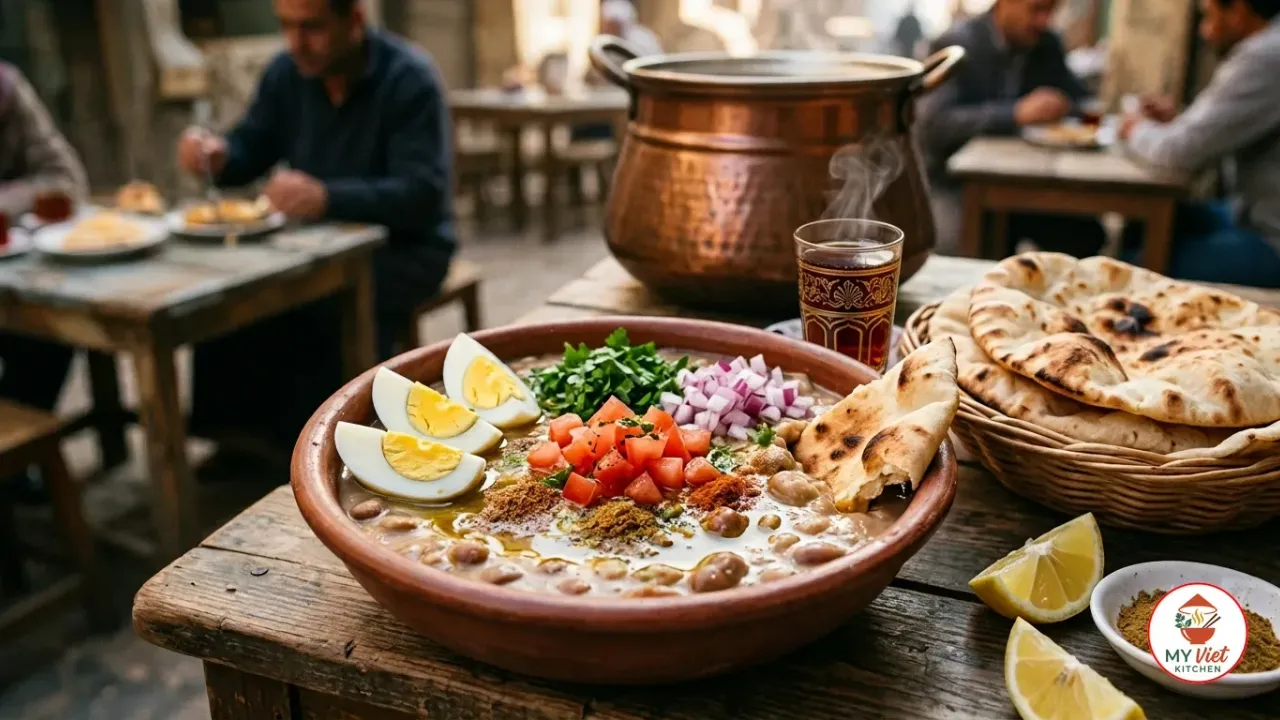
Ful medames holds a place in Egyptian culture that no other dish can claim. Walk through any city in Egypt at dawn, and you will find ful carts on almost every corner. Street vendors ladle the stew from massive copper pots called idra that have been simmering overnight. The aroma of garlic and cumin fills the morning air. Workers, students, and families all line up for their bowl before the day begins.
In fact, the dish traces its roots back to ancient Egypt. Archaeologists have found fava bean remains in pharaonic tombs. This suggests that Egyptians have eaten some form of this stew for over four thousand years. Today, ful medames remains the most eaten dish in the entire country. It crosses every social line. You will find it in humble street stalls and also in luxury hotel buffets.
What makes this ful medames recipe so good is its simplicity. The dish relies on just a few key items, yet it gives you deep flavor. First, fava beans bring earthy richness and creamy body. Then garlic adds punch. Lemon juice lifts the heavy beans with bright acidity. Meanwhile, cumin ties it all together with warm, toasty notes. Finally, olive oil adds silkiness and rounds out each bite. In short, no complex methods are needed. Just good items treated with care.

Choosing the Right Fava Beans for Your Ful Medames Recipe
The fava beans you pick will shape the texture and taste of your ful medames. Here are your best options for a great result.
- Dried fava beans (traditional choice): Soak them overnight in cold water, then simmer for two to three hours until completely tender. Dried beans produce the deepest, earthiest flavor and the creamiest texture. This is how Egyptian street vendors prepare their ful.
- Canned fava beans (best for convenience): Drain and rinse them before cooking. Canned beans cut your cooking time to under 30 minutes while still delivering great results. Look for brands labeled “foul medames” at Middle Eastern grocery stores for the best quality.
- Frozen fava beans: A solid middle ground between dried and canned. Thaw them fully before cooking. Frozen beans retain more of their fresh flavor than canned versions, and they cook in about 20 minutes after thawing.
Ingredients for Ful Medames
Main Ingredients:
- 2 cans (14 oz each) fava beans, drained and rinsed
- 4 cloves garlic, minced
- 3 tablespoons fresh lemon juice
- 3 tablespoons extra virgin olive oil, plus more for drizzling
- 1 teaspoon ground cumin
- 1/2 teaspoon ground coriander
- 1/2 cup water or vegetable broth
- Salt and black pepper to taste
- 1/4 teaspoon cayenne pepper (optional)
For the Toppings:
- 1 medium tomato, diced
- 1/4 cup fresh flat-leaf parsley, chopped
- 1 small red onion, finely diced
- 2 hard-boiled eggs, quartered
For Serving:
- Warm pita bread or Egyptian baladi bread
- Lemon wedges
- Extra virgin olive oil for drizzling
Pro tip: Toast your cumin seeds in a dry pan for two minutes before grinding them. Freshly ground toasted cumin releases aromatic oils that pre-ground cumin simply cannot match, and it transforms the entire character of your ful medames.
Step-by-Step Instructions
Step 1: Cook the Fava Beans with Garlic
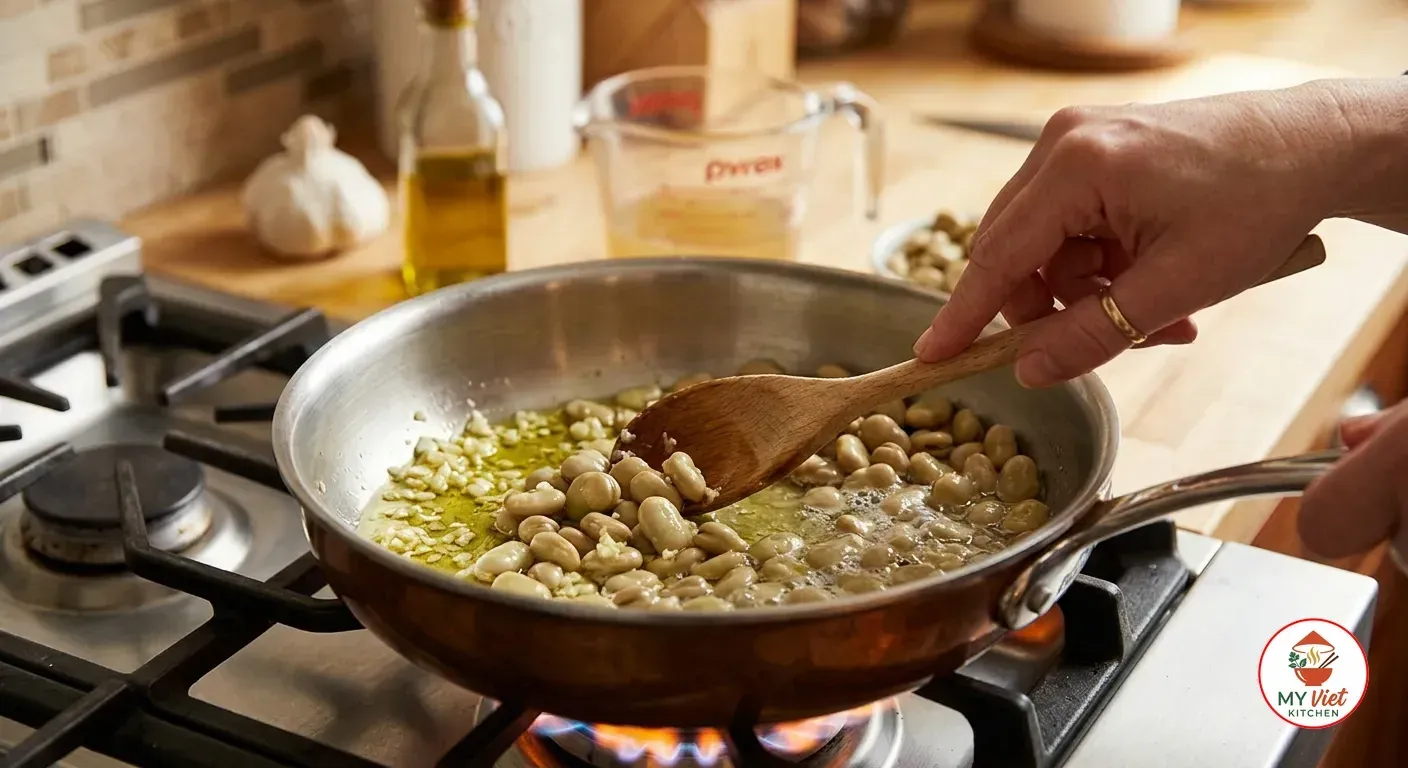
1Heat three tablespoons of olive oil in a deep saucepan over medium heat. Add the minced garlic and stir for about one minute until it turns fragrant and barely golden. Do not let the garlic brown, because burned garlic turns bitter and will ruin the flavor of the entire dish. Add the drained fava beans along with half a cup of water or vegetable broth. Stir gently to combine everything. Bring the mixture to a gentle simmer and cook for 15 minutes, stirring occasionally to prevent sticking.
Step 2: Mash and Season the Beans
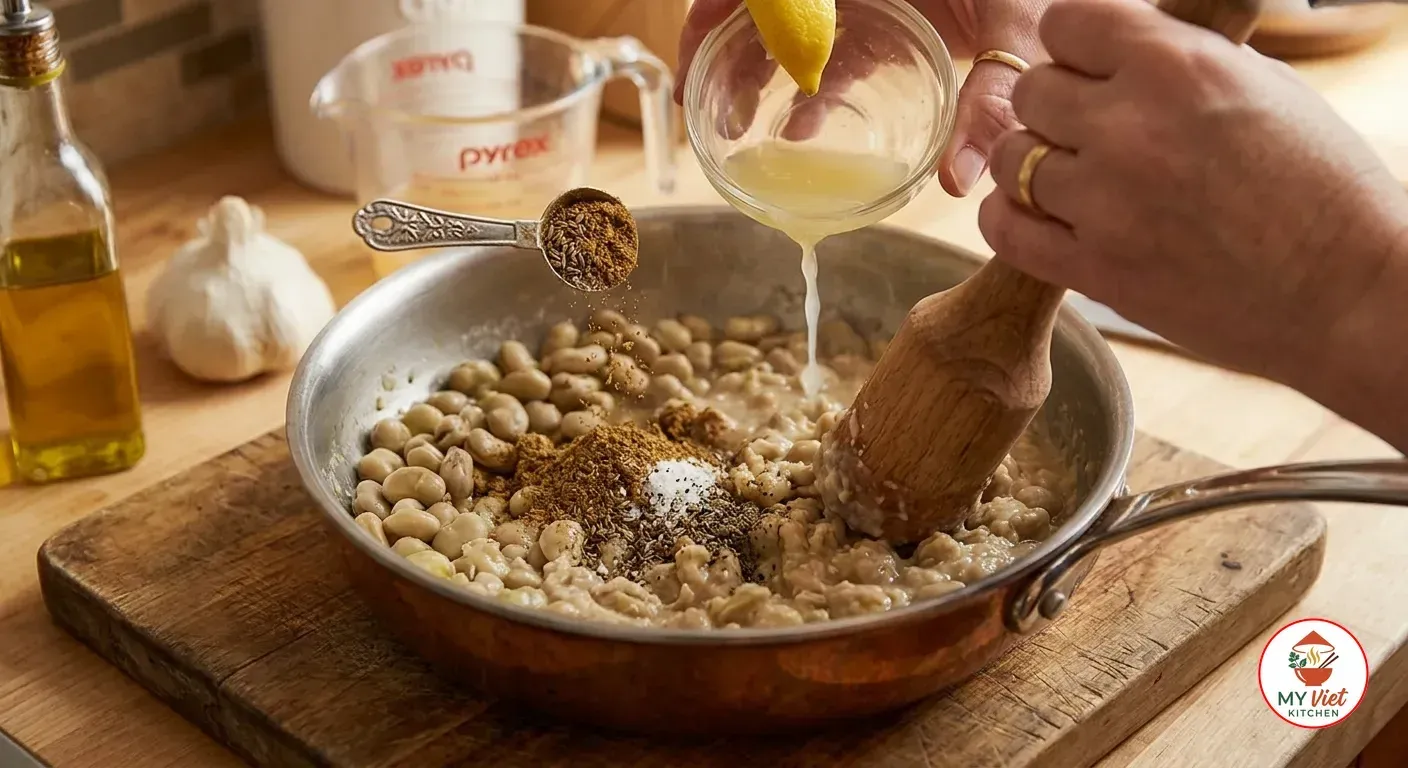
2Use a potato masher or the back of a sturdy fork to crush roughly half of the beans in the pot. Leave the remaining beans whole so you get a mix of creamy and chunky textures. This contrast is what gives authentic ful medames its signature character. Now stir in the ground cumin, ground coriander, fresh lemon juice, salt, and black pepper. Cook for another five minutes over medium-low heat, stirring frequently. The stew should thicken into a rich, porridge-like consistency.
Step 3: Add the Cayenne and Adjust Seasoning
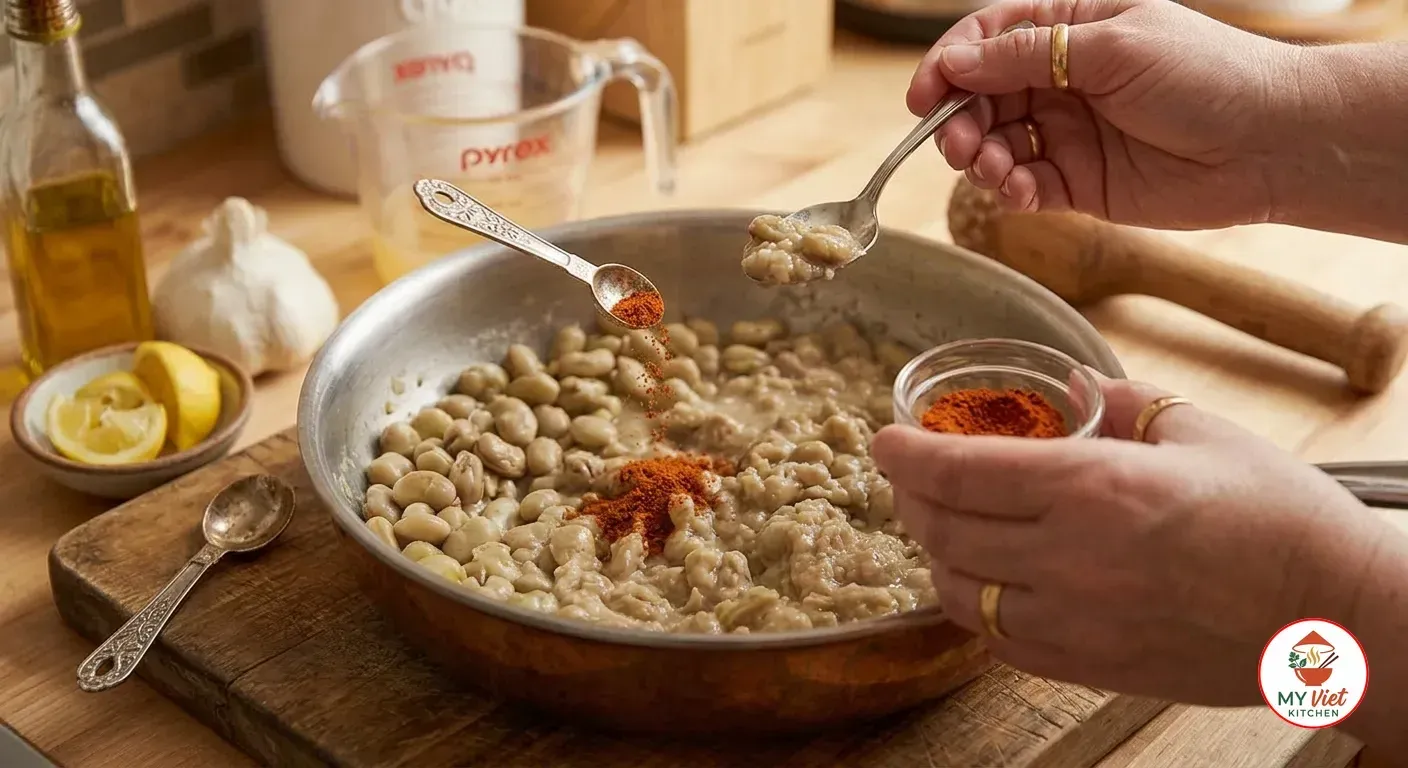
3If you enjoy heat, stir in the cayenne pepper at this stage. Start with a quarter teaspoon and add more to taste. Now comes the most important part of this ful medames recipe: tasting and adjusting. Add more lemon juice if the stew needs brightness. Add more cumin if you want deeper warmth. Increase the salt if the flavors feel flat. The finished ful should taste bold, tangy, and earthy all at once. Egyptian cooks taste constantly during this step because the balance of acid, salt, and spice defines a great bowl of ful.
Step 4: Serve with Traditional Toppings
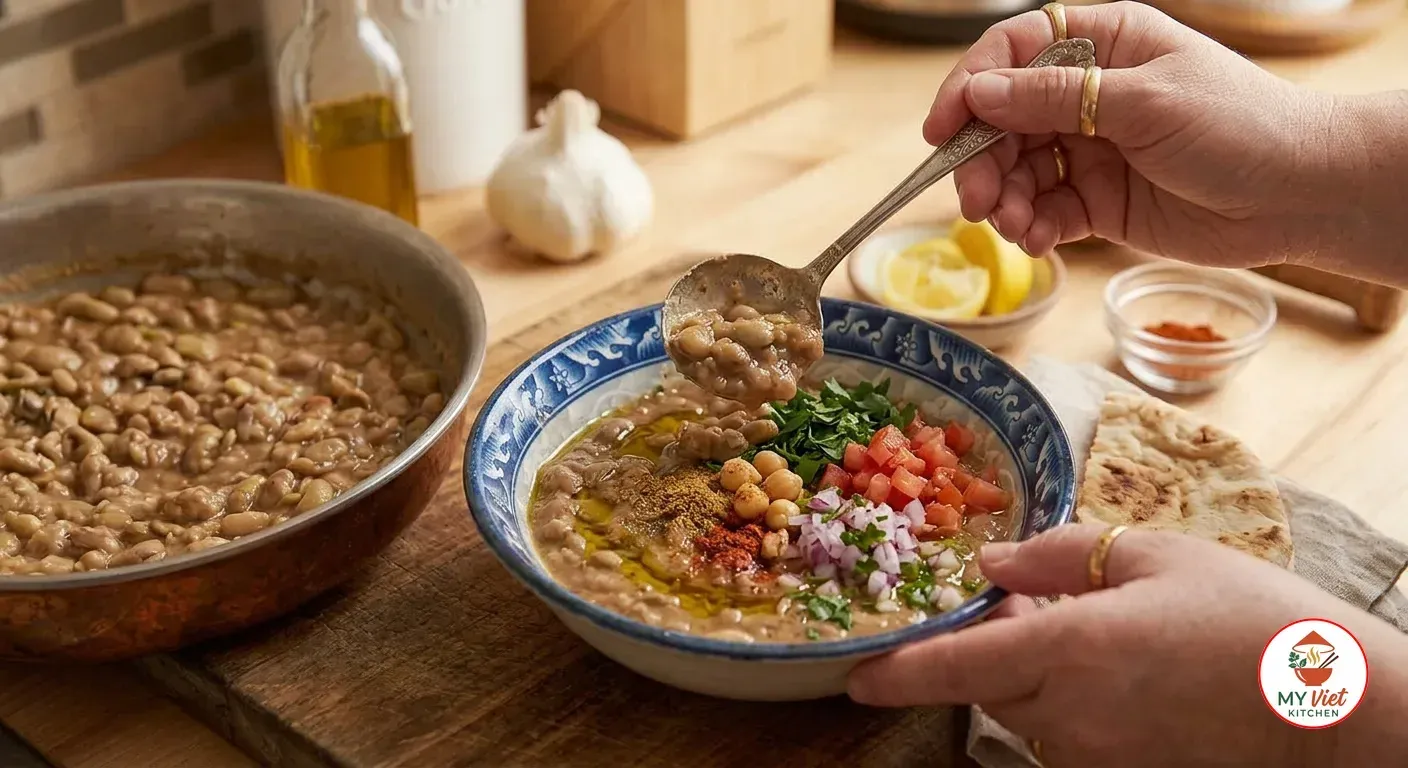
4Transfer the ful medames to a wide, shallow serving bowl. Use the back of a spoon to create a shallow well in the center. Drizzle a generous amount of extra virgin olive oil into the well and over the surface. Scatter the diced tomatoes, red onion, and chopped parsley on top. Place the quartered hard-boiled eggs around the edges. Serve immediately with warm pita bread and lemon wedges on the side. Egyptians use pieces of bread to scoop up the stew directly from the communal bowl.
Expert Tips for Perfect Results
Do Not Skip the Olive Oil
Olive oil is not just a garnish in ful medames. In fact, it serves as a key flavor part that adds richness and body to the stew. Use a good extra virgin olive oil both for cooking and as a final drizzle. Additionally, the fat helps your body absorb iron and other nutrients in the fava beans. So be generous with it.
Get the Mash Texture Right
The ideal ful medames has a mix of smooth and chunky beans. So mash about half and leave the rest whole. If you mash all of them, you lose the nice bite of whole beans. On the other hand, if you mash too few, the stew will lack creamy body. Finding this balance is what sets a good bowl apart from a great one.
Use Fresh Lemon Juice Only
Bottled lemon juice lacks the bright, clean acid that fresh lemons give. Because lemon juice is one of the main flavors in this ful medames recipe, bottled juice will make a flat result. Instead, squeeze your lemons right before you add them to the pot for the best impact.
Ful Medames Across the Middle East
While Egypt claims ful medames as its national dish, many neighboring countries have adopted and adapted it. Here is how the most popular regional versions compare.
| Region | Key Differences |
|---|---|
| Egypt (Classic) | Simple preparation with garlic, lemon, cumin, and olive oil. Served with pita and hard-boiled eggs. |
| Lebanon and Syria | Often mixed with chickpeas and topped with tahini sauce. Lighter seasoning with more herbs. |
| Sudan | Includes peanut butter or sesame paste. Richer and creamier than the Egyptian version. |
| Yemen | Spiced with sahawiq chili paste. Much hotter than other versions. |
| Saudi Arabia | Topped with ghee instead of olive oil. Often includes tomato paste in the base. |
Serving Suggestions
In Egypt, ful medames forms the centerpiece of a traditional breakfast spread. The stew arrives in a communal bowl, and everyone tears off pieces of bread to scoop directly from it. Building a full spread around your ful transforms a simple meal into a feast.
The Perfect Accompaniments:
- Egyptian baladi bread: This rustic, slightly chewy flatbread is the traditional vehicle for scooping ful. Warm pita bread works as an excellent substitute.
- Falafel (ta’amiya): Egyptian falafel made from fava beans pairs naturally with ful medames. Together they form the iconic Egyptian breakfast combination.
- Koshari: For a larger Egyptian meal, serve ful medames alongside koshari to create an authentic spread that showcases the best of Egyptian comfort food.
- Pickled vegetables: Tangy pickled turnips, carrots, and cucumbers add crunch and acidity that cut through the earthy richness of the beans.
Beverage Pairings:
- Egyptian black tea: Strong, sweetened black tea is the classic breakfast drink served alongside ful medames across Egypt.
- Fresh sugarcane juice: Popular at Egyptian street stalls, the natural sweetness of sugarcane balances the savory, garlicky beans perfectly.
- Karkade (hibiscus tea): This tart, ruby-red herbal tea refreshes the palate and complements the earthy flavors of the fava beans.
Storage and Reheating
Refrigerator: Store leftover ful medames in an airtight container for up to 4 days. The flavors deepen overnight as the cumin and garlic continue to meld, so many people find that leftover ful tastes even better the next day.
Freezer: Freeze the cooked ful medames without toppings in freezer-safe containers for up to 3 months. Thaw overnight in the refrigerator before reheating. The texture holds up well after freezing.
Reheating: Warm the ful medames in a saucepan over medium-low heat, adding a splash of water to loosen the consistency. Stir occasionally until heated through. Add fresh lemon juice and olive oil after reheating to brighten the flavors. Avoid microwaving if possible, because stovetop reheating produces a much better texture.
Common Mistakes to Avoid
1. Under-Seasoning the Beans
Fava beans have a mild, earthy taste that needs bold spice to shine. For instance, many first-time cooks add too little garlic, lemon, or cumin. As a result, the dish tastes bland. So be generous with your spices. Taste as you go, because ful medames should hit you with bright acid and warm spice in every bite.
2. Skipping the Olive Oil Drizzle
The final drizzle of olive oil is key. It adds fruity richness that ties all the flavors together and gives the stew a glossy look. Without it, the ful can taste dry and flat. Therefore, always finish with a big pour of your best extra virgin olive oil.
3. Mashing All the Beans Completely
Over-mashing turns ful medames into a paste that lacks life. Instead, keep a nice contrast between creamy mashed beans and whole ones that pop in your mouth. So mash about half and leave the rest intact. This way, you get the best of both worlds in flavor and texture.
Frequently Asked Questions
What is ful medames?
Ful medames is a traditional Egyptian stew made from slow-cooked fava beans seasoned with garlic, lemon juice, olive oil, and cumin. It serves as the national breakfast dish of Egypt and has been a dietary staple for thousands of years. The name translates roughly to “buried beans,” referring to the ancient method of cooking them in pots buried in hot embers overnight.
Can you make ful medames with canned beans?
Yes, canned fava beans produce excellent ful medames with a fraction of the cooking time. Drain and rinse them before adding them to the pot. While dried beans give a slightly deeper flavor, canned beans are the practical choice for weekday breakfasts. Most Egyptian households keep canned fava beans in the pantry specifically for quick ful.
Is ful medames vegan?
The base stew itself is completely vegan, since it contains only fava beans, garlic, olive oil, lemon juice, and spices. The hard-boiled eggs and any dairy toppings are optional additions. Simply skip the eggs and serve with extra vegetables and tahini for a fully plant-based meal that is still rich in protein and fiber.
What is the difference between ful medames and falafel?
Both dishes star fava beans, but they differ entirely in preparation. Ful medames is a stew of cooked whole beans that are partially mashed and seasoned. Egyptian falafel, called ta’amiya, uses raw soaked fava beans that are ground with fresh herbs, shaped into patties, and deep-fried until crispy. Many Egyptians enjoy both together for breakfast.
How do you pronounce ful medames?
Ful medames is pronounced “fool meh-DAH-mes.” The word “ful” rhymes with “pool” and refers to fava beans in Arabic. You may also see it spelled as “foul mudammas” or “ful mudammes,” but they all refer to the same beloved Egyptian dish.
Variations and Adaptations
Ful Medames with Tahini:
Add two tablespoons of tahini to the mashed beans for a richer, nuttier version. The sesame paste creates an incredibly creamy texture and adds a layer of complexity to the flavor profile. This variation is especially popular in Lebanese and Palestinian preparations of the dish.
Ful Medames Alexandrian Style:
In Alexandria, cooks add diced tomatoes and green chili peppers directly into the stew during cooking. The tomatoes break down and create a slightly tangy sauce, while the chilies add a pleasant heat. This coastal variation is looser and more sauce-like than the thicker Cairo version.
Spicy Ful with Egg Scramble:
Instead of topping with hard-boiled eggs, scramble eggs with a pinch of cumin and fold them into the hot stew just before serving. The eggs create ribbons throughout the ful and add extra protein. Finish with a drizzle of hot sauce or a sprinkle of chili flakes for a bolder breakfast.
The Cultural Significance of Ful Medames
Ful medames is far more than just breakfast in Egypt. Above all, it stands for community and shared identity. Every morning, millions of Egyptians start their day with a bowl of ful, just as their ancestors did long ago. The dish shows up at every level of society, from the humblest street corner to the grandest table. Indeed, in a country with vast cultural range, ful medames is the one food that unites everyone.
Traditionally, cooks use a large copper pot called an idra that sits over low heat all night. Street vendors light their fires in the evening so the beans turn tender by dawn. As a result, this slow process gives the beans a depth of flavor that fast cooking cannot match. The sight of steam rising from an idra on a cool morning is one of the most iconic images of Egyptian food culture.
Furthermore, during Ramadan, ful medames takes on even greater weight. Families gather at dawn to eat suhoor, the pre-fasting meal, and ful is the top choice. Because of its high protein and fiber, it keeps people full through the long fasting hours. After sunset, many families enjoy ful again as part of the evening spread. In short, the dish anchors the rhythms of Egyptian life like few foods anywhere in the world.
Conclusion
This ful medames recipe brings one of the oldest and most loved dishes into your home. First, season boldly with garlic and cumin. Then balance the flavors with plenty of fresh lemon juice. Finally, finish with a big drizzle of quality olive oil. If you get those three things right, you will make a bowl that rivals what you would find on the streets of Cairo.
Whether you serve it as a hearty breakfast, a quick lunch, or a protein-packed dinner, ful medames delivers comfort and nutrition in equal measure. For more authentic African and Middle Eastern recipes, explore our collection of African dishes and discover the rich culinary traditions of the continent.