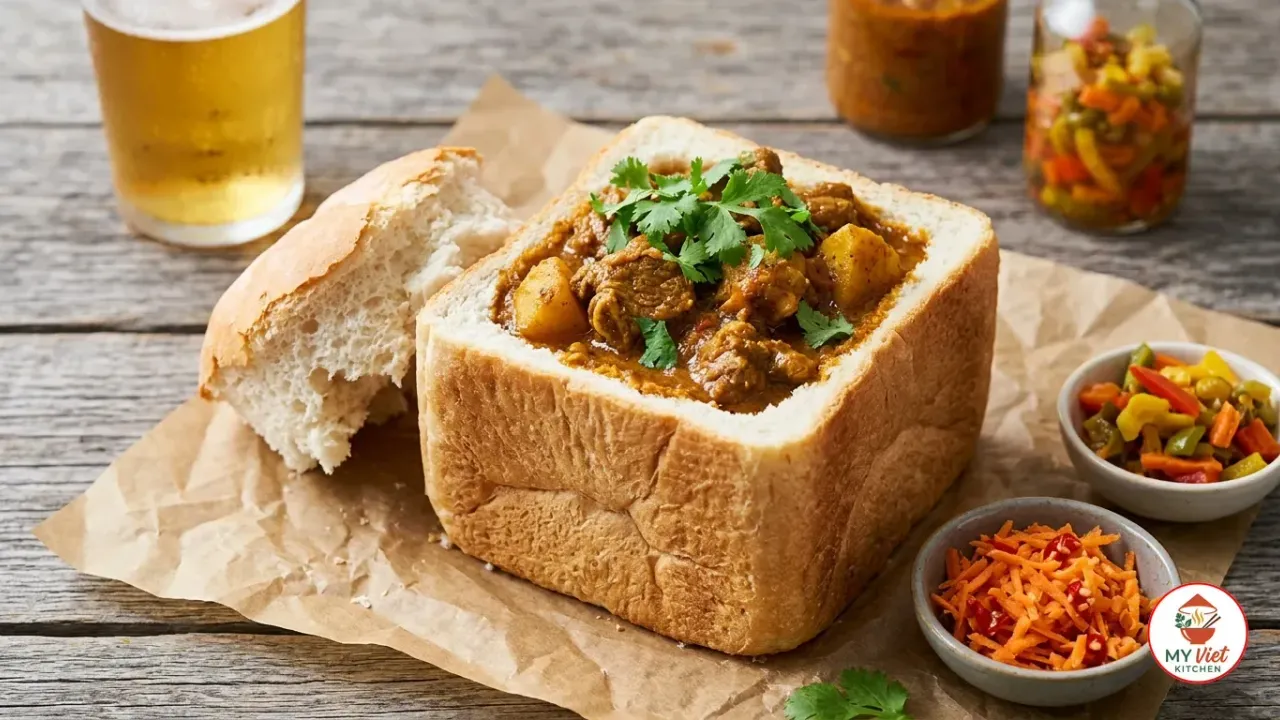
Bunny chow is the ultimate South African street food, and this bunny chow recipe shows you exactly how to make it at home. This iconic Durban dish fills a hollowed-out quarter loaf of white bread with a thick, spiced lamb curry that soaks into every bite. Born from the Indian community of KwaZulu-Natal, bunny chow has become one of the most beloved dishes in all of South Africa. Rich curry, soft bread, and bold spices come together in a meal that you eat with your hands.
Prep Time: 25 minutes | Cook Time: 90 minutes | Servings: 4
Difficulty: Medium | Calories: ~650 per serving
What Makes This Bunny Chow Recipe Special?
Bunny chow is unlike any curry dish in the world because the bread is both the bowl and part of the meal. As the curry sits in the hollowed-out loaf, the bread absorbs the spiced gravy. Indeed, every bite combines soft, curry-soaked bread with tender meat and potatoes. As a result, this natural pairing of container and contents is what makes bunny chow so satisfying.
The curry itself draws from the Indian cooking traditions that arrived in Durban during the 1860s. Indian laborers brought their spice knowledge and adapted their recipes to local ingredients. Over generations, Durban curry developed its own identity. Specifically, it uses a bold combination of curry powder, garam masala, and fresh aromatics. Therefore, the result is a gravy that clings to the meat and coats the bread with deep, warming flavor.
What makes this bunny chow recipe especially rewarding is the simplicity of the method. You build a fragrant curry in one pot, hollow out a bread loaf, and bring them together. Despite the modest effort, the result looks impressive and tastes extraordinary. The slow-simmered lamb becomes fork-tender, and the potatoes thicken the gravy naturally. Consequently, every element works together to create something greater than the sum of its parts.

Choosing the Right Bread for Bunny Chow
The bread is just as important as the curry in a great bunny chow recipe. In fact, Durban bakeries produce loaves specifically for this dish. Here are the best options you can find outside South Africa.
- Pullman loaf (best choice): This square, dense white bread holds its shape perfectly when hollowed out. The tight crumb absorbs curry without disintegrating. Most bakeries carry this style, and it closely matches traditional Durban bread.
- Standard white sandwich loaf: A regular unsliced white loaf works well if you choose a fresh one with a thick crust. Avoid ultra-soft varieties because they collapse under the weight of the curry too quickly.
- Homemade white bread: If you bake your own, use a recipe with a slightly enriched dough. Add a tablespoon of sugar and extra butter for a sturdier crumb. Bake in a Pullman tin for the classic square shape.
Ingredients for Bunny Chow
Lamb Curry Filling:
- 2 pounds boneless lamb shoulder, cut into 1-inch cubes
- 3 tablespoons vegetable oil
- 2 large onions, finely diced
- 4 cloves garlic, minced
- 1 tablespoon fresh ginger, grated
- 2 medium potatoes, peeled and cubed
- 1 can (14 ounces) diced tomatoes
- 1 tablespoon tomato paste
- 1 cup water or lamb stock
Spice Blend:
- 3 tablespoons curry powder
- 1 teaspoon ground cumin
- 1 teaspoon ground coriander
- 1 teaspoon garam masala
- 1/2 teaspoon ground turmeric
- 1/2 teaspoon cayenne pepper
- 1 cinnamon stick
- 4 whole cardamom pods, lightly crushed
- 4 curry leaves (fresh or dried)
- Salt and black pepper to taste
For Serving:
- 1 large unsliced white bread loaf
- Fresh cilantro for garnish
Pro tip: The curry must be thick, not soupy. A runny gravy turns the bread into mush before you finish eating. If your curry looks too thin after simmering, remove the lid for the last 10 minutes and let the liquid reduce. The gravy should coat the back of a spoon.
Step-by-Step Instructions
Step 1: Season and Brown the Lamb
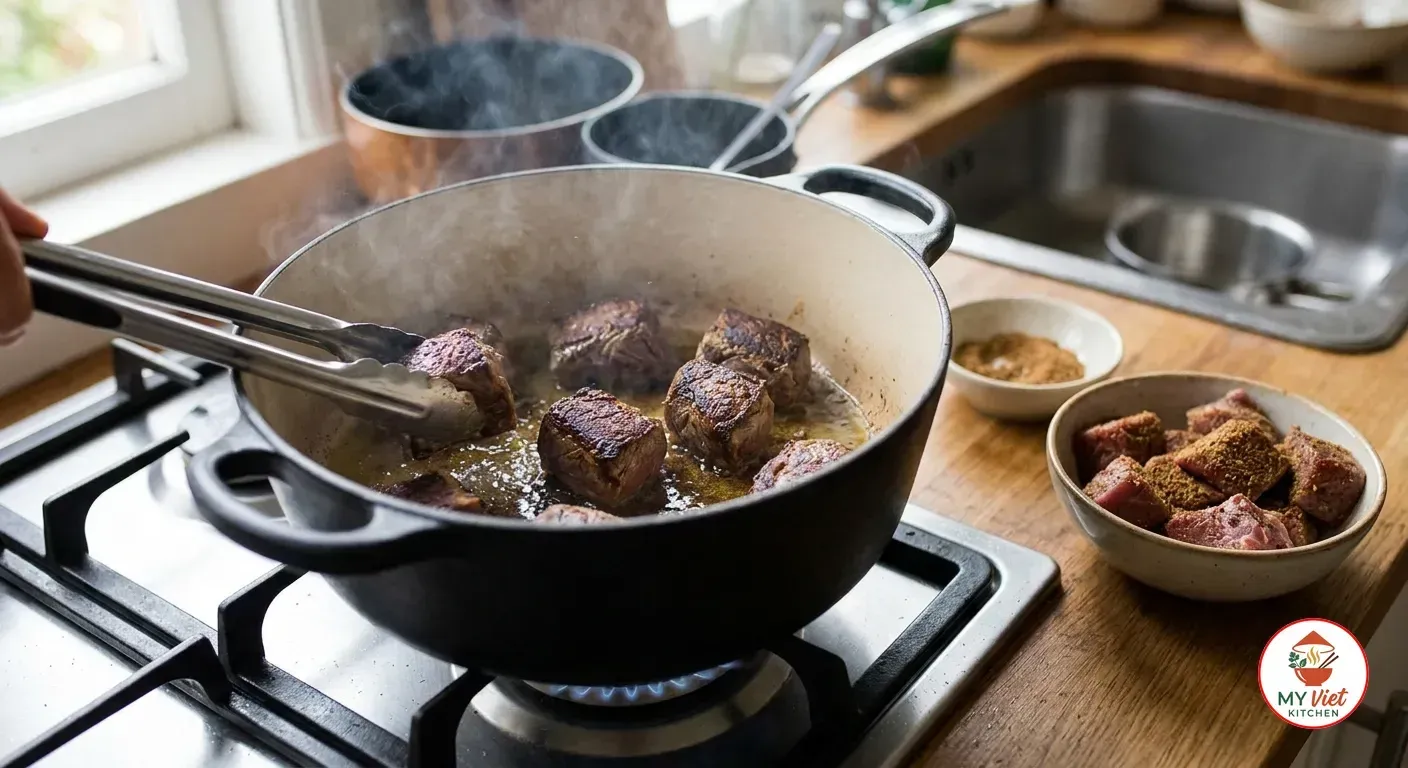
1 Pat the lamb cubes dry with paper towels. Season them generously with salt, pepper, and 1 tablespoon of curry powder. Heat the vegetable oil in a large heavy-bottomed pot or Dutch oven over high heat. When the oil shimmers, add the lamb in batches. Do not crowd the pot. Sear each batch for 3 to 4 minutes until deep brown on all sides.
This browning step creates the foundation of flavor for the entire curry. Essentially, the Maillard reaction produces hundreds of new flavor compounds on the surface of the meat. If you skip this step or crowd the pot, the lamb steams instead of searing. As a result, the curry loses its depth. Finally, transfer the browned lamb to a plate and set it aside.
Step 2: Build the Curry Base
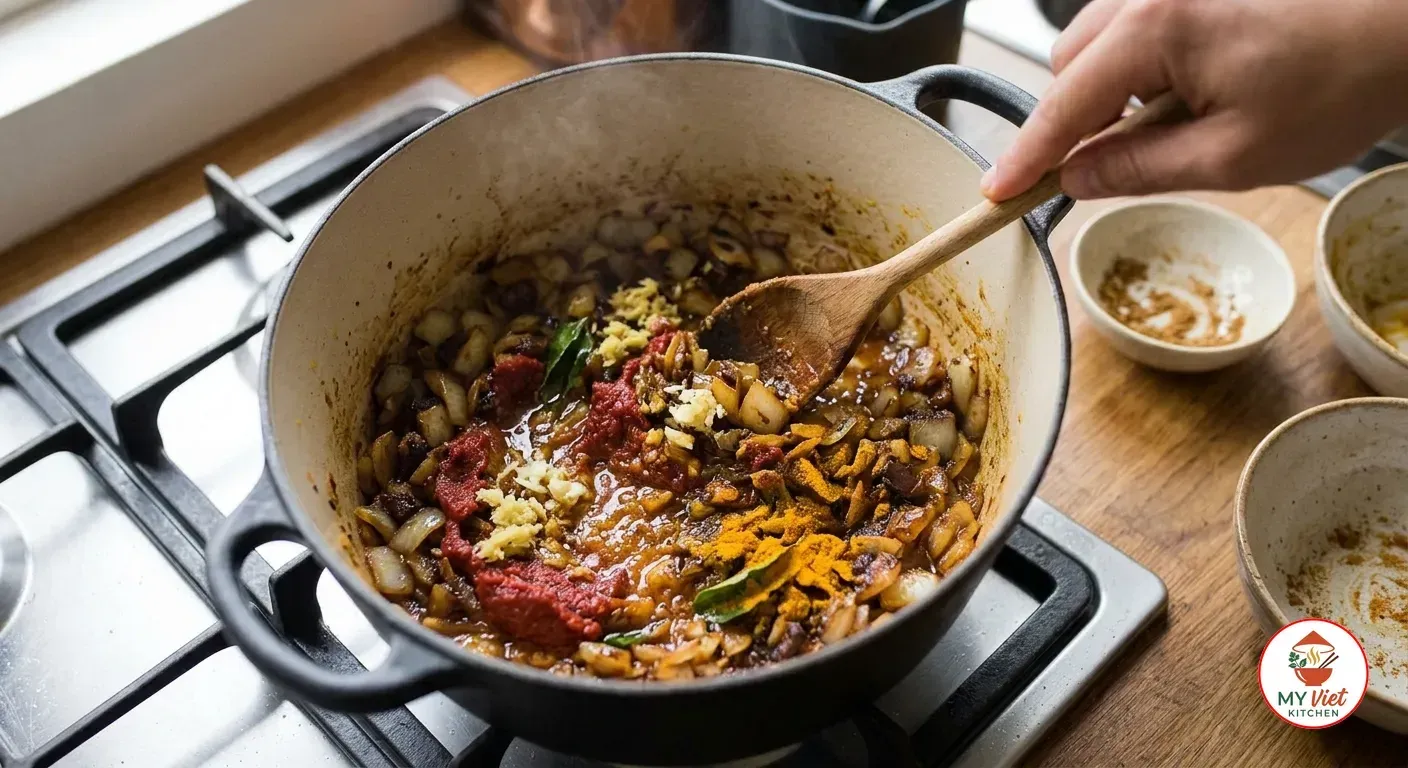
2 Reduce the heat to medium. Add the diced onions to the same pot with all the browned bits on the bottom. Cook the onions for 6 to 8 minutes, stirring occasionally, until they turn golden and soft. The onions lift those caramelized bits from the pot, which adds richness. Then add the minced garlic and grated ginger. Stir for 1 minute until fragrant.
Now add the remaining curry powder, cumin, coriander, garam masala, turmeric, and cayenne pepper. Stir constantly for 2 minutes to bloom the spices in the hot oil. Importantly, this step releases the essential oils and deepens the flavor. Next, add the tomato paste and stir for another minute. Then pour in the diced tomatoes. Cook for 5 minutes until the tomatoes break down into a thick sauce.
Step 3: Simmer the Curry Until Tender
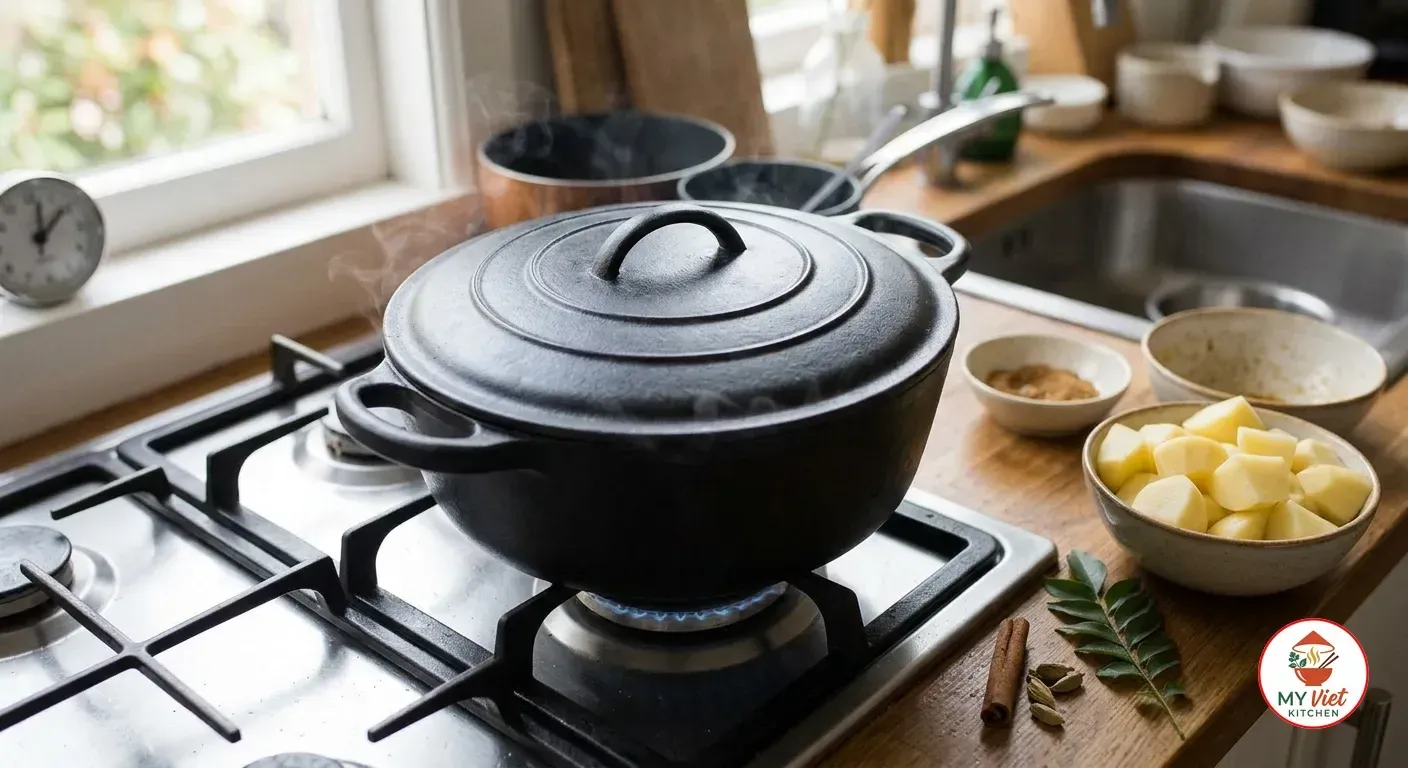
3 Return all the browned lamb and any juices to the pot. Add the water or lamb stock, cinnamon stick, crushed cardamom pods, and curry leaves. Stir everything together and bring the curry to a boil. Then reduce the heat to low and cover the pot with a tight-fitting lid. Let the curry simmer gently for 50 minutes.
After 50 minutes, add the cubed potatoes to the pot. Stir them in and replace the lid. Continue simmering for 20 more minutes until the lamb falls apart at the touch of a fork and the potatoes are completely soft. Additionally, the potatoes serve a dual purpose in this bunny chow recipe. They add substance and also thicken the gravy as they break down slightly around the edges. If the curry looks too thin, simply remove the lid and simmer uncovered for 5 to 10 minutes.
Step 4: Prepare the Bread Bowls
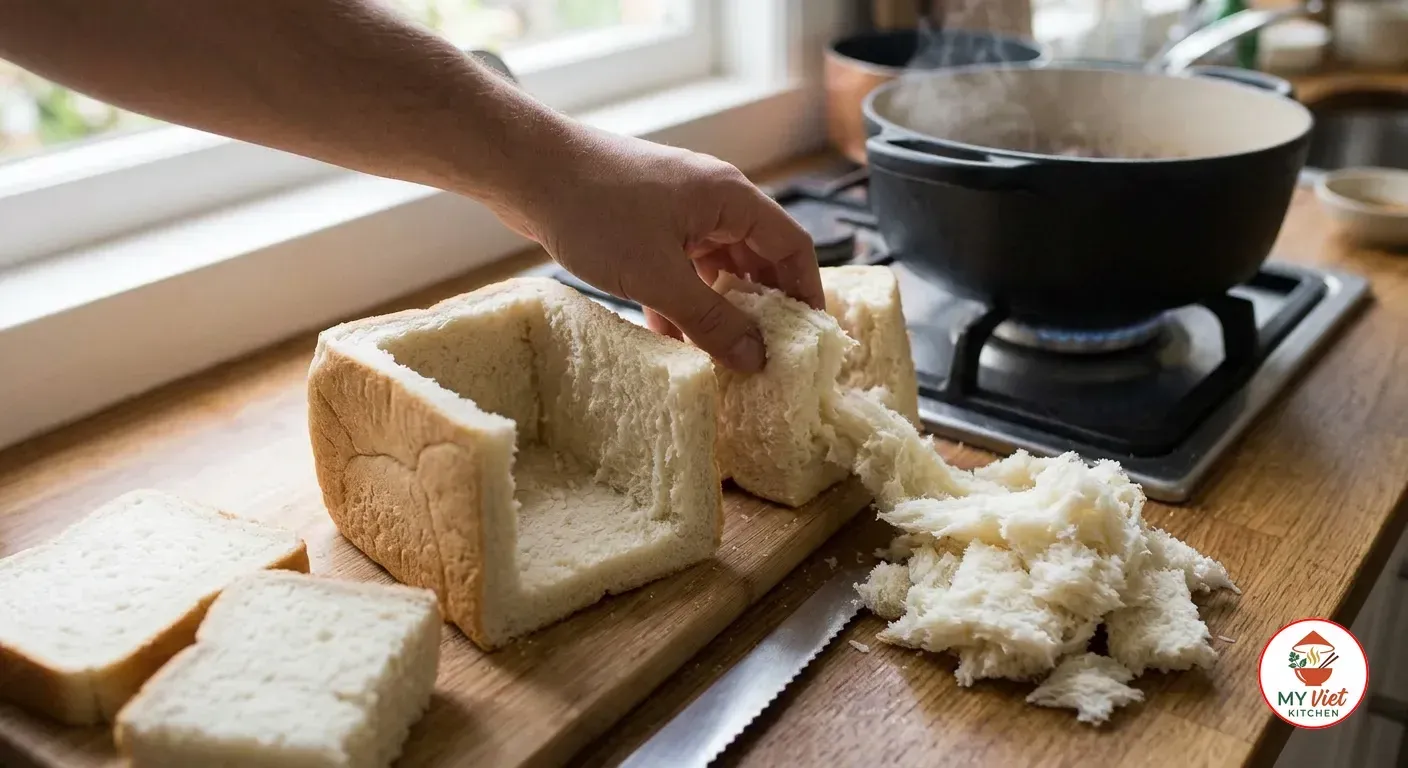
4 While the curry simmers, prepare the bread. Take a large unsliced white loaf and cut it into four equal quarters. Use a sharp knife to cut around the inside of each quarter, leaving about an inch of bread on all sides. Then pull out the soft interior with your hands. Work carefully to keep the bread shell intact.
Save every piece of the pulled bread. In Durban, this bread is called the “virgin” and it serves as your eating utensil. Essentially, you tear off pieces and use them to scoop the curry. The bread shell needs to be thick enough to hold the hot curry for at least 15 minutes without collapsing. Therefore, do not hollow it too thin. Above all, a one-inch wall on all sides works best.
Step 5: Fill and Serve the Bunny Chow
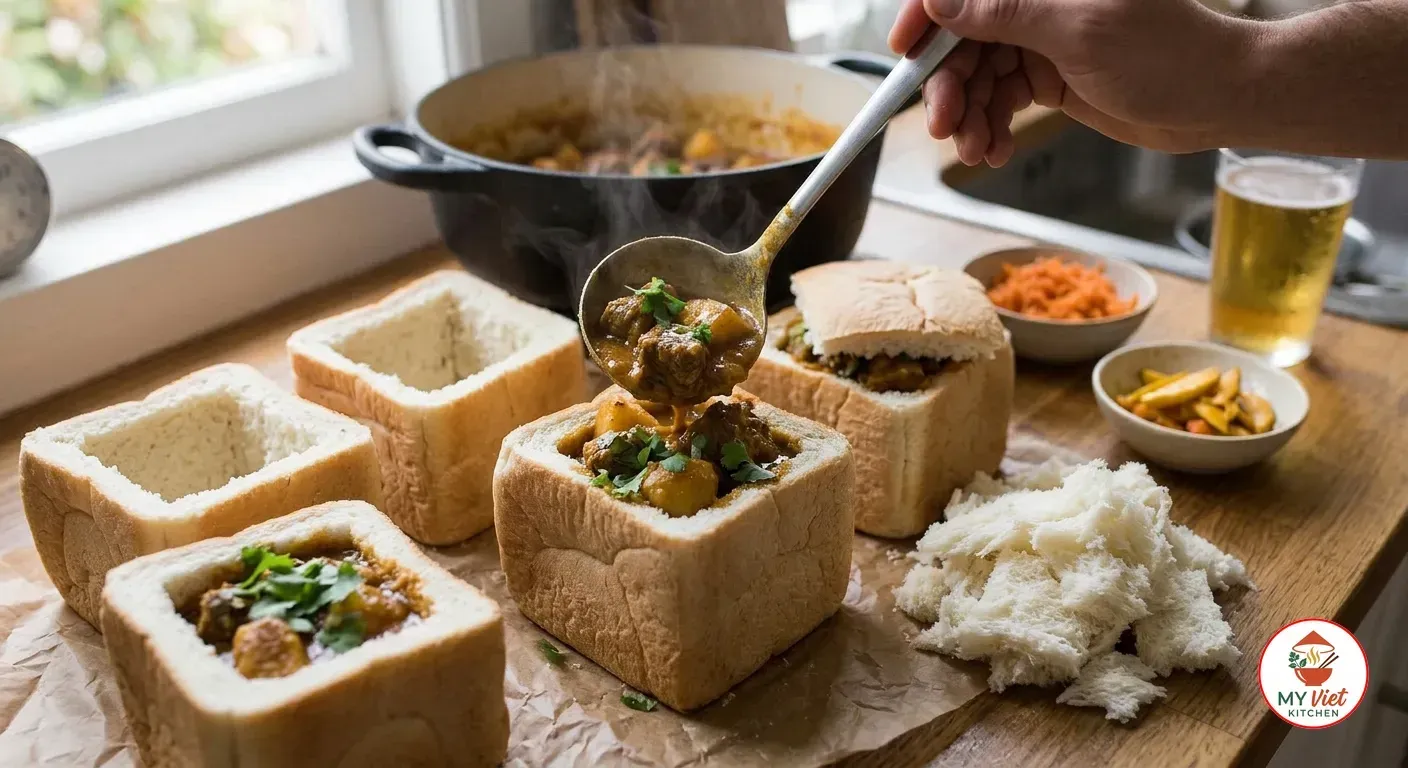
5 Remove the cinnamon stick and cardamom pods from the curry. Taste the gravy and adjust the salt if needed. Ladle the thick curry into each bread quarter. Fill it generously until the curry sits slightly above the rim. Place the piece of bread you pulled from the top back on as a lid.
Garnish with fresh cilantro and serve the bunny chow immediately. Place each filled bread bowl on a sheet of wax paper or a plate. Serve the reserved bread alongside for dipping. Eat with your hands for the full Durban experience. Consequently, tearing the curry-soaked bread and scooping the tender lamb is a deeply satisfying way to enjoy this bunny chow recipe.
Expert Tips for the Perfect Bunny Chow Recipe
Use Fresh Spices for Maximum Flavor
Durban curry relies heavily on the quality of the spices. Generally, ground spices lose their potency after about six months. If your curry powder has been sitting in the pantry for over a year, replace it before making this bunny chow recipe. Furthermore, fresh curry leaves make a noticeable difference. They add a citrusy, herbal note that dried leaves cannot fully replicate.
Control the Gravy Consistency
The gravy must be thick enough to cling to the bread without making it collapse instantly. For instance, a common mistake is adding too much liquid at the start. Instead, begin with just 1 cup and add more only if needed during simmering. At the end, you should be able to run a spoon through the curry and see the bottom of the pot briefly. Indeed, this thick consistency is the hallmark of great bunny chow.
Choose the Right Bread Freshness
Fresh bread from that same day works best for bunny chow. In contrast, day-old bread absorbs curry too quickly and becomes soggy before you finish eating. However, bread that is too warm from the oven may tear when you hollow it out. Ideally, the loaf should be a few hours old. It should be soft inside but firm enough to handle. In Durban, most people pick up their bread from the bakery right before ordering their bunny chow.
Bunny Chow Compared to Other Curry Bread Dishes
Bunny chow belongs to a small family of dishes that combine curry with bread as a vessel. Yet it stands apart in both history and execution. By comparison, here is how bunny chow stacks up against similar curry-and-bread combinations from around the world.
| Dish | Origin | Bread Type | Curry Style | Distinguishing Feature |
|---|---|---|---|---|
| Bunny Chow | South Africa | Hollowed white loaf | Durban-style lamb or bean | Bread is the bowl and utensil |
| Bread Bowl Soup | United States | Sourdough round | Chowder or stew | Uses soup, not curry |
| Roti Canai with Curry | Malaysia | Flaky flatbread | Dhal or chicken curry | Bread for dipping, not a vessel |
| Naan with Curry | India | Leavened flatbread | Various regional curries | Bread served alongside, not filled |
| Kare Pan | Japan | Deep-fried bun | Japanese curry paste | Curry enclosed inside fried dough |
Serving Suggestions
In Durban, bunny chow is a complete meal in itself. Of course, the bread and curry together deliver all the carbohydrates, protein, and flavor you need. However, a few traditional additions elevate the experience even further.
The Perfect Accompaniments:
- Grated carrot and chili sambal: This fresh condiment is the classic side for bunny chow in Durban. Grate raw carrot and mix it with finely chopped green chilies, a squeeze of lemon juice, and a pinch of salt. The crunch and heat balance the rich curry beautifully.
- Pickled vegetables (achar): South African achar uses mango, carrot, or mixed vegetables preserved in mustard oil and spices. A spoonful of tangy achar cuts through the richness of the lamb curry and adds another layer of complexity.
- Sliced raw onion and lemon: Thin rings of raw onion with a squeeze of lemon provide a sharp, clean bite. This simple garnish is a staple at Durban curry houses and it cleanses the palate between bites.
- Raita or yogurt: A cooling yogurt sauce tempers the heat for those who find the curry spicy. Mix plain yogurt with grated cucumber and a pinch of cumin for an easy raita.
Beverage Pairings:
- Castle Lager or Windhoek: A cold South African lager is the most popular pairing for bunny chow. The crisp, light beer washes down the spiced curry and refreshes the palate between bites.
- Mango lassi: This creamy yogurt drink reflects the Indian roots of bunny chow. The sweetness of mango and the coolness of yogurt provide excellent contrast to the hot, spiced curry.
- Rooibos iced tea: A glass of chilled rooibos tea with a slice of lemon offers a non-alcoholic pairing. Its earthy, slightly sweet flavor complements the warm spices without competing.
- South African Chenin Blanc: For wine lovers, a chilled Chenin Blanc from Stellenbosch balances the heat with bright acidity and tropical fruit notes. Its slight sweetness pairs naturally with the curry spices.
Storage and Reheating
Refrigerator: Store the curry and bread separately. The lamb curry keeps well in an airtight container for up to 4 days. Like most spiced stews, the flavor actually improves overnight as the spices continue to develop. Never store the filled bread because it turns soggy within hours.
Freezer: The curry freezes beautifully for up to 3 months. Portion it into individual containers for easy reheating. Thaw overnight in the refrigerator before warming. The bread does not freeze well for this purpose, so always use fresh bread when you assemble the bunny chow.
Reheating: Warm the curry on the stovetop over medium-low heat until it bubbles gently. Add a splash of water if the gravy has thickened too much. Stir occasionally to prevent sticking. Then hollow out fresh bread and fill it just before serving. Microwave reheating works in a pinch, but the stovetop method preserves the best texture.
Common Mistakes to Avoid
1. Making the Curry Too Thin
A watery curry destroys bunny chow. Essentially, the bread soaks through in minutes and collapses before you can eat it. Therefore, always cook the curry down until the gravy is thick and clings to the meat. If you accidentally add too much liquid, simply simmer it uncovered until it reaches the right consistency. Most importantly, the gravy should coat a spoon thickly.
2. Hollowing the Bread Too Thin
If you remove too much bread from the interior, the walls become too fragile. Consequently, they crack and leak curry everywhere. Always leave at least a one-inch wall of bread on all sides. In particular, the bottom should remain especially thick since it bears the weight of the entire filling. Before adding the curry, test the shell by pressing gently.
3. Skipping the Meat Browning Step
Searing the lamb before simmering builds the deep, complex flavor that defines great bunny chow. Without this step, the curry tastes flat and one-dimensional. Moreover, the browned bits on the bottom of the pot add richness to the entire gravy. So take the extra 10 minutes to brown the meat properly in batches.
4. Filling the Bread Too Early
Bunny chow must be assembled right before eating. For example, if you fill the bread 30 minutes ahead, the bottom turns into a soggy mess. In Durban’s curry houses, the bread is filled only when the customer is ready. Similarly, follow this same principle at home. Always keep the curry hot and the bread separate until serving time.
Frequently Asked Questions
What is bunny chow?
Bunny chow is a South African street food that originated in Durban’s Indian community during the mid-20th century. It consists of a hollowed-out loaf of white bread filled with a rich, spiced curry. The dish is traditionally eaten with your hands by tearing pieces of bread and scooping up the curry. It comes in quarter, half, or full loaf sizes depending on your appetite.
Why is it called bunny chow?
The name has nothing to do with rabbits. In fact, the most widely accepted explanation is that “bunny” derives from “Bania” or “Baniya,” the Indian merchant caste whose members first served this dish in Durban. Over time, the word transformed into “bunny” in local slang. Meanwhile, “chow” simply means food. Although other theories exist, the Bania connection remains the strongest and most commonly cited by food historians.
What bread is best for bunny chow?
A standard unsliced white sandwich loaf or Pullman loaf works best. The bread should be fresh, soft inside, and sturdy enough to hold hot curry for at least 15 minutes. In Durban, bakeries sell loaves made specifically for bunny chow. Avoid artisan breads with large air holes because the curry leaks through. Similarly, avoid whole wheat bread because it lacks the neutral flavor and soft texture that white bread provides.
Can I make bunny chow with chicken instead of lamb?
Absolutely. Chicken bunny chow is extremely popular in Durban and many locals prefer it. Use bone-in chicken pieces for maximum flavor and cook the curry the same way. However, reduce the simmering time to 35 to 40 minutes because chicken cooks faster than lamb. Bean curry is another excellent filling for a hearty vegetarian version of this bunny chow recipe.
How do you eat bunny chow properly?
You eat bunny chow with your hands, and that is not optional in Durban. Start by tearing off the bread lid and using it to scoop curry. Then work your way around the bread bowl, tearing pieces from the sides and dipping them into the curry. The bread soaks up the gravy as you eat. The last few bites, where the bread is fully saturated with spiced curry, are considered the best part of the meal.
Can I make the curry ahead of time?
Yes, and in fact the curry benefits from resting overnight. Specifically, the spices meld and deepen in the refrigerator. Store the curry in a sealed container and reheat it on the stovetop until bubbling before filling the bread. However, always use fresh bread when you assemble the final dish. Most importantly, never fill the bread ahead of time because the bread will turn completely soggy.
Variations and Adaptations
Chicken Bunny Chow:
Replace the lamb with 2 pounds of bone-in chicken pieces such as thighs and drumsticks. Follow the same browning and curry-building method. Reduce the total simmering time to 35 to 40 minutes. The chicken should fall off the bone. Some Durban shops add a handful of fresh spinach in the last 5 minutes for extra color and nutrition. This lighter version of the bunny chow recipe remains equally satisfying.
Bean Bunny Chow (Vegetarian):
Sugar beans are the traditional choice for vegetarian bunny chow in Durban. Use 2 cans of drained sugar beans or red kidney beans. Skip the browning step and build the curry base as directed. Add the beans after the tomatoes break down. Simmer for 30 minutes to let the beans absorb the spices. The potatoes still go in at the same time. This version is hearty, affordable, and deeply flavorful.
Mutton Bunny Chow (Durban Classic):
For the most traditional experience, use bone-in mutton pieces instead of boneless lamb. The bones add tremendous body to the gravy. Extend the simmering time to 2 hours for mutton because it needs longer to become tender. In Durban, many curry houses consider mutton bunny chow the gold standard. The extra cooking time produces a richer, more gelatinous gravy that clings to the bread perfectly.
Mini Bunny Chow (Party Version):
Use dinner rolls instead of a full loaf. Cut the top off each roll, hollow out the center, and fill with curry. These individual portions make excellent party appetizers or a fun starter course. They also work well for kids who find a full quarter bunny chow too large. Prepare 12 rolls for a party of 6 as an appetizer before the main course.
The Cultural Significance of Bunny Chow
Bunny chow is far more than just a meal in South Africa. It is a symbol of resilience, creativity, and cultural fusion that reflects some of the most important chapters in the country’s history. Understanding where bunny chow comes from helps you appreciate why every bite carries meaning.
The story begins in the 1860s when Indian laborers arrived in Durban to work on the sugarcane plantations of KwaZulu-Natal. They brought their culinary traditions and adapted them to locally available ingredients. By the mid-20th century, Indian-owned restaurants in Durban’s Grey Street area were serving curry to workers who had no plates or utensils. The solution was simple and brilliant. Hollow out a loaf of bread and fill it with curry. This allowed workers to carry their lunch and eat it on the go with their hands.
During apartheid, bunny chow took on additional significance. Segregation laws prevented people of different races from dining together. Indian restaurant owners in Durban began serving bunny chow through kitchen windows as a takeaway meal. It became a way for all communities to access the same food. Today, bunny chow stands as one of the most celebrated dishes in African cuisine. Every year, Durban hosts the Bunny Chow Barometer, a competition where restaurants compete for the title of best bunny chow in the city.
Conclusion
This authentic bunny chow recipe brings one of South Africa’s most iconic street foods to your kitchen table. The process is straightforward. Brown the lamb, build a fragrant curry, simmer until tender, hollow out the bread, and fill it right before serving. Every step contributes to a dish that is bold, comforting, and unlike anything else in the world. Whether you choose lamb, chicken, or beans, the combination of spiced curry and soft bread is always deeply satisfying.
Ready to explore more South African and African flavors? Browse our collection of African dishes, including bobotie, Cape Malay curry, and chakalaka. Also discover our injera with wat for another iconic African favorite.