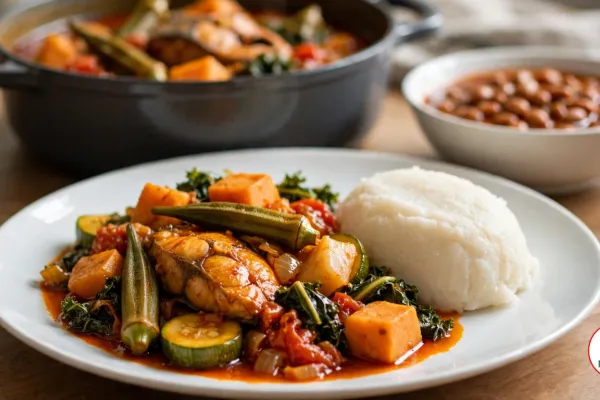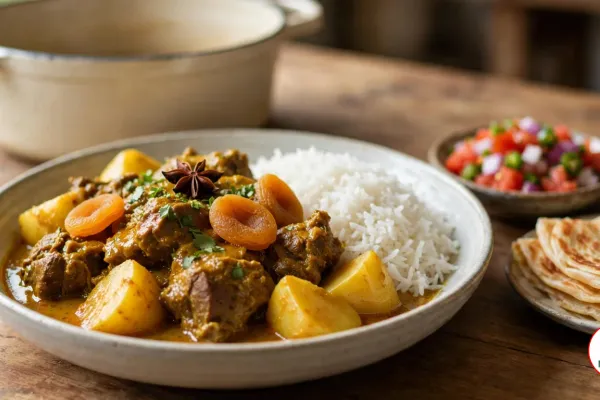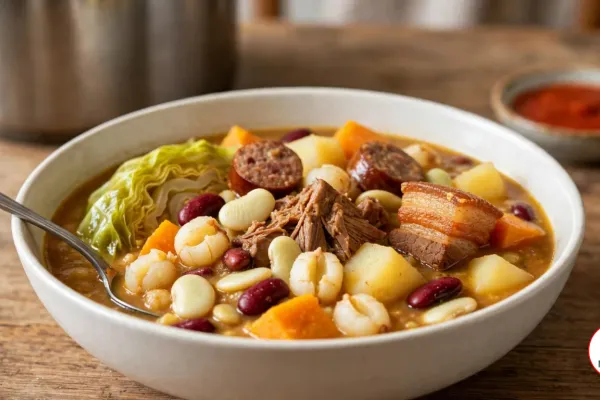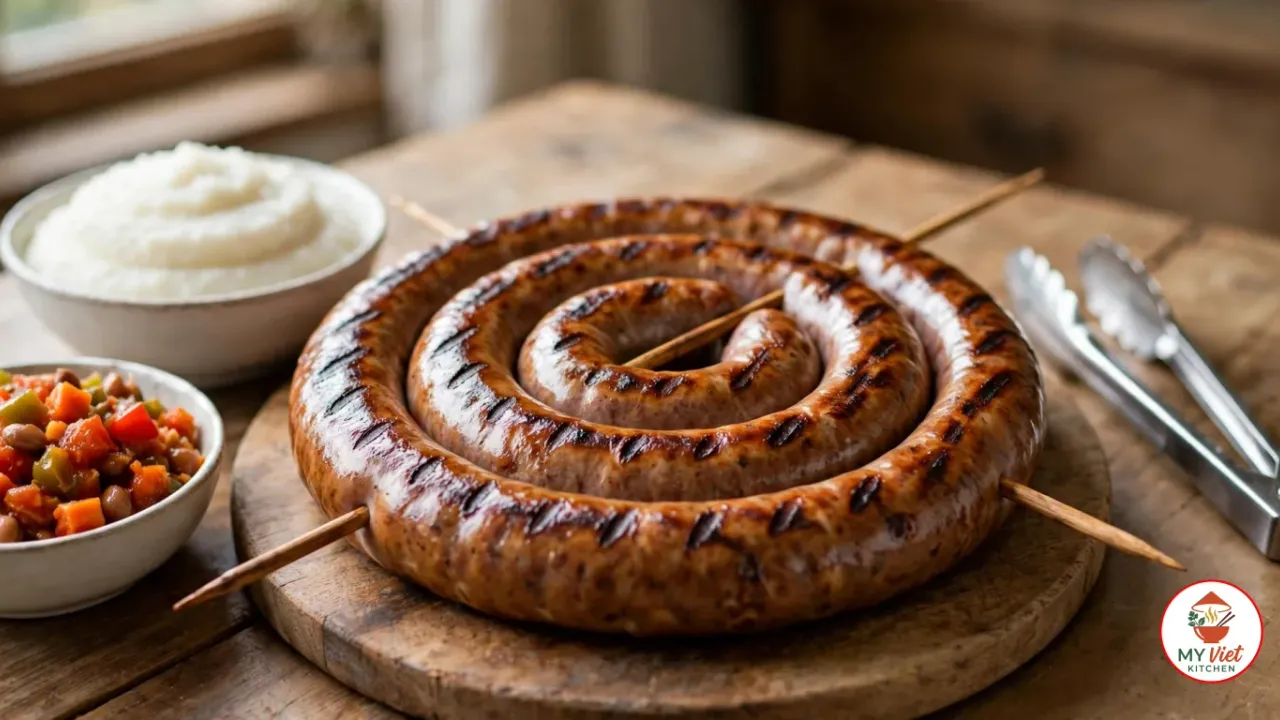
Boerewors is the iconic coiled sausage that defines every South African braai. This boerewors recipe teaches you how to make the beloved farmer’s sausage at home using coarsely ground beef, pork, and a fragrant spice blend of toasted coriander, cloves, and nutmeg. The name boerewors comes from the Afrikaans words boere (farmer) and wors (sausage), and this recipe stays true to its farmhouse roots. Whether you grill it over charcoal or on a gas grill, homemade boerewors delivers a depth of flavor that no store-bought sausage can match.
Prep Time: 30 minutes (plus 30 minutes chilling) | Cook Time: 20 minutes | Servings: 8
Difficulty: Medium | Calories: ~320 per serving
What Makes This Boerewors Recipe Special?
Boerewors stands apart from every other sausage in the world because of its coarse texture and its distinctive spice profile. Unlike European sausages that grind meat into a fine paste, boerewors uses a rough grind that preserves visible chunks of beef and pork. Each bite delivers a robust, meaty chew rather than a smooth, homogeneous texture. The spice blend centers on toasted coriander seeds. These seeds release warm, citrusy oils when ground that give boerewors its unmistakable aroma. Cloves add depth, nutmeg contributes warmth, and allspice rounds out the flavor with a subtle sweetness.
South African law actually regulates boerewors composition. Regulations under South Africa’s Agricultural Product Standards Act say that boerewors must contain at least 90 percent meat. It must never include mechanically recovered meat or any offal other than the casing. Furthermore, the fat content must not exceed 30 percent. These strict rules protect a product that South Africans consider a national treasure. When you follow this boerewors recipe at home, you control every ingredient. You choose the quality of the meat, the freshness of the spices, and the ratio of fat. As a result, homemade boerewors tastes dramatically better than most commercial versions.
A Sausage Born at the Braai
No braai is complete without a coil of boerewors sizzling over hot coals. The braai is South Africa’s communal barbecue tradition, and boerewors is its centerpiece. Families and friends gather around the fire while the sausage slowly renders its fat and develops a crispy, caramelized exterior. The smell of grilling boerewors drifting across a South African suburb on a Saturday afternoon is as familiar as the sound of cricket on the radio. Indeed, Heritage Day on September 24 is widely celebrated as National Braai Day. On that occasion, millions of South Africans fire up their grills and cook boerewors together.

Choosing the Right Meat for Boerewors
The quality and cut of meat you select determines the final taste and texture of your boerewors. Because this sausage relies on a coarse grind and minimal seasoning, the meat itself must deliver flavor. Here are the best options for this boerewors recipe.
- Beef chuck (best choice): Beef chuck provides the ideal balance of meat and intramuscular fat. Its deep beefy flavor forms the backbone of traditional boerewors. Also, its marbling keeps the sausage moist during grilling without requiring excessive added fat.
- Pork shoulder: Pork shoulder adds juiciness and a slightly sweeter flavor that complements the beef. The fat in pork shoulder renders more easily than beef fat. As a result, it helps bind the coarsely ground mixture together inside the casing.
- Lamb shoulder: Some traditional recipes use lamb instead of pork. Lamb adds a richer, gamier flavor. However, it is less common in modern boerewors. Use lamb if you want a bolder taste or if you prefer to avoid pork for dietary reasons.
Ingredients for Boerewors Recipe
Main Meat Mixture:
- 2 pounds (900g) beef chuck, coarsely ground
- 1 pound (450g) pork shoulder, coarsely ground
- 8 ounces (225g) beef fat or pork fat
- About 6 feet (2 meters) natural hog casings
- 1 tablespoon white vinegar, for soaking the casings
For the Spice Blend:
- 2 tablespoons whole coriander seeds, toasted and ground
- 1 teaspoon ground cloves
- 1/2 teaspoon ground nutmeg
- 1/2 teaspoon ground allspice
- 1 teaspoon ground black pepper
- 2 teaspoons salt
For the Liquid Seasoning:
- 2 tablespoons Worcestershire sauce
- 3 tablespoons red wine vinegar
Pro tip: Toast whole coriander seeds in a dry skillet over medium heat for 2 to 3 minutes until fragrant before grinding them. Freshly toasted and ground coriander delivers far more aroma than pre-ground coriander from a jar. This single step makes the biggest difference in the flavor of your boerewors recipe.
Step-by-Step Instructions
Step 1: Prepare the Spice Mix and Meat
1Place the whole coriander seeds in a dry skillet over medium heat. Toast them for 2 to 3 minutes, shaking the pan frequently, until they turn golden and release a warm, citrusy fragrance. Then transfer the seeds to a spice grinder or mortar and pestle. Grind them to a coarse powder. Combine the ground coriander with the cloves, nutmeg, allspice, black pepper, and salt in a small bowl. Stir well to create the boerewors spice mix.
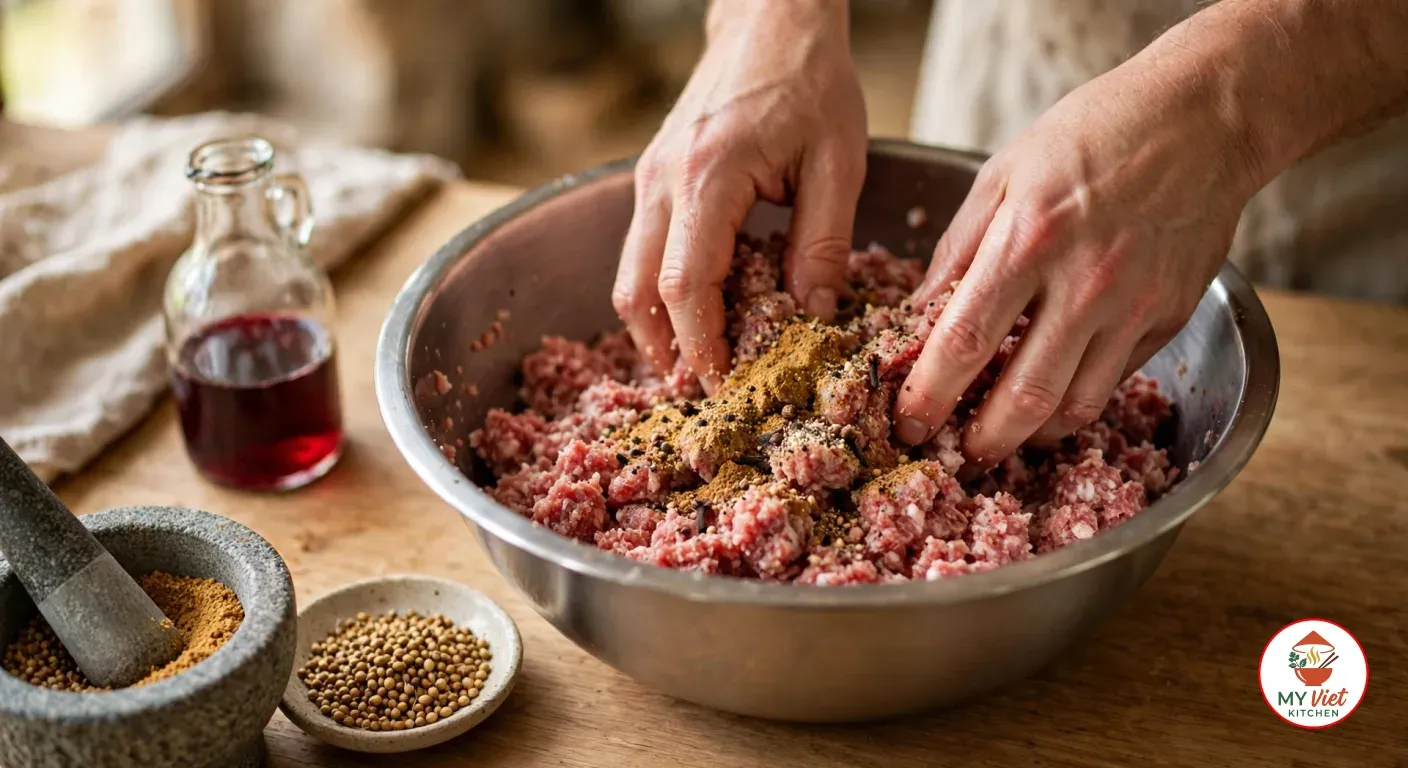
Next, place the coarsely ground beef, pork, and fat in a large mixing bowl. Sprinkle the spice blend over the meat. Then pour in the Worcestershire sauce and red wine vinegar. Mix everything together by hand for 3 to 4 minutes. Work the seasonings into the meat until they distribute evenly. The mixture should look well marbled with visible fat throughout. Cover the bowl and refrigerate for at least 30 minutes. Cold meat stuffs into casings more easily and holds its shape better.
Step 2: Prepare the Natural Casings
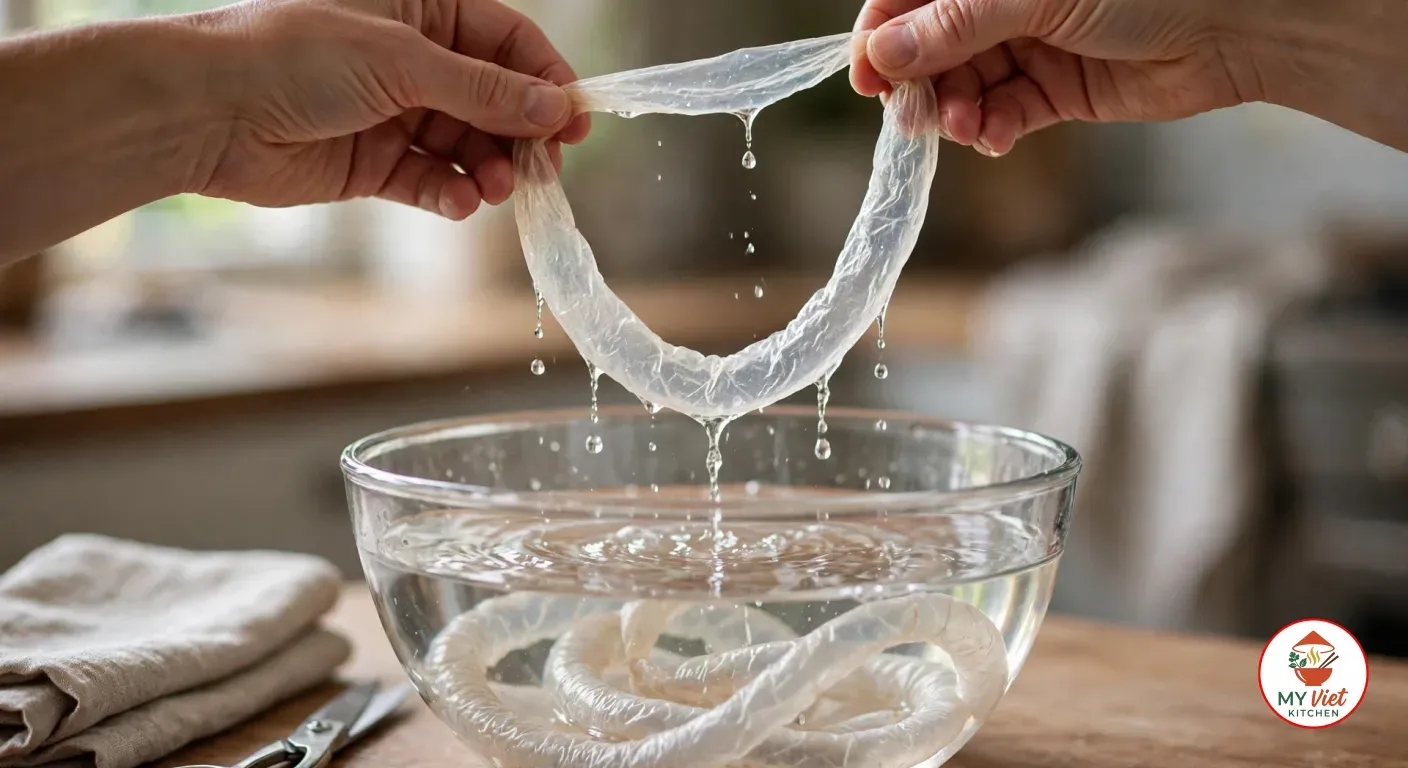
2Remove the hog casings from their salt packaging. Rinse them under cold running water for 5 minutes to wash away the salt. Then place the casings in a bowl of warm water with one tablespoon of white vinegar. Soak them for 30 minutes until they become soft and pliable. After soaking, pick up one end of a casing and gently run cold water through it from a tap. This flushes the inside and also reveals any holes or tears.
Trim away any damaged sections with kitchen scissors. Keep the casings in the warm water until you are ready to stuff them. Natural hog casings give boerewors its characteristic snap when you bite through the skin. Collagen casings work as an alternative, but they lack the same texture. Most butcher shops sell natural hog casings packed in salt, and they keep in the refrigerator for months.
Step 3: Stuff the Casings
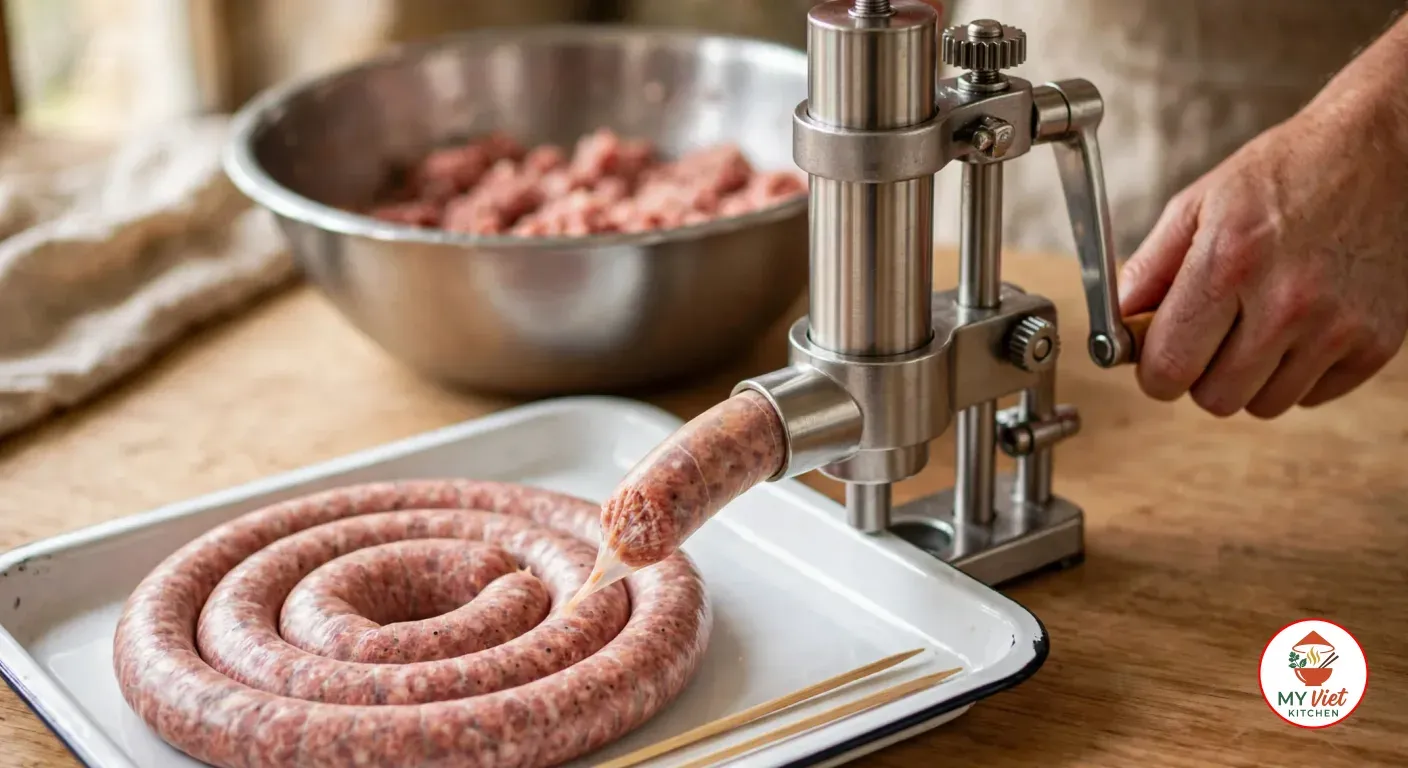
3Fit a sausage stuffing tube onto your meat grinder or sausage stuffer. Slide the wet casing onto the tube, bunching it up like a sleeve. Leave about 3 inches of casing hanging off the end. Tie a knot in that end or simply pinch it shut. Then begin feeding the seasoned meat mixture into the stuffer. Push the meat through slowly and steadily. The casing should fill at an even pace without air pockets.
Most importantly, do not pack the casings too tightly. Overstuffed boerewors bursts on the grill because the meat expands when heated. The casing should feel firm but still give slightly when pressed. If you spot an air bubble, prick it with a sterilized needle. After filling, coil the entire length of sausage into a large flat spiral. Then push two wooden skewers through the coil in a cross pattern to hold the shape. This coil is the traditional presentation for braai boerewors.
Step 4: Grill the Boerewors
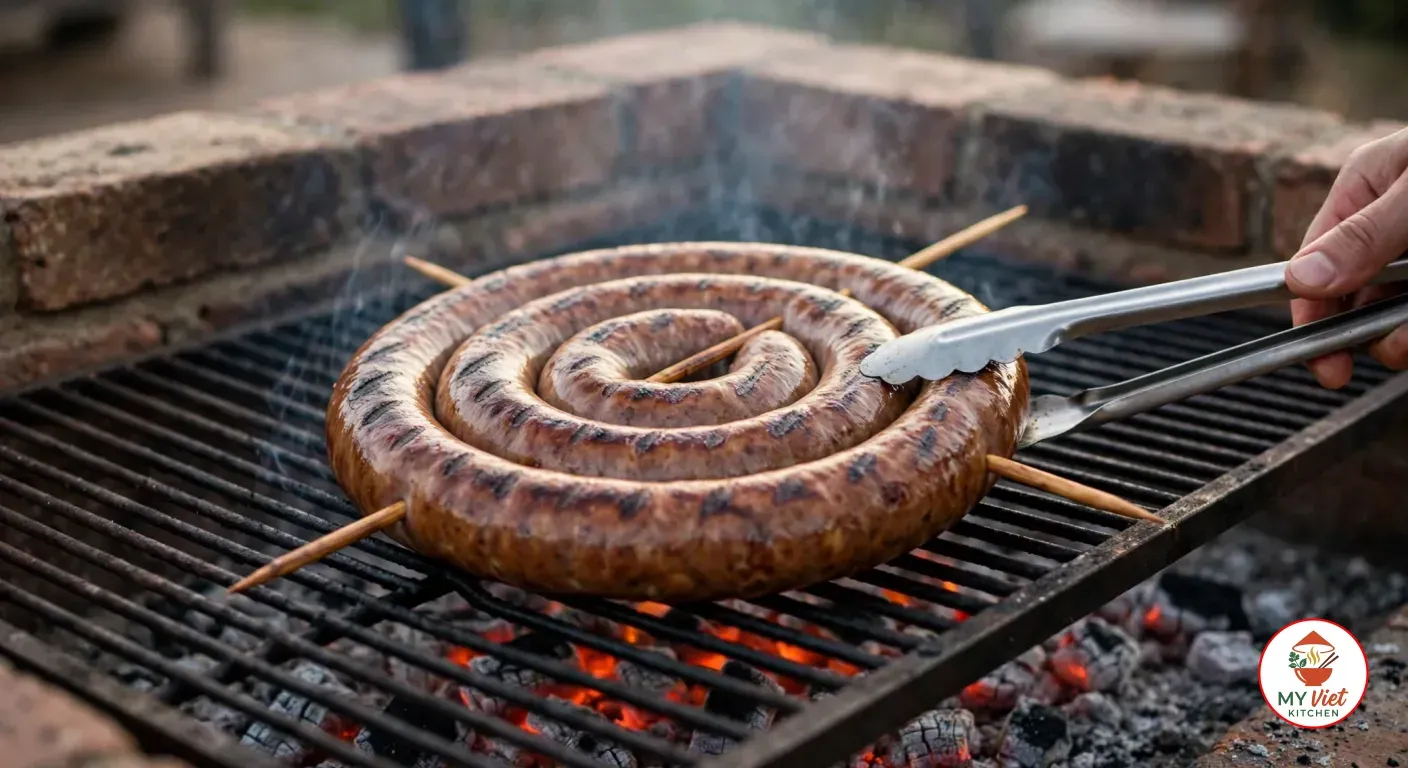
4Prepare a medium-hot charcoal fire or preheat a gas grill to about 180 degrees Celsius (350 degrees Fahrenheit). Place the boerewors coil directly on the grill grates. Cook for 8 to 10 minutes on the first side without moving it. The casing should develop a deep golden-brown color with visible grill marks. Then use tongs to carefully flip the entire coil. Cook for another 8 to 10 minutes on the second side.
Never pierce the casing with a fork during grilling. Puncturing the skin allows the rendered fat and juices to escape. Consequently, the sausage dries out and loses flavor. Instead, always use tongs for turning. The boerewors is done when the internal temperature reaches 72 degrees Celsius (160 degrees Fahrenheit). After removing the coil from the grill, let it rest on a cutting board for 5 minutes. During this time, the juices redistribute throughout the sausage. Then cut it into portions and serve immediately.
Expert Tips for Perfect Boerewors
Keep Everything Cold
Temperature control during preparation is critical for this boerewors recipe. Warm meat smears during grinding and stuffing, which destroys the coarse texture that defines boerewors. Place the meat, fat, and grinder parts in the freezer for 20 minutes before grinding. Work quickly once you start. If the mixture begins to feel warm and sticky, return it to the refrigerator for 10 minutes. Cold fat stays in distinct pieces rather than melting into the lean meat. This step is essential for any boerewors recipe that aims for authentic results.
Use a Coarse Grinding Plate
The grind size separates boerewors from ordinary sausages. Use the largest plate on your meat grinder, typically 8 to 10 millimeters. A fine grind produces a smooth, paste-like texture that resembles a hot dog rather than boerewors. The coarse grind preserves individual pieces of meat and fat. These pieces create pockets of juice that burst when you bite through the casing. If your butcher grinds the meat for you, specifically request a coarse grind and emphasize that you are making boerewors.
Toast the Coriander Seeds Fresh
Coriander is the soul of boerewors. Pre-ground coriander from a jar loses most of its volatile oils within weeks. By contrast, toasting whole seeds and grinding them fresh releases the full spectrum of citrusy, floral aromas. This difference is not subtle. Fresh coriander transforms any boerewors recipe from good to exceptional. Buy whole coriander seeds in bulk and toast only what you need. Store the rest in an airtight container away from light and heat.
Boerewors vs. Other Sausages Around the World
Every meat-eating culture has its own sausage tradition. However, boerewors occupies a unique position. This comparison highlights the key differences between South Africa’s farmer’s sausage and popular sausages from other regions.
| Feature | Boerewors (South Africa) | Bratwurst (Germany) | Italian Sausage (Italy) |
|---|---|---|---|
| Grind texture | Coarse, chunky | Medium to fine | Medium, visible spice |
| Key spices | Coriander, cloves, nutmeg | White pepper, nutmeg, ginger | Fennel, red pepper flakes |
| Shape | Continuous coil spiral | Individual links | Individual links or coil |
| Meat content | Minimum 90% by law | No legal minimum | No legal minimum |
| Cooking method | Grilled over coals | Pan-fried or grilled | Grilled, baked, or braised |
| Fat content | 25-30% | 20-30% | 20-35% |
Serving Suggestions
At a South African braai, boerewors is rarely served alone. It arrives alongside a spread of traditional sides that complement its rich, spiced flavor. Here are the most authentic pairings for this boerewors recipe.
The Perfect Accompaniments:
- Pap (maize porridge): Pap is the most traditional partner for boerewors. This stiff maize porridge soaks up the juices from the sausage. Together, they form the quintessential braai plate that South Africans consider a complete meal.
- Chakalaka (spicy relish): This vibrant tomato and bean relish adds heat and acidity that cuts through the richness of the sausage. Chakalaka brings color to the plate and a spicy contrast to the savory boerewors.
- Braaibroodjies (grilled sandwiches): These toasted sandwiches filled with cheese, tomato, and onion grill alongside the boerewors. They serve as a carb-heavy side that completes the braai spread without requiring indoor cooking.
- Mieliepap and sous (gravy): A softer version of pap served with a tomato and onion gravy. The gravy adds moisture while the porridge provides a neutral base. This combination balances the bold spicing of the boerewors.
Beverage Pairings:
- Castle Lager or local craft beer: A cold lager is the classic braai drink. Its crisp carbonation and mild bitterness cleanse the palate between bites of fatty, spiced sausage. South African craft breweries also produce excellent pale ales that pair well.
- Pinotage red wine: South Africa’s signature red grape variety produces a smoky, full-bodied wine. Its berry fruit and earthy tannins complement the charred exterior and spiced interior of grilled boerewors beautifully.
- Rooibos iced tea: For a non-alcoholic option, chilled rooibos tea with lemon offers a refreshing, caffeine-free pairing. Its naturally sweet, earthy flavor does not compete with the sausage. Instead, it cleanses the palate gently between bites.
Storage and Reheating
Refrigerator: Store uncooked boerewors in the refrigerator for up to 2 days. Wrap the coil tightly in plastic wrap. Also place it on a tray to catch any drips. Cooked boerewors keeps in an airtight container in the refrigerator for up to 3 days. The flavors actually develop further overnight as the spices meld into the meat.
Freezer: Uncooked boerewors freezes well for up to 3 months. Wrap the coil in plastic wrap first, then in aluminum foil. Label with the date. Thaw overnight in the refrigerator before grilling. Do not thaw at room temperature, because uneven warming promotes bacterial growth. Cooked boerewors also freezes for up to 2 months, though the texture softens slightly upon reheating.
Reheating: Reheat cooked boerewors on a grill or in a skillet over medium heat for 5 to 7 minutes, turning once. The grill restores the crispy exterior better than any other method. Alternatively, wrap the sausage in foil and warm it in an oven at 180 degrees Celsius (350 degrees Fahrenheit) for 10 minutes. Avoid microwaving, because it makes the casing rubbery and the meat unevenly hot.
Common Mistakes to Avoid
1. Using a Fine Grind
A fine grind is the most common mistake that ruins homemade boerewors. Fine grinding emulsifies the fat into the meat and creates a smooth, hot-dog-like texture. Boerewors requires a coarse grind of 8 to 10 millimeters. The visible chunks of meat and fat are essential to the character of this sausage. If you grind at home, use the largest plate available on your grinder. If buying pre-ground meat, ask the butcher specifically for a coarse grind.
2. Overstuffing the Casings
Packing meat too tightly into the casings causes the boerewors to burst during grilling. The meat expands as it heats, and overstuffed casings have no room to accommodate this expansion. Therefore, fill the casings until firm but not stretched to their limit. You should be able to press the sausage gently and feel a slight give. Leave a small air gap at each end before tying off the casing.
3. Piercing the Casing on the Grill
Many grillers instinctively poke sausages with a fork to prevent bursting, but this is counterproductive. Every hole allows rendered fat and juices to escape. Consequently, the boerewors dries out from the inside. Instead of piercing, prevent bursting by stuffing loosely and grilling over medium heat. Turn the coil only once during cooking. Use flat tongs that grip without puncturing. Patience and gentle handling produce a juicy boerewors every time.
Frequently Asked Questions
What is boerewors?
Boerewors is a traditional South African sausage made from coarsely ground beef, pork, and fat seasoned with coriander, cloves, nutmeg, and allspice. The Afrikaans name translates directly as “farmer’s sausage.” South African law requires that it contain at least 90 percent meat and no mechanically recovered meat. Boerewors is always formed into a continuous coil and grilled over coals at a braai. It is one of the most important foods in South African culture. Indeed, families serve it at nearly every outdoor gathering throughout the year.
What is the difference between boerewors and regular sausage?
Several characteristics distinguish boerewors from regular sausages. First, the coarse grind gives it a chunky, meaty texture rather than a smooth one. Second, the signature coriander-clove-nutmeg spice blend creates a unique flavor profile. Third, South African regulations mandate at least 90 percent meat content. Finally, boerewors is always formed as a continuous coil rather than individual links. These factors combine to produce a sausage that tastes and feels distinctly different from bratwurst, Italian sausage, or any other variety.
Can I cook boerewors in an oven?
Yes, you can bake boerewors in an oven at 180 degrees Celsius (350 degrees Fahrenheit) for 25 to 30 minutes. Place the coil on a wire rack over a baking tray to allow air circulation and fat drainage. Turn it once halfway through. However, oven-cooked boerewors lacks the smoky char and caramelized crust that grilling produces. For the most authentic result, grill over charcoal. The oven method works well when weather prevents outdoor grilling.
Can I make boerewors without a sausage stuffer?
You can make boerewors without dedicated stuffing equipment. A meat grinder with a sausage attachment works for small batches. A piping bag with a wide tip also pushes meat into casings effectively. Alternatively, shape the seasoned meat into long patties without casings. These skinless boerewors patties grill well on a flat surface. They deliver the same flavor, though they lack the snap of a natural casing. Even a wide plastic funnel works as an improvised stuffer for a few sausages.
How do I prevent boerewors from splitting on the grill?
Splitting usually results from overstuffed casings or excessive heat. Fill the casings loosely so the meat has room to expand. Grill over medium heat at around 180 degrees Celsius rather than high heat. Never pierce the casing with a fork. Turn the coil only once during cooking using tongs. Finally, let the boerewors rest for 5 minutes after grilling. Following these steps in your boerewors recipe produces intact, juicy sausage every time.
Variations and Adaptations
All-Beef Boerewors:
Replace the pork with additional beef chuck and beef fat. All-beef boerewors has a firmer texture and a stronger beef flavor. This variation is common in households that do not eat pork. Increase the fat content slightly to compensate for the leanness of additional beef. Aim for 30 percent total fat to maintain juiciness on the grill.
Lamb and Beef Boerewors:
Substitute the pork with lamb shoulder for a richer, more complex flavor. Lamb fat has a distinctive taste that pairs especially well with the coriander and clove spice blend. This variation is popular in the Karoo region of South Africa, where sheep farming dominates. Use a ratio of two parts beef to one part lamb. The lamb fat renders easily and keeps the sausage moist.
Spicy Boerewors:
Add 1 to 2 teaspoons of dried chili flakes or finely chopped fresh chilies to the meat mixture. You can also stir in a tablespoon of peri-peri sauce for a Mozambican-inspired heat. Spicy boerewors has gained popularity at South African food festivals. The heat works particularly well when the sausage is served with cool, creamy sides like coleslaw or yogurt-based sauces.
The Cultural Significance of Boerewors
Boerewors occupies a place in South African culture that extends far beyond food. It is a symbol of community, heritage, and national identity. The braai itself is perhaps the only social ritual that every South African community shares. From Afrikaner farming families in the Free State to Zulu families in KwaZulu-Natal, the smell of boerewors on the grill connects people across cultural and linguistic boundaries. When South Africans emigrate, boerewors is often the food they miss most. South African shops in London, Perth, and Toronto stock frozen boerewors specifically for the expatriate community.
From Farm Kitchen to National Symbol
The origins of boerewors trace back to the Dutch and German settlers who arrived at the Cape in the 17th and 18th centuries. Specifically, they brought European sausage-making traditions and adapted them to local conditions. Beef replaced pork as the primary meat because cattle thrived on the South African grasslands. Coriander, which grew abundantly in the Cape, became the dominant spice. Over generations, these adaptations crystallized into the distinctive boerewors that South Africans recognize today. The sausage traveled inland with the Voortrekker migrations of the 1830s and eventually spread to every corner of the country.
Today, boerewors competitions are serious events. Towns across South Africa hold annual boerewors festivals where butchers and home cooks compete for the title of best boerewors. Judges evaluate flavor, texture, spice balance, and casing quality. Winning a boerewors competition brings genuine prestige in a country that takes its sausage very seriously. Meanwhile, South African rugby fans consider boerewors rolls an essential part of the matchday experience. Similarly, no school fundraiser, church gathering, or neighborhood celebration proceeds without a boerewors braai. This sausage truly binds the nation together.
Conclusion
This boerewors recipe gives you everything you need to create South Africa’s most celebrated sausage at home. The process rewards attention to a few critical details. Use a coarse grind. Toast the coriander seeds fresh. Stuff the casings loosely. Grill over medium heat. These steps produce boerewors with a crispy, caramelized exterior and a juicy, crumbly interior packed with warm spice flavor. Once you taste homemade boerewors from this boerewors recipe, store-bought versions simply cannot compare.
If you enjoy South African cooking, explore our braaivleis recipe for the full guide to South African barbecue. Also try our chakalaka recipe for the perfect spicy relish to serve alongside your boerewors. For the classic starch pairing, our pap recipe covers everything you need to make traditional South African maize porridge.