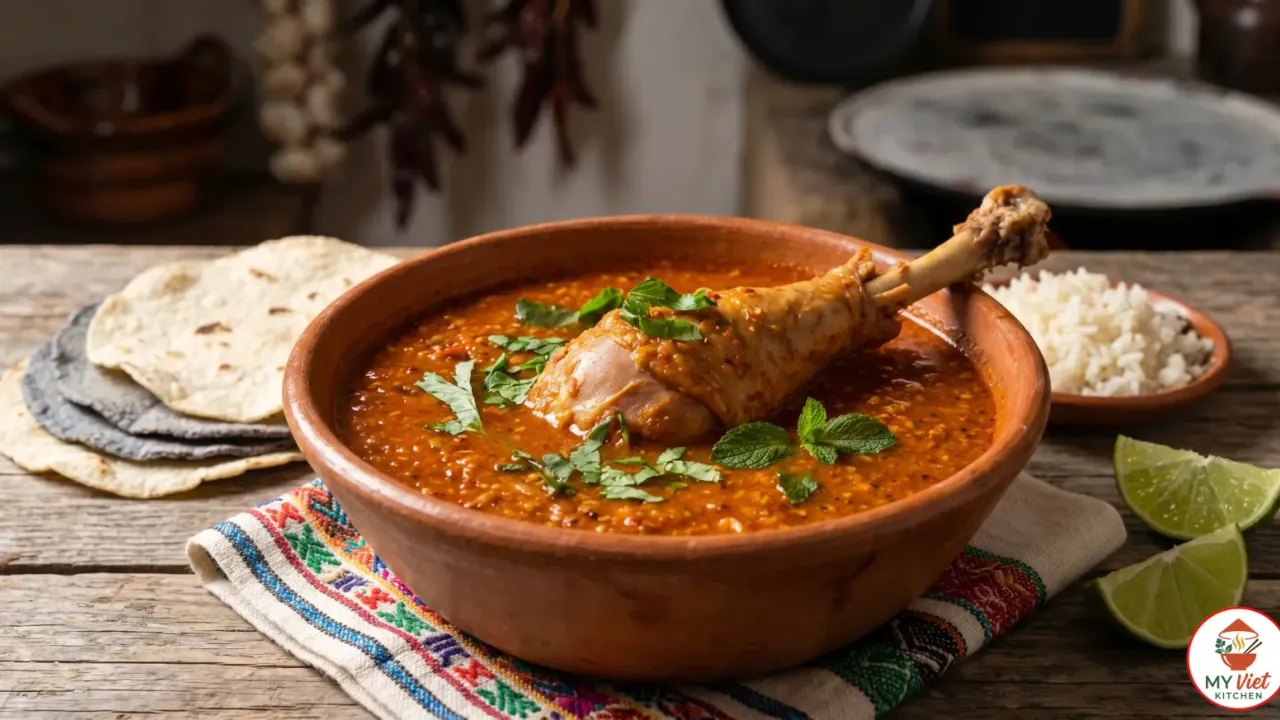
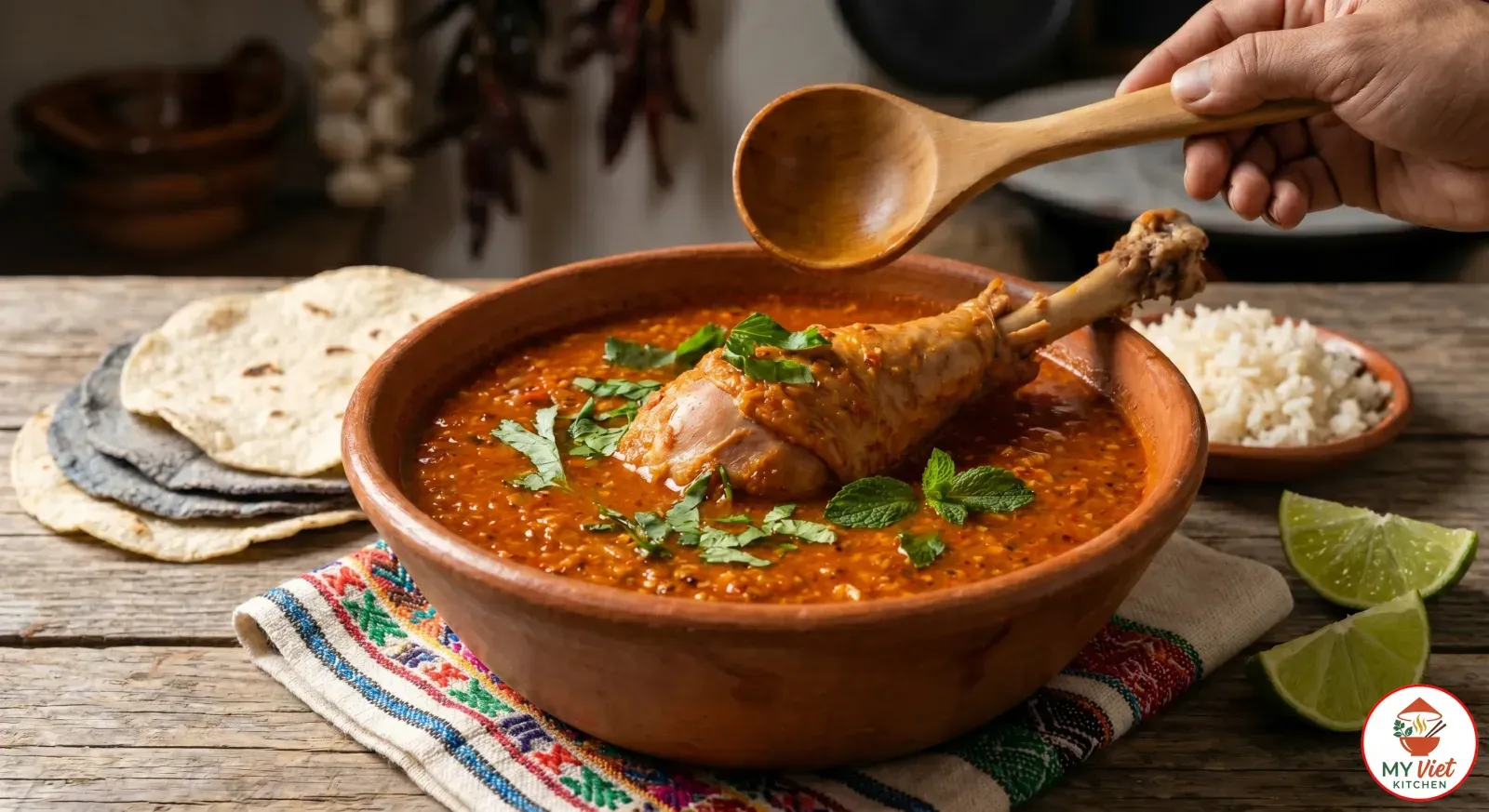
Kak’ik is the ancient Mayan turkey soup of Guatemala, a ceremonial dish with roots stretching back centuries to the Q’eqchi’ Maya people of the misty highlands of Alta Verapaz. This rich, fiery red soup stars tender turkey in a broth of roasted dried chiles, charred tomatoes, toasted seeds, and warm spices. This kak’ik recipe walks you through every step, from toasting the chiles to building the recado paste that gives it all its depth. If you want to taste real Mayan food history, start here.
Prep Time: 30 minutes | Cook Time: 90 minutes | Servings: 6
Difficulty: Medium | Calories: ~380 per serving
What Makes Kak’ik Special?
Kak’ik is not just another turkey soup. It is a sacred dish passed down by the Q’eqchi’ Maya for many generations. The name comes from the Q’eqchi’ language, where “kak” means red and “ik” means chile. Together, they point to the soup’s key trait: a bold, rust-colored broth rich with the smoky taste of dried chiles. In 2007, Guatemala declared kak’ik part of its national Intangible Cultural Heritage. UNESCO has also noted its role as a living food tradition.
What sets kak’ik apart is the depth of its recado, the spice paste at the heart of the broth. This paste blends roasted dried chiles with charred tomatoes, toasted sesame seeds, pumpkin seeds, allspice, pepper, and achiote. Every item is toasted or roasted first. As a result, the paste carries a rich depth that no single spice can match on its own. The turkey adds a hearty, slightly gamey broth that pairs well with the earthy warmth of the recado.
Unlike many Central American soups that lean on fresh herbs and lighter tastes, kak’ik brings bold warmth. Toasted seeds add nuttiness, and tomatillos bring tangy brightness. Furthermore, the use of turkey is not random. It is deeply tied to history. The turkey was tamed in this region thousands of years before Europeans arrived. It remains the only true protein for this dish. Every bowl of kak’ik tells a story of Mayan skill and an unbroken food legacy.

Choosing the Right Turkey for Kak’ik
The turkey is the heart of any kak’ik recipe. Therefore, picking the right type makes a big difference in flavor and feel. In Guatemala, cooks use chompipe, a local turkey breed native to the region. Here are your best options for making this dish at home.
- Heritage turkey (best choice): Breeds like Bourbon Red are closer to the original Central American turkey. They have darker, tastier meat and leaner frames that make a richer broth. Check farmers’ markets or local butchers.
- Standard bone-in turkey parts: Turkey thighs, drumsticks, and wings from any store work very well. The bones release collagen into the broth and give the soup its body. Avoid boneless cuts.
- Bone-in chicken (substitute): If turkey is truly unavailable, bone-in chicken thighs and drumsticks serve as a reasonable substitute. However, the flavor will be noticeably lighter. Reduce the simmering time to about 35 minutes since chicken cooks faster.
Ingredients for Kak’ik
Turkey and Broth:
- 3 pounds bone-in turkey pieces (thighs, drumsticks, and wings)
- 10 cups water
- 1 large white onion, quartered (half for broth, half for roasting)
- 6 cloves garlic, peeled (2 for broth, 4 for roasting)
- 2 bay leaves
- 1 tablespoon salt, or to taste
Dried Chiles:
- 6 dried guaque chiles (or guajillo chiles as substitute)
- 4 dried pasa chiles (or ancho chiles as substitute)
- 2 dried cobanero chiles (or chile de arbol as substitute)
Recado Paste (Roasted and Blended):
- 4 Roma tomatoes
- 4 tomatillos, husked and rinsed
- 8 whole black peppercorns
- 4 whole allspice berries
- 1 teaspoon achiote paste (annatto)
- 2 tablespoons roasted sesame seeds
- 2 tablespoons roasted pumpkin seeds (pepitoria)
- 1/2 teaspoon ground cumin
Fresh Herbs and Serving:
- 3 sprigs fresh cilantro (culantro or samat preferred)
- 2 sprigs fresh mint (hierba buena)
- Fresh corn tortillas for serving
- Cooked white rice for serving
- Fresh lime wedges for serving
Pro tip: If you can find culantro (also called samat or recao), use it instead of cilantro. Culantro has a much stronger, more herbaceous flavor that is traditional in kak’ik and many other Mayan dishes. It looks like long, serrated leaves and is available at Latin American and Caribbean grocery stores.
Step-by-Step Instructions
Step 1: Prepare and Simmer the Turkey
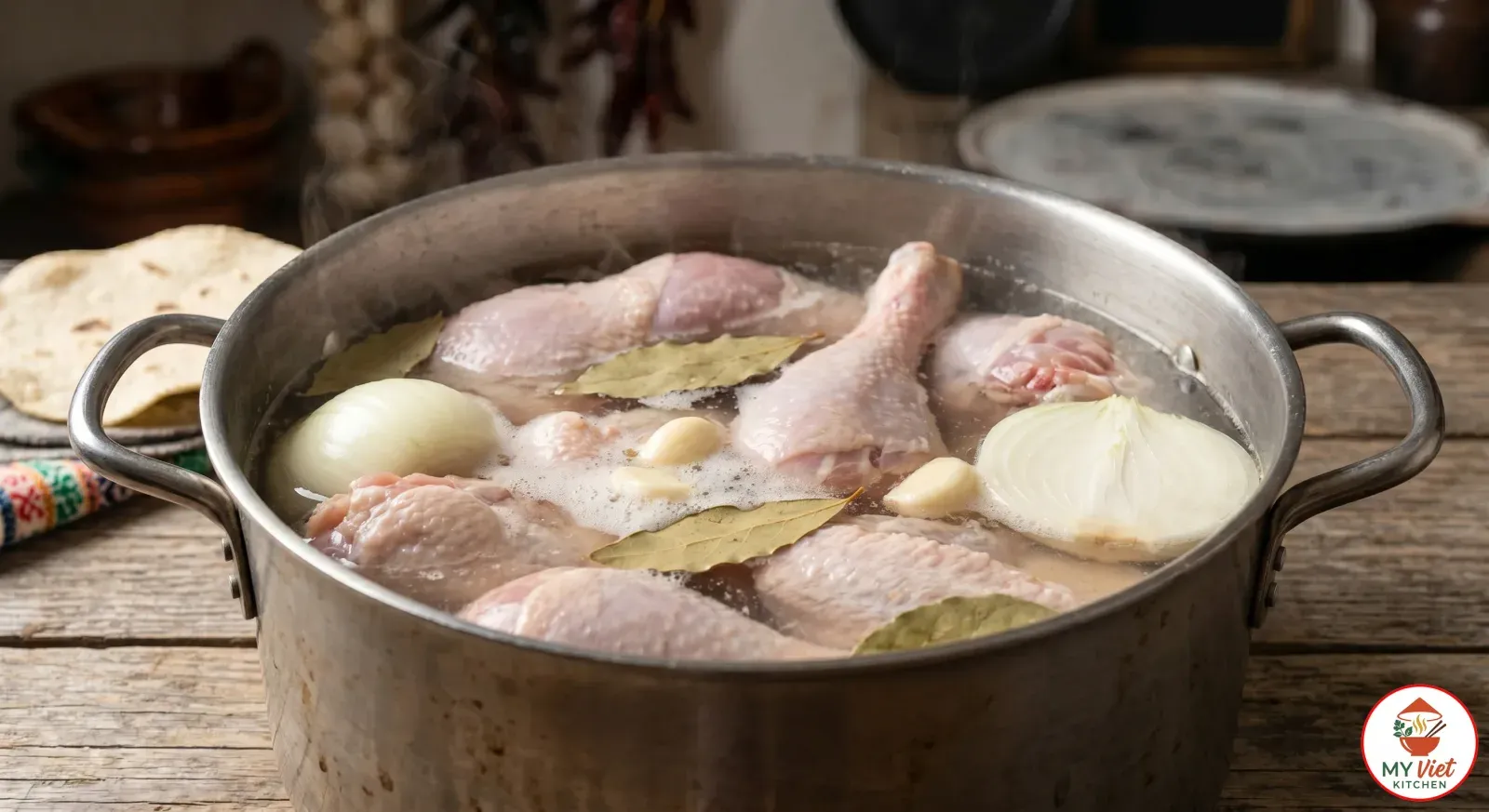
1 Place the bone-in turkey pieces in a large stockpot and cover with 10 cups of water. Add half of the quartered onion, 2 peeled garlic cloves, the bay leaves, and salt. Bring to a boil over high heat, then immediately reduce the heat to a gentle simmer. Skim off any foam or impurities that rise to the surface during the first 10 minutes. This skimming step ensures a clean, clear broth. Continue simmering gently for 45 to 60 minutes until the turkey is tender and cooked through. The meat should pull away from the bone easily when prodded with a fork.
Step 2: Toast and Rehydrate the Dried Chiles
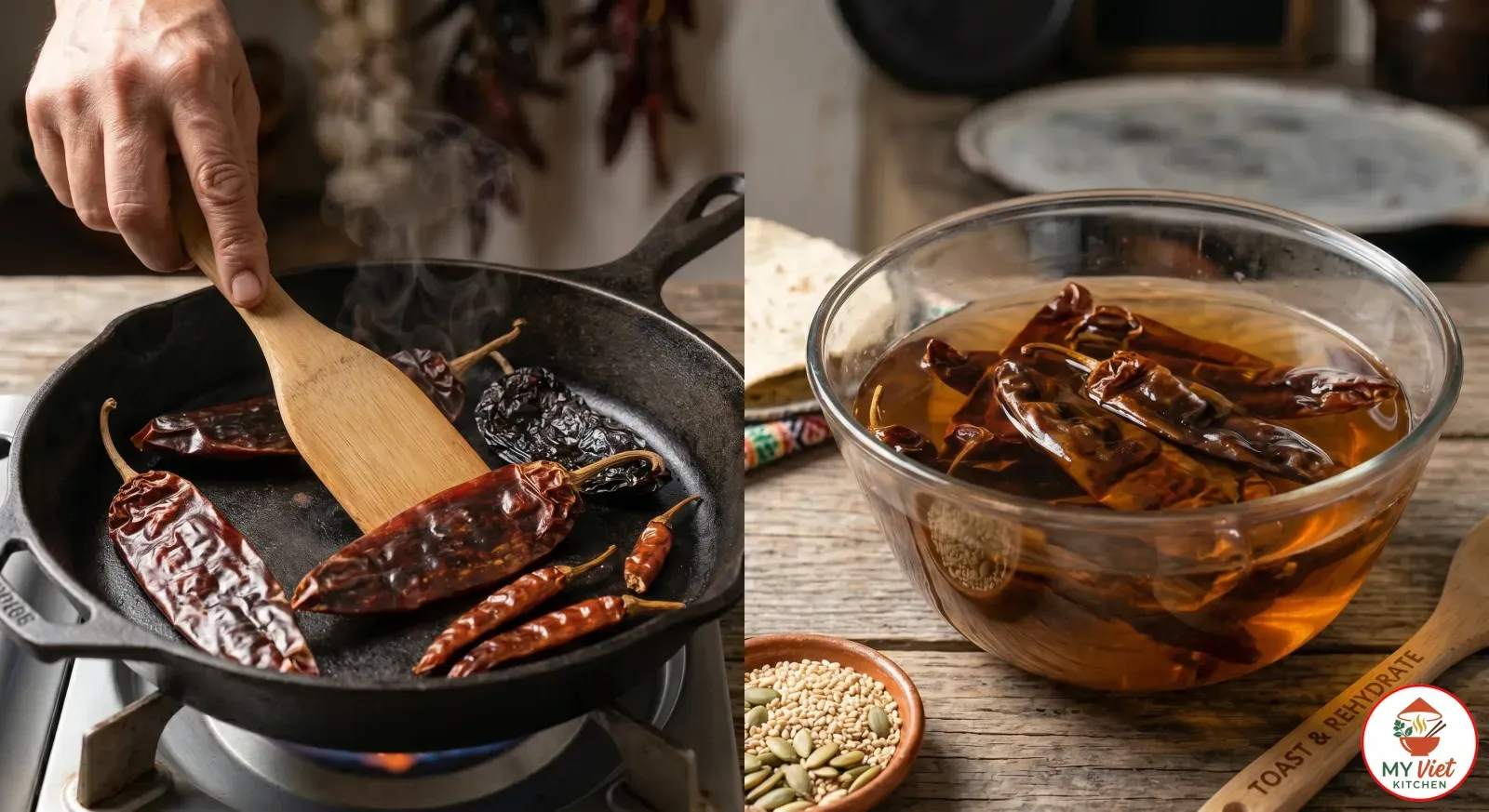
2 While the turkey simmers, prepare the chiles. Remove the stems and shake out the seeds from all the guaque, pasa, and cobanero chiles. Heat a dry cast-iron skillet or comal over medium heat. Toast each chile flat on the hot surface for about 30 to 60 seconds per side. Press down gently with a spatula. The chiles should become fragrant and slightly darker, but not burnt. Burnt chiles create a bitter, acrid flavor that will ruin your kak’ik.
Transfer the toasted chiles to a heatproof bowl. Cover with hot water and let them soak for 15 to 20 minutes until they become soft and pliable. While the chiles soak, toast the sesame seeds and pumpkin seeds in the same dry skillet over medium-low heat. Stir constantly for 2 to 3 minutes until golden and fragrant. Set aside.
Step 3: Roast the Tomatoes and Aromatics
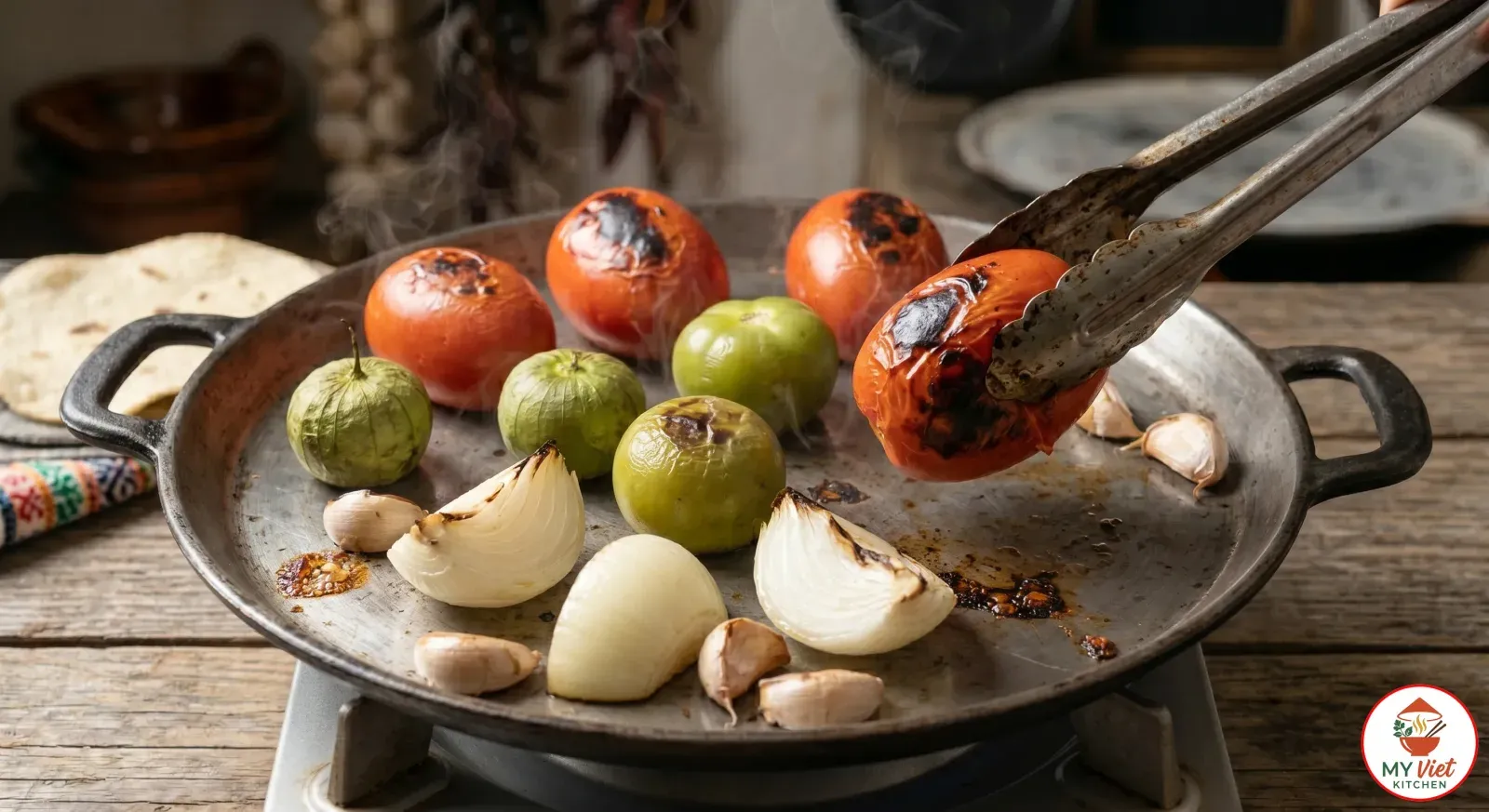
3 Place the Roma tomatoes, husked tomatillos, the remaining onion quarters, and the remaining garlic cloves directly on a hot comal or dry skillet. Roast over medium-high heat, turning occasionally with tongs, until deeply charred on all sides. This takes about 8 to 10 minutes. The charring is essential because it develops the smoky, caramelized flavor that defines authentic kak’ik. Do not peel or discard the charred skin, because those blackened bits contain concentrated flavor compounds.
Step 4: Blend the Recado (Spice Paste)
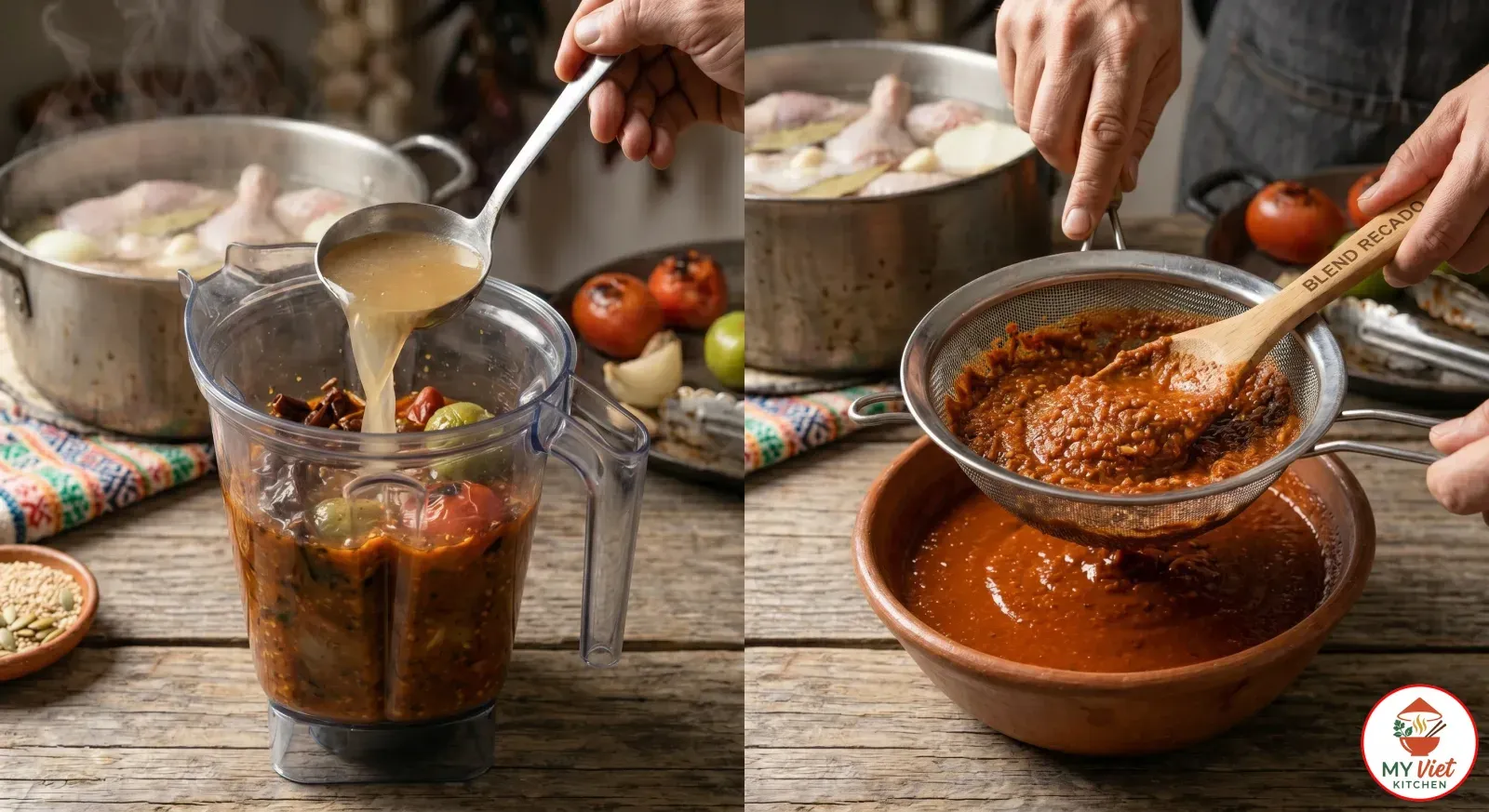
4 Drain the rehydrated chiles and add them to a blender along with the charred tomatoes, tomatillos, roasted onion, and roasted garlic. Add the black peppercorns, allspice berries, cumin, achiote paste, toasted sesame seeds, and toasted pumpkin seeds. Pour in about 1 cup of the turkey broth from the pot to help the blender run smoothly. Blend on high for 2 to 3 minutes until the mixture is completely smooth and uniform.
Now strain the recado through a fine-mesh sieve into a bowl. Press with the back of a spoon to push out all the liquid. Toss the leftover pulp. This step is key because it gives the soup a silky, smooth feel instead of a gritty one. The strained recado should be a deep brick-red paste with a rich aroma.
Step 5: Build the Soup
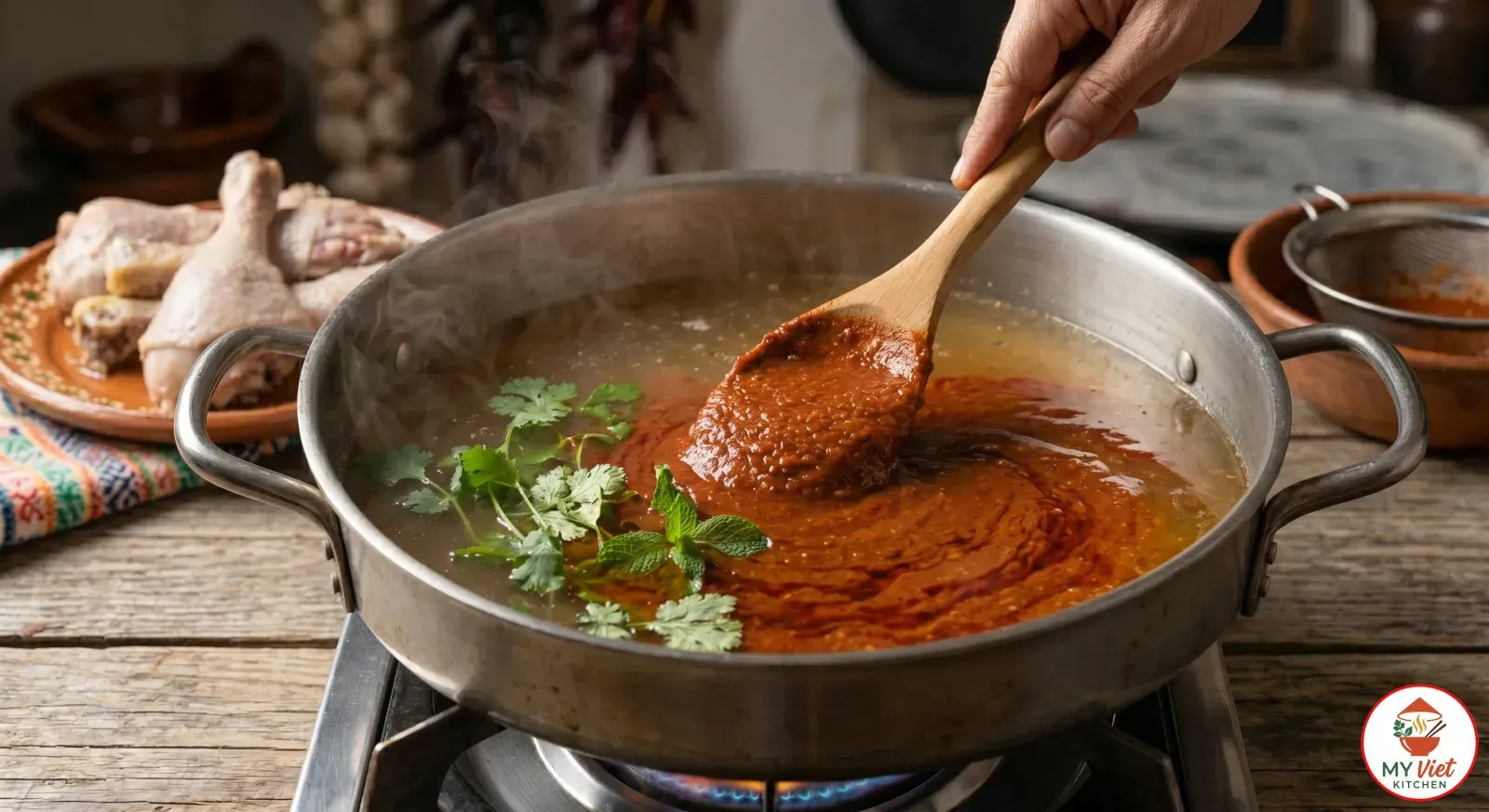
5 Remove the cooked turkey pieces from the broth and set them aside on a plate. Strain the broth through a fine-mesh sieve to remove the onion, garlic, and bay leaves. Return the clean broth to the pot and bring it to a gentle simmer over medium heat. Stir in the strained recado paste, mixing thoroughly until the broth transforms into a rich, deep red color.
Add the fresh cilantro sprigs and mint sprigs to the simmering soup. Let everything cook together for 20 to 25 minutes on a gentle simmer. This allows the recado flavors to bloom and integrate fully with the turkey broth. The soup should develop a velvety consistency. Additionally, the kitchen will fill with an intensely aromatic, earthy fragrance during this step.
Step 6: Finish and Serve
6 Return the turkey pieces to the simmering soup and heat through for 5 minutes. Taste the broth and adjust the salt as needed. Remove and discard the cilantro and mint sprigs. Ladle the deep red broth and turkey pieces into large, deep bowls. Serve immediately alongside a mound of steamed white rice, warm fresh corn tortillas, and lime wedges on the side. Squeeze the lime over the soup just before eating for a bright burst of acidity that lifts all the smoky, earthy flavors.
Expert Tips for Perfect Kak’ik
Toast the Chiles Carefully
Toasting the dried chiles is the most vital step in this kak’ik recipe. You want them warm, fragrant, and just a bit soft. However, do not let them turn black or start smoking. Burnt chiles taste bitter and will ruin the whole soup. Toast over medium heat for no more than 60 seconds per side. If you see wisps of smoke, pull the chile off right away.
Always Strain the Recado
Many cooks skip the straining step, but this shortcut hurts the final result. In fact, dried chile skins leave a gritty feel in the soup. A fine-mesh sieve removes those bits while keeping all the flavor. Press hard with a spoon to get every last drop of the rich paste. This extra step takes only 5 minutes but lifts the soup from rough to refined.
Use Bone-In Turkey for Rich Broth
Bones are a must for real kak’ik. As the turkey cooks, the bones release collagen. This gives the broth body and richness. Without bones, you get thin, watery soup that lacks depth. Thighs and drumsticks give the best mix of flavor and tender meat. Wings add extra gelatin, so toss in a few if you have them.
Kak’ik Compared to Other Guatemalan Soups
Guatemala has a rich tradition of bold, complex soups. Each one comes from a different region and spice style. Here is how kak’ik stacks up against the other great Guatemalan soups.
| Soup | Region | Base Color | Key Ingredients | Primary Protein |
|---|---|---|---|---|
| Kak’ik | Alta Verapaz (Q’eqchi’) | Deep red | Dried chiles, toasted seeds, achiote | Turkey |
| Pepian | Chimaltenango | Dark brown | Toasted pepitoria, chiles, cinnamon | Chicken or pork |
| Jocon | Huehuetenango | Bright green | Tomatillos, cilantro, green peppers | Chicken |
| Subanik | Quiche | Reddish brown | Three types of chiles, achiote, tomato | Mixed meats |
| Caldo de Res | Nationwide | Clear golden | Root vegetables, corn, cabbage | Beef |
Serving Suggestions
In Guatemala, kak’ik is served as a generous, standalone main course. The deep bowls of rich red broth with turkey pieces are the centerpiece, and the accompaniments are kept simple to let the soup shine. Traditionally, the meal is served during celebrations, community gatherings, and important family events in the Q’eqchi’ highland regions.
Traditional Accompaniments:
- Steamed white rice: A mound of plain rice goes into the bowl alongside the turkey, absorbing the incredible red broth and stretching each serving.
- Fresh corn tamales: Soft, steamed tamales made from fresh corn dough are the most traditional pairing with kak’ik in Alta Verapaz.
- Warm corn tortillas: Freshly pressed and cooked tortillas serve as both utensil and accompaniment, perfect for soaking up every last drop of broth.
- Fresh lime wedges: A squeeze of lime just before eating brightens the rich, smoky broth with a welcome burst of acidity.
Beverage Pairings:
- Fresco de rosa de jamaica: A cold hibiscus flower drink that is tart, refreshing, and common across Guatemala. Its acidity cleanses the palate between bites.
- Atol de elote: A warm, sweet corn-based drink that complements the heat of the soup with its gentle sweetness and creamy body.
- Guatemalan coffee: A cup of dark-roasted Huehuetenango or Antigua coffee after the meal is a quintessentially Guatemalan way to finish.
- Gallo beer: Guatemala’s most popular lager provides a crisp, light contrast to the bold, spicy soup. Served cold, it is a crowd favorite.
Storage and Reheating
Refrigerator: Store leftover kak’ik in an airtight container for up to 4 days. Like most complex soups, the flavors deepen and improve overnight as the spices continue to marry with the broth. Many cooks consider day-two kak’ik even better than fresh.
Freezer: Kak’ik freezes excellently for up to 3 months. Store the turkey pieces and broth together in freezer-safe containers, leaving an inch of headspace for expansion. Thaw overnight in the refrigerator before reheating.
Reheating: Gently reheat on the stovetop over medium-low heat. Add a splash of water or stock if the broth has thickened after refrigeration. Bring to a gentle simmer and heat until the turkey is warmed through. Avoid boiling vigorously, because this can toughen the turkey meat and make the broth cloudy.
Common Mistakes to Avoid
1. Burning the Dried Chiles
This is the most common and costly mistake when making kak’ik. Dried chiles go from toasted to burnt in seconds. Burnt chiles taste harsh and bitter. Indeed, no amount of seasoning can fix that flavor. Toast over medium heat, press gently, and pull them off as soon as you smell a warm, earthy scent. If a chile turns black and smokes, throw it out and use a fresh one.
2. Skipping the Straining Step
Blending alone will not make a smooth recado. Dried chile skins have tough fibers that even the best blenders cannot fully break down. If you skip straining, your soup will feel gritty. Always pass the blend through a fine-mesh sieve. Press hard to get all the flavor out while leaving the rough bits behind.
3. Using Boneless Turkey Breast
Turkey breast is lean and dries out fast when simmered for a long time. In addition, it adds almost no collagen to the broth. Without bones, your kak’ik will taste thin and flat. Always use bone-in cuts like thighs, drumsticks, and wings for the best result.
4. Not Roasting the Tomatoes Enough
The tomatoes and tomatillos need deep charring, not just light warming. High heat triggers browning and sweet caramel notes that give real kak’ik its smoky depth. Roast until the skins blister and blacken in spots on all sides. Do not fear the dark char. Ultimately, those black marks translate straight into flavor.
Frequently Asked Questions
What is Kak’ik?
Kak’ik is a traditional Mayan turkey soup from the Q’eqchi’ Maya people of Alta Verapaz, Guatemala. The name translates to “red chile” in the Q’eqchi’ language. It features turkey simmered in a rich broth flavored with roasted dried chiles, toasted seeds, and aromatic spices. UNESCO has recognized it as part of Guatemala’s Intangible Cultural Heritage, and it remains one of the most important ceremonial dishes in Mayan cuisine.
What kind of turkey is best for Kak’ik?
Heritage turkey breeds are the closest to the traditional chompipe used in Guatemala. However, standard bone-in turkey parts from any supermarket work very well. Use a mix of thighs, drumsticks, and wings for the best combination of tender meat and rich, gelatinous broth. Always choose bone-in pieces rather than boneless for maximum flavor.
Can I substitute chicken for turkey in Kak’ik?
You can use bone-in chicken as a substitute, though the dish will lose some of its traditional character. Turkey has a deeper, richer flavor that pairs uniquely with the roasted chile recado. If you use chicken, reduce the initial simmering time to 30 to 35 minutes. Chicken thighs and drumsticks are the best substitute cuts.
What are guaque chiles and where can I find them?
Guaque chiles are dried Guatemalan chiles with a mild, earthy flavor and deep red color. They are essential to many Guatemalan recipes. Look for them at Latin American grocery stores or order them from online specialty spice shops. If you cannot find them, guajillo chiles are the closest widely available substitute. They offer a similar mild heat and rich color profile.
Is Kak’ik spicy?
Kak’ik has moderate, warming heat rather than aggressive spiciness. The guaque and pasa chiles contribute earthy richness with gentle warmth. The cobanero chiles add a sharper kick, but you control the heat level by adjusting their quantity. For a milder version, use just one cobanero chile or omit them entirely. For more heat, increase to three or four.
What is the difference between Kak’ik and other Guatemalan soups?
Kak’ik is distinguished by its deep red color from dried chiles, its exclusive use of turkey, and its Q’eqchi’ Maya origins. In contrast, jocon features a green base from tomatillos and cilantro, while pepian uses a brown sauce from toasted seeds and chiles. Subanik combines multiple meats in a reddish-brown broth. Each soup represents a different Guatemalan region and indigenous culinary tradition.
Variations and Adaptations
Slow Cooker Kak’ik:
After preparing the recado paste on the stovetop, combine the raw turkey pieces, strained recado, turkey broth, and herbs in a slow cooker. Cook on low for 6 to 8 hours or on high for 3 to 4 hours. The extended cooking time produces exceptionally tender turkey and a deeply concentrated broth. This is an excellent option for busy days when you want hands-off cooking.
Kak’ik with Duck:
For a luxurious twist, substitute duck legs for turkey. The higher fat content of duck creates an even richer broth. However, skim the excess fat from the surface before adding the recado. The gamier flavor of duck pairs beautifully with the smoky chiles and toasted seeds. This variation is not traditional but produces outstanding results.
Vegetarian Kak’ik-Inspired Soup:
Replace the turkey with hearty vegetables like chayote squash, zucchini, potatoes, and fresh corn on the cob. Use vegetable stock instead of turkey broth. The recado paste carries enough flavor to make a satisfying vegetarian version. Add the vegetables during the final 20 minutes of simmering so they stay tender but not mushy. While not traditional, this adaptation captures the spirit of the original.
The Cultural Significance of Kak’ik
Kak’ik holds a sacred place in the food heritage of Guatemala. For the Q’eqchi’ Maya of Alta Verapaz, especially in the city of Coban, this soup goes far beyond a simple meal. It is a pillar of who they are. Kak’ik shows up at weddings, funerals, church events, and town festivals. In many Q’eqchi’ homes, the skill to make kak’ik well is a proud mark passed down through the family line.
The dish speaks to the deep bond between the Maya and the turkey. People in this region tamed the turkey at least 2,000 years ago, long before Europeans arrived. While the Spanish brought many foods to the Americas, the turkey went the other way. It ended up as the star of Thanksgiving in North America. In kak’ik, the turkey stays in its original role: a prized meat cooked with native methods and local ingredients.
In 2007, Guatemala named kak’ik part of its national Intangible Cultural Heritage. This was not just a label. It marked the dish as a living link between modern Guatemala and its ancient Mayan roots. The recado method, the use of local chiles, and the role of the dish in ceremony all stand for knowledge that has survived centuries of change. Every bowl of kak’ik served today carries that weight and that pride.
For food lovers who want to explore Latin American cuisine, kak’ik is a strong reminder. After all, some of the world’s best dishes come not from fancy kitchens but from ancient ways kept alive by devoted people.
Conclusion
This kak’ik recipe brings one of the Mayan world’s great dishes into your home kitchen. Success comes down to three key steps: toast the dried chiles with care, roast the tomatoes until deeply charred, and strain the recado for a silky broth. Follow each step, and you will make a rich, aromatic red turkey soup that honors centuries of Q’eqchi’ Maya tradition. Whether you want to grow your soup skills or connect with Mayan food culture, kak’ik delivers.
Ready to explore more incredible soups from around the world? Browse our collection of Latin American dishes, including pozole, sancocho, and locro. Also discover our complete soup recipes from around the world for more inspiration.