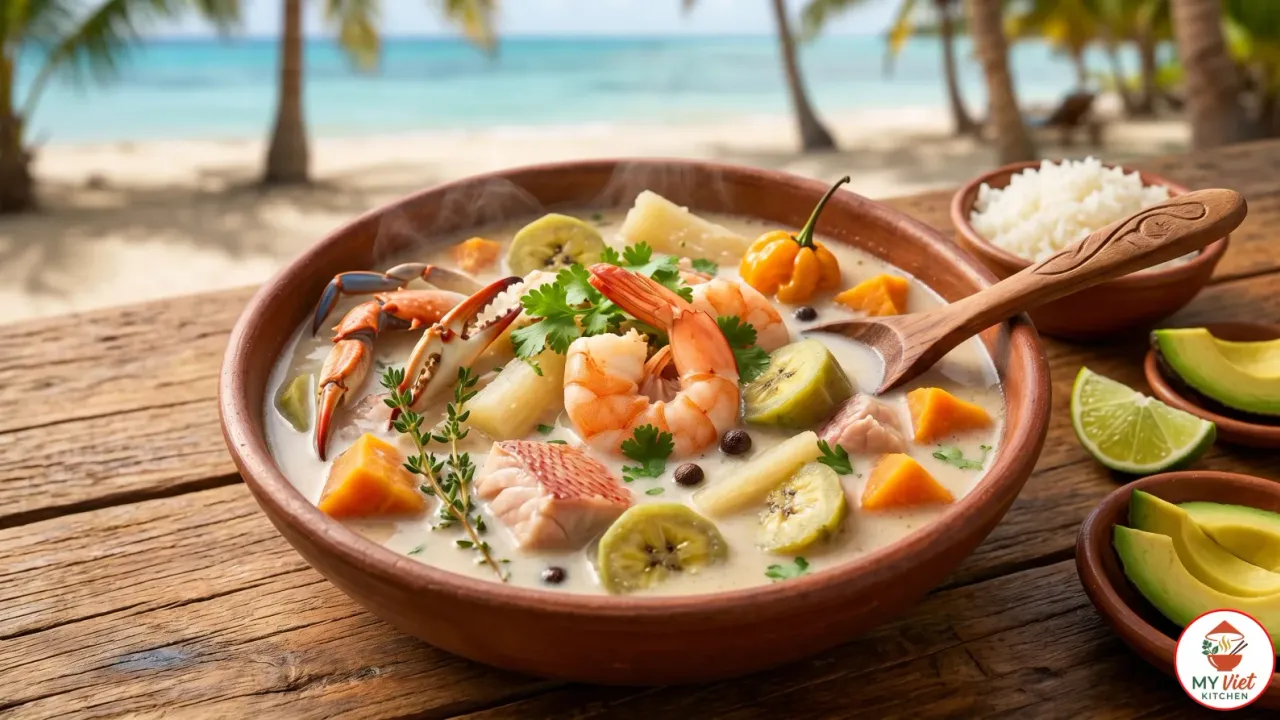
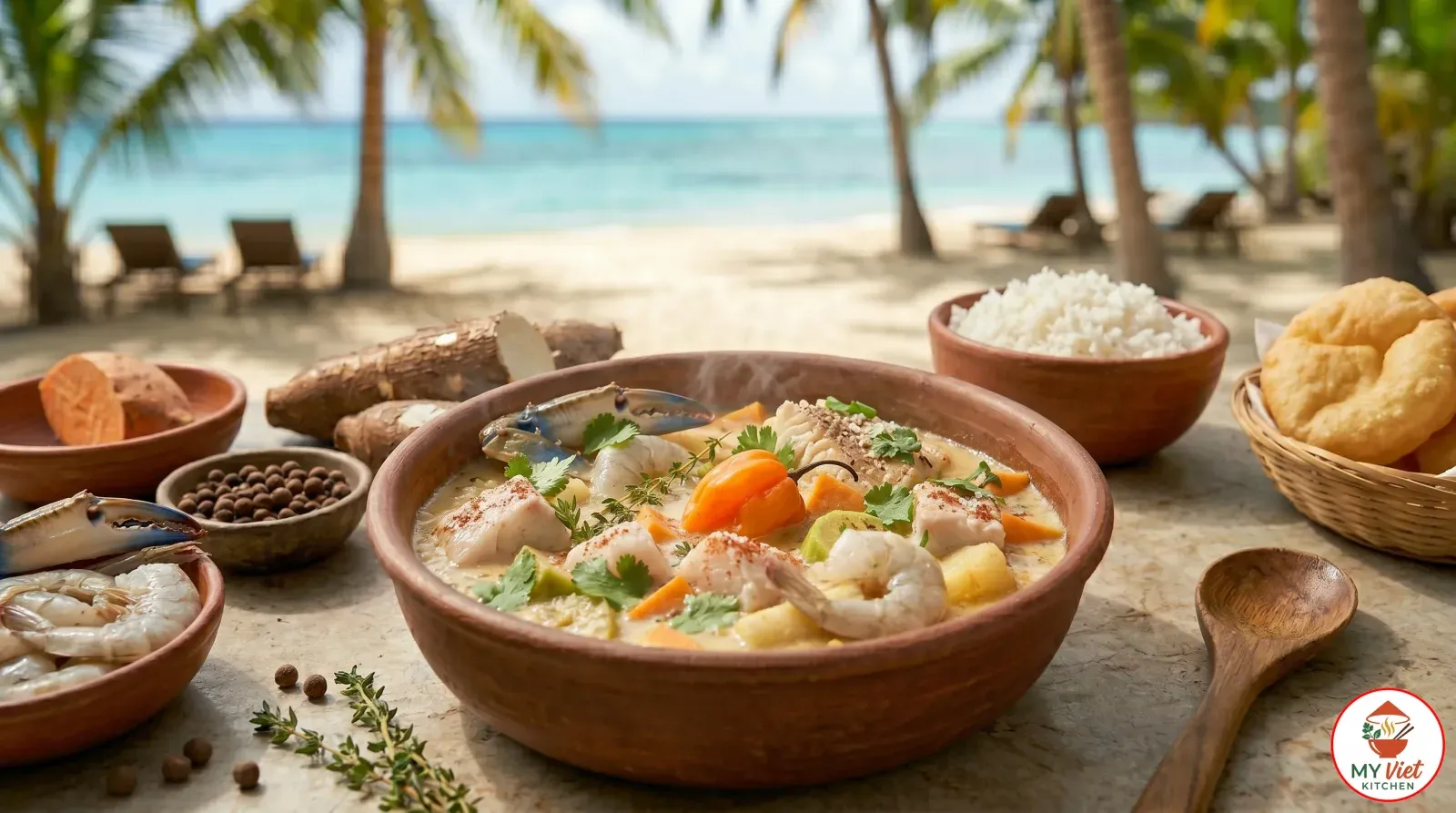
Rondon is the crown jewel of Belizean coastal cooking. This magnificent coconut seafood stew brings together fresh fish, shrimp, and crab with green plantains, cassava, and sweet potato. The rich coconut milk broth is fragrant with thyme, allspice, and Scotch bonnet pepper. Born in the Garifuna communities along the Caribbean coast of Belize, rondon captures the soul of island cooking in every spoonful. Indeed, few dishes in Central American cuisine offer such a generous harmony of sea and land, all unified by the silky warmth of coconut.
Prep Time: 30 minutes | Cook Time: 50 minutes | Servings: 6
Difficulty: Intermediate | Calories: ~480 per serving
What Makes Rondon Special?
Rondon belongs to the family of Caribbean coconut stews, yet the Belizean version stands apart because of its sheer abundance. While a typical Jamaican run down focuses on mackerel in reduced coconut sauce, Belizean rondon fills the pot with many types of fresh seafood and hearty root vegetables. As a result, each bowl delivers protein from the sea, starch from the land, and richness from the coconut. Consequently, rondon has earned its place as the most complete one-pot dish in Belizean cuisine.
The dish traces its origins to the Garifuna people. They are descendants of West African and indigenous Caribbean groups who settled along the coast of Belize, Honduras, and Guatemala. Garifuna cooks developed rondon as a way to combine the day’s catch with root vegetables from their gardens and coconut milk pressed from local palms. In other words, whatever the sea and the garden provided went into the pot. This spirit gave the dish its name, widely believed to derive from “run down.” Specifically, it describes the technique of simmering coconut milk until it thickens into a luscious broth.
What truly elevates rondon beyond other coconut stews is the layered cooking technique. First, the starchy root vegetables simmer on their own. They release natural sugars into the broth and thicken it slowly. Then the seafood enters the pot for a brief, gentle cook. As a result, every part reaches its ideal texture. The cassava turns creamy, and the plantains hold their firm bite. Meanwhile, the fish stays moist and flaky, while the shrimp curls into perfect tenderness. Together, the coconut broth ties everything into a bowl of velvety richness.
Choosing the Right Seafood for Rondon
Seafood selection determines the character of your rondon. Traditionally, Garifuna cooks use whatever the fishermen bring in that morning. For a home version, however, focus on a mix of firm fish, shellfish, and crab. Here is what to look for at the fish counter.
- Red snapper (best choice): This is the most traditional fish for rondon in Belize. Its firm, sweet flesh holds up beautifully during simmering and absorbs the coconut broth without falling apart. Cut it into large two-inch chunks for the best texture. Bone-in pieces add extra flavor to the broth through released collagen.
- Grouper or sea bass: Both offer the firm texture required for this stew. Their mild, clean flavor lets the coconut and spice profile shine. Grouper is particularly good because its dense flesh remains intact even after ten minutes of simmering. Sea bass provides a slightly more buttery quality.
- Large shrimp (shell-on or peeled): Shrimp add sweetness and a different texture to the stew. Use large or jumbo shrimp for the best visual and textural impact. Cooking them shell-on contributes more flavor to the broth, though peeled shrimp are easier to eat. Either approach works well in this recipe.
- Blue crab: Crab is the luxurious element in rondon. Blue crab claws or whole cleaned crab pieces add a briny sweetness that elevates the entire pot. If blue crab is unavailable, substitute Dungeness crab or even crab legs. The shells release minerals and flavor compounds that enrich the broth considerably.
Ingredients for Rondon
Seafood:
- 1 pound (450g) firm white fish fillets (snapper or grouper), cut into chunks
- 8 ounces (225g) large shrimp, peeled and deveined
- 4 blue crab claws or 8 ounces (225g) crab pieces
Root Vegetables and Starches:
- 2 green plantains, peeled and sliced into rounds
- 1 medium cassava (yuca), peeled and cut into chunks
- 1 large sweet potato, peeled and cubed
For the Coconut Broth:
- 2 cans (27 oz / 800ml) full-fat coconut milk
- 2 cups (480ml) fish stock or water
- 2 ripe tomatoes, diced
- 1 large onion, finely diced
- 4 cloves garlic, minced
- 2 tablespoons coconut oil
- 1 Scotch bonnet pepper, whole
- 3 sprigs fresh thyme
- 1 tablespoon fresh lime juice
- 1 teaspoon ground cumin
- 1 teaspoon smoked paprika
- 1/2 teaspoon ground allspice
- 1/4 teaspoon ground black pepper
- Salt to taste
- Fresh cilantro for garnish
Pro tip: If you can find fresh coconut, crack it open and blend the flesh with warm water to make your own coconut milk. Fresh coconut milk has a brighter, more vibrant flavor than canned. Additionally, ask your fishmonger for fish bones and heads to make a quick stock. Simmer them with onion, thyme, and a bay leaf for 20 minutes, then strain. This homemade fish stock adds remarkable depth to the rondon broth that store-bought stock simply cannot match.
Step-by-Step Instructions
Step 1: Prepare the Root Vegetables
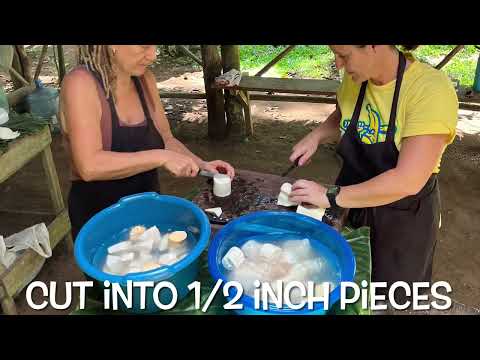
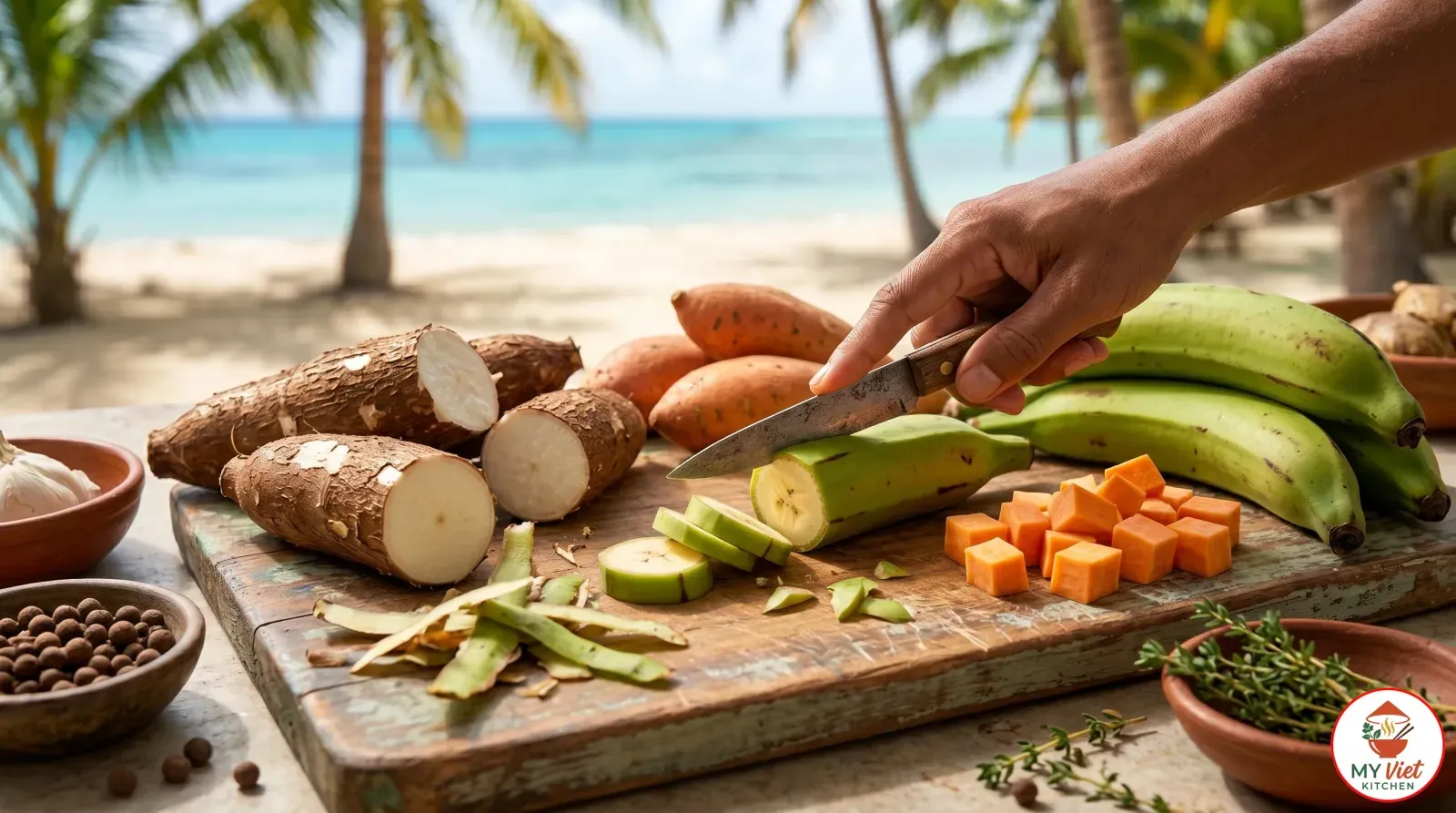
1 Start by preparing all the starchy parts. First, peel the cassava by cutting off both ends. Then slice through the waxy skin and pry it away in sections. Cut the cassava into one-inch chunks. Remove the fibrous core if present. Next, score the tough plantain skin along each ridge and peel it back in strips.
After that, slice the peeled plantains into half-inch rounds. Then peel and cube the sweet potato into pieces roughly the same size as the cassava. Place all the prepared vegetables in a bowl of cold water to prevent browning. This prep work ensures even cooking later. Because cassava and plantains take much longer to cook than seafood, preparing them first is essential for timing the dish correctly.
Step 2: Build the Coconut Base
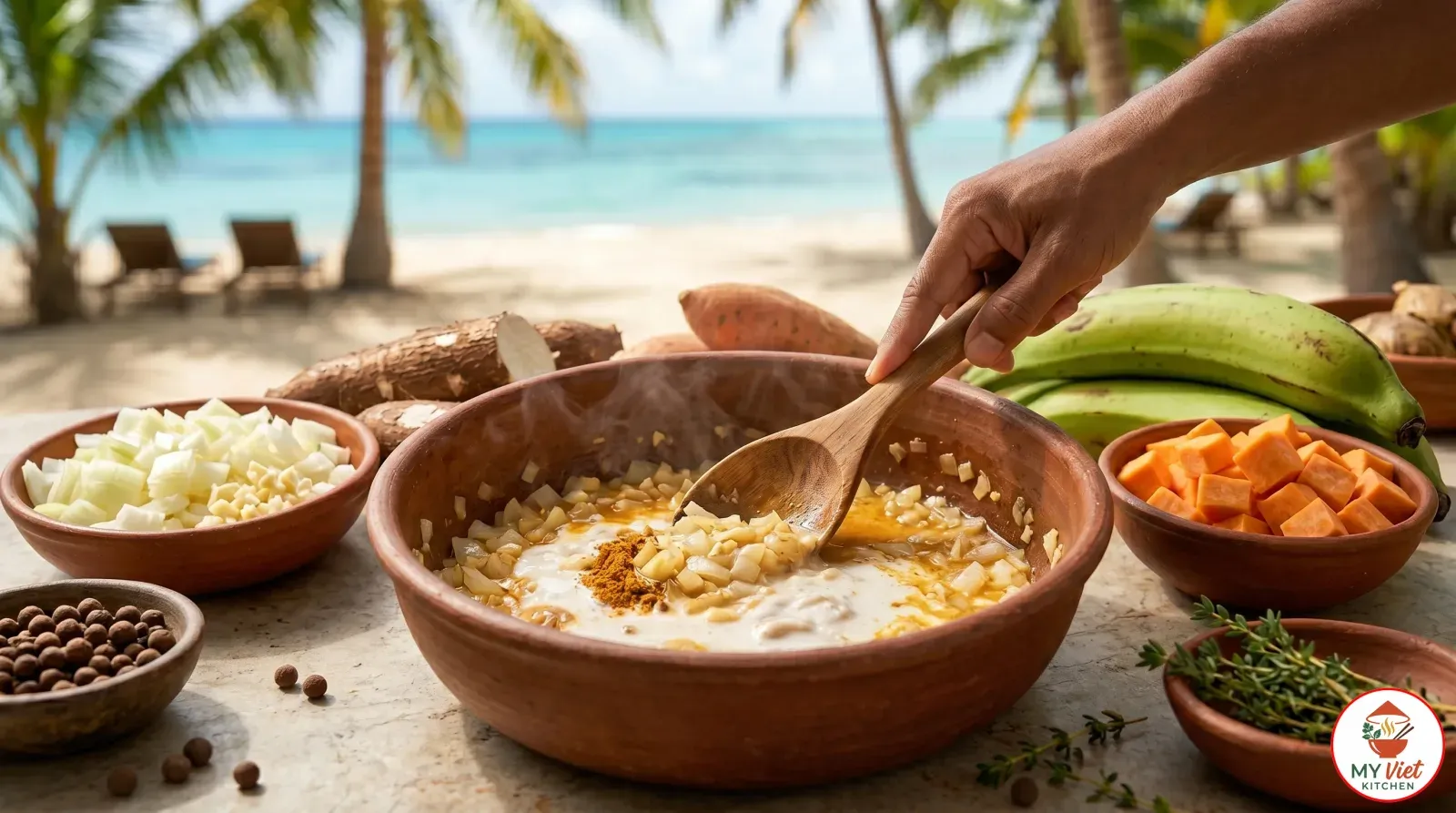
2 Heat the coconut oil in a large Dutch oven over medium heat. Add the diced onion and cook for 5 minutes, stirring often, until it softens and turns clear. The onion forms the flavor base for the entire broth. Next, stir in the minced garlic and cook for just 1 minute until the aroma blooms.
Now add the ground cumin, smoked paprika, and allspice. Stir the spices into the onion mixture and cook for 1 minute. Toasting spices in fat activates their oils. As a result, they carry flavor much better than if added to liquid. Then toss in the diced tomatoes. Cook for 3 minutes until they soften and release their juices. The tomatoes add acidity that balances the coconut milk. Altogether, this aromatic base is the backbone of authentic rondon.
Step 3: Simmer the Root Vegetables
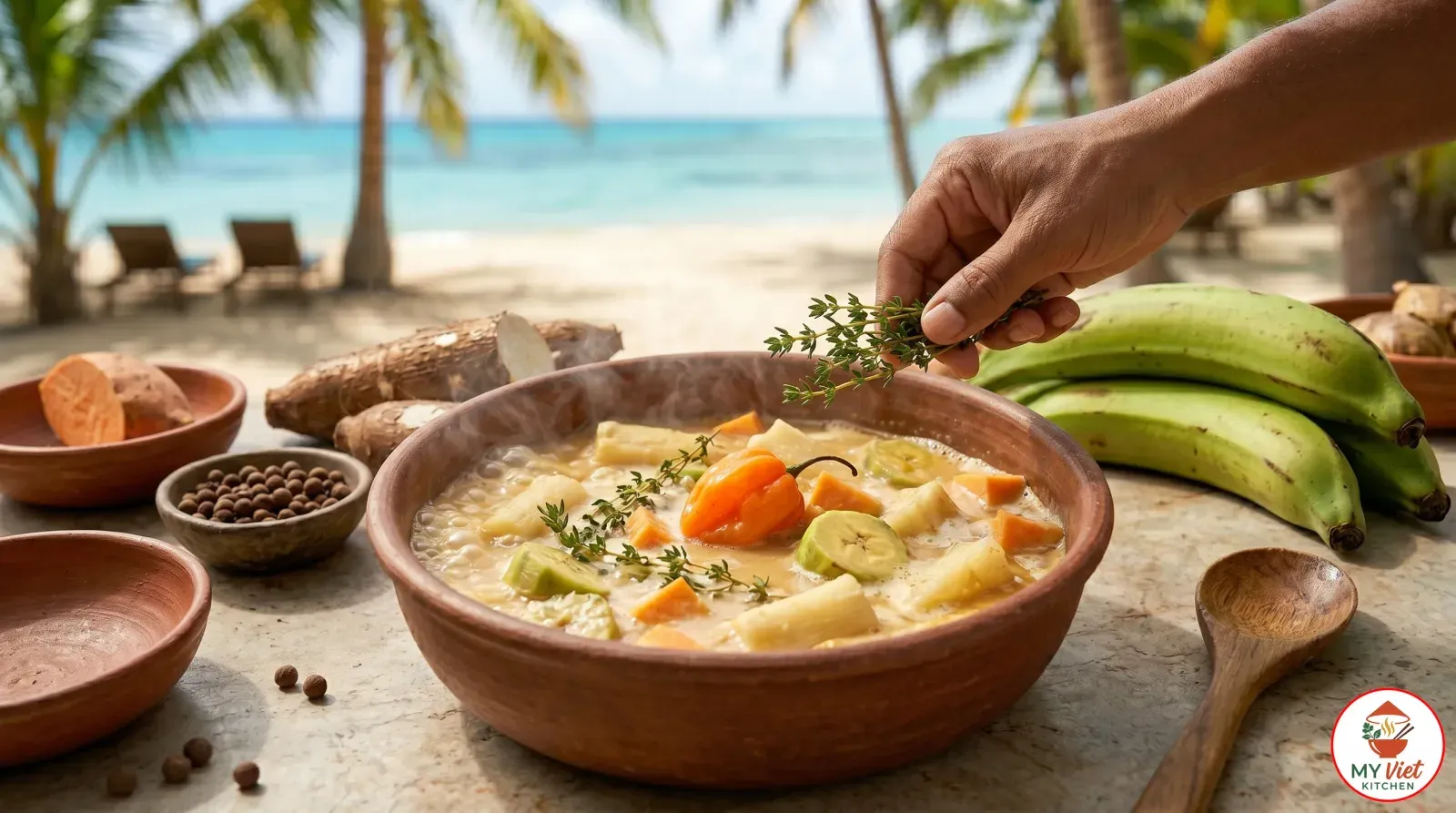
3 Pour in both cans of coconut milk and the fish stock. Stir well to blend everything into a smooth, pale broth. Then drain the root vegetables and add them to the pot. Also drop in the whole Scotch bonnet pepper and the fresh thyme sprigs. Bring the liquid to a boil over high heat, then reduce to a gentle simmer right away.
Cover the pot and let the vegetables cook for 20 to 25 minutes. The cassava needs this time to turn tender all the way through. To check, pierce a chunk with a fork. It should slide in easily. Meanwhile, the plantains will soften while keeping a pleasant firmness. As the root vegetables cook, their starches leach into the broth and thicken it bit by bit. This starchy body is a hallmark of real rondon. However, do not stir too often. The vegetables can break apart if you handle them roughly.
Step 4: Add the Seafood
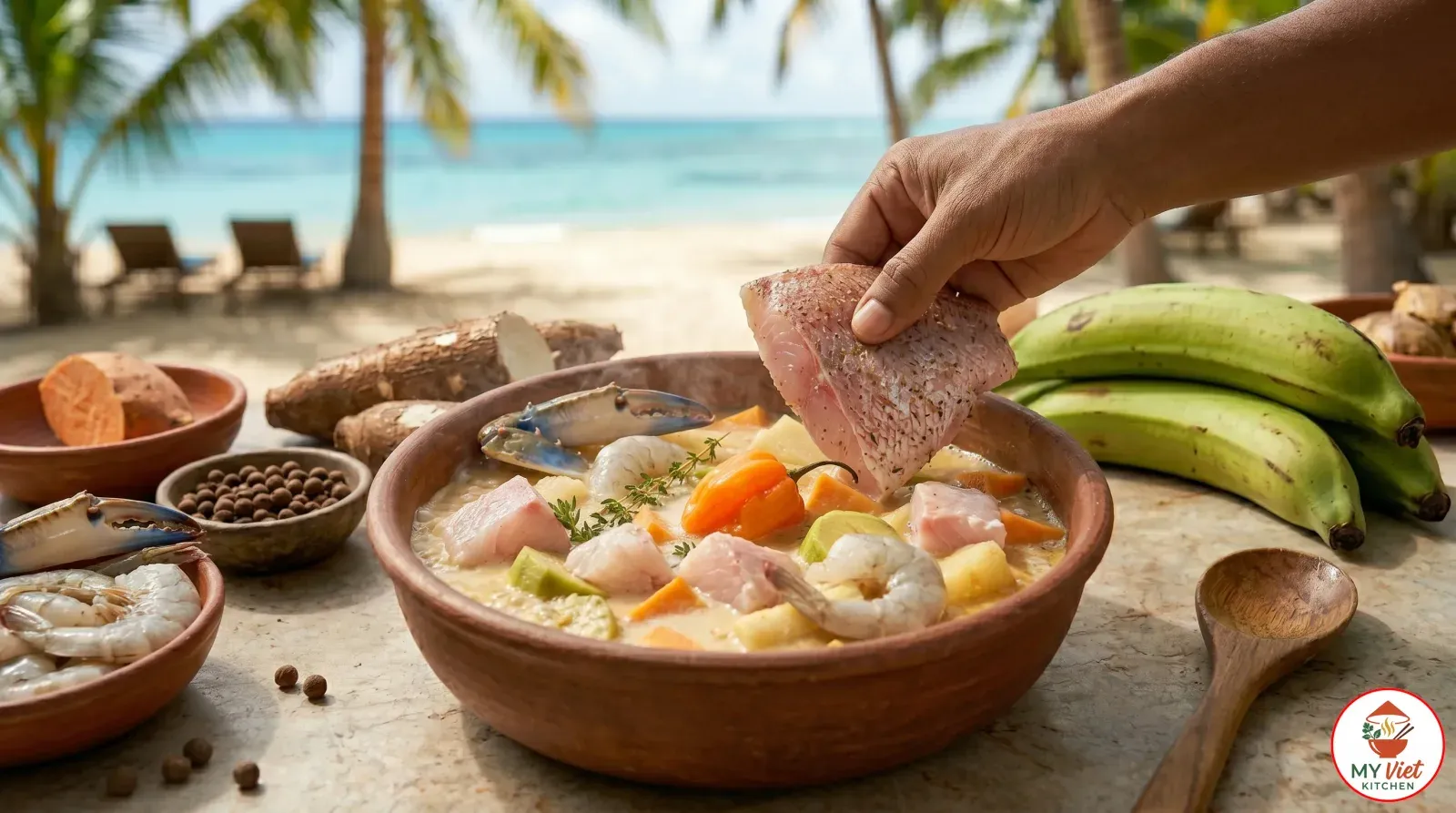
4 Season the fish chunks and shrimp with salt and black pepper. Then gently nestle the fish pieces into the broth, pushing them just below the surface. After that, place the shrimp and crab claws on top. Do not stir at this stage. The fish needs to cook without being moved so it holds its shape.
Cover the pot and cook for 8 to 10 minutes over gentle heat. The fish is done when it turns opaque and flakes with a fork. Similarly, the shrimp should curl into a C-shape and turn pink. Crab claws just need to heat through, since they are often sold pre-cooked. If you use raw crab, however, allow 12 minutes instead. During this stage, the seafood releases its juices into the broth. In turn, these juices add a briny sweetness that lifts the stew from good to great.
Step 5: Season and Serve
5 First, carefully remove the Scotch bonnet pepper and thyme sprigs from the pot. Then squeeze the fresh lime juice over the stew and stir gently. The lime brightens all the flavors and cuts through the rich coconut. Finally, taste the broth and adjust the salt as needed.
Ladle the rondon into deep bowls. Each serving should have a generous mix of fish, shrimp, and crab with root vegetables. Pour plenty of coconut broth over everything and garnish with fresh cilantro. Additionally, arrange the seafood on top for a nice look. Serve right away while the broth is still steaming. Above all, rondon tastes best the moment it comes off the stove.
Expert Tips for Perfect Rondon
Use Full-Fat Coconut Milk Only
The richness of the coconut broth is essential. Light coconut milk or coconut drinks produce a thin, watery stew. In contrast, full-fat coconut milk has the oils that blend with fish stock and starches to create a thick, creamy broth. Therefore, always shake the cans well before opening to mix the cream and liquid. For an even richer result, scoop the solid cream from the top of an unshaken can. Then add it during the last five minutes of cooking.
Keep the Scotch Bonnet Whole
Dropping the Scotch bonnet pepper in whole infuses the broth with fruity, tropical heat. On the contrary, cutting or piercing the pepper releases the seeds and membrane where most capsaicin hides. As a result, a whole pepper gives gentle warmth that builds slowly. If you want more heat, press it with a spoon against the side of the pot. Then remove it before serving so guests avoid an accidental bite. This simple technique gives you full control over the spice level.
Add Seafood in Stages
Timing the seafood right prevents overcooking. If you use different types of shellfish, add the slowest items first. For example, raw crab goes in before the fish. Shrimp always goes in last because it cooks fastest. After all, overcooking makes shrimp rubbery and fish dry. Check the fish after 8 minutes. It should be barely opaque in the center, since residual heat keeps cooking it in the bowl. Ultimately, this careful staging separates a good rondon from a great one.
Caribbean Coconut Stew Comparison
Rondon belongs to a vibrant tradition of Caribbean coconut-based stews. Each island and coastal community has developed its own version using local seafood and flavoring traditions. The following comparison shows how different regions approach the coconut-and-seafood combination.
| Dish | Country | Key Ingredients | Key Characteristics |
|---|---|---|---|
| Rondon | Belize | Mixed seafood, cassava, plantains, coconut milk | Thick, hearty stew with root vegetables and multiple seafood types |
| Run Down | Jamaica | Mackerel, coconut milk, tomatoes, peppers | Heavily reduced coconut sauce, fewer vegetables, single fish |
| Tapado | Guatemala | Seafood, plantains, coconut milk, cilantro | Garifuna cousin to rondon, often includes conch |
| Coconut Curry | Trinidad | Fish, coconut milk, curry powder, potatoes | Indian-influenced spice profile with curry and turmeric |
| Creole Fish Stew | Martinique | Fish, coconut milk, lime, Creole spices | French-influenced, lighter broth with aromatic herbs |
Serving Suggestions
Rondon is traditionally a complete meal on its own, loaded with protein, starch, and fat. However, the right accompaniments can elevate the experience further. In Belize, the stew appears with simple sides that complement rather than compete with the bold coconut broth.
Classic Accompaniments:
- Steamed white rice: Plain white rice absorbs the coconut broth and provides a neutral starchy base. Jasmine rice works particularly well because its subtle floral aroma complements the tropical flavors. Coconut rice is another excellent option that reinforces the coconut theme throughout the meal.
- Belizean fry jacks: These puffy fried dough pockets are a beloved Belizean staple. They are perfect for tearing apart and dunking into the coconut broth. The crispy exterior and soft, airy interior provide a delightful textural contrast to the silky stew.
- Avocado slices: Fresh avocado adds a cool, creamy element that balances the warm spices and heat from the Scotch bonnet. Lay thick slices on top of the stew just before serving. The rich fat of the avocado melts slightly into the hot broth.
- Lime wedges: Extra lime on the side allows each diner to brighten the broth to their own taste. A squeeze of fresh lime juice over the bowl lifts every flavor and adds a spark of acidity that keeps the palate engaged through the entire meal.
Beverage Pairings:
- Belikin beer: The national beer of Belize is a crisp, light lager that cleanses the palate between rich, coconutty spoonfuls. Serve it ice-cold for the best contrast against the warm, spicy stew.
- Fresh coconut water: Staying on the coconut theme, chilled coconut water provides natural sweetness and hydration. Its light, refreshing character prevents palate fatigue from the rich broth.
- Sauvignon Blanc: A chilled, crisp white wine with bright acidity pairs beautifully with the seafood and coconut. The citrus and herbal notes in the wine complement the thyme, lime, and cilantro in the stew.
- Lime and ginger agua fresca: A non-alcoholic option that matches the tropical flavors perfectly. The ginger adds warmth that echoes the Scotch bonnet, while the lime reinforces the citrus element in the dish. Serve it over plenty of ice.
Storage and Reheating
Refrigerator: Allow the rondon to cool fully before putting it in an airtight container. Then store it in the fridge for up to 2 days. The coconut milk may solidify when cold, but this is normal. Additionally, the stew benefits from overnight rest as the flavors continue to meld. However, keep in mind that the fish texture changes over time. For the best results, eat it within 24 hours of cooking.
Freezer: You can freeze rondon, but the seafood and root vegetables will change in texture. If you plan to freeze, first separate the broth from the solids. Then freeze the coconut broth on its own for up to 2 months. To serve, thaw it overnight in the fridge and reheat on the stove. After that, add freshly cooked seafood and vegetables. This method keeps the quality much better than freezing the whole stew.
Reheating: Warm rondon gently over medium-low heat on the stove. Stir with care to avoid breaking the fish. If the broth has thickened too much, add a splash of coconut milk or stock. Also, avoid the microwave, since it heats unevenly and can make shrimp rubbery. Once hot, taste and adjust the salt. Finally, add a squeeze of fresh lime to bring back the brightness.
Common Mistakes to Avoid
1. Adding Seafood Too Early
The most common mistake is adding all items at once. Seafood cooks in minutes, while cassava and plantains need 20 to 25 minutes. If you add everything together, the fish falls apart long before the root vegetables get tender. Instead, always cook the vegetables first until nearly done. Then gently add the seafood for the final 8 to 10 minutes. This staging keeps every part at its best texture.
2. Using Light Coconut Milk
Light coconut milk lacks the fat needed for a real rondon broth. The coconut fat blends with the starchy liquid to create the thick, creamy body that defines this stew. Without enough fat, the broth tastes thin and watery no matter how long you simmer it. Therefore, always use full-fat coconut milk. If you worry about richness, simply reduce the amount slightly rather than switching to a low-fat version.
3. Overcooking the Shrimp
Shrimp go from tender to rubbery in under two minutes. So add them during the last 5 minutes if using large shrimp, or even later for smaller sizes. They are done once they curl into a loose C-shape and turn pink. Indeed, overcooked shrimp lose their sweet juice and get tough. Watch them closely and remove the pot from heat as soon as they are just done.
4. Cutting the Scotch Bonnet Pepper
Slicing or piercing the Scotch bonnet releases a wave of heat that can overpower the seafood. Instead, add the pepper whole so the fruity aroma and gentle heat infuse the broth slowly. In this way, you keep full control. If the stew needs more heat at the end, just add a few drops of hot sauce. As a result, each diner can adjust the spice level at the table.
Frequently Asked Questions
What is rondon and where does it come from?
Rondon is a traditional coconut seafood stew from Belize. Specifically, it comes from the Garifuna communities along the Caribbean coast. The name likely derives from “run down,” which refers to simmering coconut milk until it reduces into a thick, rich broth. Essentially, it combines fresh fish, shrimp, crab, and root vegetables in a coconut milk base seasoned with thyme, allspice, and Scotch bonnet pepper. Today, the dish holds deep cultural meaning for the Garifuna people. It is also celebrated as one of the great national dishes of Belize.
What type of fish is best for rondon?
Firm white fish works best because it holds its shape while simmering. In particular, red snapper is the top choice in Belize. Grouper, sea bass, and mahi-mahi also work well. However, avoid flaky fish like tilapia or sole, which fall apart too easily. Cut the fish into large two-inch chunks so it stays intact. Fresh fish is always best, though properly thawed frozen fish also performs well.
Can I make rondon without Scotch bonnet pepper?
Absolutely. For milder heat, substitute with a habanero or two serrano peppers. Alternatively, for minimal spice, use a single jalapeño. You can also omit the hot pepper and add a pinch of cayenne at the end. However, the Scotch bonnet adds a fruity, tropical aroma beyond just heat. Therefore, including at least a mild pepper is best. It gives the stew a flavor that plain black pepper alone cannot match.
How do I peel green plantains easily?
Green plantains have a thick, stiff skin that does not peel like a ripe banana. Cut off both ends with a sharp knife. Score the skin lengthwise along each natural ridge, making three or four shallow cuts from end to end. Slide your thumb under the skin at one score line and pry it away in strips. If the skin resists, soak the plantain in warm water for 5 minutes to loosen it. Work carefully, as the starchy sap can stain surfaces.
Can I use canned coconut milk for rondon?
Yes, canned full-fat coconut milk works perfectly and is the most practical option for home cooks. Choose brands with only coconut and water as ingredients, avoiding those with stabilizers or gums. Shake each can thoroughly before opening to recombine the cream and liquid layers. Two full cans provide the right volume and richness for six servings. Do not substitute with light coconut milk, as the reduced fat content produces a noticeably thinner broth.
Is rondon the same as Jamaican run down?
They share the same roots and a similar technique, but they are different dishes. Jamaican run down typically uses mackerel and focuses on reducing the coconut milk into a thick sauce. By contrast, Belizean rondon is a fuller stew with many seafood types and starchy vegetables like cassava, plantains, and sweet potato. Moreover, the Belizean version has a soupier feel and comes from the Garifuna tradition. Both are tasty, yet they differ clearly in ingredients, texture, and cultural origin.
Variations and Adaptations
Fish-Only Rondon:
If shrimp and crab are not available, simply make the stew with fish alone. Use a generous 1.5 pounds of firm white fish for six servings. The dish stays very flavorful because the coconut broth and root vegetables carry most of the character. Also, add extra fish stock to make up for the missing shellfish. In fact, this simpler version is closer to the everyday rondon that Garifuna families cook on weeknights.
Chicken Rondon:
In some inland areas of Belize, cooks prepare rondon with chicken instead of seafood. For the best flavor, use bone-in chicken thighs. First, brown them in the coconut oil before building the aromatic base. Then add the chicken back to the pot along with the root vegetables. Simmer for 35 to 40 minutes until cooked through. As a result, you get a hearty, warming stew that trades briny seafood for deep, savory poultry richness.
Vegan Rondon:
Replace the seafood with hearty vegetables such as jackfruit, hearts of palm, and more root vegetables. Additionally, add a sheet of nori or a teaspoon of seaweed flakes for a subtle sea flavor. Use vegetable stock instead of fish stock. Also double the sweet potato and add butternut squash for more body. Since the coconut broth is naturally vegan, it gives plenty of richness on its own. Finally, season with extra lime juice and a splash of soy sauce for depth.
Slow Cooker Rondon:
First, build the aromatic base on the stovetop. Then transfer it to a slow cooker with the coconut milk, stock, and root vegetables. Cook on low for 4 to 5 hours until the cassava and plantains are fully tender. After that, add the seafood in the final 15 to 20 minutes and switch to high. The slow cooker method works well for the vegetables and broth. However, watch the seafood closely to prevent overcooking. Overall, this hands-off method suits busy days when you want dinner ready at home.
The Cultural Significance of Rondon
Rondon is far more than a recipe. In fact, it is a living expression of Garifuna identity and heritage. The Garifuna people, recognized by UNESCO, have kept their food traditions alive for centuries. Despite displacement and diaspora, they have held on to their cooking ways. Rondon sits at the center of this food culture. According to Taste Atlas, it represents one of the most important food traditions in the Caribbean and Central America.
In Belize, rondon appears at every major Garifuna gathering. For example, it is prepared for National Garifuna Settlement Day on November 19th, at family reunions, and for community events. Moreover, the act of making rondon is communal. Women gather to prepare the root vegetables while men bring in the catch. Then the pot simmers for the whole community to share. Essentially, this approach shows the Garifuna belief that food feeds not just the body but also the bonds between people. Every bowl of rondon connects you to generations of coastal cooks who perfected this stew with gifts from the Caribbean Sea and the rich tropical soil. Discover more Caribbean flavors in our collection of Central American dishes.
Conclusion
Rondon proves that great cooking does not need to be complex. Fresh seafood, starchy root vegetables, and rich coconut milk come together in one pot. The technique is simple. First, cook the vegetables until tender. Then add the seafood for a brief simmer. The coconut broth does most of the work. In the end, you get a bowl full of the warmth and generosity that define Belizean cooking. Make this once, and you will understand why the Garifuna people treasure this dish above all others.
If you enjoyed this rondon recipe, explore more Caribbean and Latin American flavors in our collection of Central American dishes and Caribbean recipes. Try pairing it with our feijoada for a tropical feast that spans two continents. Leave a rating and share your experience in the comments below.