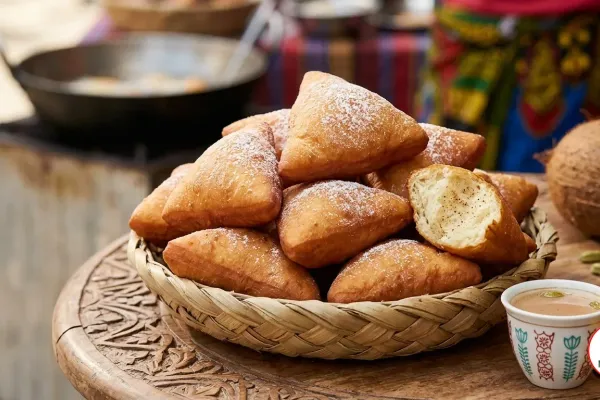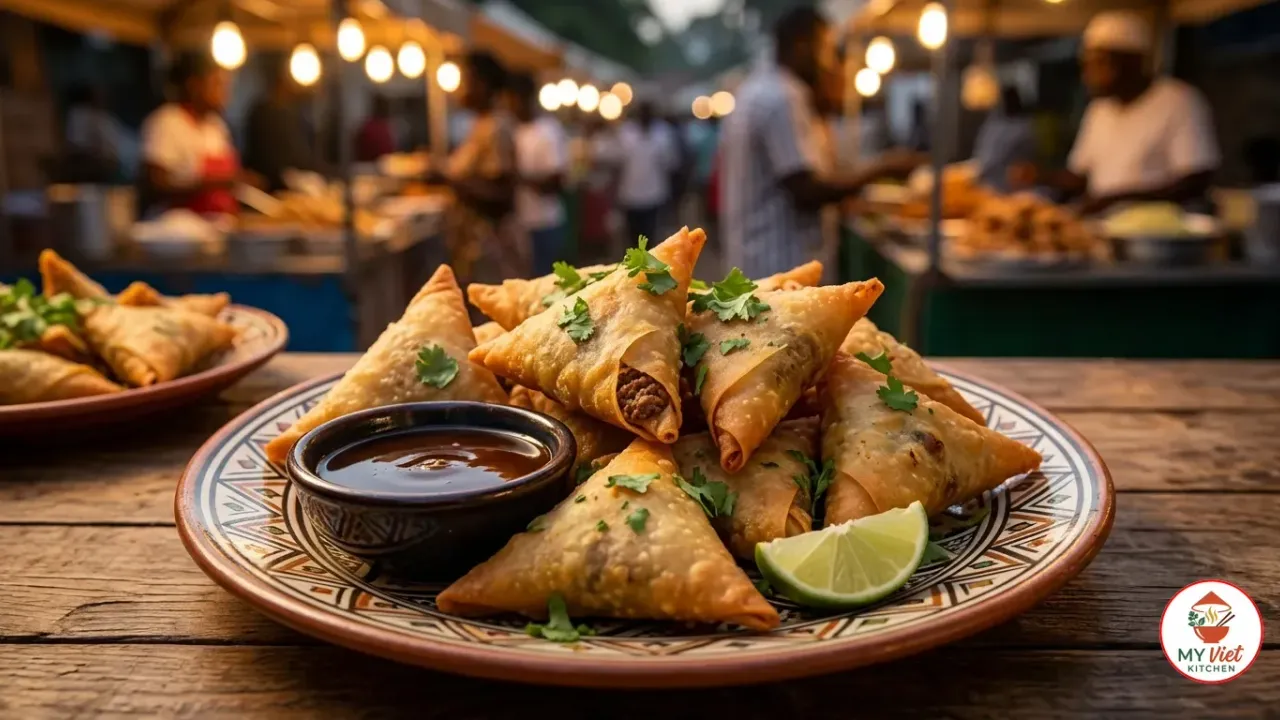
Sambusa is one of the most beloved street foods across East Africa. This sambusa recipe teaches you how to make crispy, golden triangles filled with warmly spiced ground beef at home. The shattering thin crust wraps around a savory filling of cumin, coriander, cardamom, and fresh jalapeños. Whether you are preparing for Ramadan or hosting a party, this sambusa recipe delivers authentic East African flavor in your own kitchen.
Prep Time: 45 minutes | Cook Time: 25 minutes | Servings: 24 sambusas
Difficulty: Medium | Calories: ~120 per sambusa
What Makes Sambusa Special?
Sambusa holds a deep cultural significance across East Africa, from the bustling streets of Mogadishu to the night markets of Nairobi and the spice-scented alleys of Dar es Salaam. Unlike its South Asian cousin the samosa, the East African sambusa uses a much thinner pastry that shatters on the first bite. Inside, you find a tightly packed filling bursting with aromatic spices. The blend of cumin, coriander, and cardamom creates a warm, fragrant profile that is distinctly East African. These flavors trace their roots to centuries of Indian Ocean trade.
This sambusa recipe captures the essence of that street food tradition. First, your filling cooks quickly in one pan. Then, the folding becomes second nature after a few tries. Finally, the frying takes only minutes. What makes the dish truly special is its versatility. You can fill sambusas with spiced beef, lamb, lentils, or a mixture of potatoes and peas. Every family along the East African coast has its own version. In fact, each one tells a story about trade routes, migration, and the blending of cultures that defines the region.
During Ramadan, sambusas take center stage on the iftar table. Families prepare them by the dozens. They often make the filling a day ahead and fold the pastries together as a group. The sound of sambusas hitting hot oil just before sunset marks the holy month across Somalia, Kenya, Tanzania, and Djibouti. However, sambusas are not just for Ramadan. They also appear at weddings, celebrations, and casual afternoon tea. Once you master this sambusa recipe, you will make them for every occasion.

Choosing the Right Pastry for Your Sambusa Recipe
The pastry wrapper separates a great sambusa from a mediocre one. The right wrapper gives you that signature shatter and crunch. Here are three options you can use at home for this sambusa recipe.
- Spring roll wrappers (best choice): These thin, square sheets produce the crispiest sambusas. They fry up golden and light, with a delicate crunch that closely matches the traditional street vendor pastry. You can find them in the frozen section of most Asian grocery stores.
- Homemade sambusa pastry: Traditional East African cooks make a thin dough from flour, water, and a little oil, then roll it paper-thin. The result is outstanding, though it requires practice. If you enjoy the process of making dough from scratch, this gives the most authentic texture and flavor.
- Phyllo dough: Phyllo sheets work as a backup option. Cut them into strips and brush lightly with oil before folding. They produce a flaky, layered result that is slightly different from the classic sambusa crunch but still very tasty and easy to work with.
Ingredients for Sambusa Recipe
For the Spiced Meat Filling:
- 500g ground beef (or ground lamb)
- 1 large onion, finely diced
- 2 jalapeño peppers, seeded and minced
- 4 cloves garlic, minced
- 1 teaspoon fresh ginger, grated
- 1 teaspoon ground cumin
- 1 teaspoon ground coriander
- 1/2 teaspoon ground cardamom
- 1/2 teaspoon ground cinnamon
- 1/2 teaspoon ground turmeric
- 1/2 teaspoon black pepper
- 1 teaspoon salt
- 1/4 cup fresh cilantro, chopped
- 1 tablespoon vegetable oil
For the Pastry and Frying:
- 24 spring roll wrappers or sambusa pastry sheets
- 2 tablespoons all-purpose flour mixed with 2 tablespoons water (sealing paste)
- Vegetable oil for deep frying (about 4 cups)
For the Tamarind Dipping Sauce:
- 3 tablespoons tamarind paste
- 2 tablespoons warm water
- 1 tablespoon brown sugar
- 1/4 teaspoon chili flakes
- Pinch of salt
Pro tip: Let the meat filling cool completely before you start folding. Warm filling softens the pastry wrappers and makes them tear during folding. Spread the cooked filling on a plate to speed up the cooling process.
Step-by-Step Instructions
Step 1: Cook the Spiced Meat Filling
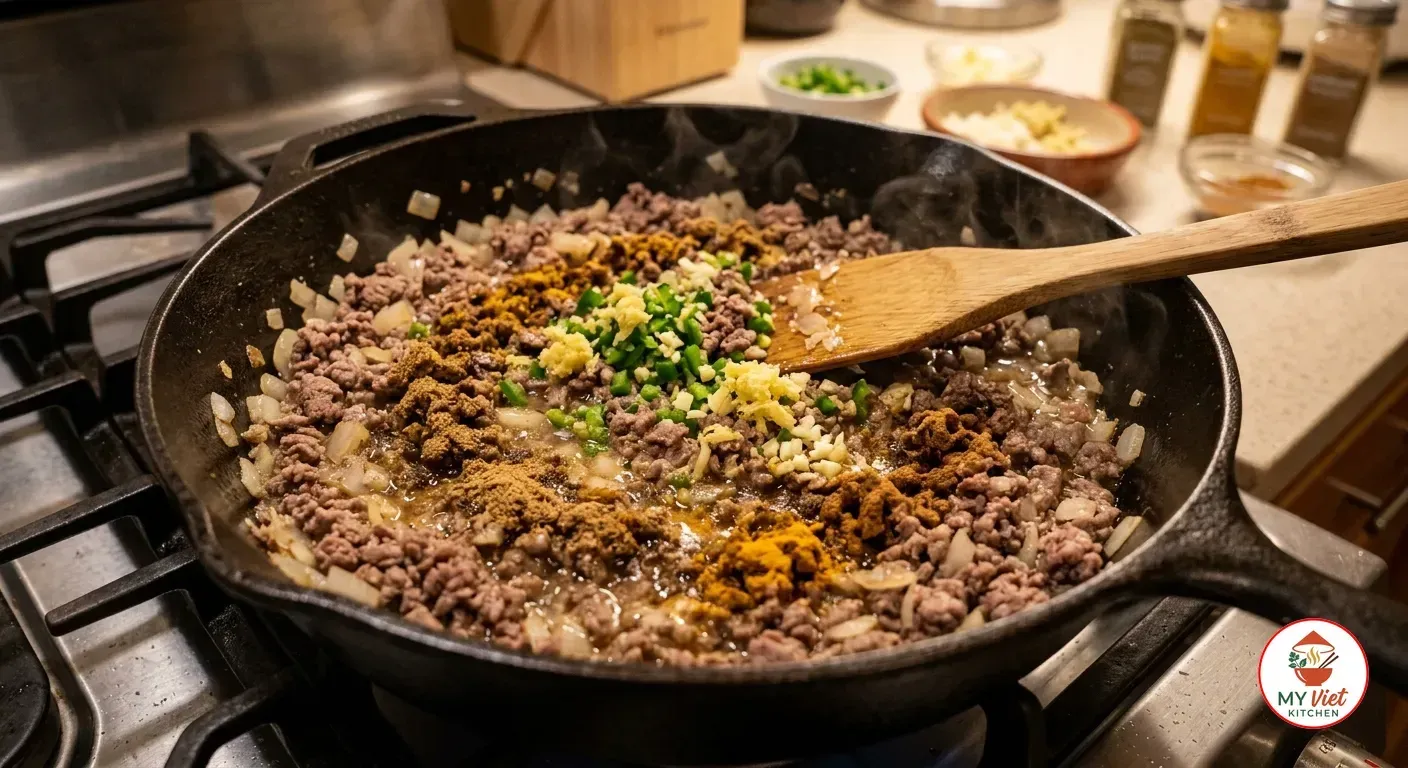
1Heat the vegetable oil in a large skillet over medium-high heat. Add the diced onion and cook for about five minutes until soft and translucent. Then add the garlic, grated ginger, and minced jalapeños. Stir for one minute until fragrant. Next, add the ground beef and break it apart with a wooden spoon. Cook for eight minutes until the meat browns evenly. Now stir in the cumin, coriander, cardamom, cinnamon, turmeric, salt, and pepper. Cook for two more minutes so the spices bloom. After that, remove the skillet from heat, stir in the cilantro, and spread the filling on a plate to cool.
Step 2: Prepare the Pastry Wrappers
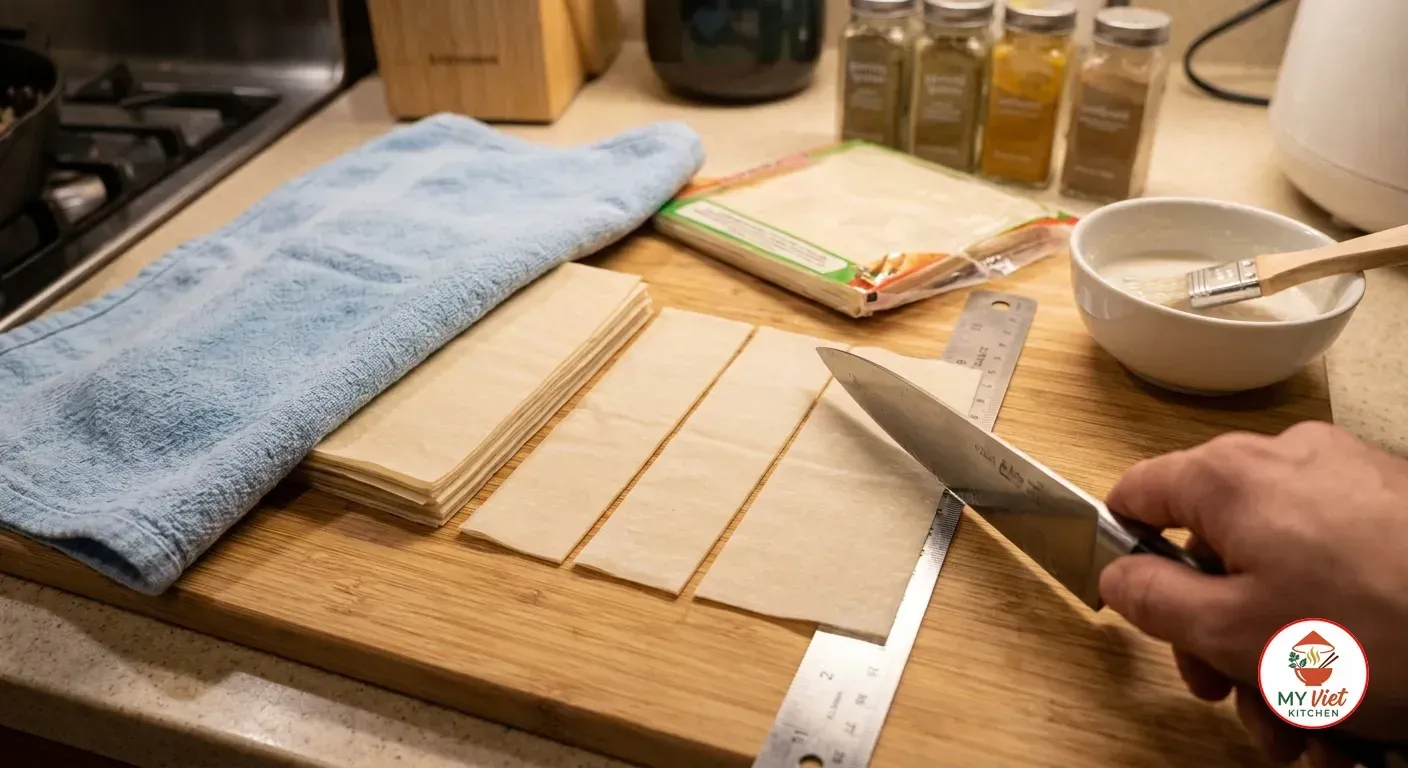
2Take the spring roll wrappers out of the package. Cut each square sheet into three equal strips lengthwise. Keep the strips covered with a damp cloth while you work. The wrappers dry out fast, and dry pastry cracks when you fold it. In a small bowl, mix two tablespoons of flour with two tablespoons of water to make a smooth paste. This paste seals each sambusa shut so the filling stays inside during frying. Set the paste nearby before you start folding.
Step 3: Fold the Sambusas into Triangles
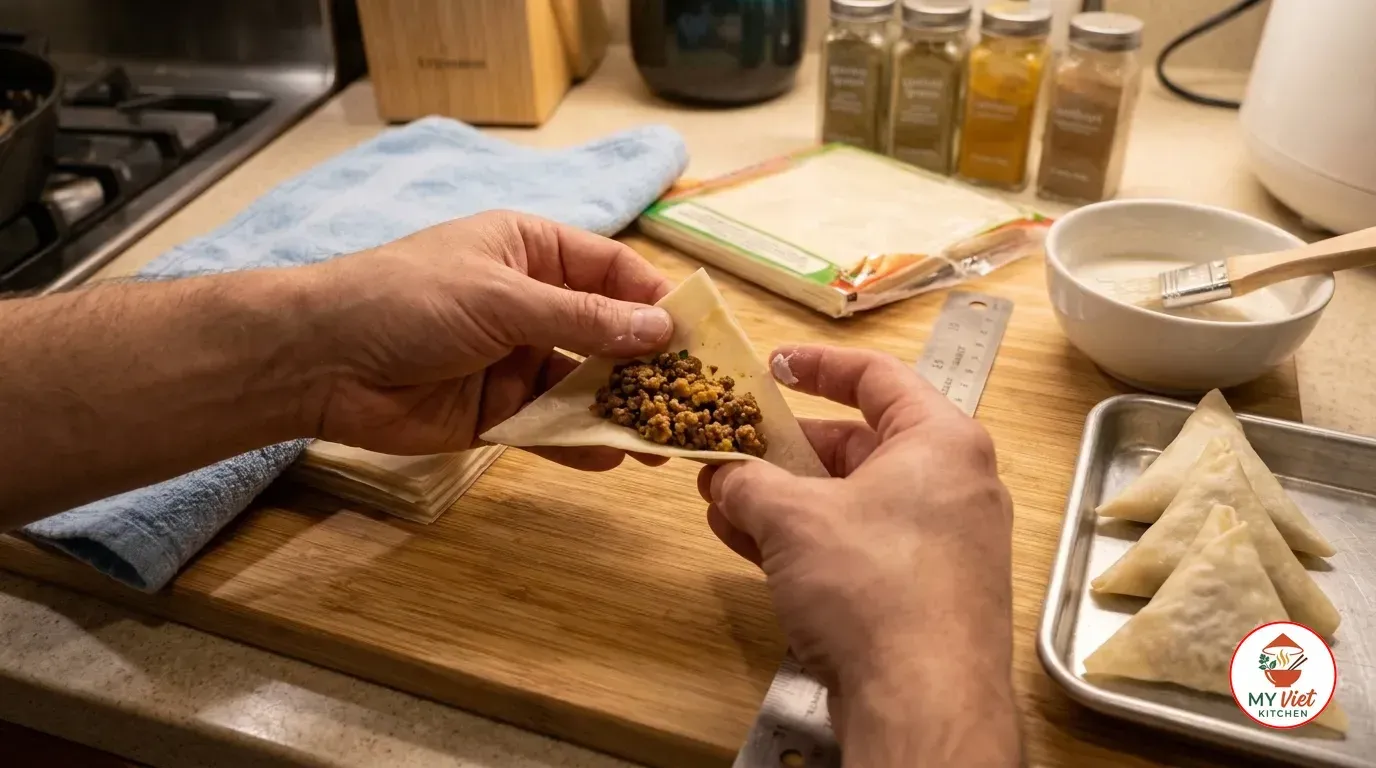
3Place one strip of pastry flat on your work surface. Spoon one tablespoon of cooled filling onto the bottom right corner. Fold that corner up to the left edge to form a triangle. Continue folding up along the strip, keeping the shape tight with each fold. At last, brush flour paste on the last flap and press firmly to seal. You want a neat, compact triangle with no gaps for oil to seep in. Repeat until you have about 24 sambusas. Arrange them on a tray in a single layer while you heat the oil.
Step 4: Deep Fry Until Golden and Crispy
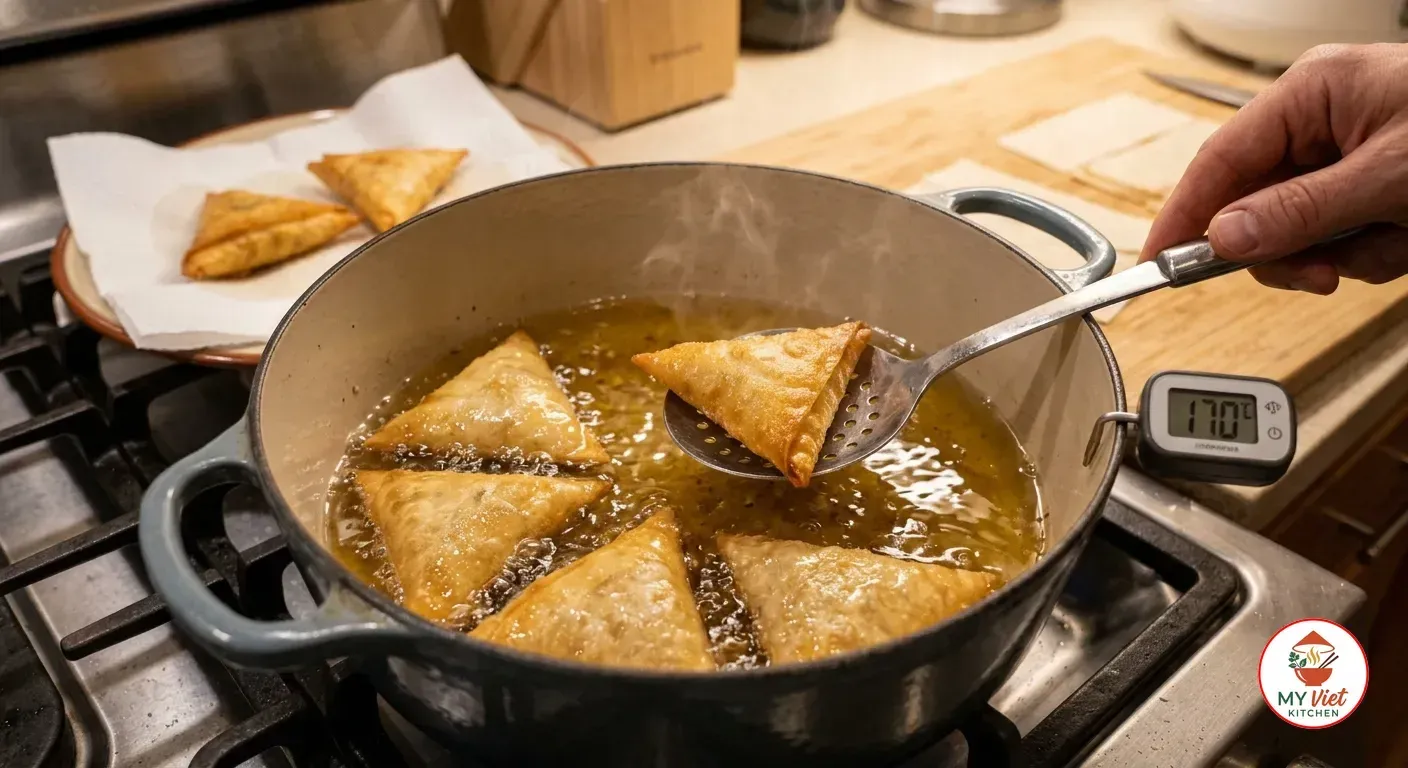
4Pour vegetable oil into a deep pot to a depth of about 8 centimeters. Heat it to 170 degrees Celsius (340 degrees Fahrenheit). Test by dropping a small piece of pastry into the oil. If it sizzles and floats right away, the oil is ready. Lower four or five sambusas into the oil with a slotted spoon. Fry for three to four minutes, turning once, until golden brown on both sides. Drain on a plate lined with paper towels. Fry in small batches to keep the oil hot. Serve the sambusas right away with tamarind dipping sauce.
Expert Tips for Perfect Sambusa
Keep the Oil Temperature Steady
Oil temperature is the most important factor when frying sambusas. Keep it steady at 170 degrees Celsius. If the oil is too hot, the pastry burns before the inside heats through. If the oil is too cool, the pastry absorbs grease and turns soggy. Use a thermometer if you have one. Always fry in small batches, because adding too many at once drops the temperature fast.
Seal the Edges Completely
An open edge is the enemy of a good sambusa. Hot oil seeps in through any gap, making the filling greasy. Press every seam firmly with flour paste. Also check each triangle before frying. If you spot a loose flap, dab on more paste and press again. Ten extra seconds per sambusa at this stage saves you from soggy results later.
Drain the Meat Filling Thoroughly
Excess moisture in the filling creates steam during frying. This can make the pastry puff up and burst. After cooking the beef, tilt the skillet and let the fat drain to one side. Spoon out the filling and leave the liquid behind. A dry filling produces the crispiest sambusas every time.
Sambusa vs. Samosa: Key Differences
Many people confuse sambusa with the Indian samosa because of their similar shape. However, these two pastries have distinct identities. Here is a quick comparison to show what sets them apart.
| Feature | East African Sambusa | Indian Samosa |
|---|---|---|
| Pastry | Very thin, crispy, spring roll style | Thick, flaky dough made from flour and ghee |
| Common Filling | Spiced ground beef or lamb | Spiced potatoes and peas |
| Key Spices | Cumin, coriander, cardamom, cinnamon | Garam masala, amchur, chaat masala |
| Size | Smaller, bite-sized triangles | Larger, cone-shaped pockets |
| Texture | Shattering and light | Thick and flaky |
| Served With | Tamarind sauce, lime, chili | Tamarind chutney, mint chutney |
Serving Suggestions
In East Africa, sambusas are rarely eaten alone. They are part of a spread that brings together several small dishes, creating a meal that is both social and satisfying. Here is how to build the perfect sambusa platter.
The Perfect Accompaniments:
- Tamarind chutney: The sweet-sour tang of tamarind cuts through the richness of the fried pastry and complements the warm spices in the filling beautifully.
- Kachumbari salad: This fresh East African salad of diced tomatoes, onions, cilantro, and lime juice adds a bright, crunchy contrast to every bite of sambusa.
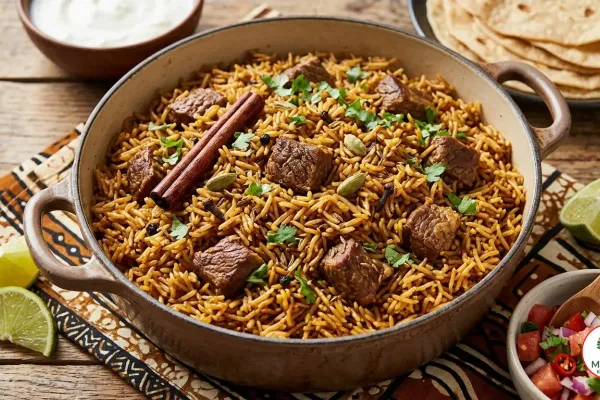
- Pilau rice: For a larger meal, serve sambusas alongside a plate of fragrant East African pilau rice. The aromatic spices in both dishes harmonize perfectly.
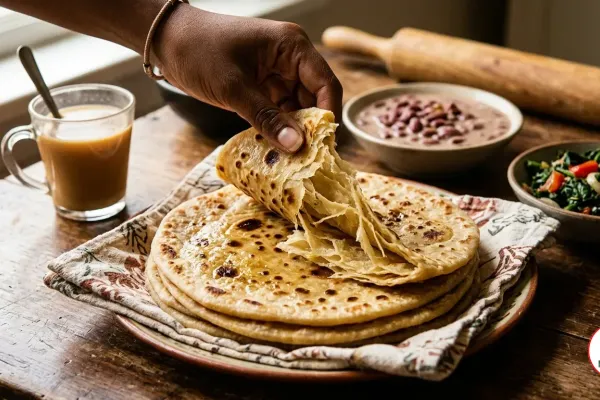
- Chapati flatbread: Warm, soft chapati alongside crispy sambusas creates a wonderful contrast of textures that East Africans love.
- Hot chili sauce: A simple blend of crushed red chilies, garlic, vinegar, and salt gives sambusas an extra kick that heat lovers appreciate.
Beverage Pairings:
- Somali chai (shaah): Spiced tea brewed with cardamom, cinnamon, and cloves is the classic drink to enjoy with sambusas in East Africa.
- Tamarind juice: The sweet-tart flavor of tamarind juice echoes the dipping sauce and makes a refreshing cold pairing during warm weather.
- Fresh mango juice: The tropical sweetness of mango balances the savory spices and works especially well as an afternoon snack pairing.
Storage and Reheating
Refrigerator: Store cooked sambusas in an airtight container for up to 3 days. Layer them between sheets of parchment paper to stop them from sticking together.
Freezer: Uncooked sambusas freeze beautifully for up to 3 months. Arrange them on a baking sheet in a single layer, freeze until solid, then transfer to a freezer bag. Fry them straight from frozen, adding one to two extra minutes of cooking time.
Reheating: For the crispiest results, reheat cooked sambusas in an oven preheated to 190 degrees Celsius (375 degrees Fahrenheit) for 8 to 10 minutes. You can also reheat them in an air fryer at 180 degrees Celsius for 5 minutes. Avoid the microwave, as it turns the pastry rubbery and soft.
Common Mistakes to Avoid
1. Using Warm Filling
This is the most common mistake with this sambusa recipe. Warm filling softens the thin pastry. As a result, it becomes nearly impossible to fold without tearing. The steam also traps moisture inside the wrapper, which leads to soggy results after frying. Always spread the cooked meat on a plate and let it cool fully before folding.
2. Overcrowding the Frying Pot
Dropping too many sambusas into the oil at once causes the heat to plunge. Below 160 degrees Celsius, the pastry absorbs oil like a sponge. For that reason, fry no more than four or five at a time. Let the oil recover between batches. Patience here is the key to crispy, not greasy, results.
3. Folding Too Loosely
A loose fold leaves air pockets inside the sambusa. These pockets cause the pastry to puff up and burst during frying. Pull each fold tight against the filling. The triangle should feel compact and solid in your hand. A well-folded sambusa holds its shape in the oil and comes out crunchy from edge to edge.
Frequently Asked Questions
What is the difference between sambusa and samosa?
Sambusa uses a thinner pastry and typically contains spiced ground meat. Indian samosas use a thicker dough made with flour and ghee. Samosas are often filled with potatoes instead. Additionally, the spice profiles differ. Sambusas lean on cumin, coriander, and cardamom. Samosas use garam masala and amchur powder. Both are delicious, but they come from distinct culinary traditions.
Can I make a vegetarian sambusa?
Absolutely. Replace the beef with mashed potatoes, green peas, and diced carrots. Season them with the same spice blend. Similarly, lentils work very well. Cook them until soft but not mushy, then add cumin, coriander, and a squeeze of lemon. The folding and frying steps stay the same.
How do I keep sambusas crispy after frying?
Place the fried sambusas on a wire rack set over a baking sheet. Air flow underneath stops the bottoms from getting soggy. For a large batch, keep them warm in an oven at 100 degrees Celsius (200 degrees Fahrenheit). Leave the door slightly ajar. Never cover them with foil, because trapped steam kills the crispiness.
What oil is best for frying sambusas?
Use a neutral oil with a high smoke point. Vegetable oil, canola oil, or sunflower oil all work well. They add no extra flavor and handle the heat easily. However, avoid olive oil for deep frying. Its lower smoke point causes it to break down and produce off flavors at sambusa frying temperatures.
Variations and Adaptations
Lamb Sambusa:
Replace the ground beef with ground lamb for a richer, slightly gamey flavor. Lamb pairs exceptionally well with the cardamom and cinnamon in the spice blend. In particular, this variation is popular in Somalia and Djibouti, where lamb is the preferred protein for special occasions.
Tuna Sambusa:
Along the Swahili coast, tuna sambusas are a beloved variation. Drain a can of tuna, mix it with sauteed onions, green chilies, lime juice, and a handful of chopped cilantro. The filling is lighter than the beef version and has a bright, tangy flavor that works beautifully with tamarind sauce.
Cheese and Herb Sambusa:
For a snack that appeals to all ages, fill the pastry with a mixture of crumbled feta cheese, minced fresh herbs, and a pinch of black pepper. The cheese melts during frying to create a gooey, savory center that contrasts with the crispy shell. As a result, this version is popular at parties and works well as a quick appetizer.
Baked Sambusa (Lighter Version):
If you want a lighter take on this sambusa recipe, brush each folded triangle with a thin layer of oil and bake them at 200 degrees Celsius (400 degrees Fahrenheit) for 15 to 20 minutes. Turn them once halfway through for even browning. Baked sambusas are not quite as crispy as the fried version, but they still develop a golden, crunchy exterior that satisfies the craving without the deep frying.
The Cultural Significance of Sambusa in East Africa
Sambusa tells a story of cultural exchange. Arab and Indian traders brought filled pastries to the East African coast centuries ago through the Indian Ocean trade routes. Over time, local cooks adapted the dish to East African tastes. They swapped vegetable fillings for spiced meats and refined the pastry into the thin, crispy version known today. Even the word “sambusa” reflects this journey. It derives from the Persian “sanbosag” and traveled through Arabic before settling into Swahili, Somali, and Amharic.
In Somalia, sambusas are inseparable from Ramadan. Before the holy month, markets overflow with fresh pastry sheets, bags of cumin, and bundles of cilantro. Families gather in the late afternoon to fold hundreds of sambusas together. They chat and work side by side in a ritual that bonds generations. In Kenya and Tanzania, sambusas have become a beloved everyday snack. Street vendors sell them from small carts. No social event feels complete without a platter of golden triangles on the table.
What makes sambusa endure is its power to bring people together. Folding is communal. And eating is always shared. Whether you are breaking a fast, welcoming a guest, or sitting down to tea, sambusas turn any moment into something warm. By making this sambusa recipe at home, you join a tradition that spans continents and centuries. You connect your kitchen to the spice markets of East Africa and the human movement that shaped one of the world’s great food cultures.
Conclusion
This sambusa recipe gives you everything you need for authentic East African fried pastries at home. Your spiced filling comes together in one pan. Next, the folding is simple once you get the rhythm. And the frying produces golden, shattering triangles just like the ones from Nairobi street stalls. Above all, cool your filling fully, seal every edge with paste, and keep the oil at a steady 170 degrees Celsius.
If you enjoy exploring East African flavors, try our nyama choma recipe for Kenyan grilled meat, or check out our injera with wat guide for another essential East African dish. For more crispy appetizers from around the world, browse our Tunisian brik recipe for a North African twist on fried pastry.