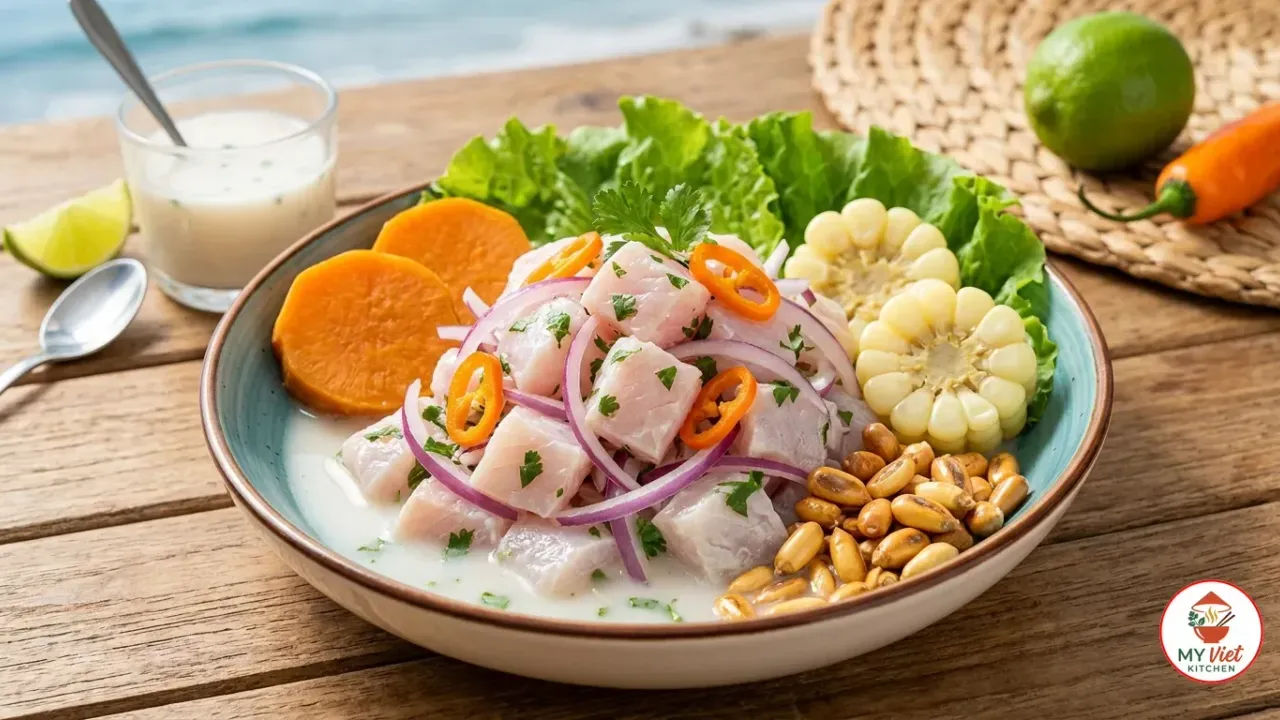
Peruvian ceviche is the bright, electric soul of Peru’s coastal cuisine. Fresh cubes of sea bass meet a rush of freshly squeezed lime juice, fiery aji amarillo pepper, and crisp red onion in a dish that takes minutes to prepare yet delivers an extraordinary depth of flavor. Known as ceviche de pescado in Peru, this is not merely a recipe but a national treasure, declared part of Peru’s cultural heritage by the government itself. This version follows the authentic Limenan style, where the fish cures briefly and the leche de tigre does all the work.
Prep Time: 25 minutes | Cook Time: 0 minutes | Servings: 4
Difficulty: Easy | Calories: ~210 per serving
What Makes Peruvian Ceviche Special?
Ceviche exists across Latin America, from Mexico to Chile. Yet the Peruvian version stands in a class of its own. While Mexican ceviche marinates fish for hours in lime and tomato, Peruvian ceviche relies on a brief cure that barely kisses the fish. As a result, the texture hovers between raw and cooked, silky and firm at the same time. Indeed, this balance is what sets a good ceviche apart from a great one.
At the heart of Peruvian ceviche is leche de tigre, meaning tiger’s milk. This potent citrus marinade blends lime juice with the juices released by the fish, aji amarillo pepper, garlic, and celery. In Peru, people serve leche de tigre on its own in small glasses as a starter. Moreover, many call it a hangover remedy. Because the liquid is so central to the dish, most Peruvian chefs prepare a separate batch before they even start building the ceviche.
Above all, this dish demands freshness. There is no sauce to mask poor fish. There is no long cook to save tough fillets. Every element must be pristine. For instance, the limes must be juiced moments before serving. Similarly, the fish must come from the market that morning. In Lima’s famous cevicherias, the dish arrives at your table within three minutes. Consequently, Peruvian ceviche is as much about timing and sourcing as it is about skill.

Choosing the Right Fish for Ceviche
The fish you pick will make or break your Peruvian ceviche. Acid curing is not forgiving. It shows every flaw in texture and freshness. However, choose well, and the dish will reward you with clean, bright, ocean-fresh flavor.
- Sea bass or corvina (traditional choice): This is the classic fish for Peruvian ceviche. Its firm, white flesh holds up beautifully to the acid cure without becoming mushy. The mild flavor lets the leche de tigre shine. In Peru, corvina is the default at every cevicheria. Look for Chilean sea bass or striped bass at your fishmonger.
- Red snapper (excellent alternative): Snapper has a slightly sweeter flavor and a firm texture that cures evenly. It is widely available at fish markets and supermarkets. The flesh turns opaque quickly in lime juice, so watch the curing time closely. This is the best substitute when sea bass is unavailable.
- Halibut or fluke (good options): Both are lean, firm white fish that take well to acid curing. Halibut is denser and holds its shape in larger cubes. Fluke is more delicate and works best cut into smaller pieces. Either produces a clean, elegant ceviche.
- Mahi-mahi (budget-friendly choice): Firmer than most white fish, mahi-mahi stands up to the cure without falling apart. Its slightly stronger flavor pairs well with the aji amarillo heat. Dice it into smaller cubes than you would sea bass to ensure the acid penetrates evenly.
Ingredients for Peruvian Ceviche
Main Ingredients:
- 1 pound (450g) fresh sea bass or corvina fillets, skinned and deboned
- 3/4 cup (180ml) freshly squeezed lime juice, about 8 to 10 limes
- 1 medium red onion, thinly sliced into half-moons
- 1/4 cup fresh cilantro leaves, chopped
For the Leche de Tigre:
- 1 aji amarillo pepper, seeded and finely minced (or 1 tablespoon aji amarillo paste)
- 1 small stalk celery, finely diced
- 2 cloves garlic, finely minced
- 1 teaspoon fresh ginger, grated
- 1 teaspoon salt
- 1/4 teaspoon white pepper
For Serving:
- 1 medium sweet potato (camote), boiled and sliced into rounds
- 1 ear of corn, boiled and cut into rounds (choclo)
- 1/2 cup roasted corn kernels (cancha)
- Lettuce leaves for plating
Pro tip: Juice your limes by hand and strain out the pulp and seeds. Bottled lime juice lacks the brightness and complexity of fresh limes. Furthermore, use key limes if you can find them. They are smaller and more tart than Persian limes, and their flavor is closer to the small, intensely sour limes used in Peru. Chill the lime juice in the refrigerator before making the leche de tigre. Cold acid cures the fish more gently and produces a silkier texture.
Step-by-Step Instructions
Step 1: Prepare the Fish
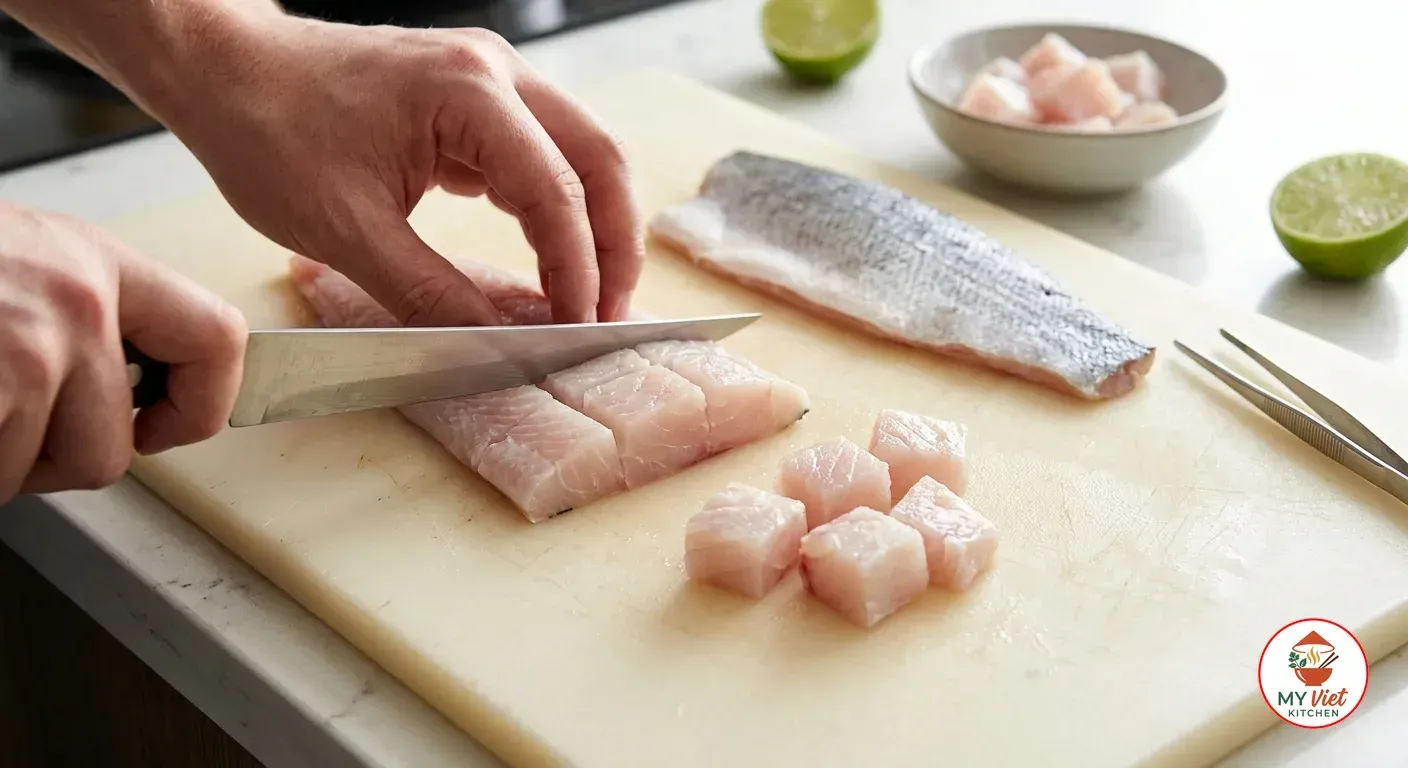
1 Start with the freshest fish you can find. Remove any remaining skin and pin bones from the fillets. Cut the fish into uniform 3/4-inch cubes. Consistency matters here because pieces of different sizes cure at different rates, leaving you with a mix of overcooked and underdone fish in the same bowl.
Also, keep the cubed fish cold until you add it to the leche de tigre. Cold fish reacts more slowly with the acid, so you get better control over the texture. Then pat each piece dry with paper towels before curing. Excess water will dilute the lime juice and weaken the leche de tigre. In short, work fast and keep things cold.
Step 2: Soak the Red Onion
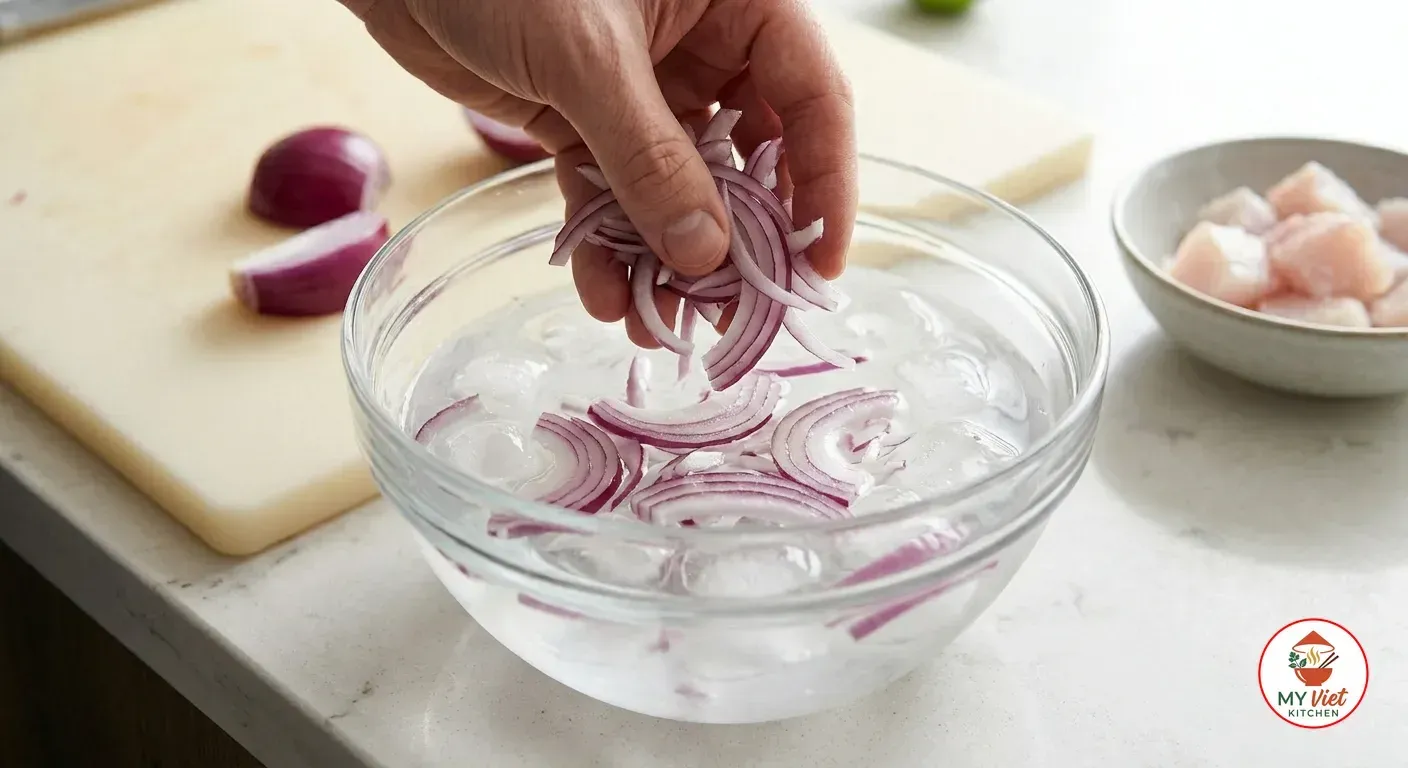
2 Slice the red onion into thin half-moons. Place the slices in a bowl of ice water with a generous pinch of salt. Let them soak for 10 minutes. This step removes the harsh, sulfurous bite that raw onion carries while preserving its crisp texture and vivid purple color.
After soaking, drain the onion well and pat dry with paper towels. Wet onion dilutes the leche de tigre just like wet fish does. In Peru, this soaking step is essential. If you skip it, every bite of ceviche will carry a harsh raw onion flavor that drowns out the fish and citrus. So take the extra ten minutes.
Step 3: Build the Leche de Tigre
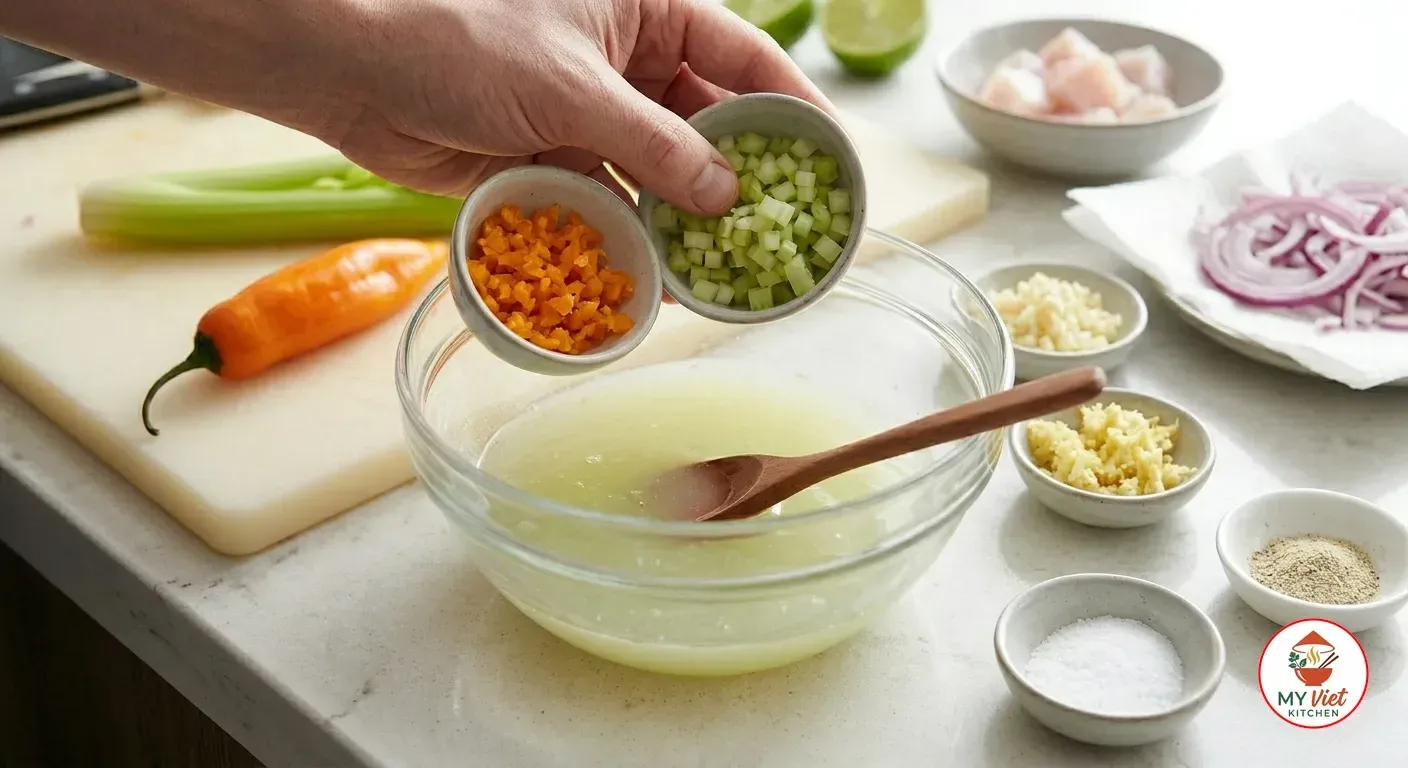
3 In a large glass or ceramic bowl, combine the freshly squeezed lime juice, minced aji amarillo, diced celery, grated ginger, minced garlic, salt, and white pepper. Stir everything together until the salt dissolves. Never use a metal bowl, as the acid reacts with certain metals and can introduce off-flavors.
Next, taste the leche de tigre before adding the fish. It should be very sour, slightly spicy, and well salted. Adjust the salt and aji amarillo now, because you cannot fix it after the fish goes in. The celery adds a mild green note that rounds out the sharp citrus. Meanwhile, the ginger brings a gentle warmth that pairs with the aji amarillo heat. Together, these form the soul of your Peruvian ceviche.
Step 4: Cure the Fish
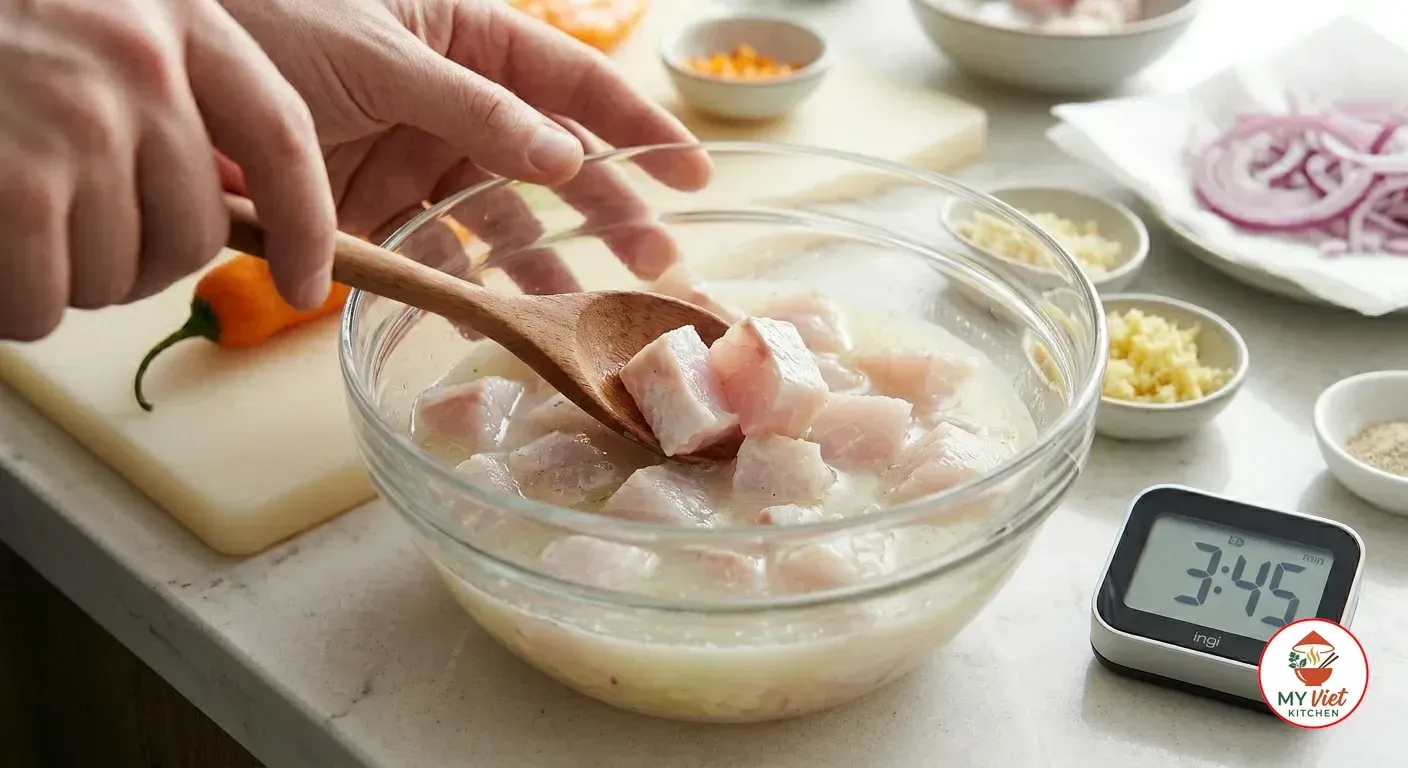
4 Add the cubed fish to the leche de tigre. Toss gently with a spoon to coat every piece evenly. Set a timer for 3 to 5 minutes. This is the critical window. The citric acid denatures the surface proteins of the fish, turning the exterior opaque and firm while the center remains slightly translucent and buttery.
Do not walk away during this step. At the 3-minute mark, cut a piece in half and check inside. For a true Peruvian texture, the center should still look slightly raw. After 5 minutes, the cure goes deeper and the fish gets firmer. However, beyond 5 minutes the proteins tighten too much and the fish turns rubbery. This brief cure is what sets Peruvian ceviche apart from other Latin American versions that marinate for 30 minutes or more.
Step 5: Assemble and Serve
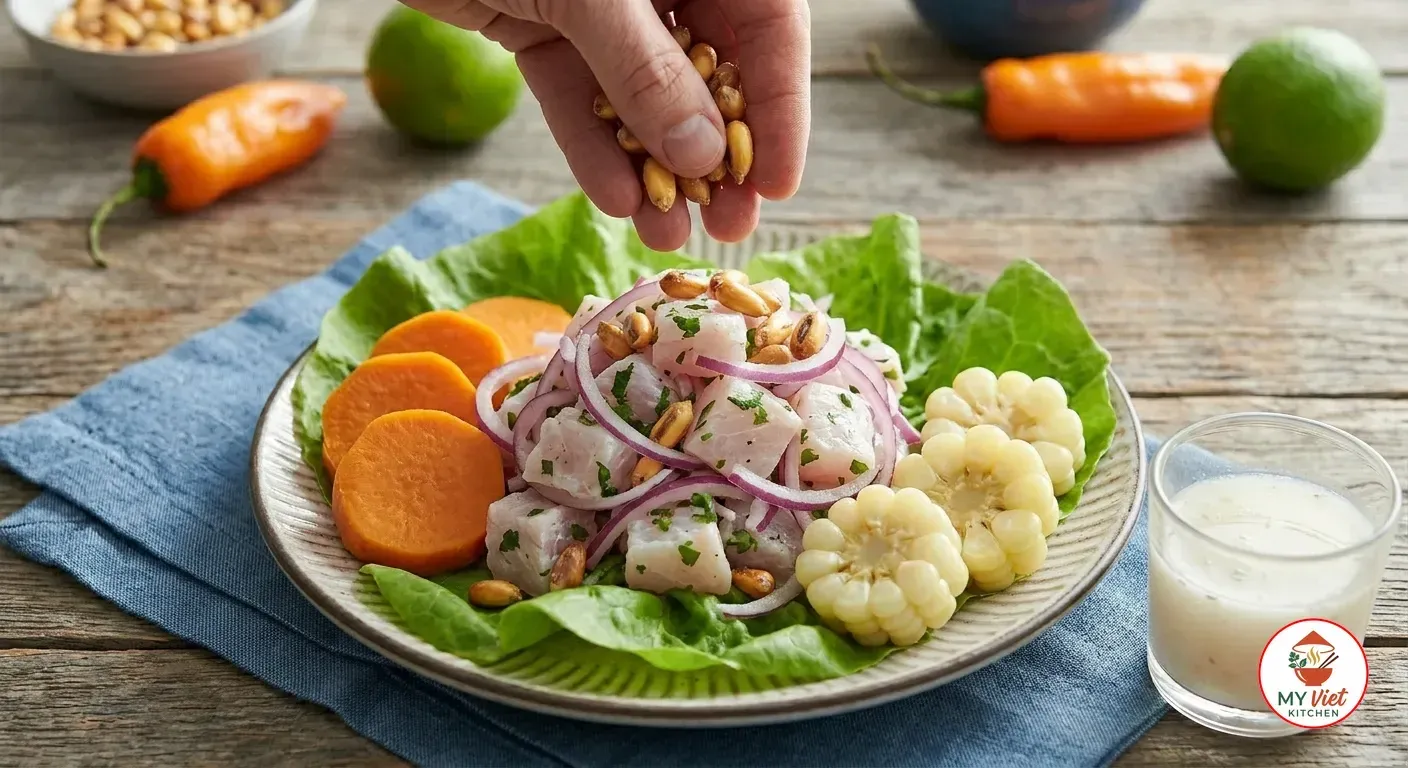
5 Add the drained red onion and chopped cilantro to the cured fish. Toss gently to combine. Line a serving plate with lettuce leaves and spoon the ceviche onto the center. Arrange slices of boiled sweet potato and rounds of choclo corn around the edges. Spoon generous amounts of leche de tigre over the top.
Finally, scatter roasted cancha corn over the ceviche for crunch. Then serve right away. Peruvian ceviche waits for no one. Every minute the fish sits in the acid, it keeps curing. A dish that tastes perfect now will taste overcooked fifteen minutes later. In Lima, ceviche arrives at your table at a sprint. So adopt that urgency at home. Plate it, serve it, and eat it right away.
Expert Tips for Perfect Peruvian Ceviche
Freshness Is Non-Negotiable
First, buy your fish the same day you plan to serve. Ask your fishmonger what came in that morning. Fresh fish should smell like the ocean, never fishy. The flesh should spring back when you press it. If the eyes are whole, they should be clear and bright. Since the acid barely cooks the fish, freshness is your main safety measure. Simply put, this is not a dish where you can hide behind heavy seasoning.
Master the Curing Time
Three to five minutes is the true Peruvian window. Unfortunately, many home cooks leave the fish in lime juice for 20 or 30 minutes. As a result, they end up with a texture closer to canned tuna than fresh ceviche. Instead, aim for a contrast between the firm outer layer and the silky, almost raw center. This duality is the hallmark of great Peruvian ceviche. Always use a timer. Then test a piece by cutting it open at the 3-minute mark.
Season the Leche de Tigre Independently
In Peru, professional chefs always taste and adjust the leche de tigre before adding the fish. Once the fish is in the bowl, the clock starts and you cannot stop to fix things. Therefore, the marinade should be very sour, well salted, and noticeably spicy. It will mellow once it mixes with the fish juices and onion. If the leche de tigre tastes right before the fish goes in, then the final ceviche will taste balanced.
Ceviche Styles Across Latin America
Nearly every Latin American country with a coastline claims its own ceviche. The differences are big, and knowing them helps you see what makes the Peruvian style so unique.
| Style | Country | Key Differences | Curing Time |
|---|---|---|---|
| Peruvian Ceviche | Peru | Lime juice, aji amarillo, leche de tigre, served with sweet potato and corn | 3 to 5 minutes |
| Mexican Ceviche | Mexico | Lime juice, tomato, avocado, jalapeno, often with shrimp | 30 to 60 minutes |
| Ecuadorian Ceviche | Ecuador | Served in a tomato-citrus broth with popcorn or plantain chips | 15 to 30 minutes |
| Colombian Ceviche | Colombia | Ketchup or tomato sauce base, sweeter profile, often with shrimp | 20 to 40 minutes |
| Chilean Ceviche | Chile | Lemon juice instead of lime, grapefruit, minimal garnish | 10 to 20 minutes |
Serving Suggestions
In Peru, ceviche is typically served as a starter or a light lunch. The sides are not extras but essential parts of the meal. In fact, each one plays a clear role in balancing the bright acidity of the cured fish.
The Traditional Accompaniments:
- Sweet potato (camote): Boiled sweet potato slices provide a creamy, sweet counterpoint to the sour and spicy ceviche. The contrast is deliberate. The natural sugars in the sweet potato calm the citric acid on the palate. In Lima, no ceviche plate arrives without it.
- Choclo corn: Large-kernel Peruvian corn, boiled and served in thick rounds, adds a starchy, mildly sweet element. Its chewy texture contrasts the tender cured fish. If you cannot find choclo, regular sweet corn works, though the kernels will be smaller and sweeter.
- Cancha (roasted corn kernels): These crunchy, salty corn kernels are scattered over the ceviche at the last moment. They provide a textural contrast that is essential to the eating experience. Think of them as the crouton equivalent in a salad. Without cancha, the dish lacks its satisfying crunch.
- Lettuce leaves: A bed of crisp lettuce serves as both plate liner and palate cleanser. Bite into a piece of lettuce between spoonfuls of ceviche to reset your taste buds. The cold, neutral crunch refreshes the mouth.
Beverage Pairings:
- Pisco sour: Peru’s national cocktail is the iconic match for ceviche. The cocktail’s citrus base echoes the lime in the dish, while the frothy egg white adds a luxurious texture. Together, they form Peru’s most celebrated food and drink pairing.
- Chicha morada: This non-alcoholic drink made from purple corn, pineapple, cinnamon, and cloves is sweet, fruity, and deeply refreshing alongside spicy ceviche. It is the traditional family-friendly beverage choice at Peruvian cevicherias.
- Crisp white wine: A cold Sauvignon Blanc or Albarino works beautifully. The wine’s acidity matches the lime without overwhelming the delicate fish. Avoid oaky Chardonnay, which clashes with the bright citrus profile.
- Light beer: A cold Peruvian Cusquena or any pale lager provides a clean, effervescent contrast. The carbonation lifts the richness of the fish oils from the palate. Keep it ice cold for the best effect.
Storage and Freshness
Refrigerator: Unfortunately, Peruvian ceviche does not store well. The acid keeps curing the fish even in the fridge. Within 2 hours, the texture breaks down. If you must save leftovers, first drain the fish from the leche de tigre and then store them separately in a sealed container. Eat within 24 hours. Still, the taste and texture will not match a fresh batch.
Freezer: Never freeze prepared ceviche. Freezing ruins the texture of acid-cured fish because ice crystals break the protein structure. As a result, the fish turns watery and mushy when thawed. However, you can freeze raw fish fillets for later use. Just thaw them slowly in the fridge overnight before making fresh ceviche.
Make-ahead strategy: Instead of trying to store finished ceviche, prep all parts in advance. Juice the limes, mince the aji amarillo, soak and drain the onion, boil the sweet potato and corn, and cube the fish. Then store each part separately in the fridge. Finally, combine everything at the moment of serving. This way you can make great ceviche in under 5 minutes at the table.
Common Mistakes to Avoid
1. Over-Curing the Fish
This is by far the most common mistake. If you leave the fish in lime juice for more than 5 minutes, it turns rubbery and chalky. The proteins tighten too much, squeezing out moisture. As a result, the fish becomes dry and tough. Instead, cure for only 3 to 5 minutes. Set a timer and check early. Remove the fish as soon as the outside turns opaque but the center still looks slightly raw.
2. Using Bottled Lime Juice
Bottled lime juice has been heated and preserved. That heat kills the aroma compounds that give fresh lime its bright, floral character. Additionally, bottled juice often has preservatives that leave a bitter aftertaste. For Peruvian ceviche, fresh lime juice is a must. There is simply no good substitute. Plan for 8 to 10 limes to get the 3/4 cup you need.
3. Skipping the Onion Soak
Raw red onion straight from the board has a harsh, sharp bite that overpowers the fish and citrus. However, soaking the sliced onion in salted ice water for 10 minutes draws out those sulfur compounds. The onion keeps its crunch and color but loses the burn. As a result, this small step makes a big difference in the final balance of the ceviche.
4. Using the Wrong Fish
Oily fish like salmon, mackerel, or sardines do not work for Peruvian ceviche. Their bold flavors fight the leche de tigre instead of blending with it. Moreover, their soft flesh tends to fall apart during the cure, leaving you with mush. Instead, stick with firm, white, mild fish. For example, sea bass, snapper, halibut, and fluke all give great results. Also avoid freshwater fish for safety reasons.
Frequently Asked Questions
Is the fish in Peruvian ceviche raw or cooked?
Technically, the fish is raw but chemically changed by the citric acid in lime juice. The acid denatures the surface proteins, turning the outside opaque and firm while the inside stays slightly translucent. In other words, this process mimics cooking but uses acid instead of heat. The texture is different from both raw sashimi and heat-cooked fish. Because of this, always use the freshest fish you can find for safety and the best flavor.
What fish is best for Peruvian ceviche?
Corvina, also known as sea bass, is the traditional Peruvian choice. Its firm, white flesh holds up to the acid cure without falling apart. Red snapper, halibut, fluke, and mahi-mahi are all excellent alternatives. The fish must be firm-fleshed, mild in flavor, and extremely fresh. Avoid oily fish like salmon or mackerel, as their strong flavors overpower the bright citrus marinade.
What is leche de tigre and can you drink it?
Leche de tigre translates to tiger’s milk. It is the citrus marinade that remains after curing the fish. In Peru, drinking leche de tigre is not only common but celebrated. Cevicherias serve it in small glasses as an appetizer or a morning-after remedy. The liquid is intensely sour, briny, and spicy, packed with the concentrated flavors of the ceviche itself.
Can I make Peruvian ceviche ahead of time?
Yes, you can prep all the parts in advance. For instance, juice the limes, mince the aromatics, soak the onion, boil the sides, and cube the fish. Then store each item separately in the fridge. However, do not combine the fish and lime juice until the moment of serving. The curing starts on contact and does not stop. Even if you prepare the ceviche 15 minutes early, it will taste overcooked by the time it hits the table.
What can I use instead of aji amarillo pepper?
Aji amarillo paste, sold in jars at Latin markets and online, is the most convenient substitute. Use 1 tablespoon in place of one fresh pepper. If that is unavailable, a small amount of habanero mixed with yellow bell pepper approximates the fruity heat and color. Serrano pepper provides heat but lacks the characteristic fruity sweetness that aji amarillo brings to Peruvian ceviche.
Why is my ceviche rubbery or tough?
Rubbery texture comes from over-curing. In short, the fish sat too long in lime juice and the acid changed the proteins all the way through. Authentic Peruvian ceviche cures for only 3 to 5 minutes. Another cause is using too much lime juice, which overwhelms the fish too quickly. To avoid this, cut the fish into even pieces so they cure at the same rate, and remove them from the acid promptly.
Variations and Adaptations
Ceviche Mixto (Mixed Seafood):
For this version, replace half the fish with raw shrimp, sliced squid rings, and octopus. First, blanch the shrimp and octopus briefly in boiling water before adding them to the leche de tigre. The squid can go in raw if it is very fresh. This variation is popular in coastal Peruvian spots and offers a wider range of textures in each bite. Because each seafood type cures at a different rate, prepare them separately before combining.
Ceviche de Conchas Negras (Black Clam):
A specialty from northern Peru, this version uses small black clams harvested from mangrove estuaries. The clams are shucked and cured raw in the leche de tigre. Their intensely briny, mineral flavor produces a ceviche with remarkable ocean depth. Outside Peru, you can approximate this with small littleneck clams or cockles, though the flavor will be milder. This is a rare and prized regional variation.
Ceviche Nikkei (Japanese-Peruvian Fusion):
Peru’s large Japanese immigrant community created Nikkei cuisine, a fusion of Peruvian and Japanese flavors. Nikkei ceviche replaces some lime juice with yuzu or ponzu sauce. It adds soy sauce to the leche de tigre and may include sesame oil and nori. The fish is sliced thinner, almost sashimi-style, and the cure time is even shorter. This elegant variation has gained international acclaim in fine dining circles. It demonstrates how Peruvian ceviche continues to evolve while respecting its roots.
Vegan Ceviche de Chochos:
This plant-based Peruvian ceviche uses chochos, also called Andean lupini beans, in place of fish. The beans have a firm, slightly creamy texture that takes to the leche de tigre beautifully. Chopped mushrooms or hearts of palm work as alternatives outside Peru. Prepare the leche de tigre exactly as written, substituting the fish with diced chochos. The result is surprisingly satisfying and maintains the authentic Peruvian flavor profile.
The Cultural Significance of Peruvian Ceviche
Ceviche holds a place in Peruvian culture that goes far beyond food. In 2004, the government declared it part of the nation’s heritage. Furthermore, since 2008, Peru celebrates the National Day of Ceviche every June 28th. The dish stands for the meeting of indigenous, Spanish, and Japanese food traditions that define modern Peru. Even before Spanish colonizers arrived, coastal fishing communities cured fish in citrus. Over centuries, the addition of lime, red onion, and aji peppers shaped the dish we know today.
In Lima, cevicherias are true institutions. Some have run for generations, with recipes guarded as family secrets. The best open early and close by mid-afternoon, serving only what the morning’s catch allows. According to Taste Atlas, Peruvian ceviche ranks among the world’s best dishes. Indeed, gastronomy has become a source of huge national pride. Chefs like Gaston Acurio and Virgilio Martinez have brought Peruvian ceviche to fine dining stages around the world. Yet the soul of the dish still lives in the humble seaside spots of Lima, Trujillo, and Piura. Ultimately, every Peruvian family has a ceviche recipe, and every version is the one true way.
Conclusion
Peruvian ceviche proves that great food does not need long cooking times or complex methods. It demands just two things: top-quality fish and precise timing. Together, fresh fish, sharp lime juice, fiery aji amarillo, and crisp red onion create a dish that is vibrant, clean, and deeply satisfying. Simply master the 3-to-5-minute cure, build a well-seasoned leche de tigre, and serve it right away. If you follow those three rules, you will produce ceviche that rivals what you would eat in Lima.
Explore more authentic recipes from around the world in our American dishes collection. If you enjoy bright, citrus-forward flavors, try our Spanish gazpacho or discover the rich traditions of Portuguese feijoada. If you try this Peruvian ceviche recipe, share your experience in the comments below.