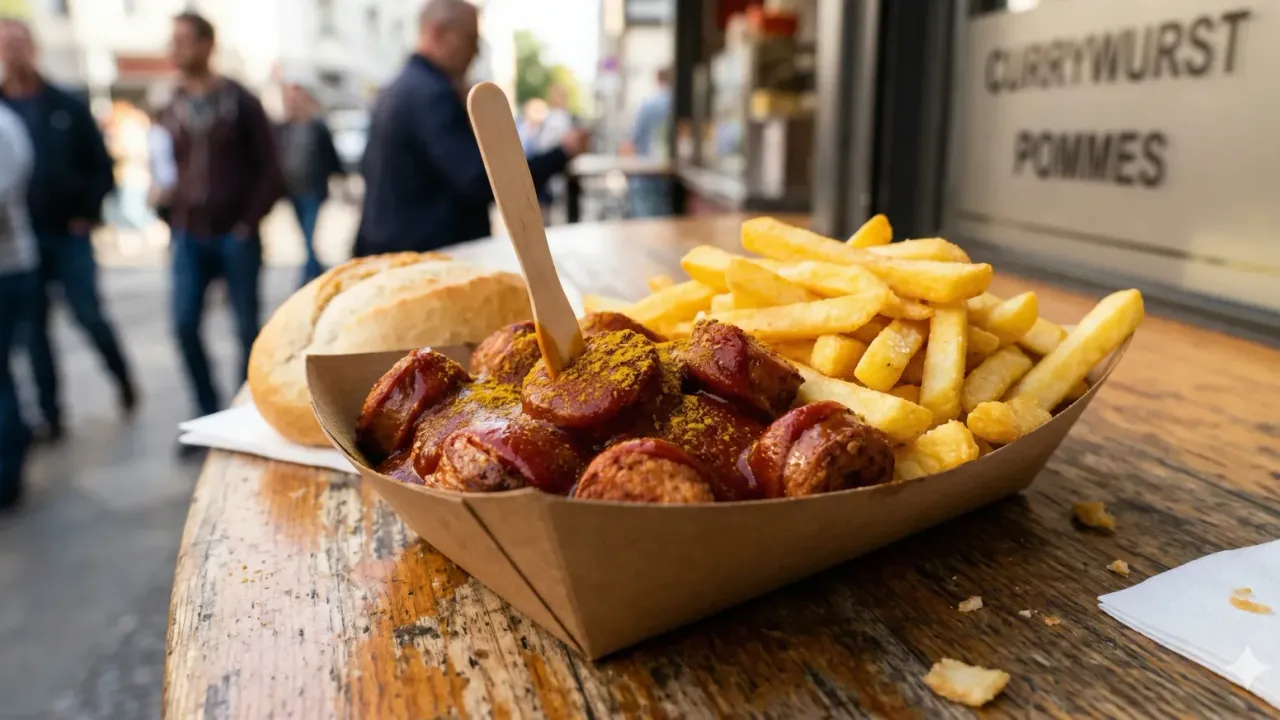
Currywurst is Germany’s most beloved street food, and this currywurst recipe brings the flavor of Berlin right to your kitchen. Crispy pan-fried sausage gets sliced into thick coins and drenched in a tangy, spiced curry ketchup sauce. Then a shower of golden curry powder finishes the whole thing off. This dish is bold, messy, and completely irresistible. Over 800 million currywurst are eaten in Germany every single year. Now you can make one that rivals any Berlin street stand.
Prep Time: 10 minutes | Cook Time: 20 minutes | Servings: 4
Difficulty: Easy | Calories: ~480 per serving
What Makes Currywurst Special?
Currywurst is deceptively simple. It is just sausage, sauce, and spice. Yet the combination creates something far greater than its parts. The crispy, caramelized sausage delivers a savory meat flavor. Meanwhile, the curry ketchup hits you with tangy sweetness, warm spice, and gentle heat all at once. That final dusting of dry curry powder adds an aromatic punch that lingers. Every bite layers these flavors together in a way that keeps you reaching for more.
What sets currywurst apart from other sausage dishes is the sauce. Unlike plain ketchup or mustard, curry ketchup is a carefully balanced condiment. The tomato base brings acidity and sweetness. Curry powder adds earthy warmth from turmeric, cumin, and coriander. Smoked paprika gives depth. A hint of cayenne provides a slow-building heat that sneaks up on you. When you simmer these ingredients together, the spices bloom and the flavors fuse into something entirely new.
Currywurst was invented in 1949 by Herta Heuwer in Berlin. She traded with British soldiers for curry powder and Worcestershire sauce, then mixed them with ketchup. She poured this new sauce over grilled sausage at her street stand, and the dish exploded in popularity. By 1959, she had patented the recipe. Today, currywurst is so iconic that Berlin has an entire museum dedicated to it. The dish represents post-war German resilience and creativity born from limited ingredients.

Choosing the Right Sausage for Currywurst
The sausage you pick directly shapes the final taste and texture. Not every German sausage works equally well for currywurst. Here are the best options for this recipe.
- Bratwurst with natural casing (best for home cooks): A fresh pork bratwurst gives you the crispiest skin when pan-fried. The natural casing snaps satisfyingly and holds up well under the sauce. This is the most widely available option outside Germany.
- Bockwurst (traditional mild option): Bockwurst is a lightly smoked, pre-cooked sausage with a mild, delicate flavor. Many Berlin stands use it because it does not compete with the bold curry sauce. It cooks faster too, since it only needs browning.
- Skinless sausage / ohne Darm (authentic Berlin style): True Berlin currywurst often uses a skinless sausage. Without a casing, the surface gets a soft, caramelized crust rather than a crispy snap. It absorbs more sauce, which some people prefer.
- Chicken or turkey sausage (lighter alternative): For a lower-fat version, use a mild chicken sausage. The flavor is lighter, so increase the cayenne in the sauce slightly. Pan-fry carefully, because poultry sausages dry out faster than pork.
Ingredients for Currywurst
For the Curry Ketchup Sauce:
- 1 cup tomato ketchup
- 3 tablespoons tomato paste
- 2 tablespoons curry powder
- 1 teaspoon smoked paprika
- 1/2 teaspoon sweet paprika
- 1/4 teaspoon cayenne pepper (adjust to taste)
- 1 tablespoon Worcestershire sauce
- 1 tablespoon apple cider vinegar
- 1 tablespoon honey or brown sugar
- 1/2 teaspoon garlic powder
- 1/2 teaspoon onion powder
- Salt and black pepper to taste
For the Sausage:
- 4 large bratwurst or bockwurst sausages
- 1 tablespoon vegetable oil
For Serving:
- Extra curry powder for dusting
- Crispy French fries or thick-cut potato wedges
- Crusty bread rolls (Brotchen)
- Small wooden fork or toothpicks (for street food style)
Pro tip: Toast your curry powder in a dry skillet for 30 seconds before adding it to the sauce. This simple step releases the essential oils in the spices and deepens the flavor dramatically. You will smell the difference instantly. The sauce goes from flat and one-dimensional to rich, warm, and aromatic. Do not skip this if you want an authentic curry ketchup.
Step-by-Step Instructions
Step 1: Make the Curry Ketchup Sauce
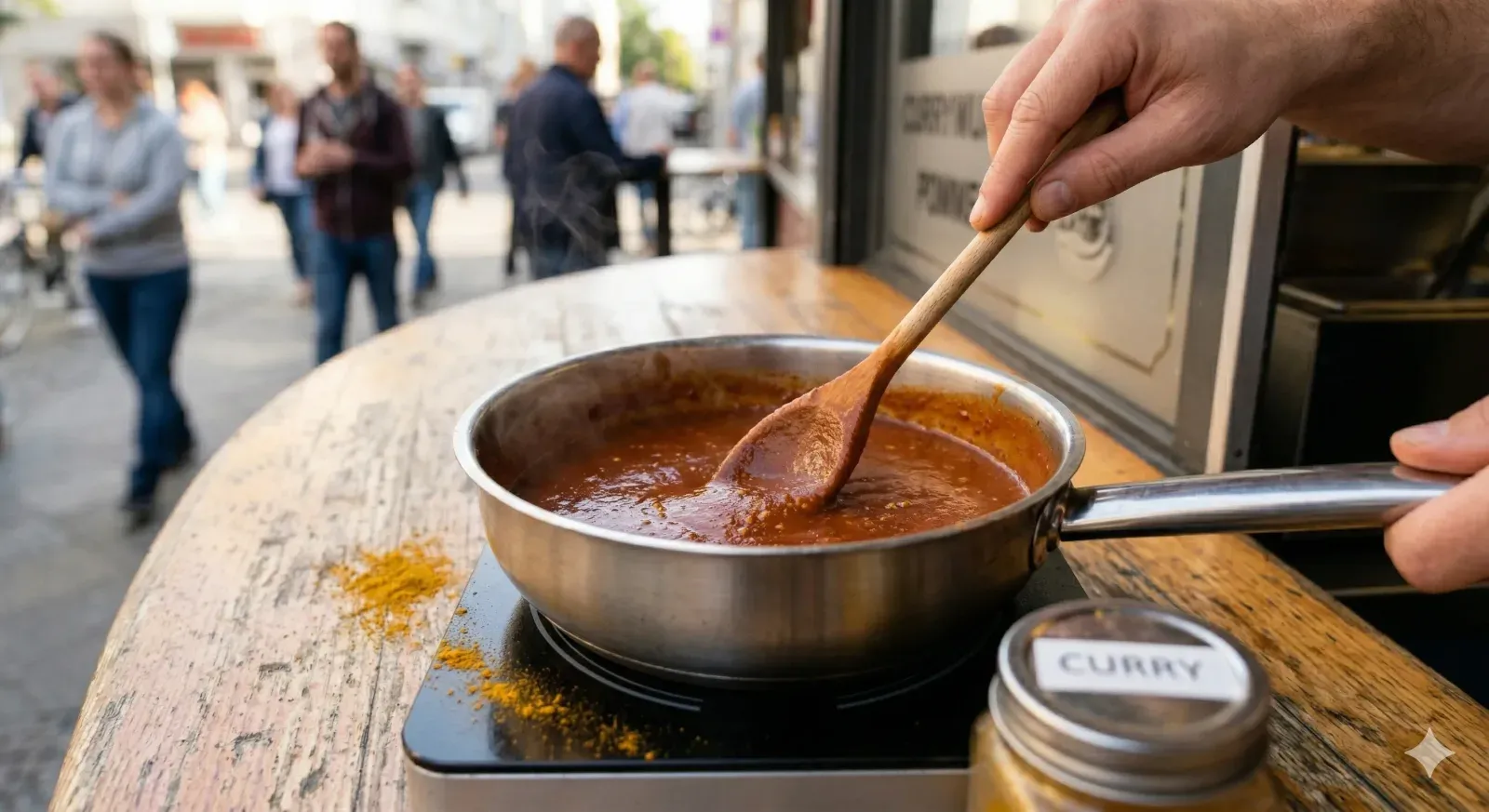
1 Start with the sauce, because it needs time to simmer. Add the ketchup and tomato paste to a small saucepan over low heat. Stir in the curry powder, smoked paprika, sweet paprika, and cayenne pepper. Then add the Worcestershire sauce, apple cider vinegar, honey, garlic powder, and onion powder. Mix everything together until smooth and well combined.
Let the sauce simmer gently for 10 minutes. Stir it every couple of minutes so it does not stick to the bottom. As it heats, the spices will bloom and release their full aroma. The sauce will thicken slightly and turn a deep reddish-brown color. Taste it and adjust the seasoning. Add more cayenne for heat, more honey for sweetness, or more vinegar for tang. Set it aside and keep it warm while you cook the sausages.
Step 2: Pan-Fry the Sausages
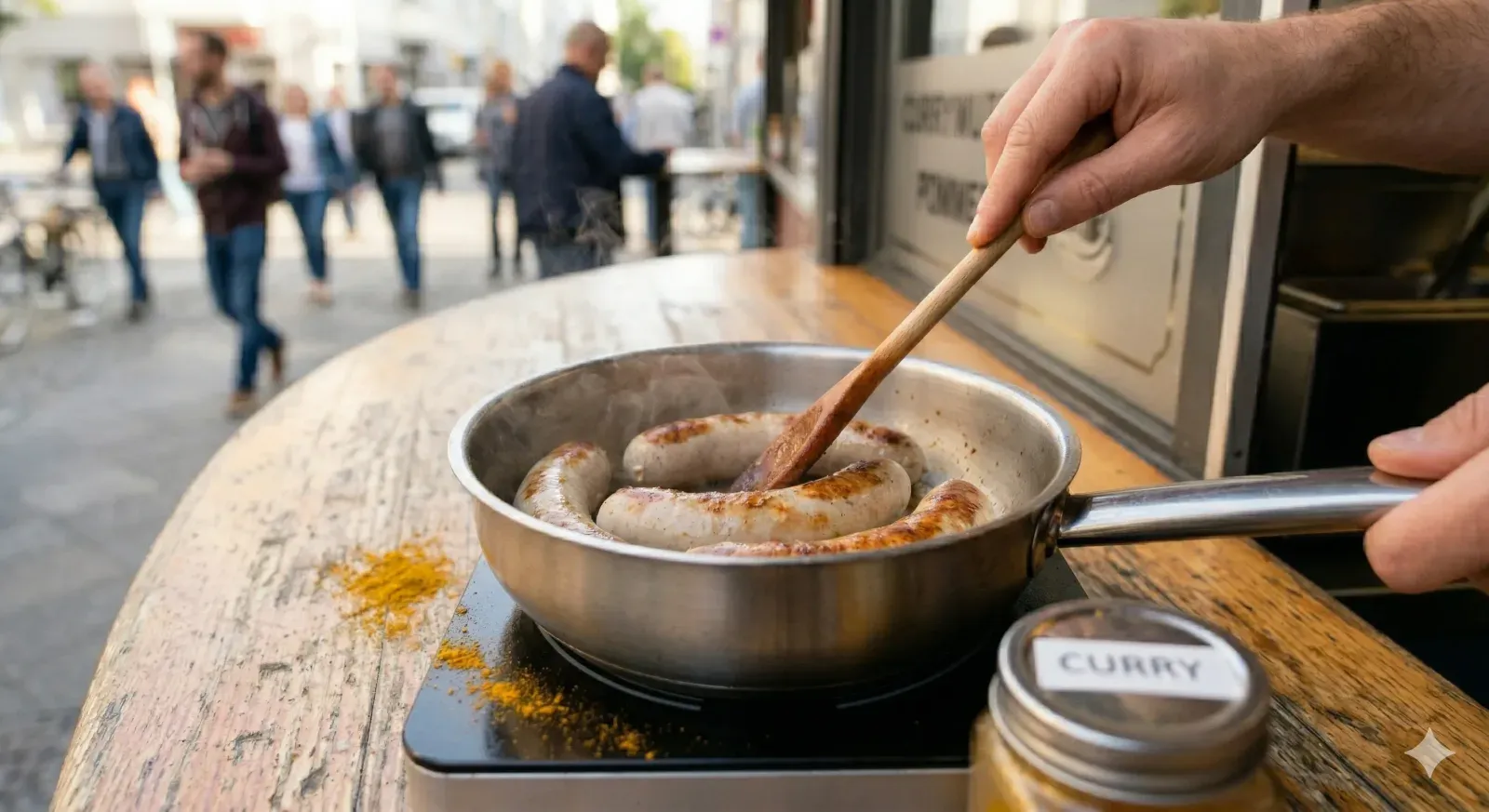
2 Heat a tablespoon of vegetable oil in a large skillet over medium heat. Once the oil shimmers, add the sausages. Cook them for 8 to 10 minutes total, turning every 2 minutes so they brown evenly on all sides. You want a golden, crispy skin with some dark caramelized spots. These spots are the Maillard reaction at work, creating deep savory flavor.
Do not crank the heat to high. Medium heat gives you even cooking without splitting the casing. If you are using pre-cooked bockwurst, the cooking time drops to about 5 minutes. The goal is just to crisp the outside and warm the center. For raw bratwurst, check that the internal temperature reaches 160 degrees Fahrenheit with a meat thermometer. Remove the sausages from the pan and let them rest for 2 minutes.
Step 3: Slice the Sausages
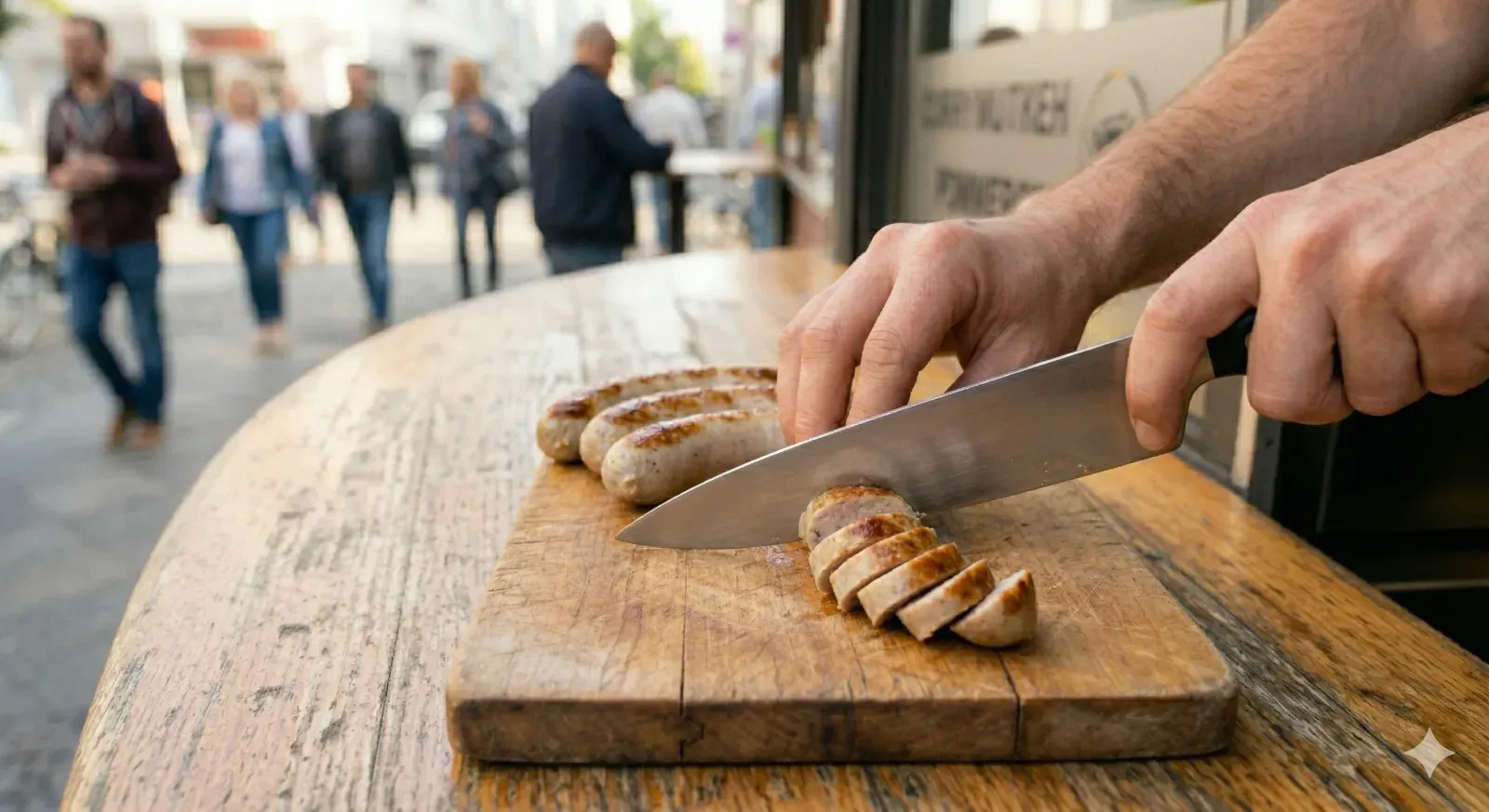
3 After the brief rest, place each sausage on a cutting board. Use a sharp knife to cut them into thick coins, about 1 inch wide. Slightly diagonal cuts look more attractive and create more surface area for the sauce to cling to. Arrange the slices on a plate or, for an authentic Berlin street food experience, place them in a small paper tray or cardboard boat.
The resting time matters here. It lets the juices redistribute inside the sausage. If you slice immediately after cooking, the juices run out onto the board. A short rest means each coin stays moist and flavorful. This small detail separates a good currywurst from a great one.
Step 4: Assemble and Serve
4 Spoon the warm curry ketchup sauce generously over the sliced sausages. Be bold with the sauce. In Berlin, the sausage is practically swimming in it. Then take a teaspoon of dry curry powder and dust it over the top in an even layer. The dry powder adds a burst of aroma and a slightly gritty texture that contrasts with the smooth, wet sauce beneath it.
Serve the currywurst immediately while everything is still hot. Place a pile of crispy French fries alongside, or tuck a crusty bread roll on the side for soaking up extra sauce. In Berlin, you eat currywurst with a small wooden fork or toothpick, standing at a street counter. At home, a regular fork works just fine. Either way, have plenty of napkins ready.

Expert Tips for the Best Currywurst
Toast the Spices First
Raw curry powder tastes flat and dusty. Toasting it in a dry pan for 30 seconds transforms the flavor. The heat activates the essential oils in turmeric, cumin, coriander, and fenugreek. You will see a wisp of smoke and smell a rich, warm aroma. This is the moment the spices come alive. Add the toasted powder to your sauce for a noticeably deeper, more complex curry ketchup.
Use Two Types of Paprika
Smoked paprika and sweet paprika serve different roles in the sauce. Smoked paprika adds a deep, barbecue-like flavor. Sweet paprika contributes gentle warmth and a vibrant red color. Together, they create a more layered sauce than either one alone. Most Berlin curry ketchup recipes rely on this combination for their signature taste.
Get the Sausage Skin Crispy
Crispy skin is essential for texture contrast. The hot sauce will soften the skin quickly once poured on top. Therefore, you want the casing as crisp as possible before assembly. Use medium heat and give the sausage enough time in the pan. Pat the sausages dry before frying if they are wet from packaging. Moisture on the surface prevents browning and creates steam instead of a sear.
Currywurst Across Germany: A Regional Comparison
Currywurst is a national dish, but every German city puts its own spin on the recipe. The rivalry between Berlin and the Ruhr area is especially fierce. Here is how the major styles compare.
| Region | Sausage Style | Sauce Character | Serving Tradition |
|---|---|---|---|
| Berlin | Skinless pork sausage (ohne Darm) or with casing (mit Darm) | Tomato-forward, moderate curry, balanced heat | Paper tray with fries, wooden fork, standing at a counter |
| Ruhr Area (Essen, Dortmund) | Thick bratwurst with natural casing | Spicier, heavier on curry powder, sometimes chunkier | Served on a paper plate, often with a bread roll instead of fries |
| Hamburg | Knackwurst or bockwurst | Slightly sweeter sauce, less heat | Often paired with potato salad or bread |
| Stuttgart | Regional bratwurst | Sauce often includes fresh onion or chili flakes | Less common than in the north, but gaining popularity |
| Munich (Bavaria) | Weisswurst-style or mild bratwurst | Milder curry sauce, sometimes with cream | Not traditional here, but modern street stalls now serve it |
Serving Suggestions
Currywurst is fast, casual food. It does not need fancy plating or fussy sides. Keep the accompaniments simple and let the sausage and sauce take center stage. Here are the best pairings.
Classic Accompaniments:
- Crispy French fries (Pommes): This is the number-one side for currywurst in Berlin. Thick-cut fries hold up to the sauce and add a salty crunch. Double fry them for extra crispiness at home.
- Crusty bread roll (Brotchen): A simple white or wheat roll is the other traditional option. Tear off pieces and drag them through the curry ketchup for every last drop.
- Potato wedges: Thick, roasted potato wedges seasoned with paprika are a heartier alternative to fries. They soak up the sauce without getting soggy.
- Coleslaw or simple green salad: A cool, crunchy salad balances the warm, spiced sausage. The vinegar in coleslaw mirrors the tang in the curry ketchup.
Beverage Pairings:
- German pilsner: A crisp, dry pilsner is the classic drink with currywurst. Its clean bitterness cuts through the sweet-spicy sauce. Bitburger and Jever are solid choices.
- Berliner Weisse: A sour, low-alcohol wheat beer served with raspberry or woodruff syrup. It is light and refreshing alongside the bold, heavy sausage.
- Cola or Fritz-Kola: In Berlin, a cold cola is the most popular non-beer choice with currywurst. The carbonation and sweetness complement the spiced sauce.
- Sparkling mineral water: For a clean, simple option, fizzy mineral water refreshes the palate between bites. It lets the curry flavors shine without competition.
Storage and Reheating
Refrigerator: Store cooked currywurst and sauce separately in sealed containers. The sausage keeps for 3 to 4 days. The curry ketchup sauce lasts up to 5 days and actually improves as the spices meld together over time.
Freezer: The curry ketchup sauce freezes beautifully for up to 3 months. Pour it into an airtight container or ice cube tray for single-serving portions. Cooked sausages freeze for up to 2 months. Wrap them individually in plastic wrap before placing in a freezer bag. Thaw everything in the refrigerator overnight before reheating.
Reheating: Warm the sauce gently in a saucepan over low heat. Reheat the sausage slices in a skillet over medium heat for 2 to 3 minutes per side to restore the crispy exterior. Avoid the microwave for the sausage, because it turns the skin rubbery and soft. However, the microwave works fine for the sauce alone if you are in a rush.
Common Mistakes to Avoid
1. Using Cold Sauce on Hot Sausage
Cold sauce drops the temperature of the sausage instantly. It also tastes flat compared to warm sauce. Always simmer the curry ketchup before spooning it over the sliced sausage. Warm sauce flows better, clings to each piece, and delivers fuller flavor. This small step makes a noticeable difference in the final dish.
2. Skipping the Curry Powder Dusting
The dry curry powder on top is not just decoration. It adds a concentrated burst of aroma that the cooked sauce alone cannot deliver. When the dry powder hits the warm sauce, it releases a wave of fragrance. Leaving it off is like skipping the finishing salt on a steak. Always dust generously right before serving.
3. Slicing the Sausage Too Thin
Thin slices lose their meaty texture and become overwhelmed by the sauce. Cut the coins about 1 inch thick so each piece has a satisfying bite. Thicker slices also hold their shape better and keep a crispy edge even under the sauce. Aim for a balance where you taste both sausage and sauce in every bite.
4. Using Plain Ketchup Instead of Curry Ketchup
Squirting plain ketchup on a sausage and sprinkling curry powder on top is not currywurst. The sauce needs to simmer so the spices bloom and the flavors merge. Raw curry powder tastes bitter and gritty. The cooking process mellows it into something smooth and complex. Take the ten minutes to make the sauce properly.
Frequently Asked Questions
What is currywurst made of?
Currywurst is a pan-fried or grilled pork sausage sliced into coins and topped with curry ketchup sauce. The sauce combines tomato ketchup, curry powder, smoked paprika, and cayenne pepper. A dusting of extra dry curry powder goes on top for aroma and color. It is served with fries or a bread roll as a quick street food meal.
What type of sausage is best for currywurst?
Bratwurst with a natural casing works best for home cooks. The casing crisps up nicely in a skillet and gives a satisfying snap. Bockwurst is another solid choice because its mild flavor lets the curry sauce dominate. In Berlin, skinless sausage is traditional, but it is harder to find outside Germany. Use whatever quality pork sausage your butcher carries.
Is currywurst spicy?
Standard currywurst has a warm, mild heat. The cayenne gives a gentle kick, but it is not overwhelming. Most street stands offer different spice levels from mild to extra hot. At home, start with a quarter teaspoon of cayenne and work up. You control the heat entirely. Kids and spice-sensitive eaters can enjoy it with less cayenne.
Can I make currywurst sauce ahead of time?
Absolutely. The sauce tastes even better after a day in the fridge. The spices have time to meld together and the flavors deepen. Make it up to 5 days ahead and store it in a sealed jar. Reheat it gently in a saucepan before serving. You can also freeze the sauce for up to 3 months without losing quality.
What do you serve with currywurst?
French fries are the number-one side in Berlin. A crusty bread roll is the second most popular choice. Potato wedges and coleslaw also work well. For drinks, a cold German pilsner or a bottle of cola is traditional. Keep the sides simple so the currywurst stays the star of the plate.
Who invented currywurst?
Herta Heuwer invented currywurst in 1949 in Berlin. She mixed ketchup with curry powder and Worcestershire sauce, then served it over grilled sausage at her street stand. The dish became a sensation and spread to every corner of Germany. Heuwer patented her sauce recipe in 1959. A memorial plaque marks the spot of her original stand in Berlin-Charlottenburg.
Variations and Adaptations
Extra Spicy Currywurst:
For a fiery version, double the cayenne pepper and add a teaspoon of hot chili flakes to the sauce. Some Berlin stands go even further with habanero sauce or ghost pepper powder. Serve it with a “spice level” warning and a glass of cold milk nearby. This variation is popular among regulars who have built up their heat tolerance over years of lunch-break currywurst runs.
Vegan Currywurst:
Replace the pork sausage with a plant-based bratwurst. Many German brands now make excellent vegan sausages. The curry ketchup sauce is already vegan if you use a vegan Worcestershire sauce. Swap the honey for maple syrup or agave. Pan-fry the vegan sausage until crispy and proceed with the recipe as written. The sauce does the heavy lifting here, so the result is surprisingly close to the original.
Currywurst with Homemade Ketchup:
For a from-scratch approach, make your own ketchup base. Simmer a can of crushed tomatoes with onion, garlic, vinegar, and sugar until thick. Strain it, then add the curry spices. This gives you a fresher, brighter sauce with more depth than store-bought ketchup. It takes an extra 30 minutes but elevates the entire dish to restaurant quality.
The Cultural Significance of Currywurst
Currywurst is more than fast food in Germany. It is a cultural symbol. The dish represents Berlin’s working-class spirit and post-war resourcefulness. Herta Heuwer created it during a time of scarcity by combining American ketchup, British curry powder, and German sausage-making tradition. That mix of influences mirrors Berlin itself: a city built on the collision of cultures.
Today, Berlin alone sells over 70 million currywurst each year. The dish has its own museum, the Deutsches Currywurst Museum, which attracted thousands of visitors before closing in 2018. Famous stands like Curry 36 and Konnopke’s Imbiss have lines that stretch down the block. Politicians, construction workers, and tourists all stand shoulder to shoulder, eating from the same paper trays.
Currywurst also holds a place in German pop culture. Herbert Gronemeyer wrote a hit song about it in 1982. The satirical novel “The Invention of Curried Sausage” by Uwe Timm explored its mythic origins. Even former Chancellor Gerhard Schroder famously declared his love for the dish. In a country known for precision engineering and fine automobiles, currywurst reminds everyone that the simplest pleasures often matter most.
Conclusion
This currywurst recipe delivers Berlin’s greatest street food right to your kitchen table. The keys are straightforward: make a proper curry ketchup sauce with toasted spices, fry the sausage until the skin crackles, and dust everything with a generous layer of curry powder. In under 30 minutes, you get a dish that has captivated an entire nation for over 75 years. The balance of tangy sauce, crispy meat, and warm spice is something you will crave again and again.
Ready to explore more iconic German and European recipes? Browse our full collection of European dishes, including bratwurst, kasespatzle, and sauerbraten. Also check out our Asian street food recipes for more bold, fast-to-make meals from around the world.