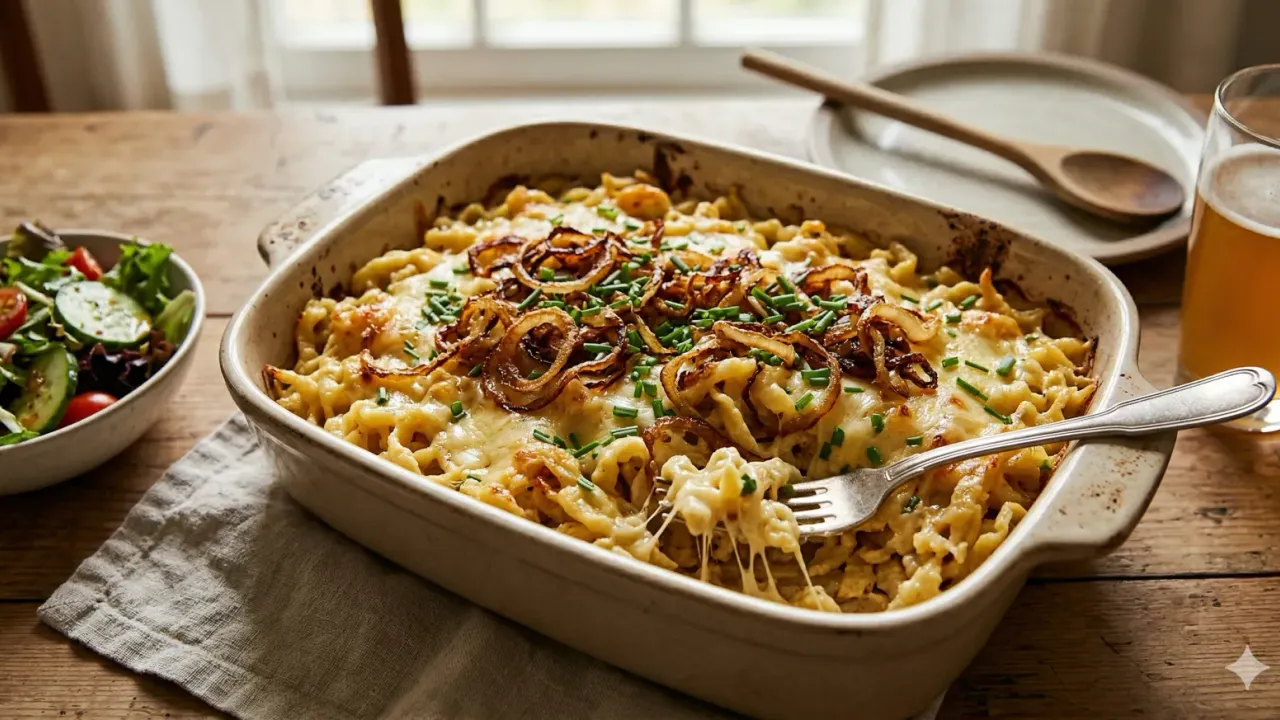
Kasespatzle is the ultimate German comfort food, and this kasespatzle recipe shows you exactly how to make it from scratch. Imagine soft, chewy handmade egg noodles layered with melted Alpine cheese and topped with crispy golden onions. That is kasespatzle in a nutshell. This beloved dish from the Allgau region of southern Germany rivals any mac and cheese you have ever tasted. Once you try it, store-bought boxed noodles will never satisfy you again.
Prep Time: 20 minutes | Cook Time: 25 minutes | Servings: 4
Difficulty: Medium | Calories: ~520 per serving
What Makes Kasespatzle Special?
At first glance, kasespatzle looks like a simple cheese and noodle dish. However, it is so much more than that. The magic starts with the spaetzle themselves. Unlike dried pasta, spaetzle are made from a wet batter of flour, eggs, and milk. You press this batter through a special tool directly into boiling water. The result is irregular, soft noodles with a slight chew. Their rough surface catches and holds melted cheese in every crevice.
What truly sets kasespatzle apart is the cheese. In the Allgau region, cooks use local mountain cheeses like Bergkase and Emmental. These Alpine cheeses melt into long, gooey strings that stretch from plate to fork. The flavor is nutty, buttery, and deep. On top of all that comes a generous pile of crispy fried onions. Their sweetness and crunch provide the perfect contrast to the rich, creamy noodles underneath.
Kasespatzle has roots in the Swabian and Allgau regions of southern Germany, where it has been a farmhouse staple for centuries. Farmers needed filling meals made from simple pantry ingredients. Flour, eggs, and cheese were always on hand. Today, kasespatzle appears on restaurant menus across Germany, Austria, and Switzerland. It is also a popular choice at Christmas markets and mountain huts throughout the Alps.

Choosing the Right Cheese for Kasespatzle
The cheese makes or breaks this dish. Not every cheese melts well or has the right flavor. Here are the best options for an authentic kasespatzle recipe.
- Emmental (top choice): This Swiss-German cheese melts beautifully into long strings. It has a mild, nutty flavor that does not overpower the noodles. Emmental is easy to find in most grocery stores and is the backbone of traditional kasespatzle.
- Gruyere (for depth): Adding Gruyere to the mix gives kasespatzle a richer, sharper bite. It melts just as well as Emmental but adds more complexity. A 2:1 ratio of Emmental to Gruyere is ideal for balanced flavor.
- Bergkase (authentic Allgau option): This is the traditional mountain cheese used in the Allgau region. It has a firm texture and a bold, slightly tangy taste. If you can find it at a specialty cheese shop, it will bring your kasespatzle closest to the original.
- Appenzeller (Swiss alternative): Another Alpine cheese with a stronger aroma and spicier kick. Mix it with Emmental for a more assertive cheese flavor. Use it sparingly because its taste can dominate the dish.
Ingredients for Kasespatzle
Spaetzle Batter:
- 2 cups all-purpose flour
- 4 large eggs
- 1/2 cup whole milk
- 1 teaspoon salt
- 1/4 teaspoon ground nutmeg
Cheese Layer:
- 2 cups shredded Emmental cheese
- 1 cup shredded Gruyere cheese
- Black pepper to taste
Crispy Fried Onions:
- 2 large onions, thinly sliced into rings
- 3 tablespoons butter
- 2 tablespoons vegetable oil
- Pinch of salt
For Garnish:
- Fresh chives, chopped
Pro tip: Always shred the cheese yourself from a block. Pre-shredded cheese contains cellulose powder that prevents clumping in the bag. Unfortunately, that same coating stops the cheese from melting into smooth, stretchy strings. Freshly shredded cheese gives you the gooey, pull-apart texture that makes kasespatzle irresistible.
Step-by-Step Instructions
Step 1: Make the Spaetzle Batter
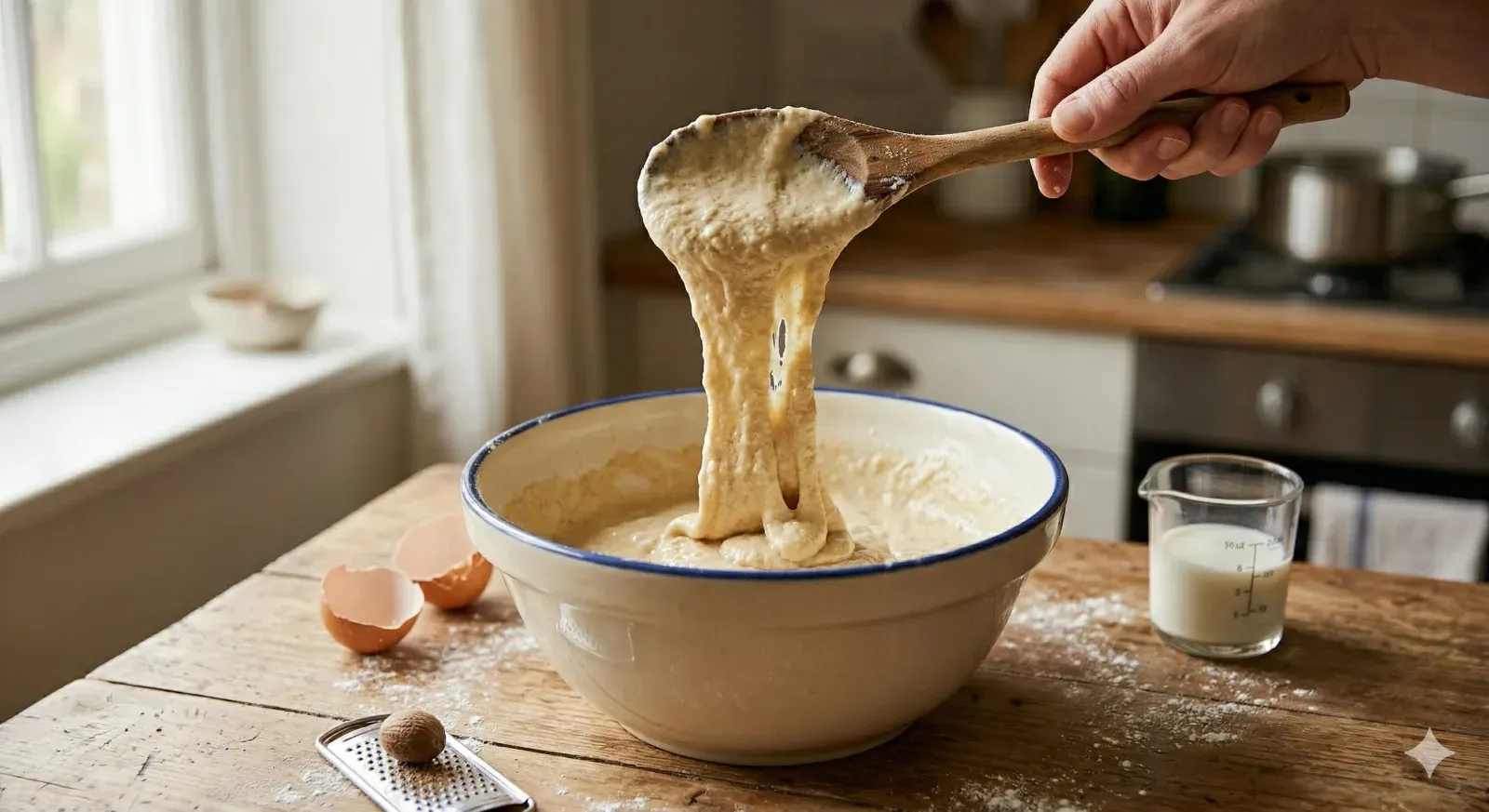
1 Combine the flour, eggs, milk, salt, and nutmeg in a large mixing bowl. Stir with a wooden spoon until a thick, sticky batter forms. Now beat the batter vigorously for about 2 minutes. You want to develop some gluten, which gives the spaetzle their characteristic chewy texture. The batter should be thick enough to slowly drip from a spoon in heavy ribbons.
After mixing, let the batter rest for 10 minutes. This resting period allows the flour to fully absorb the liquid. It also relaxes the gluten so the noodles are tender rather than tough. If the batter seems too thick after resting, stir in a tablespoon of milk. Conversely, if it is too thin, add a tablespoon of flour. The consistency matters more than exact measurements here.
Step 2: Cook the Spaetzle Noodles
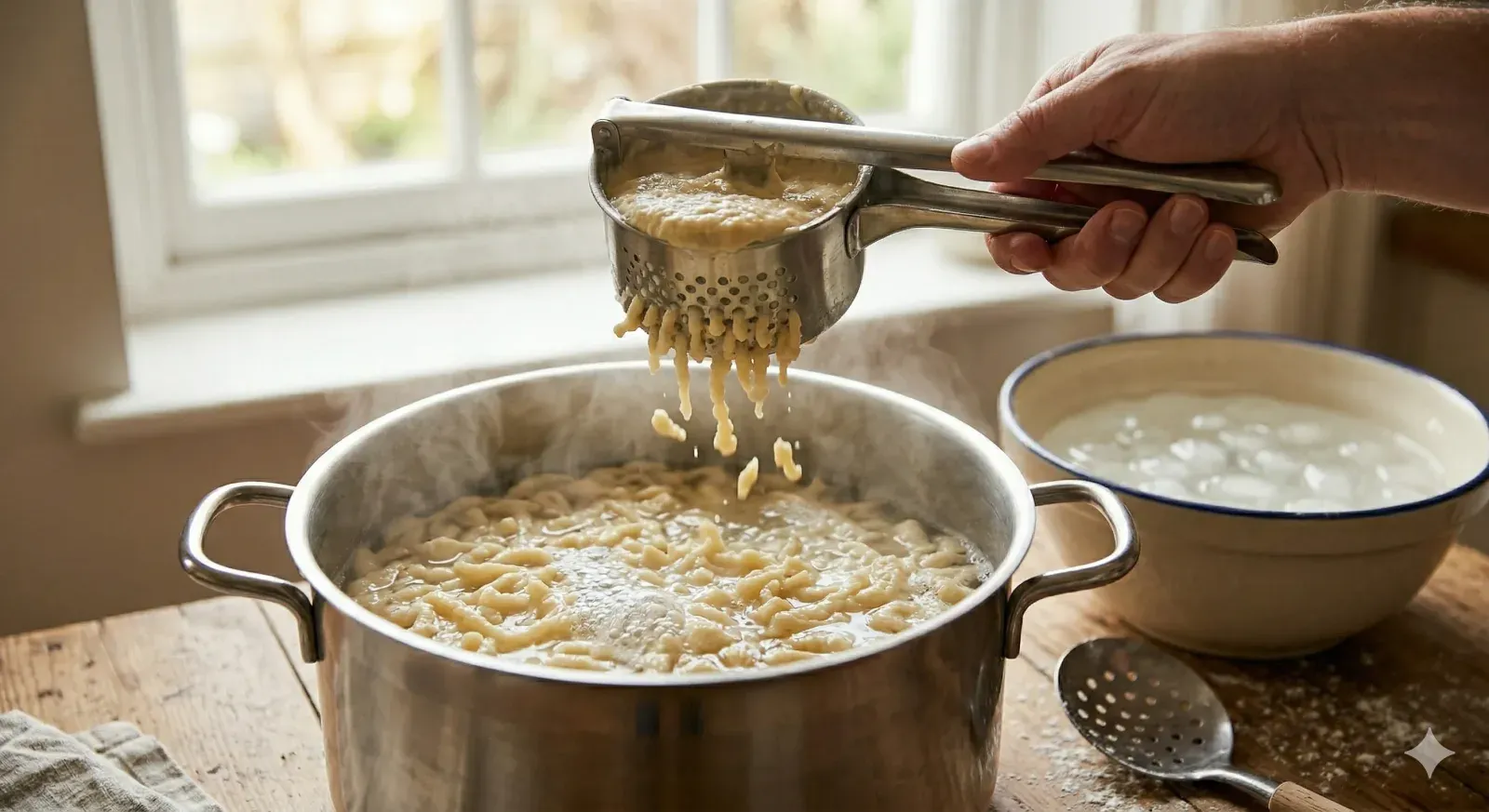
2 Bring a large pot of salted water to a rolling boil. Set a bowl of ice water nearby. Hold a spaetzle maker, colander with large holes, or flat grater over the pot. Press the batter through the holes so small, irregular noodles drop directly into the boiling water. Work in batches to avoid overcrowding the pot.
The spaetzle will sink to the bottom at first. After 2 to 3 minutes, they float to the surface. That means they are done. Scoop them out with a slotted spoon and transfer them to the ice bath briefly. Then drain well and toss with a drizzle of oil to prevent sticking. Repeat until all the batter is used. You should end up with roughly four generous portions of fresh spaetzle.
Step 3: Caramelize the Onions
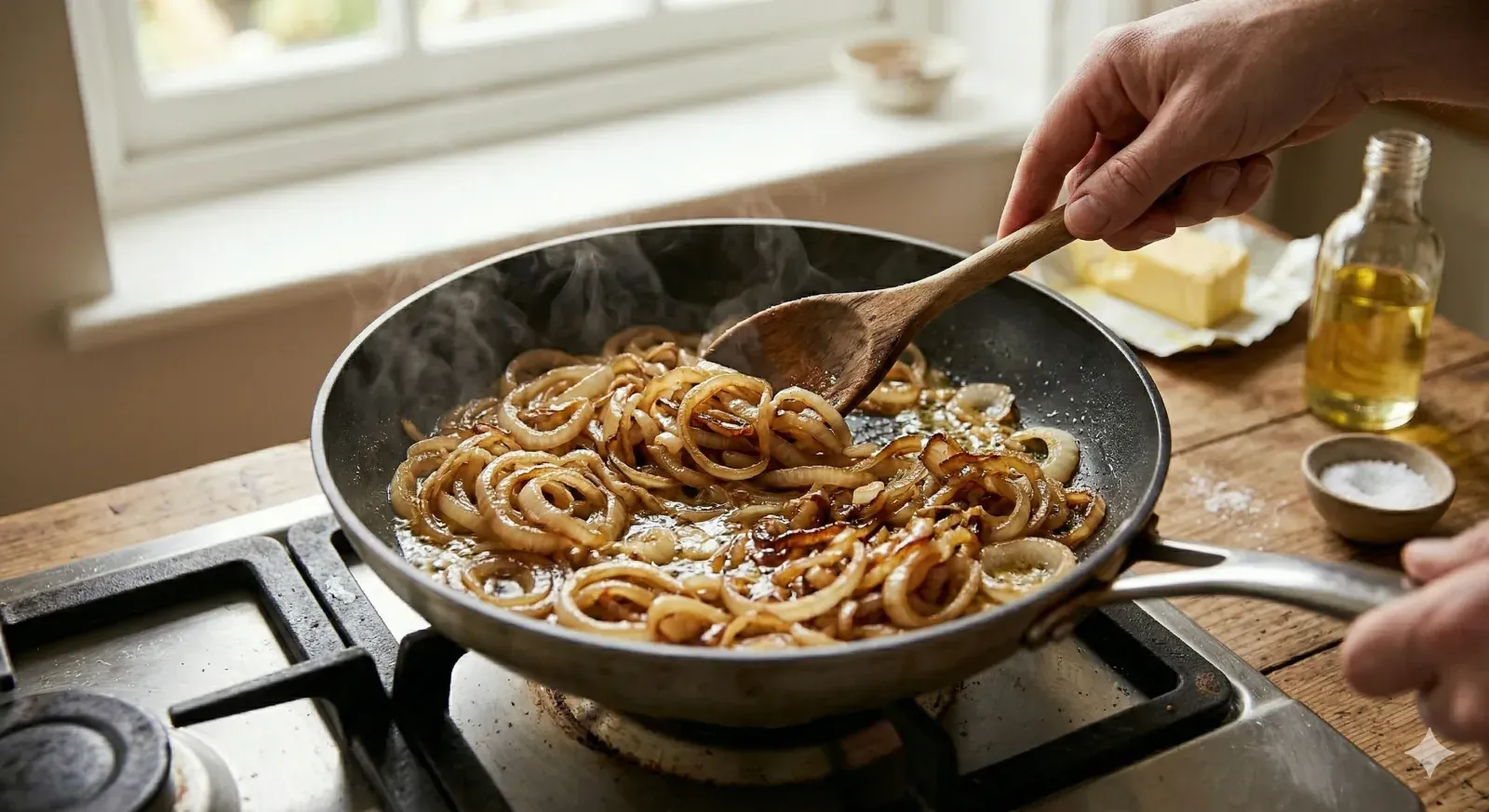
3 While the spaetzle cook, start the fried onions. Heat the butter and oil together in a large skillet over medium heat. Add the thinly sliced onion rings and spread them in an even layer. Let them cook undisturbed for the first 3 minutes so they start to brown on the bottom.
Stir the onions every few minutes after that. Cook them for 15 to 20 minutes total until they turn a deep golden brown. The onions will shrink significantly and become sweet and crispy at the edges. Season with a pinch of salt. These fried onions are essential to kasespatzle. They add a caramelized sweetness that balances the rich, salty cheese. Set aside about half of the onions for the final topping.
Step 4: Layer and Bake the Kasespatzle
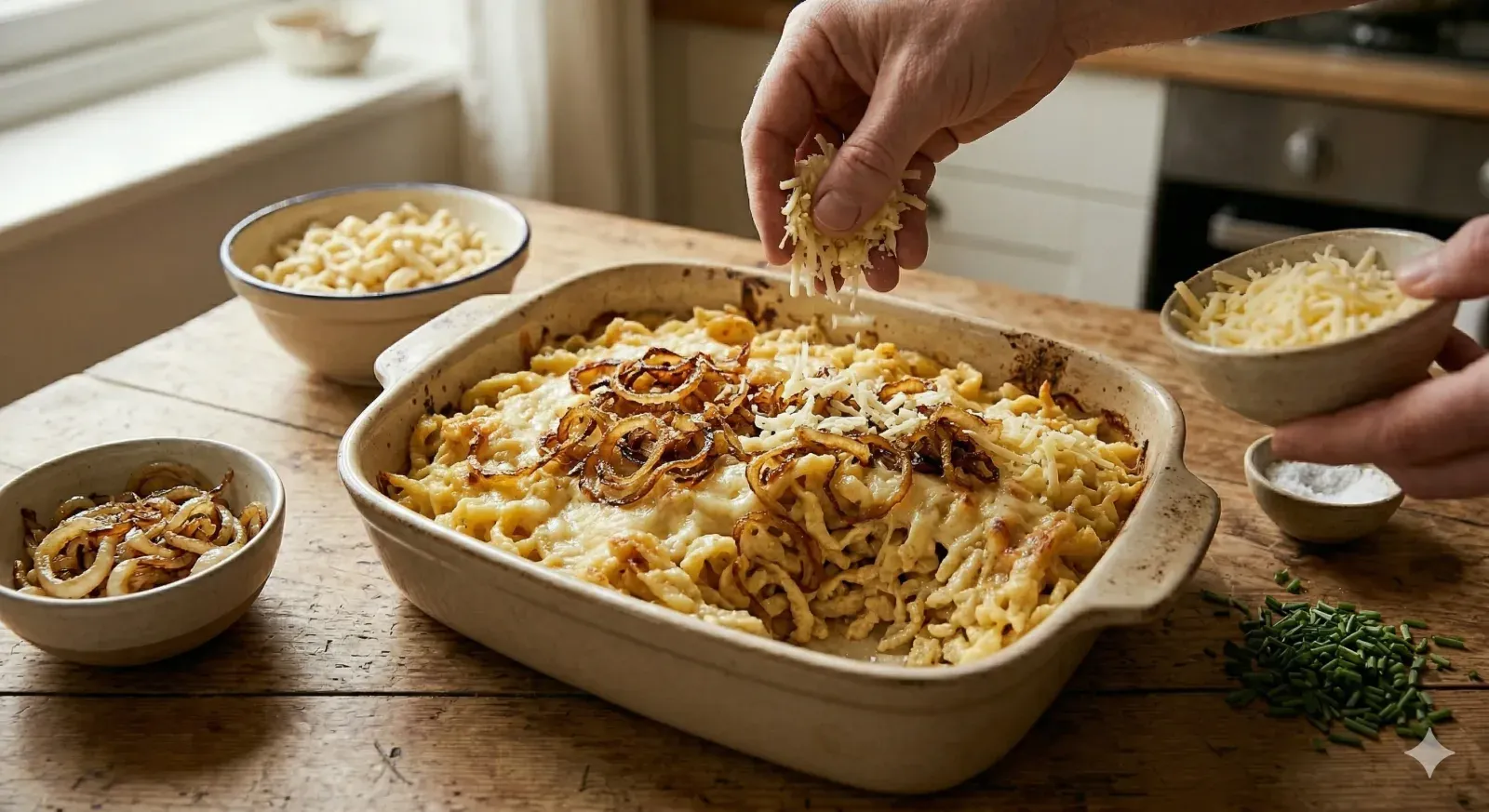
4 Preheat your oven to 375 degrees Fahrenheit. Butter a medium baking dish generously. Spread half of the cooked spaetzle across the bottom. Scatter half of the remaining fried onions over the noodles. Then cover with half of the mixed Emmental and Gruyere cheese. Add a few grinds of black pepper.
Repeat the layers with the remaining spaetzle, onions, and cheese. Place the dish in the oven and bake for 12 to 15 minutes. The cheese should be fully melted, bubbly, and starting to turn golden brown on top. Remove the dish and immediately pile the reserved crispy fried onions on top. Scatter fresh chopped chives over everything. Serve the kasespatzle straight from the baking dish while the cheese is still hot and stretchy.
Expert Tips for Perfect Kasespatzle
Beat the Batter Well
The secret to great spaetzle is in the mixing. You need to beat the batter until it becomes elastic and pulls away from the bowl. This develops gluten, which gives the noodles their bouncy, chewy bite. Under-mixed batter produces soft, mushy noodles that fall apart. Two minutes of vigorous stirring is all it takes to build the right texture.
Do Not Overcook the Noodles
Spaetzle cook fast. Once they float to the top of the boiling water, they are ready. Leaving them in the water even a minute too long makes them gummy and soft. Since the noodles will bake in the oven with cheese afterward, slightly undercooking them keeps the final texture perfect. Pull them out as soon as they float.
Use High-Quality Melting Cheese
Kasespatzle demands cheese that melts into smooth, stretchy strings. Block Emmental and Gruyere are ideal because they have high moisture and fat content. Aged hard cheeses like Parmesan will not melt properly. Similarly, soft cheeses like brie will turn greasy. Stick with Alpine-style melting cheeses for the authentic gooey result.
Kasespatzle Across the Regions
Different parts of Germany, Austria, and Switzerland each have their own take on kasespatzle. The basic idea stays the same, but the details vary from region to region. Here is how the main versions compare.
| Region | Kasespatzle Style | Cheese Used | Serving Tradition |
|---|---|---|---|
| Allgau (Bavaria) | Classic Allgauer Kasespatzle | Bergkase and Emmental | Baked in a dish with crispy fried onions and green salad on the side |
| Swabia (Baden-Wurttemberg) | Schwabische Kasespatzle | Emmental and Gruyere mix | Layered in a pan on the stovetop, served with applesauce |
| Vorarlberg (Austria) | Kasknopfle | Local Vorarlberger Bergkase | Pan-fried with onions, served with potato salad |
| Tyrol (Austria) | Tiroler Kasnocken | Tilsiter and mountain cheese | Baked until crispy on top, served with sauerkraut |
| Switzerland | Alpler Magronen | Appenzeller and Gruyere | Mixed with potatoes and cream, served with applesauce |
Serving Suggestions
Kasespatzle is rich enough to stand alone as a main course. Still, the right sides and drinks can turn it into a full Alpine feast. Here are the best pairings for this German cheese noodle dish.
Classic Accompaniments:
- Green side salad: A simple salad with a tangy vinaigrette is the traditional partner for kasespatzle. The acidity cuts through the heavy cheese and cleanses the palate between bites.
- Applesauce (Apfelmus): In Swabia, kasespatzle is almost always served with cold applesauce on the side. The sweet, fruity flavor may sound unusual, but it balances the salty cheese perfectly.
- Sauerkraut: Fermented cabbage adds a sharp, tangy bite that works well alongside the creamy noodles. Warm it gently with caraway seeds for extra depth.
- German cucumber salad: Thinly sliced cucumbers in a light dill and vinegar dressing provide a cool, refreshing contrast to the hot, cheesy dish.
Beverage Pairings:
- German Riesling (dry): A dry Riesling from the Mosel or Rheingau region is the classic wine match. Its crisp acidity and stone fruit notes cut through the rich cheese beautifully.
- Hefeweizen (wheat beer): A cloudy Bavarian wheat beer pairs wonderfully with kasespatzle. Its light body and fruity character balance the heavy noodles without overwhelming them.
- German pilsner: A crisp lager like Bitburger or Warsteiner refreshes the palate between each cheesy bite. The clean bitterness works as a counterpoint to the rich dish.
- Apple cider or sparkling water: For a non-alcoholic option, sparkling apple cider mirrors the traditional applesauce pairing. Sparkling water with lemon also works well to cleanse the palate.
Storage and Reheating
Refrigerator: Store leftover kasespatzle in an airtight container for up to 3 days. The cheese will solidify as it cools, but it reheats well. Keep it covered to prevent the noodles from drying out.
Freezer: You can freeze unassembled plain spaetzle noodles for up to 2 months. Spread them on a baking sheet to freeze individually first. Then transfer to a freezer bag. Do not freeze the assembled kasespatzle, because the cheese becomes grainy when thawed.
Reheating: The best method is to reheat kasespatzle in a 350-degree oven for 10 to 12 minutes. Cover with foil to keep it from drying out. You can also reheat it in a skillet with a splash of milk and a bit of extra cheese. The milk loosens the noodles while the fresh cheese restores the gooey texture. Avoid microwaving, because it turns the cheese rubbery.
Common Mistakes to Avoid
1. Using the Wrong Cheese
Mozzarella, cheddar, and other non-Alpine cheeses do not produce the right flavor or texture for kasespatzle. Cheddar can become oily when baked, while mozzarella lacks flavor depth. Stick with Emmental, Gruyere, or Bergkase. These cheeses melt into the smooth, stretchy strings that define authentic kasespatzle.
2. Skipping the Fried Onions
Without crispy fried onions, kasespatzle is just cheese noodles. The onions provide essential sweetness, crunch, and visual appeal. They are not optional. Take the time to caramelize them slowly until they are deep brown and crispy. Rushing this step with high heat gives you burnt, bitter onions instead of sweet, golden ones.
3. Under-Beating the Batter
A quick stir is not enough. Spaetzle batter needs vigorous beating to develop gluten. Without it, the noodles will be soft and mushy instead of chewy and bouncy. Two full minutes of active stirring makes the difference. Your arm will feel it, but the texture of the finished noodles is worth the effort.
4. Overcrowding the Pot
Pressing too much batter into the water at once causes the spaetzle to stick together in clumps. Work in small batches so each noodle has room to cook evenly. The water should stay at a rolling boil between batches. If it drops to a simmer, the noodles will absorb too much water and become soggy.
Frequently Asked Questions
What cheese is best for kasespatzle?
Emmental and Gruyere are the best combination for kasespatzle. Emmental melts into smooth, nutty strings. Gruyere adds a sharper, deeper flavor. Together, they create the perfect balance. For the most authentic taste, look for Bergkase from the Allgau region. Always shred cheese from a block rather than buying pre-shredded bags.
Can I make spaetzle without a spaetzle maker?
Absolutely. A colander with large holes works well as a substitute. Press the batter through the holes with a spatula over the boiling water. You can also use a cutting board. Spread batter thinly on a wet board and scrape small strips into the pot with a knife. The noodles will be slightly different in shape, but the taste and texture remain the same.
What is the difference between spaetzle and kasespatzle?
Plain spaetzle are simple German egg noodles. They serve as a side dish, much like pasta or rice. Kasespatzle takes those noodles and transforms them into a main course by layering them with melted cheese and fried onions. Think of it as Germany’s answer to macaroni and cheese, but with handmade noodles and Alpine cheese instead of elbow pasta and cheddar.
How do I get the right spaetzle batter consistency?
The batter should be thick and sticky. It should drip slowly from a spoon in heavy, unbroken ribbons. If it pours like water, it is too thin. Add a tablespoon of flour at a time. If it sits like a lump and will not drip, add a splash of milk. Beat the batter well to develop gluten. The resting period also helps the flour absorb liquid evenly.
Can I make kasespatzle ahead of time?
Yes, you can prepare the components in advance. Cook the spaetzle noodles and toss them with a little oil. Store them in the fridge for up to a day. Fry the onions and refrigerate them separately. When ready, assemble and bake. However, kasespatzle tastes best straight from the oven while the cheese is still molten. Leftovers reheat well but lose some of their stretch.
Is kasespatzle gluten-free or vegetarian?
Traditional kasespatzle is vegetarian. It contains no meat whatsoever. The ingredients are just flour, eggs, cheese, onions, and butter. However, it is not gluten-free because wheat flour is essential for the spaetzle. Gluten-free flour blends can work as substitutes, but the texture will not be as chewy. Rice flour and tapioca starch together come closest to the original.
Variations and Adaptations
Stovetop Kasespatzle:
Instead of baking, you can assemble kasespatzle entirely on the stove. Melt butter in a large skillet. Add the cooked spaetzle and toss them until warm. Sprinkle cheese over the noodles in batches, stirring between each addition until it melts. Fold in the fried onions. This method is faster than baking and gives you a creamier, less structured result. Many Swabian households prefer this approach.
Kasespatzle with Bacon:
For a heartier version, fry diced bacon or speck until crispy. Layer the bacon between the noodles and cheese before baking. The smoky, salty pork adds another dimension of flavor. This variation is popular in Tyrolean mountain huts, where hikers need calorie-dense meals after long treks.
Herb Spaetzle Kasespatzle:
Mix finely chopped fresh herbs into the spaetzle batter before cooking. Parsley, chives, and a bit of thyme work well together. The herbs add specks of green color and a fresh, earthy taste. Herb spaetzle paired with rich melted cheese creates a more balanced and visually appealing dish.
The Cultural Significance of Kasespatzle
In southern Germany, kasespatzle holds a place of deep cultural pride. It is not just a recipe. It represents a way of life rooted in Alpine farming traditions. For centuries, families in the Allgau and Swabia made spaetzle as their daily staple. Cheese from local dairy farms gave these humble noodles substance and flavor. Every household had its own technique for pressing the batter, and grandmothers guarded their ratios like secrets.
Today, kasespatzle festivals take place across Bavaria and Baden-Wurttemberg each autumn. Competitors race to see who can make the best spaetzle in the shortest time. Towns argue fiercely over which region makes the definitive version. In Austria and Switzerland, closely related dishes like Kasnocken and Alpler Magronen carry the same cultural weight. These cheese noodle dishes connect Alpine communities through shared traditions and local ingredients.
Kasespatzle also represents the broader European tradition of transforming simple pantry staples into deeply satisfying meals. Flour, eggs, cheese, and onions are affordable and available year-round. Yet when combined with care and technique, they produce something extraordinary. That philosophy of elevating humble ingredients is what makes European comfort food so enduring and beloved around the world.
Conclusion
This kasespatzle recipe gives you everything you need to recreate Germany’s most comforting cheese noodle dish at home. The keys are simple: beat the batter well, use quality Alpine cheese, and never skip the crispy fried onions. Each layer builds flavor and texture that no boxed mac and cheese can match. From the chewy handmade noodles to the melted Emmental stretching from your fork, every bite of kasespatzle is pure comfort.
Ready to explore more German and European classics? Browse our full collection of European dishes, including bratwurst, sauerbraten, and flammkuchen. Each recipe brings you closer to the heart of European home cooking.