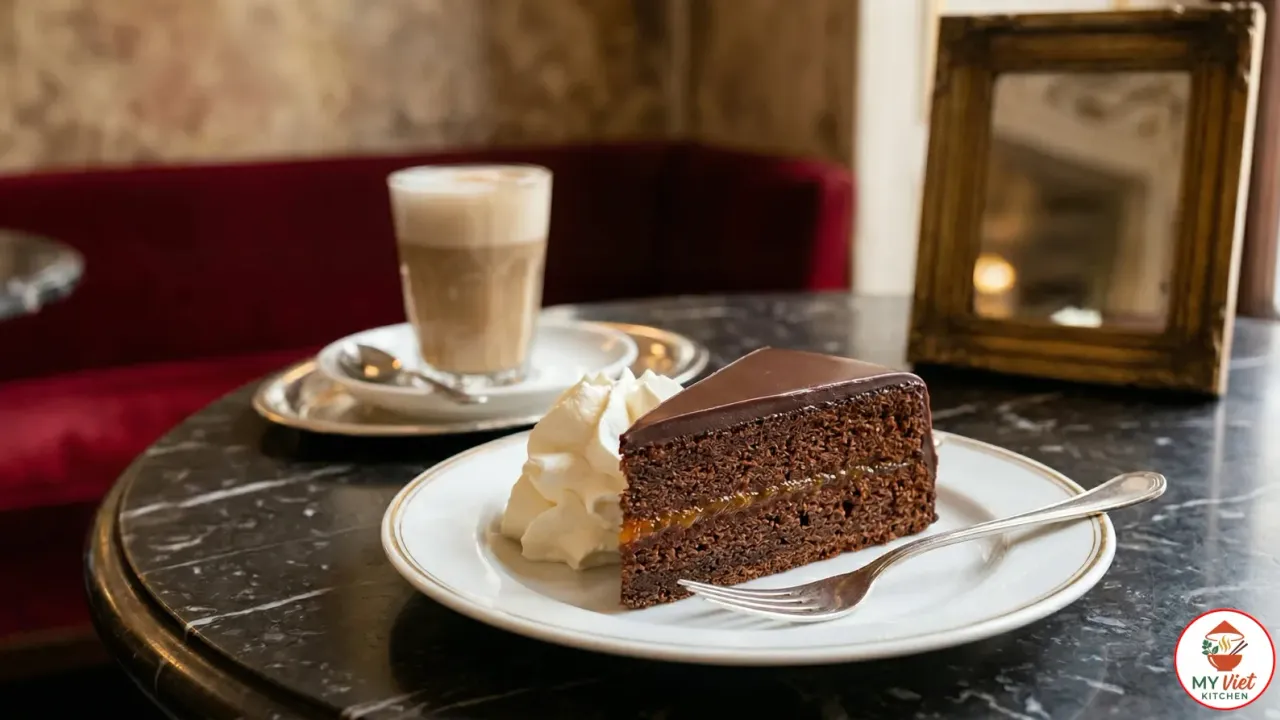
Few desserts carry the weight of history quite like Sachertorte. This legendary Viennese chocolate cake features a dense, velvety crumb layered with bright apricot jam and sealed beneath a glossy chocolate glaze. Created in 1832 by a 16-year-old apprentice named Franz Sacher, it has since become Austria’s most famous dessert. Whether you are celebrating a special occasion or simply craving something indulgent, this recipe delivers the authentic Hotel Sacher experience in your own kitchen.
Prep Time: 45 minutes | Cook Time: 55 minutes | Servings: 12
Difficulty: Medium | Calories: ~410 per serving
What Makes Sachertorte Special?
Sachertorte stands apart from every other chocolate cake because of its restraint. Most chocolate cakes aim for maximum sweetness and towering frosting. This Viennese masterpiece takes the opposite approach. The cake itself is only moderately sweet, with a dense and slightly dry texture that relies on dark chocolate rather than sugar for its depth. That intentional dryness is not a flaw — it is the entire point. The thin apricot jam layer provides moisture and a tangy fruitiness that wakes up the palate. Meanwhile, the chocolate glaze adds a firm, snappy coating that cracks under your fork.
What truly distinguishes Sachertorte is the interplay of these three layers. Each component serves a specific purpose. The dense crumb provides substance and a deep cocoa backbone. Meanwhile, the apricot jam contributes acidity that cuts through the richness. Finally, the glaze seals everything together while delivering an intense chocolate hit on the tongue. Remove any one element, and the balance collapses. This precise architecture is why the recipe has remained essentially unchanged for nearly two centuries.
Beyond technique, Sachertorte carries cultural significance that few desserts can match. The famous legal battle between Hotel Sacher and Demel bakery over the “original” recipe lasted from 1938 to 1963. That decades-long dispute proved how seriously Vienna takes this cake. Today, Hotel Sacher still ships thousands of Sachertortes worldwide in their signature wooden boxes. However, baking one at home lets you experience this tradition at its freshest and most personal.

Choosing the Right Chocolate
Chocolate is the heart of Sachertorte. The variety you select shapes the flavor, texture, and appearance of the finished cake. Since this dessert uses chocolate in both the batter and the glaze, quality matters more here than in almost any other recipe. Here are your best options for an authentic result.
- 70% Dark Chocolate (Best Choice): This is the sweet spot for Sachertorte. It delivers deep cocoa flavor without excessive bitterness. The sugar content balances well with the apricot jam. Both Valrhona Guanaja and Lindt Excellence 70% produce excellent results in the batter and glaze.
- 60% Dark Chocolate: A slightly sweeter option that works well for those who find 70% too intense. The lower cacao percentage produces a milder chocolate flavor. Consider reducing the sugar in the batter by one tablespoon to compensate for the extra sweetness.
- Bittersweet Baking Chocolate: Brands like Callebaut and Ghirardelli offer baking bars that melt smoothly. These are formulated for baking and produce consistent results. Avoid chocolate chips, as they contain stabilizers that interfere with smooth melting.
- Austrian Chocolate: For the most authentic flavor, seek out Zotter or Berger chocolate from Austria. These artisanal producers use European-style roasting profiles that create a rounder, less acidic chocolate flavor. Austrian chocolate gives the cake a taste closest to what you would find in Vienna.
Ingredients for Sachertorte
For the Chocolate Cake:
- 5 ounces (150g) dark chocolate, 70% cacao, finely chopped
- 1/2 cup (115g) unsalted butter, softened
- 1/2 cup (100g) granulated sugar, divided
- 6 large eggs, separated, room temperature
- 1 teaspoon vanilla extract
- 1 cup (125g) all-purpose flour, sifted
- Pinch of salt
For the Apricot Filling:
- 3/4 cup (240g) smooth apricot jam
- 2 tablespoons water
For the Chocolate Glaze:
- 7 ounces (200g) dark chocolate, 70% cacao, finely chopped
- 3/4 cup (180ml) heavy cream
- 1 tablespoon unsalted butter
- 1 tablespoon light corn syrup or golden syrup
Pro tip: Bring all refrigerated ingredients to room temperature before starting. Cold egg yolks cause the melted chocolate to seize into grainy lumps when combined. Room-temperature butter also creams more smoothly and incorporates more air, which gives the cake a lighter texture. Set out the butter and eggs at least one hour before you begin.
Step-by-Step Instructions
Step 1: Melt the Chocolate
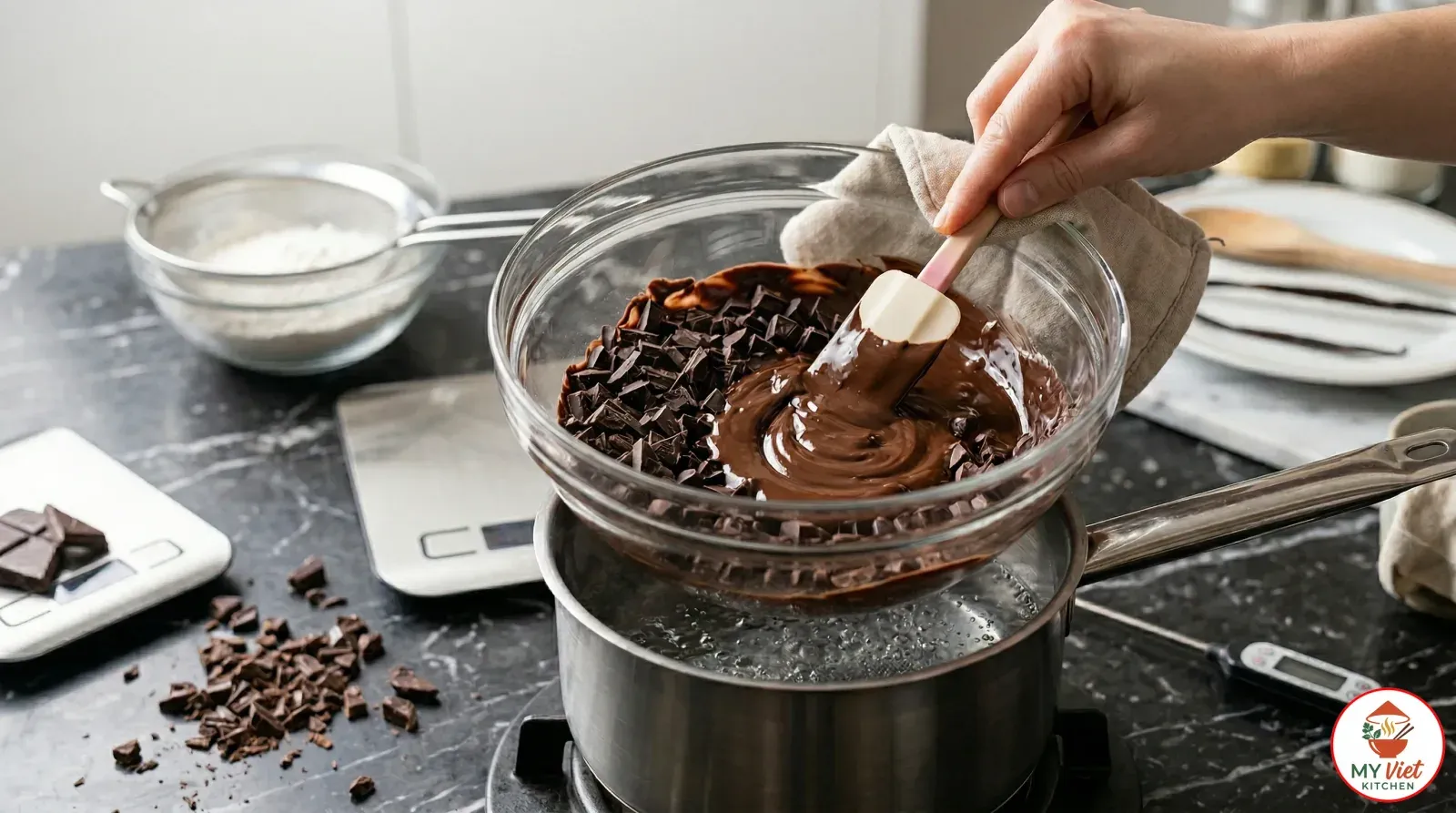
1Preheat your oven to 350 degrees Fahrenheit (175 degrees Celsius). Butter a 9-inch round springform pan, then line the bottom with parchment paper. Dust the sides lightly with flour and tap out any excess. Place 5 ounces of finely chopped dark chocolate in a heatproof bowl. Set it over a pot of barely simmering water, ensuring the bowl does not touch the water. Stir gently until the chocolate melts into a smooth, glossy liquid.
Remove the bowl from the heat promptly. Let the melted chocolate cool to lukewarm, about 90 degrees Fahrenheit. If the chocolate is too hot when you add it to the butter mixture, it will melt the creamed butter and deflate the air you worked to incorporate. Patience at this stage pays off with a lighter cake.
Step 2: Cream the Butter and Sugar
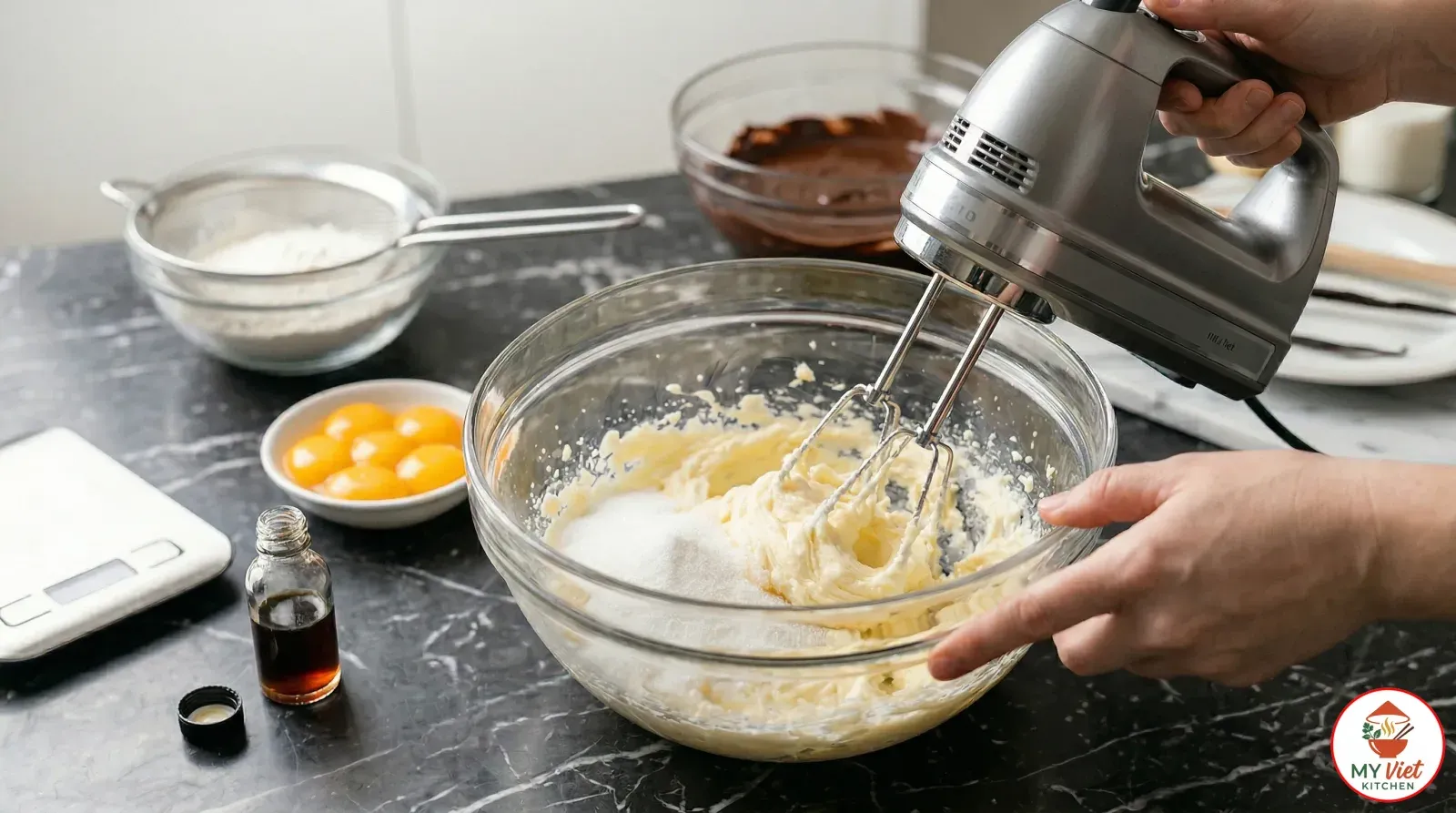
2Place the softened butter in a large bowl with half of the granulated sugar. Beat with an electric mixer on medium-high speed for 4 to 5 minutes. The mixture should become pale, fluffy, and noticeably increased in volume. This aeration is critical because Sachertorte contains no baking powder or baking soda. Whipped butter and egg whites provide all the lift.
Add the egg yolks one at a time, beating well after each addition. Each yolk must fully incorporate before the next one goes in. Then stir in the vanilla extract. Finally, fold in the lukewarm melted chocolate using a rubber spatula. Work gently but thoroughly until no streaks of butter remain visible. The batter will be thick, dark, and intensely chocolatey at this stage.
Step 3: Whip the Egg Whites
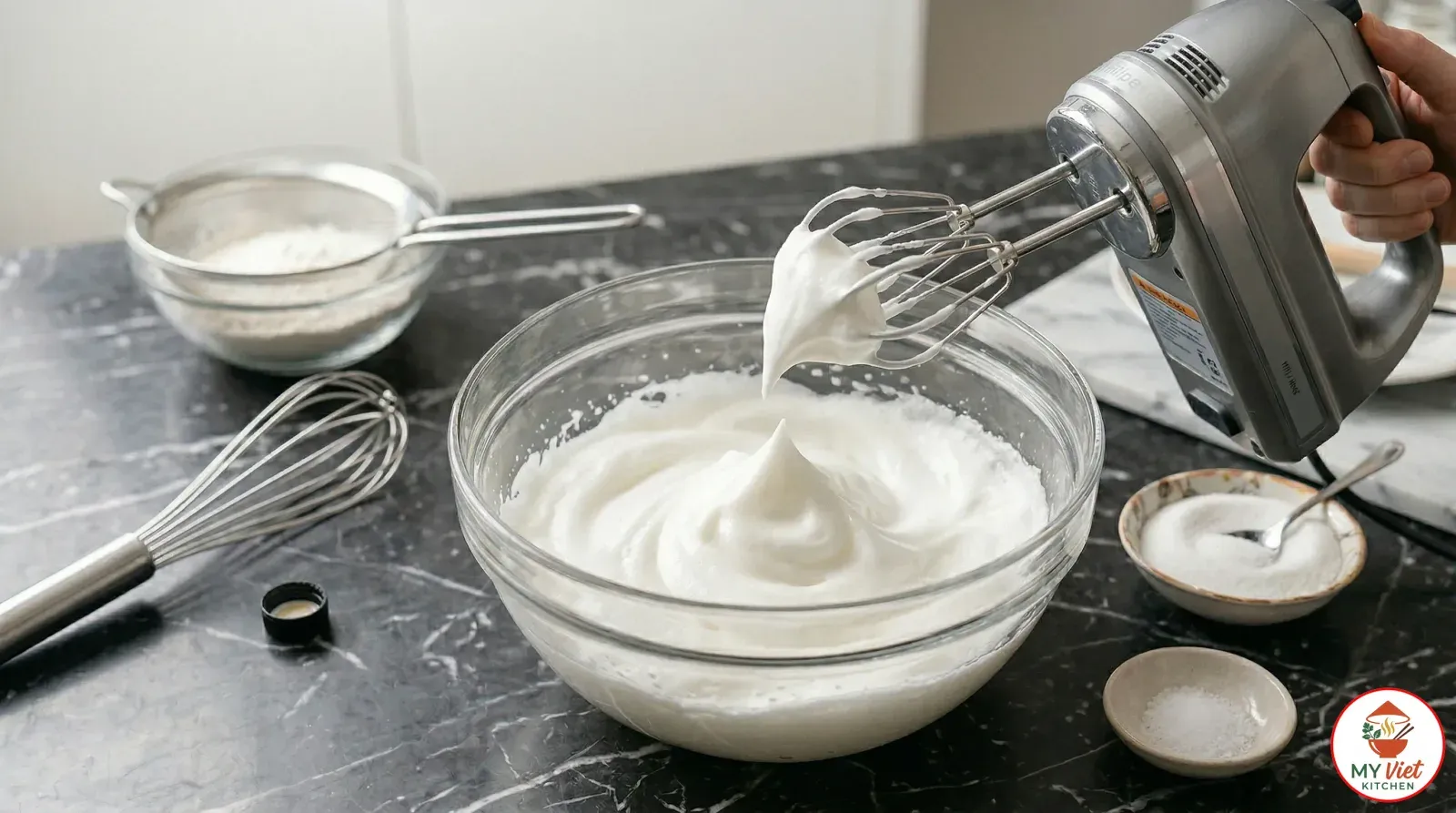
3In a separate, spotlessly clean bowl, whip the egg whites with a pinch of salt on medium speed. Once foamy, increase the speed to high. When soft peaks form, gradually sprinkle in the remaining sugar. Continue whipping until the meringue holds stiff, glossy peaks. The peaks should stand upright when you lift the whisk. This meringue is the sole leavening agent in your Sachertorte.
Any trace of fat in the bowl will prevent the whites from whipping properly. Therefore, ensure your bowl and whisk are completely grease-free. A quick wipe with a lemon wedge removes invisible oil residue. Also, room-temperature whites whip to greater volume than cold ones. These small details make a significant difference in the final cake height.
Step 4: Fold and Bake
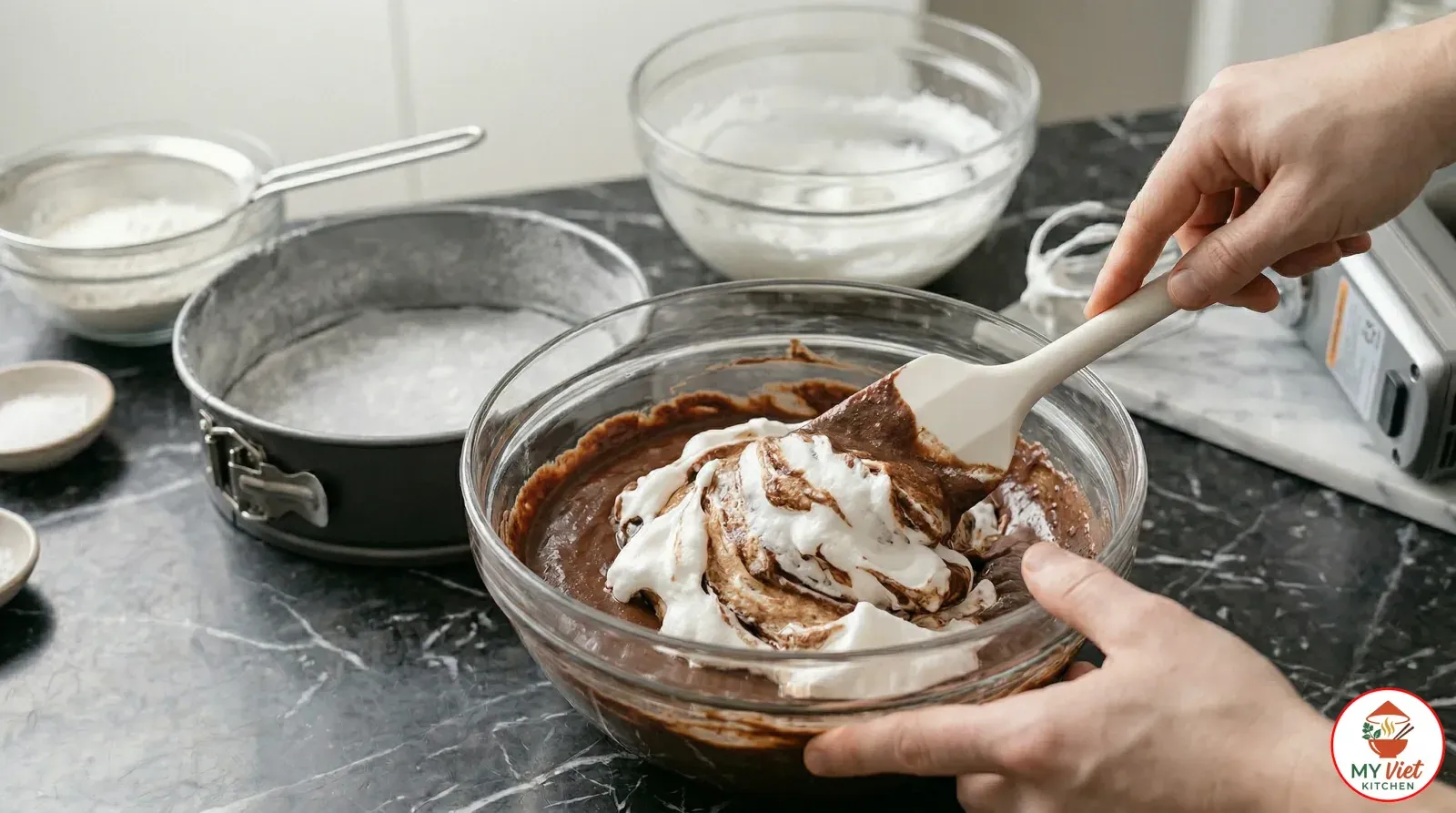
4Spoon one-third of the whipped egg whites into the chocolate batter. Stir this portion in vigorously — sacrificing its volume is fine because the goal is to lighten the heavy batter. Next, add half of the remaining whites along with half of the sifted flour. Fold gently with a large spatula, turning the bowl as you go. Repeat with the rest of the whites and flour. Stop folding the moment no white streaks remain.
Pour the batter into your prepared springform pan. Smooth the top with an offset spatula. Bake on the center rack for 50 to 55 minutes. The cake is done when a wooden skewer inserted in the center comes out clean. Do not open the oven door during the first 40 minutes, as the sudden temperature drop can cause the cake to collapse. Let it cool in the pan for 10 minutes, then release the springform ring and transfer the cake to a wire rack.
Step 5: Apply the Apricot Glaze
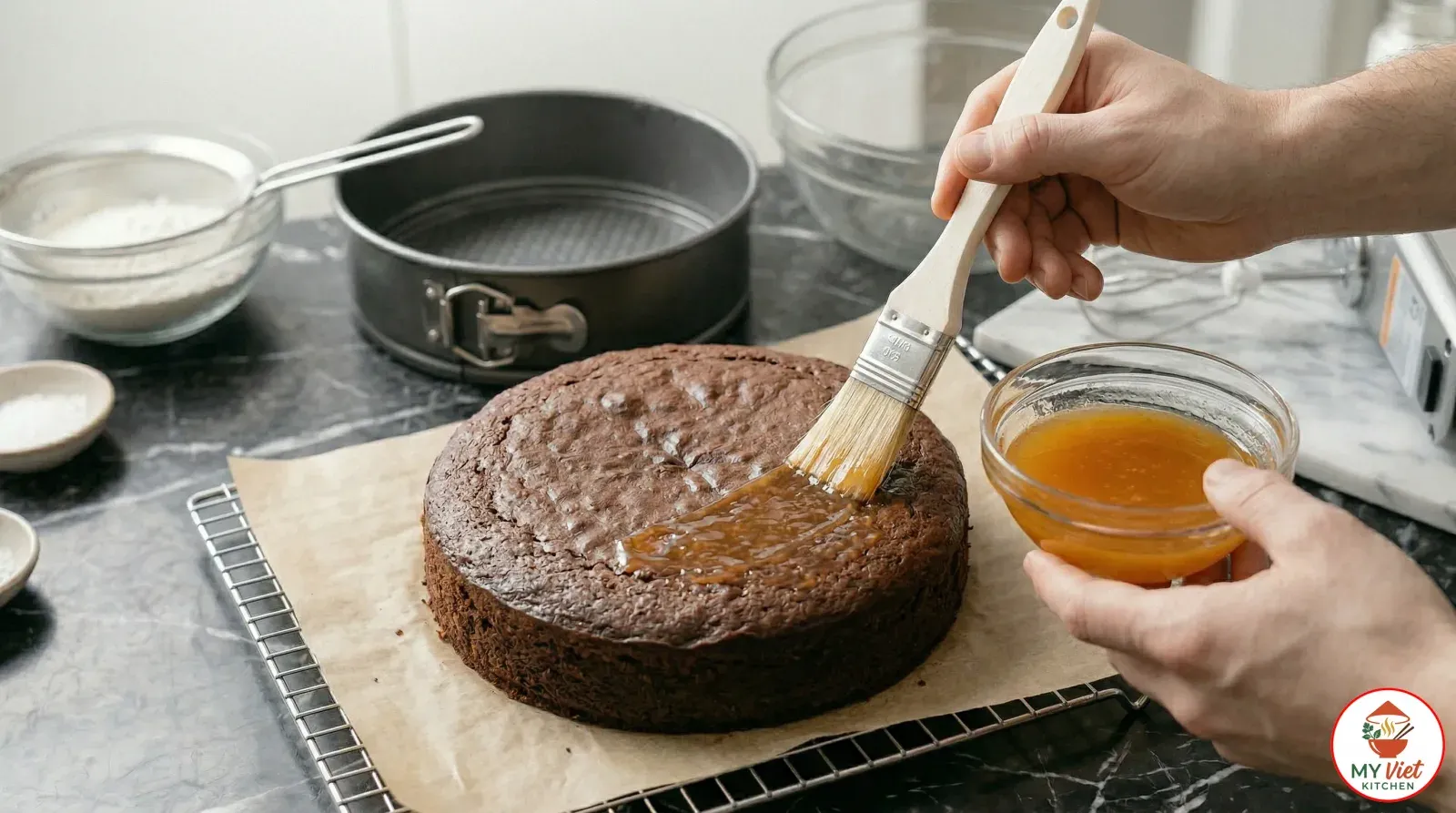
5Once the cake has cooled completely, use a long serrated knife to slice it horizontally into two even layers. A turntable helps but is not essential. Heat the apricot jam with 2 tablespoons of water in a small saucepan until it liquefies. Press it through a fine-mesh strainer to remove any fruit pieces. You want a perfectly smooth, brushable glaze.
Brush a generous layer of the warm strained jam onto the cut surface of the bottom layer. Place the top layer back on, cut-side down. Then brush the remaining apricot jam over the entire top and sides of the cake. This coating serves two purposes. First, it adds the signature tart fruitiness. Second, it creates a sticky base that helps the chocolate glaze adhere smoothly. Let the jam set for about 15 minutes before moving to the next step.
Step 6: Pour the Chocolate Glaze
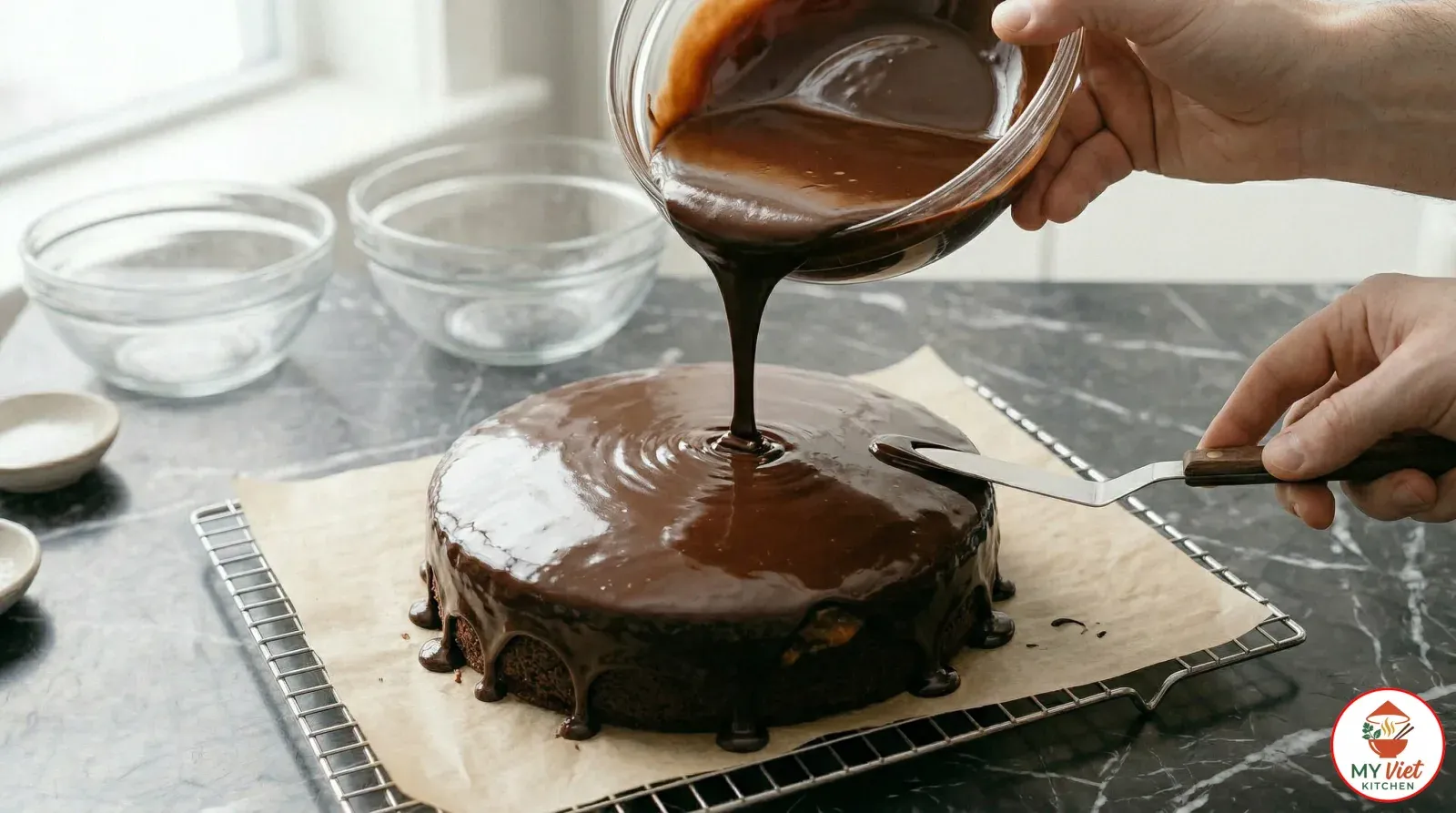
6Place 7 ounces of finely chopped dark chocolate in a heatproof bowl. Heat the heavy cream in a small saucepan until bubbles form at the edges. Pour the hot cream over the chocolate and let it sit undisturbed for 2 minutes. Then stir slowly from the center outward with a spatula until the mixture becomes perfectly smooth. Stir in the butter and corn syrup. The corn syrup gives the glaze a beautiful shine and prevents cracking.
Let the glaze cool to approximately 90 degrees Fahrenheit (32 degrees Celsius). It should flow like thick honey. Place the jam-coated cake on a wire rack set over a baking sheet. Pour the glaze over the center of the cake in one steady stream. Use an offset spatula to nudge the glaze gently toward the edges, letting it cascade down the sides. Work quickly because the glaze sets as it cools. Allow the finished Sachertorte to sit undisturbed for at least 2 hours until the glaze firms completely.
Expert Tips for Perfect Sachertorte
Master the Folding Technique
Folding is the most important skill in this recipe. Cut your spatula through the center of the batter, scrape along the bottom of the bowl, and bring it up and over. Rotate the bowl a quarter turn and repeat. This motion preserves the air trapped in your meringue. Stirring or mixing vigorously deflates those air bubbles, resulting in a flat, dense cake. Stop folding the instant you see no more white streaks.
Strain the Apricot Jam
Straining might seem fussy, but it makes a real difference. Fruit pieces in the jam create bumps under the chocolate glaze. Those bumps ruin the mirror-smooth finish that defines a proper Sachertorte. Warming the jam before straining makes it flow through the sieve easily. Press firmly with a spoon to extract every drop of flavor. Discard the solids.
Nail the Glaze Temperature
Temperature controls everything about the glaze. Too hot, and it slides off the cake in a thin, transparent layer. Too cool, and it sets in lumps before you can spread it. Aim for 90 degrees Fahrenheit (32 degrees Celsius). At this temperature, the glaze flows slowly like warm honey. Use an instant-read thermometer until you develop a feel for the right consistency. Pour in one confident motion for the smoothest finish.
Sachertorte Across Austria and Beyond
While Hotel Sacher’s version remains the most famous, Sachertorte varies across Austria and neighboring countries. Each bakery guards its own interpretation. Here is how the major versions compare.
| Version | Origin | Key Difference | Jam Placement |
|---|---|---|---|
| Hotel Sacher | Vienna, Austria | Two jam layers: one under the glaze, one in the middle | Inside and outside |
| Demel | Vienna, Austria | Single jam layer directly under the glaze only | Outside only |
| Salzburg Style | Salzburg, Austria | Uses milk chocolate glaze for a sweeter finish | Inside and outside |
| Hungarian Adaptation | Budapest, Hungary | Adds rum to the cake batter and uses sour cherry jam | Inside only |
| German Interpretation | Bavaria, Germany | Often includes ground almonds in the batter | Inside and outside |
| Modern Pastry Chefs | International | Deconstructed versions with mousse and ganache layers | As gel or coulis |
Serving Suggestions
In Vienna, Sachertorte arrives on a simple white plate, accompanied by a generous dollop of unsweetened whipped cream served on the side. The presentation is elegant in its simplicity. Here are the best ways to serve your homemade Sachertorte for an authentic experience.
The Perfect Accompaniments:
- Unsweetened Whipped Cream (Schlagobers): This is the traditional and essential pairing. The light, airy cream cuts through the richness of the chocolate and balances the dense crumb. Always serve it on the side so diners control each bite.
- Fresh Berries: A small handful of raspberries or strawberries adds a pop of color and bright acidity. The fruit echoes the apricot jam’s tartness while providing a fresh contrast to the baked elements.
- Vanilla Ice Cream: For a more indulgent presentation, serve a scoop alongside each slice. The cold ice cream against the room-temperature cake creates a pleasant temperature contrast that enhances the chocolate flavor.
- Gold Leaf (Optional): For special occasions, a small piece of edible gold leaf on top of the glaze adds an elegant, luxurious touch that reflects Sachertorte’s aristocratic origins.
Beverage Pairings:
- Wiener Melange: Vienna’s signature coffee, similar to a cappuccino with foamed milk. Its mellow bitterness complements the chocolate without overwhelming the apricot notes. This is the most authentic coffeehouse pairing.
- Einspanner: A strong black coffee topped with a thick cap of whipped cream, served in a glass. The intense coffee flavor stands up to the rich cake beautifully.
- Austrian Riesling: A late-harvest Austrian Riesling with stone fruit notes mirrors the apricot in the cake. Its acidity and slight sweetness create a harmonious pairing that wine and dessert lovers appreciate.
- Ruby Port: The berry-forward sweetness and warmth of ruby port enhance the chocolate flavors. Serve a small glass alongside a slice for an after-dinner indulgence.
Storage and Reheating
Room Temperature: Sachertorte keeps remarkably well at room temperature for up to 5 days when stored in an airtight container or under a cake dome. The chocolate glaze acts as a protective seal that locks in moisture. In fact, the cake tastes even better after 1 to 2 days as the flavors develop and meld together.
Refrigerator: For longer storage, refrigerate the cake for up to 10 days. Wrap it well in plastic wrap to prevent it from absorbing refrigerator odors. Always bring refrigerated Sachertorte to room temperature before serving. Cold chocolate tastes muted and the texture becomes unpleasantly firm. Allow at least 30 minutes out of the fridge.
Freezer: You can freeze Sachertorte for up to 3 months. Wrap individual slices in plastic wrap and then aluminum foil. Thaw overnight in the refrigerator, then bring to room temperature before serving. The glaze may lose some of its glossy sheen after freezing, but the flavor remains excellent.
Common Mistakes to Avoid
1. Using Low-Quality Chocolate
Sachertorte has few ingredients, so each one must pull its weight. Cheap compound chocolate or baking chips contain vegetable fats and artificial flavors that produce a waxy, dull result. Invest in real couverture or eating-quality dark chocolate with at least 60% cacao. The difference in the finished cake is dramatic and immediately noticeable.
2. Over-Mixing the Batter
Once you begin folding the meringue into the chocolate base, every extra stroke deflates air. That lost volume cannot be recovered. Fold just until the streaks disappear and then stop immediately. A few tiny white specks are far better than a dense, flat cake caused by over-mixing.
3. Glazing a Warm Cake
Pouring chocolate glaze over a warm cake is a common and costly error. The heat melts the glaze and causes it to pool at the base rather than coating the sides evenly. The cake must be completely cool — even slightly chilled — before you apply the apricot jam and the glaze. Patience at this stage ensures the smooth, mirror-like finish Sachertorte demands.
4. Skipping the Apricot Jam
Some bakers consider the jam optional, but it is fundamental to the recipe. Without it, Sachertorte is simply a chocolate cake with ganache. The apricot layer provides essential tartness, moisture, and the fruity-chocolate interplay that defines this dessert. It also creates a barrier that prevents the glaze from soaking into the crumb. Never skip it.
Frequently Asked Questions
What is the difference between Sachertorte and regular chocolate cake?
Sachertorte is denser and less sweet than most chocolate cakes. It uses no chemical leavener at all. Instead, whipped egg whites provide all of the lift. The cake is split horizontally and filled with a thin layer of apricot jam. Then it receives a firm, glossy chocolate glaze called Schokoladenglasur. Regular chocolate cake is typically lighter, frosted with buttercream or ganache, and lacks the signature apricot element. The flavor profile is more restrained and sophisticated.
Why does Sachertorte use apricot jam?
Apricot jam provides a tart, fruity counterpoint to the rich chocolate. Franz Sacher chose it for his original 1832 recipe because apricots grew abundantly in Austria. Their bright acidity cuts through the sweetness of the glaze and balances the dense crumb perfectly. Additionally, the thin jam layer acts as a moisture barrier between the cake and the chocolate coating. This prevents the glaze from absorbing into the crumb and losing its glossy finish.
Can I use a different jam instead of apricot?
While apricot is traditional and strongly recommended, you can substitute seedless raspberry jam. Raspberry pairs well with dark chocolate and offers similar acidity. Orange marmalade also works, contributing citrus brightness. However, using any other jam means the result is technically no longer a true Sachertorte. For your first attempt, stick with apricot to experience the classic flavor balance as intended.
How long does Sachertorte last?
Sachertorte keeps exceptionally well thanks to its chocolate glaze seal. At room temperature, it stays fresh for up to 5 days in an airtight container. Refrigerated, it lasts up to 10 days. Interestingly, the cake improves after 1 to 2 days as the chocolate and apricot flavors meld together. Always bring it to room temperature before serving for the best texture and fullest flavor.
Should Sachertorte be served with whipped cream?
Absolutely. In Vienna, unsweetened whipped cream called Schlagobers is the essential companion. The light, airy cream provides a crucial contrast to the dense, rich cake. Serve it on the side rather than on top. This allows each person to take as much or as little cream with each forkful as they prefer. Viennese purists consider a Sachertorte incomplete without this accompaniment.
What chocolate should I use for Sachertorte?
Use high-quality dark chocolate with 70 percent cacao for both the batter and the glaze. Since chocolate is the dominant ingredient, its quality directly determines the final flavor. Valrhona, Callebaut, and Lindt Excellence all produce reliable results. Avoid chocolate chips because they contain stabilizers that prevent smooth melting. Chop your chocolate finely so it melts evenly when combined with hot cream for the glaze.
Variations and Adaptations
Gluten-Free Sachertorte:
Replace the all-purpose flour with an equal amount of fine almond flour. The almond flour adds moisture and a subtle nutty flavor that complements the chocolate beautifully. Many bakers actually prefer this version because the ground almonds create a more tender crumb. Ensure your almond flour is finely ground — coarse almond meal produces a grainy texture that detracts from the cake’s elegance.
Mini Sachertortes:
Bake the batter in a muffin tin for individual portions. Reduce the baking time to 18 to 22 minutes. Once cooled, dip each mini cake top-down into the apricot jam, then into the chocolate glaze. These elegant individual portions are perfect for dinner parties and make impressive edible gifts when placed in small boxes.
Sachertorte with Orange:
Add the finely grated zest of one large orange to the butter-sugar mixture. Replace the apricot jam with orange marmalade. The citrus notes brighten the chocolate and add a fragrant complexity. This variation is especially popular during winter months when the orange flavor evokes warmth and celebration. A splash of Grand Marnier in the glaze elevates it further.
Vegan Sachertorte:
Substitute the butter with vegan block margarine and the eggs with aquafaba — the liquid from canned chickpeas. Use 3 tablespoons of aquafaba per egg. Whip it with a stand mixer until stiff peaks form, just as you would egg whites. Choose dairy-free dark chocolate and replace the heavy cream with full-fat coconut cream. The result is remarkably close to the original in both taste and texture.
The Cultural Significance of Sachertorte
Sachertorte was born from necessity and youthful ambition. In 1832, Prince Metternich requested a special dessert for his distinguished guests at his Vienna estate. The head chef had fallen ill, so the task fell to 16-year-old apprentice Franz Sacher. What the young cook created that evening would become Austria’s most iconic dessert. Franz later founded Hotel Sacher, which still serves his original recipe today in its wood-paneled cafe overlooking the Vienna State Opera.
The cake’s fame grew beyond pastry kitchens and into the courtroom. In 1938, Demel, one of Vienna’s most prestigious bakeries, claimed to possess the “original” Sachertorte recipe. Hotel Sacher disputed this fiercely. The legal battle dragged on for 25 years before the courts ruled in Hotel Sacher’s favor in 1963. This extraordinary dispute cemented Sachertorte’s status not merely as a dessert but as a cultural institution. Few foods anywhere in the world have inspired such passionate legal defense.
Today, Sachertorte embodies the Viennese coffeehouse tradition that UNESCO recognized as an Intangible Cultural Heritage. Ordering a slice at a marble-topped table, accompanied by Schlagobers and a Wiener Melange, is a ritual that connects you to centuries of Viennese life. By baking this cake at home, you carry that tradition forward. Every smooth stroke of chocolate glaze and every brushing of apricot jam echoes nearly two hundred years of Austrian culinary pride.
Conclusion
Making authentic Sachertorte at home is a deeply rewarding project that produces an extraordinary dessert. The recipe demands attention to detail — quality chocolate, properly whipped egg whites, strained apricot jam, and a carefully tempered glaze. Yet none of these steps are difficult once you understand the reasoning behind them. Your finished cake will feature a dense, chocolatey crumb, a bright ribbon of apricot, and a glossy dark coating that cracks satisfyingly under your fork. Serve it with unsweetened whipped cream and strong Viennese coffee for the full experience.
Ready to discover more European baking traditions? Explore our full collection of European dishes for tested recipes from across the continent.