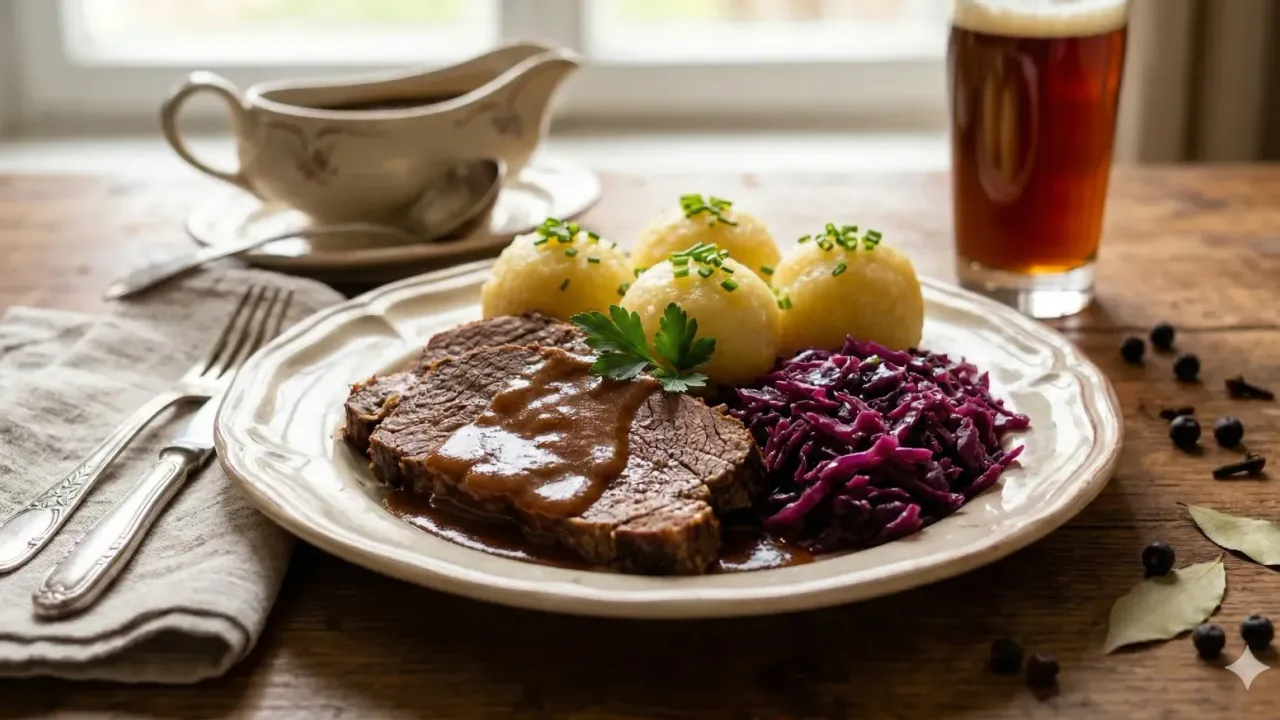
Few dishes in German cuisine demand as much patience — or deliver as much reward — as sauerbraten. This iconic pot roast transforms a tough cut of beef into something remarkably tender through days of marination in a tangy vinegar-and-spice bath, followed by slow braising until the meat practically falls apart. Finished with a silky, sweet-sour gravy thickened with crushed gingersnap cookies, sauerbraten stands as one of Germany’s most celebrated comfort foods. This recipe guides you through every step of the traditional process so you can bring this deeply flavorful classic to your own table.
Prep Time: 30 minutes (plus 3-5 days marinating) | Cook Time: 3 hours | Servings: 6
Difficulty: Medium | Calories: ~520 per serving
What Makes Sauerbraten Special?
Sauerbraten literally translates to “sour roast,” and that name tells you everything about what sets this dish apart. While most braised beef recipes rely on wine or stock for depth, sauerbraten draws its character from an extended soak in vinegar, wine, and a bouquet of warming spices — juniper berries, cloves, bay leaves, and peppercorns. Over several days, the acid slowly breaks down the tough muscle fibers of the beef. At the same time, the spices infuse the meat with a complex, aromatic flavor that no shortcut can replicate. This slow alchemy is what makes sauerbraten fundamentally different from any ordinary pot roast.
Beyond the marination, the gravy is what truly elevates this dish into legendary territory. After braising, the cooking liquid is strained and enriched with crushed gingersnap cookies and a touch of brown sugar. The gingersnaps dissolve into the sauce, adding body, gentle sweetness, and a whisper of warm ginger spice. This creates the signature sweet-sour balance that defines authentic sauerbraten — a gravy so good that Germans argue about whose grandmother made the best version.
Moreover, sauerbraten is a dish that rewards planning over skill. You do not need advanced technique or exotic equipment. Instead, you need patience and good ingredients. The marinating days do the heavy lifting for you. By the time you actually cook the roast, most of the work is already done. As a result, even home cooks with modest experience can produce stunning results that taste like they came from a traditional German Gasthaus.

Choosing the Right Beef Cut
The cut of beef you select shapes the final texture and flavor of your sauerbraten. Since the meat marinates for days and braises for hours, you need a cut that can handle both processes without falling apart into mush or drying out.
- Bottom Round (Best Choice): Lean yet dense, this cut absorbs the marinade deeply while holding its shape during braising. It slices beautifully against the grain and delivers the clean, beefy flavor that traditional sauerbraten demands.
- Rump Roast: Very similar to bottom round with slightly more connective tissue. It becomes exceptionally tender after long braising and produces a richer braising liquid for your gravy.
- Top Round: A leaner option that works well but can dry out if overcooked. Keep a close eye on braising time if you choose this cut, and slice it thin.
- Chuck Roast (Alternative): Higher in fat and marbling than the round cuts. It produces a more luxurious texture and a notably richer gravy, though purists consider it less traditional.
Ingredients for Sauerbraten
For the Marinade:
- 2 cups red wine vinegar
- 1 cup dry red wine
- 2 cups water
- 2 medium onions, roughly chopped
- 2 medium carrots, roughly chopped
- 2 stalks celery, roughly chopped
- 2 bay leaves
- 10 whole black peppercorns
- 6 whole cloves
- 6 juniper berries, lightly crushed
- 1 tablespoon mustard seeds
- 1 teaspoon allspice berries
For the Beef:
- 3 pounds beef bottom round or rump roast
- 2 tablespoons vegetable oil
- 1 tablespoon tomato paste
- Salt and freshly ground black pepper to taste
For the Gingersnap Gravy:
- 2 tablespoons unsalted butter
- 3 tablespoons all-purpose flour
- 1/3 cup crushed gingersnap cookies (about 6 cookies)
- 2 tablespoons dark brown sugar
- Salt and pepper to taste
Pro tip: Use high-quality red wine vinegar rather than distilled white vinegar. The red wine variety adds depth and a rounder acidity. Cheap white vinegar tastes harsh and one-dimensional, which carries directly into the finished gravy.
Step-by-Step Instructions
Step 1: Prepare the Marinade
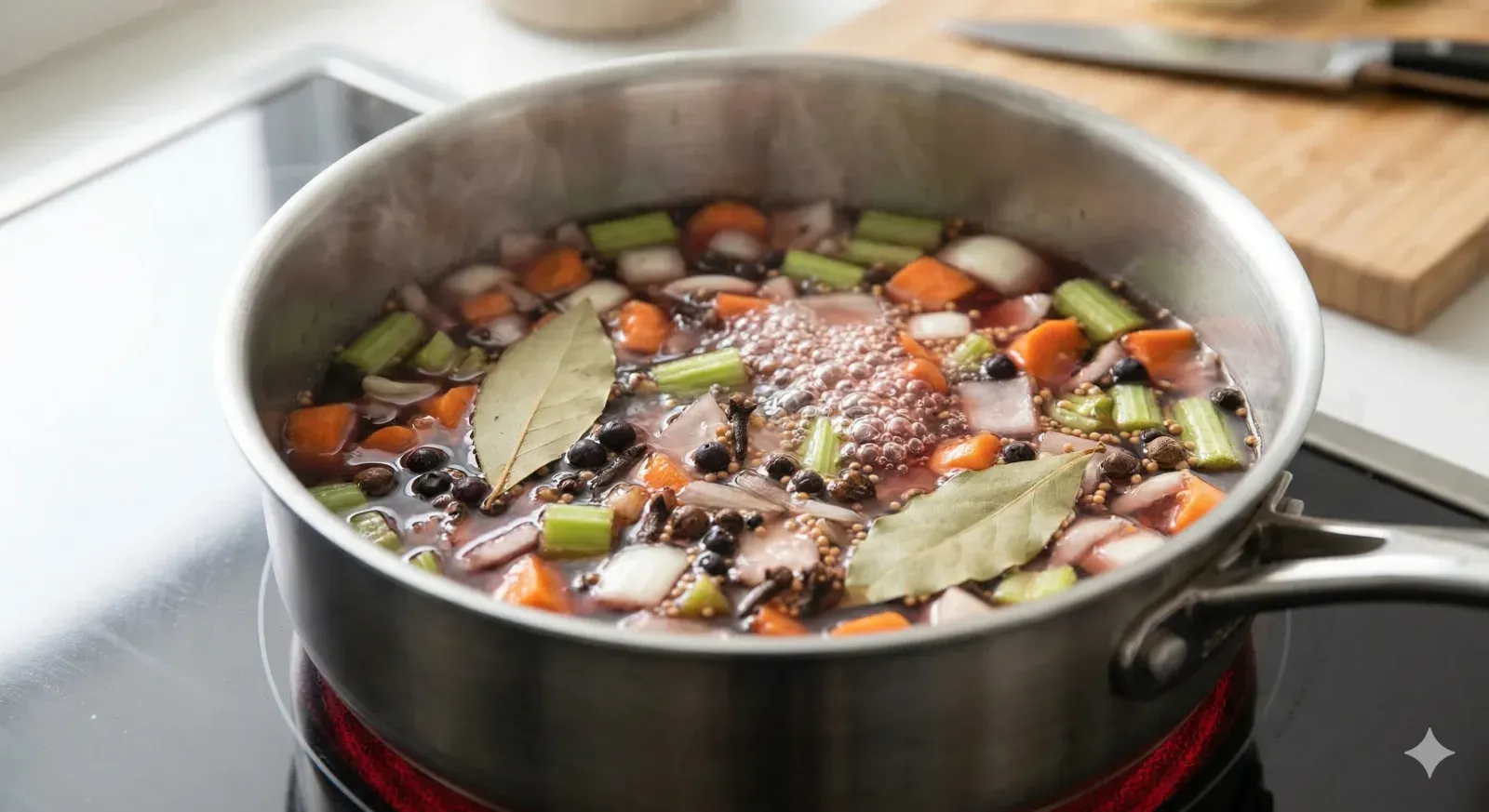
1Begin by combining the red wine vinegar, red wine, and water in a large non-reactive saucepan. Add the chopped onions, carrots, celery, bay leaves, peppercorns, cloves, juniper berries, mustard seeds, and allspice berries. Bring the mixture to a brief simmer over medium heat, then immediately remove it from the burner. This quick bloom releases the essential oils from the whole spices without cooking off the vinegar’s acidity. Allow the marinade to cool completely to room temperature before proceeding. Never pour hot liquid over raw meat, as it begins cooking the surface and creates an unpleasant texture.
Step 2: Marinate the Beef
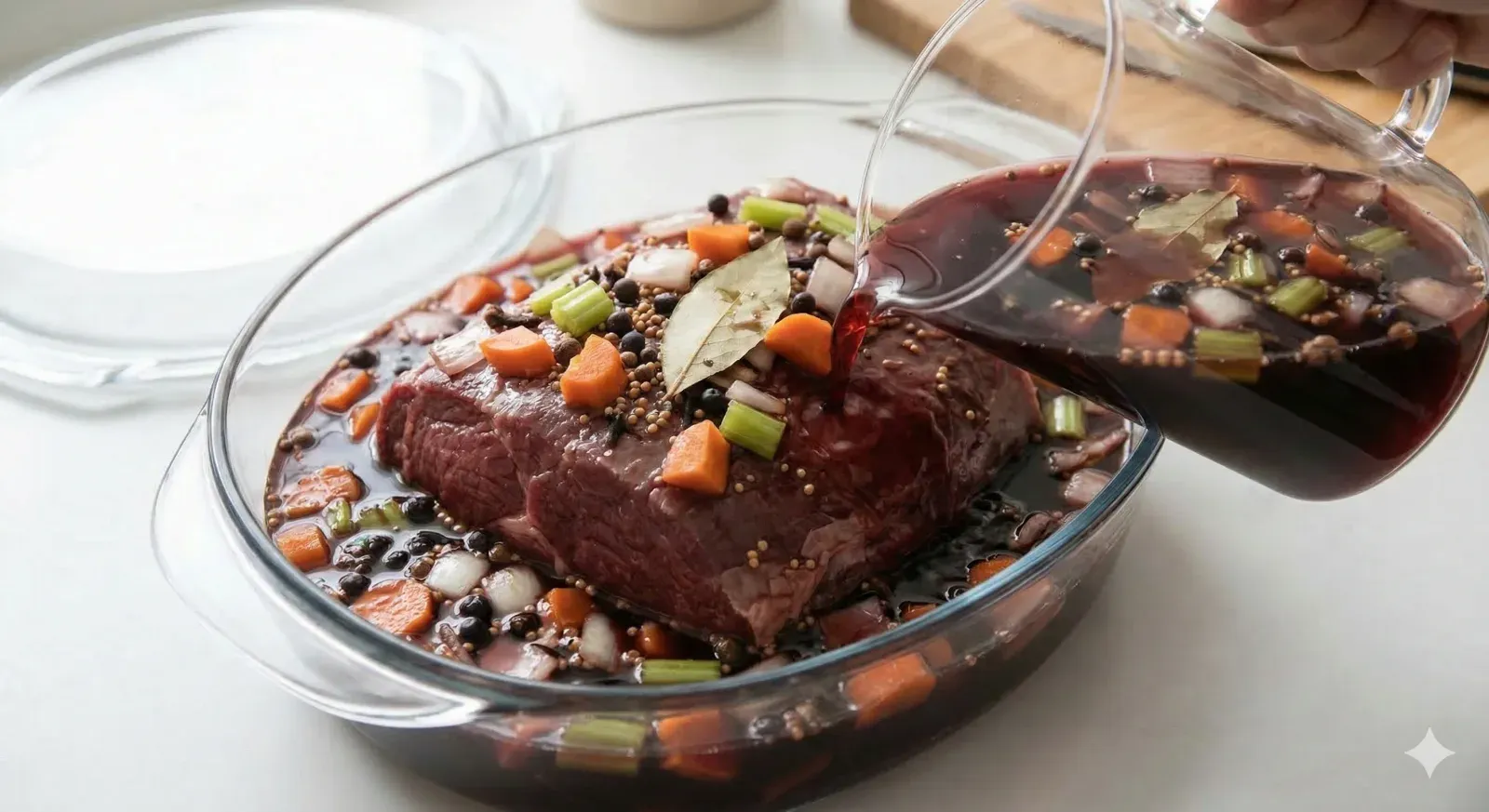
2Place the beef roast in a deep, non-reactive container such as a glass baking dish or a large zip-top bag set inside a bowl. Pour the cooled marinade over the meat, ensuring the liquid covers at least two-thirds of the roast. If it does not, add a splash more vinegar and water in equal parts. Cover tightly and refrigerate for 3 to 5 days, turning the roast once each day so both sides marinate evenly. During this time, the vinegar gently denatures the proteins, tenderizing the meat from the inside out. You will notice the beef darkening in color — this is completely normal and a sign that the marinade is penetrating properly.
Step 3: Sear the Roast
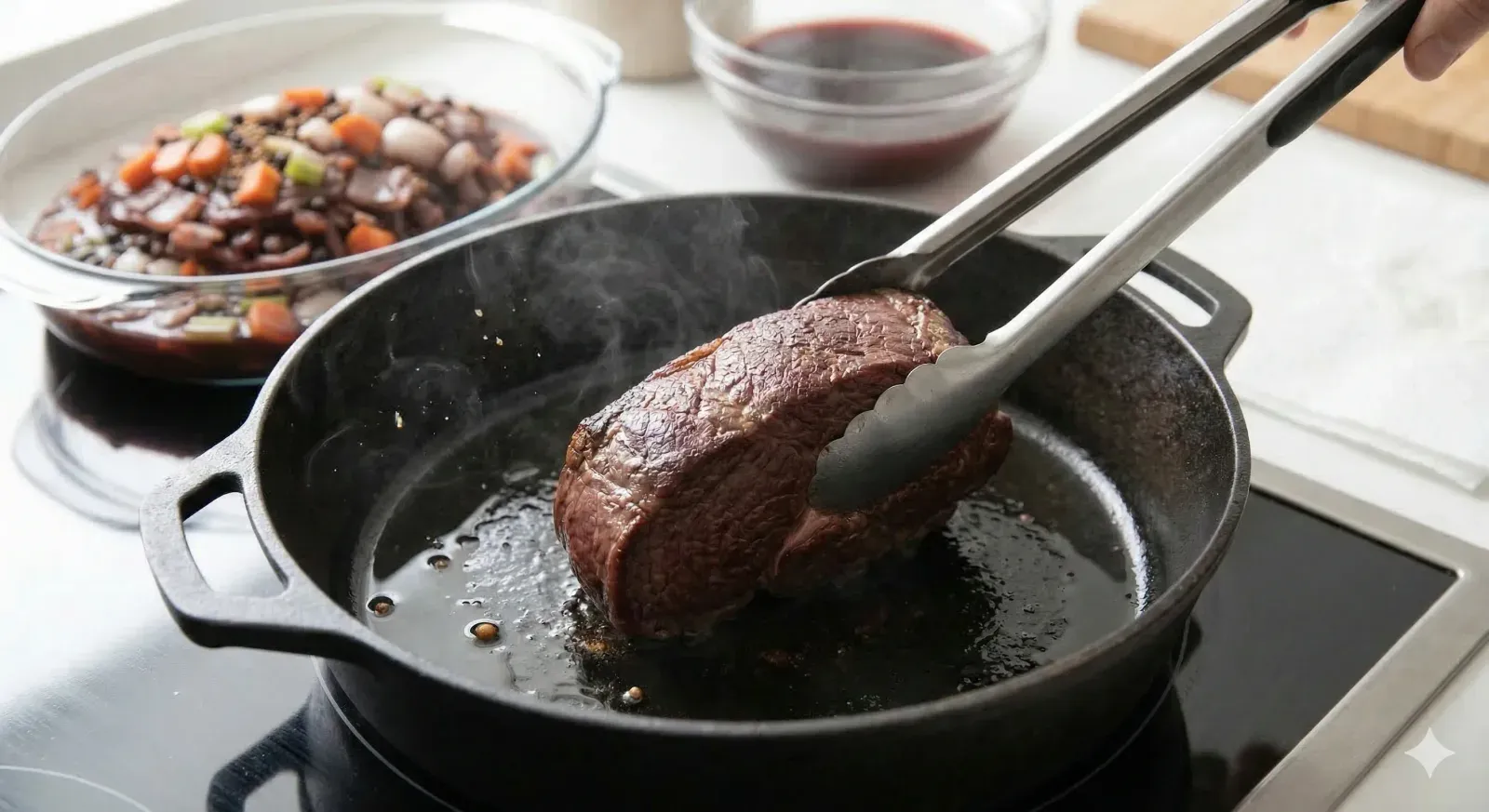
3When the marinating days are complete, remove the beef from the liquid. Pat the roast thoroughly dry on all sides using paper towels. This step is critical because wet meat will steam rather than sear, robbing you of the flavorful brown crust that forms through the Maillard reaction. Strain the marinade through a fine-mesh sieve, reserving both the liquid and the vegetables separately. Season the beef generously with salt and pepper. Heat vegetable oil in a heavy Dutch oven over high heat until it shimmers. Then sear the roast for 3 to 4 minutes on each side, achieving a deep mahogany crust all around. Transfer the beef to a plate and set it aside.
Step 4: Braise the Sauerbraten
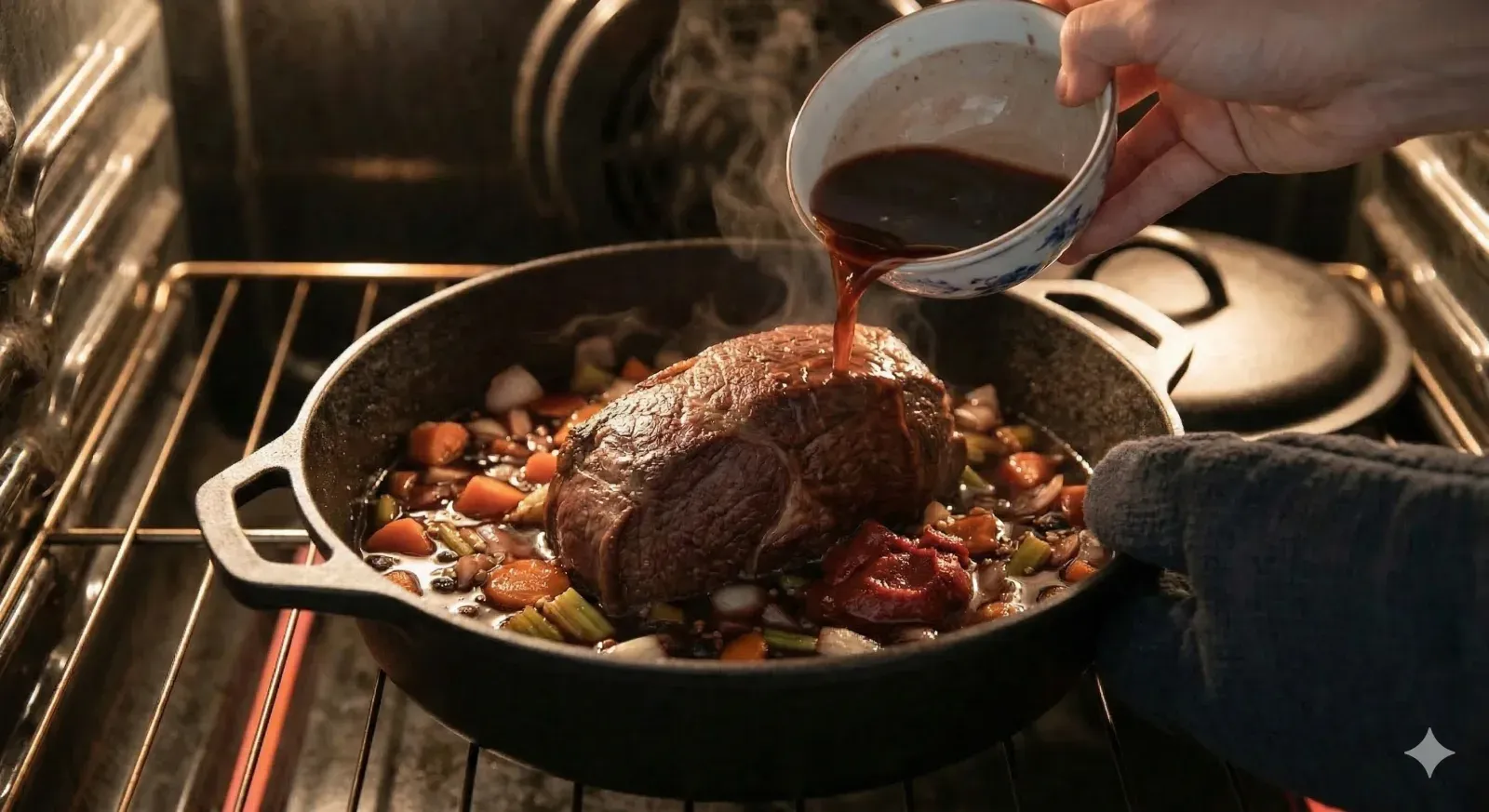
4Preheat your oven to 325 degrees Fahrenheit. In the same Dutch oven used for searing, add the reserved marinade vegetables. Cook them over medium heat for about 5 minutes until they begin to soften and pick up the browned bits from the bottom of the pot. Stir in the tomato paste and cook for another minute — this adds umami richness and color depth. Pour in the reserved marinade liquid and bring everything to a gentle simmer. Return the seared beef to the pot, nestling it among the vegetables. The liquid should come about two-thirds up the side of the roast.
Cover with a tight-fitting lid and transfer to the oven. Braise for 2.5 to 3 hours, or until the meat is fork-tender. Check the pot once after 90 minutes to ensure the liquid level has not dropped too low.
Step 5: Make the Gravy and Serve
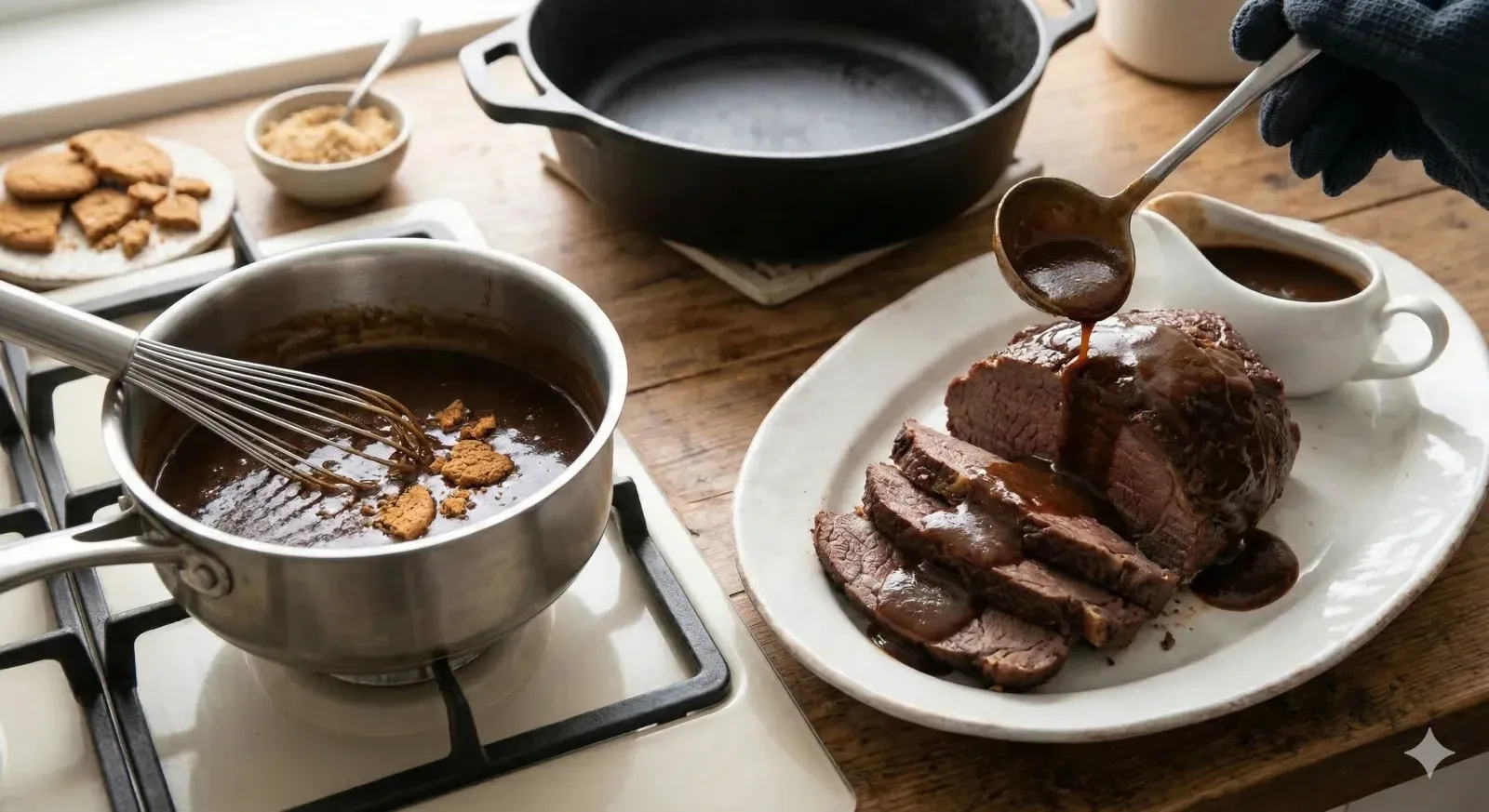
5Carefully remove the tender beef from the Dutch oven and tent it loosely with aluminum foil to keep warm. Strain the entire braising liquid through a fine-mesh sieve into a large measuring cup, pressing on the vegetables to extract every drop of flavor. Discard the solids. In a clean saucepan, melt the butter over medium heat. Whisk in the flour to form a smooth roux and cook for 2 minutes, stirring constantly, until it turns a light golden color. Gradually ladle the strained braising liquid into the roux, whisking continuously to prevent lumps. Add the crushed gingersnap cookies and brown sugar. Simmer the gravy for 8 to 10 minutes, whisking occasionally, until it thickens to a velvety consistency.
Taste and adjust the seasoning with salt, pepper, or a splash of vinegar if needed. Then slice the sauerbraten against the grain into thick slabs. Serve generously draped with the gingersnap gravy.
Expert Tips for Perfect Results
Use a Non-Reactive Container for Marinating
Glass, ceramic, or food-grade plastic containers are essential for the long marination period. Aluminum and certain metals react with the vinegar, producing off-flavors and potentially discoloring the meat. A large zip-top bag works exceptionally well because it eliminates air pockets and keeps the marinade in constant contact with every surface of the beef.
Pat the Meat Bone-Dry Before Searing
After days in a vinegar bath, the beef surface holds a great deal of moisture. If you skip the drying step, the roast will steam in the pan instead of developing a proper sear. Use multiple layers of paper towels and press firmly. A dry surface is the single most important factor for achieving that dark, flavorful crust through the Maillard reaction.
Control Gravy Sweetness Gradually
Start with fewer gingersnaps than the recipe calls for, then taste and add more as needed. The sweetness level varies between gingersnap brands, and the braising liquid’s acidity changes depending on your marination time. Adding the cookies gradually gives you precise control over the sweet-sour balance that makes or breaks sauerbraten gravy.
Regional Sauerbraten Styles Across Germany
Sauerbraten varies dramatically from region to region. Each part of Germany claims its version as the authentic one, and the differences are significant enough to warrant their own comparison.
| Region | Marinade Base | Gravy Thickener | Key Difference |
|---|---|---|---|
| Rhineland (Rheinischer) | Red wine vinegar, red wine | Gingersnap cookies, raisins | Sweetest version with raisins in gravy |
| Franconia (Franken) | Red wine vinegar only | Gingerbread crumbs | Uses Lebkuchen instead of gingersnaps |
| Swabia (Schwaben) | White wine vinegar, white wine | Flour roux, sour cream | Lighter color, tangier finish |
| Bavaria (Bayern) | Red wine vinegar, beer | Dark bread crumbs | Beer replaces wine, heartier flavor |
| Silesia | Vinegar, beer | Gingerbread, honey | Notably sweeter with honey additions |
Serving Suggestions
In Germany, sauerbraten is served as a proper Sunday dinner or holiday centerpiece. The rich, tangy gravy demands starchy sides that can soak up every last drop. Here are the most traditional and satisfying accompaniments.
The Perfect Accompaniments:
- Potato Dumplings (Kartoffelknoedel): Dense, pillowy dumplings that are the classic pairing. Their neutral flavor and soft texture absorb the gingersnap gravy beautifully.
- Spaetzle: These small, irregular egg noodles offer a lighter alternative to dumplings. Toss them in butter before plating, and they catch the gravy in every crevice.
- Braised Red Cabbage (Rotkohl): Sweet, tangy, and deeply purple, red cabbage mirrors the sweet-sour profile of the sauerbraten itself. This pairing is considered essential in most German households.
- Mashed Potatoes: Creamy and buttery, mashed potatoes provide a smooth canvas for the complex gravy. They work particularly well with the Swabian style.
- Bread Dumplings (Semmelknoedel): Made from day-old bread rolls, these Bavarian dumplings add a satisfying chew and subtle yeastiness to the plate.
Beverage Pairings:
- Spatburgunder (German Pinot Noir): A medium-bodied red wine with earthy undertones that complements the tangy gravy without overwhelming it.
- Dunkelweizen (Dark Wheat Beer): A Bavarian dark wheat beer with notes of banana and clove that echo the warm spices in the marinade.
- Riesling Spatlese: A slightly sweet German Riesling that balances the vinegar tang with bright fruit acidity. This pairing is a Rhineland favorite.
- Marzen or Festbier: A malty, amber lager with enough body to stand up to the rich gravy. Ideal for autumn and winter servings.
Storage and Reheating
Refrigerator: Store sliced sauerbraten submerged in its gravy in an airtight container for up to 5 days. The flavor actually improves after a day or two in the fridge, as the meat continues to absorb the spiced gravy. Many German cooks intentionally make sauerbraten a day ahead for this reason.
Freezer: Sauerbraten freezes exceptionally well for up to 3 months. Package the sliced meat and gravy together in freezer-safe containers, leaving a half-inch of headspace for expansion. Thaw overnight in the refrigerator before reheating.
Reheating: Gently warm the sauerbraten slices in the gravy over low heat on the stovetop. Avoid boiling, as high heat toughens the protein fibers and can break the gravy’s emulsion. Add a splash of beef broth if the gravy has thickened too much during storage. The microwave works in a pinch — cover the dish and use medium power in 2-minute intervals to prevent uneven heating.
Common Mistakes to Avoid
1. Rushing the Marination
A 24-hour marinade simply cannot replicate what 3 to 5 days achieves. The vinegar needs time to penetrate deep into the muscle fibers, not just coat the surface. Shortcutting this process leaves you with tangy edges and bland, tough centers. Plan your sauerbraten well in advance, and your patience will be handsomely rewarded.
2. Using Distilled White Vinegar
Distilled white vinegar tastes sharp and one-dimensional. Red wine vinegar, on the other hand, brings fruity depth and a rounder acidity that complements the spices. Similarly, apple cider vinegar introduces a gentle sweetness. Either of these options produces a far superior marinade compared to the distilled variety.
3. Skipping the Sear
Some cooks drop the marinated roast directly into the braising liquid without searing. This omission costs you an enormous amount of flavor. The Maillard reaction creates hundreds of new flavor compounds on the surface of the meat, and those compounds dissolve into the braising liquid to enrich the gravy. Never skip this step.
4. Making the Gravy Too Sweet
Over-sweetening the gravy is the most common pitfall for first-time sauerbraten makers. Add gingersnaps and brown sugar in stages, tasting as you go. The gravy should lean toward tangy with just enough sweetness to round out the edges. If you overshoot, a tablespoon of vinegar can pull it back toward balance.
Frequently Asked Questions
How long should you marinate sauerbraten?
Traditional sauerbraten requires a marinade of 3 to 5 days in the refrigerator for the best flavor and tenderness. Some recipes call for up to 7 days, though most home cooks find the sweet spot around day 4. Turn the roast once daily to ensure even penetration of the vinegar and spice mixture. A minimum of 3 days is essential to achieve the signature tangy flavor that defines this dish.
What cut of beef is best for sauerbraten?
Bottom round and rump roast are the most traditional and best choices for sauerbraten. These lean, tough cuts become incredibly tender after the long marination and slow braising process. Chuck roast also works well due to its higher fat content, which produces a richer gravy. Avoid tender cuts like tenderloin or ribeye — they lack the dense structure that benefits from the extended acid marinade.
Why do you put gingersnaps in sauerbraten gravy?
Crushed gingersnap cookies serve as a traditional thickener for sauerbraten gravy while simultaneously adding subtle sweetness and warm spice flavor. The gingersnaps balance the sharp vinegar tang of the braising liquid and create the signature silky, dark gravy. This technique dates back centuries in Rhineland cooking, where Lebkuchen or gingerbread crumbs served the same purpose before packaged gingersnaps became widely available.
Can you make sauerbraten without wine?
Yes, you can make sauerbraten without wine by replacing it with an equal amount of beef broth or additional water mixed with a tablespoon of red wine vinegar. Several traditional recipes from certain German regions use only vinegar and water in the marinade. Bavarian versions often substitute dark beer for wine, which adds a malty depth. The result is slightly less complex but still authentically delicious.
What is the difference between sauerbraten and regular pot roast?
The key difference is the multi-day vinegar marinade that gives sauerbraten its distinctive tangy, sour flavor. A regular pot roast is seasoned and braised immediately without marination. Additionally, sauerbraten features a unique sweet-sour gravy thickened with gingersnap cookies, which no standard pot roast recipe includes. The flavor profile is entirely different — tangy, spiced, and complex versus the simpler savory notes of a typical American pot roast.
What side dishes go with sauerbraten?
Traditional German side dishes for sauerbraten include potato dumplings (Kartoffelknoedel), spaetzle, braised red cabbage (Rotkohl), mashed potatoes, and egg noodles. The starchy sides are essential for soaking up the rich gingersnap gravy. Braised red cabbage adds a complementary sweet-sour note that mirrors the flavor of the meat itself. For a complete German dinner, serve at least one starchy side and the red cabbage together.
Variations and Adaptations
Rhineland-Style with Raisins:
The Rhineland version, known as Rheinischer Sauerbraten, adds a handful of golden raisins to the gravy during the final simmering stage. The raisins plump up and burst with sweetness that contrasts beautifully against the vinegar tang. This variation is arguably the most famous and widely served style in German restaurants worldwide.
Slow Cooker Sauerbraten:
After completing the marination and searing steps on the stovetop, transfer everything to a slow cooker. Cook on low for 8 to 10 hours or on high for 5 to 6 hours. The slow cooker produces incredibly tender meat, though you will need to finish the gravy on the stovetop for proper thickening. This method works perfectly for busy weekdays.
Venison Sauerbraten:
In rural Germany, especially in forested regions, venison replaces beef for a gamier, more robust sauerbraten. Use a venison shoulder or leg roast and extend the marination to 5 to 7 days to tame the stronger flavor. Add extra juniper berries to the marinade — they pair naturally with game meat and enhance the woodsy character of the dish.
Horse Meat Sauerbraten (Traditional):
Historically, the original Rhineland sauerbraten was made with horse meat, not beef. While this remains a contentious topic outside of Germany, some traditional restaurants in the Rhineland still serve this version. The horse meat is leaner than beef, with a slightly sweeter flavor that many argue makes the best sauerbraten of all. Beef has become the universal substitute in modern recipes.
The Cultural Significance
Sauerbraten occupies a singular place in German culinary heritage. It is not just a recipe — it is a tradition passed down through generations, with each family guarding its own version as a matter of pride. In the Rhineland, arguments over whether raisins belong in the gravy can become surprisingly heated at family gatherings. Bavarians insist that beer-based marinades produce the superior result. Swabians counter that only their white wine version captures true elegance. These debates underscore how deeply this dish is woven into regional identity.
Historically, sauerbraten emerged as a practical solution to a real problem. Before refrigeration, vinegar marinades preserved meat for extended periods. German housewives discovered that the preservation process also tenderized tough, affordable cuts and infused them with remarkable flavor. What began as a necessity evolved into a delicacy. By the 18th century, sauerbraten had earned its place on festive tables alongside roast goose and Weihnachtsstollen.
Today, sauerbraten appears on menus at traditional Gasthaeuser across Germany, especially during Oktoberfest, Christmas markets, and Sunday family dinners. It represents a style of cooking that values time and patience over convenience — a philosophy that feels increasingly precious in our fast-paced world. When you prepare sauerbraten at home, you are connecting with centuries of German kitchen wisdom and honoring a tradition that has survived wars, migrations, and the rise of modern convenience food.
Conclusion
Making authentic sauerbraten at home is a deeply satisfying project that rewards your patience with extraordinary flavor. The process is simple in principle: marinate, sear, braise, and build the gravy. Each step builds upon the last, and the vinegar marinade does most of the heavy lifting while you go about your week. Once you taste that first forkful of tender, tangy beef draped in silky gingersnap gravy, you will understand why this dish has endured for centuries. Master the marinade timing, choose the right cut of beef, and respect the sweet-sour balance in the gravy — these three elements are all you need to produce a sauerbraten worthy of any German Gasthaus.
Ready to explore more European classics? Browse our full collection of European dishes for more tested recipes from across the continent.