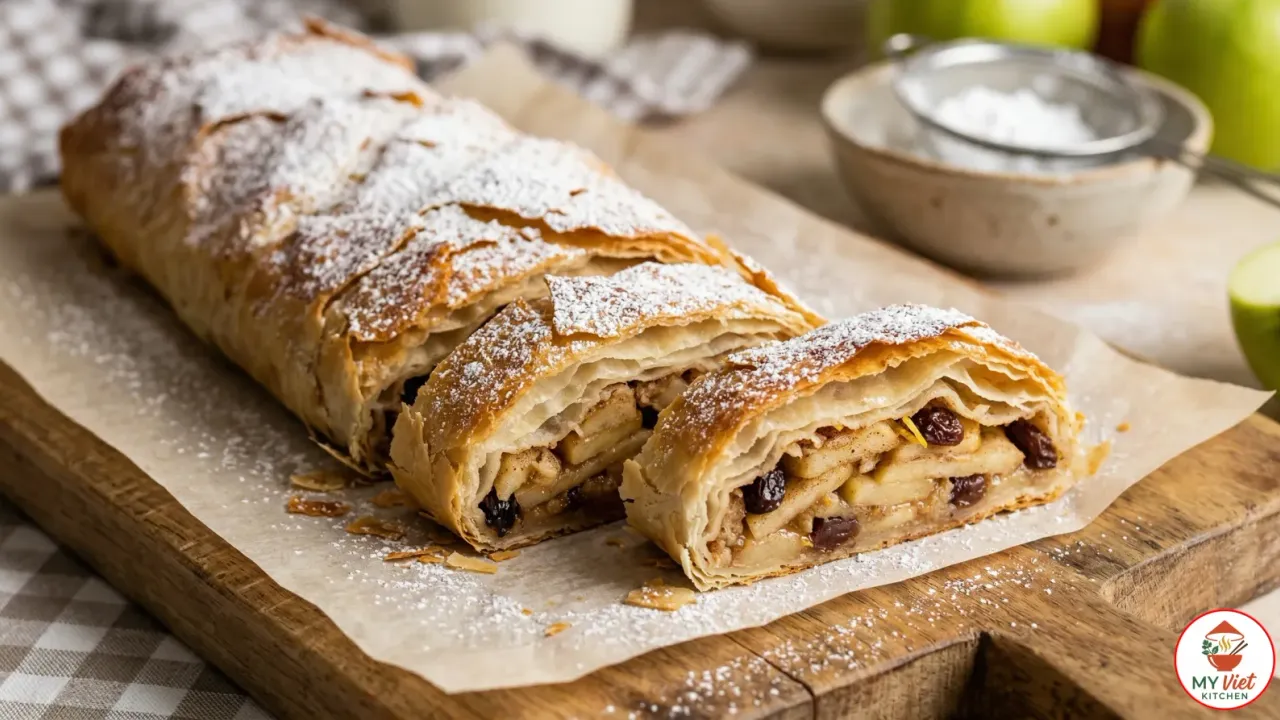
Few pastries in the world can match the elegant simplicity of strudel. This beloved Austrian dessert wraps a fragrant apple filling inside paper-thin dough that bakes to a shattering, golden crispness. Known as Apfelstrudel in its homeland, this classic has graced Viennese coffeehouse tables for centuries. Whether you are a seasoned baker or trying your hand at pastry for the first time, this recipe walks you through every detail. From stretching the dough to achieving the perfect flaky crust, you will master authentic Austrian apple strudel in your own kitchen.
Prep Time: 60 minutes | Cook Time: 40 minutes | Servings: 8
Difficulty: Medium | Calories: ~320 per serving
What Makes Strudel Special?
Austrian strudel stands apart from every other pastry because of its dough. Unlike pie crust or puff pastry, strudel dough contains no butter at all. Instead, bakers knead a lean mixture of flour, water, egg, and a touch of oil into a silky, elastic mass. After resting, this dough can be stretched by hand until it becomes translucent — thin enough to read a newspaper through, as the old Viennese saying goes. That extraordinary thinness creates the signature crackle and shatter when you bite through the baked crust. No other pastry technique produces quite the same sensation.
The filling is equally thoughtful in its balance. Tart apples mingle with cinnamon, lemon zest, and a scattering of rum-soaked golden raisins. However, the real genius lies in the toasted breadcrumbs. Spread across the stretched dough before the filling goes on, these buttery crumbs act as a moisture barrier. They absorb the juices released by the apples during baking, keeping the bottom layers of dough crisp rather than soggy. This small but crucial step separates an authentic Viennese strudel from a mediocre imitation.
Furthermore, strudel carries deep cultural meaning in Austria. It is not merely a dessert but a symbol of craftsmanship and tradition. Viennese grandmothers judge skill by the thinness of the dough. Baking schools still test students on their ability to stretch strudel dough without tearing it. When you pull that dough thin in your own kitchen, you join a lineage of bakers stretching back to the 17th century. That connection to history makes every bite taste a little richer.
Choosing the Right Apples
The apple variety you choose directly affects the texture and flavor of your finished strudel. You want apples that hold their shape during baking while delivering bright acidity to balance the sugar and cinnamon. Here are the best options for Apfelstrudel.
- Granny Smith (Best Choice): Firm, tart, and widely available. These apples maintain their structure in the oven and provide the ideal sour-sweet contrast. Most Austrian bakers rely on a similar tart variety.
- Braeburn: Slightly sweeter than Granny Smith with a complex spiced flavor. Braeburns hold up well to heat and add depth without extra sugar. They work beautifully on their own or mixed with a tart variety.
- Honeycrisp: Crisp and juicy with a balanced sweet-tart profile. They release more juice than other varieties, so pair them with extra breadcrumbs to absorb the moisture.
- Golden Delicious: Mild and tender, these work as a supporting player when mixed with tart apples. On their own, they lack the acidity that great strudel demands.
Ingredients for Strudel
For the Strudel Dough:
- 2 cups (250g) all-purpose flour
- 1 large egg, room temperature
- 2 tablespoons vegetable oil
- 1/2 cup (120ml) warm water
- 1/4 teaspoon salt
- 1 teaspoon white vinegar
For the Apple Filling:
- 6 large Granny Smith apples (about 2.5 pounds)
- 1/2 cup (100g) granulated sugar
- 1 teaspoon ground cinnamon
- 1/4 teaspoon ground nutmeg
- Zest of 1 lemon
- 2 tablespoons fresh lemon juice
- 1/2 cup (50g) golden raisins
- 2 tablespoons dark rum (optional)
For Assembly:
- 3/4 cup (90g) fine dry breadcrumbs
- 6 tablespoons (85g) unsalted butter, divided
- 1/4 cup (30g) walnuts, finely chopped (optional)
- Powdered sugar for dusting
Pro tip: Add a teaspoon of white vinegar to the dough. The acid relaxes the gluten strands, making the dough far easier to stretch thin without tearing. Austrian bakers have used this trick for generations, and it makes a noticeable difference for home cooks working without professional experience.
Step-by-Step Instructions
Step 1: Make the Strudel Dough
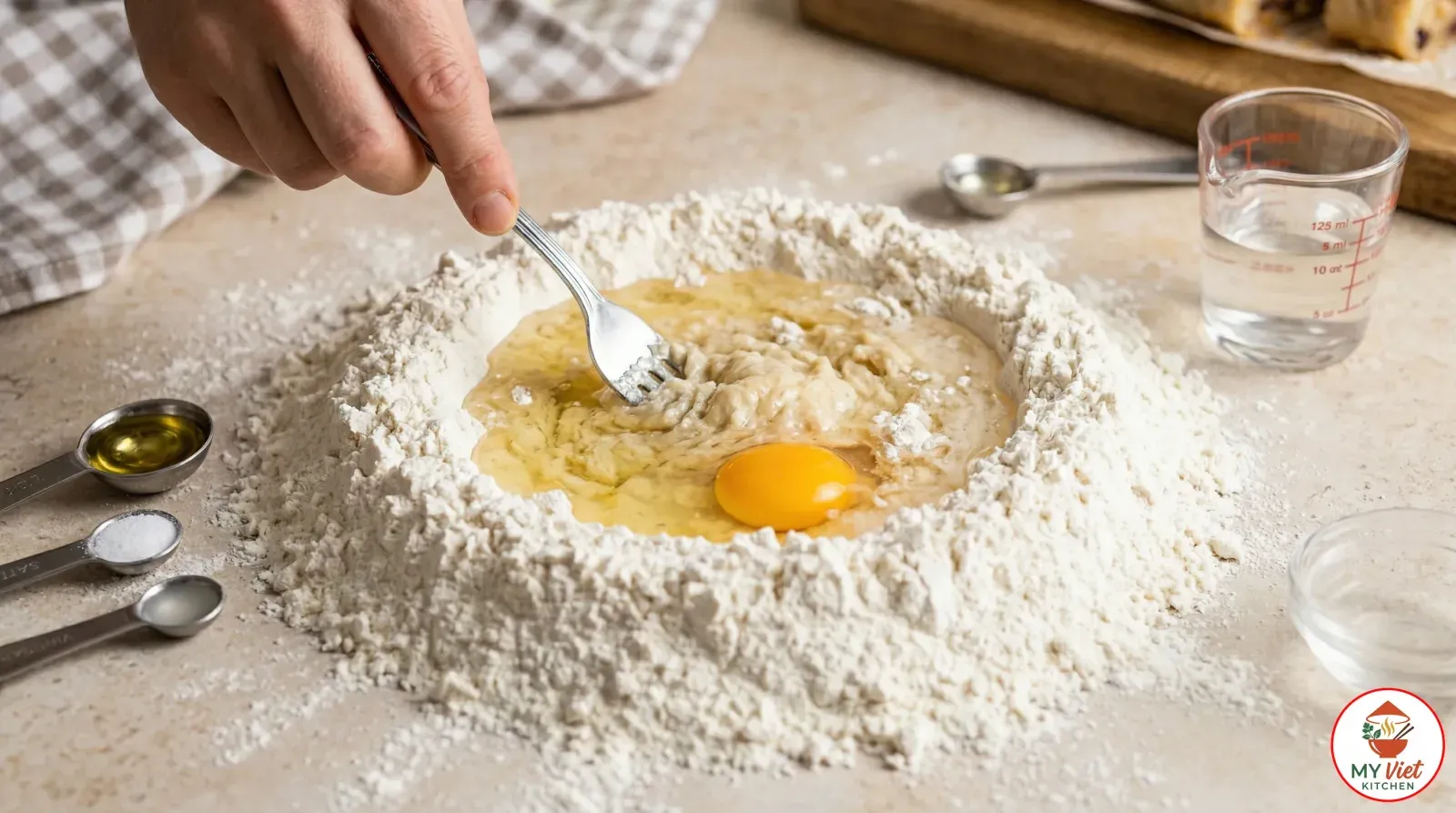
1Mound the flour on a clean work surface and form a deep well in the center. Crack the egg into the well, then add the oil, warm water, salt, and vinegar. Using a fork, gradually draw the flour into the liquid, stirring from the inside outward. Once a shaggy dough forms, begin kneading with your hands. Work the dough vigorously for a full 10 minutes. You are developing strong gluten networks that allow the dough to stretch without breaking. The finished dough should feel smooth, elastic, and slightly tacky — like a baby’s skin, as Viennese bakers describe it.
Shape the dough into a smooth ball and brush its surface lightly with oil. Cover it with a warmed bowl turned upside down and let it rest for at least 30 minutes. During this time, the gluten relaxes completely. Resting is not optional — skipping it guarantees tearing when you stretch the dough later.
Step 2: Prepare the Apple Filling
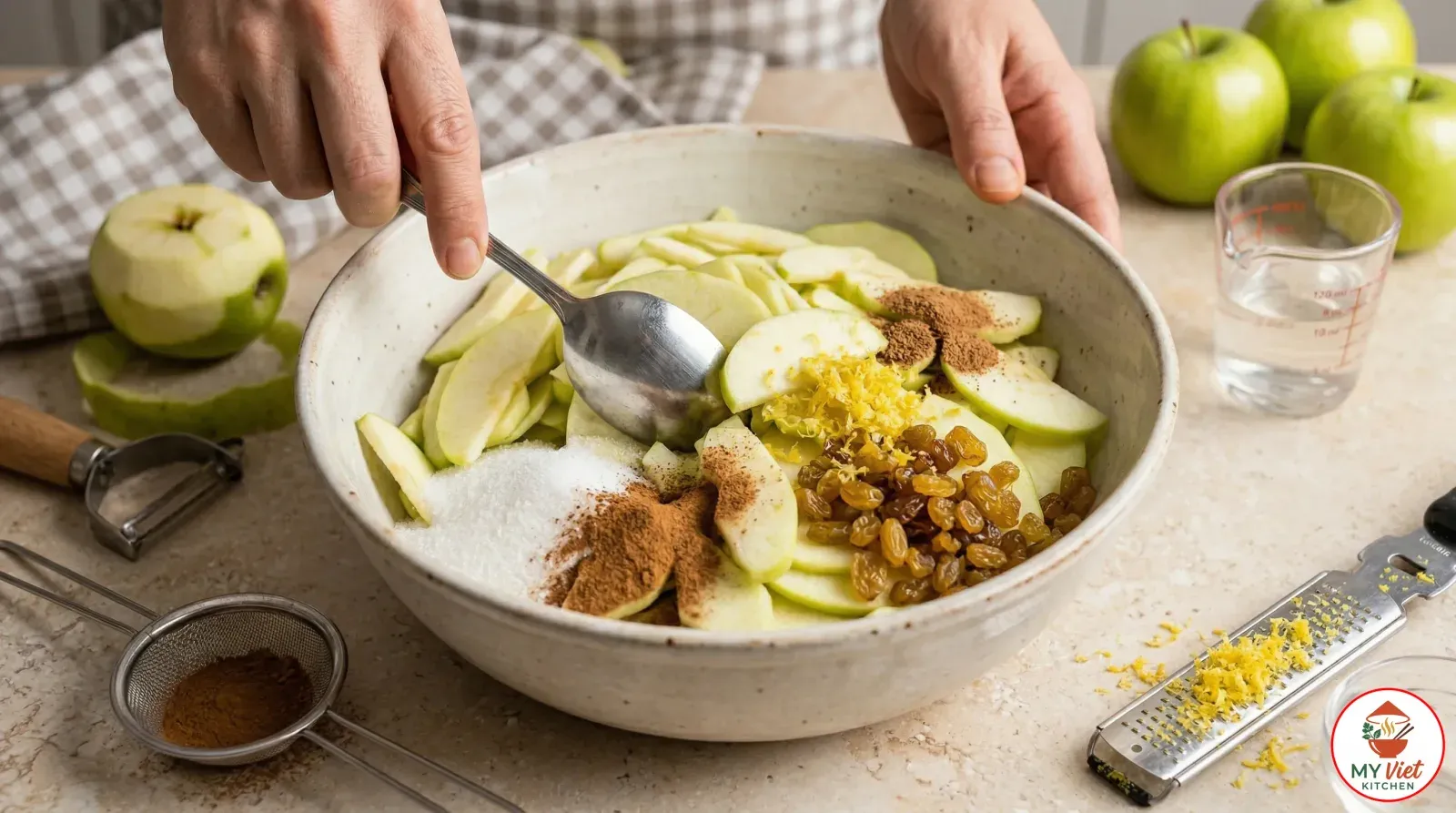
2While the dough rests, peel, core, and thinly slice the apples. Thin slices are essential because thick chunks create air pockets inside the strudel and take longer to cook through. Toss the sliced apples in a large bowl with the sugar, cinnamon, nutmeg, lemon zest, and lemon juice. The lemon juice serves two purposes: it prevents browning and adds a bright acidity that lifts the entire filling.
If you are using raisins, soak them in the dark rum for 15 minutes beforehand. The rum plumps the raisins and infuses them with a warm, boozy sweetness that blooms during baking. Drain any excess rum, then fold the raisins gently into the apple mixture. Set the filling aside while you toast the breadcrumbs.
Step 3: Toast the Breadcrumbs
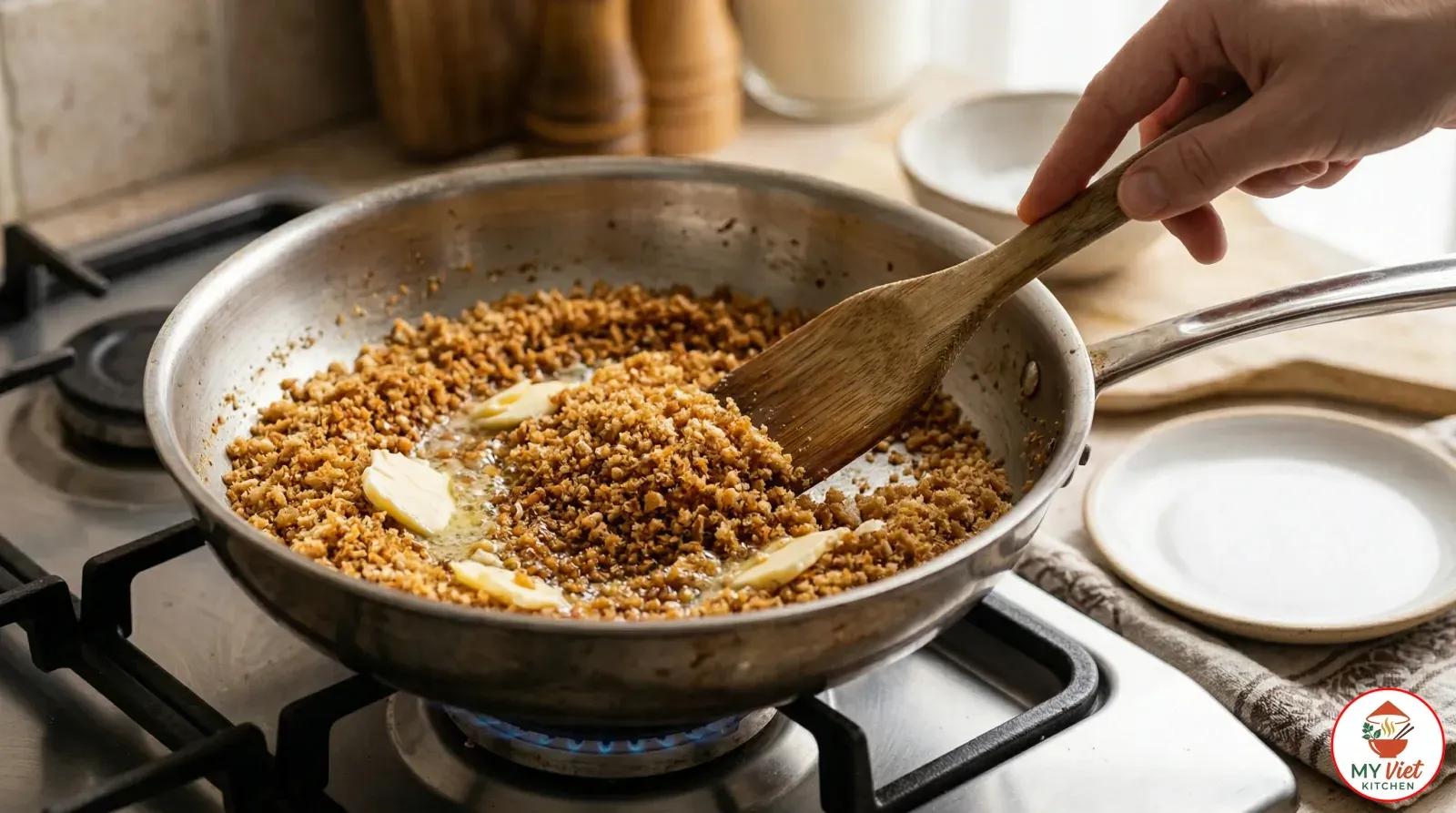
3Melt 3 tablespoons of butter in a skillet over medium heat. Add the breadcrumbs and stir constantly for 3 to 4 minutes until they turn golden brown and smell nutty. Watch them closely because they can burn in seconds once they start to color. Transfer the toasted crumbs to a plate immediately and let them cool. These golden crumbs are the secret weapon of authentic strudel. They form a moisture-absorbing layer between the dough and the juicy filling, ensuring your bottom crust stays crisp and flaky rather than turning soggy.
Step 4: Stretch the Dough
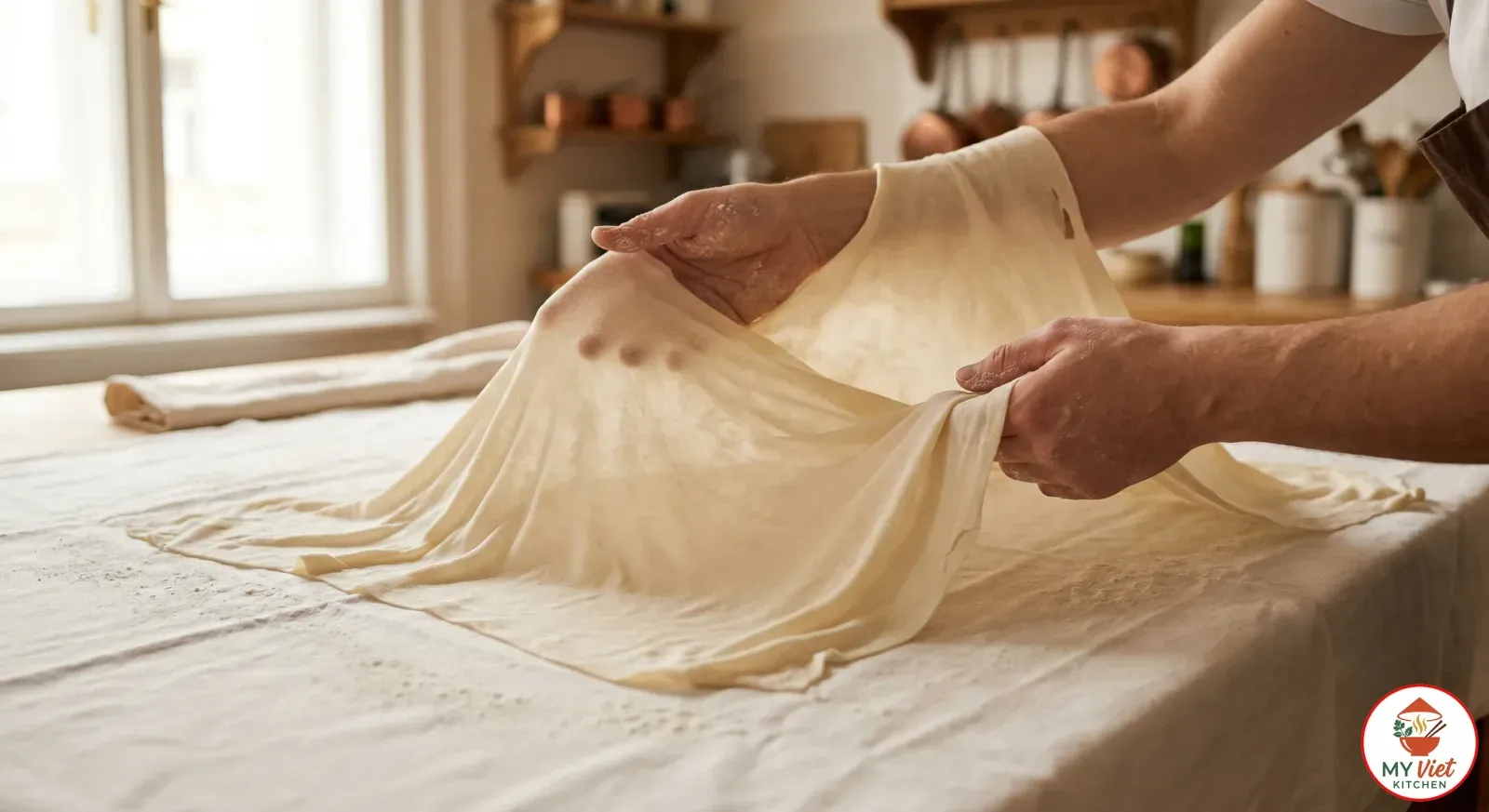
4This is the defining moment of strudel making. Lay a large, clean cotton tablecloth or bedsheet on your kitchen table and dust it lightly with flour. Place the rested dough in the center and roll it out with a rolling pin into a rough rectangle, about 12 by 16 inches. Now set the rolling pin aside — from this point forward, you use only your hands.
Slide both hands under the dough, palms facing down, and use the backs of your hands to gently lift and stretch it from the center outward. Work your way around the dough, pulling it gradually thinner with each pass. Move slowly and let gravity help. The dough should eventually cover most of your table and become nearly translucent. Small tears are fine — the rolling process will hide them. However, large holes mean the dough needed more kneading or resting time. Trim any thick edges with scissors to maintain even thickness across the sheet.
Step 5: Fill and Roll the Strudel
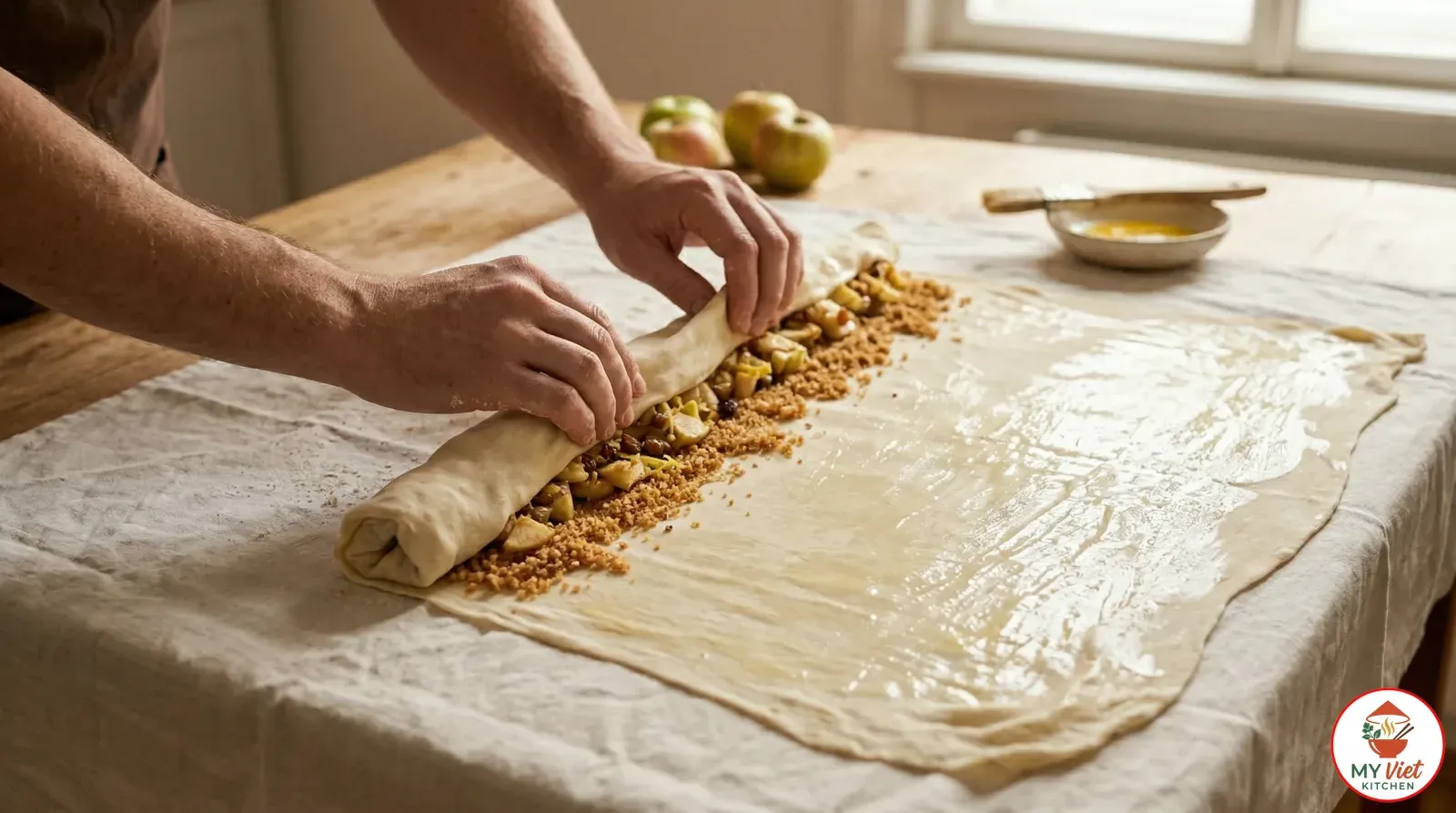
5Preheat your oven to 375 degrees Fahrenheit (190 degrees Celsius). Melt the remaining 3 tablespoons of butter and brush it generously over the entire surface of the stretched dough. The butter adds richness and helps the layers crisp during baking. Next, sprinkle the toasted breadcrumbs evenly across the dough, leaving a 2-inch border on all sides. If you are adding walnuts, scatter them over the breadcrumbs now.
Arrange the apple filling in a line along one of the shorter edges, about 3 inches from the border. Fold the border over the filling first, then fold in the two side edges to seal the ends. Using the cloth underneath as a guide, lift the edge and let gravity roll the strudel forward into a tight log. Do not roll too tightly or the filling will burst through during baking. Gently transfer the strudel, seam-side down, onto a parchment-lined baking sheet. Curve it into a slight crescent shape if it is too long for the pan. Brush the top and sides with the remaining melted butter.
Step 6: Bake and Serve
6Place the strudel on the lower-middle rack of your preheated oven. Bake for 35 to 40 minutes, brushing the surface with butter once more at the halfway mark. The strudel is done when the crust turns a deep, even golden brown and the filling bubbles gently at the ends. Resist the temptation to pull it early — the last few minutes of baking are what create the signature shattering texture.
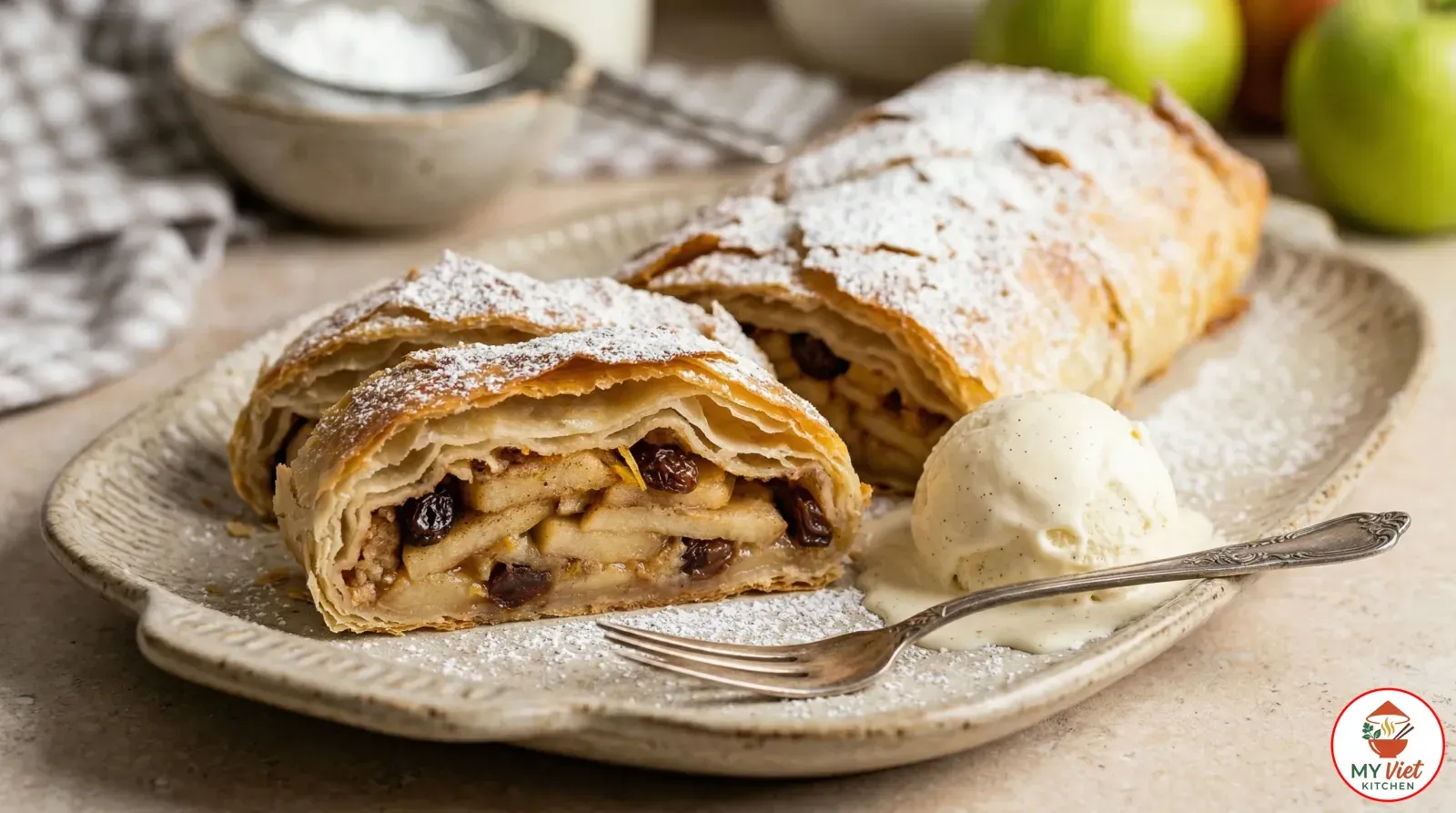
Let the strudel cool on the baking sheet for 10 minutes. Then dust it generously with powdered sugar through a fine sieve. Use a serrated knife to slice it on a slight diagonal into thick portions. Serve warm, either on its own or with a dollop of whipped cream or a scoop of vanilla ice cream on the side.
Expert Tips for Perfect Results
Warm the Dough’s Environment
Strudel dough stretches best at warm room temperature. If your kitchen is cold, the gluten tightens and resists stretching. Before you begin pulling the dough, warm the bowl you use to cover it by rinsing it with hot water. Some bakers even place the dough ball near a warm oven for a few minutes. A warm, relaxed dough stretches like silk. A cold one fights you at every turn.
Use Bread Flour for Extra Elasticity
While all-purpose flour works well, bread flour contains more protein and develops stronger gluten. This extra strength makes the dough easier to stretch thin without tearing. If you struggle with ripping during the stretching step, switching to bread flour can solve the problem entirely. The higher gluten content gives you a more forgiving, resilient dough.
Do Not Over-Sweeten the Filling
Authentic Apfelstrudel relies on the natural tartness of the apples to balance the sugar and cinnamon. Taste your apple mixture before filling the dough. If your apples are particularly sweet, reduce the sugar by a few tablespoons. The finished strudel should taste bright and fruity with gentle sweetness — not like apple pie candy.
Strudel Styles Across Central Europe
Strudel is not exclusive to Austria. Neighboring countries have developed their own beloved versions, each with distinct fillings and traditions. Here is how the major regional styles compare.
| Region | Name | Filling | Key Difference |
|---|---|---|---|
| Austria (Vienna) | Apfelstrudel | Apples, raisins, cinnamon, breadcrumbs | Paper-thin hand-pulled dough, powdered sugar finish |
| Austria (Vienna) | Topfenstrudel | Sweet quark cheese, raisins, vanilla | Creamy filling, served warm with custard sauce |
| Hungary | Retes | Sour cherry, poppy seed, or walnut | Thinner dough, more filling varieties |
| Czech Republic | Zavin | Apples, plums, or cream cheese | Often uses yeast-leavened dough |
| Germany (Bavaria) | Apfelstrudel | Apples, pine nuts, rum raisins | Sometimes made with puff pastry shortcut |
| Slovenia | Zavitek | Cottage cheese, tarragon, walnuts | Savory versions are equally popular |
Serving Suggestions
In Vienna, strudel arrives at the table warm from the oven, generously dusted with powdered sugar. It is a centerpiece of the Kaffeehaus tradition — the Viennese coffeehouse culture that has earned UNESCO recognition. Here are the most authentic ways to serve and enjoy your homemade strudel.
The Perfect Accompaniments:
- Vanilla Sauce (Vanillesauce): A warm, pourable custard that pools around each slice. This is the most traditional Viennese pairing and adds a creamy contrast to the flaky crust.
- Whipped Cream (Schlagobers): A generous cloud of unsweetened whipped cream melting slowly over the warm strudel. Many Viennese cafes offer this as the default accompaniment.
- Vanilla Ice Cream: The cold, creamy ice cream against the hot, crispy strudel creates a delightful temperature contrast. This modern pairing is popular in restaurants across Austria.
- Powdered Sugar: At its simplest, a thick blanket of powdered sugar is all you need. The sugar adds sweetness while highlighting the dough’s delicate texture.
Beverage Pairings:
- Wiener Melange: Vienna’s signature coffee drink, similar to a cappuccino. Its foamy milk softens the sweetness of the strudel and makes for a classic Kaffeehaus experience.
- Austrian Gruner Veltliner: A crisp white wine with peppery notes and stone fruit flavors. Its acidity cuts through the buttery richness of the pastry.
- Zwetschgenbrand (Plum Brandy): A small glass of Austrian fruit brandy after the meal provides a warming digestif that echoes the fruit flavors of the strudel.
- Darjeeling Tea: A lighter option with floral, muscatel notes that complement the cinnamon and apple without competing for attention.
Storage and Reheating
Refrigerator: Wrap leftover strudel tightly in aluminum foil and refrigerate for up to 3 days. The crust will soften in the fridge, but reheating restores much of its crispness. Store it in a single layer to prevent the delicate pastry from getting crushed.
Freezer: You can freeze baked strudel for up to 2 months. Wrap individual slices in plastic wrap and then foil. Alternatively, freeze the assembled but unbaked strudel for even better results. Bake it directly from frozen, adding 10 to 15 extra minutes to the cooking time.
Reheating: Place refrigerated strudel on a baking sheet and warm it in a 350 degree Fahrenheit oven for 10 to 12 minutes. The oven revives the flaky texture far better than a microwave, which turns the dough rubbery. For best results, brush a thin coat of melted butter on top before reheating to refresh the golden crust.
Common Mistakes to Avoid
1. Not Kneading Long Enough
Strudel dough requires vigorous kneading for at least 10 minutes. Under-kneaded dough lacks the strong gluten network needed for stretching. If the dough tears easily when you begin pulling it, insufficient kneading is almost always the cause. Invest the full 10 minutes, and your dough will reward you with silk-like elasticity.
2. Skipping the Breadcrumb Layer
Without toasted breadcrumbs, the apple juices soak directly into the dough during baking. The result is a soggy, limp bottom layer that sticks to the pan and lacks crunch. Those golden breadcrumbs are not decorative — they serve a critical structural function. Toast them properly in butter and spread them evenly across the dough before adding the filling.
3. Rolling Instead of Stretching
A rolling pin can only get the dough so thin before it springs back. Hand-stretching, by contrast, uses gentle gravity and outward pressure to achieve true paper thinness. After an initial roll-out, always switch to your hands. Place them palms-down underneath the dough and use the backs to pull outward slowly. This technique creates the signature translucent layers.
4. Pulling the Strudel Out Too Early
An under-baked strudel looks golden on top but remains pale and soft underneath. The filling also needs the full baking time to cook properly and release its juices into the breadcrumbs. Wait for a deep, even golden-brown color all over. Trust the oven, and resist peeking during the last 10 minutes.
Frequently Asked Questions
What is the difference between strudel and puff pastry?
Strudel dough is a lean, elastic dough made from flour, water, egg, and oil. Bakers stretch it by hand until it becomes paper-thin and nearly transparent. Puff pastry, on the other hand, relies on many layers of butter folded between dough. Steam from the butter creates the flaky rise during baking. The two pastries look different, taste different, and require entirely different techniques. Strudel shatters with a delicate crispness, while puff pastry flakes in buttery layers.
Can you make strudel with phyllo dough instead?
Yes, phyllo dough is a widely accepted shortcut for apple strudel. Layer 6 to 8 sheets of phyllo, brushing melted butter generously between each layer. Then fill and roll as you would with homemade dough. The result is slightly crispier and less supple than traditional hand-pulled strudel, but it saves considerable time. Many Austrian home cooks use phyllo on busy weeknights and reserve hand-pulled dough for special occasions.
Why does my strudel dough tear when stretching?
Tearing typically happens for three reasons. First, the dough may not have rested long enough after kneading. Gluten needs at least 30 minutes to relax fully. Second, under-kneading produces a weak dough that cannot stretch without breaking. Third, cold dough resists stretching more than warm dough. Ensure your hands stay underneath the dough during stretching, using the backs of your hands to pull gently from the center outward.
What apples are best for apple strudel?
Granny Smith apples are the top choice because their firm flesh holds up during baking. Their tartness also balances the sugar and cinnamon beautifully. Braeburn and Honeycrisp make excellent alternatives. Avoid soft varieties like McIntosh or Red Delicious, as they disintegrate into mush inside the strudel. For the most complex flavor, try mixing two parts tart apples with one part sweet.
How do you keep strudel crispy?
Toasted breadcrumbs are the primary defense against sogginess. They absorb excess apple juices during baking. Beyond that, bake the strudel on the lower-middle rack where the bottom heat is strongest. Brush the surface with butter halfway through baking for extra crispness on top. Finally, serve the strudel within a few hours of baking. Strudel is at its absolute best when fresh, and no storage method fully preserves that initial shattering texture.
Can you freeze unbaked strudel?
Yes, assembled strudel freezes well for up to 2 months. Wrap the unbaked roll tightly in plastic wrap, then aluminum foil. When ready to bake, place it directly in the oven from the freezer — do not thaw it first. Add 10 to 15 extra minutes to the baking time. Thawing before baking allows the filling moisture to seep into the dough, destroying the crisp texture you worked hard to create.
Variations and Adaptations
Topfenstrudel (Cream Cheese Strudel):
This Viennese favorite replaces the apple filling with a sweetened quark or cream cheese mixture blended with egg yolks, vanilla, lemon zest, and raisins. The filling bakes into a soft, creamy custard inside the crispy shell. Topfenstrudel is served warm with vanilla sauce poured around it. In Austria, it rivals Apfelstrudel in popularity and appears on nearly every Kaffeehaus menu.
Cherry Strudel (Kirschstrudel):
Swap the apples for pitted sour cherries mixed with sugar, a pinch of almond extract, and ground almonds in place of the walnuts. Sour cherries create a vibrant, tangy filling that pairs wonderfully with the buttery dough. Use extra breadcrumbs because cherries release more juice than apples. This variation is especially popular during summer when fresh sour cherries are in season.
Savory Cabbage Strudel (Krautstrudel):
Not all strudel is sweet. In Austria and Hungary, savory strudel filled with caramelized cabbage, onions, caraway seeds, and black pepper is a beloved comfort dish. The cabbage is cooked slowly in butter until golden and sweet, then wrapped in the same stretched dough. Serve it alongside roasted pork or as a hearty vegetarian main course. This version proves that strudel dough is one of the most versatile wrappings in European cuisine.
Phyllo Shortcut Version:
For a faster weeknight dessert, use store-bought phyllo dough instead of making strudel dough from scratch. Layer 6 to 8 sheets, brushing melted butter between each one. Add the breadcrumbs and filling, then roll. The texture is crispier and more layered than traditional strudel, but the flavor remains excellent. This adaptation cuts the total preparation time nearly in half.
The Cultural Significance
Strudel arrived in Austria through the Ottoman Empire’s influence on Central European cuisine. The technique of stretching thin dough likely descended from Turkish baklava traditions, which traveled westward during the Ottoman expansion in the 16th and 17th centuries. By the late 1600s, Viennese bakers had adapted the technique into something distinctly their own. The oldest known strudel recipe dates to 1697, preserved in a handwritten cookbook now held in the Vienna City Library.
Over the following centuries, Apfelstrudel became inseparable from Austrian identity. It spread throughout the Habsburg Empire, finding homes in Hungarian, Czech, and Croatian kitchens. Each region adapted the pastry to local tastes and ingredients. Yet Vienna remained the spiritual center of strudel culture. The Viennese Kaffeehaus, with its marble tables and unhurried afternoons, elevated strudel from peasant food to a refined pastry served alongside the world’s finest coffee.
Today, strudel continues to symbolize Austrian hospitality and craftsmanship. In homes across the country, grandmothers still teach grandchildren the art of pulling dough thin on the kitchen table. Bakery competitions judge contestants on the transparency of their stretched dough. When you master this technique in your own kitchen, you are participating in a tradition that has shaped Central European food culture for over three hundred years. That history is baked into every golden, flaky layer.
Conclusion
Making authentic Austrian strudel at home is a rewarding challenge that produces a truly spectacular dessert. The process comes down to three essential skills: kneading the dough until it is elastic, stretching it until it is translucent, and toasting the breadcrumbs to keep everything crisp. Once you master those fundamentals, the rest follows naturally. The spiced apple filling practically makes itself, and the rolling step is more intuitive than it looks. Your finished Apfelstrudel will shatter at the first bite, releasing warm cinnamon-scented apples wrapped in layers of impossibly thin, golden pastry.
Ready to explore more European classics? Browse our full collection of European dishes for more tested recipes from across the continent.