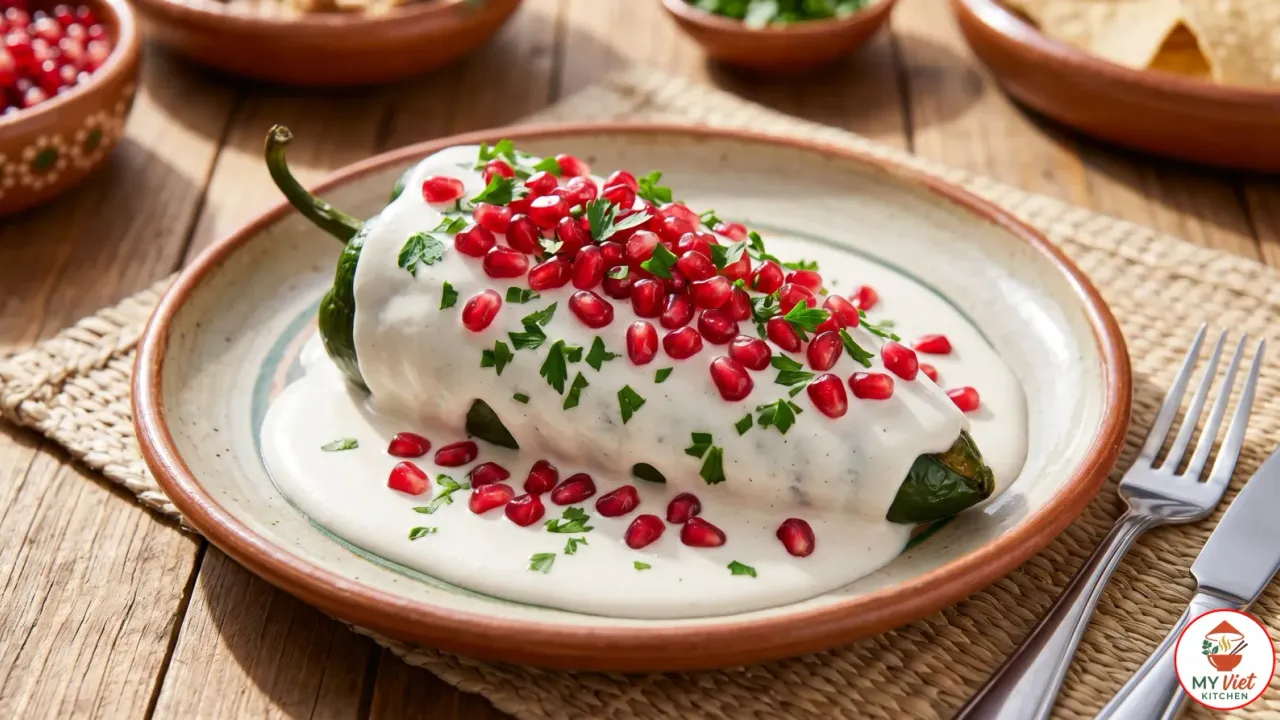
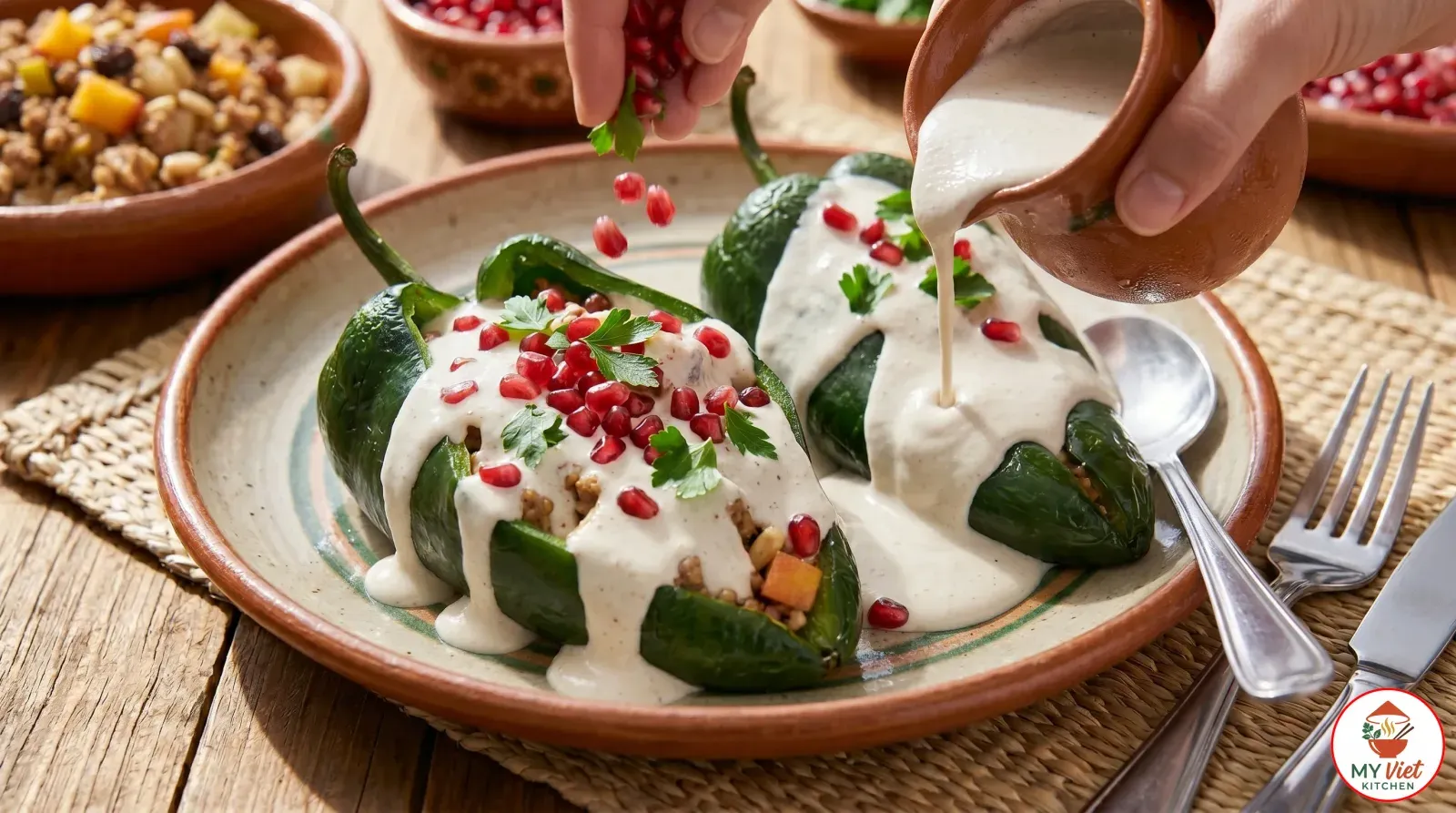
Chiles en Nogada is arguably the most celebrated dish in all of Mexican cuisine. These roasted poblano peppers arrive stuffed with a fragrant picadillo of ground pork, ripe fruits, and warm spices, then draped in a velvety walnut cream sauce and crowned with jewel-red pomegranate seeds and bright green parsley. The result is a dish that tastes as magnificent as it looks. In fact, few recipes carry the weight of an entire nation’s identity the way chiles en nogada does for Mexico.
Prep Time: 45 minutes | Cook Time: 40 minutes | Servings: 6
Difficulty: Intermediate | Calories: ~480 per serving
What Makes Chiles en Nogada Special?
Chiles en nogada stands apart from every other stuffed pepper dish in the world because of its deliberate layering of sweet, savory, creamy, and tangy flavors in a single bite. The picadillo filling combines ground pork with fresh peaches, pears, apples, raisins, and almonds. This sweet-savory balance is a hallmark of Pueblan cuisine, which has deep roots in both native and Spanish cooking. As a result, each part of this dish tells a story of cultural fusion that goes back centuries.
The walnut cream sauce, called nogada, is what elevates this dish from a simple stuffed pepper into a culinary masterpiece. Fresh walnuts are soaked, peeled, and blended with goat cheese and a touch of sherry into a sauce so smooth it rivals any French cream. Notably, the sauce is always served cold over the warm filling, creating a bold contrast that makes each bite feel alive. Most importantly, the three colors on the plate mirror the Mexican flag: green from the pepper and parsley, white from the walnut sauce, and red from the pomegranate seeds.
According to legend, nuns in the city of Puebla created chiles en nogada in August 1821. They made the dish to honor General Agustin de Iturbide after Mexico won its freedom from Spain. Whether this origin story is entirely true remains debated among historians. However, the dish has become inseparable from Mexican Independence Day celebrations on September 16th. During the season, restaurants across Mexico compete to serve the most authentic version. Consequently, families gather around this dish with the same reverence that other cultures reserve for holiday feasts.

Choosing the Right Poblano Peppers
The poblano pepper is the foundation of chiles en nogada. Choosing the right peppers makes the difference between a dish that holds together beautifully and one that falls apart on the plate. Therefore, here is what to look for when shopping.
- Large and firm (essential): Select the biggest poblanos you can find, ideally 5 to 6 inches long. Larger peppers hold more filling and are easier to handle. The flesh should feel firm when squeezed, not soft or wrinkled. As a result, firm peppers maintain their shape after roasting and stuffing.
- Dark green and glossy (best choice): Deep green skin with a glossy sheen indicates freshness. Avoid peppers that look dull, yellowish, or have soft spots. Generally, the darker the green, the more developed the pepper’s flavor. A slight curve in the body is normal and does not affect quality.
- Thick walls: Hold the pepper and feel its weight. Heavier peppers have thicker walls, which means they will hold the filling without tearing during assembly. Thin poblanos split easily when you take out the seeds, and the result is messy. Thick walls also give a better bite in the done dish.
Ingredients for Chiles en Nogada
For the Poblano Peppers:
- 6 large poblano peppers
For the Picadillo Filling:
- 1 pound (450g) ground pork
- 1 medium white onion, finely diced
- 3 cloves garlic, minced
- 1 large ripe tomato, diced
- 1 ripe peach, peeled and diced
- 1 ripe pear, peeled and diced
- 1 small apple, peeled and diced
- 1/4 cup raisins
- 2 tablespoons slivered almonds
- 1 tablespoon pine nuts
- 1/2 teaspoon ground cinnamon
- 1/4 teaspoon ground cloves
- 1/4 teaspoon ground black pepper
- 1 tablespoon vegetable oil
- Salt to taste
For the Walnut Cream Sauce (Nogada):
- 1 cup raw walnuts, soaked for 4 hours and peeled
- 4 ounces (115g) fresh goat cheese or cream cheese
- 1/2 cup whole milk
- 1/4 teaspoon ground cinnamon
- 1 tablespoon dry sherry or sweet white wine
- Pinch of salt
For the Garnish:
- Seeds from 1 large pomegranate
- Fresh Italian parsley leaves
Pro tip: Soak the walnuts in warm water for at least 4 hours, then peel off the thin brown skin from each walnut half. This step is tedious but essential. The skins contain tannins that make the sauce bitter and give it a grayish color. Peeled walnuts produce a pure white, mild sauce that is the hallmark of an exceptional nogada. Additionally, use the freshest walnuts you can find. Stale walnuts taste rancid and ruin the delicate sauce entirely.
Step-by-Step Instructions
Step 1: Roast and Peel the Poblano Peppers
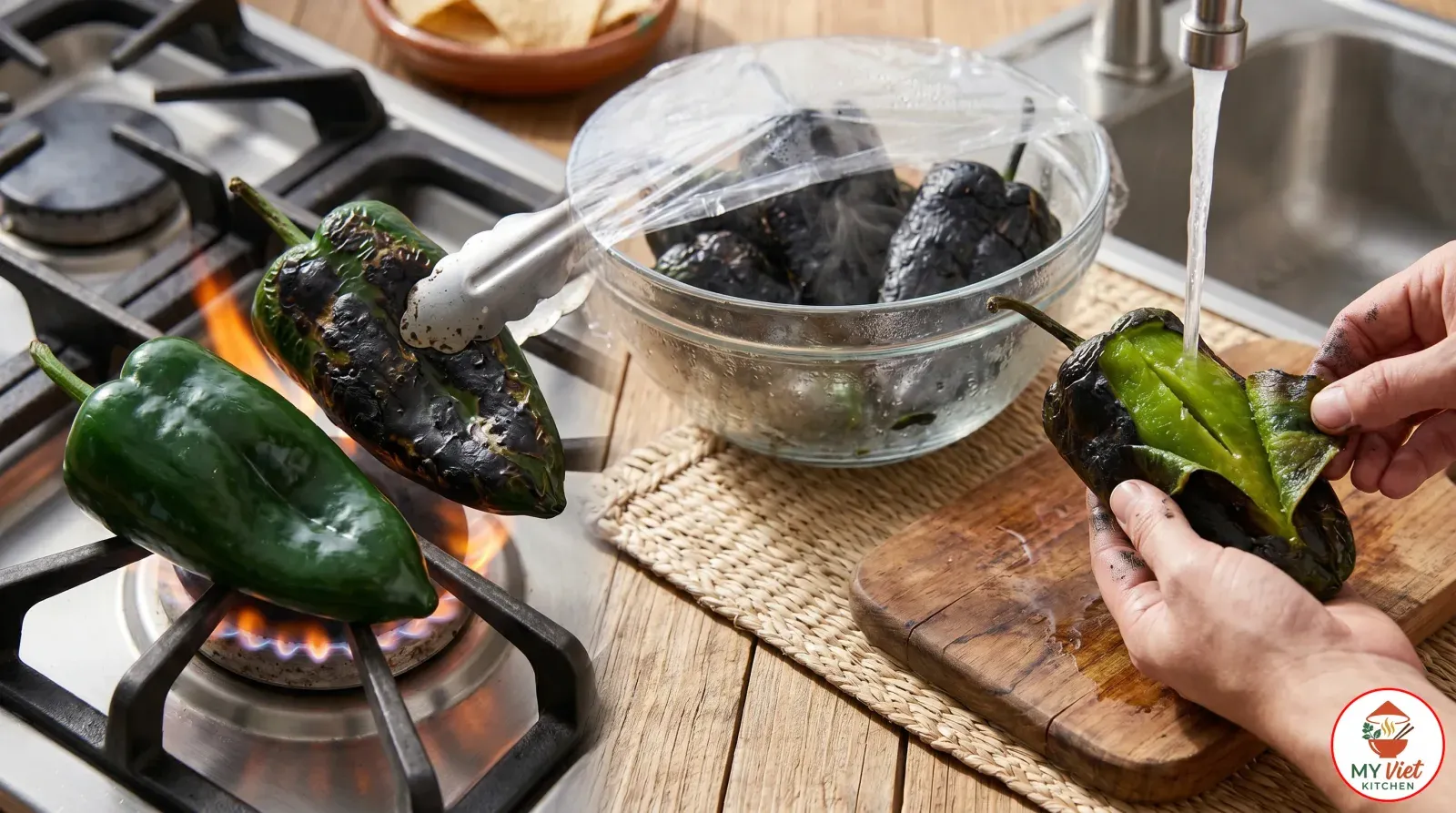
1 Place the poblano peppers directly over a gas burner flame set to high. If you do not have a gas stove, use the broiler in your oven set to its highest temperature. Rotate the peppers every 2 to 3 minutes using tongs until the skin blisters and chars evenly on all sides. Above all, the goal is to blacken the skin without cooking the flesh underneath into mush.
Transfer the charred peppers immediately to a large bowl. Cover the bowl tightly with plastic wrap or a clean kitchen towel. Let them steam for 15 minutes. During this time, the trapped steam loosens the charred skin from the flesh, making it easy to peel. After steaming, gently rub the skin off under a thin stream of cold water. Make one small lengthwise slit in each pepper. Use a small spoon to carefully scoop out the seeds and white veins. Keep the stem attached for a beautiful presentation. Finally, handle the peppers gently, since they are delicate at this stage.
Step 2: Prepare the Picadillo Filling
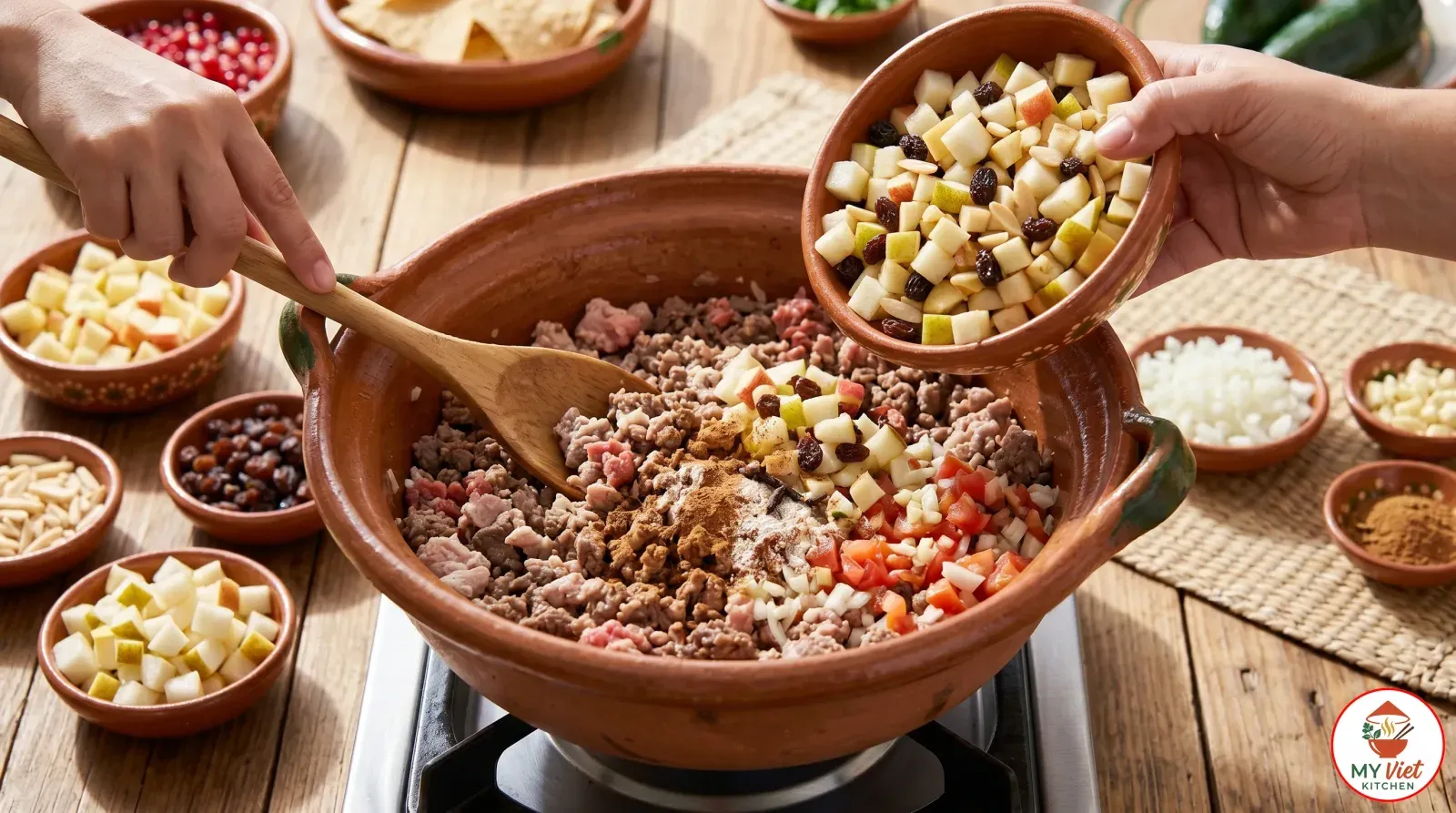
2 Heat the vegetable oil in a large skillet over medium-high heat. Add the diced onion and cook for 5 minutes until soft and translucent. Stir in the minced garlic and cook for 1 minute until fragrant. Add the ground pork to the skillet. Break it apart with a wooden spoon and cook for 8 to 10 minutes until the meat browns evenly. No pink should remain.
Now add the diced tomato, peach, pear, apple, raisins, slivered almonds, and pine nuts. Stir in the ground cinnamon, ground cloves, and black pepper. Cook the mixture over medium heat for another 10 minutes. As the fruit softens, it releases its juices and creates a natural glaze around the pork. In turn, the raisins plump up and add pockets of sweetness. Meanwhile, the almonds provide a subtle crunch that contrasts the tender meat. Additionally, the cinnamon and cloves perfume the entire filling with warm spice. Season with salt to taste. Your picadillo should taste distinctly sweet-savory with a pronounced fruit character. Let the filling cool slightly before stuffing the peppers.
Step 3: Make the Walnut Cream Sauce
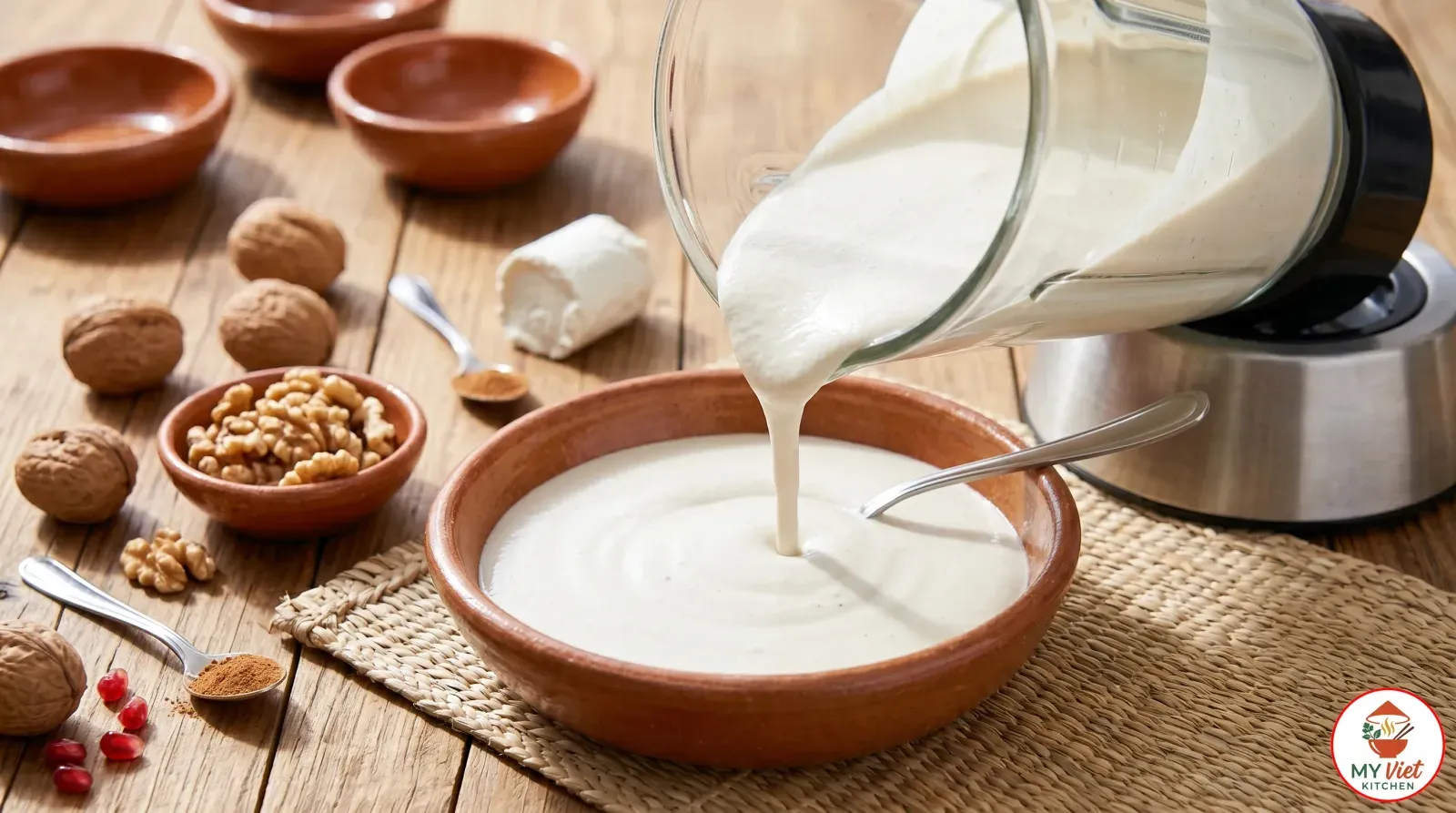
3 Drain the soaked walnuts thoroughly. If you have not already peeled them, remove the thin brown skin from each walnut half now. This is the most time-consuming step but the most important for a smooth, white sauce. Place the peeled walnuts in a blender. Add the goat cheese, whole milk, ground cinnamon, dry sherry, and a pinch of salt.
Blend on high speed for 60 to 90 seconds until the sauce is completely smooth. There should be no graininess at all. If the sauce feels too thick, add milk one tablespoon at a time until it reaches the consistency of heavy cream. It should pour easily but still coat the back of a spoon. Taste and adjust the salt accordingly. In addition, the sherry adds a subtle warmth that rounds out the walnut flavor. Refrigerate the nogada until you are ready to assemble. The cold sauce against the warm peppers is essential to the authentic experience.
Step 4: Stuff the Peppers
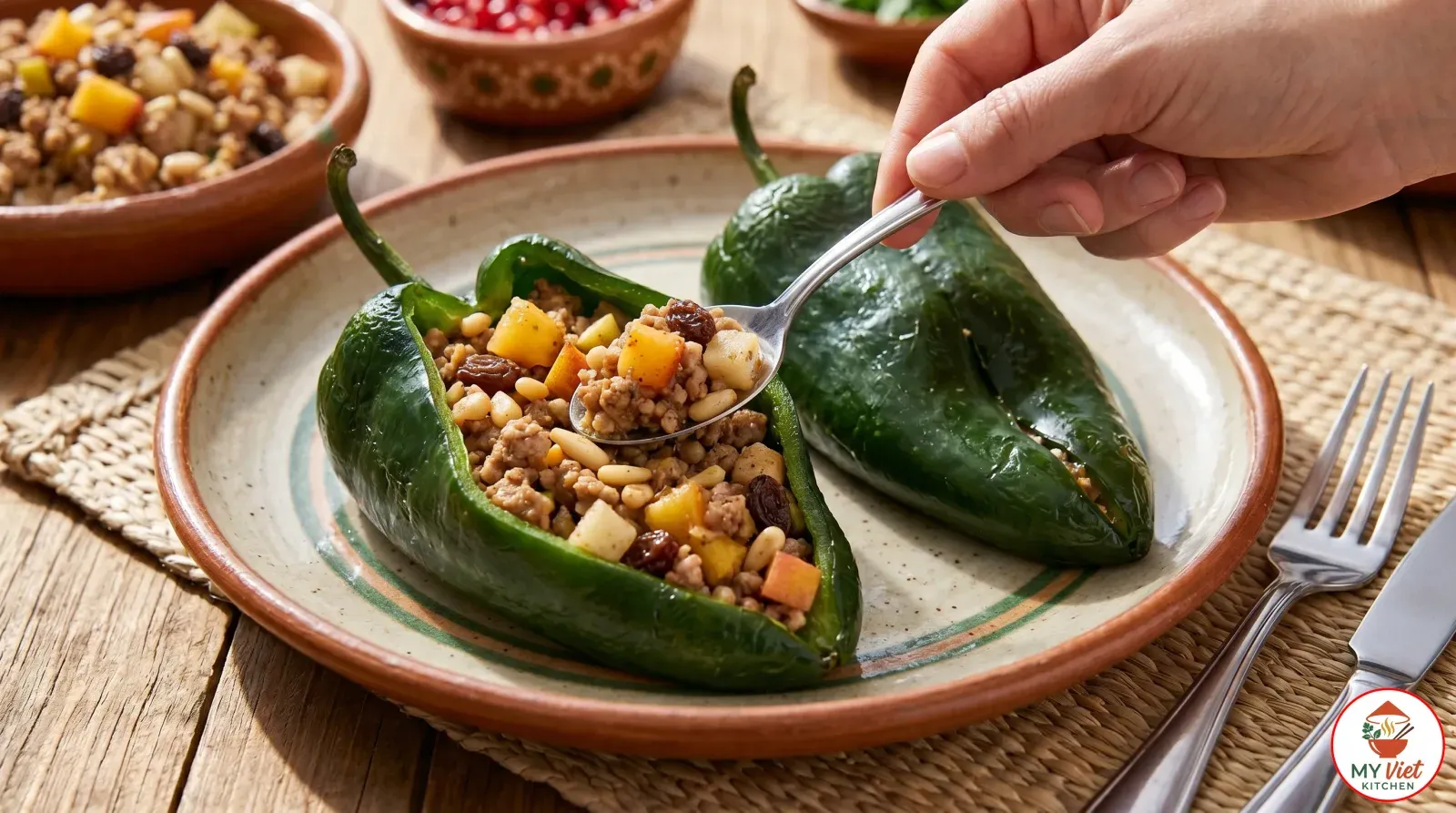
4 Take each roasted and peeled poblano pepper. Gently open it through the lengthwise slit you made earlier. Use a spoon to fill each pepper generously with the picadillo mixture. Pack the filling in firmly so the pepper feels plump and substantial. Do not overstuff to the point of splitting. Instead, aim for a generous portion that fills the entire cavity.
Press the edges of the slit together gently after filling. The pepper should close naturally around the stuffing. Arrange the filled peppers on a serving platter or individual plates with the slit side facing down. In effect, this hides the seam and presents a clean, smooth surface for the sauce. If you want to warm the peppers slightly before serving, place them in a 300-degree Fahrenheit oven for 10 minutes. However, traditionally the dish arrives at room temperature.
Step 5: Assemble and Serve
5 Take the chilled walnut cream sauce from the refrigerator. Spoon it generously over each stuffed poblano pepper. Let the sauce cascade down the sides, pooling slightly on the plate. The white sauce should cover most of the green pepper while still leaving some green visible at the edges and stem.
Scatter the pomegranate seeds liberally across the top. The ruby-red seeds should dot the white sauce like scattered jewels. Finish with fresh Italian parsley leaves tucked around the stem and sprinkled across the plate. Then step back and admire the colors: green, white, and red. Together, this is the Mexican flag rendered in food. Serve immediately while the temperature contrast between the warm filling and cold sauce is at its peak. Ideally, each guest should receive one whole pepper as a single, impressive portion.
Expert Tips for Perfect Chiles en Nogada
Peel the Walnuts for a Pure White Sauce
The difference between a good nogada and an extraordinary one comes down to walnut preparation. Soaking the raw walnuts for at least 4 hours softens the thin brown skin covering each half. Peel this skin off carefully. Because the tannins in those skins make the sauce bitter and gray. Without the skins, your sauce will be pure white, mild, and silky. This single step separates restaurant-quality chiles en nogada from ordinary home versions. Even so, many cooks skip it because it takes patience, but the result speaks for itself.
Balance the Sweet and Savory in the Filling
The picadillo filling should taste both sweet and savory in equal measure. If the fruit overpowers the meat, add a pinch more salt and black pepper. If the filling tastes too savory, add a small handful of extra raisins or a teaspoon of sugar. This balance is the soul of chiles en nogada. In Puebla, experienced cooks taste the picadillo repeatedly during cooking, adjusting as they go. Specifically, the cinnamon and cloves bridge the gap between the pork and the fruit. Think of the filling as a harmony, not a contest between flavors.
Char the Peppers Evenly Without Overcooking
Roasting the poblanos is a balancing act. You want the skin completely charred but the flesh still firm enough to hold its shape. A direct flame works better than a broiler for this purpose. The intense, focused heat blisters the skin rapidly before the interior softens. Keep rotating the peppers every 2 minutes. Once you see the flesh starting to collapse, pull the pepper off the heat immediately. Overcooked poblanos turn mushy and tear when you try to fill them. Undercooked peppers have patches of raw skin that refuse to peel off.
Chiles en Nogada vs. Other Mexican Stuffed Peppers
Mexico has a rich tradition of stuffed pepper dishes. Each uses different peppers, fillings, and sauces. The following comparison shows how chiles en nogada fits within this family of classic recipes.
| Dish | Pepper | Filling | Sauce |
|---|---|---|---|
| Chiles en Nogada | Poblano | Pork picadillo with fruits and nuts | Cold walnut cream (nogada) |
| Chiles Rellenos | Poblano | Cheese or ground meat | Warm tomato or ranchero sauce |
| Chiles Anchos Rellenos | Dried ancho | Refried beans and cheese | Cream or mole sauce |
| Chiles Gueritos | Banana pepper | Tuna or sardines | Tomato broth |
| Chiles de Agua Rellenos | Chile de agua (Oaxacan) | Quesillo cheese and herbs | None or salsa verde |
Serving Suggestions
Chiles en nogada is typically served as a standalone main course because the dish is rich and complete on its own. Still, the right accompaniments can elevate the meal into a full Mexican feast.
The Perfect Accompaniments:
- Mexican white rice (arroz blanco): A mound of fluffy white rice provides a neutral base that absorbs the walnut sauce beautifully. Cook the rice with a clove of garlic and a squeeze of lime for subtle flavor without competing with the chiles en nogada.
- Warm corn tortillas: Small, freshly made corn tortillas on the side allow guests to scoop up extra picadillo and walnut sauce. The corn flavor complements the poblano pepper naturally since both ingredients are native to Mexico.
- Green salad with lime vinaigrette: A light salad of mixed greens dressed in lime juice and olive oil cuts through the richness of the walnut cream. The acidity refreshes the palate between bites of the hearty stuffed pepper.
- Refried black beans: Creamy refried black beans provide a protein-rich side that rounds out the plate. Season them simply with cumin and a touch of epazote for an authentic Pueblan accompaniment.
Beverage Pairings:
- Gruner Veltliner or dry Riesling: A crisp white wine with good acidity pairs beautifully with the rich walnut sauce and sweet fruit filling. The wine’s mineral notes complement the earthy poblano pepper. Serve it well chilled.
- Mexican sparkling water (Topo Chico): The assertive carbonation cleanses the palate between bites. A squeeze of lime adds brightness. This is the most common non-alcoholic pairing in Mexican households during Independence Day celebrations.
- Agua de jamaica (hibiscus water): This traditional Mexican beverage offers a tart, floral counterpoint to the creamy, sweet-savory flavors of the dish. Its deep ruby color also echoes the pomegranate garnish on the plate.
- Light Mexican lager: A cold Modelo Especial or Pacifico beer provides easy, refreshing contrast without overpowering the delicate walnut sauce. The clean finish resets the palate for the next bite.
Storage and Reheating
Refrigerator: Store the components separately for the best results. Place the stuffed peppers in an airtight container and refrigerate for up to 3 days. Keep the walnut sauce in a separate sealed container for up to 2 days. The pomegranate seeds stay fresh in the refrigerator for up to 5 days in a covered bowl. Put the dish together fresh each time so the sauce stays white and the plate looks vibrant.
Freezer: The picadillo filling freezes beautifully for up to 2 months. Portion it into freezer bags and press out the air before sealing. The walnut sauce does not freeze well because the dairy components can separate and become grainy upon thawing. Roasted poblano peppers freeze well for up to 1 month. Thaw everything overnight in the refrigerator before assembling.
Reheating: Warm the stuffed peppers gently in a 300-degree Fahrenheit oven for 15 minutes. Do not microwave, as uneven heating can make some areas rubbery while others remain cold. Always serve the walnut sauce cold directly from the refrigerator. Spoon it over the warmed peppers just before serving. Add the pomegranate seeds and parsley at the very last moment for maximum visual impact and textural contrast.
Common Mistakes to Avoid
1. Leaving the Walnut Skins On
This is the single most common mistake. Unpeeled walnuts produce a bitter, grayish sauce that looks unappetizing and tastes harsh. The tannins in walnut skins overpower the delicate cream flavor. Soak the walnuts for at least 4 hours and peel each one individually. By contrast, the white, peeled walnuts yield a sauce that is mild, sweet, and pristinely white. There is no shortcut for this step if you want an authentic result.
2. Overcharring the Poblano Peppers
Leaving the peppers on the flame too long cooks the flesh underneath the skin. Overcooked poblanos become soft and fragile. As a consequence, they tear when you remove the seeds and collapse when you stuff them. The pepper should char on the outside while remaining firm on the inside. Instead, rotate frequently and remove each pepper as soon as the skin blisters completely. Even 30 extra seconds can make the difference.
3. Using Dried or Canned Fruit Instead of Fresh
The fresh fruit in the picadillo is not a garnish. It is a structural element of the filling. Fresh peaches, pears, and apples release juices during cooking that create a natural glaze around the pork. Dried fruit lacks this moisture and produces a dense, overly sweet filling. Canned fruit is too soft and adds metallic tinges. For that reason, use ripe, seasonal fresh fruit for the best balance of sweetness, acidity, and texture. This rule applies to all the fruit components except the raisins.
4. Heating the Walnut Sauce
The nogada must stay cold. Heating the walnut sauce causes the dairy to separate. Specifically, the proteins in the cheese and milk break down, turning the smooth cream into a grainy, oily mess. Furthermore, the cold sauce against the warm filling creates the temperature contrast that defines the eating experience. Therefore, prepare the sauce in advance and keep it refrigerated until the moment you plate the dish. Pour it directly from the blender jar stored in the fridge.
Frequently Asked Questions
What are chiles en nogada and why are they important in Mexican culture?
Chiles en nogada is a traditional Mexican dish of roasted poblano peppers stuffed with picadillo and topped with walnut cream sauce, pomegranate seeds, and parsley. The three colors represent the Mexican flag. Legend credits Augustinian nuns in Puebla with creating the dish in 1821 to celebrate Mexican independence. Today, the dish remains a centerpiece of Independence Day celebrations every September. It carries deep patriotic meaning and shows the best of Pueblan cooking.
Can I make chiles en nogada ahead of time?
Yes, and strategic advance preparation actually makes the cooking day much easier. Prepare the picadillo filling up to 2 days ahead and store it in the refrigerator. Make the walnut sauce up to 24 hours in advance. Roast and peel the poblano peppers a day before serving. However, assemble the final dish just before it reaches the table. Otherwise, the walnut sauce thins as it sits on warm peppers, and the seeds lose their look if plated too early. Bring the filling to room heat before stuffing.
What can I use instead of walnuts for the nogada sauce?
Macadamia nuts produce the closest substitute in both texture and creaminess. Cashews also work and create a slightly sweeter sauce. For the most authentic results, use raw walnut halves soaked and peeled. Avoid toasted or roasted walnuts, as the heat changes their flavor profile and introduces bitterness. If you need a completely nut-free alternative, soaked raw sunflower seeds blended with cream cheese produce a passable sauce, though the flavor differs noticeably from the original.
Why do my poblano peppers fall apart when I try to stuff them?
Two factors cause this problem. First, overroasting cooks the flesh beyond the point where it can hold its structure. Char only the skin. Second, rough handling during seed removal tears the delicate walls. Make the smallest possible slit and use a small spoon rather than your fingers to scoop out seeds. Choose large, thick-walled poblanos for the sturdiest results. If a pepper tears despite your best efforts, you can still stuff it and conceal the damage under the walnut sauce.
Is chiles en nogada served hot or cold?
Traditionally, the dish arrives at room temperature with a deliberate contrast between components. The stuffed pepper contains warm filling, while the walnut cream sauce is served cold. This contrast is on purpose and key to the way it tastes. Never heat the walnut sauce. Some restaurants warm the stuffed peppers in a low oven before plating, then add the cold sauce. This approach works well and intensifies the contrast.
What season is best for making chiles en nogada?
Late August through September is the traditional season in Mexico. This timing coincides with the harvest of fresh walnuts, pomegranates, peaches, pears, and apples. It also aligns with Mexican Independence Day on September 16th. Outside of Mexico, you can make the dish year-round using whatever fresh fruit is available. For instance, swap nectarines for peaches or Asian pears for regular pears. Similarly, the walnut sauce works well with raw walnuts from any store.
Variations and Adaptations
Vegetarian Chiles en Nogada:
Replace the ground pork with crumbled firm tofu or a mix of finely diced mushrooms and zucchini. Saute the mushrooms until deeply caramelized before adding the fruit and spices. The earthy mushroom flavor works remarkably well with the sweet fruit and warm spices. Keep the walnut sauce and garnish the same way. Ultimately, this version maintains the spirit of the dish while making it accessible to a wider audience.
Chicken Chiles en Nogada:
Ground chicken or finely shredded poached chicken breast offers a lighter alternative to pork. The milder meat allows the fruit and spice flavors to come forward more prominently. Cook the chicken filling in the same way as the pork version. Also, add an extra tablespoon of almonds to compensate for the lower fat content. This variation is popular in health-conscious Mexican households, especially during the warm September season.
Capeado (Battered) Style:
In some regions of Mexico, the stuffed poblanos are dipped in a light egg batter and fried before receiving the walnut sauce. Separate the eggs and beat the whites to stiff peaks. Fold in the yolks and a tablespoon of flour. Dip each stuffed pepper in the batter and fry in hot oil until golden. This capeado version adds a crispy, golden shell around the pepper. The extra step makes the dish richer and more substantial. Still, purists in Puebla generally prefer the unbattered version.
Vegan Nogada Sauce:
Replace the goat cheese with soaked raw cashews and use plant-based milk. Blend the peeled walnuts with a quarter cup of soaked cashews, oat milk, a pinch of cinnamon, and sherry. The cashews provide the creaminess that the cheese would normally contribute. Then add a squeeze of lemon juice for brightness. All in all, this vegan nogada is close to the original in both texture and appearance.
The Cultural Significance of Chiles en Nogada
No other dish in Mexican cuisine carries the symbolic weight of chiles en nogada. The green pepper, white sauce, and red pomegranate seeds form a living representation of the Mexican flag on every plate. This visual link ties the dish to the nation’s founding story. According to Taste Atlas, chiles en nogada consistently ranks among the most important dishes in Latin American culinary history. In short, its meaning goes beyond flavor and into national identity.
The dish also represents Puebla’s extraordinary culinary heritage. Puebla is widely seen as the food capital of Mexico. It gave the world mole poblano, cemitas, chalupas, and chiles en nogada. Each dish shows the city’s place at the crossroads of native and Spanish food ways. Chiles en nogada shows this fusion better than any other recipe. Indeed, the poblano pepper is native to the Puebla valley. Similarly, the walnuts and fruits arrived with Spanish settlers centuries ago. Because of this shared heritage, the cooking technique of stuffing and saucing belongs to both traditions. When you make this dish, you take part in a food story that spans five hundred years.
Every September, restaurants across Mexico add chiles en nogada to their menus as a seasonal event. Families gather to make the dish together, with different generations handling different components. Typically, the grandmother peels the walnuts. Then the children scatter the pomegranate seeds. As a result, the dish becomes an act of shared creation that strengthens family bonds. In this way, chiles en nogada transcends its role as a recipe. It works as a shared ritual that links Mexican families to their past, their land, and each other.
Conclusion
Chiles en nogada takes more effort than most dinners, but the result is worth every minute you spend peeling walnuts and roasting peppers. The mix of warm, fruit-studded pork filling against cold, silky walnut cream is unlike anything else you will taste. Once you master the three parts on their own, the final step comes together fast. This is a dish worth making for big events, dinner parties, or just to taste one of the best recipes Mexico has ever made.
Ready to explore more iconic dishes from around the world? Browse our collection of Mexican dishes and discover recipes like mole poblano, tamales, and carnitas. If you try this chiles en nogada recipe, leave a rating and share your experience in the comments below.