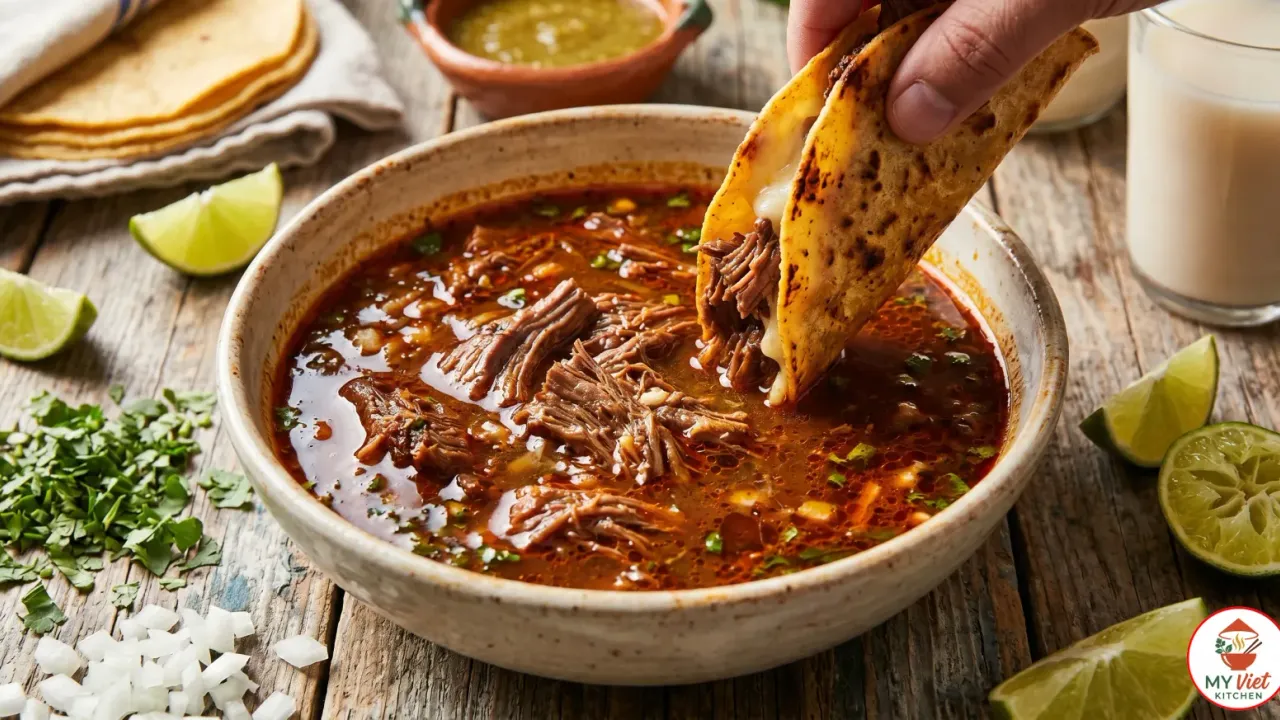
Few dishes capture the soul of Mexican cooking quite like birria. This slow-braised stew transforms tough cuts of beef into fall-apart tender meat bathed in a deeply spiced chile consomme. Originally from the state of Jalisco, birria has become one of the most beloved comfort foods across Mexico and beyond. Whether you serve it as a warming bowl of stew or turn it into crispy birria tacos, this recipe delivers bold, complex flavor that rewards every minute of slow cooking.
Prep Time: 45 minutes | Cook Time: 180 minutes | Servings: 8
Difficulty: Medium | Calories: ~420 per serving
What Makes Birria Special?
Birria stands apart from other braised meat dishes because of its complex chile sauce. Unlike a simple beef stew that relies on broth and vegetables, birria builds its foundation on dried chiles that have been toasted, soaked, and blended into a smooth, vibrant paste. This sauce infuses every fiber of the meat during the long braising process, creating a harmony of smoky, earthy, and mildly spicy flavors.
The consomme itself is just as important as the meat. After hours of slow cooking, the braising liquid becomes a rich, aromatic broth loaded with rendered fat and dissolved collagen. In fact, many people consider the consomme the best part of the dish. You can sip it on its own, pour it over the shredded meat, or use it to dip tortillas before griddling them into crispy birria tacos.
Traditional birria from Jalisco uses goat meat, but the version that has swept through street food markets and social media typically features beef. Both versions share the same essential technique: a slow braise in a dried chile sauce seasoned with warm spices like cumin, cloves, cinnamon, and Mexican oregano. The result is a dish that warms you from the inside out.

Choosing the Right Beef for Birria
The cut of beef you choose will determine the texture and richness of your birria. You need cuts with enough fat and connective tissue to withstand hours of braising without drying out. Here are the best options.
- Beef chuck roast (best choice): This well-marbled cut breaks down beautifully during braising. It shreds easily and delivers a rich, beefy flavor that forms the backbone of great birria.
- Bone-in short ribs: These add incredible depth to the consomme because the bones release collagen and marrow during cooking. Mix them with chuck for the best results.
- Beef shank: A more affordable option that produces a gelatinous, silky broth. The meat takes slightly longer to become tender, but the payoff is worth the wait.
- Goat meat (traditional): If you want to make the original Jalisco-style birria, use bone-in goat shoulder or leg. The flavor is gamier and more distinctive.
Ingredients for Birria
For the Meat:
- 3 pounds beef chuck roast, cut into large chunks
- 1 pound bone-in beef short ribs
- 1 tablespoon salt, plus more to taste
- 2 tablespoons vegetable oil for searing
For the Chile Sauce:
- 6 guajillo chiles, stemmed and seeded
- 4 ancho chiles, stemmed and seeded
- 3 chiles de arbol, stemmed
- 4 Roma tomatoes
- 1 medium white onion, quartered
- 6 cloves garlic, unpeeled
- 2 tablespoons apple cider vinegar
For the Spice Blend:
- 1 tablespoon dried Mexican oregano
- 1 teaspoon ground cumin
- 1/2 teaspoon ground cloves
- 1/2 teaspoon ground black pepper
- 1/4 teaspoon ground cinnamon
- 1/4 teaspoon ground ginger
- 2 bay leaves
- 6 cups beef broth
For Serving:
- Corn tortillas
- Fresh cilantro, chopped
- White onion, finely diced
- Lime wedges
- Shredded Oaxaca or mozzarella cheese (for birria tacos)
Pro tip: Toast your dried chiles just until they become fragrant and slightly pliable. If they turn black, they will make the sauce bitter. Watch them carefully because the process takes only 20 to 30 seconds per side.
Step-by-Step Instructions
Step 1: Toast and Soak the Dried Chiles
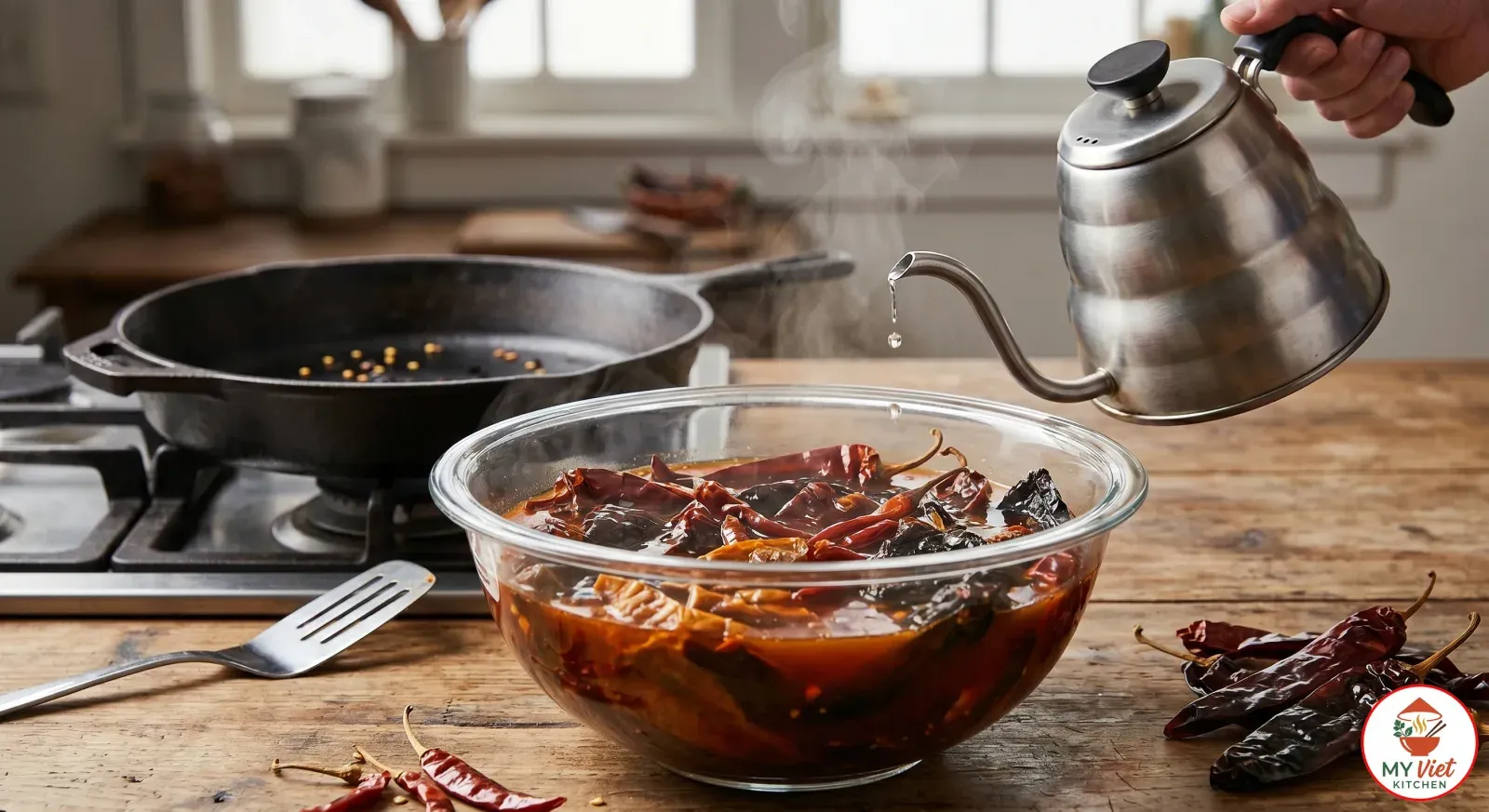
1Start by removing the stems and seeds from the guajillo, ancho, and arbol chiles. Heat a large dry skillet over medium heat. Place the chiles flat in the pan and press them down gently with a spatula. Toast for about 30 seconds per side until they become fragrant and slightly darkened. Be careful not to burn them because burnt chiles produce a bitter sauce. After toasting, transfer the chiles to a heatproof bowl and pour boiling water over them. Let them soak for 20 minutes until they become soft and pliable.
Step 2: Roast the Aromatics
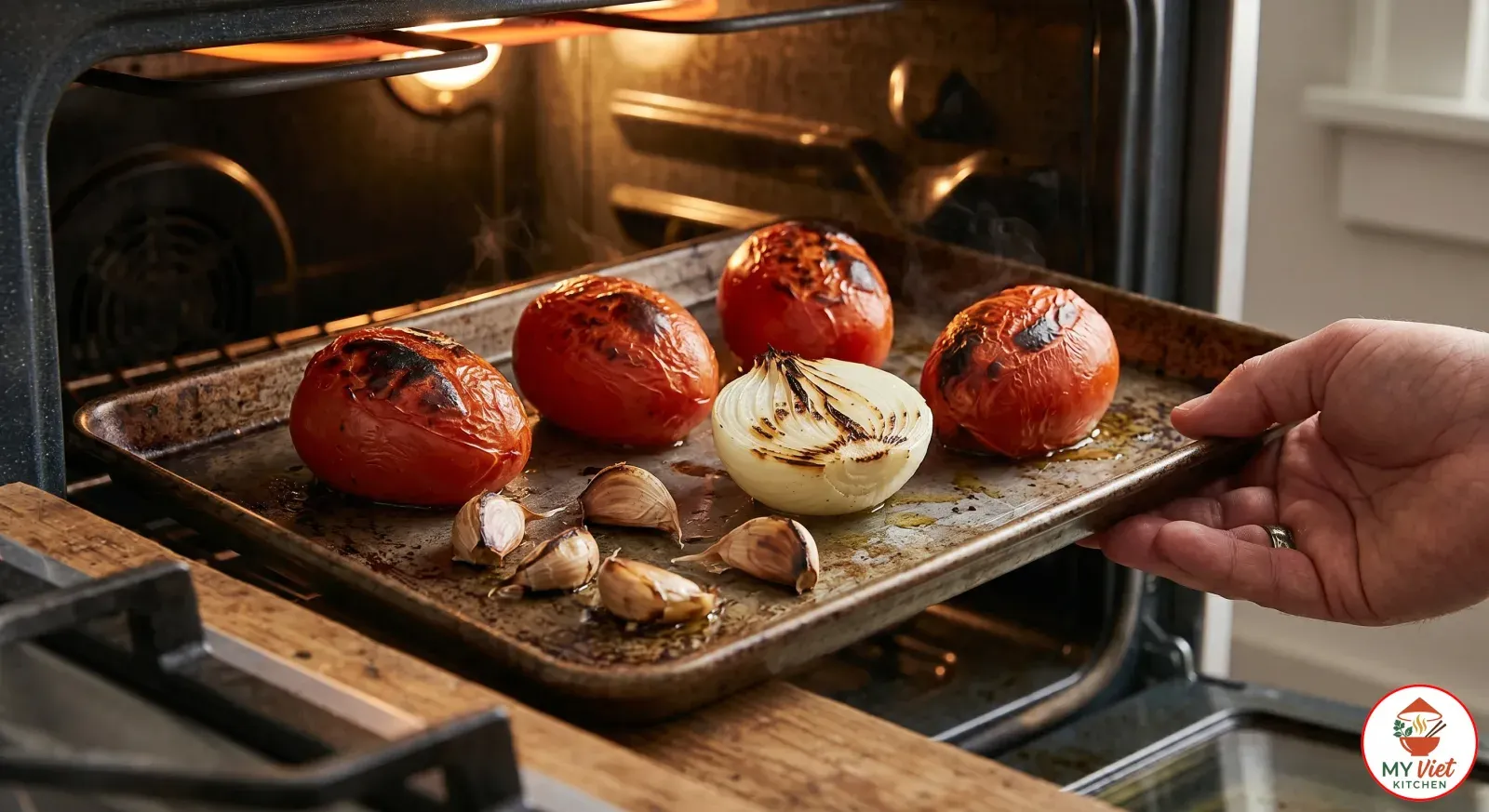
2While the chiles soak, place the Roma tomatoes, quartered onion, and unpeeled garlic cloves on a baking sheet. Set your oven broiler to high and position the sheet about 6 inches from the heat. Broil for 8 to 10 minutes, turning the vegetables once halfway through. You want them charred in spots but not completely blackened. The charring adds a smoky sweetness that deepens the flavor of the birria sauce. After roasting, peel the garlic cloves and set everything aside.
Step 3: Blend the Birria Sauce
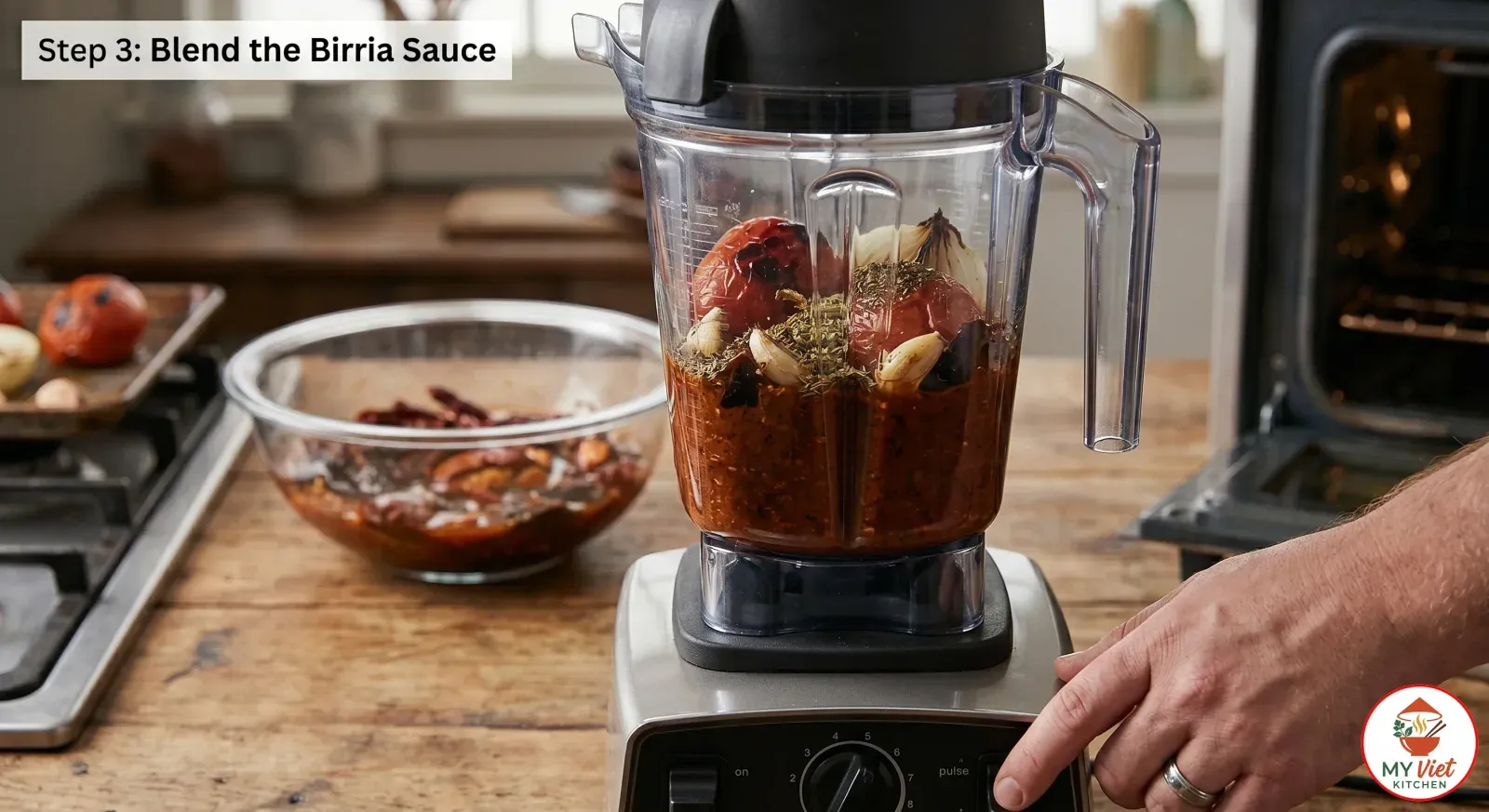
3Drain the soaked chiles and add them to a blender. Then add the roasted tomatoes, onion, peeled garlic, apple cider vinegar, oregano, cumin, cloves, black pepper, cinnamon, and ginger. Blend on high speed until the sauce becomes completely smooth. If the mixture is too thick to blend properly, add a few tablespoons of the chile soaking liquid. The finished sauce should have a velvety consistency with a deep red color. Taste it at this stage and adjust the salt if needed.
Step 4: Season and Sear the Meat
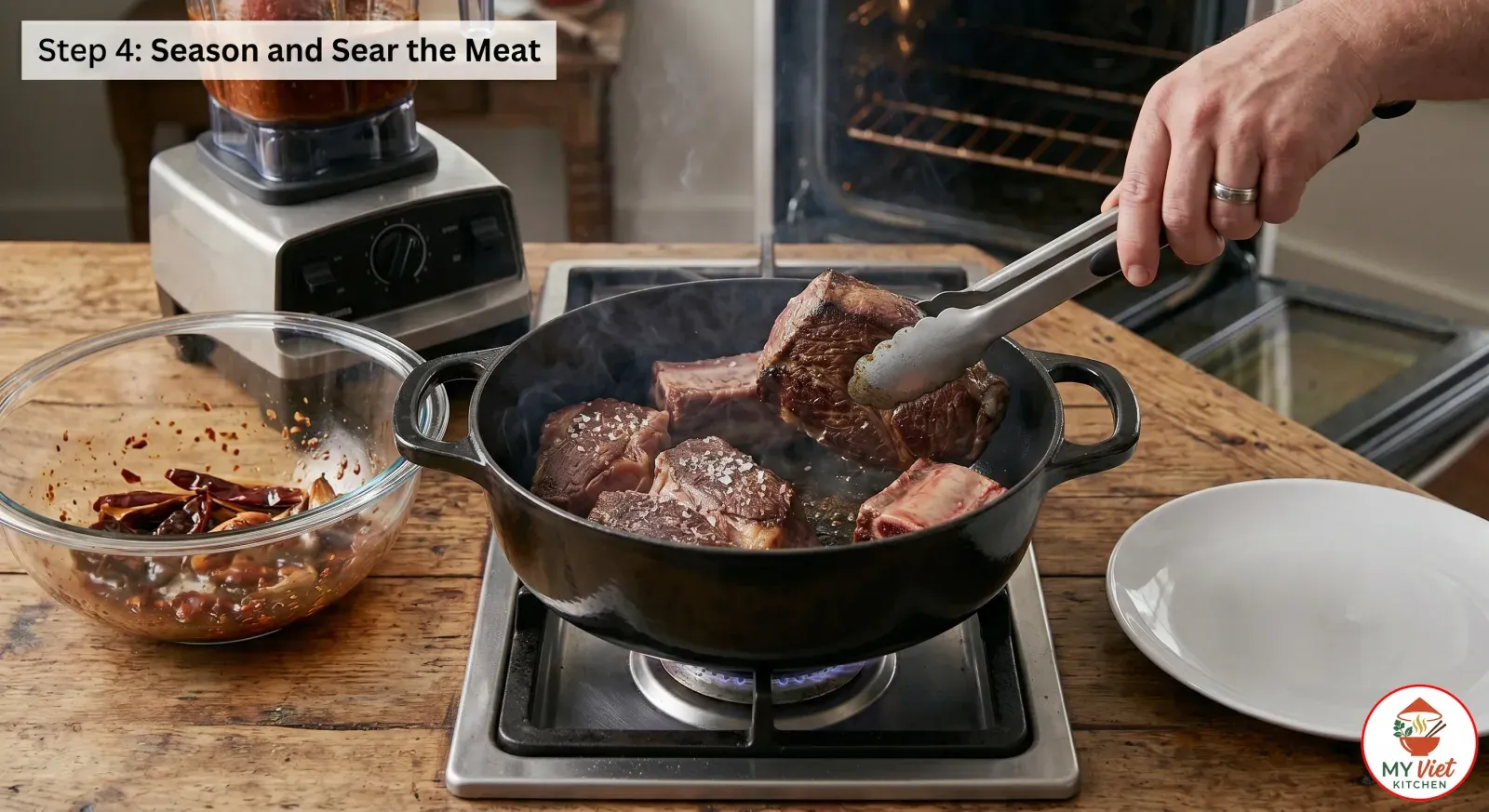
4Pat the beef chuck pieces and short ribs completely dry with paper towels. Season them generously with salt on all sides. Heat the vegetable oil in a large Dutch oven over high heat until it shimmers. Working in batches to avoid crowding, sear the meat for about 3 minutes per side until a deep brown crust forms. This searing step creates the Maillard reaction, which adds a layer of savory complexity to the final dish. Remove each batch to a plate and continue until all pieces are browned.
Step 5: Braise the Birria
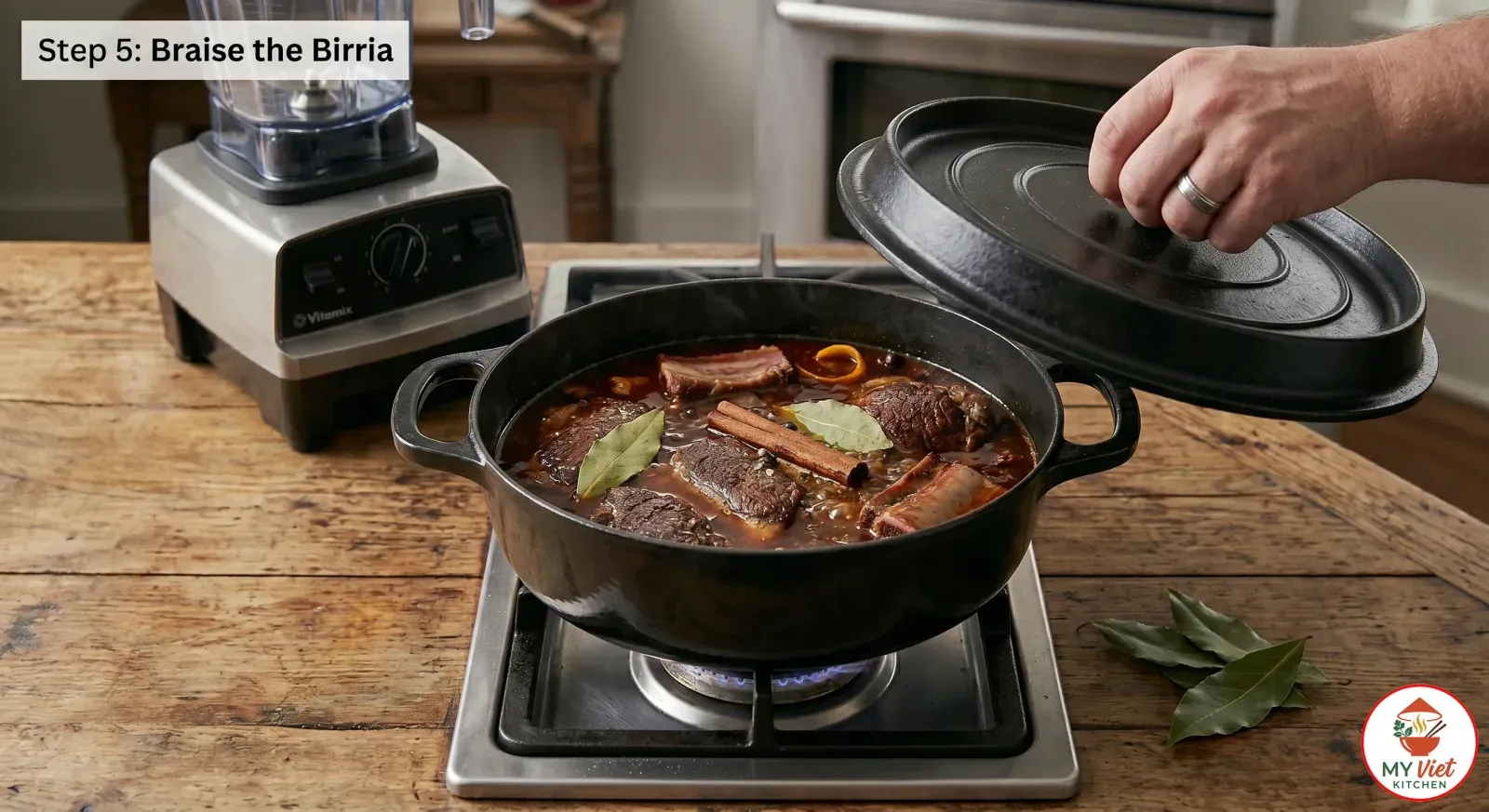
5Return all the seared meat to the Dutch oven. Pour the blended chile sauce over the meat, making sure every piece gets coated. Add the beef broth and bay leaves. Bring everything to a gentle boil over medium-high heat. Once bubbling, reduce the heat to low and cover the pot with a tight-fitting lid. Let the birria simmer for 2.5 to 3 hours. Check occasionally and stir gently. The birria is ready when the meat falls apart easily when you press it with a fork. At this point, the consomme should have a rich, slightly thickened consistency.
Step 6: Shred and Serve
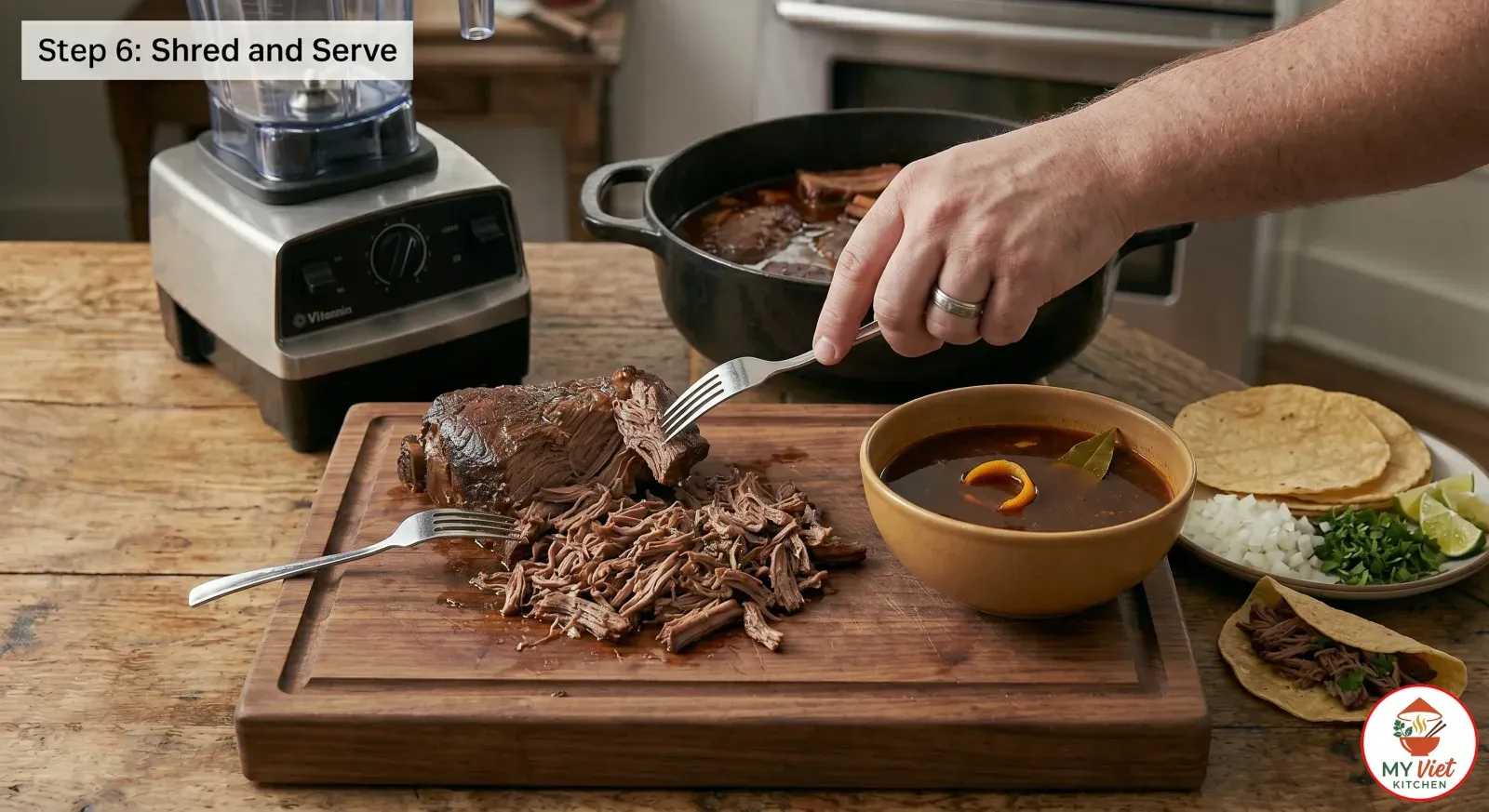
6Carefully remove the meat from the braising liquid using a slotted spoon. Place it in a large bowl and shred it with two forks. Discard any bones, bay leaves, and large pieces of fat. Next, skim the excess fat from the surface of the consomme. You can save this flavorful fat for griddling birria tacos later. Return the shredded meat to the pot and stir it into the consomme. Taste and adjust the salt as needed. Serve the birria in deep bowls with warm corn tortillas, chopped cilantro, diced onion, and lime wedges on the side.
Expert Tips for Perfect Birria
Mix Your Chile Varieties
Each dried chile contributes something different to the sauce. Guajillo chiles provide a bright, tangy base with mild heat. Ancho chiles add a sweet, raisin-like depth. Chiles de arbol bring the real kick. By combining all three, you build a multi-layered sauce that tastes far more interesting than using a single variety.
Low and Slow Wins Every Time
Resist the urge to crank up the heat to speed things along. A gentle, low simmer allows the collagen in the beef to break down gradually into gelatin. This process is what gives birria its signature silky texture. If the liquid boils too aggressively, the meat can become tough and stringy instead of meltingly tender.
Make It the Day Before
Like many braised dishes, birria tastes even better the next day. As the meat sits in the consomme overnight, the flavors meld and deepen. Additionally, the fat rises to the top and solidifies in the refrigerator, which makes it easy to skim off before reheating.
Birria de Res vs. Birria de Chivo
The two most common versions of birria use different proteins but share the same soul. Here is a comparison to help you understand the key differences.
| Feature | Birria de Res (Beef) | Birria de Chivo (Goat) |
|---|---|---|
| Origin | Widely adopted across Mexico | Traditional in Jalisco |
| Flavor | Rich, beefy, and mild | Gamey, earthy, and bold |
| Texture | Very tender and shreddable | Slightly firmer, more rustic |
| Availability | Easy to find everywhere | Requires specialty butchers |
| Best For | Birria tacos and stew | Traditional celebrations |
Serving Suggestions
Birria is incredibly versatile. While it shines on its own as a hearty stew, the ways you can serve it extend far beyond a simple bowl. Here are the most popular options.
The Perfect Accompaniments:
- Birria tacos (quesabirria): Dip corn tortillas in the consomme fat, fill with shredded meat and cheese, and griddle until crispy. Serve alongside a bowl of consomme for dipping.
- Rice and beans: A mound of Mexican red rice and refried pinto beans rounds out the meal with satisfying starch and protein.
- Pickled red onions: The tangy acidity cuts through the richness of the consomme and adds a vibrant pop of color.
- Radish slices: Fresh, crunchy radishes provide a peppery contrast to the soft, braised meat.
Beverage Pairings:
- Agua de horchata: This creamy rice drink cools the palate and balances the spice of the chiles.
- Mexican lager: A cold, crisp beer like Modelo Especial or Pacifico refreshes between rich, savory bites.
- Agua fresca de jamaica: The tart hibiscus flavor pairs beautifully with the earthy, smoky notes of birria.
Storage and Reheating
Refrigerator: Store birria in an airtight container for up to 5 days. The flavors actually improve overnight, so leftovers often taste better than the first serving.
Freezer: Freeze birria with its consomme for up to 3 months. Use freezer-safe containers and leave about an inch of headspace for expansion. Thaw overnight in the refrigerator before reheating.
Reheating: Warm the birria gently on the stovetop over medium-low heat. Add a splash of water or broth if the consomme has thickened too much. Avoid the microwave for large portions because it heats unevenly.
Common Mistakes to Avoid
1. Burning the Dried Chiles
Toasting dried chiles requires close attention. They go from perfectly fragrant to burnt in a matter of seconds. Once burned, the chiles produce a harsh, bitter flavor that ruins the entire sauce. Toast them briefly and keep the heat at medium.
2. Skipping the Sear
Searing the meat before braising creates a brown crust through the Maillard reaction. This step adds hundreds of new flavor compounds that the sauce alone cannot provide. Without it, your birria will taste flat and one-dimensional.
3. Braising at Too High a Temperature
A rapid boil pushes moisture out of the meat fibers too quickly. As a result, the beef becomes tough and dry despite sitting in liquid for hours. Maintain a barely visible simmer with small bubbles breaking the surface for the most tender results.
Frequently Asked Questions
What is birria made of?
Traditional birria starts with beef or goat that braises slowly in a sauce of dried chiles, roasted tomatoes, garlic, onion, and warm spices. The core spices include cumin, cloves, oregano, and cinnamon. After hours of cooking, you get shreddable meat and a rich consomme. According to Serious Eats, the combination of multiple dried chile varieties is what gives birria its signature layered flavor.
What is the difference between birria and barbacoa?
While both are slow-cooked Mexican meat dishes, they differ in preparation and presentation. Birria always features a complex dried chile sauce that produces a red consomme served alongside the meat. Barbacoa traditionally involves wrapping meat in maguey leaves and cooking it in an underground pit. Furthermore, barbacoa focuses on the meat itself, while birria celebrates both the meat and its braising liquid equally.
Can I make birria in a slow cooker?
Absolutely. After you toast the chiles, blend the sauce, and sear the meat, transfer everything to a slow cooker. Cook on low for 8 to 10 hours or on high for 5 to 6 hours. The slow cooker method works especially well for busy days. However, note that the consomme may be slightly thinner compared to the Dutch oven method because less evaporation occurs.
What cut of meat is best for birria?
Beef chuck roast delivers the best combination of flavor and tenderness for birria. Its generous marbling and connective tissue break down during the long braise, producing silky, shreddable meat. For an even richer consomme, combine chuck with bone-in short ribs. The bones release collagen that gives the broth a luxurious body.
How do you make birria tacos?
To make birria tacos, also called quesabirria, start by skimming the fat from the consomme. Heat a griddle or skillet over medium heat and brush it with the birria fat. Dip corn tortillas briefly in the warm consomme, then place them on the griddle. Add shredded birria meat and a handful of shredded cheese on one half. Fold the tortilla over and cook until crispy on both sides. Serve with a small bowl of hot consomme for dipping.
Variations and Adaptations
Birria Ramen:
Replace traditional ramen broth with birria consomme. Cook ramen noodles according to the package directions and ladle the hot consomme over them. Top with shredded birria, a soft-boiled egg, sliced green onions, and a squeeze of lime. This fusion combines the comfort of Japanese ramen with the bold flavors of Mexican birria.
Instant Pot Birria:
For a faster version, use a pressure cooker. After searing the meat and blending the sauce, combine everything in the Instant Pot. Cook on high pressure for 45 minutes with a natural release. The result is remarkably close to the traditional stovetop version and cuts the cooking time by more than half.
Chicken Birria:
Swap the beef for bone-in chicken thighs if you want a lighter version. Reduce the braising time to about 45 minutes since chicken cooks much faster. The chile sauce works just as well with poultry, though the consomme will be less rich. Consequently, this variation makes a great weeknight dinner option.
The Cultural Significance of Birria
Birria carries deep cultural meaning in Mexican food traditions. The dish originated in the state of Jalisco, where it began as a way to prepare goat meat brought by Spanish colonizers. Resourceful local cooks transformed this unfamiliar protein into something extraordinary by braising it with native dried chiles and indigenous spices. Over generations, birria evolved from a humble peasant dish into a centerpiece of celebrations.
Today, birria holds a central role at weddings, baptisms, and holiday gatherings across Mexico. In many families, the recipe passes from grandmother to mother to daughter, with each generation adding its own subtle twist. The rise of birria tacos on social media in recent years has introduced this tradition to a global audience. Despite its newfound fame, the essence of birria remains unchanged: a patient, loving braise that turns simple ingredients into something deeply satisfying. In the same way that a French cook approaches a daube or a Vietnamese cook builds a pho broth, the birria cook understands that time and care are the most important ingredients of all.
Conclusion
Making authentic birria at home may require a few hours of braising, but the process is surprisingly straightforward. Toast your chiles carefully, sear the meat thoroughly, and let the low heat do the rest. Most importantly, give yourself permission to take your time with this dish. The reward is a pot of deeply spiced, fall-apart tender beef in a consomme so rich that you will want to drink every last drop.
Ready to explore more global flavors? Check out our full collection of recipes for dishes from around the world. If you love bold Mexican flavors, you might also enjoy our Carnitas or Tamales recipes.