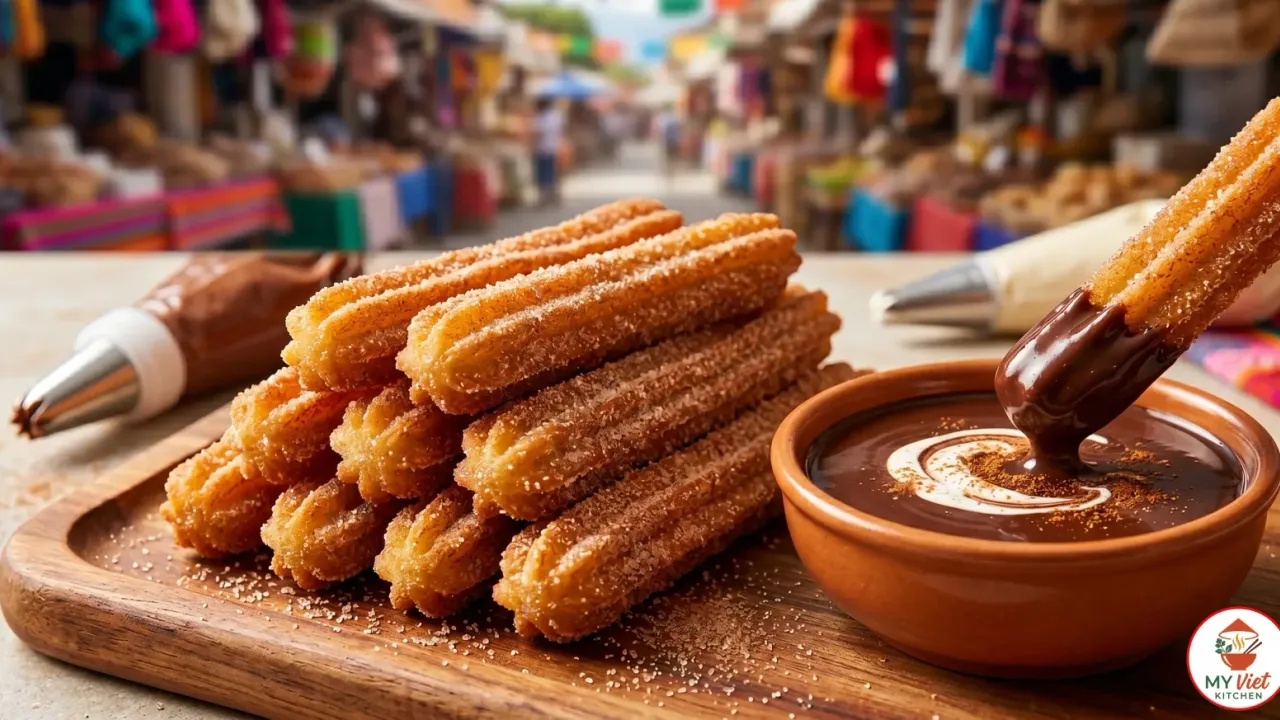
Churros are crispy, golden sticks of fried dough coated in cinnamon sugar that have become one of the most beloved Mexican street foods on the planet. This churros recipe produces a crunchy exterior that shatters at first bite, revealing a soft and pillowy interior that melts on your tongue. Paired with a rich chocolate dipping sauce, these homemade churros rival anything you will find at a Mexican mercado or carnival stand. Once you master the simple choux-style dough, you will never buy frozen churros again.
Prep Time: 15 minutes | Cook Time: 25 minutes | Servings: 24 churros
Difficulty: Medium | Calories: ~95 per churro
What Makes Churros Special?
The brilliance of churros lies in the contrast between textures. The outside carries deep ridges created by a star-shaped piping tip. These ridges fry into razor-thin crests that shatter when you bite down. Beneath that crispy shell sits a soft, airy dough similar to French choux pastry. Furthermore, the warm cinnamon-sugar coating adds both fragrance and sweetness that hit your senses before your teeth even break through the crust.
What separates Mexican churros from their Spanish cousins is the bold approach to seasoning and serving. In Spain, churros tend to be thin, lightly salted, and served alongside thick drinking chocolate. Mexican churros are thicker, coated generously in cinnamon sugar, and often filled with dulce de leche or cajeta. This distinction reflects the broader Mexican philosophy of layering flavors and textures. In addition, Mexican churros frequently appear at festivals, outdoor markets, and family celebrations, where the scent of frying dough draws crowds from blocks away.
The science behind a perfect churro starts with a choux pastry technique. You cook the flour with water and butter on the stove before adding eggs. This pre-cooking gelatinizes the starch, creating a dough that puffs dramatically when it hits hot oil. The eggs add moisture that turns to steam during frying, which inflates the interior into a light and airy crumb. Consequently, the churro achieves that irresistible contrast of crispy outside and cloud-like inside without any leavening agent.

Choosing the Right Oil for Churros
The oil you select for frying determines the crispness, flavor, and overall quality of your churros. Deep frying at 375 degrees Fahrenheit demands an oil that can handle sustained high heat without smoking or breaking down. Therefore, selecting the right frying medium matters just as much as the dough itself.
- Vegetable oil (best choice): This affordable, neutral-flavored oil has a high smoke point and produces consistently crispy churros. It does not compete with the cinnamon-sugar coating. You can find it at any grocery store, and it handles repeated frying without degrading quickly.
- Canola oil: Another excellent neutral option with a smoke point above 400 degrees Fahrenheit. It fries cleanly and produces golden churros with no off-flavors. In fact, many professional churro vendors prefer canola for its light texture.
- Peanut oil: Delivers exceptionally crispy results with a subtle nutty undertone. The high smoke point makes it ideal for deep frying. However, be mindful of nut allergies if serving to guests. Despite the cost, many cooks consider peanut oil the gold standard for fried doughs.
- Avoid olive oil and coconut oil: Both have lower smoke points and strong flavors that clash with the delicate cinnamon-sugar profile. Olive oil smokes quickly at frying temperatures. Similarly, coconut oil adds a tropical taste that overpowers the classic churro flavor.
Ingredients for Churros
Churro Dough:
- 1 cup (240ml) water
- 1/2 cup (115g) unsalted butter, cut into small pieces
- 2 tablespoons granulated sugar
- 1/4 teaspoon fine sea salt
- 1 cup (125g) all-purpose flour
- 3 large eggs, at room temperature
- 1 teaspoon pure vanilla extract
- Vegetable oil or canola oil for deep frying
Cinnamon-Sugar Coating:
- 1/2 cup (100g) granulated sugar
- 1 tablespoon ground cinnamon
Chocolate Dipping Sauce:
- 6 ounces (170g) semi-sweet chocolate, finely chopped
- 1/2 cup (120ml) heavy cream
- 1 tablespoon unsalted butter
- 1/4 teaspoon ground cinnamon
Pro tip: Use a large open star piping tip (Wilton 1M or Ateco 846) to create those signature deep ridges. The ridges are not just decorative. They dramatically increase the surface area that fries into a crunchy crust. Without them, you get a smooth stick that stays chewy instead of crispy.
Step-by-Step Instructions
Step 1: Make the Choux Dough
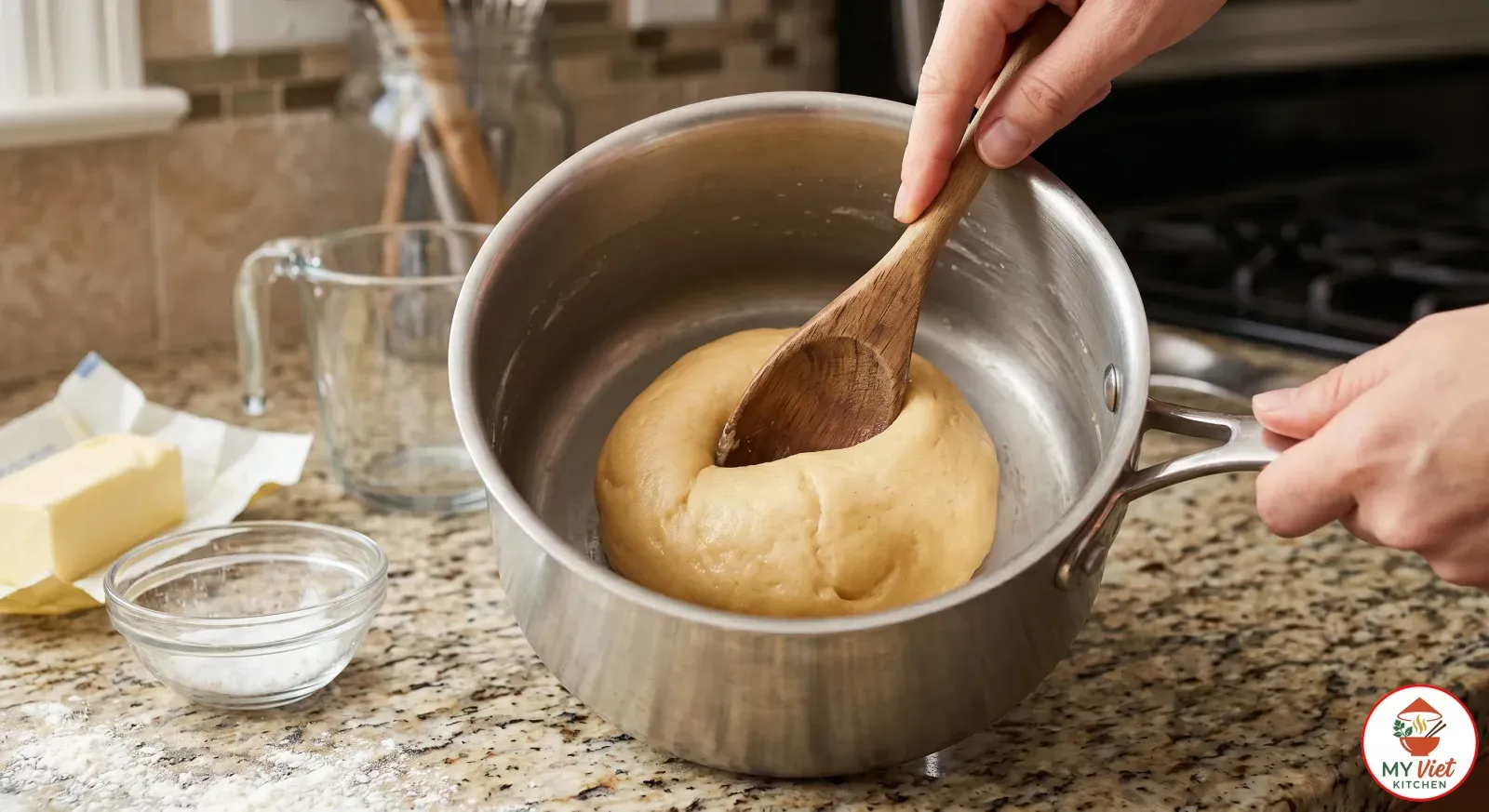
1 Combine the water, butter, sugar, and salt in a medium saucepan over medium heat. Stir occasionally until the butter melts completely and the mixture reaches a full rolling boil. Remove the pan from the heat immediately. Add all the flour at once and stir vigorously with a wooden spoon. Keep stirring until the dough forms a smooth ball that pulls away from the sides of the pan. This takes about 1 to 2 minutes of energetic mixing.
The cooking step is crucial because it gelatinizes the starch in the flour. This process gives the dough its structure and allows it to puff during frying. If you skip this step or undercook the mixture, your churros will be dense and greasy instead of light and airy. You will know the dough is ready when a thin film forms on the bottom of the pan. Moreover, the dough should feel smooth and slightly glossy when you press it with the back of your spoon.
Step 2: Add the Eggs
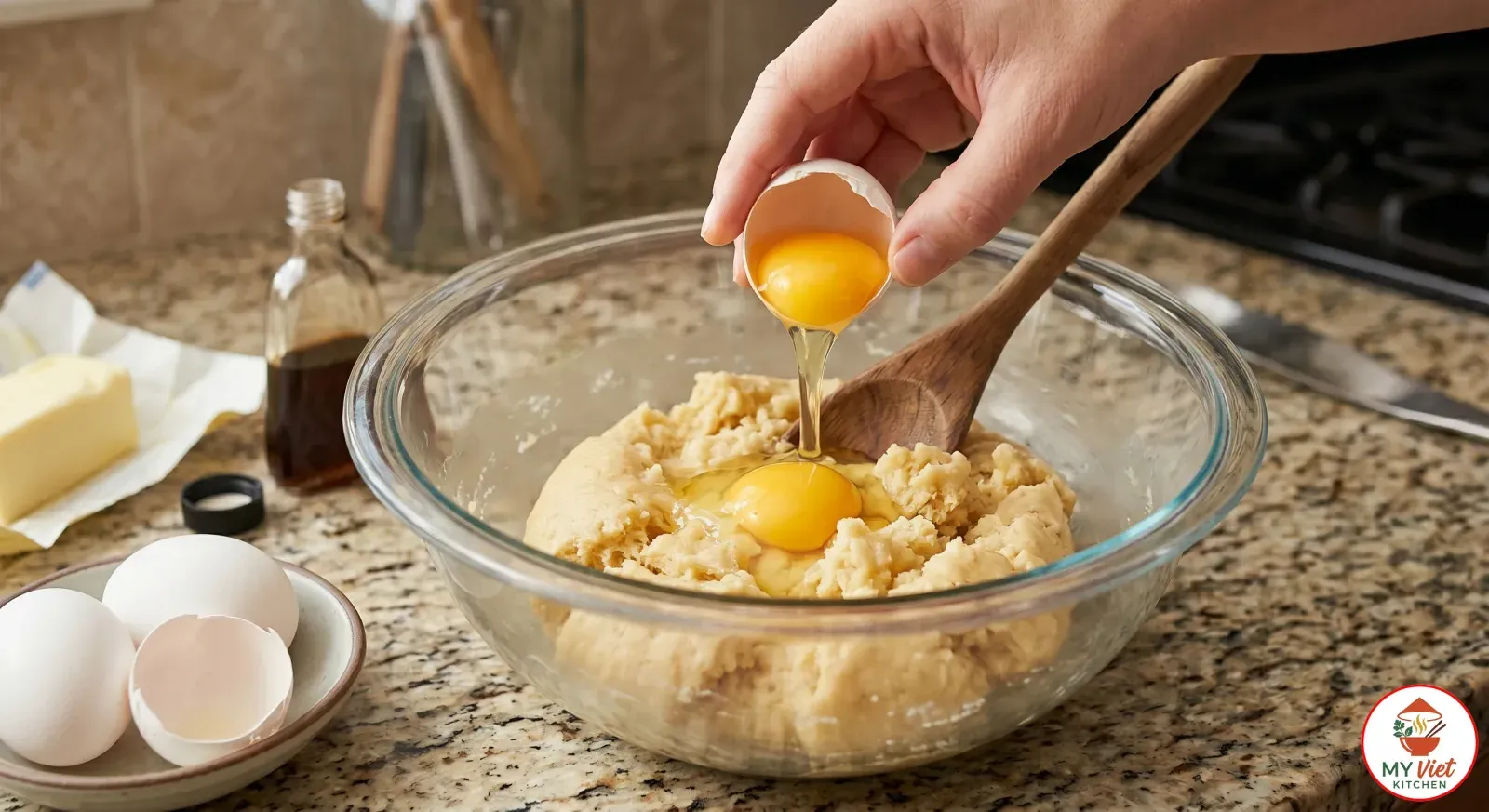
2 Transfer the dough to a large mixing bowl or let it cool in the saucepan for 2 minutes. This brief rest prevents the eggs from scrambling when they meet the hot dough. Beat in the eggs one at a time, stirring vigorously after each addition. After the first egg, the dough will look broken and lumpy. Do not worry. Keep mixing until it becomes smooth before adding the next egg. After all three eggs, stir in the vanilla extract.
The finished dough should be thick, smooth, and glossy. It should hold its shape when you lift a spoonful, yet still be soft enough to pipe. If the dough seems too stiff, add a teaspoon of water at a time until it loosens slightly. Then transfer the dough to a piping bag fitted with a large open star tip. Additionally, twisting the top of the piping bag closed gives you better control when squeezing the dough into the hot oil.
Step 3: Fry the Churros
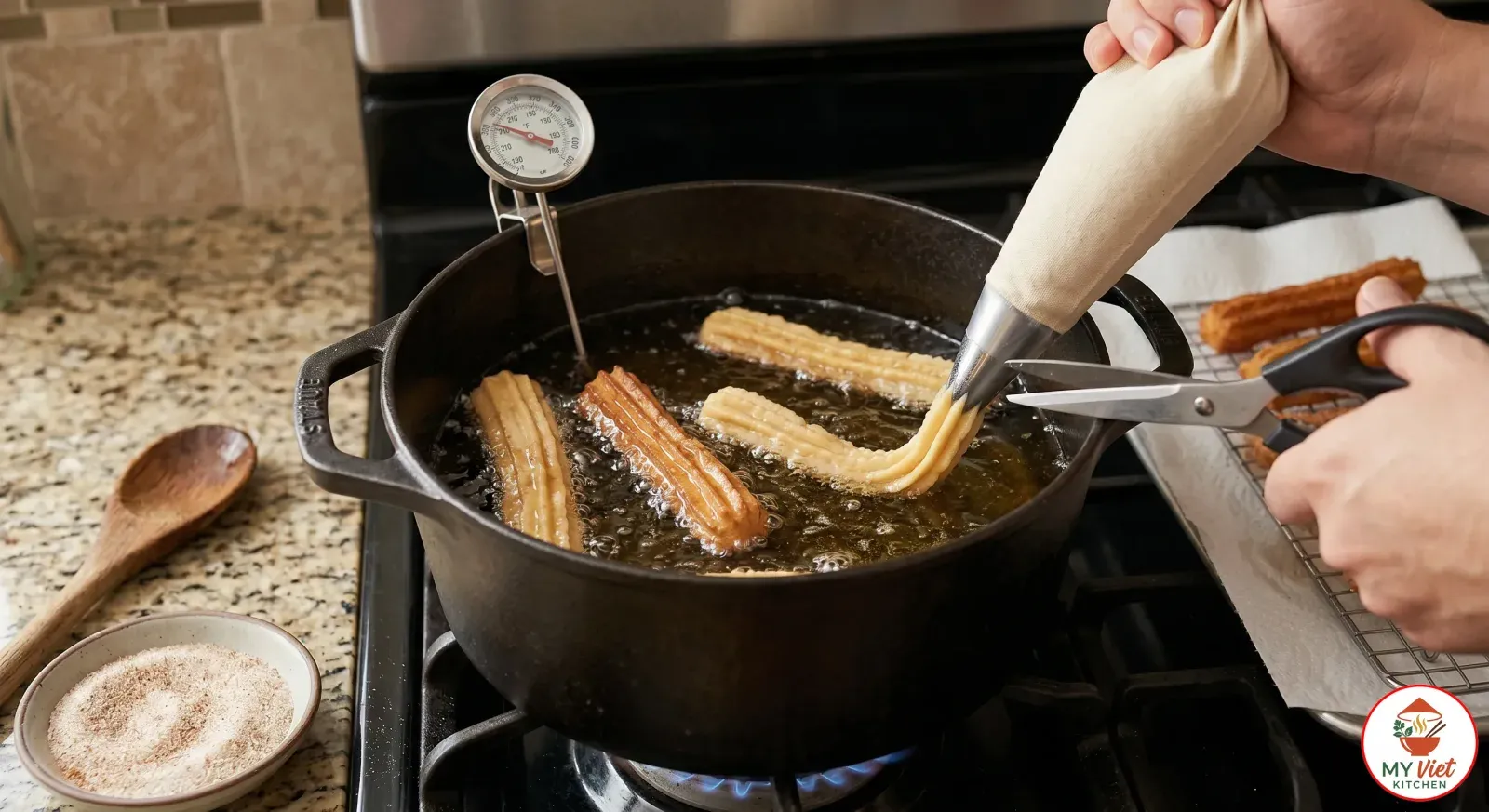
3 Pour 2 inches of vegetable oil into a heavy-bottomed pot or Dutch oven. Heat the oil to 375 degrees Fahrenheit (190 degrees Celsius) using a deep-fry or candy thermometer. Pipe 6-inch strips of dough directly over the oil, cutting each strip with kitchen scissors or a butter knife dipped in oil. Drop 4 to 5 churros into the oil at a time. Fry for 3 to 4 minutes, turning them once halfway through, until they reach a deep golden brown on all sides.
Temperature control is the single most important factor in crispy churros. If the oil runs too cool, the dough absorbs grease and turns soggy. If it runs too hot, the outside burns before the inside cooks through. Therefore, use a thermometer and adjust the burner between batches. Allow the oil to return to 375 degrees before adding the next round. Furthermore, do not overcrowd the pot because too many churros at once drops the temperature rapidly and produces uneven results.
Step 4: Coat in Cinnamon Sugar
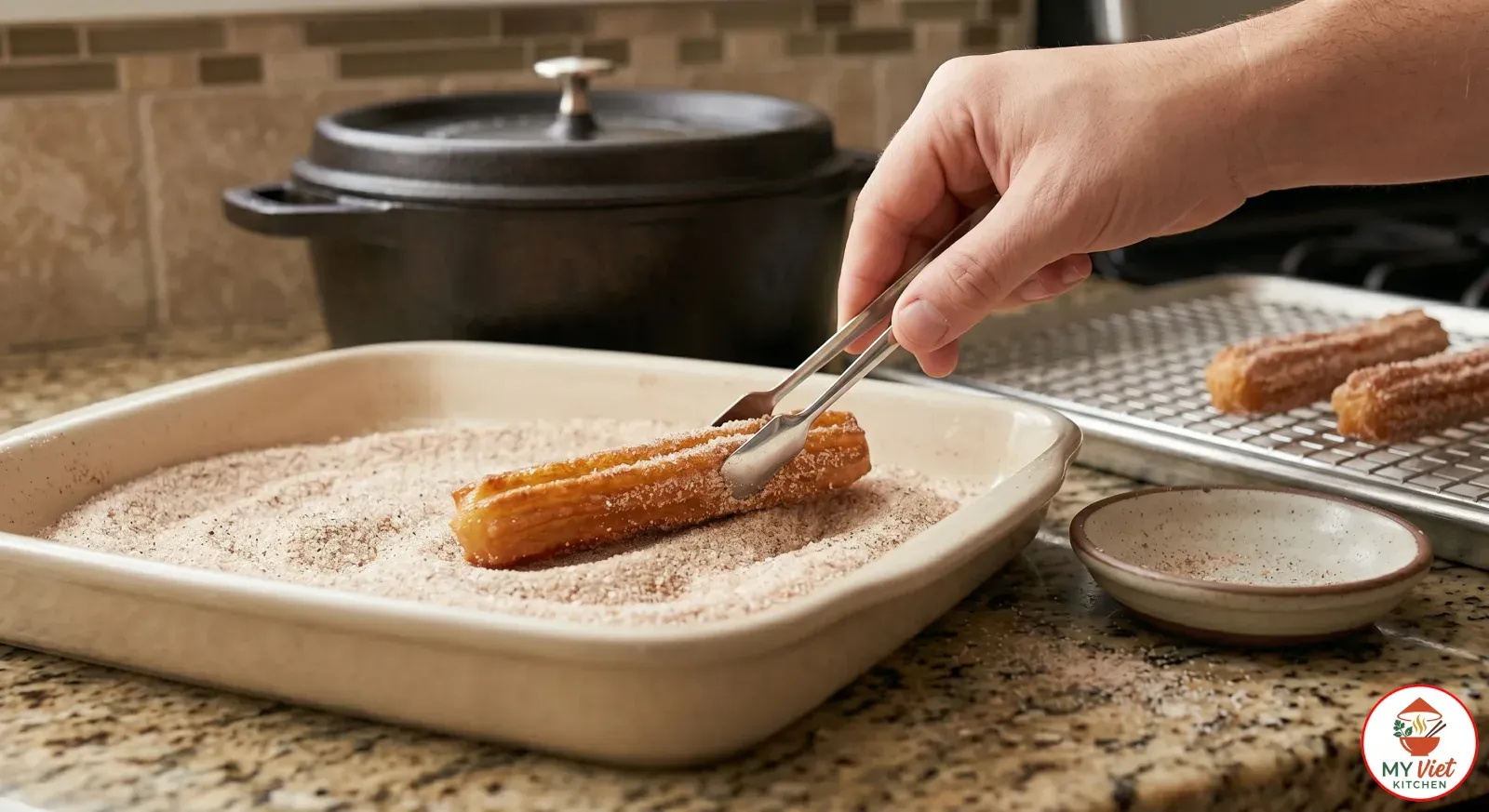
4 Mix the sugar and cinnamon together in a shallow dish or baking pan. Remove the fried churros from the oil with a slotted spoon or spider strainer. Let them drain on a wire rack or paper towels for about 30 seconds. While the churros are still hot, roll each one through the cinnamon-sugar mixture until fully coated. The residual heat from frying helps the coating stick firmly to the ridged surface.
Timing matters here. If you wait too long, the churros cool down and the sugar does not adhere properly. Coat them within the first minute after frying for the best results. In addition, the ridges created by the star piping tip trap extra cinnamon sugar in every groove. This means each bite delivers a burst of sweetness and warmth that a smooth churro simply cannot match.
Step 5: Make the Chocolate Dipping Sauce
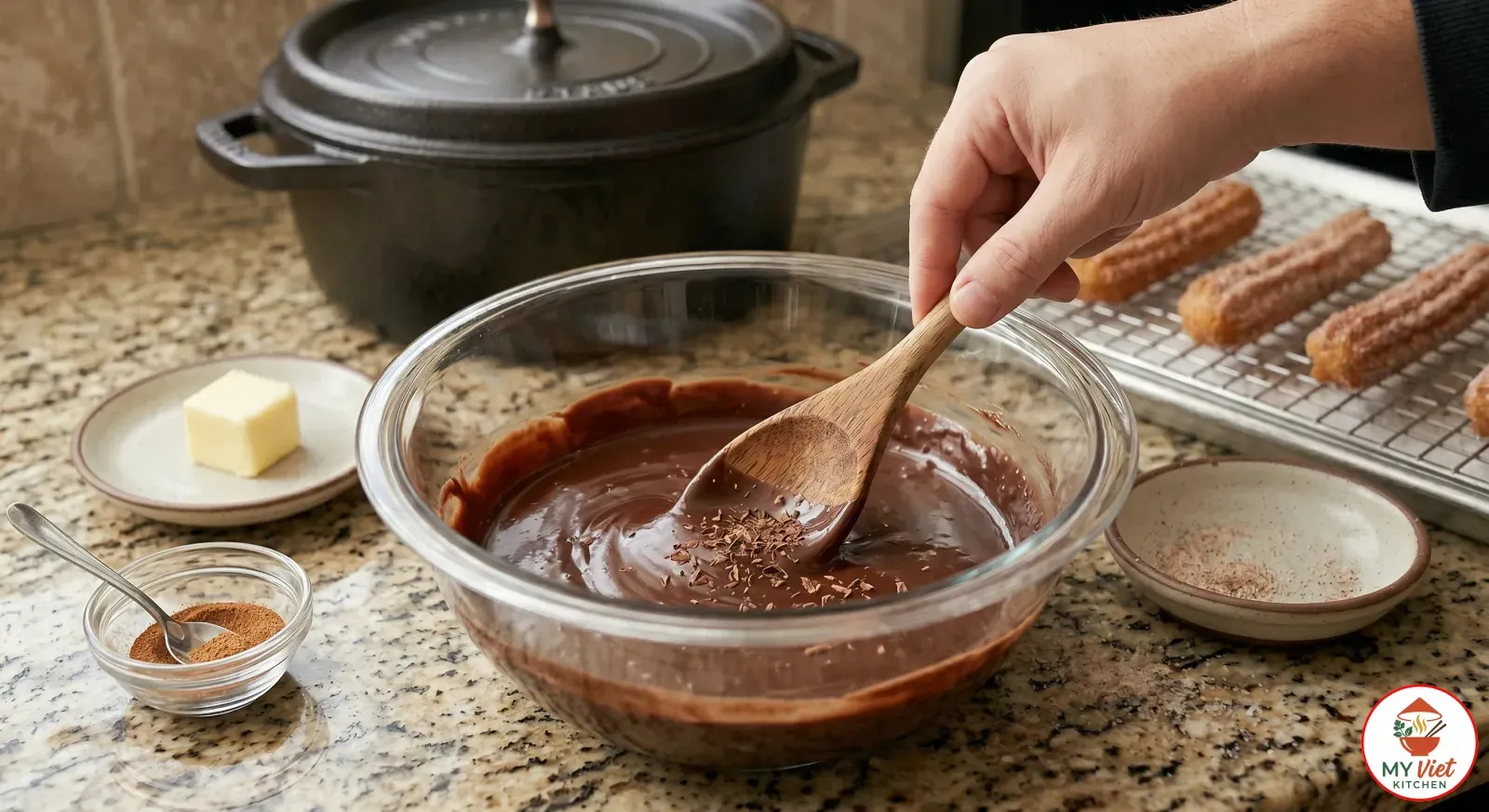
5 Place the finely chopped chocolate in a heatproof bowl. Heat the heavy cream in a small saucepan over medium heat until tiny bubbles form around the edges. Pour the hot cream over the chocolate and let it sit undisturbed for 1 minute. Then stir gently from the center outward until the mixture becomes smooth and glossy. Add the butter and cinnamon, stirring until everything melts together into a silky ganache.
This chocolate sauce uses a simple ganache technique that takes under 5 minutes. The ratio of chocolate to cream creates a thick, pourable consistency that clings to the churro without running off. If the sauce seems too thick, add a tablespoon of warm cream. Conversely, if it seems thin, let it cool for a few minutes to thicken. Serve the sauce warm in a small bowl alongside your platter of churros.
Expert Tips for Perfect Churros
Use a Thermometer for Consistent Results
A deep-fry thermometer removes all the guesswork from frying. Clip it to the side of your pot and monitor the temperature throughout the process. Oil temperature fluctuates constantly as you add and remove batches. Without a thermometer, you are guessing, and guessing leads to churros that are either greasy or burnt. Therefore, this inexpensive tool is the single best investment for perfect homemade churros.
Pipe Directly Over the Oil
Piping the dough straight into the hot oil gives you the cleanest shape. Hold the piping bag about 2 inches above the surface and squeeze steadily. Use oiled scissors to snip each churro to your desired length. Some cooks pipe onto parchment strips first, then lower the strips into the oil. However, the direct method gives you more control over shape and reduces sticking.
Let the Dough Cool Before Adding Eggs
Adding eggs to scorching-hot dough scrambles them on contact. Wait 2 minutes after removing the pan from heat before beating in the first egg. The dough should still be warm but not so hot that it cooks the egg instantly. This patience ensures a smooth, emulsified dough that pipes evenly. In contrast, scrambled egg bits create a lumpy texture that clogs the piping tip.
Mexican Churros vs. Spanish Churros: A Comparison
Although churros share the same origins, the Mexican and Spanish versions have developed into distinctly different treats. Each country puts its own stamp on this fried dough tradition. Here is a side-by-side comparison of the two most popular styles.
| Feature | Mexican Churros | Spanish Churros |
|---|---|---|
| Shape | Thick, straight, ridged sticks | Thin, sometimes looped or spiral |
| Coating | Generous cinnamon sugar | Plain or light sugar dusting |
| Filling | Often filled with dulce de leche, cajeta, or chocolate | Rarely filled |
| Dipping Sauce | Chocolate sauce or cajeta | Thick hot chocolate (churros con chocolate) |
| Texture | Crispy outside, soft and airy inside | Crispier throughout, denser crumb |
| Serving | Street stalls, festivals, carnivals | Churrerías, breakfast cafés |
Serving Suggestions
Churros taste best when served immediately after frying, while the exterior still crackles and the inside stays warm and soft. In Mexico, they appear at every celebration from birthday parties to Día de los Muertos festivities. Below are the most popular ways to enjoy freshly made churros at home.
The Perfect Accompaniments:
- Chocolate dipping sauce: The classic pairing. Rich, warm ganache clings to the ridged surface and adds a bittersweet contrast to the cinnamon sugar coating.
- Dulce de leche: This thick caramel spread made from slow-cooked milk is the quintessential Mexican accompaniment. Its deep butterscotch flavor complements the vanilla in the dough.
- Cajeta: Similar to dulce de leche but made with goat milk, cajeta has a tangier, more complex flavor. It is the traditional dipping sauce in many Mexican churrerías.
- Vanilla ice cream: Warm churros alongside a scoop of cold vanilla ice cream creates an irresistible temperature contrast. The melting ice cream doubles as an extra dipping sauce.
Beverage Pairings:
- Mexican hot chocolate: Made with cinnamon, vanilla, and a touch of chili, this rich drink mirrors the flavors in the churros themselves. The combination is a beloved tradition throughout Mexico.
- Café de olla: This traditional Mexican coffee brewed with cinnamon and piloncillo pairs beautifully with the sweetness of churros. The earthy warmth of the coffee balances the fried richness.
- Horchata: The cool, creamy rice-and-cinnamon drink offers a refreshing contrast to warm, crispy churros. It is a favorite pairing at Mexican street food stalls.
- Cold milk: Sometimes the simplest pairing is the best. A tall glass of cold milk cuts through the sweetness and richness of freshly fried churros.
Storage and Reheating
Refrigerator: Store leftover churros in a single layer in an airtight container for up to 2 days. Stacking them causes the cinnamon sugar to become soggy. However, churros lose significant crispness in the fridge. They taste best fresh, so only refrigerate what you cannot eat immediately.
Freezer: Freeze uncoated churros on a parchment-lined baking sheet until solid, then transfer to a freezer bag. They keep for up to 1 month. Reheat from frozen in a 400-degree oven for 8 to 10 minutes, then roll in fresh cinnamon sugar. Alternatively, re-fry frozen churros in 375-degree oil for 2 minutes to restore their original crunch.
Reheating: The oven is your best option for reheating churros. Place them on a wire rack set over a baking sheet at 375 degrees Fahrenheit for 5 to 8 minutes. This method re-crisps the exterior without making them greasy. Avoid the microwave because it turns the crispy coating soft and chewy. Consequently, the churros lose the textural contrast that makes them special.
Common Mistakes to Avoid
1. Oil Temperature Too Low
This is the most common problem home cooks face when making churros. Cold oil saturates the dough with grease before a crust can form. The result is a limp, oily churro with no crunch. Always preheat your oil to 375 degrees Fahrenheit and use a thermometer to verify. Besides that, allow the oil to recover between batches before adding more dough.
2. Overcrowding the Frying Pot
Dropping too many churros into the oil at once causes the temperature to plummet. Each piece of cold dough absorbs heat from the oil, and a crowded pot cannot recover fast enough. Fry no more than 4 to 5 churros at a time in a standard home pot. Patience during this step ensures every churro achieves the same golden, crispy finish.
3. Skipping the Star Tip
A plain round piping tip produces churros without ridges. Those ridges serve a critical purpose beyond appearance. They increase the surface area exposed to the hot oil, creating more crunchy edges per bite. Additionally, the grooves trap cinnamon sugar so every mouthful delivers a full coating of sweetness. Always use a large open star tip for authentic texture and flavor.
4. Adding Eggs to Boiling-Hot Dough
If you add eggs immediately after cooking the flour mixture, they scramble on contact. Scrambled bits ruin the smooth texture and clog the piping tip. Let the dough cool for 2 minutes before beating in the first egg. The dough should feel warm, not scalding. This brief pause makes the difference between silky dough and a lumpy mess.
Frequently Asked Questions
What is the difference between Mexican churros and Spanish churros?
Mexican churros are thicker, coated generously in cinnamon sugar, and often filled with dulce de leche or cajeta. Spanish churros are thinner, lightly dusted with sugar or left plain, and served with thick hot chocolate for dipping. The Mexican version uses a star tip for deep ridges, while Spanish churros sometimes have a smooth exterior. Although both share the same basic concept of fried dough, the flavor profiles and serving traditions differ significantly.
Can I bake churros instead of frying them?
Yes, baking is a lighter alternative. Pipe the dough onto a parchment-lined baking sheet and bake at 425 degrees Fahrenheit for 12 to 15 minutes. Brush the baked churros with melted butter before rolling in cinnamon sugar. However, baked churros lack the deep golden crust and shatteringly crispy texture that define the traditional version. For the most authentic experience, frying remains the superior method.
Why are my churros not crispy?
Soggy churros almost always result from oil that is not hot enough. When the temperature drops below 350 degrees, the dough soaks up oil instead of forming a crust. Use a thermometer and maintain 375 degrees throughout frying. Overcrowding the pot also causes temperature drops. Fry in small batches of 4 to 5 at a time. Consequently, each churro gets enough heat exposure to develop a properly crispy exterior.
What kind of oil is best for frying churros?
Neutral oils with high smoke points work best. Vegetable oil, canola oil, and peanut oil are the top three choices. They fry cleanly at 375 degrees without adding unwanted flavors. Avoid olive oil because it smokes at frying temperature. Similarly, coconut oil adds a distinct tropical flavor that clashes with the cinnamon-sugar profile. Stick with a neutral oil for the cleanest, crispiest churros.
Can churros be made ahead of time?
You can prepare the dough up to 24 hours in advance. Place it in a piping bag, wrap tightly, and refrigerate until ready to fry. Let the bag sit at room temperature for 10 minutes before piping so the dough flows smoothly. However, the fried churros themselves are best eaten immediately. Reheating in a 375-degree oven for 5 to 8 minutes restores some crispness, but nothing compares to freshly fried churros straight from the pot.
What are popular fillings for churros?
In Mexico, the most beloved fillings include dulce de leche, cajeta, chocolate ganache, and strawberry jam. To fill churros at home, let them cool slightly after frying. Use a piping bag fitted with a narrow round tip and inject the filling through one end. Filled churros are a beloved street food treat throughout Mexico and Latin America. Moreover, Nutella, pastry cream, and guava paste are popular modern additions.
Variations and Adaptations
Filled Churros:
To make filled churros, fry them as directed and let them cool for 3 minutes. Fill a piping bag with dulce de leche, chocolate ganache, or cajeta. Insert a narrow round tip into one end of the churro and gently squeeze filling into the center. You will feel the churro grow heavier as it fills. Stop before the filling oozes out the other end. In many Mexican cities, filled churros outsell the plain version at street stalls.
Churro Bites:
Cut the piped dough into 1-inch pieces instead of 6-inch strips. These bite-sized churros fry faster and are perfect for parties. Toss them in cinnamon sugar and serve in paper cones or bowls with dipping sauce on the side. They also make an excellent topping for ice cream sundaes. Furthermore, churro bites are easier to manage for kids and less messy for casual gatherings.
Baked Churros:
For a lighter version, pipe the dough onto a parchment-lined baking sheet. Bake at 425 degrees Fahrenheit for 12 to 15 minutes until golden. Brush immediately with melted butter and roll in cinnamon sugar. Baked churros skip the oil entirely and cut the calories significantly. Although the texture differs from fried churros, they still satisfy that craving for warm, cinnamon-scented dough. This version works well for weeknight treats when you want to avoid deep frying.
Churro Ice Cream Sandwiches:
Split a cooled churro lengthwise and sandwich a scoop of vanilla, chocolate, or dulce de leche ice cream between the halves. Roll the exposed ice cream edge in mini chocolate chips or sprinkles. Wrap in parchment paper and serve immediately. This modern twist has become a viral sensation for good reason. The combination of crispy, warm dough with cold, creamy ice cream creates one of the most satisfying textural experiences in dessert.
The Cultural Significance of Churros
The history of churros stretches across continents and centuries. Most food historians trace their origins to Spain, where Portuguese or Spanish explorers may have adapted a similar fried dough from China. When Spanish conquistadors arrived in Mexico, they brought the recipe with them. Mexican cooks embraced the concept and made it their own. They added cinnamon sugar, created filled versions, and turned churros into a cornerstone of Mexican street food culture.
In Mexico today, churros are far more than a snack. They appear at birthday parties, wedding receptions, Christmas posadas, and Día de los Muertos celebrations. Churro vendors set up their carts outside schools, in public plazas, and at weekend markets. The sight of a churrero piping fresh dough into bubbling oil while clouds of cinnamon-scented steam rise into the air is a sensory experience that defines Mexican street life. Meanwhile, churrerías across the country serve them with hot chocolate, café de olla, or cold horchata.
The global popularity of churros has exploded in recent decades. Today you find them at theme parks, food trucks, and dessert shops on every continent. Korean street markets sell churros filled with custard and matcha cream. Colombian churros come stuffed with arequipe. In the Philippines, they appear at fiestas alongside other Spanish-influenced treats. Each culture puts its own twist on the basic recipe. Nevertheless, the Mexican version with its bold cinnamon-sugar coating and dulce de leche filling remains the gold standard that inspires all others.
Conclusion
This churros recipe proves that a handful of pantry staples can produce something truly spectacular. Master the choux dough technique, keep your oil at 375 degrees, and coat them in cinnamon sugar while still hot. Those three principles guarantee crispy, golden churros with a soft, airy interior every single time. Whether you dip them in rich chocolate sauce, fill them with dulce de leche, or enjoy them plain with a cup of Mexican hot chocolate, these homemade churros will become a favorite in your kitchen.
Ready to explore more beloved Latin American and global desserts? Browse our Latin American dishes collection for more street food classics. You might also enjoy our French crepes or classic apple pie for more sweet inspiration. Each recipe features the same detailed, step-by-step approach to bring world cuisine to your kitchen.