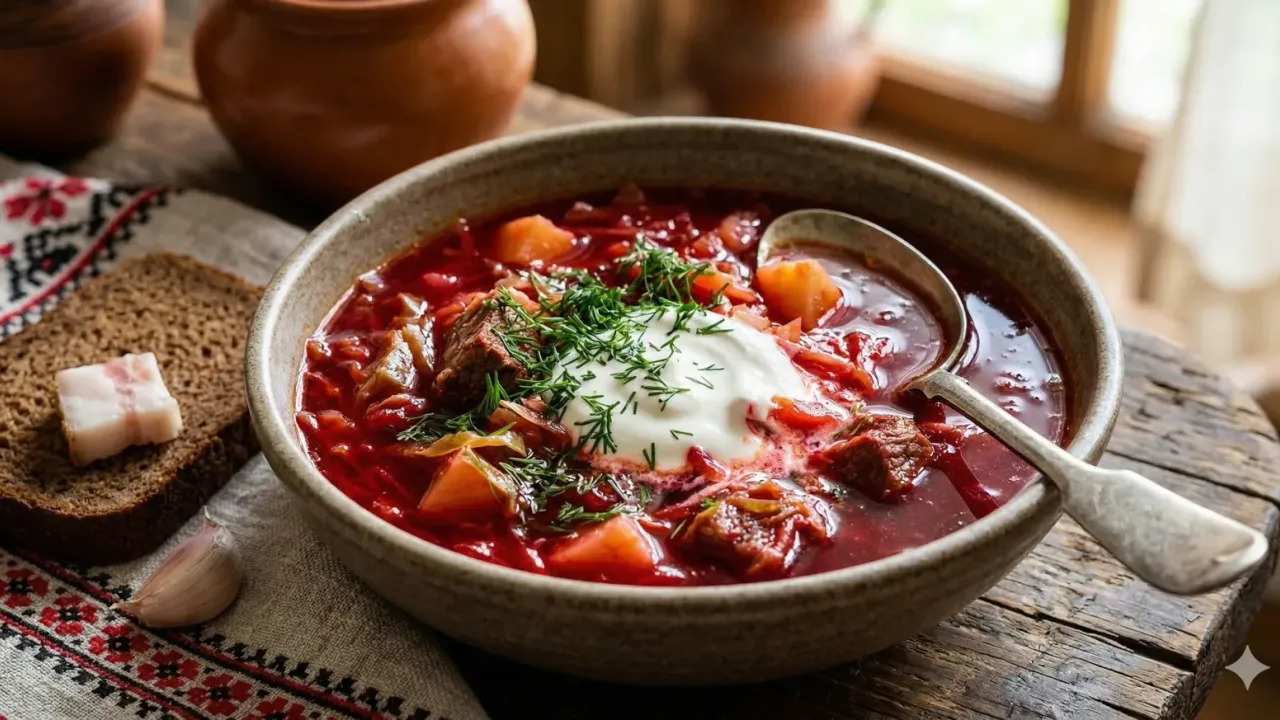
Borscht is the pride of Ukrainian cuisine, and this borscht recipe shows you how to make the real thing at home. This deep ruby-red soup brings together tender beef, earthy beets, hearty potatoes, and soft cabbage in a broth that warms you from the inside out. Crowned with a swirl of cool sour cream and a shower of fresh dill, borscht is comfort in a bowl. This borscht recipe works for busy weeknights and special Sunday dinners alike.
Prep Time: 30 minutes | Cook Time: 90 minutes | Servings: 8
Difficulty: Easy | Calories: ~320 per serving
What Makes This Borscht Recipe Special?
Borscht is not just a beet soup. It is a dish that carries the soul of Ukraine. Every family has its own version, and cooks argue over the right way to make it with the same passion that Italians show for pasta sauce. What makes a great borscht is the balance: sweet beets, tangy tomatoes, rich beef broth, and a hit of acid from vinegar or lemon juice. When these elements come together, the result is a soup with deep, layered flavor.
This borscht recipe uses a key technique that many quick recipes skip. The beets are sauteed with acid before they go into the pot. This step does two things. First, it locks in the bright red color so your soup looks stunning. Second, it softens the beets and brings out their natural sweetness. Without this step, borscht turns dull brown and loses its visual appeal.
Borscht has roots that go back centuries in Eastern Europe. In 2022, UNESCO added Ukrainian borscht to its list of cultural heritage items in need of safeguarding. This move showed the world how important this soup is to Ukrainian identity. Making borscht at home is a way to honor that tradition and enjoy one of the world’s great soups.

Choosing the Right Beets for Borscht
The beet is the heart of any borscht recipe, so picking the right ones matters. Here are your best options for a deeply colored, flavorful soup.
- Red beets (best choice): Standard red beets give borscht its famous ruby color and earthy sweet flavor. Choose firm, medium-sized beets with smooth skin. Avoid very large beets, as they can be woody and less sweet.
- Chioggia beets: These candy-striped beets look striking but lose their color when cooked. They turn pale pink in soup rather than the deep red you want. They work better in raw salads than in borscht.
- Golden beets (not ideal): While tasty, golden beets produce a yellow-orange soup instead of the classic red. If color does not matter to you, they bring a milder, sweeter flavor. However, for a true borscht recipe, stick with red beets.
Ingredients for Borscht
Beef and Broth:
- 1.5 pounds beef chuck or short ribs, cut into chunks
- 8 cups beef broth or cold water
- 2 bay leaves
Beet Base (Sauteed):
- 3 medium beets, peeled and grated
- 2 medium carrots, peeled and grated
- 1 medium onion, finely diced
- 1 can (14 oz) diced tomatoes
- 2 tablespoons tomato paste
- 2 tablespoons white vinegar or lemon juice
- 1 tablespoon sugar
- 3 tablespoons vegetable oil
Vegetables and Seasoning:
- 3 medium potatoes, peeled and cubed
- 1/2 small head of cabbage, thinly shredded
- 3 cloves garlic, minced
- Salt and black pepper to taste
- Fresh dill for garnish
- Sour cream for serving
Pro tip: The vinegar in the beet base is not just for flavor. It serves a vital role: acid keeps the beet pigment bright and stable during cooking. Without it, your borscht will turn a muddy brownish-red instead of the vibrant ruby color you want. Do not skip this step.
Step-by-Step Instructions
Step 1: Make the Beef Broth
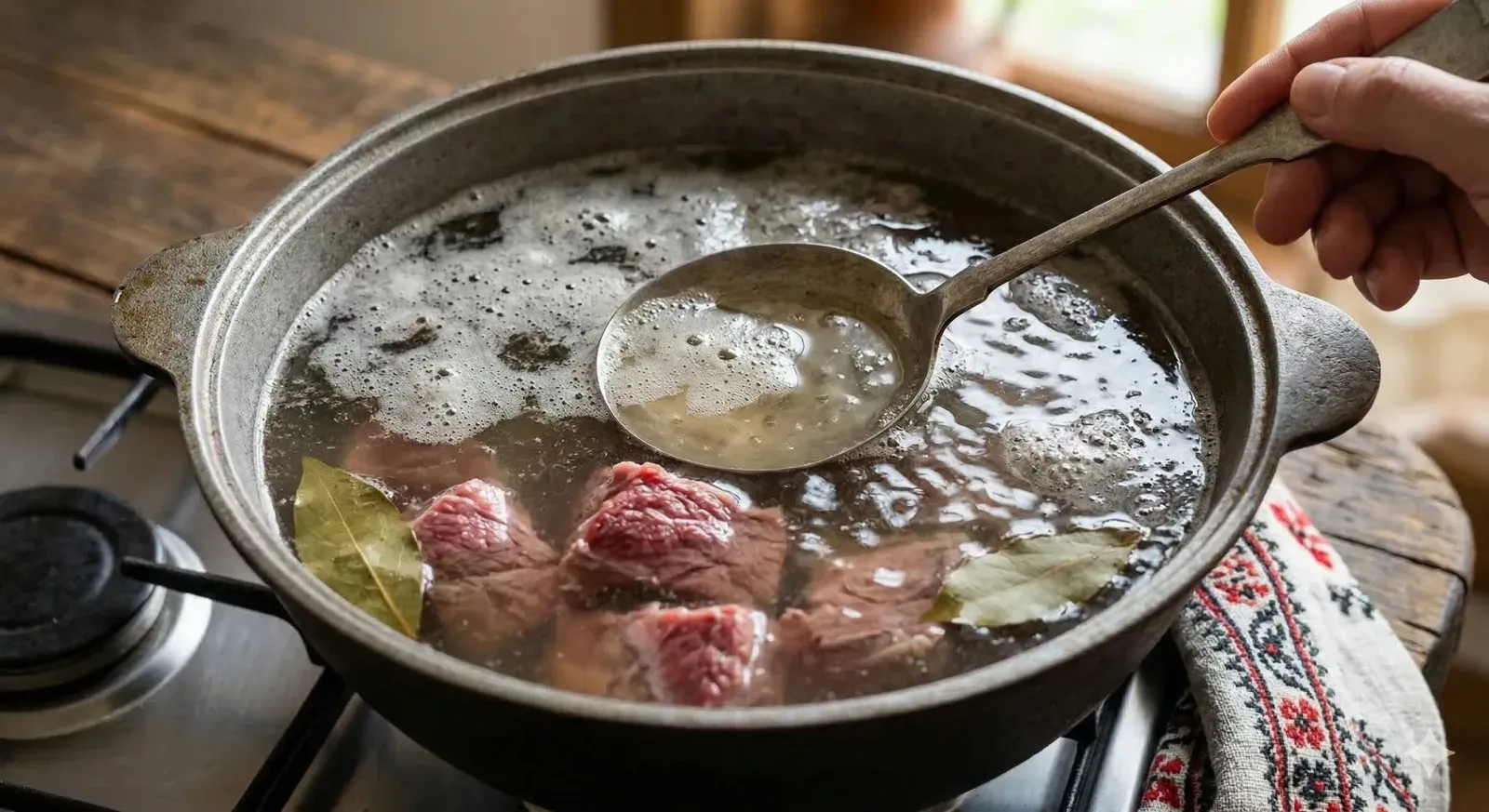
1 Place the beef chunks in a large pot and cover with 8 cups of cold water or broth. Bring to a boil over high heat. As the water heats up, gray foam will rise to the top. Skim this off with a spoon to keep your broth clear and clean-tasting.
Once the foam is gone, add the bay leaves and lower the heat to a gentle simmer. Cook for about 1 hour with the lid slightly open. The beef should be fork-tender and falling apart easily. If needed, add more water during cooking so the meat stays covered. A slow simmer gives you a rich, flavorful base for the soup.
Step 2: Prepare the Beet Base
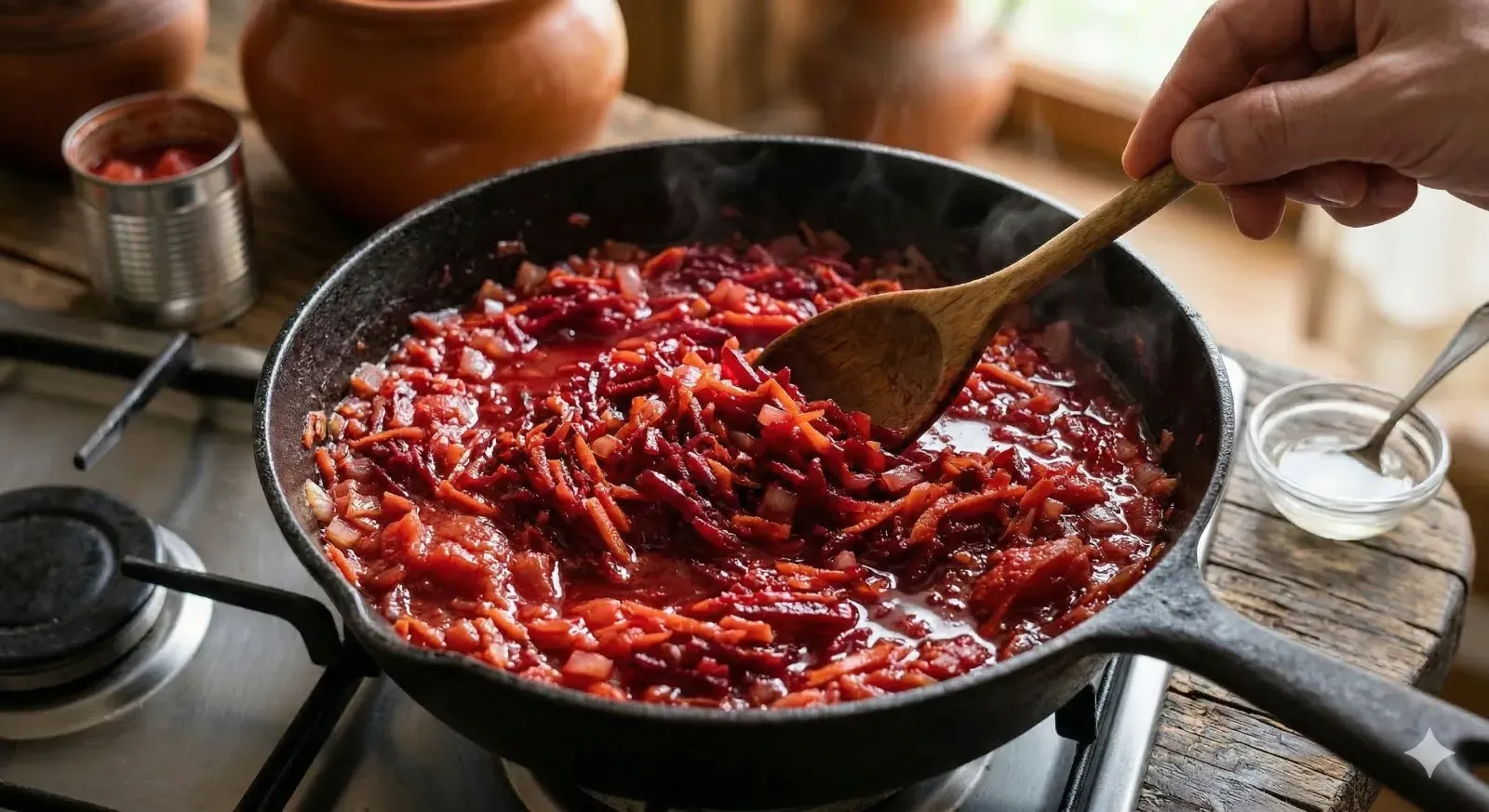
2 While the beef simmers, heat the oil in a large skillet over medium heat. Add the grated beets, grated carrots, and diced onion. Saute for about 10 minutes, stirring often, until the veggies soften. The beets will release their deep red juice and stain everything a gorgeous crimson.
Now add the tomato paste, diced tomatoes, sugar, and vinegar. Stir well and cook for 5 more minutes. The acid from the vinegar is the secret to a red borscht. It locks in the bright beet color and stops it from fading during the long simmer. Set this beet base aside until the broth is ready.
Step 3: Build the Soup
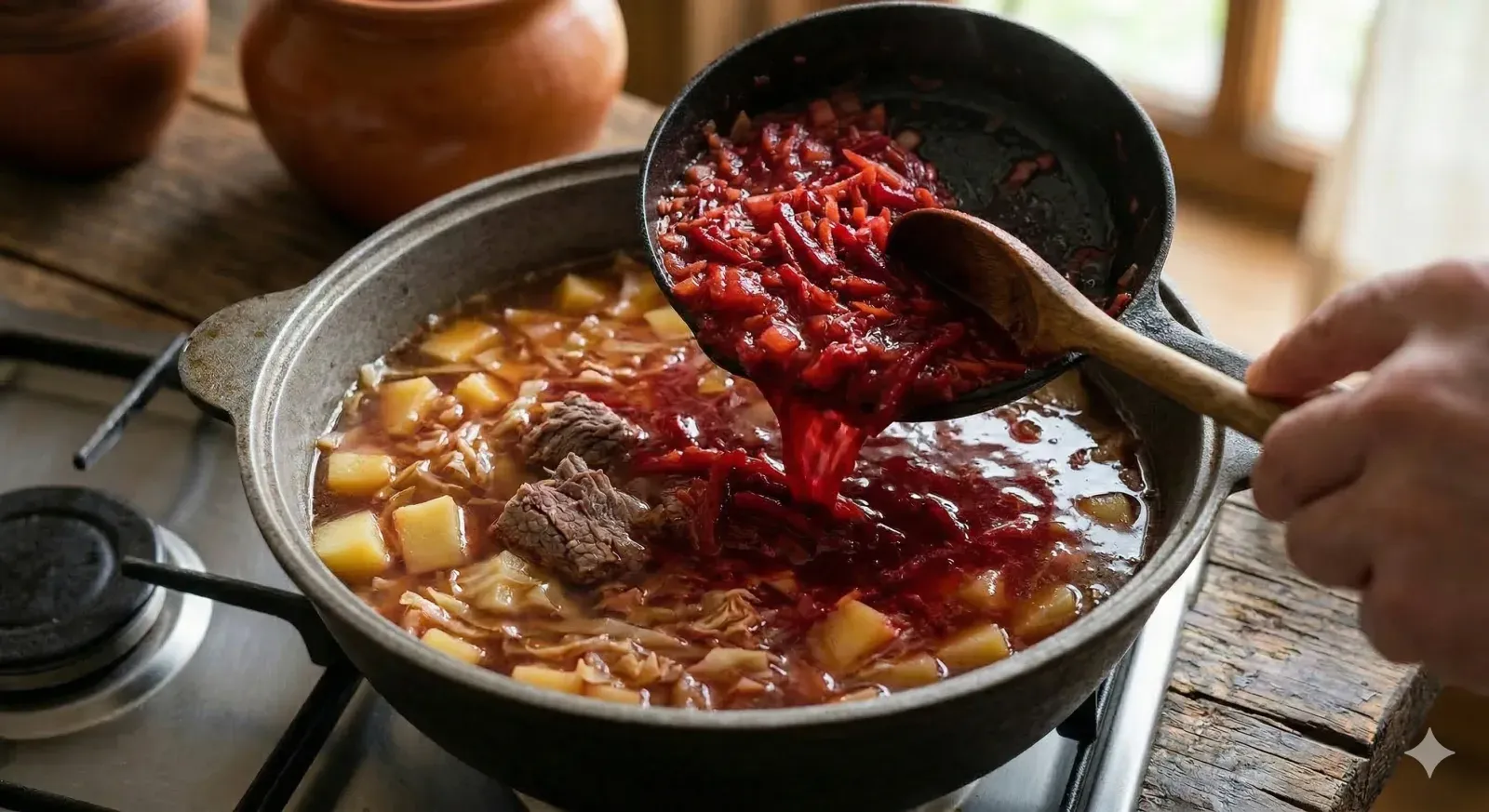
3 Remove the cooked beef from the broth. Shred or chop it into bite-sized pieces and set aside. Add the cubed potatoes to the broth and cook for 10 minutes until they just start to soften. Then add the shredded cabbage and the entire beet base. Stir well to combine.
Simmer for 15 more minutes until all the veggies are tender but not mushy. Add the minced garlic and return the beef to the pot. Season with salt and pepper. Taste the broth and adjust as needed. The soup should have a nice balance of sweet, sour, and savory notes. If it tastes flat, add a splash more vinegar or a pinch of sugar.
Step 4: Rest and Serve
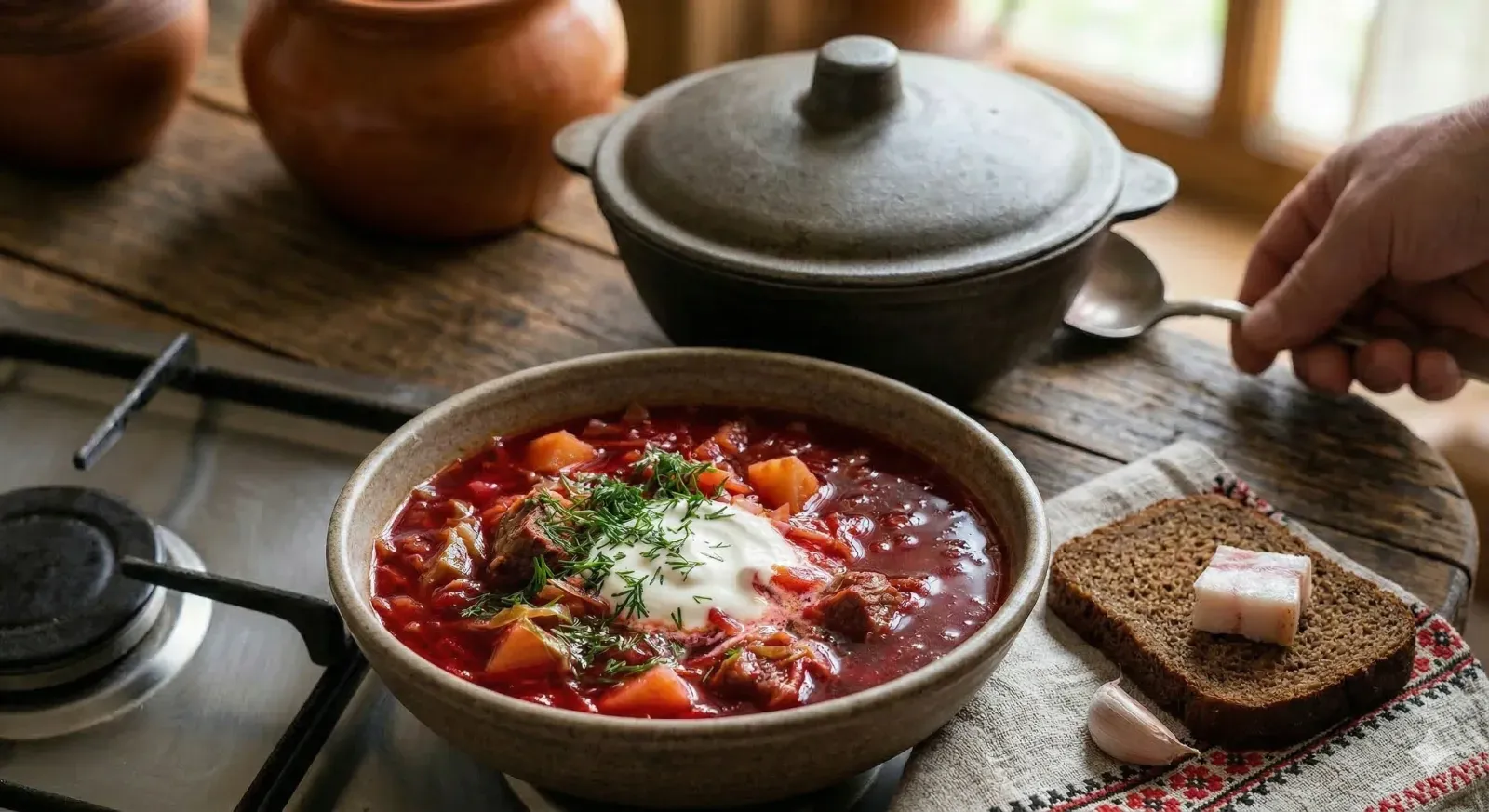
4 Turn off the heat and cover the pot with a lid. Let the borscht rest for 15 to 20 minutes. This resting step is important because it lets the flavors marry and deepen. Ukrainian cooks say borscht needs this time to “come together” properly.
Ladle the hot soup into deep bowls. Drop a big spoonful of cool sour cream into the center of each bowl and scatter fresh dill on top. The contrast of the hot, ruby-red soup with the cold white sour cream is both stunning and delicious. Serve with crusty bread or garlic pampushky on the side.
Expert Tips for the Perfect Borscht Recipe
Always Saute the Beets First
This is the most important tip for any borscht recipe. Raw beets dumped straight into boiling broth will lose their color fast. By sauteing them in oil with a bit of acid first, you seal in the bright red pigment. This gives your soup that famous ruby glow that makes borscht so striking in the bowl.
Use a Mix of Grated and Cubed Veggies
Grating the beets and carrots helps them break down and meld into the broth. Meanwhile, the cubed potatoes and shredded cabbage hold their shape. This mix of textures is what makes borscht so satisfying. Every spoonful has both silky broth and hearty chunks of soft vegetables.
Let It Rest Before Serving
Borscht rewards patience. After cooking, let the pot sit covered for 15 to 20 minutes off the heat. During this time, the garlic blooms, the flavors blend, and the soup reaches its full depth. Many Ukrainian families insist that borscht tastes best the next day, and they are right. The flavors only get better with time.
Borscht Across Eastern Europe
Almost every country in Eastern Europe has its own style of borscht. The base of beets and sour flavor stays the same, but each region adds its own twist. Here is how the major versions stack up.
| Country | Style | Key Features | Serving Tradition |
|---|---|---|---|
| Ukraine | Classic red borscht | Beef, beets, cabbage, potatoes, tomatoes | Hot with sour cream and dill, served with pampushky |
| Russia | Borshch moskovskiy | Often includes smoked meats and kidney beans | Hot with rye bread and sour cream |
| Poland | Barszcz czerwony | Clear beet broth, often strained, served as a starter | Hot or warm, often with uszka (tiny dumplings) on Christmas Eve |
| Lithuania | Saltibarsciai | Cold pink soup with kefir, cucumbers, and hard-boiled eggs | Cold in summer, served with hot boiled potatoes |
| Romania | Bors | Sour soup using fermented wheat bran (bors) as the acid | Hot, with sour cream and fresh herbs |
Serving Suggestions
In Ukraine, borscht is the center of the meal. It is eaten from a deep bowl with a big spoon, often as the main course rather than a starter. The right sides turn a bowl of borscht into a full feast.
Classic Accompaniments:
- Pampushky (garlic bread rolls): These soft, fluffy rolls brushed with garlic oil are the perfect partner for borscht. Tear off a piece and dunk it into the ruby-red broth. They are easy to bake and take the meal to another level.
- Dark rye bread: A dense, tangy slice of rye bread alongside your borscht is a classic pairing. The earthy rye flavor matches the deep taste of the beets.
- Salo (cured pork fat): Thinly sliced salo on rye bread with a clove of raw garlic is a traditional side in rural Ukraine. It is rich, salty, and goes well with the sour broth.
- Pierogi or varenyky: Potato-filled dumplings make a hearty side that turns borscht into a true Ukrainian feast.
Beverage Pairings:
- Kompot: A light fruit drink made by simmering dried apples, pears, and berries. It is sweet, mild, and refreshing next to a rich bowl of soup.
- Kvass: A mildly sour, lightly fizzy drink made from fermented dark bread. Its tangy flavor echoes the sour notes in the borscht.
- Chilled vodka: A small shot of ice-cold vodka between spoonfuls of hot borscht is a classic Eastern European custom. The cold spirit warms you from within.
- Black tea with lemon: A hot cup of tea rounds out the meal nicely, especially during cold winter months.
Storage and Reheating
Refrigerator: Borscht keeps for up to 5 days in the fridge. In fact, it tastes better on day two or three as the flavors blend and deepen. Store it in a sealed pot or container. The color may darken a bit, but the taste only improves.
Freezer: This soup freezes well for up to 3 months. Let it cool fully, then pour into freezer bags or containers. Leave some space at the top for the liquid to expand. Thaw in the fridge the night before you plan to eat it.
Reheating: Warm borscht gently on the stove over medium-low heat. Stir now and then so it heats evenly. Avoid a hard boil, because that can dull the color and make the veggies mushy. Add a fresh splash of vinegar and some new dill when serving to perk up the flavor.
Common Mistakes to Avoid
1. Adding Raw Beets Straight to the Pot
This is the biggest mistake in any borscht recipe. Raw beets lose their color in boiling broth. The soup turns a dull brown instead of bright red. Always saute the beets first with vinegar or lemon juice to lock in the color. This extra step takes only 15 minutes and makes all the difference.
2. Boiling the Soup Too Hard
A hard, rolling boil breaks down the veggies too fast and clouds the broth. Borscht should simmer gently, with small bubbles rising lazily to the top. Low heat keeps the potatoes and cabbage tender but intact. It also gives you a clearer, prettier broth.
3. Forgetting the Acid
Without vinegar or lemon juice, borscht tastes flat and one-note. The acid does three jobs: it keeps the beets red, adds a pleasant tang, and balances the sweetness of the root veggies. Start with 2 tablespoons and add more to taste. The soup should have a subtle sour edge, not a sharp bite.
4. Serving It Right Away
Fresh-off-the-stove borscht is good, but rested borscht is better. Let the pot sit for at least 15 minutes before you serve. This lets the garlic bloom and the flavors come together. For the best taste, make your borscht a day ahead and reheat it gently the next day.
Frequently Asked Questions
What is borscht made of?
Classic Ukrainian borscht has beef, beets, cabbage, potatoes, carrots, onion, tomatoes, and garlic in a rich broth. Vinegar and sugar balance the sweet and sour notes. Every bowl gets a dollop of sour cream and a sprinkle of fresh dill on top.
Is borscht served hot or cold?
This borscht recipe is served hot. However, there is a cold version called kholodnik that Lithuanians and Poles enjoy in summer. Cold borscht uses kefir or buttermilk as a base and includes cucumbers, radishes, and hard-boiled eggs. Both versions are tasty, but they are very different dishes.
Why is my borscht not red enough?
The color fades when beets cook in liquid without acid. To fix this, always saute the grated beets with vinegar or lemon juice before adding them to the soup. Also, keep the simmer gentle and do not cook the soup too long after the beet base goes in. A splash of fresh vinegar right before serving can boost the color.
Can I make borscht without meat?
Yes, vegetarian borscht is very common. Use vegetable broth and add dried or fresh mushrooms for extra depth. The veggies, beets, and acid provide plenty of flavor on their own. In Ukraine, meatless borscht is a staple during fasting periods like Lent and Christmas Eve.
Does borscht taste better the next day?
Yes, almost every Ukrainian cook will tell you so. Overnight, the spices blend, the beets deepen in flavor, and the broth gets richer. If you can, make your borscht a day ahead. Reheat gently and add fresh sour cream and dill when serving.
What bread goes with borscht?
Pampushky, soft garlic bread rolls, are the most traditional choice. Dark rye bread is another great option. Any crusty, dense bread works well for dunking into the broth. In Ukraine, bread and borscht are inseparable parts of the same meal.
Variations and Adaptations
Green Borscht (Zelenyj Borscht):
This spring version uses sorrel leaves instead of beets. The broth is light and tangy with a bright green color. Add potatoes, hard-boiled eggs, and sour cream. Green borscht is popular in Ukraine from April to June when fresh sorrel is in season.
Mushroom Borscht:
Replace the beef with dried porcini mushrooms and their soaking liquid. The mushrooms add a deep, earthy richness that stands up well to the beets. This version is a holiday staple for the meatless Christmas Eve supper in many Ukrainian homes.
Quick Weeknight Borscht:
Skip the beef and use store-bought broth to cut the cooking time in half. Grate the beets and carrots, dice the potatoes small, and shred the cabbage thin. Everything will cook in about 30 minutes. Add canned beans for protein instead of meat. This lighter version is great for busy evenings.
The Cultural Significance of Borscht
Borscht is more than a recipe in Ukraine. It is a national symbol. Families bond over pots of borscht, and the recipe passes from mother to daughter through the years. Every region of Ukraine has its own twist: some add beans, others use pork instead of beef, and coastal areas may include fish.
In 2022, UNESCO recognized Ukrainian borscht as part of the world’s intangible cultural heritage. This was a landmark moment that showed the deep link between food and national identity. For Ukrainians around the globe, borscht is a taste of home that connects them to their roots.
The soup also plays a role in celebrations. At weddings, guests expect a rich pot of borscht as part of the feast. On Christmas Eve, a clear meatless borscht opens the 12-course holy supper. And on any regular Sunday, a big pot of borscht on the stove means the family is gathering to eat, talk, and share time together.
Conclusion
This borscht recipe gives you a true taste of Ukraine right in your own kitchen. The keys to a great pot are simple: saute the beets with acid to keep them red, simmer the broth low and slow for deep flavor, and let the finished soup rest before serving. Follow this borscht recipe step by step, and you will create a stunning ruby-red bowl that warms the body and feeds the soul.
Want to try more Eastern European classics? Browse our European dishes collection, including pierogi, goulash, and chicken Kyiv. Also explore our full range of Asian soups and stews for more global comfort food.