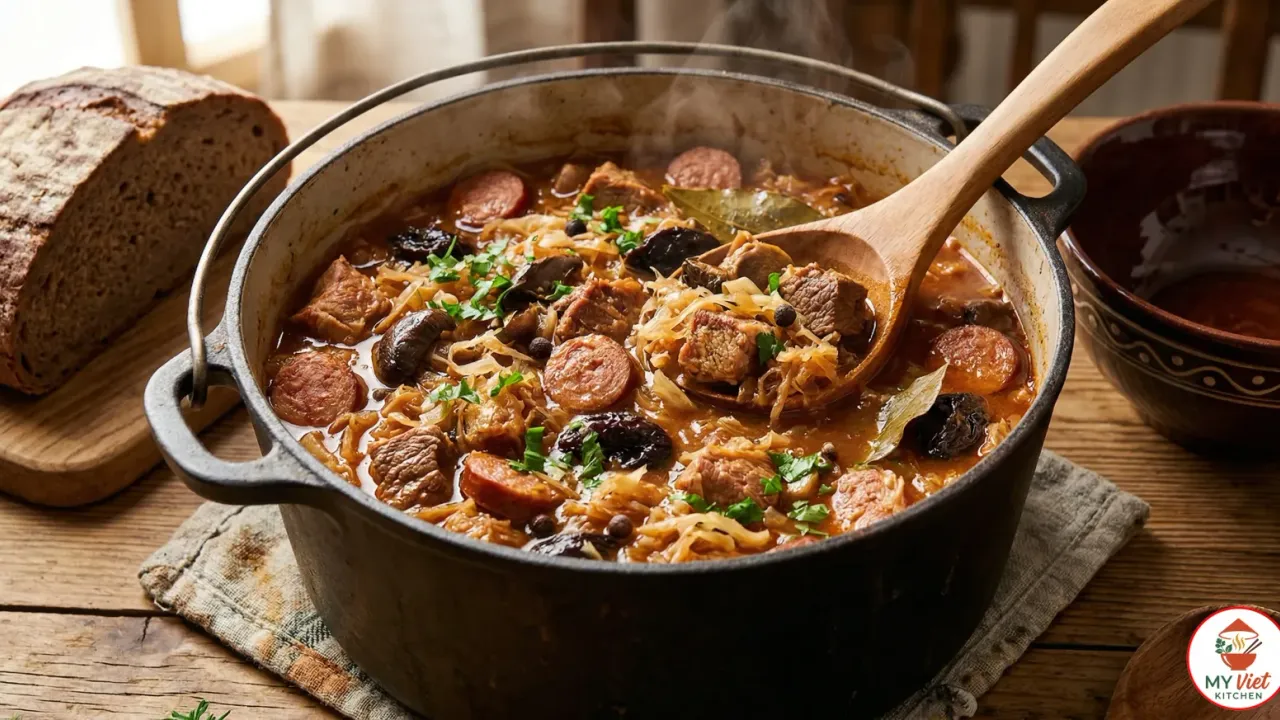
Bigos is the national stew of Poland, and this bigos recipe shows you how to make it the authentic way at home. Known as hunter’s stew, bigos brings together tangy sauerkraut, tender chunks of pork and beef, smoky kielbasa, and earthy dried mushrooms in a rich, slow-simmered pot that fills the entire house with its aroma. This bigos recipe follows the traditional method that Polish grandmothers have passed down for generations, and the result is a stew so flavorful that it genuinely tastes better each time you reheat it.
Prep Time: 30 minutes | Cook Time: 120 minutes | Servings: 8
Difficulty: Medium | Calories: ~450 per serving
What Makes This Bigos Recipe Special?
Bigos stands apart from every other stew because of one bold move: it uses sauerkraut as a primary ingredient rather than a condiment. The fermented cabbage brings a tangy sourness that cuts through the richness of the meats. Fresh cabbage goes in too, adding a mild sweetness that balances the acidity. This combination of fermented and fresh cabbage is the backbone of every great bigos recipe, and it creates a flavor profile you simply cannot find in any other dish.
What also sets bigos apart is the mix of meats. Traditional recipes call for at least three types: a braising cut like pork shoulder, a rich cut like beef chuck, and a smoked element like kielbasa or bacon. Each meat contributes something different. The pork adds tenderness, the beef brings depth, and the kielbasa provides a smoky, savory punch. Together, they build layers of flavor that a single-meat stew simply cannot match.
Bigos has deep roots in Polish history, dating back to at least the 14th century. It was the dish of Polish nobility, hunters, and soldiers alike. The great Polish poet Adam Mickiewicz devoted an entire passage to bigos in his epic poem Pan Tadeusz, calling it a stew that words cannot describe. Making bigos at home connects you to centuries of Polish culinary tradition and delivers one of the most satisfying one-pot meals in all of European cooking.
Choosing the Right Sauerkraut for Bigos
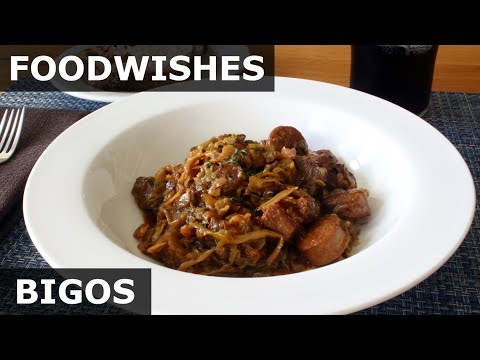
Sauerkraut is the soul of any bigos recipe, so selecting the right kind makes a real difference. Not all sauerkraut works equally well in this stew.
- Barrel-fermented sauerkraut (best choice): Look for sauerkraut sold in bags or jars in the refrigerated section. This type is naturally fermented and has a complex, tangy flavor with a pleasant crunch. It delivers the authentic taste that Polish cooks expect in their bigos.
- Canned sauerkraut: Shelf-stable canned sauerkraut works in a pinch, but it tends to be softer and more acidic. Rinse it well and drain it thoroughly before using. The flavor is simpler, so you may need to add a pinch more sugar to balance the stew.
- Homemade sauerkraut: If you ferment your own cabbage, you already know the quality is unbeatable. Homemade sauerkraut that has aged for three to four weeks gives bigos a wonderfully deep, nuanced sourness. It is the gold standard, though store-bought refrigerated kraut comes very close.
Ingredients for Bigos
Cabbage Base:
- 1.5 pounds sauerkraut, drained and rinsed
- 1 pound fresh white cabbage, shredded
- 1 ounce dried porcini mushrooms, soaked in 1 cup warm water
Meats:
- 1 pound kielbasa (Polish smoked sausage), sliced into rounds
- 8 ounces smoked bacon or slab bacon, diced
- 8 ounces pork shoulder, cut into 1-inch cubes
- 8 ounces beef chuck, cut into 1-inch cubes
Aromatics and Seasoning:
- 1 large onion, finely diced
- 3 cloves garlic, minced
- 1 can (14 oz) diced tomatoes
- 2 tablespoons tomato paste
- 1 cup dry red wine
- 2 bay leaves
- 5 whole allspice berries
- 5 whole black peppercorns
- 1 teaspoon caraway seeds
- 1 tablespoon sugar
- 2 tablespoons vegetable oil or lard
- Salt and black pepper to taste
- 1 cup pitted prunes, roughly chopped (optional, for sweetness)
Pro tip: Rinsing the sauerkraut before cooking is essential for this bigos recipe. Raw sauerkraut straight from the jar can be overpoweringly sour and salty. A quick rinse and squeeze removes the excess brine while keeping enough tang to give the stew its signature flavor. Taste the sauerkraut after rinsing. If it still seems very sharp, soak it in cold water for 10 minutes and drain again.
Step-by-Step Instructions
Step 1: Prepare the Cabbage and Mushrooms
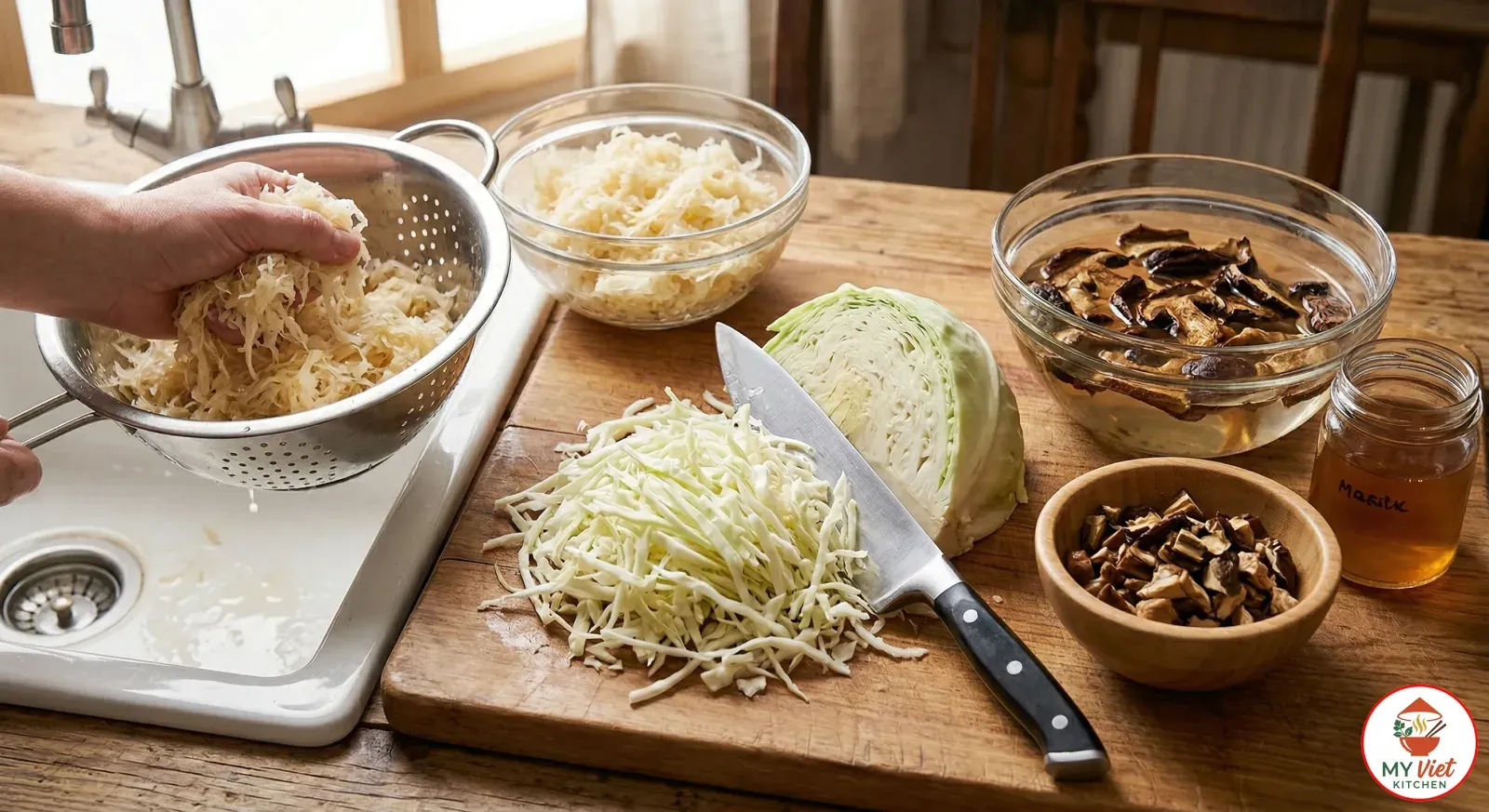
1 Start by preparing the three foundation ingredients. Drain the sauerkraut in a colander and rinse it under cold running water. Squeeze out the excess liquid with your hands and set it aside. Shred the fresh cabbage into thin strips, similar in size to the sauerkraut. Then place the dried porcini mushrooms in a bowl with 1 cup of warm water and let them soak for 20 minutes. Once soft, chop the mushrooms roughly and save the soaking liquid because it adds incredible depth to the stew.
Step 2: Brown the Meats
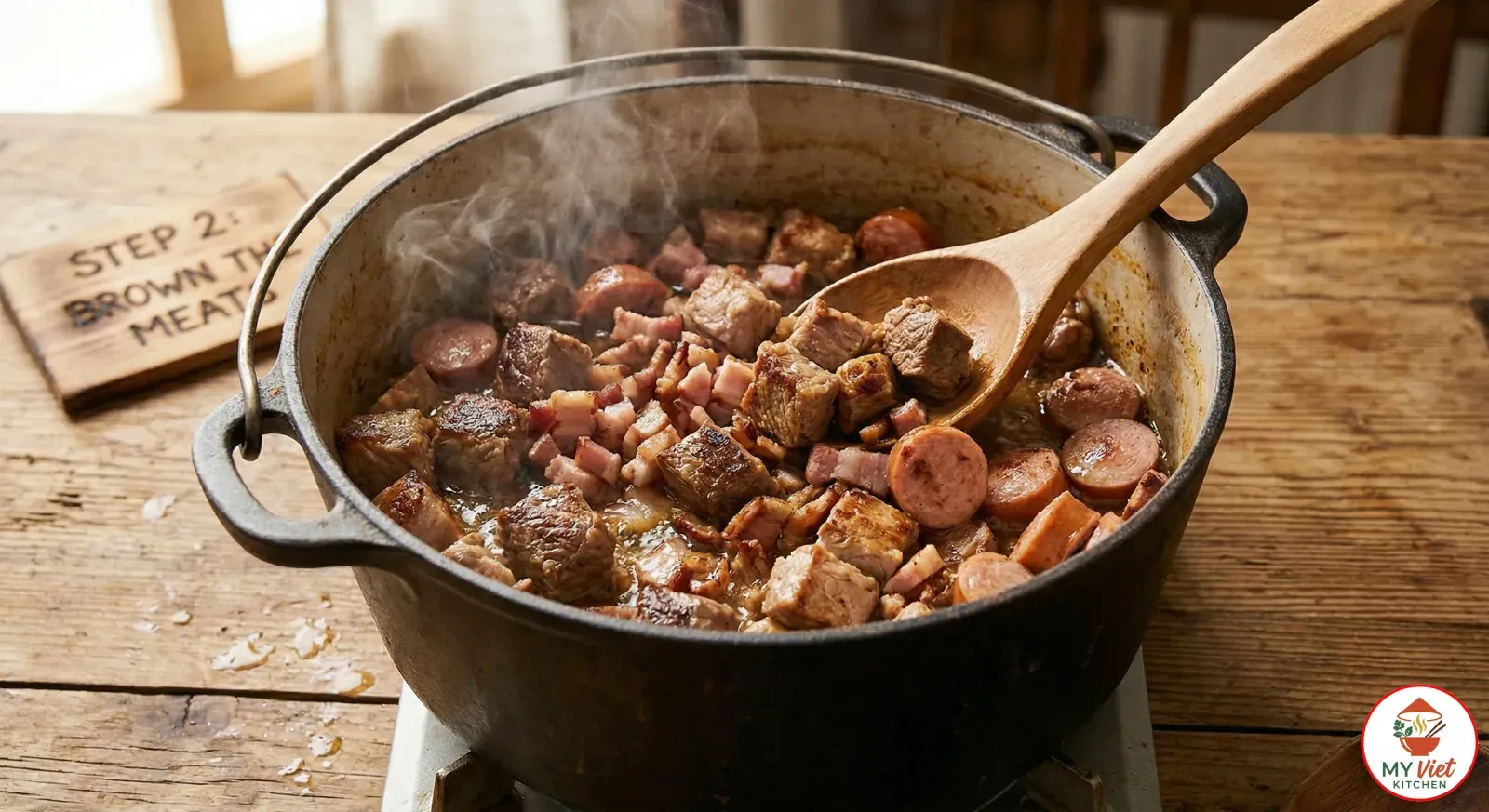
2 Heat the oil or lard in a large Dutch oven or heavy-bottomed pot over medium-high heat. Working in small batches, brown the pork shoulder and beef chuck cubes on all sides until they develop a deep golden crust. This browning step triggers the Maillard reaction, which builds a savory, caramelized flavor base that defines the entire stew. Remove the browned meat and set it aside on a plate.
In the same pot, add the diced bacon and cook until the fat renders and the edges turn crispy. Then add the sliced kielbasa and cook for about 3 minutes, turning the rounds so they pick up a light char on both sides. The smoky fat left behind in the pot becomes the cooking medium for the onions, so do not discard any of it.
Step 3: Build the Stew Base
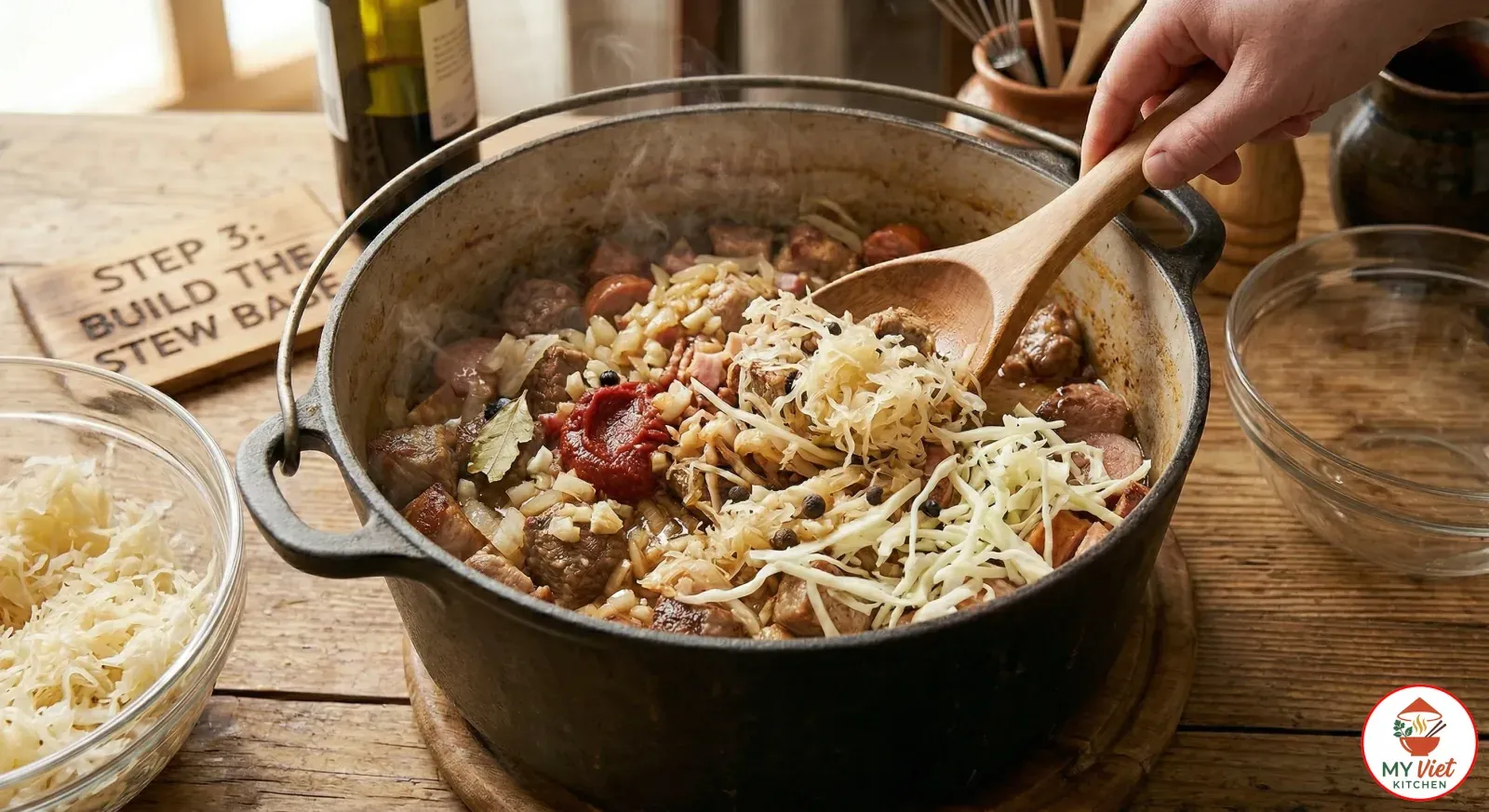
3 Lower the heat to medium and add the diced onion to the pot. Cook for about 5 minutes, stirring often, until the onion softens and turns translucent. Stir in the minced garlic and cook for 30 seconds until fragrant. Add the tomato paste and stir it into the onion mixture for a minute to lightly caramelize it. Pour in the diced tomatoes and red wine. Let the wine simmer for 2 minutes so the alcohol cooks off.
Now add the rinsed sauerkraut, fresh shredded cabbage, chopped porcini mushrooms, and the reserved mushroom soaking liquid. Toss in the bay leaves, allspice berries, peppercorns, and caraway seeds. The pot should be fragrant and packed with layers of ingredients at this point. Stir everything together thoroughly so the cabbage and sauerkraut mix evenly with the tomato base.
Step 4: Simmer Low and Slow
4 Return all the browned meats to the pot, including the bacon and kielbasa. Sprinkle in the sugar and stir well. If you are using prunes, add them now as they break down during cooking and lend a subtle sweetness that balances the sauerkraut. Check the liquid level. The stew should be moist but not soupy. If it looks dry, add a splash of water or beef broth.
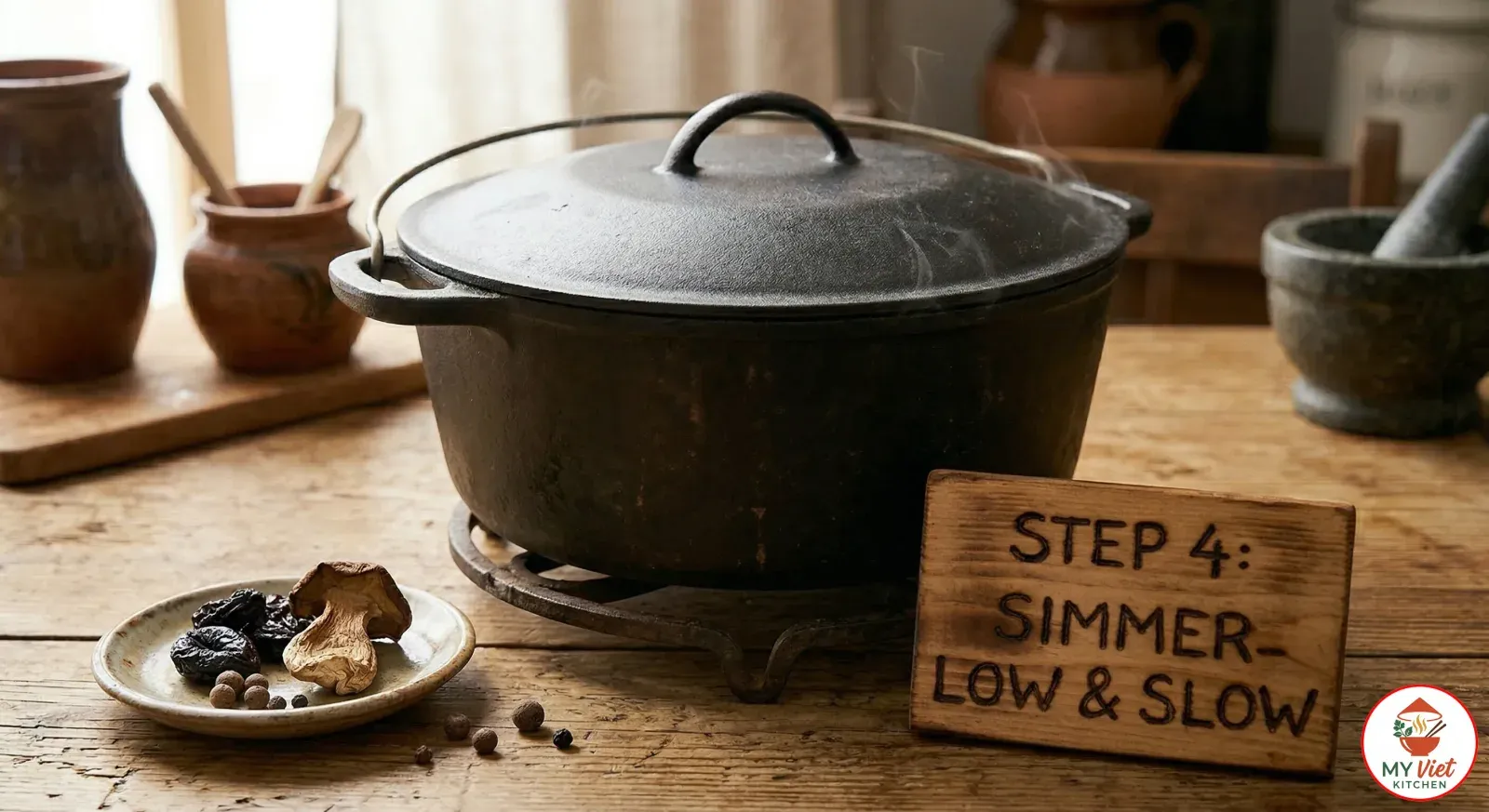
Bring the stew to a gentle simmer, then reduce the heat to the lowest setting. Cover the pot with a tight-fitting lid and cook for at least 90 minutes. Stir the bigos every 20 minutes to prevent sticking and check the moisture. The stew is ready when the fresh cabbage has turned silky soft, the meats pull apart easily with a fork, and the liquid has thickened into a glossy, rich sauce. If you want deeper flavor, cook for a full 2 hours.
Step 5: Season and Serve
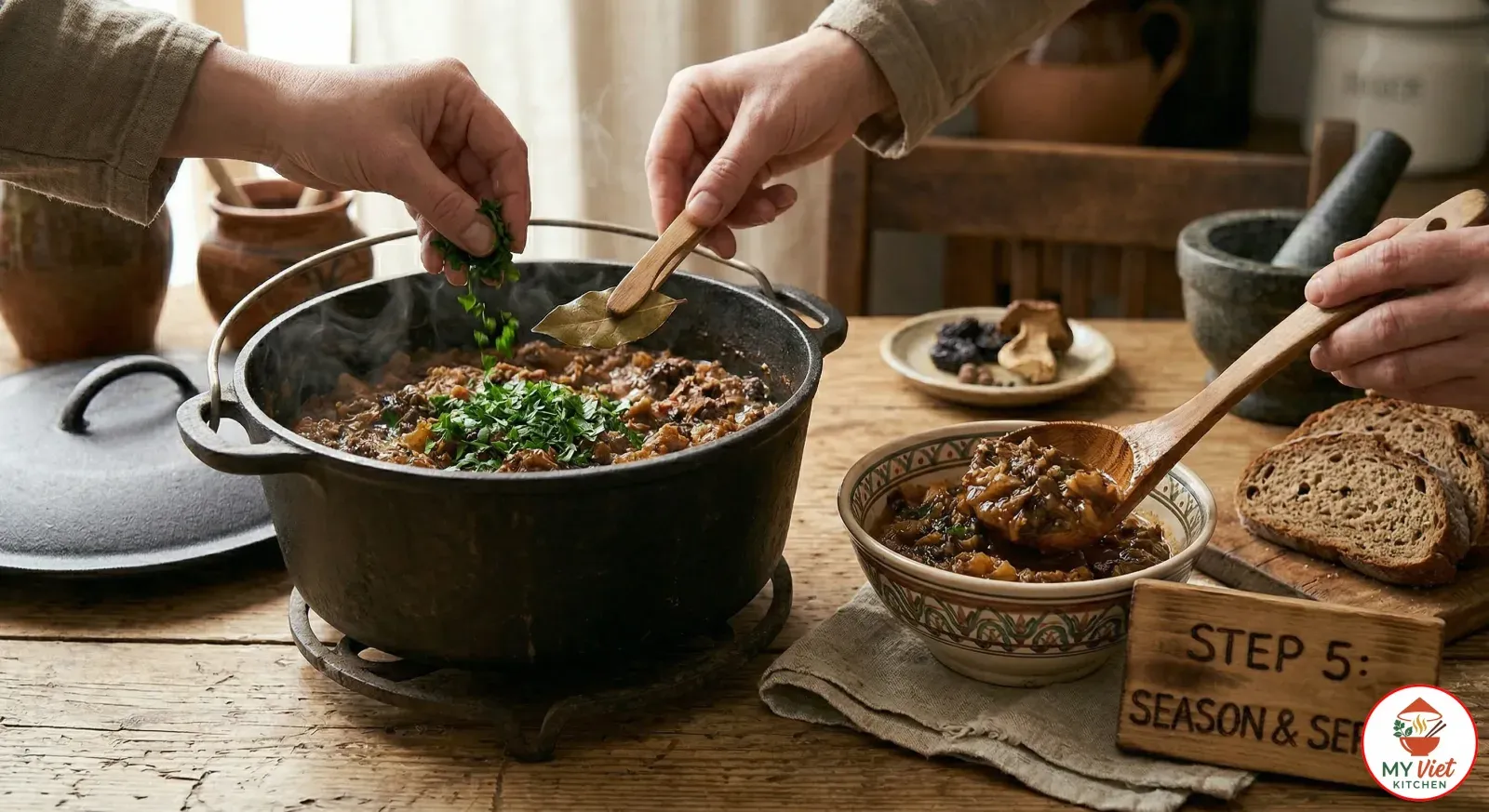
5 Remove the bay leaves and fish out any whole allspice berries you can find. Taste the stew and adjust the seasoning with salt, pepper, or a pinch more sugar if needed. The flavor should be a rich harmony of smoky, tangy, sweet, and savory notes. For the very best results, let the bigos cool completely and refrigerate it overnight. Polish tradition holds that bigos must rest at least one night before serving, and the flavor transformation is remarkable.
When ready to serve, reheat the bigos gently on the stove over medium-low heat. Ladle it into deep bowls and serve with thick slices of crusty bread for soaking up every drop of the rich sauce. A sprinkle of fresh parsley on top adds a bright finishing touch.
Expert Tips for the Perfect Bigos Recipe
Use Multiple Types of Meat
The heart of a great bigos recipe is the variety of meats. Each type contributes a different flavor and texture. Pork shoulder turns silky and tender, beef chuck adds deep richness, kielbasa delivers smoke, and bacon provides a salty crunch. If you have leftover roast pork, duck, or even venison, toss it in. Polish hunters originally made bigos with whatever game they caught, so the stew welcomes every kind of meat.
Balance the Sauerkraut with Fresh Cabbage
Using only sauerkraut makes the stew too sour. Using only fresh cabbage makes it too bland. The traditional ratio is roughly equal parts of each, and this balance gives bigos its signature flavor profile. The sauerkraut brings tangy acidity while the fresh cabbage adds gentle sweetness and body. Together, they create a depth that neither could achieve on its own.
Reheat It Multiple Times
This is the most important tip for any bigos recipe. Polish cooks say bigos should be reheated at least three times before it reaches peak flavor. Each reheating breaks down the fibers in the cabbage and meat, releases more juices into the sauce, and allows the spices to meld further. A freshly made bigos is good, but a three-day-old bigos is extraordinary. Plan ahead and make it well before you need to serve it.
Bigos Across Poland and Beyond
Every region of Poland has its own version of bigos, and neighboring countries have adopted the stew as well. The ingredients shift depending on local traditions, available meats, and family preferences. Here is how the main regional styles compare.
| Region | Style | Key Features | Serving Tradition |
|---|---|---|---|
| Greater Poland (Wielkopolska) | Classic hearty bigos | Pork, beef, kielbasa, sauerkraut, fresh cabbage | Served as a main course with rye bread |
| Podlasie (Eastern Poland) | Smoky forest-style | Heavy on smoked meats and wild game like boar or venison | Eaten straight from the pot at hunting camps |
| Silesia | Lighter bigos | More fresh cabbage, less sauerkraut, often with dried plums | Served at family Sunday dinners |
| Lithuania | Bigus | Similar base but often adds barley or grains for body | A winter staple served with dark bread |
| Belarus | Bihus | Simplified version with fewer meats, more cabbage | Everyday home cooking, often with potatoes on the side |
Serving Suggestions
In Poland, bigos is a complete meal on its own. It needs nothing more than good bread and perhaps a simple side to round things out. The stew is rich, hearty, and packed with protein from all the meats. Here are the best ways to serve it.
The Perfect Accompaniments:
- Crusty rye bread: A dense, chewy rye loaf is the classic partner for bigos. The tangy flavor of the bread echoes the sauerkraut in the stew, and the thick slices are perfect for soaking up the rich sauce.
- Boiled potatoes: Simple boiled potatoes with butter work well alongside bigos. They are mild enough to let the stew shine but filling enough to stretch the meal for a crowd.
- Pickled cucumbers: A small dish of Polish dill pickles on the side adds a crunchy, vinegary contrast. The acidity of the pickles refreshes the palate between bites of the rich stew.
- Pierogi: For a truly lavish Polish feast, serve bigos alongside potato and cheese pierogi. The dumplings turn the meal into a celebration worthy of any holiday table.
Beverage Pairings:
- Polish lager: A cold Tyskie or Zywiec lager cuts through the richness of the stew and cleanses the palate between bites. The light bitterness of the beer complements the tangy sauerkraut.
- Dry red wine: Since the stew already contains red wine, a glass of the same wine pairs naturally. Choose a medium-bodied red like Pinot Noir or a Polish Rondo.
- Chilled vodka: A small glass of ice-cold Polish vodka between spoonfuls of hot bigos is a time-honored tradition. The spirit warms the body while the stew fills the belly.
- Hot tea with honey: For a non-alcoholic option, a mug of black tea with honey rounds out the meal gently, especially on a cold winter evening.
Storage and Reheating
Refrigerator: Bigos keeps in the fridge for up to 7 days. The sauerkraut acts as a natural preservative. In fact, the stew tastes better on day two, three, and four as the flavors continue to develop and merge. Store it in a sealed container or keep the lid tight on the pot.
Freezer: This stew freezes beautifully for up to 3 months. Let it cool completely, then transfer portions to freezer-safe bags or containers. Leave a little room at the top for expansion. Thaw in the fridge overnight before reheating.
Reheating: Warm bigos on the stove over medium-low heat, stirring now and then. Add a splash of water or broth if the stew has thickened too much in the fridge. Avoid microwaving large portions because the stew heats unevenly. Each gentle reheat on the stovetop actually improves the dish, so embrace the process.
Common Mistakes to Avoid
1. Skipping the Meat Browning Step
Tossing raw meat straight into the pot without browning first robs your bigos of flavor. The Maillard reaction that happens during browning creates hundreds of flavor compounds that you cannot get any other way. Take the extra 10 minutes to sear the pork and beef cubes until they develop a deep golden crust. This single step transforms the stew from ordinary to outstanding.
2. Using Only Sauerkraut or Only Fresh Cabbage
A proper bigos recipe needs both types of cabbage. All sauerkraut makes the stew too sour and one-dimensional. All fresh cabbage makes it flat and bland. The magic is in the combination. Aim for roughly equal amounts of each so the tangy and sweet notes balance each other naturally.
3. Cooking on Too High a Heat
Bigos is a low-and-slow stew. High heat causes the bottom to scorch and the meats to toughen. Keep the simmer gentle, with only small bubbles rising to the surface. Check the pot every 20 minutes and stir. If the liquid has evaporated too much, add a splash of water. Patience is the most important ingredient in this bigos recipe.
4. Serving It Immediately
Fresh bigos is decent, but rested bigos is spectacular. Polish tradition says the stew needs at least one overnight rest in the fridge before it reaches its true potential. The flavors meld, the cabbage softens further, and the sauce thickens. If you want the authentic experience, make your bigos a day or two before you plan to serve it.
Frequently Asked Questions
What is bigos made of?
Traditional Polish bigos combines sauerkraut and fresh cabbage with a mix of meats. The most common meats are pork shoulder, beef chuck, kielbasa, and smoked bacon. Dried porcini mushrooms, diced tomatoes, red wine, and spices like allspice and caraway seeds round out the flavor. Some regional versions also include prunes for a touch of sweetness.
Why is bigos called hunter’s stew?
The name comes from the Polish hunting tradition. Hunters heading into the forest would bring a pot of sauerkraut and cabbage, then add whatever game they caught during the trip. Boar, venison, rabbit, and duck all found their way into the pot. The long cooking time over a campfire made bigos practical for outdoor meals, and the sauerkraut helped preserve the stew for days.
Does bigos taste better the next day?
Absolutely. Bigos is one of those rare dishes that genuinely improves with time. Polish cooks often reheat it three or four times over several days because each round of gentle heating deepens the flavors. The sauerkraut mellows, the meats release more juices, and the spices blend into a richer, more complex whole. If you can wait, always make bigos at least one day ahead.
Can I make bigos without wine?
Yes, you can substitute the red wine with beef broth or a mix of broth and a tablespoon of apple cider vinegar. The wine adds depth and a subtle acidity, so the vinegar helps replicate that effect. The stew will still turn out rich and flavorful. Many older Polish recipes do not include wine at all and rely solely on the sauerkraut for acidity.
What is the difference between bigos and sauerkraut stew?
Bigos is a specific Polish dish with a set tradition behind it. It requires both sauerkraut and fresh cabbage, multiple types of meat, dried mushrooms, and a particular blend of spices. A generic sauerkraut stew might use only sauerkraut and a single meat without the same complexity. Think of bigos as the grand, layered masterwork compared to a simple weeknight sauerkraut dish.
How long does bigos keep in the fridge?
Bigos stays fresh in the refrigerator for up to 7 days thanks to the natural acidity of the sauerkraut. Historically, Polish travelers and soldiers valued bigos specifically because it lasted longer than most cooked dishes. Store it in a sealed container and reheat gently on the stove each time you serve it.
Variations and Adaptations
Game Meat Bigos:
For the most authentic hunter’s stew, replace the pork and beef with wild boar, venison, or rabbit. Game meats have a deeper, more intense flavor that pairs beautifully with the tangy sauerkraut. Brown the game meat thoroughly and cook the stew a bit longer since wild meats tend to be leaner and need more time to turn tender.
Vegetarian Bigos:
Skip all the meats and double the dried mushrooms. Add a mix of fresh mushrooms like cremini, shiitake, and oyster mushrooms for variety. Use vegetable broth instead of beef broth and add a tablespoon of smoked paprika to replicate the smoky depth that the kielbasa normally provides. The result is lighter but still rich and deeply satisfying.
Slow Cooker Bigos:
After browning the meats on the stovetop, transfer everything to a slow cooker. Cook on low for 6 to 8 hours or on high for 4 hours. The slow cooker does a wonderful job of gently breaking down the cabbage and meats. The only thing you lose is the fond on the bottom of the pot, so make sure to deglaze the Dutch oven with the wine before pouring the liquid into the slow cooker.
The Cultural Significance of Bigos
Bigos is to Poland what ragu is to Italy or coq au vin is to France. It is the national dish, the pride of every grandmother’s kitchen, and a symbol of Polish hospitality. No Christmas Eve supper, no New Year’s celebration, and no hunting feast is complete without a steaming pot of bigos on the table. The stew represents the Polish philosophy of cooking: use what you have, waste nothing, and let time do the work.
The literary fame of bigos reaches back to 1834, when Adam Mickiewicz immortalized it in Pan Tadeusz, the most celebrated poem in the Polish language. He described the stew in vivid detail, noting how its aroma rose above the camp to lure hungry soldiers. That passage cemented bigos as more than a recipe. It became a cultural icon that stands for Polish identity, resourcefulness, and the deep comfort of shared meals.
Even today, bigos holds a special place in Polish life. Families pass down their own versions like heirlooms, each with its own twist: a grandmother who always added dried plums, an uncle who insisted on wild boar, a mother who used beer instead of wine. Making bigos at home connects you to this living tradition and gives you a taste of Poland’s remarkable culinary heritage.
Conclusion
This bigos recipe delivers the full depth and richness of Poland’s most beloved stew right in your own kitchen. The keys to a perfect pot are straightforward: use a mix of meats for layered flavor, balance sauerkraut with fresh cabbage, simmer everything low and slow, and give the finished stew at least one night of rest before serving. Follow this bigos recipe faithfully, and you will create a dish that warms the body, feeds a crowd, and tastes even better the next day.
Ready to explore more hearty European classics? Browse our European dishes collection, including goulash, borscht, and beef bourguignon. For more one-pot comfort meals from around the world, check out our Asian stews and soups.