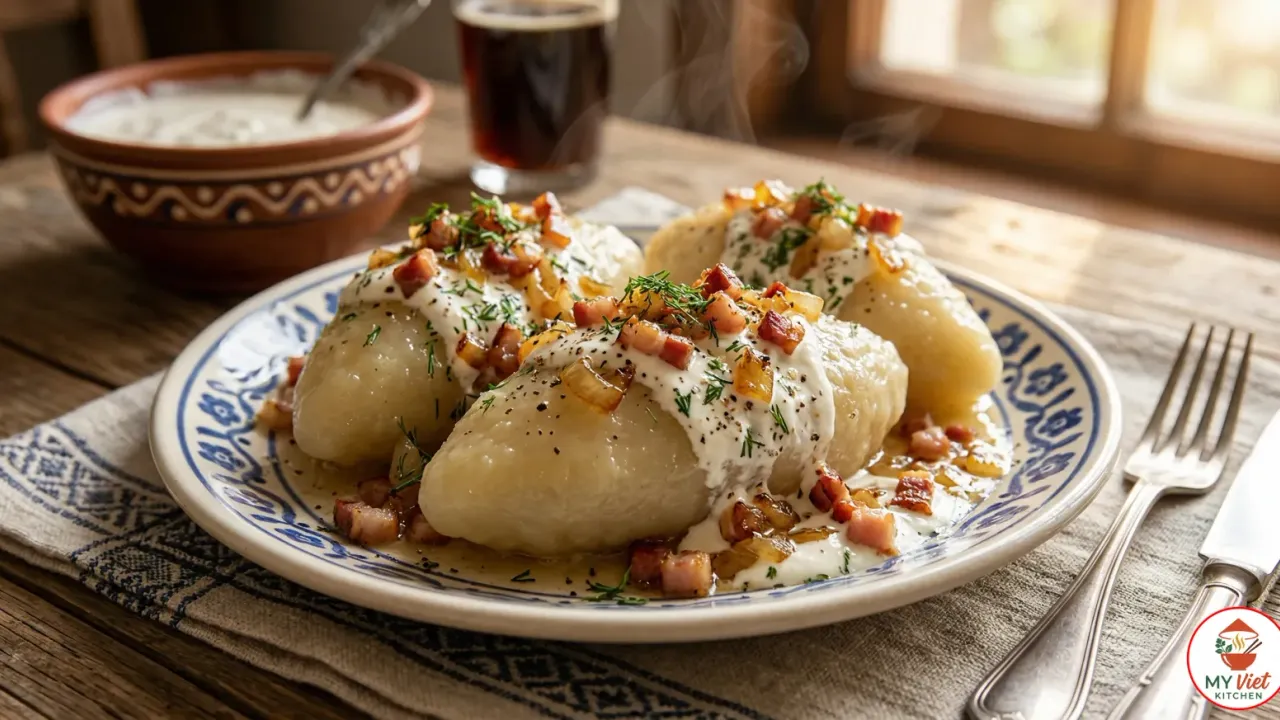
Cepelinai are the mighty potato dumplings that stand as the undisputed national dish of Lithuania, and this recipe shows you exactly how to make them from scratch at home. Also called zeppelins because of their distinctive airship shape, these dumplings wrap a smooth, sticky potato dough around a savory seasoned pork filling, then simmer gently until the outside turns silky and the meat cooks through. This cepelinai recipe follows the traditional Lithuanian method that home cooks have passed down for generations. Each dumpling arrives at the table topped with a rich sauce of sour cream, crispy bacon, and golden fried onion that ties every element together.
Prep Time: 45 minutes | Cook Time: 25 minutes | Servings: 6
Difficulty: Medium | Calories: ~420 per serving
What Makes Cepelinai Special?
Cepelinai hold a status in Lithuanian cuisine that no other dish can rival. Walk into any restaurant in Vilnius, Kaunas, or a small countryside town, and you will find these dumplings on the menu. Families gather around the kitchen table on weekends to make them by hand, with grandmothers leading the effort while younger generations grate potatoes and shape the dough. No Lithuanian holiday, name day celebration, or Sunday dinner feels complete without a plate of steaming cepelinai on the table.
So what sets cepelinai apart from other potato dumplings? The answer lies in the dough. Lithuanian cooks blend raw grated potatoes with boiled mashed potatoes. This mix creates a texture unlike anything else in the dumpling world. The raw potato gives the dough its sticky, silky quality after cooking. The mashed potato adds body and a smooth feel. Because of this dual method, the cooked dumplings have a dense yet tender bite. They land somewhere between a gnocchi and a knodel, but heavier and more filling than either.
Moreover, the starch plays a key role that goes well beyond binding. When you grate raw potatoes and squeeze out the liquid, a thick white starch settles at the bottom of the bowl. Lithuanian cooks always save this starch and fold it back into the dough. It acts as natural glue that holds each dumpling together in the boiling water. It also gives the cooked surface a glossy, slightly see-through look. Without this starch, the dumplings tend to crack, fall apart, or turn mushy.

Choosing the Right Potatoes for Cepelinai
The potatoes you pick make or break your cepelinai. Choose wrong, and the dumplings fall apart in the pot. Lithuanian cooks insist on starchy types because they form the sticky, firm dough this recipe needs. Here are your best options based on what you can find.
- Russet potatoes (best choice): These high-starch potatoes grate easily and release plenty of starchy liquid for the dough. They produce the stickiest, most cohesive dough and give the cooked dumplings that classic dense, silky texture. Available at virtually every grocery store, Russets are the most reliable choice for cepelinai.
- Idaho potatoes: Very similar to Russets in starch content and performance. They grate well and release enough starch to bind the dough properly. If your store labels them as baking potatoes rather than Russet, they will work just as effectively for this recipe.
- Yukon Gold (not recommended): These medium-starch potatoes lack the binding power you need. The dough made from Yukon Gold tends to be too loose and soft, which causes the dumplings to break apart during boiling. If Yukon Gold is all you have, add an extra tablespoon of potato starch to compensate, though the texture will differ from the original.
Ingredients for Cepelinai
For the Potato Dough:
- 3 pounds starchy potatoes (Russet or Idaho), peeled
- 1 medium onion, finely grated
- 1 tablespoon potato starch
- 1 teaspoon salt
For the Meat Filling:
- 1 pound ground pork
- 1 medium onion, finely diced
- 2 cloves garlic, minced
- 1 teaspoon salt
- 1/2 teaspoon black pepper
- 1/2 teaspoon caraway seeds (optional but traditional)
For the Sour Cream and Bacon Sauce:
- 8 ounces sour cream (full-fat for best results)
- 6 slices thick-cut bacon, diced
- 1 medium onion, diced
- 2 tablespoons bacon drippings (from frying the bacon)
- Salt and pepper to taste
Pro tip: Always save the starchy liquid that drains from the raw grated potatoes. Let it sit for 10 minutes, then carefully pour off the water and scrape the white starch from the bottom. Fold this recovered starch back into the dough. It is the natural binder that prevents your cepelinai from falling apart during boiling.
Step-by-Step Instructions
Step 1: Prepare the Potato Dough
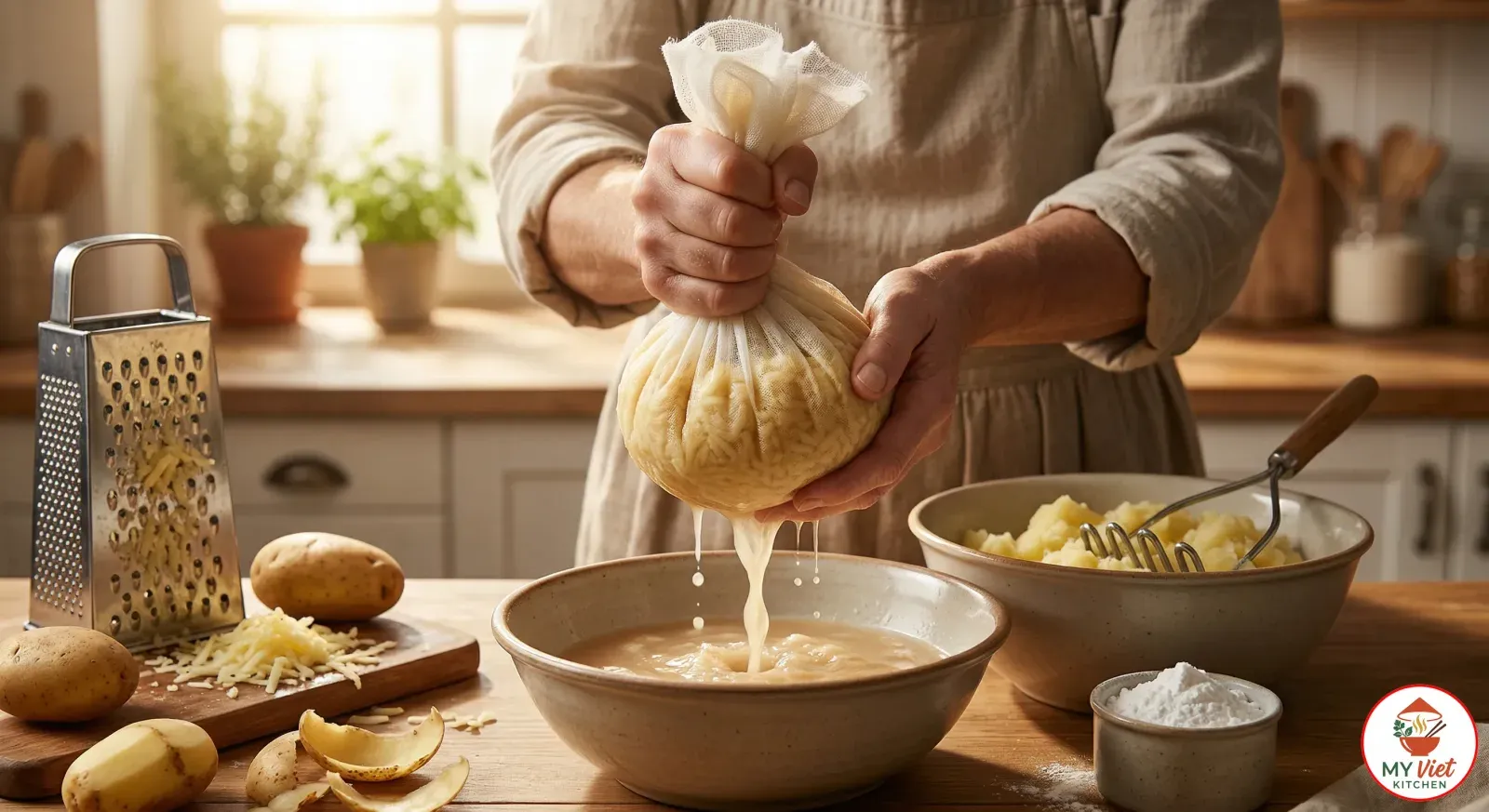
1 Start by peeling all three pounds of potatoes. Set one-third aside for boiling and grate the remaining two-thirds on the fine side of a box grater or through a food processor fitted with a grating disc. Place the grated potato in a bowl lined with cheesecloth or a clean towel. Gather the cloth and squeeze hard over a second bowl to press out as much liquid as you can. This step is vital. Too much moisture weakens the dough and makes the dumplings fall apart in the water.
Let the squeezed liquid sit for 10 minutes. A thick layer of white starch will settle at the bottom. Pour off the brown water on top and keep the starch. Meanwhile, boil the set-aside potatoes in salted water until tender, about 15 to 20 minutes. Drain and mash them smooth with no lumps left. Then mix the raw grated potatoes, mashed potatoes, saved starch, the extra spoon of potato starch, grated onion, and salt. Stir until a smooth, sticky dough forms that holds its shape when pressed.
Step 2: Make the Meat Filling
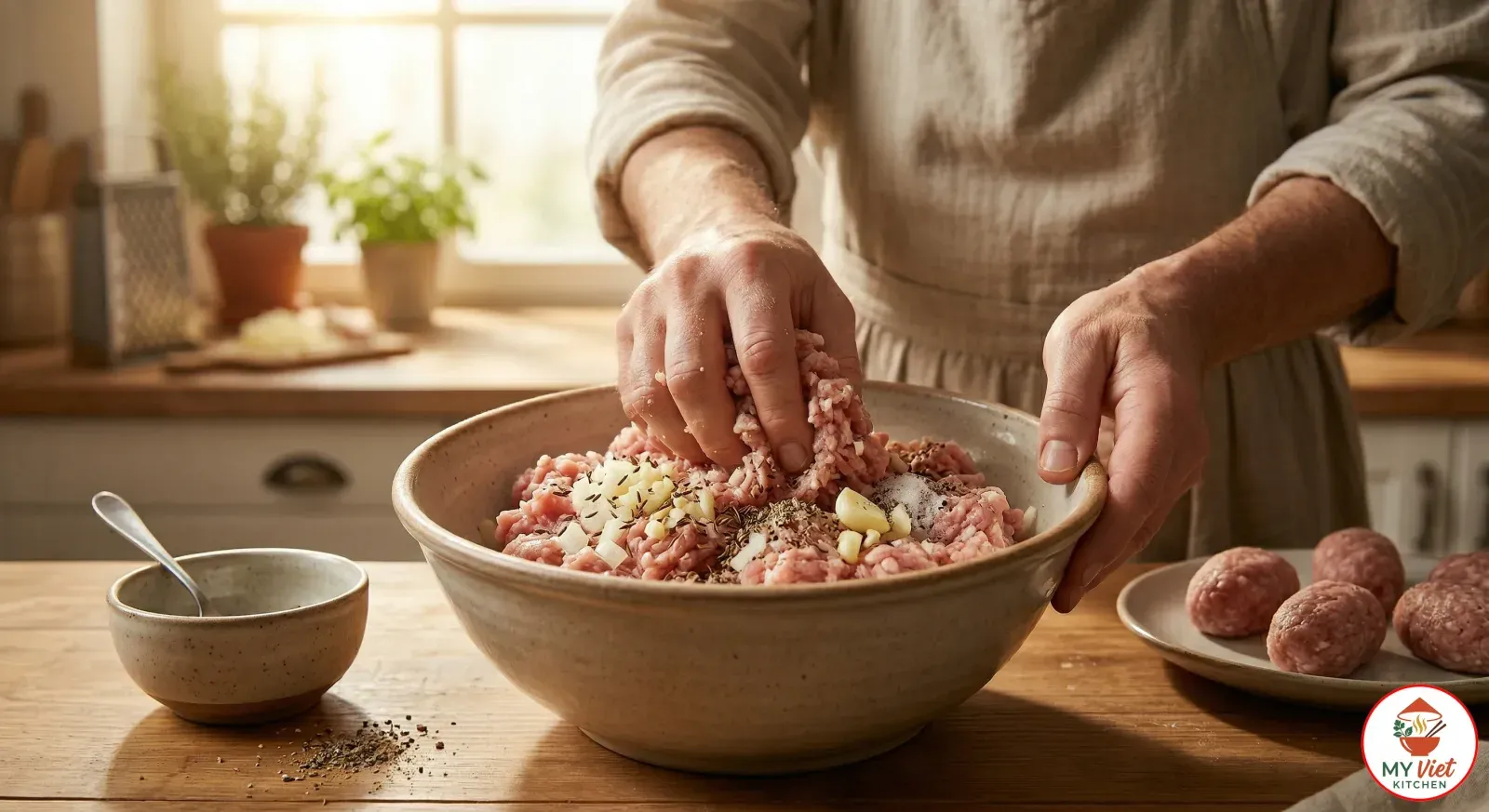
2 In a bowl, mix the ground pork with diced onion, minced garlic, salt, black pepper, and caraway seeds if using. Caraway is a key spice in Lithuanian cooking. It adds a warm, slightly sweet note to the meat. Knead the mix with your hands for a full minute so the spices spread through the pork. This way, every bite of the dumpling has the same rich flavor.
Shape the meat into small oval balls, about two spoons of filling each. You should get 12 to 14 balls. Put them on a plate and chill in the fridge while you get the dough ready. Cold filling holds its shape well when you wrap the dough around it. If the mix feels too wet, add a spoon of breadcrumbs to soak up the extra liquid.
Step 3: Shape the Dumplings
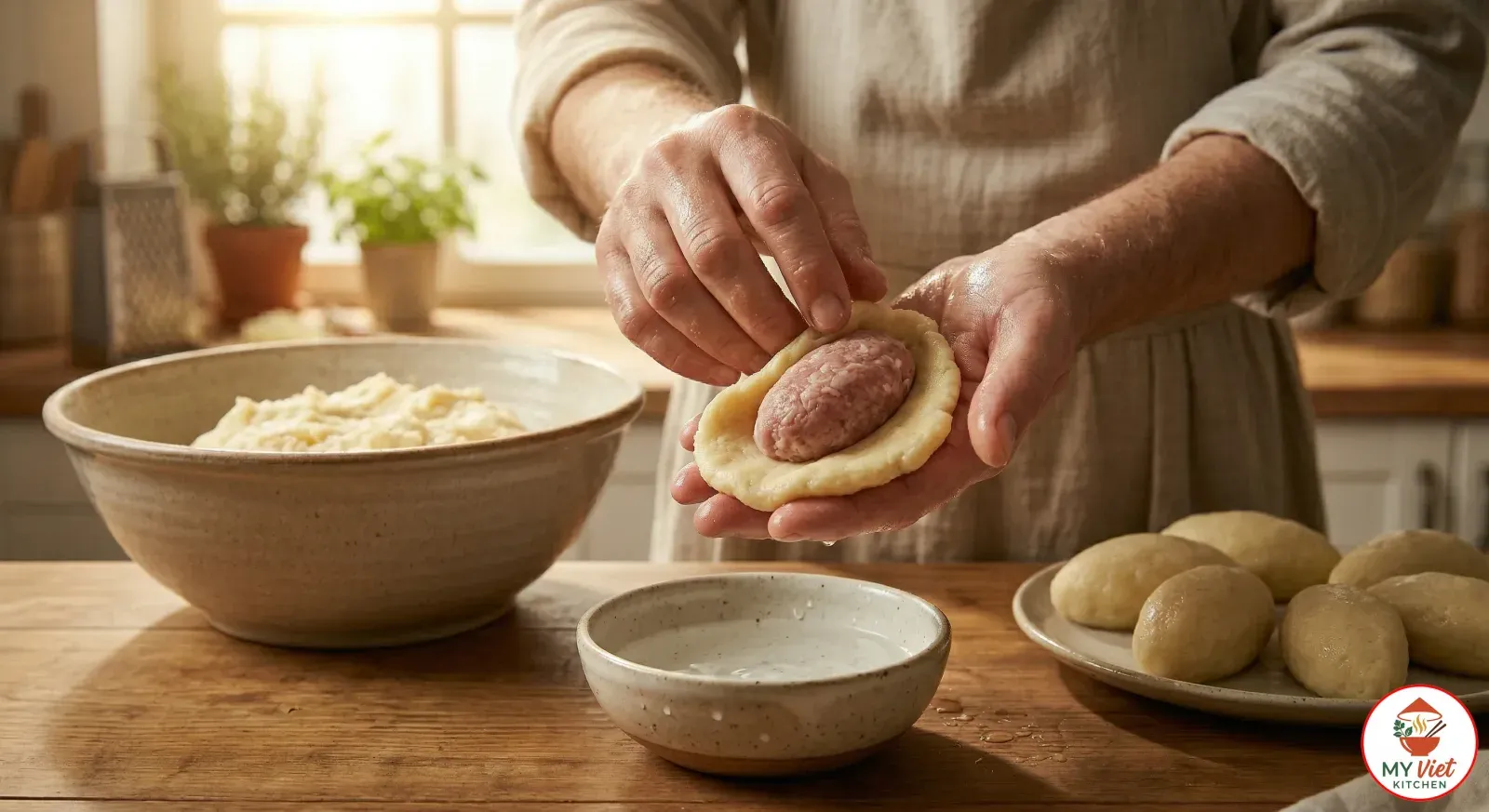
3 Wet your hands well with cold water before you touch the dough. Potato dough is very sticky, and dry hands will pull it apart. Take a big handful of dough, about the size of a large egg, and press it flat into an oval disc on your wet palm. Make it about half an inch thick. Place one meat ball in the center.
Now fold the dough up and around the filling from all sides. Pinch the seams shut firmly. Then smooth the surface with wet hands, forming the dumpling into a round oval like a small football. The shell must be fully sealed with no cracks or holes. If you see a thin spot, press a small piece of dough over it and blend it in. Keep going until all the dough and filling are used up. You should have 12 to 14 cepelinai ready for the pot.
Step 4: Boil the Cepelinai
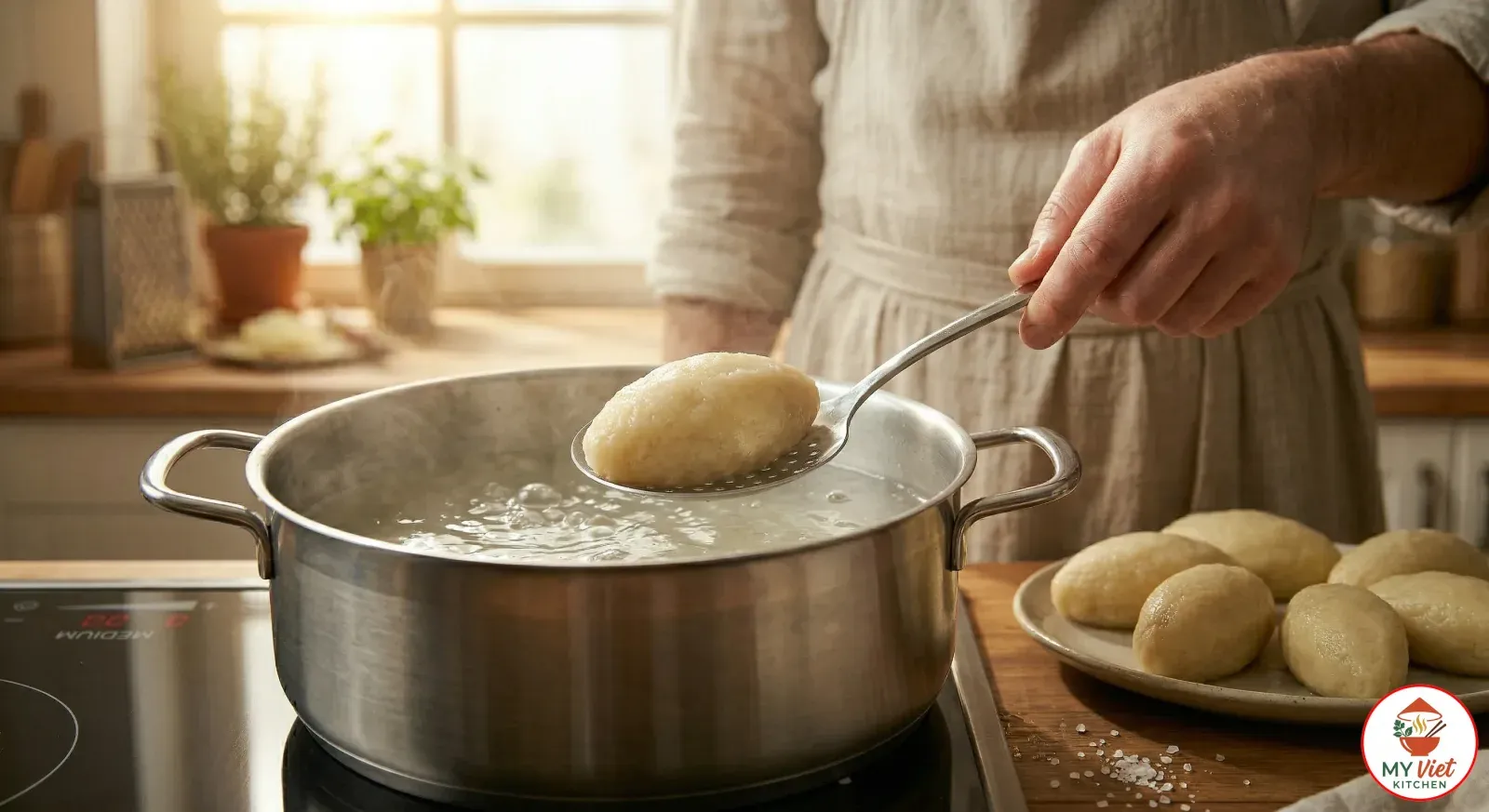
4 Fill a large, wide pot with salted water and bring it to a gentle boil. Lower the dumplings in one at a time with a slotted spoon. Do not crowd the pot. The dumplings need room to float without hitting each other. Cook four to six at a time based on your pot size. Once all are in the water, turn the heat down to keep a gentle simmer. Avoid a hard, rolling boil.
The cepelinai will sink at first. After about 15 minutes, they start to float. This means the dough is cooking through, but they need more time. Simmer for 5 to 8 more minutes after they float. The full cook time is 20 to 25 minutes. Turn them gently once or twice so they cook on all sides. Then lift each one out with a slotted spoon and set it on a warm plate to drain.
Step 5: Make the Sour Cream and Bacon Sauce
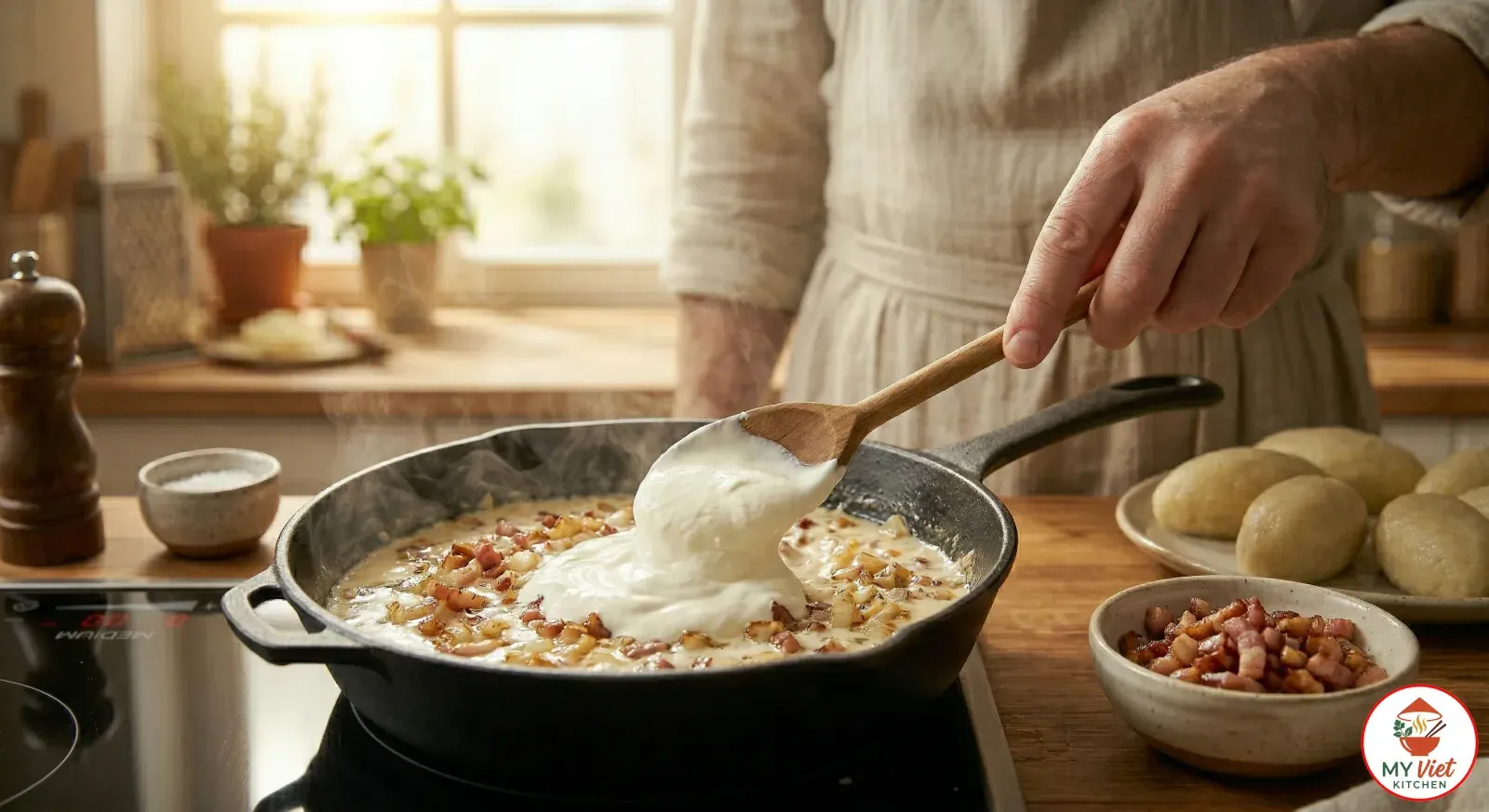
5 While the dumplings cook, start the sauce. Put the diced bacon in a cold skillet and set it over medium heat. Cook slowly until the bacon turns golden and crispy, about 8 to 10 minutes. Lift the bacon bits out with a spoon and set them on a paper towel. Keep the fat in the pan.
Add the diced onion to the bacon fat and cook until soft and golden, about 5 minutes. Then lower the heat and stir in the sour cream. Warm the sauce for 2 minutes, stirring the whole time. Do not let it boil. High heat makes sour cream curdle and split. Add salt and pepper to taste. Spoon this warm sauce over the drained cepelinai and top with the crispy bacon bits. Serve right away while the dumplings are hot.
Expert Tips for Perfect Cepelinai
Squeeze the Potatoes Thoroughly
This is the most vital step in the whole recipe. Wrap the grated potatoes in cloth and twist hard until no more drops come out. Wet dough is the top reason cepelinai break apart in the pot. After you squeeze, the potato should feel like a dense, dry mass, not a wet pulp. If it still seems too moist, spread it on a clean towel and press down to soak up more liquid. Do this before you mix it with the mashed potatoes.
Work with Wet Hands at All Times
Potato dough sticks to everything, and dry skin is the worst. Keep a bowl of cold water near your work space. Dip your hands often while you shape each dumpling. Wet hands glide over the dough and let you seal the seams without tearing. This small habit makes a big difference. Your dumplings will come out smooth and tight instead of ragged and leaky.
Simmer Gently, Never Boil Hard
A rolling boil throws the dumplings around and can break them open. Keep the water at a soft simmer where small bubbles rise slowly. The surface should barely move. This gentle heat cooks the dough from outside to inside without pulling the seams apart. If the water starts to boil too fast, lower the heat or add a splash of cold water to calm it down.
Recover and Use the Potato Starch
After you squeeze the liquid from the grated potatoes, let it sit in a bowl for at least 10 minutes. White starch will settle at the bottom and form a thick paste. Pour off the water and scrape this starch into the dough. It acts as the natural glue that holds cepelinai together. Without it, you need far more store-bought starch. Indeed, many Lithuanian cooks call this step the real secret to dumplings that stay in one piece.
Cepelinai vs. Other Potato Dumplings: A Comparison
Potato dumplings appear across Eastern and Central Europe, and each country has its own version with distinct techniques and flavors. Here is how cepelinai compare to their closest relatives so you understand what makes the Lithuanian version unique.
| Dumpling | Country | Dough Method | Key Difference |
|---|---|---|---|
| Cepelinai | Lithuania | Raw and cooked potato blend | Largest size, zeppelin shape, meat or cheese filling |
| Kartoffelknoedel | Germany | Raw and cooked potato blend | Smaller, round, often served as a side without filling |
| Pierogi | Poland | Wheat flour dough | Flat, half-moon shape, thinner dough, many filling types |
| Pyzy | Poland | Raw potato dough | Round shape, similar concept but uses only raw potato |
| Knedliky | Czech Republic | Bread and potato dough | Sliced into rounds, served as a side dish |
| Halushky | Slovakia | Potato and flour dough | Small, irregular shapes, served with bryndza sheep cheese |
Serving Suggestions
Lithuanians serve cepelinai as a hearty main course, and two to three dumplings per person make a generous meal. The sour cream and bacon sauce is essential, but you can round out the plate with a few simple sides that complement the rich, starchy dumplings. Here are the traditional and modern pairings that work best.
The Perfect Accompaniments:
- Sauerkraut: The tangy acidity of fermented cabbage cuts through the richness of the potato dough and bacon sauce beautifully. Warm the sauerkraut gently and serve it alongside the dumplings for a classic Lithuanian pairing.
- Fresh cucumber and dill salad: Thinly sliced cucumbers tossed with sour cream and fresh dill provide a cool, crisp contrast to the hot, heavy dumplings. This light side dish refreshes the palate between bites.
- Rye bread: Dark Lithuanian rye bread served alongside cepelinai adds an earthy, slightly sour flavor that pairs naturally with the potato and pork filling. Spread with butter for added richness.
- Beet salad: Grated cooked beets dressed with sour cream and horseradish bring color to the plate along with a sweet and pungent flavor that balances the savory dumplings.
Beverage Pairings:
- Lithuanian beer: A cold amber lager, especially from Lithuanian breweries like Svyturys or Utenos, matches the hearty character of cepelinai. The mild bitterness of the beer cuts through the richness of the bacon and sour cream.
- Kvass: This mildly fermented rye bread drink has a tangy, slightly sweet flavor that refreshes the palate. Kvass has accompanied heavy Lithuanian meals for centuries and remains a beloved traditional choice.
- Dry white wine: A crisp Riesling or Pinot Grigio provides acidity that lifts the heavy potato dough and contrasts the creamy sauce. The wine’s brightness keeps the meal from feeling too dense.
- Hot tea: Lithuanians often drink strong black tea with meals, and its warmth and slight astringency pair surprisingly well with the starchy, savory dumplings.
Storage and Reheating
Refrigerator: Store cooked cepelinai in an airtight container for up to 3 days. The potato dough firms up in the fridge, which actually makes the dumplings easier to pan-fry later. Many Lithuanian families cook extra specifically so they can fry the leftovers the next day.
Freezer: Cepelinai freeze well for up to 3 months. Boil them first, then cool completely on a parchment-lined baking sheet. Freeze them individually until solid, then transfer to freezer bags. This prevents the dumplings from sticking together. Label the bags with the date so you can track freshness.
Reheating: The best method is to pan-fry leftover cepelinai in butter over medium heat until golden brown on each side, about 3 to 4 minutes per side. This creates a crispy exterior that many people prefer over the original boiled version. Alternatively, drop frozen dumplings into simmering water for 8 to 10 minutes until heated through. Avoid the microwave, because it dries out the potato dough and makes it rubbery.
Common Mistakes to Avoid
1. Not Squeezing Enough Liquid from the Potatoes
This is the most frequent cause of cepelinai failure. Excess water in the grated potato weakens the dough’s binding ability, and the dumplings crack or dissolve during boiling. Squeeze the grated potato in batches through cheesecloth until it feels dry and dense. You should extract at least one to two cups of liquid from three pounds of potatoes. Take your time with this step because rushing it leads to heartbreak at the stove.
2. Using the Wrong Type of Potato
Waxy potatoes like red potatoes or fingerlings simply do not have enough starch to form a cohesive dough. The dumplings made from low-starch potatoes fall apart the moment they hit the water. Always choose high-starch varieties such as Russet or Idaho. Check the label at the store. If it says “baking potato,” you have the right kind. If it says “boiling potato” or “salad potato,” put it back and keep looking.
3. Boiling Too Vigorously
A hard boil creates waves that knock the dumplings into each other and the pot walls. This force tears the soft dough and lets the filling leak out. Instead, keep a calm simmer where tiny bubbles barely break the surface. Still water lets the dumplings cook through without any damage. If the heat rises too much, turn it down or add a cup of cold water to calm the pot.
4. Leaving Cracks in the Dough Surface
Every crack, thin spot, or unsealed seam is a weak point where water will seep in and filling will leak out. After shaping each dumpling, inspect it carefully. Run your wet fingers over the entire surface to smooth out any imperfections. If you spot a thin area, patch it with a small piece of extra dough and blend it in. Taking an extra 30 seconds per dumpling here saves you from watching your hard work fall apart in the pot.
Frequently Asked Questions
What does cepelinai mean and why are they called zeppelins?
The name cepelinai comes from the word zeppelin, the famous German airships, because the dumplings share the same elongated oval shape. Before World War I brought zeppelins into common knowledge, Lithuanians called these dumplings didzkukuliai, which translates to “big dumplings.” The new name stuck because it perfectly describes their distinctive form. Today, cepelinai is the standard term across Lithuania, though older generations occasionally still use the original name.
What kind of potatoes work best for cepelinai?
High-starch potatoes like Russet or Idaho are essential. They produce the sticky, binding dough that holds together in boiling water. Waxy potatoes lack the starch needed and result in dough that crumbles apart. In Lithuania, cooks use specific local potato varieties bred for high starch content. If you are unsure about your potatoes, cut one in half and rub the cut surfaces together. High-starch potatoes will feel sticky and cling to each other.
Can I make cepelinai with a vegetarian filling?
Cottage cheese with fresh dill and sauteed onion is the most traditional meatless filling, and Lithuanians call this version varskeciai. The tangy cheese pairs beautifully with the neutral potato dough. Alternatively, sauteed mushrooms mixed with onion and thyme make an earthy, savory filling that holds up well during boiling. Both options work with the same dough and cooking method described in this recipe.
Why did my cepelinai fall apart during cooking?
Three issues cause this problem most often. First, the grated potatoes were not squeezed dry enough, leaving too much moisture in the dough. Second, the water was boiling too hard instead of simmering gently. Third, the dough had cracks or thin spots that let water seep in. To prevent all three, squeeze the potatoes thoroughly, keep the water at a calm simmer, and seal every surface of each dumpling before it goes into the pot.
Can I freeze cepelinai for later?
Cepelinai freeze exceptionally well. Boil them first, cool them on a baking sheet, then freeze individually before transferring to bags. They keep for up to 3 months. To serve, either drop them into simmering water for 8 to 10 minutes or pan-fry them in butter until golden on each side. Many Lithuanian households cook double batches specifically for the freezer.
What is the traditional sauce for cepelinai?
The classic topping combines sour cream with crispy fried bacon and onions cooked in the bacon fat. This trio of creamy, salty, and savory flavors is the definitive cepelinai experience across Lithuania. For a lighter version, use just melted butter and sour cream without bacon. Some modern restaurants also serve cepelinai with mushroom cream sauce, though purists insist on the bacon and sour cream tradition.
Variations and Adaptations
Cottage Cheese Cepelinai (Varskeciai):
Replace the meat filling with a mixture of dry cottage cheese, one beaten egg, finely chopped fresh dill, and sauteed onion. Season with salt and a pinch of white pepper. This version is lighter than the meat-filled original and has a pleasant tangy flavor that pairs well with the neutral potato dough. Serve it with the same sour cream and bacon sauce for the full Lithuanian experience.
Mushroom Cepelinai:
Saute a pound of finely chopped mixed mushrooms with diced onion, garlic, and fresh thyme until all the moisture evaporates and the filling is dry and concentrated. Season with salt and pepper. This earthy filling works especially well in autumn when wild mushrooms are in season. Lithuanian forests are famous for their mushroom bounty, and foragers often use their haul to make this particular variation.
Pan-Fried Cepelinai:
After boiling, slice leftover cepelinai in half lengthwise and fry them cut-side down in butter until a golden crust forms. This method transforms the soft, silky dumplings into something entirely new. The crispy exterior contrasts with the tender potato interior and warm meat filling. In fact, many Lithuanians prefer this fried version so much that they cook extra dumplings just for the next day’s frying.
Mini Cepelinai (Virtinukai):
Make the dumplings half the normal size for a quicker cook time and a more elegant presentation. These smaller versions boil in just 12 to 15 minutes and work well as an appetizer or part of a larger Lithuanian feast. Shape them into the same zeppelin form but use only one tablespoon of filling per dumpling. Serve a generous portion of sauce over a plate of five or six mini cepelinai per person.
The Cultural Significance of Cepelinai
Cepelinai hold a place in Lithuanian culture that goes far beyond just food. They are the national dish, the comfort meal, and the symbol that Lithuanians use to link with their roots. Ask any Lithuanian to name their top dish, and the answer comes fast. Indeed, cepelinai show up on menus from Vilnius to Chicago, wherever the diaspora has put down roots. The dish carries real weight as a mark of identity.
Making cepelinai brings families together like few other tasks can. The process needs many hands, from peeling and grating to shaping each dumpling, so it turns into a group effort. Grandmothers show grandchildren how the dough should feel, how to seal the seams, and when the water hits the right simmer. These kitchen lessons keep Lithuanian food traditions alive, passing skills through touch and taste rather than written notes.
Furthermore, cepelinai reflect the farming roots of Lithuanian food. Potatoes came to Lithuania in the 1700s and quickly became the base of the national diet. They grew well in the cool Baltic climate and stored through harsh winters. Pork, dairy, and root crops filled out the pantry. Cepelinai bring all these staples into one dish. In the end, eating cepelinai is not just about filling your belly. It is about honoring a tradition that has fed Lithuanian families through every chapter of the nation’s story.
Conclusion
This cepelinai recipe gives you all the knowledge and steps needed to create authentic Lithuanian potato dumplings at home. The keys are thoroughly squeezing the grated potatoes, recovering and using the natural starch, keeping your hands wet while shaping, and maintaining a gentle simmer during cooking. Master these four techniques and your cepelinai will hold together beautifully every time. The reward is a plate of magnificent dumplings with silky potato shells, juicy meat filling, and that irresistible sour cream and bacon sauce on top.
Ready to explore more Eastern European comfort food? Browse our European dishes collection for recipes like pierogi, bigos, and beef stroganoff. Each one brings a warming taste of European tradition to your kitchen.