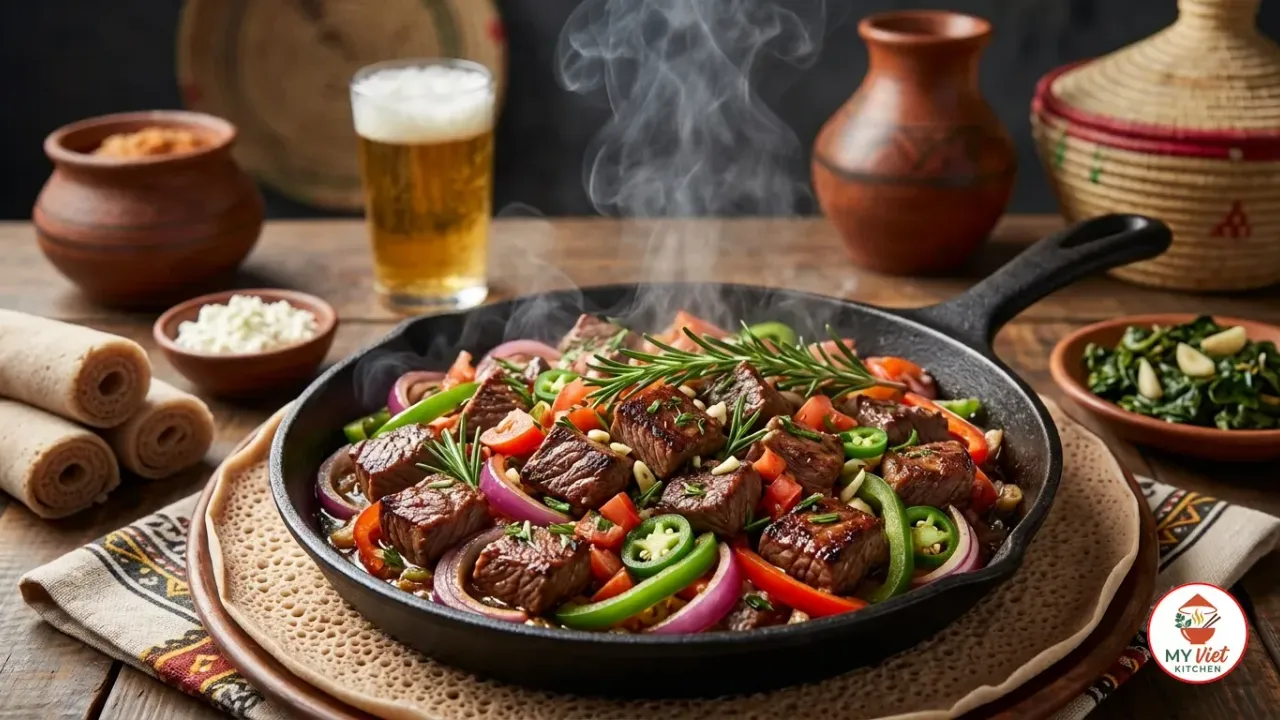
Tibs is one of the most popular dishes in Ethiopian cuisine, and this authentic tibs recipe teaches you how to recreate it at home. This beloved stir-fry features tender cubes of beef seared over blazing heat, then tossed with onions, peppers, tomatoes, jalapenos, garlic, and fragrant fresh rosemary. If you enjoy bold, smoky flavors and fast cooking, this Ethiopian tibs recipe delivers an unforgettable meal in under 30 minutes.
Prep Time: 15 minutes | Cook Time: 15 minutes | Servings: 4
Difficulty: Easy | Calories: ~380 per serving
What Makes Ethiopian Tibs Special?
Ethiopian tibs occupies a unique place in the country’s rich food culture. While dishes like doro wat and kitfo steal the spotlight at special occasions, tibs is the dish that Ethiopians eat most often in their daily lives. Street vendors, family kitchens, and upscale restaurants all serve their own version of this sizzling stir-fry. The dish arrives at the table on a hot clay plate or metal pan, still crackling and sending up clouds of fragrant smoke.
What sets this tibs recipe apart from a basic stir-fry is the mix of fresh rosemary, niter kibbeh spiced butter, and fierce high heat. Rosemary is not a spice you might expect in African cooking, but it grows all over the Ethiopian highlands. The herb plays a key role in tibs. Its piney scent blends with garlic, ginger, and jalapeno to build a flavor that is bold yet clean. Niter kibbeh adds a warm depth that no plain butter can match.
The method matters too. Ethiopian cooks use very high heat to sear the beef fast, which locks in juices and forms a crisp crust on each cube. The veggies go in after the meat, so they stay firm and fresh. This gives the dish a smoky, juicy, and bright quality. Once you try this tibs recipe, you will see why so many people in Ethiopia call it their favorite comfort food.

Choosing the Right Meat for Tibs
This tibs recipe uses high heat, so you need a cut of beef that stays tender when cooked fast. The right cut gives you juicy, soft cubes. The wrong cut gives you tough, chewy bites.
- Sirloin (best choice): Top sirloin has the best mix of flavor and softness. It has enough fat to stay juicy over high heat, and it holds up well when cut into cubes. Most Ethiopian spots use sirloin for their tibs.
- Beef tenderloin: If you want the softest result, tenderloin is your top pick. The meat melts in your mouth after a quick sear. It costs more and has a milder taste than sirloin, but the texture is hard to beat.
- Ribeye: For the most beefy taste, try ribeye. The rich fat melts during searing and bastes the meat from within. Trim any large chunks of fat before cubing, since too much fat can make the dish greasy.
Ingredients for Tibs Recipe
Main Ingredients:
- 1.5 pounds beef sirloin or tenderloin, cut into bite-sized cubes
- 2 tablespoons niter kibbeh (Ethiopian spiced butter)
- 2 tablespoons olive oil or vegetable oil
- 1 teaspoon salt
- 1/2 teaspoon black pepper
For the Vegetables and Aromatics:
- 1 large red onion, sliced into half moons
- 1 large green bell pepper, cut into strips
- 1 large red bell pepper, cut into strips
- 2 medium tomatoes, chopped
- 2 jalapeno peppers, sliced
- 4 cloves garlic, minced
- 1 tablespoon fresh rosemary, finely chopped
- 1 teaspoon fresh ginger, grated
For the Seasoning:
- 1 tablespoon awaze paste or berbere spice blend
- Juice of half a lemon
- Injera flatbread for serving
Pro tip: Cut all your vegetables and measure all your spices before you start cooking. Because this tibs recipe moves fast over high heat, you will not have time to prep ingredients once the pan is hot. Ethiopian cooks call this preparation style “mise en place,” and it is essential for getting the timing right.
Step-by-Step Instructions
Step 1: Prepare and Marinate the Beef
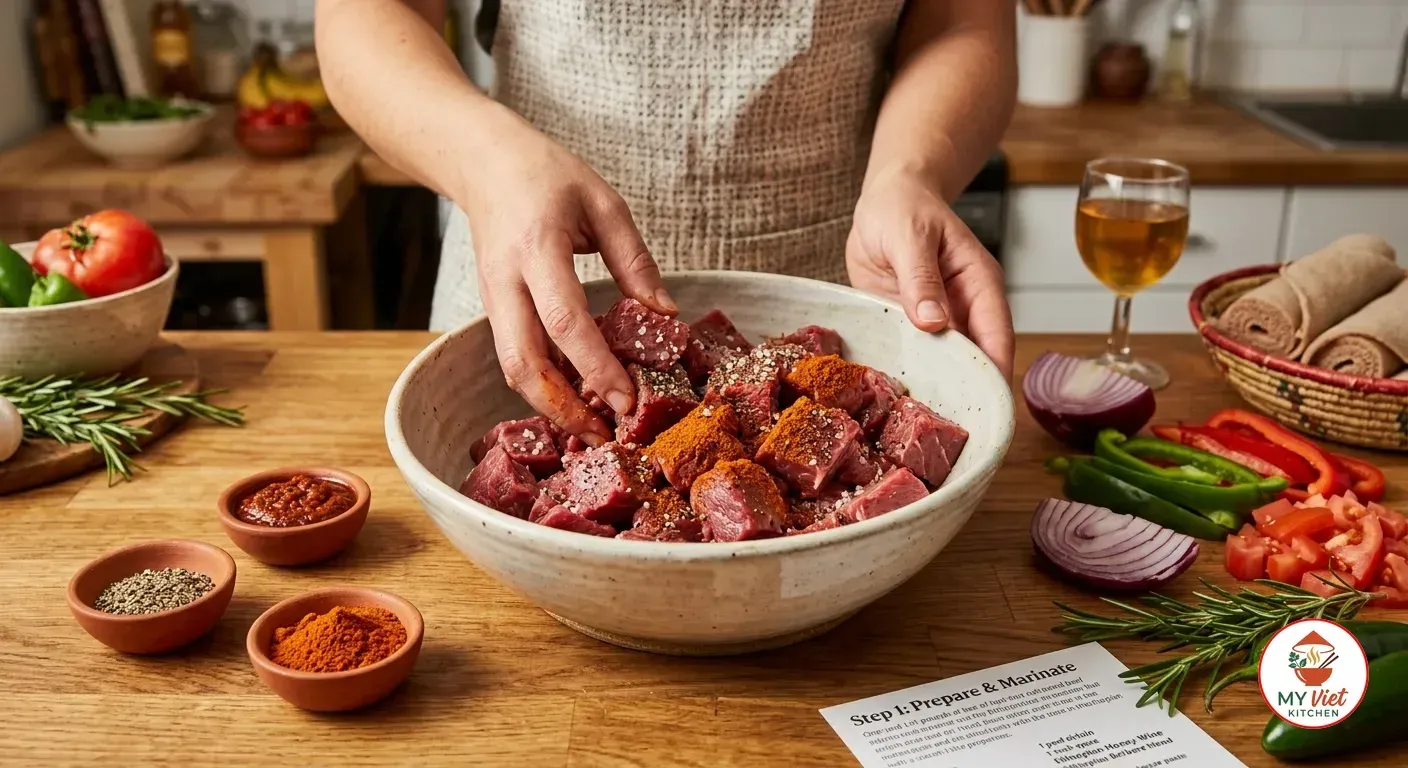
1Start by cutting the beef into bite-sized cubes, roughly one inch on each side. Place them in a bowl and add salt, black pepper, and half of the awaze paste or berbere spice. Toss with your hands until every piece has an even coat. Let the meat rest for ten minutes while you chop the veggies. This brief rest lets the spice soak into the beef. It also brings the meat closer to room temp, which helps it sear better.
Step 2: Sear the Beef Over High Heat
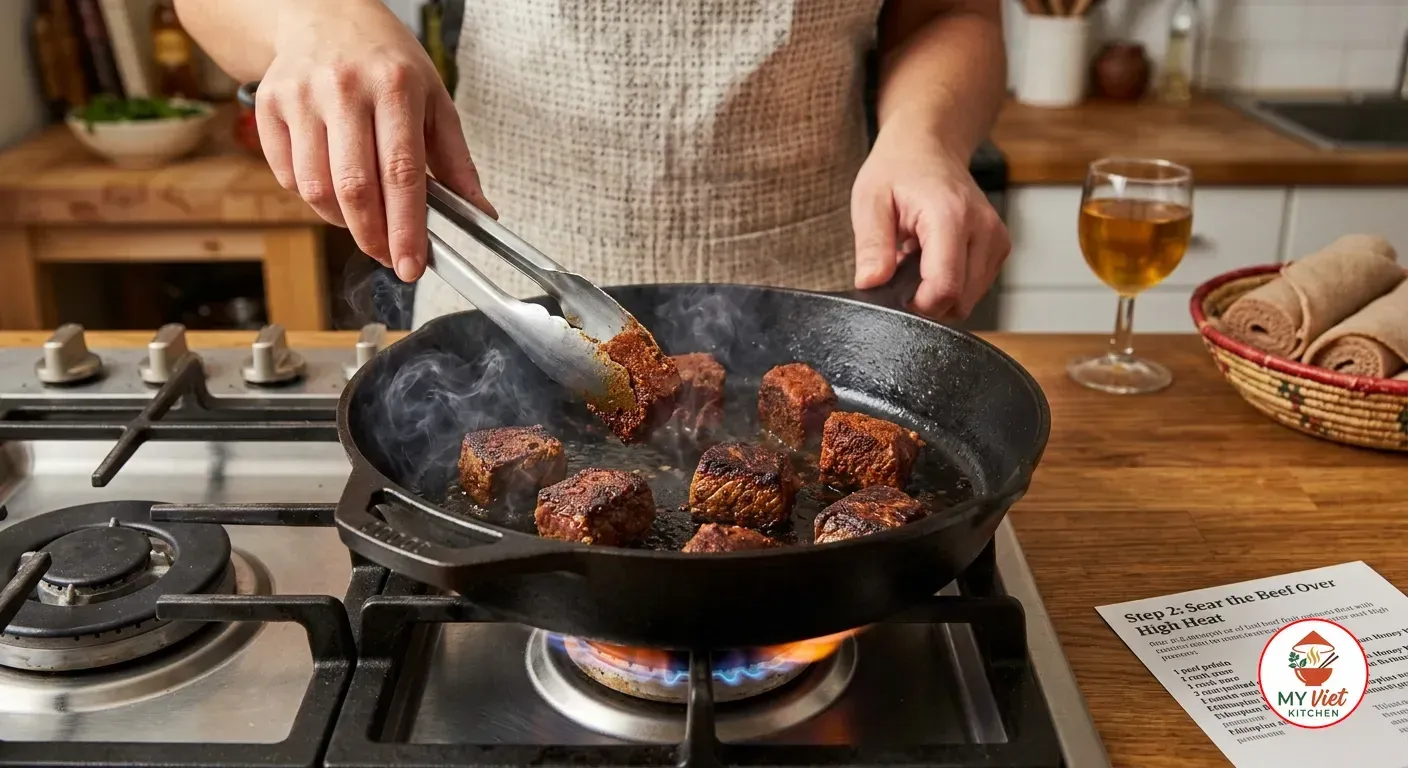
2Set a large skillet or wok over high heat and add the oil. Wait until the oil shimmers and starts to smoke. Spread the beef in a single layer with space between each piece. Do not stir for at least two minutes. This lets a deep brown crust form on the bottom. After two minutes, flip and sear for two more minutes. The inside should still be a bit pink. Move the beef to a clean plate. If your pan is small, work in two batches so you do not crowd the pan.
Step 3: Saute the Vegetables and Aromatics
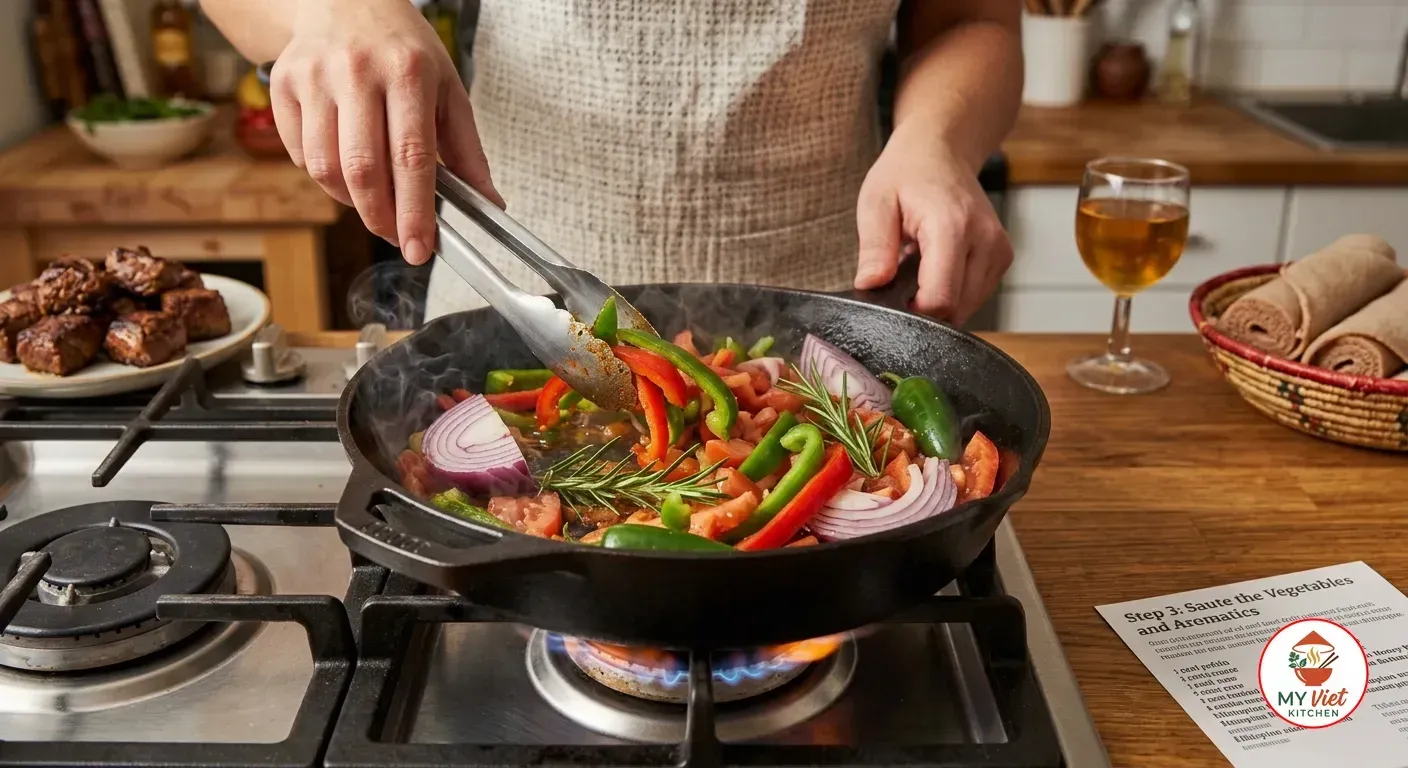
3Lower the heat to medium-high and add the niter kibbeh to the same pan. As the spiced butter melts, it picks up all the brown bits from the beef. This adds huge flavor. Toss in the red onion and cook for three minutes until soft. Next, add the garlic, ginger, jalapenos, and fresh rosemary. Stir for one minute until the garlic smells good. The rosemary will release its piney scent right away, and your kitchen will smell like an Ethiopian tibs house.
Step 4: Combine Everything and Finish
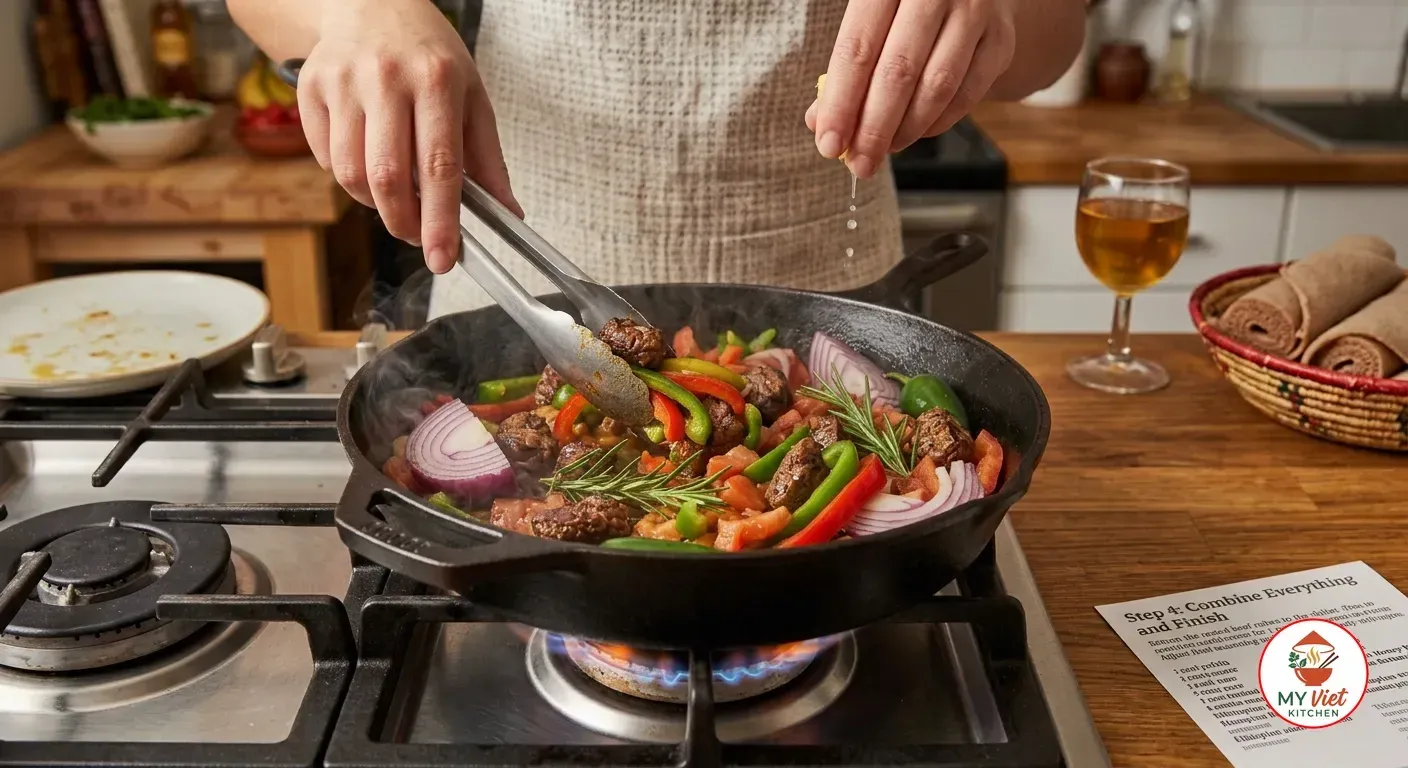
4Add the bell pepper strips, chopped tomatoes, and the rest of the awaze or berbere. Stir for two minutes until the peppers soften but still hold their shape. Put the seared beef back in the pan with any juices from the plate. Toss it all over high heat for one to two minutes. You want to warm the beef and let it soak up the veggie flavors, but not overcook it. Squeeze lemon juice on top and give one last toss. Move the tibs to a hot plate and serve right away with injera.
Expert Tips for Perfect Tibs
Get the Pan Screaming Hot
The most vital part of this tibs recipe is heat. A very hot pan creates a deep brown crust and smoky taste on the beef. If the pan is too cool, the meat steams and turns gray and tough. Let the oil heat until it just starts to smoke before you add the beef. That smoke is your sign that the pan is ready.
Do Not Overcrowd the Pan
Too many cubes in the pan drops the heat fast. As a result, the meat lets out water and boils in its own juice. If you cook for a crowd, sear the beef in two or three batches. Each batch should sit in a single layer with space between the cubes. This extra step takes a few more minutes, but the jump in taste and texture makes it worth the wait.
Use Fresh Rosemary Only
Dried rosemary cannot match the bright, piney scent that fresh rosemary brings to tibs. The fresh herb gives off its oils the moment it hits the hot butter. Those oils carry the smell that makes tibs so hard to resist. If you cannot find fresh rosemary, use fresh thyme instead. Dried rosemary tastes flat and dusty in this dish, so avoid it.
Tibs Styles: Derek, Awaze, and Regular
Ethiopian cooks prepare tibs in several distinct styles. Each version uses the same core technique of high-heat searing, but the seasoning and moisture level differ. Here is how the three most popular styles compare.
| Style | Description |
|---|---|
| Regular Tibs | The standard preparation with a moderate amount of sauce from the tomatoes and onions. The meat stays juicy and the vegetables provide a balanced, saucy coating. This is the version most commonly served at Ethiopian restaurants. |
| Derek Tibs (Dry) | The meat and vegetables are cooked until nearly all moisture evaporates, leaving behind crispy, caramelized beef with concentrated flavor. Derek tibs is considered a festive dish and often appears at celebrations and holidays. |
| Awaze Tibs (Spicy) | This fiery version adds generous amounts of awaze paste, a condiment made from berbere spice blend mixed with wine or spirits. The paste gives the dish a deep red color and intense heat that builds with every bite. |
Serving Suggestions
In Ethiopia, tibs always arrives at the table sizzling on a hot dish, surrounded by the essential accompaniments that turn a simple stir-fry into a complete meal. Building the right plate around your tibs creates the full Ethiopian dining experience.
The Perfect Accompaniments:
- Injera: This spongy, tangy flatbread made from teff flour is the essential partner for tibs. Tear off pieces and use them to scoop up the meat and vegetables. The sour tang of injera balances the rich, smoky beef perfectly.
- Ayib (fresh cheese): A mild, crumbly Ethiopian cheese that cools the palate between bites of spicy tibs. Its neutral flavor and creamy texture provide welcome contrast to the bold spices.
- Gomen (collard greens): Sauteed collard greens with garlic and ginger add a fresh, earthy side dish that rounds out the plate. The slightly bitter greens cut through the richness of the butter and beef.
- Injera with Wat: Serve tibs alongside a hearty Ethiopian stew to create a grand platter. The combination of sizzling tibs and slow-cooked wat showcases the full range of Ethiopian cooking techniques.
Beverage Pairings:
- Ethiopian honey wine (tej): The sweet, golden wine made from honey and gesho leaves pairs beautifully with the smoky, spicy flavors of tibs. The sweetness tempers the heat and complements the rosemary.
- Cold beer: Ethiopians love pairing tibs with a crisp local beer such as Habesha or St. George. The carbonation and cold temperature refresh the palate between bites of hot, spiced beef.
- Ethiopian coffee: A traditional Ethiopian coffee ceremony after a tibs meal brings the dining experience full circle. Ethiopia is the birthplace of coffee, so ending with a freshly roasted cup feels both natural and celebratory.
Storage and Reheating
Refrigerator: Store leftover tibs in an airtight container for up to 3 days. The flavors actually deepen overnight as the spices continue to meld with the beef and vegetables. Leftover tibs makes an excellent filling for wraps or sandwiches.
Freezer: Freeze cooked tibs in freezer-safe containers for up to 3 months. Let the dish cool completely before freezing. Thaw overnight in the refrigerator before reheating for the best texture.
Reheating: Warm leftover tibs in a hot skillet over medium-high heat for three to four minutes. Avoid the microwave if possible, because it steams the meat and eliminates the crispy seared exterior. A hot pan restores the smoky char and keeps the vegetables from turning mushy.
Common Mistakes to Avoid
1. Cutting the Beef Too Small
If you cut the beef too small, it will dry out fast on the hot pan. Tiny cubes lose their juice in seconds. Aim for even one-inch pieces that give you a nice crust on the outside and a pink, tender center. Even sizes also help all the cubes cook at the same pace.
2. Adding Vegetables Too Early
Many cooks toss veggies into the pan at the same time as the raw beef. The water from the veggies drops the heat and stops the meat from searing. Always sear the beef first, take it out, and then cook the veggies on their own. You bring it all back at the end, so the beef stays juicy and the veggies stay crisp.
3. Using Dried Herbs Instead of Fresh
Fresh rosemary and fresh ginger are not optional in a real tibs recipe. Dried herbs lack the oils that make the dish smell and taste so good. If you swap in dried herbs, the tibs will taste flat and dull. Always buy fresh for this recipe. They make the biggest impact on the end result.
Frequently Asked Questions
What is tibs in Ethiopian cuisine?
Tibs is an Ethiopian stir-fry dish made with sauteed cubes of meat, typically beef or lamb, cooked with onions, peppers, tomatoes, garlic, and fresh rosemary. The meat is seared over very high heat to develop a caramelized crust, then tossed with the vegetables and served sizzling hot. Tibs is one of the most popular everyday dishes in Ethiopia, enjoyed in homes and restaurants across the country.
What is the difference between tibs and kitfo?
Both tibs and kitfo are beloved Ethiopian beef dishes, but they differ in preparation and texture. Kitfo features finely minced raw or lightly warmed beef seasoned with mitmita and niter kibbeh. In contrast, tibs uses cubed beef that is seared at high heat and sauteed with fresh vegetables and rosemary. Tibs is always cooked, while kitfo is traditionally served raw or barely warmed.
What is derek tibs?
Derek tibs is the dry-fried version of this dish. The word “derek” means dry in Amharic. In this style, the beef cooks over very high heat with minimal sauce until it develops a crispy, deeply caramelized exterior. All the moisture from the tomatoes and onions evaporates during cooking. Derek tibs is a celebration dish that often appears at Ethiopian holidays, weddings, and festive gatherings.
Can I make tibs with chicken or lamb?
Absolutely. Tibs works beautifully with different proteins. Lamb tibs, known as yebeg tibs, brings a rich and slightly gamey flavor that many Ethiopians prefer. Chicken tibs, called doro tibs, uses boneless thigh meat for tender, juicy results. You can also make tibs with goat meat, which is common across many regions of Ethiopia and East Africa.
What spices go into Ethiopian tibs?
The core aromatics in tibs are fresh rosemary, garlic, ginger, and jalapeno peppers. Many cooks add berbere spice blend or awaze paste for extra heat and complexity. Niter kibbeh spiced butter provides a warm aromatic base of cardamom, fenugreek, and turmeric. The combination of fresh herbs and warm spices gives this tibs recipe its distinctive bold and smoky character.
Variations and Adaptations
Lamb Tibs (Yebeg Tibs):
Swap the beef for boneless lamb leg or shoulder, cut into one-inch cubes. Lamb goes very well with the rosemary and garlic in this tibs recipe. These herbs are classic lamb partners in many world cuisines. Sear the lamb the same way as beef and follow the rest of the steps. The result is a richer, bolder version that many Ethiopian homes prefer.
Chicken Tibs (Doro Tibs):
For a lighter meal, use boneless chicken thighs cut into bite-sized chunks. Thighs stay juicy over high heat, while breast meat dries out fast. Sear the chicken for three minutes per side, since it must cook all the way through. The veggies and spices stay the same. Chicken tibs makes a great weeknight dinner in under 25 minutes.
Vegetarian Tibs (Yataklete Tibs):
During Orthodox fasting days, Ethiopian cooks make a veggie version with no meat at all. Use cubed potatoes, carrots, green beans, and mushrooms. Sear the potatoes first until golden, then add the rest. Season with the same rosemary, garlic, ginger, and berbere. The method stays the same, and the dish still tastes bold and hearty.
The Cultural Significance of Tibs
Tibs holds a deep place in Ethiopian life. Unlike slow stews such as wat, tibs stands for the fast and festive side of the cuisine. When a guest shows up at the door, Ethiopian hosts can whip up tibs as a quick sign of welcome. The sizzle of beef on a hot pan has become a sound linked to warmth and good times all across the country.
In many homes, making tibs is a group effort. One person slices the onions, another chops the peppers, and the head cook runs the stove. The noise and aroma pull the whole family in. Furthermore, tibs ties into the rich story of Ethiopian cuisine, one of the most unique food cultures on the African continent.
Derek tibs, the dry-fried version, has extra meaning during holidays. At Christmas, Easter, and big family meals, derek tibs sits next to other festive dishes as a sign of plenty. The crispy, dark brown meat shows that the cook put in extra time and love. For anyone who wants to try African food, this tibs recipe is a great place to start. Find more dishes in our growing list of African recipes.
Conclusion
This tibs recipe brings one of Ethiopia’s best-loved dishes to your home. The steps are simple: sear the beef hard, build bold flavor with rosemary, garlic, and niter kibbeh, then toss in bright veggies at the end. The whole dish takes under 30 minutes, so it works for busy nights and still looks great for guests.
Pick the classic saucy style, the crispy derek version, or the fiery awaze take. Each one fills your kitchen with a smoky scent you will not forget. Serve this tibs recipe hot on a bed of tangy injera, and you will taste the bold heart of Ethiopian food. For more African and Ethiopian recipes, check out our growing list and enjoy the wide range of flavors from across the continent.